The Magic of the Muse: When A Simple Rewrite Reveals Synchronicity

It started with a simple tweet of mine on X regarding doing research for one’s writing projects. I’d met Isabella Mori a few years ago, when we both contributed to an ekphrastic anthology of flash fiction, inspired by Group of Seven art. We met again when she submitted a story to an anthology I was editing for Exile Editions. After my tweet on research, Isabella and I traded brief stories about rewrites based on research findings and ‘mistakes’ and the arcane revelations in the creative process that may result. I was intrigued by her recounting and asked her to share it with you; so here it is:

“Synchronicities And The Sea” by Isabella Mori

(Trigger warning: Substance use and suicide)

This is about the magic that comes to pass when we let the Muse guide our work and consent to synchronicity. Here is what happened:

When I go away on vacation, I try to visit the local library, and always make sure to check out the community announcements. On one of those forays, I came across a notice of a project that teamed up visual artists with writers for a short story or poem. I love these types of collaborations and immediately jumped on it. Max was the artist I paired up with, and we hit it off right away. After a few conversations, we settled on the painting below, for which I was going to write a story. As you can see, it had a moody, dark feeling. I drafted this text as a response:

The memory of a map showed her the way as she wandered, blinded by the night, along the shore. Numb with cold, her bare feet dug into the wet sand. She could not see that she left no tracks. There was something in her searching; she felt it in the deep pit of her stomach but there was no image in her mind’s eye of what it was, no tinkling that alerted her, no smell, no taste. A sense of despair drained the blood from her heart and tugged at her from the right, where the forest rushed. Foot-dragging ennui invited her onto a soft-moss carpet to the left, and thoughts of numbers, cars and cash register receipts tried to wrangle her back to where she came from. She was near giving up. But at that precise moment there tracked the light only she of the searching could see—a light bigger more forceful than giants could ever imagine; all-embracing, all-revealing, all-nurturing just like the frothy ocean beneath it, just like the sand with its fierce sparkle, each grain a diamond just like the heart-bud that could not help but open under its rays, under those rays that only she of the searching could see.

However, for reasons we have both forgotten, Max decided to lighten the colours, and the dark mood of the first draft didn’t fit anymore. This is the version we ended up with:

Walk With The Angels

The ocean has known her share of angels over the eons. They come and go but the tide is older. When an angel appears in a cloud of glistening light, beats its wings and brings out the trumpets, little humans fall to their knees and beg for mercy and miracles.

But the water stays still.

Great mother ocean has seen it all.

She waits until the angel grows tired, then she takes the worn-out wings and heavenly body into her arms and carries them into her depths. Brings the apparition to visit kelp, salmon, starfish, barnacles, otters and crabs. Anemones. Killer whales. A visit one by one, under the summer sun, beneath the light of the Hunter’s moon, when the snow falls, with the Easter rains. The angel leaves a bit of themselves here, a bit there, a gift everywhere, until only the tiniest of diamonds are left.

And that’s the sand.

Walk with the angels.

There were a few tweaks before we arrived at this text, the major one being that in a previous version, I referred to ‘angel dust’ for the sand until the editor pointed out that that term refers to a street drug, PCP. In my enthusiasm I had forgotten that.

The change away from ‘angel dust’ was very important. When Max read the new version, they called me, their tone of voice both moved and perturbed.

“When I read this,” they said, “it feels like you channeled what happened with my cousin last year, not far from the place that inspired my painting. She had had problems with drugs all her life, and one day she just walked into the ocean. Her body was found a day later.”

Under those circumstances, we definitely did not want to refer to drugs.

That story stayed with me for months until one day when I was listening to one of my playlists of Latin music. I lived in Paraguay and Chile 1977-1980, and often enjoy the nostalgia of the music I listened to back then. The first song that came on was one of my all-time favourites, Alfonsina Y El Mar – Alfonsina And The Sea. Now I have to confess, I am terrible with lyrics, no matter what language, whether it be my native German, English, or the Spanish I was fluent in for quite a few years. For some reason, I really listened to the song last summer, and then looked up the lyrics. That’s when it hit me – was it possible that the lyrics of that song had subconsciously influenced me to write the second text? Or was it one of those Jungian collective conscious moments?

Alfonsina And The Sea

(Music: Ariel Ramirez. Lyrics: Felix Luna)

In the soft sand
Licked by the sea
Her small footprints
Don’t return.
Just one path
Full of pain and silence
Led to the water,
Deep water,
And one single path of unspoken pain
Led to the foam.

God knows what sorrows accompanied you,
What old suffering shut down your voice
That made you lie down and nestle into the songs
Of the sea snails,
The song that sings in the deep dark of the sea,
The sea snail.

There you go, Alfonsina, with your loneliness,
What new poems did you go find?
An old, old voice of wind and salt
Sways your soul and carries it
And you go there dreaming,
Sleeping, Alfonsina, clothed in the sea

Five little sirens will carry you
Through passages of algae and corals
And glowing sea horses will dance
Around you
And all the creatures of the sea will soon
Play at your side.

Turn down the light a little more,
Nurse, let me sleep in peace.
And when he calls tell him I’m not in,
Tell him Alfonsina won’t come back.
And when he calls don’t ever tell him I’m in,
Tell him I’m gone.

There you go, Alfonsina, with your loneliness,
What new poems did you go find?
An old, old voice of wind and salt
Sways your soul and carries it
And you go there dreaming,
Sleeping, Alfonsina, clothed in the sea.

(Used with permission, my translation.)

Alfonsina ended up in the ocean just like Max’s cousin did.  

With some research, I found out that the story was about the Argentinian poet Alfonsina Storni who, after a difficult life that included poverty, questions she had about gender identity, and breast cancer, one night wrote a last poem to her son and then let herself fall into the ocean amid torrential rain. (An  apocryphal version has her just walk into the ocean, and that’s the one the lyricist chose.) Some of that last poem was incorporated into Alfonsina Y El Mar – the nurse who is asked to lower the light, and told to tell ‘him’ that she won’t come back. Nobody seems to know who ‘he’ is.

The other research that had to happen was to find who the inheritors of Felix Luna’s estate were to obtain permission should I tell the story that you have before you. It turned out to be his daughters. Then I had to sleuth out their contact.

Felix Luna, the lyricist, imagined Alfonsina’s death not only as the terrible tragedy that it was but also as a mystical transformation into a sea creature that nestles into the songs of the sea snails. She finds new poems and sleeps clothed in the sea. She is embraced by sirens and wanders through algae and corals. She dances with sea horses and plays with all the other sea creatures.

I definitely cannot compare myself with a great poet like Felix Luna but notice with humility the similarities of my transformed angel who sinks into the embrace of mother ocean and also visits the more-than-humans of the sea.

I went pregnant with the idea of writing about the experience of Max’s and my collaboration for half a year when in February, I chanced upon a tweet by Nina about research for writing. I met Nina through submitting a story to an anthology she was editing. I told her about needing to tweak the angel story so that it does not talk about angel dust and ended up telling her the outline of what happened. She invited me to write a guest post about this, and here we are.

So many synchronicities. I could have not gone to that library. A different artist could have been paired up with me. Max could have wanted to stay with the original painting. Or they could have chosen a painting that would not have reminded them of their cousin. They could have opted not to share that sad story with me, or they could have been paired up with someone who doesn’t understand suicide as intimately as I do (I look back on a 30+ year career in social services.) I could have heard Alfonsina Y El Mar and still not really listened to the lyrics. There was no guarantee I could have managed to find out from whom to get permission to quote the song. I could not have submitted a story to one of Nina’s anthologies, and could not have followed her on Twitter. Coming across the particular tweet that prompted the publication of this story was like chancing upon a needle in a haystack. All this, and probably more, had to come together for this magical synchronicity to happen.

Thank you, Muse.

(Note: Since this is a sensitive topic, the artist’s name and some of the circumstances of my collaboration with them have been changed. However, the artist has consented to using their images.)
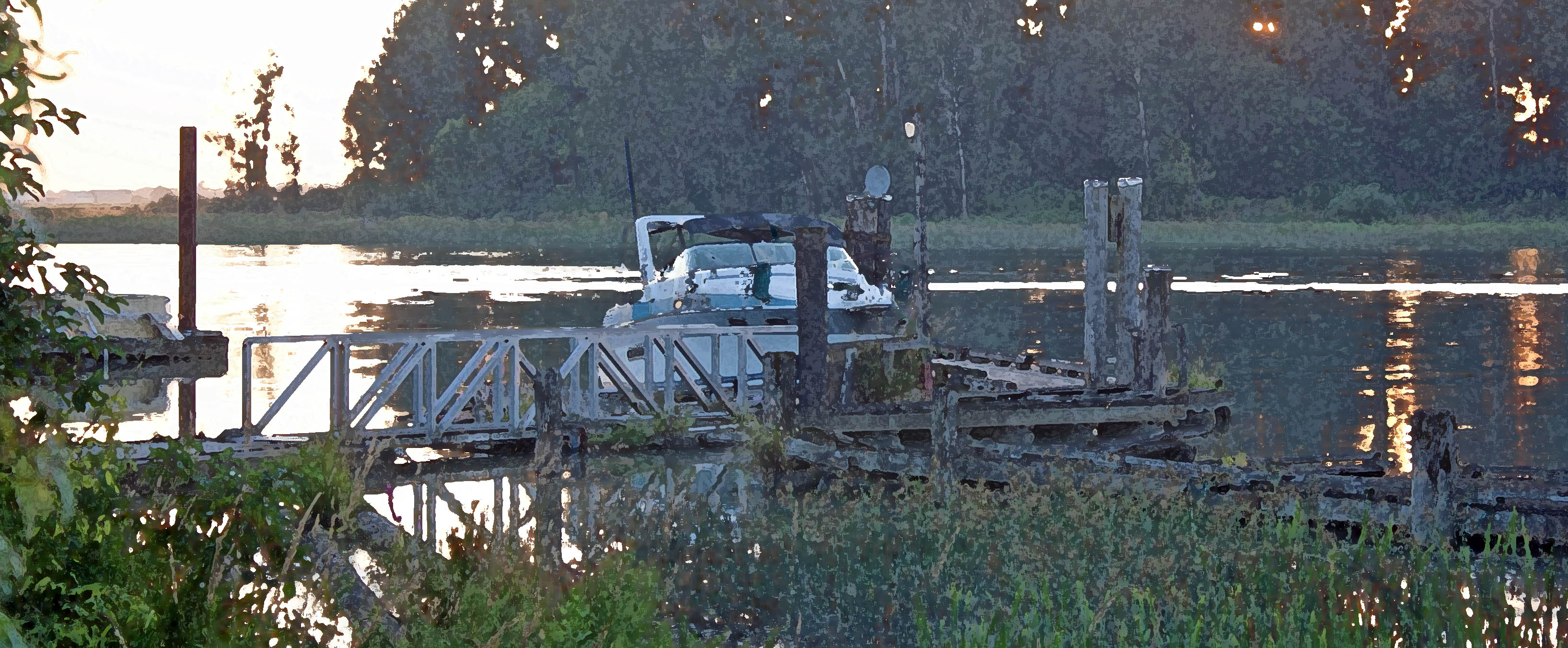
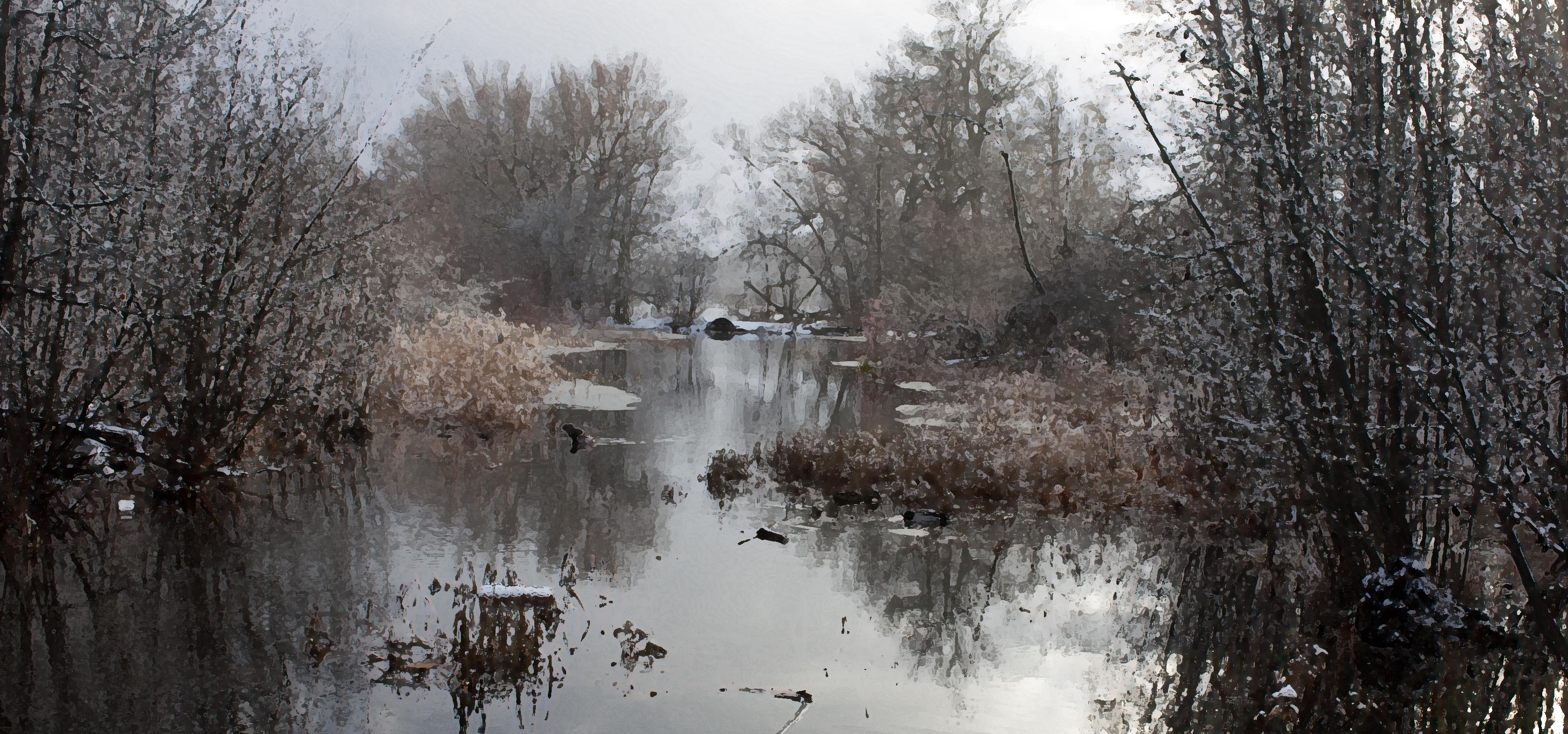
Boat wharf at sunset in Ladner Marsh, BC (photo and rendition by Nina Munteanu)

Isabella Mori writes fiction, poetry and nonfiction, and is the author of three books of and about poetry, including A bagful of haiku – 87 imperfections. Isabella’s work has appeared in publications such as State Of Matter,  KingfisherSigns Of LifePresence, and The Group Of Seven Reimagined. Isabella is the founder of Muriel’s Journey Poetry Prize, which celebrates socially engaged poetry. A book about mental health and addiction is planned for publication with Three Ocean Press in 2024. They live on the unceded, traditional and ancestral lands of the Musqueam, Squamish and Tsleil-Waututh people aka Vancouver, BC.

The A to Z of Writing Fiction: W…

Snowy marsh in spring, ON (photo and rendition by Nina Munteanu)

In this series of articles, I draw from key excerpts of my textbook on how to write fiction The Fiction Writer: Get Published, Write Now! whose 26 chapters go from A to Z on the key aspects of writing good and meaningful fiction.

W is for Who, Where, When and Why of Doing Research

Research is something many writers dislike and find daunting or even intimidating. In truth, as a writer, you are doing research all the time: when you’re riding the bus or train to work, when you’re traveling on vacation, when you’re having a lively discussion—or better yet an argument— with a friend or colleague. Everything you experience and observe is research. This is what I call non-directed research. It’s also called living. Writers, like all artists, are reporters of life, actively participating and passively observing. A writer is an opportunist, gathering her data through her daily life experiences. Writing fiction draws on this but also on much more…

When writing about a realizable and believable world, whether it takes place in contemporary New York or far future planet Zero, you will need impeccable world building (which includes setting, circumstances, surrounding characters and events) and that will always ultimately require research. you will find very quickly that in order to build a consistent world (even if it’s mostly from your own imagination), you will need to draw upon something real to anchor your imaginary world upon. Whether this reflects a powerful myth or forms an alternative version of a real society, you will still need to apply some rules to follow, so you don’t lose your reader.

With so many useful internet sites and search engines, research has become far easier. But there is also more risk. Finding and confirming information as reliable is an important aspect of doing research. When doing research, particularly on the Internet (but anywhere), you should do several things:

• Use more than one source, particularly for important things; this will give you a wider range of material from which to discern accuracy and reliability.

• Verify your sources and preferably cross reference to measure out objective “truth” versus bias.

• Try to use primary sources (original) vs. secondary or tertiary sources (original cited and open to interpretation); the closer you are to the original source, the closer you are to getting the original story.

• When going to more than one source, try to get a range of different source-types (e.g., conservative newspaper versus blog versus special interest site, etc.) to gain a full range of insight into the issue you’re researching.

Don’t forget that highly valuable and satisfying research can take on the form of interview. You can gain incredible insight into the subject of your research by using a live expert. The advantages he or she has to a book or online database is that they interact with you and may give you something you didn’t even know you needed. Experts include people in your community, your neighbors and friends, professionals in business and in the universities and other educational facilities. Special interest forums and sites can be used to access people to interview.

I keep a journal or scrapbook for every novel I write. This permits me to do several things:

1. Organize relevant research material into one place for easy access (which makes up for my appalling note taking practices).

2. Satisfy my inclination for info dump and expository back-story by providing a place to house it—in my journal, where it belongs, instead of in the story.

By the time I was through with it, the journal I’d kept of my last book—a historical fantasy set in medieval Prussia and modern-day Paris—was its own rich compendium of interesting information, lovingly put together with photos of Paris, drawings and sketches of castles, armour, and long swords, maps of great battles, spreadsheets of timelines and family trees and, of course, commentary on all the great cafés and patisseries in Paris between Rue Princess and Boulevard Saint-Michel.

The Fiction Writer: Get Published, Write Now! (Starfire World Syndicate) May 2009. Nominated for an Aurora Prix Award. Available through Chapters/IndigoAmazonThe Book Depository, and Barnes & Noble.

The Fiction Writer is a digest of how-to’s in writing fiction and creative non-fiction by masters of the craft from over the last century. Packaged into 26 chapters of well-researched and easy to read instruction, novelist and teacher Nina Munteanu brings in entertaining real-life examples and practical exercises. The Fiction Writer will help you learn the basic, tried and true lessons of a professional writer: 1) how to craft a compelling story; 2) how to give editors and agents what they want’ and 3) how to maintain a winning attitude.

“…Like the good Doctor’s Tardis, The Fiction Writer is larger than it appears… Get Get Published, Write Now! right now.”

David Merchant, Creative Writing Instructor
Otonabee River glistens under a spring sun, ON (photo and rendition by Nina Munteanu)

Click here for more about my other guidebooks on writing.

Nina Munteanu is a Canadian ecologist / limnologist and novelist. She is co-editor of Europa SF and currently teaches writing courses at George Brown College and the University of Toronto. Visit www.ninamunteanu.ca for the latest on her books. Nina’s bilingual “La natura dell’acqua / The Way of Water” was published by Mincione Edizioni in Rome. Her non-fiction book “Water Is…” by Pixl Press (Vancouver) was selected by Margaret Atwood in the New York Times ‘Year in Reading’ and was chosen as the 2017 Summer Read by Water Canada. Her novel “A Diary in the Age of Water” was released by Inanna Publications (Toronto) in June 2020.

Mistakes Authors Make (When We Don’t Pay Attention to Place and Things

Marsh outlet of Thompson Creek, ON (photo and rendition by Nina Munteanu)

In “A Dance of Cranes” (Dundurn, 2019) author Steve Burrows erroneously describes the actions and motions associated with canoeing. In the following scene, the protagonist Jejeune is canoeing on a river in the boreal wilderness of northern Canada:

The low sun seemed to light the stand of birches from within, flickering through the trunks like a strobe light as Jejeune rowed past. 

One does not row a canoe; one paddles—with a paddle.

You might think that this is a small error, hardly worth mentioning; however, the friend who pointed out this mistake to me, was thrown out of the novel by it. She is a naturalist and has often gone canoeing in the lakes and rivers of Ontario. This mistake suggested a lack of professional attentiveness from both author and editor of the publication. By compromising the authenticity of the fictional setting the error stopped the reader from participating. We were no longer paddling with Jejeune; we were looking at the book.*

Some of you may rail at me for being overly harsh. You would remind me that this is a work of fiction, after all, not fact. You’d remind me that fiction is a work of the imagination, of characters and journeys; not a dry documentary.

I would agree with you—up to a point. Certainly, in fiction we can and do take liberties with “facts” so long as the narrative keeps the reader moving in the “fictive dream.” Authors have managed to successfully bend reality considerably in the past to great effect because the reader was fully engaged in the narrative and the characters.

But ultimately, beginning-to-end factual accuracy remains important in a made-up story for various reasons. While some “fake facts” or mistakes (such as the example above) may slip by many readers unnoticed, someone will notice. Guaranteed. And, as with my naturalist friend, it can make the difference between a seamless read and a jarring one. Writer Dorian Box shares that, “Some readers may even post reviews criticizing your book on that basis.” Dorian adds that when they spot large factual inaccuracies in a novel, “it detracts from the reading experience. I start to question other things. Credibility is damaged.”

All good fiction is anchored by consistent and believable world-building, whether the story is set in contemporary New York City or a made up planet in some made up solar system. The key to this believability is the use of grounding ‘facts’ or world-consistencies that immerse the reader in the story world. The reader relies on the author to realistically represent the world they are reading about. This allows the reader to experience the story as though it was real. Representing the facts accurately enables the writer to take liberties with other aspects of the story. Because the reader is nicely embedded in the world through accurate depiction, they will follow your characters through it eagerly.

Forest and marsh on Ontario (photo and rendition by Nina Munteanu)

The Importance and Ease of Research in Fiction Writing   

To prevent what happened in the example I gave above, authors must exercise due diligence in world building, in representation of setting and place, and in other elements of the story. Writers have easy access to so much knowledge about so many topics through local libraries, local experts, the internet, social media, and more. In other words, no excuse.

In the novel I’m currently working on I needed to understand what it felt like to handle, load and shoot a particular make of shotgun. I had handled one in the past but not actually used it. The internet provided exceptional instructional videos and sites that I could use to come close to the actual experience. I paid particular attention to nuances and sensual aspects such as texture, smell, weight, as well as mechanical aspects, like recoil; anything that would more viscerally help me experience it. When I had written the scenes, I showed them to someone who had handled a shotgun for their verdict on accurate depiction.

For more examples and discussion on place and doing research, check out Chapter H and R of my first book in The Alien Guidebook Series “The Fiction Writer: Get Published, Write Now!” and Part 2 of my third book in the series “The Ecology of Story: World as Character.”

*There is such a thing as a rowing canoe; canoes can be set up for rowing with oarlocks and sockets, oars, rowing seats and even forward rowing contraptions such as foot brace for efficient rowing. However, this was not the case in the book I gave as an example.

Fence post covered in vines on water’s edge, ON (photo and rendition by Nina Munteanu)

NINA MUNTEANU is a Canadian ecologist / limnologist and novelist. She is co-editor of Europa SF and currently teaches writing courses at George Brown College and the University of Toronto. Visit  www.ninamunteanu.ca for the latest on her books. Nina’s bilingual “La natura dell’acqua / The Way of Water” was published by Mincione Edizioni in Rome. Her non-fiction book “Water Is…” by Pixl Press(Vancouver) was selected by Margaret Atwood in the New York Times ‘Year in Reading’ and was chosen as the 2017 Summer Read by Water Canada. Her novel “A Diary in the Age of Water” was released by Inanna Publications (Toronto) in June 2020.

Vision 2020 and Water Is…

BHNCDSB_STEM_Poster_36x24-4.pdf

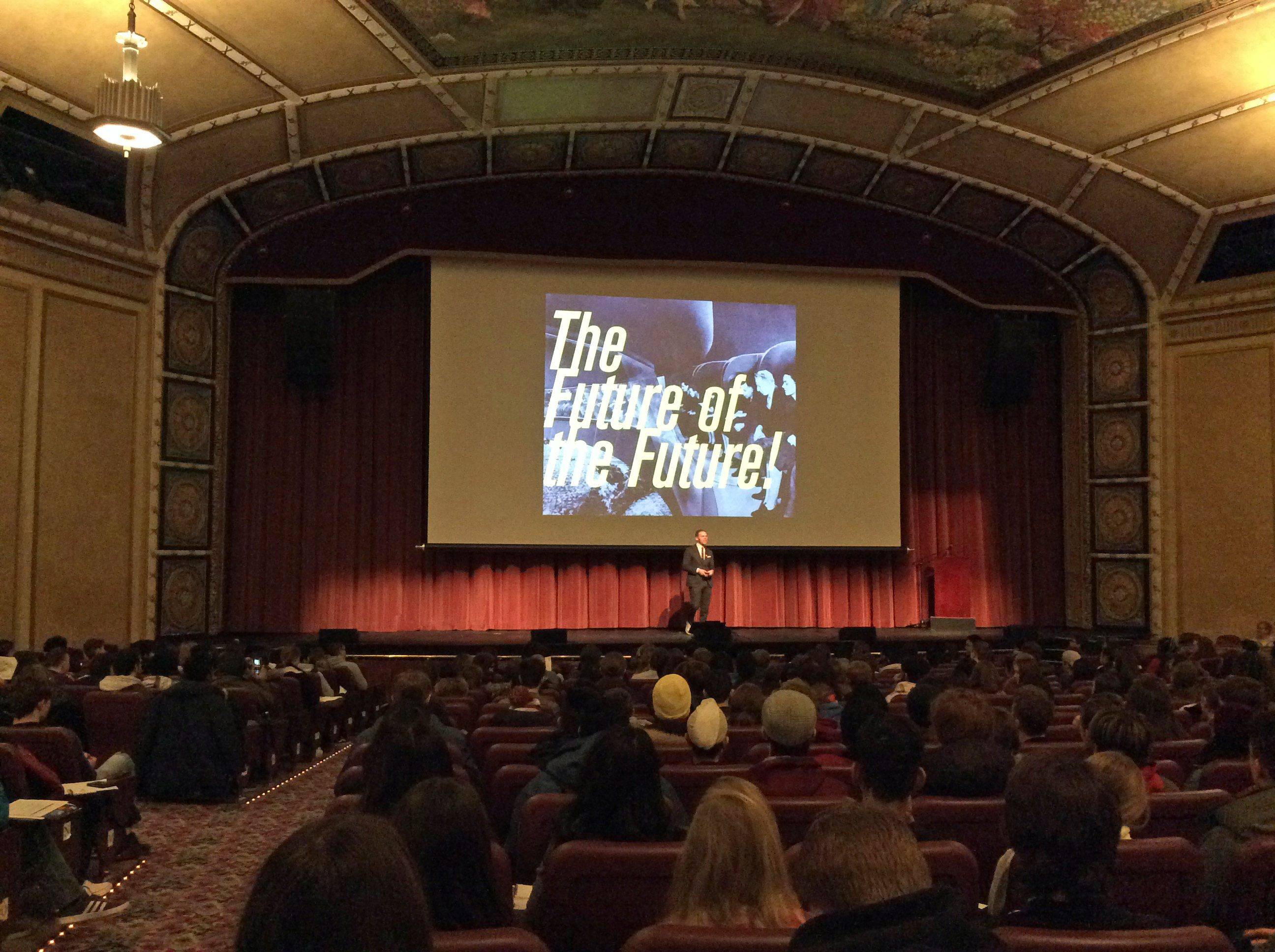
In February 2020, I was invited to speak and do workshops with over a hundred Grade 11 and 12 students about the future in the “2020 Vision into the Future” conference at Wilfrid Laurier University in Brantford, Ontario.

FutureOfFuture-GLindsay

Keynote speaker Greg Lindsay talks to students at Sanderson Centre

AerotropolisJournalist, urbanist and futurist Greg Lindsay gave a rousing keynote speech to start the conference. Greg spoke about the future of cities, technology, and mobility. He is the director of applied research at NewCities and director of strategy at its mobility offshoot CoMotion. He also co-authored the international bestseller Aerotropolis: The Way We’ll Live Next.
I joined a suite of technologists, visionaries and other scientists in presenting various scenarios of the future through workshops and seminars.

Workshop subjects included quantum cryptography, autonomous vehicles, flying cars, robotic surgery, zero waste, computer glasses, and my workshop “writing science fiction.”

Instructive seminars included topics such as feeding 9 billion people, mental health, AI & computers, the science and meaning of water, urban development, the future of transportation and space exploration.

How to Write Science Fiction

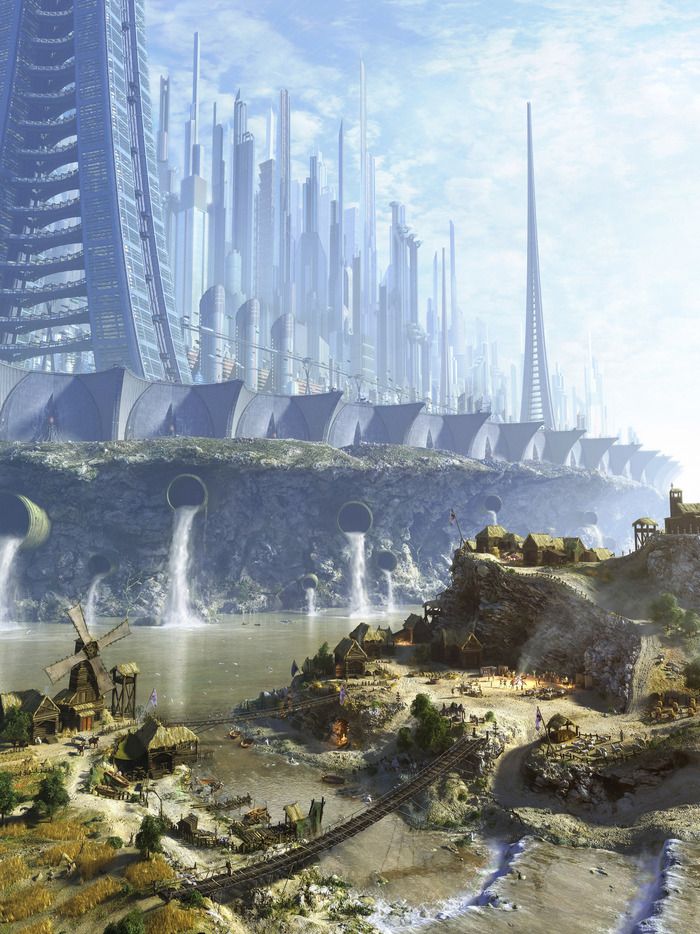
the-city-cgtrader copy

Top choice image prompt for storytelling

I gave two workshops on how to write science fiction. The workshop began with a brief discussion on what a story is (and is not) and a summary of the key tools of writing good story (e.g. premise, plot, theme, character, and setting) with a focus on world-building and the role of science.

Each group then set out to create the framework for a story based on a premise from an image prompt and shared what they’d put together. In one session we all worked together with me scribing on one whiteboard, creating together as a class; in another session, small groups formed and created their own story among four to five members as I went from team to team.

everyday hero-2 copy

Next popular storytelling image (cover illustration for “Ecology of Story” by Anne Moody)

Amazing stories emerged in both cases from the image prompts chosen. Students demonstrated imaginative, mature and original premises and carried through with thoughtful and imaginative plot, theme and character journeys. I was very impressed.

The Science and Meaning of Water

In this seminar I gave a summary of water’s life-giving anomalous properties on Earth and discussed the history and field of limnology (study of freshwater). I explored our history with water (including our impacts) and the implications of climate change on our future with water on the planet. Points of interest included water’s many weird properties, water’s ubiquity and its origins, the hydrological cycle, and the often strange adaptations of life with (or without) water.

Water Is-COVER-webWe then discussed future implications of water scarcity (and geopolitical conflict) and some of the things individuals and communities can do. Much of the talk drew from my recent book Water Is… The Meaning of Water.


nina-2014aaa

Nina Munteanu is a Canadian ecologist / limnologist and novelist. She is co-editor of Europa SF and currently teaches writing courses at George Brown College and the University of Toronto. Visit www.ninamunteanu.ca for the latest on her books. Nina’s bilingual “La natura dell’acqua / The Way of Water” was published by Mincione Edizioni in Rome. Her non-fiction book “Water Is…” by Pixl Press (Vancouver) was selected by Margaret Atwood in the New York Times ‘Year in Reading’ and was chosen as the 2017 Summer Read by Water Canada. Her novel “A Diary in the Age of Waterwill be released by Inanna Publications (Toronto) in June 2020.
 

The Ontario Climate Symposium: Adaptive Urban Habitats by Design

SONY DSC

Nina presents Diana Beresford-Kroeger with a copy of “Water Is…”

I recently participated in the 2018 Ontario Climate Symposium “Adaptive Urban Habitats by Design” at OCAD University in Toronto, hosted by the Ontario Climate Consortium and the Toronto and Region Conservation Authority.

Day 1 opened with a ceremony by Chief R. Stacey Laforme of the Mississauga of the New Credit First Nation, followed by keynote address by Dr. Faisal Moola, associate professor of the University of Guelph.

A three-track panel stream provided diverse and comprehensive programming that helped further the goal to foster important discussions for how art and design can play a role in developing adaptive, low carbon cities. Panels sparked much networking among a diverse group of participants, who clustered around the refreshments in the Great Hall, where my “Water Is…” exhibit was located.

OCS-venue

The Great Hall, where participants networked over refreshments

WaterIs...at OCS2

one participant clutches “Water Is…”

Water Is… was also there for sale, as part of my exhibit on water, along with Environment and Climate Change Canada, Green Roofs, Waste, and the Environmental Commissioner of Ontario. I had several lively and insightful conversations with participants and I’m glad to say that Water Is… made it into several people’s hands at the symposium. Water is, after all, a key component of climate and climate action.

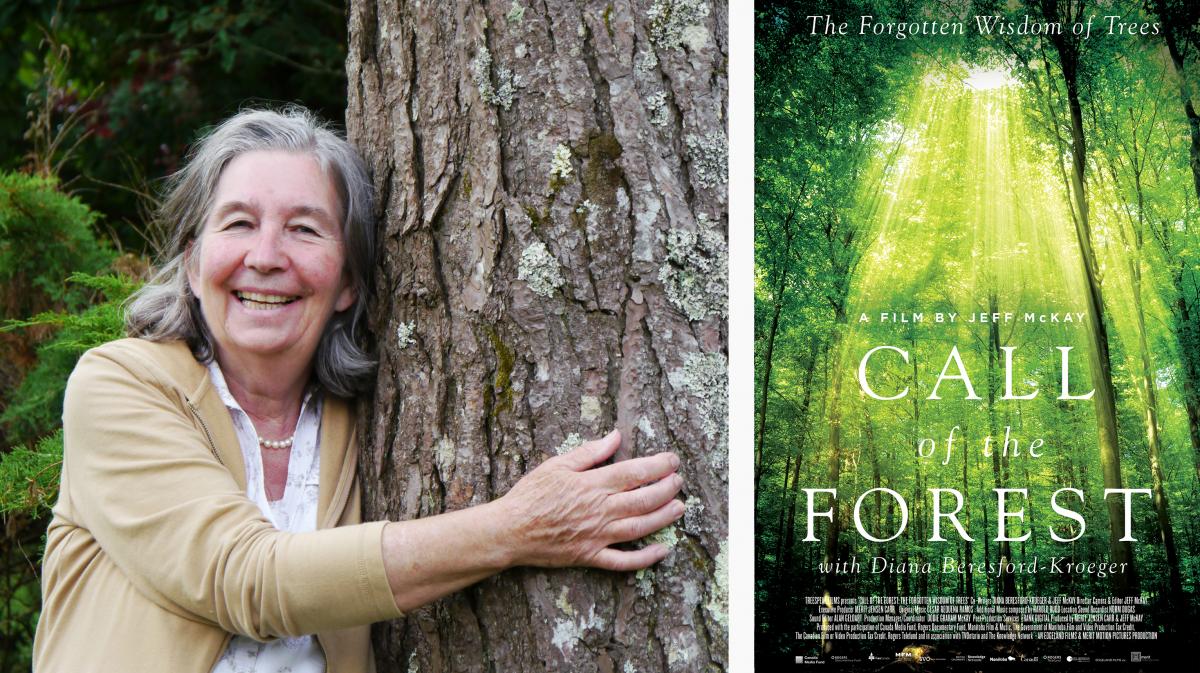
The film “Call of the Forest: The Forgotten Wisdom of Trees” was screened and scientist Diana Beresford-Kroeger participated in a question and answer period then signed her latest book.

diana_and_the_tree_

Call of the Forest” was called “a folksy and educational documentary with a poetic sort of alarmism about disappearing forests,” by the Globe and Mail. The film “takes us on a journey to the ancient forests of the northern hemisphere, revealing the profound connection that exists between trees and human life and the vital ways that trees sustain all life on this planet.” The movie describes the numerous health-giving aerosols that trees use to communicate. Diana’s genuine and earnest concern illuminates her simple yet powerful narrative, such as when she says that the forests are “haunted by silence and a certain quality of mercy.” Featuring forests from Japan and Germany’s Black Forest to Canada’s boreal forest, this documentary is a powerful manifesto for sustainability.

DianaBeresfordKroeger

Diana lecturing in High Park

On Day 2, I toured the Black Oak savanna in High Park with Diana Beresford-Kroeger (author of The Global Forest). The tour was refreshing and enlightening. Diana is a genuine advocate for the forest and showed some of the medicinal properties of forest plants. An example is the common weed, Goldenrod; its astringent and antiseptic qualities tighten and tone the urinary system and bladder, making goldenrod useful for UTI infections; Its kidney tropho-restorative abilities both nourishe and restore balance to the kidneys.

Diana spoke from the heart and brought a wealth of scientific knowledge to us in ways easy to understand—like the biochemistry of photosynthesis or quantum coherence. Diana shared how over 200 tree aerosols help combat anything from asthma to cancer. I also talk about this in the “Water Is Life” chapter of my book, Water Is…, which I gave a copy to Diana.

lunenburg-shop01

Shops in Lunenburg, NS (photo by Nina Munteanu)


nina-munteanuNina Munteanu is an ecologist, limnologist and internationally published author of award-nominated speculative novels, short stories and non-fiction. She is co-editor of Europa SF and currently teaches writing courses at George Brown College and the University of Toronto. Visit www.ninamunteanu.ca for the latest on her books.
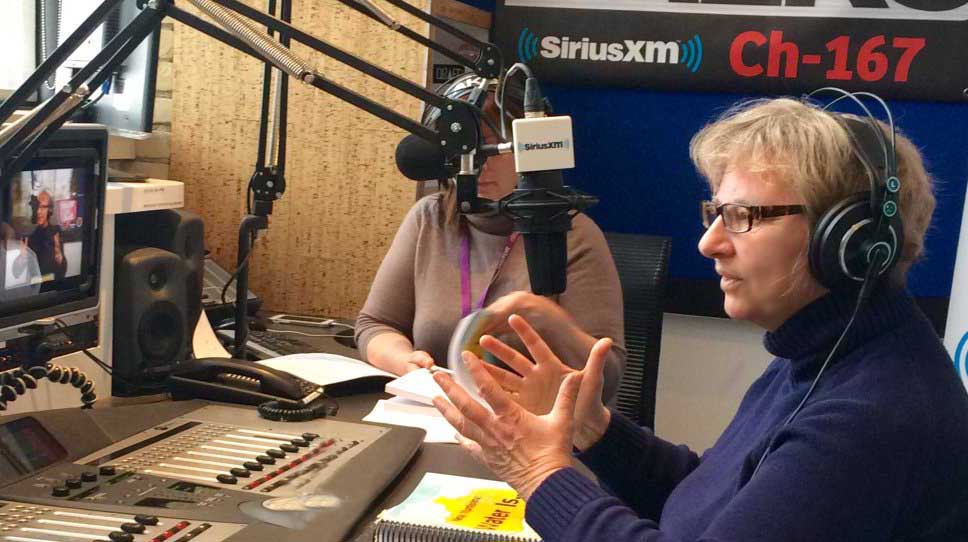
On Conducting Interviews…

Nina-SiriusXM-Radio 2016

Nina Munteanu doing an interview on SiriusXM Radio

Being a Smart Reporter

Whether you’re writing non-fiction or fiction, at some point in your research you may need to conduct an interview. It might be a local police officer who handled a case similar to something you are writing about; it might be a scientist in the university who has critical information on something covered in your story; it might be a friend who has experienced something you wish to get first-hand knowledge of for one of your characters. Either way, you need to conduct your interview professionally, efficiently and with sufficient thoroughness and accuracy to get what you need.

In other words, you need to be a good journalist.

Pillars of Good Journalism

The pillars of good journalism include: 1) thoroughness; 2) accuracy; 3) fairness; and 4) transparency.

These days, thoroughness means more than exhausting your resources, real or virtual. It also includes getting input from your readers, says Robin Good, online publisher and new media communication expert.

Likewise, says Good, being accurate may include saying what you don’t know and being open to input from your readership; this invites dialogue between you and your respected reader. The key, of course, is respect.

Which brings us to fairness: this includes listening to different viewpoints and incorporating them into your journalism. Fairness, says Good, is about letting people respond and listening to them, particularly if they disagree with you. Both learn from the experience.

And, lastly, part of being transparent is revealing and making accessible to your readers your source material.

Things to Consider When Doing That Interview

As a writer it’s guaranteed that you will at some time require information from a real person. Depending on the nature of your research and its intended destination and audience, you may wish to conduct anything from a casual phone or email enquiry to a full-blown formal face-to-face interview. This will also depend on who you are interviewing, from a neighbor to a government official.

In an article in Writer’s Digest, Joy Lanzendorfer suggests that you adopt the following tactics to get your interview further than the basics and to fully take advantage of your source (oh, I didn’t mean it that way!):

  • Do your research ahead of time: read up on your subject and include both sides of an issue (if that’s relevant). This helps you to respond intelligently with better follow-up questions.
  • Ask open-ended questions: avoid yes and no questions and get them to elaborate. Asking “why” solicits explanation, which will give your article depth.
  • Ask for examples: this provides a personal aspect to the article that gives it warmth and makes it more interesting.
  • Ask personal questions: what’s the worst thing that can happen? They can simply say “no”; the up side is you may get a gem. The personal angle from the interviewee’s perspective gives your article some potential emotional aspect that gives it human-interest.
  • Ask the interviewee for any further thoughts to share: it’s an innocuous question, but can offer-up more gems. What it provides you with is the possibility of getting something you might not have thought of, sparked by your conversation.

Don’t be afraid to confirm names, places or any facts your interviewee brings up. This will inspire confidence in them about the thoroughness and accuracy in your reporting.

What NOT to Say…

In an article in Writer’s Digest, Nancie Hudson gives the following excellent advice about what you should never say to a source:

  • “There’s no rush.”—never reveal your deadline. Think about it; what do you normally do when there’s a deadline? Right … If you’re going to share a deadline, say it’s sooner than it really is.
  • “I’ve never covered this topic before.”—this kind of information is inappropriate and may make your interviewee uncomfortable (and worried about your unproven abilities to properly interview her instead of focusing on herself and what you’re interviewing her about). Besides, it’s not what you know but what you learn that counts.
  • “I’ll be using what you say extensively.”—don’t assume and make promises you may not be able to keep, until after the interview.
  • “I don’t get it.”—if you don’t understand something, get clarification rather than making a negative remark that tends to stop them dead in their tracks.
  • “you can review the piece before it’s published.”—this is something that can be dealt with over the phone to confirm facts; the source doesn’t need to see the whole piece before it’s published.
  • “This is going to be a fantastic article!”—keep your tone professional; there’s nothing wrong with being positive, but you should maintain a professional attitude that inspires confidence in the interviewee rather than giddy wild energy. 


References

Good, Robin. “The Pillars of Good Journalism”. In: Master New Media:  http://www.masternewmedia.org/news/2005/01/29/the_pillars_of_good_journalism.htm

Hudson, Nancie. 2007. “6 Things You Should Never Say to a Source”. In: Writer’s Digest. April, 2007.

Lanzendorfer, Joy. 2008. “Interview Tactics”. In: Writer’s Digest. February, 2008.

Munteanu, Nina. 2009. “The Fiction Writer: Get Published, Write Now!” Starfire World Syndicate. Chapter “I”.


Nina Munteanu

Nina Munteanu is an ecologist, limnologist and internationally published author of award-nominated speculative novels, short stories and non-fiction. She is co-editor of Europa SF and currently teaches writing courses at George Brown College and the University of Toronto. Visit www.ninamunteanu.ca for the latest on her books.


Do Your Research

CreditRiverWalk-oct2018

Walking along the Credit River (photo by Nina Munteanu)

Research is something many writers dislike and find daunting or even intimidating. Research for your book or short story will take on many forms from subtle to obvious and from non-directed (opportunistic) to directed (e.g., library). Its form and rigorousness will vary according to your purpose and circumstance. And where you go to do your research will vary accordingly.

In truth, as a writer, you are doing research all the time: when you’re riding the bus or train to work, when you’re traveling on vacation, when you’re having a lively discussion—or better yet an argument—with a friend or colleague. Everything you experience and observe is research. This is what’s called non-directed research. Writers, like all artists, are reporters of life, actively participating and observing. A writer is an opportunist, gathering her data through her daily life experiences.

Why is Research Important?

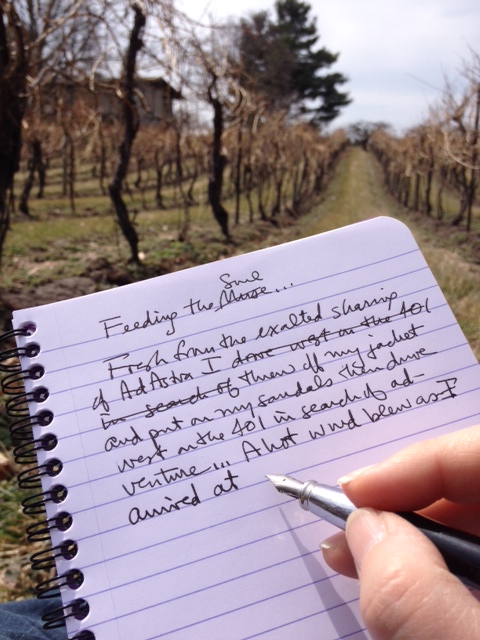
notebook-vineyard-NOTL

Niagara on the Lake, ON (photo by Nina Munteanu)

You might be saying: well, that’s all well and good for a historical-mystery set in Budapest or a science fiction thriller set in the Vega system. But you don’t need to do research because you’re writing a fantasy or a memoir. Neither of these, on the face of it, appears to require research: the fantasy is based on a totally made up world, after all, and the memoir is all about you. So, why bother? As a matter of fact, they both need research. Most books do, particularly nowadays for our multiplex, intelligent and discerning readership. Readers of any fiction enjoy learning something when they read, particularly when it’s seamless and made easy through a compelling story. It’s a real bonus.

To return to the fantasy, you will find very quickly that in order to build a consistent world (even if it’s mostly from your own imagination), you will need to draw upon something real to anchor your imaginary world upon. Whether this reflects a powerful myth or forms an alternative version of a real society, you will still need to apply some “rules” to follow, so you don’t lose your reader.

With respect to the memoir, the need for research lies in placing your story in context with either some event, idea, theme or place of interest to attract readership. Unless you’re a world unto yourself (e.g., you’re a celebrity of some kind with an established following), your story will require this larger element within which to place your personal story. That’s where research comes in.

Internet as Resource and Risk

The Internet provides an excellent database that is rich with information, if you know how to get it and qualify it.

Chances are that your favorite newspaper or magazine has a strong online presence. The Internet provides an excellent platform for finding resources in a myriad of subjects. It is the largest single place where you can find current information relevant to almost anything.

With information so readily accessible and easy to find through Google and other search engines as well as giant amoeba-like encyclopedia wiki sites like Wikipedia, you needn’t suffer the frustrations of library and book searches. However, there is risk.

The risk is related ironically to the very accessibility of online information. You need to be even more vigilant of the veracity and reliability of your sources when conducting online research.

Optimizing Your World Wide Web Search

The Teaching Library Internet Workshop at Berkley University provides excellent tutorials on how to search the internet for topics. They recommend a search strategy that analyzes your topic and searches with “peripheral vision”. For instance, they suggest that you:

  • define for your topic any distinctive words or phrases, an overview of the broader topic to which your topic belongs, any synonyms equivalent terms or variants of spelling to include
  • not assume you know what you want to find. Look at search results and see what you might use in addition to what you’ve thought of
  • switch between search engines and directories and back

Verifying Your Research

Path deas park

Deas Park, BC (photo by Nina Munteanu)

When doing research, particularly on the Internet (but anywhere), you should do several things:

  • Use more than one source, particularly for important things; this will give you a wider range of material from which to discern accuracy and reliability
  • Verify your sources and preferably cross-reference to measure out objective “truth” vs bias
  • Try to use primary sources (original) vs. secondary or tertiary sources (original cited and open to interpretation); the closer you are to the original source, the closer you are to getting the original “story”
  • When going to more than one source, try to get a range of different source-types (e.g., conservative newspaper vs. blog vs. special interest site, etc.) to gain a full range of insight into the issue you’re researching

nina-2014aaNina Munteanu is an ecologist and internationally published author of award-nominated speculative novels, short stories and non-fiction. She is co-editor of Europa SF and currently teaches writing courses at George Brown College and the University of Toronto. Visit www.ninamunteanu.ca for the latest on her books.