Book Review: “The Martian Chronicles”

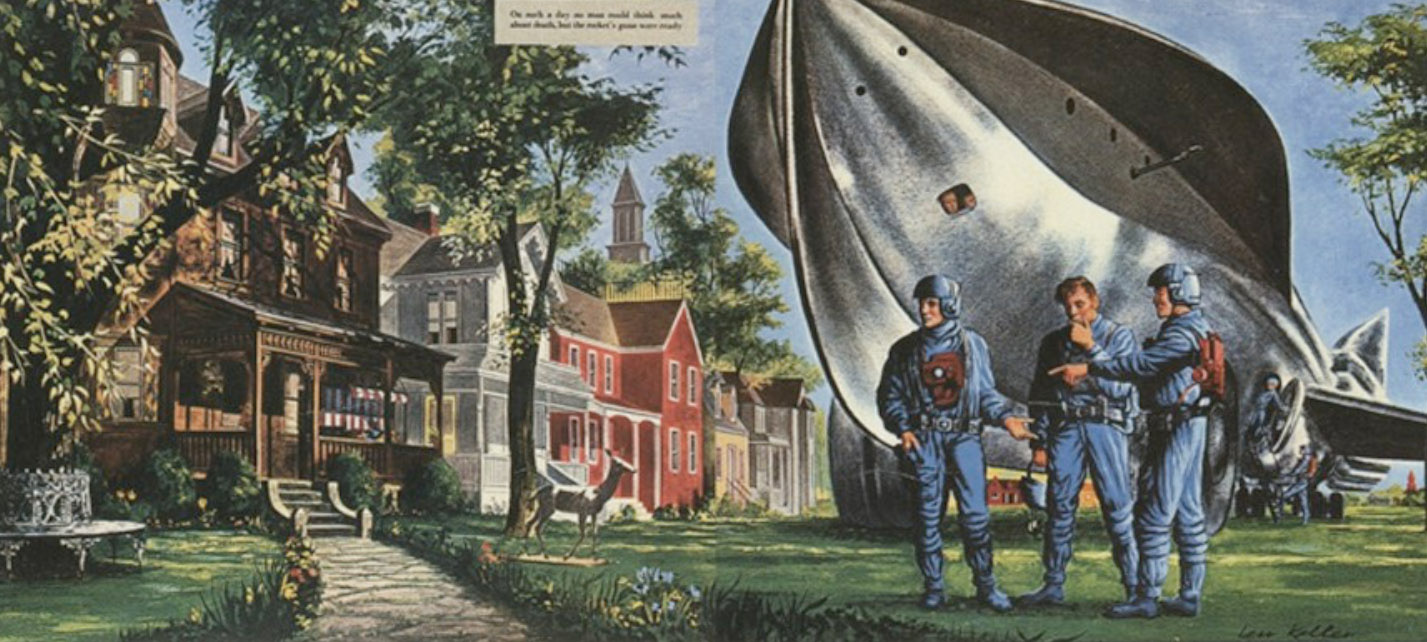
Illustration depicting ‘Rocket Summer’ (image from The Black Cat Moan)

They came because they were afraid or unafraid, happy or unhappy. There was a reason for each man. They were coming to find something or get something, or to dig up something or bury something. They were coming with small dreams or big dreams or none at all

Ray Bradbury, The Martian Chronicles

When I was but a sprite, and before I became an avid reader of books (I preferred comic books), I read Ray Bradbury’s The Martian Chronicles. It changed me, what I thought of books and what I felt about the power of stories. It made me cry. And perhaps that was when I decided to become a writer. I wanted to move people as Bradbury had moved me.

The 1970 Bantam book jacket aptly describes The Martian Chronicles as, “a poetic fantasy about the colonization of Mars. The story of familiar people and familiar passions set against incredible beauties of a new world…A skillful blending of fancy and satire, terror and tenderness, wonder and contempt.”

Rockets land on Mars overlooking Bradbury Lane (illustration from Sutori)

The Martian Chronicles isn’t really about Mars. True to Bradbury’s master metaphoric storytelling, The Martian Chronicles is about humanity. Who we are, what we are and what we may become. What we inadvertently do—to others, and finally to ourselves—and how the irony of chance can change everything. Despite the knowledge of no detectable amounts of oxygen, Bradbury gave Mars a breathable atmosphere: “Mars is a mirror, not a crystal,” he said, using the planet for social commentary rather than to predict the future.

From “Rocket Summer” to “The Million-Year Picnic,” Ray Bradbury’s stories of the colonization of Mars form an eerie tapestry of past and future. Written in the 1940s, the chronicles long with the nostalgia of shady porches with pitchers of lemonade, ponderously ticking grandfather clocks, and comfortable sofas. Expedition after expedition leave Earth to investigate and colonize Mars. Though the Martians guard their mysteries well, they succumb to the diseases that come with the rocketeers and grow extinct—not unlike the quiet disappearance of the golden toad, the Pinta giant tortoise, or the Bramble Cay melomys. Humans, with ideas often no more lofty than starting a tourist hot-dog stand, bear no regret for the native alien culture they exploit and eventually displace.

It is a common theme of human colonialism and expansionism, armed with the entitlement of privilege. Mars is India to the imperialistic British Empire. It is Rwanda or Zaire to the colonial empire of the cruel jingoistic King Leopold II of Belgium. Mars is Europe to Nazi Germany’s sonderweg. We need look no further than our own Canadian soil for a reflection of this slow violence of disrespect and apathy by our settler ancestors on the indigenous peoples of Canada.


Mars was a distant shore, and the men spread upon it in waves… Each wave different, and each wave stronger. 

The Martian Chronicles

Tyler Miller of The Black Cat Moan makes excellent commentary in their 2016 article entitled “How Ray Bradbury’s ‘The Martian Chronicles’ changed Science Fiction (and Literature).” The article begins with a quote from Argentinean author Jorge Luis Borges (in the introduction to the Spanish-language translation of The Martian Chronicles: “What has this man from Illinois done, I ask myself when closing the pages of this book, that episodes from the conquest of another planet fill me with horror and loneliness?”

Remember, this was the 1950s … halfway through a century dominated by scientific discovery, and expansion. The 1950s saw developments in technology, such as nuclear energy and space exploration. On the heels of the end of World War II, the 1950s was ignited by public imagination on conquering space, creating technological futures and robotics. The 1950s was considered by some as the real golden age for science fiction, still a kind of backwater genre read mostly by boys and young men, that told glimmering tales of adventure, exploration, and militarism, of promising technologies, and often-androcratic societies who used them in the distant future to conquer other worlds full of strange and disposable alien beings in the name of democracy and capitalism. (In some ways, this is still very much the same. Though, it is thankfully changing…)

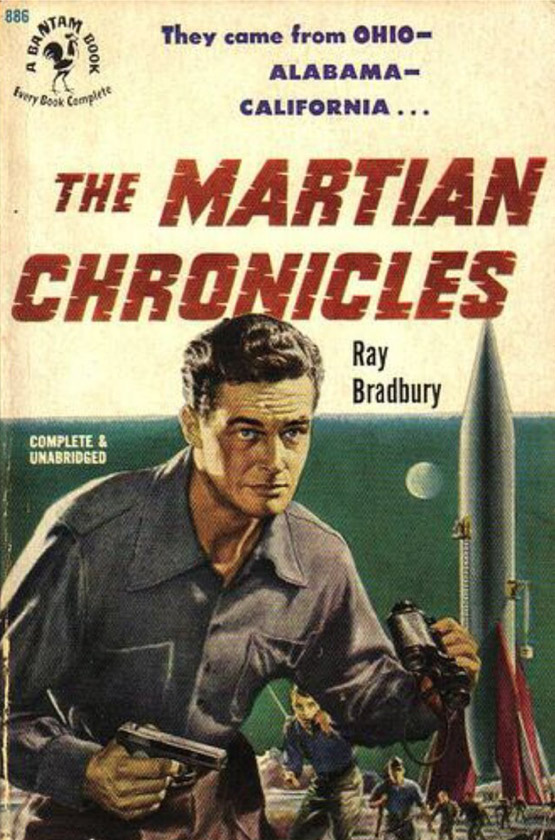
(Bantam 1951 1st edition cover)

Many scientists deeply involved in the exploration of the solar system (myself among them) were first turned in that direction by science fiction. And the fact that some of that science fiction was not of the highest quality is irrelevant. Ten year‐olds do not read the scientific literature.

Carl Sagan, 1978
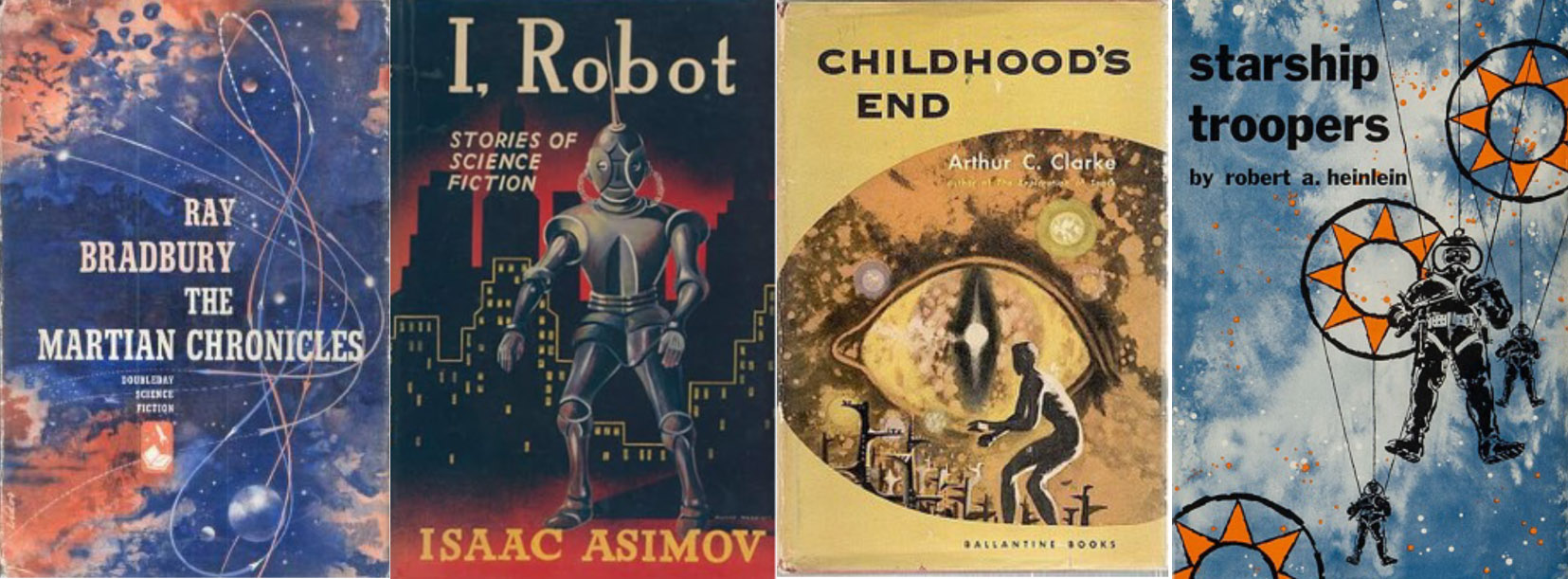
First edition book covers of Martian Chronicles (Doubleday, 1950); I, Robot (Grayson & Grayson, 1952); Childhood’s End (Ballantine Books, 1953); and Starship Troopers (G.P. Putnam’s Sons, 1959)

Large idea-driven SF works that typified this time period included Robert A. Heinlein’s Starship Troopers, Arthur C. Clarke’s Childhood’s End, Isaac Asimov’s I, Robot and his Foundation series.

It was at this time that Ray Bradbury published The Martian Chronicles. Though filled with the requisite rocket ships, gleaming Martian cities, ray guns, and interplanetary conquest, from the very start—as Borges noted—The Martian Chronicles departed radically from its SF counterparts of the time.

(Illustration on album cover of “Rocket Summer”, music by Chris Byman)

Instead of starting with inspiring technology or a stunning action sequence, or a challenging idea or discovery, Bradbury’s The Martian Chronicles opens with a domestic scene.

One minute it was Ohio winter, with doors closed, windows locked, the panes blind with frost, icicles fringing every roof, children skiing on the slopes, housewives lumbering like great black bears in their furs along the icy streets.

And then a long wave of warmth crossed the small town. A flooding sea of hot air; it seemed as if someone had left a bakery door open. The heat pulsed among the cottages and bushes and children. The icicles dropped, shattering, to melt. The doors flew open. The windows flew up. The children worked off their wool clothes. The housewives shed their bear disguises. The snow dissolved and showed last summer’s ancient green lawns.

Rocket summer. The words passed among the people in the open air, airing houses. Rocket summer. The warm desert air changing the frost patterns on the windows, erasing the art work. The skis and sleds suddenly useless. The snow, falling from the cold sky upon the town, turned to a hot rain before it touched the ground.

Rocket summer. People leaned from their dripping porches and watched the reddening sky.

The rocket lay on the launching field, lowing out pink clouds of fire and oven heat. The rocket stood in the cold winter morning, making summer with every breath of its mighty exhausts. The rocket made climates, and summer lay for brief moment upon the land…

Ray Bradbury, The Martian Chronicles, Rocket Summer

Bradbury’s focus was on the domestic. Housewives fighting off the ice and snow of Ohio. A Martian woman “cleaning the house with handfuls of magnetic dust which, taking all dirt with it, blew away on the hot wind.”

They had a house of crystal pillars on the planet Mars by the edge of the empty sea, and every morning you could see Mrs. K eating the golden fruits that grew from the crystal walls, or cleaning the house with handfuls of magnet dust which, taking all dirt with it, blew away on the hot wind. Afternoons, when the fossil sea was warm and motionless, and the wine trees stood stiff in the yard…you could see Mr. K in his room, reading from a metal book with raised hieroglyphs over which he brushed his hand, as one might play a harp. And from the book, as his fingers stroked, a voice sang, a soft ancient voice, which told tales of when the sea was red steam on the shore and ancient men had carried clouds of metal insects and electric spiders into battle…

This morning Mrs. K stood between the pillars, listening to the desert sands heat, melt into yellow wax, and seemingly run on the horizon.

Something was going to happen.

She waited.

Ray Bradbury, The Martian Chronicles, Ylla

Bradbury’s gift to literature—and to his SF genre—was his use of metaphor. Unlike the science fiction of his colleagues, Bradbury’s stories are a lens to study the past and the present. According to Miller, “The Earthmen’s exploration and desolation of Mars allowed Bradbury to look not forward but backward at exploration and desolation on Earth, namely the European arrival in the New World. Just as Europeans landed in North and Central America wholly unprepared for what they found there, Bradbury’s Earthmen are unprepared time and again for the wonder and the horror of Mars. And just as European diseases decimated native people in the Americas, it is chicken-pox which wipes out the Martians.”

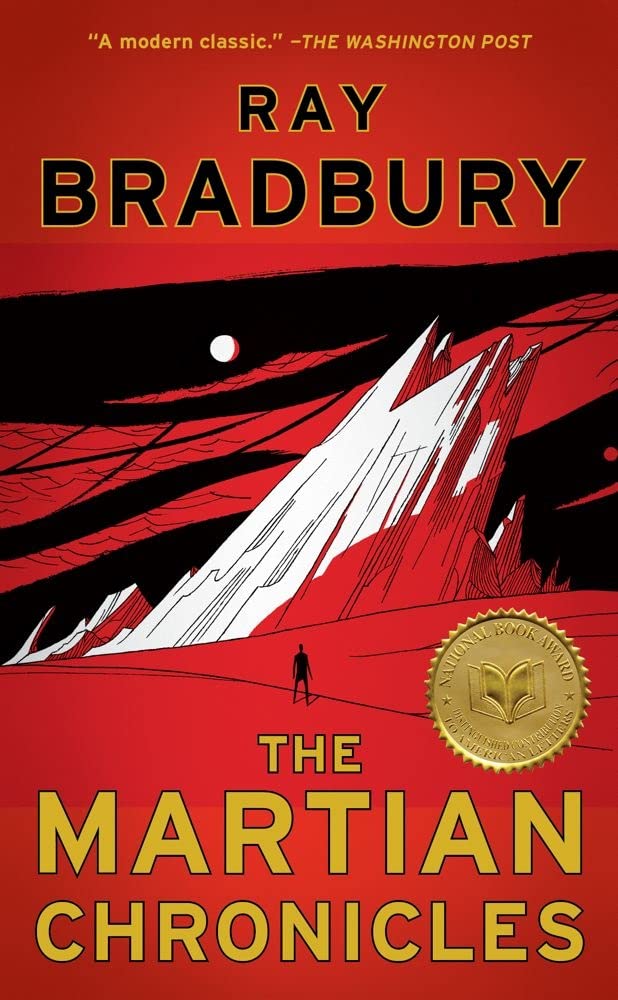
The back cover of the 2012 mass market paperback Simon & Schuster Reprint edition of The Martian Chronicles reads:

Bradbury’s Mars is a place of hope, dreams and metaphor—of crystal pillars and fossil seas—where a fine dust settles on the great, empty cities of a silently destroyed civilization. It is here the invaders have come to despoil and commercialize, to grow and to learn—first a trickle, then a torrent, rushing from a world with no future toward a promise of tomorrow. The Earthman conquers Mars … and then is conquered by it, lulled by dangerous lies of comfort and familiarity, and enchanted by the lingering glamour of an ancient, mysterious native race.

 “Ask me then, if I believe in the spirit of the things as they were used, and I’ll say yes. They’re all here. All the things which had uses. All the mountains which had names. And we’ll never be able to use them without feeling uncomfortable. And somehow the mountains will never sound right to us; we’ll give them new names, but the old names are there, somewhere in time, and the mountains were shaped and seen under those names. The names we’ll give to the canals and the mountains and the cities will fall like so much water on the back of a mallard. No matter how we touch Mars, we’ll never touch it. And then we’ll get mad at it, and you know what we’ll do? We’ll rip it up, rip the skin off, and change it to fit ourselves.”

“We won’t ruin Mars,” said the captain. “It’s too big and too good.”

“You think not? We Earth Men have a talent for ruining big, beautiful things.”

Ray Bradbury, The Martian Chronicles, And the Moon be Still as Bright

Ray Bradbury’s The Martian Chronicles is a profound and tender analysis of the quiet power humanity can wield unawares and how we define and treat ‘the other.’ It is a tragic tale that reflects only too well current world events where the best intended interventions can go awry. From the meddling friend who gossips to “help” another (only to make things worse) to the righteous “edifications” of a religious group imposing its “order” on the “chaos” of a “savage” peoples … to the inadvertent tragedy of simply and ignorantly being in the wrong place at the wrong time (e.g., the introduction of weeds, disease, etc. by colonizing “aliens” to the detriment of the native population; e.g., smallpox, AIDs, etc.). Bradbury is my favourite author for this reason (yes, and because he makes me cry…)

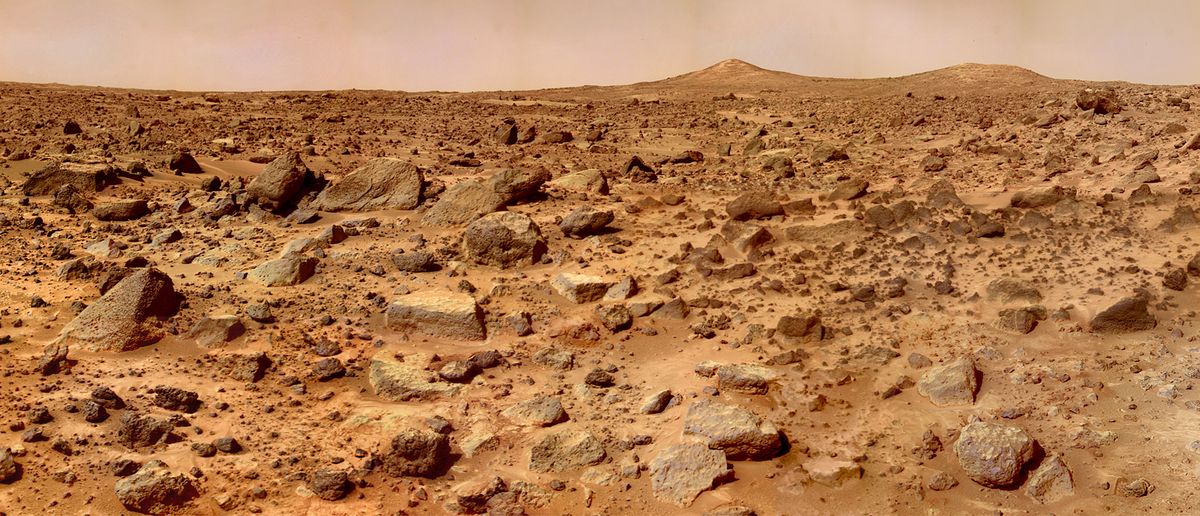
Mars terrain (photo by NASA)

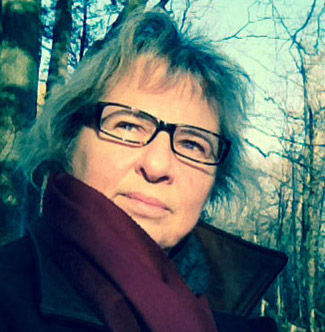
Nina Munteanu is a Canadian ecologist / limnologist and novelist. She is co-editor of Europa SF and currently teaches writing courses at George Brown College and the University of Toronto. Visit www.ninamunteanu.ca for the latest on her books. Nina’s bilingual “La natura dell’acqua / The Way of Water” was published by Mincione Edizioni in Rome. Her non-fiction book “Water Is…” by Pixl Press (Vancouver) was selected by Margaret Atwood in the New York Times ‘Year in Reading’ and was chosen as the 2017 Summer Read by Water Canada. Her novel “A Diary in the Age of Water” was released by Inanna Publications (Toronto) in June 2020.
The Use of Character-Coupling in Eco-Literature to Give Voice to the Other, Part 1: Introduction 


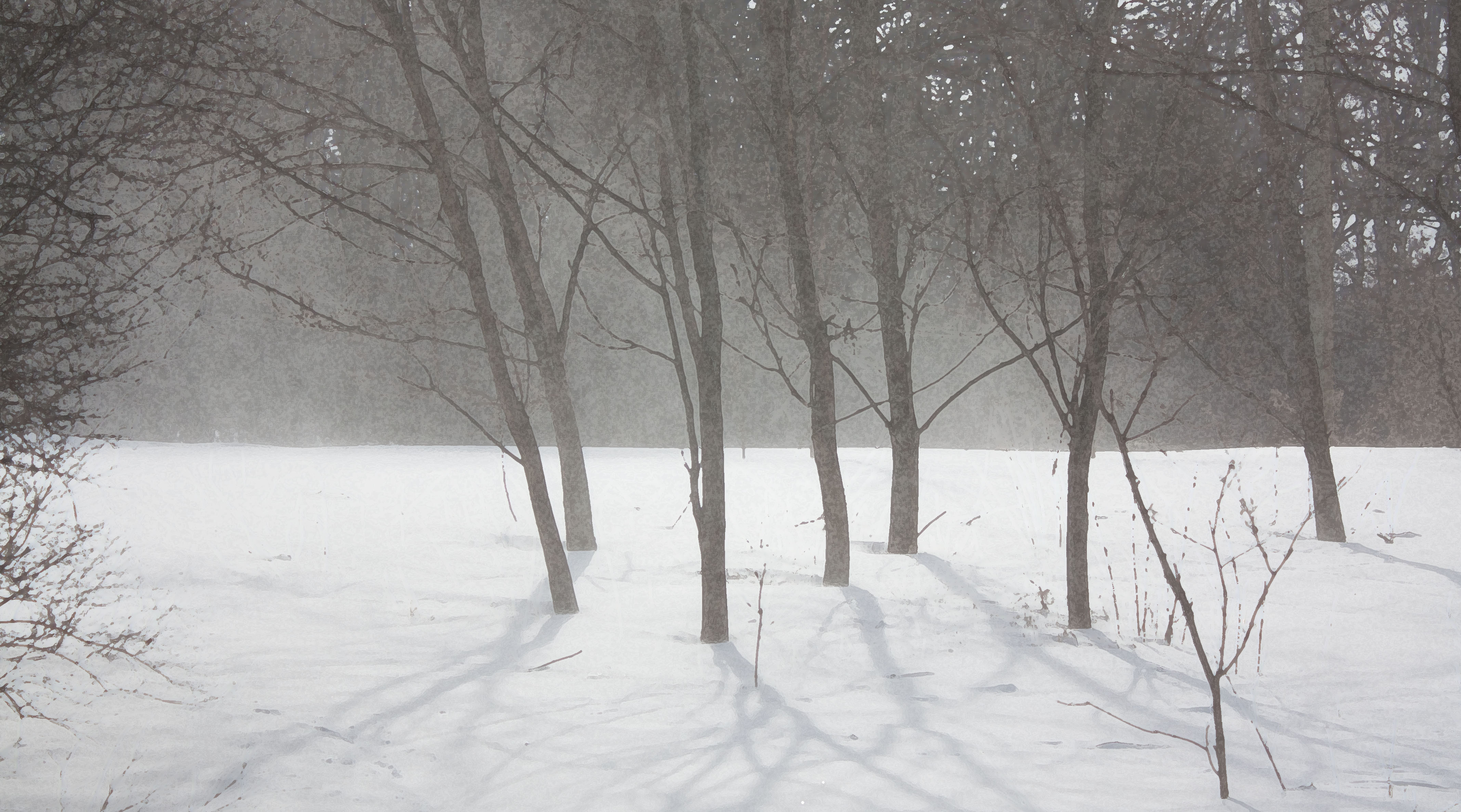
A trickster wind stirs up clouds of drifting snow, ON (photo and rendition by Nina Munteanu)

Not long ago, I was driving through a short tunnel that I typically take to go to work and, glancing back through the rearview mirror, I didn’t see what I expected to see. For some reason—perhaps it was the light or my wandering mind—the familiar scene looked unfamiliar; it was as though I’d entered a new dimension.

It felt ‘Otherly’ and I briefly experienced a titillating excitement akin to a protagonist journeying into a new world in some novel.

Indeed, the rhetoric of ‘Otherness’ in most fiction is typically portrayed through the singular point of view (POV) and discourse of a protagonist on a journey. The very nature of the term ‘Other’ used in any narrative suggests exclusion. According to Patricia Kerslake of Central Queensland University, the postcolonial notion of the Other arises through a mutual process of exclusion that inspires the very idea of ‘alien’ by imposing expectation on perception. Kerslake argues that: “When one culture imposes its perceptions on another, in that it begins to see the Other not as they are but as, in [Edward W.] Said’s words, ‘they ought to be’, then the process of representation becomes inevitable: a choice is made to see a ‘preferred’ real”.  

In most forms of literature The POV ‘voice’ represents the Self, the inclusive ‘us’ (worldview) in its encounter with the Other, which in turn is the ‘not us.’ In his book  Orientalism: Western Conceptions of the Orient Edward W. Said contended that for there to even be an ‘us’, there has to be a ‘not-us’. The resulting power dynamic of “them and us,” of Other and Self, is created and controlled by perceptions of the singular POV voice that usually represents ‘us.

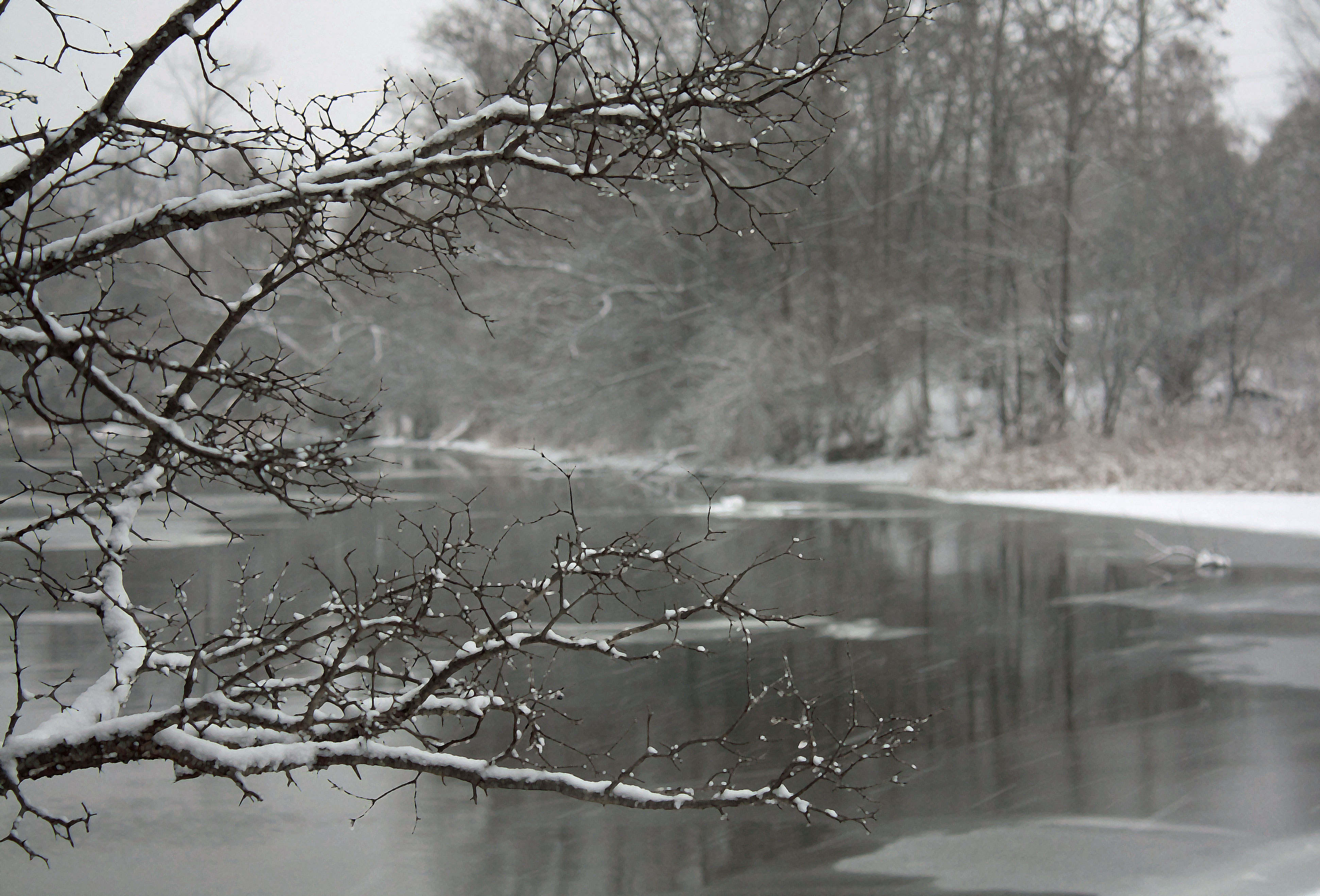
Tree branches overlook river during snowfall, ON (photo and rendition by Nina Munteanu)

‘The Other’ in Various Genres of Literature

In most genres of literature, the Other is often relegated to this dichotomous portrayal. In post-apocalyptic and metaphoric journey stories the Other may be the harsh environment or a calamity through which the protagonist must find their own strength to survive; in military stories it is clearly the enemy, seldom portrayed with compassion or understanding but there to test our hero; in coming-of-age stories it may be the oppressive rule or established world the hero must overcome; in science fiction it may be the hostile or unknowable aliens who must be defeated. According to Ursula K. Le Guin, science fiction displays a legacy of silencing the Other and rendering it impotent to establish and confirm humanity’s superior position in the world. Given that science fiction (SF) literature is rooted in culture, and often helps construct national identity, SF often confirms worldview, and in so doing creates internal Others (Brioni and Comberiati). According to Hermann, by failing to escape our boundary conflicts, SF simply constructs “new situations of restriction and otherness.” Kerslake argues that “silencing the Other provides SF with an indirect ability to define the potential of humankind”.1 

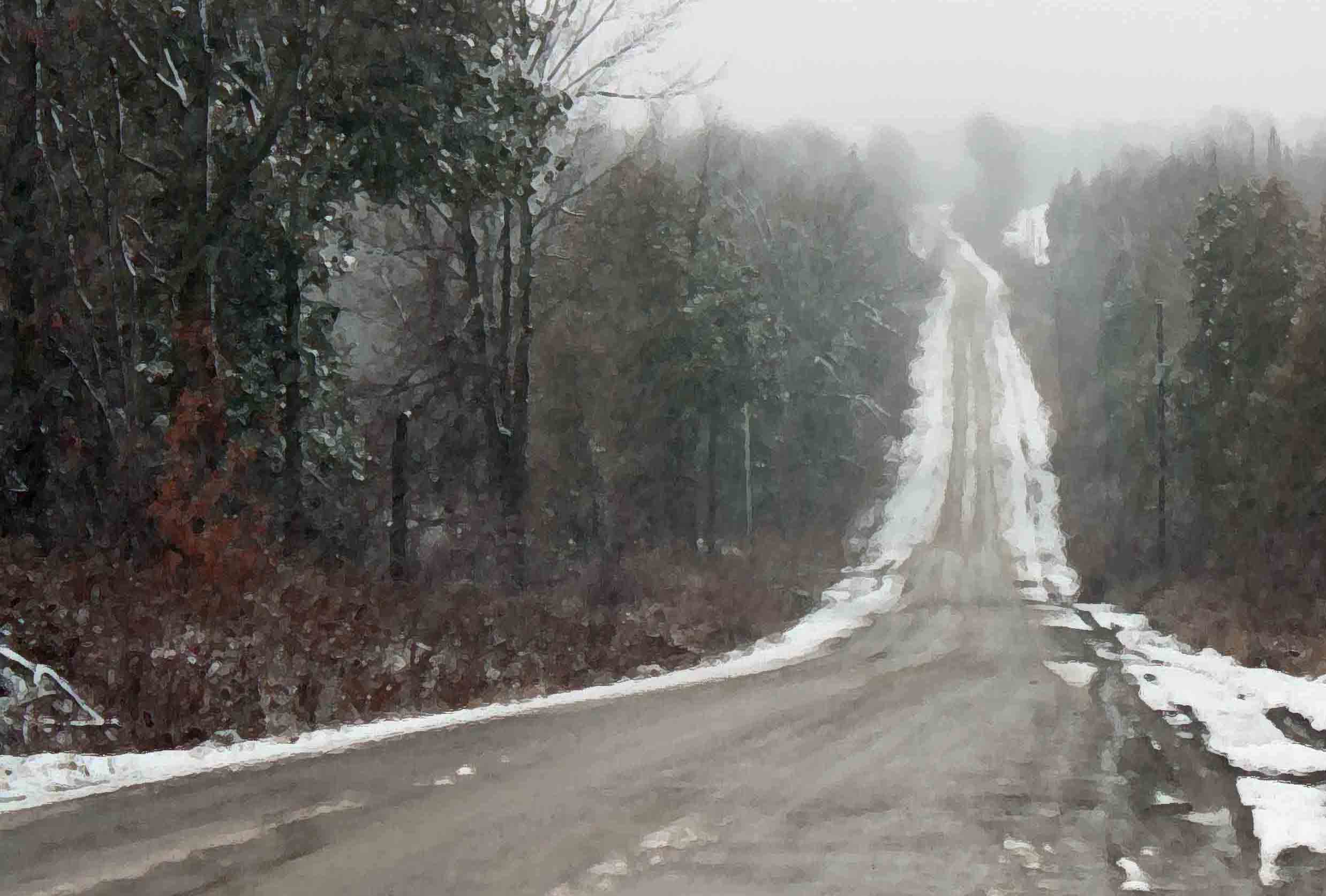
Country road in the Kawarthas, ON (photo and rendition by Nina Munteanu)

‘The Other’ in Eco-Literature

While eco-literature overlaps with many genres, it appears to differ from SF and other genres portrayal of Other through its unique intention to give voice to otherwise voiceless characters, and it often does this through masterful use of character-coupling. Mary Woodbury defines eco-literature or eco-fiction as literature “made up of fictional tales that reflect important connections, dependencies, and interactions between people and their natural environments.” The environment—or an aspect of the environment—plays a major role in eco-literature, either as premise or as itself a character on a journey.

Eco-Literature is preeminently the literature of bringing awareness to the plight of the environment as both character and as Other and explores humanity’s role in that plight. 

Eco-literature may go beyond raising awareness to link environmental abuse with concepts of jingoistic hubris; it may raise issues of human intersectionality, misogyny, marginalization, oppression of class, privilege, sexuality and race, and misuse of power. Violent acts perpetrated on environment—when environment is personified as ‘character’ and/or coupled directly to a character—elicit powerful emotion and clearly demonstrate how social/human injustice reflects environmental injustice.

At the heart of much eco-literature lie strong relationships forged between a major character (often main protagonist) and a minor character (as avatar for the environment such as place or ecosystem, a being, animal or plant) or an aspect of their environment—itself a character and archetype. The strong connection between protagonist and environment—whether antagonistic or sympathetic—fosters unique communication that provides ‘voice’ to the environment as Other and as Othered.  The environment may serve as a symbolic connection to theme and can illuminate through the sub-text of metaphor a core aspect of a main or minor character and their journey: the over-exploited white pine forests for the lost Mi’kmaq in Annie Proulx’s Barkskins; the mystical life-giving sandworms for the beleaguered Fremen of Arrakis in Frank Herbert’s Dune

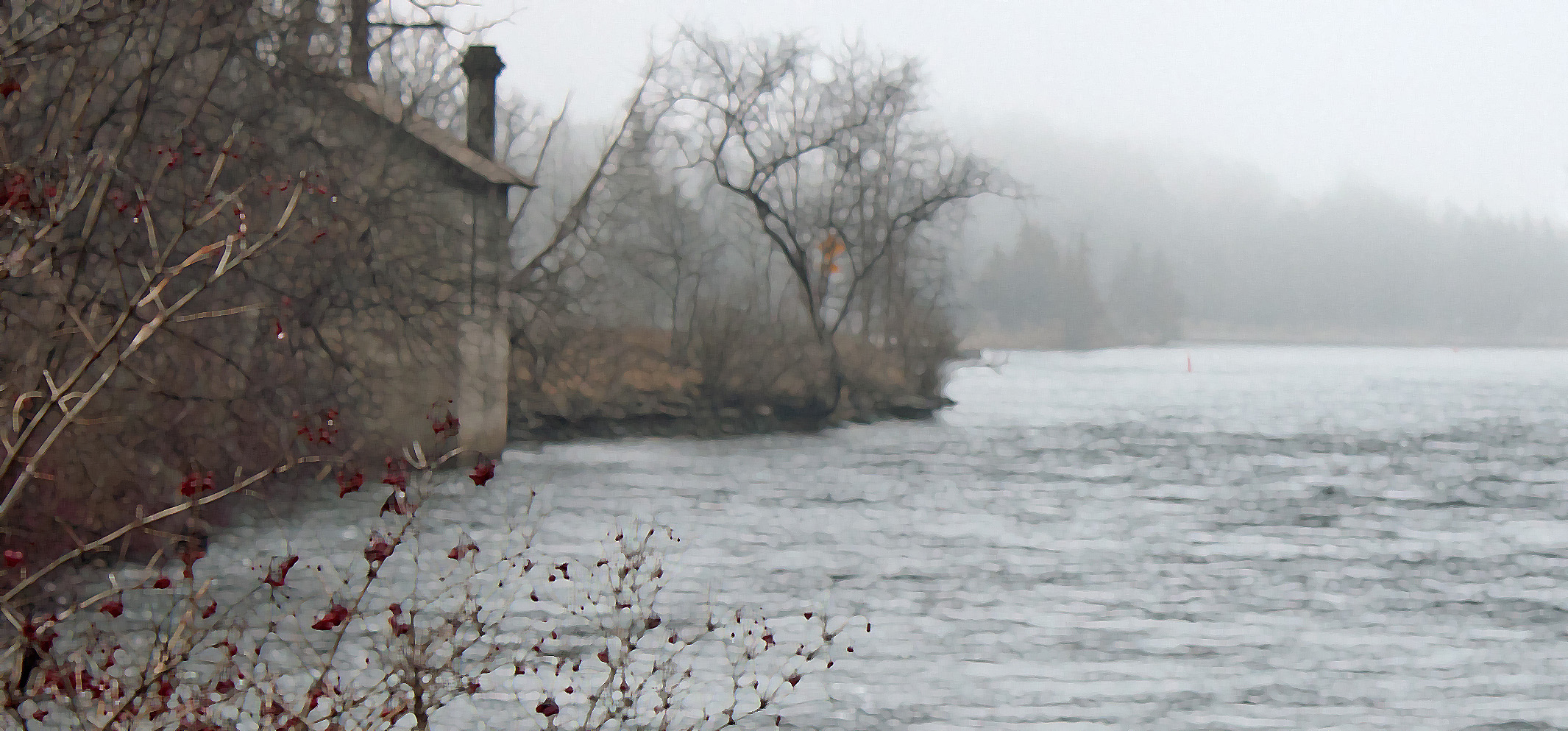
Old shed overlooks the Otonabee river on a snowy-foggy day, ON (photo and rendition by Nina Munteanu)

Giving Voice to the Other Through Character-Coupling 

The coupling of protagonist with avatar—character-coupling—creates powerful drama and visceral connection to environmental issues and needs. Character-coupling characterizes environment, the Other, and effectively provides it with a voice, often through relationship. It elicits reader engagement, sparking new understandings and motivations toward a better caring of this world. The Other’s voice may be understandable (e.g. in many fables such as The Bear), arcane, tumultuous or fearsome (Memory of Water), or enduring and silently profound (The Breathing Hole). 

Eco-literature is particularly poised to make meaningful character-couplings between mostly human protagonist and environmental characters or representatives. This is because the protagonist provides relatable qualities for easy reader empathy, while the Othered character is often less relatable—often an arcane aspect of the environment, such as water (Memory of Water) or a forest (The Overstory). Character-couplings illuminate a core aspect of the main character’s journey and/or the reader’s journey. From direct and intimate (The Breathing Hole, The Bear) to associated and inferred (The Windup Girl, Barkskins), different forms of character couplings often provide a new understanding of the plight and viewpoint of the Other. The protagonist’s link to the Other provides a readable map for the reader to follow and make their own connection. 

Dogwood shrubs and trees line a marsh in Ontario (photo and rendition by Nina Munteanu)

Women Coupled with Nature as Other  

Since before the industrial revolution, and very much to this day, the prevailing western worldview toward the wildness of nature has been to dominate it and constrain it. The conviction that humans are separate from and superior to nature was established by Judeo-Christian beliefs and the Cartesian hegemony that laid the foundations of modern anthropocentrism (White). Ecofeminist Ynestra King argues that “we live in a culture that is founded on the repudiation, [exploitation], and domination of nature … the Other that has no voice”. King further argues that, “Women, who are identified with nature, have been similarly objectified and subordinated in patriarchal society”.   

The modern ecofeminist movement contends that a long historical precedent of associating women with nature has led to the oppression of both. Ecofeminists note that “women and nature were often depicted as chaotic, irrational, and in need of control, while men were frequently characterized as rational, ordered, and thus capable of directing the use and development of women and nature” (Miles). 

French philosopher and writer Simone de Beauvoir elegantly explores this connection: 

Man seeks in woman the Other as Nature and as his fellow being. But we know what ambivalent feelings Nature inspires in man. He exploits her, but she crushes him, he is born of her and dies in her; she is the source of his being and the realm that he subjugates to his will; Nature is a vein of gross material in which the soul is imprisoned, and she is the supreme reality…Woman sums up Nature as Mother. Wife, and Idea; these forms now mingle and now conflict, and each of them wears a double visage.  

Simone de Beauvoir

Because of this association and history, some of the most powerful character-couplings in eco-literature are of women protagonists coupled with natural avatar: the Inuk widow with polar bear cub in the clifi allegory The Breathing Hole; the girl and bear in the allegory-fable The Bear; the windup girl Emiko and the Cheshire cats in the cautionary tale The Windup Girl; the tea master Noria and water in the post-ecosystem collapse novel Memory of Water; the ecologist, Patricia Westerford, with the giant trees in The Overstory.3

Part 2 (“Types of Character-Coupling in Seven Examples of eco-Literature“) follows next week.

Heavy snow on the river, ON (photo and rendition by Nina Munteanu)

Footnotes:

  1. The Other has often been metaphorically portrayed in SF by aliens that lack a distinct voice or viewpoint; some portrayal has reflected a fearful imperialistic colonialism by representing Other as adversary such as an invading monster with no regard for humans (e.g. Robert Heinlein’s The Number of the Beast; H.G. Wells’s War of the Worlds). Kerslake argues that the traits of the Other “fall characteristically—and conveniently—into those spaces we choose not to recognize in ourselves, the ‘half-imagined, half-known: monsters, devils, heroes, terrors, pleasures, desires’ of Said’s ‘Orient’”. The Martians of Ray Bradbury’s Martian Chronicles—who also have no voice—reflect our indigenous peoples under the yoke of settler colonialism and an exploitive resource-extraction mindset. The monster of Mary Shelley’s Frankenstein—also with no voice—exemplifies the disabled/deformed unsavory departure from our ‘perfect’ self-image; to be chased, destroyed and nullified.  
  2. In some stories the protagonist is Othered in some way, providing a more direct link to the experience of being the Other or being Othered. For instance, in Mishell Baker’s Borderline, disabled protagonist Millie provides the connection to the greater theme of Othering “lesser beings.” In Costi Gurgu’s Recipearium, the protagonists are not human; they are alien creatures that dwell inside the dead carcass of a monster, representing Other as main character. 
  3. Excellent examples that overtly deal with some of these injustices include The Fifth Season trilogy by N.K. Jemisin and The Marrow Thieves by Cherie Dimaline.
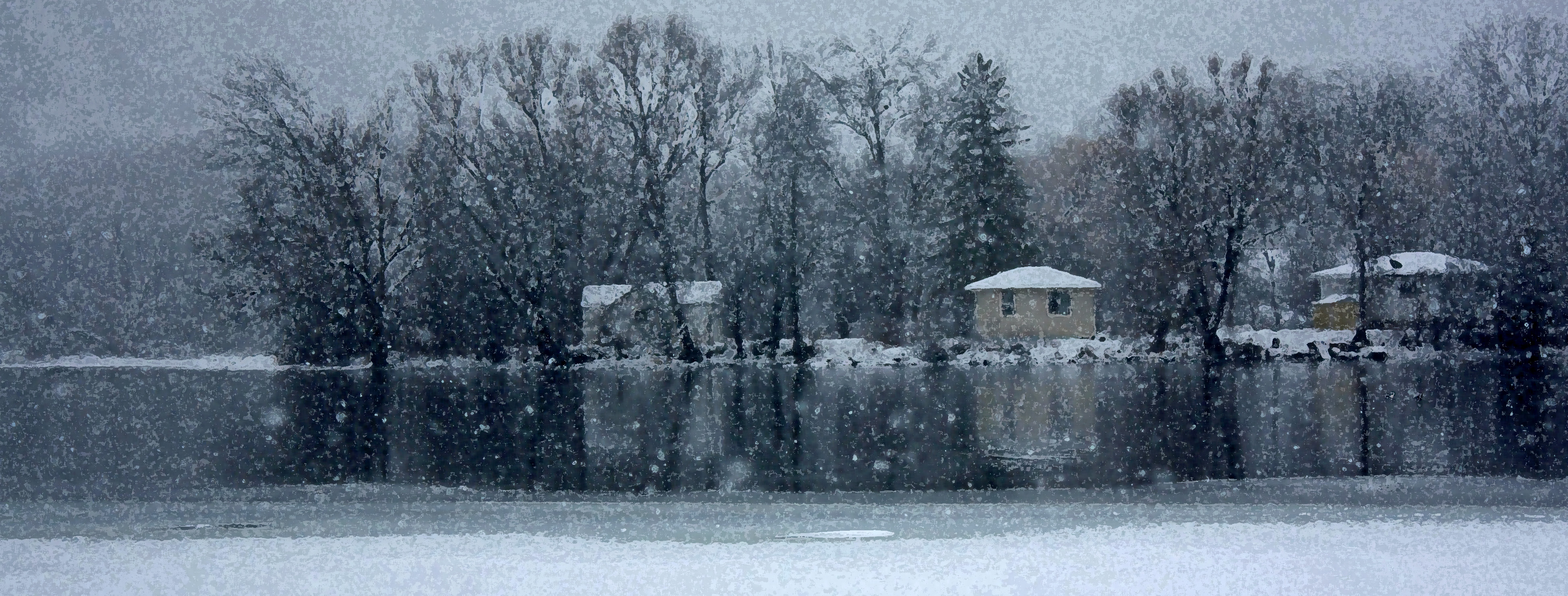
Snow-covered houses line the river during a snowstorm, ON (photos and rendition by Nina Munteanu)

References:

Agamben, Giorgo. Homo Sacer: Sovereign Power and Bare Life. Stanford University Press. 1998. 228pp.

Bacigalupi, Paolo. The Windup Girl. Night Shade Books, New York. 2015. 466pp.

de Beauvoir, Simone. “The Second Sex.” Modern Library, Random House, New York. 1968. p.144 In:

Dwyer, Jim. Where the Wild Books are: A Field Guide to Ecofiction. University of Nevada Press, Reno, Nevada. 2010. 264pp.

Ganz, Marshall and Emily S. Lin. “Learning to Lead: a Pedagogy of Practice.” The Handbook for Teaching Leadership: Knowing, Doing, and Being, edited byIn Scott A. Sook, Nitin Nohria, and Rakesh Khurana. Thousand Oaks: SAGE Publications, 2012. 354p.

Herbert, Frank. Dune. Ace, New York. 1965. 884pp.

Itäranta, Emmi. Memory of Water. Harper Voyager. New York. 2014. 266pp.

Kerslake, Patricia. “The Self and Representations of the Other in Science Fiction.” Chapter 1. Science Fiction and Empire, Liverpool University Press, 2007, pp. 8-24.

King, Ynestra. “The Ecology of Feminism and the Feminism of Ecology.” Chapter 2. Healing the Wounds: The Promise of Ecofeminism, edited by Judith Plant. New Society Pub, 1989, pp. 18-28.

Krivak, Andrew. The Bear. Bellevue Literary Press, New York, NY. 2020. 221pp.

Miles, Kathryn. “Ecofeminism: sociology and environmentalism.” Britannica, britannica.com/topic/ecofeminism.

Murphy, Coleen. The Breathing Hole. Playwrights Canada Press, Toronto. 2020. 305pp.

Nugent, Brittany. “The Rare Bear Protecting a Canadian Rainforest.” Goodness Exchange. 2021. https://goodness-exchange.com/spirit-bear-kermode-bear-kept-a-secret-for-generations/ Accessed October 30, 2022.

Powers, Richard. The Overstory. W.W. Norton & Company, New York. 2018. 502pp.

Proulx, Annie. Barkskins. Scribner, New York. 2016. 717pp.

Roburn, Shirley. Shifting Stories, Changing Places: Being Caribou and Narratives of Transformational Climate Change in Northwestern North America. Concordia University PhD dissertation. P. 31. https://spectrum.library.concordia.ca/id/eprint/980193/1/Roburn_PhD_F2015.pdf. Accessed 31 October 2022

Said, Edward W. Orientalism: Western Conceptions of the Orient. Vintage, London, 1978. 432pp.

Woodbury, Mary. “What is Eco-fiction?” Dragonfly.eco. 2016. https://dragonfly.eco/eco-fiction/ Accessed September 15, 2022.

The rotary trail on a heavy-snow day, ON (photo and rendition by Nina Munteanu)

Nina Munteanu is a Canadian ecologist / limnologist and novelist. She is co-editor of Europa SF and currently teaches writing courses at George Brown College and the University of Toronto. Visit www.ninamunteanu.ca for the latest on her books. Nina’s bilingual “La natura dell’acqua / The Way of Water” was published by Mincione Edizioni in Rome. Her non-fiction book “Water Is…” by Pixl Press (Vancouver) was selected by Margaret Atwood in the New York Times ‘Year in Reading’ and was chosen as the 2017 Summer Read by Water Canada. Her novel “A Diary in the Age of Water” was released by Inanna Publications (Toronto) in June 2020.
When Writers Use the Present—or the Past—to inform The Future in Their Science Fiction Novel

The Darwin duology by Dragon Moon Press, depicting the late 21st Century, by Nina Munteanu

In my 2007 novel Darwin’s Paradox and its 2010 prequel Angel of Chaos—dystopian tales set in an unrecognizable post-climate change Canada at the end of the 21st Century—the father of the main character lectures his impressionable young daughter about how climate change helped create the heathland scrub that replaced the mixed woodlands of the old Carolinian and sub-Boreal environments:

“What’s over there?” She points to a far, dark hill. 

“Woodland. This was all forest before the cities got built and the climate changed.” 

“Climate changed?” 

“Yes, honey.” He focuses on the distance. “Caused the revolution thirty years ago. Since then the Ecologists have virtually eliminated our greenhouse gas emissions. Of course, the planet will be feeling the effects of global warming for decades to come. Perhaps centuries.” 

“They saved the planet, didn’t they?” 

His brows knit. “Perhaps they did, perhaps they didn’t,” he says enigmatically. 

I’d originally written the novel and its prequel in the seventies, before entering university. So, you might think that I was incredibly imaginative and prescient to come up with such climate devastation. But this simply isn’t so (well, not entirely, anyway). Just as with Margaret Atwood—who says: “When I wrote the Handmaid’s Tale, nothing went into it that had not happened in real-life somewhere at some time”—I was simply reading the signs.

Margaret Atwood demonstrating a fire-proof version of her book The Handmaid’s Tale

When it came to climate change, of course, I had some help. During my days at university, studying limnology, and in the 1980s and ‘90s when I worked as an environmental scientist and consultant, I encountered evidence of a changing environment and climate; people in the environmental sciences certainly knew the dangers of climate change long before it entered the common zeitgeist.

Science fiction dystopias aren’t so much predictive as realistically projecting possibilities based on current or past social patterns (these past social patterns, as Santayana notes, have a way of returning to us when we don’t pay attention to them). This notion lies at the root of the term cautionary tale and what makes one truly harrowing or terrifying; we sense to our very core how likely these scenarios are.

My near-future climate dystopia released by Inanna Publications in 2020

Response to my 2020 cautionary tale A Diary in the Age of Water reflects this visceral reaction by readers who shared that this blur of fiction with non-fiction and sense of realism—a “this could happen” quality—totally unbalanced them and engrossed them. Comments included “unique and captivating,” “unsettling and yet deliciously readable,” “strangely compelling” “scary and comforting at the same time,” “made my heart clench,” “a book of genuine power.”

Scene from Michael Radford’s film “Nineteen Eighty-Four” released in 1984, based on George Orwell’s 1949 novel

Indeed, many successful predictions have been made in speculative fiction. In 1961, Stanislaw Lem’s novel Return From the Stars predicted the invention of the touch pad, iPhone, iPad and Kindle. The telescreens that monitored the citizens of George Orwell’s Oceania in his dystopian 1949 novel Nineteen Eighty-Four was reflected, twenty years later, in the first CCTV installed in the United Kingdom. Philip K. Dick’s Minority Report accurately predicted personalized ads, voice-controlled homes, facial and optical recognition, and gesture-based computing. Self-driving cars were showcased in many speculative books and films such as Bladerunner, and Isaac Asimov’s I, Robot.

Scene from the film Minority Report with Tom Cruise

But many speculations have also not been realized. No flying cars—OK, some companies such as Toyota, Hyundai and Tesla are working on prototypes. While NASA plans to construct a surface habitat called Artemis Base Camp so that astronauts can remain on the moon’s surface for days or perhaps even weeks, it is far from happening soon. Also, no rotating space stations and space elevator—yet.

Many envisioned totalitarian/dystopian states in speculative fiction have also not been realized (e.g. We, Nineteen Eighty-Four, Brave New World, Fahrenheit 451, Handmaid’s Tale, Hunger Games, The Dispossessed, V for Vendetta )—though one could argue that aspects of each world envisioned by an author has occurred or is occurring in some form. One need only recall Edward Snowdon’s disclosures of NSA’s insidious surveillance to see parallels with Orwell’s Nineteen Eighty-Four. And as Margaret Atwood famously said in the quote above, nothing goes into her stories “that have not happened in real-life somewhere at some time.”

“The function of science fiction is not only to predict the future but to prevent it.”

Ray Bradbury

There are, in most cases, no technological impediments to the flying car, the jetpack, and moon-bases; only cultural ones. “These SF predictions ought to be viewed as visions of where we could be, as opposed to where we will be, or, keeping Bradbury in mind, visions of where we don’t want to go and, thankfully, have mostly managed to avoid to date,” says Steve Davidson of Grasping for the Wind. “Perhaps it’s all cultural,” he adds. Science fiction writer and futurist David Brin says that he is “more interested in exploring possibilities than likelihoods, because a great many more things might happen than do.”

In his book Four Futures: Life After Capitalism Peter Frase writes: “the importance of assessing possibility rather than likelihood is that it puts our collective action at the centre, while making confident predictions only encourages passivity.” In his 2010 essay, David Brin cites Orwell’s 1984 as a “self-preventing prophecy” that helped prevent the scenario (at least in its fullest).

George Orwell wrote his dystopian satire in 1949 about a mind-controlled society in response to the Cold War. The book was a metaphor “against totalitarianism and for democratic socialism,” said Orwell in his 1947 essay Why I Write, adding that, “Good prose is like a windowpane.” Was Orwell’s Nineteen Eighty-Four a failed novel because the real 1984 didn’t turn out quite like his 1984? Hardly. Hugo Award-winning novelist Robert J. Sawyer argues that we consider it a success, “because it helped us avoid that future. So just be happy that the damn dirty apes haven’t taken over yet.”

References:

Brin, David. 2010. “The Self-Preventing Prophecy: Or How a Dose of Nightmare Can Help Tame Tomorrow’s Path.” in Abbott Gleason et al. eds., On Nineteen Eighty-Four: Orwell and Our Future. Princeton University Press, Princeton, p.222.

Frase, Peter. 2016. “Four Futures: Life After Capitalism.” Verso Press, London. 150pp.

Country road in the Kawarthas during a foggy morning, ON (photo by Nina Munteanu)

Nina Munteanu is a Canadian ecologist / limnologist and novelist. She is co-editor of Europa SF and currently teaches writing courses at George Brown College and the University of Toronto. Visit www.ninamunteanu.ca for the latest on her books. Nina’s bilingual “La natura dell’acqua / The Way of Water” was published by Mincione Edizioni in Rome. Her non-fiction book “Water Is…” by Pixl Press(Vancouver) was selected by Margaret Atwood in the New York Times‘Year in Reading’ and was chosen as the 2017 Summer Read by Water Canada. Her novel “A Diary in the Age of Water” was released by Inanna Publications (Toronto) in June 2020.
When We Burn Books…

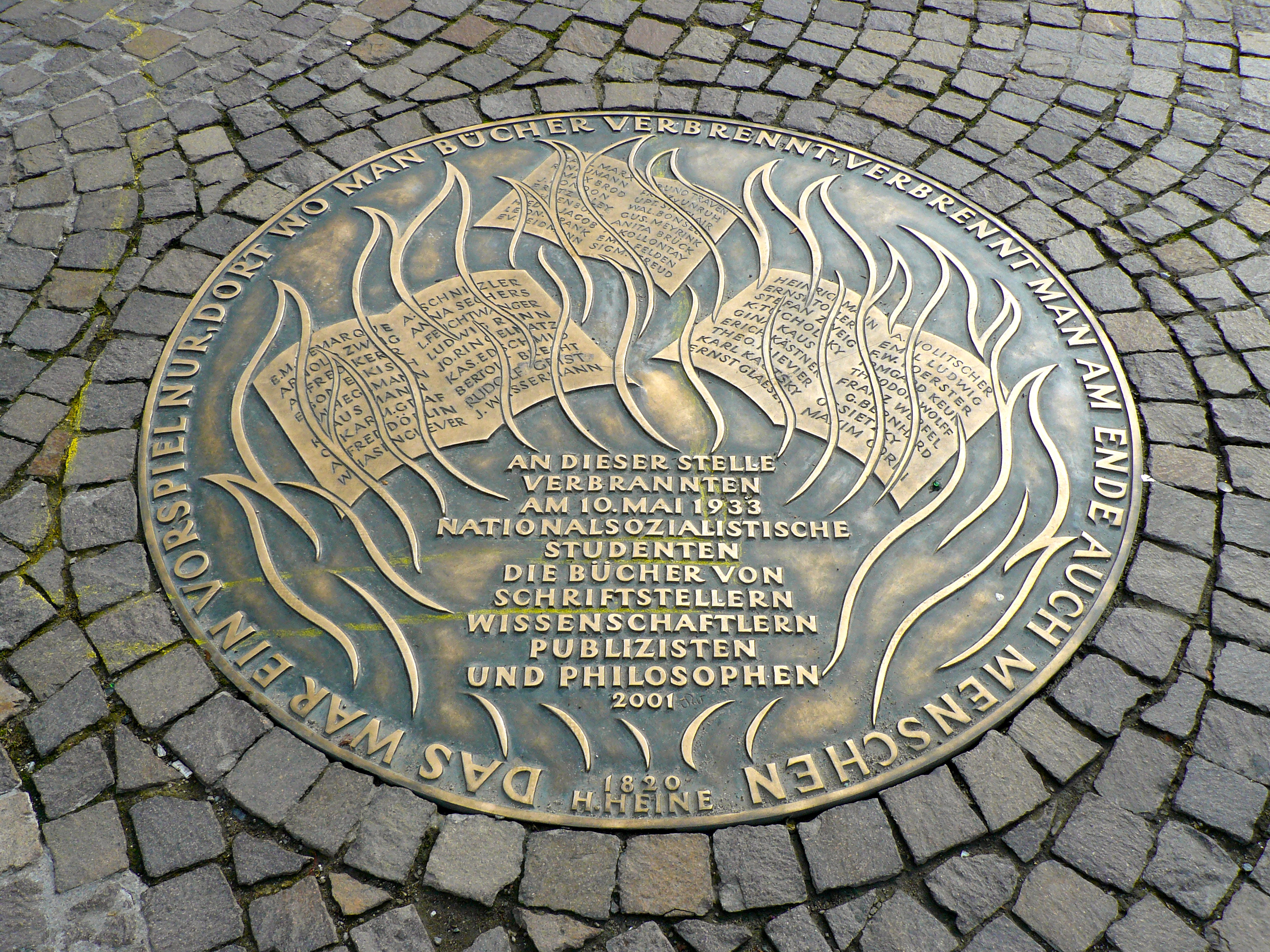
Dort, wo man Bücher verbrennt, verbrennt man am Ende auch Menschen


—Heinrich Heine
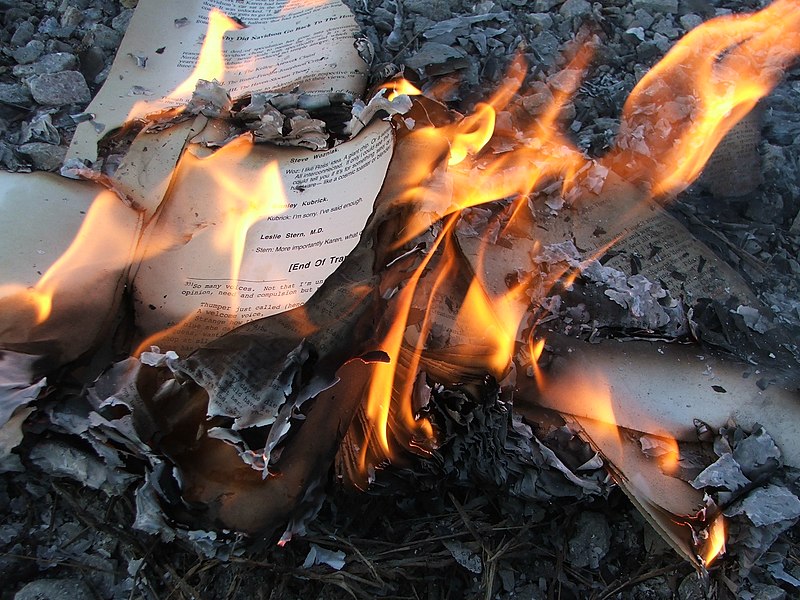
House of Leaves burning (photo by Learning Lark)

In her 2017 article A Brief History of Book Burning, from the Printing Press to Internet Archives Lorraine Boissoneault writes, “As long as there have been books, people have burned them.” Books were burned to silence a dissonant, threatening and potentially rousing voice; they were burned to wipe out a cultural presence; They were burned to control and curtail intellectual freedom; they were burned to simply ruin and pillage and destroy.

Books and libraries have been targeted by people of all backgrounds for thousands of years, sometimes intentionally and sometimes as a side-effect of war, Boissoneault tells us. “In 213 B.C., Chinese emperor Qin Shi Huang (more widely remembered for his terracotta army in Xian) ordered a bonfire of books as a way of consolidating power in his new empire.” According to historian Lois Mai Chan, “His basic objective was not so much to wipe out these schools of thought completely as to place them under governmental control.” 

Boissoneault adds, “When al-Qaida Islamists invaded Mali, and then Timbuktu in 2012, among their targets were priceless manuscripts—books that needed to be burned.” The damage might have been much worse if not for men like Abdel Kader Haidara, who risked their lives to protect the medieval works. He and others succeeded in smuggling out 350,000 manuscripts.”

“Qin was only one in a long line of ancient rulers who felt threatened enough by the ideas expressed in written form to advocate arson,” says Boissoneault. Qin and religious leaders like him are only a small part of the early book-burning equation. “A lot of ancient book burning was a function of conquest,” writes author Rebecca Knuth. The Library of Alexandria had its contents and structure burned during several periods of political upheaval as a casualty of brutal war and associated despoliation and pillaging.

When Johannes Gutenberg invented the printing press in 1440, there were suddenly far more books—and more accessible knowledge. Book burning continued, unfettered, perhaps taking on a more symbolic and insidious role, and no less violent.

In 1966, when Mao Zedong took power in China and implemented the Cultural Revolution, any book that did not conform to party propaganda, such as those that promoted capitalism or other dangerous ideas, were destroyed. In 1992, the Jaffna Public Library of Sri Lanka—repository of nearly 100,000 rare books of Tamil history and literature—was burned by Sinhalese Buddhists.

German writer/poet Heinrich Heine

Heinrich Heine’s Prediction

In his 1821 play, Almansor, the German writer/poet Heinrich Heine wrote: Dort, wo man Bücher verbrennt, verbrennt man am Ende auch Menschen, “Where they burn books, they will in the end burn human beings.” He was referring to the burning of the Muslim holy book, the Qoran as part of the eradication of the Moors from the Iberian Peninsula, during the Spanish Inquisition half a century before.

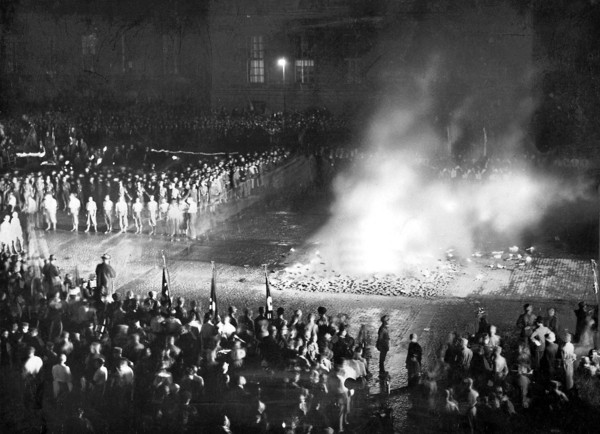
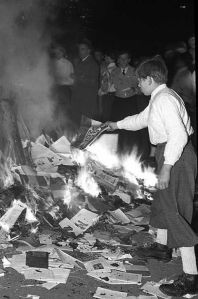
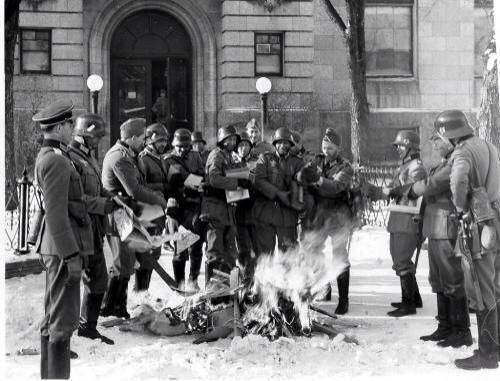
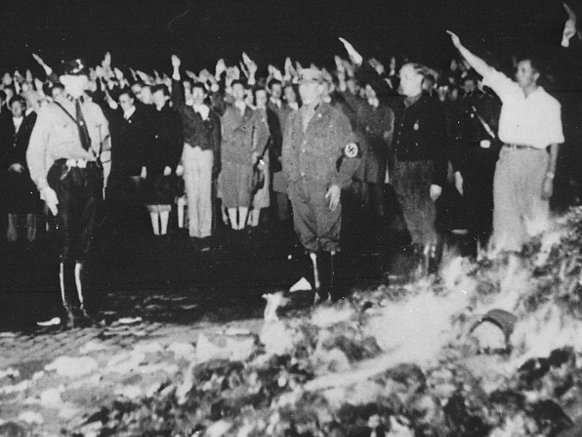
A century later, on May 6-10th, 1933, Heine’s books were among the thousands of volumes publicly hauled out and burned by Nazi brownshirts, SS and Hitler Youth groups in Berlin’s Opernplatz (Bebelplatz). A violent outburst that, in fact, did foreshadow the blazing ovens of the Holocaust. Some twenty thousand books were burned, including those by Heinrich Mann, Karl Marx, Albert Einstein.

Nazi book burning in Opernplatz, Berlin, 1933
Brownshirts and Hitlerjugend perform Nazi salut as books burn in Opernplatz, Berlin in 1933

Wikipedia defines ‘book burning’ as the “practice of ceremoniously destroying by fire one or more copies of a book or other written material.” The practice, usually carried out in public (like public hangings in Medieval times) is generally motivated by moral, religious or political objections to the material. Some notable and particularly destructive book burnings have included:

  • the destruction of the Library of Alexandria;
  • burning books and burying scholars (‘live burying’) under China’s Qin Dynasty (3rd Century);
  • Cathar texts in the Lanquedoc region of France in the 13th Century;
  • the Talmud in Paris by the French crown in 1242;
  • Arabic and Hebrew books at Andalucia, Spain, in 1499;
  • Servetus’s “heretical” writings along with the writer at Geneva;
  • Maya sacred books in Yucatan (1562);
  • Tyndale’s New Testament by the English authorities in 1525 and 1526;
  • Luthar’s Bible in Germany (1624) as ordered by the Pope;
  • Robespierre’s destruction of religious libraries in 1793;
  • anti-communist books by the Bolsheviks in 1917;
  • Jewish, anti-Nazi and “degenerate” books by the Nazis in the 1930s and 1940s;
  • Communist and “fellow traveller” books by Senator McCarthy in 1953;
  • The Satanic Verses by Muslims in the UK in 1988; and,
  • Harry Potter books at various American cities.
Hitler youth burning books at Opernplatz, Berlin, in 1933
Book-burning crowd at Opernplatz, Berlin, in 1933

“Even when the knowledge itself isn’t prevented from reaching the public, the symbolic weight of burning books is heavy,” writes Boissoneault.

“Books are not absolutely dead things, but do contain a potency of life in them as to be as active as that soul was whose progeny they are,” wrote John Milton, author of Paradise Lost, in his 1644 book Areopagitica. “Who kills a man kills a reasonable creature… but he who destroys a good book, kills reason itself.”

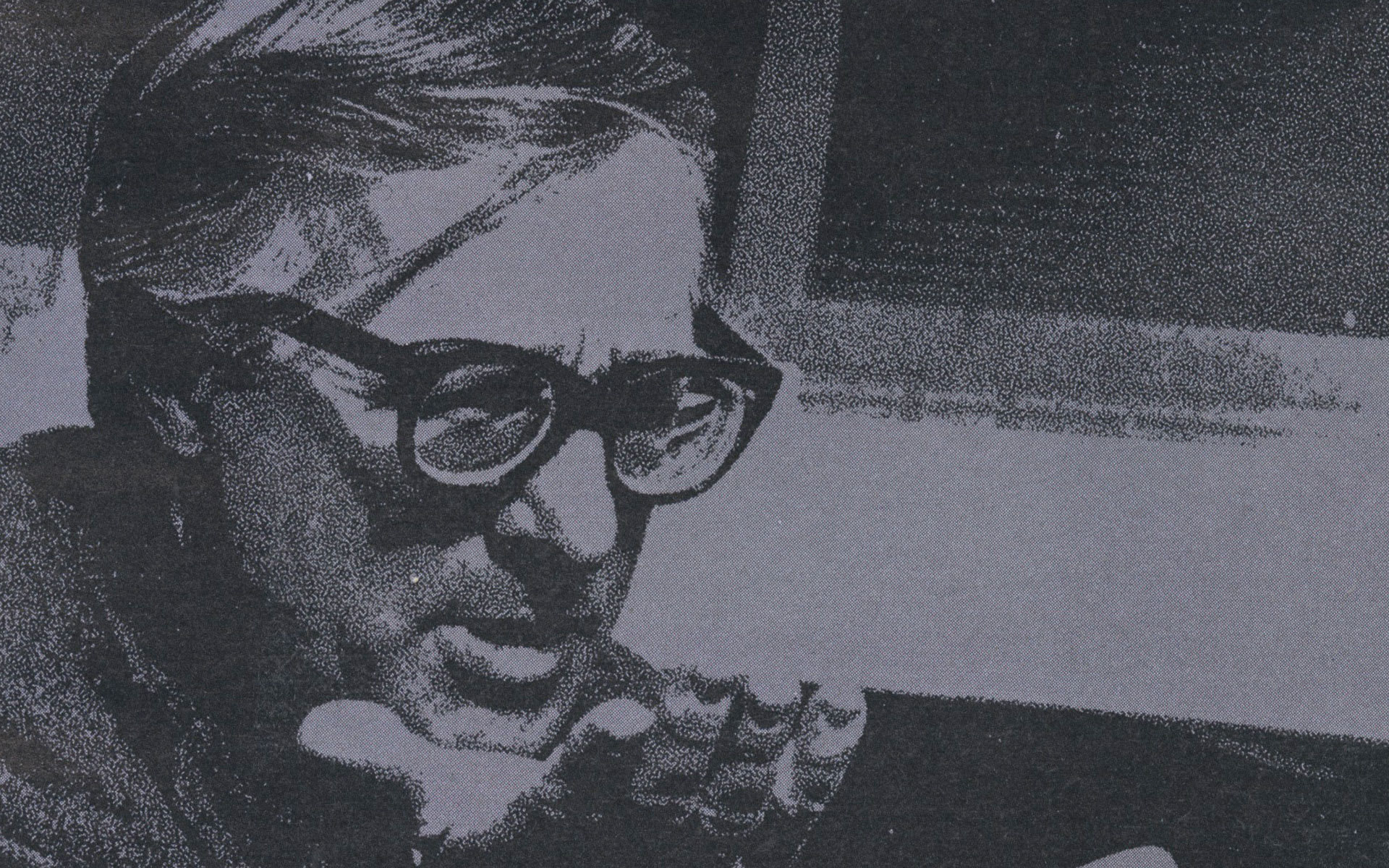
Ray Bradbury

Ray Bradbury on the Dummying Down of an Obedient Society

In the 1967 introduction of his novel, Fahrenheit 451, Ray Bradbury implied that the Nazi book burnings inspired his story. I found this statement both eloquent and powerful: “It follows then that when Hitler burned a book I felt it as keenly, please forgive me, as his killing a human, for in the long sum of history they are one in the same flesh.”

Addressing currently relevant themes of censorship, conformity and anti-intellectualism, Bradbury’s 1953 cautionary tale explores a fictional future society that has institutionalized book burning in an effort by authorities to maintain order and ‘happiness’. In this world, firemen don’t put out fires; they start them. The book gets its title from the temperature that paper catches fire and burns.

The book-burning fireman Guy Montag in Francois Truffaut’s 1966 film Fahrenheit 451

The story begins with Montag, an ordinary fireman, after a day’s work of burning:

It was a pleasure to burn. It was a special pleasure to see things eaten, to see things blackened and changed. With the brass nozzle in his fists, with this great python spitting its venomous kerosene upon the world, the blood pounded in his head, and his hands were the hands of some amazing conductor playing all the symphonies of blazing and burning to bring down the tatters and charcoal ruins of historyMontag grinned the fierce grin of all men singed and driven back by the flame. He knew that when he returned to the firehouse, he might wink at himself, a minstrel man, burnt-corked, in the mirror.”

–Fahrenheit 451
Firemen Beatty and Montag on their way to burn books (from Francois Truffaut’s 1966 film)

Soon after, Montag encounters an old lady who refuses to leave her house when the firemen come to burn her books. She dies alongside the stories she cherishes. Montag then meets the girl, Clarisse, who knows something of the past, when firemen used to put out fires, during a time when there were no informers and people were not afraid.

“A book is a loaded gun in the house next door,” Montag’s superior warns him, arguing for why they must be burned and their knowledge erased. “Who knows who might be the target of the well-read man?” A foreshadowing of what follows.

Fahrenheit 451 weaves a compelling political and social tale that follows one man’s journey in finding his soul and his ability to judge for himself—through his rediscovery of literature.

Book burning in Opernplatz, Berlin, 1933

“Books are the carriers of civilization. Without books, history is silent, literature dumb, science crippled, thought and speculation at a standstill. Without books, the development of civilization would have been impossible.”

Barbara Tuchman, 1980 address at Library of Congress
Burning German book (photo by Amnesty International)

Nina Munteanu is a Canadian ecologist / limnologist and novelist. She is co-editor of Europa SF and currently teaches writing courses at George Brown College and the University of Toronto. Visit www.ninamunteanu.ca for the latest on her books. Nina’s bilingual “La natura dell’acqua / The Way of Water” was published by Mincione Edizioni in Rome. Her non-fiction book “Water Is…” by Pixl Press(Vancouver) was selected by Margaret Atwood in the New York Times ‘Year in Reading’ and was chosen as the 2017 Summer Read by Water Canada. Her novel “A Diary in the Age of Water” was released by Inanna Publications (Toronto) in June 2020.
Paradox in the Details: The Role of Place in Story

Nina Munteanu at When Words Collide 2021

A few weeks ago, I (virtually) participated in When Words Collide, one of Canada’s prime writing festivals in Calgary, Alberta. I was a featured writer, sitting on several panels and conducting presentations and lectures.
One of the two presentations I did was on the role of place in story

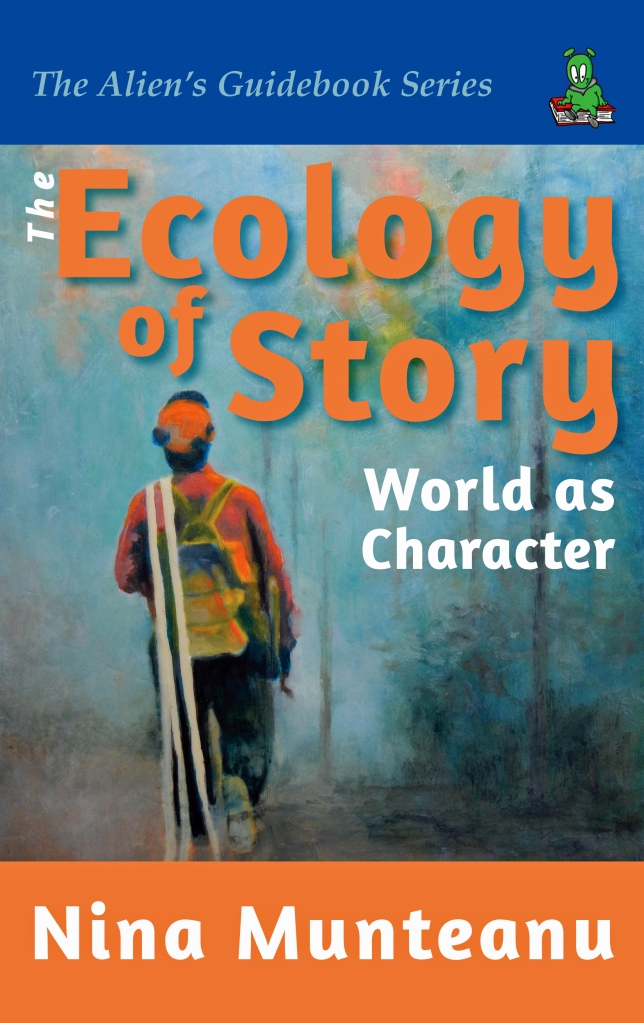
The role of place in story is a topic close to my heart and one I recently wrote an entire writing guidebook on: The Ecology of Story: World as Character. In my coaching sessions with writers and in my writing courses at George Brown College and the University of Toronto, I’ve observed in the novice writer a need for more effective integration of setting and place in story. All too often, the lack of meaningful integration translated into a lost opportunity to explore the POV character and the story’s theme. The lack of meaningful use of place in story can result in a lacklustre story, overly vague characterizations and a story that lacks metaphoric depth and relevance.

The presentation and following discussion drew from my guidebook Ecology of Story and I used many examples from a wide range of literature to overview topics covered in the book, such as:

  • Place as character & archetype
  • Place as metaphor (personification, symbols, allegory)
  • Place and first impressions (openings)
  • Place and emotion (over time and by POV)
  • Place through the senses
  • Place as environmental force (including climate change)

We also discussed how characters connect with their environment and I introduced the metaphoric connection between the Mi’kmaq and the white pine forests in Annie Proulx’s Barkskins, among others.

I concluded the presentation with a discussion on the “paradox in the details”: the more specific description is, the more universal its appeal. This is because the details can establish relevance and realism to the scene and the POV character experiencing them. Vagueness and lack of tangibility are avoided through specificity. The key, however, is to use details that resonate with the theme and tone of the book: as metaphor. Details as metaphor is what you want to achieve. 

Because, as Ray Bradbury once told me, “everything in story is metaphor.” 

The Ecology of Story: World as Character is presented in two parts.

Part 1 provides a comprehensive summary of the science of ecology, the study of relationships, and links to useful metaphor.

Part 2 discusses world and place in story. Here I discuss how the great writers have successfully integrated place with theme, character and plot to create a multi-layered story with depth and meaning. Part 2 also contains several writing exercises and detailed case studies.

Nina Munteanu is a Canadian ecologist / limnologist and novelist. She is co-editor of Europa SF and currently teaches writing courses at George Brown College and the University of Toronto. Visit www.ninamunteanu.ca for the latest on her books. Nina’s bilingual “La natura dell’acqua / The Way of Water” was published by Mincione Edizioni in Rome. Her non-fiction book “Water Is…” by Pixl Press(Vancouver) was selected by Margaret Atwood in the New York Times ‘Year in Reading’ and was chosen as the 2017 Summer Read by Water Canada. Her novel “A Diary in the Age of Water” was released by Inanna Publications (Toronto) in June 2020.

Will Earth Turn into Mars? … Can Mars Turn into Earth?

In my recent eco-novel A Diary in the Age of Water the limnologist Lynna makes the following entry in her diary in 2057:

Last night after supper, Hilde and I went for a walk along Shaw to Christie Pits, where I used to play as a kid. She wanted to show me the magnificent aurora borealis that had been streaming dramatically for the past several weeks. When I was a kid, auroras this far south were unheard of. Now they are common. The night sky was clear, and we enjoyed the fresh spring air as we ambled down Shaw Street. We parked ourselves on the damp grass among other spectators of the colourful night sky and watched the dancing light show.

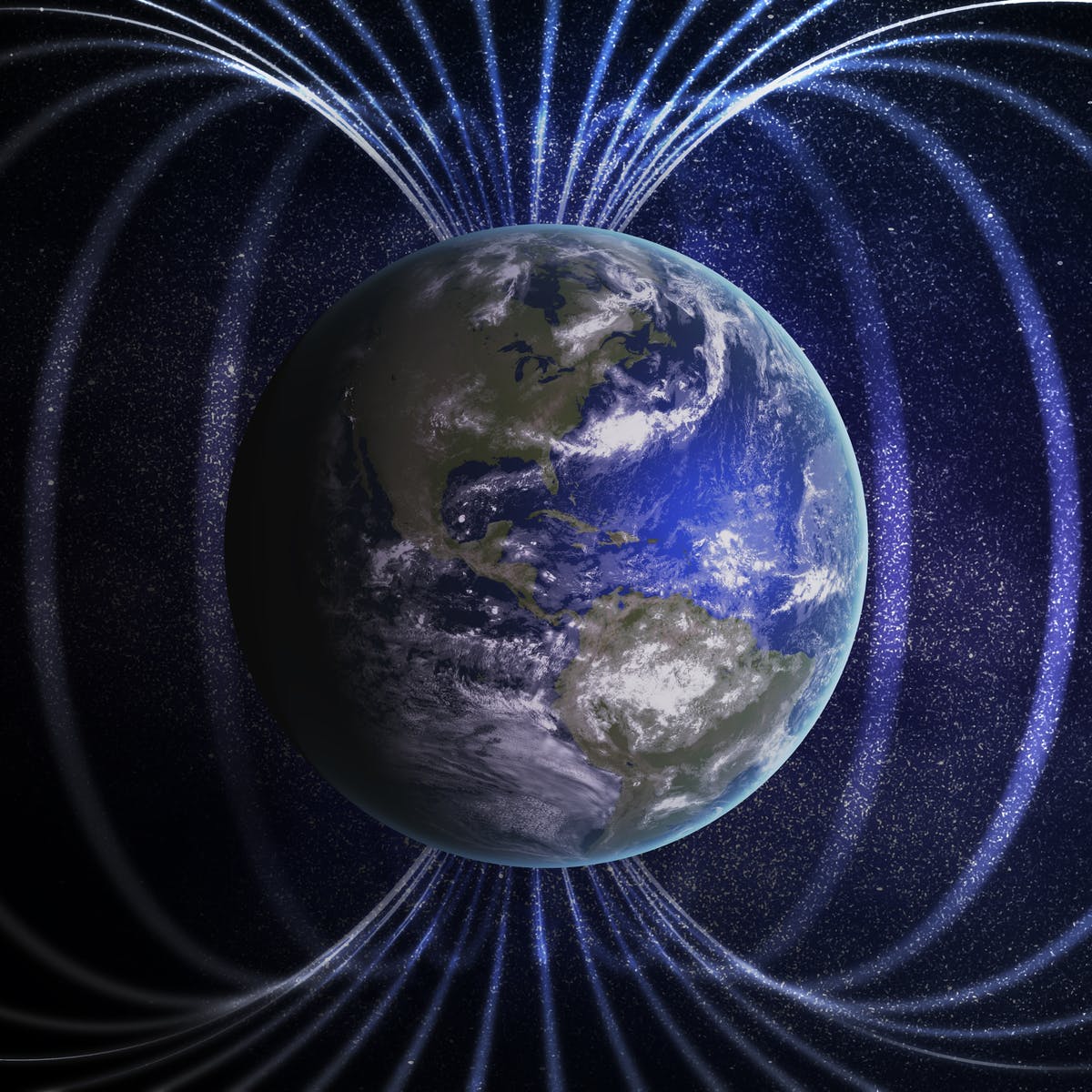
It was mesmerizing: ribbons of mostly green and pink light rippled as if tugged by a mischievous wind. They danced with a kind of life that brought me back to my childhood. Northern lights happen when the magnetic field of our planet is disturbed by the solar wind. As the particles slide along the contours of the Earth’s magnetosphere, they glow as they lose their energy. The particles energize the air molecules enough to make them glow in various colours, depending on the composition of the gases.

Earth’s magnetic field is generated and maintained by an ocean of superheated, swirling metal around a solid iron core. These act like a dynamo to create electrical currents, which, in turn, create our magnetic field. But our magnetic field is weakening, and a flip is imminent. In the past two hundred years, the field has weakened by fifteen percent. That’s why we’re seeing these auroras in Toronto. A weaker field creates more auroras. They’ve become common here, particularly during the winter and spring months. Nasa predicts that the field could be gone in five hundred years or less and then take another two hundred years to rebuild. 

The field will first become more complex and might show more than two magnetic poles—playing havoc with our navigation systems and God knows what else—until it is entirely gone. Then it will presumably build and align in the opposite direction. When the magnetic field goes, so will our shield against radiation. First, the ozone layer—our shield against ultraviolet rays—will be stripped away, and then the atmosphere may lose other key elements and grow thinner. Will we end up like Mars 4.2 billion years ago, when severe solar storms stole its very atmosphere and evaporated all its water? 

Mars once had a strong magnetic field like Earth. But then Mars cooled and its conducting geodynamo stopped rotating. In the absence of the protective field, the solar wind surged in and excited the ions in the upper Martian atmosphere to an escape velocity. The solar wind just swept the air away. The surface pressure of the Martian atmosphere dwindled from one thousand millibars to six millibars. Mars lost about the same atmosphere that Earth has today. 

Mars is our destiny; it’s just a question of when. We’re all batteries, running dry. I considered this probable fate for Earth as we watched the exquisite example of our changing magnetic field. But I didn’t share it with Hilde, who watched with her mouth open in rapt wonder. If she’s lucky, she will experience no more of this progression than these amazing auroras. The weakening magnetic field and the associated loss of protection and atmosphere won’t happen for a while. I hope.
A Diary in the Age of Water

Earth’s magnetic field

In a 2019 article in New Atlas, David Szondy tells us that “North isn’t quite where it was after the Earth’s north geomagnetic pole made an unexpected sprint across arctic Canada.” Apparently the magnetic pole is moving faster than predicted. The shift is caused by a push/pull between two patches of magnetic field—one under Canada and another under Siberia. The Canadian one appears to be weakening…

Every few hundred thousand years our magnetic field reverses—with the magnetic north switching places with the magnetic south. The last major geomagnetic reversal occurred 780,000 years ago. Between the full geomagnetic reversals—which can last up to 10,000 years—shorter disruptions occur. These are called geomagnetic excursions and are short-lived, involving temporary changes to the magnetic field that last from a few hundred to a few thousand years. The most recent recorded geomagnetic excursion is called the Laschamps Excursion some 42,000 years ago.

“The Laschamps Excursion was the last time the magnetic poles flipped,” explains Chris Turney, one of the lead scientists of a study reported in Science. “They swapped places for about 800 years before changing their minds and swapping back again.”

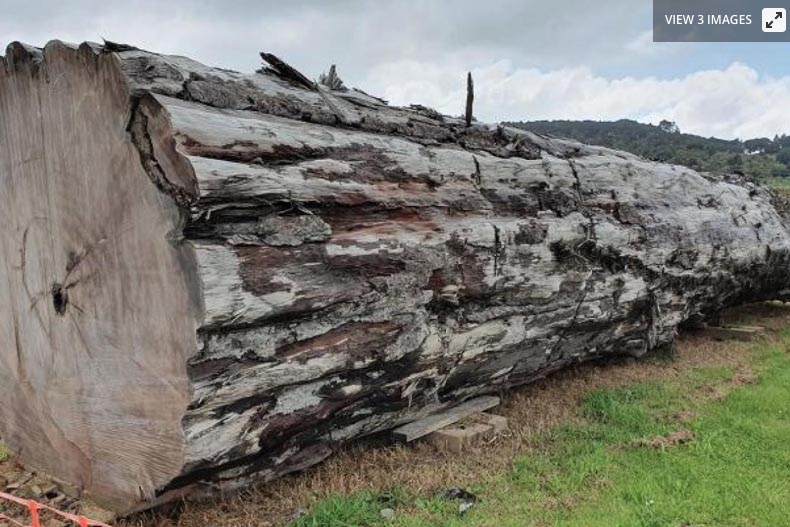
Although scientists have known about these magnetic pole events, they have not clearly understood their impacts on life and the environment. A study published in the journal Science reported on a recent discovery in New Zealand of an ancient kauri tree, that not only confirmed the time of the magnetic collapse, but shed some light on the dramatic period of environmental change, particularly in the time leading up to the few hundred years the Earth’s magnetic field was reversed. These included a depleted ozone layer, higher levels of ultraviolet radiation, and increased atmospheric ionization, all coalescing about 42,000 years ago in the Laschamps Excursion. “Early humans around the world would have seen amazing auroras, shimmering veils and sheets across the sky,” says Alan Cooper, one of the lead scientists. “It must have seemed like the end of days.”

Ancient Kauri tree unearthed in New Zealand (image by New Atlas)

The researchers also speculated that the magnetic field disruption led to an influx of cave art, driven by the need to seek shelter from the increase in ultraviolet rays—particularly during solar flares. The researchers also suggested that the event prompted the extinction of several megafauna in Australia and the end for Neanderthals—whose extinction occurred around 42,000 years ago.

Cooper points to the current movements of the north magnetic pole across the Northern Hemisphere as a potential warning sign of an impending event.

“This speed – alongside the weakening of Earth’s magnetic field by around nine per cent in the past 170 years – could indicate an upcoming reversal,” says Cooper. “If a similar event happened today, the consequences would be huge for modern society. Incoming cosmic radiation would destroy our electric power grids and satellite networks.”

Alan Cooper

Terraforming Mars (images by NASA)

Making Mars Inhabitable By Re-establishing its Magnetic Field

“Our quest on Mars has been to ‘follow the water’ in our search for life in the universe, and now we have convincing science that validates what we’ve long suspected,” said NASA’s John Grunsfeld.”This is a significant development, as it appears to confirm that water – albeit briny – is flowing today on the surface of Mars.”

That was step one. Mars was once just like Earth, with a thick atmosphere and lots of water.

In a 2017 article in Science Alert, Peter Dockrill reported that “NASA wants to launch a giant magnetic field to make Mars habitable.” This bold plan was to give Mars its atmosphere back and make it habitable for future generations of human colonists consists of launching a giant magnetic shield into space to protect Mars from solar winds. With the shield in place, scientists argued that we could restore the atmosphere and terraform the Martian environment so that liquid water flows on the surface again. Mars once had a thick atmosphere like Earth currently has. 

In 2018 NASA concluded: “Our results suggest that there is not enough CO2 (carbon dioxide) remaining on Mars to provide significant greenhouse warming were the gas to be put into the atmosphere; in addition, most of the CO2 gas is not accessible and could not be readily mobilized. As a result, terraforming Mars is not possible using present-day technology.”

Then in 2019, Harvard scientists proposed a way around the problem of insufficient CO2 for greenhouse warming. They proposed that by “covering certain areas of the Martian surface with a thin layer of silica aerogel, namely areas with large amounts of water ice, enough sunlight will come through for warming and combine with natural heating processes beneath the surface to create a potentially habitable environment.”

The study demonstrated through experiments and modelling that under Martian environmental conditions, a 2–3 cm-thick layer of silica aerogel would simultaneously transmit sufficient visible light for photosynthesis, block hazardous ultraviolet radiation and raise temperatures underneath it permanently to above the melting point of water, without the need for any internal heat source. 

“Once temperatures were adequate, the gases released from the ice in the lakes and regolith (soil) would build up to form a pressurized atmosphere under the aerogel layer. If successful up to that point, microbes and plant life could theoretically survive. “Placing silica aerogel shields over sufficiently ice-rich regions of the Martian surface could therefore allow photosynthetic life to survive there with minimal subsequent intervention,” the scientists suggested. This photosynthetic life would go on to produce oxygen for pickier Earth dwellers to utilize,” reports Dacia J. Ferris of Teslarati.

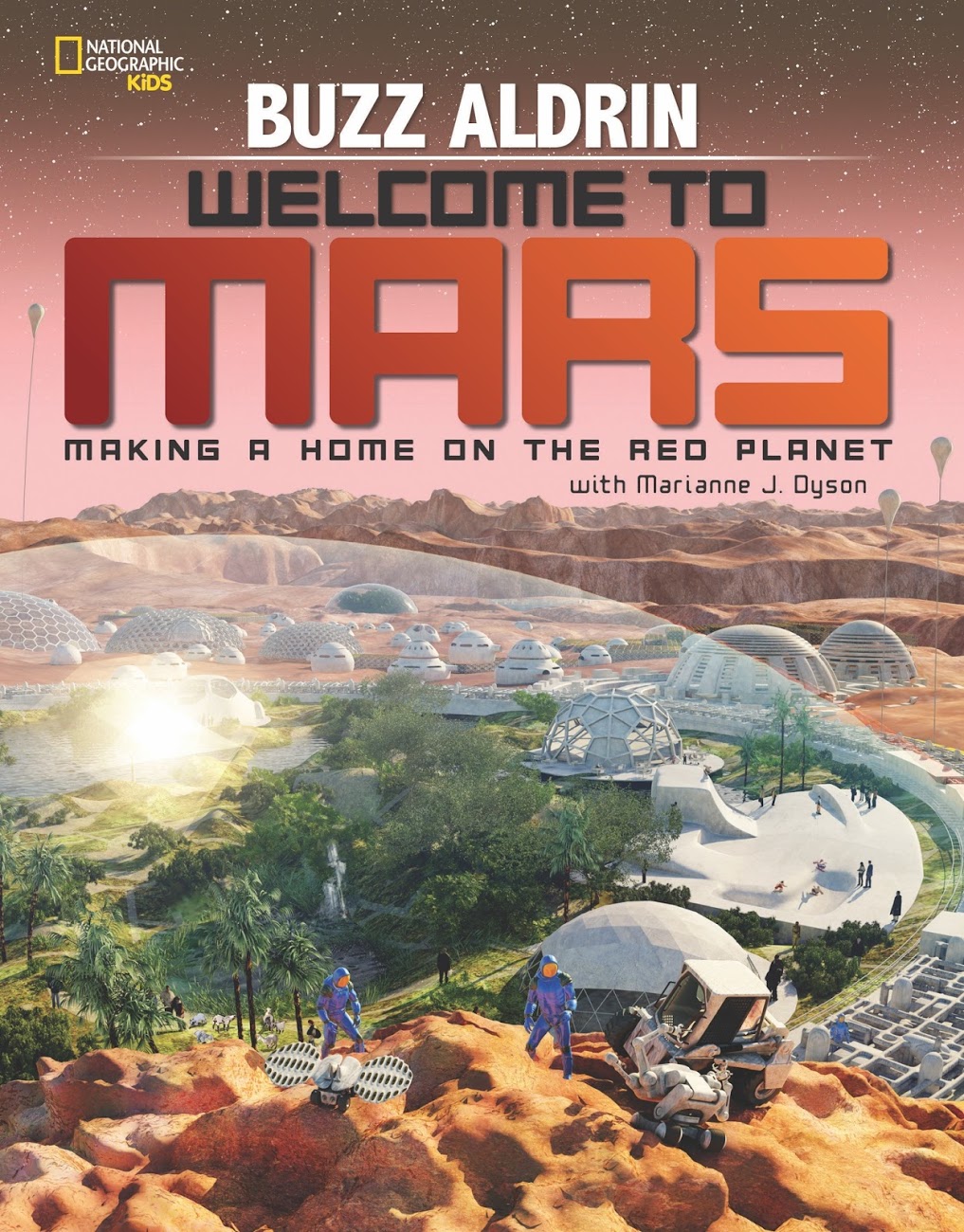
p.s. I’m sure I’m not the only one who sees the irony of this situation: Mars has insufficient CO2to warm its atmosphere, when Earth suffers from an excess of this greenhouse-warming gas. While going to Mars is one of my dreams (quite unrealizable for me; but I’m allowed to dream, no?), I still harbor an unsettling feeling that comes with the uncertainty about our prowess and respect in this endeavor. We haven’t exactly been successful in controlling our own runaway global warming or other degradation of our living ecosystems. Read Ray Bradbury’s Martian Chronicles to get my meaning.

“Watch those disposable coffee cups!”


Nina Munteanu is a Canadian ecologist / limnologist and novelist. She is co-editor of Europa SF and currently teaches writing courses at George Brown College and the University of Toronto. Visit www.ninamunteanu.ca for the latest on her books. Nina’s bilingual “La natura dell’acqua / The Way of Water” was published by Mincione Edizioni in Rome. Her non-fiction book “Water Is…” by Pixl Press(Vancouver) was selected by Margaret Atwood in the New York Times‘Year in Reading’ and was chosen as the 2017 Summer Read by Water Canada. Her novel “A Diary in the Age of Water” was released by Inanna Publications (Toronto) in June 2020.

When We Burn Books & Ray Bradbury’s Fireman

Book burning Opernplatz

Book burning Opernplatz

The burning of an author’s books…has always been the tribute that an ignorant age pays to the genius of its time — Joseph Lewis

In his 1821 play Almansor the German writer Heinrich Heine wrote (referring to the burning of the Muslim holy book, the Koran, during the Spanish Inquisition): “Dort, wo man Bucher verbrennt, verbrennt man am Ende auch Menschen” –“Where they burn books, they will end in burning human beings.” A century later, on May 10th, 1933, Heine’s books were among the thousands of volumes publicly hauled out and burned in the streets by the Nazis in Berlin’s Opernplatz (Bebelplatz). A violent outburst that did, in fact, foreshadow the blazing ovens of the Holocaust.Commemorative_Plaque_book_burning_Frankfurt_Hesse_Germany

Wikipedia defines ‘book burning’ as the “practice of ceremoniously destroying by fire one or more copies of a book or other written material.” The practice, usually carried out in public (like public hangings in Medieval times) is generally motivated by moral, religious or political objections to the material. Some notable and particularly destructive book burnings have included:

  • the destruction of the Library of Alexandria;
  • burning books and burying scholars (they mean ‘live burying’, folks!) under China’s Qin Dynasty (3rd Century);
  • Cathar texts in the Lanquedoc region of France in the 13th Century;
  • the Talmud in Paris by the French crown in 1242;
  • Arabic and Hebrew books at Andalucia, Spain, in 1499;
  • Servetus’s “heretical” writings along with the writer in Geneva in 1553;
  • Maya sacred books in Yucatan (1562);
  • Tyndale’s New Testament by the English authorities in 1525 and 1526;
  • Luthar’s Bible in Germany (1624) as ordered by the Pope;
  • Robespierre’s destruction of religious libraries in 1793;
  • anti-communist books by the Bolsheviks in 1917;
  • Jewish, anti-Nazi and “degenerate” books by the Nazis in the 1930s and 1940s;
  • Communist and “fellow traveller” books by Senator McCarthy in 1953;
  • The Satanic Verses by Muslims in the UK in 1988; and,
  • Harry Potter books in various American cities, 2001-2005.

Ray Bradbury copy

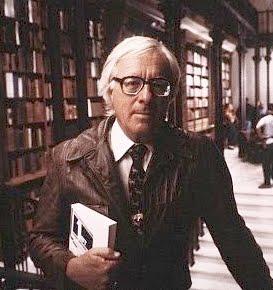
Ray Bradbury

In the 1967 introduction of his novel, Fahrenheit 451 (based on his novella, The Fireman), Ray Bradbury implied that the Nazi book burnings inspired his story. I found his statement both eloquent and powerful: “It follows then that when Hitler burned a book I felt it as keenly, please forgive me, as his killing a human, for in the long sum of history they are one in the same flesh.” For those of you who haven’t yet read his novel (one of my favourite books, ever), this cautionary tale explores a fictional future society that has institutionalized book burning in an effort by authorities to maintain order and ‘happiness’. In Bradbury’s fictional world, firemen don’t put out fires; they start them. The story begins with Montag, an ordinary fireman:

It was a pleasure to burn. It was a special pleasure to see things eaten, to see things blackened and changed. With the brass nozzle in his fists, with this great python spitting its venomous kerosene upon the world, the blood pounded in his head, and his hands were the hands of some amazing conductor playing all the symphonies of blazing and burning to bring down the tatters and charcoal ruins of historyMontag grinned the fierce grin of all men singed and driven back by the flame. He knew that when he returned to the firehouse, he might wink at himself, a minstrel man, burnt-corked, in the mirror.”

bookburning-Opernplatz

book burning in Opernplatz

Bradbury wove a multi-layered political and social tale that followed one man’s journey to find his soul. Fahrenheit 451 explores the theme of intellectual freedom using censorship as his plot device. Montag is “everyman” who must make a choice for personal freedom at the expense of the “good censored life”. It is the choice all artists must make. In choosing freedom, we make an obligation to respect and tolerate those with whom we disagree; otherwise we are just tyrants and not really free.

fahrenheit-451-book-coverIn 1795 Thomas Paine wrote, “He that would make his own liberty secure, must guard even his enemy from opposition: for if he violates this duty he establishes a precedent that will reach to himself.”

The American Library Association defines intellectual freedom as the right of every individual to both seek and receive information from all points of view without restriction. It also encompasses the freedom to hold, and disseminate ideas. Intellectual freedom is the basis for our democratic system. We expect our people to be self-governors. But to do so responsibly, our citizenry must be well-informed. Libraries — and the free internet — provide the ideas and information to allow people to inform themselves.

John F. Kennedy once said that “a nation that is afraid to let its people judge the truth and falsehood in an open market is a nation that is afraid of its people.”

nazi book burning2Censorship suppresses ideas and information that certain people — individuals, groups or government officials — find objectionable or dangerous. Censors pressure public institutions, like libraries, to suppress and remove from public access information they judge inappropriate or dangerous, so that no one else has the chance to read or view the material and make up their own minds about it. “Censorship … creates, in the end, the kind of society that is incapable of exercising real discretion,” said Henry Steel Commager.
When does simple disapproval turn into active disallowing; when does banning of books turn into burning of books?

I believe that censorship occurs when one submits to fear and insecurity: the bully being bullied and ruled by his own fear. Okay, we all fear; that’s only natural. We’re animals and fear is a survival instinct we all need and use. But, we don’t live in caves and hunt sloth anymore; that fear can be tempered by a civilized educated culture. Without the benefit of a nurturing faith and belief in the goodness of humankind, fear will lead to prejudice, racism and a general isolationist paranoia.

Winston Churchill said: “You see these dictators on their pedestals, surrounded by the bayonets of their soldiers and the truncheons of their police. Yet in their hearts there is unspoken–unspeakable–fear. They are afraid of words and thoughts! Words spoken abroad, thoughts stirring at home, all the more powerful because they are forbidden. These terrify them. A little mouse–a little tiny mouse! -of thought appears in the room, and even the mightiest potentates are thrown into panic.”

nazi book burning3

Book burning in Opernplatz

The danger comes when an organized group subscribes to a common fear. It is often driven by a charismatic leader, who has somehow captured that fear, harnessed its raging force then propelled it like a projectile. One’s anonymity and shared (and supposedly diluted) responsibility within the “mob” may compel the individual to commit irrational acts of atrocity he/she would never otherwise contemplate on his/her own. How many of us have been caught up in the mass enthusiasm of a sports match? We’ve all felt it; the power of the mob, its energy crackling in the air around our pounding hearts and cries. To yield to a mob-mentality is to subscribe to a condoned insanity, within which the ‘mob’ takes on its own irrational personality that is more than the sum of its parts…to become a kind of autopoietic entity that swiftly and ruthlessly dispenses its own perverse form of justice.

Perhaps for this reason more than any other, I see the artist’s path as a singular one, part of, yet apart from, the crowd. Neither leader, nor follower; rather, a wizard and a “trickster”, a shining beacon, both reviled and honored simultaneously. We are our books.

It was Victor Frankl, survivor of Auschwitz, who said, “what is to give light must endure burning.”

In her acceptance speech for a lifetime award by the NBA, author Ursula K. LeGuin said:

le-guin copy

Ursula K. LeGuin

“I think hard times are coming, when we will be wanting the voices of writers who can see alternatives to how we live now, and can see through our fear-stricken society and its obsessive technologies, to other ways of being. And even imagine some real grounds for hope. We will need writers who can remember freedom: poets, visionaries–the realists of a larger reality. Right now, I think we need writers who know the difference between production of a market commodity and the practice of an art…The profit motive is often in conflict with the aims of art…We live in capitalism. Its power seems inescapable; so did the divine right of kings… Power can be resisted and changed by human beings; resistance and change often begin in art, and very often in our art–the art of words. I’ve had a long career and a good one, in good company, and here, at the end of it, I really don’t want to watch American literature get sold down the river… The name of our beautiful reward is not profit. Its name is freedom.”

nina-2014aaNina Munteanu is an ecologist and internationally published author of award-nominated speculative novels, short stories and non-fiction. She is co-editor of Europa SF and currently teaches writing courses at George Brown College and the University of Toronto. Visit www.ninamunteanu.ca for the latest on her books.

How Writers See Themselves…And How Others See Them…

Let the world burn through you. Throw the prism light, white hot, on paper
—Ray Bradbury

SONY DSC

Birch trees (photo by Merridy Cox)

How many of you have, once you’ve told someone that you are a writer, received the blithe response, “Oh, yes, I’ll be a writer too someday. I’ll write that great Canadian bestseller—once I have time…” Implying that writing was a hobby and that time—not talent or discipline or vision or artistic spirit—was the only required ingredient.

When I was five years old I already knew that I wanted to be a writer. My sister and I didn’t just play dolls; we created worlds and spun epic tales of great scope, with a diverse cast of characters that spanned the far reaches of the universe. Stories of thrilling adventure, crazy irony, great intrigue and mystery. Stories of betrayal, love, loss, redemption and victory. I knew in my heart that I was always a writer—even when I wasn’t (writing, that is). As a child I knew that writing was in my soul and that I would write for the rest of my life. Still…it took me a while to admit it to the world. It took me longer still to publish. Make no mistake: writing and publishing is hard work. But NOT a chore, which I think many who don’t write fail to make a distinction, including my ex-husband.

Films often portray the writer as self-loathing and self-destructive, moody, unstable, and narcissistic. Think of the following films and how they portray the writer: Sunset Boulevard. The Shining. Misery. Sliding Doors. Secret Window. Sideways. My Brilliant Career. Stranger than Fiction. The Royal Tenenbaums. As Good As It Gets. Adaptation. Deconstructing Harry. Wonder Boys. Midnight in Paris. Barton Fink. Limitless. Ruby Sparks. The Words.

“Deplorable actions are almost expected from fictional writers in films,” says a recent Huffington Post article. “Novelists and poets are consistently portrayed as snobby, outlandish, mawkish, or untrustworthy. They lie, cry, brag and steal their way to fame.”

Joe Muscolino of Word & Film shares that:

“It’s become a visual cliché: The writer slouched in his chair, conflicted, chain-smoking, achingly alone, and oblivious to anything outside his cave of thoughts. He’s desperately waiting for that one savior of a sentence to rescue him from the shackles of banality. Opposite him sits a blank page. Watching him. Haunting him. It’s ideally nestled in a typewriter, despite the nearby objects suggesting that it’s most definitely the twenty-first century. The clock ticks. Nothing… Obviously, if you scratch the surface of any stereotype you’ll find a more nuanced layer of reality. Writers can just as easily be shining examples of happiness and sobriety. But nuanced realities don’t sound as fun as drug-addled depressives, and they don’t make for good stories.”

That’s the stereotype. What about the reality? For that I, of course, must take you to fiction (faint knowing smile):

CreditRiverWalk-oct2018

Walking the trail beside Credit River, ON (photo by Nina Munteanu)

In Dorothy L. Sayers’ 1939 mystery novel The Nine Tailors, the iconic dilettante and gentleman detective Lord Peter Wimsey has a most interesting exchange about writers and our perception of them with the young Miss Hilary Thorpe—herself an aspiring writer. It’s worth recounting here as it reflects one author’s thoughts, even if through a fictional character. In the scene, following her father’s death, Miss Thorpe shares how the act of “wondering” helps her through her grief:

“…it really makes things easier to do a little wondering, I mean, if you’re once interested in a thing it makes it seem leas real. That’s not the right word, though.”

“Less personal?”

‘Yes, that’s what I mean. You begin to imagine how it all happened, and gradually it gets to feel more like something you’ve made up.”

“Hmm!” said Wimsey. “If that’s the way your mind works, you’ll be a writer one day.”

“Do you think so? How funny! That’s what I want to be. But why?”

“Because you have creative imagination, which works outwards, till finally you will be able to stand outside your own experience and see it as something you have made, existing independently or yourself. You’re lucky.”

“Do you really think so?” Hilary looked excited.

“Yes—but your luck will come more at the end of life than at the beginning, because the other sort of people start by thinking you dreamy and romantic, and then they’ll be surprised to discover that you are really hard and heartless. They’ll be quite wrong both times—but they won’t ever know it, and you won’t know it at first, and it’ll worry you.”

“But that’s just what the girls say at school. How did you know?…Though they’re all idiots—mostly, that is.”

“Most people are,” said Wimsey, gravely, ‘but it isn’t kind to tell them so. I expect you do tell them so. Have a heart; they can’t help it…”

Thank you, Lord Peter. While we’re at it, another of Sayer’s fictional characters, Mr Edward Thorpe, shares that, “authorship is a good stick, but a bad crutch.”

writing2-PortMcNicoll

Pat and Joan, writers writing (photo by Nina Munteanu)

So, what is it to be a writer? Are we all in the end a bit crazy like the stereotype suggests? All I know is that I if I didn’t write, my soul would suffer. Isaac Asimov said, “I write for the same reason as I breathe—because if I didn’t, I would die.”

I write to live and live to write. I’ve known this all my life, from the tales I shared with my sister at age 7 to the novels I currently write and will continue to until I journey beyond the physical. There is, quite simply, nothing that matches the experience of capturing the beating heart of a story, resonating with its core emotional song, and embracing the thrill of sharing it with the world. Just as director Christopher Nolan said of musical genius Hans Zimmer, I embrace “the thrill and mess of reality’s disregard for abstract intentions—the making of the thing is the thing itself.”


Writers on Writing…

“Who wants to become a writer? And why? Because it’s the answer to everything. … It’s the streaming reason for living. To note, to pin down, to build up, to create, to be astonished at nothing, to cherish the oddities, to let nothing go down the drain, to make something, to make a great flower out of life, even if it’s a cactus.”
—Enid Bagnold

“If you really want to hurt your parents, and you don’t have the nerve to be a homosexual, the least you can do is go into the arts. But do not use semicolons. They are transvestite hermaphrodites, standing for absolutely nothing. All they do is show you’ve been to college.” ― Kurk Vonnegut

“Writing is not necessarily something to be ashamed of, but do it in private and wash your hands afterwards.”
—Robert A. Heinlein

“…Writers are a savage breed, Mr. Strike. If you want life-long friendship and selfless camaraderie, join the army and learn to kill. If you want a lifetime of temporary alliances with peers who will glory in your every failure, write novels.” ― Robert Galbraith,The Silkworm

“Do not hoard what seems good for a later place in the book, or for another book; give it, give it all, give it now.”
—Annie Dillard

“Making people believe the unbelievable is no trick; it’s work. … Belief and reader absorption come in the details: An overturned tricycle in the gutter of an abandoned neighborhood can stand for everything.”
—Stephen King

“Writing a book is a horrible, exhausting struggle, like a long bout of some painful illness. One would never undertake such a thing if one were not driven on by some demon whom one can neither resist nor understand.”
—George Orwell

“If you can tell stories, create characters, devise incidents, and have sincerity and passion, it doesn’t matter a damn how you write.”—Somerset Maugham

“When I sit down to write a book, I do not say to myself, ‘I am going to produce a work of art.’ I write it because there is some lie that I want to expose, some fact to which I want to draw attention, and my initial concern is to get a hearing.”
—George Orwell

“To produce a mighty book, you must choose a mighty theme.”—Herman Melville

“It is perfectly okay to write garbage–as long as you edit brilliantly.”—C. J. Cherryh

“Every secret of a writer’s soul, every experience of his life, every quality of his mind, is written large in his works.”
—Virginia Woolf

“I went for years not finishing anything. Because, of course, when you finish something you can be judged.”—Erica Jong

“There’s no such thing as writer’s block. That was invented by people in California who couldn’t write.”—Terry Pratchett

“Everybody walks past a thousand story ideas every day. The good writers are the ones who see five or six of them. Most people don’t see any.”—Orson Scott Card

“A wounded deer leaps the highest.”—Emily Dickinson

“Writing is its own reward.”—Henry Miller

“Writing a novel is like driving a car at night. You can only see as far as your headlights, but you can make the whole trip that way.”—E. L. Doctorow

“Don’t try to figure out what other people want to hear from you; figure out what you have to say. It’s the one and only thing you have to offer.”—Barbara Kingsolver

“I write for the same reason as I breathe—because if I didn’t, I would die.”—Isaac Asimov


Nina Munteanu is an ecologist and internationally published author of award-nominated speculative novels, short stories and non-fiction. She is co-editor of Europa SF and currently teaches writing courses at George Brown College and the University of Toronto. Visit www.ninamunteanu.ca for the latest on her books.