The Use of Character-Coupling in Eco-Literature to Give Voice to the Other, Part 2: Types of Character-Coupling in Seven Examples of Eco-Literature

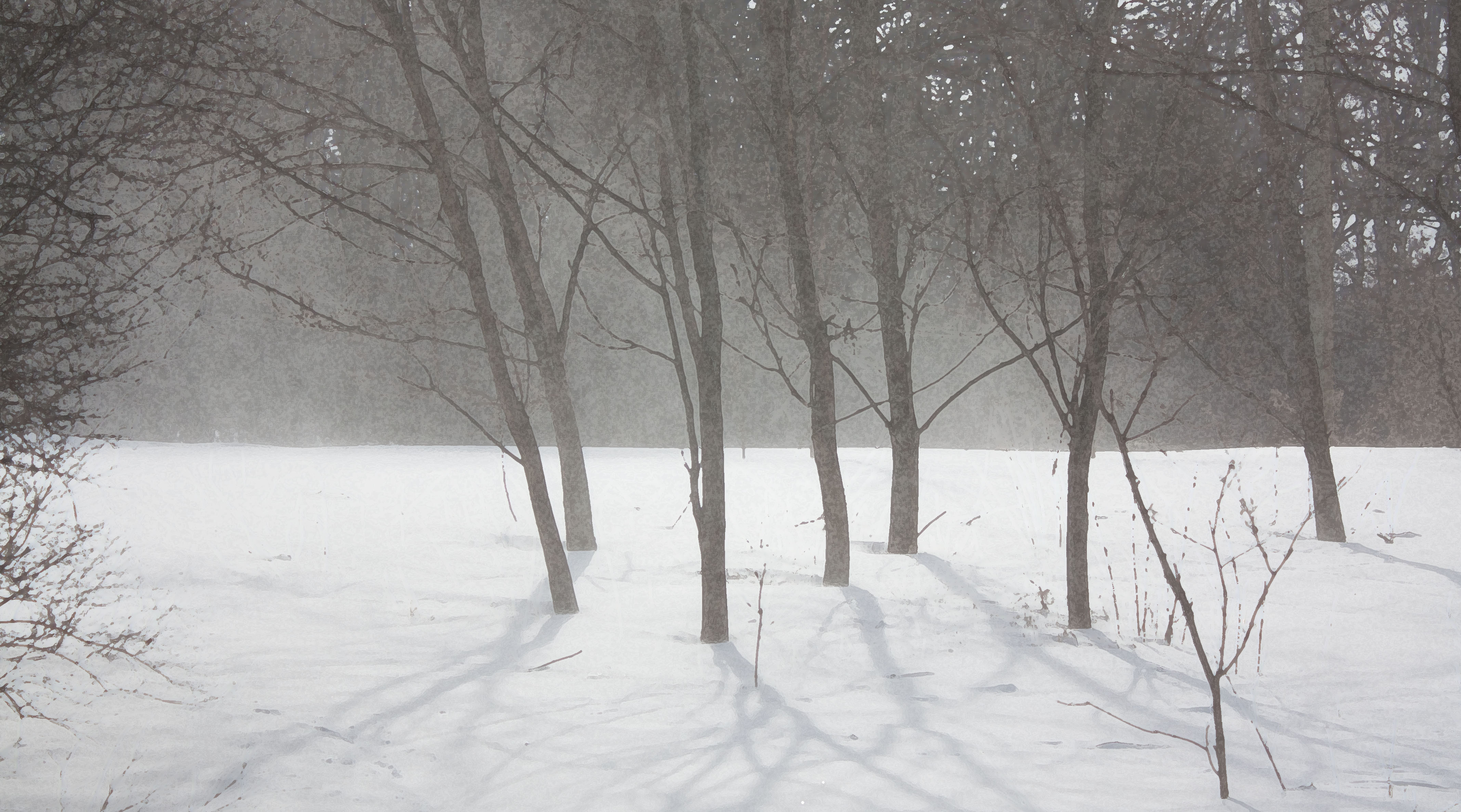
Trickster wind kicks up clouds of snow, ghosting trees (photo and rendition by Nina Munteanu)

In Part 1, I introduced and described the concept of giving voice to the Other in eco-literature through the literary device of character-coupling. Character-couplings manifest in story through theme, plot approach, narrative form, and ultimately the writer’s own intentions. Particular techniques used by writers of eco-literature include the use of time, language, POV, narrative style, the senses, archetype, symbolism and metaphor, such as personification, synesthesia, and synecdoche. 

In the seven examples provided below, nature’s avatars coupled to a protagonist represent the greater natural world; it is often the greater natural world that is ultimately Othered, and achieves a voice through its avatar (e.g. the quiet ‘voice’ of the polar bear in Colleen Murphy’s The Breathing Hole represents the quiet ‘voice’ of the Arctic, itself Othered by the loud voice of the greater human world).      

1. Use of Language, Time and Displaced Narrative in Cli-Fi Allegory: Inuk Woman and Polar Bear  

Coleen Murphy’s The Breathing Hole uses simple language, and displaced narrative linked to silent action to convey an immediacy of moment and character and to create empathy. Murphy’s spare and focused narrative achieves a timeless, dreamlike quality that plays strongly on the emotional connections of the reader; it elicits immense empathy for the Other in a deeply moving saga on the tragic dance of colonialism and climate change.  

The story begins in 1535, when the Inuk widow Hummiktuq risks her life to save a lost one-eared polar bear cub on an ice floe and adopts him. She names him Angu’ruaq. We soon learn that Angu’ruaq is timeless when we encounter him in scenes over the centuries from the Franklin Expedition in 1845 (who he helps by bringing them food) to 2031 when Angu’ruaq—old, hungry, his fur yellowing—returns to the breathing hole where long-dead Hummiktuq rescued him. By then the glaciers have receded and the ground is slush. The constant thumping of the Circumpolar Oil platform can be heard in the distance. There is no mistaking Angu’ruaq’s archetype as Other. When someone says to wildlife biologist Qi’ingaqtuq (who is tracking Angu’ruaq), “I hope you find your bear,” she responds, “It’s not my bear—bears belong to everyone and to no one”; Angu’ruaq is the quintessential homo sacer. Under Agamben’s biopolitics he is both sacred and cursed, both beneath the law and outside the law, a meaningless bare life that may be killed by anyone but not sacrificed (Agamben, 1998). 

Told sparingly, often through humorous dialogue, the tale of the young polar bear—and by extension the warming Arctic—plays out through the point of view of various characters. Murphy’s effective use of displaced narrative (e.g., protagonist’s ‘story’ told by other characters) provides varied perspectives of how others view the Other. Some are disparaging and all are akin to gossip. This ironically achieves incredible reader empathy. Throughout the play, the bear does not speak; yet it wields tremendous impact through its silent actions. The bear has no POV and no voice—except in the very last scene five hundred years later in the oily waters of the Northwest Passage. Angu’ruaq—skeletal, desperate with hunger and covered in oil—boards an eco-tourist cruise ship and is fatally injured by cruel actions of eco-tourists aboard. As he struggles from drowning, “gasping for breath, gasping as he tries to stay afloat in the black, oily water,” Angu’ruaq thinks he hears Hummiktuq and “cocks his one ear, hoping to hear Hummiktuq’s voice on the wind … then he raises his foreleg as if reaching for help…but there is no help”. No one sees him. No one on the cruise ship (except for one little girl) cares as he slips under the dark waters—possibly the last polar bear in the world; even as—in terrible irony—cruise ship patrons cheerfully watch a fake mother and her cubs on a fake ice floe, like some fake ‘reality’ show.

No one weeps for the bear. But the reader weeps. We weep for him and we weep for his world destroyed by apathy. 

2. Use of POV, Senses and Symbolism in Cli-Fi Allegory / Fable: Girl and Bear  
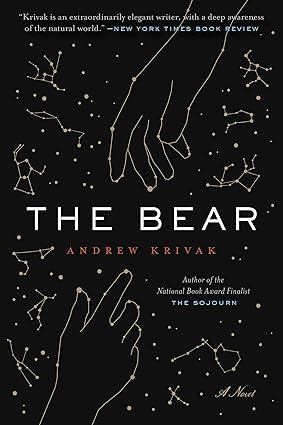
The Bear by Andrew Krivak is a fable of a post-anthropocene Earth told through the point of view of a young girl—possibly the only remaining human in the world—and the bear that guides her. Unlike the polar bear of The Breathing Hole, who remains silent and is clearly victimized by humanity’s actions, the black bear of The Bear lives with agency in a post-anthropocene world; he proselytizes and tells stories to instruct the girl on living harmoniously with Nature. His actions and elegant use of speech reflect his archetype as mentor in this story. This is foreshadowed in the fairytale the girl’s father recounts to her of a bear that saved a village from a cruel despot through cleverness and a sense of community.

This fable about humanity’s deliverance to nature’s dominion flows like a river under ice, revealing profound depth beneath spare yet sensual prose. Krivak does not name the girl, father or bear; allowing each to clearly symbolize ‘what we are, what we could be, and the natural world.’ Krivak gives the bear the power of direct voice through its ability to speak with the girl. Soon after the girl meets the bear she asks him how it is that he can speak. He tells her that long ago all animals could make the sounds she and her father made to communicate, but humans stopped listening and the skill was lost. He suggests the real question is how she can understand him. He then tells her that if she is patient enough, she too will hear the trees. 

As the story progresses, the girl transcends from lonely last human in a post-human world to one of Nature’s beings, living as part of the natural world. In this way, the girl embraces the society of the Other and casts aside her previous identity with the Othering society. 

The transition begins with her found ability to understand the bear. Near the end of the story, she is an old woman who communicates with all of Nature; “they came to her without fear of dominion and ate with her the plants and seeds and fruits she grew and picked.” The woman rejects her human trappings—the old house and its books, her parent’s grave, rising each morning with the sun and laying to sleep with the setting sun.

A descendant of the bear returns to bury her on the mountain, a place “where end and beginning were the same … the sky beginning to pale behind him like the world itself being born.” This fable celebrates humanity’s potential to participate humbly with the natural world and to embrace the Other by engaging with it and respecting it.      

3.Use of Fractal Association & Archetype in Dystopian (mundane) Cautionary Tale: The Windup Girl and the Cheshires  
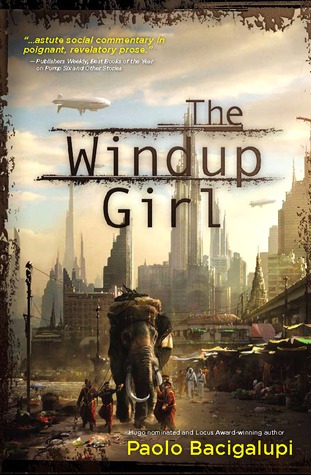
Paolo Bacigalupi’s biopunk science fiction novel The Windup Girl makes effective use of trickster archetypes in character-couplings of Windup girl and Cheshire cats to illustrate Nature’s silent power to herald change. The fractal associations of gene-manipulated Windup girl with manufactured-come-wild cats illustrate how Nature—when pushed—navigates the predatory world of a 23rd century post-food crash Thailand. By then global warming has raised sea levels, depleted carbon fuel sources, and destroyed the wilderness through genetic manipulations. Thailand struggles under the tyrannical boot of ag-biotech multinational giants—predatory companies who have fomented corruption and political strife through their plague-inducing and sterilizing genetic manipulations. 

Anderson Lake is a farang (of white race) who owns a factory trying to mass-produce kink-springs—successors to the internal combustion engine) to store energy. The factory covers for his real mission: to find and exploit the secret Thai seed bank with its wealth of genetic material. Emiko is an illegal Japanese “windup” (genetically modified human), owned by a Thai sex club owner, and treated as a sub-human slave; gene rippers built her sensual and obedient—even when abused.

When Emiko meets Lake, he cavalierly shares that a refuge in the remnant forests of northern Thailand exists for New People like her; Emiko embarks on a quest to escape her bonds and find her own people in the north. Like Bangkok itself, both protected and trapped by the wall against a sea poised to claim it—Emiko cannot escape who and what she is: a gifted modified human and herald of a sustainable future—vilified and feared by a humanity obsessed with the road set before it. Just as with the unintended consequence of cheshires (modified cats that wiped out regular cats), Emiko heralds in a post-modified world created through reckless greed and lax environmental protection. When she meets an old generipper after the floods have destroyed Bangkok, he admits, “Someday perhaps all people will be New People and you will look back on us as we now look at the poor Neanderthals.” 

Bangkok’s cheshires are genetically created “cats” (made by an agri-giant as a fun “toy”) that wiped out the regular cat Felis domesicus. As with Alice in Wonderland’s Cheshire Cat, these crafty creatures have adapted to Bangkok’s unstable environment. The shapeshifting cheshires exemplify the subversion of good intentions gone wrong, when Nature plays the trickster. 

Emiko and the cheshires serve both trickster and herald archetype; genetically created by the very people who despise them. Humanity understands that on some level those like Emiko and the cheshires are the future and they the past. As Bangkok drowns, Emiko meets an old generipper, dying from the gene-hacked casualties of cibiscosis and blister rust; he claims god-status to her and she responds, “If you were my God, you would have made New People first…We would have beaten you. Just like the cheshires.” 

Toward the end, policewoman Kanya is instructed to take the greedy corporate farang to the vault and hand over Bangkok’s precious seedbank to them. In a sudden moment of clarity Kanya singlehandedly creates her own coup by executing the farang and instructing the monks to safely dispatch Thailand’s precious seedbank to the jungle wilderness. Husked of its precious treasure, the city implodes as pumps and locks fail. Then the monsoons arrive. The City of Angels gives in to the sea that chases refugees into the gene-hack-destroyed outer forests. While Kanya triumphs in her own personal battle, she remains less agent of change than feckless witness to Nature’s powerful force as it unfurls like a giant cheshire and claws back what humans have taken from it.  

From the beginning, the cheshires embrace their difference and fate as Other; It is only near the end of the book, signaled by nature’s own rebellion, that Emiko breaks out of her oppression—including the one built into her—and embraces her survival in this changing world. Both she and the cheshires are the change. The epilogue to Bacigalupi’s cautionary tale belongs to the Other—Emiko and the cheshires—and an uncertain future with promise of change.  

4.Use of Personification, Archetype & Symbol in Post-Apocalyptic Cautionary Tale: The Tea master and Water  
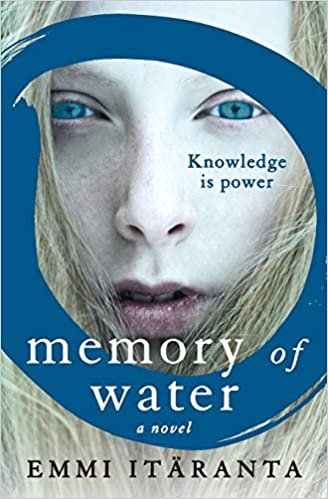
In the post-climate change drought-affected world of Memory of Water, Emmi Itäranta personifies water and couples to main character Tea Master Noria, to explore consequences of commodification and exploitation. Symbols of water as shapeshifter archetype and its omnipotent life-  and death-giving associations flow throughout the story, from the ‘fishfires’ in the northern skies to the painted blue circles on the doors of water criminals about to die.

The government considers water a resource to strictly control and water crimes are punishable by death. When her dying tea master father reveals that he used a secret spring in a cave by their house in his ceremonies, Noria is conflicted whether to continue guarding it as secret for use in her ceremonies or risk exposure by sharing it with those she loves in the village who struggle with poor water rations. “Secrets carve us like water carves stone.” Noria convinces herself to keep the hidden well a secret based on the Tea Master’s rhetoric of ceremony and notions of water’s sovereign nature: “Tea masters believe there are times when water doesn’t wish to be found because it knows it will be chained in ways that are against its nature.”

This works for a while until she discovers her friend trying to illegally tap a water main to draw off water for her sick baby sister. Fearing for her friend’s safety, Noria shares her secret well with her. Soon after, the town discovers its existence, and Noria quietly feeds the thirsty townsfolk, avoiding the realization that she too has now commodified water by serving as reluctant threshold guardian to water’s own journey.

Of course, she is eventually caught by police for her ‘water crime’ and sentenced to death. She may be a Tea Master but she is not a Water Master. “Water walks with the moon and embraces the earth, and it isn’t afraid to die in fire or live in air.”

In choosing to control water, the tea master becomes victim in a power play of ideology that fails to recognize the hidden power of this sovereign and arcane substance. As companion and harbinger, shape-shifting water is portrayed simultaneously as friend and enemy. As giver and taker of life. “When you step into it, it will be as close as your own skin, but if you hit it too hard, it will shatter you … Sometimes death travels hidden in water, and sometimes water will chase death away, but they go together always, in the world and in us.”

 Ironically, the wisdom Noria quoted at the beginning of the story comes back to her too late. “The story tells that water has a consciousness, that it carries in its memory everything that’s ever happened in this world, from the time before humans until this moment, which draws itself in its memory even as it passes. Water understands the movements of the world; it knows when it is sought and where it is needed. Sometimes a spring or a well dries for no reason, without explanation. It’s as if the water escapes of its own will, withdrawing into the cover of the earth to look for another channel.” 

5.Use of Symbolic World and Archetype: The Fremen and the Sand Worms 

Frank Herbert’s Dune uses powerful world building and symbols of desert, water and spice coupled to the indigenous Fremen, to address exploitation and oppression by colonial greed.

The novel chronicles the journeys of new colonists and indigenous peoples of the desert planet Arrakis, enslaved by its previous colonists. The planet known as Dune lies at the heart of an epic story about taking, giving and sharing. The planet also serves as symbol to any new area colonized by settlers and already inhabited by Othered indigenous. It is the Mars of Martian Chronicles, the Bangkok of The Windup Girl, the North America of Barkskins.   

The immense sandworms of Dune are strong archetypes of Nature—large and graceful creatures whose movements in the vast desert sands resemble the elegant whales of our oceans: “It came from their right with an uncaring majesty that could not be ignored. A twisting burrow-mound of sand cut through the dunes within their field of vision. The mound lifted in front, dusting away like a bow wave in water.” 

Misunderstood, except by the indigenous Fremen, the giant sandworms are targeted as a dangerous nuisance by the colonists who are mining the desert for spice—when, in fact, the sandworms are closely tied to both spice and water through the ecological cycles of the desert planet. 

In their oppression of the native Fremen, the colonists reflect an oppression of the desert and its very ecology—and a misunderstanding of Dune’s intricate connections to well-being and to spice. The main character quickly intuits the intimate connection of the native Fremen with the huge 400-metre long sandworms that roam the desert, attracted by vibration and sound and upon which the Fremen ride like dragons; he also makes the connection of the giant worms to the cinnamon-scented spice mélange, recognizing that the worms are “guarding” the spice deposits from interlopers as they look for prey. Mélange is, in fact, a byproduct of the life cycle of the giant sandworms, which created and maintain the desert and require the arid climate for their survival.  

Fremen respect the giant worms that dominate the dunes. The Fremen embrace their environment. This is reflected in how they view themselves—as a single “organism” bound by water. Kynes, an ecologist and spokesman for the Fremen, argues that “a man’s water, ultimately, belongs to his people—to his tribe”. This proclamation represents a humble participation with the Other.  

6.Use of Symbolism in a Historic or Contemporary World: the Mi’kmaq and the White Pine Forest  

Annie Proulx’s Barkskins uses strong metaphor-based character-coupling of indigenous peoples with the native forests to illuminate their oppression and exploitation.

Barkskins chronicles two immigrants who arrive in Canada in 1693 (René Sel and Charles Duquet) and their descendants over 300 years of deforestation of North America; a saga that starts with the arrival of the Europeans in pristine forest and ends with a largely decimated forest under the veil of global warming. Barkskins (woodcutters) are indentured servants who were brought from the Paris slums to the wilds of New France to clear the land, build and settle. Sel is forced to marry a native Mi’kmaw woman and their descendants live trapped between two cultures. 

Missionary Pere Crème is dumbfounded by how the Mi’kmaq treat aspects of nature as their equals. “To them Trees are Persons. In vain I tell them that Trees are for the uses of Men to build Houses and Ships.”  

The fate of the magnificent pine forests is cast by the shadow of nature’s exploitation and mistreatment of the Mi’kmaq by settlers with a fierce hunger for more. The Mi’kmaq lose their culture and their links to the natural world—even as that natural world slowly erodes. In a pivotal scene, Noë, a Mi’kmaw descendent of René Sel and a métis, grows enraged when she sees a telltale change in her brothers. That morning, she heard the men leaving and knew what it meant: they were wearing boots, not moccasins: “The men should be setting out to hunt moose, but because of the boots she knew they were going to work for the French logger.”  

Proulx’s bleak impressions of a harsh environment crawling with pests such as bébites and moustiques underlie the combative mindset of the settlers to conquer and seize what they can of a presumed infinite resource—and foreshadows the forest’s eventual destruction by settlers intent on conquering Nature. The natives are called sauvage just as Nature is considered an “evil wilderness.” Both are Othered, used by the white settlers as resource or tool, subdued and controlled.

The great pines of the Gatineau forest are raped and destroyed just as the Mi’kmaq. They cut indiscriminately, leaving what they don’t need to rot on the ground.

7.Use of Archetype & Identity in a Historic or Contemporary World: the Botanist and the Douglas Fir  

The Overstory by Richard Powers explores powerful archetypes through the coupling of several characters to avatar trees to illuminate individual aspects of nature, the wonder of forest cycles, and of its destructive and reckless exploitation.

The novel follows the life-stories of nine characters and their journey with trees. At its heart is the pivotal life of botanist-ecologist Patricia Westerford, a hearing- and speech-impaired introvert who discovers that trees communicate. Patricia Westerford is the archetypal ‘mother tree,’ who ultimately brings the tangle of narratives together through meaning. Westerford writes in her book The Secret Forest: “There are no individuals in a forest, no separable events. The bird and the branch it sits on are a joint thing.” Hers is a journey of becoming. 

When the scientific community destroys her career, she travels to the giant trees of the west coast, where she is overwhelmed by their massive size, dense biomass and profligate nature: “The air is so twilight-green she feels like she’s underwater … Death is everywhere, oppressive and beautiful.” 

Patricia identifies with the Douglas-fir trees. Tall and straight, they tower a hundred feet before the first branch. Yet these independent behemoths tell a different story beneath, in their roots. Just as Patricia secretly yearns for humanity, these trees seek community. Before a five hundred year old Douglas-fir dies, it will send its storehouse of chemicals to its roots and out through its fungal partners, donating its wealth to the community: “We might well call these ancient benefactors giving trees.” Patricia remembers the Buddha’s words: “A tree is a wondrous thing that shelters, feeds, and protects all living things. It even offers shade to the axmen who destroy it.” And with those last words, she seals her fate of becoming.  

 “No one sees trees. We see fruit, we see nuts, we see wood, we see shade. We see ornaments or pretty fall foliage. Obstacles blocking the road or wrecking the ski slope. Dark, threatening places that must be cleared. We see branches about to crush our roof. We see a cash crop. But trees—trees are invisible.” Like she is.  

In her final moments—as she stands at the podium in the Stanford auditorium to deliver her first and last keynote—Patricia opens with a sacrificial eulogy to trees that will strike at the very heart of who and what she has become. “When the world was ending the first time,” she begins, “Noah took all the animals, two by two, and loaded them aboard his escape craft for evacuation. But it’s a funny thing: he left the plants to die. He failed to take the one thing he needed to rebuild life on land, and concentrated on saving the freeloaders.” The crowd laughs, not fully understanding where she’s going with this. Then she gets to the point and mentions how, when asked by a reporter how much is enough, Rockefeller responded with ‘just a little bit more.’

The audience begins to stir restlessly, not clear on her progression. “Just a little more timber. A few more jobs.” Now the shifting in the seats, nervous coughs and whispers, as she nears her closing. “Link enough trees together and a forest grows aware,” she says. “The dying mother [tree] opens a hole in the canopy, and its rotting trunk enriches the soil for new seedlings.” At which point Patricia, too, ends her life to a startled audience. 

It is the ultimate parental sacrifice. Through archetype and identity, we realize that Patricia has not only fully embraced the Other; she is the Giving Tree: the ancient tree that in its last act gives all its secondary metabolites—her wisdom—back to the community. Like her stunned audience, we are moved and our perspective changed.  

Heavy snowfall on the Otonabee River, ON (photo and rendition by Nina Munteanu)

The Power of Changing Perspective Through Character-Coupling 

A good story explores a character’s journey through their relationships—to their environment, to other characters, and ultimately to themselves—who they were, are, and will be. In story, characters are defined through their experience and their approach to the unfamiliar, the Other. By describing the Other, writers describe “us”, given that it is through our own eyes that the Other is viewed and described. 

Scholars Ganz and Lin argue that convincing narrative can translate values into sources of motivation and build relationships committed to a common purpose. In her 2015 PhD Thesis, Shirley Roburn writes that, “Well chosen stories, which activate positive feelings such as hope, solidarity, and a sense of connection and purpose, can help listeners connect to their core values and approach challenges with a confident, action-oriented outlook.” Such reactions are elicited and heightened through effective use of character-coupling, particularly by giving voice to the Other.

Roburn shares a good example of character-coupling that gives voice to the Other through the re-branding of a mid-coast timber supply area into the compelling narrative of the Great Bear Rainforest, home of the rare Spirit Bear. The Gitga’at Nation tells the story that “the raven left one in ten bears white to remind them of the Ice Age when things were clean and pristine.” Following the revelation of this special bear’s existence and its compelling story, public pressure spawned the creation of a 21-million acre park to protect its home.

This example of character-coupling not only heightened engagement, increased empathy, and connected readers to their core values; it moved them to action.
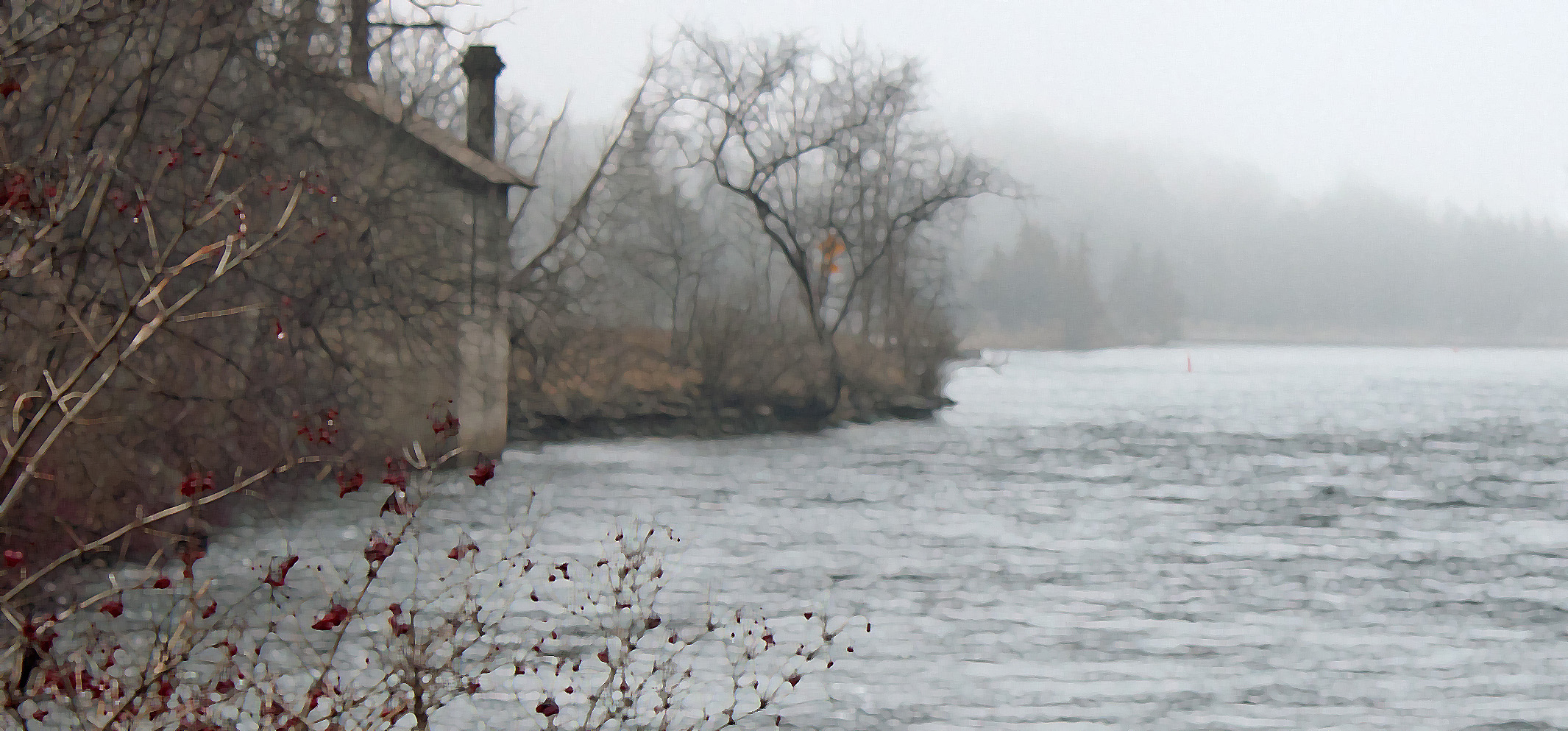
Old shed on the Otonabee River during a snow and fog, ON (photo and rendition by Nina Munteanu)

References:

Agamben, Giorgo. Homo Sacer: Sovereign Power and Bare Life. Stanford University Press. 1998. 228pp.

Bacigalupi, Paolo. The Windup Girl. Night Shade Books, New York. 2015. 466pp.

Miles, Kathryn. “Ecofeminism: sociology and environmentalism.” Britannica. https://www.britannica.com/topic/ecofeminism. Accessed 21 October 2022. 

de Beauvoir, Simone. “The Second Sex.” Modern Library, Random House, New York. 1968. p.144 In: King, Ynestra. “The Ecology of Feminism and the Feminism of Ecology.” Chapter 2. Healing the Wounds: The Promise of Ecofeminism, edited by Judith Plant. New Society Pub, 1989, pp. 18-28.

Dwyer, Jim. Where the Wild Books are: A Field Guide to Ecofiction. University of Nevada Press, Reno, Nevada. 2010. 264pp.

Ganz, Marshall and Emily S. Lin. “Learning to Lead: a Pedagogy of Practice.” The Handbook for Teaching Leadership: Knowing, Doing, and Being, edited byIn Scott A. Sook, Nitin Nohria, and Rakesh Khurana. Thousand Oaks: SAGE Publications, 2012. 354p.

Herbert, Frank. Dune. Ace, New York. 1965. 884pp.

Itäranta, Emmi. Memory of Water. Harper Voyager. New York. 2014. 266pp.

Kerslake, Patricia. “The Self and Representations of the Other in Science Fiction.” Chapter 1. Science Fiction and Empire, Liverpool University Press, 2007, pp. 8-24.

King, Ynestra. “The Ecology of Feminism and the Feminism of Ecology.” Chapter 2. Healing the Wounds: The Promise of Ecofeminism, edited by Judith Plant. New Society Pub, 1989, pp. 18-28.

Krivak, Andrew. The Bear. Bellevue Literary Press, New York, NY. 2020. 221pp.

Miles, Kathryn. “Ecofeminism: sociology and environmentalism.” Britannica, britannica.com/topic/ecofeminism.

Murphy, Coleen. The Breathing Hole. Playwrights Canada Press, Toronto. 2020. 305pp.

Nugent, Brittany. “The Rare Bear Protecting a Canadian Rainforest.” Goodness Exchange. 2021. https://goodness-exchange.com/spirit-bear-kermode-bear-kept-a-secret-for-generations/ Accessed October 30, 2022.

Powers, Richard. The Overstory. W.W. Norton & Company, New York. 2018. 502pp.

Proulx, Annie. Barkskins. Scribner, New York. 2016. 717pp.

Roburn, Shirley. Shifting Stories, Changing Places: Being Caribou and Narratives of Transformational Climate Change in Northwestern North America. Concordia University PhD dissertation. P. 31. https://spectrum.library.concordia.ca/id/eprint/980193/1/Roburn_PhD_F2015.pdf. Accessed 31 October 2022

Said, Edward W. Orientalism: Western Conceptions of the Orient. Vintage, London, 1978. 432pp.

Woodbury, Mary. “What is Eco-fiction?” Dragonfly.eco. 2016. https://dragonfly.eco/eco-fiction/ Accessed September 15, 2022.

Walking the Rotary Trail during a heavy snowfall, ON (photo and rendition by Nina Munteanu)

Nina Munteanu is a Canadian ecologist / limnologist and novelist. She is co-editor of Europa SF and currently teaches writing courses at George Brown College and the University of Toronto. Visit www.ninamunteanu.ca for the latest on her books. Nina’s bilingual “La natura dell’acqua / The Way of Water” was published by Mincione Edizioni in Rome. Her non-fiction book “Water Is…” by Pixl Press (Vancouver) was selected by Margaret Atwood in the New York Times ‘Year in Reading’ and was chosen as the 2017 Summer Read by Water Canada. Her novel “A Diary in the Age of Water” was released by Inanna Publications (Toronto) in June 2020.

The Silver Bean Café: A Place to Write My Next Novel…

Cafe patio facing Otonabee River (photo by Nina Munteanu)

I’m a bit of a wanderer, an itinerant. A hobo, even. I house sat and pet sat for a decade. I travel light; I carry what I own in my Jetta. One of the things I look for when I first settle somewhere is a choice café and a place where I can walk—preferably in a forest by a river. The small unpretentious town of Peterborough, north of Toronto and entry way to the Kawarthas, has both. The Otonabee River flows through Peterborough, much of it protected by riparian woodland and marsh (it is Peterborough’s source of drinking water, after all). The place where I currently live allows me to walk daily—rain or shine or snow—through riparian forest along the Otonabee River.

And then there’s the café part…

Silver Bean Cafe and boat wharf on the Otonabee River in Millennium Park, ON (photo by Nina Munteanu)
Cafe entrance to King Street and ice cream booth (photo by Nina Munteanu)

The Silver Bean Café fills that requirement wonderfully. It’s a café situated at a dead end of King Street within a linear riparian park (Millennium Park) on the banks of the river with a large side-park patio under a canopy of willows, black locust, and Manitoba maples. They know what they are too: they call themselves “your waterfront cottage in the city.” When I sit on the patio, enjoying my lunch under the dappled shade of a flowering black locust tree with a view of the river, I hear only birds and the desultory chatter of fellow patrons. And yet, the city is right there, next to this riparian park.

Stairs up to Silver Bean Cafe patio from boat wharf, beneath canopy of flowering black locust trees (photo by Nina Munteanu)
Riverside patio overlooking Otonabee River, ON (photo by Nina Munteanu)
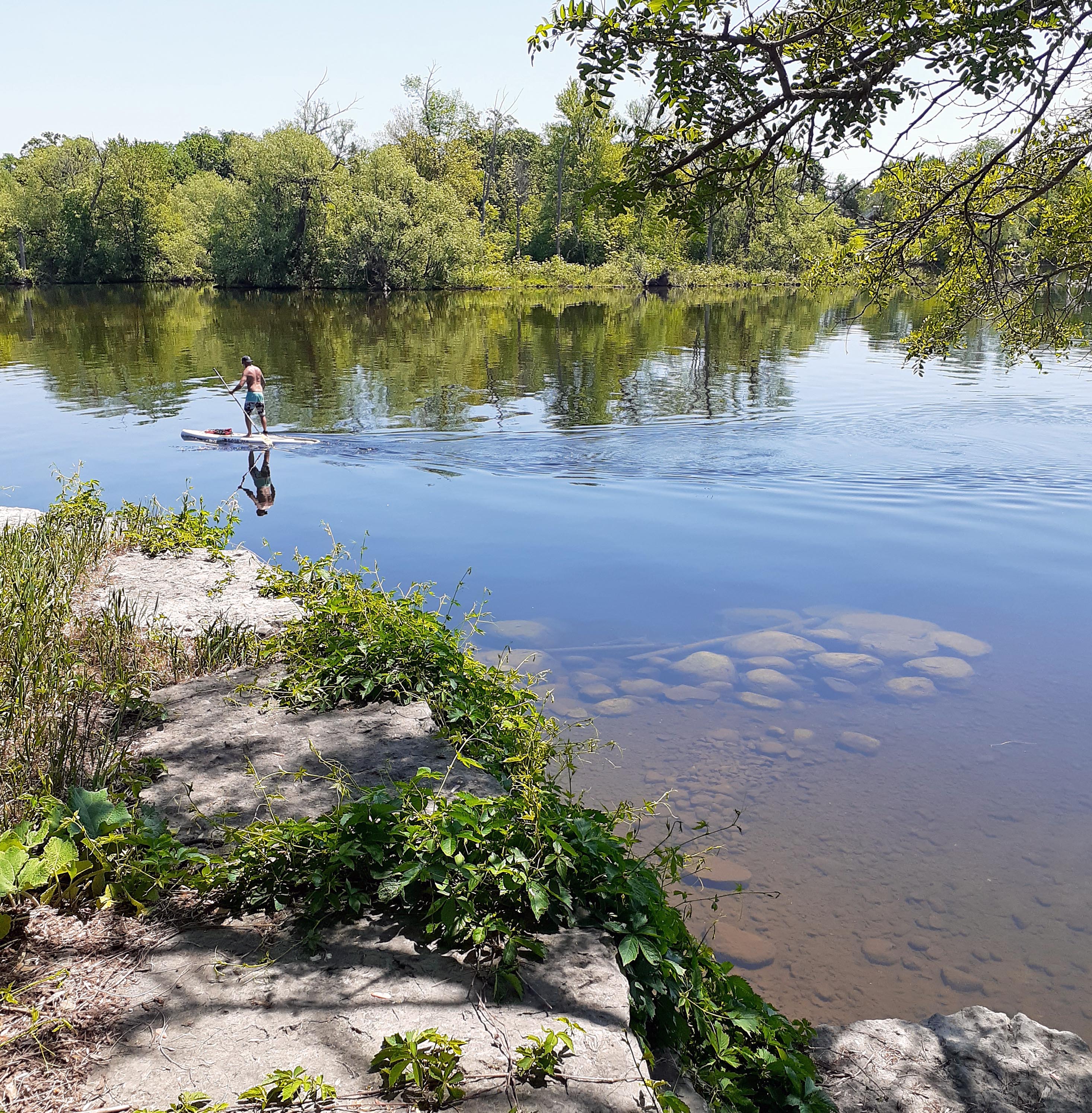
River boarder paddles by on Otonabee River, ON (photo by Nina Munteanu)

As I sit, eating my lunch and breathing in the ambrosia fragrance of black locust blooms, a young man paddles his canoe past the café. Soon after, a family of geese, adults flanking seven goslings, paddle leisurely by. Gulls cry out and gather on one of the small islands as a freight train lumbers over the old rail/footbridge downstream. A robin hops close to my table, looking for crumbs and I clumsily drop a seed from my multi-grain sandwich… Oops! Darn, I wanted that…

Family of geese paddle by cafe on the Otonabee River (photo by Nina Munteanu)

2023 is the Silver Bean’s 20th season, their website tells me. They opened in 2003 as a community café, serving light lunches with speciality sandwiches and salads, breakfasts, freshly baked scones, desserts and, of course, locally roasted coffee and espresso drinks. Oh! And their nook by the street-side serves at least thirty different flavours of my favourite Kawartha ice cream!

View of Silver Bean Cafe patio and boat rental wharf from park walk, ON (photo by Nina Munteanu)

One day, I was sitting on a stone step by the river on the park walkway, eating my peanut butter chocolate ice cream cone and watching a mother mallard and her chicks in the water. A well-dressed lady sat nearby with a take out coffee. Slipping off her shoes in the sun, she shared that she worked in the government building nearby and came here daily for her fix of sanity. I nodded sympathetically then smiled to myself. I felt the guilty pleasure of not being on ‘the clock.’ She left soon after. I stretched my legs in the sun, found my muse, and daydreamed about the next book I was going to write…  

Black locust with fragrant flowers in spring, overlooking the Otonabee River, ON (photo by Nina Munteanu)

Nina Munteanu is an ecologist and internationally published author of award-nominated speculative novels, short stories and non-fiction. She is co-editor of Europa SF and currently teaches writing courses at George Brown College and the University of Toronto. Visit www.ninamunteanu.ca for the latest on her books. Nina’s recent book is the bilingual “La natura dell’acqua / The Way of Water” (Mincione Edizioni, Rome). Her latest “Water Is…” is currently an Amazon Bestseller and NY Times ‘year in reading’ choice of Margaret Atwood.

Author Interview: Craig H. Bowlsby and “The Girl Who Was Only Three Quarters Dead”

Craig H. Bowlsby is a writer from Vancouver whose story “The Girl Who Was Only Three Quarters Dead,” published in the April 2022 Issue of Mystery Magazine was just recently declared the Winner of the Crime Writers of Canada Award of Excellence for Best Crime Short Story for 2023.

This noir/ dystopian story, set in Vancouver B.C., finds Suki prematurely awoken from an induced suspension between being alive and dead. With her retinas deactivated and her Government persona suspended, it’s up to her long-time friend and private investigator, Gabe, to uncover why she was brought back early and the way forward to recover her identity. Through the gritty and flooded streets of East End Vancouver and the mega corporations who control their entire existence, Gabe and Suki scheme to claim what is rightfully Suki’s.

Crime Writers of Canada

The story is set in the near-future in a post climate change Vancouver when sea level rise has water lapping decrepit buildings north of The Oak Street Bridge on Oak and 77th, Amazon owns entire roadways, and people pay corporate credits as currency.

One of the aspects of this mystery story that I found particularly attractive and interesting was Bowlsby’s use of cross-genre (mystery with science fiction), which he indicated in his interview with Erik D’Souza with Crime Writers of Canada he has an affinity for. I was reminded of the eco-techno thriller style of Hayden Trenholm’s detective series The Steele Chronicles, also set in the near future in Alberta Canada where biotechnology strays into the hands of corporate moguls and fundamentalist cults.

Bowlsby manages to cram both rich and seamless world building in his story (a feat in any short story), addressing mundane aspects of life, including the nuances of language (e.g. swear words suited to the time and place). Deadland, for instance, is a slang word that describes a government program that allows people to temporarily commit suicide, allowing them to place their lives on hold to supposedly help them escape their problems and supposedly better cope later (Bowlsby tells us rather pithily that it doesn’t really work).

Characters were fully fleshed out and interesting and I found that I would very much like to see more stories set in this universe with Gabe and Suki.

Interview

NM: One of the first things I noticed and loved about the story is its title. How did you arrive at it? Is there a story behind the choice?

CHB:  There’s usually more than one story behind my titles. It started with a very different title for a couple of years. Then I began to revise the story very seriously and that meant I had to reconsider the title too. I postulated hundreds of titles over three more years and ended up with a new one. But a friend pointed out a slight logic problem with that new title, related to the story. So, I had another reason to work on it. Normally if it doesn’t feel right, I always look for something that resonates better. Finally, this one resonated well, and wouldn’t be shaken off.  

NM: What was the spark or inspiration for this story? Why did you set it where and when you did (post-climate-change Vancouver)?

CHB: Well, when Erik De Souza asked me about the social commentary of the story in his interview, I forgot that the germ of the first inkling of this story came from a discussion I had with a friend, twenty years ago, who felt that everything in our society should be available for sale. For him that represented a pure state that would fix all our problems. (Sorry Erik—I’ll explain this when I see you next.) I disagreed, but I wondered what it would be like if we started on that path. So as a social background, the characters are acting within a stage created for such a system—a system just starting to find its own steady legs. I don’t say it’s bad or good—I just give it free rein. The story itself came from other elements, but the characters’ difficulties are complicated by the hyper-capitalism. As for the climate change problem, and the flooding, that came naturally with the near-future time period; I’m afraid it’s going to happen no matter what we do. As for Suki, her main problem stems from an idea I had about how we might alleviate suicides. Even if it might not work very well.    

NM: In your interview with Erik, you both discussed the use of language as a way to describe the world and create the gritty noir tone of the story. Can you describe some of the ways you derived them and other techniques you used?

CHB: That was hard. Or at least, it forced me to work my synapses hard for years. I don’t really know how I came up with the language changes except I set myself that task and used my brain like a sifter. I needed words for certain kinds of things, put myself into the future, and rattled hundreds of words through the filter. I kept lists of possibilities and used the best ones. I suppose that helps create the tone, but a lot of things do that: attitudes, social background, plot, etc.

NM: You mentioned in your interview with Erik that this story was “essentially a failure” and you’d been tirelessly working on it for five years, polishing, changing, revising—until finally someone liked it. Can you describe the process you went through in writing, preparing and getting out this story? Was this an exception for you or part of a typical process?

CHB: A typical process. Only a few of my stories have been published without being rejected by other publications. This story was first a short story, then a screenplay for a long time, then back to a short story, which meant at that point I had to cut out many scenes. Then it failed many more times in other publications. I just felt though that it generated so many sparks in my mind that it should catch fire somewhere, sometime. It was a surprise when it did. So, for some reason my stories need a lot of work. I’m guilty, therefore, I suppose, of not giving a story time enough time to mature, so in the future I should probably take more time to revise things before they see an editor. Generally, that’s a good approach, though, because you can come up with things that work better if you give them time to appear, which is what happened with this story.  

NM: Your writing has covered non-fiction and many genres of fiction: science fiction, fantasy, space adventure, mystery, thrillers.  How would you describe yourself as a writer?

CHB: An activationist. But I just made that up because of your question. I get an idea and I have to activate it, no matter the theme or genre. I don’t see myself restricted in any way to theme or subject. But I definitely feel an affinity for a plodding detective, no matter the time period or plot. (Or plod).

NM: What’s next for Craig H. Bowlsby?

CHB: I have several projects ready or pounding on my skull to get out. I have a series of three novels in the works about a Shanghai detective in 1917. Two in this series are complete. One takes place mostly in Shanghai; the next mostly in Vancouver; and the third will take place in Shanghai again.

NM: Now that you’re rich and famous, will you still talk to me? I’ll be in Vancouver soon and would gladly celebrate, starting with you buying me a beer!

CHB: I guess that sounds fair. Although I think I already owe you a six-pack. I enjoy our discussions, Nina. See you then!

You can read Craig’s story in the April 2022 Issue of Mystery Magazine. You can listen to Craig’s interview with Erik D’Souza here.

Glade in Jackson Creek, ON (photo and rendition by Nina Munteanu)

Nina Munteanu is a Canadian ecologist / limnologist and novelist. She is co-editor of Europa SF and currently teaches writing courses at George Brown College and the University of Toronto. Visit www.ninamunteanu.ca for the latest on her books. Nina’s bilingual “La natura dell’acqua / The Way of Water” was published by Mincione Edizioni in Rome. Her non-fiction book “Water Is…” by Pixl Press (Vancouver) was selected by Margaret Atwood in the New York Times ‘Year in Reading’ and was chosen as the 2017 Summer Read by Water Canada. Her novel “A Diary in the Age of Water” was released by Inanna Publications (Toronto) in June 2020.

Nina Munteanu on The Writing Process

Country road through Kawarthas, ON (photo and rendition by Nina Munteanu)

Issue  #128 of Apex Magazine featured an interview that Rebecca E. Treasure did with me. We discussed the power of story, the use of dystopian narrative, and the blur between fiction and non-fiction to create meaningful eco-fiction. Below we talk about the writing process I use for my stories these days. For the complete interview go here:

AM: The language in your stories is richly thematic, using strong description to weave the subtext into the piece. For example, “killing two squirrels with one stone.” Is that something that comes about organically as you compose a piece, or a more intentional part of editing?

NM: I use both processes to achieve a final narrative that is multi-layered with metaphor, symbols, and deep meaning. The first process is through intuition derived through intimacy; the second process is more deliberate and generated through objectivity. Insights from intimacy come about organically, during moments of true inspiration, when my muse connects me to the deeper truth of a character’s voice and actions. Given that the inner story runs many layers (some of which I, as writer, may not even be overtly aware) and links in a fractal relationship with the outer story, those moments of inner inspiration happen as if of their own accord. That’s what writers mean when they admit that their characters “talk” to them and instruct them on what to write. When a writer achieves that level of intimacy and understanding, they can let the muse guide them.

Much of the description that is woven into story is generated through the editing process when I read the manuscript as a reader. The process involves letting the story sit for a while so when I return to it, I am reading more objectively. During this process, I apply my knowledge in storytelling craft to showcase combustible moments in plot, and work in foreshadowing, subtext, and compelling metaphor. A writer can’t add metaphor without context related to story theme (otherwise this may result in what the industry calls “purple prose”). Metaphor—given its roots in the deeper psyche of a culture—must arise organically from a deep, sometimes intuitive, understanding—where the personal meets the universal.  

For the entire interview, go to Apex Magazine, December 10, 2021.

Nina Munteanu is a Canadian ecologist / limnologist and novelist. She is co-editor of Europa SF and currently teaches writing courses at George Brown College and the University of Toronto. Visit www.ninamunteanu.ca for the latest on her books. Nina’s bilingual “La natura dell’acqua / The Way of Water” was published by Mincione Edizioni in Rome. Her non-fiction book “Water Is…” by Pixl Press(Vancouver) was selected by Margaret Atwood in the New York Times‘Year in Reading’ and was chosen as the 2017 Summer Read by Water Canada. Her novel “A Diary in the Age of Water” was released by Inanna Publications (Toronto) in June 2020.

Nina Munteanu on The Bridge Between Fiction and NonFiction

.

Issue  #128 of Apex Magazine featured an interview that Rebecca E. Treasure did with me. We discussed the power of story, the use of dystopian narrative, and the blur between fiction and non-fiction to create meaningful eco-fiction. Below we talk about the role of stories in the climate action movement. For the complete interview go here:

AM: Your also stories bridge fiction with nonfiction, using speculative fiction as a lens to bring your subject into focus for the reader. How does that work? Why do you approach story in this way?

NM: Marcie McCauley with Temz Review observed that, “[Munteanu] does not appear to view fiction and non-fiction as separate territories; or, if she does, then this book [A Diary in the Age of Water] is a bridge between them.” In Herizons, Ursula Pflug called the book “a bit of a hybrid, and Munteanu a risk-taker.” Buried in Print wrote of the same book, “ultimately it exists in an in-between place, some mystical elements of the generational tale possibly alienating the dedicated science-y readers and the instructional elements possibly alienating fiction devotees. And, yet, I read on: strangely compelling.”

I find that I enjoy this in-between place that blurs fiction with nonfiction. It’s more edgy, gripping, and believable, albeit fantastical, even playfully challenging at times. For instance, I may subvert facts, creating semi-facts to tease the discerning reader (e.g. when the diarist in “A Diary in the Age of Water” observed that President Trump had gone blind from staring at the sun during an eclipse; while Trump did stare directly at the sun without eye protection during an eclipse in 2017, he did not go blind—yet). Readers have told me that the story was more impactful; they honestly didn’t know what was taken from fact and what was fictionalized. Such narrative reads like a true story and there is little more tantalizing than eavesdropping on another’s real experience and intrigue. The risk—that the blur will either confuse the reader or invalidate its truths and message—is hopefully addressed through compelling narrative that engages the reader. But this is also why I tend to include an extensive bibliography at the end of a novel or short story.

Readers have told me that my fiction/nonfiction storytelling trope, like “mundane science fiction,” grips my stories with a more keen sense of relevance. Given that I am writing mostly climate fiction and eco-fiction these days, that sense of relevance is exactly what I wish to achieve. 

For the entire interview, go to Apex Magazine, December 10, 2021.

Nina Munteanu is a Canadian ecologist / limnologist and novelist. She is co-editor of Europa SF and currently teaches writing courses at George Brown College and the University of Toronto. Visit www.ninamunteanu.ca for the latest on her books. Nina’s bilingual “La natura dell’acqua / The Way of Water” was published by Mincione Edizioni in Rome. Her non-fiction book “Water Is…” by Pixl Press(Vancouver) was selected by Margaret Atwood in the New York Times‘Year in Reading’ and was chosen as the 2017 Summer Read by Water Canada. Her novel “A Diary in the Age of Water” was released by Inanna Publications (Toronto) in June 2020.

Integrate Place in Fiction To Deepen Meaning

This past August, I participated in the When Words Collide Online 2022 Writing Festival.  one of Canada’s prime writing festivals in Calgary, Alberta. I was a featured writer, sitting on several panels and conducting presentations and lectures.
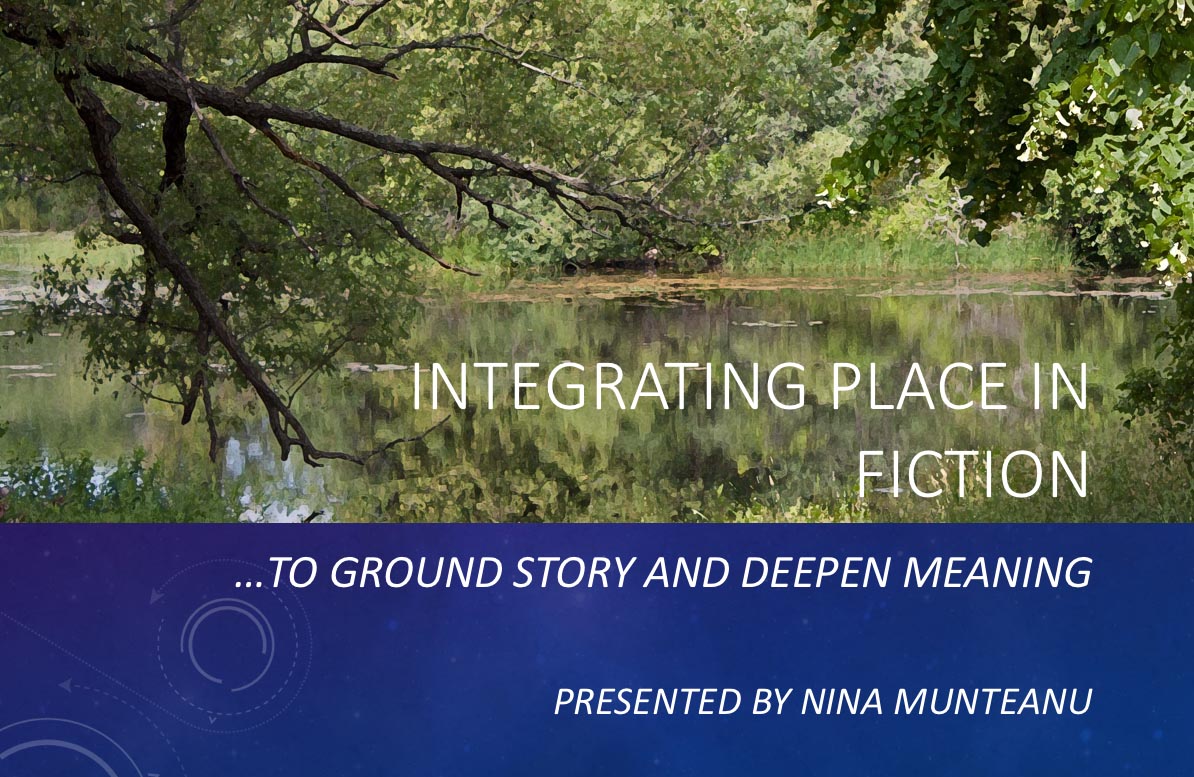
My presentation on the role of place in story kicked off the festival.

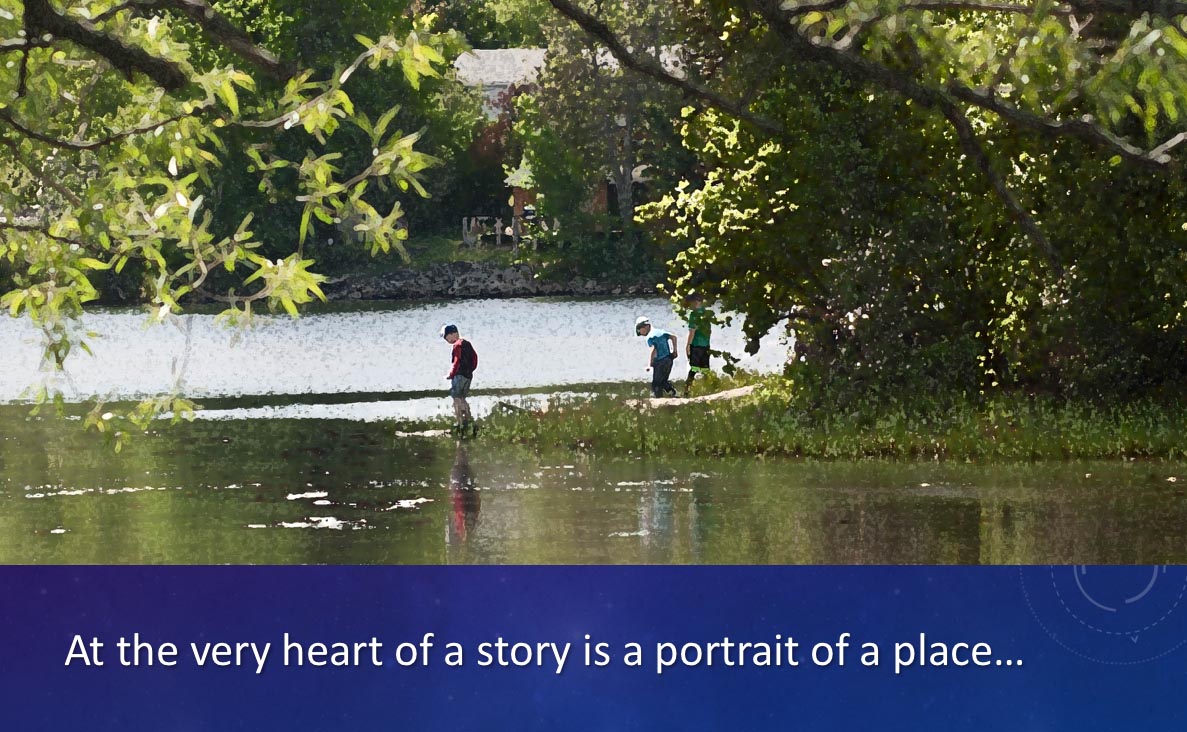
The role of place in story is a topic close to my heart and one I wrote an entire writing guidebook on: The Ecology of Story: World as Character. In my coaching sessions with writers and in my writing courses at George Brown College and the University of Toronto, I’d observed in the novice writer a need for more effective integration of setting and place in story. All too often, the lack of meaningful integration translated into a lost opportunity to explore the POV character and the story’s theme.

The lack of meaningful use of place in story can result in a lacklustre story, overly vague characterizations and a story that lacks metaphoric depth and relevance.

Nina Munteanu

The presentation and following discussion drew from my guidebook Ecology of Story and was also featured in the WWC recorded panel called “What is Eco-Fiction and Why Should We Care?” The presentation overviewed topics covered in the book, such as:

  • Place as character & archetype
  • Place as metaphor (personification, symbols, allegory)
  • Place and first impressions (openings)
  • Place and emotion (over time and by POV)
  • Place through the senses
  • Place as environmental force (including climate change)

We also discussed how characters connect with their environment and I introduced the metaphoric connection between the white pine forests and the Mi’kmaq in Annie Proulx’s Barkskins. Both are exploited by the white settlers, with intentions to subdue and controll:

The Gatineau forest was noisy, echoing with ax blows and the rushing crackle of falling timber, with shouted warnings and orders. The axmen cut the great pines, but only a few in each plot were suitable for squaring. The rest were left to rot on the ground … unwanted trees lay prostrate, severed branches everywhere, heaps of bark and mountains of chips … There were so many trees, what did it matter? Maine men were used to waste—it was usual—but this was beyond anything even they had seen. 

In the Penobscot settlement, the trees fell, tracks inched through the forests, only one or two then seven, then webs of trails that over the decades widened into roads. The roads were muddy, sometimes like batter, sometimes thick and clutching until late summer; when they metamorphosed into choking dust so fine it hung in the air long after a horse and carriage passed, settling on the grass as the English people settled on the land … Fields of wheat and hay took the land, these fields enclosed by linked stumps, the root wads of the forest that had once stood there turned on their edges to bar the white man’s cows and sheep. 

I concluded the presentation with a writing exercise asking participants to write about the psychology of a place and how they related to it.

Writers attending the presentation / workshop eagerly participated and produced some evocative narrative that contained good metaphor and sensual writing. Here are a few:

Freyja on their high school gym: “I remember rallies and lectures and sweating, running in circles for an hour and a half. The gym stayed the same but the population of people got smaller and smaller over the years. One year a kid hit his head on the wall and went into a coma. Longest seven seconds in my life.”

Roma: “As soon as I get a whiff of old pages in a book, I am reminded of Uncle Leo. The coffee coloured leather jacket he always wore had seen better days and like him, still retained most of its luster. He was the youngest of my dad’s nine siblings, born during a storm and considered a tempestuous child. Our family just didn’t understand his passion.”

Angela: “I stood on the bridge in Moscow. My mother was talking with a friend. She couldn’t believe how lucky we were to be posted here. I looked down at the river. And at the bridge. It would be so easy to just jump over the fence and land in the water. It was a sunny day. The heat was oppressive. I wanted to do it. But I stood still.”

Kylie: “The stuffy air was full of the smell of bodies and heat. The din of laughing and talking, and yelling surrounded me.”

To find out more on how place can add depth and meaning to your writing, see my third writing guide, The Ecology of Story: Place as Character.

The Ecology of Story: World as Character is presented in two parts: Part 1 provides a comprehensive summary of the science of ecology, the study of relationships, and links to useful metaphor; Part 2 discusses world and place in story. Here I discuss how the great writers have successfully integrated place with theme, character and plot to create a multi-layered story with depth and meaning. Part 2 also contains several exercises and detailed case studies.

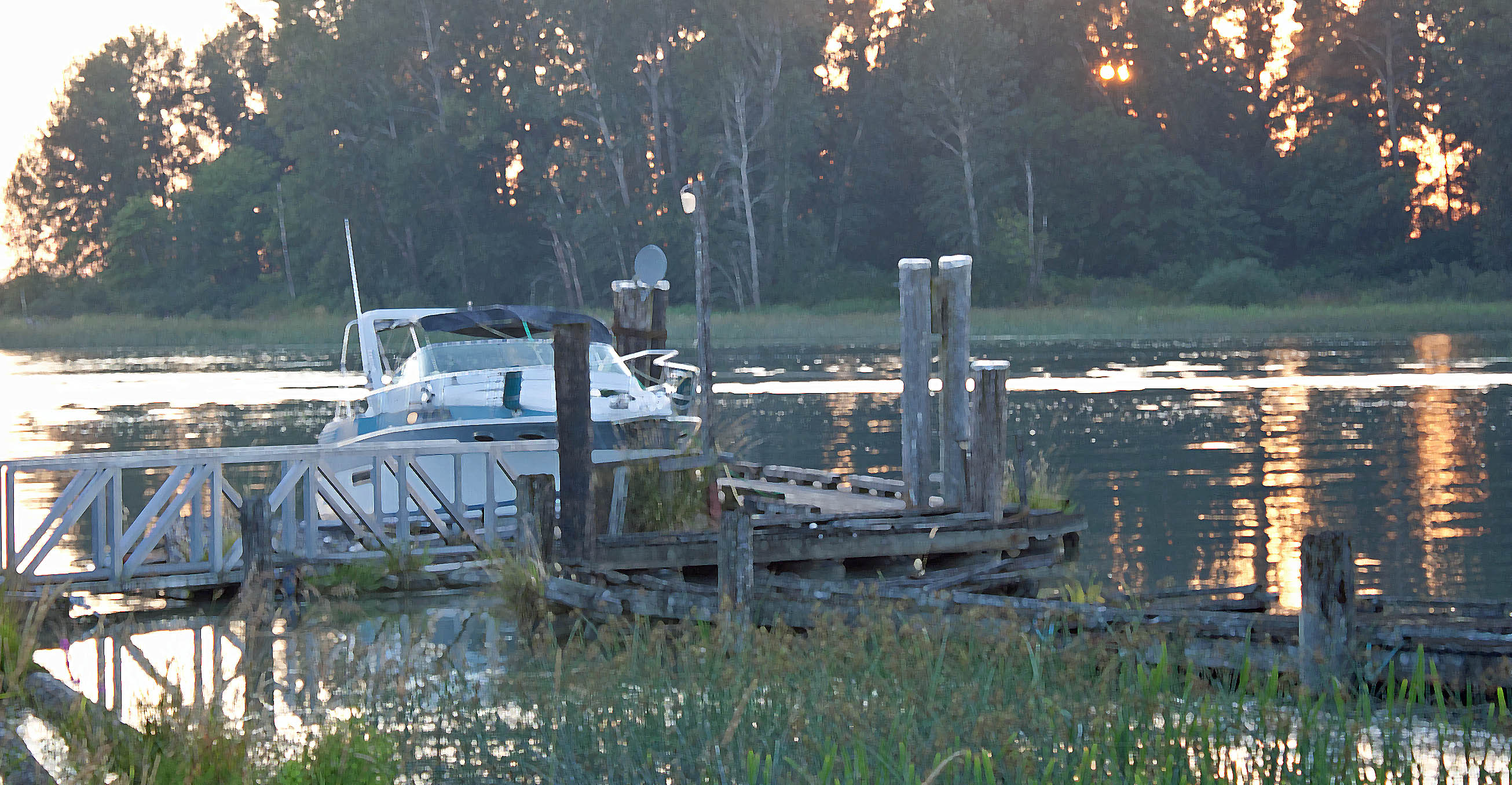
Boat dock at sunset, Ladner Slough of Fraser River, BC (photo and rendition by Nina Munteanu)

NINA MUNTEANU is a Canadian ecologist / limnologist and novelist. She is co-editor of Europa SF and currently teaches writing courses at George Brown College and the University of Toronto. Visit  www.ninamunteanu.ca for the latest on her books. Nina’s bilingual “La natura dell’acqua / The Way of Water” was published by Mincione Edizioni in Rome. Her non-fiction book “Water Is…” by Pixl Press(Vancouver) was selected by Margaret Atwood in the New York Times ‘Year in Reading’ and was chosen as the 2017 Summer Read by Water Canada. Her novel “A Diary in the Age of Water” was released by Inanna Publications (Toronto) in June 2020.
Interview with Author Simon Rose About His Latest Book “Royal Blood”

My guest today is Calgary author Simon Rose, who has published eighteen novels for children and young adults, eight guides for writers, more than a hundred nonfiction books, and many articles on a wide variety of topics. Today, we’re looking at his latest release, Royal Blood, the second novel in the Stone of the Seer series.

Remind us about the Stone of the Seer series. What’s it all about?

The Stone of the Seer is an exciting historical fantasy series for young adults, primarily set during the English Civil War in the mid-seventeenth century. The Stone of the Seer, is the first book in the series. At Habingdon House, Lady Elizabeth Usborne, Kate, and Tom discover a magical black stone, mysterious ancient manuscripts, and the tempus inpectoris, an incredible time viewing device. They are also in grave danger from Daniel Tombes, who has a fearsome reputation as a witchfinder.

And without giving too much away, what can readers look forward to in the second novel?

In Royal Blood, Lady Elizabeth, Kate, and Tom move to London in the middle of the Civil War, experiencing the great political changes taking place at the time, including the

trial and execution of Charles I. They are also still under threat from Tombes, who is also in the city. The story has many twists and turns, and I doubt if any of the readers will expect the novel’s cliffhanger ending.

And then they’ll have to wait for the third book?

Yes, they certainly will. I’m hoping that Revenge of the Witchfinder, the final novel and the conclusion of the story,will be published later this year. After that, people will be able to buy all three books in the series.

And what’s the story behind the story?

The story, main characters, and some of the settings in Royal Blood are fictional, but like in The Stone of the Seer, they’re based on real events and historical characters, such as King Charles I, appear in the story. The English Civil War broke out as a result of the struggle between Charles I and Parliament, regarding how the country should be governed. The king’s defeat in the war was followed by his trial and execution in January 1649. The monarchy was abolished and replaced first by the Commonwealth of England and then the Protectorate. However, although the monarchy was restored in 1660, in the person of Charles II, his father’s defeat confirmed that an English monarch couldn’t rule the country without the consent of Parliament. This was eventually legally established in 1688 after the Glorious Revolution.

Did you conduct extensive historical research for this book, as you did with the first one?

Although the English Civil War is a time period I’ve always been interested in, I still engaged in lots of research. I needed to study what life was like in seventeenth century London, the political and religious beliefs that were around at the time, the influence of real witchfinders such as Matthew Hopkins and others like him, and of course the trial and execution of Charles I. The trial itself was very well recorded and I was able to ensure that the words spoken by both the king and his accusers were accurate. There were also many witnesses to the execution, so I was able to include established facts about that aspect as well.

As I did in The Stone of the Seer, I’ve included a glossary at the end of Royal Blood, where readers can learn more about the events, settings, and leading characters from the era, locations that are mentioned in the text, life in the seventeenth century, and about other historical periods that are featured in the story. On my website, there’s also a page with details about the historical background behind the books, with links to online sources about the time period.

Do you have any current projects?

Right now I’m working on another historical fantasy novel series, this time set in the early years of World War II. I’m also working on another series of paranormal novels, in the same genre as my previously published series that includes Flashback, Twisted Fate, and Parallel Destiny. You can learn more about those books at www.simon-rose.com. In addition, I’m in the early stages of another couple of historical projects, and am also working on some screenplays, including adaptations of my Shadowzone series, and on several other topics.

Do you still work with other authors as well?

Yes, I offer coaching, editing, consulting, and mentoring services for writers of novels, short stories, fiction, nonfiction, biographies, inspirational books, and in many other genres, plus work with writers of scripts and screenplays. I’m also a writing instructor at the University of Calgary and served as the Writer-in-Residence with the Canadian Authors Association. You can find details of some of the projects I’ve worked on with other authors, along with references and recommendations, at www.simon-rose.com.

Where can people buy Royal Blood and The Stone of the Seer?

The novel can be purchased at most of the usual places, as follows:

Royal Blood

Ebook: Amazon CanadaAmazon USA, Kobo, iBooks, Barnes and NobleSmashwords

Paperback: Amazon Canada, Amazon USA

The Stone of the Seer

Ebook: Amazon CanadaAmazon USAKoboiBooksBarnes and NobleSmashwords 

Paperback: Amazon Canada, Amazon USA

Thanks Simon, for being my guest here today and the very best of luck with Royal Blood and the Stone of the Seer series. I hope the books sell thousands and thousands of copies in the coming weeks and months.

You can learn more about Simon and his work on his website at www.simon-rose.com, where you can also link to his social media sites and other locations online.

Tangle of roots of an old yellow birch tree, ON (photo and rendition by Nina Munteanu)

Mistakes Authors Make (When We Don’t Pay Attention to Place and Things

Marsh outlet of Thompson Creek, ON (photo and rendition by Nina Munteanu)

In “A Dance of Cranes” (Dundurn, 2019) author Steve Burrows erroneously describes the actions and motions associated with canoeing. In the following scene, the protagonist Jejeune is canoeing on a river in the boreal wilderness of northern Canada:

The low sun seemed to light the stand of birches from within, flickering through the trunks like a strobe light as Jejeune rowed past. 

One does not row a canoe; one paddles—with a paddle.

You might think that this is a small error, hardly worth mentioning; however, the friend who pointed out this mistake to me, was thrown out of the novel by it. She is a naturalist and has often gone canoeing in the lakes and rivers of Ontario. This mistake suggested a lack of professional attentiveness from both author and editor of the publication. By compromising the authenticity of the fictional setting the error stopped the reader from participating. We were no longer paddling with Jejeune; we were looking at the book.*

Some of you may rail at me for being overly harsh. You would remind me that this is a work of fiction, after all, not fact. You’d remind me that fiction is a work of the imagination, of characters and journeys; not a dry documentary.

I would agree with you—up to a point. Certainly, in fiction we can and do take liberties with “facts” so long as the narrative keeps the reader moving in the “fictive dream.” Authors have managed to successfully bend reality considerably in the past to great effect because the reader was fully engaged in the narrative and the characters.

But ultimately, beginning-to-end factual accuracy remains important in a made-up story for various reasons. While some “fake facts” or mistakes (such as the example above) may slip by many readers unnoticed, someone will notice. Guaranteed. And, as with my naturalist friend, it can make the difference between a seamless read and a jarring one. Writer Dorian Box shares that, “Some readers may even post reviews criticizing your book on that basis.” Dorian adds that when they spot large factual inaccuracies in a novel, “it detracts from the reading experience. I start to question other things. Credibility is damaged.”

All good fiction is anchored by consistent and believable world-building, whether the story is set in contemporary New York City or a made up planet in some made up solar system. The key to this believability is the use of grounding ‘facts’ or world-consistencies that immerse the reader in the story world. The reader relies on the author to realistically represent the world they are reading about. This allows the reader to experience the story as though it was real. Representing the facts accurately enables the writer to take liberties with other aspects of the story. Because the reader is nicely embedded in the world through accurate depiction, they will follow your characters through it eagerly.

Forest and marsh on Ontario (photo and rendition by Nina Munteanu)

The Importance and Ease of Research in Fiction Writing   

To prevent what happened in the example I gave above, authors must exercise due diligence in world building, in representation of setting and place, and in other elements of the story. Writers have easy access to so much knowledge about so many topics through local libraries, local experts, the internet, social media, and more. In other words, no excuse.

In the novel I’m currently working on I needed to understand what it felt like to handle, load and shoot a particular make of shotgun. I had handled one in the past but not actually used it. The internet provided exceptional instructional videos and sites that I could use to come close to the actual experience. I paid particular attention to nuances and sensual aspects such as texture, smell, weight, as well as mechanical aspects, like recoil; anything that would more viscerally help me experience it. When I had written the scenes, I showed them to someone who had handled a shotgun for their verdict on accurate depiction.

For more examples and discussion on place and doing research, check out Chapter H and R of my first book in The Alien Guidebook Series “The Fiction Writer: Get Published, Write Now!” and Part 2 of my third book in the series “The Ecology of Story: World as Character.”

*There is such a thing as a rowing canoe; canoes can be set up for rowing with oarlocks and sockets, oars, rowing seats and even forward rowing contraptions such as foot brace for efficient rowing. However, this was not the case in the book I gave as an example.

Fence post covered in vines on water’s edge, ON (photo and rendition by Nina Munteanu)

NINA MUNTEANU is a Canadian ecologist / limnologist and novelist. She is co-editor of Europa SF and currently teaches writing courses at George Brown College and the University of Toronto. Visit  www.ninamunteanu.ca for the latest on her books. Nina’s bilingual “La natura dell’acqua / The Way of Water” was published by Mincione Edizioni in Rome. Her non-fiction book “Water Is…” by Pixl Press(Vancouver) was selected by Margaret Atwood in the New York Times ‘Year in Reading’ and was chosen as the 2017 Summer Read by Water Canada. Her novel “A Diary in the Age of Water” was released by Inanna Publications (Toronto) in June 2020.
Nina Munteanu Reflects on Her Eco-Fiction Journey at Orchard Park Secondary School

I recently gave a talk at Orchard Park Secondary School during their “Eco Crawl” week. “Eco crawl is a cross curricular initiative promoting environmental awareness, natural conservation, and well-being,” says Teresa Grainger, Library Learning Commons Technician at the school. The “week long initiative will include animal visitors, presentations, displays, and outdoor activities. We like to involve as many departments as possible.”

The school invited me to participate with a presentation. I spoke about my work as a writer and as a scientist, how I was inspired to write eco-fiction and a little about the process of how I started. I shared the challenges I faced and my victories. I also spoke about the importance of eco-fiction as narrative and the importance of storytelling generally to incite interest, bring awareness and ultimately action.

The word is a powerful tool. And the stories that carry them are vehicles of change.

Here is some of that talk:

My story begins with the magic of water, Quebec water … I was born in a small town in the Eastern Townships of Quebec, a gently rolling and verdant farming community, where water bubbles and gurgles in at least two languages.

Pastoral Eastern Townships and Granby, Quebec; Nina Munteanu as a child

I spent a lot of my childhood days close to the ground, observing, poking, catching, destroying and creating. Perhaps it was this early induction to the organic fragrances of soil, rotting leaves and moss that set my path in later life as a limnologist, environmental consultant and writer of eco-fiction.

My mother kept a garden in our back yard that she watered mostly with rain she collected in a large barrel out back. I remember rows of bright dahlias with their button-faces and elegant gladiolas of all colours, tall like sentinels. And, her gorgeous irises.

In the winter, my mother flooded the garden to create an ice rink for the neighbourhood to use for hockey. Somehow, I always ended up being the goalie, dodging my brother’s swift pucks to the net. I got good at dodging—probably a useful life skill in later life…

Our dad frequently took us to the local spring just outside town. We walked a few miles up Mountain Road to an unassuming seepage from a rock outcrop with a pipe attached to it by the local farmer. I remember that the water was very cold. Even the air around the spring was cooler than the surrounding air. I remember that the spring water tasted fresh and that the ice it formed popped and fizzed more than tap water.

I followed my older brother and sister to the nearby forest and local river. We stirred soil, flower petals and other interesting things with water to fuel “magic potions” then told wild stories of mayhem and adventure. I became a storyteller. My passion for storytelling eventually morphed into writing; but, the underlying spark came through environmental activism.

In early high school, during the mid-60s, I became an environmental activist, putting up posters and writing in the school paper. I wrote letters to industry and politicians, trying to incite interest in being good corporate citizens and promoting global environmental action. I remember a well-meaning teacher chiding me for my extravagant worldview. “Stick to little things and your community—like recycling,” he suggested patronizingly. I remember the shock of realizing that not everyone felt the planet like I did. Perhaps it was a teenage-thing, or a girl-thing, or a nina-thing. I prayed it wasn’t just a nina-thing

I started writing stories in high school. Mostly eco-fiction, though I didn’t know that’s what it was at the time. There was no genre called eco-fiction back then. It all went under the umbrella of scifi.

I completed my first novel, Caged in World when I was fifteen—in Grade 9—in 1969.  Caged in World was a hundred-page speculative story about a world that had moved “inside” to escape the ravages of a post climate-change environment. The eco-novel was about a subway train driver and a data analyst caught in the trap of a huge lie. The story later morphed into Escape from Utopia. Several drafts—and years later—the novel became the eco-medical thriller Angel of Chaos, set in 2095 as humanity struggles with Darwin’s Disease—a mysterious neurological environmental pandemic. Icaria 5 is one of many enclosed cities within the slowly recovering toxic wasteland of North America, and where the protagonist Julie Crane works and lives. The city is run by technocrats, deep ecologists who call themselves Gaians, and consider themselves guardians of the planet. The Gaians’ secret is that they are keeping humanity “inside” not to protect humanity from a toxic wasteland but to protect the environment from a toxic humanity.

Some of the scientific papers, reports and articles I wrote or participated in

When I enrolled in college and university, I thought of going into environmental law then decided that I didn’t have the temperament for it and switched to biology. Without realizing it, I put fiction writing on hold while I pursued ecology at university. One professor got me very interested in limnology and it became my focus when I realized that I’d always been fascinated by water. I started out being scared of water—not being a strong swimmer—and the best thing you can do to get over a fear is to study it and understand it. That’s exactly what I did. I did some cool research on stream ecology and published scientific papers, articles and reports. Then I moved to the westcoast to teach limnology at the University of Victoria and do consulting work in aquatic ecology.

So, in a way, I’d gone back to what I loved best as a child—mucking about in nature, spending my days close to the ground, observing, poking, catching, destroying and creating.

Kevin as a toddler

In 1991, my son Kevin was born. I felt a miracle pass through me. Kevin became my doorway into wonder. His curiosity was boundless and lured me into a special world of transformation. I took time off work to spend with Kevin when he was young. We went on great trips, from the local mall, where we had a hot chocolate and played with Lego, to the local beach on the Fraser River, where we explored the rocks. When he was no more than three, I took him on endless adventures in the city and its surroundings. We didn’t have to go far. The mud puddles of a new subdivision after a rain were enough to keep our attention for dozens of minutes. We became connoisseurs of mud. The best kind was “chocolate mud,” with a consistency and viscosity that created the best crater when a rock was thrown into it.

Kevin and I often explored the little woodland near our house. We made “magic potions” out of nightshade flowers, fir needles, loam and moss; we fueled our concoctions with the elixir of water from a stagnant pool then told wild stories of mayhem and adventure.

Storytelling kept calling to me. It was the 1990s—twenty years after I finished Angel of Chaos—and I’d published lots of short stories and articles. But no novels.

Some of Nina’s short story publications

I spent several years shopping Angel of Chaos to agents and publishing houses. Although I received many bites, all finally let go. I kept writing short stories, some of which were cannibalized from the book, and several were published; I also wrote Angel’s prequel, The Great Revolution and Angel’s sequel Darwin’s Paradox and shopped them.

Then In 2007, Dragon Moon Press in Calgary made an offer to publish Darwins Paradox; the sequel became my debut novel. Dragon Moon Press later picked up Angel of Choas and published it in 2010 as a prequel. I haven’t stopped publishing books since (with a book pretty much every year), both fiction and non-fiction…including writing guidebooks in my Alien Guidebook Series.

Kevin hiking the mountains of the west coast, BC

My son left the nest to go to university and work and I went on walkabout and eventually left the westcoast, returning to my old home in the east. I did lots of house-sitting in the Maritimes, then ended up teaching at UofT in Toronto.

UofT, west gate to quadrangle of University College, ON (photo by Nina Munteanu)

In 2016, I published Water Is… with Pixl Press in Vancouver.  It’s a biography and celebration of water—my attempt to write a lay book on my water science, something that all could appreciate. Turns out that Margaret Atwood really liked it too!

On its heels, I got a book deal with Inanna Publications in Toronto for my eco-novel A Diary in the Age of Water. This eco-fiction novel follows the journeys of four generations of women during a time of catastrophic environmental change. The novel explores each woman’s relationship with water, itself an agent of change…

Eco-fiction (short for ecological fiction) is a kind of fiction in which the environment—or one aspect of the environment—plays a major role in story, either as premise or as character. For instance, several of my eco-fiction stories give Water a voice as character. In my latest novel, A Diary in the Age of Water, each of the four women characters reflects her relationship with water and, in turn, her view of and journey in a changing world.

In eco-fiction, strong relationships are forged between the major character on a journey and an aspect of their environment and place. Such strong relationship can linger in the minds and hearts of readers, shaping deep and meaningful connections that will often move a reader into action. Our capacity—and need—to share stories is as old as our ancient beginnings. From the Paleolithic cave paintings of Lascaux to our blogs on the Internet, humanity has left a grand legacy of ‘story’ sharing. By providing context to knowledge, story moves us to care, to cherish, and, in turn, to act. What we cherish, we protect.  It’s really that simple.

Eco-fiction—whether told as dystopia, post-apocalypse, cautionary tale or hopeful solarpunk—can help us co-create a new narrative, one about how the Earth gifts us with life and how we can give in return. It’s time to start giving.

That starts with story.

NINA MUNTEANU is a Canadian ecologist / limnologist and novelist. She is co-editor of Europa SF and currently teaches writing courses at George Brown College and the University of Toronto. Visit  www.ninamunteanu.ca for the latest on her books. Nina’s bilingual “La natura dell’acqua / The Way of Water” was published by Mincione Edizioni in Rome. Her non-fiction book “Water Is…” by Pixl Press(Vancouver) was selected by Margaret Atwood in the New York Times ‘Year in Reading’ and was chosen as the 2017 Summer Read by Water Canada. Her novel “A Diary in the Age of Water” was released by Inanna Publications (Toronto) in June 2020.

My Story … And My Dream

Nina, age four, pretending to read, Granby, Quebec (photo by Maria Munteanu)

I started writing and drawing as soon as I could hold a pencil. Even before I could read, I wanted to become a “paperback writer” like in the old Beatles song.

It was an incredible moment of clarity for me and despite being challenged by my stern and unimaginative primary school teacher, who kept trying to corral me into being “normal”, I wasn’t going to let anyone stem my creativity and eccentric — if not wayward — approach to literature, language and writing. I was a little brat and I knew it. She and I didn’t exactly get along. But I did okay and, despite her acidic commentary, Miss House awarded me some A’s and B’s…

Country road in late fall, ON (photo and rendition by Nina Munteanu)

I wrote some fan fiction but quickly found my own creations far more interesting and less limiting.

As a teenager, I wrote, directed and recorded “radio plays” with my sister. When we weren’t bursting into riotous laughter, it was actually pretty good. She and I shared a bedroom in the back of the house and at bedtime we opened our doors of imagination to a cast of thousands. We fed each other wild stories of space travel, adventure and intrigue, whispering and giggling well into the dark night, long after our parents were snoring in their beds.

Those days scintillated with liberating originality, excitement and joy.

(Photo: Nina Munteanu and sister Doina Maria Munteanu at Grouse Mountain, BC)

My first attempt at a graphic novel (pencil and ink drawings by a very young Nina)

I also enjoyed animation and drew several cartoon strips, peopled with crazy characters. I dreamt of writing graphic novels like Green Lantern and Spiderman. My hero was science fiction author and futurist, Ray Bradbury; I vowed to write profoundly stirring tales like he did.

I had found what excites me — my passion for telling stories—and I’d inadvertently stumbled upon an important piece of the secret formula for success: 1) having discovered my passion, I decided on a goal; 2) I found and wished to emulate a “hero” who’d achieved that goal and therefore had a “case study”; 3) I applied myself to the pursuit of my goal. Oops … the third one, well … it went downhill from there … Life got in the way.

The Beeches area of Toronto after a heavy snowstorm, ON (photo and rendition by Nina Munteanu)

I grew up.

Well, that, and the environment intervened. In several ways. It started with my parents. Recognizing my talent and interest in the fine arts (I was good in visual arts), they pushed me to get a fine arts degree in university and go into teaching or advertizing. They didn’t see fiction writing as a viable career or a strength of mine (I was lousy at spelling and, despite my ability to tell stories and my love for graphic novels, I didn’t read books much). I can still remember my father’s lecture to me about how perfect the teaching or nursing profession was for me. I wasn’t enamored by either. The second blow to my author-ego came in the form of a school “interest-ability” test, meant to prepare us for our career decisions. I remember the test consisting of an IQ portion (spatial, English and math), and a psychology portion (including problem-solving and scenarios meant to tease out our affinity for a particular career). Secretly harboring my paperback novelist dream, I filled out my forms with great excitement. I still remember the deflating results, which suggested that I was best suited to be a sergeant in the army. “Writing” as a career barely made it on the graph, and scored well below “computer programmer” and “mechanic”; none of which interested me.   

Country road in a heavy snow, ON (photo and rendition by Nina Munteanu)

I got involved in the environmental movement, while quietly holding my dream of being a paperback novelist close to my heart. I got several degrees in ecology and consulted for various companies to help protect the environment. I wrote a lot in those days, although it was more about the ecology of creeks and about industrial pollution. But my passion for writing fiction continued to simmer. Magazines started publishing my articles—my first sale was to Shared Vision Magazine in 1995 on environmental citizenship—and my published articles became my entrance into the world of fiction. Once I began publishing fiction stories—my first short fiction sale was “Arc of Time” to Armchair Aesthete in 2002—I never looked back.

Eventually, I was publishing a novel and several short stories every year. My fiction most often focused on environmental issues, humanity’s relationship with the natural world, and how we reconcile our reliance on technology with our respect for the natural world.

Publications of long or short eco-fiction that include my writing or editing

Throughout my writer’s journey, and particularly early in my journey, I weathered the threshold guardians, tricksters and shadows: friends and family who called what I did a hobby, something I did just to pass the time; people who didn’t believe in me, envied my drive or simply thought I was wasting my time; even industry scammers who preyed on my dreams and wanted my money for nothing in return; and ultimately my own fears and frustrations on query after query and rejection after rejection. Throughout it all, I never stopped dreaming.

Nina’s family hiking and boating in British Columbia over the years

I’ve travelled through Europe, Africa, parts of Asia, and Australia. I raised a family and lived all over Canada from the Pacific to the Atlantic coast. I worked as a barista, shopkeeper and science lab instructor, then as environmental consultant, writing instructor and writing coach.  During these wonderful life-adventures, I never stopped writing. 

Nina Munteanu in the castle at Gruyères, Switzerland (photo by Jane Raptor)

To date, I have written and sold over three dozen eco-fiction, science fiction and fantasy novels, non-fiction books, short stories and articles. I have sold short stories to magazines in Canada and the U.S. with translations and reprints in Israel, Poland, Greece, and Romania. My short fiction has appeared in Neo-Opsis Science Fiction Magazine, Chiaroscuro, subTerrain, Apex Magazine, Metastellar, and several anthologies. I’ve seen my short stories nominated for the Aurora Prix Award (Canada’s premier award for writing science fiction and fantasy) and the Foundation of Speculative Fiction Fountain Award. Recognition for my work includes the Midwest Book Review Reader’s Choice Award, finalist for Foreword Magazine’s Book of the Year Award, the SLF Fountain Award, and The Delta Optimist Reviewers Choice Award.  

Nina celebrates her adventures in Toronto (left) and Paris (right)

I’ve published nine novels so far with nominations for the Aurora Prix, Foreword Magazine Book of the Year (several times), and various Reader’s Choice awards.  My non-fiction book “Water Is…” (Pixl Press)—a scientific study and personal journey as limnologist, mother, and teacher—was Margaret Atwood’s pick in 2016 in the New York Times ‘The Year in Reading.’ My recent eco-novel released in 2020 by Inanna PublicationsA Diary in the Age of Water“—about four generations of women and their relationship to water in a rapidly changing world—was a silver medalist for the Literary Titan Award, the Bronze winner of Foreword Magazine’s Book of the Year in 2020, longlisted for the Miramichi Review’s ‘Very Best Book of the Year Award,’ and a finalist for the 2021 International Book Award. Reviewers have described it as “lyrical…thought-provoking…unique and captivating…insightful…profound and brilliant…unsettling and yet deliciously readable…” One reviewer described it as a “a bit of a hybrid” and the writer “a risk taker”—which I quite liked. Another reviewer acknowledged that this was not a book for everyone and yet she found it “strangely compelling.”—which I found delicious.

It’s been twenty years since I seriously started my writing career with my first publication in 1995; my work is now recognized and translated throughout the world and I frequently get writing commissions from reputable magazines and publications. I am also frequently invited for speaking engagements and radio/podcast/TV interviews about my science and my writing. In short, I’ve come home; I’d taken a rather long detour but I’ve acquired some tools along the way. It’s been and continues to be a wonderful and exciting journey; and part of what made it so was that I never stopped dreaming and writing.

“…If you have nothing at all to create, then perhaps you create yourself…”

Carl Jung
A sampling of literary publications up to 2021-end that have included something of mine (short fiction, long fiction, non-fiction)

Two people walk through snowy path after a fresh heavy snowfall, ON (photo and rendition by Nina Munteanu)

Nina Munteanu is a Canadian ecologist / limnologist and novelist. She is co-editor of Europa SF and currently teaches writing courses at George Brown College and the University of Toronto. Visit www.ninamunteanu.ca for the latest on her books. Nina’s bilingual “La natura dell’acqua / The Way of Water” was published by Mincione Edizioni in Rome. Her non-fiction book “Water Is…” by Pixl Press(Vancouver) was selected by Margaret Atwood in the New York Times ‘Year in Reading’ and was chosen as the 2017 Summer Read by Water Canada. Her novel “A Diary in the Age of Water” was released by Inanna Publications (Toronto) in June 2020.