Author Interview: Terry Birdgenaw Talks About Insects, Climate Change and his Latest Book

It was several years ago, in 2020, that Terry Birdgenaw approached me as a writing coach to look at his first novel. When he described its premise, I was hooked right away and agreed to give it an editorial review. It was the beginning of a wonderful and rich experience with Terry’s books, now a series entitled The Antunite Chronicles. From the start, I was impressed and fascinated with his imagination and accurate use of science to produce a diverting allegorical CliFi series about cyborg insects on a far-away planet that serves as metaphor to developing autocracies on Earth.
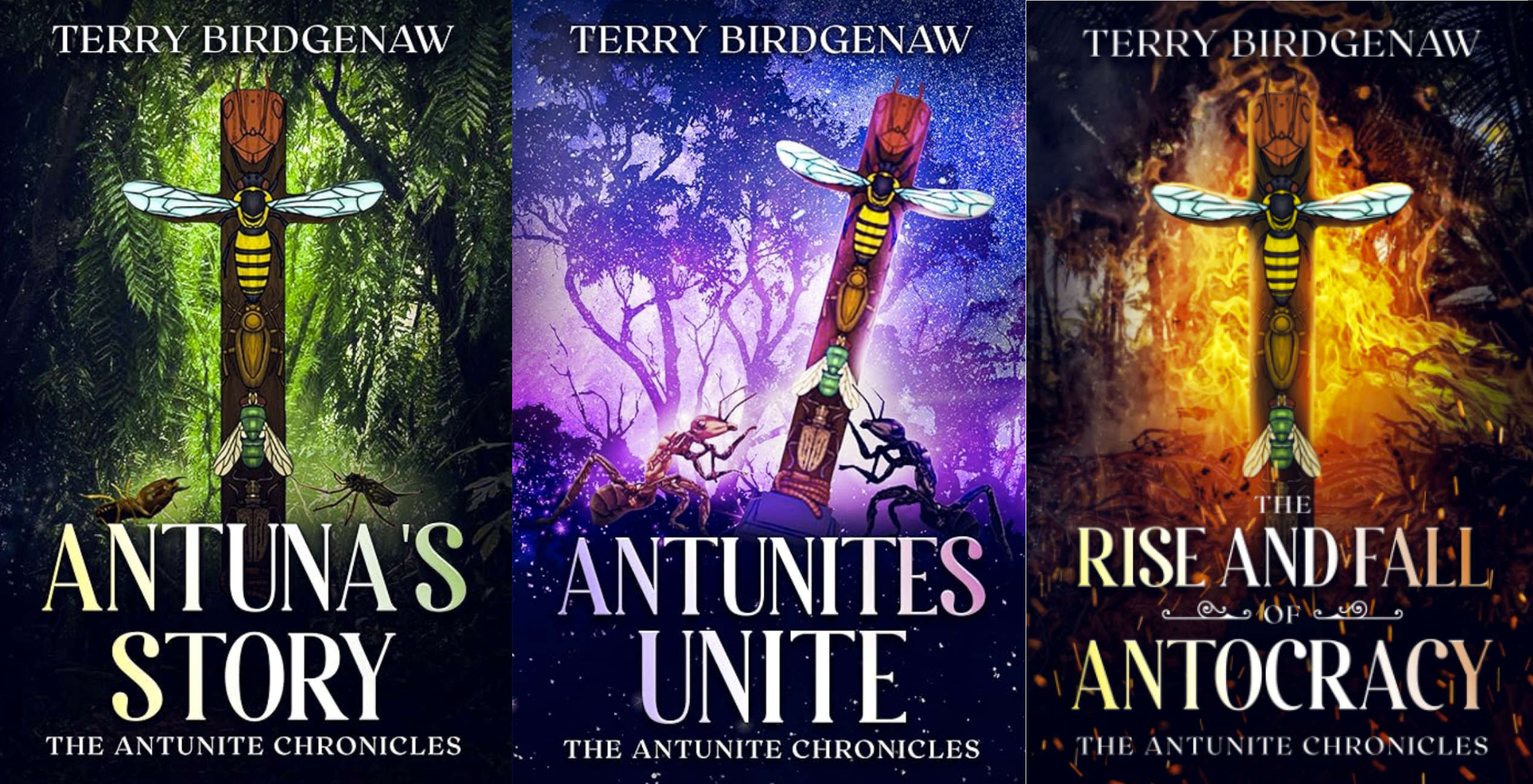
Terry has three books out, with a fourth upcoming. The three books in this YA series take place on a far-away planet and moon, serving as a political and environmental allegory of an evolving technological society and failed democracy. They include: Antuna’s Story; The Rise and Fall of Antocracy; and Antunites Unite. The theme of induced climate change and environmental destruction runs deeply through the first three books. The fourth book, soon to release, is Cyborg Contact, which returns us to Earth. I’ll let Terry describe the series in the following interview I conducted with him on November 26:

Nina: Your background and expertise is in neuroscience and psychology with over 150 scientific publications. You are Harold Griffith Professor of Anesthesia Research at McGill University in Montreal and your main research focus is on the mechanisms underlying neuroplasticity and its influence on the perception of pain. What got you started writing this incredible series, an adventure story that embraces ecology and entomology? What gave you the idea to create this imaginative modern allegory on the evolution of a technological society using insects as your main characters?

Terry: Oddly enough, I was not originally planning to write fiction. My inspiration came from my school librarian wife, Ann Birdgenaw, when she began writing the second book of her children’s chapter book series, Black Hole Radio. Her series features fifth-grade kids who travel through a wormhole to different planets, aiding the inhabitants they discover. She was considering what kind of planet and civilization her explorers would encounter, and I gave her some ideas about a giant cyborg-insect world that she ran with. Having some skin in the game, I participated beyond my welcome, offering plotlines that were far too advanced for her 7- to 11-year-old readers. Graciously, Ann suggested I take my ideas and write the backstory for her book, Black Hole Radio – Bilaluna, but target my book at young adults and adults. Thus began my fiction writing adventure. It was a rough start, but with the help of a tolerant book coach, my planned novella rapidly expanded to a trilogy. Perhaps a quick study because of years of scientific writing, I still credit Nina with opening in me an imaginative creativity I never knew I possessed.

Nina: The narrative of your stories is from the POV of various insects and in some way, the stories are dramatizations of real and accurate ecological relationships of insects with their environment and each other. How did you prepare for this—both in relaying accurate ecologies and in realizable dramatization and characterization of your main characters—all insects? How did you avoid what I would call the Disney-effect: anthropomorphising insect characters into human archetypes to achieve reader engagement? How did you create that balance between realistic representation and empathic portrayal?

Terry: Although my books are parodies with characters who face political and ecological problems and anthropomorphise human dilemmas, I did not want them to be simply furry or slimy stand-ins for the humans they satirize. Thus, I drew on my long-standing expertise as a scientific researcher to delve deeply into entomology, ecology and environmental science. Fascinated by the richness of insect activities and interactions and the similarity between insect and human behaviour, I endeavoured to exploit my newly acquired knowledge within the pages of my story. I was inspired both by Orwellian dystopias and works such as Bernard Werber’s Empire of the Ants and Laline Paull’s The Bees. But more than that, I learned to let myself be taken into the world my insects lived in, experiencing both their instinctive realities and the human predicaments I intended to lampoon in equal measure.

Nina: I noticed some fun metaphoric descriptions and expressions that incorporated insect terms to represent human counterparts. Did these come to you easily or were they a lot of work over time? Can you describe the process you used? For instance, did you spend a lot of time watching ants on the sidewalk?

Terry: Some phrases like ‘she shook her antenna to tune her attention’, ‘I took that as a back-clawed compliment’, or ‘he is such a hindgut hole’ came easily to me as differences in insect and human anatomy necessitated them. Others, like the expressions explained in my dictionary of pheromonal insect emotions, took much more reflection. This literary technique was inspired by your writing guide, The Fiction Writer, when you described how to add colour to one’s writing by using word pairings that mix up the senses, like the well-known one ‘biting cold’. This excellent advice led me to develop an extensive lexicon of insect emotions/non-verbal speech, including word combinations such as abrasive aroma, bitter bouquet, frosty fragrance, and vacillating vapour. They were not all alliterations, but some, like ‘she emitted an effervescent essence, were clearly intended to be. I didn’t watch ants walking, but I thought a lot about how they might communicate their emotions pheromonally.

Nina: One of the things I enjoyed throughout your series is how you seamlessly imparted interesting facts about insects on our planet in the storytelling. I learned a lot about various insects! Tell us a little about the process you used to achieve this so effectively.

Terry: As a long-time researcher, I have learned how to find and use facts from scientific literature and reliable web-based information on many subjects within and outside my scientific field. Insect behaviour is little known, but often fascinating, and I enjoyed both discovering many details and incorporating them into fiction scenes. Sometimes I was required to dig even deeper than I initially expected to make my stories scientifically accurate. One of these cases had a very significant impact on a critical component of my book’s key plot. In Antunites Unite, ants are separated into a hierarchy of castes based on exoskeleton colour. Although clearly an anti-racism story, I originally wrote it with black ants as oppressors of both brown and red ants. Perhaps influenced by previous literature and movies, where the bad guys are often dressed in black, I had a feeling that some readers might interpret my choice as having a racist underpinning. I convinced myself that readers would not take the colour choice as representative of human ethnicity. However, the last beta reader to comment on the book made such an interpretation and confirmed my fear that some readers might see it as the opposite of my intention. So, while I debated altering the colour schemes, I dug deeper into the entomological discovery of a phenomenon my story paralleled, involving what entomologists call slave-maker ants. When my extensive research confirmed that red ants are more often the ants using raids to steal the eggs of other ants to be raised as slave-like workers for the dominant reds, I knew I had to reverse the colours. And this was no easy task, because all the characters in each caste took names that reflected their colour, like Ruby and Obsidiant. There were also many humorous references to colour, such as black widow spiders and lava fields, that needed to be reworked. It was an editing nightmare: Rose became Raven, and Raven – Rose, while Cole gave way to Clay, and Jett morphed to Jasper, etc., etc., etc. But in the end, it was true to nature and avoided any unwanted racial interpretations.

Nina: In your first three books—a political modern satire on developing autocracies and human-induced climate change—you explore the technological and biological evolution of an insect exo-community in which certain species—ants for instance—acquire the ability to become cyborgs, ANTs, growing in size and abilities to navigate their world more effectively with related achievements—and consequences. As an ecologist, I was fascinated by how you portrayed the changing relationship of these beings to their environment as they evolved. Do you see a parallel with human society? Can you elaborate on this?

Terry: Yes, on a macro level. That is, technology can benefit society immensely, but it can also cause significant harm when coupled with greed, wilful ignorance of scientific warnings, and leaders misleading the public. I highlight one line of poetry written by my narrator in The Rise and Fall of Antocracy: “Like Peter and the crows, tis science, truth and reality denied ere climate is crucified.” Cyborg insects were created to enhance the production of honey, which was their currency. Cyborg ants, who most craved both power and honey, deceived the public to the detriment of the environment and ignored the science that provided evidence of environmental changes, which most insectoids on the planet denied. Perhaps an obvious cataclysmic message to those in our world, but many on this Earth apparently need to be hit over the head to see where this all may lead.

Nina: Tell us about your latest book, the fourth in the series, Cyborg Contact, in which one of the cyborg ANTs returns to Earth through a wormhole with an important mission. I found that, while the first three books served as satirical allegory to a developing technological society through the evolving insect communities, the fourth book—being a first contact—shifts into more of an exploration of ‘the other,’ its perception and treatment by humans and their civilizations. Can you expand on this? How does humanity’s perception and treatment of the ‘other’ factor into our treatment of our environment and the growing phenomenon of climate change?

Terry: I might disagree and point out that ‘exclusion of the other’ is a dominant theme in all four books. The difference is that in Cyborg Contact, the main character embodies ‘the other’, so it hits home more strongly. What could be more ‘otherly’ than an alien (from another planet) who is treated like an illegal alien and hunted by ICE agents? And, too, aside from being hunted, many other dangers the alien experiences on Earth, including hurricanes, droughts, mudslides, and forest fires, are all caused by climate change, which has accelerated in the near-future North America our hero traverses. It seems that for some world leaders, a lack of empathy for others is paired with a disregard for the environment.

Nina: Who is reading your books? And who should be who isn’t?

Terry: They are read by both young adults and adults; sometimes by parents reading to their pre-teens. They are not New York Times best sellers, but are highly celebrated by those who have read them. They should be read by all sci-fi and fantasy readers aged 13 and up who enjoy a thought-provoking read, except those who support fascism.

Nina: How have your books been generally received? I understand that your trilogy has won the Firebird Book Award. Congratulations! What are people saying about your books?

Terry: Editorial reviews have been stellar, and the books have received awards from most of the contests to which they have been entered. Awards for all three books include Gold Medal/Badge (Readers’ Favourite, Literary Titan), First Place Prize (Firebird, Entrada Incipere), Silver & Bronze Medal (Firebird, Bookfest), Honourable Mention (Readers’ Favourite), and Finalist (American Writing Awards, Chanticleer, The Wishing Shelf). Most notable review comments describe the books as: “soon-to-be a bestseller”, “takes speculative fiction to a new level”, “fantastical to a degree not seen elsewhere in any Sci-Fi dystopian fiction”, “as big in spirit as any literary giant in the genre” and “holds its ground next to Brave New WorldDuneAnimal Farm, and 1984”. These reviews have “blown me away”, like an enthusiastic reader’s comment on Antuna’s Story.

Nina: What’s next for Terry Birdgenaw?

Terry: Finish editing Book 4 and writing a dystopian novel featuring humans for a change.

Nina: That sounds very intriguing! Thanks for coming out for the interview, Terry.

Terry: My pleasure, Nina.

The first three books of the Antunite Chronicles series by Terry Birdgenaw

You can find Terry’s books all over the place, including Amazon. Find out more about Terry on his website and check out Terry’s interview on SF Canada in which he talks more about his heritage and interests.

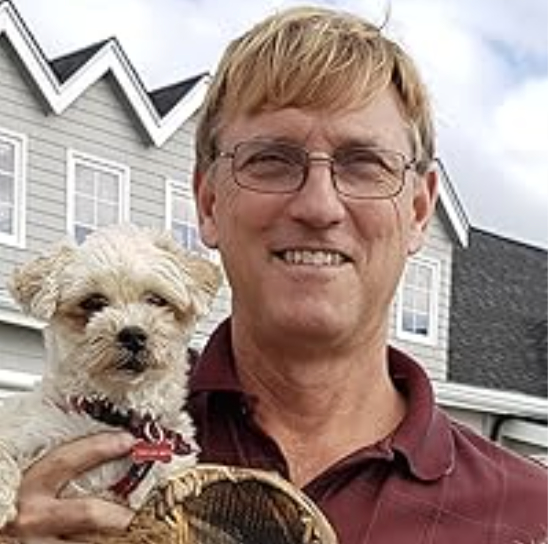
Terry Birdgenaw and one of his fans

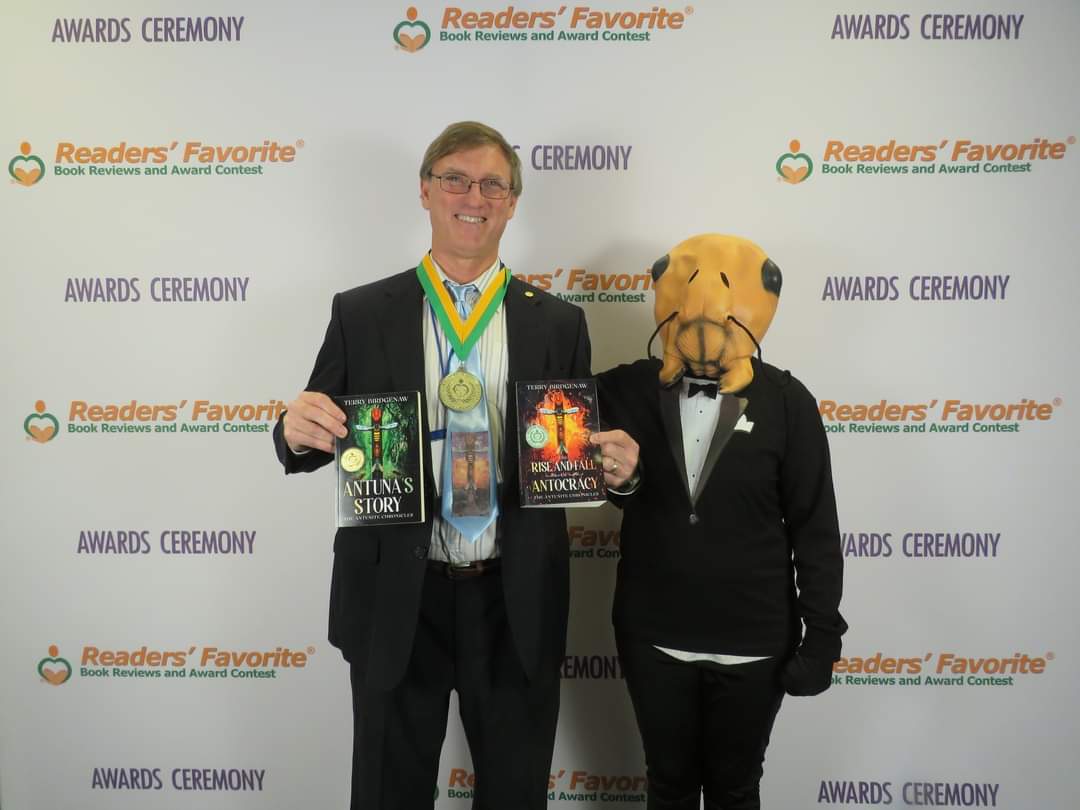
Terry Birdgenaw with Narrant at award ceremonies

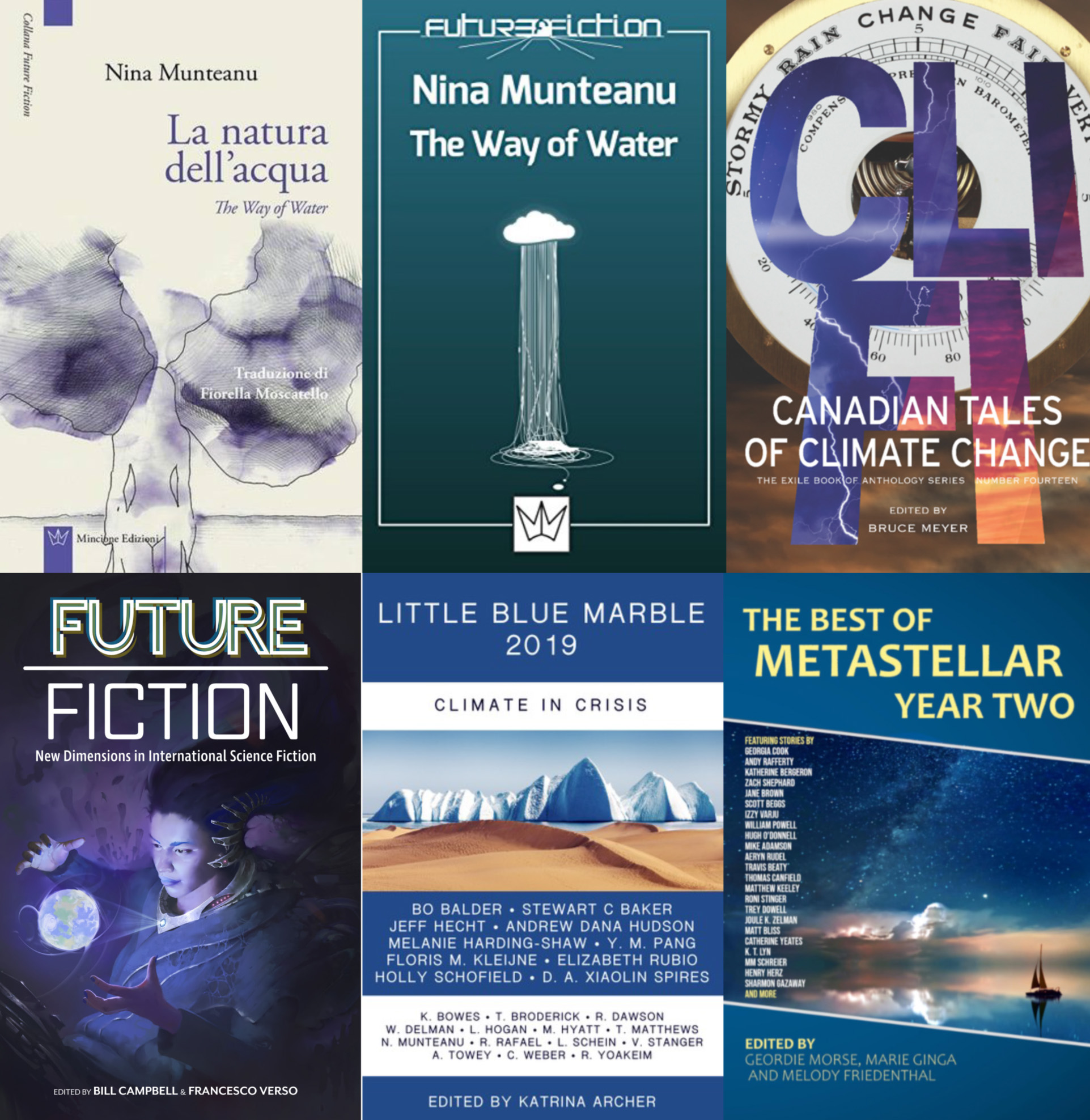
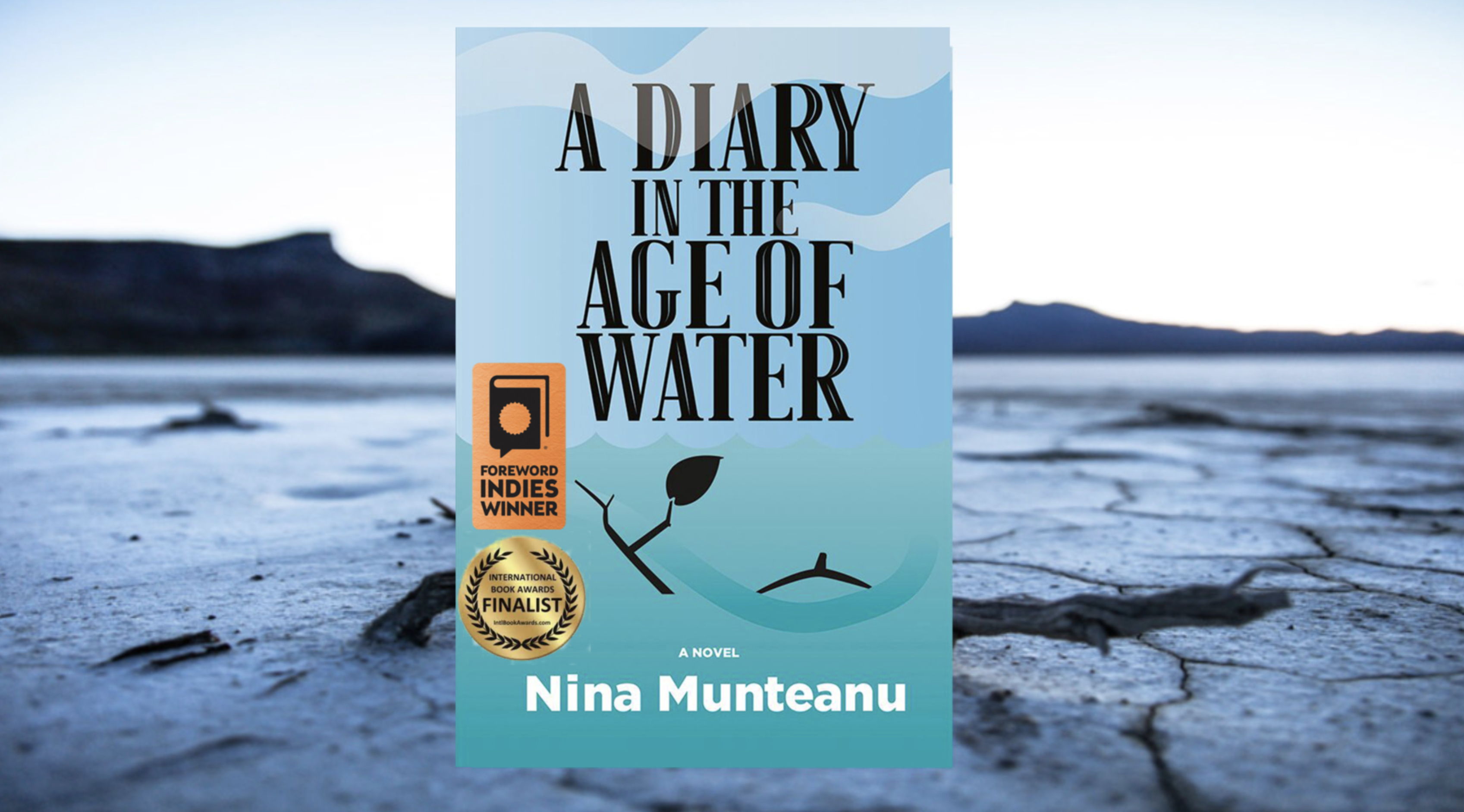
Nina Munteanu is a Canadian ecologist / limnologist and novelist. She is co-editor of Europa SF and currently teaches writing courses at George Brown College and the University of Toronto. Visit  www.ninamunteanu.ca for the latest on her books. Nina’s bilingual “La natura dell’acqua / The Way of Water” was published by Mincione Edizioni in Rome. Her non-fiction book “Water Is…” by Pixl Press (Vancouver) was selected by Margaret Atwood in the New York Times ‘Year in Reading’ and was chosen as the 2017 Summer Read by Water Canada. Her novel “A Diary in the Age of Water” was released by Inanna Publications (Toronto) in June 2020.

My Books Are Feeding Meta’s AI Brat

On March 20, 2025, in an article in The Atlantic entitled “The Unbelievable Scale of AI’s Pirated-Books Problem”, Alex Reisner disclosed how META pirated millions of books and research papers to train their flagship AI model Llama 3 to be competitive with products like ChatGPT. Reasons for this illegal action is simply time; asking permission and licensing takes too much time and is too expensive.

On the same day, The Atlantic provided a link to LibGen (the pirated-books database that Meta used to train its AI) so authors could search its collection of millions of illegally captured books and scientific papers. I went there and searched my name for my novels, non-fiction books and scientific papers and discovered several of my works in their AI training collection.

Two of my many scientific papers appeared in LibGen under my scientific author name Norina Munteanu. The first scholarly article came from my post grad work at the University of Victoria on the effects of mine tailing effluent on an oligotrophic lake, published in 1984 in Environmental Pollution Series A, Ecological and Biological Volume 33, Issue 1. The second article on the effect of current on settling periphyton came from my M.Sc. ecology research published in 1981 in Hydrobiologia, Volume #78.

Three of my thirteen novels appeared in LibGen under my fiction author name Nina Munteanu. I found it interesting how their bots captured a good range of my works. These included two of my earliest works. Collision with Paradise (2005) is an ecological science fiction adventure and work of erotica; Darwin’s Paradox (2007) is a science fiction medical-eco thriller that features the domination of society by an intelligent AI community. The bots also found my latest novel, A Diary in the Age of Water (2020), a climate thriller and work of eco-fiction that follows four generations of women and their relationship to water.

Each of these works has been highly successful in sales and has received a fair bit of attention and recognition.

When Genevieve Dubois, Zeta Corp’s hot shot starship pilot, accepts a research mission aboard AI ship ZAC to the mysterious planet Eos, she not only collides with her guilty past but with her own ultimate fantasy. On a yearning quest for paradise, Genevieve thinks she’s found it in Eos and its people; only to discover that she has brought the seed of destruction that will destroy this verdant planet.

Recognition: Gaylactic Spectrum Award (nominee)

Collision with Paradise is ideal for readers who enjoy dark, introspective science fiction that explores complex moral dilemmas and psychological depth within a lush mythologically-rich setting.”The Storygraph

A devastating disease. A world on the brink of violent change. And one woman who can save it or destroy it all. Julie Crane must confront the will of the ambitious virus lurking inside her to fulfill her final destiny as Darwin’s Paradox, the key to the evolution of an entire civilization. Darwin’s Paradox is a novel about a woman s fierce love and her courageous journey toward forgiveness, trust, and letting go to the tide of her heart.

Recognition: Readers Choice Award (Midwest Book Review); Readers Choice (Delta Optimist); Aurora Award (nominee)

Darwin’s Paradox is a thrill ride that makes you think and tugs the heart.”Robert J. Sawyer, Hugo and Nebula Award winning author of Rollback

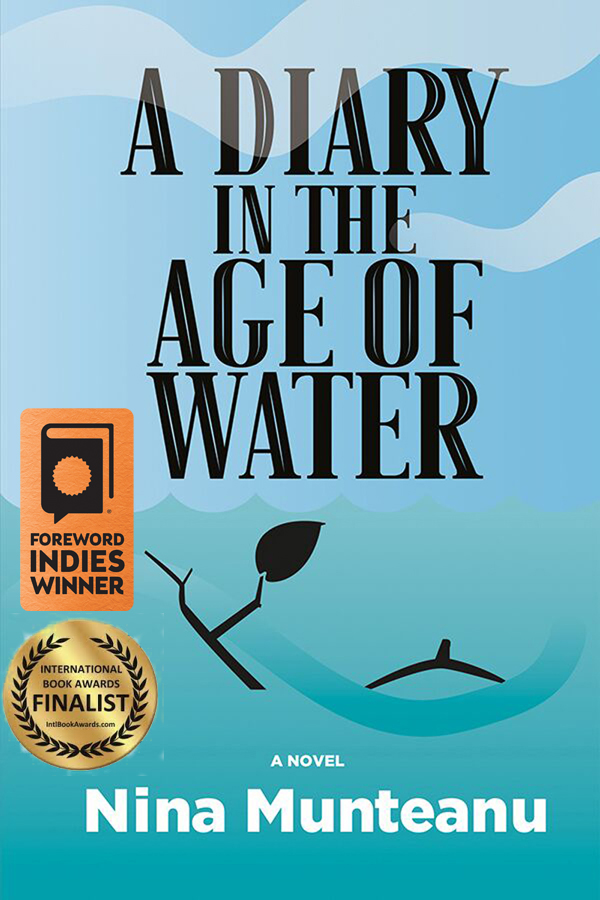
This gritty memoir describes a near-future Toronto in the grips of severe water scarcity during a time when China owns the USA and the USA owns Canada. A Diary in the Age of Water follows the climate-induced journey of Earth and humanity through four generations of women, each with a unique relationship to water. The diary spans a twenty-year period in the mid-twenty-first century of 33-year-old Lynna, a single mother and limnologist of international water utility CanadaCorp, and who witnesses disturbing events that she doesn’t realize will soon lead to humanity’s demise. 

Recognition: 2020 Foreword Indies Book of the Year Award (Bronze); 2020 Titan Literary Book Award (Silver); 2021 International Book Award (Finalist).

“If you believe Canada’s water will remain free forever (or that it’s truly free now) Munteanu asks you to think again. Readers have called ‘A Diary in the Age of Water’ “terrifying,” “engrossing,” and “literary.” We call it wisdom.”—LIISBETH

The April 3, 2025 article by Ella Creamer of The Guardian noted that a US court filing alleged that Meta CEO Mark Zuckerberg approved the company’s use of the notorious “shadow library”, LibGen, which contains more than 7.5 million books and 81 million research papers. According to Toby Walsh, leading AI researcher at the University of New South Wales: “As far as we know, there was an explicit instruction from Mark Zuckerberg to ignore copyright.”

This begs the question of the role and power of copyright law.

“Copyright law is not complicated at all,” said Richard Osman, author of The Thursday Murder Club series. “If you want to use an author’s work you need to ask for permission. If you use it without permission you’re breaking the law. It’s so simple.”

If it’s so simple then why is Meta and others getting away with it? For its defence, the tech giant is claiming “fair use”, relying on this term permitting the limited use of copyrighted material without the owner’s permission (my italics).

It would seem that just as Trump trumped the presidency, Zuckerberg and his AI minion bots have trumped the copyright law—by flagrantly violating it and getting away with it—so far (on both counts).

The actions of Meta were characterized by Society of Authors chair Vanessa Fox O’Louglin as “illegal, shocking, and utterly devastating for writers.” O’Louglin added that “a book can take a year or longer to write. Meta has stolen books so that their AI can reproduce creative content, potentially putting these same authors out of business.”

Three of my novels pirated for AI training

Reflecting many authors’ outrage throughout the world, Novelist AJ West remarked, “To have my beautiful books ripped off like this without my permission and without a penny of compensation then fed to the AI monster feels like I’ve been mugged.” Australian Author Sophie Cunningham said, “The average writer earns about $18,000 a year on their writing. It’s one thing to be underpaid. It’s another thing to find that [their] work is being used by a company that you don’t trust.” Bestselling author Hannah Kent said, “If feels a little like my body of work has been plundered.” She adds that this, “opens the door to others also feeling like this is an acceptable way to treat intellectual copyright and creatives who already…are expected to [contribute] so much for free or without due recompense.” Both Kent and Cunningham exhort governments to weigh in with more powerful regulation. And this is precisely what may occur. Nicola Heath of ABC.net.au writes, “the outcomes of the various AI copyright infringement cases currently underway in the US will shape how AI is trained in the future.”

According to The March 20, 2025 Authors Guild article “Meta’s Massive AI Training Book Heist: What Authors Need to Know,” legal action is underway against Meta, OpenAI, Microsoft, Anthopic, and other AI companies for using pirated books. The Authors Guild is a plaintiff in the class action lawsuit against OpenAI, along with John Grisham, Jodi Picoult, David Baldacci, George R.R. Martin, and 13 other authors, but the claims are made on behalf of all US authors whose works have been ingested into GPT. 

The Authors Guild suggests five things authors can do to defend their rights:

  1. Send a formal notice: If your books are in the LibGen dataset, send a letter to Meta and other AI companies stating they do not have the right to use your books.
  2. Join the Authors Guild: You should join the Guild and support our joint advocacy to ensure that the writing profession remains alive and vibrant in the age of AI. We give authors a voice, and there is power in numbers. We can also help you ensure that your contracts protect you against unwanted AI use of your work. 
  3. Protect your works: Add a “NO AI TRAINING” notice on the copyright page of your works. For online work, you can update your website’s robots.txt file to block AI bots.
  4. Get Human Authored certification: Distinguish your work in an increasingly AI-saturated market with the Authors Guild’s certification program. This visible mark verifies your book was created by a human, not generated by AI.
  5. Stay informed. The Authors Guild suggest signing up for the free Guild biweekly newsletter to keep updated on lawsuits and legislation that could impact you and your rights. The legal landscape is changing rapidly, and they are keeping close watch. 

How do I feel about all this? As a female Canadian author of climate fiction? As a thinking, feeling human being living in The Age of Water? Well, to tell the truth, it kinda makes me want a donut*…

 *as delivered by James Holden in Season 3, Episode 7 of “The Expanse”

Aspens in fall, ON (photo and rendition by Nina Munteanu)

Nina Munteanu is a Canadian ecologist / limnologist and novelist. She is co-editor of Europa SF and currently teaches writing courses at George Brown College and the University of Toronto. Visit  www.ninamunteanu.ca for the latest on her books. Nina’s bilingual “La natura dell’acqua / The Way of Water” was published by Mincione Edizioni in Rome. Her non-fiction book “Water Is…” by Pixl Press (Vancouver) was selected by Margaret Atwood in the New York Times ‘Year in Reading’ and was chosen as the 2017 Summer Read by Water Canada. Her novel “A Diary in the Age of Water” was released by Inanna Publications (Toronto) in June 2020.

What Genre Is My Story? Is it Eco-Fiction or Something Else?

Illustration depicting Ray Bradbury’s ‘Rocket Summer’ in The Martian Chronicles (image from The Black Cat Moan)

Twenty years ago, when I started seriously publishing short stories and novels, the environment was not recognized by the public or writers as an entity that deserved a literary category. Nature and environment were mostly portrayed and viewed as passive entities, to conquer, subdue, exploit and destroy at will (particularly in science fiction—with some notable exceptions such as The Martian Chronicles by Ray Bradbury). Environment and Nature were not generally considered characters on a journey like the progatonist and other major characters; the environment lacked agency and was often ‘othered’ as dangerous, treacherous and unknowable.

Despite the fact that eco-fiction has in fact been in existence for centuries, use of this literary term is quite recent. Its first recognized use was in 1971, appearing as the title in John Stadler’s anthology published by Washington Square Press, which compiled environmental scifi works from the 1930s to the 1960s.

Defining Eco-Fiction

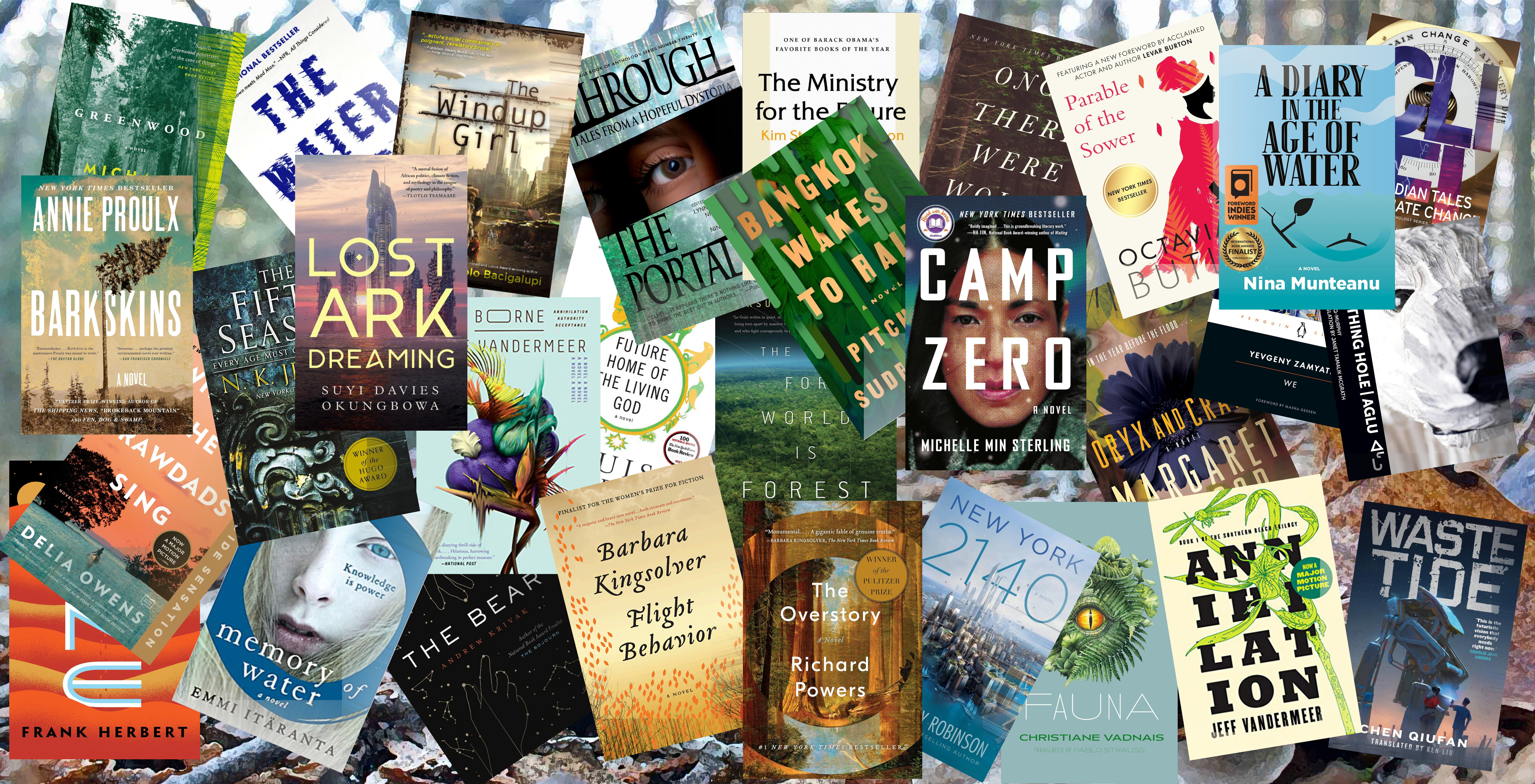
Thirty works of impactful eco-fiction

Author / scholar Mary Woodbury defines eco-fiction as “made up of fictional tales that reflect important connections, dependencies, and interactions between people and their natural environments.” In her article “Eco-Fiction—The SuperGenre Hiding in Plain Sight”, Judith defines eco-fiction as literature that “portrays aspects of the natural environment and non-human life as an evolving entity with agency in its relationship between and interaction with human characters.” In the preface to his 1995 book Where the Wild Boks Are: A field guide to Eco-Fiction, Jim Dwyer provides four criteria for eco-fiction:

  1. The nonhuman environment is present not merely as a framing device but as a presence that begins to suggest that human history is implicated in natural history
  2. The human interest is understood to be not the only legitimate interest
  3. Human accountability to the environment is part of the text’s ethical orientation
  4. Some sense of the environment as a process rather than as a constant or a given is at least implicit in the text.

These designations could be easily met by prehistoric cave art and first nations artwork and storytelling. These definitions also allow for the inclusion of many classics defined as eco-fiction from Herman Melville’s Moby Dick and Thomas Hardy’s Return of the Native to John Wyndham’s Day of the Triffids.

Evolving Eco-Fiction & Eco-SciFi

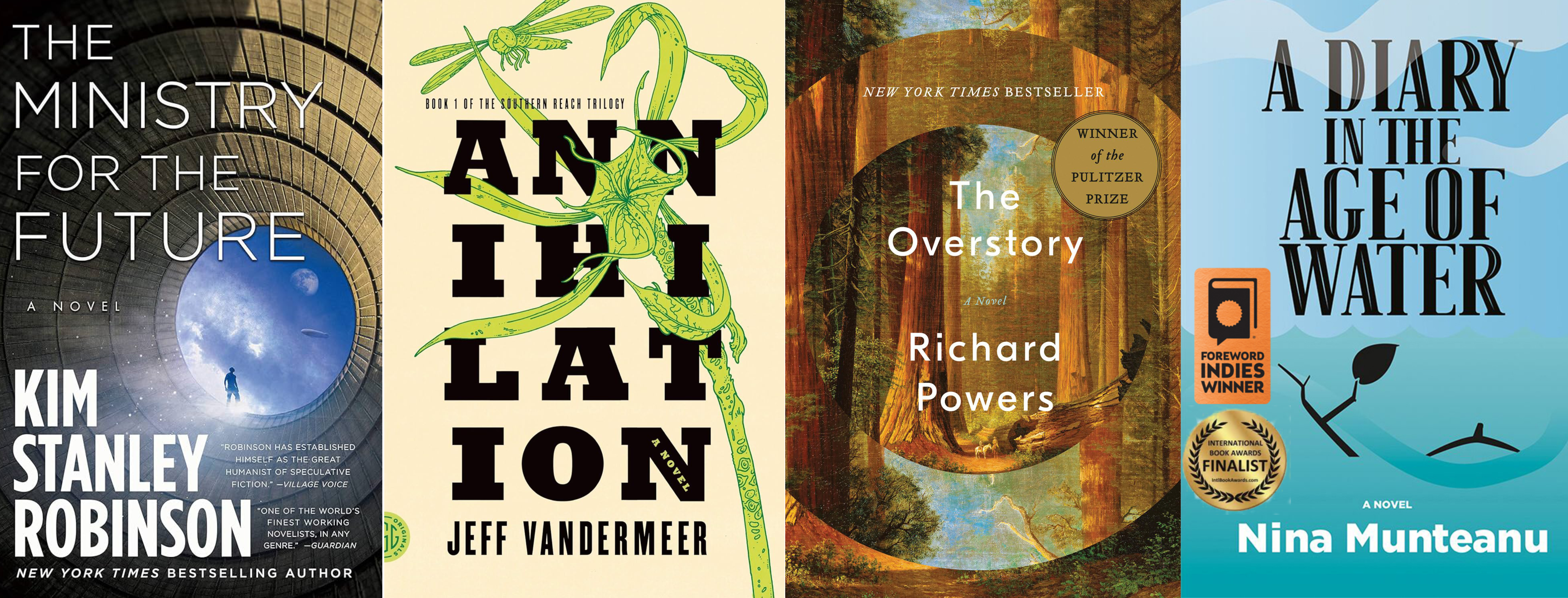
Like the environment it describes, Eco-Fiction is changing and evolving as a genre. Inventor/author Kyo Hwang Cho used the genre designation of Eco-SciFi when he recently identified me along with Kim Stanley Robinson, Jeff VanderMeer, and Richard Powers as Leading Voices in Eco-Science Fiction. Cho defines Eco-SciFi as: “a subgenre of SciFi that foregrounds ecological consciousness, blending speculative fiction with climate science, ethics, and planetary survival.” He includes a table that distinguishes Eco-SciFi from traditional Sci-Fi in several core areas from core theme, tone and motivation to protagonists and ‘message.’ The table can also be used to distinguish this sub-genre from other sub-categories within the umbrella term eco-fiction.

Cho described me as a Canadian ecologist and writer whose “stories explore how humans interact with the environment. Her narratives often examine the intersection of science, climate crisis, and spiritual transformation.” He described A Diary in the Age of Water as a noteworthy work of eco-science fiction: “a dystopian look at a future shaped by water scarcity, societal collapse, and ecological memory.”

Categories of Eco-Fiction

Partially due to this literature’s growing popularity there are currently many categories within and overlapping with eco-fiction; these include: climate fiction or clifi; solarpunk; eco literature, eco-horror, eco-punk, hopeful dystopia, mundane science fiction, speculative fiction, and weird fiction. Each of these focuses on particular idiosyncracies within the literary form that uniquely identify a work.

For instance, A Diary in the Age of Water has been variously described by reviewers and readers as eco-fiction, speculative fiction, science fiction or scifi, Fem-lit, mundane science fiction, hopeful dystopia, hopepunk or solarpunk, ecological science fiction or Eco-Sci-Fi. All to say that these designations and sub-genres are somewhat arbitrary and overlap; they may ultimately depend on the reader’s expectations of the work, and their own worldview and predilections. Given the still relevant reason for genre identification (to be able to best find the book in a brick and mortar or virtual bookstore), this makes sense; a work may easily satisfy several reader perspectives and therefore merit many sub-genre descriptors.

Eco-SciFi and mundane science fiction can be viewed this way. In an interview on Solarpunk Futures, I describe mundane science fiction as a sub-genre of science fiction that is very much like speculative fiction in that this sub-genre focuses on scenarios on Earth and involves matters to do with everyday life—hence the term mundane. Given the speculative aspect of mundane science fiction (e.g., set on Earth, often in the near-future), much of what Cho describes as Eco-SciFi also fits the designation of mundane science fiction. in my article “The Power of Diary in Fiction,” I describe Paolo Bacigalupi’s The Windup Girl, Emmi Itäranta’s Memory of Water and my own novel A Diary in the Age of Water as examples of mundane science fiction. Other good examples of mundane science fiction or Eco-SciFi include Kim Stanley Robinson’s New York 2041, Pitchaya Sudbanthad’s Bangkok Wakes to Rain and Michelle Min Sterling’s Camp Zero. These can all be labelled clifi as well. Min Sterling’s book also fits well under Femlit, Feminist Eco-Fiction, and Hopeful Dystopia.

The determining features provided by Cho that distinguish Eco-Sci-Fi help distinguish works that fall more easily into science fiction from those that better fit within the category of literary fiction or climate fiction.

Eco-Fiction—like Science Fiction—is a large category and provides a kind of umbrella term for all environmental fiction in which the environment plays a central role that informs the plot, theme and character-journey. In literature, it serves many literary works that do not include scifi aspects (e.g. fantastical or speculative); because of this, reserving the sub-genre of Eco-SciFi for those that do include fantastical elements makes sense. For non scifi works of Eco-Fiction, I would suggest using the term Eco-Lit (ecological literature), a term already in existence that incorporates the word ‘literature’ to suggest a type of literary fiction.

Ecological Literature or Eco-Lit

Eco-Lit—unlike Eco-SciFi—tends to restrict its narrative to the current time, does not include fantastical or speculative elements, and tends to use the ecological or climate elements more as metaphorical setting to examine personal drama. In all eco-fiction, however, the environmental setting/characteristic remains central to the story—as theme and/or premise— which would not work without it. Good examples of Eco-Lit include Migration and Once There Were Wolves by Charlotte McConaghy, Flight Behavior and Prodigal Summer by Barbara Kingsolver, and Greenwood by Michael Christie. In each of these works, the environmental characteristic sparks, motivates, and helps direct the actions of the main protagonist. For instance, in Flight Behavior, if the protagonist Dellarobia Turnbow had not encountered the changed migration of the monarchs (as a result of climate change), she would not have taken a drastic turn in her own journey.  

Thomas Hardy’s 1878 Return of the Native was a work of powerful literary eco-fiction (Eco-Lit) that gave Egdon Heath powerful agency over the other traditional characters: destroying, enabling, enlightening, strengthening, isolating. 

Eco-Fiction as Hyperobject

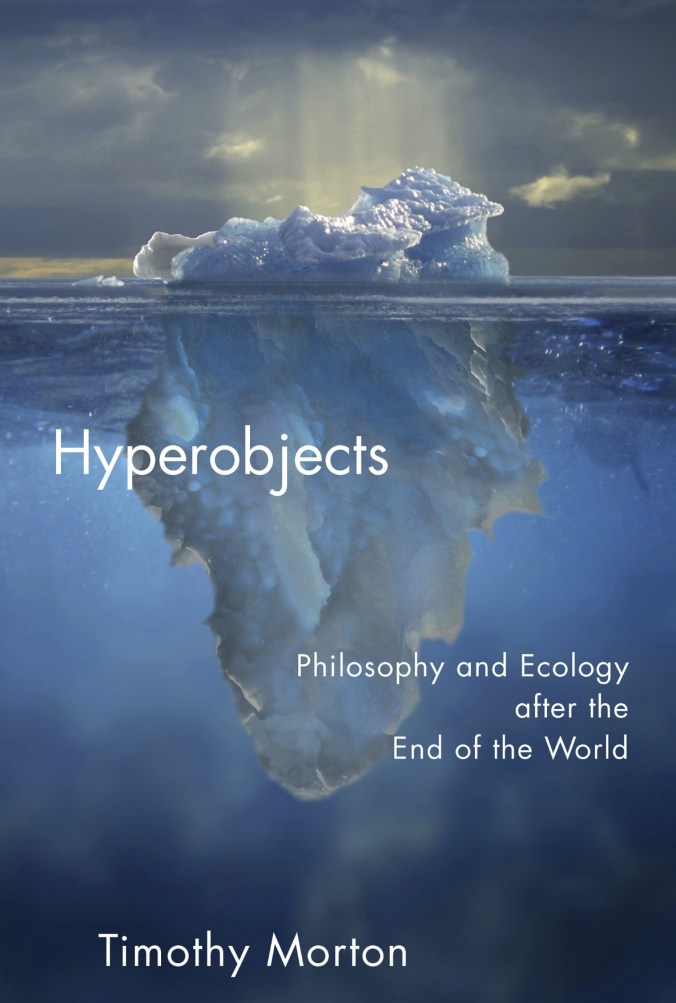
Some have suggested that eco-fiction be considered a supergenre, given that it defies strict boundaries. Elements of eco-fiction can be found in many other genres, from romance or thriller to science fiction or historical, suggesting that it is more a state of being than a category with static boundaries; more like a door or a window than a room. In my opinion, eco-fiction encompasses more than a genre or category; it is a hyperobject that has been with us since storytelling was born.  In his book Hyperobjects, philosopher Timothy Morton attempts to synthesize the still divergent fields of quantum theory (weirdness of tiny objects) and relativity (weirdness of large objects), inserting them into philosophy and art. According to Morton, a hyperobject is an entity that is massively distributed in space and time, making it difficult to grasp its totality or experience it as a single, unified object. Morton argues that the hyperobjects of the Anthropocene, such as global warming, climate or oil that have extensive time/space presence, have newly become visible to humans—mainly due to the very mathematics and statistics that helped to create these disasters. Glimpsing them through our copious data, hyperobjects “compel us to think ecologically, and not the other way around.”

I think that much of the fiction that authors write touches on climate and environment, whether they realize it or not, whether they are conscious of it or not. Climate and environment are both large, yet penetrating at the cellular level—influencing us in so many ways from obvious and literal to subtle and visceral. Try as we might—and we have for centuries tried—to separate ourselves and ‘other’ environment, we can’t escape it. “We are always inside an object,” says Morton. Hyperobjects show us that “there is no centre and we don’t inhabit it.”

I’ve created my own table, fashioned after Cho’s, and adapted to include Eco-Lit with pertinent examples:

Categories of Fiction Genres Related to Ecology and Environment
 SciFiEco-Fiction
Eco-SciFiEco-Lit
SettingScience, technology, space, time travel, AI, aliens, etc.* driven by elements of science fact or fictionEcological systems, environmental collapse, climate change, sustainability.* Some element of science fact or fiction; speculative fictionEcological systems, environmental effects, climate change, sustainability
ToneOften futuristic, space-based, dystopian, or technologically advanced societies*Earth-centred or near-future settings deeply affected by ecological factors*Earth-centred, mostly current settings, affected in some way by ecological factors; celebrates Nature in some way
MotivationCuriosity, innovation, power struggles, survival in altered realities*Preservation, adaptation, environmental justice, ethical stewardship*Environmental awareness and action, human justice, introspection, reflection, identity
StoryCan be optimistic, dystopian, neutral, techno-utopian, or apocalyptic* often focussing on human justice, alternative civilizations; allegoricalOften cautionary, reflective, grounded in real world environmental urgency* often extrapolating into dystopian future, optimistic dystopia; metaphoricGrounded in real and usually current world with undertones of environmental urgency, reflective, illuminating; literary
ProtagonistsScientists, explorers, rebels, AI, aliens, engineers* othersEnvironmentalists, ecologists, farmers, indigenous communities, climate activists* others connected to environmentOrdinary people, often linked in some intimate and actionable way to Nature
ExamplesDune (Herbert) I, Robot (Asimov) Neuromancer (Gibson) 1984 (Orwell) Brave New World (Huxley) The Martian Chronicles (Bradbury) Childhood’s End (Clarke)The Ministry for the Future (Robinson) Annihilation (VanderMeer) A Diary in the Age of Water (Munteanu) The Windup Girl (Bacigalupi) Memory of Water (Itaranta) Waste Tide (Quifan) Camp Zero (Min Sterling) Bangkok Wakes to Rain (Sudbanthad) Lost Arc Dreaming (Okungbowa)Flight Behavior (Kingsolver) Migration by (McConaghy) Greenwood (Christie) Barkskins (Proulx) The Overstory (Powers) Oil on Water (Habila) Where the Crawdads Sing (Owens) Return of the Native (Hardy) Moby Dick (Melville)
MessageBroad speculative insight into human potential* & survival, future tech, and evolution of civilizationWarns pf ecological degradation, offers alternative visions of coexistence* often through personal or community perspectiveExploration of the human spirit, growth and inspiration through personal environmental awareness and action
StructureOften premise-based or plot-based; environment often ‘othered’Theme-based and character-based; environment often with agencyCharacter-based; environment may be metaphoric character with or without agency

*descriptions taken directly from Cho’s article

References:

Morton, Timothy. 2013. “Hyperobjects: Philosophy and Ecology After the End of the World.” University of Minnesota Press, Minneapolis. 240pp.

Nina Munteanu is a Canadian ecologist / limnologist and novelist. She is co-editor of Europa SF and currently teaches writing courses at George Brown College and the University of Toronto. Visit www.ninamunteanu.ca for the latest on her books. Nina’s bilingual “La natura dell’acqua / The Way of Water” was published by Mincione Edizioni in Rome. Her non-fiction book “Water Is…” by Pixl Press (Vancouver) was selected by Margaret Atwood in the New York Times ‘Year in Reading’ and was chosen as the 2017 Summer Read by Water Canada. Her novel “A Diary in the Age of Water” was released by Inanna Publications (Toronto) in June 2020.

The Green Stories Project Flash Fiction Competition: Epiphanies

The Green Stories Project is running a flash fiction competition for stories under 500 words on the theme of ‘epiphanies’. Submit your story here. The deadline is August 27th, 2025.

The Competition

The writing competition invites writers to submit a story about transformation, when a moment of epiphany causes one or more characters to change for the greener.

The transformative realisation doesn’t have to explicitly mention climate or the environment as long as it inspire behaviours with environmental implications (e.g. food, travel, consumption, gardening, cleaning, etc.), or the story could focus on the benefits of any greener alternative (e.g. environment, health, status, spirit, soul). For more about judging, prizes and terms and conditions, visit their site Green Stories Project.

The Green Stories Project

Their mission is to create a cultural body of work that entertains and informs about green solutions, inspires green behaviour and raises awareness of the necessary transformations towards a sustainable economy.

Green Stories began as a series of free writing competitions across various formats to solicit stories that showcase what a sustainable society might look like. They have run over 20 free competitions since they set up in 2018.

Green Stories engage writers, academics and policymakers in sustainability projects. They also partnered with BAFTA on the #ClimateCharacters project to research whether audiences believe presenting characters with high carbon-consumption as aspirational is still acceptable.

Cedar trees colonize a mossy log, ON (photo and rendition by Nina Munteanu)

Nina Munteanu is a Canadian ecologist / limnologist and novelist. She is co-editor of Europa SF and currently teaches writing courses at George Brown College and the University of Toronto. Visit www.ninamunteanu.ca for the latest on her books. Nina’s bilingual “La natura dell’acqua / The Way of Water” was published by Mincione Edizioni in Rome. Her non-fiction book “Water Is…” by Pixl Press (Vancouver) was selected by Margaret Atwood in the New York Times ‘Year in Reading’ and was chosen as the 2017 Summer Read by Water Canada. Her novel “A Diary in the Age of Water” was released by Inanna Publications (Toronto) in June 2020.

On Writing: The Blank Page

AI concept art by genaiTechvifySoftware.com

I teach scholarly writing at the University of Toronto through several writing centres; I’m helping students with their assignments in engineering, the health sciences and humanities. All are generating scholarly papers on various topics with various purposes; anything from a critical assessment, literature review, position paper, or reflection essay to a lessons learned document, research proposal, or thesis chapter. Everyone is using some kind of AI when generating, writing and editing their works. And there are plenty of AI tools to choose from. Some of the most common AI tools used by my students include: Grammarly for grammar; Perplexity as a research tool, text summarizer and conversational AI search engine; Paperpal for editing, Google Scholar as a search engine, ChatGPT to summarize works, brainstorm ideas, provide quiz questions, or even generate human-like text in a first draft.

All these assignments are purpose-built and students must successfully address their assignment requirements to succeed. In some ways, the idea, topic and handling of the topic are assigned; the student need only carefully and clearly address it.

But, when creating something new, like a piece of fiction or even a non-fiction article, professional writers are essentially walking into a new world, not restricted by “assignment guidelines or requirements”; they truly must face the blank page.

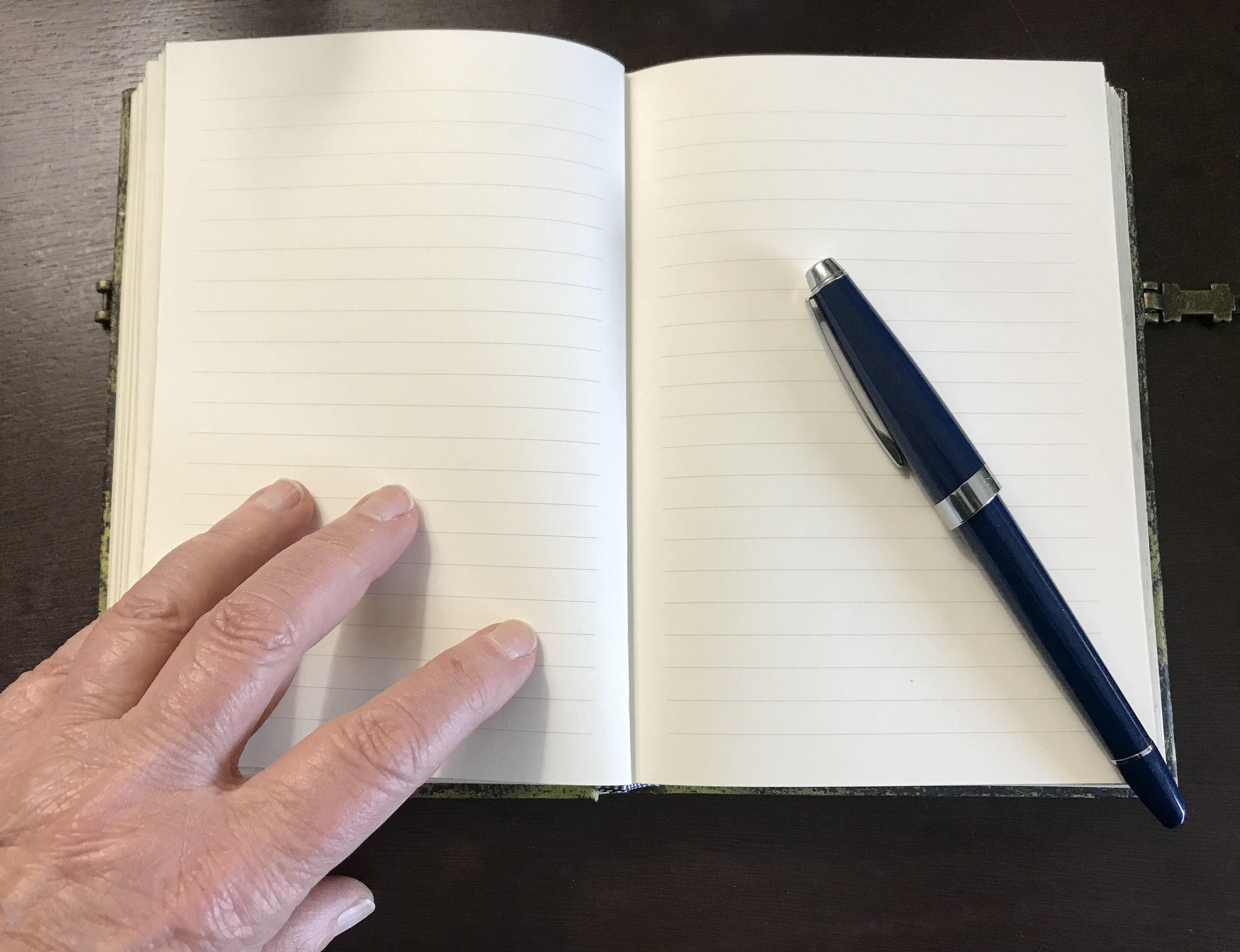
The blank pages of a notebook (photo by Nina Munteanu)

There’s no precedence for creating a piece of fiction. Yes, certainly inspiration is involved, but the work of something unique must start with a blank page. Professional writers often dread facing the blank page. It even has a name: blank page syndrome, or writer’s block, the feeling of being overwhelmed or even paralyzed by the prospect of starting. Alex Elkjær Vasegaard tells us that “it may come from the fear of not being good enough, of not knowing enough, or of the vastness of the potential ahead.”

I recently read a post on LinkedIn by writing colleague Erik Buchanan, which resonated with me. I asked his permission to quote it here and he gladly gave it:

Just got a recommended post from a marketing person claiming that using AI allows you to get past the hardest part of writing: “the blank page.”

I blocked them, and I’m putting what I was going to reply to them here instead, because they are not a person who will be open to this rant:

If you cannot get past the blank page, you are not a writer.

If you use AI to get past the blank page, you’re still not a writer, and now you’re a thief.

You’re using other writers’ words, fed into an information aggregator and splatted out like a drunk’s meal vomited onto the sidewalk. And you’re scooping it up and claiming it’s fresh food.

You want to write? Write something.

Speaking as one who has written 18 novels (more than half ghostwritten for money), 150 articles, short stories, instruction manuals, sales copy, website copy, commercial scripts, short films and now a feature film (currently being re-written) it’s not that hard.

Using AI means you’re too lazy to learn the craft.

Don’t do it.

A blank page is more than a simple page that is empty. It offers something new, without precedence to write, draw or create. Whether it’s a physical sheet of paper in a notebook or a white space in a digital document, the blank page represents a fresh beginning and wonderful potential for unique creation.

Erik’s point is so Germaine to the creative writing process. The blank page is an open door to possibility; it is a writer’s first step in creating something uniquely their own. Plot, character, setting and language—such as technique, style, words and phrases—certainly make a novel wonderful to read; but it is the unique idea, the spark, the premise and theme that carry that novel into greatness and keep it memorable.

Coming up with first words on a blank page (photo by Nina Munteanu)

Poet Alberto Blanco challenges our notion of the blank page being blank: From the tree it was made from, the rain and sun that allowed the tree to grow, and the people that created it, it soon becomes clear that a blank page contains the whole cosmos.

In “The Blank Page: A Meditation on the Creative Process and Life’s Journey” Alex ElkjærVasegaard describes the blank page as “an expanse of white, unsullied by ink or pixels. It’s the void that calls for creation. It’s the challenge that every artist, writer, and thinker faces. But isn’t that just a beautiful metaphor for life itself?”

Erik, I too would have blocked that marketer. I doubt they are a writer…

“Who then … tells a finer tale than any of us? Silence does. And where does one read a deeper tale than upon the most perfectly printed page of the most precious book? Upon the blank page. When a royal and gallant pen, in the moment of its highest inspiration, has written down its tale with the rarest ink of all — where, then, may one read a still deeper, sweeter, merrier and more cruel tale than that? Upon the blank page.”—Karen Blixen, Last Tales

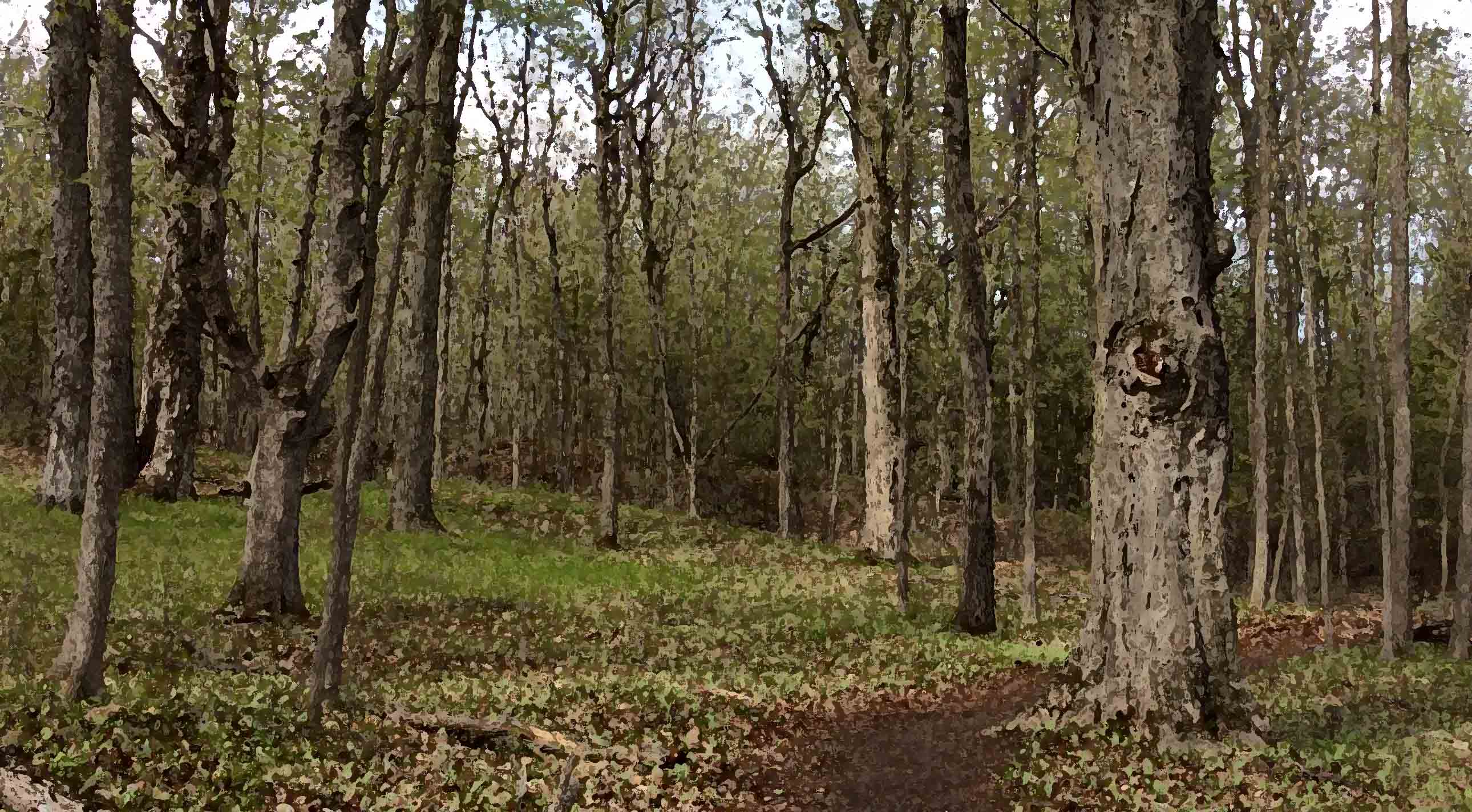
Maple beech forest in early spring, ON (photo and rendition by Nina Munteanu)

Nina Munteanu is a Canadian ecologist / limnologist and novelist. She is co-editor of Europa SF and currently teaches writing courses at George Brown College and the University of Toronto. 

Visit  www.ninamunteanu.ca for the latest on her books. Nina’s bilingual “La natura dell’acqua / The Way of Water” was published by Mincione Edizioni in Rome. Her non-fiction book “Water Is…” by Pixl Press (Vancouver) was selected by Margaret Atwood in the New York Times ‘Year in Reading’ and was chosen as the 2017 Summer Read by Water Canada. Her novel “A Diary in the Age of Water” was released by Inanna Publications (Toronto) in June 2020.

The AI Wave: To AI or not to AI … That is the Question…

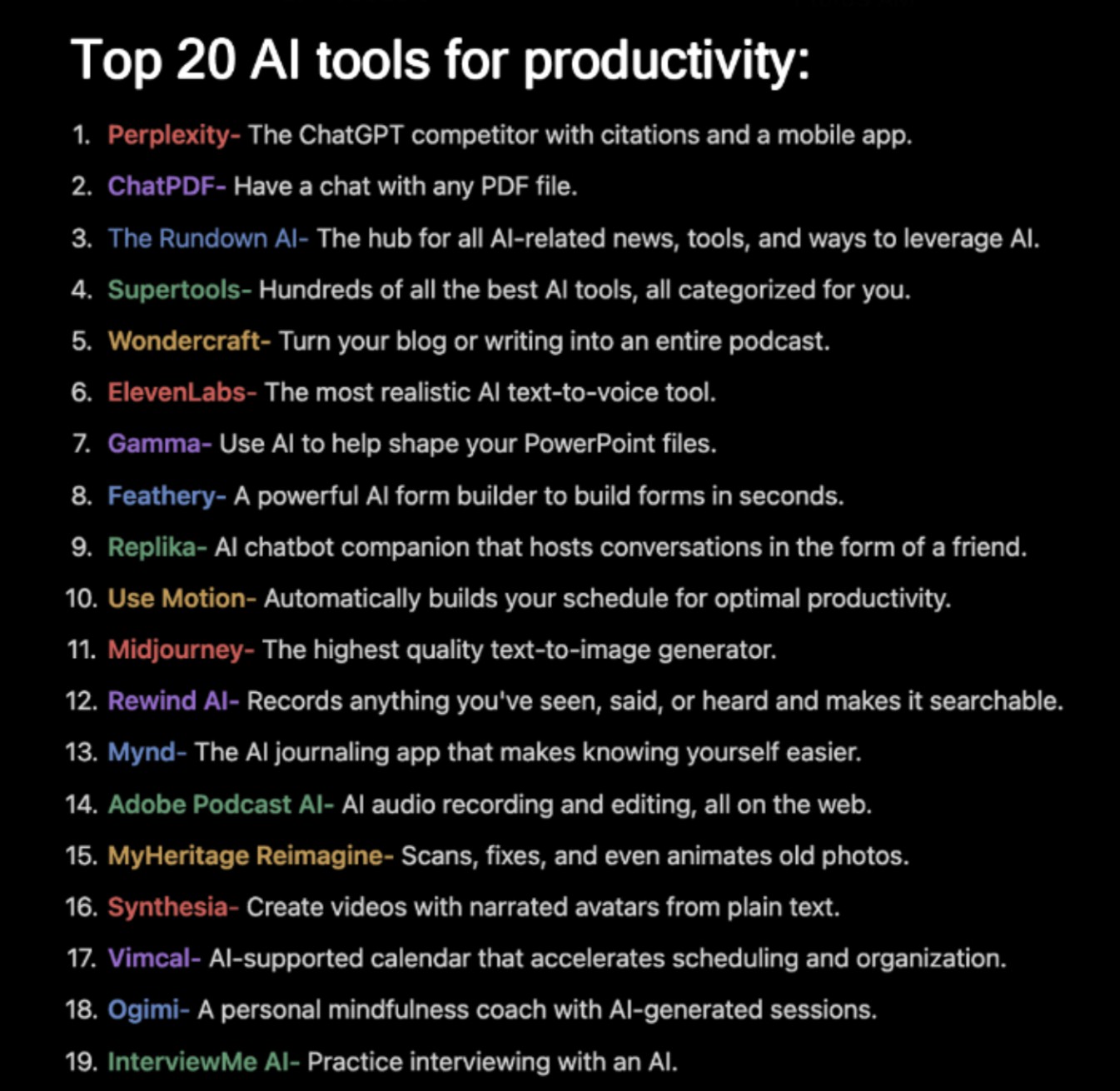
I recently ran across a list posted on social media of the 20 most popular AI tools for productivity in writing. I only knew two of them. This heightened my anxiety about what I know and am prepared for in the use of genAI, particularly in academic settings, where I teach writing at university. And it got me thinking why I was so anxious…

I shared the list with my colleagues at the university writing centre and one instructor who was actively following AI tools admitted that they knew only a few of the listed tools as well. They further shared that they were feeling increasingly apprehensive about genAI’s impact on higher education. “It’s hard not to feel overwhelmed,” they ended.

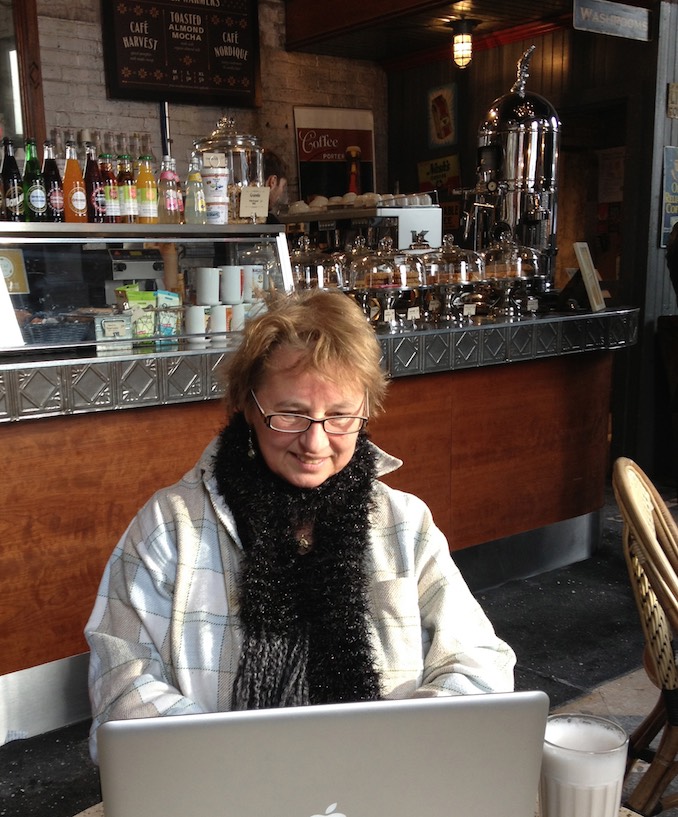
(Photo: Nina writing her novel at a cafe)

This was my exact sentiment: a kind of apprehensive excitement. An understanding that all communicators stand at the precipice of a major paradigm shift in tool use. The ramifications this will have on all aspects of effective and efficient communication will span from redefining plagiarism to reinventing creativity. As with all powerful tools—aside from the obvious threat of misuse—there is always something lost with the gain and I wonder what we are losing with all this. I have some ideas, and they do bother me from time to time.

Applications of Generative AI (image by Neebel Technologies)

I do think it important for me as a communicator and writing instructor to understand the trade offs and to work with them.

When the world adopted the portable calculator, rote knowledge of basic math suffered. I know; I tested it during a lab exam when I was teaching college biology many years back. I forbid the use of calculators in the test and many students, who had lost the ability to do long division or multiplication by hand, lost marks. For some reason, I’m still not sure of, it was important for me to insist on students doing math longhand (a basic skill fast becoming obsolete like cursive writing) and punish those who had lost the art. Perhaps I was drawing on Isaac Asimov’s possibly prescient 1957 short story satire The Feeling of Power, which explored the limitations of a future world that lost its basic skills to machines. The corollary, I suppose, is that more complex and conceptual math gained some ground through this handy and efficient tool. Machines have their advantages, certainly. And generative AI is just one sophisticated aspect of machine use.

Consequences to Creative Writing

In my world of professional fiction authors, there is a palpable fear of being replaced by AI as story creators: a version of the ultimate science fiction horror plot of being taken over by the machine world (I’ve even exploited that in my SF thrillers Angel of Chaos and Darwin’s Paradox).

Given our unique powers of imagination, I don’t think that will happen (very soon, if ever successfully). Though, as we dummy-down and simplify complex stories for fast-paced multiplex audiences addicted to fast-paced bite-sized and easy to digest entertainment, AI-generated narratives could get by. How is all this affecting the publishing industry now? I recently learned that one of the top five online science fiction magazines, Metastellar, accepts AI-assisted stories with the proviso that “they better be good.” And Metastellar provides some convincing reasons. This has become a hot topic among my fellow professional writers at SF Canada.  One colleague informed me that a “new publisher Spines plans to disrupt industry by publishing 8000 AI books in 2025 alone.” On checking the news release, I discovered that Spines is, in fact, a tech firm trying to make its mark on publishing, primarily through the use of AI. The company offers the use of AI to proofread, produce, publish, and distribute books. They are, in fact, a vanity publishing platform (essentially a service for self-publishing), charging up to $5000 a book and often taking just three weeks to go from manuscript to a published title. The quality of what they will produce is unclear—and questionable.

All to serve as metaphor for what I and my colleagues at university are striving to achieve with students in their academic writing: excellence in communication, particularly in conveying complex scenarios that require creative solutions where clear, concise, and convincing writing is requisite.

I still find myself reluctant to use AI in my writing and communication, though I’ve at times slid into using AI for research and initial summaries to save time. I do this rarely because I absolutely enjoy doing research. I enjoy challenging my brain to summarize key points and write a good line. I enjoy the thrill of unanticipated discoveries, which always happen on these forays. I also recognize that many people do not share my enthusiasm for these brain exercises.

(Photo: Nina writing in another cafe)

I think that AI alone will not replace human mind for unique creativity. I didn’t say “can not.” It could; but it won’t. This is because even as genAI becomes infused in many aspects of life pursuit, there will remain those like that rare mathematician capable of doing math by hand in The Feeling of Power, valued not just because they are rare, but because in that rarity, they fulfill a critical role. When the machines stalled in their ability to move society forward in The Feeling of Power and all seemed lost, this archaic mathematician presented new innovation with basic math. I’m not suggesting that the technology will all break down, plunging the world into darkness (though this remains a possibility and is still a great plot for science fiction); but I submit that diversity rules over monopoly when it comes to survival.   

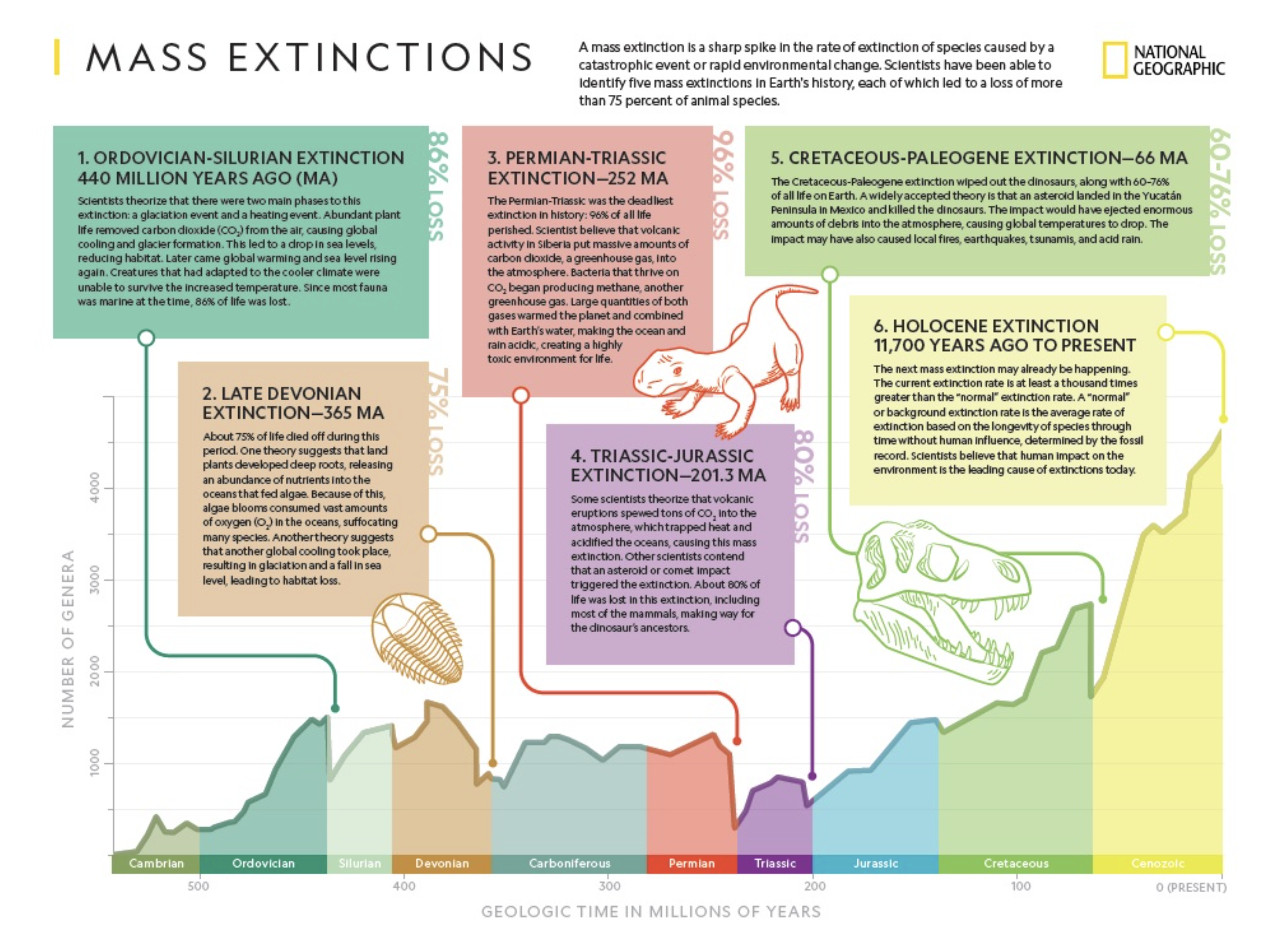
Five Mass Extinctions

This may seem a rather dark projection of the future, but consider that over the millennia, after five mass extinctions and with the sixth mass extinction underway, diversity has always saved the world. Within that necessary diversity, it is the nurtured rarities, the outliers, the misfits and nonconformists that survived the destruction of the previous world. Each time, diversity made that possible. As though engrained in Nature’s world building.

Mass Extinctions (image by National Geographic)

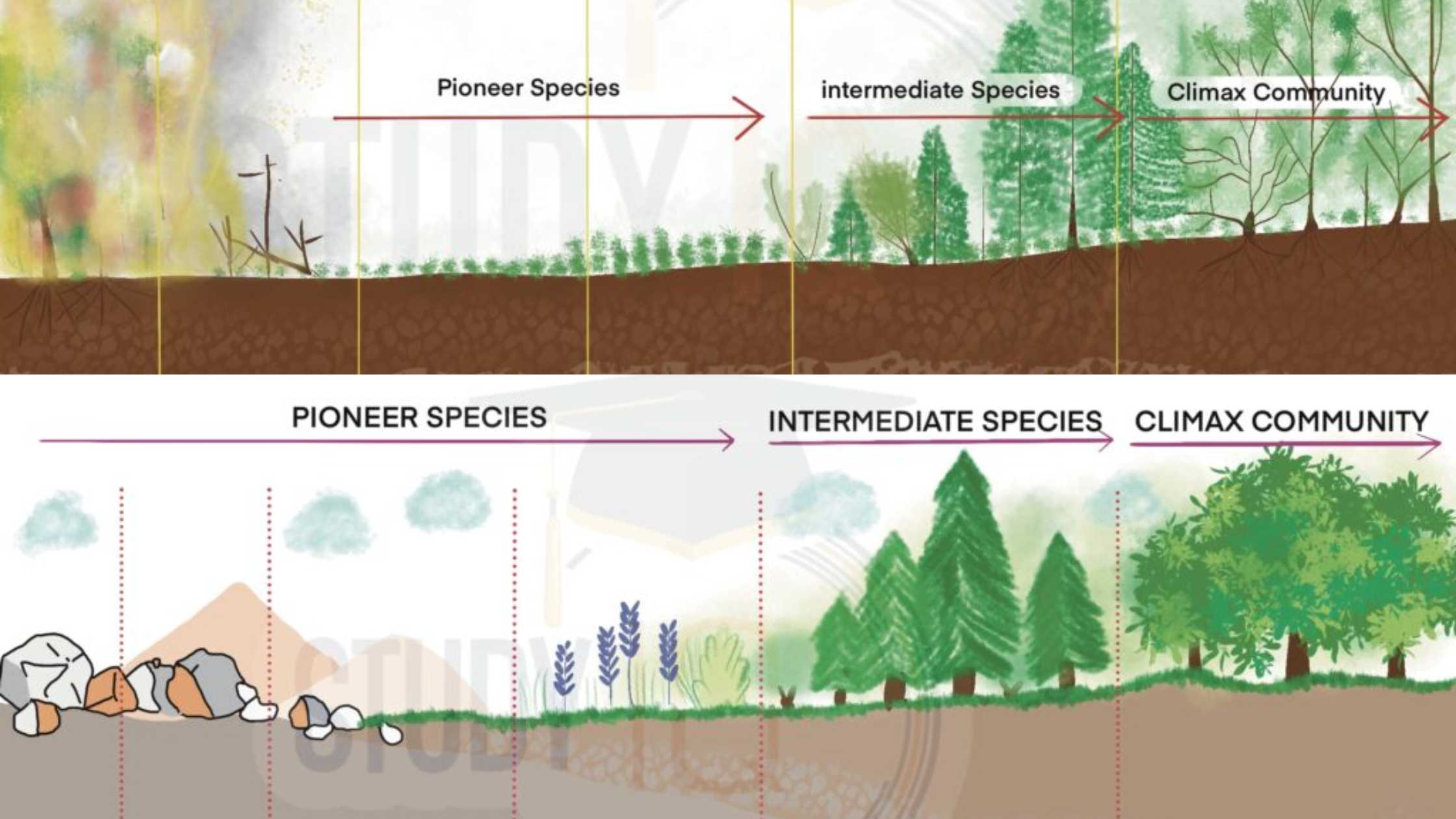
Ecologists call it ecological succession, others use the term “creative-destruction” to describe the recursive pattern of living and non-living things of the planet. Both describe how the oligarchs of an established climax ecosystem fail due to change or disturbance and are replaced by a previous rare misfit or immigrant better suited to the new environment. 

Primary and secondary succession in two different ecosystems

I think AI is part of our succession. Our use of AI in all its forms will represent a diversity of reaction and action that represent our own diversity and potential to survive in a changing world. All to say: relax and embrace the outliers.

Writing in nature (photo by Nina Munteanu)

As William Gibson so famously said in 1993: The Future is already here; it’s just not evenly distributed. And maybe that’s a good thing…

So…

…To AI, or not to AI, that is the question:
Whether ’tis nobler in the mind to suffer
The slings and arrows of terrible writing,
Or to take arms against a sea of scribbles
And by opposing end them. To think—to write,
No more; and by writing to say we end
The heart-ache and the thousand natural shocks
That tech is heir to: ’tis a consummation
Devoutly to be wish’d. To think, to write;
To write, perchance to create—ay, there’s the rub:
For in that creation of unique thoughts what others may come,
When we have shuffled off this genAI…

Writing in Nature (photo by Nina Munteanu)

Nina Munteanu is a Canadian ecologist / limnologist and novelist. She is co-editor of Europa SF and currently teaches writing courses at George Brown College and the University of Toronto. Visit www.ninamunteanu.ca for the latest on her books. Nina’s bilingual “La natura dell’acqua / The Way of Water” was published by Mincione Edizioni in Rome. Her non-fiction book “Water Is…” by Pixl Press (Vancouver) was selected by Margaret Atwood in the New York Times ‘Year in Reading’ and was chosen as the 2017 Summer Read by Water Canada. Her novel “A Diary in the Age of Water” was released by Inanna Publications (Toronto) in June 2020.

Confessions of a Teenage Eco-Warrior

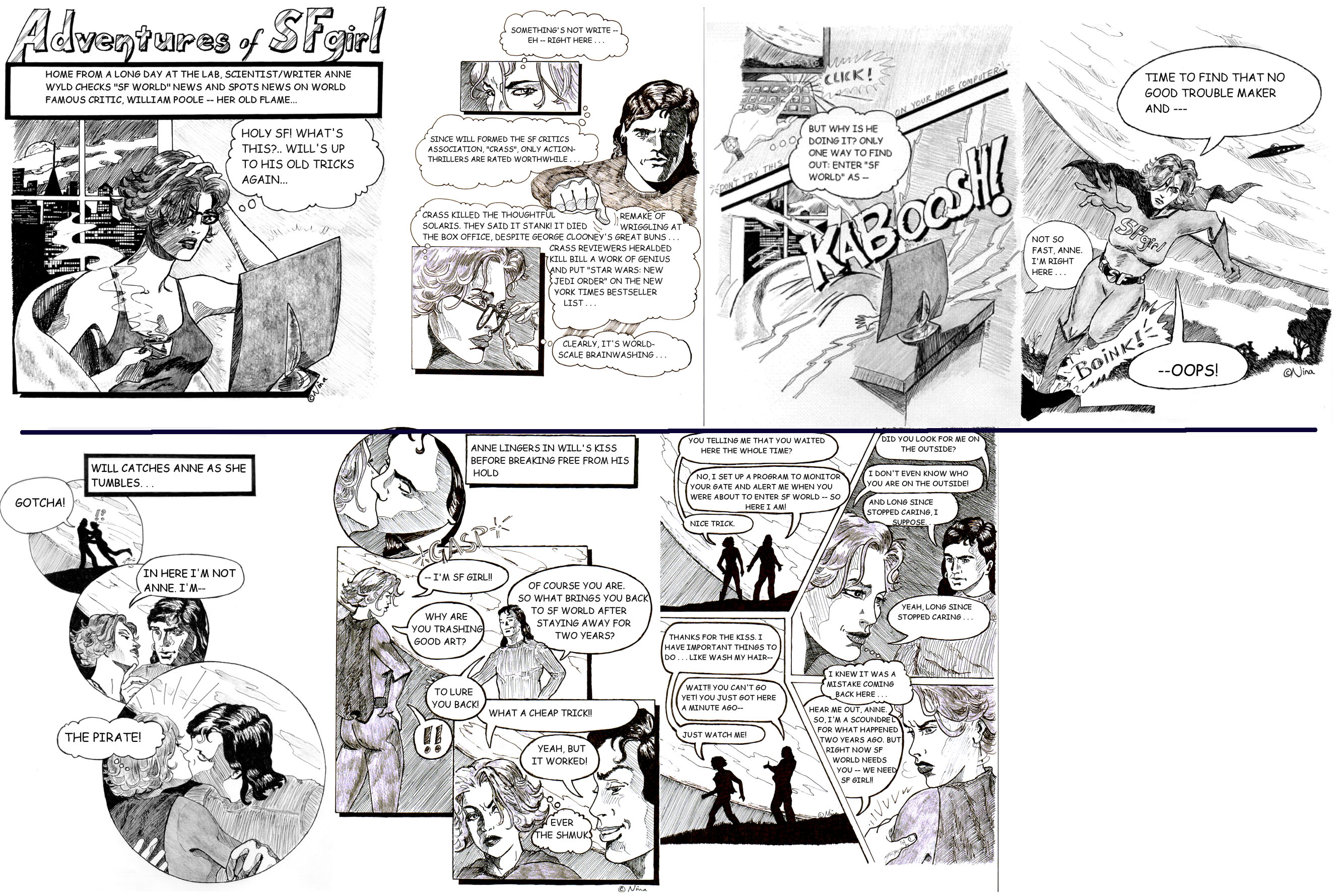
When I was little, I wanted to be a storyteller, a cartoonist specifically. I was reading graphic novels before I could read. That didn’t stop me from understanding what was going on. Being a virtual learner and an artist, I understood context: expressions, body language…

Nina, age three, pretending to read (photo by Martha Munteanu)

I wrote and drew wild adventure thriller detective stories and stories about exploring other planets. While my first love was telling stories, I was called by the needs of the environment. This percolated through me as I grew up and wouldn’t let go. When I could read and write, I still read graphic novels; I wrote and illustrated short stories about the environment, dystopian tales that focussed on how we were destroying our planet.

At school, I loitered in the hallways, pasting subversive posters on the walls. They were a call to action: Restrain … Reuse … Repurpose … Recycle … Remain true to the environment. I wrote in the school paper. I quoted global statistics, mentioned global warming (yes, people knew about it back in the ‘60s and ‘70s), and submitted cheesy emotional drawings of pollution and toxic waste.

I was a teenage eco-warrior.

By the time I was ready to go to university (I’d been accepted early into the fine arts program at Concordia University in Montreal), I switched my major on registration day. Like a horse bolting from a fire, I charged out of the arts and into the sciences. I’d heard environment’s call for help and had notions of becoming an environmental lawyer. I kept a few arts courses as electives but focused on a biology degree in the environmental sciences. I understood that the tools I needed to wield as an eco-warrior in law were rooted in science.

A twenty-some old Nina exploring the forest

I learned something about ecology, botany, animal, plant, and cell physiology, genetics and biochemistry, and limnology (the study of water systems). The sciences fascinated me and I became entranced in the study of how the natural world worked. I was particularly attracted by lichens, plant-like organisms called cryptogams that grow like miniature forests on substrates—trees, fence posts, rock, cement. My attraction was partly because these often overlooked organisms were actually more of a symbiotic community or mini-ecosystem: an intriguing community of fungi, algae, cyanobacteria, bacteria and yeast growing together. I felt that on some level, lichen had much to teach us on lifestyle and approach to living on this planet. They’d been around for millennia, a lot longer than we’ve been.

Having long abandoned law (I convinced myself that I wasn’t cut out for it; maybe I was but that’s another universe), I decided to pursue lichen ecology for my masters degree. But fate had another path in mind for me. The botany professor who I wished to study under was retiring and no one was taking her place. She referred me to the limnology professor and he got me interested in another microscopic community: periphyton (the algae and associated organisms that colonize plants, rock and cement in water).

I published some papers, moved out west and eventually got married and raised a beautiful son. My limnological expertise led me to a position at the local university and as a scientist with several environmental consulting firms, where I consulted with clients, did field research, wrote reports, and published and presented papers at conferences.

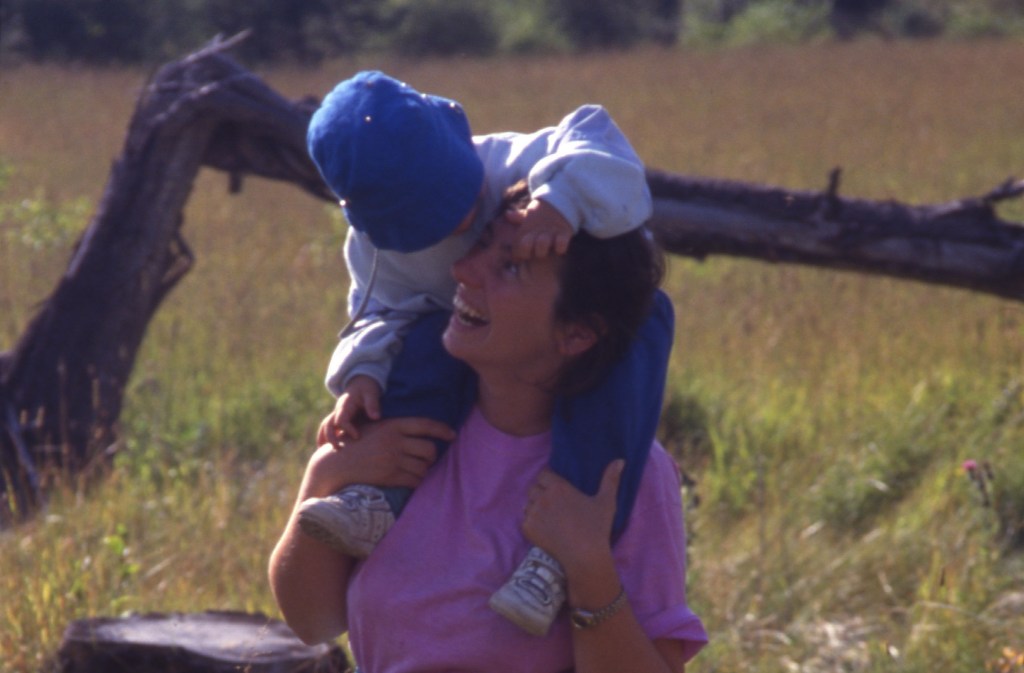
Nina and son Kevin explore nature (photo by Herb Klassen)

I’d come somewhat full circle to be an eco-warrior, pursuing environmental problems (and corporate mischief) through biology rather than law. I designed and conducted environmental impact assessments and recommended mitigation, restoration, and remediation procedures to various clients from lakefront communities and city planners to mining companies dealing with leaky tailings ponds and pulp mills discharging effluent into the ocean.

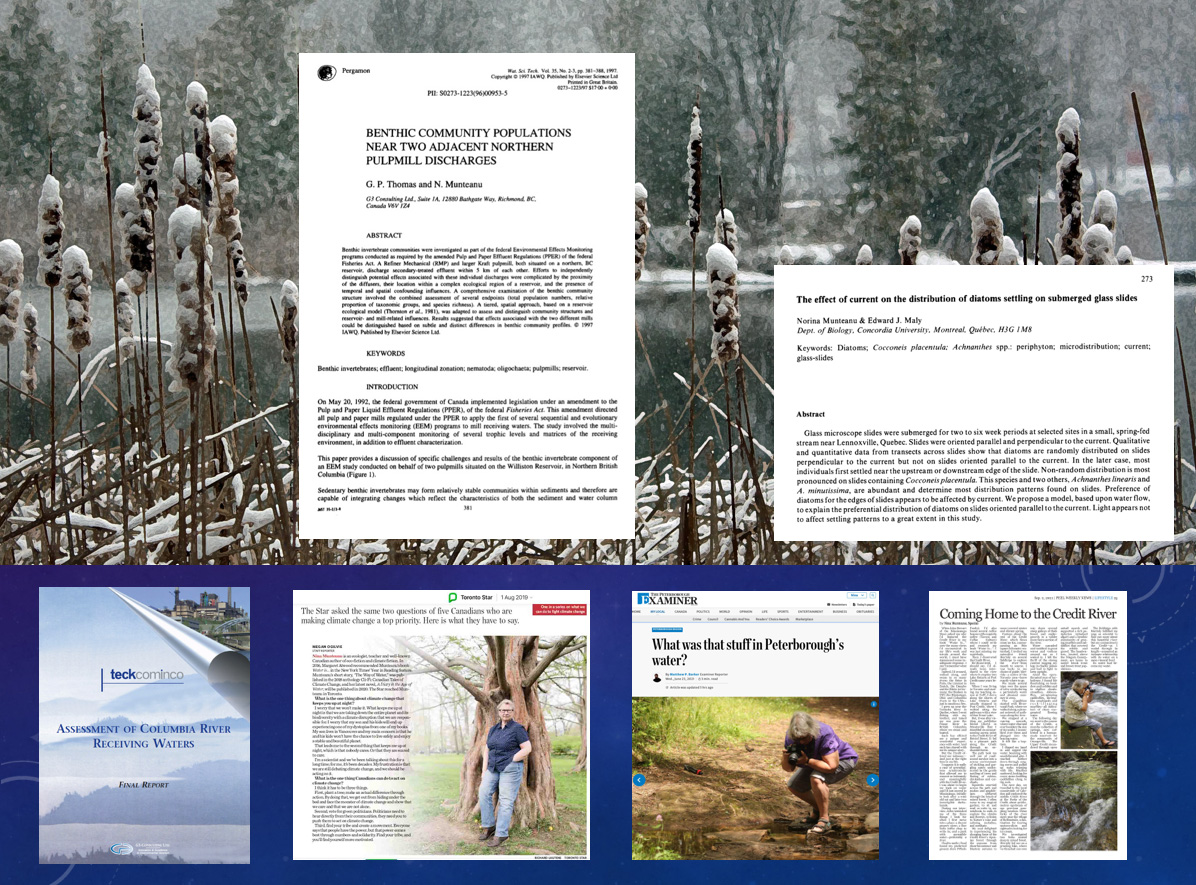
Various reports, scientific papers and articles I’ve written or been interviewed for

It worked for me. I consulted for twenty-some years. It was for the most part both satisfying and encouraging. I felt as though I was making a difference: mostly through educating my clients. But that became less and less the case as the consulting firms I worked for, and the corporations they worked for, seemed to have less and less integrity. They also seemed to care less about the environment and more about profit.

So, just as I’d done on the day of registration at university, I bolted like a horse in a fire and quit my job as a consultant. I never returned to consulting.

Nina photographing pollution of a small creek entering a drinking water source (photo by Matthew Barker, Peterborough Examiner)
My article in the Niverville Citizen on understanding watersheds

My sights went back to storytelling, journalism, and reporting/interviews. Mostly eco-fiction. Creating narratives that would hopefully move people, nudge them to act for the environment. Change their worldview somewhat into eco-friendly territory. Make them care. I’m still an eco-warrior, but my pen and my storytelling is my tool.

The word is a powerful tool. And the stories that carry them are vehicles of change.

Nina Munteanu wandering the Emily Tract forest, ON (photo by Merridy Cox)

Nina Munteanu is a Canadian ecologist / limnologist and novelist. She is co-editor of Europa SF and currently teaches writing courses at George Brown College and the University of Toronto. Visit www.ninamunteanu.ca for the latest on her books. Nina’s bilingual “La natura dell’acqua / The Way of Water” was published by Mincione Edizioni in Rome. Her non-fiction book “Water Is…” by Pixl Press (Vancouver) was selected by Margaret Atwood in the New York Times ‘Year in Reading’ and was chosen as the 2017 Summer Read by Water Canada. Her novel “A Diary in the Age of Water” was released by Inanna Publications (Toronto) in June 2020.

Crossing into the Ecotone to Write Meaningful Eco-Fiction

If you have an apple and I have an apple and we exchange apples then you and I will still each have one apple. But if you have an idea and I have an idea and we exchange these ideas, then each of us will have two ideas.”—George Bernard Shaw

At Calgary’s When Words Collide some years ago, I moderated a panel on Eco-Fiction with publisher/writer Hayden Trenholm, and writers Michael J. Martineck, Sarah Kades, and Susan Forest. The panel was well attended; panelists and audience discussed and argued what eco-fiction was, its role in literature and storytelling generally, and even some of the risks of identifying a work as eco-fiction.

Someone in the audience brought up the notion that “awareness-guided perception” may suggest an increase of ecological awareness in literature when it is more that readers are just noticing what was always there. Authors agreed and pointed out that environmental fiction has been written for years and it is only now—partly with the genesis of the term eco-fiction—that the “character” and significance of environment is being acknowledged beyond its metaphor; for its actual value. It may also be that the metaphoric symbols of environment in certain classics are being “retooled” through our current awareness much in the same way that Aldous Huxley’s Brave New World or George Orwell’s Nineteen Eighty Four are being re-interpreted—and newly appreciated— in today’s world of pervasive surveillance and bio-engineering.

I would submit that if we are noticing it more, we are also writing it more. Artists are cultural leaders and reporters, after all. I shared my own experience in the science fiction classes I was teaching at UofT and George Brown College, in which I noted a trend of increasing “eco-fiction” in the works in progress that students were bringing in to workshop in class. Students were not aware that they were writing eco-fiction, but they were indeed writing it.

I started branding my writing as eco-fiction a few years ago. Prior to that—even though my stories were strongly driven by an ecological premise and strong environmental setting—I described them as science fiction and many as technological thrillers. Environment’s role remained subtle and—at times—insidious. Climate change. Water shortage. Environmental disease. A city’s collapse. War. I’ve used these as backdrops to explore relationships, values (such as honour and loyalty), philosophies, moralities, ethics, and agencies of action. The stuff of storytelling.

Environment, and ecological characteristics were less “theme” than “character,” with which the protagonist and major characters related in important ways.

Just as Bong Joon-Ho’s 2014 science fiction movie Snowpiercer wasn’t so much about climate change as it was about exploring class struggle, the capitalist decadence of entitlement, disrespect and prejudice through the premise of climate catastrophe. Though, one could argue that these form a closed loop of cause and effect (and responsibility).

The self-contained closed ecosystem of the Snowpiercer train is maintained by an ordered social system, imposed by a stony militia. Those at the front of the train enjoy privileges and luxurious living conditions, though most drown in a debauched drug stupor; those at the back live on next to nothing and must resort to savage means to survive. Revolution brews from the back, lead by Curtis Everett (Chris Evans), a man whose two intact arms suggest he hasn’t done his part to serve the community yet.

Minister Mason (Tilda Swinton), an imperious yet simpering figure who serves the ruling class without quite being part of it, reminds the lower class that: 

We must all of us on this train of life remain in our allotted station. We must each of us occupy our preordained particular position. Would you wear a shoe on your head? Of course you wouldn’t wear a shoe on your head. A shoe doesn’t belong on your head. A shoe belongs on your foot. A hat belongs on your head. I am a hat. You are a shoe. I belong on the head. You belong on the foot. Yes? So it is.  In the beginning, order was prescribed by your ticket: First Class, Economy, and freeloaders like you…Now, as in the beginning, I belong to the front. You belong to the tail. When the foot seeks the place of the head, the sacred line is crossed. Know your place. Keep your place. Be a shoe.”

Ecotones are places where “lines are crossed,” where barriers are breached, where “words collide” and new opportunities arise. Sometimes from calamity. Sometimes from tragedy. Sometimes from serendipity.

When environment shapes a story as archetype—hero, victim, trickster, shadow or shape shifter—we get strong eco-fiction. Good eco-fiction, like any good story, explores the choices we make and the consequences of those choices. Good eco-fiction ventures into the ecotone of overlap, collision, exchange and ultimate change.

In my non-fiction book Water Is… I define an ecotone as the transition zone between two overlapping systems. It is essentially where two communities exchange information and integrate. Ecotones typically support varied and rich communities, representing a boiling pot of two colliding worlds. An estuary—where fresh water meets salt water. The edge of a forest with a meadow. The shoreline of a lake or pond.

For me, this is a fitting metaphor for life, given that the big choices we must face usually involve a collision of ideas, beliefs, lifestyles or worldviews: these often prove to enrich our lives the most for having gone through them. Evolution (any significant change) doesn’t happen within a stable system; adaptation and growth occur only when stable systems come together, disturb the equilibrium, and create opportunity. Good social examples include a close friendship or a marriage in which the process of “I” and “you” becomes a dynamic “we” (the ecotone) through exchange and reciprocation. Another version of Bernard Shaw’s quote, above, by the Missouri Pacific Agriculture Development Bulletin reads: “You have an idea. I have an idea. We swap. Now, you have two ideas and so do I. Both are richer. What you gave you have. What you got I did not lose. This is cooperation.” This is ecotone.

I think we are seeing more eco-fiction out there because ecosystems, ecology and environment are becoming more integral to story: as characters in their own right. I think we are seeing more eco-fiction out there because we are ready to see it. Just as quantum physics emerged when it did and not sooner, an idea—a thought—crystalizes when we are ready for it.

Don’t stay a shoe … go find an ecotone. Then write about it.

Thirty-Six Eco-Fiction Books Worth Reading…

Nina Munteanu is a Canadian ecologist / limnologist and novelist. She is co-editor of Europa SF and currently teaches writing courses at George Brown College and the University of Toronto. Visit www.ninamunteanu.ca for the latest on her books. Nina’s bilingual “La natura dell’acqua / The Way of Water” was published by Mincione Edizioni in Rome. Her non-fiction book “Water Is…” by Pixl Press (Vancouver) was selected by Margaret Atwood in the New York Times ‘Year in Reading’ and was chosen as the 2017 Summer Read by Water Canada. Her novel “A Diary in the Age of Water” was released by Inanna Publications (Toronto) in June 2020.

The A to Z of Writing Fiction: W…

Snowy marsh in spring, ON (photo and rendition by Nina Munteanu)

In this series of articles, I draw from key excerpts of my textbook on how to write fiction The Fiction Writer: Get Published, Write Now! whose 26 chapters go from A to Z on the key aspects of writing good and meaningful fiction.

W is for Who, Where, When and Why of Doing Research

Research is something many writers dislike and find daunting or even intimidating. In truth, as a writer, you are doing research all the time: when you’re riding the bus or train to work, when you’re traveling on vacation, when you’re having a lively discussion—or better yet an argument— with a friend or colleague. Everything you experience and observe is research. This is what I call non-directed research. It’s also called living. Writers, like all artists, are reporters of life, actively participating and passively observing. A writer is an opportunist, gathering her data through her daily life experiences. Writing fiction draws on this but also on much more…

When writing about a realizable and believable world, whether it takes place in contemporary New York or far future planet Zero, you will need impeccable world building (which includes setting, circumstances, surrounding characters and events) and that will always ultimately require research. you will find very quickly that in order to build a consistent world (even if it’s mostly from your own imagination), you will need to draw upon something real to anchor your imaginary world upon. Whether this reflects a powerful myth or forms an alternative version of a real society, you will still need to apply some rules to follow, so you don’t lose your reader.

With so many useful internet sites and search engines, research has become far easier. But there is also more risk. Finding and confirming information as reliable is an important aspect of doing research. When doing research, particularly on the Internet (but anywhere), you should do several things:

• Use more than one source, particularly for important things; this will give you a wider range of material from which to discern accuracy and reliability.

• Verify your sources and preferably cross reference to measure out objective “truth” versus bias.

• Try to use primary sources (original) vs. secondary or tertiary sources (original cited and open to interpretation); the closer you are to the original source, the closer you are to getting the original story.

• When going to more than one source, try to get a range of different source-types (e.g., conservative newspaper versus blog versus special interest site, etc.) to gain a full range of insight into the issue you’re researching.

Don’t forget that highly valuable and satisfying research can take on the form of interview. You can gain incredible insight into the subject of your research by using a live expert. The advantages he or she has to a book or online database is that they interact with you and may give you something you didn’t even know you needed. Experts include people in your community, your neighbors and friends, professionals in business and in the universities and other educational facilities. Special interest forums and sites can be used to access people to interview.

I keep a journal or scrapbook for every novel I write. This permits me to do several things:

1. Organize relevant research material into one place for easy access (which makes up for my appalling note taking practices).

2. Satisfy my inclination for info dump and expository back-story by providing a place to house it—in my journal, where it belongs, instead of in the story.

By the time I was through with it, the journal I’d kept of my last book—a historical fantasy set in medieval Prussia and modern-day Paris—was its own rich compendium of interesting information, lovingly put together with photos of Paris, drawings and sketches of castles, armour, and long swords, maps of great battles, spreadsheets of timelines and family trees and, of course, commentary on all the great cafés and patisseries in Paris between Rue Princess and Boulevard Saint-Michel.

The Fiction Writer: Get Published, Write Now! (Starfire World Syndicate) May 2009. Nominated for an Aurora Prix Award. Available through Chapters/IndigoAmazonThe Book Depository, and Barnes & Noble.

The Fiction Writer is a digest of how-to’s in writing fiction and creative non-fiction by masters of the craft from over the last century. Packaged into 26 chapters of well-researched and easy to read instruction, novelist and teacher Nina Munteanu brings in entertaining real-life examples and practical exercises. The Fiction Writer will help you learn the basic, tried and true lessons of a professional writer: 1) how to craft a compelling story; 2) how to give editors and agents what they want’ and 3) how to maintain a winning attitude.

“…Like the good Doctor’s Tardis, The Fiction Writer is larger than it appears… Get Get Published, Write Now! right now.”

David Merchant, Creative Writing Instructor
Otonabee River glistens under a spring sun, ON (photo and rendition by Nina Munteanu)

Click here for more about my other guidebooks on writing.

Nina Munteanu is a Canadian ecologist / limnologist and novelist. She is co-editor of Europa SF and currently teaches writing courses at George Brown College and the University of Toronto. Visit www.ninamunteanu.ca for the latest on her books. Nina’s bilingual “La natura dell’acqua / The Way of Water” was published by Mincione Edizioni in Rome. Her non-fiction book “Water Is…” by Pixl Press (Vancouver) was selected by Margaret Atwood in the New York Times ‘Year in Reading’ and was chosen as the 2017 Summer Read by Water Canada. Her novel “A Diary in the Age of Water” was released by Inanna Publications (Toronto) in June 2020.

The A to Z of Writing Fiction: T, U, V…

Light snow falls by the river, ON (photo and rendition by Nina Munteanu)

In this series of articles, I draw from key excerpts of my textbook on how to write fiction The Fiction Writer: Get Published, Write Now! whose 26 chapters go from A to Z on the key aspects of writing good and meaningful fiction.

T is for Don’t Tell; Show

While telling may be more direct and economical in words, showing is more evocative, more vivid, more cinematic. And, ultimately, more engaging. This is what showing does; it engages the reader by luring them into the experience of the story. Telling simply imparts information to you without engaging your emotions. Showing, by its very nature, invites you to experience the event being described. Showing also reveals something about the narrator (usually the main POV character) through their observation.

Novice writers (and some professionals) often fall into the trap of info dumping instead of presenting information dramatically (i.e., showing it). Unless you’re Gabriel García Márquez, who can write superb exposition for pages, the best way is to dramatize your description. It takes courage and confidence to say less and let the reader figure it out. Exposition needs to be broken up and appear in the right place as part of the story. Story is paramount. Telling is one of the things beginning writers do most and editors will know you for one right away. Think of the story as a journey for both writer and reader. The writer makes a promise to the reader that s/he will provide a rip-roaring story and the reader comes onside, all excited. This is done through a confident tease in the beginning and slow revelation throughout the story to keep it compelling. Exposition needs to be very sparingly used, dealt out in small portions.

Telling has its place in narrative. Telling is very useful when you need to let the reader know about an event or action that you do not want to describe in vivid detail; for instance, a scene that isn’t critical. For example:

Sally raced to the airport to catch the plane.

Simple and succinct telling works effectively as transitional narrative. Instead of spending time with this rather mundane journey through city traffic, we can move forward in a sentence to where the action on the plane—the next critical scene—will occur. Telling sentences serve as bridges for critical showing scenes.

When you show your work to editors, agents and fellow writers and they describe it as “evocative”, “cinematic” or “vivid”, take heart—you are showing. If, on the other hand you receive a response that uses the word “padded”, you know you’ve been telling a bit more than you should.

U is for Unclutter Your Writing: Less is More

“Fiction by new writers often suffers from excessive length,” says author Maya Kaathryn Bohnhoff. “Inflated prose is frequently a contributing factor. Too many words are devoted to recounting basic events.” She’s talking about telling versus showing and info-dumping with description that slows action.

One of the best ways to unclutter your writing is to simplify it. This doesn’t necessarily mean that you have to be a Spartan and write sparingly like Hemingway. The model of achieving “simple” within “complex” is as hard to understand as chaos theory and autopoiesis. So, I won’t bother. But I will talk about various writing components that would benefit from simplification.

Fluid writing lies at the basis of uncluttered prose. Here are a few suggestions:

  1. Cut down extraneous words: when constructing a scene, it is wise to pay attention to cadence, rhythm, number of phrases or clauses and general length of sentences. Sentences in early works tend to be full of extra words (e.g., using “ing” verbs, add-ons like “he started to think” instead of simply “he thought”) that slow down narrative. Try reading your sentences out loud; this practice often helps you to find the clutter.
  2. Use active & powerful verbs. Active verbs are the key to vivid writing; and, ironically, to uncluttering your writing.
  3. Cut down the words in your paragraphs: pay particular attention to your intro chapters and cut down your words by at least 20%. Be merciless; you won’t miss them, believe me, and you will add others later in your second round of edits. Find the most efficient way to say what you mean. You are guaranteed to achieve this if you follow suggestion number 2.
  4. Reduce redundancy: a common phenomenon with many writers, including those who write nonfiction, is that the introductory sentence of a narrative paragraph is often paraphrased unnecessarily in the very next sentence; as though the writer didn’t trust the reader to get it the first time. Lack of confidence and experience is common with novice authors and is something that you must learn to combat. Say it once and say it right the first time.
  5. Show, don’t tell: Embracing this way of writing may be the single most effective way to reduce clutter and enhance the vividness of your writing at the same time. While showing may in fact add more words than simple telling, the way it is read (mostly in the form of action) makes up for the added words.

V is for Voices in Your Head

Your voice and story is expressed through tone, perspective, style, language and pace. All of these reflect your intent and are ultimately expressed in the story’s overarching theme. The overarching theme is ultimately the author’s theme, the “world view” of the story. The principal character and minor characters will carry variations on the main theme, each with his or her unique voice.

It’s important to give each character a distinctive “voice” (including use of distinct vernacular, use of specific expressions or phrases, etc.). This is one way a reader can identify a character and find them likeable — or not. In a manuscript I recently reviewed, I noticed that each character spoke in a mixture of formal and casual speech. This confuses the reader and bumps them out of the fictive dream. Most people’s speech is more consistent. Consistency is very important for readers; it helps them identify with a character. They will abandon a story whose writing—and voice—is not consistent. So, my advice to this beginning writer was to pick one style for each character and stick to it. Voice incorporates language (both speech and body movements), philosophy, and humor. How a character looks, walks, talks, laughs, is all part of this.

The story’s viewpoint can be told from several perspectives and which one you choose can be critical to how your story comes across. Different stories lend themselves to different narrative styles and points of view (POVs). David Morrell, author of First Blood, warns that some writers may “select a viewpoint merely because it feels natural, but if you…don’t consider the implications of your choice…your story might fight you until you abandon it, blaming the plot when actually the problem is how you’re telling it.” (Fiction Writer, April 2000). The choices are several:

• omniscient

• third person limited

• first person

• second person

When telling a story through the eyes of a single viewpoint character, it makes most sense to tell it through the main character, the protagonist, around whom the story usually revolves. She is the one who’s going to be chiefly affected by the events of the story.

The use of multiple viewpoints is common among writers and adds an element of richness and breadth to a story. With each added character’s POV, readers are more enlightened to the thoughts and motivations of characters in a story. When you have several characters telling the story, this is called a rotating viewpoint. A few points to follow include:

• Alternate or rotate your differing viewpoints clearly (scene by scene, chapter by chapter, or part by part)

• Don’t change viewpoints within a scene

• Separate different POV scenes within chapters with extra white space or some kind of graphic (e.g., ****)

The Fiction Writer: Get Published, Write Now! (Starfire World Syndicate) May 2009. Nominated for an Aurora Prix Award. Available through Chapters/IndigoAmazonThe Book Depository, and Barnes & Noble.

The Fiction Writer is a digest of how-to’s in writing fiction and creative non-fiction by masters of the craft from over the last century. Packaged into 26 chapters of well-researched and easy to read instruction, novelist and teacher Nina Munteanu brings in entertaining real-life examples and practical exercises. The Fiction Writer will help you learn the basic, tried and true lessons of a professional writer: 1) how to craft a compelling story; 2) how to give editors and agents what they want’ and 3) how to maintain a winning attitude.

“…Like the good Doctor’s Tardis, The Fiction Writer is larger than it appears… Get Get Published, Write Now! right now.”

David Merchant, Creative Writing Instructor
Snowy marsh in spring, ON (photo and rendition by Nina Munteanu)

Click here for more about my other guidebooks on writing.

Nina Munteanu is a Canadian ecologist / limnologist and novelist. She is co-editor of Europa SF and currently teaches writing courses at George Brown College and the University of Toronto. Visit www.ninamunteanu.ca for the latest on her books. Nina’s bilingual “La natura dell’acqua / The Way of Water” was published by Mincione Edizioni in Rome. Her non-fiction book “Water Is…” by Pixl Press (Vancouver) was selected by Margaret Atwood in the New York Times ‘Year in Reading’ and was chosen as the 2017 Summer Read by Water Canada. Her novel “A Diary in the Age of Water” was released by Inanna Publications (Toronto) in June 2020.