Book Review: “The Greenling”—When Nature Uses Biosemiosis To Change the World

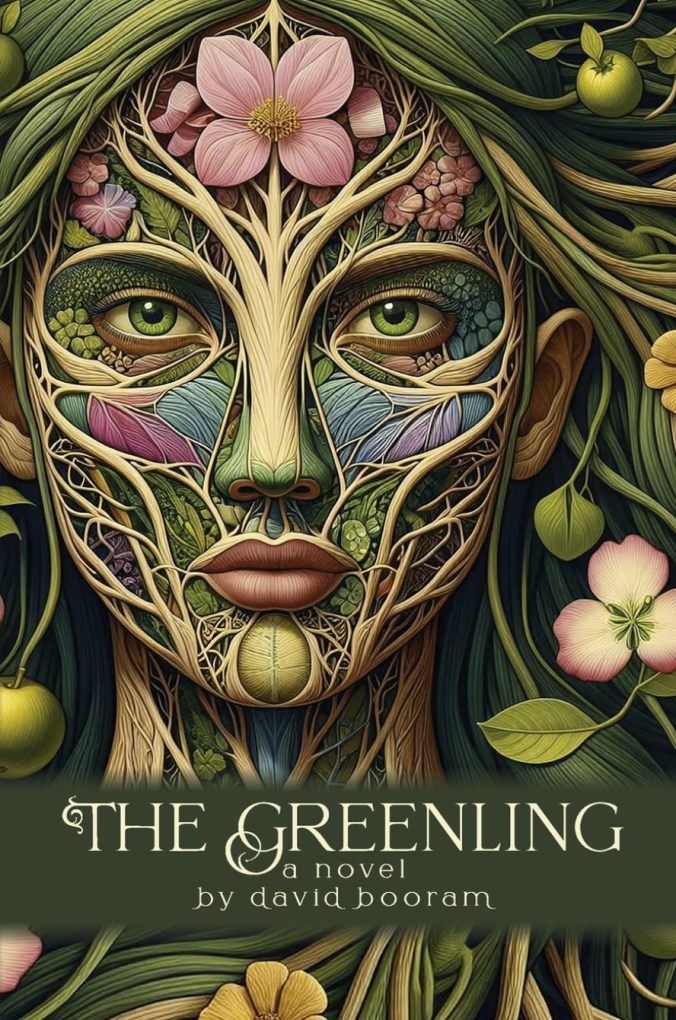
The Greenling by David Booram is an exploration of an intriguing ‘Nature evolving’ premise, told through a coming-of-age narrative.

Responding to continued human tampering, a growing sentient Nature calls a young environmental activist to action in a planetary reset. The main character is Noah, ostracized by her peers due to her unique perspective on the world and her activism for Nature. This makes her a candidate for Nature’s planetary reset.

While I felt that the story used over-simplified fantasm and eco-terrorism in a way not to my liking, I found most intriguing Booram’s use of biosemiosis, the notion that all life finds meaning.

Coincidently, I had agreed to read Booram’s eco-fiction novel (without knowing much about it) after a social media conversation we’d had during a time when I was working on my most recent novel, tentatively called (Re)Genesis. My novel relied heavily on the concept of biosemiosis. Its premise of dark karma—when Nature learns to reflect back what we send out—made use of real examples of learning, pattern recognition, anticipation and adaptation in non-human life. (Another coincidence at this same time occurred when another author approached me to read their work on coincidence, which I am currently reading).  

In the 1930s, Jakob von Uexküll coined the term Umwelt (species-specific reality or subjective environment) to define a life process that involved semiotic interactions. He argued that an organism’s behaviour results from activity that attributes meaning to the world around it, rather than merely mechanically reacting to stimuli. Building on this notion, Friedrich S. Rothschild coined the term “biosemiosis” in 1962 to postulate that life has its subjective interpretation of the world around it (its Umwelt), a segment of the world that has significance and meaning based on that life’s biology and needs. Developing biosemiosis further, Thomas Sebeok later contended that all organisms are enveloped in a cloud of messages about themselves and their situation, which they constantly transmit, receive, and interpret. Life itself is a process of signification and meaning-making, from bacteria and plants to mammals and birds. Biosemiosis involves pattern recognition, anticipation, flexibility, goal-directed movement, memory, and learning.

Perhaps most intriguing is how The Greenling touches on humanity’s growing zeitgeist of not just planetary awareness but of sensibility, a sense that we are interlinked with all other life and nonlife, that we are all more than the sum of our parts. And only then—when we make meaning of our Umwelt—can we transcend from our toxic insecurities and bullying ways.

The Greenling is worth reading for how it weaves climate facts into compelling personal story. I also find refreshing that Booram gives full agency to the environment, Nature, and its nonhuman representatives.

I have been writing, reading, and studying eco-fiction for several decades and what I found noteworthy is how agency of the environment, as character, has changed over the years and how Nature’s portrayal has evolved from ‘other’ with little agency to ‘not other’ with much agency. For more on this concept and change, I urge you to read my two essays on this evolution:

The Use of Character-Coupling in Eco-Literature to Give Voice to the Other, Part 1: Introduction

The Use of Character-Coupling in Eco-Literature to Give Voice to the Other, Part 2: Types of Character-Coupling in Seven Examples of Eco-Literature

David Booram is the cofounder and director of Fall Creek Abbey, an urban retreat center in Indianapolis, where he and his wife Beth lead The School of Spiritual Direction and offer individual and group spiritual direction. He is the founder of Direction 4 Life Work, through which he is a career counselor.
Nina Munteanu is a Canadian ecologist / limnologist and novelist. She is co-editor of Europa SF and currently teaches writing courses at George Brown College and the University of Toronto. Visit  www.ninamunteanu.ca for the latest on her books. Nina’s bilingual “La natura dell’acqua / The Way of Water” was published by Mincione Edizioni in Rome. Her non-fiction book “Water Is…” by Pixl Press (Vancouver) was selected by Margaret Atwood in the New York Times ‘Year in Reading’ and was chosen as the 2017 Summer Read by Water Canada. Her novel “A Diary in the Age of Water” was released by Inanna Publications (Toronto) in June 2020.

.

My Books Are Feeding Meta’s AI Brat

On March 20, 2025, in an article in The Atlantic entitled “The Unbelievable Scale of AI’s Pirated-Books Problem”, Alex Reisner disclosed how META pirated millions of books and research papers to train their flagship AI model Llama 3 to be competitive with products like ChatGPT. Reasons for this illegal action is simply time; asking permission and licensing takes too much time and is too expensive.

On the same day, The Atlantic provided a link to LibGen (the pirated-books database that Meta used to train its AI) so authors could search its collection of millions of illegally captured books and scientific papers. I went there and searched my name for my novels, non-fiction books and scientific papers and discovered several of my works in their AI training collection.

Two of my many scientific papers appeared in LibGen under my scientific author name Norina Munteanu. The first scholarly article came from my post grad work at the University of Victoria on the effects of mine tailing effluent on an oligotrophic lake, published in 1984 in Environmental Pollution Series A, Ecological and Biological Volume 33, Issue 1. The second article on the effect of current on settling periphyton came from my M.Sc. ecology research published in 1981 in Hydrobiologia, Volume #78.

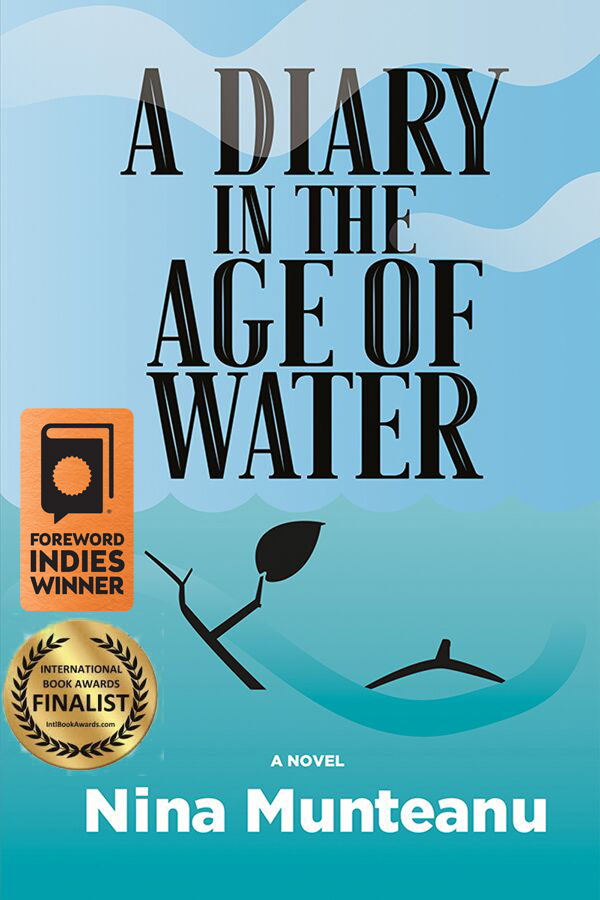
Three of my thirteen novels appeared in LibGen under my fiction author name Nina Munteanu. I found it interesting how their bots captured a good range of my works. These included two of my earliest works. Collision with Paradise (2005) is an ecological science fiction adventure and work of erotica; Darwin’s Paradox (2007) is a science fiction medical-eco thriller that features the domination of society by an intelligent AI community. The bots also found my latest novel, A Diary in the Age of Water (2020), a climate thriller and work of eco-fiction that follows four generations of women and their relationship to water.

Each of these works has been highly successful in sales and has received a fair bit of attention and recognition.

When Genevieve Dubois, Zeta Corp’s hot shot starship pilot, accepts a research mission aboard AI ship ZAC to the mysterious planet Eos, she not only collides with her guilty past but with her own ultimate fantasy. On a yearning quest for paradise, Genevieve thinks she’s found it in Eos and its people; only to discover that she has brought the seed of destruction that will destroy this verdant planet.

Recognition: Gaylactic Spectrum Award (nominee)

Collision with Paradise is ideal for readers who enjoy dark, introspective science fiction that explores complex moral dilemmas and psychological depth within a lush mythologically-rich setting.”The Storygraph

A devastating disease. A world on the brink of violent change. And one woman who can save it or destroy it all. Julie Crane must confront the will of the ambitious virus lurking inside her to fulfill her final destiny as Darwin’s Paradox, the key to the evolution of an entire civilization. Darwin’s Paradox is a novel about a woman s fierce love and her courageous journey toward forgiveness, trust, and letting go to the tide of her heart.

Recognition: Readers Choice Award (Midwest Book Review); Readers Choice (Delta Optimist); Aurora Award (nominee)

Darwin’s Paradox is a thrill ride that makes you think and tugs the heart.”Robert J. Sawyer, Hugo and Nebula Award winning author of Rollback

This gritty memoir describes a near-future Toronto in the grips of severe water scarcity during a time when China owns the USA and the USA owns Canada. A Diary in the Age of Water follows the climate-induced journey of Earth and humanity through four generations of women, each with a unique relationship to water. The diary spans a twenty-year period in the mid-twenty-first century of 33-year-old Lynna, a single mother and limnologist of international water utility CanadaCorp, and who witnesses disturbing events that she doesn’t realize will soon lead to humanity’s demise. 

Recognition: 2020 Foreword Indies Book of the Year Award (Bronze); 2020 Titan Literary Book Award (Silver); 2021 International Book Award (Finalist).

“If you believe Canada’s water will remain free forever (or that it’s truly free now) Munteanu asks you to think again. Readers have called ‘A Diary in the Age of Water’ “terrifying,” “engrossing,” and “literary.” We call it wisdom.”—LIISBETH

The April 3, 2025 article by Ella Creamer of The Guardian noted that a US court filing alleged that Meta CEO Mark Zuckerberg approved the company’s use of the notorious “shadow library”, LibGen, which contains more than 7.5 million books and 81 million research papers. According to Toby Walsh, leading AI researcher at the University of New South Wales: “As far as we know, there was an explicit instruction from Mark Zuckerberg to ignore copyright.”

This begs the question of the role and power of copyright law.

“Copyright law is not complicated at all,” said Richard Osman, author of The Thursday Murder Club series. “If you want to use an author’s work you need to ask for permission. If you use it without permission you’re breaking the law. It’s so simple.”

If it’s so simple then why is Meta and others getting away with it? For its defence, the tech giant is claiming “fair use”, relying on this term permitting the limited use of copyrighted material without the owner’s permission (my italics).

It would seem that just as Trump trumped the presidency, Zuckerberg and his AI minion bots have trumped the copyright law—by flagrantly violating it and getting away with it—so far (on both counts).

The actions of Meta were characterized by Society of Authors chair Vanessa Fox O’Louglin as “illegal, shocking, and utterly devastating for writers.” O’Louglin added that “a book can take a year or longer to write. Meta has stolen books so that their AI can reproduce creative content, potentially putting these same authors out of business.”

Three of my novels pirated for AI training

Reflecting many authors’ outrage throughout the world, Novelist AJ West remarked, “To have my beautiful books ripped off like this without my permission and without a penny of compensation then fed to the AI monster feels like I’ve been mugged.” Australian Author Sophie Cunningham said, “The average writer earns about $18,000 a year on their writing. It’s one thing to be underpaid. It’s another thing to find that [their] work is being used by a company that you don’t trust.” Bestselling author Hannah Kent said, “If feels a little like my body of work has been plundered.” She adds that this, “opens the door to others also feeling like this is an acceptable way to treat intellectual copyright and creatives who already…are expected to [contribute] so much for free or without due recompense.” Both Kent and Cunningham exhort governments to weigh in with more powerful regulation. And this is precisely what may occur. Nicola Heath of ABC.net.au writes, “the outcomes of the various AI copyright infringement cases currently underway in the US will shape how AI is trained in the future.”

According to The March 20, 2025 Authors Guild article “Meta’s Massive AI Training Book Heist: What Authors Need to Know,” legal action is underway against Meta, OpenAI, Microsoft, Anthopic, and other AI companies for using pirated books. The Authors Guild is a plaintiff in the class action lawsuit against OpenAI, along with John Grisham, Jodi Picoult, David Baldacci, George R.R. Martin, and 13 other authors, but the claims are made on behalf of all US authors whose works have been ingested into GPT. 

The Authors Guild suggests five things authors can do to defend their rights:

  1. Send a formal notice: If your books are in the LibGen dataset, send a letter to Meta and other AI companies stating they do not have the right to use your books.
  2. Join the Authors Guild: You should join the Guild and support our joint advocacy to ensure that the writing profession remains alive and vibrant in the age of AI. We give authors a voice, and there is power in numbers. We can also help you ensure that your contracts protect you against unwanted AI use of your work. 
  3. Protect your works: Add a “NO AI TRAINING” notice on the copyright page of your works. For online work, you can update your website’s robots.txt file to block AI bots.
  4. Get Human Authored certification: Distinguish your work in an increasingly AI-saturated market with the Authors Guild’s certification program. This visible mark verifies your book was created by a human, not generated by AI.
  5. Stay informed. The Authors Guild suggest signing up for the free Guild biweekly newsletter to keep updated on lawsuits and legislation that could impact you and your rights. The legal landscape is changing rapidly, and they are keeping close watch. 

How do I feel about all this? As a female Canadian author of climate fiction? As a thinking, feeling human being living in The Age of Water? Well, to tell the truth, it kinda makes me want a donut*…

 *as delivered by James Holden in Season 3, Episode 7 of “The Expanse”

Aspens in fall, ON (photo and rendition by Nina Munteanu)

Nina Munteanu is a Canadian ecologist / limnologist and novelist. She is co-editor of Europa SF and currently teaches writing courses at George Brown College and the University of Toronto. Visit  www.ninamunteanu.ca for the latest on her books. Nina’s bilingual “La natura dell’acqua / The Way of Water” was published by Mincione Edizioni in Rome. Her non-fiction book “Water Is…” by Pixl Press (Vancouver) was selected by Margaret Atwood in the New York Times ‘Year in Reading’ and was chosen as the 2017 Summer Read by Water Canada. Her novel “A Diary in the Age of Water” was released by Inanna Publications (Toronto) in June 2020.

Interview with Simon Rose on “Shadowzone” Series

My guest today is Calgary author Simon Rose, who has published nineteen novels for children and young adults, eight guides for writers, more than 100 nonfiction books, and many articles on a wide variety of topics. Today, we’re going to chat about his Shadowzone series, which was first published in 2017, with a second edition in 2025.

Nina: So, what’s the Shadowzone series all about?

Simon: The series involves the discovery of a grim dystopian version of Earth that’s ruled by a totalitarian dictatorship, the threat of a deadly virus, and a race against time to save the lives of millions. Without giving too much away, here’s a synopsis for each of the novels.

Shadowzone 

While watching intense flashes of lightning during a violent storm, Ben experiences mysterious and disturbing visions of another world, one that’s very different from his own. In the chain of events that follow, Ben encounters Charlie, a girl from a dark version of Earth, a planet doomed by the effects of environmental catastrophe, where the leaders will stop at nothing to complete their deadly mission. 

Into The Web 

On a doomed version of Earth, the sinister schemes of the Ministry are moving ever closer to completion, with dire consequences for the inhabitants of two worlds. For Ben and Charlie, an unlikely alliance, unexpected reunions, and the mysterious prophecy of the Chosen One offer a glimmer of hope, with the ever-present prospect of betrayal, as they embark on an unpredictable journey into the unknown. 

Black Dawn 

In a dark parallel world, following attacks by its most determined opponents, the Ministry has been forced to change its plans. Yet the ruthless Director-General is prepared to sacrifice anyone to achieve an entirely new beginning, no matter what the cost. In a deadly race against time, as events spiral out of control, Ben and Charlie must risk their lives in a desperate attempt to save two worlds from destruction. 

Nina: What inspired you to write these three books? What’s the story behind the story?

Simon: The original idea was about someone capturing mysterious images on a video camera of a person that no one else could see. It was around the time that a local hospital was about to be demolished. I imagined that my character was filming the event and captured the image of the person stepping seemingly unharmed from the rubble as the building came down.

For a while, that’s all I had, and it was one of those ideas that I was never sure would come to anything. It was early in my writing career, and I put it aside and worked on other stories, but I’d periodically add another element to the story about the camera and the mysterious individual. At one point, I decided that the person that the boy caught on film wasn’t a ghost but from another dimension or perhaps a parallel universe and they were attempting to contact him for some reason. I then began to add details of this other Earth and the reasons for the connection to our world, and it went from there. An initial concept involving kidnappings from hospitals didn’t quite work, so instead, and before the arrival of the recent pandemic, I developed the idea of a deadly virus, which was a good fit with the type of government running the other Earth. Once that was all in place, I was able to get to work.

Nina: Was it always going to be a series?

Simon: Shadowzone was originally only one novel, but once I’d finished it, I immediately realized that the story wasn’t over and that I need to write more. The final installment was written very quickly, and, in the process, I knew that I needed to expand the earlier sections too, so in the end I had a trilogy.

Nina: So of course, people need to read all three 🙂

Simon: You could certainly just read Shadowzone, but there’s a cliffhanger ending and hopefully most people will feel utterly compelled to read on and learn what happens next. Into The Web and Black Dawn also don’t make sense if you haven’t read the first book in the series. Taken together, it’s an exciting, fast paced adventure that I hope everyone will really enjoy.

Nina: So, is it a good idea for authors to write a series of books?

Simon: It can be, but only if you have enough material for multiple books. If readers are sufficiently interested in the story and the characters after completing the first installment, they’d usually like to read more. However, the story or theme has to be strong enough to warrant more adventures. The reader won’t appreciate a novel that’s overloaded with filler, just for the sake of creating a series, and might avoid any books by the same author in the future.

Nina: And you’re doing adaptations of the Shadowzone books for TV and movies, aren’t you?

Simon: Yes, I’ve created a synopsis for a three-season TV series based on the Shadowzone books. I’ve also created a script for the initial episode, based on the first novel in the series. The three books involve a dark parallel version of Earth, mysterious portals, and the threat of a deadly virus. The dystopian setting has proved popular over the years and will probably continue to appear on screen. There has been interest in the project from people involved in film and TV projects and I’m certainly open to working with others to bring this one to life. 

I’ve also seen some TV shows recently in which although there were adult characters, the main ones were in their mid or late teens and the show could be watched and enjoyed by adults. The lead characters were the same age as those in the Shadowzone books and in the novels in my paranormal Flashback series. That encouraged me to work on adaptations of the stories for the screen, since it seemed that there might be a market for them. I’m continuing to work on further episodes for the first season of the Shadowzone TV series.

Nina: What are you currently working on?

Simon: I always have a few current projects and right now, along with the script adaptations, I’m working on another historical fantasy novel series, this time set in the early years of World War II. I’m also working on more books in the same genre as my previously published paranormal Flashback novels, a fantasy series, and a historical fiction novel. I also teach writing courses at the University of Calgary and am working with some authors in the Alexandra Writers Centre’s Author Development Program.

Anyone interested in keeping up to date with the projects that I’m working on is always welcome to subscribe to my monthly newsletter, which you can do at www.simon-rose.com.

Nina: You work with other authors looking to publish, don’t you?

Simon: Yes, I offer coaching, editing, consulting, and mentoring services for writers of novels, short stories, fiction, nonfiction, biographies, and in many other genres, plus do work with writers of scripts and screenplays. I’m a writing instructor and mentor at the University of Calgary and served as the Writer-in-Residence with the Canadian Authors Association. You can find details of some of the projects I’ve worked on with other authors, along with some references and recommendations, at www.simon-rose.com.

Nina: So where can people buy all the books in the Shadowzone series?

Simon: The books can be purchased at most of the usual places, as follows:

Shadowzone

Ebook: Amazon Canada, Amazon USA, Kobo, Barnes and Noble, Amazon UK, Amazon Germany, Amazon France, Amazon Japan, iBooks, Smashwords, Scribd

Paperback: Amazon Canada, Amazon USA, Amazon UK, Amazon Germany, Amazon France, Amazon Japan

Into The Web

Ebook: Amazon Canada, Amazon USA, Kobo, Barnes and Noble, Amazon UK, Amazon Germany, Amazon France, Amazon Japan, iBooks, Smashwords, Scribd

Paperback: Amazon Canada, Amazon USA, Barnes and Noble, Amazon UK, Amazon Germany, Amazon France, Amazon Japan

Black Dawn

Ebook: Amazon Canada, Amazon USA, Kobo, Barnes and Noble, Amazon UK, Amazon Germany, Amazon France, Amazon Japan, iBooks, Smashwords, Scribd

Paperback: Amazon Canada, Amazon USA, Barnes and Noble, Amazon UK, Amazon Germany, Amazon France, Amazon Japan

The Shadowzone Series Box Set

Ebook: Amazon Canada, Amazon USA, Kobo, Barnes and Noble, Amazon UK, Amazon Germany, Amazon France, Amazon Japan, Scribd, iBooks, Smashwords

Thanks Simon, for being my guest today and the very best of luck with the Shadowzone series.

You can learn more about Simon and his work on his website at www.simon-rose.com, subscribe to his newsletter, or connect online.

Eco-Fiction Books that Make You Care and Give You Hope

Some time ago, Shepherd invited me to share some of my favourite stories and why I picked them. I decided to feature novels that moved me greatly and inspired me to action. I chose five works of eco-fiction that made me care and gave me hope.

The environment and how we treat it has always been important to me since I was a child. My passion for storytelling morphed into writing, but the underlying spark came through environmental activism. I got a university degree in aquatic ecology, published numerous papers, and now write eco-fiction that is grounded in accurate science with a focus on human ingenuity and compassion. The most meaningful and satisfying eco-fiction is ultimately optimistic literature that explores serious issues with heroic triumph. Each of these five favourites intimately connects human to environment. Each novel moved me to think and deeply care.

The Books I Picked & Why

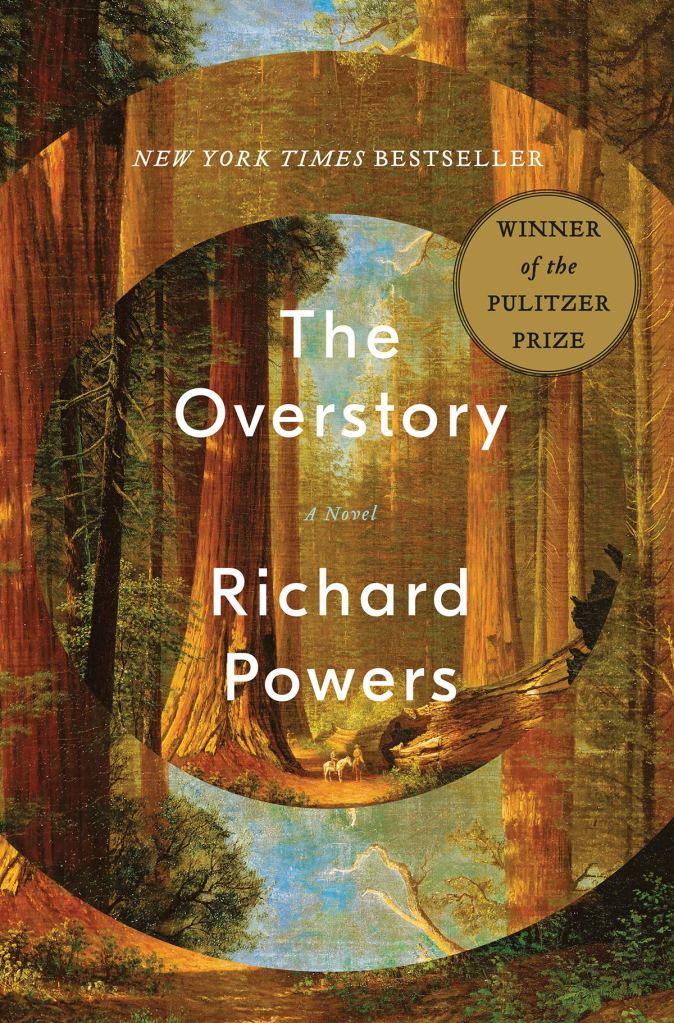
The Overstory

by Richard Powers

What resonated with me on so many levels was the author’s use of lyrical and beautiful language in describing trees and forests: as characters. I’m an ecologist and I felt a particular kinship with the botanist Patricia Westerford, a disabled introvert who must swim against the hegemonic tide with heretical ideas. When she argues that trees communicate, learn, trade goods and services, have intelligence and society, her scientific peers ridicule her and end her university career. This story is as much her triumph over overwhelming challenges as it is about the dwindling majestic forests that must quietly endure our careless apathy as they continue to offer their gift of life-giving oxygen and medicinal aerosols for hundreds of years. 

Barkskins

by Annie Proulx

This 600-year saga about human-environment interaction through the forest industry in Canada evoked emotional connections with my environment, the Canadian forests, and the plight of indigenous Canadians. From the arrival of the Europeans in pristine forest to its destruction under the veil of global warming, Proulx weaves generational stories of two settler families into a crucible of terrible greed and tragic irony. The bleak impressions by the immigrants of a harsh environment crawling with pests underlie their combative mindset of a presumed infinite resource. I was particularly moved by the linked fate between the Mi’kmaq and the majestic pine forests, how both were similarly mistreated and changed. This history is also my legacy. As the daughter of immigrants, I felt both educated and moved.  

The Breathing Hole

by Colleen Murphy, Siobhan Arnatsiaq-Murtphy and more

What struck me most was the use of simple language to portray powerful intimacy and connection between human and animal, and by extension, environment. Murphy’s humorous dialogue, together with sparing, often ironic, descriptions, struck deep into my heart. The play starts in 1535 on an ice shelf up north—when an Inuk widow risks her life to save a lost one-eared polar bear cub on an ice floe, and adopts him. In the last scene five hundred years later in the oily waters of the Northwest Passage, the same bear—starving and cruelly injured by eco-tourists on a cruise ship—struggles to keep from drowning. No one on the ship cares. No one weeps for him. But I did. I wept for him and for his world destroyed by apathy. 

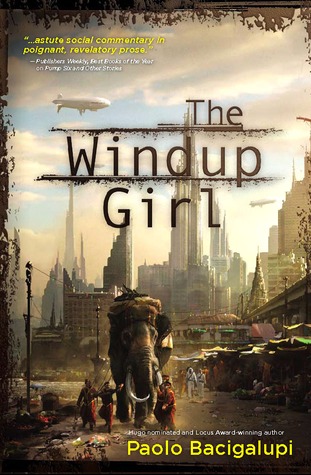
The Windup Girl

by Paolo Bacigalupi

Paolo Bacigalupi’s biopunk science fiction novelexplores a 23rd-century post-food crash Thailand after global warming has raised sea levels and depleted carbon fuel sources. The main character, Emiko, is a ‘windup,’ a modified human who is vilified and abused by humanity, despite her abilities. I was struck by how well this work of ‘mundane science fiction’ used Emiko as an avatar for a trickster Nature after abuse by humanity through the disrespect of reckless gene-hacking, greedy corporate espionage, and arbitrary foreign takeovers. I cheered Emiko’s breakaway from her oppressors as she emerged from a cloak of obedience and embraced her survival in this changing world of unintended consequences—only realizing later that I was cheering for that changing world and the optimism it promised. 

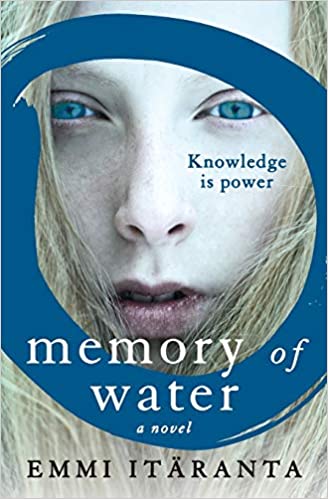
Memory of Water

by Emmi Itäranta

This book features a passion of mine as an ecologist and mother: water and how we treat it. Life-giving symbols of water flow throughout this story, which explores a post-climate change world of sea level rise in which freshwater is severely rationed due to scarcity. Water’s very nature is tightly interwoven with the main character, Noria, a tea master who guards a secret spring in the fell by her house against cruel government agents who would kill her for water crimes. In prose both sensual and lyrical, this book explores honor, sacrifice, betrayal, and friendship, and how each can be victimized through commodification in a power play of ideology. I found myself pulled in by the intrigue even as I cherished and lingered in the beautiful metaphoric prose.

Explore my eco-fiction book:

A Diary in the Age of Water follows the climate-induced journey of Earth and humanity through four generations of women, each with a unique relationship to water.

Centuries from now, in a dying boreal forest in what used to be northern Canada, Kyo, a young acolyte called to service in the Exodus, yearns for Earth’s past—the Age of Water—before the “Water Twins” destroyed humanity. Looking for answers and plagued by vivid dreams of this holocaust, Kyo discovers the diary of Lynna, a limnologist from that time of severe water scarcity just prior to the destruction. In her work for a global giant that controls Earth’s water, Lynna witnesses and records in her diary the disturbing events that will soon lead to humanity’s demise.

Recently I felt honoured to have A Diary in the Age of Water included as one of several eco-fiction novels that inspired action.

The feminist book review site Liisbeth recently wrote about A Diary in the Age of Water: “If you believe Canada’s water will remain free forever (or that it’s truly free now) Munteanu asks you to think again. Readers have called A Diary in the Age of Water “terrifying,” “engrossing,” and “literary.” We call it wisdom.”

Marcescent beech leaves among evergreen hemlocks, ON (photo by Nina Munteanu)

Nina Munteanu is a Canadian ecologist / limnologist and novelist. She is co-editor of Europa SF and currently teaches writing courses at George Brown College and the University of Toronto. Visit www.ninamunteanu.ca for the latest on her books. Nina’s bilingual “La natura dell’acqua / The Way of Water” was published by Mincione Edizioni in Rome. Her non-fiction book “Water Is…” by Pixl Press (Vancouver) was selected by Margaret Atwood in the New York Times ‘Year in Reading’ and was chosen as the 2017 Summer Read by Water Canada. Her novel “A Diary in the Age of Water” was released by Inanna Publications (Toronto) in June 2020.

Ironic Tragedy of Forever Chemicals & Growing Infertility: Are We Solving Our Own Population Explosion Through Toxicity?

Screenshot

In the passage below of my eco-fiction dystopian novel A Diary in the Age of Water, the year is 2065 and the diarist Lynna (a limnologist at the University of Toronto) reflects on the steeply growing infertility in humans and our tenuous future. Lynna draws on the factual study published close to fifty years earlier (in 2017) by Hagai Levine and others at the Hebrew University of Jerusalem, who found that sperm counts among western men had reduced close to 60% in four decades:

Back in ’49, Daniel and I had several discussions about the environmental triggers and epigenetic mechanisms of infertility in humans. Daniel went on about how it was all about the men. While women showed signs of increased infertility, men’s rate of infertility was more than double that of the women, he said. Taking an inappropriately gleeful tone, Daniel cited the classic 2017 paper by the Hebrew University of Jerusalem, the one that started it all. Their findings were startling: men’s sperm count in North America, Europe, Australia, and New Zealand had diminished by sixty percent in forty years, between 1973 and 2011. The scientists predicted that by 2060, virtually all men in these parts of the world would have little to no reproductive capacity.

It’s 2065 and they’re right. Only it’s worse. Before the twenties, only the developed countries seemed to be affected, but then sperm counts started to plummet in South American countries, like Argentina and Brazil, where GMO, pesticides, and solvent manufacturing were exploding.

You get out what you put into the ground. India and Asia—where endocrine-disruptive chemicals are finding their way into the water—are reporting very low sperm counts in their men as well as higher incidents of intersex humans.

You get out what you put into the water. We are over two thirds water, after all. I find it a little ironic that we’ve inadvertently produced a non-discriminatory way to control the problem of humanity’s overpopulation. Infertility. And that infertility results from defiling the environment we live in.

But now climate change is shouldering its way in. Climate change is shutting us down.

Is this the first sign of our impending extinction?

–excerpt from “A Diary in the Age of Water”

That environmental perturbations impact our ability to reproduce has been proven. In their 2017 article, Levine et al. write that:

“Sperm count and other semen parameters have been plausibly associated with multiple environmental influences, including endocrine disrupting chemicals (Bloom et al., 2015; Gore et al., 2015), pesticides (Chiu et al., 2016), heat (Zhang et al., 2015) and lifestyle factors, including diet (Afeiche et al., 2013; Jensen et al., 2013), stress (Gollenberg et al., 2010; Nordkap et al., 2016), smoking (Sharma et al., 2016) and BMI (Sermondade et al., 2013; Eisenberg et al., 2014a). Therefore, sperm count may sensitively reflect the impacts of the modern environment on male health throughout the life course (Nordkap et al., 2012).”

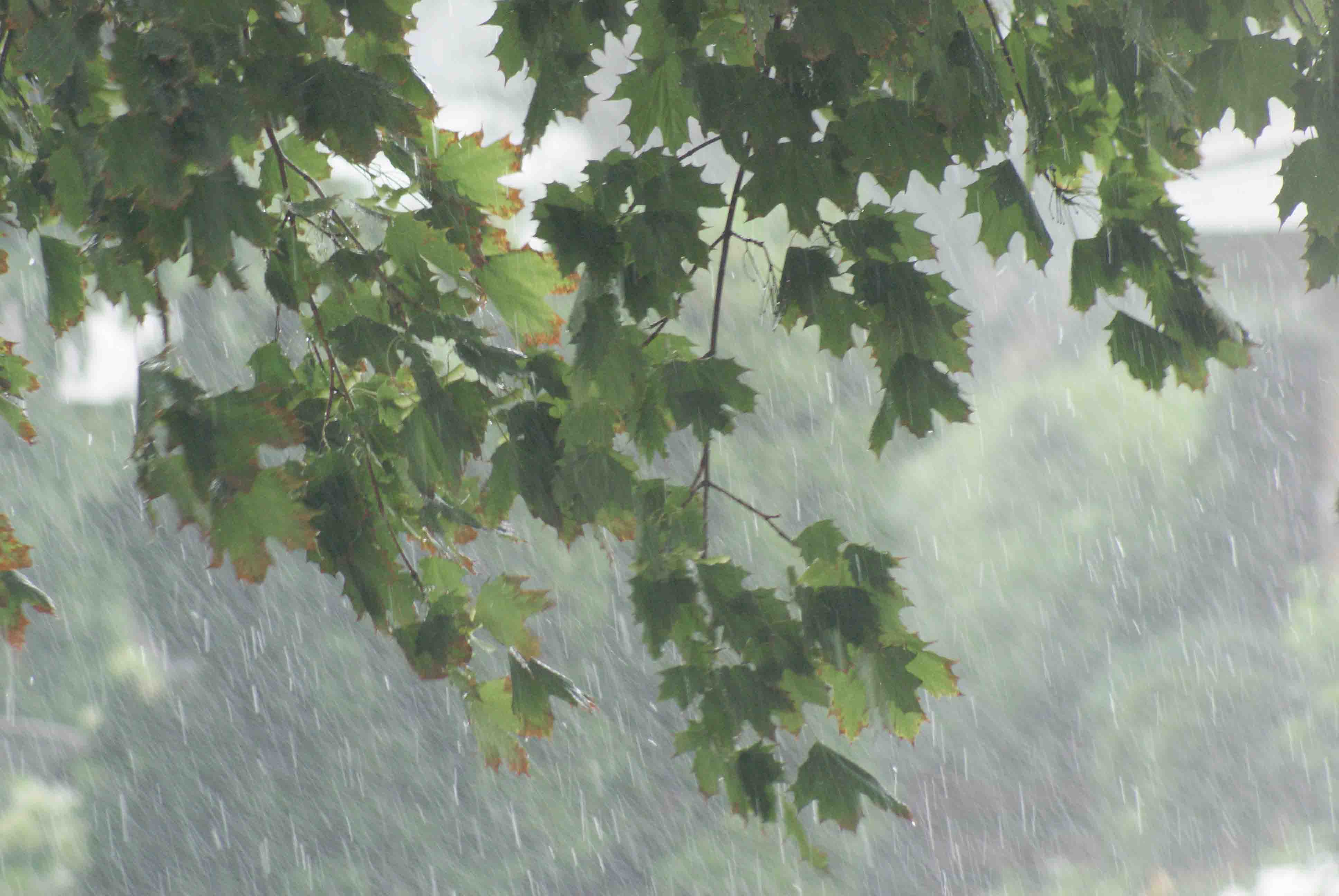
This rain falling on an Ontario marsh most certainly contains forever chemicals (photo by Nina Munteanu)

Thanks to chemical companies such as DuPont and others, forever chemicals are currently in rain water globally, and in many places in unhealthy concentrations. These endocrine-disrupting and cancer-causing chemicals often end up in drinking water and include PCBs, phthalates, PFAS, BPAs (used in pesticides, children’s products, industrial solvents and lubricants, food storage, electronics, personal care products and cookware).

If you observe a terrible irony in this short list, also know that the chemical companies, such as DuPont, have known about the dangers posed by these products for decades and decided to keep it a secret.

Heavy rain in Mississauga, ON (photo by Nina Munteanu)

Nina Munteanu is a Canadian ecologist / limnologist and novelist. She is co-editor of Europa SF and currently teaches writing courses at George Brown College and the University of Toronto. Visit www.ninamunteanu.ca for the latest on her books. Nina’s bilingual “La natura dell’acqua / The Way of Water” was published by Mincione Edizioni in Rome. Her non-fiction book “Water Is…” by Pixl Press (Vancouver) was selected by Margaret Atwood in the New York Times ‘Year in Reading’ and was chosen as the 2017 Summer Read by Water Canada. Her novel “A Diary in the Age of Water” was released by Inanna Publications (Toronto) in June 2020.

Water Scarcity and ‘A Diary in the Age of Water’

My eco-fiction book A Diary in the Age of Water was recently cited along with Paolo Bacigalupi’s book The Water Knife, in an article on conflict risk in international transboundary water bodies.

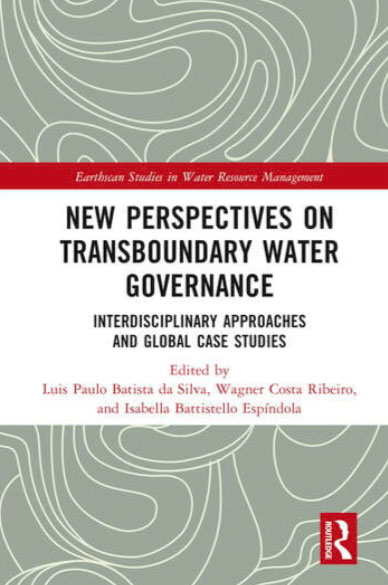
The citation was made in Ken Conca’s article (Chapter 1: “Climate change, adaptation, and the risk of conflict in international river basins: Beyond the conventional wisdom”) of the 2024 Routledge book New Perspectives on Transboundary Water Governance: Interdisciplinary Approaches and Global Case Studies” (edited by Luis Paulo Batista da Silva, Wagner Costa Ribeiro, and Isabela Battistello Espíndola).

Conca begins his chapter with a statistic—an estimated 310 rivers in the world cross national borders, form borders, or both—and goes on to discuss the risk of conflict that naturally arises in such situations. Conca traces a rich history of disputes, with one of the oldest occurring between Lagash and Umma (present-day southern Iraq) in 2500 BCE. Conca explores the early warning indicators explored by the World Resources Institute that imply “a future in which our bordered politics, combined with hydrologic interdependencies, could yield a combustible mix of tension and grievances” and adds that several rivers flagged in the WRI study lie in regions of crhonic tension and political instability. He then includes a 2013 quote by former UN Secretary-General Ban Ki-moon:

“Our experiences tell us that environmental stress, due to lack of water, may lead to conflict, and would be greater in poor nations … population growth will make the problem worse. So will climate change. As the global economy grows, so will its thirst. Many more conflicts lie just over the horizon.” Ban also stated that climate change promised “an unholy brew that can create dangerous security vacuums” in which “mega-crises may well become the new normal.”

Conca makes his point by quoting the U.S. Center for Strategic and International Studies: “the real wild card for political and social unrest in the Middle East over the next 20 years is not war, terrorism, or revolution—it is water.”

Conca makes the connection with narratives of fiction:

“This framing of scarcity-induced conflict risk has even crept into the world of fiction. Paulo Bacigalupi’s dystopian novel The Water Knife (2016) portrays a parched southwestern United States of the near future. He foresees American states militarizing both their water relations (with corporate militias destroying infrastructure meant to divert water) and their borders (with the water-rich states seeking to keep thirsty migrant out, and the water poor states seeking to keep them in). Nina Munteanu’s A Diary in the Age of Water (2020) envisions Canada as a wholly-owned colony of the United States (itself owned by China). She describes a world in which Niagara Falls has been turned off and pet ownership is outlawed as an unacceptable water burden.”

Conca unpacks various misconceptions on sources of conflict and conflict resolution to do with transboundary water bodies. The chapter is very enlightening, as is the entire book!

The 2024 Routledge book New Perspectives on Transboundary Water Governance: Interdisciplinary Approaches and Global Case Studies” (edited by Luis Paulo Batista da Silva, Wagner Costa Ribeiro, and Isabela Battistello Espíndola) is described by the publisher below:

This book presents a novel examination of transboundary water governance, drawing on global case studies and applying new theoretical approaches.

Excessive consumption and degradation of natural resources can either heighten the risks of conflicts or encourage cooperation within and among countries, and this is particularly pertinent to the governance of water. This book fills a lacuna by providing an interdisciplinary examination of transboundary water governance, presenting a range of novel and emerging theoretical approaches. Acknowledging that issues vary across different regions, the book provides a global view from South and Central America, Africa, Asia, and the Middle East, with the case studies offering civil society and public managers concrete situations that indicate difficulties and successes in water sharing between bordering countries. The volume highlights the links between natural resources, political geography, international politics, and development, with chapters delving into the role of paradiplomacy, the challenges of climate change adaptation, and the interconnections between aquifers and international development. With rising demand for water in the face of climate change, this book aims to stimulate further theoretical, conceptual, and methodological debate in the field of transboundary water governance to ensure peaceful and fair access to shared water resources.

This book will be of interest to students and scholars of water resource governance from a wide variety of disciplines, including geography, international relations, global development, and law. It will also be of interest to professionals and policymakers working on natural resource governance and international cooperation.

Nina Munteanu is a Canadian ecologist / limnologist and novelist. She is co-editor of Europa SF and currently teaches writing courses at George Brown College and the University of Toronto. Visit  www.ninamunteanu.ca for the latest on her books. Nina’s bilingual “La natura dell’acqua / The Way of Water” was published by Mincione Edizioni in Rome. Her non-fiction book “Water Is…” by Pixl Press (Vancouver) was selected by Margaret Atwood in the New York Times ‘Year in Reading’ and was chosen as the 2017 Summer Read by Water Canada. Her novel “A Diary in the Age of Water” was released by Inanna Publications (Toronto) in June 2020.

Vancouver’s Craig H. Bowlsby wins his second Crime Writers of Canada Award of Excellence in two years.

My good friend author Craig Bowlsby just won the Crime Writers of Canada Award of Excellence for Best Unpublished Crime Novel manuscript.

Requiem for a Lotus takes place in 1917 Shanghai, where police detective Harmon Fletcher must solve the murder of a Chinese sing-song girl he’d failed to protect. Adding his Canadian prairie hunting experience to modern forensic techniques, Fletcher scours Shanghai’s dangerous jig-saw underworld for answers. But while he brings one killer to justice, another escapes, and Fletcher must sacrifice more than he expected before he’s done.

Here’s the opening to Requiem for a Lotus:

“When a man named Hong Song Lin shot his neighbour five times for blowing roasted pig smoke onto his second floor balcony, it wasn’t a hard case to figure out. There was two angry men, a gun, and a hot Shanghai summer.”

The judges selected Craig’s novel for its excellent writing and storytelling, a tense and compelling plot and pace, and intriguing characters:

“… What enjoyable reading! The author quickly pulls the reader into 1917 Shanghai and pins them there with its smells, sights, customs and politics … A very engaging crime novel.”

“… Loved the historical setting of Shanghai and it kept me fascinated … Inspector Fletcher is a solid and clever character, a somewhat rougher Sherlock Holmes.”

Requiem for a Lotus is the first novel of a trilogy. I’m confident that this exciting crime novel and series will be snapped up by a publisher soon. And when it is, I’ll be buying a copy.

Here’s Craig’s podcast interview with CWC interviewer Erik D’Souza when the manuscript was a finalist before it won top prize:

Last year Craig’s short story “The Girl Who Was Only Three Quarters Dead,” published by Mystery Magazine in April 2022, won the Crime Writers of Canada Award for Best Short Story.

Nina Munteanu is a Canadian ecologist / limnologist and novelist. She is co-editor of Europa SF and currently teaches writing courses at George Brown College and the University of Toronto. Visit www.ninamunteanu.ca for the latest on her books. Nina’s bilingual “La natura dell’acqua / The Way of Water” was published by Mincione Edizioni in Rome. Her non-fiction book “Water Is…” by Pixl Press (Vancouver) was selected by Margaret Atwood in the New York Times ‘Year in Reading’ and was chosen as the 2017 Summer Read by Water Canada. Her novel “A Diary in the Age of Water” was released by Inanna Publications (Toronto) in June 2020.

Book Review: Nina’s “Favourite 3 Reads Of 2023– Feminist Eco-Fiction

In late 2023, I was invited by Shepherd to post an article of my favourite three reads of 2023. I had earlier that year posted on Shepherd an article describing what I considered to be the best eco-fiction books that make you care and give you hope.

I started out by reviewing what I had read in 2023. It looked like I’d read about thirty odd books, almost half and half non-fiction to fiction. That’s not many, but I’m a slow reader. I pore through each book at a snail’s pace, spending time making notes with some, particularly the non-fiction books, which I use to research my writing. With fiction, I dive in deep and thoroughly savor each word and sentence like a mouthful of an excellent meal made with loving hands. Books varied from non-fiction scholarly works on forest ecosystems (The Treeline by Ben Rawlence) and post-capitalism (Four Futures by Peter Frase) to literary fiction, political thrillers, speculative fiction, clifi, and eco-fiction.

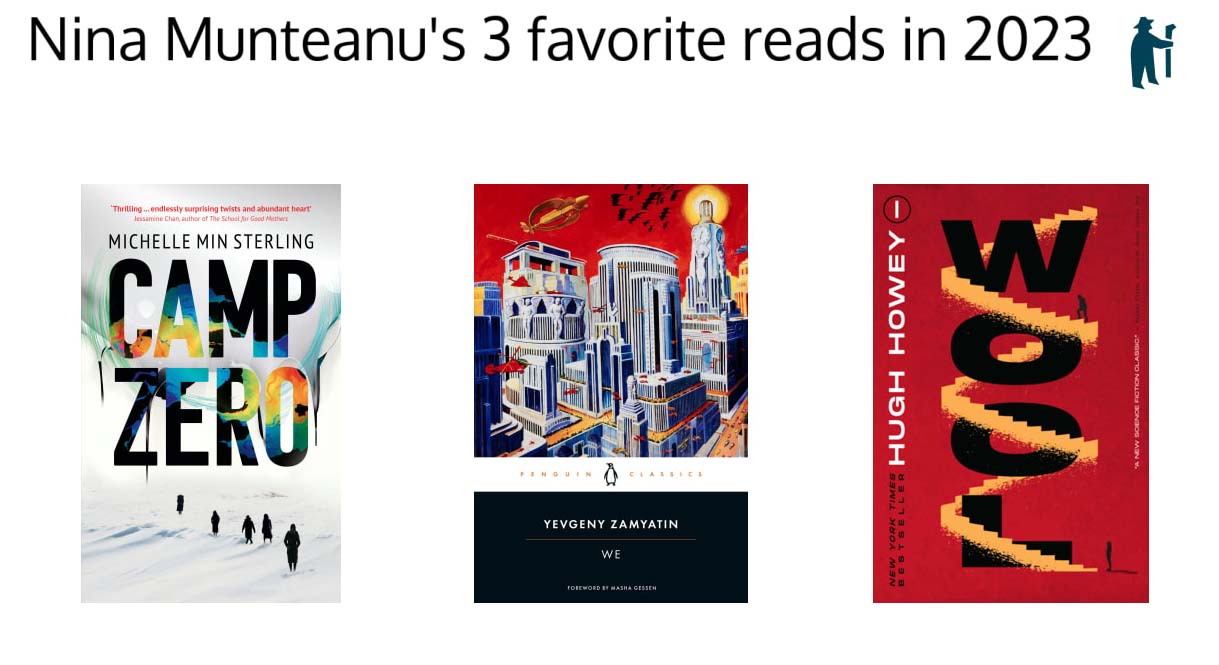
It was a tough choice, but I came up with three choices and a thematic rationale that resonated with me and made a deep kind of sense for that year: all three books were eco-fiction of sorts and featured hopeful stories of strong women, acting out of compassion and in solidarity with intelligence, kindness and courage. For me, 2023 was a year of strong feminine energy for the planet and my favourite books reflect that. Here they are (read the original article on Shepherd here):

The first of my favourite three books of 2023 is Michelle Min Sterling’s Camp Zero.

Set in the remote Canadian north—a place I love for its harsh beauty—this feminist climate fiction explores a warming climate through the perilous journeys of several female characters, each relating to her environment in different ways. Each woman exerts agency in surprising ways that include love, bravery and shared community. The strength of female power carried me through the pages like a braided river heading to a singular ocean. These very different women journey through the dark ruins of violent capitalism, colonialism and patriarchy—flowing past and through hubristic men pushing north with agendas and jingoistic visions—to triumph in an ocean of solidarity. I empathized with each woman as she found her strength and learned to wield true heroism—one based on collaboration and humble honesty.

My second favourite book of 2023 is Yevgeni Zamyatin’s We.

I enjoyed this 1920 hopeful dystopia for its courageous and unprecedented feminism. While the story centres on logical D-503, a man vacuously content as a number in the One State, it is I-330—Zamyatin’s unruly heroine—who stole my attention. Confident, powerful and heroic, the liberated I-330 embraces the Green Wind of change to influence D-503. A force of hope and resilience, she braves torture to successfully orchestrate a revolution that breaches the Green Wall—feats typically relegated to a male protagonist in novels of that era. When pregnant O-90 refuses to surrender her child to the State, I-330 helps her escape to the outside, where the Green Wind of freedom blows. I resonated with Zamyatin’s cautionary tale on the folly of logic without love and Nature.

My third favourite book of 2023 is Hugh Howie’s Wool (first of the SILO series).

Juliette—humble and gutsy, kind and relentlessly motivated in her journey for the truth—kept the pages turning for me. Juliette is a mechanic from the Down-Deep of the underground Silo, humanity’s last refuge to a toxic world. When Juliette inexplicably lands the job of sheriff, she treats her new position as a tool to seek the truth about her lover’s mysterious recent death. At her own peril, she pulls on threads that ultimately reveal a great conspiracy.

Juliette’s literal and metaphoric rise from the Down-Deep to the Up-Top is a feminist’s journey that transcends intersectional barriers as she battles small-minded men of power and maintains her integrity by refusing to abide by the inhumane Up-Top rules of order. By the end, I sensed a victory for humankind through womankind.

Also check out Shepherd’s 100 best books of 2023.

You might be interested in two of my own eco-fiction novels that feature several strong female protagonists:

Darwin’s Paradox follows the complex dynamic of a brave mother and her willful teenage daughter, both ‘gifted’ by a virus living inside them. Accused of murder and deliberately spreading the virus that killed many, Julie fled the enclosed city and settled in the climate wastelands with her husband and their child. Years later, when their harsh refuge is threatened by city forces seeking mother and daughter for experimentation, Julie leaves her family and gives herself up to the city, hoping they will abandon pursuing her daughter. Still psychically connected to the city’s AI community (now evolving into an autonomous entity with the intelligent virus), Julie entangles with political intrigue while her daughter, who followed her to the city, stumbles into her mother’s violent past. 

A Diary in the Age of Water follows the climate-induced journey of Earth and humanity through four generations of women, each with a unique relationship to water. Centuries from now, in a dying boreal forest in what used to be northern Canada, Kyo, a young acolyte called to service in the Exodus, yearns for Earth’s past—the Age of Water—before the “Water Twins” destroyed humanity. Looking for answers and plagued by vivid dreams of this holocaust, Kyo discovers the diary of Lynna, a limnologist from that time of severe water scarcity just prior to the destruction. In her work for a global giant that controls Earth’s water, Lynna witnesses and records in her diary the disturbing events that will soon lead to humanity’s demise.

.
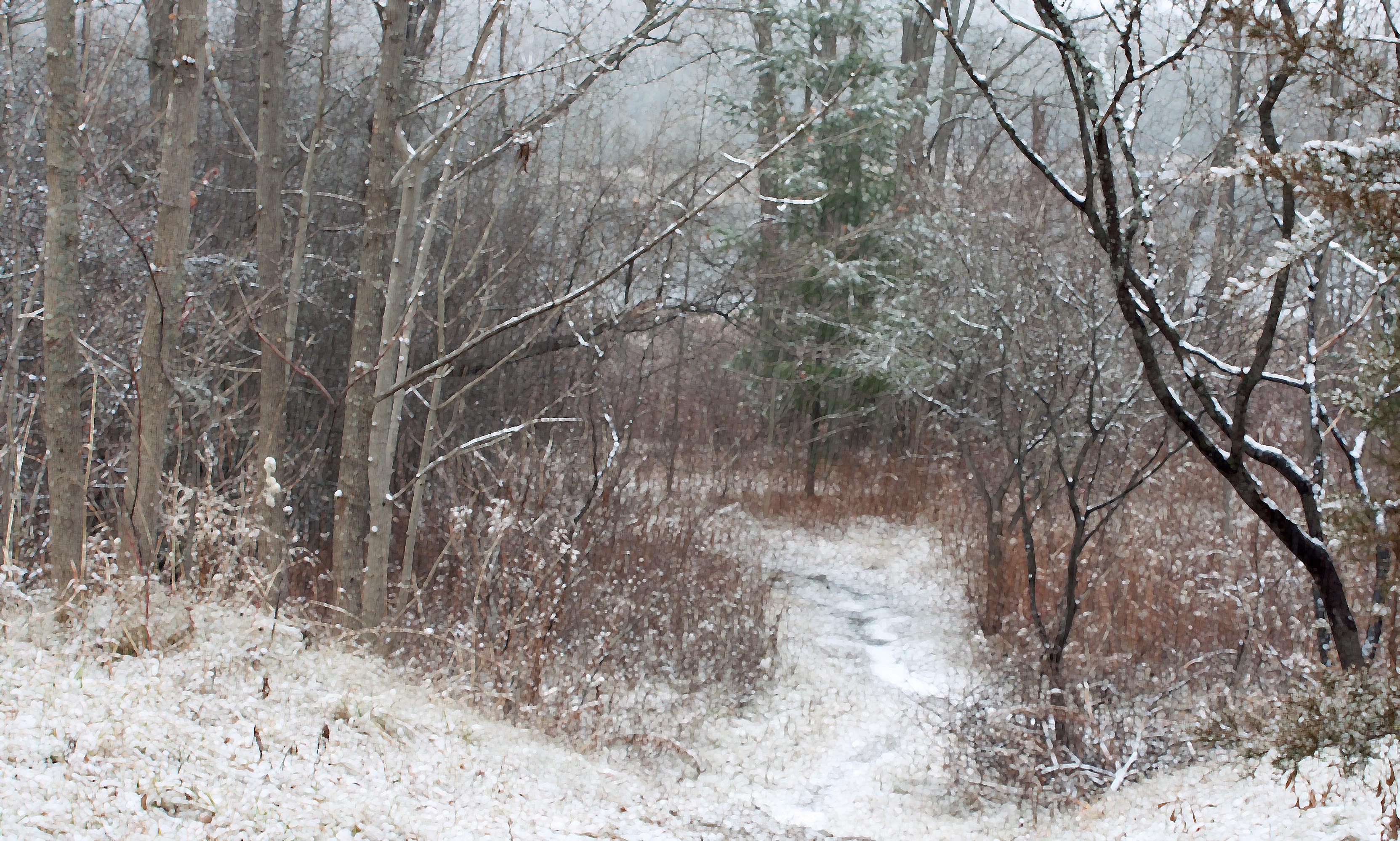
Path through a mixed forest in early winter, ON (photo and rendition by Nina Munteanu)

Nina Munteanu is a Canadian ecologist / limnologist and novelist. She is co-editor of Europa SF and currently teaches writing courses at George Brown College and the University of Toronto. Visit www.ninamunteanu.ca for the latest on her books. Nina’s bilingual “La natura dell’acqua / The Way of Water” was published by Mincione Edizioni in Rome. Her non-fiction book “Water Is…” by Pixl Press (Vancouver) was selected by Margaret Atwood in the New York Times ‘Year in Reading’ and was chosen as the 2017 Summer Read by Water Canada. Her novel “A Diary in the Age of Water” was released by Inanna Publications (Toronto) in June 2020.

Climate Cultures Magazine Lists Nina Munteanu’s “A Diary in the Age of Water” Among Eight Eco-Fiction Novels to Read

Writer and curator Mary Woodbury shares eight novels about water where fact and fiction mingle, tried by imagination, to reveal important truths about our shifting relationships with this vital and lively agent in an era of climate crisis,” writes the magazine Climate Cultures.

In an article entitled, “Where Waters and Fictions Meet,” Mary Woodbury opens with this:

“While facts are something we can and should pay attention to as we follow scientific integrity, models, and reports, another mode of telling the story about water has been alive forever: churned, spoken, and written by authors who dream up fictional stories related to our past, present, and future world. Where fact and fiction mingle like this is an area of reflection and speculation, tied by imagination. These tales of water ripple out once the pebble sinks in. The intersectionality of diverse water fiction results in reader empathy, learning, inspiration, and shared commonalities around the world. Local dignity comes alive against a backdrop of planetary crises.”

She chooses the following eco-novels to discuss:

“Land-Water-Sky (Ndè-Ti-Yat’a)” by Katłıà
“Oil on Water” by Helon Habila
“A Diary in the Age of Water” by Nina Munteanu
“The Water Knife” by Paolo Bacigalupi
“Memory of Water” by Emmi Itäranta
“Fever Dream” by Samanta Schweblin
“Lagoon” by Nnedi Okorafor
“Bangkok Wakes to Rain” by Pitchaya Sudbanthad

Here’s what she writes about my novel:

Ancient Eastern Hemlock in Catchacoma old-growth forest, ON (photo by Nina Munteanu)

NINA MUNTEANU is a Canadian ecologist / limnologist and novelist. She is co-editor of Europa SF and currently teaches writing courses at George Brown College and the University of Toronto. Visit  www.ninamunteanu.ca for the latest on her books. Nina’s bilingual “La natura dell’acqua / The Way of Water” was published by Mincione Edizioni in Rome. Her non-fiction book “Water Is…” by Pixl Press(Vancouver) was selected by Margaret Atwood in the New York Times ‘Year in Reading’ and was chosen as the 2017 Summer Read by Water Canada. Her novel “A Diary in the Age of Water” was released by Inanna Publications (Toronto) in June 2020.

Age Of Water Podcast: Nina Reads from “The Overstory”

AoW Logo-smallWe are now living in the Age of Water. Water is the new “gold”, with individuals, corporations and countries positioning themselves around this precious resource. Water is changing everything. The Age of Water Podcast covers anything of interest from breaking environmental news to evergreen material. This also includes human interest stories, readings of eco-literature, discussion of film and other media productions of interest.

In this episode of Age of Water, Nina reads from the eco-fiction book “Overstory” by Richard Powers, an exploration of the relationship of trees and humanity…


At the heart of Richard Powers’s The Overstory are the pivotal lives of two women, botanist Patricia Westerford and college student Olivia Vandergriff. Both will inspire a movement against the destruction of forests.

theoverstoryPatricia Westerford—whose work resembles that of Diana Beresford-Kroeger (author of The Global Forest) and UBC’s Suzanne Simard—is a shy introvert who discovers that trees communicate, learn, trade goods and services, and have intelligence. When she shares her discovery, she is ridiculed by her peers and loses her position.  But, just as with Lynn Margulis and her theory of endosymbiosis, Westerford is finally validated. She is the archetypal ‘mother tree’, the metaphoric Tachigali versicolor, who ultimately brings the tangle of narratives together through meaning. Westerford writes in her book The Secret Forest:

“There are no individuals in a forest, no separable events. The bird and the branch it sits on are a joint thing. A third or more of the food a big tree makes may go to feed other organisms. Even different kinds of trees form partnerships. Cut down a birch, and a nearby Douglas fir may suffer…Fungi mine stone to supply their trees with minerals. They hunt springtails, which they feed to their hosts. Trees, for their part, store extra sugar in their fungi’s synapses, to dole out to the sick and shaded and wounded. A forest takes care of itself, even as it builds the local climate it needs to survive…A tree is a wondrous thing that shelters, feeds, and protects all living things. It even offers shade to the axmen who destroy it.”

Olivia Vandergriff miraculously survives an electrocution to become an ecowarrior after she begins to hear the voices of the trees. She rallies others to embrace the urgency of activism in fighting the destruction of California’s redwoods and even camps in the canopy of one of the trees to deter the logging. When the ancient tree she has unsuccessfully protected is felled, the sound is “like an artillery shell hitting a cathedral.” Vandergriff weeps for this magnificent thousand-year old tree. So do I. Perhaps the real heroes of this novel are the ancient trees.

EcologyOfStoryIn his review of Overstory in The Guardian, Banjamin Markovits wrote, “ There is something exhilarating…in reading a novel whose context is wider than human life. Like Moby-DickThe Overstory leaves you with a slightly adjusted frame of reference… And I found, while reading, that some of what was happening to his characters passed into my conscience, like alcohol into the bloodstream, and left a feeling behind of grief or guilt, even after I put it down.”

I further explore the use of metaphor and other storytelling devices used by Richard Powers in his strongly symbolic novel in my writing guidebook “Ecology of Story: World as Character.”


nina-2014aaa

Nina Munteanu is a Canadian ecologist / limnologist and novelist. She is co-editor of Europa SF and currently teaches writing courses at George Brown College and the University of Toronto. Visit www.ninamunteanu.ca for the latest on her books. Nina’s bilingual “La natura dell’acqua / The Way of Water” was published by Mincione Edizioni in Rome. Her non-fiction book “Water Is…” by Pixl Press (Vancouver) was selected by Margaret Atwood in the New York Times ‘Year in Reading’ and was chosen as the 2017 Summer Read by Water Canada. Her novel “A Diary in the Age of Waterwas released by Inanna Publications (Toronto) in June 2020.