From Pocketbook to Tablet … What’s Next?

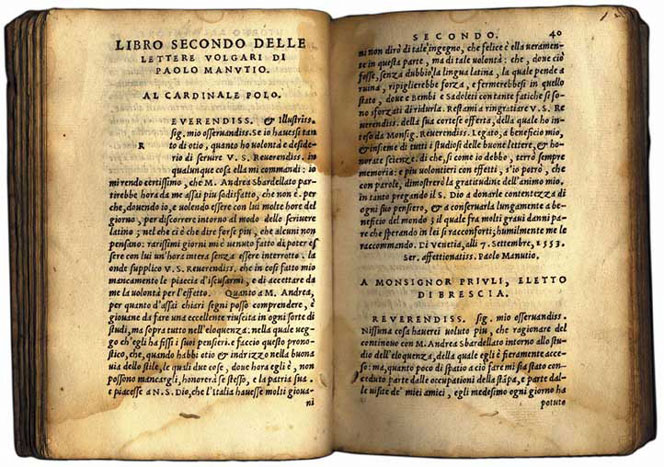
aldus manutius bookThe recent exhibition at the Grolier Club in Manhattan, “Aldus Manutius: A Legacy More Lasting Than Bronze” reminded me that the pocket-sized book was invented some five hundred years ago.

The pocket book revolutionized not only how we read but who and what we read.

In a recent talk I gave to the Editors Association of Canada about the changing face of publishing, I defined two milestones in the publishing industry.

First Milestone…

The first milestone came in two stages, beginning with the invention of the printing press by Johannes Guttenburg in 1452. Up to then,

…Books were a work of art… And part of an elite. Delicate, large and beautiful, they were created in the language of the church—Latin—and in turn copied entirely by hand by the monks. With the dimensions of a current newspaper, but much thicker, these large illuminated manuscripts sometimes weighed more than 50 pounds.

Readers were mostly scholars and the religious elite. In fact, reading was an elite occupation. The majority of people at the time couldn’t read and had no interest in books. Besides, books were not written in the commonly spoken language of the countryside such as English, French, German or Spanish.

In fact, the presses formed the very basis of the artistic Renaissance, the religious reformations and the scientific revolution, wrote Elizabeth Eisenstein in The Printing Press as an Agent of Change. “The printing press allowed the spread of information that couldn’t be controlled by the clergy, kings, politicians, or the religious elite,” adds New York Times technology reporter Nick Bilton in I Live in the Future and Here’s How It Works. Storytelling was no longer confined to an elite clergy; books could be created by anyone and shared in the spoken languages of the people.

The printing press had opened a gate of opportunity for secular expression to a greater audience. Whenever an opportunity is created, a corresponding need is identified. The need to connect a literate lay public with scholars and storytellers was resolved fifty years later by Aldus Manutius.

Until then, books, albeit printed in the language of the people, remained large, heavy and cumbersome. In 1502, Aldus Manutius invented the portable pocketsize book—the small format libelli portatiles (portable little books)—effectively creating “the mobile phone of his day,” according to Bilton.

Bound in vellum, these long, narrow libelli portatiles, easily transported in a pocket or a satchel, “could be held in the hand and learned by heart by everyone,” wrote Manutius. aldine press book

Manutius founded The Aldine Press in 1495 in Venice. His printing company proudly bore the logo of dolphin entwining an anchor—taken from the term festina lente (hasten slowly), a motto Manutius took from a Roman coin—and Aldine books quickly gained a reputation for their clean design, excellence in typography and inexpensive and accessible price. The Aldine press emphasized Greek and Latin lexicons and grammar manuals, with the first printed edition of Aristotle in 1495. Manutius was also the first to print Thucydides, Herodotus, Sophocles and other Greek philosophers. “He was possibly the first printer to compare manuscripts to arrive at the most reliable text,” adds Jennifer Schuessler of the New York Times (February 27, 2015).

Manutius was the first to use italic type, mimicking the handwriting of that time, and the first to use the semicolon in its modern sense. In 1501, Manutius released Virgil’s Opera as the first of his octavo editions of the classics and the first book to use italic print. It was produced in higher-than-normal print runs (1,000 rather than the usual 200 to 500 copies).

The octavo format book is created from one or more full sheets of paper on which 16 pages of text are printed; the sheet is folded three times to produce eight leaves. Each leaf of an octavo book represents one-eighth the size of the original sheet. The actual size of the book depends on the original size of the full sheet of paper on which it is printed. These varied according to place and time. A sixteenth century octavo printed in France or Italy was about the size of a modern paperback; an eighteenth-century octavo printed in England was larger, about the size of a modern hardcover novel.

Second Milestone…

The second milestone I talked about is, of course, the worldwide use of the Internet. Like the Guttenberg printing press, the Internet and associated World Wide Web has created a gate of opportunity that has identified a need. That need is currently being satisfied by ebook publishing, mobile phone communication and the Indie/self-publishing model.

In my September 6, 2014 article “How We Will Tell Stories in the Future” I describe the effect of the Internet and use of digital devices as agents of change and empowerment in storytelling and publishing.

The first email was delivered in 1971 and in 1989 Cern gave us the WorldWide Web. The Internet wasn’t commercialized until 1995. The first web log (blog) was published in the late 1990s and Facebook was launched in 2004. A few years later smart communication devices were created and mass marketed with multi-touch interface (e.g., the iPhone). By 2013, over 2 billion people were using the Internet and social media via computer, smartphones, tablets, game consoles, e-readers and music players. Over 156 million blogs were identified and over 1 billion files were uploaded daily to Dropbox.

While many people still read books and go to the cinema, watch pre-programmed TV or rent DVDs, many more enjoy their stories through other devices: computers, downloads, mobile phones and e-readers that provide material through other media and venues such as Indie and self-publishing, amateur YouTube videos, interactive games and social networks. We stand poised on the edge of a wonderful cliff that celebrates the expression — and consumer choice — of the individual. The music industry shows this the best, where people dismissed the prepackaged albums and CDs and opted to create their own unique playlists through individual song downloads. The publishing industry is currently struggling with its own painful yet thrilling metamorphosis as is the visual arts industry. In fact, they are all blurring into one large integrated amalgam of artistic expression.

The information you get today is coming “more and more through your friends and through your social network. It’s being distributed through channels of trust and the trust isn’t necessarily the BBCor The New York Times. It’s people,” says B.J. Fogg founder of the Persuasive Technology Lab at Stanford University.

WardIsland wall in forest

Ward Island, Ontario (photo by Nina Munteanu)

During the days of packaged content, leading storytellers were published authors, journalists and writers of newspapers and magazines. “Now distribution channels matter less and anyone with an appropriate device can be a storyteller,” says Bilton, who shares that on the Internet we tend to follow individuals we trust (e.g., Clive Thompson or David Carr) as much if not more than established organizations (like Wired Magazine or The New York Times). Accessible technology, platforms, free applications and software has totally enabled the individual.  No longer confined to the written word via paper books or visual expression through movies or TV shows, storytelling has embraced many forms. Amateur and professional have equally blurred.

From paperbacks to digital phones and tablets, we are embracing the shifting zeitgeist of an entire world. The future belongs to the storyteller, from pocketbook to tablet. What’s next?


nina-2014aaNina Munteanu is an ecologist and internationally published author of award-nominated speculative novels, short stories and non-fiction. She is co-editor of Europa SF and currently teaches writing courses at George Brown College and the University of Toronto. Visit www.ninamunteanu.ca for the latest on her books.

Who’s Your Audience and Why Should You Care?


Beaches-snow06

Winter in The Beach (photo by Nina Munteanu)

The artistic process, whether painting or prose, is admittedly the child of self-expression. The long-standing image of the cloistered artist in her studio — hunched over her writing desk or standing before her canvas to create from the depths of her soul — is surely a truism. Artists create from the heart; we dive deep inside our often tortured souls and closeted past to draw out the universal metaphors that speak to humanity and share—

Ay, there’s the rub. For to share is to have a dialogue and to have a meaningful dialogue is to demonstrate consideration of the other. Somewhere in that journey that began with self, others entered. It is, in fact, something of a paradox and a conundrum for many artists. One that has challenged the artistic community for centuries. It is also why many artists have relied on agents, benefactors, and advocates to effectively communicate, target — and even interpret — their often abstruse “message” to their appropriate audiences.

Purists will tell you that a true artist need not consider her audience; because her self-expression naturally finds relevance with the culture and zeitgeist from which she writes through universally understood metaphor: her story is their story.

But is that enough?

I suppose it finally comes back to whether you are interested in sharing. I don’t know any published authors who don’t wish their books to sell. Every storyteller needs an audience to connect with and engage. That is ultimately what good storytelling does: engage, connect, rouse emotions and evoke empathic feelings. Make an impact.

Beaches-snow03

Photo N. Munteanu

Does identifying and targeting a specific audience result in more satisfied readers and ultimately better sales? Of course it does. The more you—and whoever is helping you market your work—know about your audience, the more likely you are going to attract them to your book, convince them to buy it and ultimately connect with them. That’s the irony of art: it is a treasure that is created out of the depths of solitude but ultimately brought into the light and shared with the world. For your art to have impact, you must know and understand your world.

Knowing your audience will affect every aspect of your book project. It will help determine:

  • What your story is about and how you write it (from language, voice or personality, narrative style, tone or mood/attitude, characters, setting and theme)
  • What genre it lies under
  • the look and tone of the cover and blurb
  • all aspects of promotion

For instance, who are your intended readers? To what age group to they belong? What culture and sub-culture? What gender(s)? What education and intellectual capacity? Economic status? What regions? What political leanings? Prejudices and beliefs? What knowledge-base?

To know your audience is to know your story better.


nina-2014aaNina Munteanu is an ecologist and internationally published author of award-nominated speculative novels, short stories and non-fiction. She is co-editor of Europa SF and currently teaches writing courses at George Brown College and the University of Toronto. Visit www.ninamunteanu.ca for the latest on her books.


Nina Talks to EAC About the Changing Face of Publishing

In January 2014, I gave a talk to the Editor’s Association of Canada (EAC) on the changing face of publishing and what it means for editors and writers. Editors learned about self-publishing and indie publishing, publishing myths, and where to find new editing opportunities.


nina-2014aaNina Munteanu is an ecologist and internationally published author of award-nominated speculative novels, short stories and non-fiction. She is co-editor of Europa SF and currently teaches writing courses at George Brown College and the University of Toronto. Visit www.ninamunteanu.ca for the latest on her books.

Rejection, Part 2: The Evolution of Rejection

hirtle beachNS

Pebbles on Hirtle Beach, NS (photo by Nina Munteanu)

Enduring and surviving rejection is part of every writer’s successful career. Rejection letters can be part of a writer’s toolkit to success. This comes from objectively perceiving them as opportunities in a long process of relationship-building and the business of writing and publishing.

Writers often witness an evolution in rejection letters as they learn more about their craft and about their markets. The ability to recognize the evolutionary steps can be useful in determining your next move in that particular market.

Below I describe one sequence of a manuscript’s evolutionary path. These don’t necessarily follow a chronological path for any particular manuscript; nor am I suggesting that your personal writer’s path will follow this particular pattern. Take these for what they may represent to you for any particular manuscript’s journey to success.

  • Lowest form: the form-letter, with no name or signature—you get no information from this except that they’re probably swamped with submissions. File the letter and try them again with another story; you can even play a game of it to see how many submissions it takes to get “recognized”. Meantime send the rejected story elsewhere.
  • Next lowest form: Personalized form letter with your name on it and a name and signature on it. Congratulations! You are now a person. And you will likely be remembered when you submit another story here.
  • Higher on the Evolutionary Path: a form letter that includes a personalized note about your work and why it was rejected (often with an added comment about the story or your writing). You have made a mark. Try them again!
  • Even Higher on the Evolutionary Path: a personalized letter that explains why your story was rejected—this says as much about the editor as it does about how they felt about your story; that they are taking the time to write to you and give you suggests means you are worth their valuable time. You have an opportunity to begin a relationship with this editor. Play fair.
  • Highest on the Path: a personalized, perhaps even handwritten, note that specifies why they rejected your piece with suggestions for revision (and resubmission) or invitation to submit another piece. Congratulations! This is the beginning of a relationship. Revise and resubmit.

What Rejection Letters Look Like 

As I’ve already mentioned, I’ve received a lot of rejection letters in the many years of my writing career. They’ve ranged from the short card form letter with no signature to the handwritten, per-sonalized letter with inviting comments.

Zeotrope-rejectionRejection letters will vary as much as the magazine and book market varies. The larger, busier companies that receive many more submissions over a given time period are more likely to go with the form letter. I’ve heard some agents and edit-ors go this route simply because it is safer for them. One magazine editor lamented to me not long ago that after she had provided a writer whose work she’d rejected with sev-eral paragraphs of explanation, the said writer had responded with an irascible diatribe of her skills as an editor.

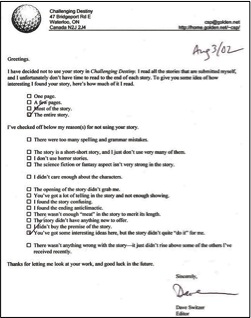
Take heart: receiving a form letter like the one above from Zoetrope is very common, particularly from a large publisher. And take it for what it is, a letter that gives you very little infor-mation other than they rejected your story. File the letter and send the story elsewhere. challening destiny-rejection

Some publishers and agents use a checklist, which can provide you with very good feedback (see example below from Challenging Destiny for my short story, Arc of Time which found a home in several places after this rejection).

The next letter that rejected my short story Angel of Chaos (which later turned into Butterfly in Peking) provided enough insight to why they didn’t choose it that I could have gone one of two ways: 1) I could have left the story as it was and submitted elsewhere; or 2) I could have emailed them with a suggestion that I’d be willing to revise if they would reconsider a revision according to their specifications. I’ve done this in the past and published. This time I decided not to because I liked the story the way it was. space & time rejection

One magazine I submitted to gives your story to two independent readers whose comments they include along with their rejection or acceptance. This is great feedback for you! What I found frus-tratingly amusing was that the accolades of the reviewers didn’t guarantee the acceptance of my story. While my story Arc of Time generated very positive comments from both reviewers, the magazine still decided against publishing and the rejection letter gave no reason (see reviewer’s comments below):

Reviewer #1:I love the way this story is set up, switching back and forth from the different points of view. The “trippiness” is very appealing and works well with the modern/fantastical contrast.”

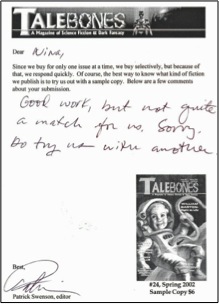
Reviewer #2:This was an intriguing and extraordinary clever story. I didn’t have a clue about the jape at the end until I got to the last page. And then it unfolded beautifully. The theological tie-ins were smart and fun and showed either some Mormon extrapolative thought or extreme knowledge of Biblical lore.” talebones rejection

You’d have thought, eh? But they rejected anyway. Below is an example of a form letter with a handwritten comment added along with signature and an invite to try them again. When this happens, by all means, try them again!

Make Rejection Work for You

One way to see your way through rejection is to find ways to distance yourself from your story once you’ve sent it off and to see the whole process of submission-rejection-acceptance as a business. The very best way to do this is to submit lots of stories and to keep submitting them. With novels, this is a little harder to do but you can certainly be working on the next one once you’ve submitted the first.

When I was writing short stories, I kept a list of what and where I sub-mitted, along with the most important item: where to submit NEXT. At any given time, I made sure that I had at least x-number of submissions out there and each story had a designated place to go if it returned. As soon as a story came back from magazine A, I simply re-packaged it and sent it to magazine B. The critical part of the list was to have a contingency for each story: the next place where I would send the story once it returned. I was planning on the story being rejected with the hope that it would be accepted; that way, a rejection became part of a story’s journey rather than a final comment.

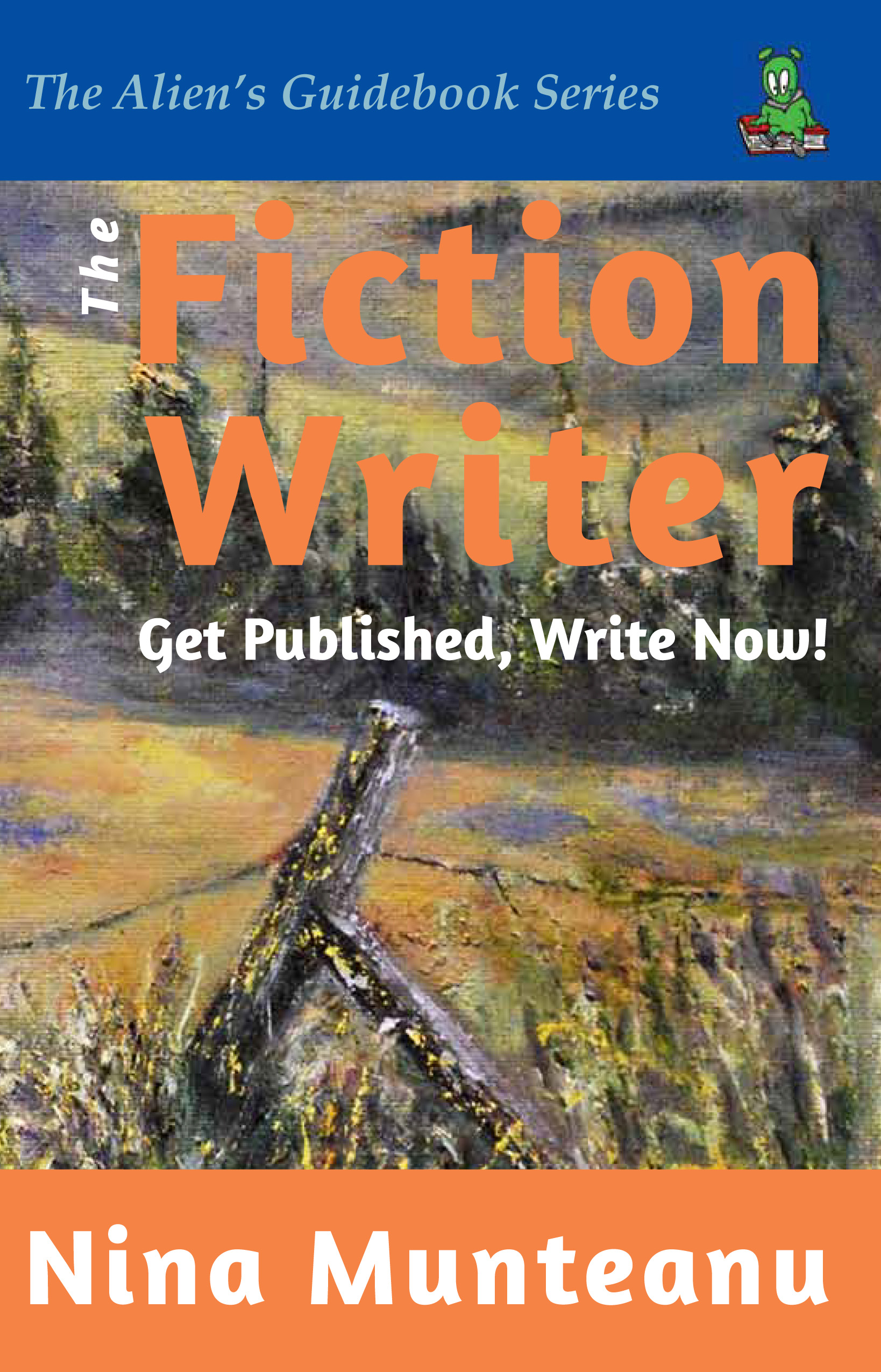
FictionWriter-front cover-2nd ed-webI ran my submissions like a bus terminal. A story was in and out so fast it never had a chance to cool off. And, since I had five other pieces out there, I could do this with little emotion. I was running a fast-paced “story depot”, after all. All my stories had to be out there as soon as possible; if they were sitting in the terminal, they were doing nothing for me. Now, ask me if this worked. D*** right! Soon after adopting this process, I started selling. I think several things were happening and galvanizing into sales: publishers were getting to know me; I got more and more familiar with the market and my professionalism paid off.


This article is an excerpt from Chapter R of The Fiction Writer: Get Published, Write Now! (Starfire, 2009).


nina-2014aaNina Munteanu is an ecologist and internationally published author of award-nominated speculative novels, short stories and non-fiction. She is co-editor of Europa SF and currently teaches writing courses at George Brown College and the University of Toronto. Visit www.ninamunteanu.ca for the latest on her books.


Lessons from a Linguist, Part 1: Steven Pinker on Reverse Engineering

college-window-UoT

Window of University College, UofT (photo by Nina Munteanu)

When I’m not teaching students how to write science fiction, or giving workshops on writing craft or marketing, I am teaching design engineers how to write clearly and convincingly. As Communications Instructor at the University of Toronto in the Faculty of Applied Science and Engineering, I help young engineers navigate the dark and churning waters of fluent and meaningful English.

So, when fellow Montrealer, Steven Pinker starts Chapter 1 of his book The Sense of Style, talking about “reverse engineering”—one of the key features in the design engineering toolkit—I perk up.

Good writing, says Pinker, begins with “reverse-engineering good prose as the key to developing a writerly ear.”

I’d recently picked up Steven Pinker’s new book The Sense of Style: the thinking person’s guide to writing in the 21st century after I watched several of his videos on language, and communicating science and technology.

Pinker starts Chapter 1 of the book with this quote from Oscar Wilde: “Education is an admirable thing, but it is well to remember from time to time that nothing that is worth knowing can be taught.” When Pinker asked several accomplished writers about which style manuals they had consulted early in their careers, the most common answer he got was “none”. Writing, they said, just came naturally to them.

“I’d be the last to doubt that good writers are blessed with an innate dose of fluency with syntax and memory for words,” says Pinker. “But no one is born with skills in English composition per se. Those skills may not have come from stylebooks, but they must have come from somewhere. That somewhere is the writing of other writers.”

Which is why successful authors like Neil Gaimen tell aspiring writers to “read a lot.” Read the best authors. The classics. Authors in your genre; authors of other genres. Authors of other cultures and time periods. Read. Read. Read. My previous article on reading fiction is particularly germane here.

The first thing you need to do is develop a writer’s ear. “Writers acquire their technique by spotting, savoring, and reverse-engineering examples of good prose,” says Pinker. He goes on to demonstrate this in his book Sense of Style by deconstructing several examples of good prose and providing great lessons on what great prose looks like and why.

So, why do we need style guides at all, then? Particularly given that, in Pinker’s own admission, “much advice on style is stern and censorious,” and a writer needn’t approach learning the craft like a treacherous obstacle course to be suffered and endured. Mastering the craft of writing is a lifelong pursuit and ultimately best approached with the passion that hopefully drives the writer to express. “Though the quest for improvement may be informed by lessons and honed by practice,” says Pinker, “it must first be kindled by a delight in the best work of the masters and a desire to approach their excellence.”

Pinker adds, rather pithily, that, “The classic manuals written by starchy Englishmen and rock-ribbed Yankees, try to take all the fun out of writing, grimly adjuring the writer to avoid offbeat words, figures of speech, and playful alliteration. A famous piece of advice from this school crosses the line from the grim to the infanticidal: ‘Whenever you feel an impulse to perpetrate a piece of exceptionally fine writing, obey it—wholeheartedly—and delete it before sending your manuscript to press. Murder your darlings.’”

Many style manuals, Pinker admits, “treat traditional rules of usage the way fundamentalists treat the Ten Commandments: as unerring laws chiseled in sapphire for mortals to obey or risk eternal damnation.” Language, he says, evolves and is meant to evolve over time. He adds that, “the graybeard sensibilities of the style mavens come not just from an under-appreciation of the fact of language change but from a lack of reflection on their own psychology. As people age, they confuse changes in themselves with changes in the world, and changes in the world with moral decline—the illusion of the good old days. And so every generation believes that the kids today are degrading the language and taking civilization down with it.”

So, why use a style guide if you’re reading a lot and taking in the best from the best? While Pinker no doubt sprinkles many reasons throughout his style manual (I haven’t finished reading it), here are two of mine:

  1. Once you are on that path toward writing the very best you can, a style guide can help you improve your writing faster by helping you understand why you like a particular “style” used by a favorite master writer and how it is applied. Simply liking isn’t enough; it’s the first step. Mastering it and using it in your own voice only comes with understanding it. I, for one, learn and retain better when I understand why something works for me. My ability to apply that “style” correctly increases markedly when I understand the rules associated with it (whether that particular “style” was in fact following or breaking a particular rule).
  2. The style guide also helps the novice writer ultimately find their own voice, and move out from the shadow of their beloved master and their techniques. It does this by providing a toolkit that applies can then apply objectively to any voice, making it easier for a writer to discover her own unique voice.


Of course, there are—as Pinker already pointed out—style guides and STYLE GUIDES. I’ve included a list below of a few I like to use and why.


The Chicago Manual of Style. 2010. 16th Ed. University of Chicago Press.1026pp: a comprehensive, easily navigated style guide that is relevant, current and clearly presented, with examples and discussions on a wide range of writing from essays, to fiction. A go-to “bible” for writers and editors.

Strunk, William Jr. and E.B. White. 1918. Elements of Style. Harcourt. 52pp:Even though it’s really OLD, and contains some outmoded notions and prescriptions, this manual is entertaining, smart and still very relevant in many cases. Compared with the Chicago Manual of Style, it’s pint-sized and therefore highly mobile.

Pinker, Steven. 2014. The Sense of Style. Viking. 359pp: called “the thinking person’s guide to writing in the 21st Century, it is full of excellent advice, written with a engaging flare and with relevant examples, that speak to process. Read it more for narrative rather than reference.

Munteanu, Nina. 2009. The Fiction Writer: Get Published, Write Now! Starfire. 264pp: FictionWriter-front cover-2nd ed-webnot just because it’s MY book, but because it’s FUN and contains the advice of over thirty experts in the craft of writing, including style and grammar. It’s easy to read and easy to learn with relevant examples and exercises. This book is more of a writing-storytelling guide than strictly a style guide.


nina-2014aaNina Munteanu is an ecologist and internationally published author of award-nominated speculative novels, short stories and non-fiction. She is co-editor of Europa SF and currently teaches writing courses at George Brown College and the University of Toronto. Visit www.ninamunteanu.ca for the latest on her books.


Should You Judge a Book by its Cover?

NaturalSelection-frontHRMost readers—me included—will pick a book off the bookstore shelf because its cover interests us: the title intrigues; the cover illustration attracts; the author’s name is one we trust.

If you don’t know the author of the book, the nature—and implied promise—of the cover becomes even more important.

If the book does not deliver on the promise of the cover, it will fail with many readers despite its intrinsic value. A broken promise is still a broken promise. I say cover, not necessarily the back jacket blurb, because the front cover is our first and most potent introduction to the quality of the story inside. How many of us have picked up a book, intrigued by its alluring front cover, read the blurb that seemed to resonate with the title and image, then upon reading our cherished purchase been disillusioned with the story and decided we disliked it and its author?

This is because, as readers, from the moment we pick up a book, we engage in a covenant with the story’s author (but in actual fact with the entire publishing company) for a story whose promise we have interpreted from its cover image, title and blurb. It begins with the cover. A book’s cover is its sales pitch: “This is what I’m about!” the cover proclaims in shades of color and texture. The cover sets the tone and attitude with which a reader will interpret the book’s title and back jacket blurb and its interior.

It had better be true.

Front Cover ONLY-webLet me tell you a story…

Some time ago, a writer colleague of mine secured a New York agent—based on her excellent query and synopsis—for her imaginative dragon fantasy. The agent pitched the book to a large publishing company, who made my friend an offer, and the agent secured a three book deal on her behalf. My writing friend’s career as a published author was launched.

Because the publishing company was one of the large firms, my friend’s ability to participate—never mind influence—the cover design and blurb was restricted. Decisions lay in the hands of the people in the marketing department, who may or may not have read the book (most likely not). This is why it is so important to write a blurb/query/pitch that both scintillates AND accurately portrays the story. All too often, the marketing department misrepresents the story (to sell more books) and you end up with an unsatisfied reader. This is what happened to my friend. Through no fault of hers, the marketing people developed a cover that did not reflect the true nature of her story. The trilogy my friend had developed was a dark tale of deceit, betrayal and suffering. The cover portrayed a lively and sultry seductress, draped with flowing robes and bared thighs against her dragon; hardly the ponderous story shrouded within. The blurb at the back was sufficiently vague to aid and abet the deception.

What followed the book’s launch and accompanying ad campaign was a barrage of bad reviews and censure, unfortunately aimed mostly at the author. It was unfortunate that my friend suffered the brunt of the accusations for breaking her promise to the readers, when she had done no such thing; her publisher and marketers had created false expectations. And now she was paying for it.

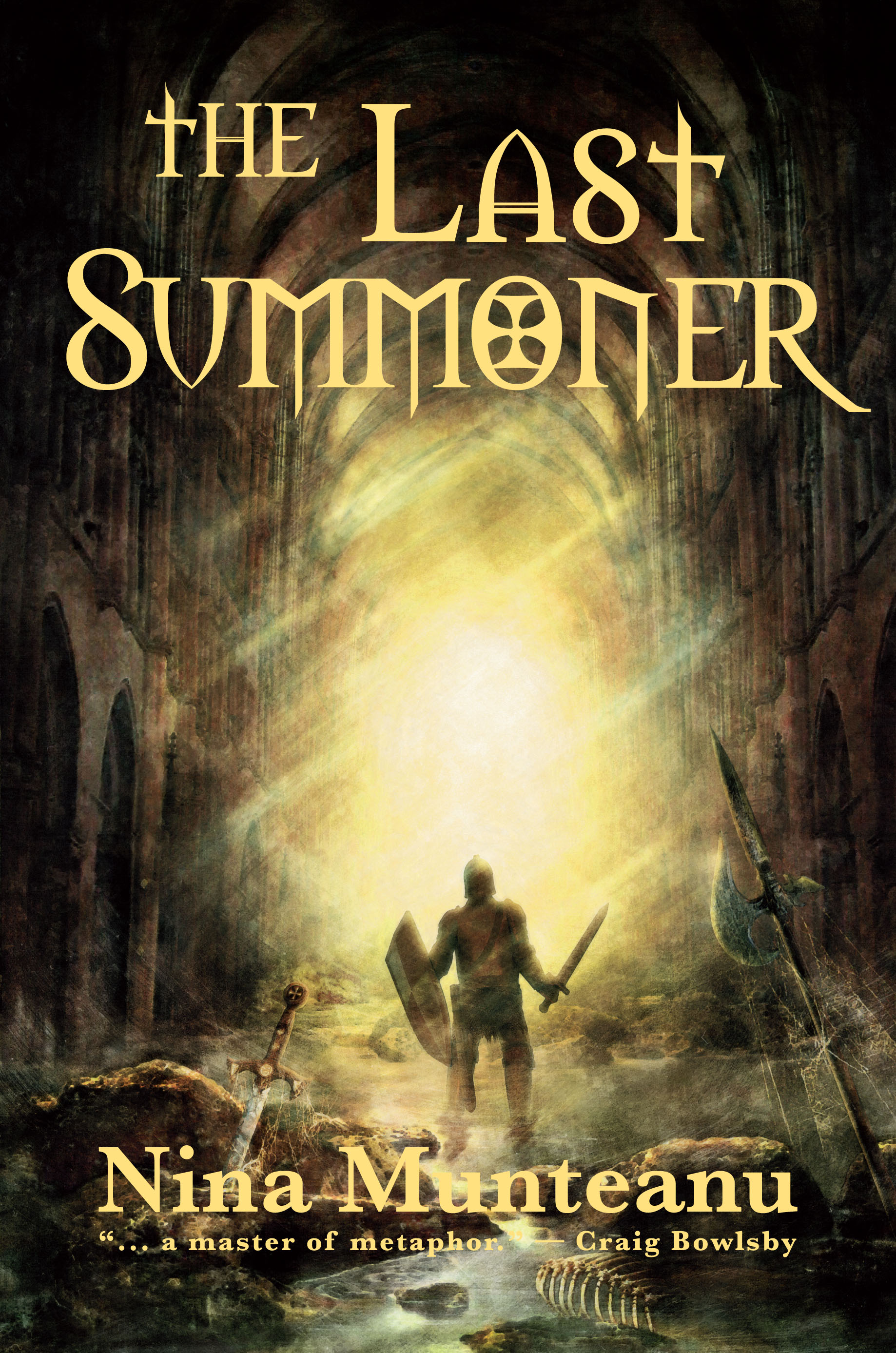
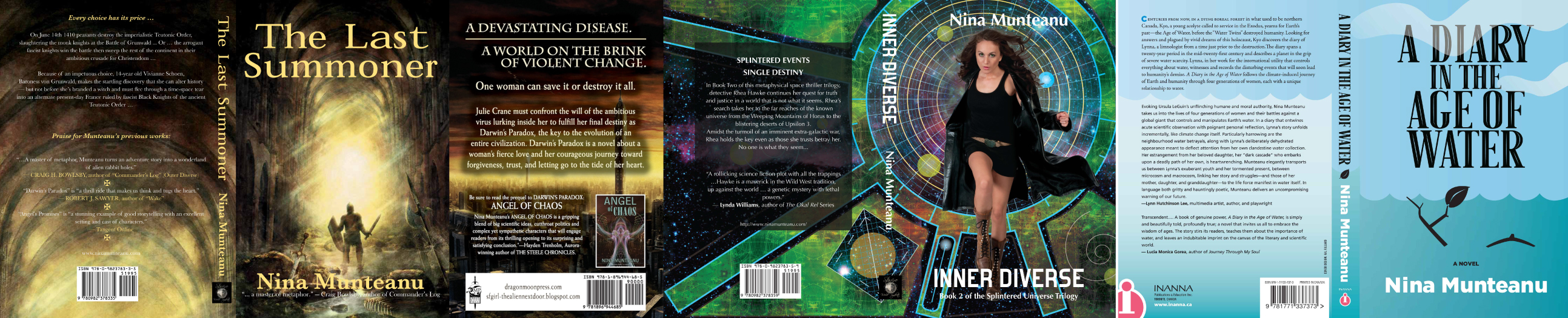
Cover1_LastSummoner-frontcoverI, too, experienced the effects of mis-marketing. I’d written a dark science fiction romance that ended with resolution but was far from the traditional happy ending, typical of a romance. The publisher marketed it as a romance with science fiction elements instead of a science fiction with romance elements. Reviewers applauded it but it bombed with romance readers, who expected a different kind of resolution. Science fiction readers, however, enjoyed it; they didn’t have the same expectations.


The take home lesson for writers is this: write a scintillating but accurate synopsis, blurb, pitch and query that clearly establishes your genre and audience. Chances are your publishers will use it in their marketing department. If you don’t get in with the “Big Boys”, and decide to go with the small presses, chances are very good that you will have more control over marketing and cover design; that is a big bonus. If you are like me, creative control of your intellectual property is more important than the big bucks you get at the expense of your art. Don’t give in to the temptations of wolf-marketing.

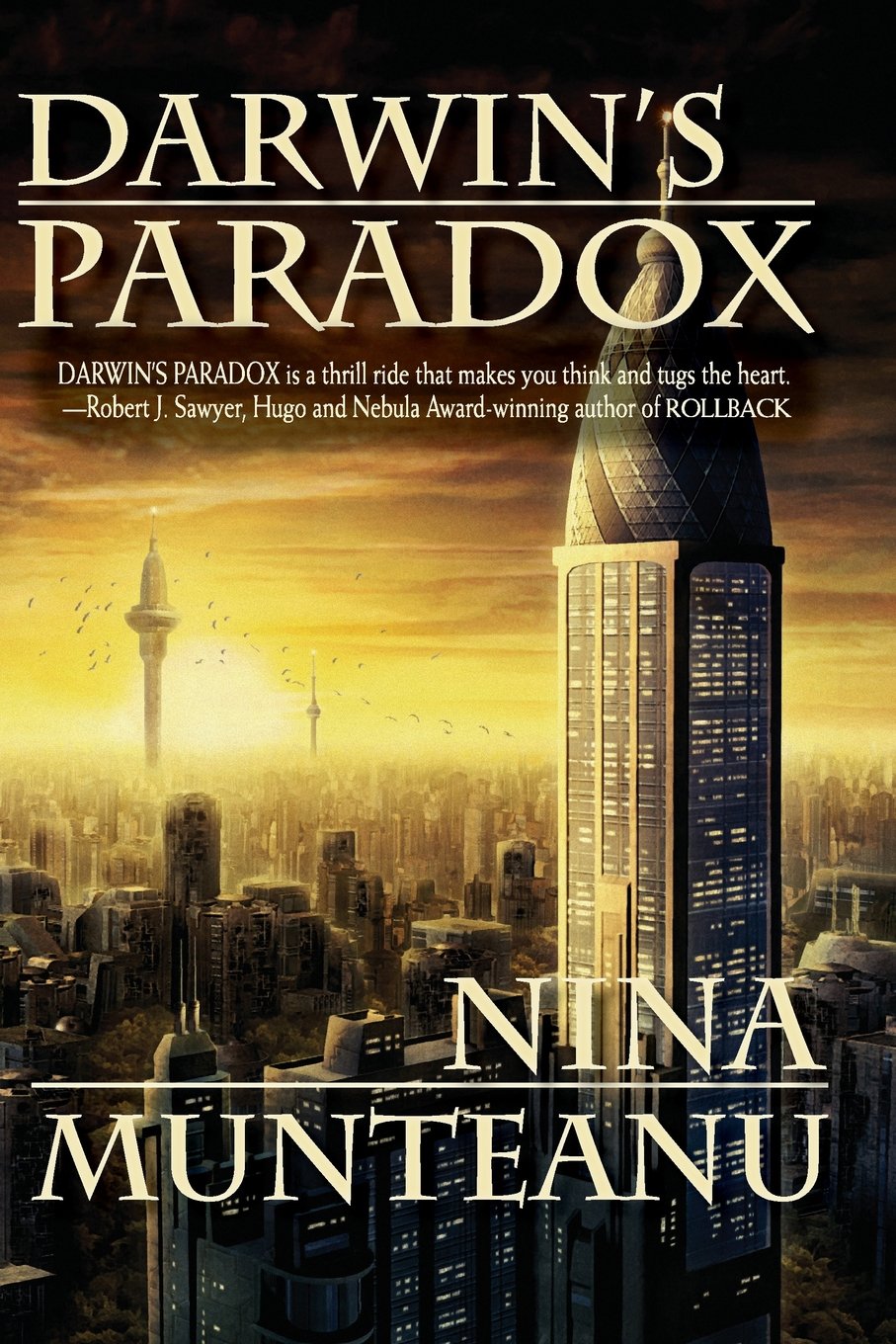
I’m still learning that lesson.Darwins Paradox-2nd cover

The take home lesson for readers is this: don’t judge a book by its cover; certainly pick up the book if it looks interesting, then read with an open mind and let the story take you to where it needs to, despite what you may have expected from the false advertising. Chances are, the unexpected journey visited upon you may be a welcome surprise. And don’t blame the writer for something he didn’t have control over.

I’m still learning that lesson too.


Nina Munteanu is an ecologist and internationally published author of award-nominated speculative novels, short stories and non-fiction. She is co-editor of Europa SF and currently teaches writing courses at George Brown College and the University of Toronto. Visit www.ninamunteanu.ca for the latest on her books.


Why Reading Fiction is Smart — Especially if You Write

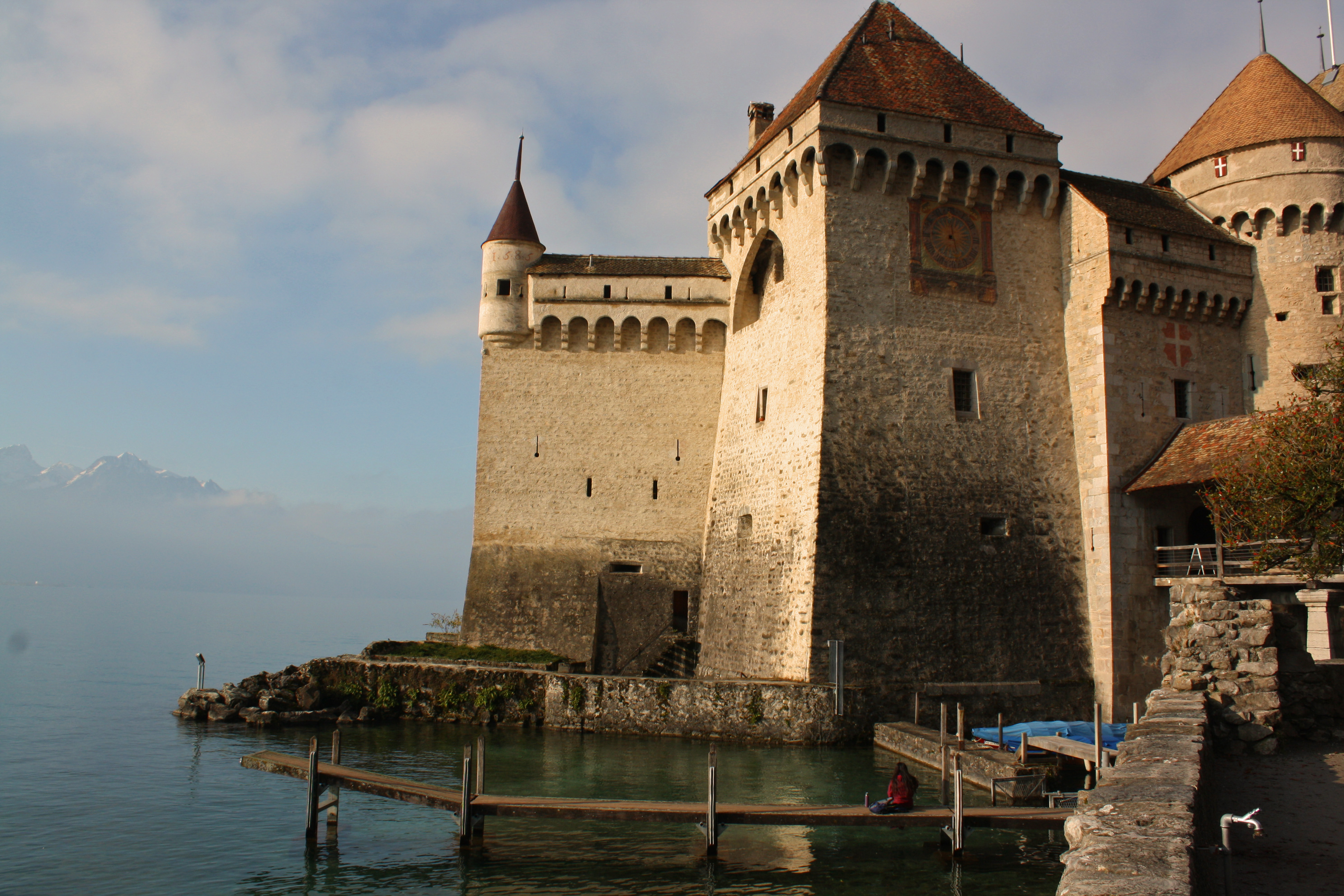
chillon-inner courtyard

Courtyard of Chateau Chillon, Switzerland (photo by Nina Munteanu)

When a friend of mine asked me recently what book changed my life, I didn’t have to think too far. Two books came to mind instantly, both novels: Martian Chronicles by Ray Bradbury and Far from the Madding Crowd by Thomas Hardy. Two very different books, genres, time periods and subject matter. Yet they held in common superlative storytelling, incredible sensuality, and stirring use of metaphor. Bradbury’s simple yet powerful prose held humanity’s most vulnerable traits at close scrutiny, stirring me with the stories of ordinary people journeying into extraordinary places. Hardy’s lyrical and evocative prose entranced me with stories of extraordinary people journeying in ordinary places.

Of course there were many other books and authors who’d influenced me greatly, but these two particularly made me want to be a writer and move people as they had moved me.

A recent discussion with one of my writing students got me thinking about the merits of reading—fiction, particularly—in the writing process and creative writing, especially.

Janice confided to me in an email that her husband prefers non-fiction and reads slowly, while her daughter reads both fiction and non-fiction voraciously and quickly.

chateau-chillon-lake-geneva

Chillon Castle, Switzerland (photo by Nina Munteanu)

“I think (and I could be wrong),” said Janice, “but the more fiction someone reads, the better they are able to communicate in a written form.” She suggested that, “Non-fiction does not have the breadth of style that fiction has, and thus the opportunities to find a style which adequately reflects the writer is somewhat curtailed if all they read is non-fiction. Style is a very personal thing and to have to write large swaths of material, the writer has to be comfortable in writing, thus if they find their ‘voice’ the information can be communicated in a manner which the writer does not find drudgery to write and best of all the reader will not find dry and difficult to read.”

It turns out that Janice’s keen observations and conclusions are corroborated by a fair amount of recent research. In their study a study entitled “Reading Literary Fiction Improves Theory of Mind” in the October 2013 issue of Science, researchers Kidd and Castano reported that reading literary fiction led to better performance on tests of affective and cognitive Theory of Mind compared with reading nonfiction, popular fiction or nothing at all. Theory of Mind (ToM) describes the ability to understand others’ mental states, a crucial skill in complex social relationships that characterize human societies.

Reading Fiction Improves Empathy

Neuroscientists at Emory University, led by Professor Gregory S. Berns, published findings in the December 2013 issue of the journal Brain Connectivity that suggested that reading a novel can improve brain function on a variety of levels. Reading fiction, reported Berns et al., improved the reader’s ability to empathize with others and “flex their imagination in a way that is similar to the visualization of a muscle memory in sports,” says Christopher Bergland in a recent article in Psychology Today.

“Changes caused by reading a novel are registered in the left temporal cortex,” says Bergland. That’s an area of the brain associated with receptivity for language. It’s also the primary sensorimotor region of the brain. “Neurons of this region have been associated with tricking the mind into thinking it is doing something it is not, a phenomenon known as embodies cognition.” Bergland suggests that just thinking about playing basketball can activate the neurons associated with the physical act of playing.

The neural changes suggested that “reading a novel can transport you into the body of the protagonist,” says Berns, who is director of Emory University’s Center for Neuropolicy in Atlanta. “Stories shape our lives and in some cases help define a person,” adds Berns. “We want to understand how stories get into your brain and what they do to it.”

nina-workshop 2

Nina Munteanu lectures in class

Storytelling in novels is a multi-faceted communication that engages a broad range of brain regions. I spend an entire 12-week course at George Brown College and the Universtiy of Toronto workshopping the story tools of an effective writer with my students; tools ranging from the use of metaphor to multi-layered plotting and character archetypes. Story—unlike anecdote, which many mistake for story—resonates with readers in a variety of conscious and sub-conscious ways. Neurobiological research has just begun to identify the brain networks that are activated when processing stories.

The Emory study used a 2003 thriller by Robert Harris (Pompeii), which follows a protagonist rushing against time to save the love of his life. Researchers chose the book for its page-turning plot. “It depicts true events in a fictional and dramatic way,” Bern says. “It was important to us that the book had a strong narrative line.”

Using functional magnetic resonance imaging (fMRI) scans on a group of students before and after reading a portion of the Harris novel, the Emory researchers demonstrated heightened connectivity in student’s brains. Areas of enhanced connectivity included students’ left temporal cortex, associated with language comprehension, and the central sulcus, associated with sensations and movement.

“The anterior (front) bank of the sulcus contains neurons that control movement of parts of the body,” Berns tells us. “The posterior (rear) bank contains neurons that receive sensory input from the parts of the body. Enhanced connectivity here was a surprise finding, but it implies that, perhaps, the act of reading puts the reader in the body of the protagonist.”

“The ability to put yourself in someone else’s shoes through embodied cognition is key to improving theory of mind and also the ability to be compassionate,” says Bergland in his article in Psychology Today. He adds, “Although this study does not directly draw these conclusions, it seems like common sense that if we encourage our children to read—as opposed to tuning out through television—theory of mind and the ability to be compassionate to another person’s suffering will improve.”

“We already knew that good stories can put you in someone else’s shoes in a figurative sense,” says Berns. “Now we’re seeing that something may also be happening biologically.”

The Berns study concluded, “At a minimum, we can say that reading stories—especially those with strong narrative arcs—reconfigures brain networks for at least a few days. It shows how stories can stay with us. This may have profound implications for children and the role of reading in shaping their brains.”

Reading Sharpens Your Brain

In her paper What Reading Does for the Mind, Berkley professor Anne E. Cunningham tells us that those that read generally have higher GPA’s, higher intelligence, and general knowledge than those that don’t. Her study also suggested that reading improves vocabulary and helps compensate for the normally deleterious effects of aging.

Cunningham’s studies demonstrated that reading boosted analytical thinking. This includes the ability to detect patterns more quickly. When I started to read more, my vocabulary increased tremendously. It also improved my spelling. Both of these are important to writers. As psycholinguist Steven Pinker pointed out in The Sense of Style, reading the works of writers you admire is an important way to becoming a better writer. Reading improves your memory. It also helps prioritize goals, by helping us to see another perspective and think “outside” our comfortable box.

Wilson et al. reported in the July 3 2013 issue of the journal Neurology that those who engaged in mentally stimulating activities (such as reading) earlier and later on in life experienced slower memory decline compared to those who didn’t. In particular, people who exercised their minds later in life had a 32 percent lower rate of mental decline compared to their peers with average mental activity.

Reading May Help Against Alzheimer’s Disease

According to research published in the journal Proceedings of the National Academy of Sciences in 2001, adults who engage in hobbies that involve the brain, like reading or puzzles, are less likely to have Alzheimer’s disease, while leisure limited to TV watching may increase the risk.

“The brain is an organ just like every other organ in the body. It ages in regard to how it is used,” lead author Dr. Robert P. Friedland told USA Today. “Just as physical activity strengthens the heart, muscles and bones, intellectual activity strengthens the brain against disease.”

Reading Reduces Stress and Helps You Sleep Better

That reading reduces stress and helps you sleep better is an intuitive notion recently corroborated by research at the University of Sussex. Findings by neuropsychologists, led by Dr. David Lewis show that reading a newspaper or book works better and faster than listening to music, going for a walk or sitting down with a cup of tea to calm stressed out nerves. Reading reduced stress levels by 68 per cent. Psychologists say this is because the human mind has to concentrate on reading and the distraction eases the tensions in muscles and the heart. Lewis and his team found that subjects only needed to read, silently, for six minutes to slow down the heart rate and ease tension in the muscles.

Dr Lewis said: “Losing yourself in a book is the ultimate relaxation. “This is more than merely a distraction but an active engaging of the imagination as the words on the printed page stimulate your creativity and cause you to enter what is essentially an altered state of consciousness.”

So, here’s my question to you: what book changed your life and why?


References:

Berns Gregory S., Blaine Kristina, Prietula Michael J., and Pye Brandon E. 2013. “Short-and Long-Term Effects of a Novel on Connectivity in the Brain.” Brain Connectivity 3(6): 590-600. doi:10.1089/brain.2013.0166.

Cunningham, Anne. E. 1998. “What Reading Does for the Mind.” In: American Educator/American Federation of Teachers. Spring/Summer,1998.

Kidd, David Comer and Emmanuele Castano. 2013. “Reading Literary Fiction Improves Theory of Mind.” Science 342 (6156): 377-380. October 2013.


Nina Munteanu is an ecologist and internationally published author of award-nominated speculative novels, short stories and non-fiction. She is co-editor of Europa SF and currently teaches writing courses at George Brown College and the University of Toronto. Visit www.ninamunteanu.ca for the latest on her books.


Why Writers Can’t Spell

scribeWhen I participated in those humiliating spelling bees in primary school, I was usually among the last chosen because I was a lousy speller. I grew up in an immigrant family where Romanian was the official language; I heard my parents speaking German in the house and lived in a French-Canadian neighbourhood. English was actually the fourth language I learned and only once I started going to school. It seemed that my facility with language came at some expense. My spelling sucked. It didn’t help that I was probably borderline ADD, dyslexic and allergic to reading.

Are you a lousy speller too? Well, take heart. You’re in excellent company. Samuel R. Delany is dyslexic. Thomas Jefferson, F. Scott Fitzgerald, Herman Melville, Woodrow Wilson and John Irving were all rotten spellers.

Grenadian SF/F writer, Tobias Buckell, author of Sly Mongoose, admitted that “homophones practically kill me, even the ones I know are wrong, b, d, g, and p are often swapped, as is, of course, 6 and 9.” He confesses that rewriting “is a painful, deliberate struggle” as he must pore over his work word by word.

So, why is it that some of us can just look at the word “preposterous” and spell it, while others can see it a thousand times and never get it right? Neuroscience has shown us that it’s in the brain. Recent studies using functional MRI analysis have not only begun to map the areas of the brain we use in reading and writing, they’ve shown how a neurological glitch in about 20 percent of people may make them chronically poor spellers. That’s me!

My particular weakness is the homonym. These are words that sound the same but are spelled differently (e.g., right and write). I’ve seen writers mix homonyms a lot in my workshops and manuscript critiques. Common ones include:


There, their, they’re Bare, bear
To, too, two Grate, great
Who’s, whose Here, hear
Reel, real Meet, meat
Deer, dear Heel, heal
Brake, break Council, counsel
Mantle, mantel Principle, principal
Which, witch Where, wear

Keep a dictionary by your side and consult it often. For those of you, like me, who spend most of your writing time in front of the computer with internet access, you may wish to bookmark the online Merriam-Webster dictionary, www.m-w.com.

If you are, like Tobias Buckell, particularly susceptible to self-correcting when you revise your work, then have someone you trust proofread for you.

And hope that they, unlike Tobias or me, are NOT susceptible to self-correcting!

References:

Munteanu, Nina. 2009. The Fiction Writer: Get Published, Write Now! Starfire World Syndicate. Louisville, KY. 266pp


Nina Munteanu is an ecologist and internationally published author of award-nominated speculative novels, short stories and non-fiction. She is co-editor of Europa SF and currently teaches writing courses at George Brown College and the University of Toronto. Visit www.ninamunteanu.ca for the latest on her books.


How to Hook Your Reader and Deliver

Beaches-snow03

Winter in The Beach (photo by Nina Munteanu)

A great story opening arouses, delays and rewards. Constructing a compelling beginning—often called a hook—is a common challenge for even established writers, and one of the most important parts of a story.

The opening should sweep the reader into the story like a tidal wave. It doesn’t need to be wild action. It just needs to compel the reader to want to know more. This is accomplished by engaging the reader with “intrigue”. In his article “Three Ways to Keep Your Readers Hooked” in the April 2001 issue of Writer’s Digest, Joe Cardillo suggested that the three elements of hooking a reader resemble the steps he uses to train his Samoyed puppy: 1) arouse interest; 2) delay, then 3) reward.

The writer arouses interest in the reader by providing enough detail to get the reader to ask questions. Now they want something. You tease them with the delay; that keeps them reading and turning the pages. It also gives them the chance to try to come up with the answers themselves. The reward comes in stages. Don’t answer all their questions at once. That’s what the book—the story—is for. The reward, parceled out in stages, lets the reader know that you can deliver and will ultimately provide them with a fulfilling story at the end. The beginning of your book sets up a covenant between you and the reader, a covenant for a journey you will take together toward resolution.

There is no beginning without an end. In her book The Sell Your Novel Tool Kit (Revised Edition, Perigee Trade, 2002) Elizabeth Lyon suggested that the beginning of a novel should “reflect the entire book. There should be a tie-in [between] the beginning and the end”. This is sometimes called “framing” a story, where the principal thematic problem is given in the beginning and then resolved in the end. In his book, A Story is a Promise (Blue Heron Publishing, 2000) Bill Johnson describes it as a promise to the reader.

Beaches-snow02

Toronto streetcar (photo by Nina Munteanu)

“Dramatic story-issues revolve around issues of human need,” says Johnson. “The need to be loved. To have control of one’s fate. To feel a sense of purpose. To be able to overcome obstacles. To be able to grow and heal from life’s wounds. To understand and make sense of the events of life.” He warns that “if you can’t name the issue at the heart of your story [the theme], it risks being unclear to your audience.” And this needs to be identified, at least intuitively for the reader, at the beginning of the story. You do this through intrigue in the beginning and pointing out through scene what is at stake or at issue in your story.

Additional things to consider in openings include:

  • Avoid starting your story at “the beginning”: instead, start mid-way, when something is already happening—preferably to someone important in your story and at the pivotal point when you provide the “story promise” pertinent to the theme.
  • Quell the urge to put in a lot of information about setting, character and situation: get things in motion first, then reveal here and there. Let the details unfold with the story like a flowing piece of artwork.
  • Trust your reader: novice writers have not yet gained the confidence to trust that they won’t lose the reader in the beginning if they don’t tell them everything right away. The key is to choose just enough to whet their appetite for more. And, yes, it is critical what you choose. What you choose should relate to your story’s theme and its story promise: the problem.

A great opening is a seductive tease, deliciously delivered; it promises an exotic ride that only you can fulfill.

This article is an excerpt from The Fiction Writer: Get Published, Write Now!

Recommended Reading:Beaches-snow01

  • Cardillo, Joe. 2001. “Three Ways to Keep Your Readers Hooked”. Writer’s Digest, April, 2001, volume 81, no. 4.
  • Johnson, Bill. 2000. A Story Is a Promise. Blue Heron Publishing. Portland, Oregon. 187pp.
  • Lyon, Elizabeth. 2002. The Sell Your Novel Took Kit. Revised Edition. Perigee Trade. 320pp.
  • Munteanu, Nina. 2009. The Fiction Writer: Get Published, Write Now! Starfire World Syndicate, Louisville, KY. 264pp.


Nina Munteanu is an ecologist and internationally published author of award-nominated speculative novels, short stories and non-fiction. She is co-editor of Europa SF and currently teaches writing courses at George Brown College and the University of Toronto. Visit www.ninamunteanu.ca for the latest on her books.

What Indie Authors Should Know…

zermatt-alps01-close

Zermatt, Switzerland (photo by Nina Munteanu)

As we enter a new year in writing and publishing, I thought I’d review some interesting statistics and observed trends over 2014 made by those poised well in the industry.

In July 2014, Publishers Weekly revealed some interesting statistics from various surveys and studies worth considering.

The article was based on two recent surveys: one by best selling indie author Hugh Howey; and the other by Mark Coker, founder of e-book distributor Smashwords.

Publishers Weekly cited Hugh Howey’s Author Earnings Report, in which he claimed that “the report comes to the conclusion that the indie movement in literature is not a blip and not a gold rush.” It is definitely here to stay, said Publishers Weekly. Here’s what they summarized:

  • The Big Five traditional publishers now account for only 16% of the e-books on Amazon’s bestseller lists.
  • Self-published books now represent 31% of e-book sales on Amazon’s Kindle Store.
  • Indie authors are earning nearly 40% of the e-book dollars going to authors.
  • Self-published authors are “dominating traditionally published authors” in sci-fi/fantasy, mystery/thriller, and romance genres but — and here is the surprise — they are also taking “significant market share in all genres.

Publishers Weekly contended that “what is clear is that strong indie sales will continue and indie books are now a significant and permanent part of the book publishing landscape.”

Coker’s survey revealed that the 99¢ ebook was no longer “the sweet spot” for e-book pricing. In his 2014 survey, Coker determined from aggregated retail and library sales data of Smashwords books, that:

  • $2.99 and $3.99 are currently the pricing sweet spots for most e-book bestsellers. In general, authors who price their books modestly earn more than those whose average price is higher, but 99¢ is “no longer the path to riches.”
  • Readers prefer longer e-books. In fact, bestselling books tend to be over 100,000 words.
  • Series books outsell stand alone books — but series books under 50,000 words are at a sales disadvantage.
  • “Free” still works as a marketing tool, especially when an author offers the first book in a series for free, but it is much less effective than before — primarily because so many authors are taking advantage of it.
  • Pre-orders give authors a sales advantage. “I think pre-orders today are where free was five years ago,” says Coker. “The first authors to effectively utilize pre-orders will gain the most advantage, just as the first authors to enter new distribution channels gain the most advantage,” he says.
  • Non-fiction earns more at higher prices. “Non-fiction buyers are less price sensitive,” says Coker. “It appears as if most non-fiction authors are underpricing their works, and they should experiment with higher prices,” he says.

Coker is quick to point out that this analysis is based on his own interpretation of the findings, and should only be used to provide authors with possible clues to help them make informed decisions about how to market their own unique books.

In an excellent article, summarizing 2014, award-winning author Kristine Kathryn Rusch summarizes what indie writers learned in 2014. She prefers to use the terms indie-writer and indie-publishing over self-publishing, “because so many writers who are not with traditional publishers have started their own presses. It’s not accurate to lump all writers who are not following the traditional route into the self-publishing basket any longer, if it ever was.” This is an interesting acknowledgement and considers a movement by established authors toward a different publishing model, including hybrid publishing.

Rusch’s rather pithy article suggests that writing and publishing “is hard”, no matter what model you use. She adds that if you don’t learn to love the business side of the industry, “self-publishing can be a soul-sucking experience.” Rusch is quick to add that business destroys the dreams of many writers. “If you don’t learn to love business, you’ll get destroyed in traditional publishing. It’ll just take ten years, where in self-publishing, it’ll take less time.”

Read her section entitled “Achieving Real Success is Hard” for an insightful and candid study of “success” in writing and publishing.

“We all measure success differently, and we should know what it is before we start publishing. But most writers don’t. Success is finishing a novel (check). Success is getting that novel published (check). Success is getting good reviews (check). Success is getting paid for that novel. (check) Success is making a living. (um, what?)”

Read Rusch’s section entitled “The Gold Rush is Over” for an excellent reality-check of the indie publishing industry.

“The days of slapping something up and making a lot of sales were gone by the end of 2010. But the rumors persisted and a lot of people got into indie publishing expecting to get rich…You are not entitled to fame and riches just because you published a book.”

In his blog post of November 2014, Mark Coker said:

“The gravy train of exponential sales growth is over. Indies have hit a brick wall and are scrambling to make sense of it. … Some authors are considering quitting. It’s heartbreaking to hear this, but I’m not surprised either. When authors hit hard times, sometimes the reasons to quit seem to outnumber the reasons to power on. Often these voices come from friends and family who admire our authorship but question the financial sensibility of it all.”

To Coker’s comment Rusch adds, “I’m pretty sure more writers quit than survived publishing in 2014, but that’s because more writers always quit than survive. As I said above, the entire profession is hard, and for those people who want to get by without working hard, this profession is not for them.”

Rusch sums up, again rather pithily, eight things indie writers learned (or should have learned) in 2014:

  1. Gaming the system is impossible: e.g., “every time we figure out how Amazon’s algorithm works, Amazon changes it”; “free doesn’t help me sell my books any more”; 99cents doesn’t help me sell my books any more”; “the tags are gone”; I can’t seem to get enough reviews”; “now when I post on social media, no one responds”—trying to milk the system doesn’t work for the writer because the system is geared for the customer, not the writer—and it’s always a step ahead of you…
  2. Amazon doesn’t love you: Kindle Unlimited? It isn’t about helping its writers; it is about helping its customers.
  3. No one loves you: writers are not entitled to have their books on a shelf, virtual or real.
  4. Your readers don’t even love you (all the time): “you don’t collect and hoard readers; readers can collect and hoard books. It doesn’t work the other way around,” says Rusch.
  5. Sales based on price no longer work: “even the most denial-filled indie writers are starting to figure out that just because their books are cheap, it doesn’t mean readers will pick up that book,” says Rusch.
  6. Running with the big dogs is hard: “Now that the last thing that differentiated traditional publishing from indie—price— has leveled out, indies discovered in 2014 that they’re no longer competing with each other. They’re competing with traditionally published books, including long-term bestsellers,” says Rusch. As Blake says, “Pro basketball players don’t tell themselves that they don’t have to be all that great because there are plenty of mediocre players.”
  7. There is no status quo: “Working in the arts means accepting constant change. Constant change… One of the stupidest gambits I’ve heard from writers in recent years comes from the indie world. Apparently, writers are now searching key words on Amazon bestseller lists—and writing books based on those key words. Oh, heavens, folks. The Amazon bestseller lists are a fraction of the market in the first place, and in the second, they only reflect what sells well now. What will sell well next Christmas is anyone’s guess—and generally speaking, anyone will be wrong… All these gamings and gambits and strategies are based on status-quo thinking,” says Rusch.
  8. There is such a thing as an Indie Midlist Career: many indie writers are finding that they can earn a living writing, essentially earning out what they earned working for someone else. Indie authors are indeed quitting their day jobs, understanding the financial value of the artistic freedom that indie writing gives us. This, Rusch shares, “is what the self-publishing revolution has brought us.” Not some get rich-quick thing; but the means to do what we love.

So, what’s the take home message here for established and particularly new budding indie authors and publishers?

Writing and publishing is a collaborative effort. Take pride in your work. Embrace your passion for writing. Treat everyone in the industry with professionalism and respect, and above all else, enjoy the journey. It’s worth it.

Oh, and last but not least: ensure you get your work edited by a professional!

Nina Munteanu is an ecologist and internationally published author of award-nominated speculative novels, short stories and non-fiction. She is co-editor of Europa SF and currently teaches writing courses at George Brown College and the University of Toronto. Visit www.ninamunteanu.ca for the latest on her books.