Goodreads Book Giveaway

A portion of proceeds of book sales will be donated to various water charities.

A portion of proceeds of book sales will be donated to various water charities.
Spalting patterns on decaying log (photo by Nina Munteanu)
As indie publishing soars into new heights and successes, writers are looking more and more to freelance editors to help them create works of merit that will stand out in the market. Whether this process is seamless and productive or fraught with difficulties relies on the relationship established between editor and writer—at the outset and throughout.
The writer-editor relationship—like any relationship—works best when communication between parties is transparent and clear. What ultimately drives misunderstanding—or its corollary, harmony—is “expectation” and how it is met. Clarifying expectations on both sides is paramount to creating a professional and productive relationship with few hitches.
Realizing Expectations
Indie authors often come to editors with unclear and, at times, unreasonable or unrealistic expectations on services. Many writers know very little about the kind of editing we do and the different levels of effort (time and associated fee) required. They do not understand the difference between “copy-editing” and “structural editing”, particularly as it pertains to their own work. In fact, many indie writers don’t even know what their MS requires. This is because of two things: 1) they can’t objectively assess their own work, particularly in relation to market needs; and 2) many authors have not sufficiently considered their “voice” or brand and matched it to a relevant target market. Both of these will influence how the writer comes into the relationship and the nature of their expectations.
It is best to be “up front” with everything, from understanding a writer’s work and market expectations to establishing your fees, your time, and the nature of your services. This is why a savvy editor will ask for a one to several page example of the author’s writing prior to offering their services and finalizing the nature of a potential relationship. Such an exchange may, in turn, include a sample of the editor’s work for the writer to assess. This exchange helps clarify the process for both parties.
A savvy editor will want to establish with the author the following things prior to taking him/her on as a client and embarking on the actual editing task:
By clarifying these, you and the author create a new set of realistic agreed-upon expectations.
Fitting Writer with Editor
The right fit for editor and writer includes more than harmonizing genre, writing style, and content. The fit includes personality. A professional editor and colleague of mine recently shared on our list-serve about his experience as both a freelance and publishing house editor. The editor shared that a majority of writers responded to his edits with comments like, “finally, someone who just comes out and plainly tells me what’s wrong!” However, others complained: “why are you so mean?” The editor admitted to using humor liberally in his assessments and was described by one of his clients as “playfully harsh.” While the work of this editor is no doubt impeccable, the added humor may not be a good fit for some writers, particularly those who are not highly confident in their work.
Knowing your own brand of editing and being up front with it is part of achieving a good fit with a writer and can avoid huge headaches down the line for both of you.
Toward Honesty & Moral Integrity
I and some of my editing colleagues have run across several cases of indie writers who have come to us with “already edited works” that they believed only needed proofing or minor edits, but in fact called for substantive editing and story coaching to fulfill market requirements. The previous editor had either done a poor job of editing or the author had done a poor job of incorporating the edits. Either way, I was now in the position to inform this author, who had already spent several thousand dollars on edits, that his work required more than a “trim job off the top” to meet the standards demanded by the market.
My colleague suggested that it is unethical to copy-edit a manuscript that obviously requires structural editing or has serious “story” problems. I’m inclined to agree. The key lies in the expectations of the author and his/her intended market. This is where the editor’s knowledge of “matching work to market” becomes a critical part of the relationship with the author, whether you take him/her on as a client or not. I talked more about this in a previous article on Boldface, “The Moving Target of Indie Publishing: What Every Editor (and Writer) Needs to Know.” Honesty is best. Following the path of moral integrity may not put food on the table; but it will maintain your reputation as an editor of quality, which will keep the roof over your head.
Below is a mock email of a general response to a writer’s inquiry for help on their MS:
| Dear Alice,
Thank you for your interest in my editing services. I am still taking on clients and would be happy to help you. In your initial letter, you included a brief description of your story. It sounds intriguing and interesting. Science fiction is my passion (I’ve published nine SF books so far). Before we proceed, I need a few things from you to ensure we are a good fit and to help me do the best I can for your project. First, can you please send me a short sample of your work (2-3 pages) and a very short summary. From this I’ll be able to confirm the kind of editing that best suits your project. For the kinds of editing/coaching services and associated fees please refer to this page on my website: xxxx. Can you also answer the following questions? 1. (If they haven’t included the genre or a short premise, I ask them for one). 2. How do you intend to publish this book (traditional, indie, self-publish)? 3. Who would you say is your intended audience and market? 4. Is this book a stand alone or part of a trilogy or series? 5. Is the book complete (first draft or more)? If not, how much is written? Based on this, I will suggest the kind of editing (and coaching) required to best fit your needs. This may be one or a combination of the following: 1) an evaluation/assessment at $xx/page; 2) copy-editing (with some substantive editing) at $xx/page; or 3) story coaching at $xx/hour. As outlined on my webpage (xxxx), I provide digital commentary (line by line) in your manuscript (in Word through track changes) accompanied by a summary letter with recommendations. You can find examples of what I do on this page of my website: xxxx. Once I’ve determined what services best suit your work and you are in agreement with the service and fees, I will draw up a contract for you and I to sign. The contract will stipulate a reasonable schedule that you and I can agree on for the process and deliverables. Once the contract is signed by both of us, I would ask that you send me your material along with Paypal payment for the first half of the agreed total fee by the date marked in the contract. I look forward to hearing from you. Best Wishes, Nina |
 Nina Munteanu is an ecologist and internationally published author of award-nominated speculative novels, short stories and non-fiction. She is co-editor of Europa SF and currently teaches writing courses at George Brown College and the University of Toronto. Visit www.ninamunteanu.ca for the latest on her books.
Decaying cedar log (photo by Nina Munteanu)
I’m a writer and an editor. I’ve written and published novels, short stories, and non-fiction books with traditional publishing houses and indie publishers. I’ve also self-published. As editor, I serve as the in-house copy editor for a publishing house in the United States and have acted as acquisition editor for several anthologies put out by a local indie publisher. I also coach novice writers to publication and edit in that capacity. You could say I know the industry from many angles and perspectives. That’s been good for me, because this industry is a moving target, and it’s good to triangulate on a moving object. The entire publishing industry is evolving, and it’s a slippery evolution.
Even the words we use are slippery. Indie. Hybrid. Publisher.
Many people, like award-winning author Kristine Kathryn Rusch, when they use the terms indie writer and indie publishing, include what some call self-publishing in their definitions of indie, “because so many [professional] writers who are not with traditional publishers have started their own presses. It’s not accurate to lump all writers who are not following the traditional route into the self-publishing basket any longer.” According to Rusch, an indie publisher is anyone who is not a traditional publisher. For this article, I’ve adopted Rusch’s definition to provide the full range of expectations for editors working with writers in the indie field. I define a traditional publisher as an established and often larger publishing house or press that (1) follows traditional submission criteria; (2) does not charge writers; (3) pays out royalties; and (4) employs in-house editors.
Indie writing and publishing can then be described in several ways depending on where the writer submits and by what mechanism and what model they use. All of these will affect a writer’s needs and perceptions for an editor and, in turn, an editor’s expectations as well.
Table 1 (below) outlines the five major models of indie writing and publishing.
| Table 1: Types of indie writing / publishing models | ||
| 1. | Small independent press
(not writer’s)
|
Author submits to a small press that does not require author to pay for publishing costs. House may pay small royalties. Acceptance criteria limit submissions. There may or may not be formal distribution. |
| 2. | Small independent press
(not writer’s)
|
Author submits to a small press that may require author to pay for part of the publishing costs. House typically does not pay royalties but may provide complimentary copies and/or author’s rate for copies. Acceptance criteria may still apply to submissions. Distributor is typically the Ingram/Amazon model. |
| 3. | Small independent press
(writer as sole proprietor or part of a consortium; also called self-publishing by some) |
Author can write and publish as they please. Costs of publication are born solely by the writer(s), and royalties come straight from profit. No acceptance criteria apply. Distribution is typically the Ingram/Amazon model. |
| 4. | Service publisher
(e.g., iUniverse, Friessen; this is self-publishing, even though the publisher’s name appears on the work)
|
Author can write and publish as they please. All publication costs born by writer. Service will include copy editing, layout, cover design, printing, some distribution, and some promotion—all at cost (based on service package). Distribution is typically the Ingram/Amazon model. |
| 5. | Self-publishing
(e.g., the publication is in the author’s name) |
Author can write and publish as they please. Author uses à la carte style of self-publishing in which they do (or hire others to do) the production of the work (e.g., editing, layout, cover, printing, distribution, and promotion). |
Depending on which model an author uses for their work, their perceived need and actual need for an editor prior to submission and publication will be affected. I distinguish between perceived and actual because, unfortunately, in many cases, these diverge: an author may not think they need a certain kind of editing for their work when they do. The opposite is more rare: the author thinking they need an editor when they don’t. (More on this in a future article.)
The availability of these models and their hybrid cousins has provided writers with a cornucopia of often confusing choices. In many cases, I find that writers are not even aware of which choice is best for them. Part of the reason is that writers carry forward ideas from the old model. Unfortunately, this often translates into misconceived ideas about and expectations of editors. (That’s another article too.)
For editors, it’s important to recognize these different models and what they, in turn, provide and expect from authors. A savvy editor translates into a savvy author. Your advice, when driven from a place of publishing industry knowledge, will be invaluable to authors seeking your services. And they will come to rely on this as much as, if not more than, your actual editing.
By its very nature, indie publishing has given the freelance editor an opportunity to take on a new role—a service that agents used to and still do provide to many traditionally published authors: that of industry consultant. In the traditional model, an author would seek an agent who would then not only sell their work to a publisher but also provide advice on what to expect in the market as well as help with career-longevity choices (which include branding)—questions many novice authors haven’t even considered, never mind answered sufficiently. Most indie authors will not engage an agent, but most will (should) hire an editor. So, instead of an agent, the freelance editor becomes the first stop in the publishing industry for an indie author. This has become one of my primary roles as editor and writing coach. And this is again because most writers, when they start out, do not know what direction they want to go—mainly because they aren’t familiar enough with what is available to them and the ramifications to their careers.
Here’s an example: one client, working on her first novel, wanted my advice on whether she should try a traditional publisher or just forgo and self-publish. An editor possessing savvy knowledge of the industry and now knowing something of the author’s work and ambitions can bring informed and constructive advice to the author.
The ramifications on how I handle and edit a story directly follows which route the author has decided to follow. This is every bit as relevant to an author publishing with a traditional publishing house, an indie press, or self-publishing. Style—whether it’s that of a publishing house or the author’s brand—relies on consistent application of voice and tone. Just as publishing houses embrace different and unique styles, so do authors. In fact, if they are self-publishing, this is even more important.
The editor plays a crucial role in helping an author establish their voice, style, and, ultimately, their brand. And, perhaps, this becomes one of the principle differences between traditional and indie publishing. While voice and style is predetermined to some extent by traditional publishing houses (hence, they employ their own editors to impose a style in some cases), it’s left to the author—and their freelance editor—to determine this in the indie scene. The structure of traditional publishing is both more orderly and more confining. Indie publishing—particularly self-publishing—is an infinite melting pot of creativity. Some view it as one big mess. In fact, it’s a chaos of astonishing opportunity. It’s a chance for intimate collaboration that demands mutual respect. Freelance editors are poised as both gatekeepers and enabling wizards of the indie world.
Table 2 (below) describes a freelance editor’s focus in the five indie models.
| Table 2: Editing for different indie models | |||
| 1. | Small independent press
(with submission criteria similar to a traditional model)
|
Authors often think they don’t need a freelance editor if they’re submitting to a press with in-house editors; this is incorrect. Those who have had their work edited prior to submission to a press—even a small press—will have a much higher chance of being accepted. The freelance editor’s job, then, will include attending to the style of the publishing house. | |
| 2. | Small independent press
(without submission criteria)
|
While authors may not recognize the need for an editor when submitting to an indie publisher without submission criteria, the need for editing remains—particularly because many of these presses don’t employ or have sufficiently qualified editors. Excellence in presentation and nurturing a strong author voice are the freelance editor’s responsibility. | |
| 3. | Small independent press
(writer’s own press) |
Given that the author has carte blanche on what to write and publish, a freelance editor’s role in recognizing, harmonizing with, and helping to establish a genuine and strong author’s voice becomes most important. | |
| 4. | Service publisher
|
Authors have misconceptions about service publishers and particularly their editors. I’ve had several clients come to me after recognizing that their works were not well represented by the provider’s in-house editor. Service publisher in-house editors do not represent a particular style, voice, or brand (given that most are underpaid students and there is no style identity); the freelance editor role is as with #3. | |
| 5. | Self-publishing
|
The same criteria exist here as for model #3. | |
Spalting patterns on decaying log (photo by Nina Munteanu)
The take home: Freelance editors can flourish in the indie writing and publishing field by (1) establishing their expertise in the industry and what it requires (taking on the role of consultant, which agents normally provide in the traditional model); (2) recognizing a need for strong authorial voices and helping to foster them; and (3) promoting point #2 with consistency in style, tone, etc.
Nina Munteanu is an ecologist and internationally published author of award-nominated speculative novels, short stories and non-fiction. She is co-editor of Europa SF and currently teaches writing courses at George Brown College and the University of Toronto. Visit www.ninamunteanu.ca for the latest on her books.

Montreux, Switzerland (photo by Nina Munteanu)
In Part 1, Gnosis, I explored the nature of our current worldview, its shifting face and how literature and women writers have both contributed and enlightened this shift.
I talked with four women, all in the science fiction or eco-fiction genres; two are writers, and two are publishers. We discussed this shift, what it looks like, what the “feminine archetype” means and the nature of “Optimistic SF.”
When asked to describe SF today, Lynda Williams, author of the Okal Rel series, argued that, “SF is mainstream now … It has grown up, emotionally, from being about wish-fulfilling technologies … to embracing the social implications of change.” Stephanie Johanson, editor and co-publisher of Neo-opsis Science Fiction Magazine, notes that, “Science fiction often reflects the views of the day, following and expanding on newer technologies.” Williams adds that SF fiction has gained a literary presence, but at some expense: “now there’s a sordid fascination, in a lot of self-consciously dark SF, with self-interested cynicism and extended analogies to drug addiction as a means of coping with reality.” Johanson provided a different perspective. “Stories that predict doom have been around since the beginning of SF,” she argued. “But lately perhaps there might be more stories with a glimmer of hope … perhaps it won’t be science that destroys us … the right sciences might actually save us.” Editor and Publisher of On Spec Magazine, Diane Walton shares that she is seeing a lot of Post-Apocalyptic submissions, “mainly because it’s interesting to put your characters in a setting where the rules don’t apply any more. They have to try to rebuild the life and security and order they used to have, or else revert to savagery, or else adapt to a whole new set of circumstances—the choices are endless. Except zombies. I don’t want to see any more zombies.”
When asked if SF had a role in literature, Johanson suggested that, “SF has fewer limitations and more frontiers to explore than other genres.” Both Johanson and Walton suggest that its main role is to challenge our preconceived notions of the world and “open up the mind to new possibilities.” Walton and Williams agree that SF is recognized more today as “real” literature rather than being dismissed as “escapism.” Williams shares that SF’s roots are as old as myth. “Like myths and bible stories, SF is an instructive literature, pointing out how things can go wrong (or right) and why. The growing up SF has done since the 1950s lies in an increasing recognition that [humanity is its] own worst enemy and a better understanding of human nature is crucial to the problems we face, not just the hard sciences.”
I shared that I had witnessed (at least in my classrooms and writing workshops) a rising ecological awareness, reflected in a higher percentage of new writers bringing in works-in-progress (WIPs) that were decidedly “eco-fiction” or “climate fiction.”
“I have always gravitated towards, and often found, literature with ecological components,” Sarah Kades, author of Claiming Love confides. She then adds, “But I do agree with you that ecological awareness is not only gaining momentum, it is front and centre for many, and as such, we are naturally finding it more and more in literature.”
“I never thought of my own work as ecological,” shares Williams. “But it’s true: the underlying issue in it is how does, or can, the collective will prevent groups or individuals from destroying what is irreplaceably precious…Yes, I think SF has graduated from a fascination with building bigger death rays to tackling questions of how we avoid committing the unthinkable while still indulging in lots of entertaining conflict. Because conflict must exist in any story. We wouldn’t be human without it. There’s plenty of conflict in an ecosystem, too, but it stays balanced. SF used to be optimistic about scientific discoveries shifting the system out of balance in the direction of net gain for humankind. And this has happened. Even today’s poor are richer than yesterday’s. What worries us, increasingly, is whether some sudden imbalance could tip us into irreversible catastrophe because unlike 1950s readers we don’t trust smart and powerful people to act sanely in their quest for power.”
“I think that authors have come to a realization that the setting of a book can be just as strong a character (and character-builder) as the people in it,” says Walton. “Humans are so vulnerable, and must depend on their brains and skills at manipulating the environment to be able to adapt to harsh and potentially life-threatening situations…We don’t have fur, for example, or the ability to burrow under the sand to find shelter from a hot sun. So the books that embrace the environment, and that use it to present character-building challenges to the protagonists, can be more interesting than just a ‘good guys against bad guys’ story in any genre.”
Johanson provokes with the concept of awareness-guided perception—itself a valid cultural metric: “Perhaps there is an increase of ecological awareness in literature, or perhaps we are just noticing stories that have always been there.” This notion was discussed in a recent panel on Eco-Fiction in which I participated with Susan Forrest, Michael J. Martineck, Hayden Trenholm, and Sarah Kades at the writer’s festival When Words Collide in Calgary. One author pointed out that environmental fiction has been written for years and it is only now—partly with the genesis of the term eco-fiction—that the “character” and significance of environment is being acknowledged beyond its metaphor; for its actual value. It may also be that the metaphoric symbols of environment in certain classics are being “retooled” through our current awareness much in the same way that Aldous Huxley’s Brave New World or George Orwell’s Nineteen Eighty Four are being re-interpreted—and newly appreciated— in today’s world of pervasive surveillance and bio-engineering. Johanson cites Brian Aldiss’ Helliconia trilogy, John Varley’s Titan trilogy, Joan D. Vinge’s The Snow Queen, and the works of Jules Verne. Classic titles Walton remembers from her younger days include John Brunner’s Stand on Zanzibar and Ursula K. LeGuin’s The Word for World is Forest; and more recently, The Windup Girl by Paolo Bacigalupi. Walton includes the 1965 Dune series by Frank Herbert, given that the environment of the desert and how humanity has adapted to it plays a major role in the series.
I proposed that an awakening to the feminine archetype (cooperation, compassion, relationship, altruism) is occurring and currently reflected in literature. Johanson suggested that, “If [cooperation, compassion, relationship, and altruism] are used in balance with science and logic, there can be an optimistic future.” Had she seen this increasing in literature? “I don’t think so, but perhaps I have been reading the wrong stories,” Johanson admits. Kades shares a different perception. “I would definitely agree there is an awakening to the feminine archetype in our culture as a whole, and literature is reflecting this,” she argues. “The books that resonate most strongly for me are the ones that honour and celebrate both the feminine and masculine, stories that demonstrate mutual respect and successful collaboration between men and women. Throw humour and romance in there, too, and it’s irresistible.”
Walton observes that, “It’s definitely something that drives a story in a different direction from the more “male” pursuits of taking everything by force, or the lone-wolf hero solving problems without any collaboration with others.” She confides, “I loved the new Mad Max film, where compassion and collaboration made the story come alive. And yet, it has been accused, by some, of being a feminist propaganda film.”
Williams answers with a tale of two characters. “Amel, my prince-raised-as-pauper, is a hero of the pol virtues. Loosely speaking, we could call the pol virtues feminine. Horth Nersal, on the other hand, is an alpha male—a hero of the rel variety in Okal Rel theology. There are important female characters in my saga, but I have to confess my teenage self was simply more fascinated with heroic males for reasons inaccessible to my older, sager self. So, in my own work I could make the case that Amel’s problem-solving and character development is absolutely an example of an awakening to the feminine archetype. And he does wind up in power. But even as Amel gets his act together, after book six, and learns to use his more subtle kind of influence to make the world behave, Horth Nersal starts stealing the spotlight. I don’t quite know how this happened. And maybe Amel’s central, anchoring role throughout the series argues in favor of the feminine principle dominating. But I think the Amel/Horth dilemma isn’t unique to my own work. I see it crop up in other SF where, on the face of things, one might say the feminine archetype is in ascendance.”
Can we (as writers and editors and otherwise) foster such a change in worldview and gain a sense of place, purpose and meaning in our lives through it?
“If writers are writing stories to change the world, and I hope some are, then they should write stories that first entertain,” Johanson advises writers. “It doesn’t matter how great a theory, or how good an idea, if it doesn’t entertain, fewer people will read it. This also applies to editors. Karl and I decided early on that we wanted to teach people with the stories we published in Neo-opsis Science Fiction Magazine. We wanted our readers so entertained that they wouldn’t necessarily realize that their views had just been broadened.”
“As a writer I feel a rather persuasive responsibility to help foster positive social change,” says Kades. “For me it is considerable motivation of the stories that take turns between calming, weaving, and banging around in my head, eager to get out. And stories don’t have to tackle epic social issues to be a conduit of positive social change. Stories that create new ‘normals’ of compassion, respect and tolerance are just as important and interesting as stories that address specific social issues. To create change, first we must imagine it. Writers can help with that.”
“I’ve been reading and thinking a lot about meaning and purpose these days,” Williams confides. “First, we need to foster creativity in others and respect it in ourselves. But in both cases we must challenge our creative cravings to do work. I personally believe the richest entertainment comes not just from simple wish-fulfillment narratives – although these are fun and perfectly at home in epic literature – but from touching a raw nerve here and there, and making sure the ‘bad guys’ are at least as realistic as the heroes, not just straw men defeated by a better ray guy. Best of all, can a resolution be found in which the bad guys co-exist with their conquerors? At least think about it, and how your society might avoid problems cropping up again, and make that part of the fabric of your tale.”
“I’m not sure I agree with this being part of my role as an editor,” Walton shared. “It may be that I am drawn more to the kinds of books and stories that espouse this concept, and thus more likely to buy them to publish. We are all gatekeepers of some kind or another. One thing that is interesting is the recent brouhaha over the Hugo awards, where, I think, the various ‘puppy’ slates would look on any sort of eco-fiction that embraced the feminine archetype as being something only a Social Justice Warrior would like. Some people just don’t want their worldview changed, I guess.”
…Which brings me to “Optimistic SF” and what it represents. In a recent discussion with Lynda Williams over several Schofferhofers at Sharkey’s Pub in Vancouver, we shared our thoughts on how the evolution of the science fiction genre and the place that optimism holds in literature and art, generally. Is “saving the world” and “The Hero’s Journey” still viable in literature today? And how many Schofferhofers does it take to get there?
“I’ve asked people to help me define ‘Optimistic SF’ on my blog,” Lynda shares. “Check out what we’ve got so far at http://realityskimming.com/2015/09/10/fall2015optimisticsf/ and leave your own suggestions if something springs to mind. My own definition has to do with how a story makes me feel. If I’m entertained and emerge feeling there’s some point to living another day rather than convinced human beings are a bad idea best eliminated quickly before they do more harm, it’s optimistic SF. I want to encourage the notion that it’s not dumb or simple minded to strive for improving the world or defending moral behavior when feasible.”
Johanson adds that, “I became a fan of SF, because of stories that I might now classify as ‘Optimistic SF’, stories that made me look forward to the future, characters that I would love to have as friends, and places I wanted to explore. Optimistic literature to me isn’t free from problems. It wouldn’t be a story if everything was splendid. It is conflict that makes a story, but optimistic SF solves problems, and by the end of the story things are looking that much brighter. Anne McCaffrey wrote a lot of ‘Optimistic SF’. I was very fond of her Dragons of Pern series, though the later books by her son Todd McCaffrey seem far less optimistic in nature. I found many of Larry Niven’s novels to be optimistic, like the Ringworld books. Lynda Williams’ Okal Rel novels have a lot of suffering in them, but her series has always seemed like ‘Optimistic SF’.” For Johanson, optimistic SF has at least one optimistic character, one positive goal achieved and a positive [resolved as opposed to ‘happy’] ending, not “leaving evil posed to strike.” She suggests that this includes “overcoming adversity, exploring, discovering, and/or self-growth.”
Walton submits that optimistic SF is, in fact, a challenge to write, “because you still need to have some kind of antagonist (be it human, alien or environment) to make the protagonist want or need something enough to take risks and go on that literary journey. Maybe the optimism comes from stories that are ‘less dark’ than others?”
Lynda Williams openly shared her ambitions for her recent publishing venture, Reality Skimming Press: “Reality Skimming Press is my answer to how to continue being creative now I’m post-published. Not just to keep the Okal Rel Saga in print, although that’s my core motivation for even considering becoming a publisher. But to be brazen enough to talk about ideas and art and what it means to be optimistic, for example, instead of bowing to the demands of commercial success and elusive, fickle fame. Arguably, Reality Skimming Press is the ultimate feminine solution where the meaningfulness of the work and quality of the relationships, on and off the page, trump the call to do battle for the big prizes. Success is lovely, of course. And showers of gold and fame wouldn’t be scornfully rejected. It’s more a case of asking the question: ‘Would I do this even if I never got rich or famous?’ And if the answer is ‘yes’ to have the courage to keep enjoying the journey.”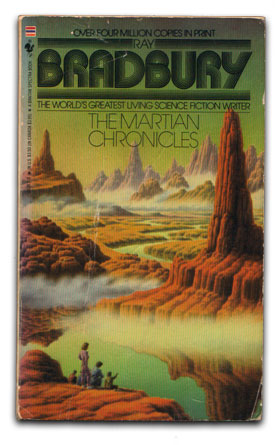
Sarah Kades echoed my initial discovery in “responsibility and connection,” noted in my first article, with her admission: “It was rather startling [to] first realize [that] the responsibility I feel [in writing] socially relevant stories is not universally held among writers. It is not, which is of course just fine; it just surprised me because of how [strong] it is in me. The knowledge brought my writing and my voice into sharper focus for me.”
 Nina Munteanu is an award-winning Canadian ecologist and novelist. In addition to eight published novels, she has authored short stories, articles and non-fiction books, which have been translated into several languages throughout the world. She is currently an editor of European zine Europa SF and writes for Amazing Stories. Nina teaches writing at George Brown College and the University of Toronto. Her latest book “Water Is…” (release May 10 2016 by Pixl Press; available for pre-order April 12) is a non-fiction examination of the meaning of water.
 Lynda Williams is the author of the ten-novel Okal Rel Saga and editor of the growing collection of works by Hal Friesen, Craig Bowlsby, Krysia Anderson, Elizabeth Woods, Nina Munteanu, Randy McCharles and others writing works set in the ORU. As a publisher, she is working with Kyle Davidson, Jeff Doten, Sarah Trick, Jennifer Lott, Paula Johanson, Lynn Perkins and Yukari Yamamoto in re-inventing publishing through Reality Skimming Press. Lynda holds three degrees and works as Learning Technology Analyst and manager of the Learn Tech support team at Simon Fraser University. She teaches part-time at BCIT.
 Sarah Kades hung up her archaeology trowel and bid adieu to Traditional Knowledge facilitation to share her love of the natural world and happily-ever-afters. She writes literary romantic eco-fiction where nature, humour and love meet. She lives in Calgary, Canada with her family. Connect with Sarah on Facebook, Twitter and www.sarahkades.com.
 Stephanie Johanson is the art director, assistant editor, and co-owner of Neo-opsis Science Fiction Magazine, publishing since 2003. She is an artist who has worked in a variety of media, though painting and soapstone carving are her passions. Stephanie paints realism with a hint of fantasy, often preferring landscapes as her subjects. Examples of her work can be viewed on the Neo-opsis Science Fiction Magazine website at www.neo-opsis.ca/art.
.
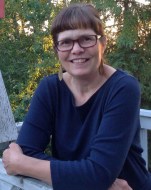 Diane Walton is currently serving a life sentence as Managing Editor of On Spec Magazine, and loving every minute of it. She and her lovely and talented husband, Rick LeBlanc, share their rural Alberta home with three very entitled cats.
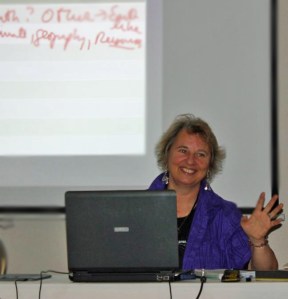 This April, I will teach my 12-week long writing course on how to write science fiction. The 12-week course “Creating Science Fiction” runs TUESDAY nights from 6:15 to 9:15 starting April 5th through to June 21st at George Brown College on King Street in Toronto and costs $285.
“Creating Science Fiction” is now part of George Brown’s Creative Writing Certificate.
See the description below:

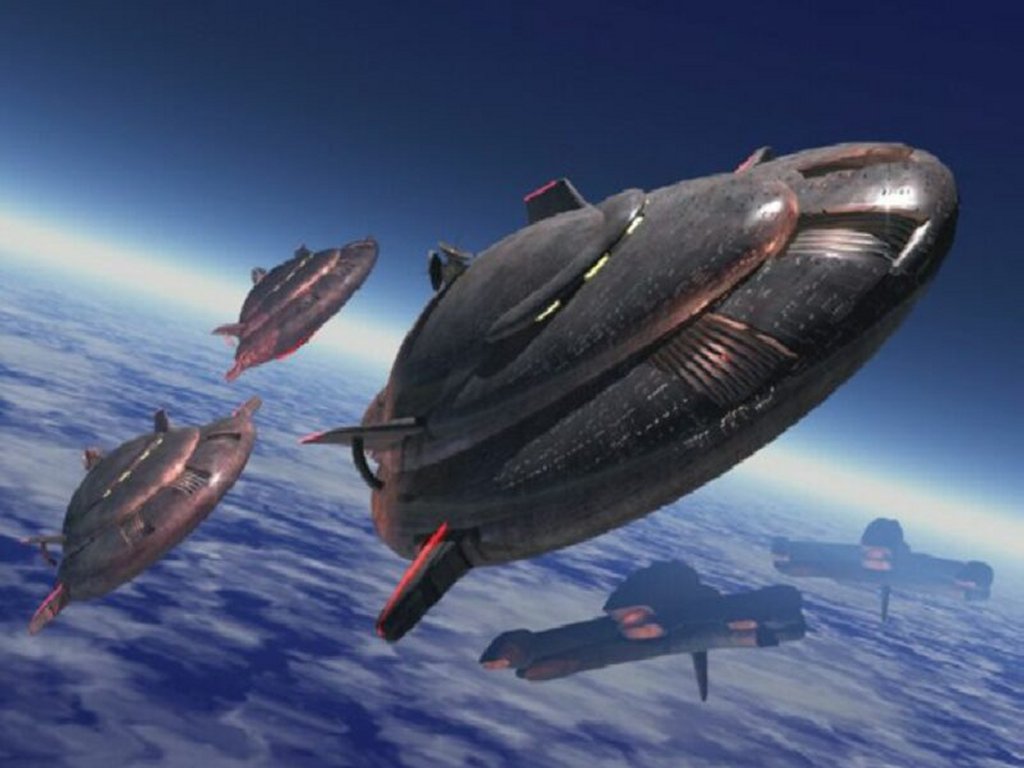
 Nina Munteanu is an ecologist and internationally published author of award-nominated speculative novels, short stories and non-fiction. She is co-editor of Europa SF and currently teaches writing courses at George Brown College and the University of Toronto. Visit www.ninamunteanu.ca for the latest on her books.
Our multiplex world of discerning consumers is getting used to having what they consume laid out clearly and categorized. Literature is no different. Since the time of the ancient Greeks, when Aristotle proclaimed in his Poetics that poetry could be categorized into many “species”, critics have endeavored to label art to help the “commoner” interpret it.
Defining Genre
The word “genre” comes from the French word for “kind” or “gender” and provides a loose set of criteria for a category of composition. People in the book industry often use it to categorize literature.
“Genre” is notoriously difficult to define. For instance, what kinds of literary form should properly be called genres? Poetry is generally thought of as a literary “mode”, being too broad and too varied to be called a “genre”. The various types and forms of poetry are more properly called genres, such as the epic or the lyric.
A genre can be defined either by the formal properties of the work, or by its subject matter. A poem can be called a sonnet if it is 14 lines long, or described as an elegy if it speaks of the death of a loved or admired person.
Although genres are not precisely definable, genre considerations are one of the most important factors in determining what a person will see or read. Many genres have built-in audiences and corresponding publications that support them, such as magazines and websites. Some people think that books and movies that are difficult to categorize into a genre are likely to be less successful commercially. They’re probably right. And this is why we do it.
So, if you haven’t figured out what “genre” your writing falls under, start figuring it out now; your future publisher and marketer will want to know because they, in turn, have to tell their distributor and bookseller where to shelve the book. This is why you need to do this; the alternative is leaving it to Jack in the marketing department who may not have even read your book, but used the cover picture to figure it out. Yikes!
Genre Categories
Today’s Teacher provides the following list for genres in literature:
They were pretty good in identifying the major genres but they missed Romance, Westerns, Horror, Erotica, Literary Fiction, Humor, and Young Adult (if you want to call that a genre). The point I’m making is that each person is bound to come up with a different list of genre categories. Go to five of your favorite bookstores (not just the chain stores, but the independent bookstores) and see for yourself how the professionals do it. It’s a miserable confusing mess. I’ve seen science fiction thrown in with fantasy and the whole category called “fantasy”. I’ve seen Diana Gabaldon’s historical time traveler series shelved under romance, mainstream and science fiction or fantasy depending on the bookstore. In truth, it’s all of these. Which brings us to cross-genre literature.
Crossing the Genre Lines
“Cross-genre”, also called “slipstream” or “interstitial fiction” or “fabulation”, is most commonly defined as fiction that crosses genre boundaries. Unless you’re Bruce Sterling, that is, who defines slipstream as:
A contemporary kind of writing which has set its face against consensus reality. It is fantastic, surreal sometimes, speculative on occasion, but not rigorously so. It does not aim to provoke a ‘sense of wonder’ or to systematically extrapolate in the manner of classic science fiction. Instead, this is a kind of writing that simply makes you feel very strange; the way that living in the late twentieth century makes you feel, if you are a person of a certain sensibility. We could call this kind of fiction Novels of Postmodern Sensibility, but that looks pretty bad on a category rack, and requires an acronym besides; so for the sake of convenience and argument, we will call these books ‘slipstream.’
“…Simply makes you feel strange”? Although lots of writing may do that to me (of course, I’m strange already), I’m not sure that I would define “slipstream” as writing that “makes you feel strange”. This is because I don’t think you can pin it down; it’s too slippery a “creature”. However, I think that this form (or is it a movement?) is promising to be one of the most exciting things occurring in literature today.
Patrick Kelly, in Asimov’s Science Fiction, wrote:
Today, we have literally many dozens of writers in both mainstream and genre who are working from these influences and creating new forms of cross-pollination. The problem with talking about cross-genre is that it’s not a single movement–it’s a bunch of individual writers pursuing individual visions that tend to simply share some of the same diverse influences. So it’s difficult to pin down and say ‘this is what it is and what it isn’t.’ That’s what is exciting to me about it–that it is difficult to categorize. In a sense, that means it’s a complex, organic creature.
Some popular “cross-genre” mixes include:
A friend of mine who is part Cree writes “slipstream” or “cross-genre” works that are essentially unclassifiable. Although she is a great writer, she has yet to find a publisher. I know why; they don’t know how to market her books to the booksellers. Where do you put them on the bookshelf? What a conundrum for the publisher and bookseller alike.
But, things are changing and hopefully my friend will see the results of that change. The irony of “slipstream” defying categorization is that it may be the next bestseller.
“From the ‘Lord of the Rings’ box-office smashes in the theaters to adults reading ‘Harry Potter’ books on their commute, it seems that the fantasy genre has permeated the mainstream,” notes Alana Abott, with Thomson Gale (an e-research and educational publishing firm). “The publishing industry has noticed, and new books combining familiar mainstream forms such as historical fiction, romance, and chick-lit are beginning to see an influx of magic.” Cross-pollination is cool. Cross-genre is “in”.
What genre are you writing?

Steveston, BC (photo by Nina Munteanu)
Nina Munteanu is an ecologist and internationally published author of award-nominated speculative novels, short stories and non-fiction. She is co-editor of Europa SF and currently teaches writing courses at George Brown College and the University of Toronto. Visit www.ninamunteanu.ca for the latest on her books.
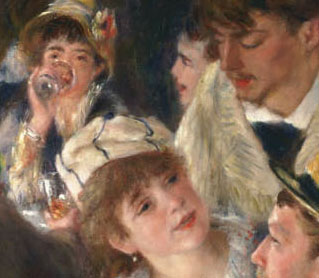 Fiction characters have a dramatic function and a role in advancing the plot and theme of your story. They need a reason to be there.
Your characters need to appear real without being real. Characters in fiction fulfill a dramatic function in the story for the reader and are, therefore, more logically laid out. They may, as a result, be more coherent, consistent and clear in their actions and qualities than a person in real life.
In his 1995 article in SF Writer called “On Writing: Constructing Characters”, Hugo and Nebula award winning SF author Robert J. Sawyer reminds us that “story-people are made-to-order to do a specific job.” This notion goes back “twenty-five hundred years to the classical playwrights,” says Sawyer. “In Greek tragedy, the main character was always specifically designed to fit the particular plot. Indeed, each protagonist was constructed with an intrinsic hamartia, or tragic flaw, keyed directly to the story’s theme.”
When we begin to tell stories, our characters can often suffer from lack of distinction or purpose; they will clutter and dilute a story’s promise. You may wish to focus on fewer rather than many characters. One way to tell if major and minor characters are fulfilling their role in story is to assign one or more archetypes to them (see my earlier article on archetypes in the Hero’s Journey). If you can’t come up with an archetype for that character, he or she may simply be there, filling up unneeded space. You might need to merge two characters into one or nix a few altogether. This is especially important in short story. The most common thing new writers do is clutter a short story with too many characters and associated sub-plots. These stories are actually novel-wanna-be’s.
You achieve distinction in characters, including minor characters through a number of ways. One is “voice”. A character’s “voice” must be unique. Give your character distinctive body movements, dress, speech, facial features and expressions that reveal his inner feelings, emotions, fears, motivations, etc. Then keep them consistent.
It may also be useful to create character dossiers on major characters to help keep track of their distinctive traits and keep these consistent. Dialogue is an excellent tool to reveal a person’s education, philosophy, biases, culture and history. A character’s inflections and common vernacular can be used to identify them from a particular region or culture.
Fictional characters come to life by giving them individual traits, real weaknesses and heroic qualities that readers can recognize and empathize with. You play these against each other to achieve drama. For instance, a man who is afraid of heights but who must climb a mountain to save his love is far more compelling than one who is not afraid; same for a military man who fears responsibility but must lead his team into battle; a shy scientist impelled to discovery; etc.—the hamartia that Sawyer talked about.

Highland Creek, Ontario (photo by Nina Munteanu)
Make your character bleed, hurt, cry, and laugh. This needs to be clear to the reader, who wants to empathize with some of them and hate others. How characters interact with their surroundings and with each other creates tension, a key element to good storytelling.
“The lesson is simple,” Sawyer tells us. “Your main character should illuminate the fundamental conflict suggested by your premise.”
Nina Munteanu is an ecologist and internationally published author of award-nominated speculative novels, short stories and non-fiction. She is co-editor of Europa SF and currently teaches writing courses at George Brown College and the University of Toronto. Visit www.ninamunteanu.ca for the latest on her books.
Think of the title to your story as the ultimate headline. It’s the first thing an editor reads of your work. Titles are often used by one reader to describe the story to another reader. According to Kathryn Bohnhoff, author of The Crystal Rose, “titles can determine whether a story is read, in what spirit it’s read, and whether it’s remembered by name or forgotten.” Choose it wisely.
Three Cardinal Rules for Title Selection
When choosing a title for your story it should be: 1) original; 2) easy to read; and 3) appropriate to your story.
Make your title original (like your story) and preferably unusual in some way. It’s best to use something that is different enough to stand out but not so different that it will be difficult to remember. It should “role” off the tongue with ease. Titles are best if they are short and not difficult to pronounce. One way to check this is to read it out loud. Some publicists have suggested that a title should be short enough (and therefore large enough) to be read from across a room. One or two word titles are often chosen for that reason. Lastly, your title should reflect the subject or heart of your story, but without giving it away. A title should be the ultimate tease, the ultimate promise. Titles, says Bohnhoff “can be like store windows that offer a tantalizing glimpse of what’s inside, or they can give away the entire inventory.”
 Types of Titles
The best titles are those that grow naturally out of the subject matter and capture the emotion and heart of the story. A title can be a play on words (e.g., You Only Live Twice) or convey several meanings at once (e.g., Darwin’s Paradox). A title could be the name of a place, thing of person (e.g., Doctor Zhivago). Titles can be metaphors or provide contradiction or irony (e.g., Calculating God). They can be a popular expression or harbor a hidden meaning that unfolds in the story (e.g., Pale Fire). They can also be a portion of a famous line (e.g., Brave New World).
Some Titles Are Better Than Others
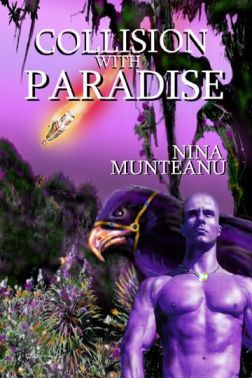 I chose the title, Collision with Paradise for my 2005 science fiction romantic thriller to convey the paradox of conflict and action in collision with the quest for well-being (paradise) that reflected my lead character’s own conflict. The two juxtaposed as oxymoron made the title provocative and readers became naturally curious. What made it particularly tantalizing—and me somewhat smug—was that the cover and the setting and premise/plot all resonated with the abstract theme. The plot involved the real collision of a spaceship with hotshot pilot on a planet with a jungle paradise. So, even though the title very accurately conveyed the overall theme, it didn’t give it away; the reader still had to tease it out through the subtext and subplots of the story.

Highland Creek, ON (photo by Nina Munteanu)
Whatever title you select, remember the three rules and keep it simple and relevant. Think of some titles of your favorite stories. Think of what the title conveys and what it quietly implies, given your knowledge of the story. Here are some to ponder: A Tale of Two Cities; Gone With the Wind; White Oleander; Lady Chatterley’s Lover; The Blue Sword; Return of the Native; Lord of the Flies.
Nina Munteanu is an ecologist and internationally published author of award-nominated speculative novels, short stories and non-fiction. She is co-editor of Europa SF and currently teaches writing courses at George Brown College and the University of Toronto. Visit www.ninamunteanu.ca for the latest on her books.
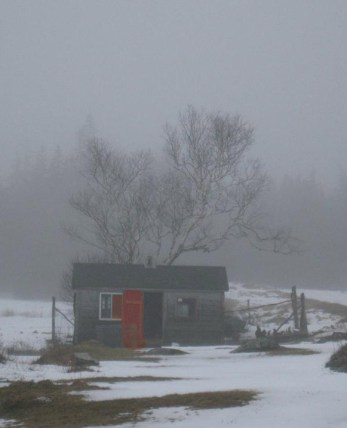
Shed on road to Wolfville, NS (photo by Nina Munteanu)
It was several days ago, as I was driving home from a friend’s place in the sultry dark of night that I noticed the change…
Perhaps it was the rain and the winding road that nudged my psyche to wander into that other realm. Or was it the motion picture The Fountain that I’d seen the evening before—a surrealistic journey of the mind and the soul through crisis and toward enlightenment, true love and “ever-lasting life”?
Or had it more to do with the fact that I’d been, for various reasons, without sleep for over forty hours, that I glimpsed the ordinary in an extra-ordinary light?
Light had everything to do with it, too…Amber traffic lights at a construction site pulsed like living things…smoky clouds billowed over an inky sky…a garish screen of trees, caught in the beams of my car as I turned a corner, screamed quietly…a half-built apartment building loomed up like the dark tower in Lord of the Rings… I was reminded of a scene early on in The Fountain where the viewer is disoriented initially by a busy street at night because it was shot upside down—ironically, in my hometown of Montreal and I didn’t even recognize it.
Have you ever done that? Looked backward or craned while driving through a familiar scene to gain a different perspective? And felt different for just a moment? Like you’d briefly entered a different dimension and glimpsed “the other”?
What is it like to meet “the other”?
I firmly believe that we ultimately define ourselves through our experience and our approach of the unfamiliar. A new relationship. A stranger in town. A different culture. An alien encounter…
How do we react? Is it with fear? Wonder? Curiosity?
This is why the genre of science fiction so vividly and deeply and satisfyingly explores our humanity. By describing “the other” science fiction writers describe “us”. Who we are and where we might go. It is, after all, through our own eyes that the other is described and viewed.
The very best science fiction does this impeccably. Think of your favorite SF authors and books… Here are some that stand out for me:
I know I’ve left out so many…What are some of your favorites?
Nina Munteanu is an ecologist and internationally published author of award-nominated speculative novels, short stories and non-fiction. She is co-editor of Europa SF and currently teaches writing courses at George Brown College and the University of Toronto. Visit www.ninamunteanu.ca for the latest on her books.

Mountains in Switzerland (photo by Nina Munteanu)
It’s not what you think it is…
There’s a poignant scene near the end of the 2005 movie “Coach Carter” where a student finally responds to Carter’s insistent question of “what is your deepest fear?”. It is a quote often mistakenly attributed to Nelson Mandela but originally written by Marianne Williamson (“A Return to Love: Reflections on the Principles of A Course in Miracles”). And it speaks to the artist in all of us:
Mountain cabin, Switzerland (photo by Nina Munteanu)
“Our deepest fear is not that we are inadequate. Our deepest fear is that we are powerful beyond measure. It is our light, not our darkness that most frightens us. We ask ourselves, Who am I to be brilliant, gorgeous, talented, fabulous? Actually, who are you not to be? You are a child of God. Your playing small does not serve the world. There is nothing enlightened about shrinking so that other people won’t feel insecure around you. We are all meant to shine, as children do. We were born to make manifest the glory of God that is within us. It’s not just in some of us; it’s in everyone. And as we let our own light shine, we unconsciously give other people permission to do the same. As we are liberated from our own fear, our presence automatically liberates others.”
Let me tell you a story… I’ve been writing stories since I was ten years old. I used to stay up until late at night with my sister, when our parents were snoring in their bed. We told stories: fantastical stories with a cast of thousands and spanning the entire universe. When I was in my teens, I began to write a book, inspired by several dystopian movies and my own passion for saving the planet. It was called “Caged in World”. By the time I was married and had my son, I had written three entire books, none of which I’d published. I had by then sold several short stories and essays and articles to mainstream, travel and science fiction magazines. I started to become known as a reviewer and critic of movies and books. And my short stories were gaining good reputation with stellar reviews and invitations to appear in anthologies.
I began to market my first book—a medical ecological thriller—to agents and publishers. Although I got many bites for partials and even full manuscripts, none came to fruition.
Then something strange happened.
 Driven by something inside me, I wrote over the space of a few months a book entitled “Collision with Paradise” based on some research I’d done on Atlantis, the bible and the Great Flood. The book was important to me on a number of fronts: in its ecological message of cooperation and its exploration of new paradigms of existence. I wrote it fast and well and it hardly needed editing. Without thinking and without hesitation, I submitted it for publication. As quickly as I’d written it, I had an offer from a publisher. My first published book! My first reaction was elation. My second reaction was: What have I done? I was proud of my book and its story, but it also contained erotica. My first thought was: how are my family and friends going to react? What about my parents? OMG! Fear, not of failure but of success came crashing down on me and I felt so exposed. If I could have retracted it, I might have several times. Thankfully, I didn’t. While some friends and family did in fact shake their heads and look askance at my work (and labeled it variously), the book was very well received by mainstream critics and readers alike. It was, in fact, a hit. Faced with success, I bowed to its consequences and embraced what it brought: the good, the bad and the ugly. I was, in fact, relieved. I have many times since contemplated my actions in submitting this subversive novel that exposed me incredibly. Was it brave intuition or bold recklessness that propelled me? The point is, I’d stepped out into the light, crossed the line into another paradigm. There was no way back into the shadows. And that’s good.
Ralph Keyes, author of The Courage to Write, tells us “any writing lays the writer open to judgment about the quality of his work and thought. The closer he gets to painful personal truths, the more fear mounts—not just about what he might reveal, but about what he might discover [about himself] should he venture too deeply inside. But to write well, that’s exactly where we must venture.” If you’re emotionally or psychologically not ready for the consequences of getting published, then you will falter, procrastinate, forever fuss over your creation and convince yourself that it isn’t ready. In truth it’s you who aren’t ready. It’s you who aren’t ready to shine.
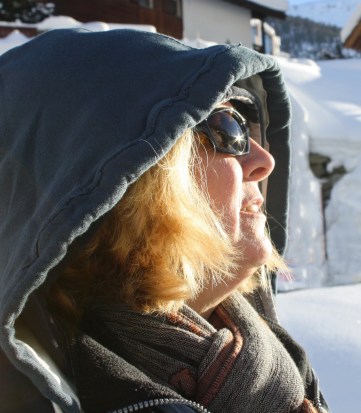
Author’s friend in Zermatt, Switzerland (photo by Nina Munteanu)
Just remember that while we are born artists, it is still our choice to live as artists. Until we embrace that which is within us, we will not find our voice to give to the world. That is our gift to the world. Laurance Gartel says “to be an artist is to take responsibility for the world’s destiny. You shape it by your vision.”
“The true artist is not interested in having a nice life, being comfy or fitting in, but rather sees himself as a benefactor. His goal is to make a contribution to life, and to this end there are no barriers, doors or blocks, but only wide open spaces.”—Brian Simons
Nina Munteanu is an ecologist and internationally published author of award-nominated speculative novels, short stories and non-fiction. She is co-editor of Europa SF and currently teaches writing courses at George Brown College and the University of Toronto. Visit www.ninamunteanu.ca for the latest on her books.

 Nina Munteanu Writing Coach