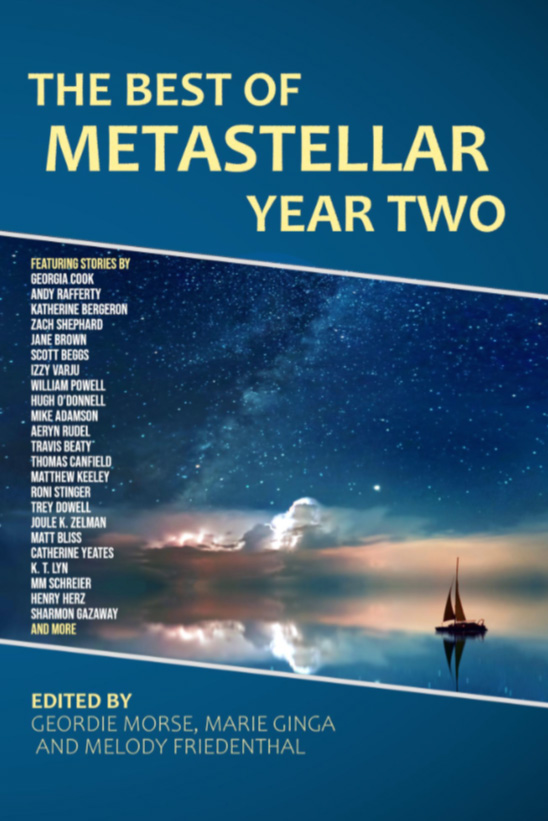
The third of MetastellarMagazine’s ‘Best of’ anthologies The Best of Metastellar Year Three was recently released and is available at numerous booksellers. Available in print and ebook, the anthology hosts forty-six riveting short stories of science fiction, fantasy and horror. This anthology also features my dark speculative story “Virtually Yours.” Their second ‘Best of’ anthology contained my short story “The Way of Water.”
Virtually Yours in The Best of Metastellar Year Three: In a world of seamless surveillance where virtual and real coalesce in a teasing dance, love is the trickster…
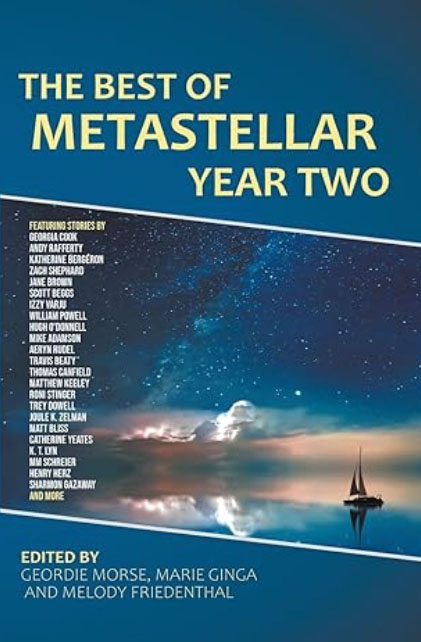
The Way of Water in TheBest of Metastellar Year Two: A woman stands two metres from a public water tap, dying of thirst in a water-scarce world rife with corporate/government corruption…
Nina tickled when her copy of “The Best of Metastellar Anthology Three” arrives in the mail
Nina Munteanu is a Canadian ecologist / limnologist and novelist. She is co-editor of Europa SF and currently teaches writing courses at George Brown College and the University of Toronto. Visit www.ninamunteanu.ca for the latest on her books. Nina’s bilingual “La natura dell’acqua / The Way of Water” was published by Mincione Edizioni in Rome. Her non-fiction book “Water Is…” by Pixl Press (Vancouver) was selected by Margaret Atwood in the New York Times ‘Year in Reading’ and was chosen as the 2017 Summer Read by Water Canada. Her novel “A Diary in the Age of Water” was released by Inanna Publications (Toronto) in June 2020.
Twelve years ago, my speculative short story Virtually Yours was originally published in issue #15 of Hadrosaur Tales, a small but vibrant literary magazine out of Las Cruces, New Mexico. The story explored concepts of cyber-spying, virtual workspace, anonymity, and identity. And like its own characters, who wandered through their impermanent virtual offices, the story has wandered far and wide since…
Some of the publications Virtually Yours appeared in: Hadrosaur Tales in 2002; Neo-opsis Science Fiction Magazine in 2004; Nowa Fantastyka in 2006; Amazing Stories 2014; and Speculative North in 2021
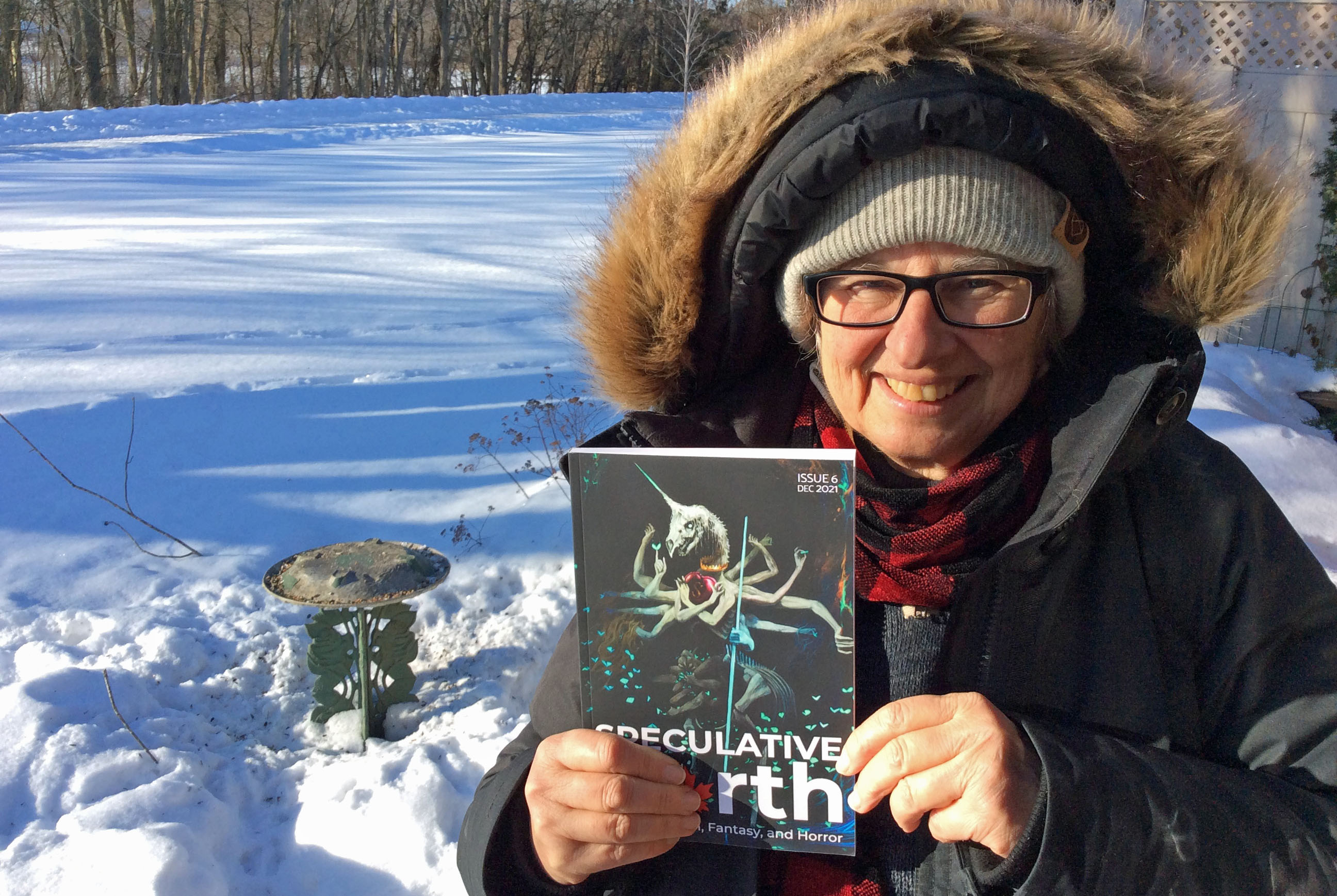
Nina in the North holding December 2021 issue of Speculative North
Shortly after Virtually Yours was published for the eighth time, in the December 2021 issue of Canadian magazine Speculative North, Issue #6, R. Graeme Cameron reviewed all the stories in that issue, including mine. His review appeared in Amazing Stories and here’s what he said about Virtually Yours:
Review of Virtually Yours by R. Graeme Cameron in Amazing Stories
Story Illustration by Duncan Long for Virtually Yours in Amazing Stories
Since its first publication in 2002 in Hadrosaur Tales, Virtually Yours has travelled well. In 2004, it went to British Columbia with Neo-opsis Science Fiction Magazine (Issue #3). In 2006, it moved to Poland and was translated into Polish in Nowa Fantastyka. It then returned to British Columbia in the Best of Neo-opsis Science Fiction Magazine: Anthologyin 2006 and was nominated for the Speculative Literature Foundation Fountain Award. It then moved to Israel and was translated into Hebrew in Bli-Panika in 2006. In 2014, it moved back to America for an appearance in Amazing Stories (Issue 88) then went to Italy in 2016 to appear in Future Fiction. Its eighth appearance saw its return in 2021 to Canada in Ontario’s Speculative North.
Virtually Yours continues to wander the literary landscape, most recently making its ninth appearance in the worldly MetaStellar Speculative Fiction and Beyond, December 2022 (where you can find several of my other short stories).
Virtually Yours story illustration in MetaStellar by Brigitte Werner
I just love it when a story shows ‘legs’ and wanders the world.
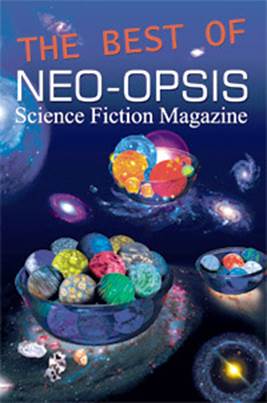
Cover art for 2006 “The Best of Neo-opsis Science Fiction Magazine Anthology” by Karl Johanson
p.s. I was just informed that “Virtually Yours” will make its tenth appearance in MetaStellar’s short fiction 3rd annual anthology, with expected release both in print and electronic versions in June 2024.
Nina Munteanu is a Canadian ecologist / limnologist and novelist. She is co-editor of Europa SF and currently teaches writing courses at George Brown College and the University of Toronto. Visit www.ninamunteanu.ca for the latest on her books. Nina’s bilingual “La natura dell’acqua / The Way of Water” was published by Mincione Edizioni in Rome. Her non-fiction book “Water Is…” by Pixl Press (Vancouver) was selected by Margaret Atwood in the New York Times ‘Year in Reading’ and was chosen as the 2017 Summer Read by Water Canada. Her novel “A Diary in the Age of Water” was released by Inanna Publications (Toronto) in June 2020.
I rock on the cedar swing on my veranda and hear the wind rustling through the gaunt forest. An abandoned nest, the forest sighs in low ponderous notes. It sighs of a gentler time. A time when birds filled it with song. A time when large and small creatures — unconcerned with the distant thrum and roar of diggers and logging trucks — roamed the thick second-growth forest. The discord was still too far away to bother the wildlife. But their killer lurked far closer in deadly silence. And it caught the birds in the bliss of ignorance. The human-made scourge came like a thief in the night and quietly strangled all the birds in the name of progress.
excerpt from “Robin’s Last Song” by Nina Munteanu
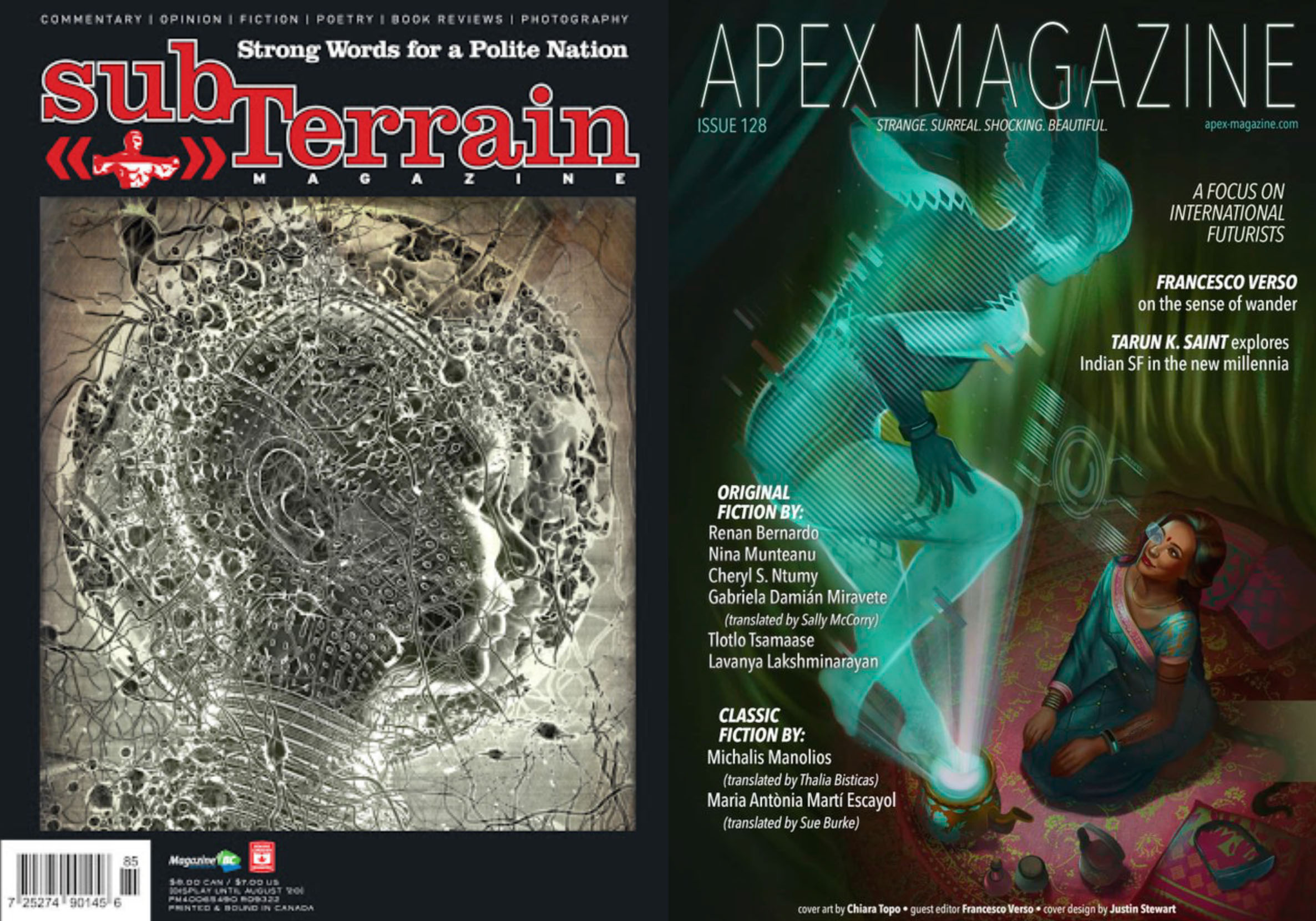
My short story Robin’s Last Song was republished recently in the superlative online magazine Metastellar. The story was first published in 2021 in Issue 128 of Apex Magazine and an earlier version of the story called Out of the Silence appeared in the literary magazine subTerrain Magazine Issue 85 in 2020.
Left, “subTerrain” Issue 85 carries “Out of the Silence”; right, “Apex Magazine” issue 128 carries “Robin’s Last Song”
I raced up the stairs to the auditorium then quieted my breath and listened at the door, heart thumping like a bird trying to escape. Professor Gopnik was ten minutes into his lecture; I could hear his commanding voice: “… estimates that the entire number of birds have been reduced by a third in five decades—I mean common birds like the robins, sparrows, warblers, and even starlings…”
He was talking about Rosenberg’s paper in Science. The study shocked the scientific community; but I had already observed the decline of the house sparrow around my aunt and uncle’s house near the Old Mill. And the robin—my namesake, whose song heralded spring for me—had grown quiet.
I imagined Gopnik waving the journal at the class in his typical showman style. He had a habit of wandering the stage like an evangelist, fixing each student with intense blue eyes as if challenging them to believe. I thought him an over-confident condescending prig. But for someone who looked as young as the students he was teaching, Gopnik was brilliant. And what he was doing was so important. I wanted so badly to work under him as a grad student. But he terrified me.
Excerpt from “Robin’s Last Song” by Nina Munteanu
The Story Behind the Story
It all began with my discovery of an emerging bioacoustic tool, soundscape ecology, that measures biodiversity and ecosystem functionality. I’d just read the disturbing 2019 Science article by Rosenberg and team who determined that our slow violence of habitat degradation and toxic pollution has reduced the world’s bird population by a third in just five decades. I was devastated; I could not imagine a world without the comforting sound of birds. What would it be like if all the birds disappeared?
Map and chart of bird decline since 1970
Already primed with research into genetic engineering for the sequel to my 2020 eco-novel,A Diary in the Age of Water, my muse (often delightfully unruly) played with notions of the potential implication of gene hacking in ecological calamity and how this might touch on our precious birds: when nature “is forced out of her natural state and squeezed and moulded;” her secrets “reveal themselves more readily under the vexations of art than when they go their own way.”
Robin’s Last Song is a realizable work of fiction in which science and technology are both instigators of disaster and purveyors of salvation. Today, gene-editing, proteomics, and DNA origami—to name just a few—promise many things from increased longevity in humans to giant disease-resistant crops. Will synthetic biology control and redesign Nature to suit hubris or serve evolution? What is our moral imperative and who are the casualties? As Francis Bacon expressed in Novum Organum, science does not make that decision. We do.
I also recently sat down with Rebecca E. Treasure of Apex Magazine for a conversation about story, ecology, and the future. Here’s how it begins:
Apex Magazine: The Way of Water in Little Blue Marble is such a powerful piece touching on water scarcity and friendship, a dry future and the potential for technology to overtake natural ecology. Robin’s Last Song explores extinction, human fallibility, friendship, and again, that conflict between technology and nature. Do you think we’re heading toward the kind of dystopia shown in these stories?…
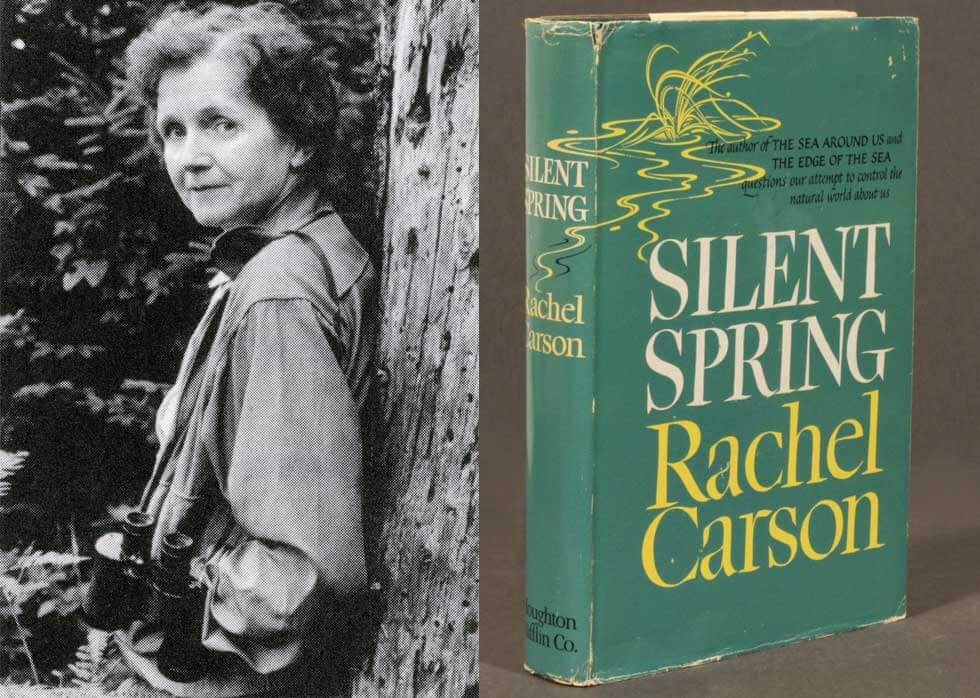
“Over increasingly large areas of the United States, spring now comes unheralded by the return of the birds. The early mornings are strangely silent where once they were filled with the beauty of bird song”
Rachel Carson, Silent Spring
Discarded robin’s egg in the forest in spring, ON (photo by Nina Munteanu)
p.s. May9: I just learned that Robin’s Last Song was selected by the NYC Climate Writers Collective as part of an exhibition in the Climate Imaginarium on Governors island. The exhibition, starting May 18, will run throughout the summer of 2024.
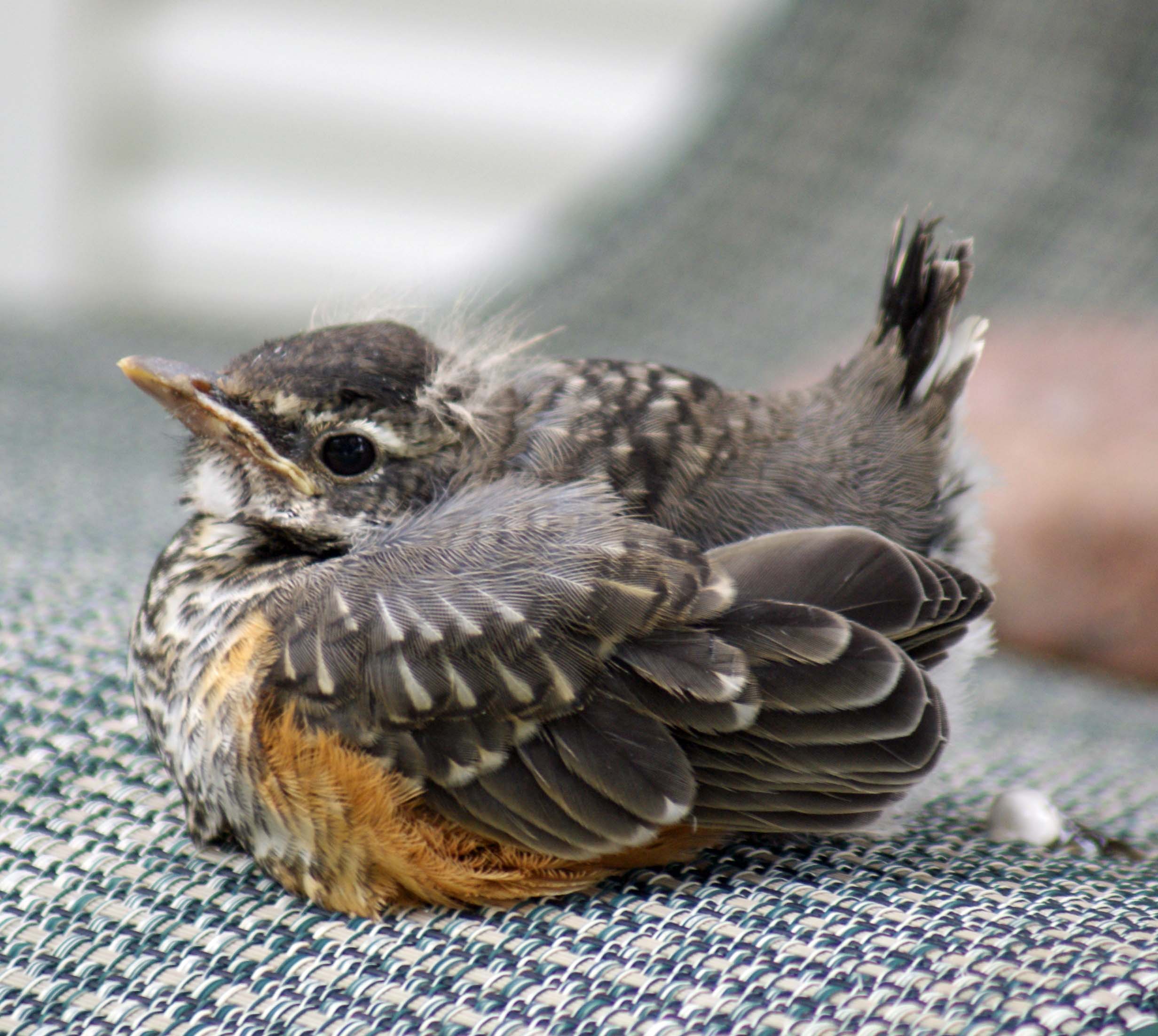
Fledgling robin rests on a patio chair in spring, ON (photo by Merridy Cox)
Nina Munteanu is a Canadian ecologist / limnologist and novelist. She is co-editor of Europa SF and currently teaches writing courses at George Brown College and the University of Toronto. Visit www.ninamunteanu.ca for the latest on her books. Nina’s bilingual “La natura dell’acqua / The Way of Water” was published by Mincione Edizioni in Rome. Her non-fiction book “Water Is…” by Pixl Press (Vancouver) was selected by Margaret Atwood in the New York Times ‘Year in Reading’ and was chosen as the 2017 Summer Read by Water Canada. Her novel “A Diary in the Age of Water” was released by Inanna Publications (Toronto) in June 2020.
She imagines its coolness gliding down her throat. Wet with a lingering aftertaste of fish and mud. She imagines its deep voice resonating through her in primal notes; echoes from when the dinosaurs quenched their throats in the Triassic swamps.
Water is a shape shifter.
It changes yet stays the same, shifting its face with the climate. It wanders the earth like a gypsy, stealing from where it is needed and giving whimsically where it isn’t wanted.
Dizzy and shivering in the blistering heat, Hilda shuffles forward with the snaking line of people in the dusty square in front of University College where her mother used to teach. The sun beats down, crawling on her skin like an insect. She’s been standing for an hour in the queue for the public water tap.
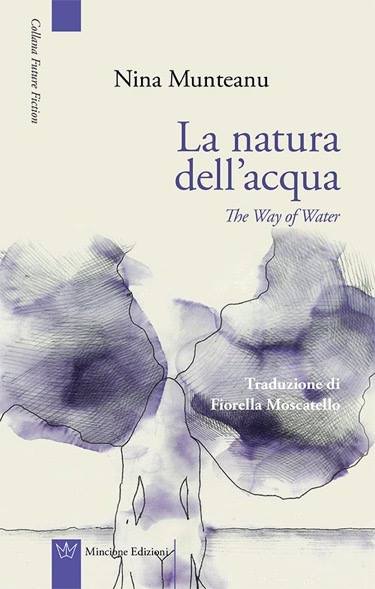
The Way of Water was first published as a bilingual print book by Mincione Edizioni(Rome) in Italian (La natura dell’acqua, translated by Fiorella Moscatello), and English along with a recounting of what inspired it: The Story of Water (La storia dell’acqua) in 2016. The Way of Water has been reprinted several times, in magazines and anthologies, since its first appearance in 2016.
It all started with an invitation by my publisher in Rome in 2015 to write about water and politics in Canada. I had long been thinking of potential ironies in Canada’s water-rich heritage. The premise I wanted to explore was the irony of people in a water-rich nation experiencing water scarcity: living under a government-imposed daily water quota of 5 litres as water bottling and utility companies took it all.
I named the story “The Way of Water” (“La natura dell’acqua”), about a young woman (Hilda) in near-future Toronto who has run out of water credits for the public wTap; by this time houses no longer have potable water and their water taps have been cemented shut (as was done in Detroit in 2014); the only way to get water is through the public wTaps—at great cost. She’s standing two metres from water—in a line of people waiting to use the tap—and dying of thirst.
“The Way of Water” captures a vision that explores the nuances of corporate and government corruption and deceit together with global resource warfare. In this near-future, Canada is mined of all its water by thirsty Chinese and US multinationals—leaving nothing for the Canadians. Rain has not fallen on Canadian soil in years due to advances in geoengineering and weather manipulation that prevent rain clouds from going anywhere north of the Canada-US border. If you’re wondering if this is possible, it’s already happening in China and surrounding countries.
The Way of Water, in turn, inspired my recent dystopian novel A Diary in the Age of Water, which explores the lives of four generations of women and their relationship to water during a time of severe water restriction and calamitous climate change.
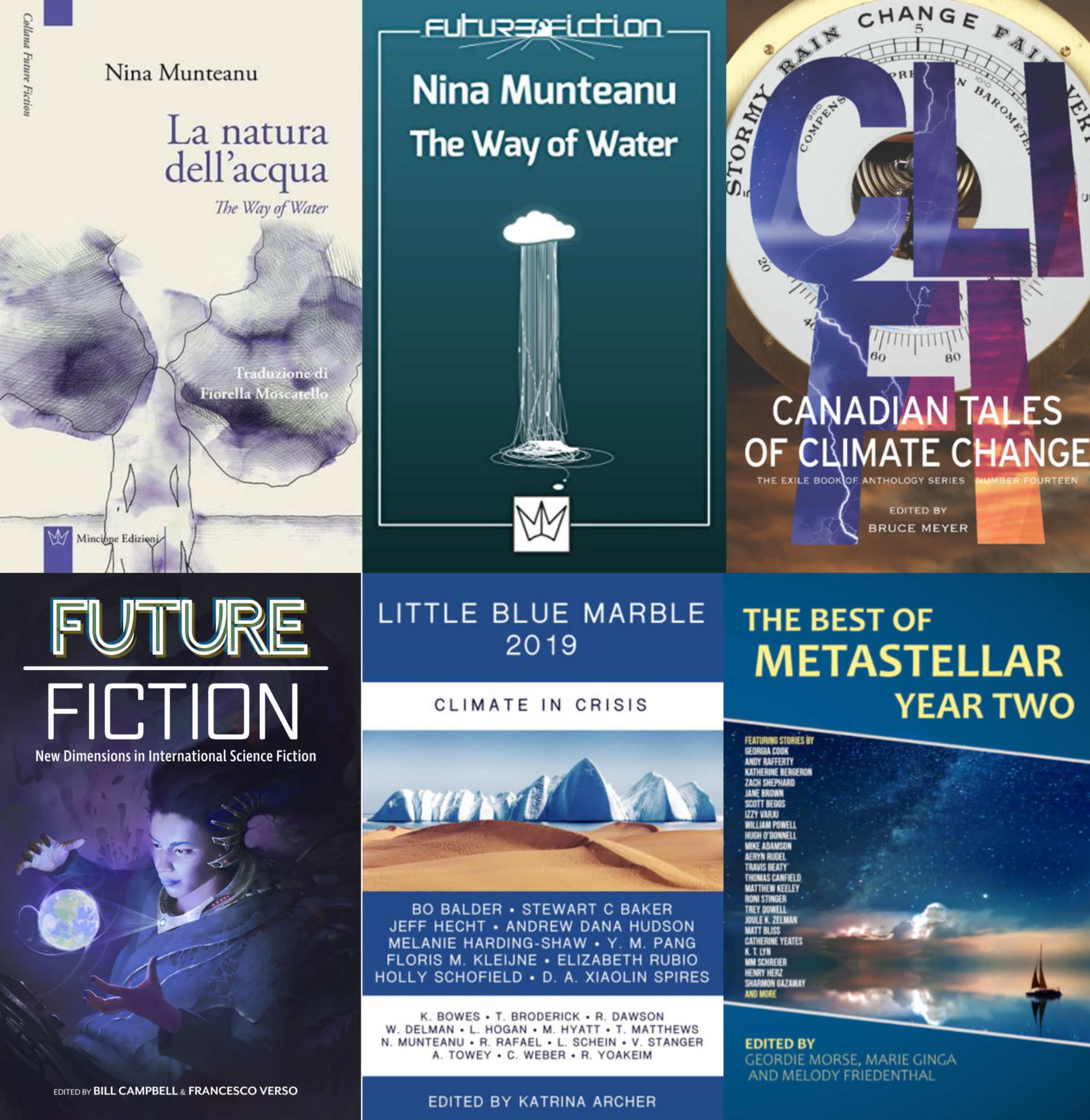
Publications (excluding online pubs) that featured The Way of Water
“The Way of Water evokes a sense of awareness about issues of access to water and about the dangers of imbalances in that access.”
Derek Newman-Stille, Speculating Canada
“In a short story in which every word has its weight, Nina Munteanu manages to describe a dystopia with ecological, political, social and economic elements and Hilda’s reactions to her situation with a great emotional intensituy. To avoid thirst, Hilda ends up embracing an extreme idea, a last hope linked to water. The Way of Water is a story of the kind you hope is science fiction but you fear is not.”
Massimo Luciani
Nina Munteanu is a Canadian ecologist / limnologist and novelist. She is co-editor of Europa SF and currently teaches writing courses at George Brown College and the University of Toronto. Visit www.ninamunteanu.ca for the latest on her books. Nina’s bilingual “La natura dell’acqua / The Way of Water” was published by Mincione Edizioni in Rome. Her non-fiction book “Water Is…” by Pixl Press (Vancouver) was selected by Margaret Atwood in the New York Times ‘Year in Reading’ and was chosen as the 2017 Summer Read by Water Canada. Her novel “A Diary in the Age of Water” was released by Inanna Publications (Toronto) in June 2020.















 Nina Munteanu Writing Coach