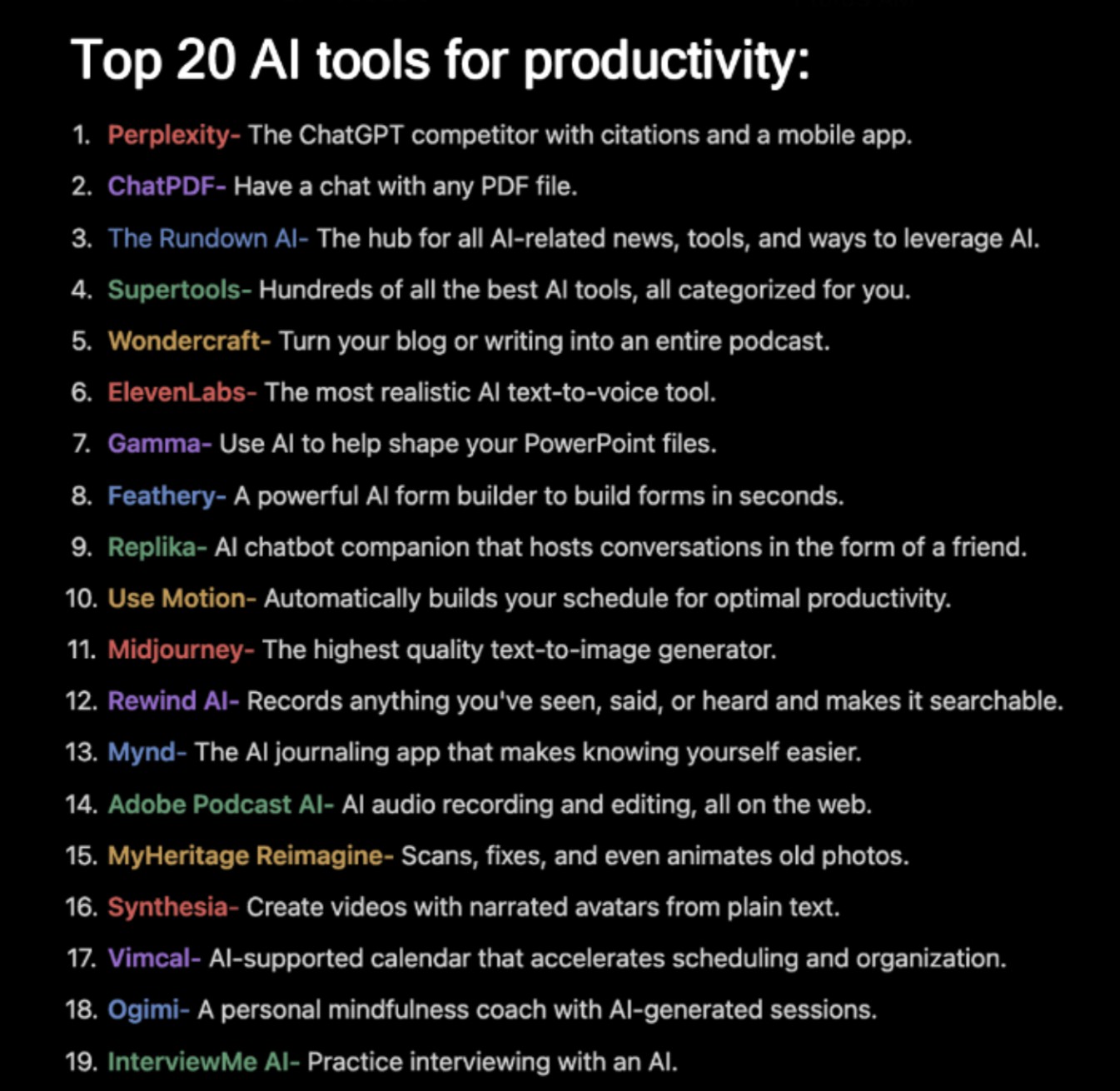
I recently ran across a list posted on social media of the 20 most popular AI tools for productivity in writing. I only knew two of them. This heightened my anxiety about what I know and am prepared for in the use of genAI, particularly in academic settings, where I teach writing at university. And it got me thinking why I was so anxious…
.

I shared the list with my colleagues at the university writing centre and one instructor who was actively following AI tools admitted that they knew only a few of the listed tools as well. They further shared that they were feeling increasingly apprehensive about genAI’s impact on higher education. “It’s hard not to feel overwhelmed,” they ended.
(Photo: Nina writing her novel at a cafe)
.
This was my exact sentiment: a kind of apprehensive excitement. An understanding that all communicators stand at the precipice of a major paradigm shift in tool use. The ramifications this will have on all aspects of effective and efficient communication will span from redefining plagiarism to reinventing creativity. As with all powerful tools—aside from the obvious threat of misuse—there is always something lost with the gain and I wonder what we are losing with all this. I have some ideas, and they do bother me from time to time.
.

I do think it important for me as a communicator and writing instructor to understand the trade offs and to work with them.
When the world adopted the portable calculator, rote knowledge of basic math suffered. I know; I tested it during a lab exam when I was teaching college biology many years back. I forbid the use of calculators in the test and many students, who had lost the ability to do long division or multiplication by hand, lost marks. For some reason, I’m still not sure of, it was important for me to insist on students doing math longhand (a basic skill fast becoming obsolete like cursive writing) and punish those who had lost the art. Perhaps I was drawing on Isaac Asimov’s possibly prescient 1957 short story satire The Feeling of Power, which explored the limitations of a future world that lost its basic skills to machines. The corollary, I suppose, is that more complex and conceptual math gained some ground through this handy and efficient tool. Machines have their advantages, certainly. And generative AI is just one sophisticated aspect of machine use.
.
.
Consequences to Creative Writing
In my world of professional fiction authors, there is a palpable fear of being replaced by AI as story creators: a version of the ultimate science fiction horror plot of being taken over by the machine world (I’ve even exploited that in my SF thrillers Angel of Chaos and Darwin’s Paradox).
Given our unique powers of imagination, I don’t think that will happen (very soon, if ever successfully). Though, as we dummy-down and simplify complex stories for fast-paced multiplex audiences addicted to fast-paced bite-sized and easy to digest entertainment, AI-generated narratives could get by. How is all this affecting the publishing industry now? I recently learned that one of the top five online science fiction magazines, Metastellar, accepts AI-assisted stories with the proviso that “they better be good.” And Metastellar provides some convincing reasons. This has become a hot topic among my fellow professional writers at SF Canada. One colleague informed me that a “new publisher Spines plans to disrupt industry by publishing 8000 AI books in 2025 alone.” On checking the news release, I discovered that Spines is, in fact, a tech firm trying to make its mark on publishing, primarily through the use of AI. The company offers the use of AI to proofread, produce, publish, and distribute books. They are, in fact, a vanity publishing platform (essentially a service for self-publishing), charging up to $5000 a book and often taking just three weeks to go from manuscript to a published title. The quality of what they will produce is unclear—and questionable.
All to serve as metaphor for what I and my colleagues at university are striving to achieve with students in their academic writing: excellence in communication, particularly in conveying complex scenarios that require creative solutions where clear, concise, and convincing writing is requisite.
.
I still find myself reluctant to use AI in my writing and communication, though I’ve at times slid into using AI for research and initial summaries to save time. I do this rarely because I absolutely enjoy doing research. I enjoy challenging my brain to summarize key points and write a good line. I enjoy the thrill of unanticipated discoveries, which always happen on these forays. I also recognize that many people do not share my enthusiasm for these brain exercises.
(Photo: Nina writing in another cafe)

.
I think that AI alone will not replace human mind for unique creativity. I didn’t say “can not.” It could; but it won’t. This is because even as genAI becomes infused in many aspects of life pursuit, there will remain those like that rare mathematician capable of doing math by hand in The Feeling of Power, valued not just because they are rare, but because in that rarity, they fulfill a critical role. When the machines stalled in their ability to move society forward in The Feeling of Power and all seemed lost, this archaic mathematician presented new innovation with basic math. I’m not suggesting that the technology will all break down, plunging the world into darkness (though this remains a possibility and is still a great plot for science fiction); but I submit that diversity rules over monopoly when it comes to survival.
.

.
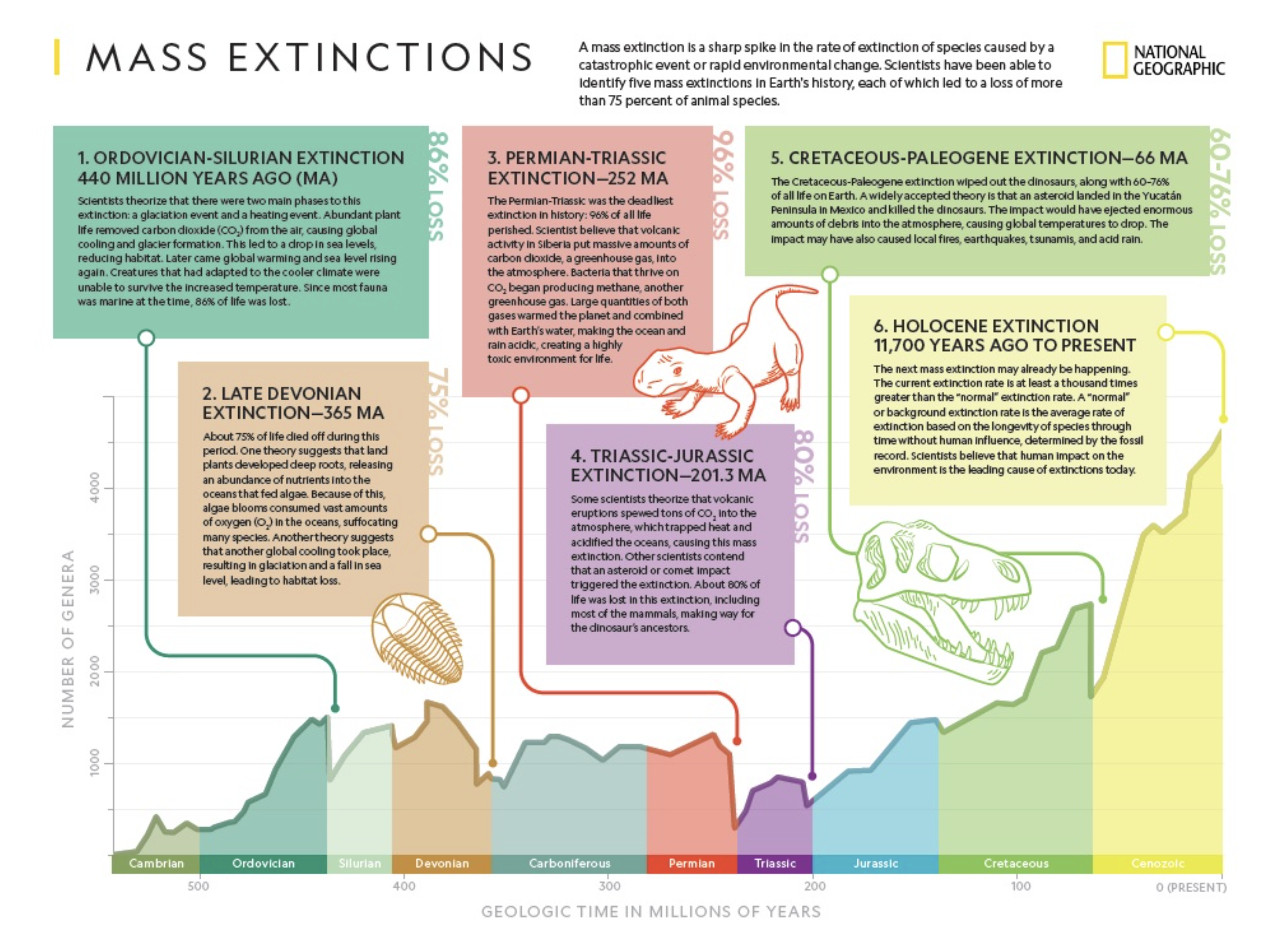
This may seem a rather dark projection of the future, but consider that over the millennia, after five mass extinctions and with the sixth mass extinction underway, diversity has always saved the world. Within that necessary diversity, it is the nurtured rarities, the outliers, the misfits and nonconformists that survived the destruction of the previous world. Each time, diversity made that possible. As though engrained in Nature’s world building.
.
.
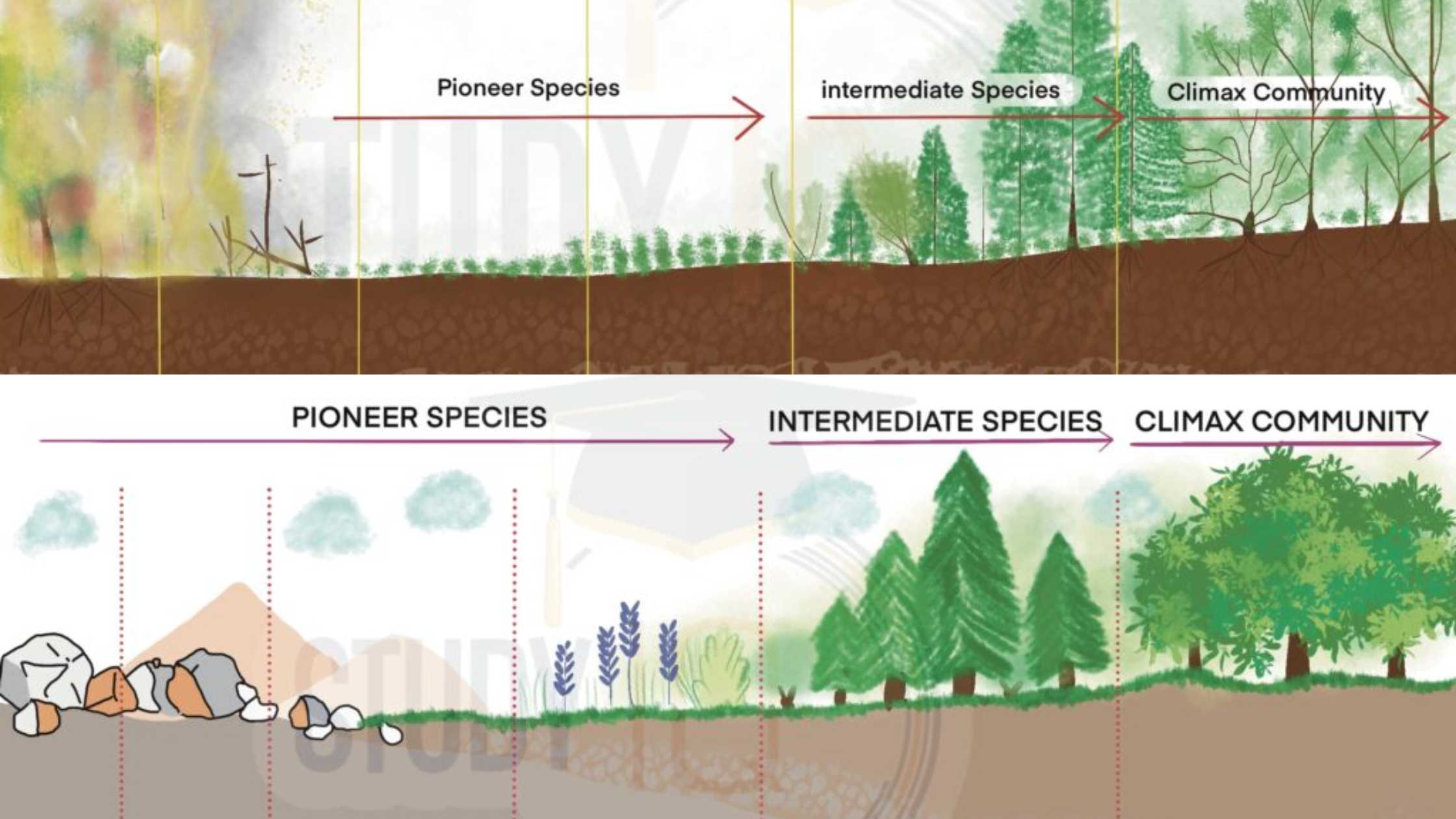
Ecologists call it ecological succession, others use the term “creative-destruction” to describe the recursive pattern of living and non-living things of the planet. Both describe how the oligarchs of an established climax ecosystem fail due to change or disturbance and are replaced by a previous rare misfit or immigrant better suited to the new environment.
.
.
I think AI is part of our succession. Our use of AI in all its forms will represent a diversity of reaction and action that represent our own diversity and potential to survive in a changing world. All to say: relax and embrace the outliers.
.

As William Gibson so famously said in 1993: The Future is already here; it’s just not evenly distributed. And maybe that’s a good thing…

.
So…
…To AI, or not to AI, that is the question:
Whether ’tis nobler in the mind to suffer
The slings and arrows of terrible writing,
Or to take arms against a sea of scribbles
And by opposing end them. To think—to write,
No more; and by writing to say we end
The heart-ache and the thousand natural shocks
That tech is heir to: ’tis a consummation
Devoutly to be wish’d. To think, to write;
To write, perchance to create—ay, there’s the rub:
For in that creation of unique thoughts what others may come,
When we have shuffled off this genAI…
.

.

Nina Munteanu is a Canadian ecologist / limnologist and novelist. She is co-editor of Europa SF and currently teaches writing courses at George Brown College and the University of Toronto. Visit www.ninamunteanu.ca for the latest on her books. Nina’s bilingual “La natura dell’acqua / The Way of Water” was published by Mincione Edizioni in Rome. Her non-fiction book “Water Is…” by Pixl Press (Vancouver) was selected by Margaret Atwood in the New York Times ‘Year in Reading’ and was chosen as the 2017 Summer Read by Water Canada. Her novel “A Diary in the Age of Water” was released by Inanna Publications (Toronto) in June 2020.
.
 Nina Munteanu Writing Coach