Cognitive Surrender of Humans to the Machine

A recent MIT study reports that reliance on AI is causing mass ‘cognitive surrender.’ The study revealed that pervasive artificial intelligence usage is fundamentally eroding active learning and overriding intellectual agency.

The report warns that students are falling into what they call “cognitive surrender;” gladly offloading their cognitive skills to AI. The researchers argue that students too easily reach for chatbots, bypassing the ‘productive struggle’ crucial for developing critical thinking.

The researchers argue that this over-reliance has led to an “illusion of learning” characterized by rising homework scores but plummeting memory retention and test performances. The researchers report: “there are early signals that over-reliance on chatbots can have a range of significant negative consequences—diminishing critical thinking, weakening memory, eroding confidence, and undermining mastery.”

The report discusses an isolating shift in campus culture: vanishing traditional study groups and office hours sitting empty as students choose automated chatbot replies over human collaboration. They note that the effects of AI reliance extend far beyond bad grades. Some students, they report, are losing the ability to participate in class discussions.

As a side note to this, I had a recent discussion with Dot, my friend who helps run a local health food store in the village I live in; she sadly related an all-too common experience she had the other day: of a young woman who, upon entering the store, had perfunctorily declined Dot’s offer to help, and instead relied on the chatbots of her smartphone for the information she needed to make a wise purchasing choice. Dot and her obvious expertise was ignored in favour of the girl’s infinitely ‘smart’ chatbot.

To combat students’ over reliance on AI assistance, schools like MIT, and my own University of Toronto, are avoiding unreliable AI detectors and instead rebuilding curricula around human-centric assessments: oral exams, semester portfolios, and mandatory group work, all designed to rescue education by reclaiming the struggle of thinking.

‘Cognitive Surrender’ A Form of Laziness
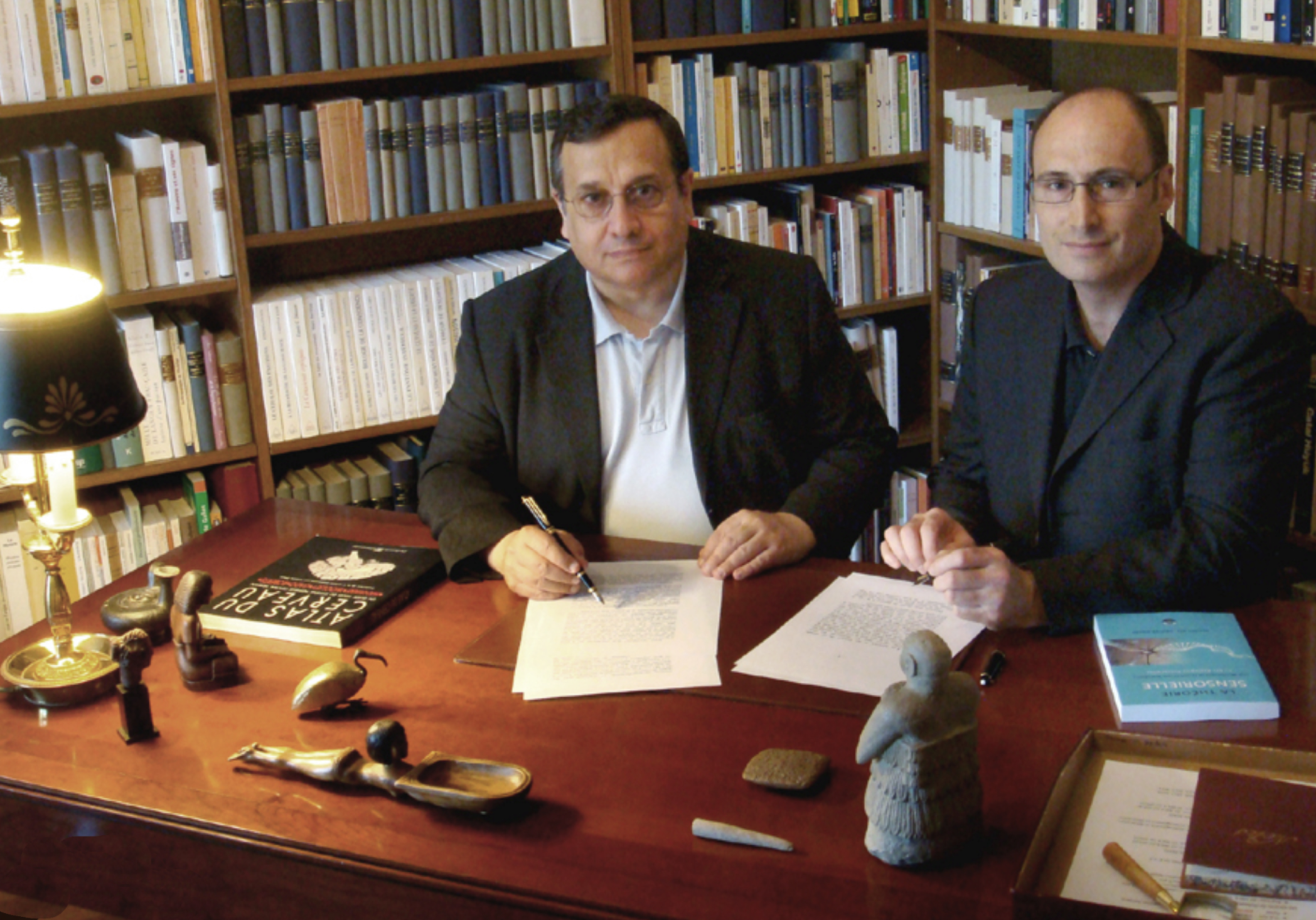
Philippe Roi and Tristan Girard, authors of La Théorie Sensorielle

Philippe Roi, cognitive science researcher and former Editing Director of Le Courier de l’Intelligence Artificielle recently argued that, “The greatest peril posed by artificial intelligence is not that it accomplishes our tasks, but that it spares us the inner transformation required to carry them out.”

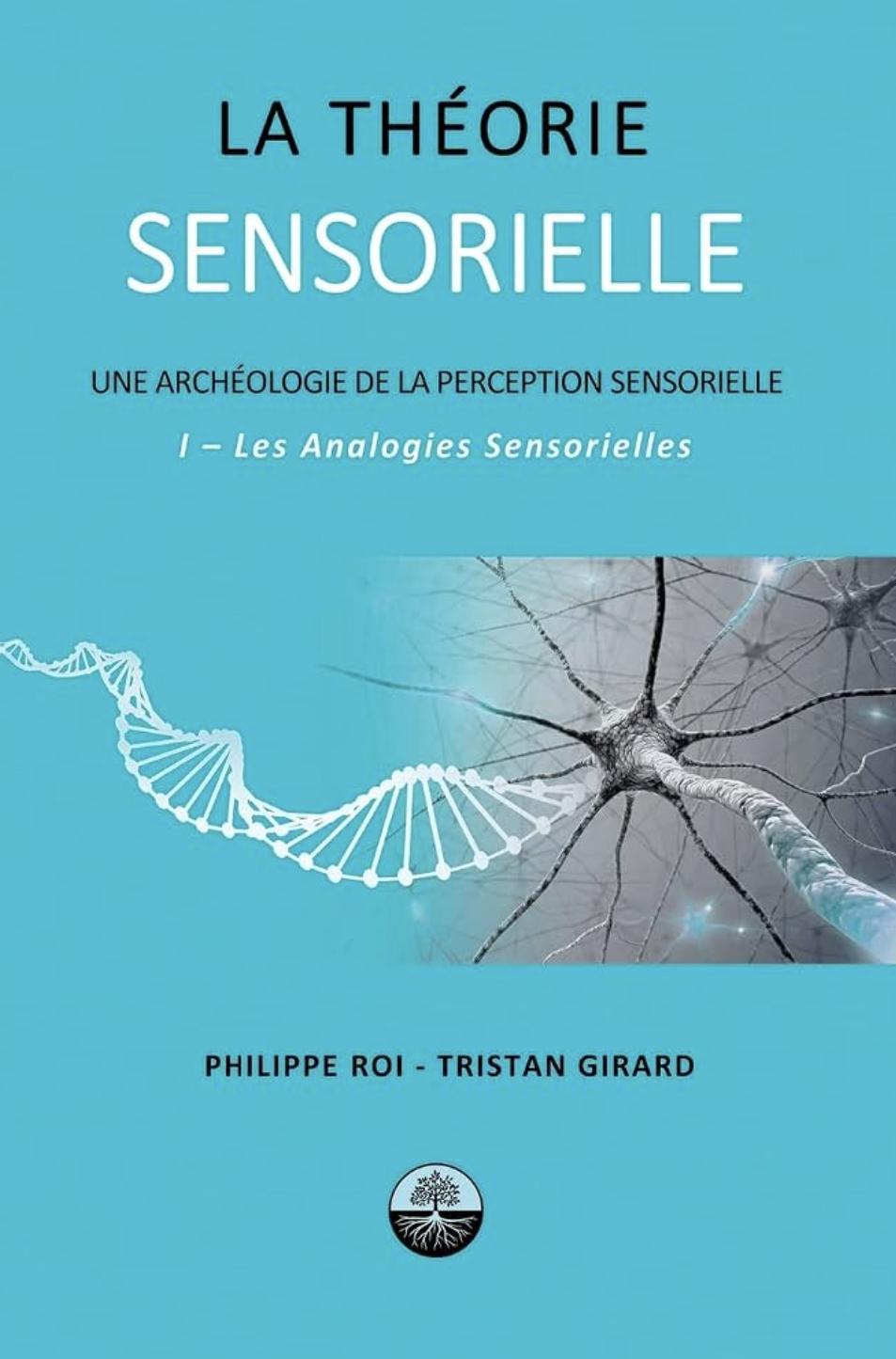
Roi, who co-authored with Tristan Girard La Théorie Sensorielle, noted that a form of laziness is currently spreading around the world. “It is neither idleness nor indolence,” he writes, “but a growing dissociation between the result obtained and the being who should have [trans]formed themselves to achieve it.”
“AI enables us to diagnose without understanding, to translate a text without mastering the language, to publish a book without having written a single line, to create a work without having conceived it.”

Philippe Roi

Student studying in a library (image by Philippe Roi)

Roi warns that the term ‘Ignorance’ is changing as a result. “It is no longer merely an absence of knowledge; it is becoming an inability to gauge what one no longer knows how to do. The ultimate danger is that, after entrusting our cognitive tasks to AIs, we will also abandon to them the desire to learn which has made us thinking beings.”

References:

Ad Hoc Committee on AI Use in Teaching, Learning, and Research. 2026. “AI and Education.” MIT, August 13, 2026.

Blinder, A. 2026. “Universities Sound Warnings About A.I. Even as They Embrace It.” The New York Times.

Kos’myna, Nataliya. 2025. “Your Brain on ChatGPT: Accumulation of Cognitive Dept when Using an AI Assistant for Essay Writing Task.” MIT Media, June 10, 2025.

Tangermann, Victor. 2026. “MIT Report Finds That AI Is Leading to “Cognitive Surrender” Among Students. Futurism, September 19, 2026.

Field in late fall, ON (photo and rendition by Nina Munteanu)

Nina Munteanu is a Canadian ecologist / limnologist and novelist. She is co-editor of Europa SF and currently teaches writing courses at George Brown College and the University of Toronto. For the latest on her books, visit www.ninamunteanu.ca. Nina’s bilingual “La natura dell’acqua / The Way of Water” was published by Mincione Edizioni in Rome. Her non-fiction book “Water Is…” by Pixl Press (Vancouver) was selected by Margaret Atwood in the New York Times ‘Year in Reading’ and was chosen as the 2017 Summer Read by Water Canada. Her novel “A Diary in the Age of Water” was released by Inanna Publications (Toronto) in June 2020. You can read her just released eco-fiction thriller Gaia’s Revolution by Dragon Moon Press.

.

The Mozart Effect & the Power of Music

Joe PieWeed 2 JC

Joe-Pye weed, Jackson Creek, ON (photo by Nina Munteanu)

Music is a holy place, a cathedral so majestic that we can sense the magnificence of the universe, and also a hovel so simple and private that none of us can plumb its deepest secrets—Don Campbell


Don Campbell calls it the “Mozart Effect” in his book of the same name: the ability of music to heal the body, strengthen the mind and unlock the creative spirit.

You’ve all felt it—its rhythm resonating with your throbbing heart, soothing your mind, calming your breath. Or you’ve felt the reverse— depending on the music. Whatever your response, says Campbell, music produces mental and physical effects in you; and—I would venture to add—in all things animate and inanimate (see my next post on Cymatics). Therapeutic uses of music are many:

  • Music can slow down and equalize brain waves: music with a pulse of about sixty beats per minute can shift consciousness from the beta wave (ordinary consciousness at 14-20 Hz) toward the alpha range (heightened awareness at 8-13 Hz), enhancing alertness and general well-being
  • Music affects the heartbeat, pulse rate and blood pressure: a study of expectant mothers at the College of Nursing at Haohsiung Medical University (Taiwan) demonstrated significant reductions in stress, anxiety and depression after two weeks of listening to Brahms lullaby, Beethoven and Debussy and traditional Chinese children’s songs
  • Music can regulate stress-related hormones: Anesthesiologists reported that levels of stress hormones like ACTH, prolactic and HGH all declined in those listening to relaxing music
  • Music and sound can boost the immune function: A Michigan State University study demonstrated that listening to music for fifteen minutes increased levels of interlukin-1 in the blood from 12.5 to 14 percent (interlukin is involved in the immune system, protecting against AIDS, cancer and other diseases)
  • Music improves productivity: a University of Wisconsin study of ninety people copyediting a manuscript found that accuracy in those listening to light classical music improved 21.3% compared with those listening to a popular commercial radio format at 2.4%
  • Music can strengthen memory and learning: studies have shown that music increases stamina during exercise in addition to the ability to concentrate.

JoePieWeed river close JC

Joe-Pye Weed, Jackson Creek, ON (photo by Nina Munteanu)

When I was pregnant with my son, I felt an overwhelming urge to listen to classical music (mostly Beethoven, Debussy, Ravel and Mozart) and soft “new age” Celtic music (mostly Enya). What I’d intuitively felt is now known: music calms or stimulates the movement and heart rate of a baby in the womb. It has also been shown that children who receive regular music training demonstrate better motor skills, math ability, and reading performance than those who don’t. High school students who sing or play an instrument score up to fifty points higher on SAT scores than those who don’t.

These observations are borne out by another observation: that adult musician’s brains generally exhibit more EEG (brainwave) coherence than those of non-musicians.

Music is a language understood instinctively by all peoples because it communicates directly to the soul. Darwin suggested that music may have played a role in the evolution of language, comparing the sounds of speech to the way birdsong is used in courtship, reports Caroline Green in the Jan/Feb 2010 Issue of BBC Knowledge. “Some have referred to this as a ‘musical proto-language’.”

In an article in the Fall 2009 Issue of Super Consciousness Campbell eloquently described music as, “the sounds of earth and sky, of tides and storms. It is the echo of a train in the distance, the pounding reverberations of a carpenter at work. From the first cry of life to the last sigh of death, from the beating of our hearts to the soaring of our imaginations, we are enveloped by sound and vibration every moment of our lives. It is the primal breath of creation itself, the speech of angels and atoms, the stuff of which life and dreams, souls and stars, are ultimately fashioned.”

A man should hear a little music, read a little poetry, and see a fine picture every day of his life, in order that worldly cares may not obliterate the sense of the beautiful which God has implanted in the human soul—Johann Wolfgang von Goethe

JoePieWeed bunch JC

Joe-Pye Weed, Jackson Creek, ON (photo by Nina Munteanu)


nina-2014aaa

Nina Munteanu is a Canadian ecologist / limnologist and novelist. She is co-editor of Europa SF and currently teaches writing courses at George Brown College and the University of Toronto. Visit www.ninamunteanu.ca for the latest on her books. Nina’s bilingual “La natura dell’acqua / The Way of Water” was published by Mincione Edizioni in Rome. Her non-fiction book “Water Is…” by Pixl Press(Vancouver) was selected by Margaret Atwood in the New York Times ‘Year in Reading’ and was chosen as the 2017 Summer Read by Water Canada. Her novel “A Diary in the Age of Water” was released by Inanna Publications (Toronto) in June 2020.