.
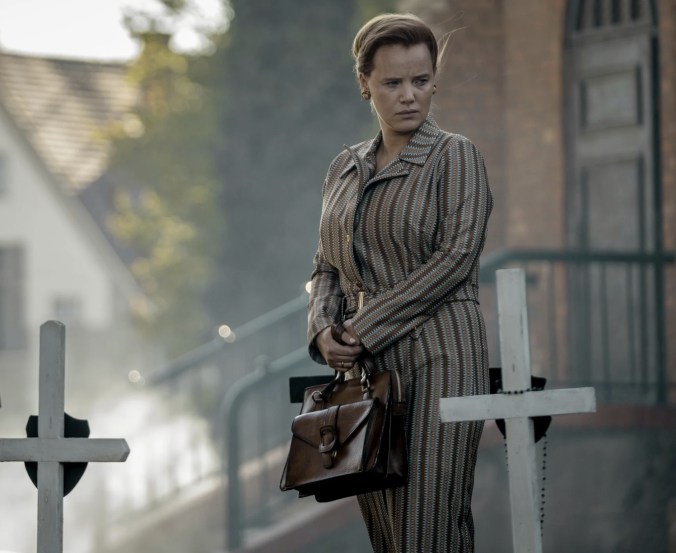
I recently discovered the Polish TV series Lead Children on Netflix—and pretty much binge-watched it. This gripping 6-episode series follows young Doctor Jolanta Wadowska-Król (played by Joanna Kulig) as she gradually uncovers and pieces together a mysterious health crisis that affects children living in the district of Szopienice (in the city of Katowice) dominated by a zinc / lead smelter.
Jolanta stands at a Szopienice graveyard filled with children’s graves (“Lead Children”)
.
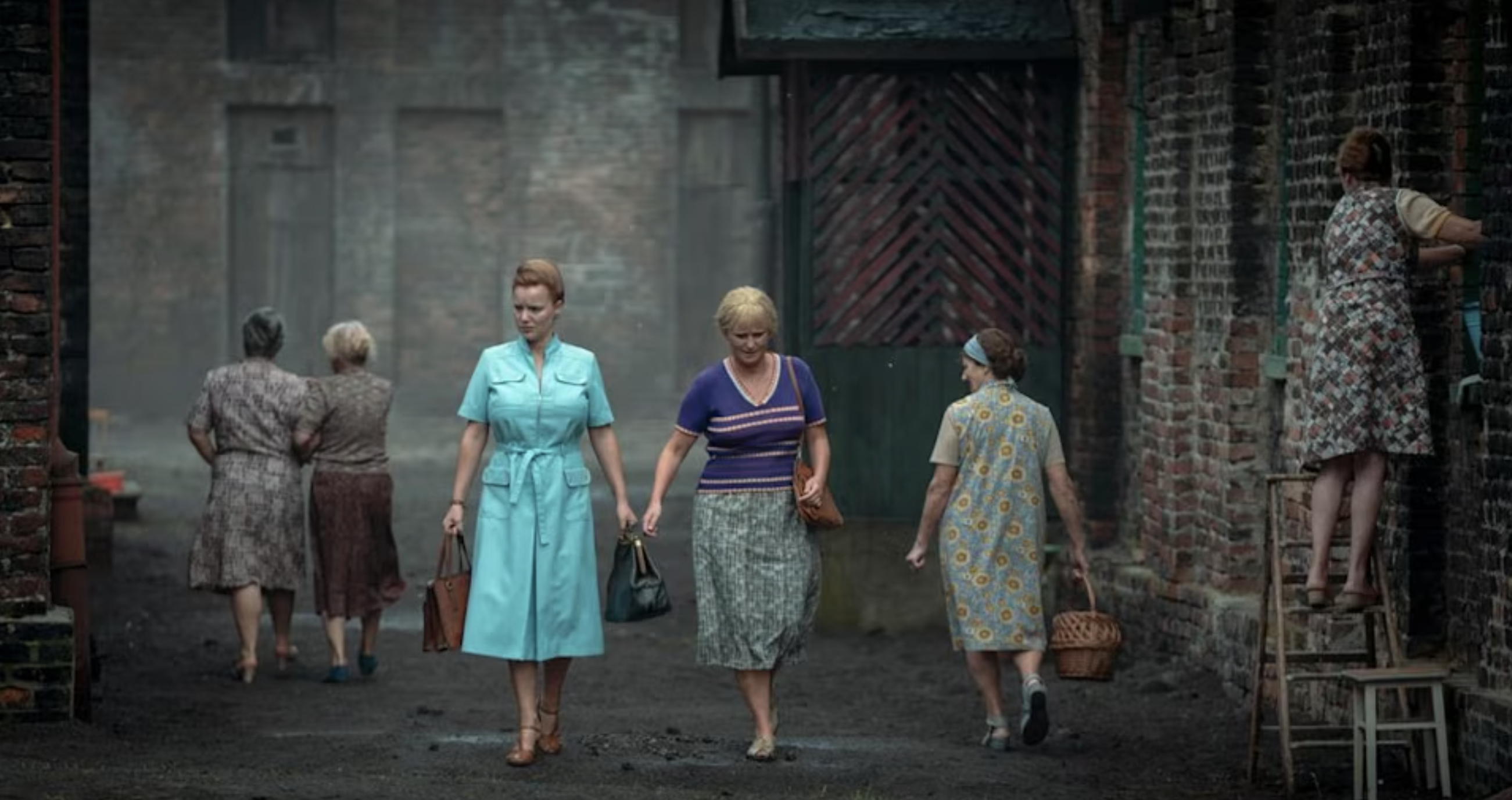
While the title gives away the subject matter of the series, episodes still unravel with insidious deliberation. In the first scene (after the flash forward) a young boy faints for no apparent reason, bringing our good doctor to his aid; in another scene Jolanta is wiping her filthy windows of black dust (from the nearby smelter) before visiting a pregnant mother with two anemic children who promptly gives birth to a stillborn child. We then move to a meeting of city officials who are deciding which factory Comrade General Secretary Brezhnev will visit and one official suggests the Szopienice Non-Ferrous Metal Works; the plant, he claims, has had “improvements and so forth,” that allowed it to exceed the plan for the past two months (the plan being Boleslaw Bierut’s Six-Year Plan started in 1950, for aggressively industrializing Poland through unrealistic production). All this sets the stage for a dark tale of treachery and brave but dangerous persistence to reveal the truth that will reach deep into your soul and squeeze until you are breathless.
.
.
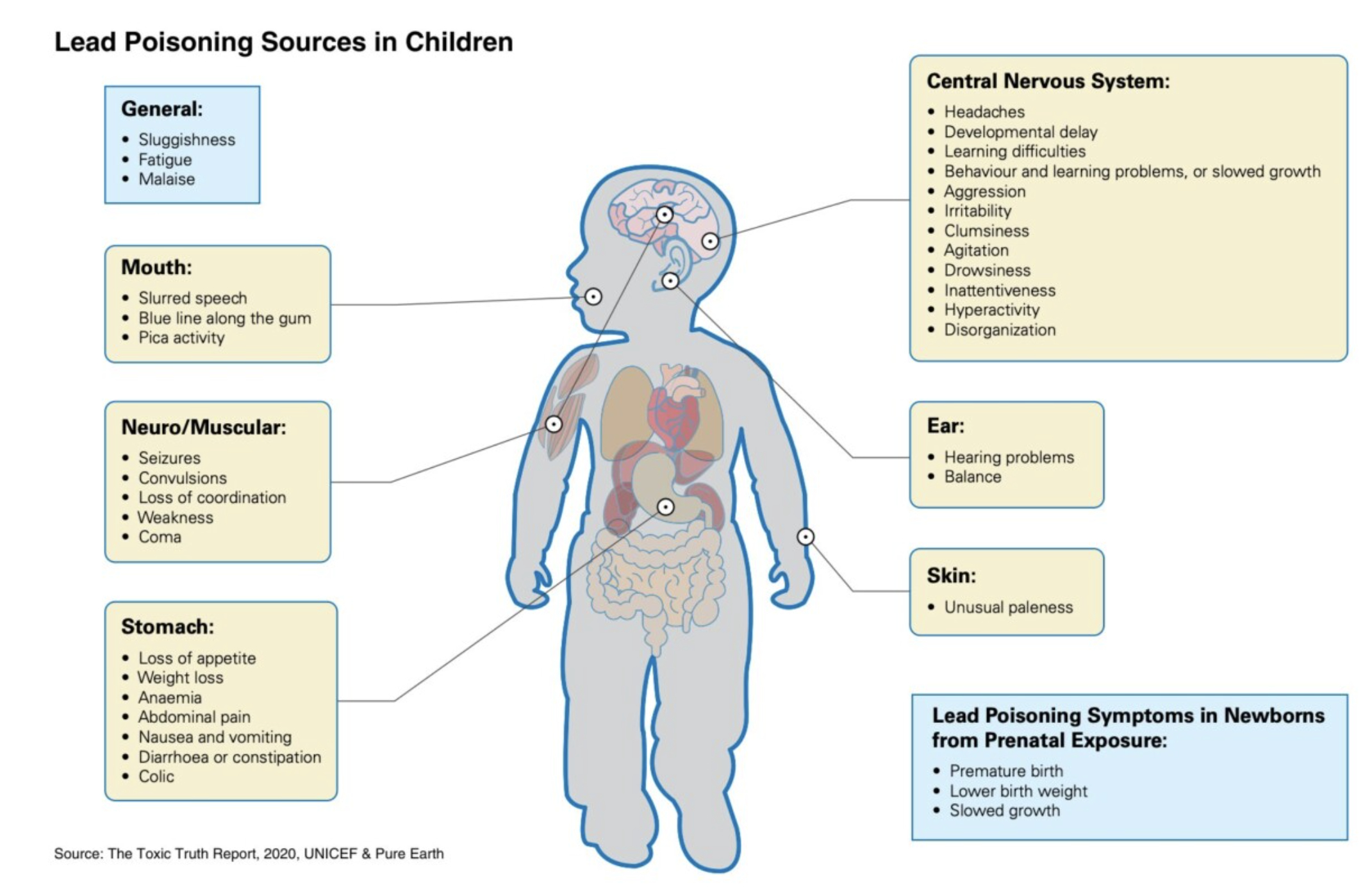
When local children begin showing signs of serious illness and developmental problems—high anemia (e.g. haemoglobin less than half normal), headaches, stomach pain, sluggishness, joint pain and muscle weakness, learning problems, hearing loss, irritability, vomiting, internal bleeding and seizures, enamel hypoplasia, blue gums—Jolanta pushes against what looks like a cover-up to investigate the unusual pattern of sicknesses.
.
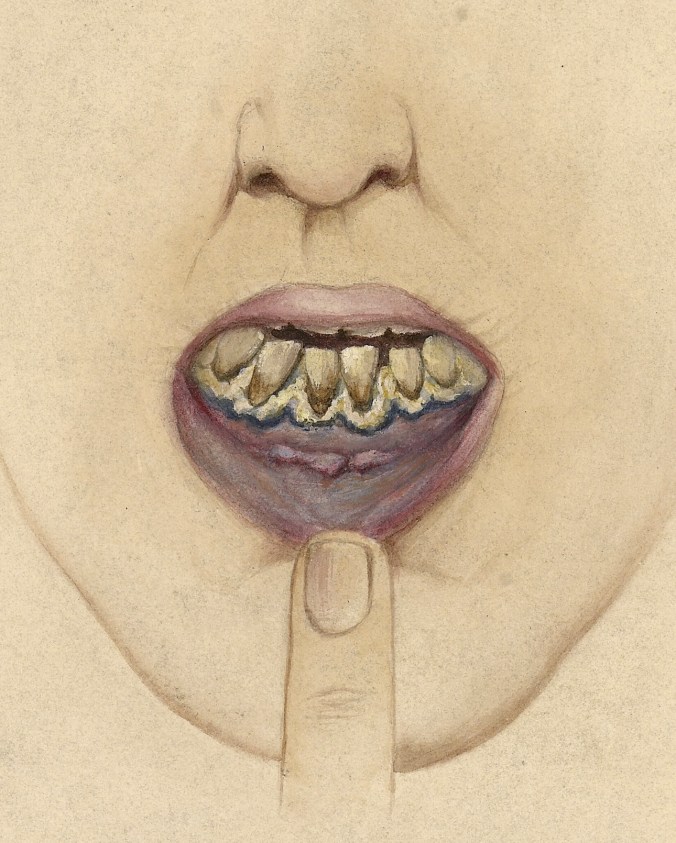
Jolanta recognizes the blue-black gum line in the children as a telltale sign of chronic lead toxicity. Known as “Burton’s line”, it is caused by a chemical reaction by a high level of lead in the child’s blood and sulfur-producing bacteria in the mouth. The interaction creates insoluble lead sulfide deposits in the gum tissue, typically near the gum margin. Jolanta links the poisoning to the lead emitted from the smelter in the Targowisko neighbourhood: in the dust, in the water and the ground where people keep their gardens and children play.
Watercolour drawing of the mouth and gums of a woman who worked in a lead-mill. There is saturnine impregnation with a well-marked Burton’s line and a blue stain on the buccal membrane opposite (source: Wikipedia)
.
.
.
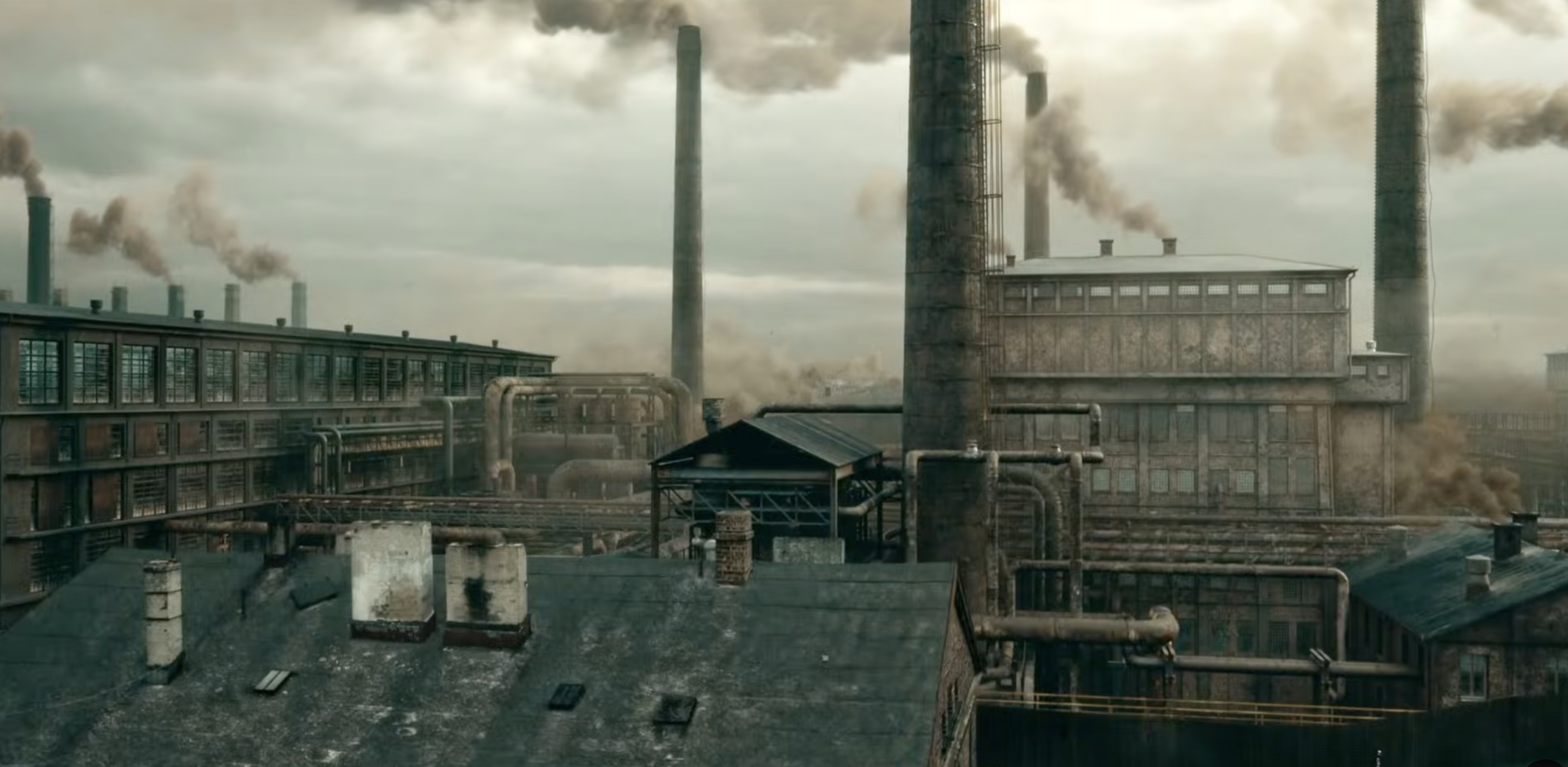
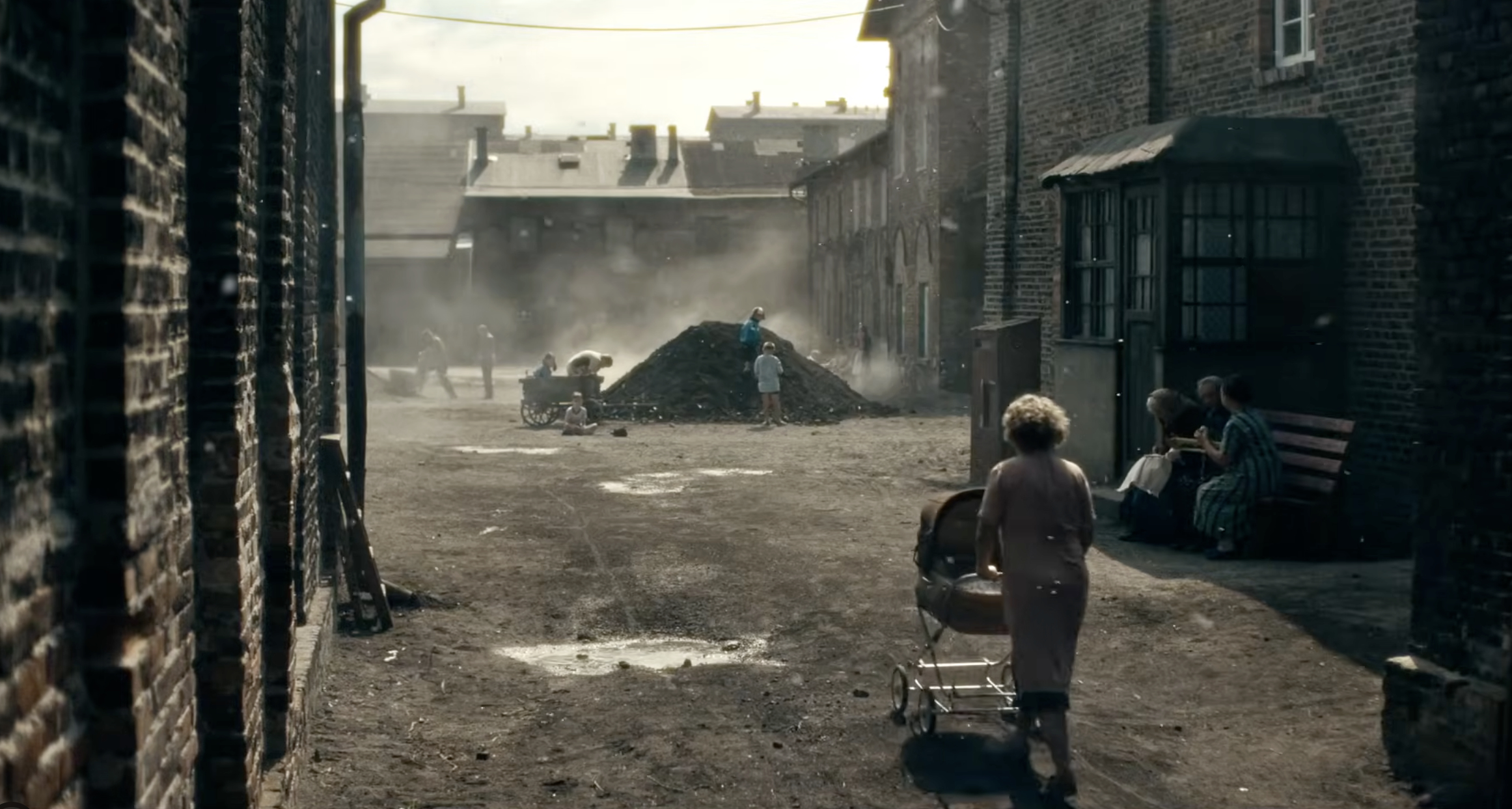
Jolanta’s efforts to address the problem are met with a concerted resistance from company managers, local officials and authorities, pressured by politics and the need for production over health and welfare of the community. For instance, workers and their families, live in shabby familoks around the smelter; kids play in the dirt, beneath the billowing smoke stacks, exposed to heavy metal-contaminated ash and dust. It gets even more dangerous for Jolanta when the Polish Security Service starts to interfere. As with the Stasi situation in East Germany, citizens are regularly pressganged into denunciating targeted individuals and Jolanta is denunciated by a member of her own staff.
.
.
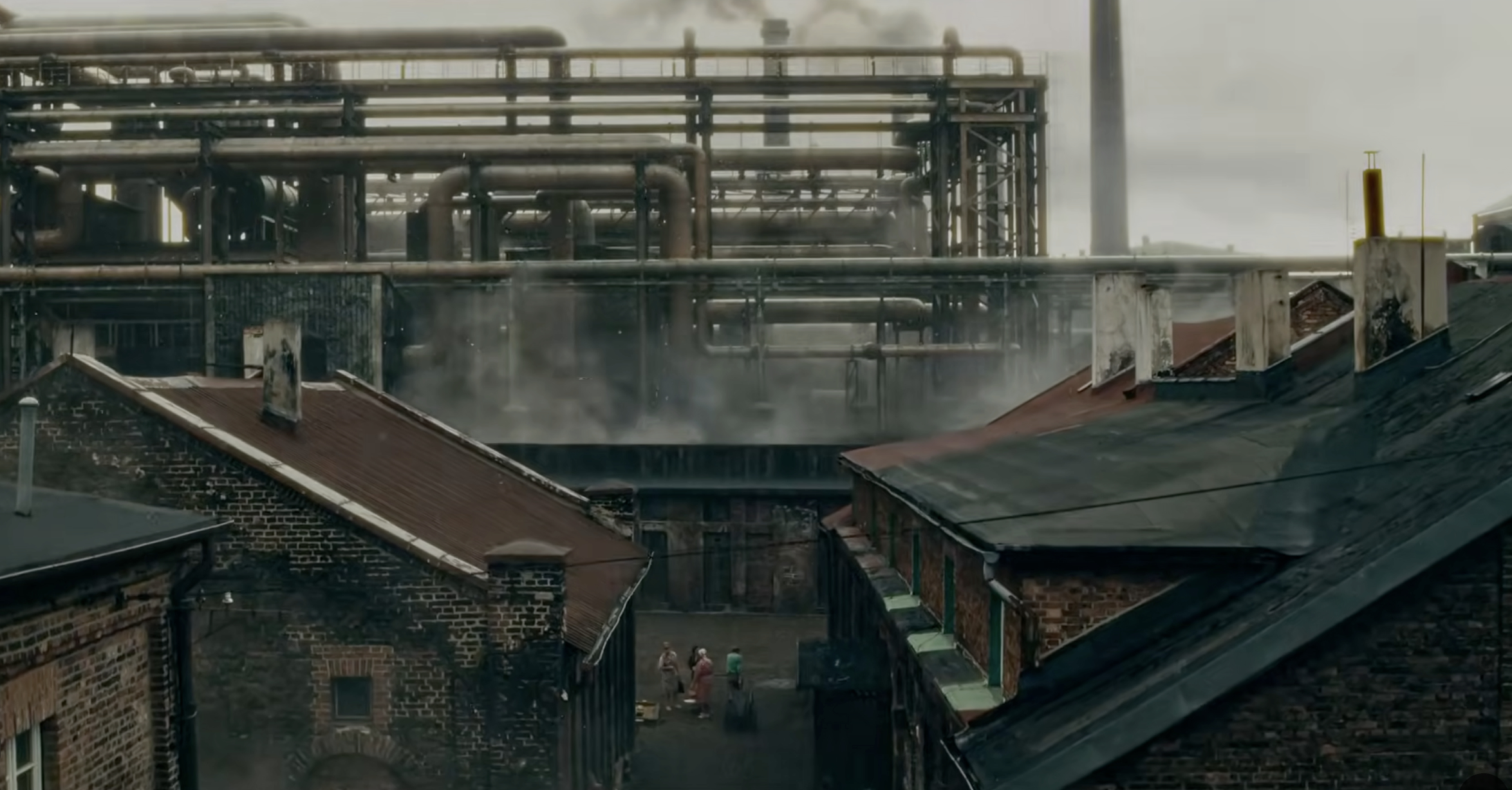
By Episode four, the show becomes heart-breaking as the first of the children dies shortly after returning to Targowisko after a reprieve and recovery from the smelter contamination. Meantime, local Polish Communist Party leader and politburo member Zdzislaw Grudzień pressures the smelter managers to “be the best” by comparing them to a high-producing metal works in Dresden (at the time still in East Germany under the GDR); they respond by removing all the dust-catching filters to increase the draft in the chimneys. Here we also learn that the previous head engineer in charge of stack air quality had been for years using only half the filters of the sieve plates in the pneumatic dust extractor to meet productivity targets.
.
.
The film notes that in the 1970s lead levels around the plant exceeded safety limits a thousand fold. Recent research indicates that even though the smelter was shut down in 2008, lead levels around it still exceed the limits set by the WHO.
.
Lead Poisoning in Children and Adults: where it comes from, what it does, and where it goes
.
Lead is a cumulative toxicant that affects multiple body systems; this includes the neurological, hematological, gastrointestinal, cardiovascular and renal systems. According to the WHO, there is no known safe level of lead exposure. Relatively low levels of lead exposure previously considered ‘safe’ are now known to damage children’s health and impair their cognitive development. With even low-level exposure, lead is associated with brain damage, reduced IQ, decreased intelligence, learning difficulties, lower lifetime earnings, increased incidence of heart and kidney disease later in life, and increased tendency for violence.
Young children are particularly vulnerable to lead poisoning, given that they can absorb up to 5 times as much lead as adults from an ingested dose. Children under the age of 5 years are at the greatest risk of suffering lifelong neurological, cognitive and physical damage and even death from lead poisoning. Older children as well as adults suffer severe consequences from prolonged exposure to lead in food, water and the air they breathe; this includes increased risk of cardiovascular death and kidney damage in later life. Children are particularly vulnerable to lead poisoning due to their smaller size and higher rate of lead absorption.
According to the WHO, once lead enters the body, it distributes to organs, including the brain, kidneys, liver and bones. Lead stores in the teeth and bones, where it accumulates over time. Lead stored in bone may release into the blood during pregnancy and expose the fetus.
Lead poisoning is not a thing of the past or restricted to communist nations. According to Pure Earth, lead exposure is responsible for an estimated 3.5 million cardiovascular deaths each year; more than HIV, malaria and tuberculosis combined. A World Bank analysis in 2019 demonstrated that children under five years old worldwide lost 765 million IQ points from lead exposure; about 95% of IQ point loss due to lead exposure were in LMICs. Lead poisoning may also account for 20% of the education gap between high- and low-income countries.
Major sources of lead contamination include mining & smelting, manufacturing and recycling activities, and lead use in a range of products. These include lead-acid batteries for motor vehicles. Products that may contain lead include pigments, paints, solder, stained glass, lead crystal glassware, ammunition, ceramic glazes, jewelry, toys, some traditional cosmetics, and some traditional medicines. Lead may contaminate drinking water through plumbing systems that contain lead pipes, solders and fittings.
.
1970s Communist Poland
Inspired by real events from 1970s Upper Silesia during Communist‑era Poland, the TV series Lead Children showcases the atrocities committed in the name of industrial growth and production during that time.
This was a time when the Polish Służba Bezpieczeństwa (SB) or the Security Service of the Ministry of Internal Affairs infiltrated all elements of Polish life—not unlike the Stasi in eastern Germany—to ensure that everyone followed party dogma and the mandate of the Polish United Workers’ Party for industrial productivity. The Security Service of the Communist Polish People’s Republic did their bidding from 1956 to 1990, often enlisting the citizens’ militia. Key aspects of the SB mandate involved political repression and surveillance, infiltration of civil society, persecution of the Catholic Church, suppressing strikes and protests, controlling information, and protecting the state-controlled economy.
Boleslaw Bierut’s Six-Year Plan started in 1950, aggressively industrializing Poland and causing widespread shortages, particularly for meat and dairy. In 1956, when Gomułka came into power, things became somewhat less dangerous, but the shortages continued and in some cases got worse. The period between 1976 and 1989 experienced a maximum in shortages of nearly all products. Under communist rule, Poland was driven by rapid industrial growth, often using low-skilled workers with no consideration for their health and welfare. Criticism or resistance was suicidal. Protests and ensuing riots were violently crushed and suspected leaders hunted down and executed.
.
(Re)Genesis and the Kurpiowska Forest
.
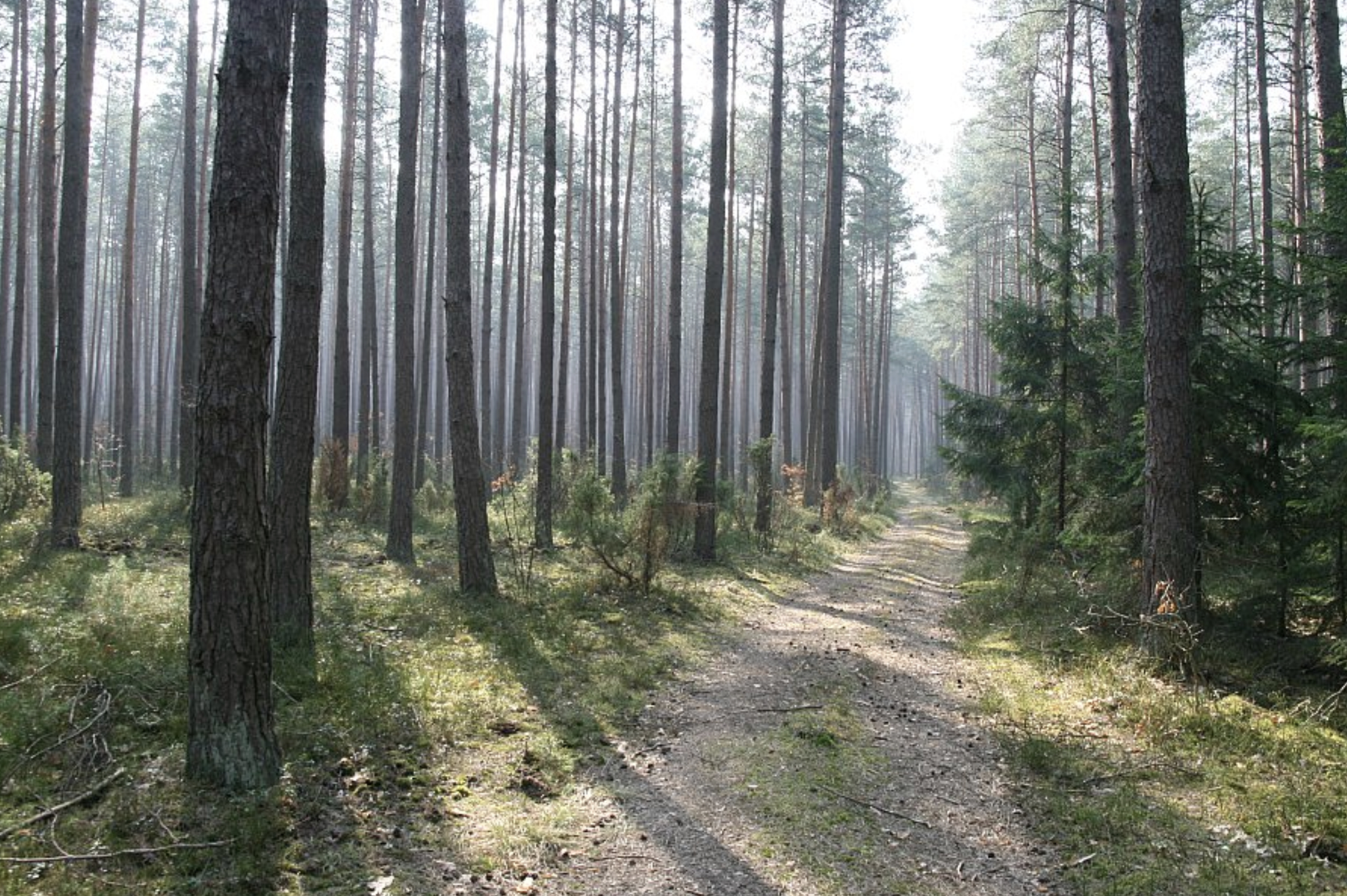
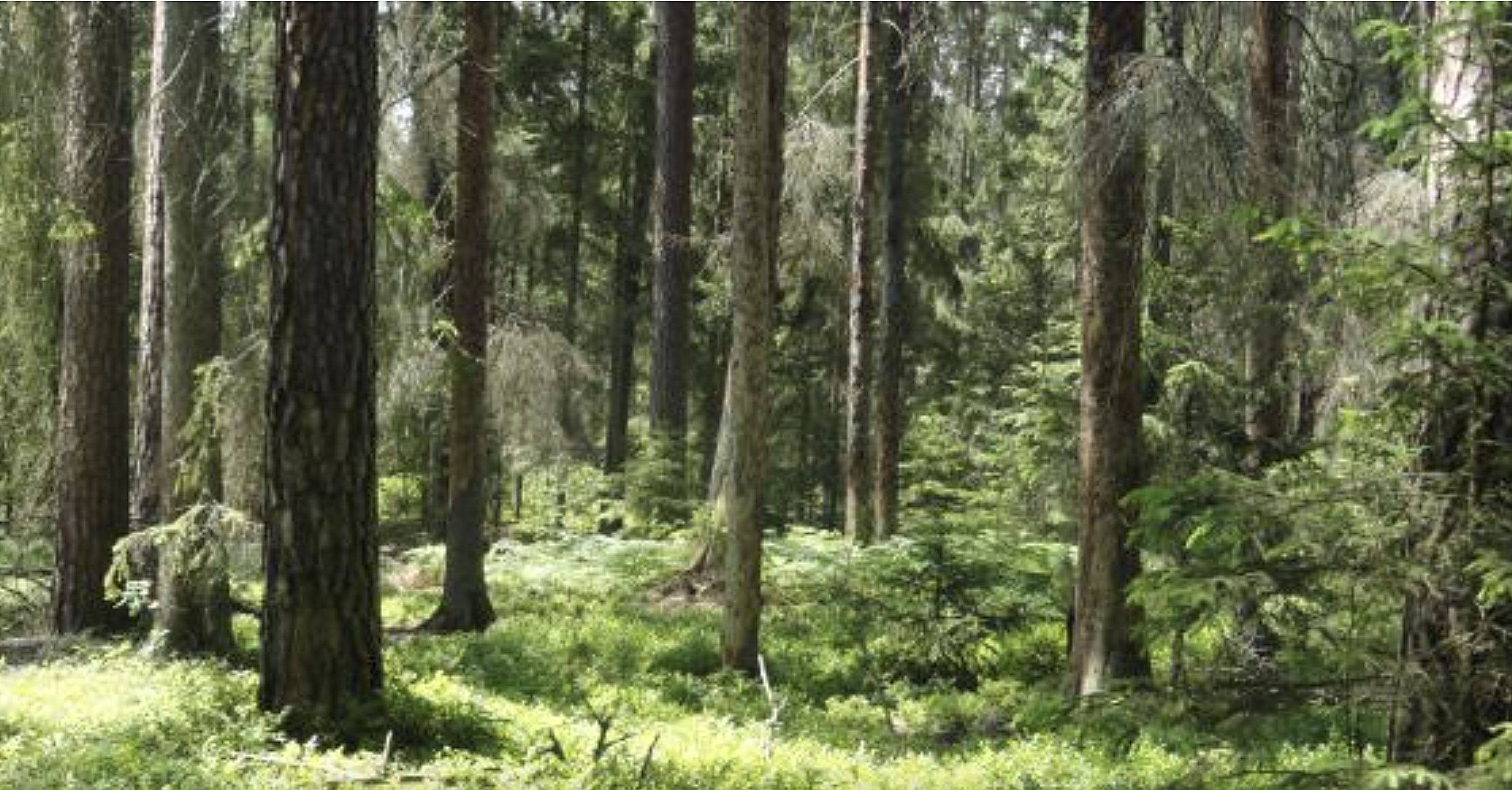
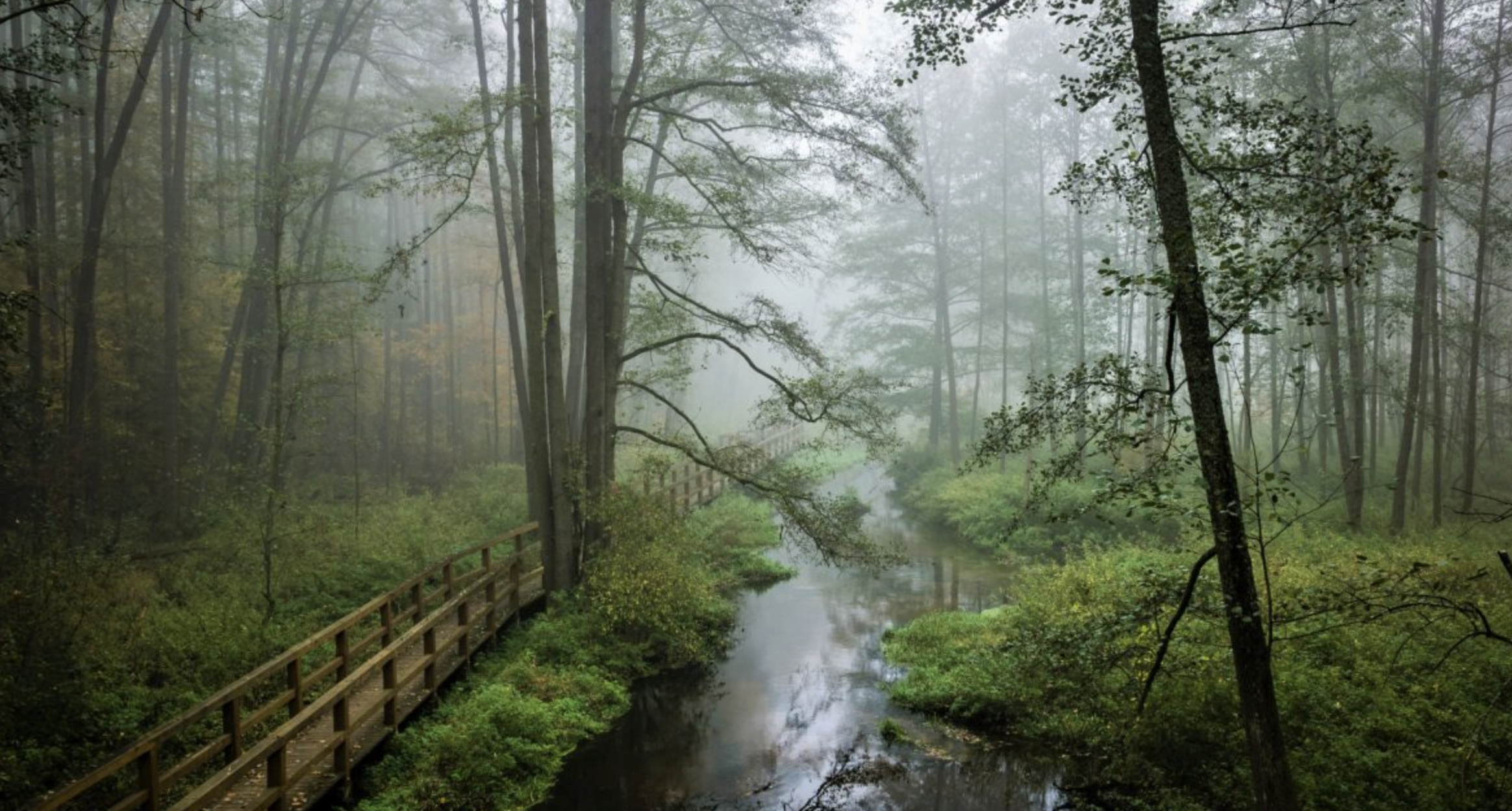
Several key scenes of my upcoming eco-fiction thriller (Re)Genesis take place inside the Kurpiowska Forest in central Poland’s Mazovian Lowlands during the communist rule of Poland (specifically from the 1950s to the 1970s). Young Zofia and Piotr Wójcik and their little twins have come to the Puszcza Kurpiowska to work for Zima Performance Elastomers, a chemical plant that makes a mysterious miracle chemical called syprene that is highly volatile, flammable and toxic. Zima compromises the health and safety of its workers under the yoke of productivity. Workers fall ill and are usually replaced within a decade, either leaving due to ill health or dying of complications. In the following scene in 1959, Zofia has invited her older sister to take care of her twins so she can continue working at Zima Performance Elastomers deep inside the Kurpiowska Forest:
Zofia can’t help a smile. Her older sister is more of an intellectual; she isn’t the mothering type and has made it clear that she doesn’t like children. Yet the twins seem to have softened her heart a little, thinks Zofia, who is so grateful that her older sister is here, so she can return to work.
They eat supper quietly together; Piotr is on the evening shift and won’t be home until later at night when Zofia will reheat some bigos and bread for him.
“How’s Piotr? Still losing his hair?” Ewa asks casually, helping herself to more bigos from the pot.
“Not so much now,” says Zofia. She wipes the side of her bowl with some rye bread to catch the rest of her bigos. “He still gets headaches. I give him piołun for them.”
Ewa frowns and shakes her head. “Does it work?”
Zofia shrugs.
Ewa makes a scoffing sound; she knows that it doesn’t. She leans forward suddenly. “Seriously, you need to do something, Zofia.”
“But what can I do?”
“Zima’s clearly breaking safety rules. The first is not having sufficient signage. Then hiring idiots straight from high school who don’t know what they’re doing and not educating them. You mentioned Janek smoking in the Polyanna Building? Didn’t you say that stuff is flammable?”
“I think so, based on other similar compounds I know about. No one knows what syprene really is.”
“Well, he’ll blow up the plant if he isn’t careful. Good god, sister, you need to report this to the government before it’s more than just some headaches or a bit of hair loss. Before there’s a serious accident. The constitution of ‘52—”
“The constitution! It’s just paper. The Polish United Worker’s Party has its own rules and ways of doing things.” She waves the bread in her hand at her older sister. “Who would I report this to, eh? Have you forgotten what happened when workers demanded better working conditions at the Poznań’s Cegielski Factories in ’56? Nothing can interfere with progress. The government doesn’t care. And let’s not forget the secret police. That Łukasz Zieliński, who’s so chummy with Wozniak, gives me the creeps. I’m sure he’s secret police. He hardly does anything except wander about poking his long nose in everything and making derogatory remarks.”
“Now who’s the cynic.” Ewa leans back with a crooked smile. The smile turns into a scowl as she acknowledges Zofia’s point. “But you’re probably right about him.” She shakes her head, spoon playing with the stew. “And, you do have to be careful, sister. Something will happen. I can feel it in my bones.”
Unfortunately, so can Zofia. Her older sister is right, she concedes. The whole place is a tinder box and lately emotions have been high with arguments and even fights erupting in the polymer building. It doesn’t help that Piotr doesn’t seem to take the dangers seriously by not wearing protection, just to fit in—
There’s a noise outside.
The women turn, hearing shuffling at the door and men talking in low urgent voices. The door bursts open and two workmen—Vasili and Krzysztof—drag Piotr inside. He is barely conscious and his head lolls as he groans and murmurs through a frothing mouth.
The women rush forward.
“What happened?” Ewa demands.
“There’s been an accident,” Vasili says, glancing at Krzysztof, who normally works the shift with Piotr. “He got splashed when the drum broke, and may have even swallowed some of the stuff. Then he went into convulsions.”
“And you brought him here?” Ewa says, aghast.
“There’s no emergency shower or eye wash there—”
“Don’t come any further into the house!” Ewa orders gruffly. “Strip him naked and throw the clothes outside. Then take him to the shower. And for god’s sake take off your shoes!”
The men jump into action.
Zofia looks on, tongue-tied.
“Well, get in there!” Ewa shouts at Zofia. “Scrub him clean. With soap! Quickly!”
.
.
.

Nina Munteanu is an award-winning novelist and short story writer of eco-fiction, science fiction and fantasy. She also has three writing guides out: The Fiction Writer; The Journal Writer; and The Ecology of Writing and teaches fiction writing and technical writing at university and online. Check the Publications page on this site for a summary of what she has out there. Nina teaches writing at the University of Toronto and has been coaching fiction and non-fiction authors for over 20 years. You can find Nina’s short podcasts on writing on YouTube. Check out this site for more author advice from how to write a synopsis to finding your muse and the art and science of writing. Her most recent novel “Gaia’s Revolution” was released in March 2026 by Dragon Moon Press (Calgary).
.
 Nina Munteanu Writing Coach