Interview with Simon Rose on his Latest Book: “An Untimely Death”

My guest today is author Simon Rose, who has published nineteen novels for children and young adults, eight guides for writers, more than a hundred nonfiction books, and many articles on a wide variety of topics. Today, we’re looking at his latest novel for young adults, An Untimely Death:

Nina: So, what’s the book all about?

Simon: An Untimely Death is an exciting science fiction and historical fantasy adventure for young adults. When Peter’s great-grandfather, Ted, passes away, Peter is looking through his belongings in the attic. Peter knows about Ted’s experiences with the Canadian Army in World War II and absentmindedly flips a coin. To his astonishment, Peter finds himself in the heat of battle in 1944, where he embarks on a highly dangerous mission to ensure that history is placed back on track.

Nina: What’s the story behind the story?

Simon: In the present day, Peter is fourteen and lives in Calgary, Alberta, Canada. He’s long known about the stories concerning the experiences of his great-grandfather during World War II. Peter knows that Ted participated in the invasion of Normandy in 1944, then in the Allied advance across Europe and into the Netherlands and Germany following D-Day.

When Ted passes away, Peter is looking through his great-grandfather’s belongings. Peter looks at some of Ted’s campaign medals, although Ted’s friend, Frank, had received the Military Medal, after saving the life of a young Dutch girl. The medal was awarded posthumously since Frank had been killed in action shortly after his heroic act. Peter also examines an old coin, which he knows Ted had found in a ruined house during the fighting in the Netherlands. The coin depicts the head of Queen Wilhelmina of the Netherlands, and Peter is aware that Princess Juliana, who later became the Queen, lived in Ottawa during the war, establishing strong links between Canada and the Netherlands.

When Peter flips the coin, the attic around him vanishes. To his astonishment, Peter finds himself in the Battle of the Scheldt in the Southern Netherlands in 1944. He encounters the younger versions of Ted and Frank, as well as the Dutch girl, but Peter’s presence in the past has disastrous consequences for the world he knows when he returns to his own era. Suspecting that he may have very limited opportunities to make a difference, Peter embarks on a highly dangerous mission to ensure that history is placed back on track, before it’s too late.

Nina: You must have done quite a lot of historical research for this novel.

Simon: Yes, the story, main characters, and some of the settings in this novel are fictional but are based on true events that took place in World War II. I did lots of research into the latter stages of the conflict, the Canadian soldiers and their battles to liberate the Netherlands, the connections between the Dutch Royal Family and Canada, the beginnings of the Canadian Tulip Festival after the war, and the links between Canada and the Netherlands that still exist today.

Following the story, the glossary has links to online sources where readers can learn more about the historical events, military campaigns, settings, and leading characters from World War II that are featured in the story. On my website, there’s a page dedicated to the book, along with links to separate pages featuring information regarding the book’s historical background and links to many online sources.

Nina: What are you currently working on?

Simon: I always have a few current projects and right now I’m working on another historical fantasy novel series, this time set in the early years of World War II. I’m also working on more books in the same genre as my previously published paranormal Flashback series, a fantasy series, and a historical fiction novel. I also continue to work on the adaptations of my Shadowzone series into screenplays for movies and TV shows, some other scripts, as well as teaching writing courses at the University of Calgary.

Anyone interested in keeping up to date with the projects that I’m working on is always welcome to subscribe to my monthly newsletter, which you can do at www.simon-rose.com.

Nina: You work with other authors, as well as on a variety of projects related to writing and publishing, don’t you?

Simon: Yes, I offer coaching, editing, consulting, and mentoring services for writers of novels, short stories, fiction, nonfiction, biographies, and in many other genres, plus do work with writers of scripts and screenplays. I’m also a writing instructor and mentor at the University of Calgary and served as the Writer-in-Residence with the Canadian Authors Association. You can find details of some of the projects I’ve worked on with other authors, along with some references and recommendations, at www.simon-rose.com.

Nina: Where can people buy An Untimely Death?

Simon: The book can be purchased at most of the usual places, as follows:

Ebook: Amazon Canada, Amazon USAKoboiBooks, Barnes and NobleScribd, Amazon UK, Amazon GermanyAmazon FranceAmazon JapanSmashwords

Paperback: Amazon Canada, Amazon USA, Amazon UK

Nina: Thanks Simon, for being my guest here today and the very best of luck with the AnUntimely Death. I hope that the book sells thousands and thousands of copies in the coming months.

You can learn more about Simon and his work on his website at www.simon-rose.com, where you can also link to him on social media and at other locations online.

The A to Z of Writing Fiction: G, H, I…

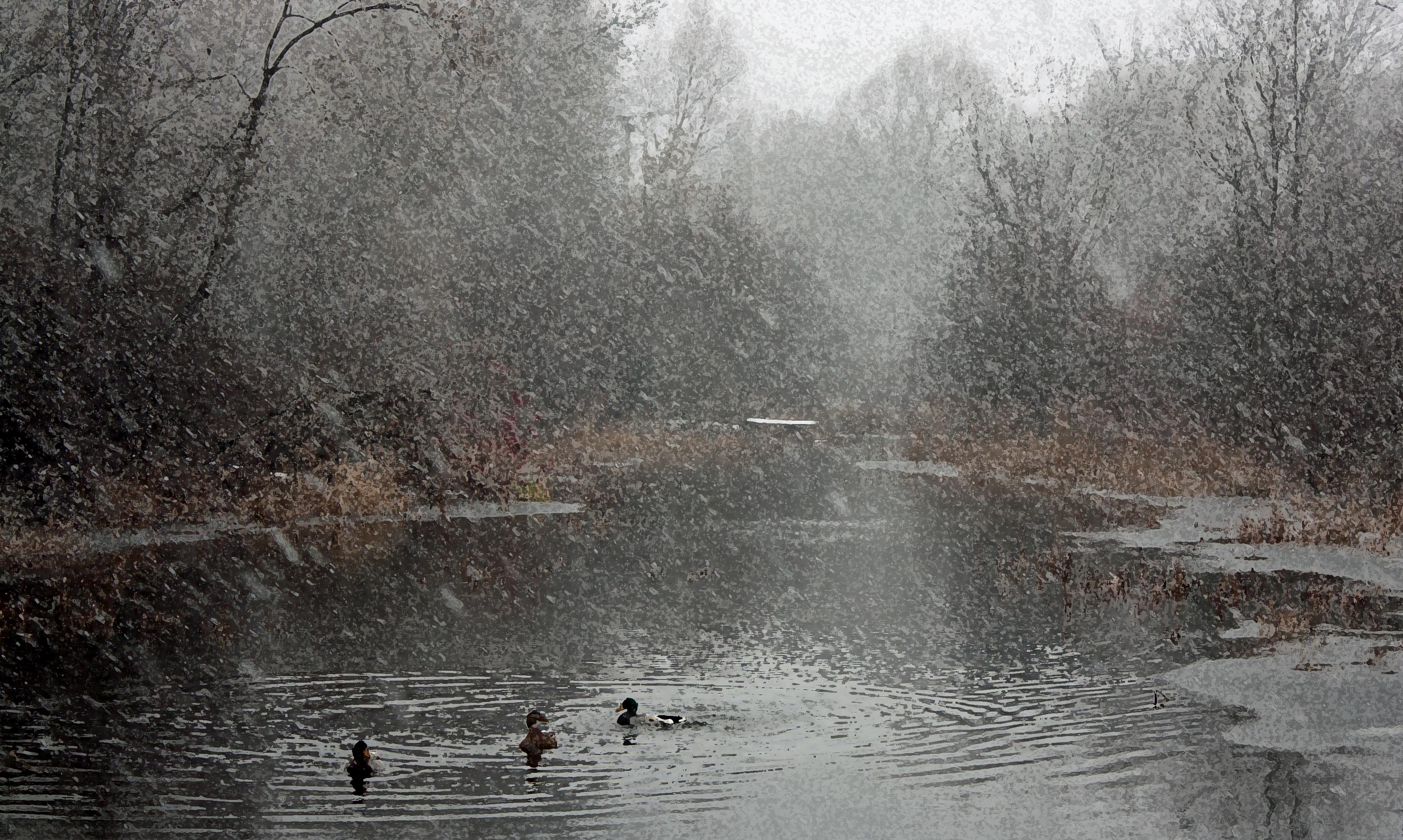
Snowing in the Kawarthas, ON (photo and rendition by Nina Munteanu)

In this series of articles, I draw from key excerpts of my textbook on how to write fiction The Fiction Writer: Get Published, Write Now! whose 26 chapters go from A to Z on the key aspects of writing good and meaningful fiction.

G is for Defining your Genre & Going Beyond It

Although genres are not precisely definable, genre considerations are one of the most important factors in determining what a person will see or read. Many genres have built-in audiences and corresponding publications that support them, such as magazines and websites.

For a long time people considered that books and movies that are difficult to categorize into a genre were likely to be less successful commercially. This is no longer the case, thanks to online bookstores like Amazon, that are able to ‘shelve’ books under multiple categories for people to find. In fact, having your book cross several genres (called “cross-genre” or slipstream) may even provide an advantage in that your book will occupy not just one but several niches—akin to placing your bets on several horses rather than just one.

So, if you haven’t figured out what genre your writing falls under, start figuring it out now; your future publisher and marketer will want to know because they, in turn, have to tell their distributor and bookseller where to shelve the book. This is why you need to do this, no matter what you think of categorizing your work; the alternative is leaving it to Jack in the marketing department who may not have even read your book, but used the cover picture to figure it out. Yikes!

The key to this exercise, whether your work falls under one or more categories, is to understand your work well enough to be able to categorize it. And, by all means, break the rules of categorizing—just know why you are.

H is for House or Home…Creating Memorable Settings

Setting fulfills most of the core aspects of a story. Without a place there is no story. Setting serves multipurpose roles from helping with plot, determining and describing character to providing metaphoric links to theme. Setting, like the force in Star Wars, provides a landscape that binds everything into context and meaning. Without setting, characters are simply there, in a vacuum, with no reason to act and most importantly, no reason to care.

Settings can not only have character; they can be a character in their own right. A novelist may often find herself, when portraying several characters, painting a portrait of place. This is setting being “character”. The setting functions as a catalyst, and molds the more traditional characters that animate a story. Think of any of your favourite books, particularly the epics: The Wizard of Oz, Tale of Two Cities, Doctor Zhivago, Lord of the Rings, The Odyssey, etc. In each of these books the central character is really the place, which is inexorably linked to its main character.

Settings depict the theme of your story through metaphor. The setting and all the objects in it are described to your reader through your POV character. This gives you an excellent opportunity to show the mood, temperament, judgment and bias of your character and their place in their world.

I is for Interviews and other Weird Experiences

As a writer of either fiction or non-fiction, you will at some time require information from a real person. Depending on the nature of your research and its intended destination and audience, you may wish to conduct anything from a casual phone or email enquiry to a full-blown formal face-to-face interview. This will also depend on who you are interviewing, from a neighbour to a government official. The pillars of good journalism include:

  • thoroughness
  • accuracy
  • fairness and
  • transparency.

Here are some tips on what to do:

  • Do your research ahead of time: read up on your subject and include both sides of an issue (if that’s relevant). This helps you to respond intelligently with better follow-up questions.
  • Ask open-ended questions: avoid yes and no questions and get them to elaborate. Asking “why” solicits explanation, which will give your article depth.
  • Ask for examples: this provides a personal aspect to the article that gives it warmth and makes it more interesting.
  • Ask personal questions: what’s the worst thing that can happen? They can simply say no; the up side is you may get a gem. The personal angle from the interviewee’s perspective gives your
  • article some potential emotional aspect that gives it human-interest.
  • Ask the interviewee for any further thoughts to share: it’s an innocuous question, but can offer-up more gems. What it provides you with is the possibility of getting something you might not have thought of, sparked by your conversation.

Here are some tips on what NOT to do:

  • “There’s no rush.” Never reveal your deadline. Think about it; what do you normally do when there’s a deadline? Right…say it’s sooner than it really is.
  • “I’ve never covered this topic before.” This kind of information is inappropriate and may make your interviewee uncomfortable (worrying about your unproven abilities to properly interview her instead of focusing on her). Besides, it’s not what you know but what you learn that counts.
  • “I’ll be using what you say extensively.” Don’t assume and make promises you may not be able to keep, until after the interview.
  • “I don’t get it.” If you don’t understand something, get clarification rather than make a negative remark that tends to stop them dead in their tracks.“You can review the piece before it’s published.” This is something that can be dealt with over the phone to confirm facts; the source doesn’t need to see the whole piece before it’s published.
  • “This is going to be a fantastic article!” Keep your tone professional; there’s nothing wrong with being positive, but you should maintain a professional attitude that inspires confidence in the interviewee.

The Fiction Writer: Get Published, Write Now! (Starfire World Syndicate) May 2009. Nominated for an Aurora Prix Award. Available through Chapters/IndigoAmazonThe Book Depository, and Barnes & Noble.

The Fiction Writer is a digest of how-to’s in writing fiction and creative non-fiction by masters of the craft from over the last century. Packaged into 26 chapters of well-researched and easy to read instruction, novelist and teacher Nina Munteanu brings in entertaining real-life examples and practical exercises. The Fiction Writer will help you learn the basic, tried and true lessons of a professional writer: 1) how to craft a compelling story; 2) how to give editors and agents what they want; and 3) how to maintain a winning attitude.

“…Like the good Doctor’s Tardis, The Fiction Writer is larger than it appears… Get Get Published, Write Now! right now.”

David Merchant, Creative Writing Instructor
Snowing in cedar forest, ON (photo and rendition by Nina Munteanu)

Click here for more about my other guidebooks on writing.

Nina Munteanu is a Canadian ecologist / limnologist and novelist. She is co-editor of Europa SF and currently teaches writing courses at George Brown College and the University of Toronto. Visit www.ninamunteanu.ca for the latest on her books. Nina’s bilingual “La natura dell’acqua / The Way of Water” was published by Mincione Edizioni in Rome. Her non-fiction book “Water Is…” by Pixl Press (Vancouver) was selected by Margaret Atwood in the New York Times ‘Year in Reading’ and was chosen as the 2017 Summer Read by Water Canada. Her novel “A Diary in the Age of Water” was released by Inanna Publications (Toronto) in June 2020.

Interview with Author Simon Rose About His Latest Book “Royal Blood”

My guest today is Calgary author Simon Rose, who has published eighteen novels for children and young adults, eight guides for writers, more than a hundred nonfiction books, and many articles on a wide variety of topics. Today, we’re looking at his latest release, Royal Blood, the second novel in the Stone of the Seer series.

Remind us about the Stone of the Seer series. What’s it all about?

The Stone of the Seer is an exciting historical fantasy series for young adults, primarily set during the English Civil War in the mid-seventeenth century. The Stone of the Seer, is the first book in the series. At Habingdon House, Lady Elizabeth Usborne, Kate, and Tom discover a magical black stone, mysterious ancient manuscripts, and the tempus inpectoris, an incredible time viewing device. They are also in grave danger from Daniel Tombes, who has a fearsome reputation as a witchfinder.

And without giving too much away, what can readers look forward to in the second novel?

In Royal Blood, Lady Elizabeth, Kate, and Tom move to London in the middle of the Civil War, experiencing the great political changes taking place at the time, including the

trial and execution of Charles I. They are also still under threat from Tombes, who is also in the city. The story has many twists and turns, and I doubt if any of the readers will expect the novel’s cliffhanger ending.

And then they’ll have to wait for the third book?

Yes, they certainly will. I’m hoping that Revenge of the Witchfinder, the final novel and the conclusion of the story,will be published later this year. After that, people will be able to buy all three books in the series.

And what’s the story behind the story?

The story, main characters, and some of the settings in Royal Blood are fictional, but like in The Stone of the Seer, they’re based on real events and historical characters, such as King Charles I, appear in the story. The English Civil War broke out as a result of the struggle between Charles I and Parliament, regarding how the country should be governed. The king’s defeat in the war was followed by his trial and execution in January 1649. The monarchy was abolished and replaced first by the Commonwealth of England and then the Protectorate. However, although the monarchy was restored in 1660, in the person of Charles II, his father’s defeat confirmed that an English monarch couldn’t rule the country without the consent of Parliament. This was eventually legally established in 1688 after the Glorious Revolution.

Did you conduct extensive historical research for this book, as you did with the first one?

Although the English Civil War is a time period I’ve always been interested in, I still engaged in lots of research. I needed to study what life was like in seventeenth century London, the political and religious beliefs that were around at the time, the influence of real witchfinders such as Matthew Hopkins and others like him, and of course the trial and execution of Charles I. The trial itself was very well recorded and I was able to ensure that the words spoken by both the king and his accusers were accurate. There were also many witnesses to the execution, so I was able to include established facts about that aspect as well.

As I did in The Stone of the Seer, I’ve included a glossary at the end of Royal Blood, where readers can learn more about the events, settings, and leading characters from the era, locations that are mentioned in the text, life in the seventeenth century, and about other historical periods that are featured in the story. On my website, there’s also a page with details about the historical background behind the books, with links to online sources about the time period.

Do you have any current projects?

Right now I’m working on another historical fantasy novel series, this time set in the early years of World War II. I’m also working on another series of paranormal novels, in the same genre as my previously published series that includes Flashback, Twisted Fate, and Parallel Destiny. You can learn more about those books at www.simon-rose.com. In addition, I’m in the early stages of another couple of historical projects, and am also working on some screenplays, including adaptations of my Shadowzone series, and on several other topics.

Do you still work with other authors as well?

Yes, I offer coaching, editing, consulting, and mentoring services for writers of novels, short stories, fiction, nonfiction, biographies, inspirational books, and in many other genres, plus work with writers of scripts and screenplays. I’m also a writing instructor at the University of Calgary and served as the Writer-in-Residence with the Canadian Authors Association. You can find details of some of the projects I’ve worked on with other authors, along with references and recommendations, at www.simon-rose.com.

Where can people buy Royal Blood and The Stone of the Seer?

The novel can be purchased at most of the usual places, as follows:

Royal Blood

Ebook: Amazon CanadaAmazon USA, Kobo, iBooks, Barnes and NobleSmashwords

Paperback: Amazon Canada, Amazon USA

The Stone of the Seer

Ebook: Amazon CanadaAmazon USAKoboiBooksBarnes and NobleSmashwords 

Paperback: Amazon Canada, Amazon USA

Thanks Simon, for being my guest here today and the very best of luck with Royal Blood and the Stone of the Seer series. I hope the books sell thousands and thousands of copies in the coming weeks and months.

You can learn more about Simon and his work on his website at www.simon-rose.com, where you can also link to his social media sites and other locations online.

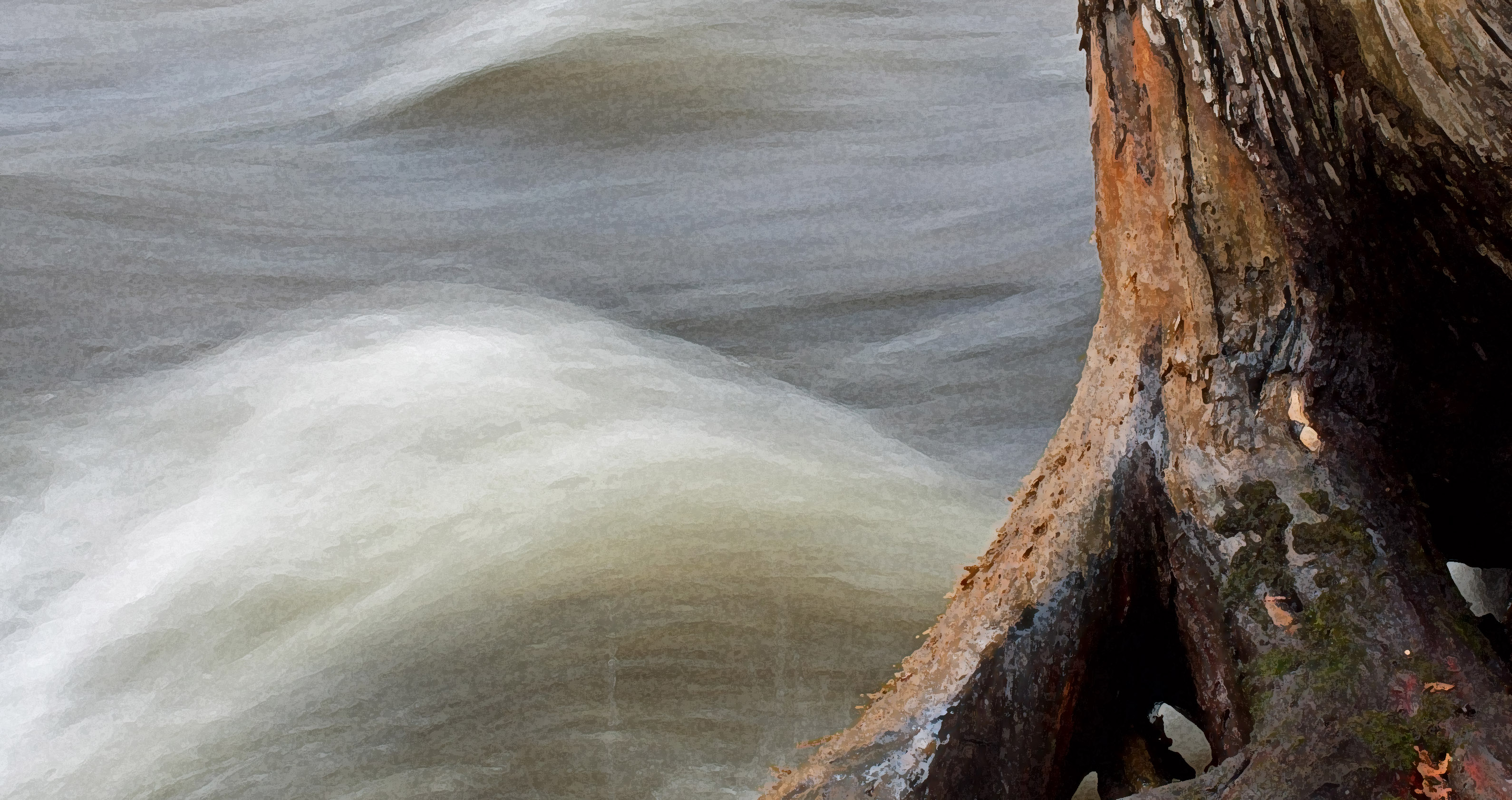
Tangle of roots of an old yellow birch tree, ON (photo and rendition by Nina Munteanu)

On Writing: Nina Munteanu Interviewed by Lisa Haselton

The Otonabee River glints in the sunlight in the midst of a snow flurry, ON (photo and rendition by Nina Munteanu)

This time last year reviewer Lisa Haselton posted an interview with me on New Year’s Day of 2021 on my latest release “A Diary in the Age of Water.” 2021 saw incredible sales for my clifi eco-novel, along with several appearances on radio shows, podcasts and TV stations. It would seem that water is on everyone’s mind and what better way than a limnologist’s diary to learn more about it.

Lisa and I talked about what inspired me to write this novel and about my writing process. What follows is part of that interview. Check out this link for the complete interview with Lisa Haselton.

*****

Lisa: Please tell us about your current release.

Nina: The book tells the journey of four generations of women who have a unique relationship with water, through a time of extreme climate change and water shortage. The book spans over forty years (from the 2020s to the 2060s) and into the far future, mostly through the diary of a limnologist, which is found by a future water-being. During the diarist’s lifetime, all things to do with water are overseen and controlled by the international giant water utility CanadaCorp—with powers to arrest and detain anyone. This is a world in which China owns America and America, in turn, owns Canada. The limnologist witnesses and suffers through severe water taxes and imposed restrictions, dark intrigue through neighbourhood water betrayals, corporate spying and espionage, and repression of her scientific freedoms. Some people die. Others disappear…

Ultimately, the book carries themes of hope and forgiveness—of ourselves and each other—and compassion for all things, starting with water. Each character carries an aspect of that theme, from the diarist’s activist mother, to the diarist’s own cynical protectionism, her spiritual anarchist daughter, and lastly the innocent storm of the last generation.

Lisa: What inspired you to write ‘A Diary in the Age of Water’?

Nina: It started with a short story I was invited to write in 2015 about water and politics in Canada.  I had long been thinking of potential ironies in Canada’s water-rich heritage. The premise I wanted to explore was the irony of people in a water-rich nation experiencing water scarcity: living under a government-imposed daily water quota of 5 litres as water bottling and utility companies took it all. I named the story “The Way of Water.” It was about a young woman (Hilda) in near-future Toronto who has run out of water credits for the public wTap; by this time houses no longer have potable water and their water taps have been cemented shut; the only way to get water is through the public wTaps—at great cost. She’s standing two metres from water—in a line of people waiting to use the tap—and dying of thirst.

The short story and the novel that came from it explore the nuances of corporate and government corruption and deceit together with global resource warfare. In this near-future, Canada is mined of all its water by thirsty Chinese and US multinationals—leaving nothing for the Canadians. Rain has not fallen on Canadian soil in years due to advances in geoengineering and weather manipulation that prevent rain clouds from going anywhere north of the Canada-US border. If you’re wondering if this is possible, it’s already happening in China and surrounding countries.

Lisa: As a child, what did you want to be when you grew up?

Nina: After astronaut, actress and a drummer in a rock and roll band—seriously—it was paperback writer. That’s been my dream since I was ten. I told stories long before I wrote them and long before any of them was published. I told stories in the form of cartoons. Since I was a small child, I wanted to be a cartoonist and write graphic novels (back then I knew them as comics). I created several strips with crazy characters that I drew, blending my love for drawing with my love for storytelling. My sister and I used to make up amazing adventure stories in the universe, peopled with aliens and crazy worlds. I wrote my first complete novel when I was fifteen (“Caged-In World”—which later served as a very rough draft for my first published novel, “Darwin’s Paradox” in 2007). My first published work was a non-fiction article “Environmental Citizenship” which appeared in Shared Vision Magazine in 1995. My first fiction work was a short story entitled “Arc of Time”, which was published in Armchair Aesthete in 2002.

Heavy snowfall in the forest in early winter, ON (photo and rendition by Nina Munteanu)

Lisa: When did you first consider yourself a writer?

Nina: I’ve considered myself a storyteller since I was a child when I wrote and directed plays that my older brother and sister played in and drew cartoon adventure stories. My dream was to be a paperback writer (like the Beatles tune). But I didn’t think of myself seriously as an author until my first short story was published in 2002. It was called “Arc of Time” and appeared in a small magazine with a circulation of about 200. That story went on to be reprinted several times in larger magazines and led to a career of award-winning short stories—the latest appearing in the literary magazine subTerrain in 2020.

Lisa: Do you write full-time? If so, what’s your work day like? If not, what do you do other than write and how do you find time to write?

Nina: While I don’t write full-time, my career is all about writing. Every day I write and research my next novel; I also write commissioned articles and short stories for magazines and for my several writing and science blogs. When I’m not writing, I teach writing at the University of Toronto and George Brown College. I also coach writers online to publication. Finding time to write has not generally been a challenge. I’ve embraced an opportunistic process in my writing and research that allows me to write considerably. The process recognizes that there are many ways to “write” from observations and note-taking, to reading and research, to writing short vs long and fiction vs non-fiction. For instance, I can fill a short break time with meaningful research, editing, or the start of a short article; this saves longer break times for my current novel, which requires a greater stretch of uninterrupted time.

Heavy snowfall in the marsh in early winter, ON (photo and rendition by Nina Munteanu)

Lisa: What would you say is your interesting writing quirk?

Nina: That I am both a pantser and an outliner—with the same book. My writing process has always been a tandem kind of ‘fish and cut bait’ scene / sequel scenario with research following a premise followed by vigorous writing, which in turn engenders more research, which often reveals another plot or sub-theme that needs inclusion. It may seem a haphazard way to write, but I find it very fulfilling, fun and revealing—especially when the Universe provides with serendipitous discoveries (just when I need them). 

Lisa: What exciting story are you working on next?

Nina: I’m currently researching and working on the sequel to “A Diary in the Age of Water”—a thriller about how a phenomenon brings together four lost and homeless people through a common goal to free the Earth from the manacles of human greed. The story takes place throughout Canada—from Halifax to Vancouver and the Arctic. It takes place mostly during the 2050s, and features a few ghosts, the Halifax 1917 Explosion, experimentation on humans, espionage, murder, and—of course—a plague. I’m calling it my COVID19 novel…

Use this link to read my entire interview with Lisa Haselton.

Sun emerges after a heavy snowfall at the marsh, ON (photo and rendition by Nina Munteanu)

Nina Munteanu is a Canadian ecologist / limnologist and novelist. She is co-editor of Europa SF and currently teaches writing courses at George Brown College and the University of Toronto. Visit www.ninamunteanu.ca for the latest on her books. Nina’s bilingual “La natura dell’acqua / The Way of Water” was published by Mincione Edizioni in Rome. Her non-fiction book “Water Is…” by Pixl Press(Vancouver) was selected by Margaret Atwood in the New York Times ‘Year in Reading’ and was chosen as the 2017 Summer Read by Water Canada. Her novel “A Diary in the Age of Water” was released by Inanna Publications (Toronto) in June 2020.

Nina Munteanu Talks About ‘Water Is…’ and ‘A Diary in the Age of Water’ with Dr. Steven Miletto

Nina Munteanu appears on “Teaching, Learning, Leading, K-12” Podcast with Dr. Steven Miletto

I was recently interviewed by Dr. Steven Miletto in Georgia on his podcast “Teaching Learning Leading K12”—Episode 401. We talked about my two recent books on water,Water Is…and A Diary in the Age of Water. The 1-hour interview covered a range of topics from why water makes us feel so good, to the study of limnology, and writing both non-fiction and fiction about water. In the latter, I talked about water as a character in story. We also talked about how characters form in a story and how to keep going when the muse or the joy buries itself.

Jackson Creek, ON (photo and dry-brush rendition by Nina Munteanu)

Nina Munteanu is a Canadian ecologist / limnologist and novelist. She is co-editor of Europa SF and currently teaches writing courses at George Brown College and the University of Toronto. Visit www.ninamunteanu.ca for the latest on her books. Nina’s bilingual “La natura dell’acqua / The Way of Water” was published by Mincione Edizioni in Rome. Her non-fiction book “Water Is…” by Pixl Press(Vancouver) was selected by Margaret Atwood in the New York Times ‘Year in Reading’ and was chosen as the 2017 Summer Read by Water Canada. Her novel “A Diary in the Age of Water” was released by Inanna Publications (Toronto) in June 2020.

Nina Munteanu Talks Books, Water and Climate Change on Warren Lawrence’s Morning Show WKNY am Radio Kingston

I recently appeared on Warren Lawrence’s Morning Show on WKNY am Radio Kingston, New York, where we talked about water as a life-giving substance and a force of climate change. We talked, of course, about my recent eco-fiction novel “A Diary in the Age of Water”, which Warren had totally enjoyed and recommended to his listening audience (to my delight!) 

Warren asked me to share my process of writing this particular book as a diary and a work of “mundane science fiction:”

I was writing about both the far and the near future and much of it was based—like Margaret Atwood and her books—on real events and real people. I wanted personal relevance to what was going on, particularly with climate change. I also wanted to achieve a gritty realism of “the mundane” and a diary felt right. Lynna—the diarist—is a reclusive inexpressive character, so I thought a personal diary would help bring out her thoughts and feelings. There’s nothing like eves-dropping to make the mundane exciting. The diary-aspect of the book characterizes it as “mundane science fiction” by presenting an “ordinary” setting for characters to play out. The tension arises from insidious cumulative events and circumstances that slowly grow into something incendiary. The real events are the fuel that incite a slow-burn fictional drama that blurs the reader’s perception of reality and heightens its relevance.

We talked at length about the blur between real events and the fiction of this book and how the diary conspired in that felt blur for the reader. To Warren’s question of what I expected my audience to get from the book, particularly on the importance of water, I responded: 

While A Diary in the Age of Water is a work of fiction, its premise and much of its story are firmly based on real events, people and phenomena. The dramatization of these through four main characters carry the reader into consequence and accountability. Water’s relationship with each character provides four different perspectives on the value of water to humanity—from the personal and practical to the spiritual and existential. For readers with an evidence-based approach to learning about water’s importance, the diarist provides interesting facts on water in each of her entries in the form of epigraphs (mostly from Robert Wetzel’s Limnology). Things like: watershed, hypolimnion, aquifer, thalweg, clapotis gaufre, and petrichor, to name a few. 

Regarding whether Canadians see water, deforestation, pollution, or climate change differently than Americans, I responded:

My first response to that is no, we’re all North Americans. If there is a noticeable divergence, it is between North Americans and the rest of the world, based on our shared capitalist worldview and mixed settler and indigenous heritage. But Canadians do share some subtle differences from our southern neighbours. We are a northern people; much of our land lies in the unsettled northern boreal forest. Our population is far more sparse at five people/km2vs. close to 40 people/km2in America. With a majority of our population occupying the most southerly ten percent, Canada has large regions of pristine natural environments. I once entertained a ‘romantic’ metaphoric notion of Canadians resembling the settlers of Winterfell in the Westeros of Game of Thrones; a people more attuned to their land. Canadians profess to place environment high on our list of values and concerns. And yet we share a legacy of appalling forest management, rampant clearcutting of old-growth forest in British Columbia, insufficient federal and provincial water legislation, and environmentally-catastrophic mining practices in the oil tar sands of Alberta, the northern boreal forest of Canada and abroad.

Warren and I also talked about New York state and NYC, particularly to do with climate change, and how NYC fared in the novel (not well, I’m afraid). As example, I read a portion of the book from the diarist’s entry called “Climate Change”:

When I was growing up, we were already feeling the effects of a changing climate. The most obvious change was in the hundred-year floods calculated by engineers; they started to occur every other year. When I was five years old, Houston suffered a devastating flood and the city and surrounding area basically crashed under the wind and rain deluge of Hurricane Harvey. They lost power. Then their sewers backed up. But it didn’t get ugly until they lost their drinking water.

Five years later the Category 3 Hurricane Norma stormed though New York City with a twelve-metre-high wall of water. Manhattan drowned. Subways and car tunnels drowned. Kennedy Airport drowned. Homes drowned. People drowned.

The same storm put Providence, Rhode Island, under twenty feet of water.

A few days ago, Daniel told me that New York City water is still unfit to drink. “New York will be the new Pudong District,” he quipped with churlish humour. All of Florida south of Orlando is already there. “Like they weren’t warned,” he scoffed.

–A Diary in the Age of Water
Pond lilies in Thompson Creek marsh, ON (photo and rendition by Nina Munteanu)

Nina Munteanu is a Canadian ecologist / limnologist and novelist. She is co-editor of Europa SF and currently teaches writing courses at George Brown College and the University of Toronto. Visit www.ninamunteanu.ca for the latest on her books. Nina’s bilingual “La natura dell’acqua / The Way of Water” was published by Mincione Edizioni in Rome. Her non-fiction book “Water Is…” by Pixl Press(Vancouver) was selected by Margaret Atwood in the New York Times‘Year in Reading’ and was chosen as the 2017 Summer Read by Water Canada. Her novel “A Diary in the Age of Water” was released by Inanna Publications (Toronto) in June 2020.

Nina Munteanu Talks about Writing—Passion, Process, and Publication—with Mandy Eve-Barnett

Fantasy / SF writer and interviewer Mandy Eve-Barnett recently interviewed me about my recent eco-novel “A Diary in the Age of Water” and on my writing process and evolution. When did it all begin and what choices did I make along the way? she wanted to know. Here are some of her questions and my answers (embellished here) for your reading pleasure. For the full interview go here:

Mandy: When did you first start writing?

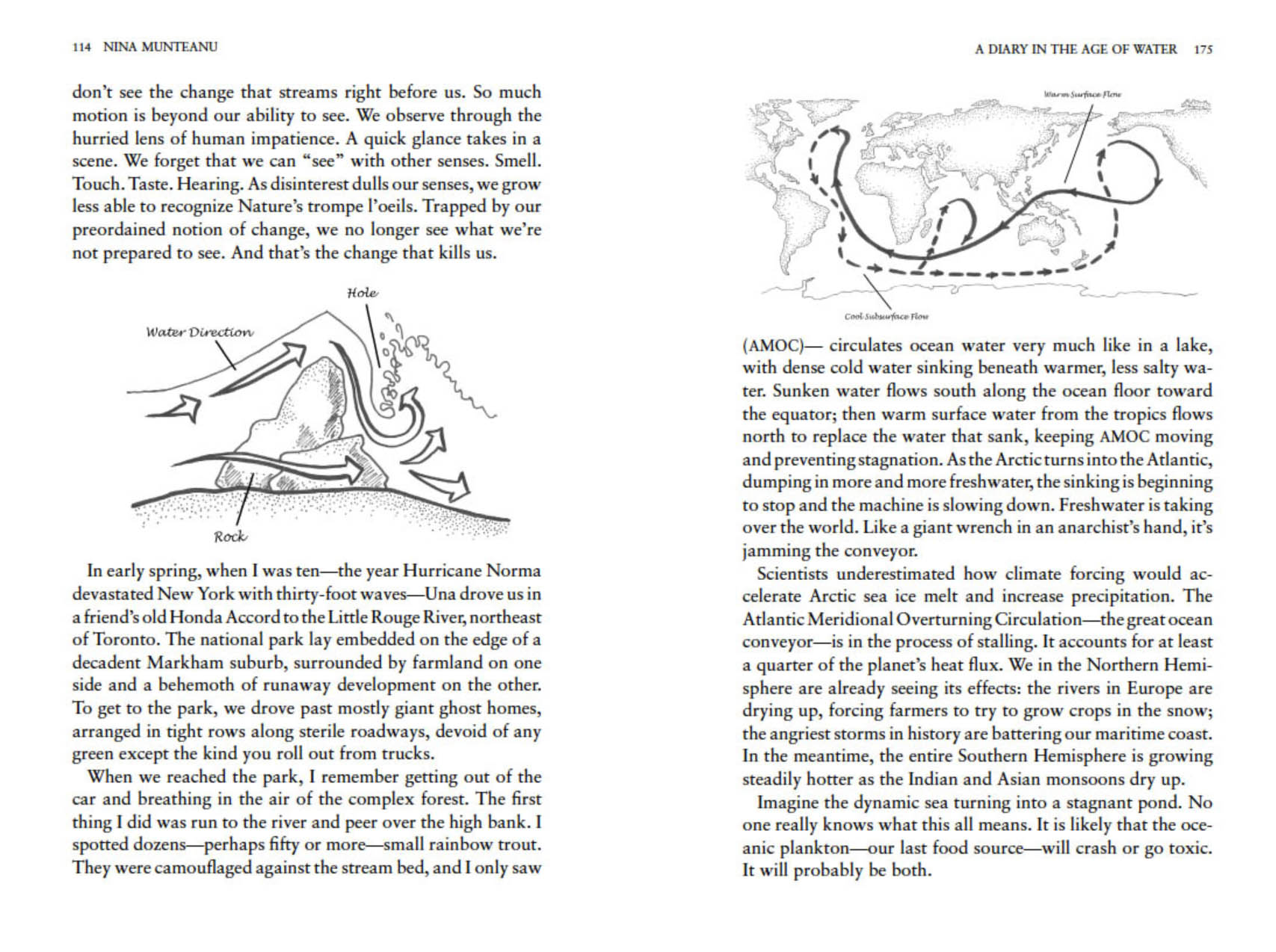
Nina: Not until I was a teenager when I wrote my first complete novel (“Caged-In World”—which later served as a very rough draft for my first and second published novels, Angel of Chaos and “Darwin’s Paradox”). My first published work was a non-fiction article “Environmental Citizenship”, which appeared in Shared Vision Magazinein 1995. I was already a young mother then with a family in Ladner, BC, and working for an environmental consulting firm in Richmond. My first fiction work was a short story entitled Arc of Time, published in a small circulation magazine Armchair Aesthete. That story was later reprinted several times throughout the world, including my short story collection Natural Selection.” Before writing stories, though, I told stories—I shared wild stories of galactic adventure with my older sister; we used to share them late into the night when we were supposed to be sleeping and our parents were snoring in their beds. I also told stories in the form of cartoons. Since I was a small child, I wanted to be a cartoonist and write graphic novels when I grew up. I created and drew several strips with crazy characters on wild adventures, blending my love for drawing with my love for storytelling. I haven’t stopped that form of storytelling and still have a yearning for that form. This is one reason why I’m so delighted with my latest book “A Diary in the Age of Water,” which features some of my limnological sketches, which stand in for the diarist’s sketches:

Pages from “A Diary in the Age of Water” by Nina Munteanu

Mandy: What made you decide on science fiction as a genre?

Nina: That goes back to my love for comics. I wasn’t much of a reader as a kid. While my older brother and sister devoured The Hardy Boys and Nancy Drew series, I secreted myself in the back corner of Williams General store and read Supergirl, Superman and Superboy, Batman, Magnus Robot Fighter and Green Lantern, among others. I was obviously enamored with the fantastic. When I earnestly started to read more than comics, I came across the SF classics: Huxley, Orwell, Heinlein, Clarke, Silverberg and Asimov to name a few. Bradbury sent me over the moon and his “Martian Chronicles” made me cry. I wanted to write like him and move readers like he’d done with me with something that mattered. 

The reason I continue to write in this genre is because of its ability to encompass the creative imagination and application of metaphor to story. Given science fiction’s wide range of possibilities in creating a believable reality of the fantastic, science fiction provides a compelling platform for metaphoric storytelling on a grand scale—the story large. Possibilities for powerful archetypes abound. Where else can you make water an actual character?

My environmental themes and eco-fiction lie in the sub-genre of ‘mundane science fiction.’ This is just another form of speculative fiction. Mundane science fiction focuses on existing technology (no ray guns, warp drives, or time travel). Its premise lies in existing circumstances and events to create a near-future realism. My recent dystopian eco-novel “A Diary in the Age of Water” by Inanna Publicationsfits this description perfectly. Examples by other writers include Margaret Atwood’s “MaddAddam” series, Paolo Bacigalupi’s “The Windup Girl” and Kim Stanley Robinson’s “The Ministry for the Future.”  

Mandy: Was the ecological aspect of your stories a gradual realization or your primary objective?

Nina: My primary objective was always to tell a compelling and meaningful story and hopefully to move readers in some way—like Ray Bradbury and other writers had with me. The ecological aspects slid in unannounced like a shadow character. It made sense: the environment and how we treat it (and ourselves by extension) has always been something important to me since I was a child. Both my parents were connected to Nature. My father took us on camping trips and picnics in the country; my mother was an amateur ecologist and botanist. From quite young I’ve been an environmental activist; chasing after people who littered, promoting recycling, participating in environmental protests. So, while I was writing science fiction, it was also eco-fiction. When the brand became more known, I realized that this was the kind of fiction I was writing most of the time. So, in some ways, I’ve come full circle with my quest as a youth: to tell impactful stories about the environment—whether this is here on Earth or on some planet in the outer systems—which make people think and feel and question. 

Mandy: Can you tell us a little about your newest book “A Diary in the Age of Water”, how you came up with the concept, and your writing process for it?

Nina: The book follows the climate-induced journey of humanity through four generations of women, each with a unique relationship with water during a time of calamitous change. The book starts and ends in the far future in the dying boreal forest with a blue water being, Kyo, who finds the diary of a limnologist, Lynna, from our near-future Toronto. The diary spans a forty-year period and contains a series of entries; each entry begins with an epigraph—quote from the textbook “Limnology” by Robert Wetzel. During the diarist’s lifetime, all things to do with water are overseen and controlled by the international giant water utility CanadaCorp—with powers to arrest and detain anyone. This is a world in which China owns America and America, in turn, owns Canada. The limnologist witnesses and suffers through severe water taxes and imposed restrictions, dark intrigue through neighbourhood betrayals, corporate spying and espionage, and repression of her scientific freedoms. Some people die. Others disappear.

Inspiration for the novel started with a short story I was invited to write by my publisher in Rome in 2015 about water and politics in Canada.  I had long been thinking of potential ironies in Canada’s water-rich heritage. The premise I wanted to explore was the irony of people in a water-rich nation experiencing water scarcity: living under a government-imposed daily water quota of 5 litres as water bottling and utility companies took it all. I named the story “The Way of Water” (“La natura dell’acqua), about a young woman (Hilda) in near-future Toronto who has run out of water credits for the public wTap; by this time houses no longer have potable water and their water taps have been cemented shut; the only way to get water is through the public wTaps—at great cost. She’s standing two metres from water—in a line of people waiting to use the tap—and dying of thirst. “The Way of Watercaptures a vision that explores the nuances of corporate and government corruption and deceit together with global resource warfare. In this near-future, Canada is mined of all its water by thirsty Chinese and US multinationals—leaving nothing for the Canadians. Rain has not fallen on Canadian soil in years due to advances in geoengineering and weather manipulation that prevent rain clouds from going anywhere north of the Canada-US border. If you’re wondering if this is possible, it’s already happening in China and surrounding countries.

I chose to use a diary in the near-future part of the story to achieve a sense of gritty realism of ‘the mundane.’ The diary-aspect of the book characterizes it as ‘mundane science fiction’ by presenting an ‘ordinary’ setting for characters to play out. The tension arises more from insidious cumulative events and circumstances that slowly grow into something incendiary.

Many of the events and circumstances that the diarist reports on are real events and based on real people. That they serve as premise for the fiction effectively blurs the fiction with non-fiction. Readers have told me that they often couldn’t distinguish the two in the book and this achieved a real urgency for the reader, who both hated and loved the book for it and couldn’t stop turning the pages as a result. 

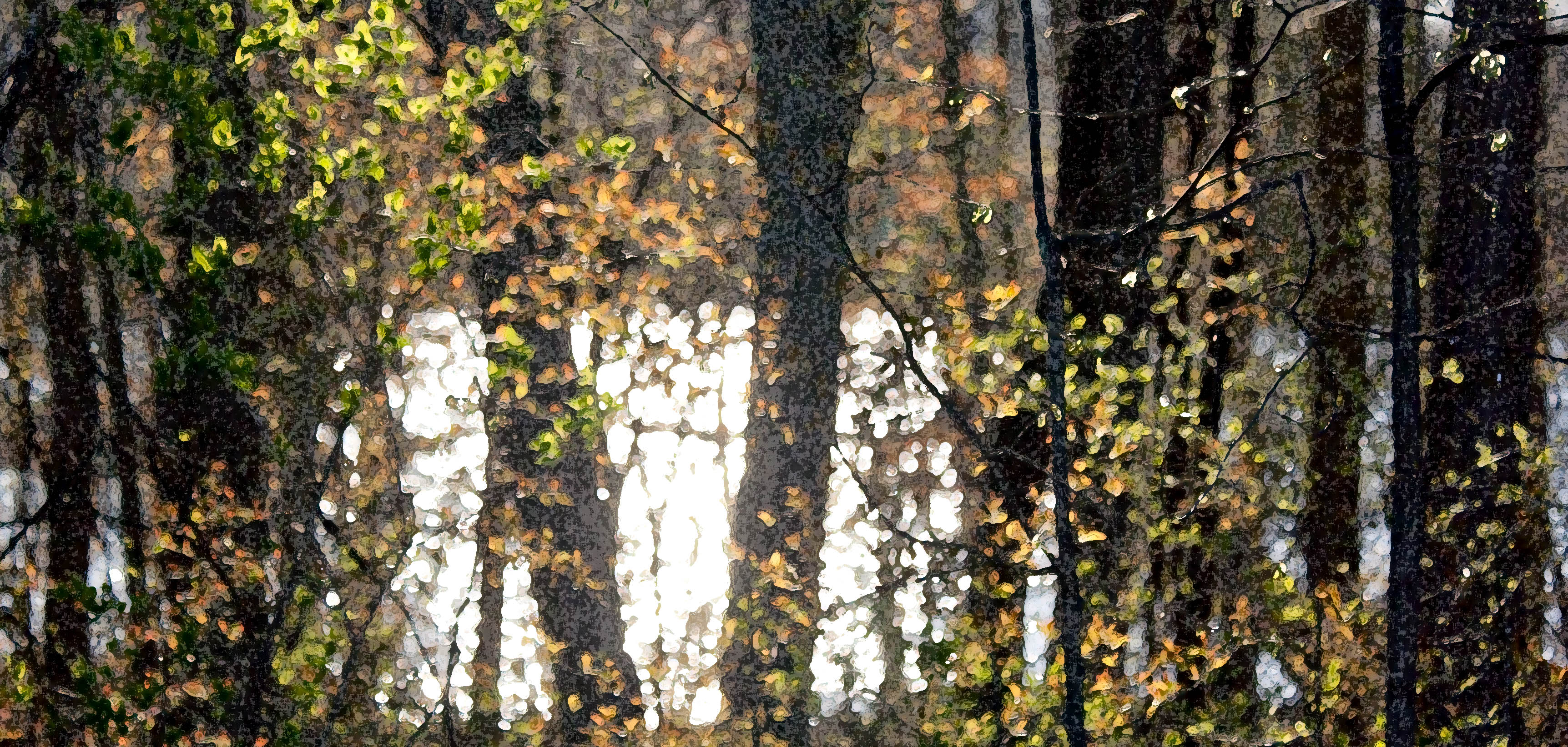
Hardwood forest backlit by sparkling Otonabee River in spring, ON (photo and rendition by Nina Munteanu)

Nina Munteanu is a Canadian ecologist / limnologist and novelist. She is co-editor of Europa SF and currently teaches writing courses at George Brown College and the University of Toronto. Visit www.ninamunteanu.ca for the latest on her books. Nina’s bilingual “La natura dell’acqua / The Way of Water” was published by Mincione Edizioni in Rome. Her non-fiction book “Water Is…” by Pixl Press(Vancouver) was selected by Margaret Atwood in the New York Times‘Year in Reading’ and was chosen as the 2017 Summer Read by Water Canada. Her novel “A Diary in the Age of Water” was released by Inanna Publications (Toronto) in June 2020.

Nina Munteanu Talks Books, Water and COVID on ConversationsLIVE

I recently had a wonderful discussion on Cyrus Webb’s show ConversationsLIVE on BlogTalkRadio and WYAD Radio in Mississippi.

We talked about curiosity in our world and how fiction connects us with relevance and meaning. We discussed writing eco-fiction, my latest eco-novel and work of mundane science fiction “A Diary in the Age of Water. We also discussed what was involved in combining art with science in mundane science fiction. Cyrus then asked me what it was like to get a book out during COVID. I enjoyed this interview for its refreshing questions. They made me think.

You can listen to the interview through the link below:

https://www.blogtalkradio.com/conversationslive/2021/06/22/author-nina-munteanu-talks-adiaryintheageofwater-on-conversationslive

Pond lilies in Thompson Creek marsh, ON (photo and rendition by Nina Munteanu)

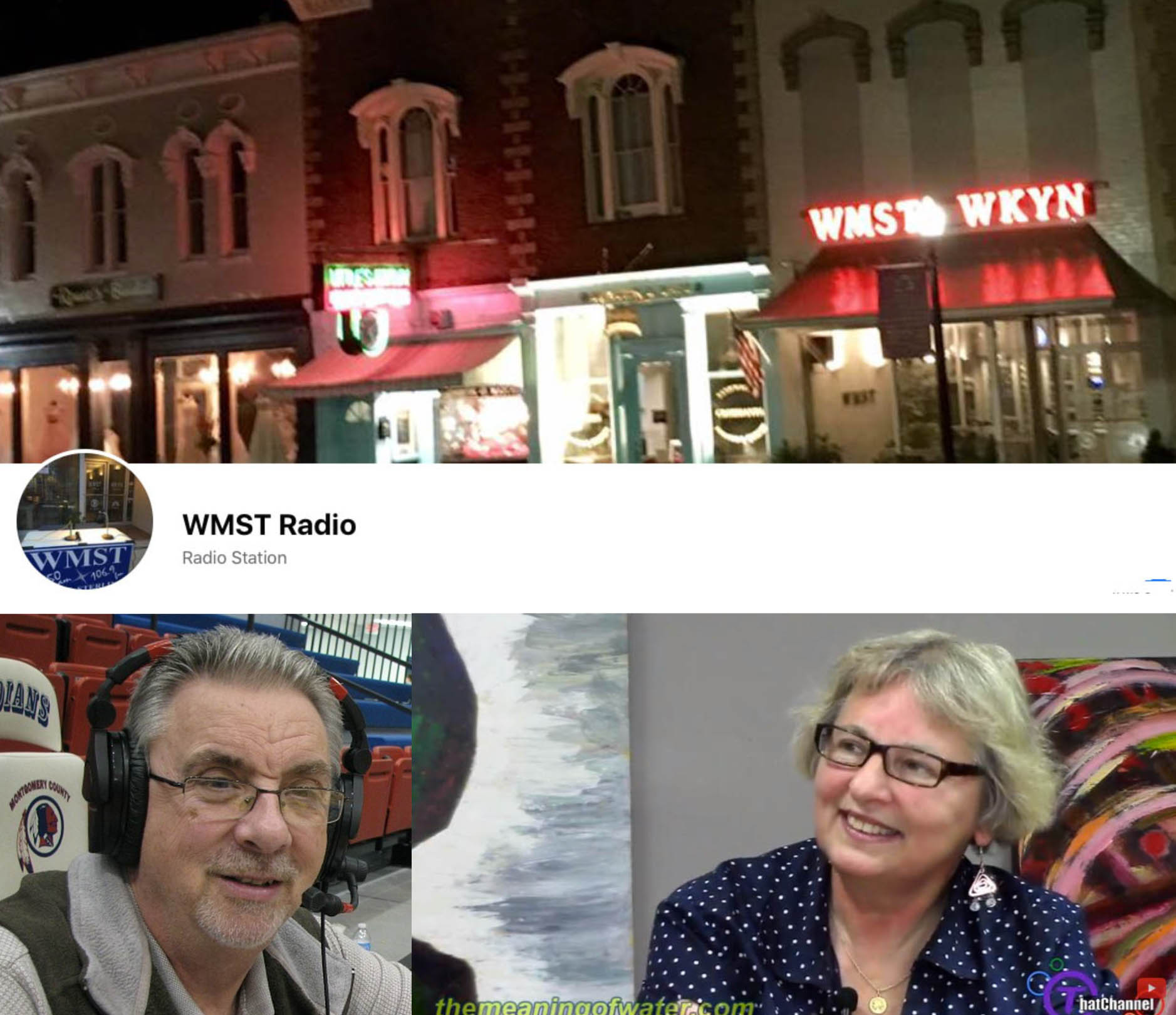
Nina Munteanu Talks Water and Writing on Kentucky’s WMST-am Radio

Dan Manley interviews Nina Munteanu on Mid Morning on Main WMST-AM Radio

I was recently interviewed (on June 21) by Dan Manley on Kentucky’s Mid-Morning on Main show on WMST-AM Radio. I’ve visited Kentucky several times before, including the famous Bardstown Road in Louisville, but this time it was a virtual visit.

Dan and I talked about how I became a limnologist and ecologist, about my growing up in a small town and playing in the local forest with my older brother and sister and how we made ‘potions’ out of moss, soil, evening nightshade and water.

We talked about my recent eco-novel “A Diary in the Age of Water” and why I wrote it and its effect on people. We covered the difference between stereotypes and archetypes and how science informs me and my writing. We also explored how life changes us and our writing and how writing, in turn, changes us.

We covered a vast range of water-related topics from the movie “Water World” to the TV show “Bonanza.” We talked about water scarcity and water politics and what Canada was doing and what’s happening in America.

I really enjoyed this interview because Dan asked me some surprising and challenging questions that led us into interesting territory. My interview with him starts about 43 minutes into the show. Go have a listen!

Otonabee River sparkles behind a hardwood forest in spring, ON (photo and dry brush rendition by Nina Munteanu)

Nina Munteanu is a Canadian ecologist / limnologist and novelist. She is co-editor of Europa SF and currently teaches writing courses at George Brown College and the University of Toronto. Visit www.ninamunteanu.ca for the latest on her books. Nina’s bilingual “La natura dell’acqua / The Way of Water” was published by Mincione Edizioni in Rome. Her non-fiction book “Water Is…” by Pixl Press(Vancouver) was selected by Margaret Atwood in the New York Times‘Year in Reading’ and was chosen as the 2017 Summer Read by Water Canada. Her novel “A Diary in the Age of Water” was released by Inanna Publications (Toronto) in June 2020.

Nina Talks About Being a Scientist and a Storytelling Artist on “The Authors Book Club”

Cedar beside swift water of Jackson Creek, ON (photo and rendition by Nina Munteanu)

Fiona Ross with The Authors Book Club talked with limnologist and eco-fiction author Nina Munteanu about her journey as both author and scientist and her latest book A Diary in the Age of Water (Inanna Publications). 

Advice on writing:

“Write with passion. A lot of people say ‘write what you know.’ Those two in some ways are the same thing. You can do a lot of research on things that you don’t know and bring that in [to your writing.] But to know in your soul, in your heart, the thing that’s important that you need to write about is more what I mean by ‘write what you know.’ If you’re passionate about something—a global catastrophe or a personal journey with abuse—if it comes from the heart, it will keep you on track through those rejections and to finish and complete your work. Otherwise you won’t persist and you’ll let someone tell you that it isn’t important, it’s just a hobby.”

On water:

Nina and Fiona discuss the perils of commodifying water and Canada’s role in protecting the freshwater of the world and the boreal zone of Canada.

Nina talks about how she turned her fear of water as a child into a fascination for water and a passion for its protection. “I’m a limnologist, an ecologist. I’ve have been studying it since I was a little kid who was scared of water. I triumphed over that into fascination and made that into a career.” Nina’s non-fiction book Water Is… was published in 2016 as a biography of water and was endorsed by Margaret Atwood in the New York Times ‘Year in Reading.’

Nina talks about some of water’s over 70 anomalous properties and how virtually each is life-giving. She shares how water can teach us to be stewards and protectors of water within an emerging paradigm of gratitude and humbleness.  

On being both scientist and artist:

Nina suggests that: “All great scientists are informed by art. They are creative in some way. [Scientists] bring that creativity, that original thinking and that curiosity, with them into their science. That’s what makes their science great because they are willing to look outward…We try to compartmentalize so we can better understand [art and science] but the irony is that we better understand them by bringing them together and integrating them…”

Nina Munteanu is a Canadian ecologist / limnologist and novelist. She is co-editor of Europa SF and currently teaches writing courses at George Brown College and the University of Toronto. Visit www.ninamunteanu.ca for the latest on her books. Nina’s bilingual “La natura dell’acqua / The Way of Water” was published by Mincione Edizioni in Rome. Her non-fiction book “Water Is…” by Pixl Press(Vancouver) was selected by Margaret Atwood in the New York Times‘Year in Reading’ and was chosen as the 2017 Summer Read by Water Canada. Her novel “A Diary in the Age of Water” was released by Inanna Publications (Toronto) in June 2020.