Ten Significant Science Fiction TV Series—Part 2, Shows that Touch on Climate Change, Resource Allocation and Environmental Justice: #9 — “SILO”

I’ve selected ten TV series that have intrigued me, moved me, and stayed with me for various reasons that touch on: abuse of justice, including eco-justice and environmental abuse; technology use and abuse; and the effects and horrors of climate change.

Some are well known; others not so well known. All approach storytelling with a serious dedication to depth of character, important themes, realistic world building, and excellent portrayal by actors. The world-building is extremely well done—in some cases rivalling Ridley Scott’s best—with convincing portrayals of worlds that are at times uncanny in their realism. Worlds that reflect story from an expansive landscape to the mundane minutiae of daily life: like the cracked phone device of Detective Miller in The Expanse or the dirty fingernails of engineer Juliette Nichols in the Down Deep of Silo. Stories vary in their treatment of important themes from whimsical and often humorous ironies to dark and moody treatises on existential questions. In my opinion, these TV series rival the best movies out there, often reflecting large budgets (but not always) and a huge commitment by producers. The ten TV series I’ve selected in this series come from around the world: Brazil, Germany, France, Norway, Canada and the United States.

In Part 2, I focus on five TV series that explore issues to do with resource allocation, adaptations to climate change and corporate / government biopolitics.   

SILO: An Underground Murder Mystery & an Engineer’s Search for the Truth

This science fiction thriller is a dark cautionary tale based on Hugh Howie’s bestselling trilogy Wool, Shift, and Dust about a population living in an underground silo, humanity’s last refuge from a toxic outside world. Juliette Nichols (Rebecca Ferguson) is a humble and gutsy engineer in the Down-Deep who is relentlessly motivated in her journey to seek the truth. When Juliette inexplicably lands the job of sheriff of the Silo, she treats her new position as a tool to seek the truth about the suspicious death of her lover, George—a collector of illegal relics (artifacts from before the rebellion which precipitated the destruction of all information prior to it). In fact, no one seems to recall anything about before the rebellion some 140 years ago.

Juliette fixing the huge generator that keeps the Silo working

At her own peril, Juliette pulls on threads that ultimately reveal a greater conspiracy surrounding the Silo. For instance, why technology is restricted, why relics from the past forbidden, and why all behaviour is closely surveyed and judged through “the Pact,” the arcane bible written by the founders. Questions leading to more questions. For instance, who built the Silo and for what reason? Does it have to do with why it is so toxic outside? Questions point to the egregious actions and tragic circumstances that led to its origin. Actions and circumstances of the ‘before times’ that ultimately point to political intrigue, biological warfare and social oppression.

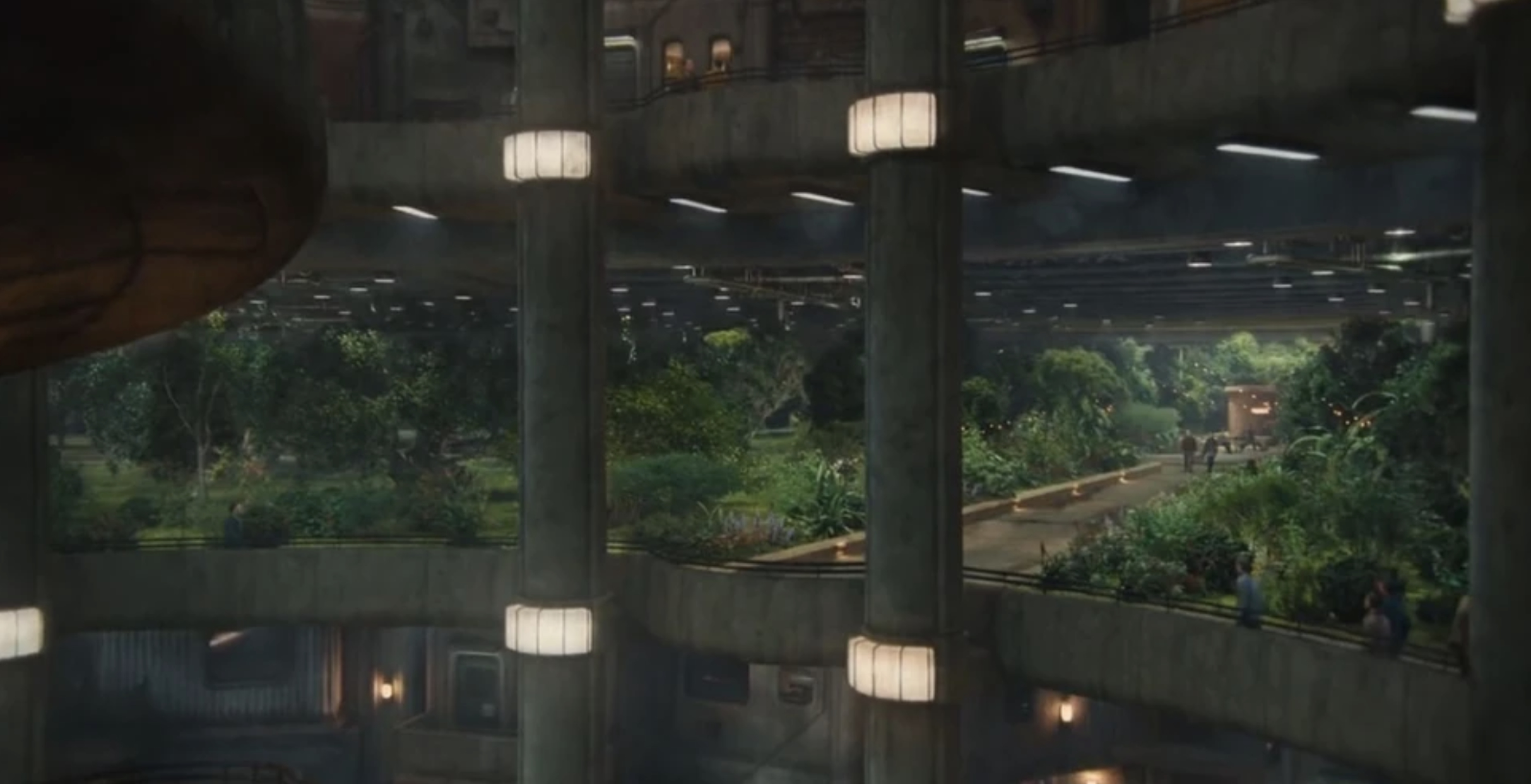
Farm level in the Silo

Juliette’s literal and metaphoric rise from the Down-Deep to the Up-Top is a feminist’s journey that transcends intersectional barriers as she battles small-minded men of power and maintains her integrity by refusing to abide by the inhumane Up-Top rules of order. By the end of Season 1, I sensed a victory for humankind through womankind, as Juliette’s relentless search for the truth disclose lies at all levels of Silo society. Juliette and others who join her unravel a horrific tale of deception, self-serving manipulation, power abuse and genocide that is relevant to the present day we are experiencing now. 

Market in the Silo

Authentic world building, rivalling the best of Ridley Scott, is matched by superlative acting by a very talented cast. Main character Juliette was played by Rebecca Ferguson with incredible nuance and genuineness as both vulnerable and heroic, shy and assertive, kind and bossy. Silo demonstrates through every scene a meticulous attention to detail that commands a sense of reality. We truly experience the grubby machine room of the Down-Deep, the bustling cafeteria in the Mids, or the posh interior of Judicial chambers in the Up-Top. Reflecting the vertical class hierarchy, characters are dirty, wear worn and repaired clothing, and are attentive to recycling and conservation as befits an enclosed society with limited resources.

Juliette Nichols

As with Snowpiercer (another enclosed environment), the people of Silo live highly conscious of their limited space and supplies. Everyone is convinced that they or their group is ultimately most important in maintaining the Silo. Freedom Day, which celebrates freedom from the last rebellion (which existentially threatened the Silo with threats to open the doors to the outside), is followed by Forgiveness Day, in which citizens are encouraged to turn in illegal relics (e.g. any technology, books, or other artifacts from the ‘before times’) without reprisal. But, like a hamster on a wheel—or the generator in the down deep—eventually a wobble is introduced, threatening to crash the silo and put all in perpetual darkness with eventual flooding. It is no coincidence that, before taking on her role as sheriff, engineer Juliette (who refuses to use a band-aid approach) imposes a temporary black out to fix the generator to prevent the Silo’s eventual destruction.

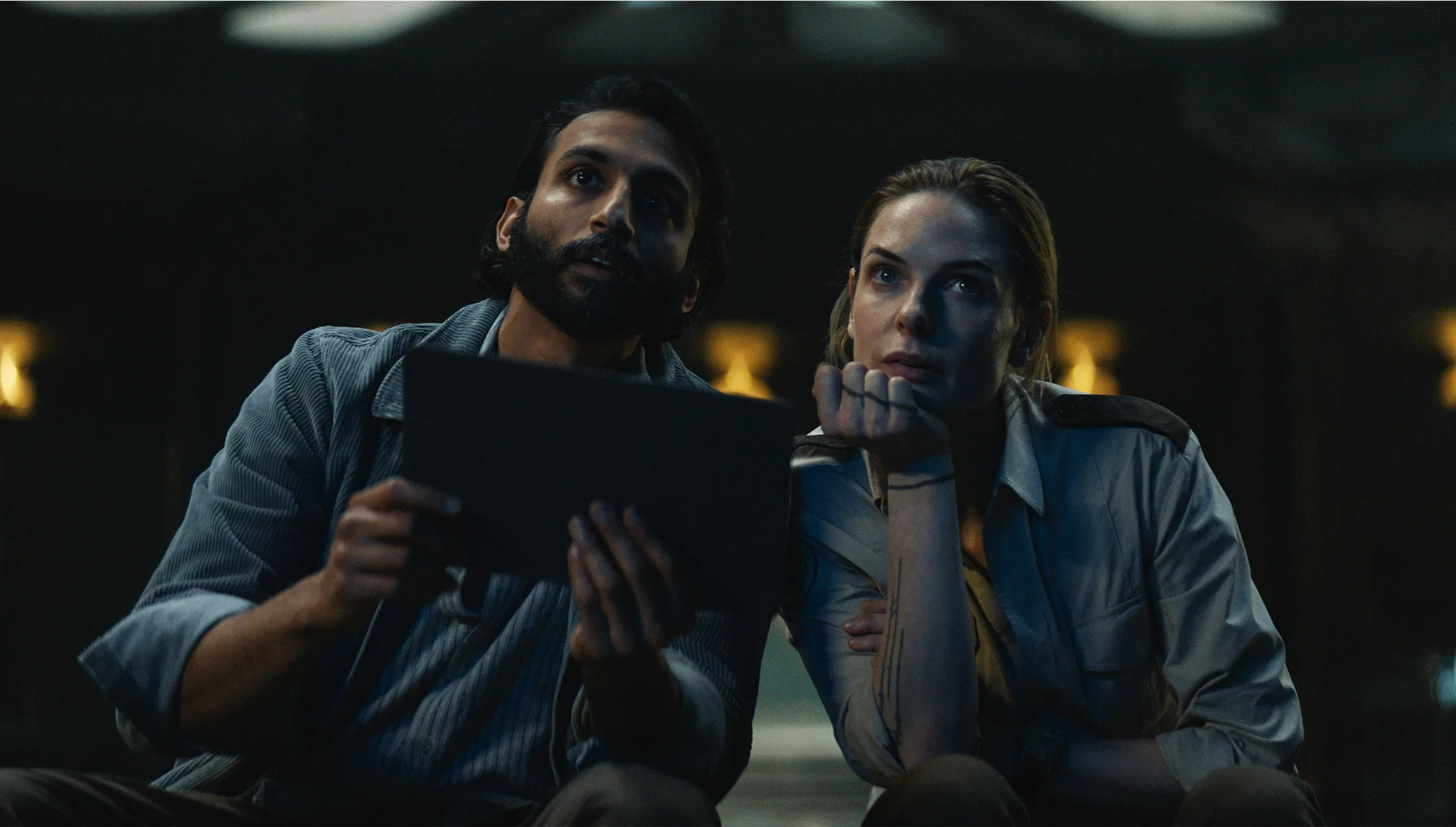
Lukas Kyle and Juliette Nichols wonder at the stars

In that one act, her archetype is cemented: she is the herald of change, a disruptive force that, though at some cost, will reveal the greater truth for the greater good. Like a good catalyst hero, she stirs everyone and everything up to dig up the truth. She delivers the call to adventure to Lukas Kyle, who refuses at first, but finds his way. She inspires an entire population to seek the truth.   

Juliette warily seeks the truth
One of the truths Juliette finds at the end of Season One

Nina Munteanu is a Canadian ecologist / limnologist and novelist. She is co-editor of Europa SF and currently teaches writing courses at George Brown College and the University of Toronto. Visit www.ninamunteanu.ca for the latest on her books. Nina’s bilingual “La natura dell’acqua / The Way of Water” was published by Mincione Edizioni in Rome. Her non-fiction book “Water Is…” by Pixl Press (Vancouver) was selected by Margaret Atwood in the New York Times ‘Year in Reading’ and was chosen as the 2017 Summer Read by Water Canada. Her novel “A Diary in the Age of Water” was released by Inanna Publications (Toronto) in June 2020.

.

Book Review: Nina’s “Favourite 3 Reads Of 2023– Feminist Eco-Fiction

In late 2023, I was invited by Shepherd to post an article of my favourite three reads of 2023. I had earlier that year posted on Shepherd an article describing what I considered to be the best eco-fiction books that make you care and give you hope.

I started out by reviewing what I had read in 2023. It looked like I’d read about thirty odd books, almost half and half non-fiction to fiction. That’s not many, but I’m a slow reader. I pore through each book at a snail’s pace, spending time making notes with some, particularly the non-fiction books, which I use to research my writing. With fiction, I dive in deep and thoroughly savor each word and sentence like a mouthful of an excellent meal made with loving hands. Books varied from non-fiction scholarly works on forest ecosystems (The Treeline by Ben Rawlence) and post-capitalism (Four Futures by Peter Frase) to literary fiction, political thrillers, speculative fiction, clifi, and eco-fiction.

It was a tough choice, but I came up with three choices and a thematic rationale that resonated with me and made a deep kind of sense for that year: all three books were eco-fiction of sorts and featured hopeful stories of strong women, acting out of compassion and in solidarity with intelligence, kindness and courage. For me, 2023 was a year of strong feminine energy for the planet and my favourite books reflect that. Here they are (read the original article on Shepherd here):

The first of my favourite three books of 2023 is Michelle Min Sterling’s Camp Zero.

Set in the remote Canadian north—a place I love for its harsh beauty—this feminist climate fiction explores a warming climate through the perilous journeys of several female characters, each relating to her environment in different ways. Each woman exerts agency in surprising ways that include love, bravery and shared community. The strength of female power carried me through the pages like a braided river heading to a singular ocean. These very different women journey through the dark ruins of violent capitalism, colonialism and patriarchy—flowing past and through hubristic men pushing north with agendas and jingoistic visions—to triumph in an ocean of solidarity. I empathized with each woman as she found her strength and learned to wield true heroism—one based on collaboration and humble honesty.

My second favourite book of 2023 is Yevgeni Zamyatin’s We.

I enjoyed this 1920 hopeful dystopia for its courageous and unprecedented feminism. While the story centres on logical D-503, a man vacuously content as a number in the One State, it is I-330—Zamyatin’s unruly heroine—who stole my attention. Confident, powerful and heroic, the liberated I-330 embraces the Green Wind of change to influence D-503. A force of hope and resilience, she braves torture to successfully orchestrate a revolution that breaches the Green Wall—feats typically relegated to a male protagonist in novels of that era. When pregnant O-90 refuses to surrender her child to the State, I-330 helps her escape to the outside, where the Green Wind of freedom blows. I resonated with Zamyatin’s cautionary tale on the folly of logic without love and Nature.

My third favourite book of 2023 is Hugh Howie’s Wool (first of the SILO series).

Juliette—humble and gutsy, kind and relentlessly motivated in her journey for the truth—kept the pages turning for me. Juliette is a mechanic from the Down-Deep of the underground Silo, humanity’s last refuge to a toxic world. When Juliette inexplicably lands the job of sheriff, she treats her new position as a tool to seek the truth about her lover’s mysterious recent death. At her own peril, she pulls on threads that ultimately reveal a great conspiracy.

Juliette’s literal and metaphoric rise from the Down-Deep to the Up-Top is a feminist’s journey that transcends intersectional barriers as she battles small-minded men of power and maintains her integrity by refusing to abide by the inhumane Up-Top rules of order. By the end, I sensed a victory for humankind through womankind.

Also check out Shepherd’s 100 best books of 2023.

You might be interested in two of my own eco-fiction novels that feature several strong female protagonists:

Darwin’s Paradox follows the complex dynamic of a brave mother and her willful teenage daughter, both ‘gifted’ by a virus living inside them. Accused of murder and deliberately spreading the virus that killed many, Julie fled the enclosed city and settled in the climate wastelands with her husband and their child. Years later, when their harsh refuge is threatened by city forces seeking mother and daughter for experimentation, Julie leaves her family and gives herself up to the city, hoping they will abandon pursuing her daughter. Still psychically connected to the city’s AI community (now evolving into an autonomous entity with the intelligent virus), Julie entangles with political intrigue while her daughter, who followed her to the city, stumbles into her mother’s violent past. 

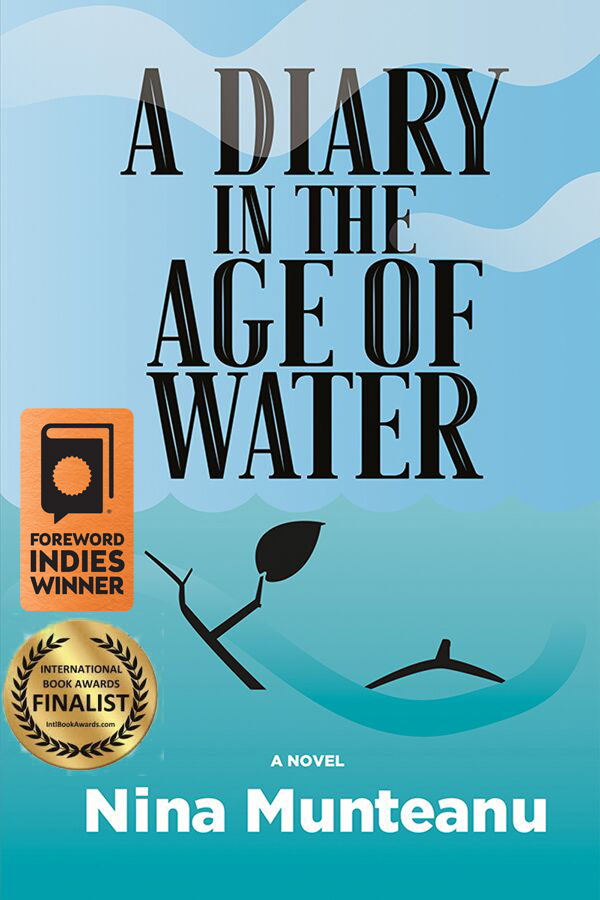
A Diary in the Age of Water follows the climate-induced journey of Earth and humanity through four generations of women, each with a unique relationship to water. Centuries from now, in a dying boreal forest in what used to be northern Canada, Kyo, a young acolyte called to service in the Exodus, yearns for Earth’s past—the Age of Water—before the “Water Twins” destroyed humanity. Looking for answers and plagued by vivid dreams of this holocaust, Kyo discovers the diary of Lynna, a limnologist from that time of severe water scarcity just prior to the destruction. In her work for a global giant that controls Earth’s water, Lynna witnesses and records in her diary the disturbing events that will soon lead to humanity’s demise.

.

Path through a mixed forest in early winter, ON (photo and rendition by Nina Munteanu)

Nina Munteanu is a Canadian ecologist / limnologist and novelist. She is co-editor of Europa SF and currently teaches writing courses at George Brown College and the University of Toronto. Visit www.ninamunteanu.ca for the latest on her books. Nina’s bilingual “La natura dell’acqua / The Way of Water” was published by Mincione Edizioni in Rome. Her non-fiction book “Water Is…” by Pixl Press (Vancouver) was selected by Margaret Atwood in the New York Times ‘Year in Reading’ and was chosen as the 2017 Summer Read by Water Canada. Her novel “A Diary in the Age of Water” was released by Inanna Publications (Toronto) in June 2020.