Gnarly branches of black locust trees overhang a trail in Trent Forest, ON (photo by Nina Munteanu)
It was a late October morning and I had chosen a less walked trail in the Trent Forest. It was a cloudy day that promised rain from the northeast with dark clouds; but the sun still shone in the southeastern sky through a thin screen, giving everything a bright and soft ethereal quality.
Deeply furrowed trunk of black locust on trail through black locust grove, Trent Forest, ON (photo by Nina Munteanu)
The main walk went first along a lowland of marshy swamp forest, mostly cedars and poplars. The less travelled trail veered up a steep incline and eventually tapered to another drier mini-ecosystem. I felt like I’d entered an enchanted grove with tall and crooked black locust trees, some very thick (a metre or so in diameter) and no doubt quite old. Vines of creepers tangled down from gnarly branches, forming intriguing webs of colour and texture. I adore the bark of the Black Locust tree; It is deeply furrowed and resembles entwined rope. When I touched the craggy light bark of a large tree, I felt its corky lightness. The bark was covered in small moss patches and tiny foliose and crustose lichen in shades of pale green and deep yellow. An entire ecosystem.
Old black locust tree showing rope-like bark covered in lichen, Trent Forest, ON (photo by Nina Munteanu)
Not another soul came by during the time I was there in the black forest grove. In fact, I didn’t encounter anyone on my entire walk in the forest. It was so quiet in the black locust grove. Except for some bird calling—possibly a woodpecker—and the soft trill of several little songbirds, chickadees and warblers, my constant companions.
Trail through black locust grove, Trent Forest, ON (photo by Nina Munteanu)
I felt a quiet calm descent on me like a soft blanket and I didn’t want to leave. But I was keenly aware of the coming storm as the dark clouds billowed closer in gusts of fresh wind and a few raindrops started to spatter down on me. Yet I lingered.
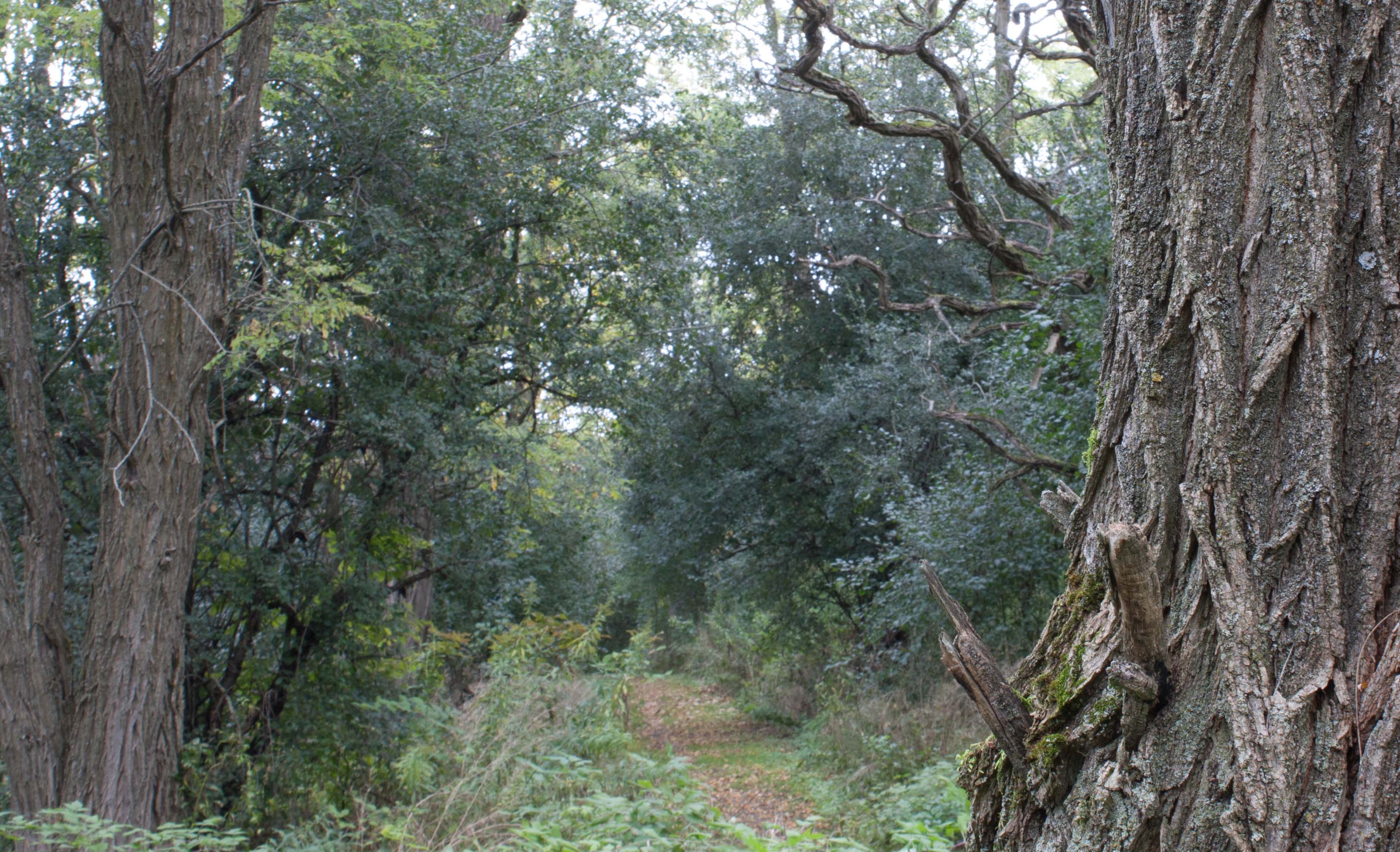
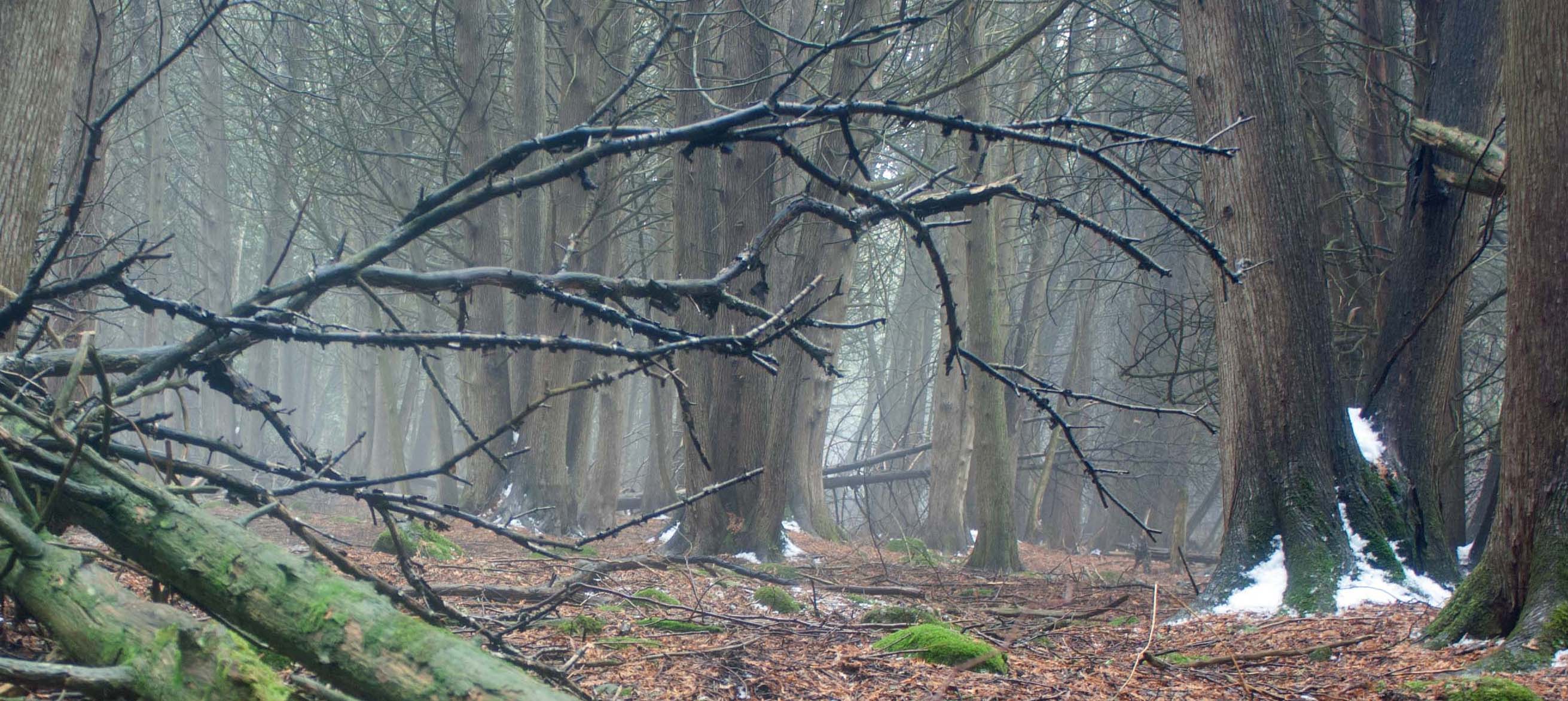
Gnarly branches of black Locust tree arc over the trail, Trent Forest, ON (photo by Nina Munteanu)
I got home just as the dark clouds opened to a hard rainfall. The rain turned to hail. it came down in thick sheets, bouncing hard on the pavement. By then, I was glad to be indoors with my cup of hot tea.
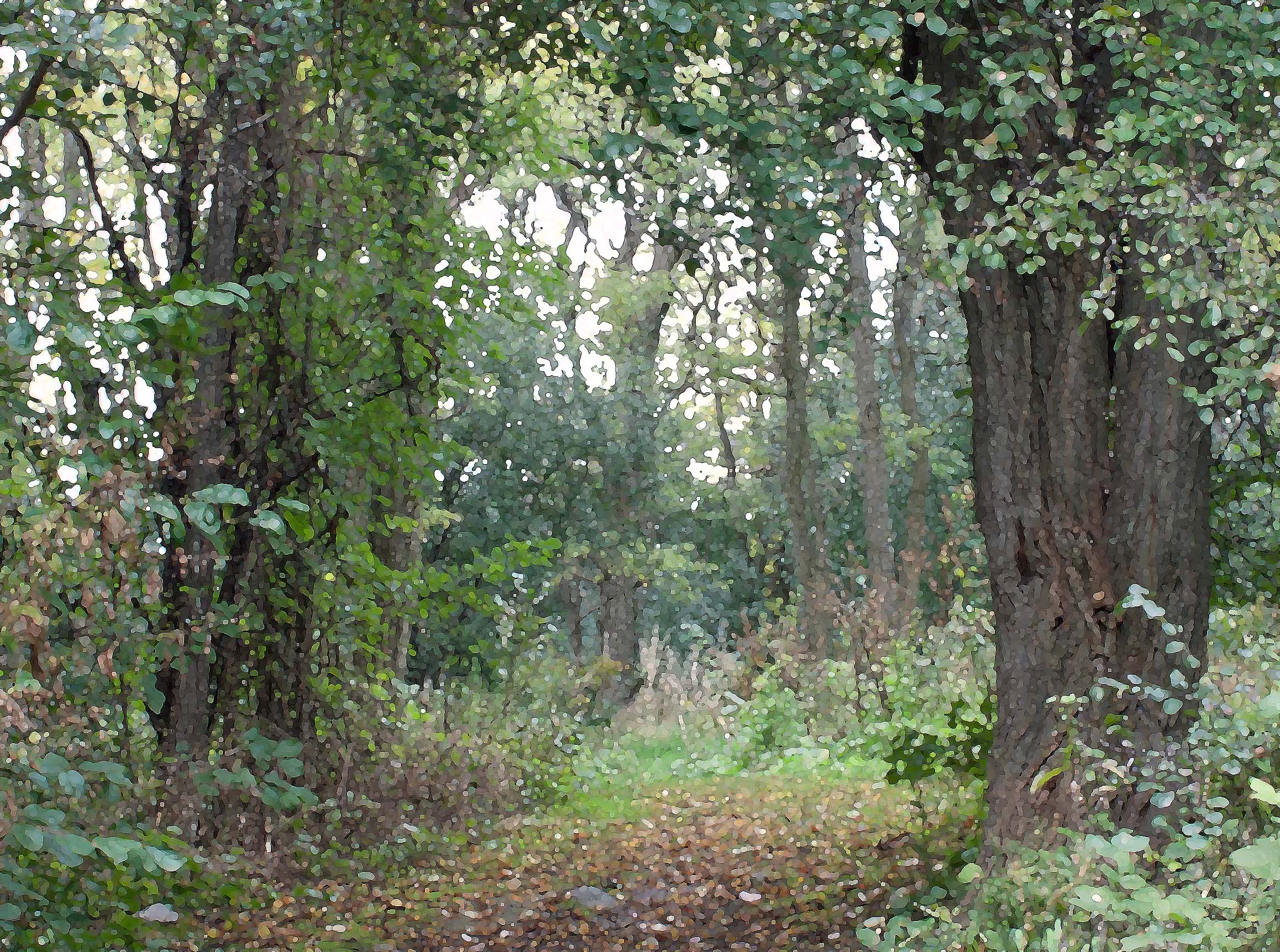
Upland trail through black locust grove, Trent Forest, ON (photo and rendition by Nina Munteanu)
.
Nina Munteanu is a Canadian ecologist / limnologist and novelist. She is co-editor of Europa SF and currently teaches writing courses at George Brown College and the University of Toronto. Visit www.ninamunteanu.ca for the latest on her books. Nina’s bilingual “La natura dell’acqua / The Way of Water” was published by Mincione Edizioni in Rome. Her non-fiction book “Water Is…” by Pixl Press (Vancouver) was selected by Margaret Atwood in the New York Times ‘Year in Reading’ and was chosen as the 2017 Summer Read by Water Canada. Her novel “A Diary in the Age of Water” was released by Inanna Publications (Toronto) in June 2020.
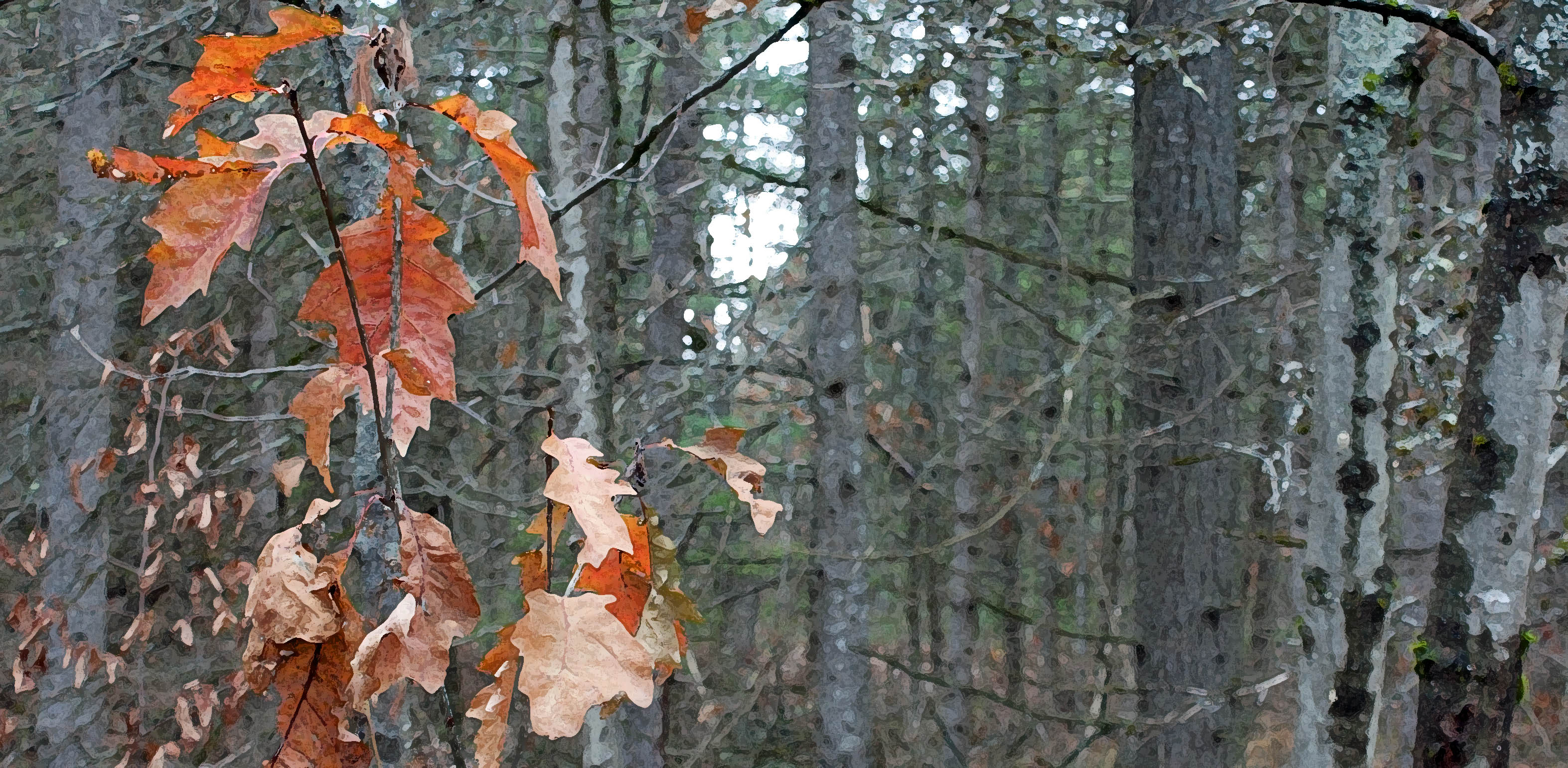
Marcescent oak leaves tremble in the cold wind of November, Petroglyph Park, ON (photo and rendition by Nina Munteanu)
I parked my car by the closed gate and walked inside along the road. The park was closed but not for me, I thought. The walk through this magnificent pine forest with its fresh pungent aromas of coming winter, invigorated me with thoughts of hope and wonder. I felt at home in this unviolated forest. It felt natural and I realized that I was desperately seeking “natural”…
Oak leaves blaze in the grey-green hemlock-pine forest, Petroglyph Park, ON (photo and rendition by Nina Munteanu)
I live close to a riparian forest and a large river. But there is little natural about it. Despite supporting an abundance of wildlife (e.g., squirrels, chipmunks, muskrat, skunk, groundhog, mink, ermine, voles, and red fox), the forest is disturbed and infested with invasive species. When I walk through this forest, the sounds of traffic are never far away, and I yearn for the sounds and smells of Nature inviolate.
Small trail through pine and aspen to the meromictic lake in Petroglyph Park, ON (photo and rendition by Nina Munteanu)
Petroglyph Park lies in the Kawartha Region of Ontario and is an hour’s drive north of where I live. Here, the sounds of Nature prevail: the wind raking through pines, the shrill haunting cry of a bluejay or aggressive chittering of a red squirrel. Nothing else. It was gloriously silent; except for the sound of my boots crunching along the trail or when I scared up a deer that scampered with the rush and rattle of leaves through the anonymity of the brush into a deep silence.
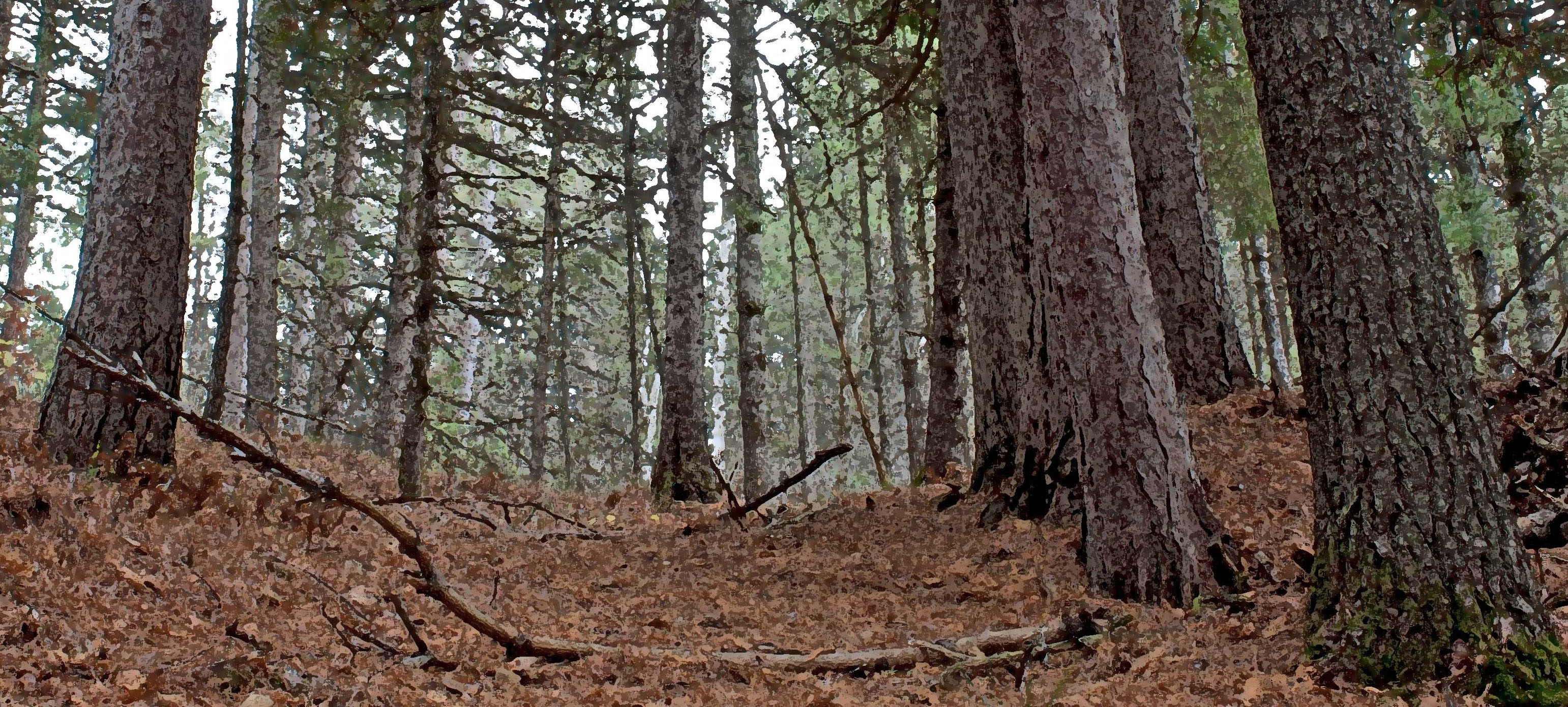
Road through tall red pine forest, Petroglyph Park, ON (photo and rendition by Nina Munteanu)
It was a crisp and fresh November day. I’d packed a lunch and my camera and set off down the road and along various trails to explore the park, not worried about getting lost.
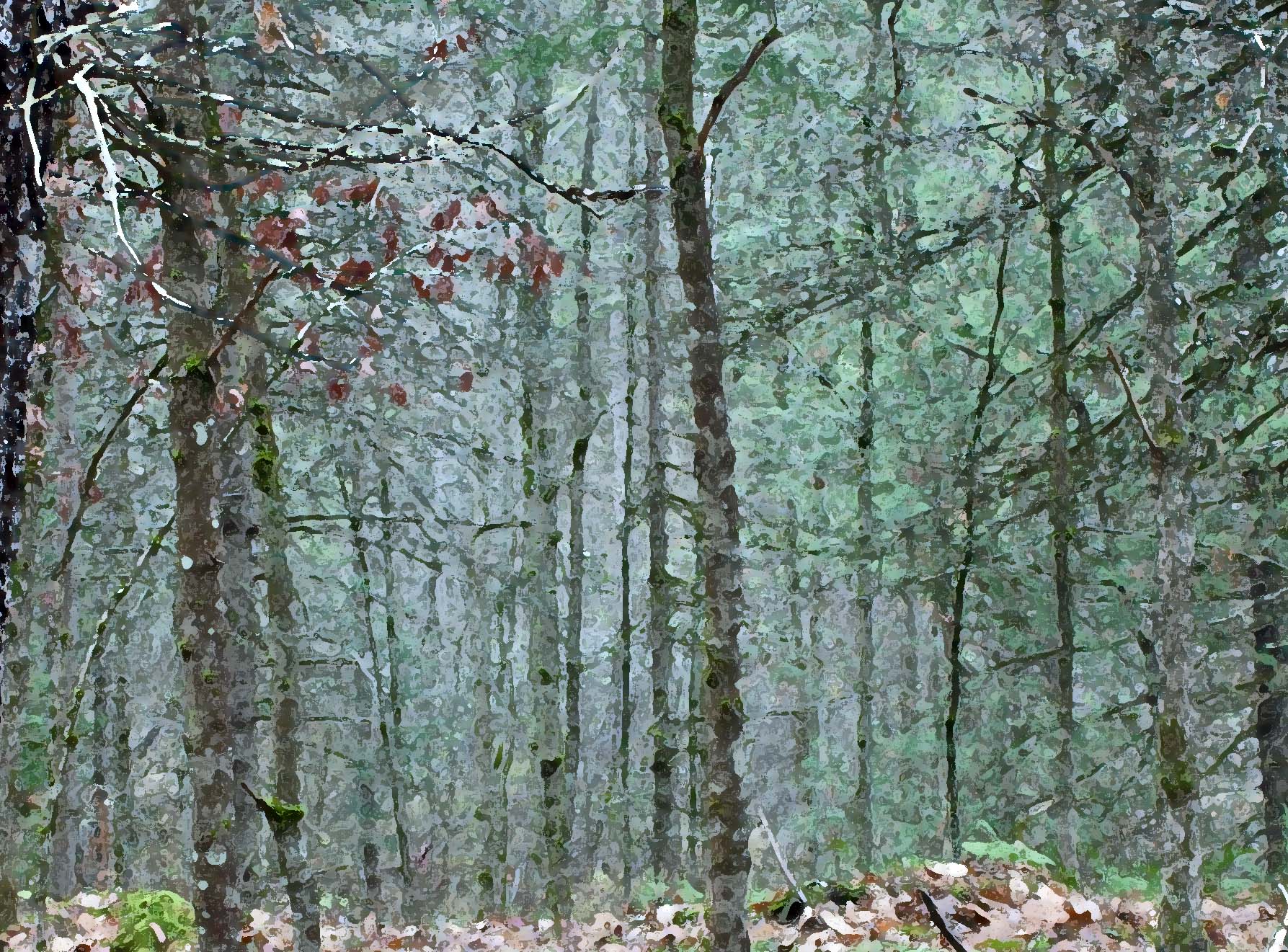
Forest fades from single oak tree into a fog of grey-green pine and hemlock, Petroglyph Park (photo and rendition by Nina Munteanu)
And I did get wonderfully lost, particularly when I ventured off the main trail, seeking adventure. I didn’t mind being lost; when you lose yourself you find another part of you through adventure…
Marcescent beech and oak trees add bronze colour to the grey-green of the pine forest, Petroglyph Park, ON (Photo and rendition by Nina Munteanu)
It’s early winter, when the chill winds carve through mixed forests in a restless howl, snatching leaves of deciduous trees and sending them flying. But in this primeval ancient forest of evergreens, the few deciduous trees mimic their conifer cousins by stubbornly clutching their leaves. In winter, the leaves of oak and beech trees cling to their branches, marcescent. To the silver greens of pine and hemlock, they add flames of copper and gold
Red pine trees tower over a deer trail near the lake, Petroglyph Park, ON (photo and rendition by Nina Munteanu)
I found myself walking on the spongy ground, a carpet of leaves, needles and debris, not far from Gilford Lake, among a tall stand of red pines, whose thick canopy created a green ceiling overhead. Breathing in the strong scent of pine and loam, I set up my camera and tripod to capture the mood of a natural path through the forest. I’d just set up the camera, hand poised on the shutter, when a deer wandered in front of me—just three metres away! It saw me and stopped mid-step. We stared at one another in a halting pause, a moment made eternity. Then the deer leapt gracefully away, disappearing within seconds into the dark forest and leaving me in the silence of rapture. I felt laughter tease up my throat; I hadn’t taken a picture.
Road winds through the mixed forest in Petroglyph Park, ON (photo and rendition by Nina Munteanu)
Winding road through mixed forest in Petroglyph Park, ON (photo and rendition by Nina Munteanu)
My walk through this natural forest is both thrilling and comforting, uplifting and restful. I am living outside myself, sensing the textures, sounds and tastes of the forest—in sublime discovery. It is here, where the sounds and smells of the natural world abide, without regard to me, that I feel most at home.
I am simply being…
Mixture of oak, beech, pine and hemlock conspire in a wash of colour and texture, Petroglyph Park, ON (photo and rendition by Nina Munteanu)
Nina Munteanu is a Canadian ecologist / limnologist and novelist. She is co-editor of Europa SF and currently teaches writing courses at George Brown College and the University of Toronto. Visit www.ninamunteanu.ca for the latest on her books. Nina’s bilingual “La natura dell’acqua / The Way of Water” was published by Mincione Edizioni in Rome. Her non-fiction book “Water Is…” by Pixl Press (Vancouver) was selected by Margaret Atwood in the New York Times ‘Year in Reading’ and was chosen as the 2017 Summer Read by Water Canada. Her novel “A Diary in the Age of Water” was released by Inanna Publications (Toronto) in June 2020.
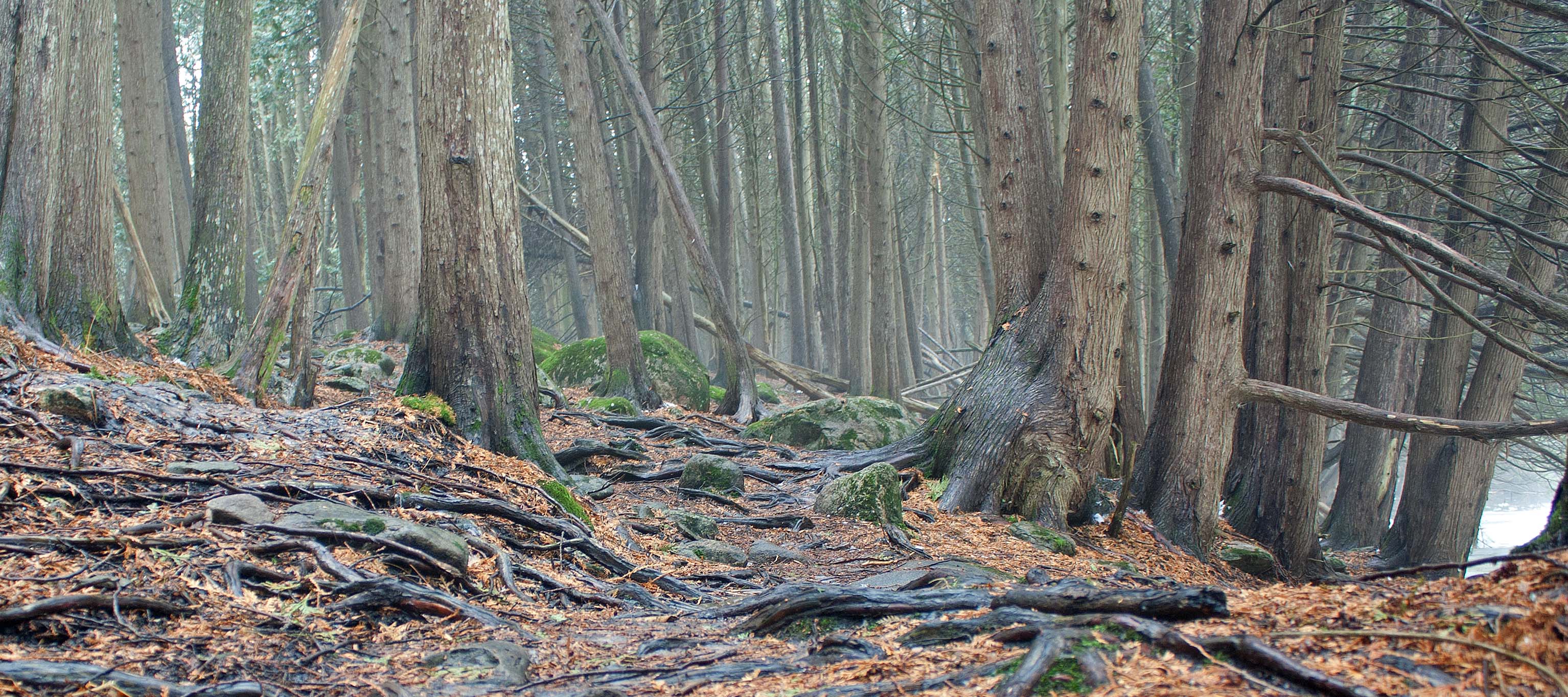
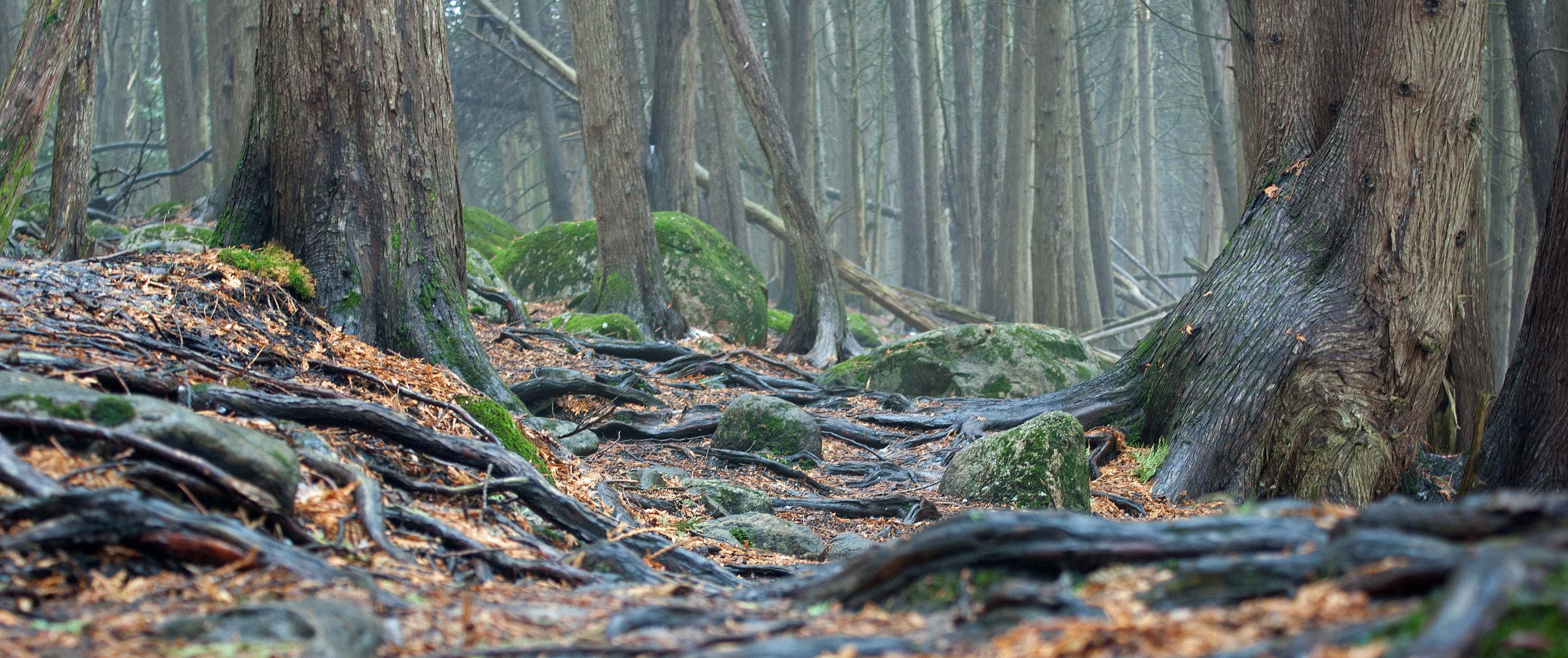
Cedar forest and extensive roots amid glacial erratics flank Jackson Creek on the right, ON (photo by Nina Munteanu)
.
It was a cold November day, after a light snow, as I wandered the Jackson Creek old-growth forest. Centuries-old cedar, pine and hemlock towered above me, giving off the fresh scent of forest. The trees creaked and cracked, swaying in a mischievous wind. I left the main path and descended the leaf-strewn slope toward the river. My boots pressed through a frosty crust into the spongy ground of dead leaves and organic soil. I stopped and breathed in the fresh coolness of the air. A damp mist huddled among the trees, adding wisps of mystery to the ancient forest. It was as though I’d entered an enchanted forest in some fanciful fairy tale.
Cedar forest on slope of Jackson Creek Park in early winter, ON (photo by Nina Munteanu)
.
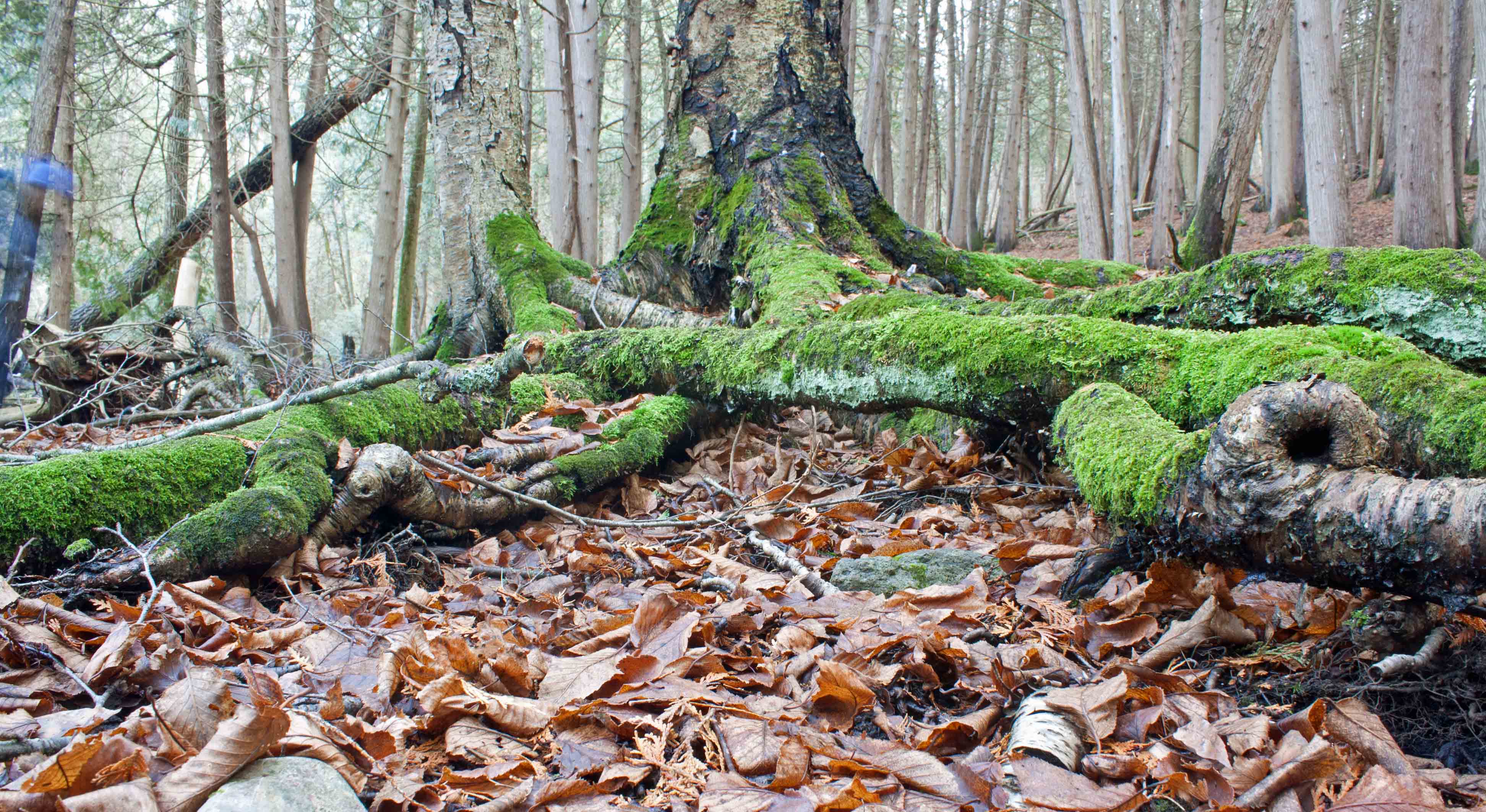
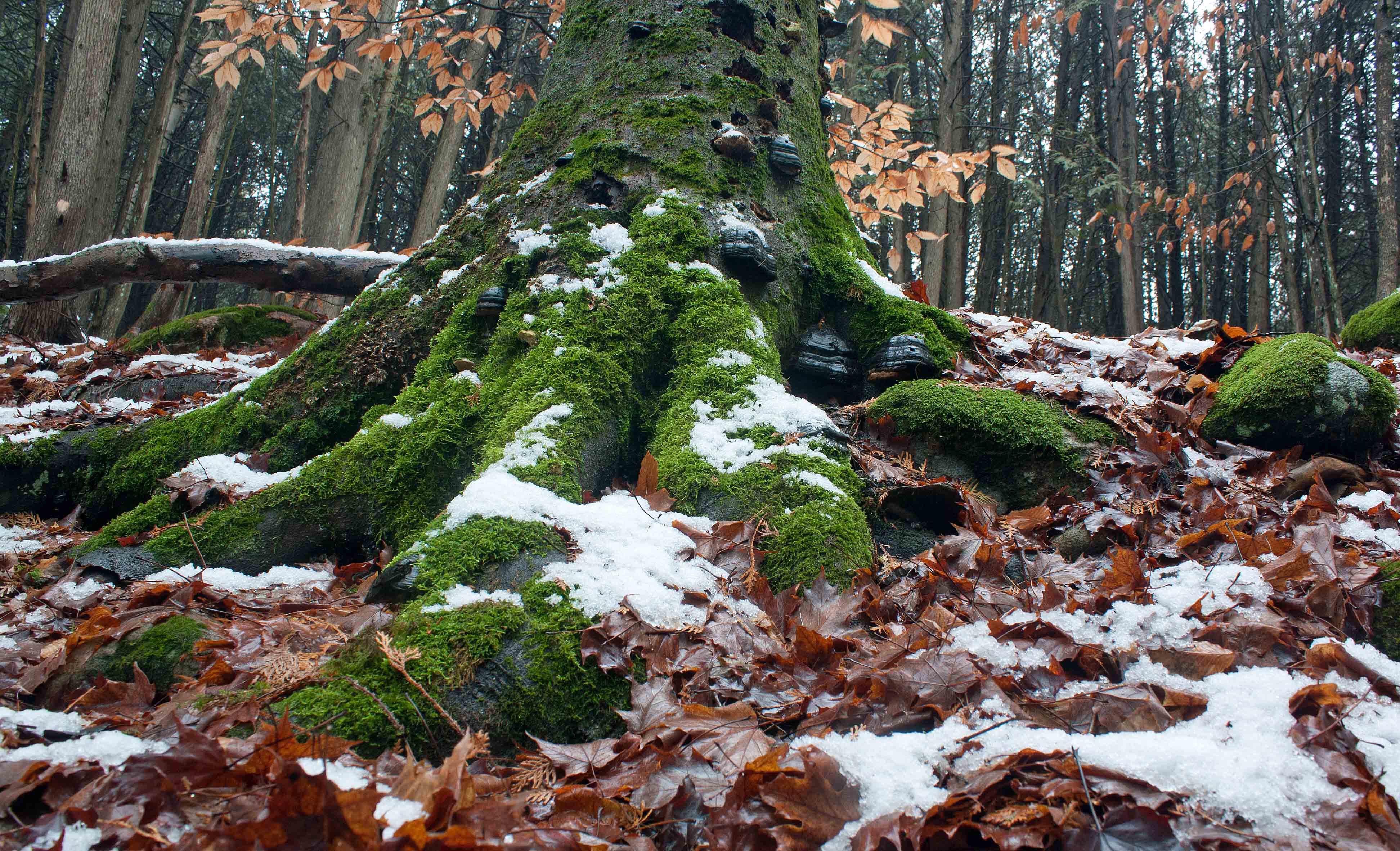
Not far from the river, I approached an old yellow birch tree, large trunk rising as tall as some of the cedars and pines around it. Golden flakes of bark curled and formed craggy patterns around the girth of the old tree. Radiating out from the tree, moss-covered roots snaked out like tangled ropes in a profusion of brilliant green. This was fairy country, I suddenly thought.
I dropped to my knees, crouching down, and set up my tripod and camera to capture this magical tree from the perspective of the forest floor. Head almost touching the ground, I inhaled the scent of loam and decaying leaves. The fresh pungency of cedar, pine, and humid moss hung in the air. Nearby, the river chortled and bubbled in a content symphony of motion. A curious red squirrel parked itself on a log nearby to watch me. It didn’t scold me like they normally did when I entered the forest; like it understood… It then occurred to me, as I set up my equipment under the squirrel’s careful stare, that I was in the presence of an enchantment. Like I was peering into a secret dance of feral celebration. But being there and appreciating it, I had now become part of it; I was Alice going down the rabbit hole into a true wonderland…
It was then that I glimpsed it as I carefully took my timed pictures. A blur of blue. What had I witnessed? A motion? A colour? Then it was gone. But in that moment, I’d felt the spark of an elation that comes with a glimpse into a secret world.
Old yellow birch tree and moss-covered roots with approaching blue sprite from left (photo by Nina Munteanu)
.
When I returned home to look at the images I saw that my camera had captured a wispy blue entity that flowed into its view and peered around the old birch at me with a kind of curious though mischievous grin.
Had I just captured a blue sprite? Something was unmistakably there!
Forest sprite peers around a yellow birch tree, Jackson Creek Park, ON (photo by Nina Munteanu)
.
I read up on sprites. According to European lore, a sprite is a supernatural entity. They are often depicted as fairy-like creatures or as an ethereal entity. The word sprite comes from the Latin spiritus (“spirit”), via the French esprit.
Given that the sprite I’d observed was blue and we were close to the river, I wondered if it was not a forest or wood sprite, but a water sprite. According to alchemist Paracelsus, the term ‘water sprite’ is used for any elemental spirit associated with water. They can breathe water or air and sometimes can fly. They also possess the power of hydrokinesis, which is the ability to create and manipulate water at will. Also known as ‘water nymphs’ and naiads (or nyads), these divine entities tend to be fixed in one place. Slavic mythology calls them vilas. Sprites are not corporeal beings (like selkies, mermaids and sirens) given that they are not purely physical; they are more like local deities than animals. This explained the wispy nature of the being I’d seen peering at me from the tree.
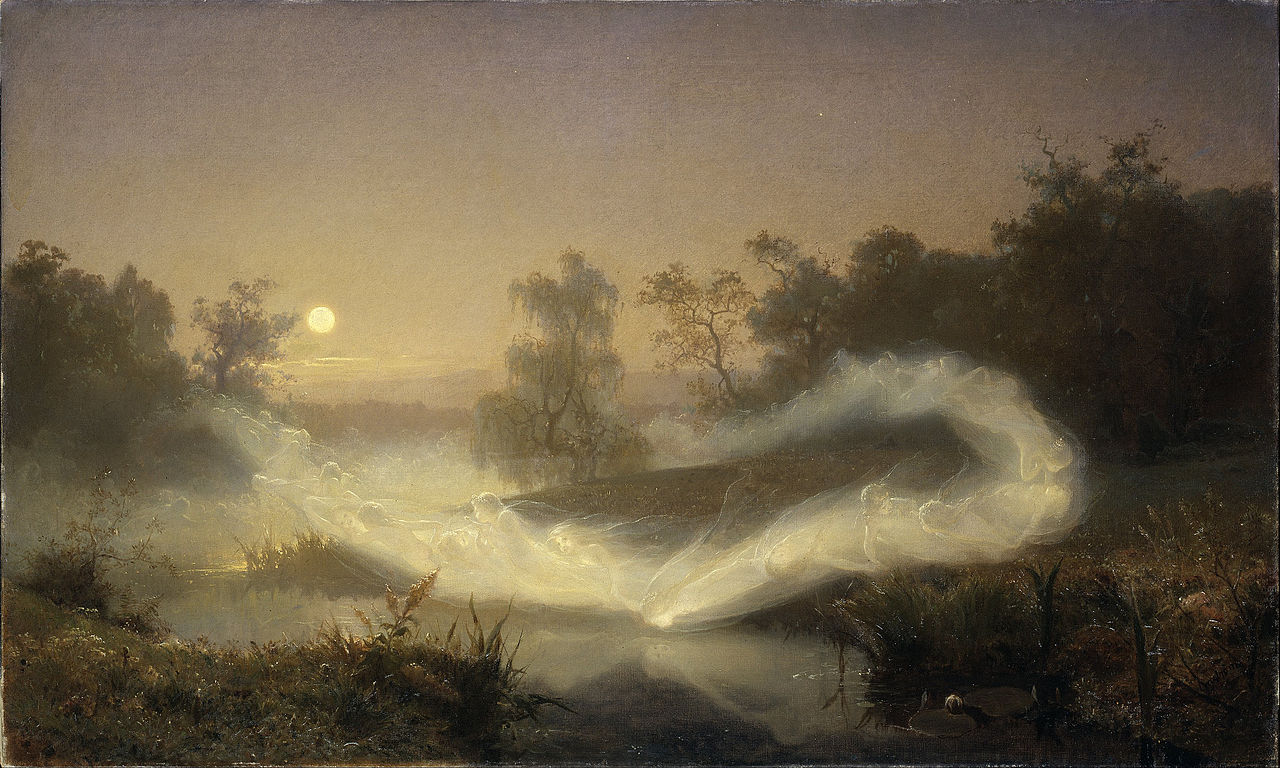
“Dancing Fairies” by August Malmström
.
After consulting with several friends—some who purported to know much more about sprites than I did—I concluded that this sprite was, in fact, a forest sprite and it was blue because it was near the water. Friend Merridy suggested that “forest sprites, normally green, may turn blue if a nearby brook calls to them.” She added that “water sprites can be distinguished by their chatty nature. They rarely go beyond the banks of a river or brook. Forest sprites are mostly silent.” Which this one certainly was. Friend Craig then pondered, “Are digital sprites in our world or in an electro-magnetic world? Or something else?” He was referring to them showing up on my camera without me even noticing they were there. When I told him I would return in search of them he observed, “if you’re looking for them that might be when they hide. Or maybe not. Any type of sprite is probably good, mischievous or friendly.” Thanks, Craig! That was helpful…
Glacial erratic boulders in Jackson Creek, ON (photo by Nina Munteanu)
Century-old beech tree, decaying and moss-covered in early winter, Jackson Creek Park, ON (photo by Nina Munteanu)
Ancient cedar tree stands next to an ice sheet on the path beside Jackson Creek, ON (photo by Nina Munteanu)
.
I visited the forest many times after but saw no sign of any sprites. Perhaps Craig was right; they were hiding from me.
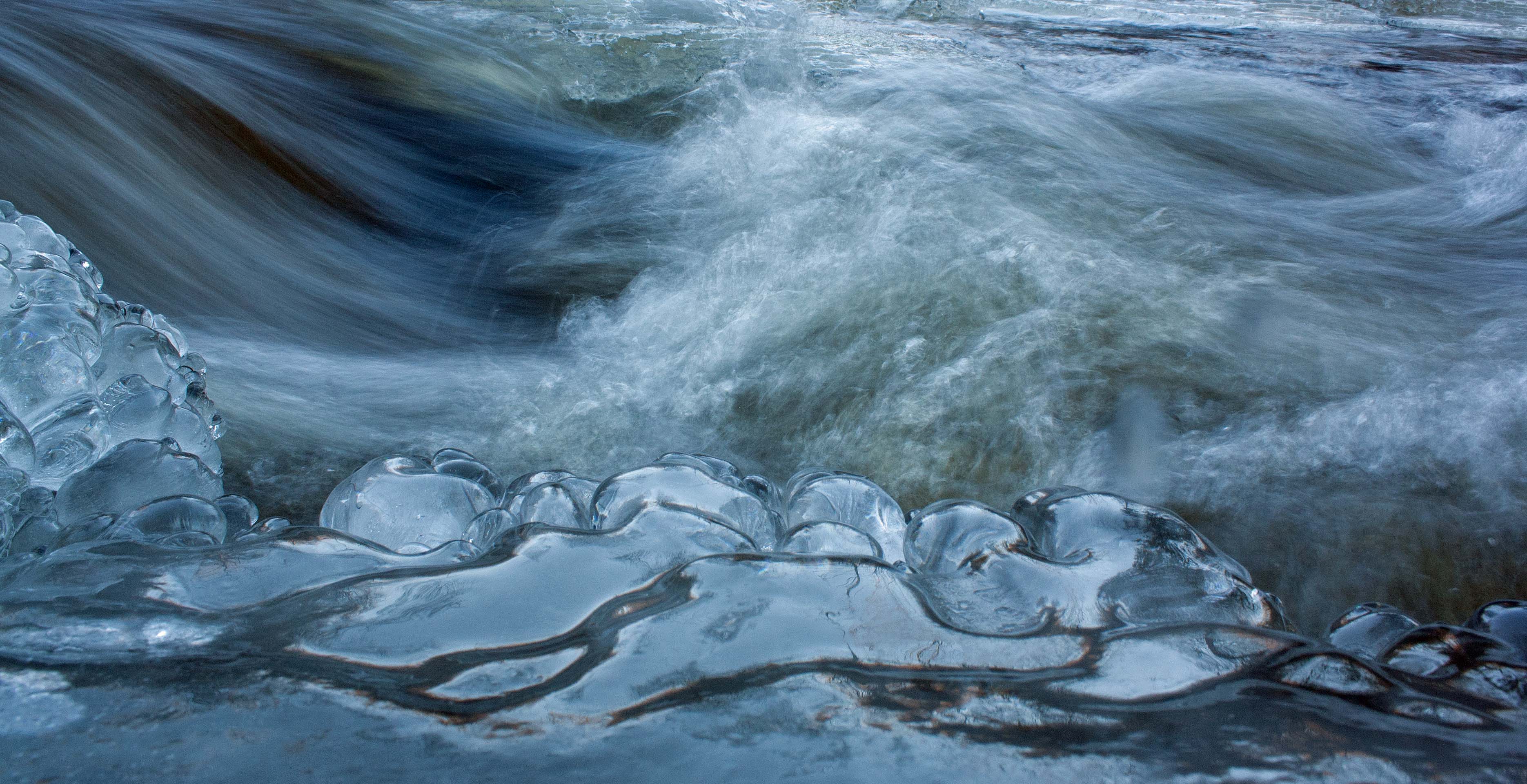
Then, on a foggy late December day, after a light dusting of snow, I returned to document the ice forming in the river. Islands and columns of ice had created a new topography for the flowing waters of Jackson Creek. Ice sheets also covered the forest path in places—making the walk somewhat treacherous. At times, I had to scramble and seize hold of branches to haul my way up precipitous banks from where I’d captured sculptures of ice ‘pearls,’ ‘platforms,’ and ‘columns’ on the river.
Ice forming on Jackson Creek in early winter, ON (photo by Nina Munteanu)
Ice ‘pearls’ forming on shore by rushing river, Jackson Creek, ON (photo by Nina Munteanu)
.
The fog grew thick as my walk eventually led me into an area of eccentric lopsided cedars in a ‘drunken’ stand by the river bank. The cedars sent out a tangled tapestry of gnarly roots I had to negotiate. I could feel the earth-magic. I dropped to my knees again and set my camera and tripod to the level of the roots. That is when I saw the blue sprite again! This time the sprite wasn’t playful; it appeared startled and disoriented. But, I managed to capture it as it fled the scene in wisps of blue smoke. As I left the forest, my thoughts returned to this serendipitous moment. Had I interrupted the wood /earth sprite in its work in the forest? These sprites are known to have the power of chlorokinesis, the ability to grow and control plants at will. When I checked my images at home, the sprite appeared to float near one of the cedars.
Blue forest sprite floats by cedar tree, Jackson Creek Park, ON (photo by Nina Munteanu)
.
When she saw the image, friend Merridy asked, “was the sprite entering the tree?” Thinking of incantations, friend Dyana asked if I’d had my recording feature on, which I’d never thought to do. On second thought, she decided that it might be dangerous. Not a good idea to anger a sprite. Friend Gabriela then challenged me: “did you ask what message they have for you, Nina? They keep showing up in your way, they might have a message for you or to be delivered through you to…” whoever… I hadn’t thought of that either. How would I hear their message when they were silent and so fleeting, I challenged back. She wisely responded, “Just ask yourself the question; you might be surprised when your next thought brings the answer. Since everything is energy, and you saw them at least twice, you’re probably connected with them.”
Sprite vaporizes behind tree, Jackson Creek Park, ON (photo by Nina Munteanu)
.
I didn’t tell her that the question that came to mind after seeing the sprite was: I wonder what’s for dinner!
I must ponder this more, however.
Cedar forest on a misty winter day, Jackson Creek Park, ON (photo by Nina Munteanu)
Thinking of Gabriela’s interesting remark, I am reminded of a rather sad but evocative tale by Vladimir Nabokov entitled “The Wood Sprite.” Told in the first person, it recounts the narrator’s experience when he was visited at his desk by an old wood sprite, “powdered with the pollen of the frosty, starry night.” The creature tells of his exile from a country wood in Russia, all cut down and burned amid the treachery of war.
Now that I think of it, I know the blue sprite’s message. And now you know it too.
Cedar forest and roots amid glacial erratics in Jackson Creek Park, ON (photo by Nina Munteanu)
Nina Munteanu is a Canadian ecologist / limnologist and novelist. She is co-editor of Europa SF and currently teaches writing courses at George Brown College and the University of Toronto. Visit www.ninamunteanu.ca for the latest on her books. Nina’s bilingual “La natura dell’acqua / The Way of Water” was published by Mincione Edizioni in Rome. Her non-fiction book “Water Is…” by Pixl Press(Vancouver) was selected by Margaret Atwood in the New York Times‘Year in Reading’ and was chosen as the 2017 Summer Read by Water Canada. Her novel “A Diary in the Age of Water” was released by Inanna Publications (Toronto) in June 2020.


















 Nina Munteanu Writing Coach