My flash fiction story “Alien Landscape” was recently accepted by the online magazine Sudden Flash and released on December 30, 2025—making it my last story published that year. The story follows Blika who crash lands in potential hostile territory of an alien planet after responding to a distress call. What Blika discovers is not what she expected…
.
You can read Alien Landscape on Your Sudden Flash.
.
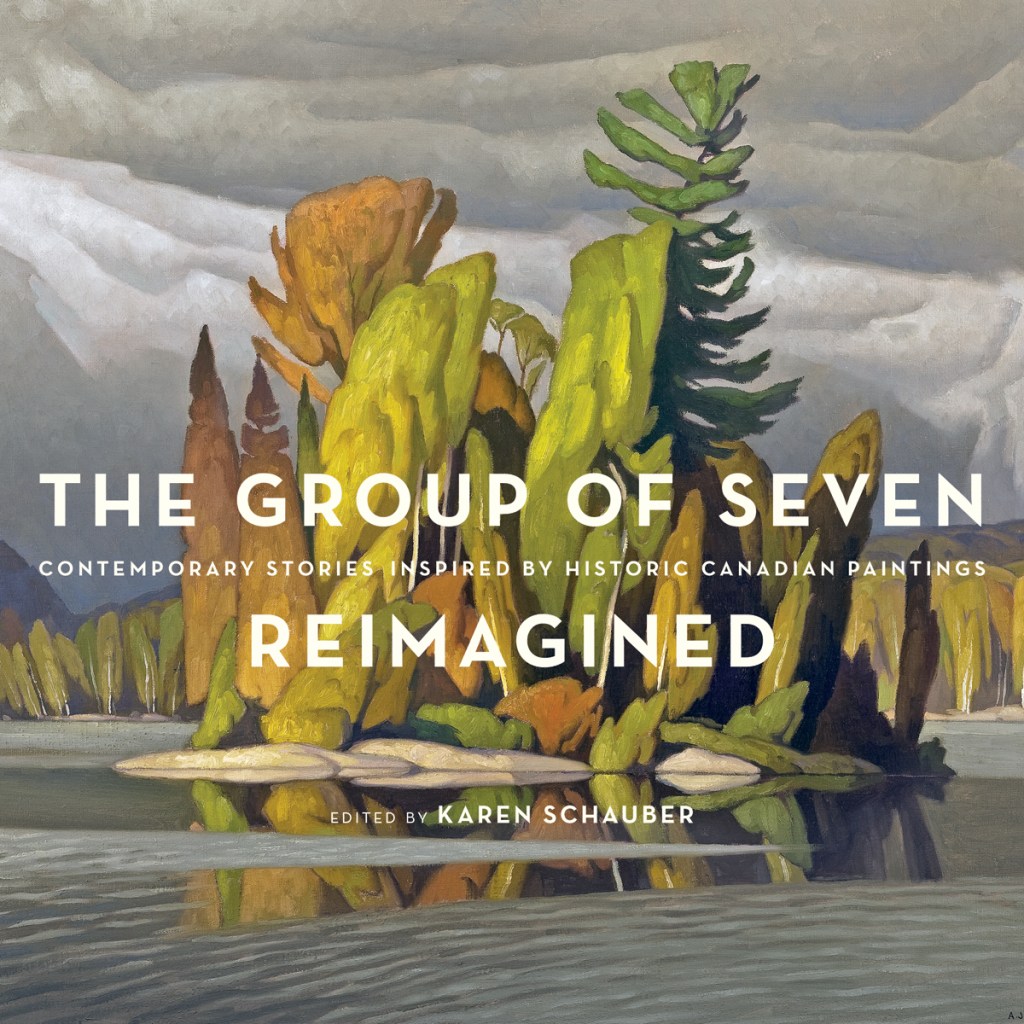
“Alien Landscape” first appeared in the 2019 celebratory ekphrastic anthology, edited by Karen Schauber and published by Heritage House: “The Group of Seven Reimagined.” The anthology celebrated the centenary of the formation of the Canadian iconic Group of Seven artists. Check my article which describes more about the Group of Seven movement. The Group of Seven movement “dragged Canadian art into the modern age,” writes Christine Sismondo of The Toronto Star in her review of “The Group of Seven Reimagined.” Sismondo astutely identifies and encapsulates the resonant meaning of the Group of Seven, then and now:
.
“A hundred years ago, seven Canadian painters got together and decided to start a movement. It was born out of the horrors of war. Now, the potential horrors of climate change are giving the movement an unexpected new life and meaning.”
.
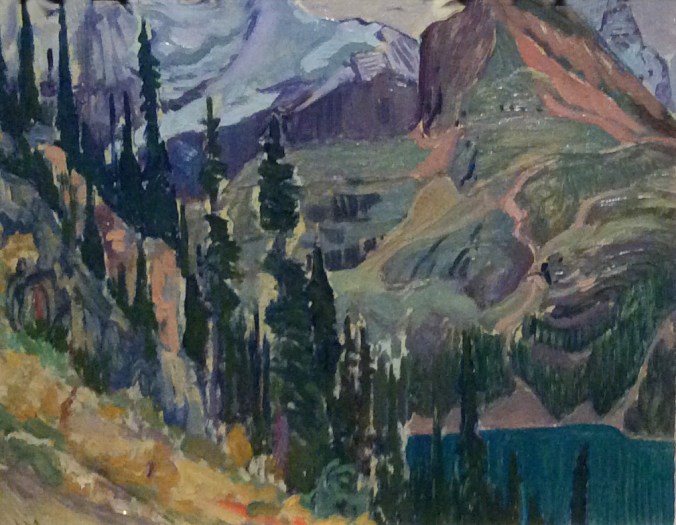
I joined twenty other flash fiction authors who linked our flash fiction to one the Group of Seven’s works. My “Alien Landscape” was inspired by J.E.H. MacDonald’s Lake O’Hara.
Lake O’Hara by J.E.H. MacDonald
.
Karen had invited me to contribute a piece of flash fiction (a piece of less than 500 words), inspired by a Group of Seven piece I would choose to inspire me. I took my time; this would be the first flash fiction piece I would write. It was an art form I was not familiar with, but was happy to experiment with. But I waited too long to decide and when I finally submitted my first choice for a painting, Karen informed me that it had already been selected by another writer. To my great frustration, this went on for a few pieces.
I finally took a short trip to the McMichael Gallery in Kleinburg to find my piece. In the main hall, I passed the pieces already claimed by my twenty colleagues; I sighed that I had waited so long. By chance, a large selection of artwork by J.E.H. MacDonald—one of the founders of the group—was currently on exhibit on the second floor. That was where I first saw the original oil sketch called Lake O’Hara by MacDonald. It was perfect! My story “Alien Landscape” emerged from the sketch like they had always belonged together.
.
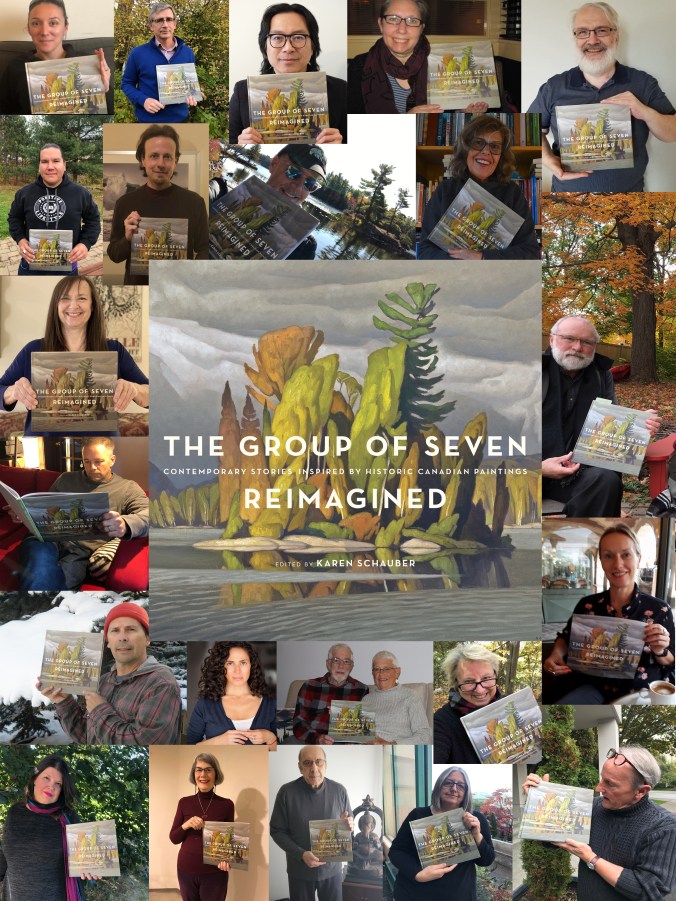
Christine Sismondo of The Toronto Star wrote: “while you might expect a lot of peaceful communing with nature on the page, a surprising number of the written pieces are actually dark tales of conflict and danger—forest fires, mining accidents, boat thieves and murderous plots in the woods.
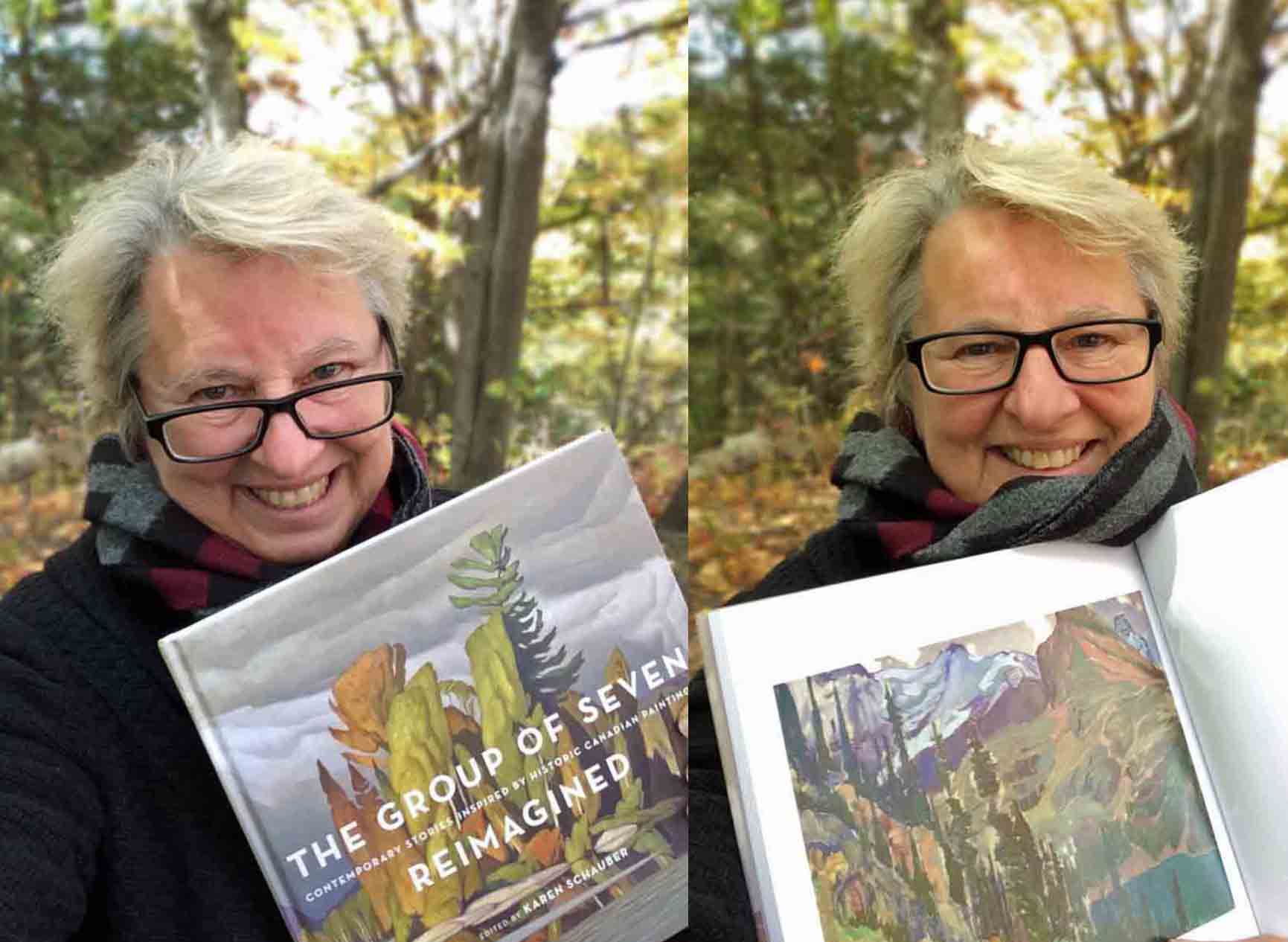
Nina Munteanu, a Canadian ecologist and science-fiction writer, takes J.E.H. MacDonald’s Lake O’Hara in a novel direction in ‘Alien Landscape’ by reimagining it as a refuge for a space heroine fleeing a world that had destroyed nature in pursuit of progress and ended in post-apocalyptic chaos.”
.
.

Nina Munteanu is an award-winning novelist and short story writer of eco-fiction, science fiction and fantasy. She also has three writing guides out: The Fiction Writer; The Journal Writer; and The Ecology of Writing and teaches fiction writing and technical writing at university and online. Check the Publications page on this site for a summary of what she has out there. Nina teaches writing at the University of Toronto and has been coaching fiction and non-fiction authors for over 20 years. You can find Nina’s short podcasts on writing on YouTube. Check out this site for more author advice from how to write a synopsis to finding your muse and the art and science of writing.
.





 Nina Munteanu Writing Coach