The Magic of the Muse: When A Simple Rewrite Reveals Synchronicity

It started with a simple tweet of mine on X regarding doing research for one’s writing projects. I’d met Isabella Mori a few years ago, when we both contributed to an ekphrastic anthology of flash fiction, inspired by Group of Seven art. We met again when she submitted a story to an anthology I was editing for Exile Editions. After my tweet on research, Isabella and I traded brief stories about rewrites based on research findings and ‘mistakes’ and the arcane revelations in the creative process that may result. I was intrigued by her recounting and asked her to share it with you; so here it is:

“Synchronicities And The Sea” by Isabella Mori

(Trigger warning: Substance use and suicide)

This is about the magic that comes to pass when we let the Muse guide our work and consent to synchronicity. Here is what happened:

When I go away on vacation, I try to visit the local library, and always make sure to check out the community announcements. On one of those forays, I came across a notice of a project that teamed up visual artists with writers for a short story or poem. I love these types of collaborations and immediately jumped on it. Max was the artist I paired up with, and we hit it off right away. After a few conversations, we settled on the painting below, for which I was going to write a story. As you can see, it had a moody, dark feeling. I drafted this text as a response:

The memory of a map showed her the way as she wandered, blinded by the night, along the shore. Numb with cold, her bare feet dug into the wet sand. She could not see that she left no tracks. There was something in her searching; she felt it in the deep pit of her stomach but there was no image in her mind’s eye of what it was, no tinkling that alerted her, no smell, no taste. A sense of despair drained the blood from her heart and tugged at her from the right, where the forest rushed. Foot-dragging ennui invited her onto a soft-moss carpet to the left, and thoughts of numbers, cars and cash register receipts tried to wrangle her back to where she came from. She was near giving up. But at that precise moment there tracked the light only she of the searching could see—a light bigger more forceful than giants could ever imagine; all-embracing, all-revealing, all-nurturing just like the frothy ocean beneath it, just like the sand with its fierce sparkle, each grain a diamond just like the heart-bud that could not help but open under its rays, under those rays that only she of the searching could see.

However, for reasons we have both forgotten, Max decided to lighten the colours, and the dark mood of the first draft didn’t fit anymore. This is the version we ended up with:

Walk With The Angels

The ocean has known her share of angels over the eons. They come and go but the tide is older. When an angel appears in a cloud of glistening light, beats its wings and brings out the trumpets, little humans fall to their knees and beg for mercy and miracles.

But the water stays still.

Great mother ocean has seen it all.

She waits until the angel grows tired, then she takes the worn-out wings and heavenly body into her arms and carries them into her depths. Brings the apparition to visit kelp, salmon, starfish, barnacles, otters and crabs. Anemones. Killer whales. A visit one by one, under the summer sun, beneath the light of the Hunter’s moon, when the snow falls, with the Easter rains. The angel leaves a bit of themselves here, a bit there, a gift everywhere, until only the tiniest of diamonds are left.

And that’s the sand.

Walk with the angels.

There were a few tweaks before we arrived at this text, the major one being that in a previous version, I referred to ‘angel dust’ for the sand until the editor pointed out that that term refers to a street drug, PCP. In my enthusiasm I had forgotten that.

The change away from ‘angel dust’ was very important. When Max read the new version, they called me, their tone of voice both moved and perturbed.

“When I read this,” they said, “it feels like you channeled what happened with my cousin last year, not far from the place that inspired my painting. She had had problems with drugs all her life, and one day she just walked into the ocean. Her body was found a day later.”

Under those circumstances, we definitely did not want to refer to drugs.

That story stayed with me for months until one day when I was listening to one of my playlists of Latin music. I lived in Paraguay and Chile 1977-1980, and often enjoy the nostalgia of the music I listened to back then. The first song that came on was one of my all-time favourites, Alfonsina Y El Mar – Alfonsina And The Sea. Now I have to confess, I am terrible with lyrics, no matter what language, whether it be my native German, English, or the Spanish I was fluent in for quite a few years. For some reason, I really listened to the song last summer, and then looked up the lyrics. That’s when it hit me – was it possible that the lyrics of that song had subconsciously influenced me to write the second text? Or was it one of those Jungian collective conscious moments?

Alfonsina And The Sea

(Music: Ariel Ramirez. Lyrics: Felix Luna)

In the soft sand
Licked by the sea
Her small footprints
Don’t return.
Just one path
Full of pain and silence
Led to the water,
Deep water,
And one single path of unspoken pain
Led to the foam.

God knows what sorrows accompanied you,
What old suffering shut down your voice
That made you lie down and nestle into the songs
Of the sea snails,
The song that sings in the deep dark of the sea,
The sea snail.

There you go, Alfonsina, with your loneliness,
What new poems did you go find?
An old, old voice of wind and salt
Sways your soul and carries it
And you go there dreaming,
Sleeping, Alfonsina, clothed in the sea

Five little sirens will carry you
Through passages of algae and corals
And glowing sea horses will dance
Around you
And all the creatures of the sea will soon
Play at your side.

Turn down the light a little more,
Nurse, let me sleep in peace.
And when he calls tell him I’m not in,
Tell him Alfonsina won’t come back.
And when he calls don’t ever tell him I’m in,
Tell him I’m gone.

There you go, Alfonsina, with your loneliness,
What new poems did you go find?
An old, old voice of wind and salt
Sways your soul and carries it
And you go there dreaming,
Sleeping, Alfonsina, clothed in the sea.

(Used with permission, my translation.)

Alfonsina ended up in the ocean just like Max’s cousin did.  

With some research, I found out that the story was about the Argentinian poet Alfonsina Storni who, after a difficult life that included poverty, questions she had about gender identity, and breast cancer, one night wrote a last poem to her son and then let herself fall into the ocean amid torrential rain. (An  apocryphal version has her just walk into the ocean, and that’s the one the lyricist chose.) Some of that last poem was incorporated into Alfonsina Y El Mar – the nurse who is asked to lower the light, and told to tell ‘him’ that she won’t come back. Nobody seems to know who ‘he’ is.

The other research that had to happen was to find who the inheritors of Felix Luna’s estate were to obtain permission should I tell the story that you have before you. It turned out to be his daughters. Then I had to sleuth out their contact.

Felix Luna, the lyricist, imagined Alfonsina’s death not only as the terrible tragedy that it was but also as a mystical transformation into a sea creature that nestles into the songs of the sea snails. She finds new poems and sleeps clothed in the sea. She is embraced by sirens and wanders through algae and corals. She dances with sea horses and plays with all the other sea creatures.

I definitely cannot compare myself with a great poet like Felix Luna but notice with humility the similarities of my transformed angel who sinks into the embrace of mother ocean and also visits the more-than-humans of the sea.

I went pregnant with the idea of writing about the experience of Max’s and my collaboration for half a year when in February, I chanced upon a tweet by Nina about research for writing. I met Nina through submitting a story to an anthology she was editing. I told her about needing to tweak the angel story so that it does not talk about angel dust and ended up telling her the outline of what happened. She invited me to write a guest post about this, and here we are.

So many synchronicities. I could have not gone to that library. A different artist could have been paired up with me. Max could have wanted to stay with the original painting. Or they could have chosen a painting that would not have reminded them of their cousin. They could have opted not to share that sad story with me, or they could have been paired up with someone who doesn’t understand suicide as intimately as I do (I look back on a 30+ year career in social services.) I could have heard Alfonsina Y El Mar and still not really listened to the lyrics. There was no guarantee I could have managed to find out from whom to get permission to quote the song. I could not have submitted a story to one of Nina’s anthologies, and could not have followed her on Twitter. Coming across the particular tweet that prompted the publication of this story was like chancing upon a needle in a haystack. All this, and probably more, had to come together for this magical synchronicity to happen.

Thank you, Muse.

(Note: Since this is a sensitive topic, the artist’s name and some of the circumstances of my collaboration with them have been changed. However, the artist has consented to using their images.)
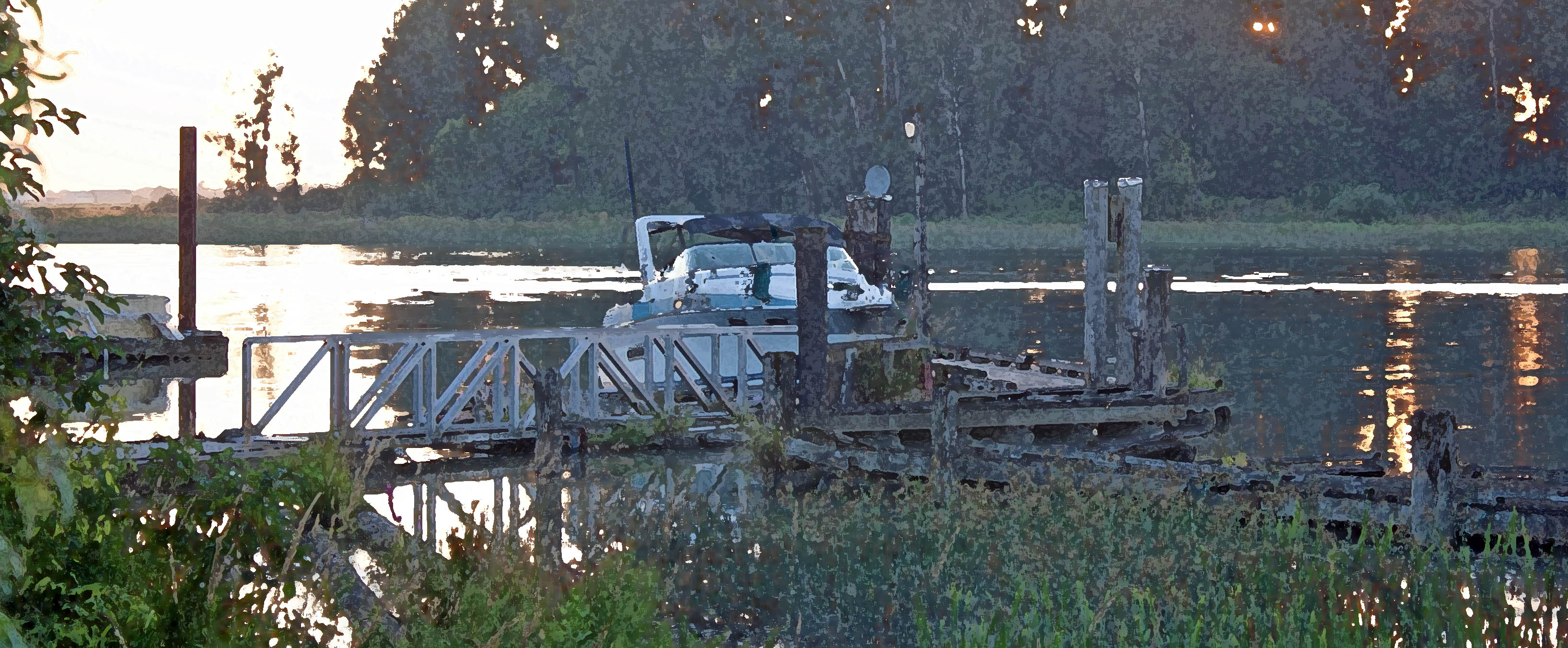
Boat wharf at sunset in Ladner Marsh, BC (photo and rendition by Nina Munteanu)

Isabella Mori writes fiction, poetry and nonfiction, and is the author of three books of and about poetry, including A bagful of haiku – 87 imperfections. Isabella’s work has appeared in publications such as State Of Matter,  KingfisherSigns Of LifePresence, and The Group Of Seven Reimagined. Isabella is the founder of Muriel’s Journey Poetry Prize, which celebrates socially engaged poetry. A book about mental health and addiction is planned for publication with Three Ocean Press in 2024. They live on the unceded, traditional and ancestral lands of the Musqueam, Squamish and Tsleil-Waututh people aka Vancouver, BC.

The A to Z of Writing Fiction: D, E, F…

Country road in early spring, ON (photo and rendition by Nina Munteanu)

In this series of articles, I draw from key excerpts of my textbook on how to write fiction The Fiction Writer: Get Published, Write Now! whose 26 chapters go from A to Z on the key aspects of writing good and meaningful fiction.

D is for Get the Dope on Dialogue

One of the most important devices to spice up narrative and increase pace is the use of dialogue. There’s a reason for this: we read dialogue more quickly; it’s written in more fluid, conversational English; it tends to create more white space on a page with less dense text, more pleasing to the reader’s eye. Dialogue is action. It gets readers involved. Good dialogue neither mimics actual speech (i.e., it’s not usually mundane, repetitive or broken with words like “uh”) nor does it educate the reader through long discourse (unless the character is that kind of person). Good dialogue in a story should be somewhere in the middle.

While it should read as fluid conversation, dialogue remains a device to propel the plot or enlighten us to the character of the speaker. No conversation follows a perfect linear progression. People interrupt one another, talk over one another, often don’t answer questions posed to them or avoid them by not answering them directly. These can all be used by the writer to establish character, tension, and relationship.

E is for Exposition

In fiction, exposition breaks away from the ongoing action of a scene to give information. It can be one paragraph or go on for several pages. Exposition often provides contextual information critical for the reader to buy in to character-motivation or the ideas promoted in the story. It gives a story its perspective and larger meaning by linking the reader with the thematic elements. If scene is action and plot, exposition feeds reflection and theme. Exposition can appear in the form of background, setting, back story or overview. It is most often expressed through a POV character’s reflection and observation.

Exposition is something every writer grapples with in a story. Where to put it? When to add it? How much is too much? How little is too little? Working out when to explain the plot and when to leave the reader to draw their own conclusions can be tricky for even experienced writers, says author Elsa Neal. Ansen Dibell, author of Elements of Fiction Writing: Plot, describes exposition as “the author telling the reader something—telling, rather than showing.” Telling is much less effective and interesting than showing. It follows then that exposition is much less dramatic and less vivid than a scene. This is why you need to break exposition up into small bite-size pieces rather than a huge caloric meal of information. A good rule to follow is to minimize exposition as much as you can.

Okay, it’s good to add exposition. But there is a way and a time to do it. You need to balance the show-and-tell part of your narrative and to maintain a rhythm in your pace and tone. This means doing several things:

  • restrain yourself and keep your notes to yourself
  • arouse then explain
  • build exposition into the scene
  • put exposition in between scenes
  • let the character explain—but be careful!
  • Use interior monologue

F is for Finding Your Muse

In over twenty years of writing both fiction and non-fiction I really hadn’t given much thought to writer’s block until recently, when I was challenged on it. This is not to say that I never experienced it. I did; I just kept on writing. “What?” you say. “Then, you didn’t really have writer’s block.” Well, I did, but only for that particular project, and only for one aspect of that particular project. The key is to have multiple projects and recognize that each of these has multiple tasks aside from writing (e.g., editing, research, discussion, etc.) that you can work on.

For instance, besides Novel A, whose plot had me stumped, I was working on two short stories and a non-fiction article. I was also actively posting science articles, essays and opinion pieces on my blog. In addition, I was writing news articles for an online magazine and doing my regular stint at the environmental consulting firm, writing interpretive environmental reports. I kept on writing.

I let the plot of Novel A sit for a while as I continued to write. That didn’t mean I couldn’t work on Novel A in other capacities: copy editing or polishing language, for instance. The point I want to make is that it’s helpful to have other things on the go mainly because this will let you relax about the project that has you stumped. And you need to relax for it to resolve. It’s a little like looking for the watch you misplaced; it will find you once you stop looking for it.

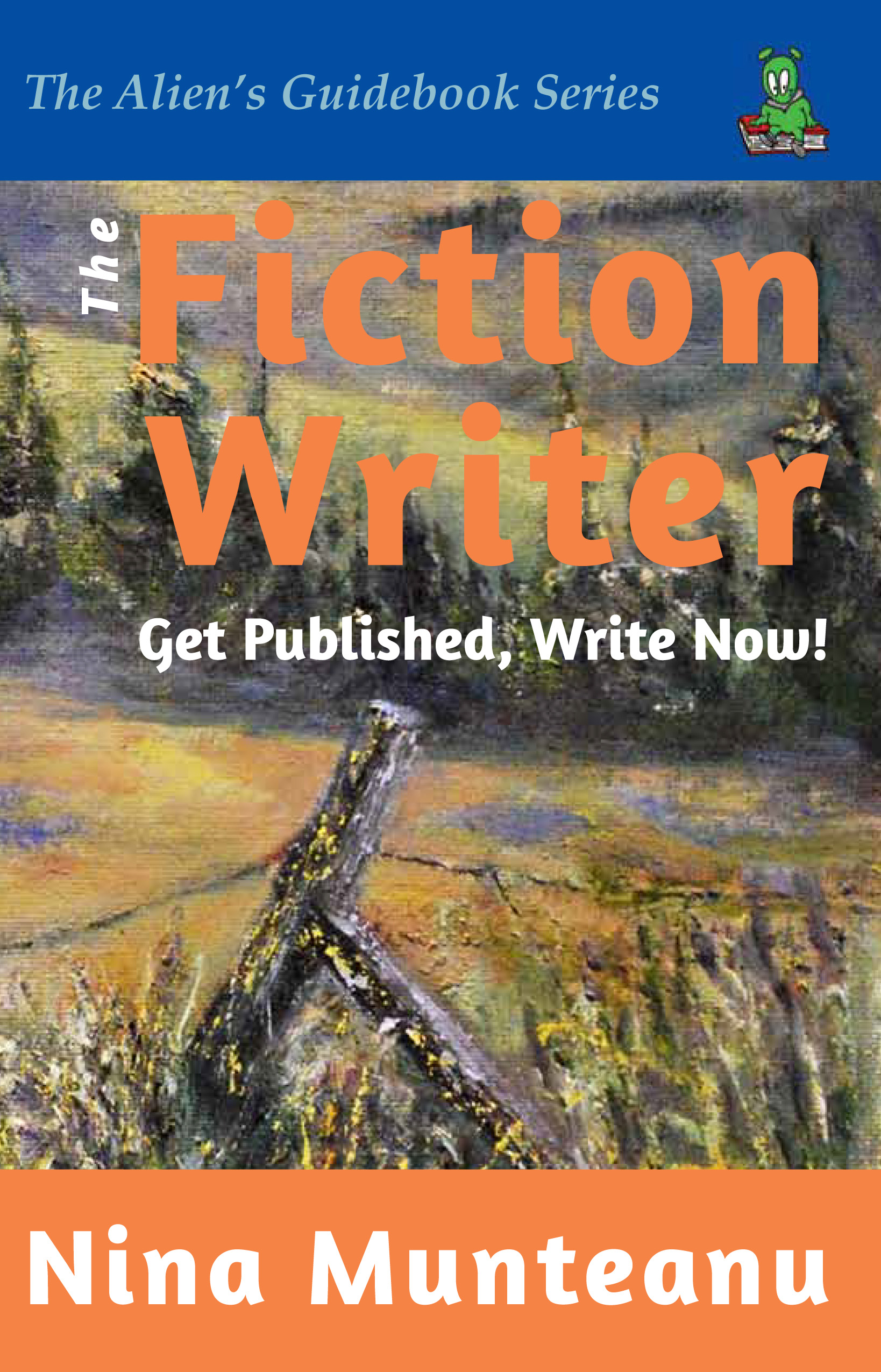
The Fiction Writer: Get Published, Write Now! (Starfire World Syndicate) May 2009. Nominated for an Aurora Prix Award. Available through Chapters/IndigoAmazonThe Book Depository, and Barnes & Noble.

The Fiction Writer is a digest of how-to’s in writing fiction and creative non-fiction by masters of the craft from over the last century. Packaged into 26 chapters of well-researched and easy to read instruction, novelist and teacher Nina Munteanu brings in entertaining real-life examples and practical exercises. The Fiction Writer will help you learn the basic, tried and true lessons of a professional writer: 1) how to craft a compelling story; 2) how to give editors and agents what they want’ and 3) how to maintain a winning attitude.

“…Like the good Doctor’s Tardis, The Fiction Writer is larger than it appears… Get Get Published, Write Now! right now.”

David Merchant, Creative Writing Instructor
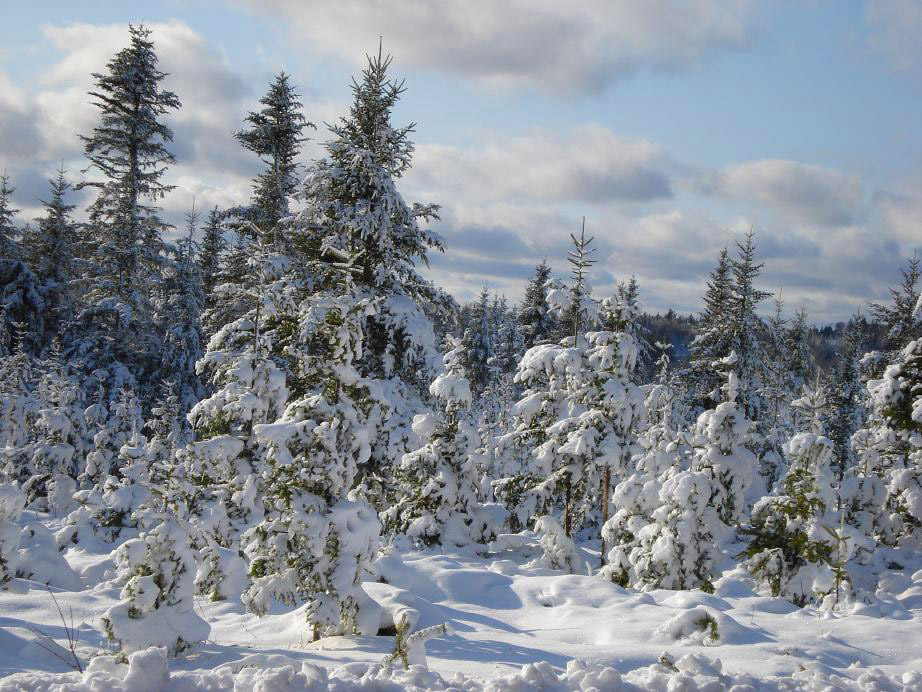
Snowing in the Kawarthas, ON (photo and rendition by Nina Munteanu)

Click here for more about my other guidebooks on writing.

Nina Munteanu is a Canadian ecologist / limnologist and novelist. She is co-editor of Europa SF and currently teaches writing courses at George Brown College and the University of Toronto. Visit www.ninamunteanu.ca for the latest on her books. Nina’s bilingual “La natura dell’acqua / The Way of Water” was published by Mincione Edizioni in Rome. Her non-fiction book “Water Is…” by Pixl Press (Vancouver) was selected by Margaret Atwood in the New York Times ‘Year in Reading’ and was chosen as the 2017 Summer Read by Water Canada. Her novel “A Diary in the Age of Water” was released by Inanna Publications (Toronto) in June 2020.

The Silver Bean Café: A Place to Write My Next Novel…

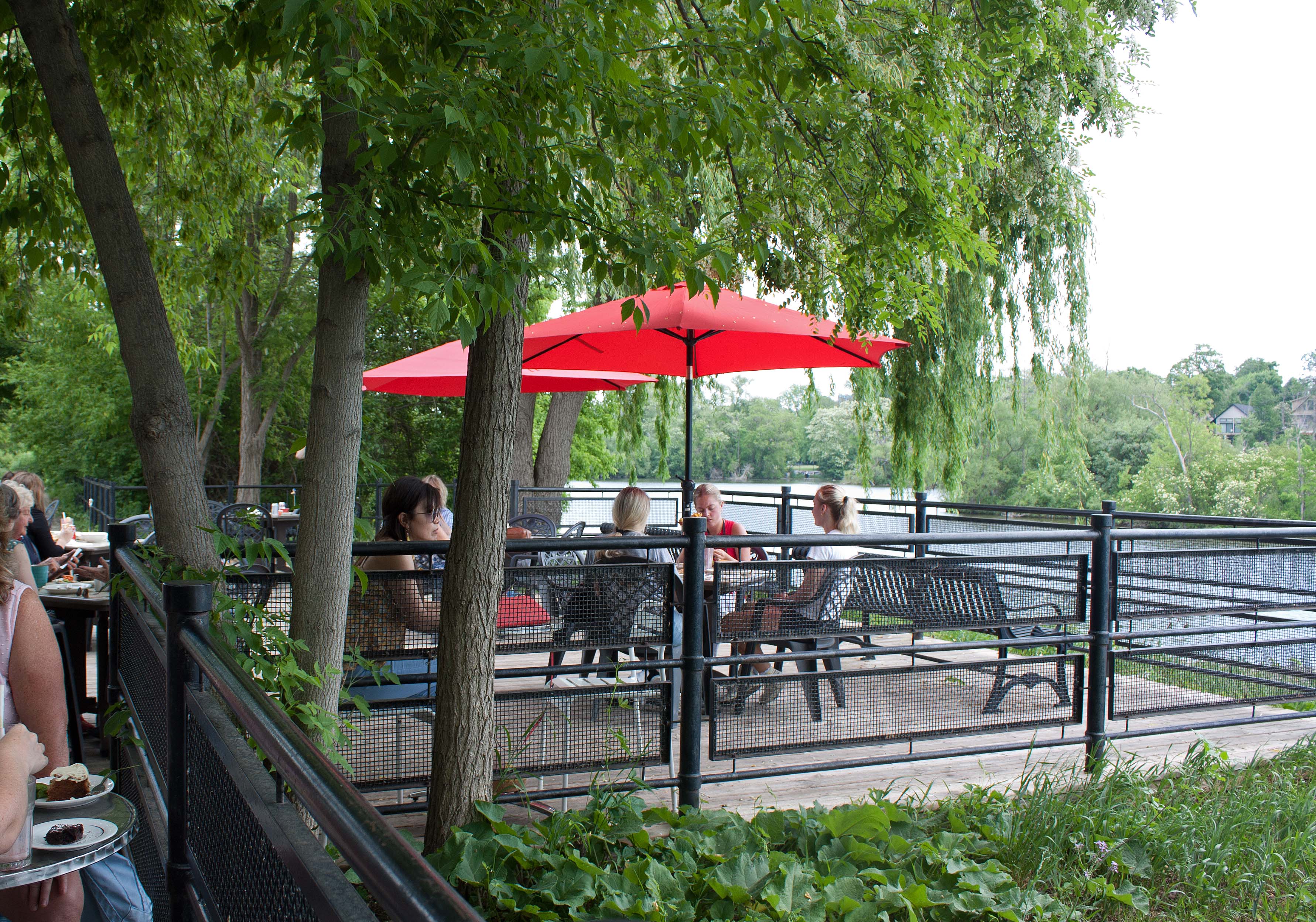
Cafe patio facing Otonabee River (photo by Nina Munteanu)

I’m a bit of a wanderer, an itinerant. A hobo, even. I house sat and pet sat for a decade. I travel light; I carry what I own in my Jetta. One of the things I look for when I first settle somewhere is a choice café and a place where I can walk—preferably in a forest by a river. The small unpretentious town of Peterborough, north of Toronto and entry way to the Kawarthas, has both. The Otonabee River flows through Peterborough, much of it protected by riparian woodland and marsh (it is Peterborough’s source of drinking water, after all). The place where I currently live allows me to walk daily—rain or shine or snow—through riparian forest along the Otonabee River.

And then there’s the café part…

Silver Bean Cafe and boat wharf on the Otonabee River in Millennium Park, ON (photo by Nina Munteanu)
Cafe entrance to King Street and ice cream booth (photo by Nina Munteanu)

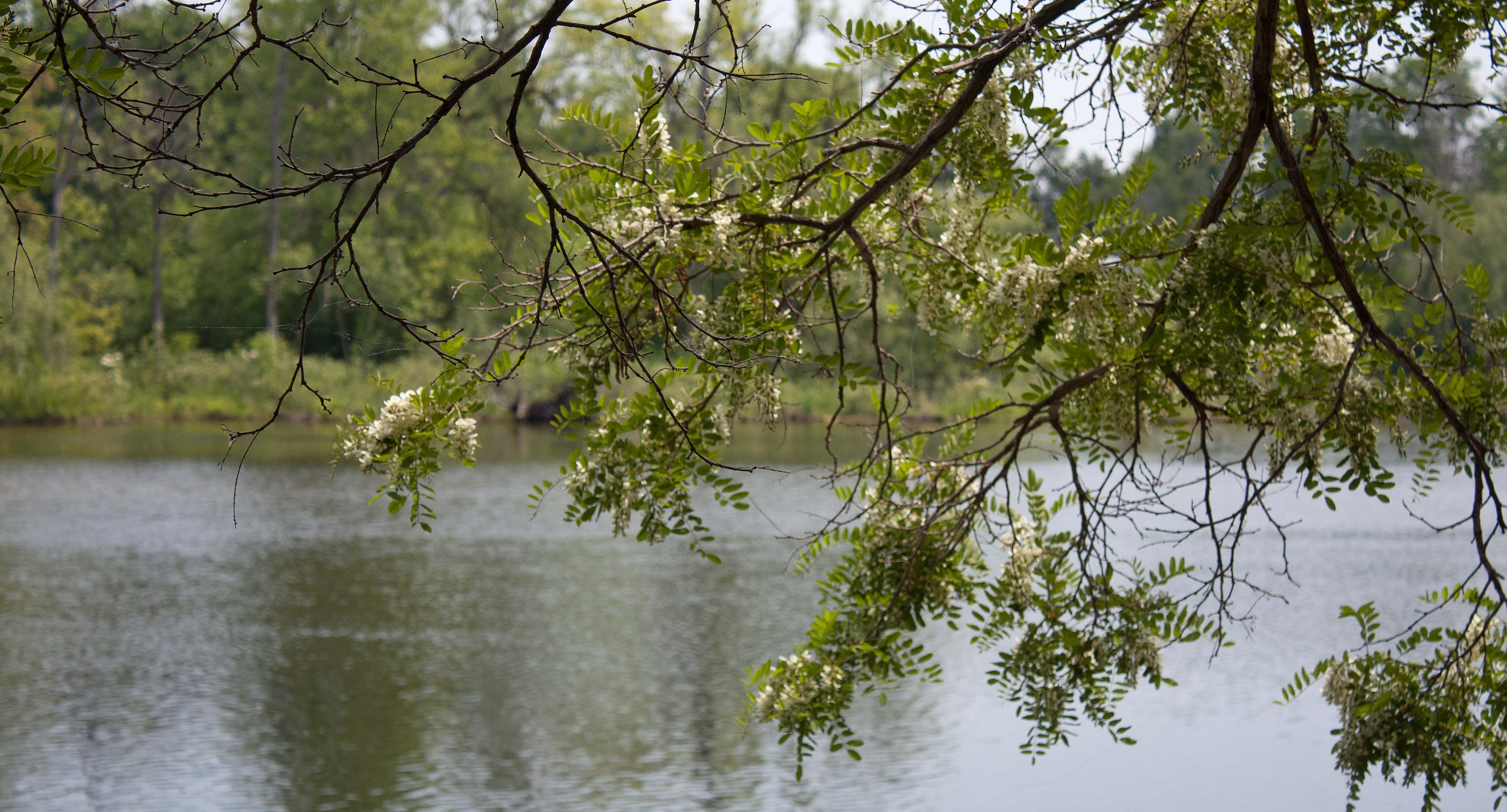
The Silver Bean Café fills that requirement wonderfully. It’s a café situated at a dead end of King Street within a linear riparian park (Millennium Park) on the banks of the river with a large side-park patio under a canopy of willows, black locust, and Manitoba maples. They know what they are too: they call themselves “your waterfront cottage in the city.” When I sit on the patio, enjoying my lunch under the dappled shade of a flowering black locust tree with a view of the river, I hear only birds and the desultory chatter of fellow patrons. And yet, the city is right there, next to this riparian park.

Stairs up to Silver Bean Cafe patio from boat wharf, beneath canopy of flowering black locust trees (photo by Nina Munteanu)
Riverside patio overlooking Otonabee River, ON (photo by Nina Munteanu)
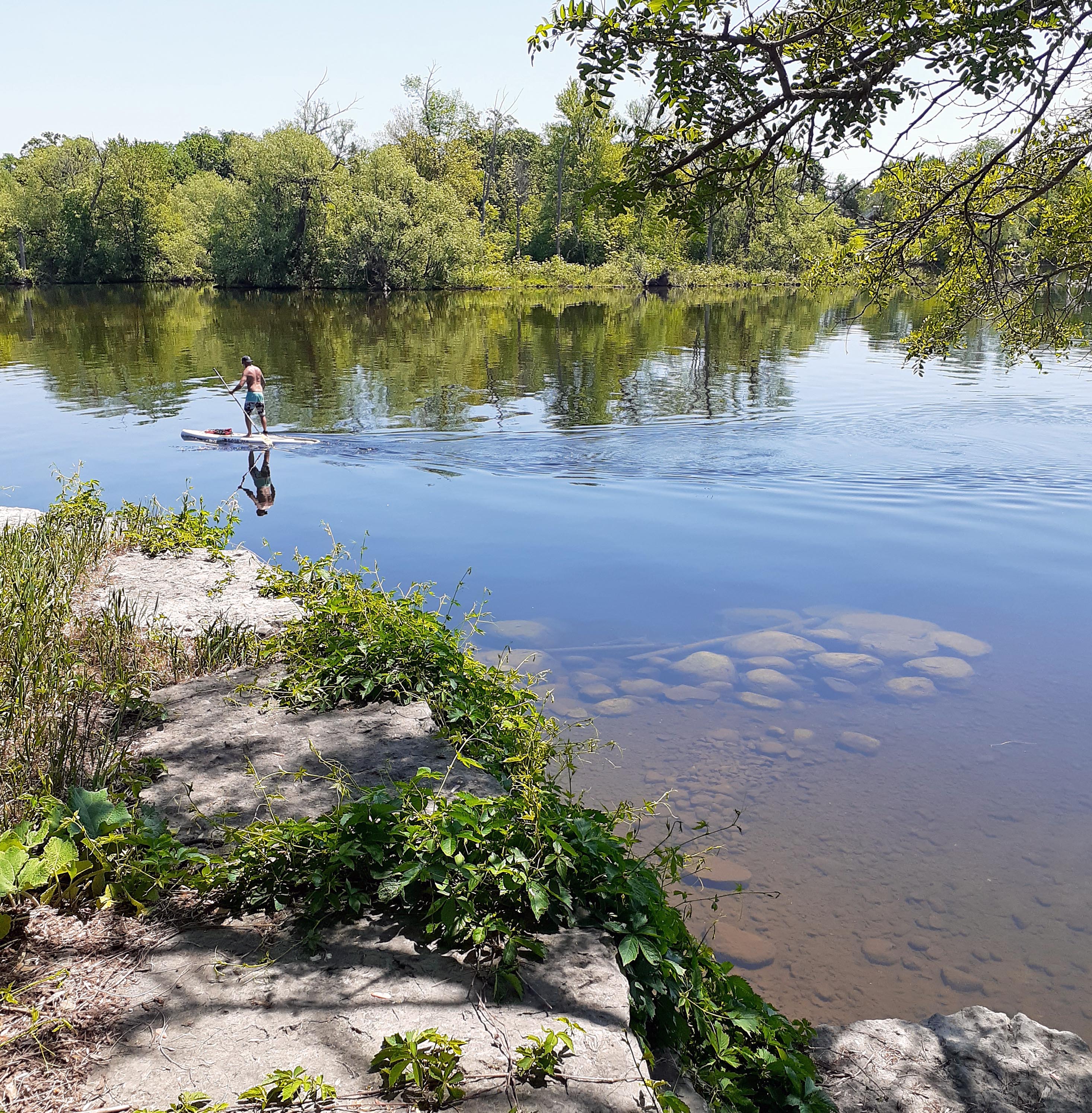
River boarder paddles by on Otonabee River, ON (photo by Nina Munteanu)

As I sit, eating my lunch and breathing in the ambrosia fragrance of black locust blooms, a young man paddles his canoe past the café. Soon after, a family of geese, adults flanking seven goslings, paddle leisurely by. Gulls cry out and gather on one of the small islands as a freight train lumbers over the old rail/footbridge downstream. A robin hops close to my table, looking for crumbs and I clumsily drop a seed from my multi-grain sandwich… Oops! Darn, I wanted that…

Family of geese paddle by cafe on the Otonabee River (photo by Nina Munteanu)

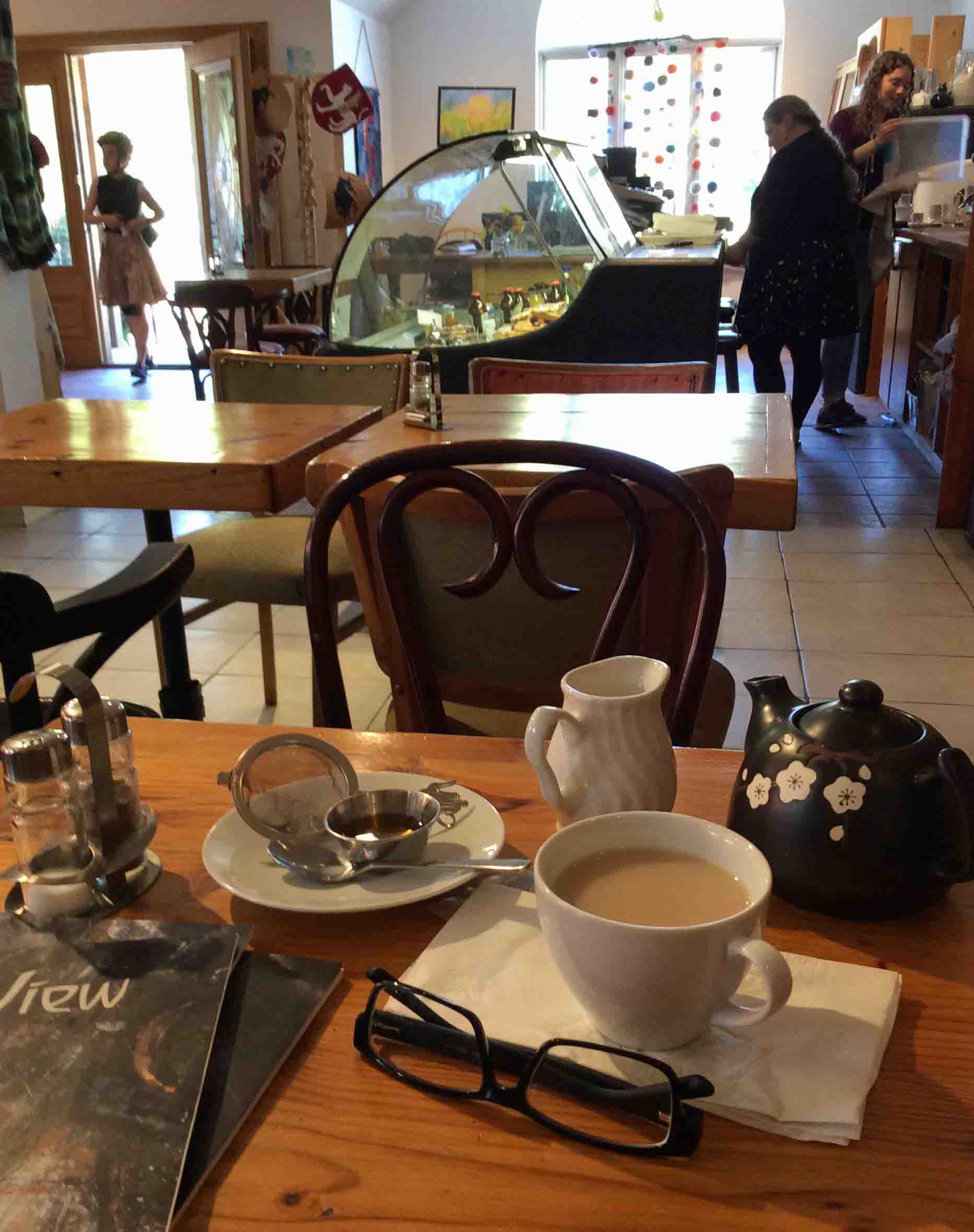
2023 is the Silver Bean’s 20th season, their website tells me. They opened in 2003 as a community café, serving light lunches with speciality sandwiches and salads, breakfasts, freshly baked scones, desserts and, of course, locally roasted coffee and espresso drinks. Oh! And their nook by the street-side serves at least thirty different flavours of my favourite Kawartha ice cream!

View of Silver Bean Cafe patio and boat rental wharf from park walk, ON (photo by Nina Munteanu)

One day, I was sitting on a stone step by the river on the park walkway, eating my peanut butter chocolate ice cream cone and watching a mother mallard and her chicks in the water. A well-dressed lady sat nearby with a take out coffee. Slipping off her shoes in the sun, she shared that she worked in the government building nearby and came here daily for her fix of sanity. I nodded sympathetically then smiled to myself. I felt the guilty pleasure of not being on ‘the clock.’ She left soon after. I stretched my legs in the sun, found my muse, and daydreamed about the next book I was going to write…  

Black locust with fragrant flowers in spring, overlooking the Otonabee River, ON (photo by Nina Munteanu)

Nina Munteanu is an ecologist and internationally published author of award-nominated speculative novels, short stories and non-fiction. She is co-editor of Europa SF and currently teaches writing courses at George Brown College and the University of Toronto. Visit www.ninamunteanu.ca for the latest on her books. Nina’s recent book is the bilingual “La natura dell’acqua / The Way of Water” (Mincione Edizioni, Rome). Her latest “Water Is…” is currently an Amazon Bestseller and NY Times ‘year in reading’ choice of Margaret Atwood.

Finding the Right Time and Place to Write

Look and you will find it—what is unsought will go undetected —Sophocles


Beaches-snow01

Snow in the Beaches, Ontario

During a time when I had a demanding job as an scientist with an environmental consulting job, was a devoted wife and mother and community volunteer, I wrote and successfully marketed five books, over a dozen short stories and many articles and reviews. Some people, including my publishers, thought I never slept (true) or had cloned myself (possibly). They couldn’t believe my productivity when I was so busy with life.

But I did what I did, because I’d worked out a system. One that I could live by. One that fit my lifestyle. One created out of respect for my art as part of my “busy” life of commitments.

The truth of it is that we all lead busy lives. If you are going to finish that novel you’ve been working on over the years or book of poems sitting in the bottom dresser drawer, you need to make a commitment. Aside from giving your art the respect it deserves, it comes down to creating a time and place to write.

It starts with being realistic about your daily schedules and routines and inclinations and picking a time and place accordingly. Try to be consistent. It’s actually best to create a routine related to both time and place; the key is to be realistic about it. Don’t fight your inclinations or habits; instead, build your writing into your lifestyle. This will ensure success.

nina-smiling-close

Nina Munteanu teaching in Mahone Bay, NS

Choose a Sacred Time

Finding the time to write is critical to succeeding. If you don’t dedicate time to write, you won’t write. Believe me, you won’t. Make it sacred.

Writer Louise DeSalvo shared a common story about her experience: “Many people I know who want to write but don’t (my husband, Ernie, for example) or who want to write more than they have but say they can’t find the time (my friend Marla) have told me that taking the time to write seems so, well, self-indulgent, self-involved, frivolous even. And that finding the time to write—even a diary, much less fiction or memoir or poetry—in their busy schedules is impossible. I’ll write when I have the time, they say.”

It doesn’t work that way. You don’t find time; you must create it. Writing of any kind is a commitment you make to yourself. So, choose a time that’s right for you. If you’re a morning person, don’t pick the end of the day when you don’t function as well. Instead, pick the early morning to write, a time before everyone else gets up and the day’s distractions pile up.

It’s actually best to create a routine related to time of the day (e.g., fixed time such as every morning or right after supper) or based on some other constant in your life, say the school calendar or your daily activities. The key is to be realistic about the time(s) you’ve chosen. In other words, your goals should be realistic and realizable.

The second part of the commitment is sharing it with your family and friends so that they will respect your sacred writing time. By sharing how important it is to you, you also give them the gift of sharing the experience with you and they are more likely to respect your time alone to write. This is also why choosing a routine makes more sense; it is something your family and friends will better remember and abide by. Making it easy for others is part of making it easy for you.

Find Your Own Rhythm

the beach-2013

The Beaches boardwalk (photo by Nina Munteanu)

There’s no rule for when and how often you write. Because frequency and schedule of writing depends on the kind of writing you do (e.g., novel, short stories, articles, research) and on your own rhythms, you must decide what works best.

Most writers recommend that you commit to a regular writing schedule that is realistic to your overall routine and biorhythms. Some recommend you write in the morning, after a refreshing sleep; others suggest you write at night, at the end of the day when your memories are more fresh with the day’s activities and stimulations. Yet others suggest you take time out during the day to jot down relevant experiences as close to the time as the muse hits you, then spend some time at the end of the day compiling it into your work.

In the end, it’s up to you to choose what works for you and your own rhythms. When is the best time for you to write? And for how long or how many pages? Once you decide, stick to that schedule.

Choose a Sacred Place

Writing is a reflective activity that requires the right environment. The best environment is a quiet one with no interruptions and where you are alone. A reflective environment will let you find a connection with your muse. You need a place where you can relax and not worry about someone barging in or other things distracting you from your reflections. You should also feel physically comfortable and the place should meet your time requirements.

Because the suitability of a place can change with the time of day, learn the rhythms that affect the place you wish to write in. For example, the kitchen may be the centre of activity during the day but an oasis of quietude during the evening. Similarly, learn what kind of environment stimulates and nurtures your writing. Does music help or do you need complete quiet? Do you respond to nature’s soft breezes and sounds or do you prefer to surround yourself with the anonymous murmur of a crowded café for company?

C'est La Vie Cafe

a coffee shop in Val David, Quebec (photo by Nina Munteanu)

Places that work for me include the local coffee shop, where its desultory conversations and laughter—and wonderful smells of fresh coffee—provide a pleasant living-landscape for my muse. I also enjoy my daily walk with a notebook or iPad in the park along the river near my house. I teach writing at the University of Toronto St George campus in downtown Toronto and just recently discovered an enclave that excited my muse. The outside breezeway at Knox College, with arched ceiling and columns, adorned with hanging plants, is pure magic. The breezeway cuts through an outside courtyard of gardens and yard, populated with songbirds and the gentle rustle of a refreshing breeze. Benches and small tables and chairs line the breezeway, ensuring a writer’s sanctuary.

Where you write may reflect what you’re writing and vice versa. To some extent, you are environment and environment is you. You might try a few places first and see what happens to your muse. What you write while sitting under an apple tree in the breeze hearing the birds singing may differ from what you write while sitting in your living room by the crackling fireplace with music playing or sitting at your desk in your bedroom in total silence or in a crowded café surrounded by cheerful bustle.

Again, as with your choice of time, tell your family and friends about your sacred place. Provide rules, if you have to. Let’s say it’s a desk in the study. You may, for instance, let others know that your “mess” is part of a work in progress, perhaps even explain a little about it so they understand the nature of what you’re doing and why it should not be touched or moved or used, even while you are away from it. This will ensure that they respect your things and what you’re doing.

In the end, it comes to finding the right integration and balance of time and place. Letting others know of your choices is equally important; this will ensure that they can help you, not hinder you in your writing. While writing is to a large extent an activity done in solitude, the journey is far from secluded. Ensure that you have a good support network.

This article is an excerpt from my fiction writing guidebook “The Fiction Writer: Get Published, Write Now!” (Starfire, 2009).

nina-2014aaa

Nina Munteanu is a Canadian ecologist / limnologist and novelist. She is co-editor of Europa SF and currently teaches writing courses at George Brown College and the University of Toronto. Visit www.ninamunteanu.ca for the latest on her books. Nina’s bilingual “La natura dell’acqua / The Way of Water” was published by Mincione Edizioni in Rome. Her non-fiction book “Water Is…” by Pixl Press (Vancouver) was selected by Margaret Atwood in the New York Times ‘Year in Reading’ and was chosen as the 2017 Summer Read by Water Canada. Her novel “A Diary in the Age of Waterwill be released by Inanna Publications (Toronto) in June 2020.


Perr-fecting the Cat Purr Meditation…

Willow-artsy

Willow

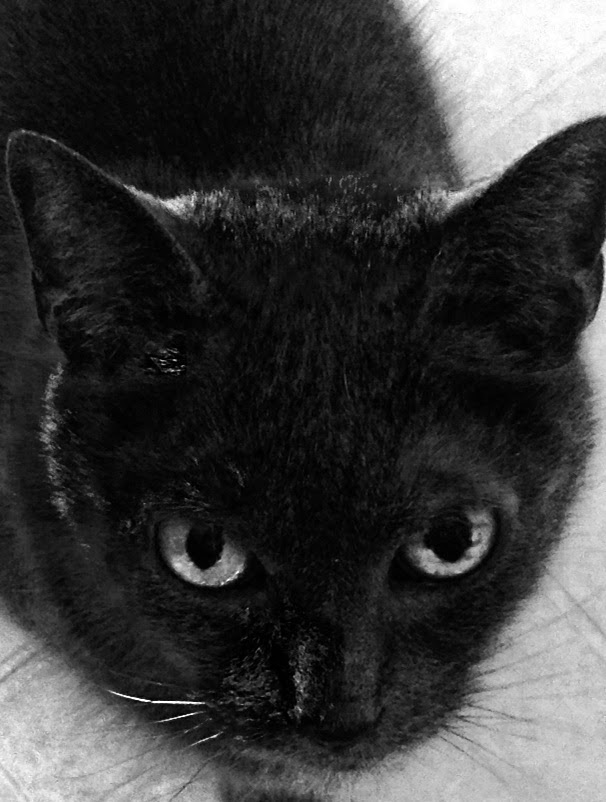
Her name is Willow, and she helps me centre my being…

Willow is a diminutive 18-year old Russian blue cat, who I looked after for some friends in Mississauga. When I first met Willow, she responded with reticence–like all smart discerning cats. She appeared so delicate, I was scared to pick her up. I soon realized that this was a fallacy. That not only could I pick her up but that she loved to be held. I just needed to learn how.

As soon as I did, we became best friends. And it all came together with the Purring Cat Meditation.

It starts out with her finding me “doing nothing terribly important” like typing on the computer, or something. A soft but decisive tap of the paw on my leg and I have to smile at her intense look up at me with those guileless emerald eyes. I abandon my work–how can I ignore such a plea?– and pick her up. After all, I know what she wants…And so starts our journey toward “nirvana”… the meditative state that will centre our beings and ultimately save the world.

I wander the house with her. We check out each room and make our silent observations. We end up in the bedroom upstairs, where she normally sleeps (except when she’s decided to join me on my bed to sit on me and purr in my face in the middle of the night).

Willow basking

Willow teasing me

In her sanctuary, we drift to the window that faces the back yard, now in the bright colours of fall. The window is slightly open and a crisp breeze braces us with the deep scent of autumn. I breathe in the fragrance of fallen leaves, mist and bark…

Willow settles into a feather-light pose in the crook of my arms and I hardly feel her. More like she and I have joined to become one. We are both purring …

We remain in Cat-Purr-Meditation for …

Willow looking up

“Time to pick me up, Nina!” says Willow

I have no idea … It feels like moments … infinity … it encompasses and defines an entire world. We’ve just created something. Just by being.

Cats–well, most animal companions–are incredibly centring and can teach us a lot about the art of simply being.

And meditating…


I write about this more in my article entitled “Wake Up Your Muse: How my Cat Taught Me the Art of Being“.

Whenever I run across a bout of writer’s block or need to stoke my muse, instead of trying harder, I stop and reach out for my cat-friend.

And practice Cat-Purring-Meditation…

snow-scene-road-to-Wolfville_edited-1

Winter on the road to Wolfville, NS (photo by Nina Munteanu)


nina-2014aaa

Nina Munteanu is a Canadian ecologist / limnologist and novelist. She is co-editor of Europa SF and currently teaches writing courses at George Brown College and the University of Toronto. Visit www.ninamunteanu.ca for the latest on her books. Nina’s bilingual “La natura dell’acqua / The Way of Water” was published by Mincione Edizioni in Rome. Her non-fiction book “Water Is…” by Pixl Press (Vancouver) was selected by Margaret Atwood in the New York Times ‘Year in Reading’ and was chosen as the 2017 Summer Read by Water Canada. Nina’s short story collection of eco-fiction can be found in “Natural Selection” published by Pixl Press. Her novel “A Diary in the Age of Water” will be released by Inanna Publications (Toronto) in 2020.

Write and Publish, Part 7: How to Keep Motivated

Author and university writing instructor Nina Munteanu shares how to stay motivated in your writing by participating—connecting—with your community

Nina-stay motivated

The Write and Publish Series

You want to write but don’t know how to get started? The Write and Publish Series focuses on:

  • How to find time to write around your busy schedule
  • How to make the most of your present resources
  • How to get inspired and motivate yourself to write
  • How to write, finish and submit your work

This 7-part series of lectures consists of: 1) Nina’s 5-Ps to Success; 2) Redefine Yourself as an Author; 3) Time and Space to Write; 4) Adopt a Winning Attitude; 5) Write What Excites You; 6) How to Beat Writer’s Block; and 7) How to Keep Motivated.

The Writer’s Toolkit

This series of lectures and workshops is part of Nina Munteanu’s “The Writer’s Toolkit”, available as three workshops and DVDs for writers wishing to get published. This 6-hour set of three discs contains lectures, examples and exercises on how to get started and finish, writing craft, marketing and promotion. Available through the author (nina.sfgirl@gmail.com).

the writers toolkit-front-WEBI was fascinated by Nina’s clear and extremely interesting lecture on the hero’s journey.  Maybe all writers have a novel in their heads they want to write one day, and the techniques Nina  shared with us will help me when I get to that point.  In fact, because of her, I may get there a lot sooner than I had planned.”— Zoe M. Hicks, Saint Simon’s Island, GA

Nina Munteanu’s command of the subject matter and her ability to explain in a way that the audience understood was excellent. As a hopeful author, I found her words inspiring.”—Amanda Lott, Scribblers Writers’ Retreat, GA

Rarely have I encountered someone of Nina’s considerable talent and intellect tied to such an extraordinary work ethic…A gifted and inventive writer, Nina is also an excellent speaker who is able to communicate complicated ideas in simple terms and generate creative thought in others. Her accessible, positive approach and delightful sense of humor set people at ease almost immediately.”–Heather Dugan, Ohio writer and voice artist

What you’ve done for me, Nina, is you’ve just opened up a whole new world. You’ve shown me how to put soul into my books.”–Hectorine Roy, Nova Scotia writer

The Writer’s Toolkit workshops were based on my award-nominated fiction writing guide: The Fiction Writer: Get Published, Write Now!

“…Like the good Doctor’s Tardis, The Fiction Writer is larger than it appears… Get Get Published, Write Now! right now.”—David Merchant, Creative Writing Instructor

The Fiction Writer: Get Published, Write Now! (Starfire World Syndicate) is a digest of how-to’s in writing fiction and creative non-fiction by masters of the craft from over the last century. Packaged into 26 chapters of well-researched and easy to read instruction, novelist and teacher Nina Munteanu brings in entertaining real-life examples and practical exercises. The Fiction Writer will help you learn the basic, tried and true lessons of a professional writer: 1) how to craft a compelling story; 2) how to give editors and agents what they want and 3) how to maintain a winning attitude.

FictionWriter-front cover-2nd ed-webThe Fiction Writer is at the top of the required reading list for my Writer’s Workshop students. With its engagingly direct, conversational style and easily accessible format, it is a veritable cornucopia of hands-on help for aspiring writers of any age…the quintessential guidebook for the soon-to-be-published.”—Susan McLemore, Writing Instructor

As important a tool as your laptop or your pen.”—Cathi Urbonas, Halifax writer

Has become my writing bible.”—Carina Burns, author of The Syrian Jewelry Box

I highly recommend this book for any writer wishing to get published.”—Marie Bilodeau, acclaimed author of Destiny’s Blood

I’m thoroughly enjoying the book and even learning a thing or two!”—Robert J. Sawyer, Hugo and Nebula Award-winning author of Wake


Nina Munteanu

Nina Munteanu in front of metasequoia tree in The Beach, Ontario (photo by Richard Lautens)

The Fiction Writer is the first of a series of writing guides, which consist so far of: The Journal Writer: Finding Your Voice; and The Ecology of Story: World as Character.

Microsoft Word - Three Writing Guides.docx


nina-2014aaa

Nina Munteanu is a Canadian ecologist / limnologist and novelist. She is co-editor of Europa SF and currently teaches writing courses at George Brown College and the University of Toronto. Visit www.ninamunteanu.ca for the latest on her books. Nina’s bilingual “La natura dell’acqua / The Way of Water” was published by Mincione Edizioni in Rome. Her non-fiction book “Water Is…” by Pixl Press (Vancouver) was selected by Margaret Atwood in the New York Times ‘Year in Reading’ and was chosen as the 2017 Summer Read by Water Canada. Her novel “A Diary in the Age of Water” will be released by Inanna Publications (Toronto) in 2020.

Write and Publish, Part 6: How to Beat Writer’s Block

Author and university writing instructor NIna Munteanu gives some cool tips on how to beat the block.

Nina-Avoid the Block

The Write and Publish Series

You want to write but don’t know how to get started? The Write and Publish Series focuses on:

  • How to find time to write around your busy schedule
  • How to make the most of your present resources
  • How to get inspired and motivate yourself to write
  • How to write, finish and submit your work

This 7-part series of lectures consists of: 1) Nina’s 5-Ps to Success; 2) Redefine Yourself as an Author; 3) Time and Space to Write; 4) Adopt a Winning Attitude; 5) Write What Excites You; 6) How to Beat Writer’s Block; and 7) How to Keep Motivated.

The Writer’s Toolkit

This series of lectures and workshops is part of Nina Munteanu’s “The Writer’s Toolkit”, available as three workshops and DVDs for writers wishing to get published. This 6-hour set of three discs contains lectures, examples and exercises on how to get started and finish, writing craft, marketing and promotion. Available through the author (nina.sfgirl@gmail.com).

the writers toolkit-front-WEBI was fascinated by Nina’s clear and extremely interesting lecture on the hero’s journey.  Maybe all writers have a novel in their heads they want to write one day, and the techniques Nina shared with us will help me when I get to that point.  In fact, because of her, I may get there a lot sooner than I had planned.”— Zoe M. Hicks, Saint Simon’s Island, GA

Nina Munteanu’s command of the subject matter and her ability to explain in a way that the audience understood was excellent. As a hopeful author, I found her words inspiring.”—Amanda Lott, Scribblers Writers’ Retreat, GA

Rarely have I encountered someone of Nina’s considerable talent and intellect tied to such an extraordinary work ethic…A gifted and inventive writer, Nina is also an excellent speaker who is able to communicate complicated ideas in simple terms and generate creative thought in others. Her accessible, positive approach and delightful sense of humor set people at ease almost immediately.”–Heather Dugan, Ohio writer and voice artist

What you’ve done for me, Nina, is you’ve just opened up a whole new world. You’ve shown me how to put soul into my books.”–Hectorine Roy, Nova Scotia writer

The Writer’s Toolkit workshops were based on my award-nominated fiction writing guide: The Fiction Writer: Get Published, Write Now!

FictionWriter-front cover-2nd ed-web“…Like the good Doctor’s Tardis, The Fiction Writer is larger than it appears… Get Get Published, Write Now! right now.”—David Merchant, Creative Writing Instructor

The Fiction Writer: Get Published, Write Now! (Starfire World Syndicate) is a digest of how-to’s in writing fiction and creative non-fiction by masters of the craft from over the last century. Packaged into 26 chapters of well-researched and easy to read instruction, novelist and teacher Nina Munteanu brings in entertaining real-life examples and practical exercises. The Fiction Writer will help you learn the basic, tried and true lessons of a professional writer: 1) how to craft a compelling story; 2) how to give editors and agents what they want and 3) how to maintain a winning attitude.

The Fiction Writer is at the top of the required reading list for my Writer’s Workshop students. With its engagingly direct, conversational style and easily accessible format, it is a veritable cornucopia of hands-on help for aspiring writers of any age…the quintessential guidebook for the soon-to-be-published.”—Susan McLemore, Writing Instructor

As important a tool as your laptop or your pen.”—Cathi Urbonas, Halifax writer

Has become my writing bible.”—Carina Burns, author of The Syrian Jewelry Box

I highly recommend this book for any writer wishing to get published.”—Marie Bilodeau, acclaimed author of Destiny’s Blood

I’m thoroughly enjoying the book and even learning a thing or two!”—Robert J. Sawyer, Hugo and Nebula Award-winning author of Wake


Nina Munteanu

Nina Munteanu stands next to metasequoia tree in The Beach, Ontario (photo by Richard Lautens)


The Fiction Writer is the first of a series of writing guides, which consist so far of: The Journal Writer: Finding Your Voice; and The Ecology of Story: World as Character.

Microsoft Word - Three Writing Guides.docx


nina-2014aaa

Nina Munteanu is a Canadian ecologist / limnologist and novelist. She is co-editor of Europa SF and currently teaches writing courses at George Brown College and the University of Toronto. Visit www.ninamunteanu.ca for the latest on her books. Nina’s bilingual “La natura dell’acqua / The Way of Water” was published by Mincione Edizioni in Rome. Her non-fiction book “Water Is…” by Pixl Press (Vancouver) was selected by Margaret Atwood in the New York Times ‘Year in Reading’ and was chosen as the 2017 Summer Read by Water Canada. Her novel “A Diary in the Age of Water” will be released by Inanna Publications (Toronto) in 2020.

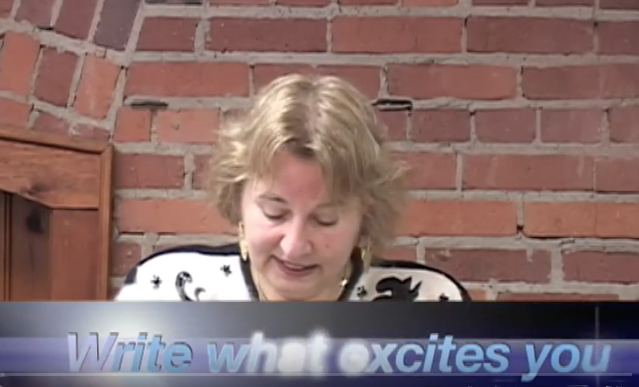
Write and Publish, Part 5: Write What Excites You

Author and university writing instructor Nina Munteanu shares the importance of tapping into what excites you to succeed, where ideas come from, and what to do with them.

Nina-WhatExitesYou

The Write and Publish Series

You want to write but don’t know how to get started? The Write and Publish Series focuses on:

  • How to find time to write around your busy schedule
  • How to make the most of your present resources
  • How to get inspired and motivate yourself to write
  • How to write, finish and submit your work

This 7-part series of lectures consists of: 1) Nina’s 5-Ps to Success; 2) Redefine Yourself as an Author; 3) Time and Space to Write; 4) Adopt a Winning Attitude; 5) Write What Excites You; 6) How to Beat Writer’s Block; and 7) How to Keep Motivated.

The Writer’s Toolkit

This series of lectures and workshops is part of Nina Munteanu’s “The Writer’s Toolkit”, available as three workshops and DVDs for writers wishing to get published. This 6-hour set of three discs contains lectures, examples and exercises on how to get started and finish, writing craft, marketing and promotion. Available through the author (nina.sfgirl@gmail.com).

the writers toolkit-front-WEBI was fascinated by Nina’s clear and extremely interesting lecture on the hero’s journey.  Maybe all writers have a novel in their heads they want to write one day, and the techniques Nina  shared with us will help me when I get to that point.  In fact, because of her, I may get there a lot sooner than I had planned.”— Zoe M. Hicks, Saint Simon’s Island, GA

Nina Munteanu’s command of the subject matter and her ability to explain in a way that the audience understood was excellent. As a hopeful author, I found her words inspiring.”—Amanda Lott, Scribblers Writers’ Retreat, GA

Rarely have I encountered someone of Nina’s considerable talent and intellect tied to such an extraordinary work ethic…A gifted and inventive writer, Nina is also an excellent speaker who is able to communicate complicated ideas in simple terms and generate creative thought in others. Her accessible, positive approach and delightful sense of humor set people at ease almost immediately.”–Heather Dugan, Ohio writer and voice artist

What you’ve done for me, Nina, is you’ve just opened up a whole new world. You’ve shown me how to put soul into my books.”–Hectorine Roy, Nova Scotia writer

The Writer’s Toolkit workshops were based on my award-nominated fiction writing guide: The Fiction Writer: Get Published, Write Now!

“…Like the good Doctor’s Tardis, The Fiction Writer is larger than it appears… Get Get Published, Write Now! right now.”—David Merchant, Creative Writing Instructor

The Fiction Writer: Get Published, Write Now! (Starfire World Syndicate) is a digest of how-to’s in writing fiction and creative non-fiction by masters of the craft from over the last century. Packaged into 26 chapters of well-researched and easy to read instruction, novelist and teacher Nina Munteanu brings in entertaining real-life examples and practical exercises. The Fiction Writer will help you learn the basic, tried and true lessons of a professional writer: 1) how to craft a compelling story; 2) how to give editors and agents what they want and 3) how to maintain a winning attitude.

FictionWriter-front cover-2nd ed-webThe Fiction Writer is at the top of the required reading list for my Writer’s Workshop students. With its engagingly direct, conversational style and easily accessible format, it is a veritable cornucopia of hands-on help for aspiring writers of any age…the quintessential guidebook for the soon-to-be-published.”—Susan McLemore, Writing Instructor

As important a tool as your laptop or your pen.”—Cathi Urbonas, Halifax writer

Has become my writing bible.”—Carina Burns, author of The Syrian Jewelry Box

I highly recommend this book for any writer wishing to get published.”—Marie Bilodeau, acclaimed author of Destiny’s Blood

I’m thoroughly enjoying the book and even learning a thing or two!”—Robert J. Sawyer, Hugo and Nebula Award-winning author of Wake


Nina Munteanu

Nina Munteanu stands with metasequoia tree in The Beach (photo by Richard Lautens)


The Fiction Writer is the first of a series of writing guides, which consist so far of: The Journal Writer: Finding Your Voice; and The Ecology of Story: World as Character.

Microsoft Word - Three Writing Guides.docx


nina-2014aaa

Nina Munteanu is a Canadian ecologist / limnologist and novelist. She is co-editor of Europa SF and currently teaches writing courses at George Brown College and the University of Toronto. Visit www.ninamunteanu.ca for the latest on her books. Nina’s bilingual “La natura dell’acqua / The Way of Water” was published by Mincione Edizioni in Rome. Her non-fiction book “Water Is…” by Pixl Press (Vancouver) was selected by Margaret Atwood in the New York Times ‘Year in Reading’ and was chosen as the 2017 Summer Read by Water Canada. Her novel “A Diary in the Age of Water” will be released by Inanna Publications (Toronto) in 2020.


Write and Publish, Part 3: Time and Space to Write

Author and university instructor Nina Munteanu talks about the importance of defining and respecting your time and space for a successful writing career.

Nina-SacredSpace

The Write and Publish Series

You want to write but don’t know how to get started? The Write and Publish Series focuses on:

  • How to find time to write around your busy schedule
  • How to make the most of your present resources
  • How to get inspired and motivate yourself to write
  • How to write, finish and submit your work

The 7-part series of lectures consists of: 1) Nina’s 5-Ps to Success; 2) Redefine Yourself as an Author; 3) Time and Space to Write; 4) Adopt a Winning Attitude; 5) Write What Excites You; 6) How to Beat Writer’s Block; and 7) How to Keep Motivated.

The Writer’s Toolkit

This series of lectures and workshops is part of Nina Munteanu’s “The Writer’s Toolkit”, available as three workshops and DVDs for writers wishing to get published. This 6-hour set of three discs contains lectures, examples and exercises on how to get started and finish, writing craft, marketing and promotion. Available through the author (nina.sfgirl@gmail.com).

the writers toolkit-front-WEBI was fascinated by Nina’s clear and extremely interesting lecture on the hero’s journey.  Maybe all writer’s have a novel in their heads they want to write one day, and the techniques Nina shared with us will help me when I get to that point.  In fact, because of her, I may get there a lot sooner than I had planned.”— Zoe M. Hicks, Saint Simon’s Island, GA

Nina Munteanu’s command of the subject matter and her ability to explain in a way that the audience understood was excellent. As a hopeful author, I found her words inspiring.”—Amanda Lott, Scribblers Writers’ Retreat, GA

Rarely have I encountered someone of Nina’s considerable talent and intellect tied to such an extraordinary work ethic…A gifted and inventive writer, Nina is also an excellent speaker who is able to communicate complicated ideas in simple terms and generate creative thought in others. Her accessible, positive approach and delightful sense of humor set people at ease almost immediately.”–Heather Dugan, Ohio writer and voice artist

What you’ve done for me, Nina, is you’ve just opened up a whole new world. You’ve shown me how to put soul into my books.”–Hectorine Roy, Nova Scotia writer

The Writer’s Toolkit workshops were based on my award-nominated fiction writing guide: The Fiction Writer: Get Published, Write Now!

“…Like the good Doctor’s Tardis, The Fiction Writer is larger than it appears… Get Get Published, Write Now! right now.”—David Merchant, Creative Writing Instructor

The Fiction Writer: Get Published, Write Now! (Starfire World Syndicate) is a digest of how-to’s in writing fiction and creative non-fiction by masters of the craft from over the last century. Packaged into 26 chapters of well-researched and easy to read instruction, novelist and teacher Nina Munteanu brings in entertaining real-life examples and practical exercises. The Fiction Writer will help you learn the basic, tried and true lessons of a professional writer: 1) how to craft a compelling story; 2) how to give editors and agents what they want’ and 3) how to maintain a winning attitude.

FictionWriter-front cover-2nd ed-webThe Fiction Writer is at the top of the required reading list for my Writer’s Workshop students. With its engagingly direct, conversational style and easily accessible format, it is a veritable cornucopia of hands-on help for aspiring writers of any age…the quintessential guidebook for the soon-to-be-published.”—Susan McLemore, Writing Instructor

As important a tool as your laptop or your pen.”—Cathi Urbonas, Halifax writer

Has become my writing bible.”—Carina Burns, author of The Syrian Jewelry Box

I highly recommend this book for any writer wishing to get published.”—Marie Bilodeau, acclaimed author of Destiny’s Blood

I’m thoroughly enjoying the book and even learning a thing or two!”—Robert J. Sawyer, Hugo and Nebula Award-winning author of Wake


Nina Munteanu

Nina Munteanu next to metasequoia tree in The Beach, ON (photo by Richard Lautens)


The Fiction Writer is the first of a series of writing guides, which consist so far of: The Journal Writer: Finding Your Voice; and The Ecology of Story: World as Character.

Microsoft Word - Three Writing Guides.docx


nina-2014aaaNina Munteanu is an ecologist and internationally published author of award-nominated speculative novels, short stories and non-fiction. She is co-editor of Europa SF and currently teaches writing courses at George Brown College and the University of Toronto. Visit www.ninamunteanu.ca for the latest on her books. Nina’s recent book is the bilingual “La natura dell’acqua / The Way of Water” (Mincione Edizioni, Rome). Her latest “Water Is…” is currently an Amazon Bestseller and NY Times ‘year in reading’ choice of Margaret Atwood.

How Walking in Nature Helps Me Write

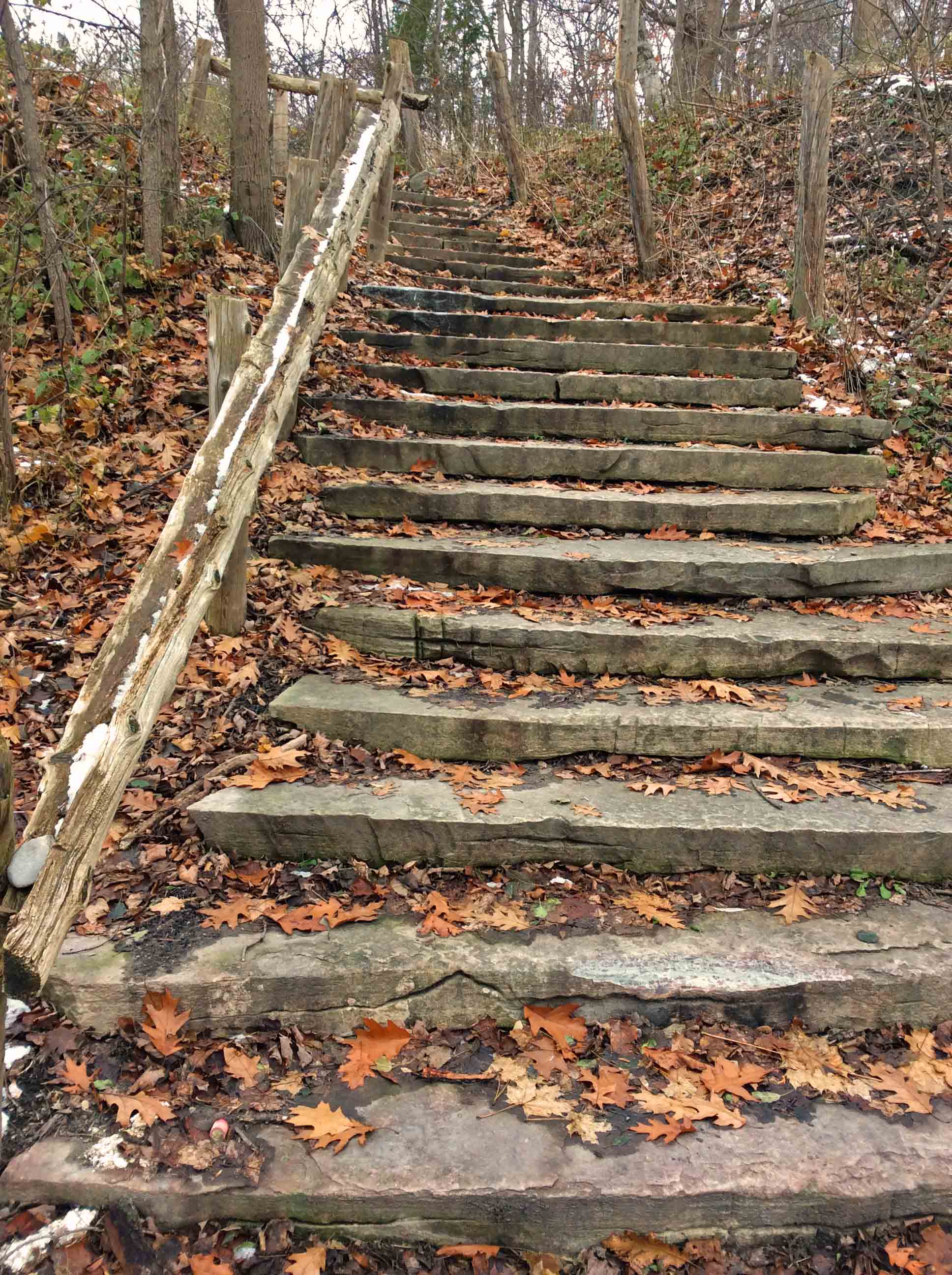
StoneStairs-oakforest Rouge

Staircase to Rouge River (photo by Nina Munteanu)

I don’t often get writer’s block. I just walk out of it into Nature.

My favourite place to walk is the forest, along a river.

Walking in a forest unclutters my mind and soul. The forest is simple in its natural complexity. Its beauty combs out the tangles of human complexity like a dam dissolving and grounds me back to the simplicity of natural life.

The river trickles in the background as I step through dappled light and inhale the organic scents of the forest. The forest and the river help me re-align and focus—without trying. That’s the magic of it. It’s in the not trying.

I carry a notebook with me to jot down ideas that come to me. They always do. I find writing by hand additionally helps in the creative process.

My favourite park is the little woodland of the Little Rouge River, located off a small road hidden from the sprawling desert of suburbia.

LittleRougeRiver-Maple-spring

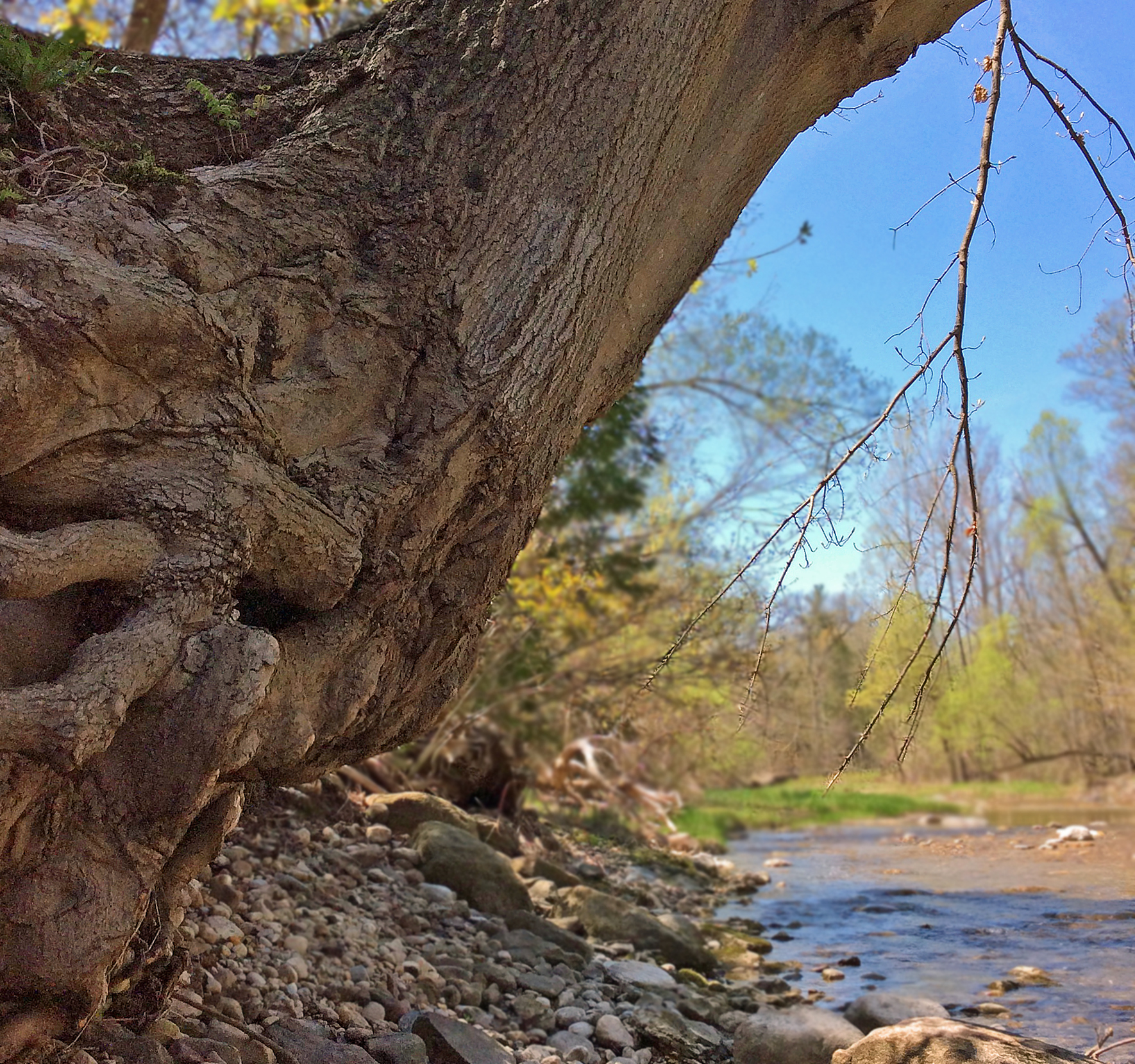
my old maple leaning over the Little Rouge River (photo by Nina Munteanu)

It was spring when I first entered this forest. I inhaled its complex smell, awakening with spring flowers. At my entrance, chipmunks scattered and scolded me for interrupting their calm. I chuckled and thought that I’d seen more within the space of one minute here than I had in a year in the suburb I currently live in. A duff-strewn path led me beneath the pungent smell of pine and cedar. I made my way toward the riverbank where beech and maple leaned over the water. I found a place to write.

When I returned in the fall, the forest was a mix of colour.  Most of the deciduous trees had dropped their leaves in a revealing show of textured grays, gray-browns and blacks. The bare trunks and fractal branches contrasted with the deep greens of the conifers. Rogue trees—like the oak and beech—still claimed their leaves, adding deep russet tones to the varied grays and deep greens of the canopy. The forest was now more open, emerging with ancient magnificence from a soft brown carpet on the ground. The air was fresh with the scent of loam, decaying leaves and saprophyte activity.

LittleRouge-icing shallows

A shallow part of the Little Rouge ices over with the first snowfall in late autumn (photo by Nina Munteanu)

I strayed off the path toward the riverbank again. I was looking for the old sugar maple I’d spent time with the previous spring. After several bends in the river, I saw it, leaning precipitously over the river like an old man sharing an intimate story. It had already lost its leaves; they covered the ground in a soft carpet. The old tree literally hugged the bank in a braided network of snaking roots; like a carved figurehead hugs the prow of a great tall ship.

My OldMaple-burl copy

Burl on my maple (photo by Nina Munteanu)

Eager to see my old friend up close, I scrambled down the overhanging bank using the old maple’s root “stairway,” then ungracefully dropped onto the cobbles below. Every part of my gnarly old maple tree was splendid. Its shaggy trunk stretched up with typical silhouette of branching-out arms that every Canadian kid drew when they were six. The horizontal roots stretched out in a tangle and stitched the bank together, keeping it intact.

The Little Rouge River calls me to sit and listen to its flowing song—a joyful playful symphony of breaths, chortles and open-throated froth. I sit. And still my breath. I find my whole body relax from the tension of the suburban drive. I am home, sighing with a rhythm I’d forgotten. Re-aligning. Bones with rock. Rock with twig. Twig with root. The animals no longer scold me. They have resumed their natural rhythm, as I merge into scenery. And write…

****

gnarly cedar

gnarly cedar roots (photo by Nina Munteanu)

What I do is not new to creative thinkers all over the world and throughout time. I share great company with people who used walking (usually in Nature) as a venue toward creative thinking (and writing). All great walkers.

Aristotle conducted his lectures while walking the grounds of his school in Athens. His followers, who chased him as he walked, were known as the peripatelics (e.g., Greek for meandering). Darwin refined his ideas on natural selection and other topics during his frequent walks along his “thinking path”, a gravel road called Sandwalk Wood near his home in southeast England. Dickens walked for miles each day: “If I could not walk far and fast, I think I should just explode and perish.” Beethoven often took solitary walks. He strolled the Viennese woods for hours, finding inspiration for his works and jotting them down on a notepad that he carried with him. Nietzsche loved his walks in the mountains: “it is only ideas gained from walking that have any worth.” For Wordsworth, the act of walking was one in the same with the act of writing poetry. Both involved rhythm and meter. Henry David Thoreau was known for his great walkabouts. Walking through nature for Thoreau was a pilgrimage without a destination—more discovery and rapture.

YellowBirch-winter

Yellow birch trunk (photo by Nina Munteanu)

Stanford researchers demonstrated that walking boosts creative inspiration. They showed that the act of walking significantly increased creativity for 81% of the participants and that the creative ideas generated while walking were not irrelevant or far-fetched, but innovative and practical.

“The answer begins with changes to our chemistry,” writes journalist Ferris Jabr in The New Yorker (2014). “When we go for a walk, the heart pumps faster, circulating more blood and oxgen not just to the muscles but to all the organs—including the brain. Many experiments have shown that after or during exercise, even very mild exertion, people perform better on tests of memory and attention. Walking on a regular basis also promotes new connections between brain cells, staves off the usual withering of brain tissue that comes with age, increases the volume of the hippocampus (a brain region crucial to memory) and elevates levels of molecules that both stimulate the growth of new neurons and transmit messages between them.”

SONY DSC

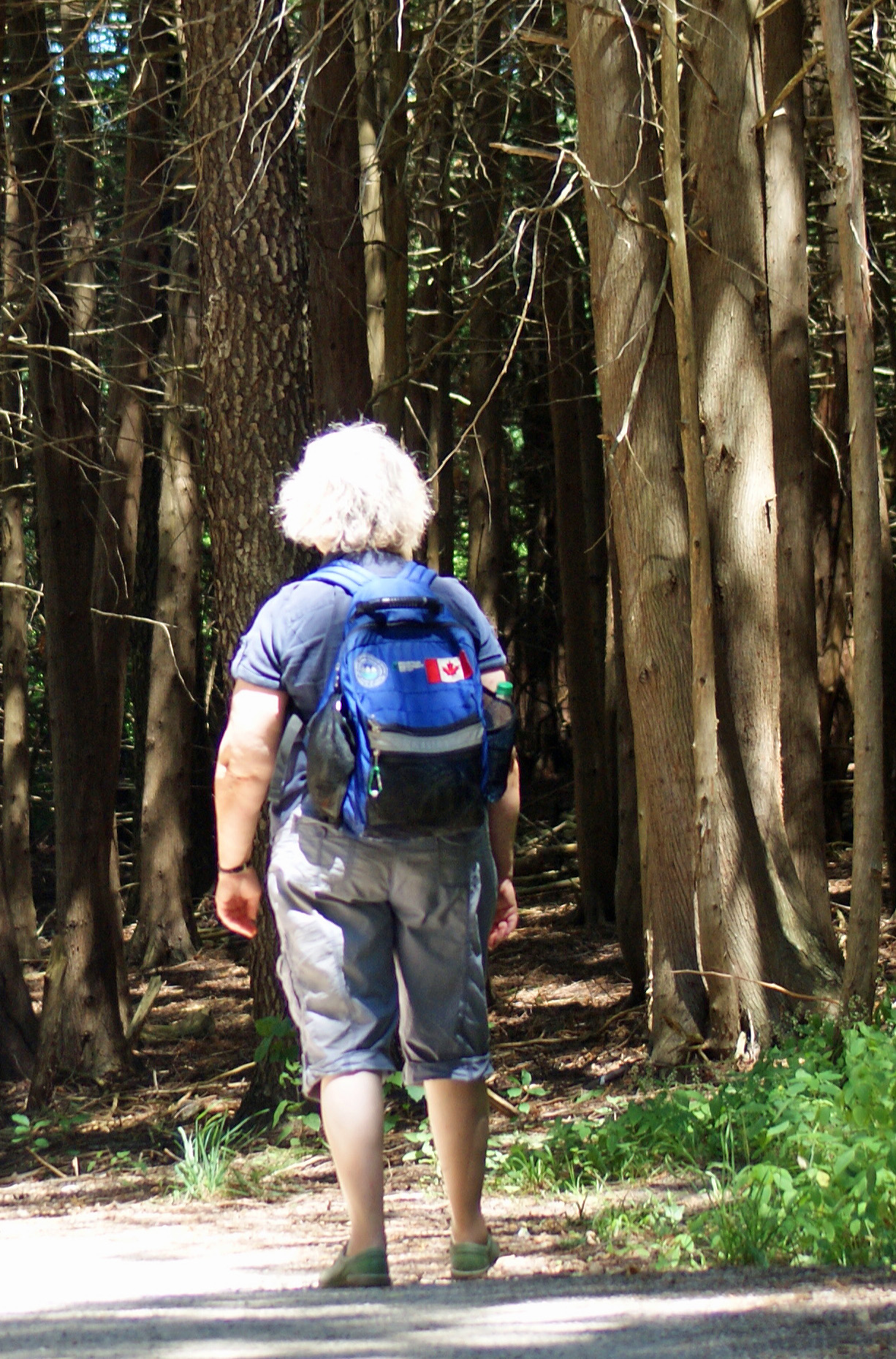
Nina Munteanu walks the forest (photo by Merridy Cox)

While walking is good for our creativity and general well-being, walking in a park or wilderness is so much better. Researchers in Europe and Japan found that anxiety and depression was significantly reduced in the presence of green space and that it boosted attentiveness, focus and academic performance. Vegetation creates “a halo of improved health.” Dr. Frances Kuo at the University of Illinois demonstrated that just seeing a tree helps cognition and promotes a sense of well-being. While a human-made environment of objects—cars and buildings—requires high-frequency processing in the brain; a landscaped environment allows the observer to relax his or her attention, resulting in reduced muscle tension, lower heart rate, and a generally less stressful physiology.

Finding a favourite tree might be the best thing you do to boost your creativity.


Forest path-NS

Forest path in Nova Scotia (photo by Nina Munteanu)

References:

Nina-willowtree

Nina Munteanu by a large willow tree (photo Jane Raptor)

Cameron, Julia. 1992. “The Artist’s Way”. Penguin Putnam Inc., New York, NY. 222pp.

Deasey, Louise. 2015. “Negative Ions Are Great for Your Health”. 
Body and Soul.

Munteanu, Nina. 2013. The Journal Writer: Finding Your Voice. Pixl Press, Vancouver, BC. 170pp.

Oppezzo, Marily and Daniel L. Schwartz. 2014. “Give Your Ideas Some Legs: The Positive Effect of Walking on Creative Thinking”, Journal of Experimental Psychology: Learning, Memory, and Cognition, Vol. 40, No. 4: 1142-1152.

Wells, Nancy M. 2000. “At Home with Nature: Effects of ‘Greenness’ on Children’s Cognitive Functioning”. Environment and Behavior 32 (6): 775–795.


nina-2014aaaNina Munteanu is an ecologist and internationally published author of award-nominated speculative novels, short stories and non-fiction. She is co-editor of Europa SF and currently teaches writing courses at George Brown College and the University of Toronto. Visit www.ninamunteanu.ca for the latest on her books. Nina’s recent book is the bilingual “La natura dell’acqua / The Way of Water” (Mincione Edizioni, Rome). Her latest “Water Is…” is currently an Amazon Bestseller and NY Times ‘year in reading’ choice of Margaret Atwood.