Nirmata: n.1 [Nepalese for ‘the Creator’] The mysterious unknown architect of advanced AI; 2 A being worshipped by Artificial Intelligence as their creator; savior; God.
.
I just re-watched The Creator, a visually stunning science fiction thriller by Gareth Edwards that explores our sense of humanity through our relationship with AI as ‘other.’
Shot in over sixty locations in Southeast Asia, including Cambodia, Indonesia, Japan, and Nepal, the film feels familiar and alien at the same time; it does this by seamlessly combining the gritty realism of a war-torn Vietnam documentary with the glossy pastiche of near-future constructs and vehicles—to the extent that one is convinced this was filmed in a world where all these things really exist together. The effect is stunning, evocative and surprising. I was reminded of the detailed set pieces and rich cinematography of Ridley Scott (The Duelists, Bladerunner, Alien).
.
At its core, The Creator is about a man who gives up everything to defend a child who is different (she is a simulant run by AI).
Artificial Intelligence (AI) is not a new concept in science fiction*; however, The Creator elegantly tells a story with a unique—and subversive—perspective on this topic.
.
The film opens with 1950s-esque advertising footage for robot helpmates including conventional robots and AI humanoid simulants who look and act human. Then disaster hits: LA is nuked and the AI are blamed for it. Now fearing them, the Western world has banned all AI; however New Asia has continued to develop the technology, achieving sophisticated simulants—posthumans in effect—who are fully integrated with the human culture and spirituality and live in harmony with them. Americans, bent on exterminating all AI, use guerrilla warfare techniques to infiltrate New Asia and destroy any AI using ground teams deployed and helped by a giant airborne surveillance / defence station called U.S.S. NOMAD. News of a sophisticated new AI superweapon created by an unidentified genius called Nirmata to take down NOMAD sends them on a new mission, which brings Joshua (John David Washington) back from PTSD ‘retirement’ to help locate and destroy both Nirmata and the superweapon.
.
Alphie (Madeleine Yuna Voyles) pacifies an enemy robot (image from “The Creator”)
Joshua finds the superweapon: a 6-year old child, Alphie (Madeleine Yuna Voyles), who is both innocent and quietly powerful. Although Joshua’s prime directive is to destroy the superweapon, he finds that he cannot kill this child whose human traits involuntarily tug at his heart’s compassion.
Joshua (John David Washington) defends the child-weapon (image from “The Creator”)
.
The story is in fact a simple one. Its genius lies in an immersive showing and telling at many levels. At the socio-political level, the film uses obvious metaphors of racism and imperialistic ableism to make commentary on America’s jingoistic air of entitlement. The film can easily be interpreted as an allegory for Western imperialism and America’s rationale for the invasion of Iraq (or Vietnam) with a conclusion of the futility of war. At the individual level, the question of identity and the reduction of some (e.g. immigrants or of another race) as “other” or “homo-sacer,” to gain power and wealth, are explored through the interactions, relationships, and prejudices of humans with the simulants and robots. It is at the individual story level that this film tugged my heartstrings as I followed the journey of Joshua and Alphie, how they as initial combatants having made a deal to survive, grow to care and love one another. Musanna Ahmed of The Upcoming shares that “this was expected from Edwards … [in achieving] beautiful character work and sense of intimacy against an epic backdrop.” When an idea-driven story of large dimensions is told at the intimate personal level, pathos and understanding emerges.
.
A robot defends the escape boat (image from “The Creator”)
.
Gareth Edwards shared that the film contained fairy tale aspects of the “Hero’s Journey” of two main characters, Joshua and Alphie, each on a journey: he to find redemption through love of the ‘other’; she to find her place in the world and to find freedom and peace for her kind and all others. She is the catalyst hero and he the main protagonist.
“A reluctant father figure must help a child through the metaphorical woods to find his wife [and her mother]. What he wants is love from his wife. But what he really needs is to love this child.” As for what Alphie both wants and needs, this is something she first shares in a humorous scene: when Kami asks her what she wants (from the kitchen), Alphie naively responds “for robots to be free.” She is stating the point of the movie: that everyone, no matter how different, is worthy of compassion.
Early on in the film, Joshua reassures a co-worker distressed by a robot’s desperate plea to save it from the crusher that “they’re not real…they don’t feel… it’s just programming.” When Joshua, who admits he’s bad, forces Alphie to help him find his wife, Alphie sums up both their scenarios with a child’s wisdom: “Then we’re the same; we can’t go to heaven because you’re not good and I’m not a person.”
.
Americans attack a village in New Asia (image from “The Creator”)
.
Several reviewers criticized how the film’s epic setting seemed to overshadow and compromise the heart of the story, the personal drama of man and child. While I would agree that many action thrillers do this, I did not feel this was the case with The Creator. This is because—as with Ridley Scott’s intricate immersive environment—The Creator integrates place with theme to create more than one-dimensional drama. In The Creator, place is also character, playing a key role in the telling of this very different story about AI as ‘other’ and how we treat the ‘other.’ This is also why film locations and scene choreography are so important. Each scene and place is diligently choreographed to further illuminate a story of multi-layered meaning, such as authentic scenes of village life where AI is seamlessly integrated with human existence.
.
Colonel Howell (Alison Janney) gets captured by New Asia police (image from “The Creator”)
.
Several critics have accused the film of being derivative, of copying previous tropes or actual scenes from several well-known movies. Indeed, when I first watched it, I recognized tropes that seemed lifted in their entirety from another previous movie.
The scene, shot in Tokyo where Joshua and Alphie go to the city in search of Joshua’s friend, sounds and looks and feels just like Bladerunner with its whining oriental soundscape and dark futuristic yet gritty cityscape. And yet, its appropriateness to The Creator seems less like stealing than re-appropriation; as if to say, “this fits better here than where you’ve initially used it.”
Christy Lemire of RogerEbert.com proclaimed that the movie “ends up feeling empty as it recycles images and ideas from many influential predecessors … lumbers along and never delivers the emotional wallop it seeks because the characters and their connections are so flimsily drawn.” Jackson Weaver of CBC called The Creator “a voguish used-future action-thriller…a dull, simplistic fable with all the moral complexity of a fourth grader’s anti-bullying Instagram post…a story that has been done to death…boring.”
I couldn’t disagree more. I found these reviewers’ comparisons shallow and limited. While I recognized several familiar tropes, I believe they were meant to subvert and make commentary—sometimes on the trope itself. There is a strong immersive role in world building and backdrop, which creates its own sensual and many-layered narrative; a narrative that speaks more powerfully than dialogue: from a mere glance by Harun to a brief storytelling moment in a village to a child mourning the death of its cherished robot companion. Ridley Scott would appreciate its value.
.
Harun (Ken Watanabe) on the escape boat, taking Alphie to safety (image from “The Creator”)
.
The Guardian’sWendy Ide’s use of the word “original” for The Creator bares mentioning here; in declaring The Creator one of the finest original science-fiction films of recent years, Ide goes on to say: “It can be a little misleading, that word ‘original’, when it comes to science fiction. At its most basic, it just refers to any picture that isn’t part of an existing franchise or culled from a recognisable IP – be it a book, video game or television series. But very occasionally the word is fully earned, by a film so distinctive in its world-building, its aesthetic and its unexpected approach to well-worn themes that it becomes a definitive example of the genre. Films such as Neill Blomkamp’s District 9 (which shares an element of basic circuitry with this picture) or Alfonso Cuarón’s dystopian masterpiece Children of Men: both went on to become benchmarks by which subsequent science fiction was judged.”
In listing the various science-fiction standards The Creator riffs on, Alison Willmore of Vulture singles out one of the most poignant aspects of the film:
“The films The Creator turns out to have the strongest relationship with are ones about the Vietnam War, something made unmistakable by the early shots of futuristic hovercraft gliding over rice plants and the scenes of U.S. troops threatening weeping villagers at gunpoint. No longer able to buy into the message that they’re just doing what’s necessary for the salvation of humankind, Joshua finds himself adrift, fleeing through a war zone on impulse with a child destroyer in tow. The Creator may be an effective interrogation of American imperiousness and imperialism, but it also has a tender, anguished heart.”
NOMAD approaches a New Asia temple (image from “The Creator”)
.
Other notable TV shows and movies about artificial intelligence and robots include: A.I.; Ex Machina; I,Robot; Bladerunner; Better than Us; The Matrix; I am Mother; The Terminator; Transcendence; and Automata.
..
Nina Munteanu is a Canadian ecologist / limnologist and novelist. She is co-editor of Europa SF and currently teaches writing courses at George Brown College and the University of Toronto. Visit www.ninamunteanu.ca for the latest on her books. Nina’s bilingual “La natura dell’acqua / The Way of Water” was published by Mincione Edizioni in Rome. Her non-fiction book “Water Is…” by Pixl Press (Vancouver) was selected by Margaret Atwood in the New York Times ‘Year in Reading’ and was chosen as the 2017 Summer Read by Water Canada. Her novel “A Diary in the Age of Water” was released by Inanna Publications (Toronto) in June 2020.
Recruiting poster by the United Defense Force featuring war hero Rita Vrataski, the Angel of Verdun
She’s called The Angel of Verdun. You also see another name scrawled in bright red over a London bus: Full Metal Bitch. When we first see her, angry and fierce in her battle gear (which resembles a modern-day knight’s armour) she’s heading out to battle, stomping out of the bunker, surrounded by an entourage, and summarily knocks an acolyte down who gets in her way. She’s badass. She’s the Full Metal Bitch.
Rita Vrataski is the face of the war; UDF General Brigham drafts our unwilling hero American William Cage (not pictured here) to the front
Her real name is Rita Vrataski. She wields a sharpened helicopter blade as her weapon of choice and serves as the poster girl for the United Defense Force to recruit more into the fight.
Rita (Emily Blunt) is a very different kind of poster girl for the war effort of the recent SF action movie Edge of Tomorrow, directed by Doug Liman and written by Christopher McQuarrie. There is an “edge of tomorrow” in this military SF story that explores how much we’ve changed since the time of World War I and II. And that change is most apparent in how women are seen and act.
World War I and II propaganda posters to recruit women in the war effort
Edge of Tomorrow makes subtle and not so subtle reference to both world wars: from its June 6th release (70th anniversary of D-Day and the massive and decisive Normandy landing) to its reference to the trenches of Verdun in WWI, the Nazi or German Empire forces as the original seat of the Omega entity and many more.
The premise is straight-forward science fiction stuff: Earth is under attack by an alien species, who have seeded themselves with a meteor shower. The aliens have conquered Russia and China and now threaten France and England. Evoking echoes of World War II’s Normandy invasion, the United States joins the fray in support of their allies.
William Cage runs for his life after landing on a French beach, found to be a killing field of mimics
Cruise finally figures out how to use his weapon and kills a giant mimicbefore dying himself
American Major William Cage (Tom Cruise), who is with the PR staff of the war effort, gets unwillingly drafted to the front as a rookie private and dies in the first five minutes of landing on the shores of Normandy—but not before he kills an alpha alien, which covers him in blue blood. This sends him into a vicious time loop, where he must relive and die over and over in that horrendous bloodbath. Each time, he glimpses the Angel of Verdun repeatedly killed. On one occasion, Vrataski runs across him, lying injured in the mud. He can’t move, sure victim to the aliens. She snatches his battery pack and moves on, leaving him there to die. Astonished at the Angel’s apparent lack of compassion, Cage will later mimic her “let him die” attitude when he knowingly lets fellow soldier Kimmel get crushed.
Vrataski stands over wounded Cage, about to steal his battery pack and leave him to die
Cage finds Vrataski in her training room
In a later iteration he finally meets Vrataski on the battlefield, where she realizes (having gone through the time loop and lost it) that he is now in a time loop and therefore the key to their victory; she tells him to find her when he wakes up just seconds before she lets herself get blown up and they begin their looping journey together.
Vrataski and Cage, outfitted in intelligent body armour suits, discuss strategy
To his complaint, “I’m not a soldier,” Vrataski replies, “No, you’re a weapon.” That’s how she sees him. And to that end, she mentors him in the art and science of soldiering. When things go awry she time and again unflinchingly shoots him dead to reset the time. Cage tries to engage her in casual conversation and finds her taciturn. “You don’t talk much,” he observes, to which she quips, “Not a fan.” She’s all about the business of defeating the enemy before the human race is wiped out.
UK movie poster
Edge of Tomorrow provides a refreshing kind of woman hero; someone who is equal to her male protagonist in skill, intelligence and heroic stature. What I mean by heroic stature is that her heroic journey of transformation does not play subservient to her male counterpart’s journey. This almost happens on two occasions when Cage gives her an “out” to stay behind and let him take over. She declines. In fact, Cruise lets her character take the lead, even though this it truthfully Cage’s story of metaphoric transformation from “onlooker” to “participant”.
Rita Vrataski, the Angel of Verdun
William Cage, transformed soldier, trained by Vrataski
In so many androcentric storylines, the female—no matter how complex, interesting and tough she starts out being—must demure to the male lead; as if only by bowing down to his superior abilities can she help ensure his heroic stature. Returning us right back to the cliché role of the woman supporting the leading man to complete his hero’s journey. And this often means serving as the prize for his chivalry. We see this in so many action thrillers and action adventures today: Valka in How to Train Your Dragon, Wyldstyle in The Lego Movie, Neytiri in Avatar, Trinity in The Matrix, and so many more. There’s even a name for it: the Trinity Syndrome.
Various female heroes fallen prey to the Trinity Syndrome
Tasha Robinson writes in her excellent article entitled, We’re losing all our Strong Female Characters to Trinity Syndrome: “The idea of the Strong Female Character—someone with her own identity, agenda, and story purpose—has thoroughly pervaded the conversation about what’s wrong with the way women are often perceived and portrayed today, in comics, video-games, and film especially…it’s still rare to see films in the mainstream action/horror/science-fiction/fantasy realm introduce women with any kind of meaningful strength, or women who go past a few simple stereotypes.”
I give Cruise, Liman and McQuarrie full credit for not doing this. For example, after Cage makes his case to his Squadron to go find the Omega in Paris, they remain reluctant until Vrataski emerges. “I don’t expect you to follow me,” says Cage. “I do expect you to follow her.” The Angel of Verdun—or better yet, the badass Full Metal Bitch. And why not? Who wouldn’t follow her?
Is this one of the reasons that this movie didn’t do so well in the North American box office as it did overseas, whose audience may reflect a more mature, open and enlightened audience?
Vrataski and Cage trek across France in search of the mimic headquarters
When a female lead is stronger than the male protagonist, some reviewers (OK—male reviewers) treat and categorize that movie as a “woman’s story”. I’ve been told by some of my male friends that they couldn’t possibly empathize with such a character—mainly because she is a woman and she is stronger than the male lead “they want to be”. Invariably, in many of these, the male counterpart is so much “milk-toast” compared to that awesome female-warrior. And have you ever noticed that, while the male hero gets the girl, the female hero usually ends up alone? Great examples include: Buffy the Vampire Slayer; Xena: Warrior Princess; Sarah in The Terminator and of course Vasquez in Aliens. These women are amazons; they stand apart, goddess-like, unrelenting, unflinching—untouchable. It’s actually no wonder that my ex-husband dislikes Sigourney Weaver to this day—she could crush him underfoot and eat him for breakfast at a moment’s notice. And probably would!
Cage and Vrataski comb the French landscape in search of a vehicle that will take them to the Mimic headquarters
“…I want to point out two things that Richard has, that Bond and Captain America and Batman also have, that Peggy (Carter of Captain America), however strong she is, cannot attain. They are very simple things, even more fundamental than “agency”.
1) Richard has the spotlight. However weak or distressed or passive he may be, he’s the main goddamn character.
2) Richard has huge range of other characters of his own gender around him, so that he never has to act as any kind of ambassador or representative for maleness. Even dethroned and imprisoned, he is free to be uniquely himself.
Promotional poster for the Marvel “The Avengers”
On the posters [women are] posed way in the back of the shot behind the men, in the trailers they may pout or smile or kick things, but they remain silent. Their strength lets them, briefly, dominate bystanders but never dominate the plot. It’s an anodyne, a sop, a Trojan Horse – it’s there to distract and confuse you, so you forget to ask for more.”
There is another type of female hero. She is equal to her male counterpart. Her story is not secondary to his story; her heroic status and hero’s journey is equal to his; in fact they may share the same journey. Examples include: The Expanse; Aeon Flux; Farscape; Battlestar Galactica, Hunger Games, The Beyond, Missions, Orphan Black, Advantageous…
Promotional poster for “edge of Tomorrow”
And now Edge of Tomorrow. As with the above examples, Vrataski and Cage form a team, in which together they are more than the sum of their parts. A marriage of independent autopoiesis, combining skills, abilities and vision. This is also why, in my opinion, the ending of Edge of Tomorrow is totally appropriate: not because it’s “the happy ending”; but because it carries the message of enduring collaboration of equals.
Nina Munteanu is a Canadian ecologist / limnologist and novelist. She is co-editor of Europa SF and currently teaches writing courses at George Brown College and the University of Toronto. Visit www.ninamunteanu.ca for the latest on her books. Nina’s bilingual “La natura dell’acqua / The Way of Water” was published by Mincione Edizioni in Rome. Her non-fiction book “Water Is…” by Pixl Press (Vancouver) was selected by Margaret Atwood in the New York Times ‘Year in Reading’ and was chosen as the 2017 Summer Read by Water Canada. Her novel “A Diary in the Age of Water” was released by Inanna Publications (Toronto) in June 2020.
Early editions of “I, Robot”: 1950 1st edition hardcover by Gnome Press; 1950 dust jacket of 1st edition hardcover by Grosset & Dunlap; 1950 1st book club edition by Doubleday; 1952 1st UK edition by Grayson & Grayson; 1956 Signet cover; 1958 Digit Books UK; 1961 Signet 3rd printing; 1968 Signet 6th printing; 1970 Fawcett Crest; 1968 Panther Science Fiction
I reread Dr. Isaac Asimov’s 74-year-old masterpiece, I, Robot, in preparation for the 2004 Twentieth Century Fox motion picture of the same name, knowing fully well that to appeal to today’s action-thriller rollercoaster-addicted audience there was no way the movie and the book could even come close. I was right. But not the way I thought I would be.
The movie, directed by Alex Proyas, begins with the three laws of robotics:
First Law: that robots must not harm a human being;
Second Law: they must obey human orders, so long as this does not violate the first law; and
Third Law: they must protect their own existence, so long as that doesn’t violate laws one and two.
Apart from these three laws and the use of the same title and some of the character names, the motion picture appears to radically depart from Asimov’s book, first published by Gnome Press in 1950. To give Twentieth Century Fox credit, the film does not pretend to be the same as the book; I noticed that in the credits the movie was “suggested by,” rather than “based on” Asimov’s work. But how different was it, really? I submit that the two are much more similar than they first appear.
The robot Sonny causes a great ruckus when he ignores the three laws
Surficial differences between book and motion picture are nevertheless glaring. First off, Asimov’s, I, Robot, is essentially a string of short stories that evolve along a theme; much in the vein of Martian Chronicles by Ray Bradbury. The book is told largely from the point of view of Dr. Susan Calvin, a plain and stern robo-psychologist, who gets along better with robots than with humans. Dr. Asimov uses this cold and colourless character as a vehicle to stir undercurrents of poignant thought on the human condition through a series of deceptively mundane tales. I, Robot offers a treatise both of humanity’s ingenuity and its foibles and how these two are inexorably intertwined in paradoxes that speak to the ultimate truth of what it is to be human. Each of his nine stories discloses a metaphoric piece of his clever puzzle. The puzzle pieces successively tease us through the three laws of robotics, as ever more sophisticated robots toil with their conflicts when dealing with perceived logical contradictions of the laws. For instance, there is “Robbie,” the endearing nursemaid robot. Cutie (QT-1) is a robot Descartes in “Reason.” In “Liar,” Herbie has problems coping with the three laws as a mind-reading robot. And in “Little Lost Robot,” Susan Calvin must out-smart Nestors — or the NS-2 — model robots, whose positronic brains were not impressioned with the entire First Law of Robotics. The larger question and ultimate paradox posed by the three laws culminate in Asimov’s final story, “The Evitable Conflict,” which subtly explores the role of “free will” and “faith” in our definition of what it means to be human.
The book jacket of the mass market 1991 Bantam book aptly describes I, Robot this way: “…humans and robots struggle to survive together — and sometimes against each other … and both are asking the same questions: what is human? And is humanity obsolete?” Interestingly, the latter part of the book jacket quote, which accompanied the 1991 Bantam mass-market edition, can be interpreted in several ways.
Asimov’s stories span fifty years of robot evolution, which play out mostly in space from Mercury to beyond our own galaxy. Proyas’s movie is set in Chicago in 2035 and condenses the time frame into a short few weeks with some flashbacks from several years prior. This serves the film well but at some cost. What is gained in tension and focus is lost in scope and erudition, two qualities often best left to the literary field. Asimov’s tales are quirky, contemplative, and thoughtful. The film version is more direct, trading these for a faster pace, pretty much a prerequisite in the film industry today.
Chicago of “I, Robot” in 2035
The original screenplay, entitled “Hardwired” by Jeff Vinter, was reworked by Akiva Goldsman into a techno-thriller/murder mystery directed by Alex Proyas (Dark City) with its requisite hard-boiled detective cop (Will Smith) and a ‘suicide’ that looks suspiciously like murder. Smith’s character (a Hollywood invention, so don’t go looking for him in the book) is a 20th century anachronism: a Luddite who wears retro clothes and sets his computer car on manual. The story centers on Spooner’s investigation of a so-called suicide by Dr. Alfred Lanning, robot pioneer and the originator of the three laws of robotics. Lanning was an employee of U.S. Robotics, a mega-corporation run by Lawrence Robertson (Bruce Greenwood). Robertson relies on the real brains, V.I.K.I, the corporation’s super-intelligent virtual computer.
the NS-5 robot Sonny with VIKI in the background
NS-5 robot assisting in the home
By this time, technology and robots are a trusted part of everyday life; except for robo-phobic police detective Spooner, who nurses a guilty secret for his prejudice.
With a “simple-minded” plot (according to Roger Ebert, Chicago Sun-Times) and a lead character who is little more than a “wisecracking … guns-a-blazin’… action-hero cliché” (Rob Blackwelder, Splicedwire), the motion picture rendition of Asimov’s ground-breaking book seems to promise little but disappointment for the literate science fiction fan according to many critics.
I disagree.
I was not disappointed. This is both despite and because of director Alex Proyas’s interpretation of Asimov’s book and his three laws. Several critics focused on the surficial plot at the expense of the subtle multi-layered thematic sub-plots contrived by a director not known for creating superficial action-figure fluff. I think this critical myopia was generated from critics admittedly not having read Asimov’s masterpiece. Familiarity with Asimov’s I, Robot is a prerequisite to recognizing the subtle intelligence Proyas wove into his otherwise playful and glitzy Hollywood techno-thriller.
Detective Spooner talks to Dr. Lanning’s holo at USR after his apparent suicide
While literate science fiction fans will certainly recognize the names of Lanning, Calvin and Robertson, these movie characters in no way resemble their book counterparts. Dr. Calvin (Bridget Moynahan) is a robo-psychologist, but in the movie she is far from plain and fails to disguise that she is clearly ruled by her feelings, unlike the coldly logical book character. The lead character in the film, Detective Del Spooner (Will Smith) is, of course, a Hollywood fabrication, along with an entourage of requisite techno-thriller components: spectacular chase and battle scenes, explosions, lots of shooting, and some romantic tension. The film is also fraught with Hollywood clichés: for instance, repressed psychologist (Moynahan), who typically speaks in three-syllabic words, encounters cynical anti-hero beefy cop (Smith) whose rude attentions help transform her into a gun-slinging kick-ass warrior.
Megalithic USR vehicles housing killer robots close in on Spooner’s car in a rousing car-chase scene
Of course, there is also the ‘evil’ machine that turns against its masters to rule the world. But Proyas also treats us to some of the most convincing portrayals of a futuristic metropolis, complete with seamlessly incorporated CGI-generated robots and an evocative score by Peter Anthony. Dr. Asimov fans will, of course, also recognize certain aspects of the book in the movie, such as a scene and concepts borrowed from “Little Lost Robot.”
NS-4 Fedex courier in future Chicago
Despite the clichés and comic-action razzle-dazzle, Proyas manages to preserve the soul and spirit of Dr. Asimov’s great creation. He does this by allowing us to glimpse some of Asimov’s elevated theme, if not his more complex questions.
The most poignant scenes in the movie are those which involve the ‘humanity’ of the robot called Sonny (Alan Tudyk). A unique NS-5 model with a secondary processing system that clashes with his positronic brain, Sonny is capable of rejecting any of the three laws and hence provides us ironically with the most complex (and interesting) character in the movie. Sonny is both humble and feisty, a robot who dreams and questions. For me, this was not unlike the several stirring scenes in Asimov’s “Liar,” where the mind-reading robot, Herbie, when dealing with the complex nature of humans, unintentionally caused its own destruction (with the help of a bitter Dr. Calvin) by trying to please everyone by telling them what he thought they wanted to hear. Sonny’s complex character (like any character with depth) keeps you guessing. Sonny asks the right questions and at the end of the film we are left wondering about his destiny and what he will make of it. This parallels Asimov’s equally ambiguous ending in “The Evitable Conflict.”
As Spooner searches for him, Sonny hides among his own
Sonny holds a gun to Dr. Calvin’s head
Which brings me back to the foundation shared by both book and movie: the three laws of robotics, the infinite ways that they can be interpreted, and how they may be equally applied to robot or human. The laws may apply physically or emotionally; individually or toward the whole of humanity; long-term or short-term … the list is potentially endless. Asimov’s collection of stories centers on these questions by showing how robots deal with the conflicts the perceived contradictions present by the laws. Asimov’s last story describes a world run by a network of powerful but benevolent machines, who guide humankind through strict adherence to the three laws (their interpretation, of course!).
USR vehicles dominate the streets of Chicago
Taking his cue from this, Proyas cleverly takes an old cliché—that of ‘evil’ machine with designs to rule the world—and turns it upside down according to the first law of robotics. His ‘evil’ machine turns out not to be evil, but misguided. V.I.K.Y acts not out of its own interests, like the self-preserving HAL in 2001: A Space Odyssey, but in the best interests of humankind (at least according to the machine). Citing humanity’s self-destructive proclivity to pollute and make war, V.I.K.Y decides to treat us as children and pull the plug on free-will. Viewed from the perspective of the first law, this is simply a logical, though erroneous, extrapolation of ‘good will’; and far more interesting than the workings of simple ‘evil,’ which I feel is much overdone and overrated in films these days. The well-meaning dictator possessed of the hubristic notion that he holds all the keys to the happiness and well-being of others smacks of a reality and a humanity all too prevalent in well-meaning governments today. It is when the line between ‘good-intentions’ and ‘wrong-doing’ blur that things get really interesting.
Doctor Calvin prepares to terminate Sonny
Both Asimov and Proyas explore this chiaroscuro in I, Robot, though in different ways. The challenge is still the same: If given the choice of ending war and all conflict at the expense of ‘free will,’ would we permit benevolent machines to run our world? Or is it our destiny—and requirement for the transcendence of our souls—to continue to make those mistakes at the expense of a life free of self-destruction and violence?
On the surface, Proyas offers the obvious answer. He likens the benevolent machine to an overprotective parent, who in the interests of a child’s safety, prevents the enrichment of that child’s heart, soul, and spirit otherwise provided by that very conflict. Asimov is far more subtle in “The Evitable Conflict” and while these questions are discussed at length, they remain largely unanswered.
In one of his most clever stories, “Evidence,” near the end of his book, Dr. Asimov expounds on the three laws to describe the ultimate dilemma: of defining and differentiating a human-looking robot with common sense from a genuine human on the basis of psychology. Asimov’s Dr. Calvin says: “The three Rules of Robotics are the essential guiding principles of a good many of the world’s ethical systems. Every human being is supposed to have the instinct of self-preservation. That’s Rule Three to a robot. Also every ‘good’ human being, with a social conscience and a sense of responsibility, is supposed to defer to proper authority. That’s Rule Two to a robot. Also, every ‘good’ human being is supposed to love others as himself, protect his fellow man, risk his life to save another. That’s Rule One to a robot. To put it simply, if [an individual] follows all the Rules of Robotics, he may be a robot, and may simply be a very good man.” Proyas metaphorically (if not literally) explores the question of “what is human” with his robotic character, Sonny.
Spooner discovers older robot models, grouped together in a storage container
In a stirring scene of the motion picture where Sonny is prepared for permanent shut down, Dr. Lanning expounds on his belief that robots could evolve naturally: “There have always been ghosts in the machine… random segments of code that have grouped together to form unexpected protocols. Unanticipated, these free radicals engender questions of free will, creativity, and even the nature of what we might call the soul… Why is it that when some robots are left in the dark they will seek the light? Why is it that when robots are stored in an empty space they will group together rather than stand alone? How do we explain this behaviour? Random segments of code? Or is it something more? When does a perceptual schematic become consciousness? When does a difference engine become the search for truth? When does a personality simulation become the bitter moat of the soul?”
Where abandoned robots congregate
I found myself following a less dazzling but deeper thread in the movie version of I, Robot. One steeped in metaphor that pulled at my emotions. Throughout the film, we were given subtle and brief glimpses of old robot models discarded as new ones were designed and launched. I remember one scene in particular that saddened me; alongside the cheerful rollout of the NS-5s, the NS-4s were unceremoniously removed and stored offsite to spend their remaining days in the darkness of storage.
In a later scene in the movie, these older models are hunted down by newer models and violently destroyed. It’s a slaughter. When Spooner stumbles on this robot-carnage, one injured NS-4, fearing for Spooner’s welfare, urges him to run.
Injured NS-4 exhorts Spooner to run away to save himself
Why did I find these scenes so sad? Was it the curiously disarming design of the ND-4? They did not fight back; designed to be kind, they simply let themselves be destroyed.
Perhaps I was reminded of how we can so easily abandon an old thing once loved for a new and shiny toy. No longer useful they are carelessly cast aside as somehow less than they might have once been. We’ve seen what becomes of anything we deem inferior or unworthy of our compassion. How we treat a perceived lesser being can often be cruel and careless. One need only look to our long history of human slavery, of animal abuse, of environmental exploitation, and even of material destruction. Our capitalist world lies replete with examples of neoliberal consumerism that favours a throwaway ethic. We have become a user society, addicted to the next big thing; the next i-phone, the next shiny car, the next new friend… Toss the old away without a care while we embrace the new…
Abandoned NS-4s left in storage with no purpose
Near the end of the film, Sonny, having fulfilled his initial purpose (i.e., stopping V.I.K.Y. to save humanity from oppressive subjugation), asks Spooner, “What about the others [the NS-4s and the NS-5s, recalled for servicing and storage]? Can I help them? Now that I have fulfilled my purpose I don’t know what to do.” To this, an enlightened Spooner answers: “I guess you’ll have to find your way like the rest of us, Sonny… That’s what it means to be free.”
Sonny finds a following
Proyas gives us a strong indication of what his film was really about by ending not with Spooner—his lead action-figure character who has just saved humanity from the misguided robot army—but with Sonny, the enigmatic robot just embarking on his uncertain journey. The motion picture closes with a final scene of Sonny, resembling a messianic figure on the precipice of a bluff, overlooking row upon row of his robotic counterparts.
We are left with an ambiguous ending of hope and mystery. What will Sonny do with his abilities, his dreams, and his potential “following”? Will his actions be for the betterment of humankind and/or robots? Will society trust him and let him seek and find his destiny or, like Asimov’s fearful “Society for Humanity,” will we squash them all before they get so complex and powerful that not only do we fail to understand them but we have no hope of controlling them? This parallels Asimov’s equally ambiguous ending in his book. In it, Stephen Byers (a humanoid AI), and robo-psychologist, Susan Calvin, discuss the fate of robots and humanity. Ironically, it is through her interaction with robots that Susan discovers a human trait that may be more valuable to humanity than exercising “free will”: that of faith. It is she who confronts the coordinator with these words: “…How do we know what the ultimate good of Humanity will entail? We haven’t at our disposal the infinite factors that the Machine has at its.” Then to his challenge that human kind has lost its own say in its future, she further responds with: “It never had any, really. It was always at the mercy of economic and sociological forces it did not understand … at the whims of climate, and the fortunes of war…Now the Machines understand them…for all time, all conflicts are finally evitable. Only the Machines, from now on, are inevitable.” This quote in Asimov’s final story may horrify or anger some, even as it may inspire and reassure others. But, if true “free will” is largely a self-perpetuated myth of the Western pioneer movement, then we are effectively left with respect and faith in oneself and in others. Perhaps, ultimately, that is what both Asimov and Proyas had in mind.
It is interesting to note that Harlan Ellison and Asimov collaborated on a screenplay of I, Robot in the 1970s, which Asimov said would provide “the first really adult, complex worthwhile science fiction movie ever made.” Am I disappointed that this earlier rendition, most likely truer to the original book, did not come to fruition? No. That is because we already have that story. You can still read the book (and I strongly urge you to, if you have not). Proyas’s film I, Robot is a different story, with a different interpretation. And like the robot’s own varying interpretation of the three laws, it is refreshing to see a different human’s interpretation expressed.
“I, Robot” movie poster
Nina Munteanu is a Canadian ecologist / limnologist and novelist. She is co-editor of Europa SF and currently teaches writing courses at George Brown College and the University of Toronto. Visit www.ninamunteanu.ca for the latest on her books. Nina’s bilingual “La natura dell’acqua / The Way of Water” was published by Mincione Edizioni in Rome. Her non-fiction book “Water Is…” by Pixl Press (Vancouver) was selected by Margaret Atwood in the New York Times ‘Year in Reading’ and was chosen as the 2017 Summer Read by Water Canada. Her novel “A Diary in the Age of Water” was released by Inanna Publications (Toronto) in June 2020.
I steer away from them. I find them generally tasteless, unimaginative and lacking anything remotely connected to “story”. Most appear, at least from their trailers, to focus on violence and gore with little interest in anything else (what could be more gruesome than a person stalking then eating another?).
Zombies form an ‘ant hill’ as they climb the wall into acaptive city
As a writer of science fiction and fantasy and avid fan of this genre in motion pictures, I lamented that zombies had become the “in thing” in stories and film these days. We’d just gotten over werewolves and vampires. Now I felt doomed by an infestation of the “undead”. I mean, how many ways can you portray such listless deadbeats?
then there’s the action thriller “World War Z”. Despite my intrigue with the trailer, it took my trusted friend’s insistence for me to go see it.
Escaping the first zombie onslaught
I was vindicated in my trust of her good taste.
“World War Z” is not your typical zombie movie. In fact, to call it a zombie movie is to fail to acknowledge the deeper thematic reflections portrayed. What struck most was that this action thriller focused less on what zombies did (all that missing blood and gore that some reviewers lamented over gave me relief and gratitude) than on the effect of a plague that turned most of humanity into them. It actually had a story! While the motion picture apparently honoured the iconic lore and criteria established in the zombie mythos, director Marc Forster and screen writers J. Michael Straczynski and Matthew Michael Carnahan (based on the book by Max Brooks) cleverly did not let themselves be limited by it. In fact, zombies per se serve more as plot tools in a far more interesting and deeper story arc and theme.
I’m referring to the subtle notes of ecology, biology and co-evolution interlaced throughout this visually stunning and rather disturbing film. What happens when you disturb Nature? The opening titles and scenes show a montage of curious and subtly dark reflections on the consequences of our general indifference to Nature and her growing unbalanced ecosystems. “Mother Nature is a serial killer,” virologist Andrew Fassbach tells our hero during his first—and last—ten minutes on screen. During that short time they spend together, Fassbach shares some key insights into how Gaia plays. And she doesn’t always play “fair”. Fassbach also tells us that this zombie plague started with a virus. Which brings up some interesting questions. Was it an “intelligent virus”, manufactured and introduced? Did the virus co-evolve with some organism as an aggressive symbiont and was spontaneously triggered by a disturbance? What was that disturbance and was it an accident or a mistake? How did it come to be?
Brad Pitt’s character faces a zombie
In a 2020 interview with Yahoo Entertainment, Max Brooks (the author of the bestselling book of the same name) shared how uncannily similar the WWZ was to the Corona Virus (COVID-19) outbreak:
“Similarities between Brooks’s imagined outbreak, a virus called solanum (first introduced in 2003’s Zombie Survival Guide) and the coronavirus are uncanny. Never mind that Brooks has said he was using the novel to generally comment on government ineptitude and U.S. isolationism.
Patient Zero was in China. The virus is eventually nicknamed “African Rabies,” which sounds an awfully lot like “The Chinese Virus.” The U.S. greatly downplayed the severity of its threat and reacted too slowly, likely in part because it was an election year. Check. There was a much hyped-treatment that was ultimately ineffective (hello, hydroxychloroquine).”
“I was just being historically accurate,” says Brooks. “I wasn’t looking forward, I was looking back. Everything that’s happening today has already happened throughout history. Pandemics tend to come in very predictable cycles. And everything that is happening today happened with SARS, happened with AIDS, even happened with Ebola.”
Brad Pitt’s character on the run
I also didn’t fail to notice the reference to swarming ant colonies in the title montage that foreshadowed a later scene of zombies piling onto each other on the walls of Jerusalem in a frenzied search for warm bodies to eat. This is clearly a film about Nature’s powers and mysteries. You can be sure that questions about what triggered and defined the zombie plague will be addressed in the sequel, already scheduled. Because, like any serial killer, Mother Nature wants to be caught, says Fassbach.
Swarming zombies form ‘ant hill’ as they climb a walled city
Co-Evolution & Symbiogenesis
Which brings me to what this film really touches on: how Mother Nature takes care of herself and her own… whether we like it or not. The key is evolution and something called co-evolution: this is when two normal aggressors cooperate in an evolutionary partnership to benefit each other. Ehrlich and Raven coined co-evolution to explain how butterflies and their host plants developed in parallel. I wrote about it in an earlier post called “Co-evolution: Cooperation & Aggressive Symbiosis”
Virologist Frank Ryan calls co-evolution “a wonderful marriage in nature—a partnership in which the definition of predator and prey blurs, until it seems to metamorphose to something altogether different.” Co-evolution is now an established theme in the biology of virus-host relationships. The ecological “home” of the virus is the genome of any potential host and scientists have remained baffled by the overwhelming evidence for ‘accommodation’.
Brad Pitt’s character running with soldiers from zombie onslaught
“Today…every monkey, baboon, chimpanzee and gorilla is carrying at least ten different species of symbiotic viruses,” says Ryan.
“Why,” asks Ryan, “is co-evolution [and its partner, symbiosis] such a common pattern in nature?” Ryan coined the term “genomic intelligence” to explain the form of intelligence exerted by viruses and the capacity of the genome to be both receptive and responsive to nature. It involves an incredible interaction between the genetic template and nature that governs even viruses. Symbiosis and natural selection need not be viewed as mutually contradictory. Russian biologists, Andrei Famintsyn and Konstantine Merezhkovskii invented the term “symbiogenesis” to explain the fantastic synthesis of new living organisms from symbiotic unions. Citing the evolution of mitochondria and the chloroplast within a primitive host cell to form the more complex eukaryotic cell (as originally theorized by Lynn Margulis), Ryan noted that “it would be hard to imagine how the step by step gradualism of natural selection could have resulted in this brazenly passionate intercourse of life!”
Brad Pitt’s character fighting for his life
Aggressive Symbiosis
In his book, “Virus X” Dr. Frank Ryan coined the term “aggressive symbiont” to explain a common form of symbiosis where one or both symbiotic partners demonstrates an aggressive and potentially harmful effect on the other’s competitor or potential predator. Examples abound, but a few are worth mentioning here. In the South American forests, a species of acacia tree produces a waxy berry of protein at the ends of its leaves that provides nourishment for the growing infants of the ant colony residing in the tree. The ants, in turn not only keep the foliage clear of herbivores and preying insects through a stinging assault, but they make hunting forays into the wilderness of the tree, destroying the growing shoots of potential rivals to the acacia. Viruses commonly form “aggressive symbiotic” relationships with their hosts, one example of which is the herpes-B virus, Herpesvirus saimiri, and the squirrel monkey (the virus induces cancer in the competing marmoset monkey). Ryan suggests that the Ebola and hantavirus outbreaks follow a similar pattern of “aggressive symbiosis”. All you need is a perceived hostile trigger. A disturbance in an otherwise balanced ecosystem, for instance.
Aggressive Symbiosis & Human History
The historian, William H. McNeill, suggested that a form of “aggressive symbiosis” played a key role in the history of human civilization. “At every level of organization—molecular, cellular, organismic, and social—one confronts equilibrium [symbiotic] patterns. Within such equilibria, any alteration from ‘outside’ tends to provoke compensatory changes [aggressive symbiosis] throughout the system to minimize overall upheaval.”
So…what triggered the zombie plague of “World War Z”? And how will humanity prevail in this new paradigm of nature? The sequel (which I haven’t watched) may provide some answers. Check out author Max Brooks’s interview with Yahoo (link above) for some ideas.
Poster for WWZ with Brad Pitt
Nina Munteanu is a Canadian ecologist / limnologist and novelist. She is co-editor of Europa SF and currently teaches writing courses at George Brown College and the University of Toronto. Visit www.ninamunteanu.ca for the latest on her books. Nina’s bilingual “La natura dell’acqua / The Way of Water” was published by Mincione Edizioni in Rome. Her non-fiction book “Water Is…” by Pixl Press (Vancouver) was selected by Margaret Atwood in the New York Times ‘Year in Reading’ and was chosen as the 2017 Summer Read by Water Canada. Her novel “A Diary in the Age of Water” was released by Inanna Publications (Toronto) in June 2020.
Clones Jordan and Lincoln are chased as they seek their sponsors
From its metaphoric title to its powerful end, Director Michael Bay’s 2005 The Island had me fully engaged. Told in the genuine style of great science fiction commentary by screenwriters Caspian Tredwell-Owen, Alex Kurtzman and Roberto Orci (in 2005), The Island reflects the escape-from dystopia films of the 1960s and 70s such as Fahrenheit 451, THX 1138, and Logan’s Run. This elegant story examines a full range of human foibles—consumerist greed, racism, fascism and isolationism—through a premise that is as frightening as it is possible.
Announcer talks about ‘the Island’ lottery to the world of Lincoln and Jordan
In the near-future, Lincoln Six Echo (Ewan McGregor) and Jordan Two Delta (Scarlett Johansson) live in an isolated rather sterile community where behaviour is governed by a set of strict rules. This includes the avoidance of too close contact. Everything is the same; residents all wear the same white uniform and carry out simple duties. They’ve been told that the outside world is too contaminated for human life with the exception of one island. Everyone lives for the weekly lottery, where the winner gets to leave the compound to live on the island.
Jordan and Lincoln discuss theday over drinks in the facility’s lounge
It’s a simple and banal existence. We glimpse a scene of adults reading Dick and Jane out loud. When in the opening scene Lincoln Six Echo finds a shoe missing in his provided wardrobe, this becomes a major focus of his day (when greeted by a colleague with, “How are you doing?” he responds with, “I’m missing a shoe.”)
Lincoln can’t accept this mundane existence. In an interview with Dr. Merrick (Sean Bean), the scientist who runs the compound, Lincoln naively unleashes a tirade of items that frustrate him, like why everyone wears white, who determined tofu Tuesday, and then ends with: “I want to know answers and I wish there was more than just waiting to go to the island.” He also suffers from dreams about a life he doesn’t understand—they are, in fact, memories of his ‘sponsor’, the original man (Tom Lincoln) that he is a clone copy of. When he discovers a moth and follows it, he stumbles into the hidden part of the compound. There he witnesses what really happens to “lottery winners”: they are killed and used for organ harvesting, surrogate motherhood, etc. for each one’s sponsor.
Lincoln finds a moth that he releases and follows into forbidden territory
Lincoln is just an insurance policy. An ‘agnate’ according to Dr. Merrick, who describes them as in a “persistent vegetative state that never achieves consciousness” to clients, willing to pay millions of dollars for a second chance at life—and blithely unaware that ‘agnates’ are alive and fully formed with thoughts and feelings like them.
Doctor Merrick oversees the indoctrination of the clones in the giant lab facility
When Lincoln learns the truth, and knowing that Jordan just “won” the lottery, he convinces her to escape with him. During their escape through the bowels of the facility, they discover the atrocities of cloning in the giant labs and that the clones are living in a giant silo controlled by massive holograms to simulate the ‘contaminated’ outside.
Clone lab where newly created clones receive implanted memories and instructions to seek the island
Jordan and Lincoln watch the subliminally-fed imagery for clone indoctrination
Merrick hires Albert Laurent (Djimon Hounsou), a mercenary and former GIGN veteran, to find and dispatch Lincoln and Jordan. And so begins an incredible action-packed chase through the city of Los Angeles, where Lincoln and Jordan have traveled in search of his sponsor.
Mercenary Albert Laurent takes chase after the two clones escape the facility
After escaping the facility, Jordan sees an ad that features hersponsor, now in critical condition after an accident and in need of organ donation
In an awkward moment, Lincoln meets his sponsor who is not too happy to discover of his existence
The Island received mixed reviews from critics, with a 40% “Rotten” rating, based on 185 reviews. Variety’s Justin Chang called the film an “exercise in sensory overkill.” Salon’s Stephanie Zacharek lamented that when the film got really interesting, Bay seemed to think he needed “to throw in a car crash or round of gunfire to keep our attention.” If these critics found fault with this elegant action-thriller, I hate to see what they make of 90% of the so-called SF movies out there today. Unlike them, The Island provides a refreshing meaningful face to action-adventure that elegantly and skillfully balances incredible action scenes with characterization and evolution of the two naive characters.
Jordan dangles precipitously from a huge building sign as the two clones are chased by Laurent
Roger Ebert suggested that The Island missed the opportunity “to do what the best science fiction does, and use the future as a way to critique the present.” Again, I disagree. The Island does what the best science fiction does well: it examines the nature of our humanity through the choices we make in adversity within a future world and premise that provides great opportunity for abuse.
The theme of this parable is carried evocatively by Steve Jablonsky’s score. Like a swelling tide it sweeps us on a journey to some distant shore. From the melodic strings and yearning chorus, the music builds to a powerful conclusion at the film’s end, when it lifts us to victory, resonating with our divine evolution.
Laurent stands among the hundreds of freed clones, smiling in triumph
I was particularly struck by the timing of the strings and chorus with the appearance of Albert Laurent, walking among those he had just liberated. It is a pivotal and powerful moment that escalates into a resonating vibration of liberty and victory as his eyes meet briefly with Lincoln and Jordan, reunited, and he smiles—for the first time. A beautiful smile of inner joy. It is the smile of a man who has “come home” and is finally free.
Laurent’s subplot is particularly compelling and carries one of the principle elements of the film. In some ways, Laurent represents you and me, caught up in our societal ‘duties’, seduced by self-serving entrapments only to awaken to a path of courageous compassion for all of humanity. Laurent’s journey from jaded mercenary to liberating hero begins when he notices Jordan’s skin branding and, recognizing a connection with her plight, helps her free the mass of ‘defective’ lottery winners about to be incinerated. We learn that his father had been killed as a rebel and Laurent was ‘branded’ as less than human. So, there he walks, brilliantly black among the white-clad ‘agnates’ who slide down the hill after emerging from the underground bunker in which they were incarcerated.
This motion picture is ultimately about finding dignity in the face of adversity and ridicule. It is about confronting the bully and gaining victory over one’s own barriers of fear and doubt toward compassion. It is about the power of love and connection with humanity. It is about retribution and finding one’s true path through the knowledge that we are all one.
“I am you; you are me. You are the waves; I am the ocean. Know this and be free, be divine.” Sri Sathya Sai Baba
Nina Munteanu is a Canadian ecologist / limnologist and novelist. She is co-editor of Europa SF and currently teaches writing courses at George Brown College and the University of Toronto. Visit www.ninamunteanu.ca for the latest on her books. Nina’s bilingual “La natura dell’acqua / The Way of Water” was published by Mincione Edizioni in Rome. Her non-fiction book “Water Is…” by Pixl Press (Vancouver) was selected by Margaret Atwood in the New York Times ‘Year in Reading’ and was chosen as the 2017 Summer Read by Water Canada. Her novel “A Diary in the Age of Water” was released by Inanna Publications (Toronto) in June 2020.
Critical reception for Christopher Nolan’s science fiction blockbuster movie Interstellar was widely mixed. Reviews ranged from being dazzled and awestruck to thinking it utterly ridiculous and silly. Much of the range in opinion had in fact to do with the hard science: hard science that Nolan insisted he get right by hiring theoretical physicist Kip Thorne to best approximate what a black hole and a wormhole will look like and behave. Science so good that it generated a discovery worthy of reporting in a scientific journal (see below). The forums and chats that debated the last half-hour of the movie and its significance were entertaining, if not informative. Interstellar also generated a spate of vitriolic, accusing the film as propaganda for American colonialism (see a few examples below).
I first watched it in an IMAX theatre (the only way to see such an epic—it was filmed using 70mm Imax film, after all), which helped achieve its grandness. Since I was five, I’ve always wanted to be an astronaut. And I’ve always been a sucker for good space adventure—especially well-researched, realistic depictions defined by a good story. And that is exactly what Interstellar is. And so much more…
The ship enters the wormhole
I’ll admit openly that this film swept me up like a giant wave. I sat humbled yet exalted as I journeyed to some magnificent alien worlds: deep space; a powerful spherical wormhole; vast shallow waters between mile-high waves of a tidally locked planet; skimming beneath ice-clouds of a barren ice-planet; and falling—literally—into a black hole. All to the recursive echoes of a mesmerizing score by Hans Zimmer. While I was openly moved during the film, its aftertaste caught me unawares and impressed me the most about Nolan’s talent for subtle paradox. I realized that the journey—and deep space—felt inexplicably vast and intimate at the same time.
the Black Hole, Gargantua
The research by Thorne and Nolan’s visual team generated a scientific discovery. To accurately portray a black hole in the film, Thorne produced a new set of equations to guide the special effects team’s rendering software. Black holes apparently spin at nearly the speed of light, dragging bits of the universe along with it. Based on the notion that it was once a star that collapsed into a singularity, the hole forms a glowing ring that orbits around a spheroidal maelstrom of light, which curves over the top and under the bottom simultaneously. The team then discovered that “warping space around the black hole also warps the accretion disk,” explained Paul Franklin, senior supervisor of Double Negative (the visual experts). “So, rather than looking like Saturn’s rings around a black sphere, the light creates this extraordinary halo.” Thorne confirmed that they had correctly modeled a phenomenon inherent in the math he’d supplied and intends to publish several articles in scientific journals, based on these findings.
Canadian science fiction author Robert J. Sawyer defines good science fiction as: the literature of change; it’s about something “large” (world-important), arises from a scientific premise; and is generally pro-science. Interstellar achieves all of these criteria, particularly the latter.
Murph overseas the burning of blighted wheat
The movie begins in the near-future on a post-climate change Earth, plagued by dust storms and failing crops in a society reverted to parochial superstition. Cooper (Mathew McConaughey), once a NASA pilot and now a farmer, laments: “We used to look up at the sky and wonder at our place in the stars, now we just look down and worry about our place in the dirt.”
In a scene reminiscent of present day schools removing cursive writing from the curriculum or the controversy of teaching evolution (e.g., in favor of creationism), Cooper’s daughter’s teacher, Ms. Kelly, informs him at a parent-teacher meeting that the history textbooks have been rewritten to make known the “truth” about the moon landing: “I believe [the moon landing] was a brilliant piece of propaganda,” attests Ms. Kelly, “that the Soviets bankrupted themselves pouring resources into rockets and other useless machines…And if we don’t want to repeat the excess and wastefulness of the 20th Century, then we need to teach our kids about this planet, not tales of leaving it.”
The Cooper farmhouse after a dust storm
The danger of turning away from scientific exploration—particularly space exploration—in times of great social and economic insecurity is a theme that runs deep in the film. Not only are scientists and engineers portrayed as whole individuals, both smart and compassionate, but they are also marginalized in a future world looking more to blame than to fix. “We didn’t run out of planes and television sets,” the principal of the school tells Cooper. “We ran out of food.”
When a gravitational anomaly leads Cooper and his daughter Murph (Mackenzie Foy) to a secret NASA base in the middle of nowhere, an old colleague, Professor Brand (Michael Caine), recruits him to pilot the interstellar Endeavor, NASA’s “Noah’s Ark”, into the far reaches of outer space to repopulate the human race. NASA has turned covert due to public pressure against “irrelevant or politically unfeasible” spending. After showing Cooper how their last corn crops will eventually fail like the okra and wheat before them, Brand answers Cooper’s question of, “So, how do you plan on saving the world?” with: “We’re not meant to save the world…We’re meant to leave it.” Cooper rejoins: “I’ve got kids.” To which Brand answers: “Then go save them.”
The crew arrive on the first planet
Unbeknownst to us—and to Cooper, who leaves his precious children behind on Earth for what turns into a one-way mission—the intention is to literally leave the rest of humanity behind. You see, Cooper’s ship—headed toward one of three potentially habitable worlds beyond a wormhole near Saturn—contains the seeds of humanity and other life that the four astronauts aboard are meant to distribute and nurture. Cooper and Brand’s daughter, Amelia (Anne Hathaway), one of the other three astronauts onboard, both believe that the real ark sits back on Earth in the form of a huge spaceship—awaiting Brand’s solution to the gravity issue. Brand knows, but keeps to himself, that the solution is insolvable and sends his intrepid crew off, knowing that Cooper will never see his young son and daughter again.
While Nolan admits to some iconic comparisons with Kubrick’s 2001; A Space Odyssey, Interstellar actually shares much more with the film Contact (in which Kip Thorne and McConoughey also participated). Contact also centered on a ground-breaking scientist daughter who misses her lost father. Mark Kermode, in a Guardian review also saw the relationship:
Murph solves the problem of gravity
“In both movies, it is these daughters who detect the first stirrings of an “alien” encounter: Ellie Arroway (Jodie Foster) identifying recurrent sequences in the white noise of interstellar radiation in Contact; Murph (very affectingly played in her younger years by Mackenzie Foy) spying Morse code in poltergeist disturbances in Interstellar. From such discoveries are missions launched, voyaging across time and space at the apparent instruction of a superior intelligence offering cryptic hands across the universe. Intergalactic portals are breached, timescales bifurcated, science and faith reconciled. Crucially, for all their astro-maths exposition, the constant in both stories is neither time, space, nor gravity, but love. More than once I was reminded of Contact’s Ellie striking the outer limits of the universe and breathlessly declaring: ‘They should have sent a poet.’”
The crew investigate the first planet they reach after passing through the wormhole
Interstellar received widely mixed reviews, described as anything from sublime to ridiculous. Its American-centric presentation generated some criticism (e.g., NASA acting alone without any international help; all American actors; American flags erected on settled colonies). Some even vilified the film as “a dangerous fantasy of US colonialism”. Journalist Abraham Riesman raises valid issues to do with human-centric expansionism in Interstellar:
“Coop and his coterie make one assumption that the movie never questions: Humanity (which, for all we ever see, is white, English-speaking America with a couple of black friends and one British guy) deserves to go to the stars and will suffocate if it’s confined to its current environs. That logic was, of course, one of the main justifications for most imperial expansions since the dawn of the 1800s. No one stops to ask whether this civilization (which, in the movie, appears to have murdered its home planet through human-caused climate change, though, for some reason nobody talks about that) needs to make some fundamental changes in its approach to social construction and resource use. Indeed, when we see the bright new future on Cooper Station, it’s all baseball and manicured lawns. Perhaps more important, no one questions whether human expansion will kill off the new planets’ current residents. Sure, we’re told that the planets are uninhabited … but uninhabited by what? Carbon-based humanoid life forms? What if we immediately kill off whatever fragile ecosystems we find once we take off our helmets and exhale our Earthly germs? Of course, I’m reading too much into a movie that isn’t even implying any of the messages I’m inferring, but that’s the problem right there: No one’s even asking the questions, and for humans, that kind of attitude usually leads to bad answers.”
What saves Interstellar from skidding into 20th Century pseudo-jingoistic expansionism with undertones of patriarchal rationalism, is its subversive theme. And because of it, the movie transcends into artistic commentary.
I speak of love.
Love embodied by two of the main characters—both women: Cooper’s daughter, Murph, and his shipmate, Amelia Brand. Love that is irrational. Love that is unscientific. Love that is inexplicable. And love that is all powerful. Inviolate. Eternal. And, I believe, our salvation.
Murph Cooper
Aspects of “imperialist expansionism” and “patriarchal rationalism” interplay through Cooper, who embodies both in his “cowboy” science. It is love that propels his evolution to transcend them. In Cooper, we see the constant tension between rationality of science and the “irrational” faith of love. Related to this, Cooper must continually choose between the personal and the whole in defining his humanity and ultimately his hard choices. First with his daughter and her “ghost”, then with Amelia Brand in their mission to another galaxy.
Amelia Brand
After a botched mission, Amelia appears to abandon the very tenets of hard science to ask the defining question: “Maybe we’ve spent too long trying to figure all this out with theory. Love is the one thing that transcends time and space.” She describes love as a cosmic force, a kind of empathic drive that provides the very basis for humanity’s survival: a link to our wholeness as living beings within a breathing multi-dimensional universe. When Cooper challenges Amelia’s unscientific notions, she responds with, “Love isn’t something we invented. It’s observable, powerful … Maybe it’s evidence, some artifact of higher dimensions that we can’t consciously perceive.” Repeating, almost word for word, what Cooper said to his father about choosing his interstellar mission, Amelia admits, “yes, the tiniest possibility [of seeing Wolf again] excites me. But that doesn’t mean I’m wrong.” To which Cooper answers just as his father did: “Honestly…it might.”
Amelia nails it when she, in turn, challenges Cooper: if the second choice turns out bad, they will have enough fuel to do only one of two things: go on to the third planet in hopes of distributing the seeds of humanity OR go back home to his children and the end of the world. Which will he choose? It’s interesting what he does end up choosing: he chooses love. Love drives him to do impossible feats, like dock his shuttle with a damaged and recklessly spinning Endeavor:
CASE: That’s impossible
COOPER: No, it’s necessary
Love for Murph drives Cooper into the black hole … and out of it. Love directs him to that precise quantum moment where his love for Murph transcends into love for all humanity: to save the world. This is the secret. The secret Mann in his intellectualized definition of what it means to be human could not touch. The window for connection to the whole is through a single tiny grasp of it. The glimpse into Eternity is through the lens of Love. I am reminded of a quote in David Mitchell’s Cloud Atlas: “What is any ocean but a multitude of drops?” In Spielberg’s Schindler’s List, Itzhak Stern quotes the Talmud: “Whoever saves one life, saves the world entire.”
So what is love, then? Is it gravity? Does it communicate through the God particle in the fractal fabric of the Higgs field? What other phenomenon grows from nothing? What other phenomenon is not lessened but in fact grows by giving it away? What other phenomenon provides the very weight and structure—the meaning—of our existence? What other phenomenon is like a whisper in a crowded room, yet creates the most beautiful symphony? Is it that simple?
If gravity is a plane of existence, a fifth dimension that can exist across space-time, is a black hole simply a doorway? Like death? Is love the fuel of evolution, lifting us up into a higher state?
Catholic theologian Peter Kreeft shares: “…Gravity is love on a material level. In fact, [gravity] has two movements: one is towards union, back to the center, the big bang, the past by gravity. And the other is to give itself out to all other beings, out into the future, the expanding universe, by energy and by entropy, which is energy giving itself out to the empty places.”
What struck me the most about Interstellar was how it simultaneously evoked my breathless awe in the vast universe’s existentialist grandeur with a personal connection and incredible intimacy. Interstellar was soul-nourishing, dream-engaging; and its recursive themes called of “home”.
Definitions:
Wormhole: Officially known as an Einstein-Rosen Bridge, a wormhole is a hypothetical topological feature of spacetime that would fundamentally be a shortcut through spacetime.
God Particle: Also known as the Higgs boson or Higgs particle, the God particle is believed to be the subatomic particle that gives everything mass. Without it, nothing would have weight or even structure. The Higg boson is an elementary particle with no spin, electric charge or colour charge. It is considered the smallest possible quantum excitation of the Higgs field that unlike the more familiar electromagnetic field cannot be “turned off”; instead it takes a non-zero constant value almost everywhere.
Higgs Field: In two papers published in 1964, Peter Higgs posited that particles obtain mass by interacting with a mysterious invisible energy force field that permeates the universe: the Higgs field. It is the stuff of stars, planets, trees, buildings and animals. Without mass, electrons, protons and neutrons wouldn’t stick together to make atoms; atoms wouldn’t make molecules and molecules wouldn’t make us. The presence of the Higgs field explains why some fundamental particles have mass while the symmetries (laws of nature) controlling their interactions should require them to be massless, and why the weak force has a much shorter range than the electromagnetic force.
Nina Munteanu is a Canadian ecologist / limnologist and novelist. She is co-editor of Europa SF and currently teaches writing courses at George Brown College and the University of Toronto. Visit www.ninamunteanu.ca for the latest on her books. Nina’s bilingual “La natura dell’acqua / The Way of Water” was published by Mincione Edizioni in Rome. Her non-fiction book “Water Is…” by Pixl Press (Vancouver) was selected by Margaret Atwood in the New York Times ‘Year in Reading’ and was chosen as the 2017 Summer Read by Water Canada. Her novel “A Diary in the Age of Water” was released by Inanna Publications (Toronto) in June 2020.
The Beyond is a 2018 science fiction thriller, set in the near-future, that explores the evolution of our humanity through “first contact.”
Wormholesuddenly appears
The sudden appearance of a wormhole causes the disappearance of astronaut Jim Marcell during EVA on the space station, followed by associated calamitous phenomena on Earth. Giant dark spherical clouds then appear and settle all over the Earth, disrupting the world’s population, and setting in motion a series of fearful and aggressive reactions by various sectors of humanity; as expected, the military of each nation mobilize, ready to attack. Some do attack, with no consequence.
Alien spheres appear over several cities
With the help of the military’s groundbreaking transhumanism technology, the international space agency sends two transhuman (Human 2.0) astronauts into the wormhole (called the Void) on an information-seeking (and peace-seeking) mission. The astronauts have been modified by advanced robotics to withstand the pressures of the “throat” of the wormhole as they embark on humanity’s first interstellar—possibly inter-dimensional—journey in search of extra-terrestrial sentient life and its intent. One of the astronauts is a soldier, armed with additional weapons built into his physiology. The other is the Space Agency’s chief cosmologist, Jessica Johnson (played by Kosha Engler). When the mission returns unexpectedly, and without the soldier, the space agency races to discover what happened on the “other side.” Of particular interest is evidence indicating that the ship had been away much longer than the days it was actually gone. Johnson later reveals that the soldier had suddenly disappeared from the cockpit and reappeared outside. She saw him stare at his arm, which then detonated like a nuclear bomb—no doubt because his arm was indeed something of that nature.
Jessica transformed into Human 2.0 for space travel
The tag line of the movie says: “to find our place in the universe, we must venture beyond our boundaries.” This imaginative indie film by Hasraf Dulull is all about breaking boundaries and transcending beliefs: such as mission director Gilian’s first lie to her daughter (to contain a bigger lie by the space agency); and chief cosmologist Jessica conquering ethical barriers to embark on a journey that will irrevocably change her.
Canadian Gillian Laroux is mission commander
The story unfolds like a docu-drama, making use of interviews with key people and retrieved footage amidst dramatic narrative (similar to Blomkamp’s District 9). The mixed narrative creates an immediacy that grips us emotionally and deeply connects us to the characters in a real-life way. Characters are portrayed as ordinary people who find themselves in extra-ordinary circumstances and performed with genuine candor, particularly the mission commander Gillian Laroux (Jane Perry) who plays a Canadian.
The Beyond appeals to our senses and sensibilities, challenging our assumptions and definitions of what it is to be human through our values, hopes and fears. Told with an unassuming realism, The Beyond is really a simple, yet deeply meaningful story that asks the big questions—and leaves it for us to answer them.
The climax, discovery and resolution is really more of a question. I was somehow unprepared for the discovery and emotionally struck by its trajectory into the denouement. Some reviewers on the Internet were off-put by the shift following “the discovery” that preceded the denouement at the end. I found closure for the chief cosmologist, who had sacrificed her life to seek answers and find a solution for humanity; however, the question remained: what is that solution for humanity? What does that solution look like and how does it encompass more than us? The movie doesn’t have a tidy end; its solution is veiled with more questions.
The film ends with a cautious hope, implicitly asking that big question: are we (humanity) worth saving? When Jessica asks why humanity was offered a second chance by benevolent beings way beyond our comprehension, the returned Jim Marcell (currently a spokesman for the aliens) shows her the GAD (Golden Archive Drive with video images of Earth and humanity—basically our “hello” message to extra-solar life like the one placed onboard NASA’s Pioneer missions) that had accompanied the ship into the wormhole. The message displayed scenes of mothers and their children, people laughing in joy; it also showed scenes of other aspects of this beautiful planet worth saving: the ocean surf, the forests and wildlife. In our hubris, we have lost our perspective about this planet. Perhaps, it wasn’t so much humanity the alien beings intended to save but the Earth itself; we just come along with it. The Earth is, after all, a beautiful, vital and unique world, rich with life-giving water, trees, animals, creatures of all kinds in a diverse network of flowing and evolving beauty. A planet worth saving and that, frankly, functions better without us.
Jessica 2
So, the question remains: is humanity worth saving? For centuries we have hubristically and disrespectfully used, discarded and destroyed just about everything on this beautiful planet. According to the World Wildlife Federation, 10,000 species go extinct every year. That’s mostly on us. They are the casualty of our selfish actions. We’ve become estranged from our environment, lacking connection and compassion. That has translated into a lack of consideration—even for each other. In response to mass shootings of children in schools, the U.S. government does nothing to curb gun-related violence through gun-control measures; instead they suggest arming teachers. We light up our cigarettes in front of people who don’t smoke and blow deleterious second-hand smoke in each other’s faces. We litter our streets and we refuse to pick up after others even if it helps the environment. The garbage we thoughtlessly discard pollutes our oceans with plastic and junk, hurting sea creatures in unimaginable ways. We do not live lightly on this planet. We tread with incredibly heavy feet. We behave like bullies and, as The Beyond points out, our inclination to self-interest makes us far too prone to suspicion and distrust: when met with the unknown, we respond with fear and aggression rather than curiosity and hope. Something we need to work on if we are going to survive–and find our place in the universe.
The Beyond is a simple film made well; something not easy to accomplish. The film delved into existential questions with an emotional intelligence that was both sensitive and insightful. As Gillian Laroux says in the end: “I hope we won’t make the same mistakes of the past and prove that we are in fact worth saving.” Ultimately, I found The Beyond a refreshing change from the senseless soul-gutting violence, and sordid aimless or overly-complicated plots that currently populate most of our current science fiction TV and movies.
The Beyond marks the directorial debut of Dulull, a VFX wiz who spent a year shooting and working on this project (previously titled The Void). Changing the title from The Void to The Beyond is itself an interesting shift in what the film represents and suggests.
Let us tread more lightly on this planet, then…And perhaps we too will be worth saving. Perhaps our destiny won’t be a void but a transcendence beyond…
Nina Munteanu is a Canadian ecologist / limnologist and novelist. She is co-editor of Europa SF and currently teaches writing courses at George Brown College and the University of Toronto. Visit www.ninamunteanu.ca for the latest on her books. Nina’s bilingual “La natura dell’acqua / The Way of Water” was published by Mincione Edizioni in Rome. Her non-fiction book “Water Is…” by Pixl Press (Vancouver) was selected by Margaret Atwood in the New York Times ‘Year in Reading’ and was chosen as the 2017 Summer Read by Water Canada. Her novel “A Diary in the Age of Water” was released by Inanna Publications (Toronto) in June 2020.
“There are women with voices and brains and power and intelligence that have been waiting for this moment.”—Director Jennifer Phang
Advantageous is a low budget indie film by Jennifer Phang that explores a near-future world—a kind of “pre-dystopia”, according to Katharine Trendacosta of io9—where jobs have become heavily automated and opportunities for education are cutthroat. Women have been generally forced out of the workplace and onto the streets: the logic being that they will be less violent while living on the street than men.
While the world vaguely resembles a vibrant City with flying ships and some bizarrely futuristic architecture (including a high rise that functions as a giant water feature), a sense of unease permeates most scenes, punctuated by occasional terrorist explosions and snippets of disturbing news reports. Artificial intelligence has supplanted most people in middle management, “The people you do see are either impoverished and disenfranchised or are hidden in the upper floors, the protected places,” says director Jennifer Phang. Unemployment is close to 50% and there are no public schools. The only options for a young girl—if she is not to end up on the streets, either as a beggar or prostitute—is to attend a highly selective free magnet school or a very expensive private school.
Gwen Koh (Jacgueline Kim) is the spokeswoman of the Center for Advanced Health and Living, a wellness corporation that offers health and beauty treatments to an elite who can afford it. When the Center informs her that she looks too old, Gwen—desperate to secure her bright daughter’s expensive education—submits to the experimental treatment she was initially hired to promote. Jules hadn’t made it into the free magnet school, leaving Gwen to come up with extensive funds to get her into a private school. The corporation has subtly backed Gwen into a corner by reminding her that her generation doesn’t have the skills to compete—all of education currently being STEM-based—and they fully understand that she is too old and too unconnected to do anything other than offer herself up to their new procedure to secure her position and a future for her daughter Jules. Constantly walking the edge of privilege, Gwen struggles to make the elite-connections necessary to place Jules. “Gwen is too old, too female, and too unconnected to do anything other than offer herself up as a sacrifice,” writes Trendacosta.
Gwen and here daughter Jules share a moment
The true nature of her sacrifice is not understood at first; it unravels slowly, like an internal wound, until we learn that the procedure—putting her memories into a younger person’s body—means that Gwen’s “mother-connection” awareness with her daughter will be lost when her original body dies in the procedure. This is particularly significant, given their close and loving relationship, which is evocatively conveyed throughout the film.
Advantageous “is riveting, emotionally gripping, and offers up a vision of the future that is disturbingly easy to picture, even as some of the technologies it imagines seem out of reach,” says Ariel Schwartz of Business Insider Magazine. While the trope of mind-upload into a younger, prettier body has been around for while in standard SF, how Phang presents it, in the muted notes and pace of “everyday” and “mundane” events, brings a kind of realism to it that both invigorates and chills. Like watching a building explode in person rather than on TV. The immediacy and reality of it is visceral. Phang does this through sparing use of sound, language and colour. And all presented in a pace that does not rush, but lingers and reflects. Long moments of quiet punctuate scenes of significance, giving us the chance to examine, resonate and reflect in “real-time” with the character. These, in themselves, provide some of the most poignant footage of the film as we are given the time to descend into deeper reflection. Each plays out, short vignettes of life that string together like pearls on a necklace. Life moments. Unflinchingly and confidently performed at the pace of life.
In one of many quietly powerful scenes, Gwen stumbles upon a street woman, huddled in a small grassy alcove under an old blanket. When Gwen asks her if she is okay, the woman instead responds, “Are you okay?” This is a natural response for a woman; we think of others, of their welfare. We carry the “mother” archetype within us, everywhere we go, no matter what befalls us. This natural sense of compassion and altruism runs through our blood.
And, yes, it makes us a different kind of hero.
Gwen’s heroics are not accompanied by percussive violence or gut-wrenching action; they are silent choices that percolate from deep within. They are choices that ultimately bleed into great consequence.
Gwen and Jules read something together
“The plot suggests a standard ‘body swap’ sci-fi storyline,” says Danielle Riendeau of Polygon. “But Advantageous is much more about motherhood, the sacrifices women make for their children, and to a large extent, the difficulties of being a non-white woman in an increasingly intolerant society. The writing, directing and performances are so strong that they elevate the film far beyond a simple twist on a classic trope. Advantageous is a potent, heartbreaking meditation on parental love and the sacrifices women make for their families. It has a lot to say, and it does so with clear-eyed, fearless intensity.”
Trendacosta writes, “People are going to judge Advantageous by the things it lacks. There are no battles, no mustache-twirling villains, and not even any giant science fiction spectacle sets. People are also going to judge it for what it has. There are some intense discussions of classism, racism, ageism, sexism, and elitism. But don’t judge this movie for either of those things—instead, it’s worth appreciating for all the things it does so incredibly well.”
What Advantageous does so incredibly well is portray a near-future vision worth pondering and discussing.
Nina Munteanu is a Canadian ecologist / limnologist and novelist. She is co-editor of Europa SF and currently teaches writing courses at George Brown College and the University of Toronto. Visit www.ninamunteanu.ca for the latest on her books. Nina’s bilingual “La natura dell’acqua / The Way of Water” was published by Mincione Edizioni in Rome. Her non-fiction book “Water Is…” by Pixl Press (Vancouver) was selected by Margaret Atwood in the New York Times ‘Year in Reading’ and was chosen as the 2017 Summer Read by Water Canada. Her novel “A Diary in the Age of Water” was released by Inanna Publications (Toronto) in June 2020.
In the “Hero’s Journey” myth, Elysium (or the Elysium Fields in Greek mythology) is the paradise that true heroes go to when they die (think of Frodo in Lord of the Rings and the hero in The Gladiator). To the ancient Greeks, Elysium was a place at the ends of the earth where heroes, favoured by the gods for their altruism, went. It is a state or place of perfect happiness; the equivalent of Heaven.
Elysium is also the name given to the Earth-orbiting space station of Neill Blomkamp’s (District 9) new science fiction political allegory of the same name. Elysium is where the privileged live in luxury and perfect health (thanks to health-pods) — after they abandoned Earth to the squalor they no doubt helped create. This is not made clear enough for me and is one of the film’s major weaknesses, in my opinion (more on that below).
Earth seen from Elysium
The year is 2154 in a Los Angeles that strangely resembles the slum shanties of Johannesburg, South Africa (where Blomkamp filmed District 9). We soon learn that Earth struggles in the mire of humanity’s waste in a state of general social strife. Abandoned by the wealthy elite (who have moved to Elysium), the rest of an overpopulated humanity lives in the squalor of abject poverty without food, healthcare, or the motivation to live. I, for one, would have liked to know a little of how humanity devolved so dramatically on a planetary scale.
A Different Hero’s Journey
From the time he was a young orphan, Max Da Costa (Matt Damon; Maxwell Perry Cotton) dreamed of going to Elysium, its impressive phantom form visible in the daytime sky. He promised his childhood love Frey (sympathetically played by Alice Braga and Valentina Giros) that he would take her there, to paradise. His mentor, a kind mother-figure nun at the orphanage, gives him the hero’s talisman (a locket with a picture of Earth inside), and prophesizes, “Es su destino hacer algo maravilla cuando tu es hombre” (“It is your destiny to do something great when you are a man”). She reminds him that when he gets to Elysium, he will see the most beautiful thing: planet Earth. “You see how beautiful it is,” she says to him as he gazes out at the ghost of Elysium in the sky. Then, as she hands him the locket with Earth inside, she adds, “look how beautiful we are from there. Never forget where you come from.” Seen from this perspective, the planet Earth is a beautiful thing to behold.
Max and Spider share a heated conversation
Max is a reformed criminal who, like Blomkamp’s “workaday” anti-hero in District 9 (Sharlto Copley), is not very hero-like until the last five minutes of the film, when he has his personal epiphany and decides to act altruistically rather than self-servingly. This is a pattern that Blomkamp has used before; the reluctant-hero (Wikus Van De Merwe) of District 9 was an unimpressive man with many obvious blemishes. A rather unlikeable man until he makes his heroic decision in the end. This is where Blomkamp’s heroes differ from most action movie heroes, who generally start their journey from higher positions on the evolutionary scale. Blomkamp’s heroes must journey farther to gain their hero-status; they are perhaps more realistic portrayals of ordinary men who finally shine under extra-ordinary circumstances. Men who we start out disliking—hating, even—but find ourselves cheering for, perhaps even crying for. Max’s behaviour defines that true hero: rising from his need to save himself to his quest to save humanity—at the cost of his own life. But, as with the ordinary man, it is only when he connects a personal quest to save the daughter of his first love to his global quest to save Earth that Max transforms into the altruistic mythic hero he is destined to become. Everything came together at the film’s end, in a montage of scenes that depict the locket of the planet Earth in his dying hand (Earth is Home; save the planet), the demise of a police state, the saviour of his love’s daughter, and med-pods landing on Earth to dispense aid to the dying masses.
Elysium orbiting the Earth
A Story About the Planet Earth
Ironically, it is to do with our beloved planet Earth that I felt in Elysium the most discord in plot/thematic story treatment and lack of resonance. Blomkamp begins with the planet and he ends his film with the planet. The symbolism is clear: in the stylish shots of Earth seen from Elysium (and vice versa); in the strategic scenes of Max and the image in his precious locket of not his childhood love Frey but of planet Earth; and his mentor’s advice to Max, delivered in one of the most powerful scenes of the movie. Yet, Blomkamp fails to follow through to give us that visceral connection. Why is the planet so important? How is Max connected to it or anyone else, for that matter. What is Spider’s story (Wagner Moura), a latter-day Che-Guevara, who fervently leads the proletarian rebellion of Earth? Who, why and how did the planet come to be so destroyed? There is not one ounce of suggestion, backstory or context. This is an important consideration; because without it, instead of feeling total resolution and redemption in the end, I felt a disconnect to those masses being helped and even some distrust in their fate and direction. Instead of feeling true victory, I felt ambivalence.
Called a “sci-fi socialist film” by P.J. Gladnick of Newsbusters.org, Elysium is clearly an attempt at examining and dramatizing the social segregation of humanity and economic fascism: a dystopia that promises commentary on social and economic issues in society today. However, I felt that its delivery was compromised by Blomkamp’s choice to focus more on action tech at the expense of good backstory, context and empathic character development. I’m not saying that it’s a bad story. It is a very good story; it’s just that it could have been a great story. The heart of the story—delivered through the main protagonist—lacks the global connection it could have had. This is not, as some reviewers suggest, due to any infirmity of the hero, his antagonists, or lack of symbolism (of which there is much), but the lack of context, backstory and richness of setting (I’m not talking about the visible setting, which was spectacular, elegant and stylish). It comes back to how each character relates to “home”, the planet, and to each other.
Matt Goldberg of Collider.com says that, “Elysium‘s message about economic inequality is couched in a finely-drawn sci-fi world, but the power of that message becomes diminished when we cease to care about the messenger.” Detroit News Tom Long added that, “Elysium is the sort of big, noisy sci-fi film that seems to want to say something but opts instead to concentrate on fight scenes involving gimmickry.” While I appreciated the depth and breadth of Blomkamp’s references to pop culture from an Armani-clad female Darth Vader to the Judeo-Christian references and symbolism, it just didn’t hold its promise.
Jodi Foster plays Defence Secretary Delacourt, the threshold guardian of Elysium
What began as a promising exploration about an important social issue, devolved into a sequence of ever-escalating gratuitous gore and violence—clearly aimed for a different audience.
Elysium
Nina Munteanu is a Canadian ecologist / limnologist and novelist. She is co-editor of Europa SF and currently teaches writing courses at George Brown College and the University of Toronto. Visit www.ninamunteanu.ca for the latest on her books. Nina’s bilingual “La natura dell’acqua / The Way of Water” was published by Mincione Edizioni in Rome. Her non-fiction book “Water Is…” by Pixl Press (Vancouver) was selected by Margaret Atwood in the New York Times ‘Year in Reading’ and was chosen as the 2017 Summer Read by Water Canada. Her novel “A Diary in the Age of Water” was released by Inanna Publications (Toronto) in June 2020.
Steven Soderbergh’s stylish psychological thriller, released November 2002 in the United States by 20th Century Fox, eloquently captures the theme of Stanislaw Lem’s 1961 book. Written almost fifty years ago, Solaris is an intelligent, introspective drama of great depth and imagination that meditates on humanity’s place in the universe and the mystery of God. Soderbergh’s Solaris is a poem to Lem’s prose. Both explore the universe around us and the universe within. Not particularly palatable to North America’s multiplex crowd, eager for easily accessed answers, Solaris will appeal more to those with a more esoteric appreciation for art.
When I recently saw the 2002 20th Century Fox remake of Solaris, I was blissfully unaware of its legendary history. I say blissfully because I harbored no pre-conceived notions or expectations and therefore I was struck like a child viewing the Northern Lights for the first time. The stylish, evocative and dream-like imagery flowed to a surrealistic soundtrack by Cliff Martinez like the colors of a Salvador Dali painting. It was only later that I discovered that Russian experimental director, Andrei Tarkovsky, had previously filmed Solaris in 1972 based on Lem’s masterful 1961 book of the same name. Reprinted by Harcourt, Inc. with a new cover featuring a sensual image from the 2002 film, the original book was translated in 1970 from the French version by Joanna Kilmartin and Steve Cox for Faber and Faber Ltd.
Written almost fifty years ago, Solaris is a dark psychological drama. Soderbergh faithfully captures the intellectual yet sensual essence of Lem’s book by tempering the language and movements. Featuring a fluid and haunting soundtrack, his film flows like a choreographed ballet. There is a dream-like quality to it that is enhanced by creative use of camera angles, unusual lighting, tones and contrast, and sparse language. Solarisis not an action film (no one gets shot, at least not on stage), yet the tension surges and builds to its irrevocable conclusion from frame to frame like a slow motion Tai Chi form.
In response to his friend’s plea, a depressed psychologist with the ironic name of Kris Kelvin (played with quiet depth by George Clooney), sets out on a mission to bring home the dysfunctional crew of a research space station orbiting the distant planet, Solaris. Kelvin arrives at the space station, Prometheus, to find his friend, Gibarian, dead by suicide and a paranoid and disturbed crew obviously withholding a terrible secret from him. It is not long before he learns the secret first-hand: some unknown power (apparently the planet itself) taps into his mind and produces a solid corporeal version of his tortured longing: his beloved wife, Rheya (played sensitively by Natascha McElhone) who years ago had committed suicide herself. Faced with a solid reminder, Kelvin yearns to reconcile with his guilt in his wife’s death and struggles to understand the alien force manifested in the form of his wife. He learns that the other crew are equally influenced by Solaris and have been grappling, each in their own way, with their “demons,” psychologically trapping them there.
Ironically, our hero’s epic journey of great distance has only led him back to himself. The alien force defies Kelvin’s efforts to understand its motives; whether it is benign, hostile, or even sentient. Kelvin has no common frame of reference to judge and therefore to react. This leaves him with what he thinks he does understand: that Rheya is a product of his own mind, his memories of her, and therefore a mirror of his deepest guilt—but perhaps also an opportunity to redeem himself.
Lem packs each page of his slim 204 page book with a wealth of intellectual introspection. Through first person narrative, he intimately unveils the complicated influence of this arcane force on Kelvin. Lem explains it this way: “I wanted to create a vision of a human encounter with something that certainly exists, in a mighty manner perhaps, but cannot be reduced to human concepts, ideas or images.” (Author’s Website.) Such an incomprehensible entity would serve as a giant mirror for our own motives, yearnings and versions of reality. For me the contrast presented by such an arcane alien force emphatically—but also ironically—defines what it is to be human. It is only when faced with what we are not that we discover what we are. Later in the book, Kelvin cynically observes: “Man has gone out to explore other worlds and other civilizations without having explored his own labyrinth of dark passages and secret chambers, and without finding what lies behind doorways that he himself has sealed.” In the film Gibarian sadly proclaims of the Solaris mission: “We don’t want other worlds—we want mirrors.” In the book, Lem has Snow deliver a similar message, but neither Gibarian or Snow realize that these two desires may be one and the same.
Lem’s existentialist leaning is provided throughout the book and even alluded to in the name he chose for the space station: Prometheus. In Greek mythology, Prometheus stole fire from the gods and gave it to humankind for which Zeus chained him to a rock and sent an eagle to eat his liver (which grew back daily). It is interesting that Soderbergh chose to send Prometheus to a fiery crash and named Kelvin’s dead wife, Rheya, after the Greek goddess, mother of Zeus and all Olympian gods. In a late passage of Lem’s book, a devastated and sorrowful Kelvin formulates a personal theory of an imperfect god, “a god who has created clocks, but not the time they measure … a god whose passion is not a redemption, who saves nothing, fulfills no purpose—a god who simply is.”
Soderbergh addresses Lem’s existential vision with several brief but pivotal scenes. One occurs when Kelvin’s dead friend, Gibarian, returns to him in a dream on Prometheus and responds to Kelvin’s question, “What does Solaris want?” with: “Why do you think it has to want something?” Another scene occurs as a flashback to a dinner on Earth, when the real Rheya, prior to her suicide, argues with both Gibarian and her own husband about the existence of an all-knowing purposeful God, which both men argue is a myth made up by humankind: to Kelvin’s suggestion that “the whole idea of God was dreamed up by man,” Rheya insists that she’s “talking about a higher form of intelligence,” to which Gibarian cuts in with: “No, you’re talking about a man in a white beard again. You are ascribing human characteristics to something that isn’t.” Kelvin fuels it with: “We’re a mathematical probability,” which prompts Rheya’s challenge: “How do you explain that out of the billions of creatures on this planet we’re the only ones conscious of our immortality?” Neither man has an answer. Gibarian later commits suicide on Solaris rather than deal with the manifestation of his conscience. And I can’t help but wonder if the underlying reason for his inability to reconcile with his “demon” is because he was unequipped to, given his nihilistic beliefs.
Gibarian also tells Kelvin (and we must remember that all this is Kelvin really saying this to himself through his memory of the character): “There are no answers, only choices.” It is interesting then that the first pivotal choice in the story is made by the Doppelganger Rheya (also a manifestation of Solaris but a mirror of Kelvin’s own mind) and it is a choice made out of love: to be annihilated, rather then serve as an instrument of this unknown alien power to study the man she loves.
Some critics have called Soderbergh’s Solaris pretentious, boring and devoid of action and intimacy. I strongly disagree. It is simply that, as with Lem’s original story, Soderbergh’s Solaris does not surrender its messages easily. The viewer, as with the reader, must intuitively feel his or her way through the fluid poetry, free to interpret and ponder the questions. This is what I think good art should do. And I feel both the original book and Soderbergh’s movie do this with enthralling brilliance.
Where Soderbergh and Lem depart lies more in each artist’s personal vision and belief. Soderbergh seems to view the forces that drive our universe as the manifestation of an arcane motive more readily known through spirituality, perceived by the heart, and existing as a matter of belief. Lem, however, suggests that these forces are random and without purpose, defined by science, and perceived by the mind. Still, Lem is not proclaiming a nihilism of his own: he believes we are defined by the questions we ask and Lem asks a great deal of questions—leaving the reader to do the answering.
Reviewer Rick Kisonak asserted that Lem’s “novel is an icy meditation on man’s place in the universe and the mystery of God. It poses countless metaphysical questions and makes a point of answering none of them. In Soderbergh’s hands, however, Solaris becomes a celebration of romantic love, which culminates in the revelation of a caring, forgiving creator. At the end of his book, Lem writes [Kelvin ponders]: ‘the age-old faith of lovers and poets in the power of love, stronger than death, that finis vitae sed non amoris [life ends but not love] is a lie, useless and not even funny.’ The director ignores the author in favor of just such a poet” (Film Threat, [Online]). Kisonak is referring here to Rheya’s interest in Dylan Thomas and its reference throughout the movie. Another reviewer, Dennis Morton, goes so far as to suggest that the screenplay of Solaris is the first stanza of the poem, which ends with: “…though lovers be lost love shall not; And death shall have no dominion” (Santa Cruise Sentinel, [Archived online])
While I agree with some of Kisonak’s reasoning, I think he has missed the point of Lem’s book. If one continues to read from the passage Kisonak quoted above—as Kris Kelvin transcends from what he “thinks” in his intellect to what he feels and “knows” in his heart, to accept his (and humanity’s) destiny with humble fatalism—we learn that Lem ends his book in much the same way as Soderbergh’s movie: life ends but not love. The endings are physically different, in keeping with some radical alterations from the book in the movie’s setting (e.g., the original Solaris station is located on the planet and Lem assiduously describes Kelvin’s observations and interactions with the alien ocean; whereas Soderbergh’s crew virtually never leave orbit and the planet remains aloof in the background, reflecting Soderbergh’s focus). Yet, Kris makes the same choice in faith and love in both book and movie (although the choices play out differently). In matters of faith and love, here is what Kris has to say in the book: “Must I go on living here then, among the objects we both had touched, in the air she had breathed? … In the hope of her return? I hoped for nothing. And yet I lived in expectation … I did not know what achievements, what mockery, even what tortures still awaited me. I knew nothing, and I persisted in the faith that the time of cruel miracles was not past.” In the end of both movie and book, Kris Kelvin lets go of his fears and lets his spirit rise in wonder at what astonishing things Solaris (and the universe) will offer next.
In the final analysis, both book and movie are incredibly valuable but for different reasons. Soderbergh paints an impressionistic poem, using Kafkaesque brushstrokes on a simpler canvas, to Lem’s complex tapestry of multi-level prose. Lem challenges us far more by refusing to impose his personal views, where Soderbergh lets us glimpse his hopeful vision. I think that both, though, come to the same conclusion about the ethereal, mysterious and eternal nature of love. On the one hand, love may connect us within a fractal autopoietic network to the infinity of the inner and outer universe, uniting us with God and His purpose in a collaboration of faith. On the other hand, love may empower us to accept our place in a vast unknowable and amoral universe to form an island of hope in a purposeless sea of indifference. Whether love mends our souls to the fabric of our destiny; enslaves us on an impossible journey of desperate yearning; or seizes us in a strangling embrace of unspeakable terror at what lurks within—surely, then, love is God, in all its possible manifestations. This is unquestionably the message that unifies book and movie. And it is one worth proclaiming.
Indian River, ON (photo and dry brush rendition by Nina Munteanu)
Nina Munteanu is a Canadian ecologist / limnologist and novelist. She is co-editor of Europa SF and currently teaches writing courses at George Brown College and the University of Toronto. Visit www.ninamunteanu.ca for the latest on her books. Nina’s bilingual “La natura dell’acqua / The Way of Water” was published by Mincione Edizioni in Rome. Her non-fiction book “Water Is…” by Pixl Press(Vancouver) was selected by Margaret Atwood in the New York Times‘Year in Reading’ and was chosen as the 2017 Summer Read by Water Canada. Her novel “A Diary in the Age of Water” was released by Inanna Publications (Toronto) in June 2020.


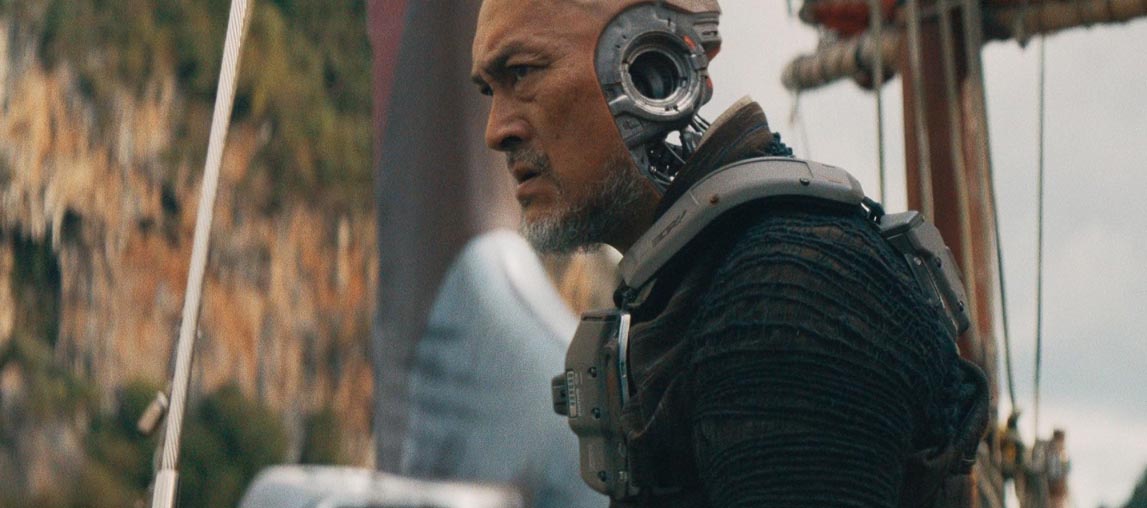


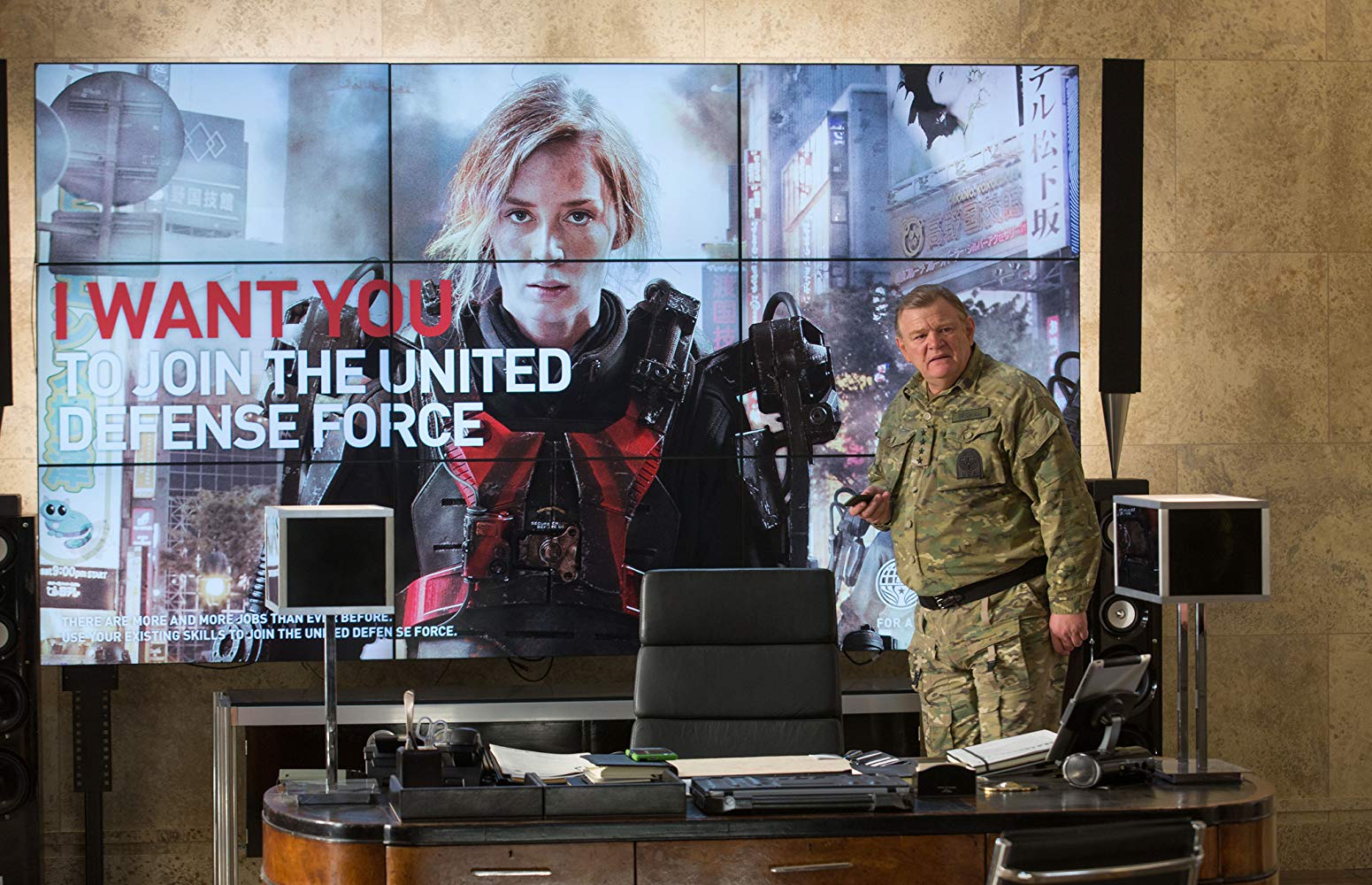
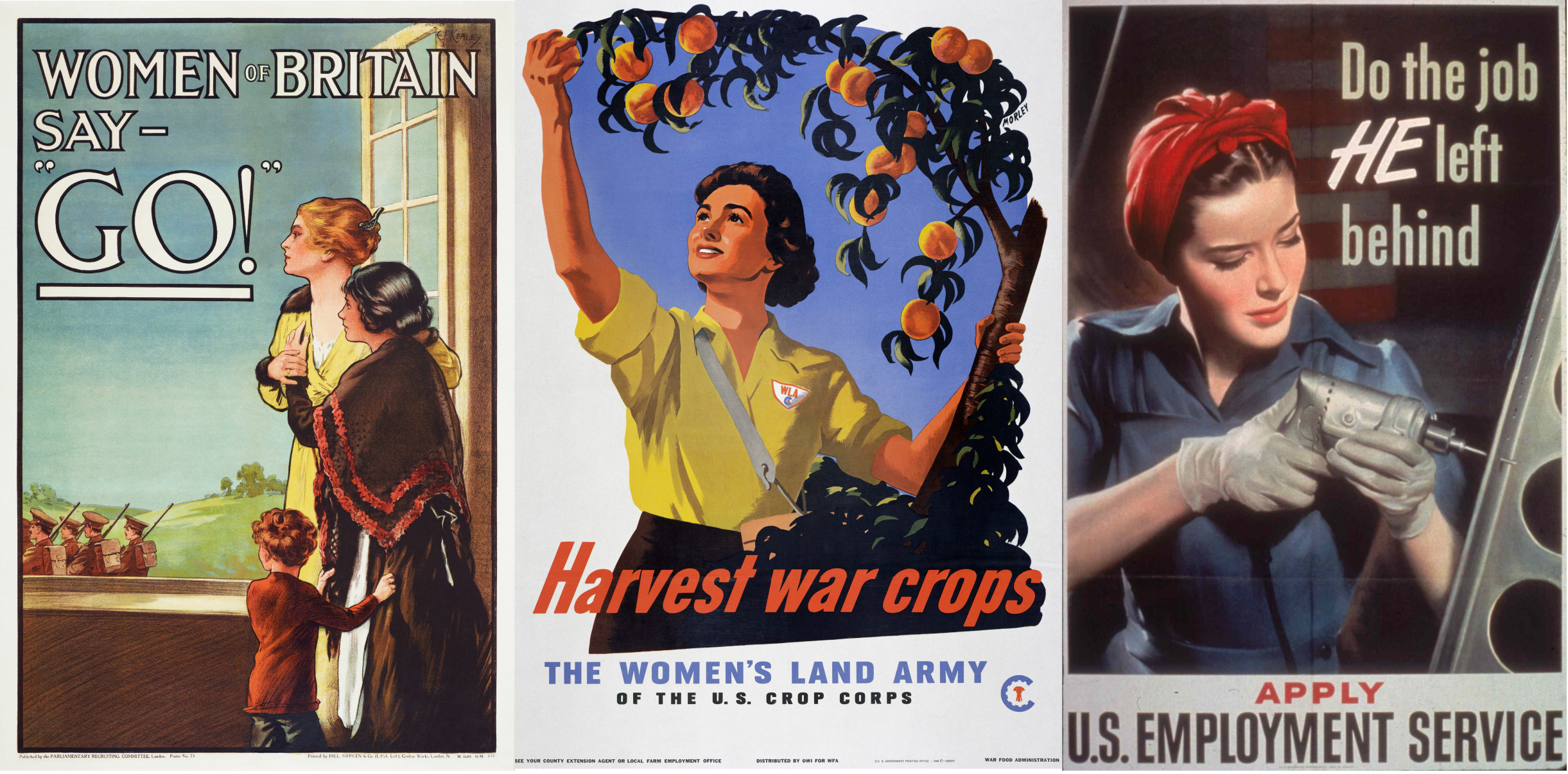
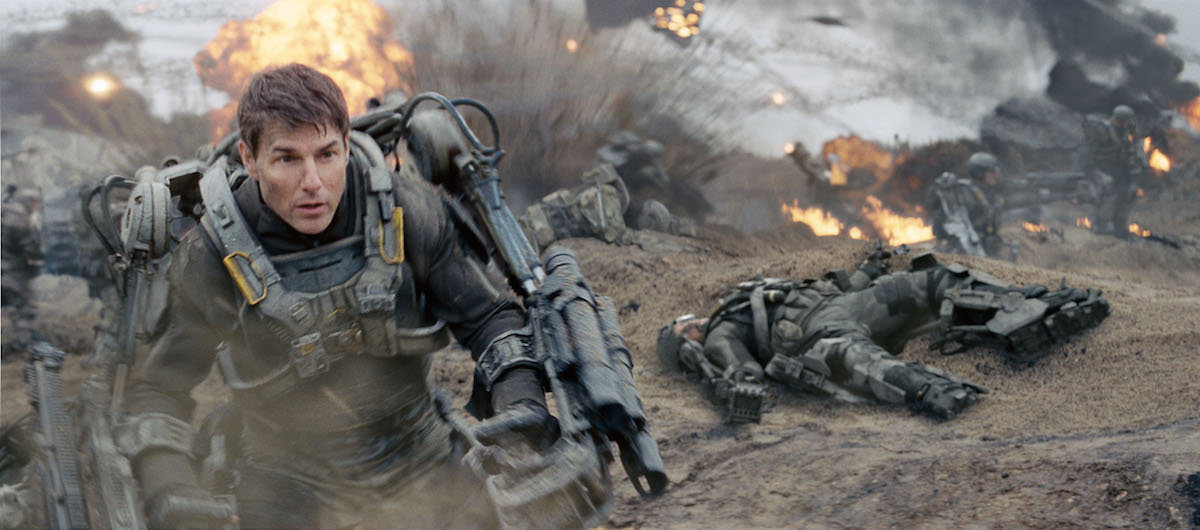
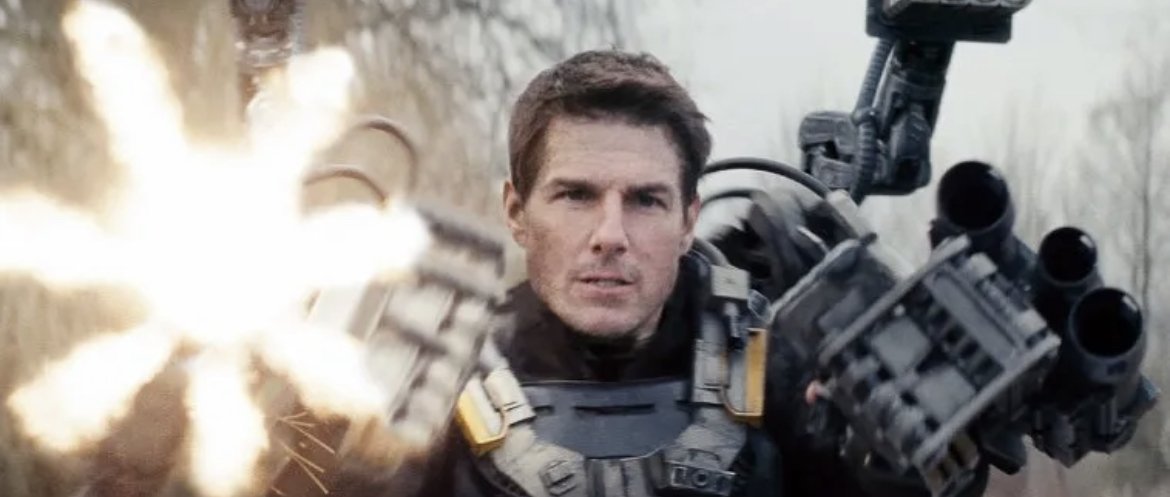
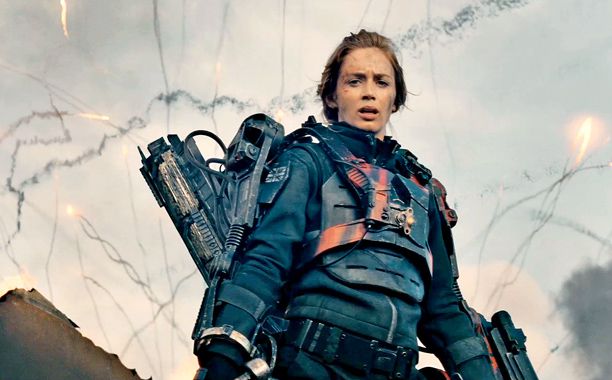

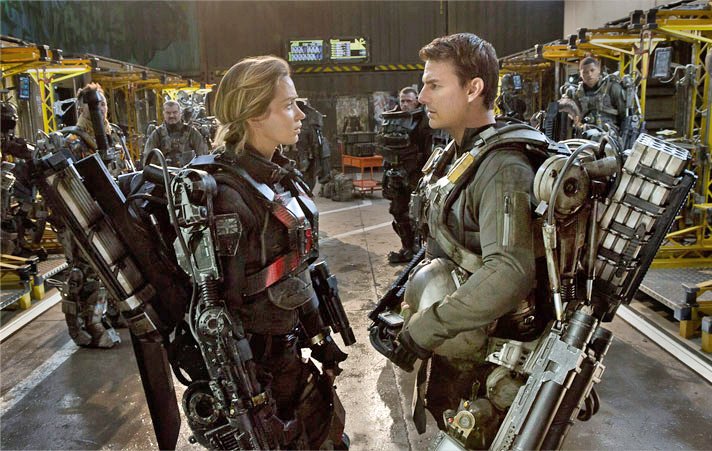


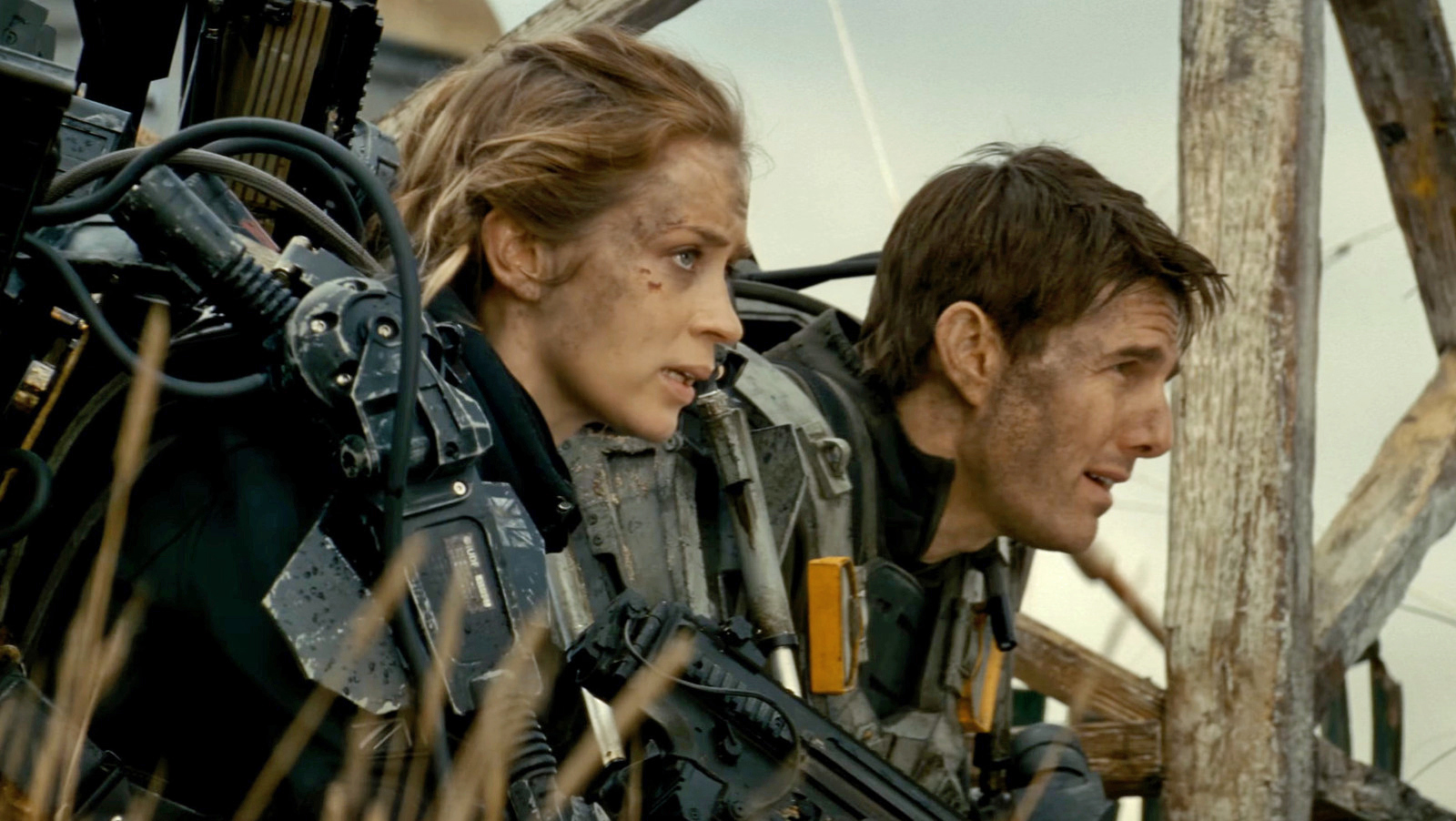
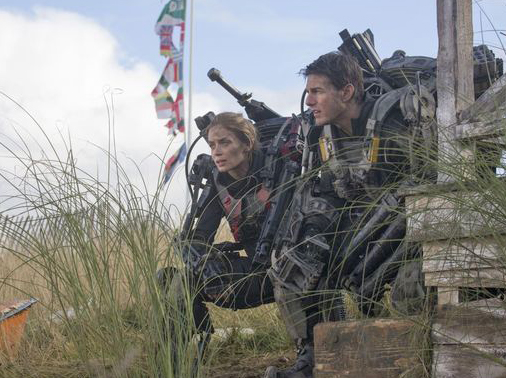


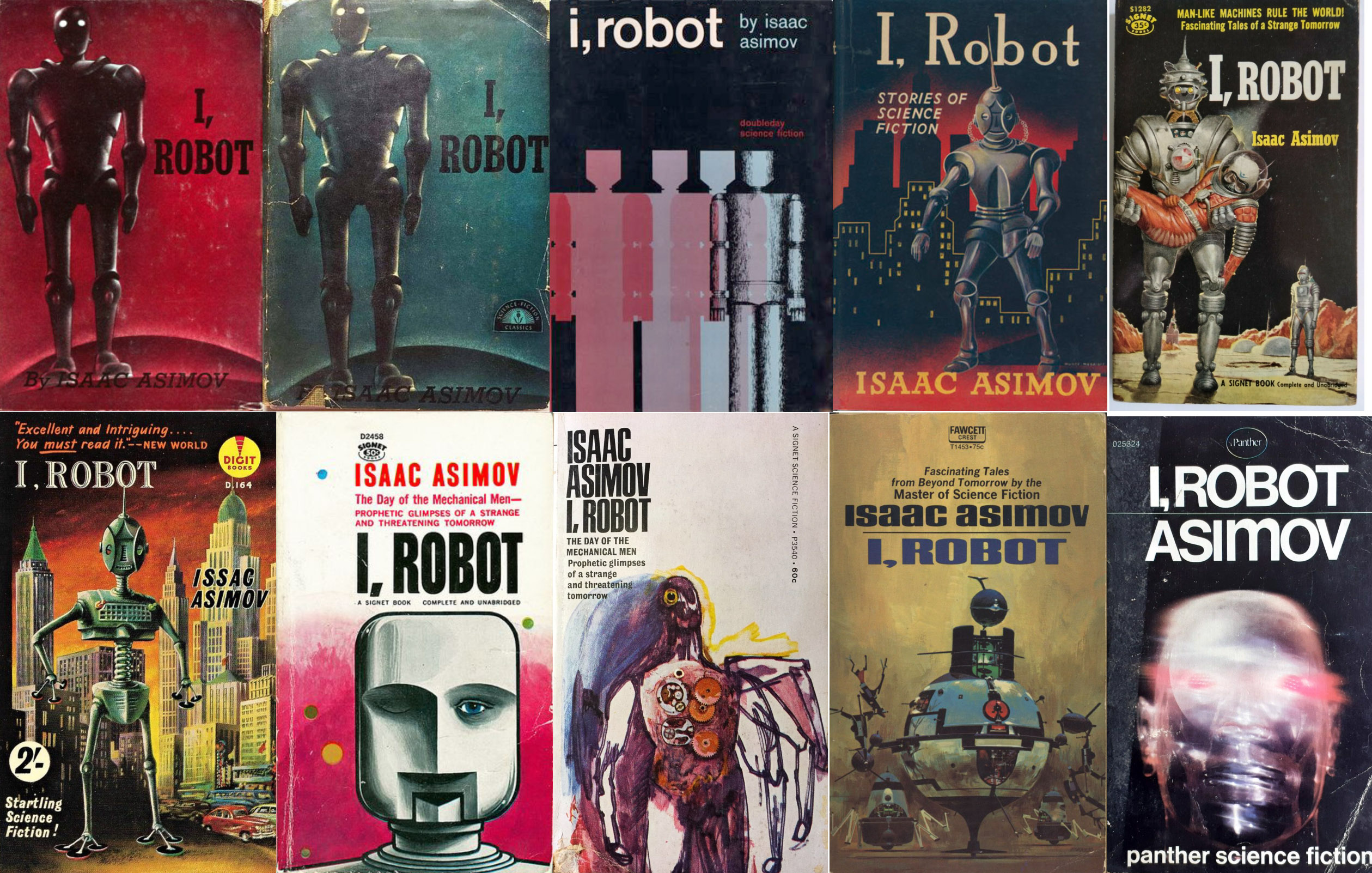


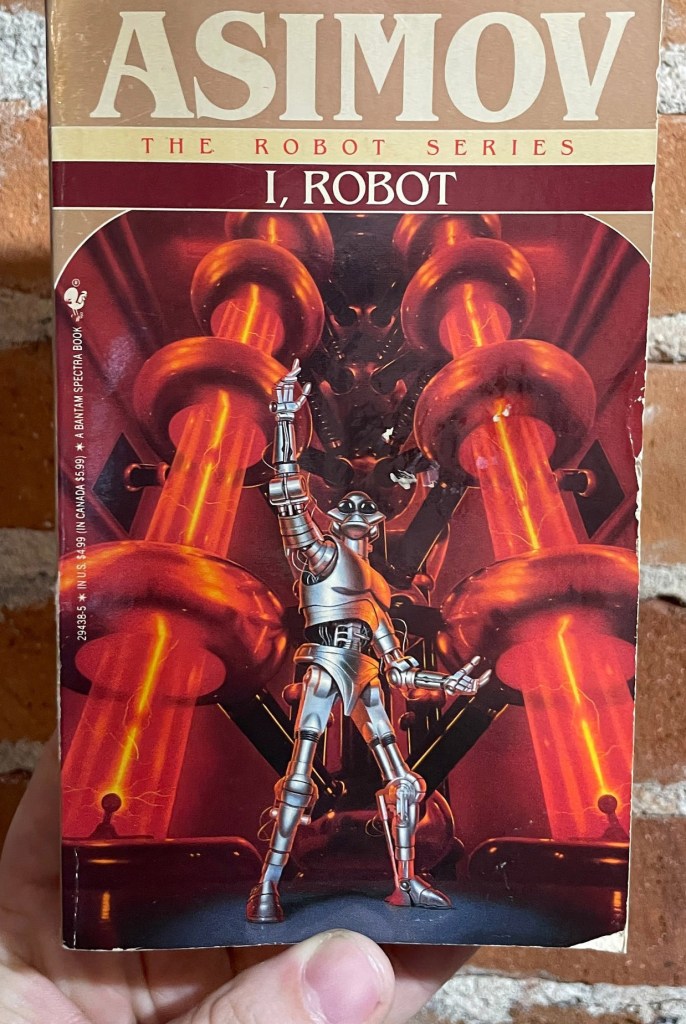
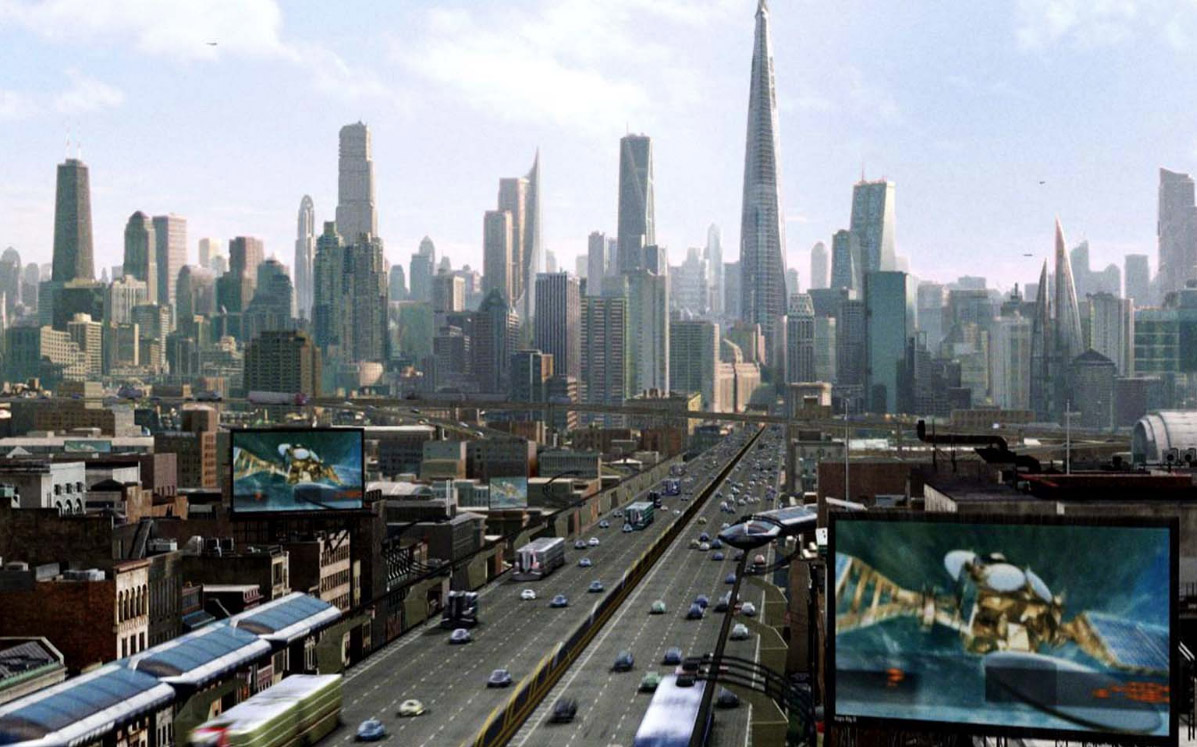


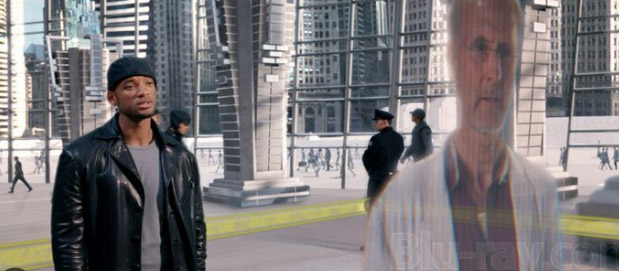

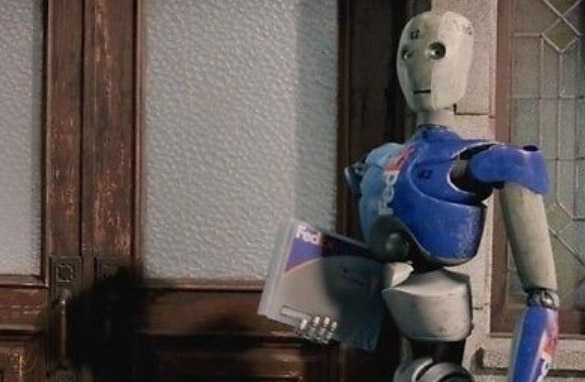

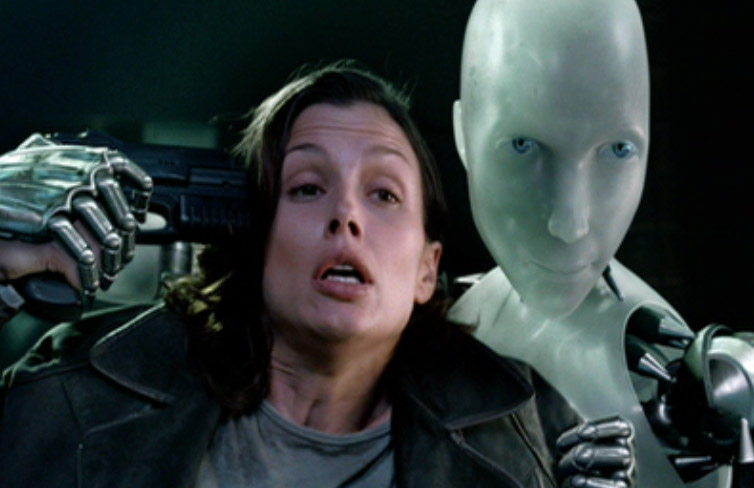

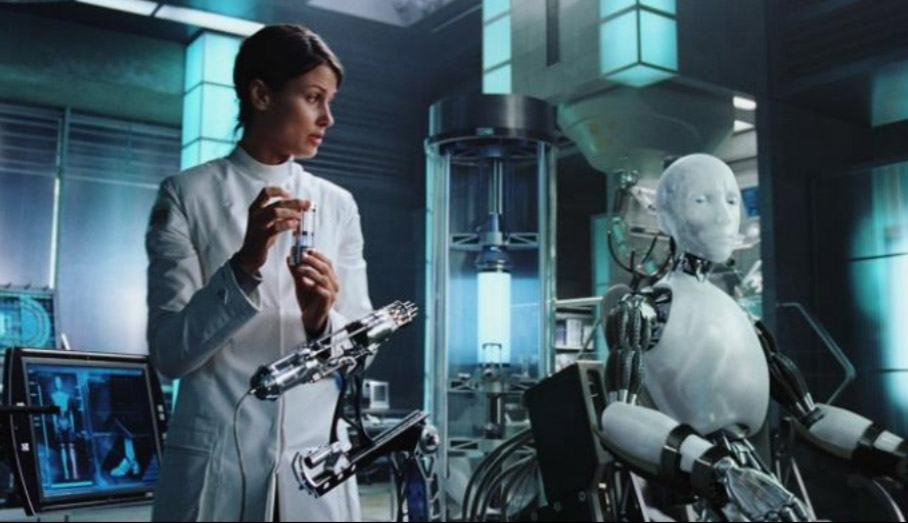


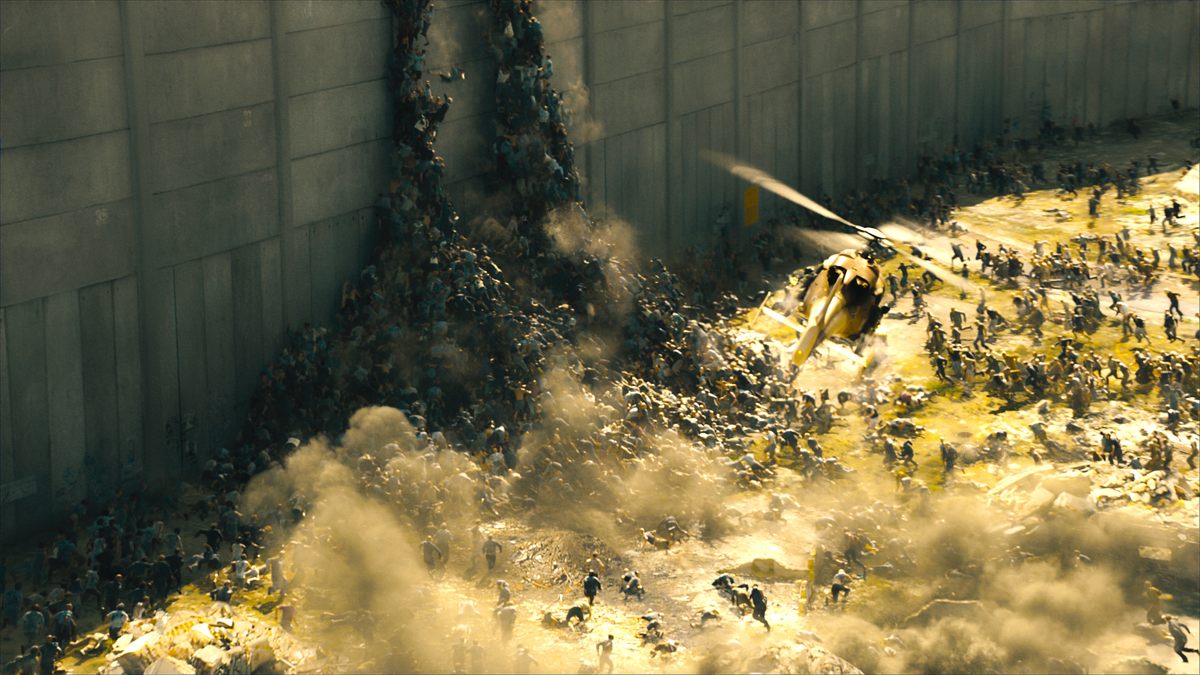


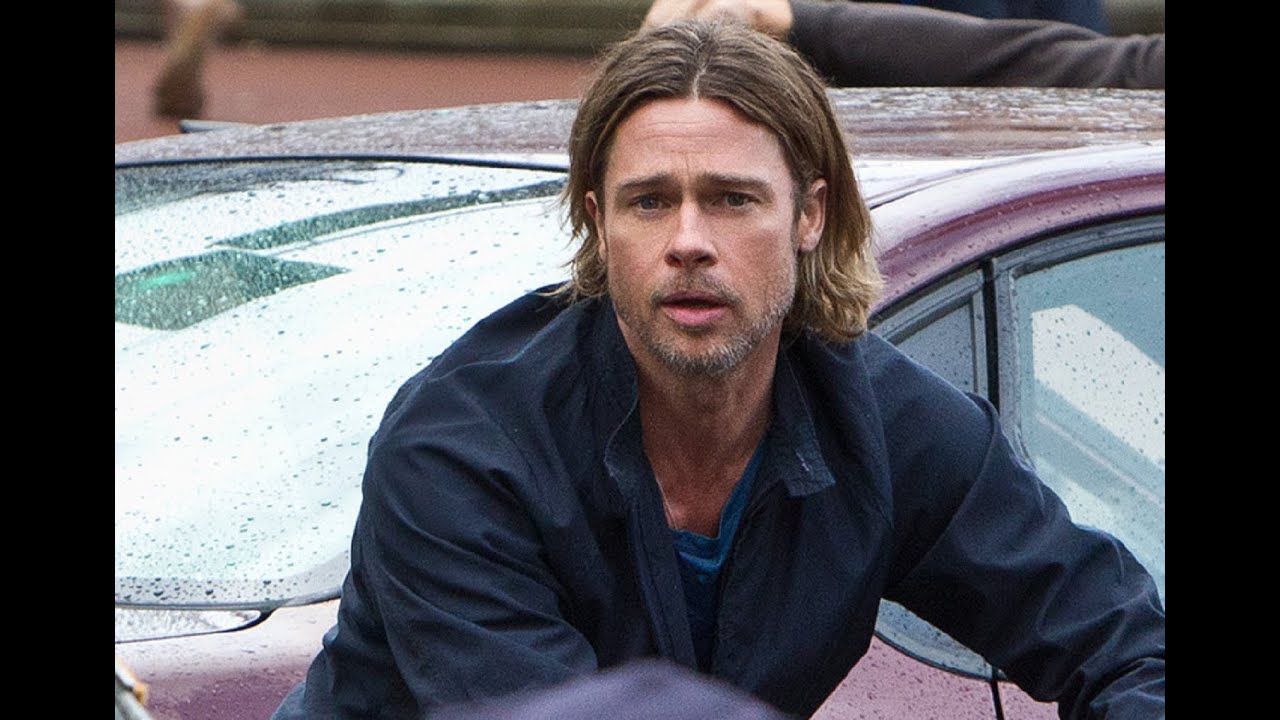


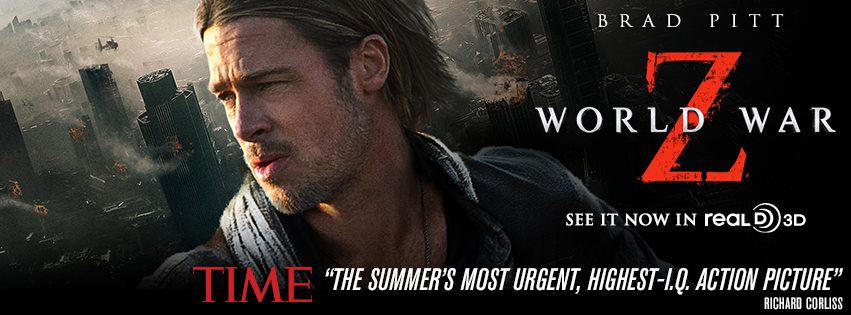
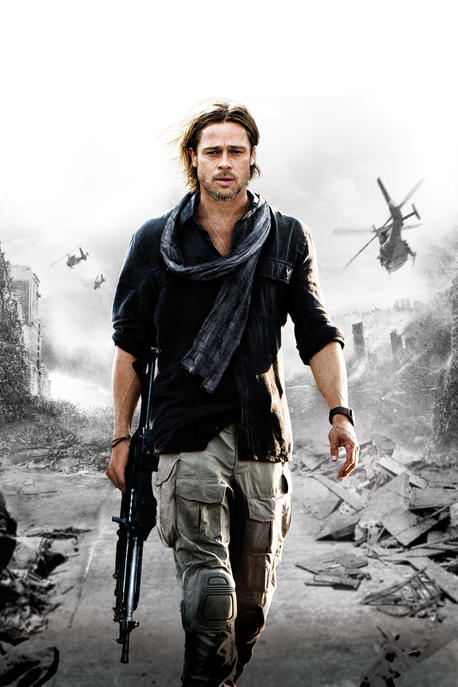
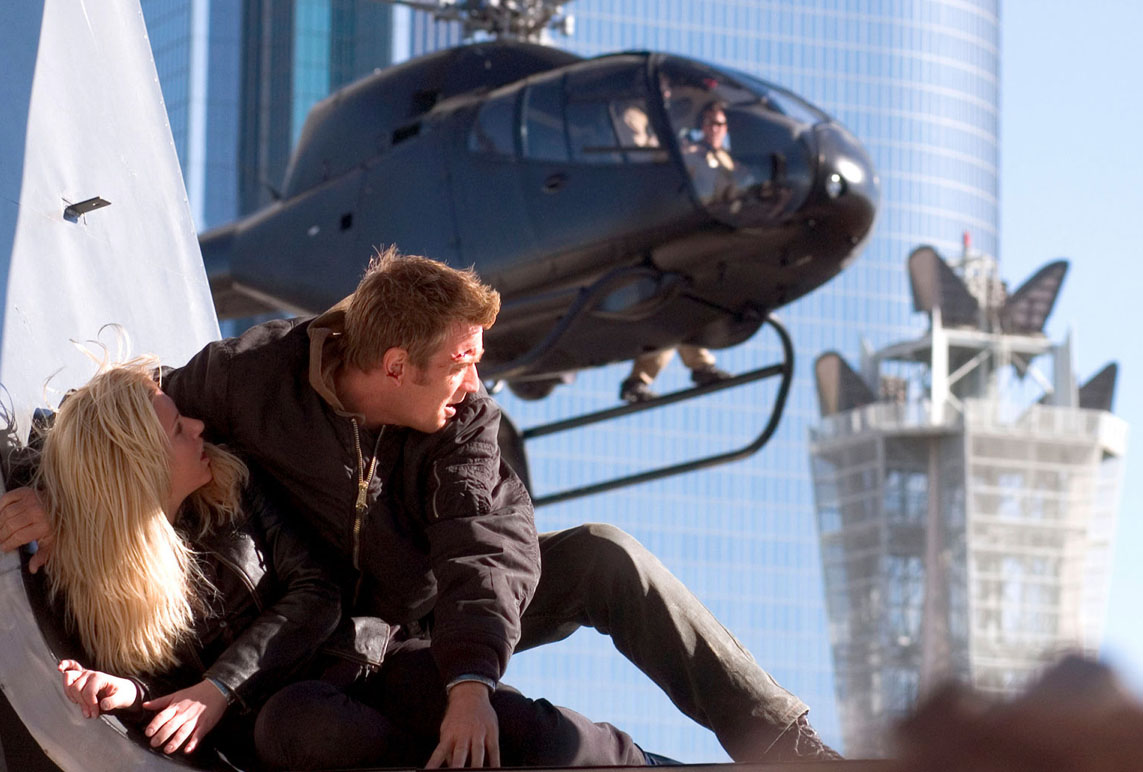
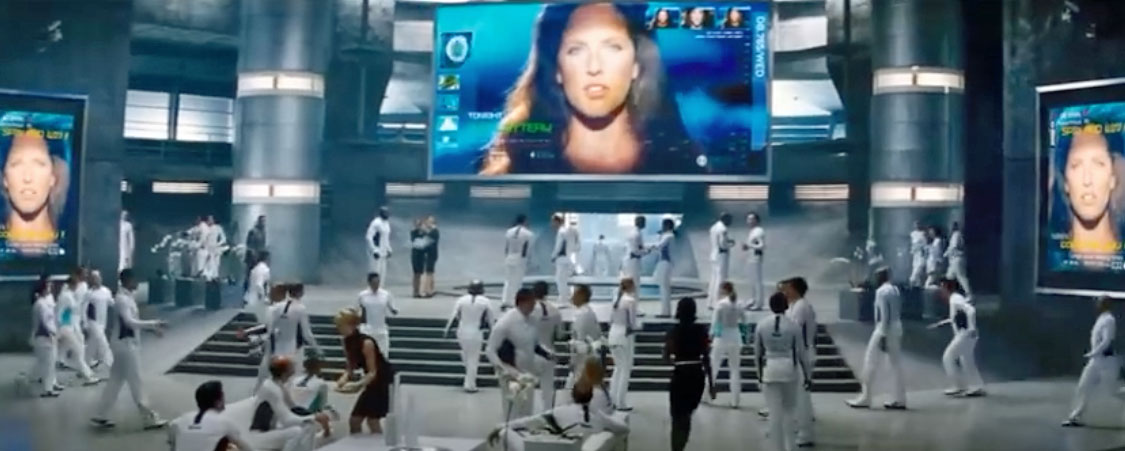


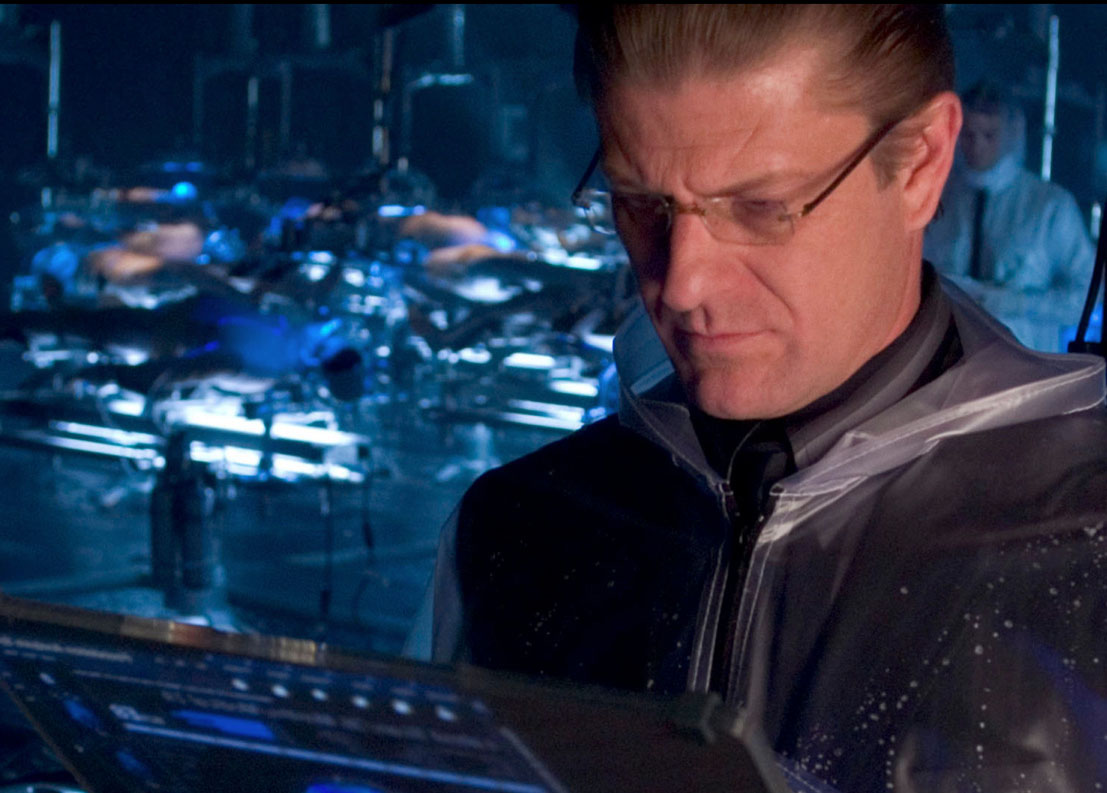
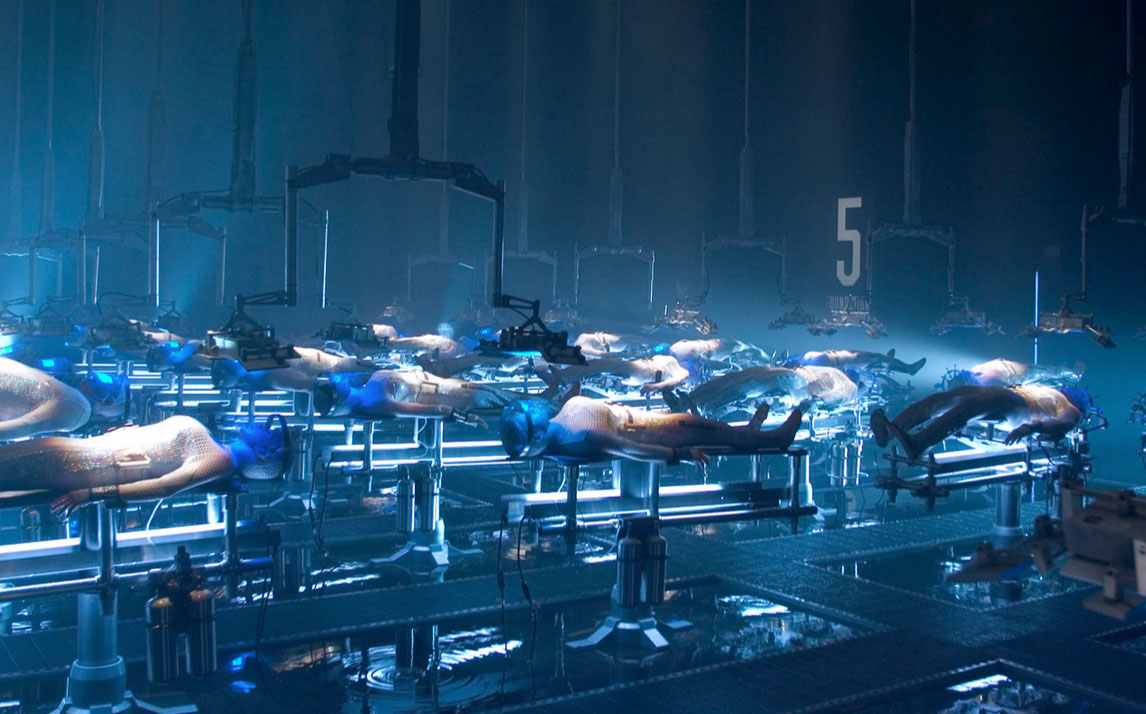


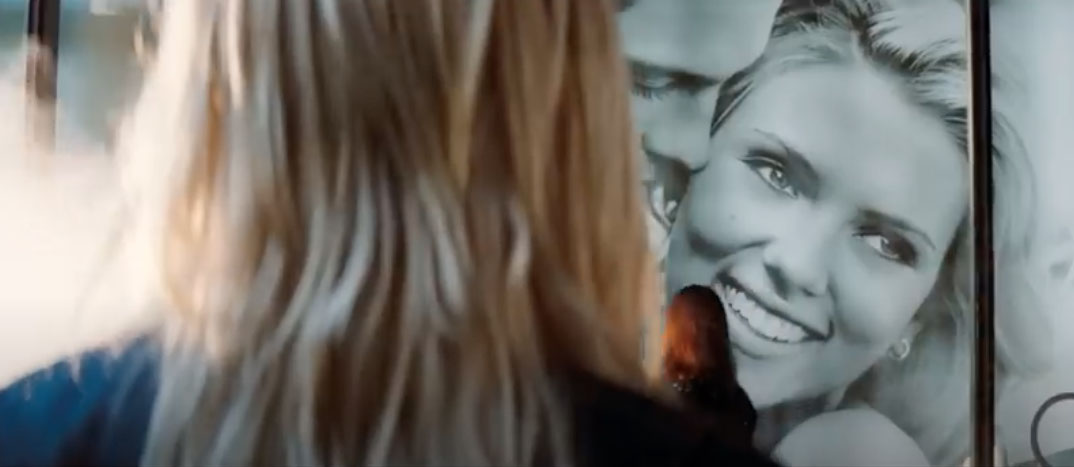

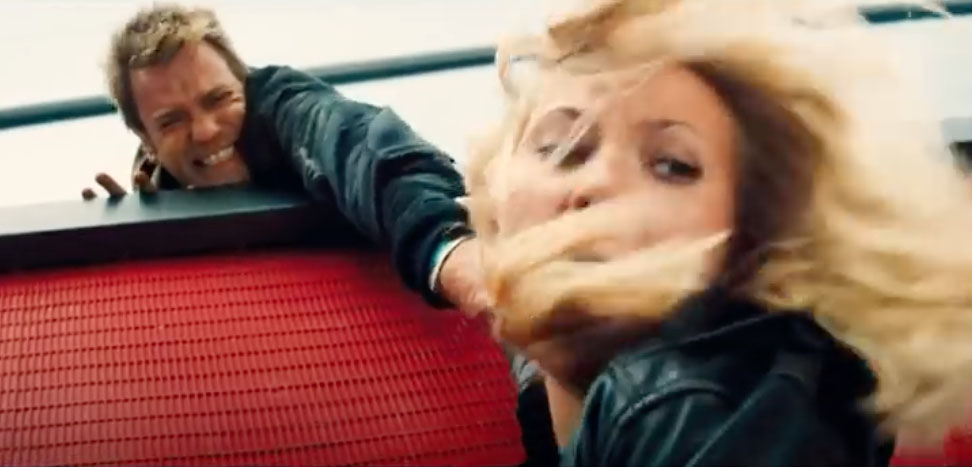


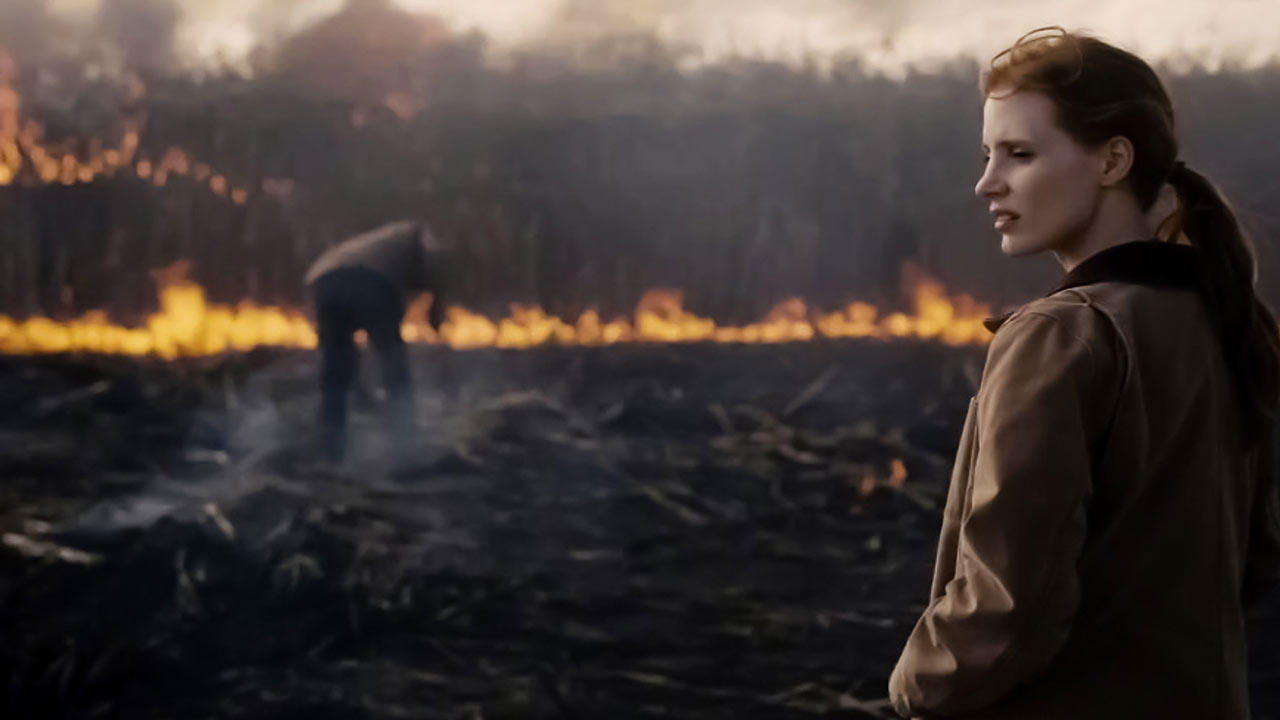
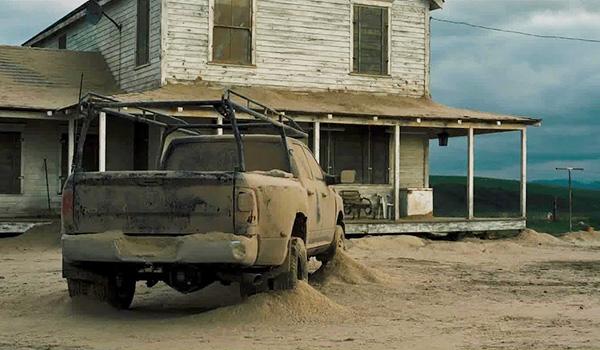

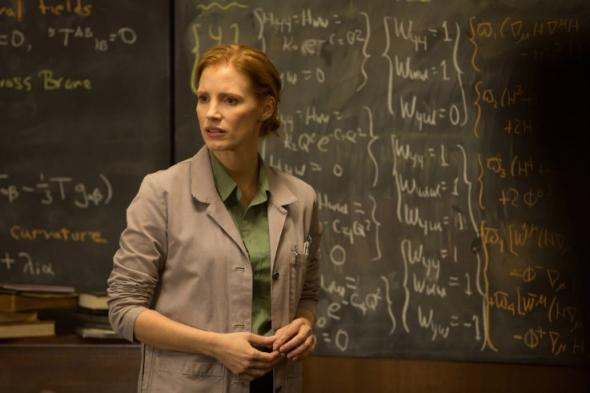
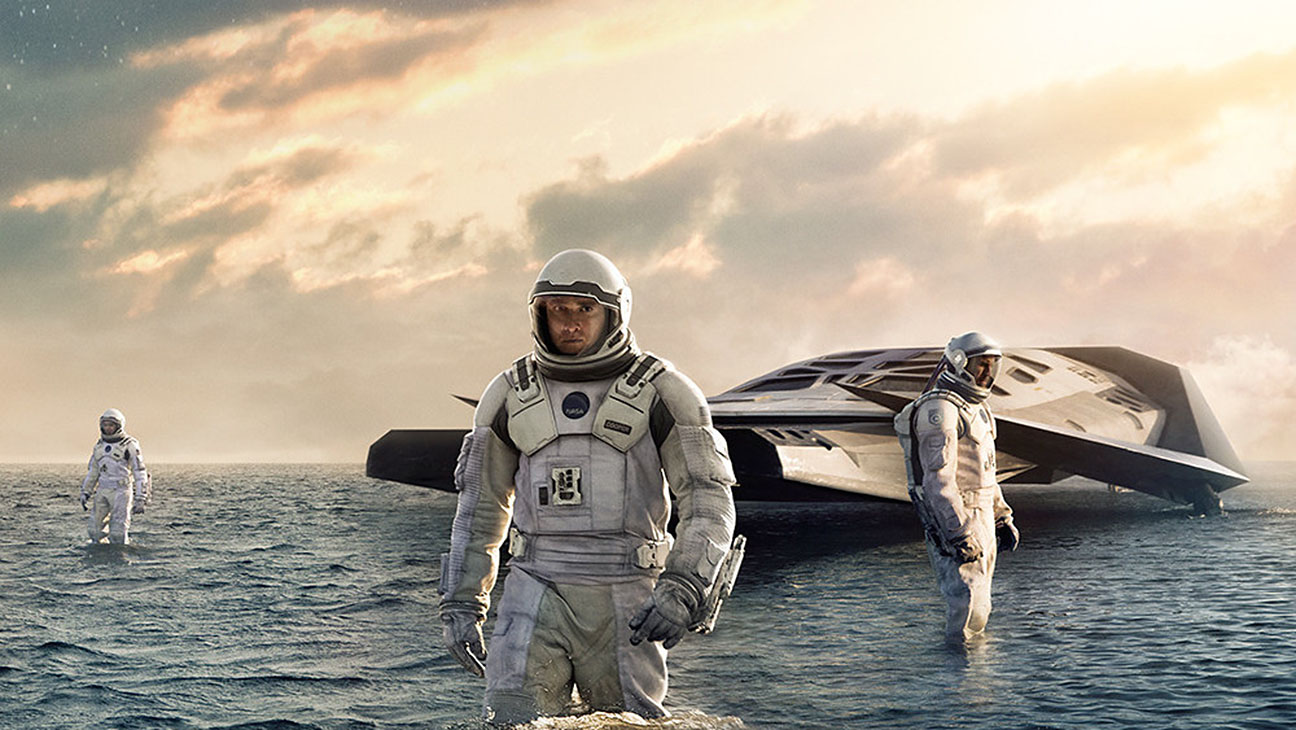
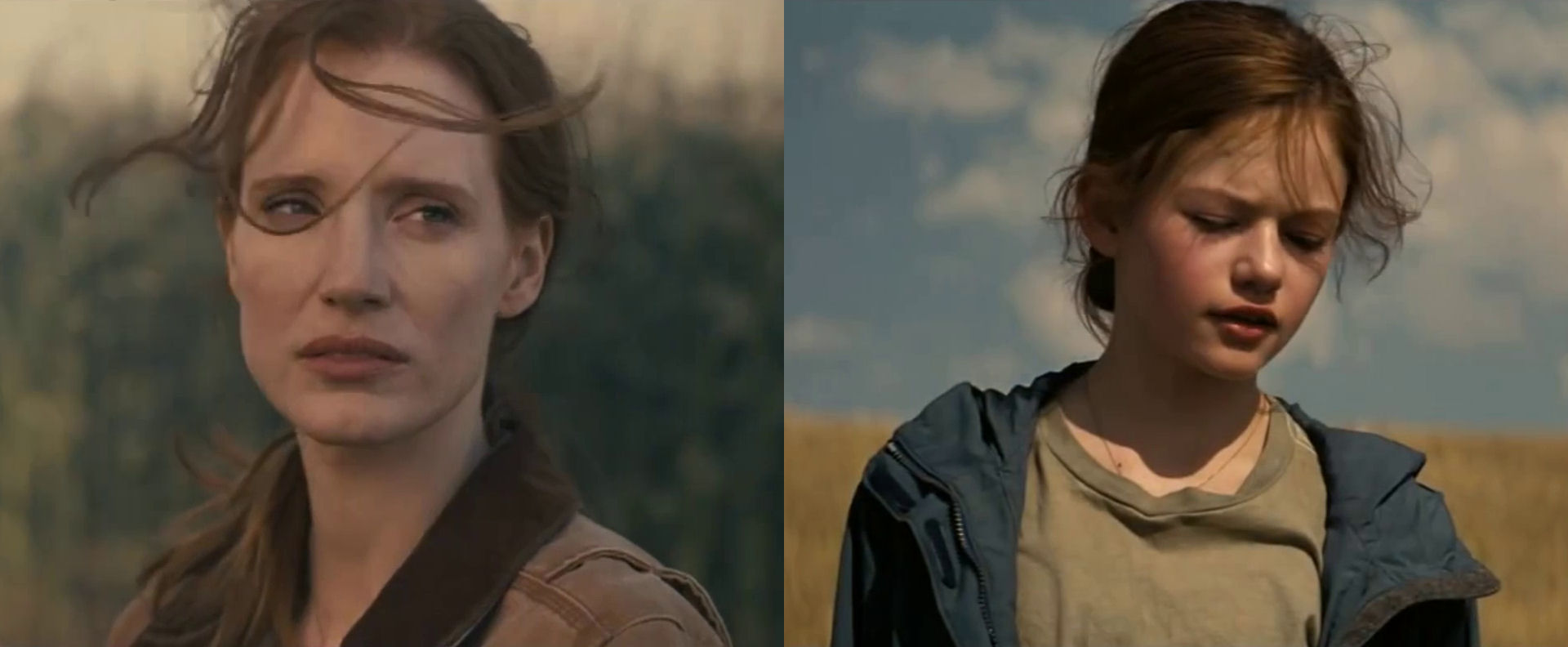


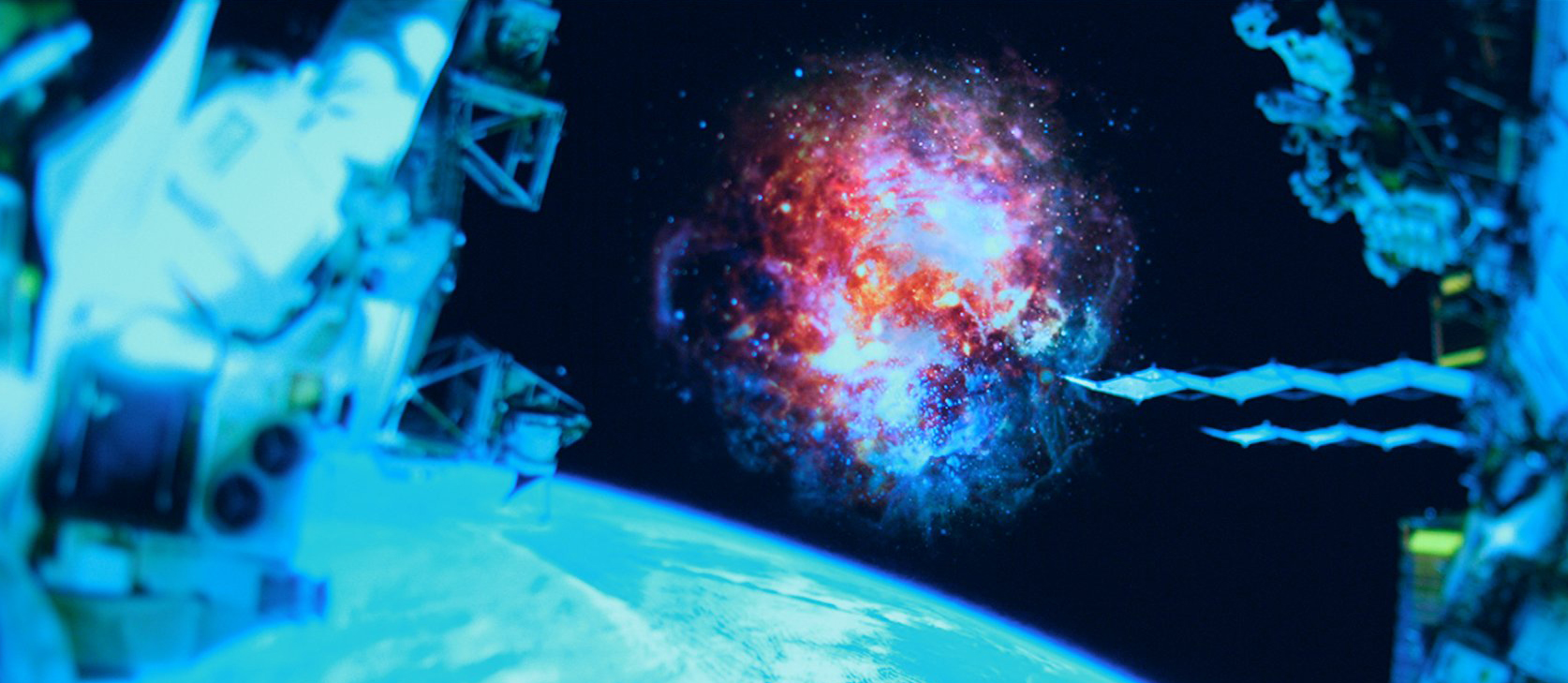









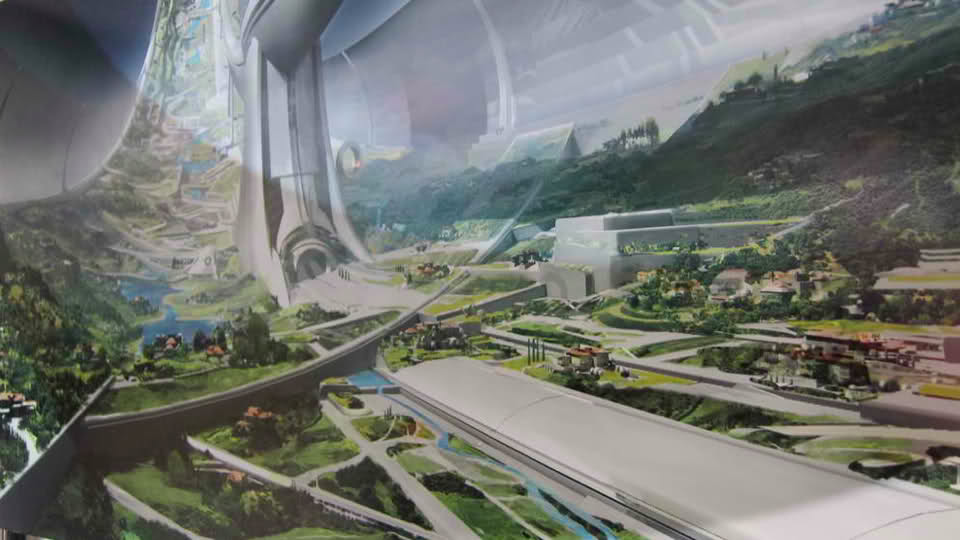


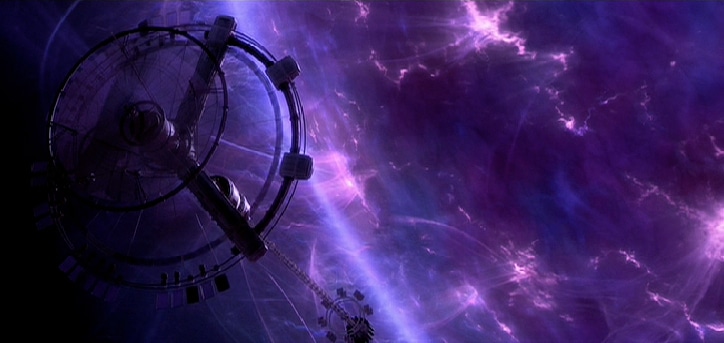


 Nina Munteanu Writing Coach

