On the Successful Anatomy of a Short Story

2015-novel-short-story-market-WDSome time ago, I was invited by writer and editor Jennifer D. Foster to participate in an interview on how to create a successful short story. Jennifer knew my work as a short story writer and had heard me speak at the Editors Association of Canada. She also knew that I teach the short story form as part of my science fiction course at George Brown College.

Writer’s Digest had asked Jennifer to write two “writing tips” chapters in its highly popular “Novel and Short Story Writer’s Market” (34th Annual Edition, 2015). Years ago I got my start as an author using this helpful market guidebook. Not only did the guide provide hundreds of listings with submission guidelines and current contact information; the guide’s writing tips section was also very helpful. So, I was both pleased and thrilled to be inside the 2015 edition!

As with previous editions, the 2015 edition contained—in addition to current market listings—articles on “Craft and Technique”, “Getting Published”, and “Marketing and Promotion”.

Below, I provide some excerpts of the 8-page chapter in the Craft & Technique Section, entitled “Anatomy of a Successful Short Story.” You can read the whole thing if you get your own copy of the guide, which is very decently priced. While it’s a year old, the advice remains as germane now as it was then. And many of the markets remain relevant too. You can also find the guide in most libraries, which tend to carry the entire Writer’s Digest series of market guides for writers.

Defining the Short Story

“Short stories are perhaps one of the best places for novice writers to start their careers,” wrote Foster in the opening to her article. “They’re not too long and complicated, and they offer the writer a chance to intimately explore a plot, a character, and a theme. Short stories also offer writers the opportunity to hone their craft and actually finish a piece of fiction—a great confidence booster!” Foster was quick to add that you shouldn’t be fooled by their short length compared with a novel—or their assumed simplicity: “Short stories are not necessarily any easier to write than novels or novellas.” I talk more about the significance of short story length  in a previous article on this blog: “Know What You’re Writing: Short Story or Long Story?”

Madison Davis at the University of Oklahoma suggested that short stories are “more concentrated … and notable for what they leave out.”

I mentioned that the short story is “a metaphoric event, a moment in time. It’s a single place—a crossroad—compared with the landscape of a novel. Short stories are more about awareness … and have the potential to be far more memorable and disturbing, with the power to enlighten.” Best-selling Canadian author Andrew Pyper suggested that, “a novel is the result of lengthy mulling, while a short story is the rising of an event out of the subconscious.”

Starting the short story in the middle of things “is crucial,” said Davis. “The reader must be thrown into the water immediately. There simply isn’t time or space to wind up.” Steve Woodward, associate editor of Graywolf Press in Minneapolis, Minnesota argued that good first lines are vital: “they can tell you everything you need to know in an instant. Find that right first line, even if it means cutting several pages to get to it, and build outward from there.”

Theme

The message—or theme—of the short story is its raison d’être. In How to Write Short Stories, 4th Edition, Sharon Sorenson wrote that, “if you have no message, you have no story.”

I concurred: “Every good story explores a theme. In a short story, it is a single theme told as a ‘statement’ rather than a novel’s ‘argument.’ It’s a ‘close-up’ rather than a novel’s landscape. All story elements reflect the theme.” Susan Hesemeier, instructor at MacEwan University in Edmonton, Alberta, added that the theme must be “limited to one subject or overall message rather than [the] multiple, interconnected themes [found] in a novel.” Margot Livesey, fiction editor of Emerson College’s Ploughshares magazine in Boston, Massachusetts summed it up eloquently: “theme is probably the hardest element to define, but we recognize its absence when we call something an anecdote.”

Conflict

According to author Louise Boggess, conflict “is the heartbeat of a story.” Conflict expresses internally or externally. Hesemeier wrote that in a short story, “there are fewer conflicts that lead to one climax; in a novel, a series of smaller conflicts and climaxes lead to or connect with a larger overall conflict and climax.”

Plot

Publisher Kevin Watson suggested that a great short story, much like a novel, “is presented to the reader in layers, delivered using setting, character, conflict, and dialogue.” At the center of those layers, said Watson, lay the plot, the theme, and the heart of everything that was presented.

Award-winning author Kevin Barry cited William Trevor: “a short story doesn’t need a plot, it just needs a point.” Toronto-based editor and author Andrew J. Borkaowski agreed: “it’s usually a matter of a single word, gesture, or incident and a handful of actions leading up to it.”

Character

Sorenson wrote that, “Believable, motivated characters make or break a story. If readers cannot understand or accept them, nothing else you do matters.” This is because the actions of your characters convey theme.

Novelist and writing instructor at Western University, Terence M. Green concurred. “Character is most important. Make the long chord of understanding and involvement with a character the goal. This is the emotional resonance, the epiphany that is the goal of the best long-lasting fiction.”

Setting

snow-scene-road-to-Wolfville-stream3

river in Nova Scotia (photo by Nina Munteanu)

Characters and action should interact with the setting,” said Borkowski. She suggested that, “Setting is important as a conveyor of mood or atmosphere, and … has to be rendered succinctly, poetically almost.” Hesemeier added that, “Setting is usually limited to essentials that are necessary to describe the particular moment or that have symbolic significance for the reader’s understanding of the story.”

I further clarified: “A short story’s plot, setting, and character are often portrayed through strong metaphor, the short story writer’s major tool. Metaphor conveys so much more than the surface narrative might suggest; this is because metaphor by its very nature resonates with deeper truths, interpreted individually by members of a culture.”

Point of View

Foster wrote that for Borkowski, it was all about picking a side and sticking with it: “Once you start wanting to explore the inner lives of multiple characters, you’re on your way to something bigger than a short story.” Be mindful how many characters you provide agency and viewpoints to!

Woodward believed that once voice was established, everything else followed. Woodward preferred a solo voice in short story. “Stories are wonderful when concise and focused, often confined to a single narrative voice and to a single moment in time.”
Beaches-snow03

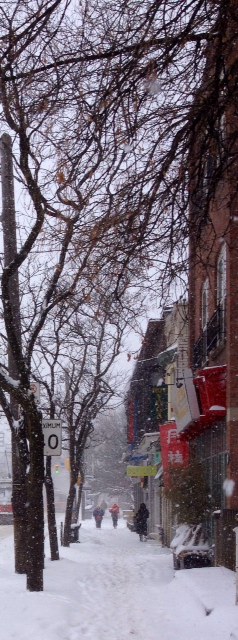
Winter in The Beach (photo by Nina Munteanu)

Andrew J. Borkowski suggested that an exceptional short story arose from the intensity of emotion that resonated with the reader: “A great short story leaves you feeling you’ve experienced ten times more than what’s actually described on the page.” I shared a similar view: “The best short story is an elegant thing. It draws you into a singular experience that resonates at a visceral level, like an arrow through the heart; no time to think—just feel. A bad short story misses the heart … and this is why writers who master the short story form are some of the very best authors in the world.”

Excerpted from “Anatomy of a Successful Short Story” by Jennifer D. Foster. In: “Novel and Short Story Writer’s Market” Writer’s Digest Books; 34th Edition (Rachel Randall, editor), 2015. 569 pp.

Available at: Amazon.comAmazon.ca, and Writer’s Digest Shop.

Douglas Smith’s “Playing the Short Game” is also valuable with great advice for those wishing to market their short stories.

Natural Selection, my short story collection published by Pixl Press in 2013 is available at several bookstores.NaturalSelection-frontHR

Written with flare and a conscience…Munteanu shines a light on human evolution and how the choices we do or don’t make today, may impact our planet and future generations.”—J.P. McLean, author of The Gift Legacy

“Nina Munteanu is a gifted writer. Each story surprises and delights.”—Allan Stanleigh, co-author of USNA and The Caretakers


nina-2014aaNina Munteanu is an ecologist and internationally published author of award-nominated speculative novels, short stories and non-fiction. She is co-editor of Europa SF and currently teaches writing courses at George Brown College and the University of Toronto. Visit www.ninamunteanu.ca for the latest on her books.

How to End Your Story

Sunset 3

Sunset in Niagara-on-the-Lake (photo by Nina Munteanu)

Have you ever seen the movie The Party with Peter Sellers? The first scene is priceless. Sellers plays an actor who is shot in a war scene; he subverts the script by refusing to die. His endless death struggles get so annoying that even the men on his side turn and shoot him.

The last thing you want to do is create an ending or dénouement that struggles in its conclusions. Ultimately, a story’s ending should conclude the story’s plot and theme satisfactorily to the reader.

According to Ansen Dibell, author of Elements of Fiction Writing: Plot, successful endings come in two basic shapes: 1) circular and 2) linear. In a writing workshop I recently participated in, Patrick Rothfuss, author of The Name of the Wind, demonstrated two kinds of endings using his hands: for the first kind he clenched his fists in front of him; for the second kind, he opened his hands airily toward his audience.

The kind of ending you choose for your story will depend on the kind of story you are telling: one that rises to a climax or one that returns home.

Circular Endings

Beginning and ending connect in a circular story. In such a story, the end and the beginning are much more alike than they are to the middle. This is because the end reflects the promise of the beginning. Framed stories use the same technique, except the beginning and end “frame” are more like bookends, supporting the story from the outside and made of a visibly different structure (e.g., often portrayed in prologue and epilogue fashion and often in different POV, tense, style, etc.).

Circular endings, and their circular stories, are often the shape that quest-adventure stories take on. The main character sets out on a quest to find or learn or accomplish something, passes through trials, and finally succeeds in his mission and returns home with his prize to share (often insight or wisdom). Ultimately, the protagonist grows/changes/achieves then brings that wealth back home to alter his pre-existing everyday life. Full circle. Beginning and end mirror and contrast one another.

Circular endings must do the job of showing the hero’s “homecoming”, how she is changed through the turning point in the middle of the story, and what she has brought to the ordinary world to change it.

Linear Endings

Linear stories and their endings run more like a marathon up a hill, with slides, diversions and hard climbs, until they reach the summit and climax (the highest point of conflict—and resolution). Once the result of the conflict is achieved, the story is at an end. Most straight adventure stories are of this type.

Reflective vs. Narrative Ending

Roy Peter Clark, author of Writing Tools: 50 Essential Strategies for Every Writer, reflects that “great endings bring back the whole story.” He cites the “reflective ending” of The Great Gatsby, in which the narrator reflects back, pulling together the important narrative threads like a master weaver, to make meaningful conclusions.

“A powerful alternative,” adds Clark, “is the ‘narrative ending’, a final scene that crowns the action.” Both types of ending work when masterfully handled. The former is essentially “telling” and the latter is essentially “showing”. You choose. Both work.


nina-2014aaNina Munteanu is an ecologist and internationally published author of award-nominated speculative novels, short stories and non-fiction. She is co-editor of Europa SF and currently teaches writing courses at George Brown College and the University of Toronto. Visit www.ninamunteanu.ca for the latest on her books.

To Expose or Not to Expose…That is the Question

CreditRiverWalk-oct2018

Walking the path along the Credit River, Ontario (photo by Nina Munteanu)

In fiction, exposition breaks away from the ongoing action of a scene to give information. It can be a paragraph or go on for several pages. Exposition often provides contextual information critical for the reader to buy-in to character-motivation or the ideas promoted in the story. It gives a story its perspective and larger meaning by linking the reader with the thematic elements. If scene is action and plot, exposition feeds reflection and theme. Exposition can appear in the form of background, setting, back story, or overview. It is most often expressed through a POV character’s reflection and observation.

There are points in almost every story where exposition is necessary. Most stories would suffer without information that adds past, context and overview.

WardIsland wall in forest

Ward Island, Ontario (photo by Nina Munteanu)

Exposition in writing lets you:

  • Describe a person in detail
  • Describe a place for more than a phrase or two (important especially if a place serves as a “character”)
  • Skip over periods of time when nothing important or compelling is happening, without a jarring break in the narrative
  • Draw back from a close-focus action scene to give the reader a meaningful overview (and to say how things got that way)
  • Give some background and history of characters, location, event, etc.

You need to balance the show and tell part of your narrative and to maintain a rhythm in your pace and tone. This means doing several things, including:

  • Restrain yourself and keep your notes to yourself: I’ve seen excellent writers add too much exposition on a subject that obviously excited them but didn’t necessarily excite me. This often occurs when a writer feels impelled to share their invention or discovery at the expense of story-telling. Doing your “homework” in writing (e.g., research) also includes keeping it to yourself, no matter how much you want to share it. Doing your homework is the “iceberg” and the story is the “tip”. Many genre books (e.g., science fiction, thrillers, mysteries, etc.) must be supported by solid research. The writer takes what she needs for the story and keeps the rest.
  • Arouse then explain: introduce your character by letting her act and show herself and engage the reader’s curiosity and sympathy, then explain how and why she got there.
  • Build exposition into the scene: get creative and include expository information as props in a scene. This is a great way to add information seamlessly.
  • Put exposition in between scenes: instead of interrupting a scene in action, exposition can be used to give the reader a breather from a high paced scene to reflect along with the protagonist on what just happened. This is a more appropriate place to read exposition, when the reader has calmed down.
  • Let a character explain: have your characters provide the information by one questioning and the other replying. There is a danger in this kind of exposition, in that the dialogue can become encumbered by long stretches of explanation. Take care to make this realistic and enjoyable to the reader. If done well, this type of exposition can also reveal things about the characters.
  • Use interior monologue: use a character’s inner reflections to reveal information, which also reveals something of the character herself. Be careful not to turn this into polemic, however.

Now, go and have fun exposing!

For more writing tips on writing fiction (and non-fiction or memoir) check out “The Alien Guidebook Series” on writing.

nina-2014aaNina Munteanu is an ecologist and internationally published author of award-nominated speculative novels, short stories and non-fiction. She is co-editor of Europa SF and currently teaches writing courses at George Brown College and the University of Toronto. Visit www.ninamunteanu.ca for the latest on her books.

The Careful Writer: Some Notes on Composition

Log patterns 6

Spalted log (photo by Nina Munteanu)

During my recent reread of Strunk and White’s “The Elements of Style”, this little book yielded more good advice that I wish to share with you.

“The shape of our language is not rigid,” they tell us. “We have no lawgiver whose word is final.” This is because language is fluid and ever-evolving as the artist’s tool of communication. The artist interprets the world; the writer interprets the language to reflect it.

And yet, a basic structural design underlies every kind of writing. To be effective, Strunk and White assert, “writing must follow closely the thoughts of the writer, but not necessarily in the order in which those thoughts occur.”

In some cases the best design is no design at all (as in a love letter or a casual essay, which is an acceptable stream of conscious flow). But, in most cases—particularly in “storytelling”—planning helps. The first principle of composition is “to determine the shape of what is to come and pursue that shape.”

Jack Bickham, author of Elements of Writing Fiction: Scene and Structure reminds us that, “a thorough understanding and use of fiction’s classic structural patterns frees the writer from having to worry about the wrong things and allows her to concentrate her imagination on characters and events.” Structure, explains Bickham, is the internal part of the story, like the braces of your house; while form is external, what you do with the structure. Structure and form link to construct “story” in a series of scenes that “interconnect in a very clear way to form a long narrative with linear development form posing the story question at the outset to the answering of that question at the climax.”

Strunk and White discuss twenty-two elementary principles of basic composition. Here are a few choice ones.

The 14th Elementary Principle: Use the Active Voice

The active voice is often more direct and vigorous than the passive. Strunk and White note that activating a sentence not only makes it stronger but shorter. “Thus, brevity is a by-product of vigor,” they say. Here’s one of their examples:

Passive: My first visit to Boston will always be remembered by me.

Passive, indefinite: My first visit to Boston will always be remembered.

Active: I shall always remember my first visit to Boston.

Activating the verb breathes life into the sentence, gives it motion and direction, and empowers both subject and object.

The 15th Elementary Principle: Put Statements in Positive Form

Make definite assertions. Avoid tame, colorless, hesitating and noncommittal language. “Use the word ‘not’ as a means of denial or in antithesis, never as a means of evasion.” Here are a few examples:

Negative Positive
He was not very often on time. He usually came late.
She did not think that studying Latin was a sensible way to use one’s time. She thought the study of Latin a waste of time.

The 16th Elementary Principle: Use Definite, Specific, Concrete Language

Prefer “the specific to the general, the definite to the vague, the concrete to the abstract,” they say. The surest way to arouse and hold the reader’s attention is by being specific, definite and concrete. The greatest writers use words that call up pictures. The key is to know what details matter.

Author Jordan Rosenfeld describes your novel as a world in which your reader enters and wants to stay in for a while. You make it easy for the reader by adding concrete details for her to envision and relate to. Ground your readers in vivid setting, rich but unobtrusive detail. Don’t abandon your characters to a generic, vague and prosaic setting, drinking “beverages” and driving “vehicles” on “roads”; instead, brighten up their lives by having them speed along Highway 66 in a 1959 red Corvette, sipping a Pinot Noir.

The 17th Elementary Principle: Omit Needless Words

“Vigorous writing is concise,” Strunk and White tell us. Ray Bradbury once told me that “every word counts” in a story, from the name of your character to the verb you use to activate and give direction to your sentence. “A sentence should contain no unnecessary words for the same reason that a drawing should have no unnecessary lines and a machine no unnecessary parts,” say Strunk and White. Activating your verbs is one excellent way to invigorate your sentences. Strunk and White provide several common expressions that violate concise writing.

Original                                Just use…
The question as to whether Whether
There is no doubt but that No doubt
Used for fuel purposes Used for fuel
In a hasty manner Hastily
The reason why is that Because
Her story is a strange one Her story is strange

How about the term the fact that? Strunk and White go into some detail with this rather pesky term. Here are a few examples:

·       I was unaware of the fact that ·       I was unaware that
·       Call your attention to the fact that ·       Notify you
·       In spite of the fact that ·       Although
·       The fact that he had not succeeded ·       His failure

For more writing tips on writing fiction (and non-fiction or memoir) check out “The Alien Guidebook Series” on writing.

References:

Bickham, Jack. 1993. Elements of Fiction Writing: Scene and Structure. Writer’s Digest Books. Cincinnati, Ohio.

Strunk, William Jr. and E.B. White. 2000. The Elements of Style. Fourth ed. Longman. New York, NY. 105pp.

Munteanu, Nina. 2009. The Fiction Writer: Get Published, Write Now! Starfire World Syndicate. Louisville, KY. 166pp.

Rosenfeld, Jordan E. 2008. “Novel Revision for the Faint of Heart”. In: Writer’s Digest. February, 2008.

nina-2014aaNina Munteanu is an ecologist and internationally published author of award-nominated speculative novels, short stories and non-fiction. She is co-editor of Europa SF and currently teaches writing courses at George Brown College and the University of Toronto. Visit www.ninamunteanu.ca for the latest on her books.

Playing the Short Game & Other Short Stories

The seventh class of my 12-week Creating Science Fiction course that I teach at George Brown College is all about short story writing. I’m by nature a progressive—and an itinerant explorer; so, I am updating materials for my students and sharing them with you. Embedded in this “sharing” I promise a very cool deal too; just keep reading

One resource I’m eager to introduce to my students is Canadian SF short story writer Douglas Smith’s recent guidebook, Playing the Short Game: How to Market & Sell Short Fiction. Smith’s guidebook is a Tardis-style smallish yet comprehensive guide on what it takes to be a successful short story writer from starting & finishing to marketing & publishing to leveraging & promotion.

Smith is an accomplished short story writer and marketer, who has alwaysPlayingtheShortGame openly shared his treasures of acquired wisdom with others. His stories have appeared in thirty countries and 25 languages. He’s won three awards and has three acclaimed collections—so far. For years, his Foreign Market List has helped writers—including me—sell their work all over the world. To date, I have sold short stories (mostly reprints) to markets in Greece, Poland, Romania, Israel, and Italy—thanks to his list.

Why Short Fiction?

Smith gives seven excellent reasons for writing short fiction, even if you are ultimately a novel writer, like me. Writing short stories:

  1. Helps you learn your craft in easy, short-term, bite-sized amounts and over a reasonable time for you to learn, apply, and relearn
  2. Helps you test the waters of literature, to discover what excites you, provokes you and what ultimately you NEED to express
  3. Builds your resume, again more easily and quickly than a novel, toward that ultimate novel; publishers of magazines and publishing houses are more likely to take your work seriously if you have a publishing history
  4. Helps you explore ideas for your novel, by “pinging” certain premises you may wish to explore in further detail or take elsewhere in a novel
  5. Helps you build a backlist of published stories, which you own, once rights have reverted back to you
  6. Helps you build a network in your writing community of publishing houses, editors, other writers and so forth as you submit and exchange through your works and letters (including all those rejections!). Eventually, a pleased editor/publisher may invite you to submit to a “Best of” anthology or provide a collection. This has happened to me several times.
  7. Helps you learn the publishing business (well, sort of, says Smith…). Through exposure to the business side of publishing, you will gain an appreciation of how the publishing world works.

Know What You’re Writing

A short story only has 7,000 or less words to get your tale across while a novel has over ten times that many words to do the same. It follows then that the short story format is a simpler one. This does not necessarily mean easier.

Novels provide a sense of change, growth and solutions to problems and conflicts. “The short story doesn’t have the luxury of depicting change; the closest it can come is awareness,” writes Shelley Lowenkopf in her 2007 article “Telling Tales” in The Portable Writer’s Conference: Your Guide to Getting Published by Quill Driver Books.

She goes on to describe the short story as a close-up to a novel’s landscape. The short story is, therefore, often more intense and powerful. A short story, more than a novel, has the power to transport, disturb and enlighten.

Renowned short story authors like Edgar Allen Poe, Nathanial Hawthorne, and Somerset Maugham, emphasize the importance of striving for one effect when writing a short story: the single effect you wish to leave with the reader at the end. This is accomplished by selecting events or situations that build quickly into a combustible response. Even Alice Munro, who is known for cramming long timeframes into her short stories, focuses framing time through a single event: a meal, family gathering, wedding or funeral, for instance.

Jack Bickham, in his book, Elements of Fiction Writing: Scene and Structure by Writer’s Digest Books (1993) writes that, “story length, author intention, traditional expectations of the audience, and all sorts of things may affect the form a story may take.” Choosing the appropriate length to tell your story relies on the complexity of your premise and theme.

Understanding the Short Story Format

Here are seven tips toward writing a compelling and memorable short story:

  1. Open in the middle of something happening (e.g., action/in a “scene”)
  2. Make your opening provocative (raise the stakes as high as you can)
  3. Write scenes and write sparingly (avoid describing the obvious—use description to show something odd, memorable, exotic)
  4. Have characters define themselves and their goals through what they do and observe (e.g., show more than tell)
  5. Define characters with dialogue (a great way to reveal while keeping a high pace)
  6. Withhold vital information for as long as possible
  7. Don’t explain the ending (cut down on the denouement; let the reader make those conclusions—a key in the short story format)

Selling Your Short Story

Smith’s guidebook provides several chapters of excellent advice in logical steps toward a successful career.

Here are just a few gems that I will be sharing with my students.

First of all, remember that you are not selling your story; you’re licensing a particular set of rights for someone to do something with that story. Before you do anything else, do your homework: know the rights you’re selling; and which ones to keep. Smith describes five major types of rights: media; language; geography (less and less relevant); occurrence; and time.

Media rights include print rights, electronic rights and audio rights. Markets include magazines, anthologies and collections for short stories. Language and geography rights are pretty self-explanatory. Occurrence rights relate to whether the publisher is buying first or second and onward rights (otherwise known as reprints). Most publishers prefer to pay for the right to publish your work for the first time in that particular format (e.g., in print and in English, for instance). Having said that, I’ve had a lucrative history of selling reprints to some of my more popular short stories. I’ve furthered gone on to selling other rights, such as foreign language rights and audiobook and e-book rights. I’ve also sold two short story collections, one to an Italian publisher (coming out this year) and shorts in several anthologies. No movies yet… But I did have a serious discussion with a writer/producer on one of my shorts. Recall how many Philip K. Dick short stories have been adapted to movies (e.g., Total Recall, The Adjustment Bureau, Paycheck, Minority Report, and Blade Runner).

Heinlein’s Five Rules of Writing

Smith invokes SF writer Robert J Heinlein’s 5 rules of writing to succeed as a short story writer (as any kind of writer, actually). These are:

  1. You must write
  2. You must finish what you write
  3. You must refrain from rewriting, except to editorial order
  4. You must put the work on the market
  5. You must keep the work on the market until sold

I know… Number 3 sounds pretty suspicious, or arrogant at the very least. As Robert J. Sawyer concludes on his site in reference to the five rules, number 3 is open to reasonable interpretation. Of course, it must mean AFTER you’ve finished and edited the story with some level of confidence that you’re happy with it—never mind what other people think of it.

Nina’s Bus-Terminal Model

In my writing guide The Fiction Writer, Chapter L (for “Long or Short?”), I talk about how I launched my own successful short story writing career. I’d been writing short stories for a few years without much success (I was getting interesting rejection letters, so I knew I was getting close); then I settled into a kind of model/routine. I call it The Bus Terminal Approach. As Smith attests—several times—it’s a numbers game. That’s how I played it. It starts with one story and relies on you not waiting until you write the next, and the next and the next. Here’s how it works:

  1. You list at least 3 markets that you’ve researched for Story A and send it to the first of the three
  2. You start right away writing Story B, send it to the first of 3 markets you’ve researched and listed for it
  3. When Story A rejection arrives, you do not revise but send it right away to the second market
  4. Same thing for Story B
  5. Write Story C and treat similarly

FictionWriter-front cover-2nd ed-webRemember to keep track of what you send where and when and what happens to it. It can become a very confusing bus terminal otherwise, with someone ending up in Seattle when they are headed to Toronto! What happens with this approach is several things: you begin to treat the whole marketing/publishing process as a business (which it is) and because you have so many “buses” out there coming and going, the rejections don’t hurt quite as much and instead become part of the learning process, which they should be. You adopt a more business-like approach, which translates into your relationship with editors and publishers. A win-win situation results. Believe me; this works. Once I fell into this method, my sales increased by over 70%.

I mentioned a cool deal in the beginning. Here it is: you can purchase Smith’s e-guidebook, along with several other excellent writing guides on the Write Stuff StoryBundle as a promotional bundle. Here’s the Write Stuff StoryBundle Site. The offer runs until June 4th 2015.

My own guidebook, The Fiction Writer, can be purchased in various online and onsite bookstores, including Amazon, Kobo, Chapters Online, Barnes & Noble, and several others even I don’t know about.

Natural Selection, my short story collection published by Pixl Press in 2013 is also available at several bookstores.NaturalSelection-frontHR

Written with flare and a conscience…Munteanu shines a light on human evolution and how the choices we do or don’t make today, may impact our planet and future generations.”—J.P. McLean, author of The Gift Legacy

“Nina Munteanu is a gifted writer. Each story surprises and delights.”—Allan Stanleigh, co-author of USNA and The Caretakers

nina-2014aaNina Munteanu is an ecologist and internationally published author of award-nominated speculative novels, short stories and non-fiction. She is co-editor of Europa SF and currently teaches writing courses at George Brown College and the University of Toronto. Visit www.ninamunteanu.ca for the latest on her books.

Do Your Research

CreditRiverWalk-oct2018

Walking along the Credit River (photo by Nina Munteanu)

Research is something many writers dislike and find daunting or even intimidating. Research for your book or short story will take on many forms from subtle to obvious and from non-directed (opportunistic) to directed (e.g., library). Its form and rigorousness will vary according to your purpose and circumstance. And where you go to do your research will vary accordingly.

In truth, as a writer, you are doing research all the time: when you’re riding the bus or train to work, when you’re traveling on vacation, when you’re having a lively discussion—or better yet an argument—with a friend or colleague. Everything you experience and observe is research. This is what’s called non-directed research. Writers, like all artists, are reporters of life, actively participating and observing. A writer is an opportunist, gathering her data through her daily life experiences.

Why is Research Important?

notebook-vineyard-NOTL

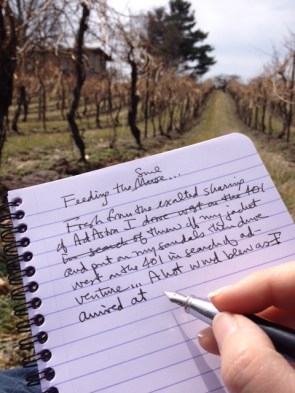
Niagara on the Lake, ON (photo by Nina Munteanu)

You might be saying: well, that’s all well and good for a historical-mystery set in Budapest or a science fiction thriller set in the Vega system. But you don’t need to do research because you’re writing a fantasy or a memoir. Neither of these, on the face of it, appears to require research: the fantasy is based on a totally made up world, after all, and the memoir is all about you. So, why bother? As a matter of fact, they both need research. Most books do, particularly nowadays for our multiplex, intelligent and discerning readership. Readers of any fiction enjoy learning something when they read, particularly when it’s seamless and made easy through a compelling story. It’s a real bonus.

To return to the fantasy, you will find very quickly that in order to build a consistent world (even if it’s mostly from your own imagination), you will need to draw upon something real to anchor your imaginary world upon. Whether this reflects a powerful myth or forms an alternative version of a real society, you will still need to apply some “rules” to follow, so you don’t lose your reader.

With respect to the memoir, the need for research lies in placing your story in context with either some event, idea, theme or place of interest to attract readership. Unless you’re a world unto yourself (e.g., you’re a celebrity of some kind with an established following), your story will require this larger element within which to place your personal story. That’s where research comes in.

Internet as Resource and Risk

The Internet provides an excellent database that is rich with information, if you know how to get it and qualify it.

Chances are that your favorite newspaper or magazine has a strong online presence. The Internet provides an excellent platform for finding resources in a myriad of subjects. It is the largest single place where you can find current information relevant to almost anything.

With information so readily accessible and easy to find through Google and other search engines as well as giant amoeba-like encyclopedia wiki sites like Wikipedia, you needn’t suffer the frustrations of library and book searches. However, there is risk.

The risk is related ironically to the very accessibility of online information. You need to be even more vigilant of the veracity and reliability of your sources when conducting online research.

Optimizing Your World Wide Web Search

The Teaching Library Internet Workshop at Berkley University provides excellent tutorials on how to search the internet for topics. They recommend a search strategy that analyzes your topic and searches with “peripheral vision”. For instance, they suggest that you:

  • define for your topic any distinctive words or phrases, an overview of the broader topic to which your topic belongs, any synonyms equivalent terms or variants of spelling to include
  • not assume you know what you want to find. Look at search results and see what you might use in addition to what you’ve thought of
  • switch between search engines and directories and back

Verifying Your Research

Path deas park

Deas Park, BC (photo by Nina Munteanu)

When doing research, particularly on the Internet (but anywhere), you should do several things:

  • Use more than one source, particularly for important things; this will give you a wider range of material from which to discern accuracy and reliability
  • Verify your sources and preferably cross-reference to measure out objective “truth” vs bias
  • Try to use primary sources (original) vs. secondary or tertiary sources (original cited and open to interpretation); the closer you are to the original source, the closer you are to getting the original “story”
  • When going to more than one source, try to get a range of different source-types (e.g., conservative newspaper vs. blog vs. special interest site, etc.) to gain a full range of insight into the issue you’re researching

nina-2014aaNina Munteanu is an ecologist and internationally published author of award-nominated speculative novels, short stories and non-fiction. She is co-editor of Europa SF and currently teaches writing courses at George Brown College and the University of Toronto. Visit www.ninamunteanu.ca for the latest on her books.

Why You Want to Go To A Writer’s Convention

IMG_0304A while ago I attended (and participated as panelist and guest author) at the World Fantasy Convention in Toronto. And I was all jazzed about it! Why?… Well, let me tell you why…

If you haven’t yet attended a writer’s conference or convention, it’s high time you did. Because, not only are you missing out on an education, you are missing out on a sub-culture that may change your life as a writer, help feed the hungry and align the universe. Seriously.

The last World Fantasy Convention I attended was several years ago in 2008. It was held in Calgary, Alberta, when I still lived in Vancouver, British Columbia. The ten-hour drive through some of the most glorious Canadian wilderness and mountains was bracing and we were lucky that the weather played fair. It was an auspicious start to a wonderful journey of self-discovery.

Hosted by toastmaster Tad Williams, this world-class convention featured guests of honor, David Morrell, Barbara Hambly, Tom Doherty and Todd Lockwood. The World Fantasy Convention promised great things and delivered them. And I’m not just talking about that white chocolate cranberry-date-nut dip that had me loitering at the hospitality suite. Or all those midnight parties that served savory wine with salted almonds, sharp cheese and colorful conversation with the likes of David Hartwell, Tor editor and impeccable dresser (gotta love those ties!). I’m not even talking about the hot tub that sprung a leak on the 18th floor at 1 am or the entertaining panels and readings, which rocked for both writer and reader.

What made the con great for me was seeing my writing community (both writing colleagues and readers who followed my writing) and meeting new people, all lovers of books and “story”.

I was rudely eyeballing someone’s nametag on his chest, when I collided with the Prince George crowd that included authors, Lynda Williams (herself responsible for some pretty nasty intergalactic wars), Nathalie Mallet (who cages princes) and publisher Virginia O’Dine of Bundoran Press (rumored to have been somehow responsible for the hot tub fiasco). I also chummed with Jennifer Rahn, author of The Longevity Thesis, who was charmed by my sly cat (she’s a softy at heart). My cat-colleague Toulouse just kept charming his way through the crowd right to the book fair. We wandered to the back where Anita Hades of Edge Books gave Toulouse her usual greeting (a feline move that was a cross between Sophie Marceau and Brigitte Helm; both she and Toulouse have French blood coursing through their veins, after all—c’est vrai!).

I’d come a long way from the first writer’s conference I went to as a budding writer of a few short stories and non-fiction articles…

Here’s what author Susan Denney says about her first writer’s conference: “Going to my first writers’ conference was an act of faith. I was just starting to make some freelance sales when the members of my writers’ group encouraged me to join them at a conference a few hundred miles away. The expense didn’t seem justified to me. The cost was far more than I had earned through writing that year. But they convinced me at last and it proved to be a great investment. The benefits of a writers’ conference are there for anyone who has a desire to be a better writer.”

Here are some reasons why you can’t afford NOT to go to a conference or convention:

Contacts: you will make contacts with people working in the industry, an extremely valuable asset; this industry is a social one, based on trust, respect and joyfulness. While there’s no guarantee that you will meet anyone famous or influential, you will definitely meet people who know more about writing than you do. Just hanging out with professional writers, editors and agents is educational. If nothing else, you will gain some confidence and ease with industry people, who are real people too. Some may become friends; some may become colleagues; some will become both.

Appointments: through agent/editor/author appointments, you will have a chance to have a quality private conversation with a professional on all aspects of writing and publishing. This is your chance to pitch your novel or ask that one burning question. You know you’ll get a candid and professional answer. That in itself is invaluable and may be enough reason to attend the con. Appointments are also your best chance of getting your manuscript read. This is because it bypasses the slush-pile and months of waiting for a response. More and more editors and agents look to conferences to meet potential authors. For them, meeting an author in person is a bonus to their gauging potential success in a relationship with them.

Education on Craft & Marketing: you will learn something about craft and marketing, no matter what stage you are in your writing career. Depending on the conference or convention, aside from good information from panels, you may also get personal mentoring, 1-page critiques, or attend small themed workshops. Feedback from an experienced writer can save you months of frustration and grief. Just hearing about what is currently going on in the industry is also valuable and conferences are a good way to get the skinny on what the current issues in the writing and publishing industry are. Getting it from those who are working inside avoids the idle and potentially harmful gossip.

Community: you will be exposed to a community of writers, hundreds of creative people in various stages of their careers. By interacting with both those you can help and those who can help you, you will gain a measure of both humility and confidence and satisfaction. We learn so much by helping others. Simply being with other writers can help hone your people-skills, the same ones you will need when approaching agents, editors, publishers and research sources during your career as a professional. Remember, if you aren’t having fun, you are missing one of the most important aspects of attending a writer’s conference, and you will lose your own effectiveness.

Energy: there is nothing more energizing than a common sharing among those of like-minded thought and vision. Writing is primarily an individual pursuit, often thought to belong to the introvert; but, to succeed in the writing/publishing industry a writer must display staying power, persistence, confidence and enduring energy. There is nothing quite as inspirational as hearing an accomplished writer provide their story of victory against odds. I will never forget the moving words of Ray Bradbury at a conference in Palm Springs years ago. I have repeated those words many times since. If you come to a conference with the right mind-set, I guarantee that you will leave with more energy than you came and with a burning need to write.

Exposure: depending on the kind of conference or convention you attend, you will have the opportunity to expose yourself to something different (e.g., different fiction genres and associated communities; fiction vs. non-fiction; different media; etc.). I attended a romance writers conference a few years back (I write mostly science fiction and fantasy—but often with romance elements in them) and found it bracingly educational.

New Markets & Ideas: conferences attract writers of all kinds. Conferences provide fertile ground for cross-pollination of ideas, markets and marketing ploys. Writers, like you, are generally a nice crowd; most are willing and eager to share their successes and failures. And contacts. Sharing is one of the great things that happens at conferences. There may be a common pin board set up for people to share. Most conferences are Twitter and Facebook enabled for quick and easy viral sharing. If you don’t come away from a conference with at least one new idea, contact or market, you haven’t done your job: talk to people.

Here are a few do’s and don’ts for when you go conferencing:

  1. Wear comfortable but not sloppy clothing and shoes (it’s likely that you will be doing a fair bit of standing and walking); you want to make a good impression. Be yourself and dress accordingly.
  2. Bring promotional material with you (e.g., business cards, flyers on your book, stories, etc.). Have something to share and exchange with other writers and professionals. Most conferences also have tables devoted to shareware. This is your chance to introduce you and your writing to others.
  3. Take something to write with (e.g., notebook and pen or iPad, etc.).
  4. Talk to people. Chances are that everyone there is interesting.
  5. Respect the time, particularly other people’s time, and keep your appointments and meetings.
  6. Don’t bring your heavy manuscript with you to the conference. Agents and editors don’t have the time or inclination or space in their suitcase for it. Use the conference to make an impression and get an invitation for something later in writing.
  7. Keep all of your interactions verbal and face-to-face. Don’t rely on memorized speeches or a folded up written pitch in your pocket. Keep it casually professional. Make eye contact and speak from the heart. Show your passion.
  8. Have fun. And don’t be afraid to show it; there’s nothing more infectious and attractive than someone having fun.


Some upcoming writing-artistic conferences/ conventions / festivals in the Toronto area include:IMG_0306


nina-2014aaNina Munteanu is an ecologist and internationally published author of award-nominated speculative novels, short stories and non-fiction. She is co-editor of Europa SF and currently teaches writing courses at George Brown College and the University of Toronto. Visit www.ninamunteanu.ca for the latest on her books.


Learn How to Write Science Fiction at George Brown College

For those in the Toronto area, I’m teaching a 12-week course on how to write science fiction at George Brown College this spring.

Called “Creating Science Fiction”, the course runs Wednesday nights from 6:15 to 9:15 starting April 8th through to June 24th and costs $278. The course is also part of George Brown’s Creative Writing Certificate.
.
Meant for both beginning writers and those already published, the 12-week course is run like a workshop with student input and feedback on student’s WIPs. I explore with students the essential tools used in the SF genre (including world building, research and plot approaches). Students will work toward a publishable original piece by learning to generate and follow through with premise, idea and theme.
Microsoft Word - GBC-SF course-APRIL2015 AD.docx
George Brown College is located on 200 King Street, Toronto, Canada.
.
.
.
.
nina-2014aaNina Munteanu is an ecologist and internationally published author of award-nominated speculative novels, short stories and non-fiction. She is co-editor of Europa SF and currently teaches writing courses at George Brown College and the University of Toronto. Visit www.ninamunteanu.ca for the latest on her books.

Walking the Tightrope Between Innocent and Cynical

jungfrau05

Jungfrau, Switzerland (photo by Nina Munteanu)

The writer’s journey from the passion and vulnerability of innocence to the wisdom of experience can be a dark and twisted road. In fact, if you are a writer of any merit, I guarantee you that yours will be too. Think Dante in the forest…

YellowCreek1

Yellow Creek, Ontario (photo by Nina Munteanu)

Let me tell you a story … It starts in the early 1990s. I was an eager young sprite entering the novel publishing world with my newly finished science fiction novel: “Escape from Utopia”. I’d published a few short stories and many articles by then. In addition, I’d published many scientific papers and reports. Confident and cocky, I was proud of my novel and eager to share it with the world. And I thought I knew my way through that dark forest…

I zealously sent the manuscript to a bazillion agents and editors. I was rewarded for my zealous efforts with a tidal wave of rejection letters. Mostly form letters (see my amusing account of the evolution of rejection letters in my fiction writing guidebook, The Fiction Writer) and an excerpt in a previous post here: “Rejection, Part 2: the Evolution of Rejection

Then it came: an enthusiastic letter from an agent (I can’t remember the name: Literary Bridge or something); they said my work had great promise and that with some help from an editing firm they would consider representing me if I had it edited and resubmitted.

They recommended Edit Ink.

Those of you in the know and with some history in the industry may recall the Edit Ink scandal of the 90s. In short, it was a bait-and-switch scam that Bill Appel and Denise Sterrs (of Edit Ink) and their associated literary agents ran for close to a decade. Edit Ink was a “book doctor” firm near Buffalo, New York. The State of New York eventually convicted Appel and Sterrs and associates for defrauding prospective writers of several million dollars.

I remember my heart swelling with gratitude and optimism. Finally, someone liked my book! I naively considered their recommendation. Soon after—within days—I got an invitational letter from the pro-active Edit Ink. I can’t remember the exact content, except that they assured me that only the most promising writers were recommended to them by this particular agent. I remember seriously considering their offer. Then I got two more letters, one from another agent who recommended Edit Ink and another invitational letter from Edit Ink. Alarm bells went off. I went from naively hopeful to cynically suspicious. I did some investigating (something I should have done initially); by then the buzz was already on the Internet on their questionable practices. The lawsuit by New York State had yet to happen.

The Science Fiction Writers Association (SFWA) runs a “writer Beware” page, where memorable cases are reviewed. It’s worthwhile perusing just for your general knowledge and edification.

Here’s what they said about Edit Ink:

Founded by the husband and wife team of Bill Appel and Denise Sterrs, Edit Ink was a New York State-based editing service that engaged in a kickback referral scheme with a wide network of literary agents. Here’s how the scheme worked.

  • Participating agents sent letters to writers who’d submitted manuscripts the agents didn’t want to represent, saying that the writer’s work showed “promise” but “wasn’t quite ready for publication.” A useful service was recommended: Edit Ink, which for a fee would polish the ms. to make it more salable. Once the ms. had been edited, the agent would then be glad to reconsider it.
  • The agent forwarded the writer’s name to Edit Ink, which sent off a solicitation letter claiming, among other things, that Edit Ink received referrals for only a “select few” manuscripts (false), and that most publishing houses insisted on receiving “professionally edited” work (falser).
  • If the writer took the bait and paid for an edit, the referring agent received a kickback of 15%.
  • Writers who resubmitted their edited manuscripts to referring agents, per the referring agents’ suggestions, were given the brushoff. Either the market had “changed in the interim”, or the agency was “no longer representing that genre.”

Edit Ink charged $5 per page–exorbitant at the time even for a qualified editorial service, which Edit Ink very definitely was not. Its staff mostly consisted of recent college graduates with no publishing experience, working long hours for minimum wage. The typical Edit Ink edit was slipshod and superficial, consisting mainly of basic copy editing suggestions, and omitting the kind of in-depth analysis of plot, theme, character, and structure that might make a professional edit worthwhile.

At its height, dozens of literary agencies participated in the scheme. Edit Ink even set up its own bogus agencies and publishers to funnel more manuscripts its way. It’s estimated that the company made in excess of $5 million.

Mounting complaints from writers, and efforts by writers’ advocacy groups, at last spurred New York State to take action. In January 1998 the NYS Attorney General announced a lawsuit against Edit Ink for deceptive business practices, false advertising, and fraud.

Throughout the appeals process, Edit Ink continued to operate. Many questionable agents continued to refer manuscripts, and Aardvark Literary Agents (one of Edit Ink’s original bogus agencies) was taken over by co-defendant Kelley Culmer so it could go on functioning as a conduit for Edit Ink referrals. Business was dwindling, however–in part as a result of media attention, but largely because of spreading word in the then relatively new environment of the Internet. Once the appeal was denied, the thrill was gone. In August 1999, Appel and Sterrs closed Edit Ink’s doors for good.

Shades of Edit Ink

Edit Ink is by no means unique in the publishing industry. “Book doctors”, associated kick-back agents and subsidy publishers are, in fact, on the rise. This is not surprising, in view of the current rise in self-publishing and associated models. The industry is currently inundated with a range of publishing models from straight printing-only firms to full service publishing houses and anything in-between.

Author Victoria Strauss on her blog “Writer Beware” shares this story:

Over the past couple of days, I’ve heard from several writers who queried agents at Objective Entertainment, a relatively new literary agency with a strong track record and experienced staff, and received the following response:

Dear [name retracted], 

Thank you so much for contacting us at Objective Entertainment. We have reviewed your material and we would like to refer you to one of our Publishers who we trust and believe will be able to serve you best. In order to do this I need your permission and the following information so they can either contact you via Phone or Email. The following information we need is if you would like to receive their newsletter and special offers. I think this is an amazing opportunity for you. 

Please reply with the information we asked so that we can get you that one step closer to getting your work published! 

Best 

Tracey Ravenelle
Objective Entertainment

When the writers, eager to know the name of the publisher, requested more information, they received this response from Ms. Ravenelle:

We work with Iuniverse and AuthorHouse. Iuniverse has the number 5 book this week on the NY Times Best Seller List!

The writers then asked why Objective was recommending a self-publishing service. As of this writing, only one has received a response, which Ms. Strauss reproduced below exactly as it was sent to her:

Because we believe they would be the most beneficial for you at this point in time. Then you would come back to us after the sales starting racking up and we go major! This is the best way for an author to get their work out their. One of their books is number 5 on this weeks upcoming NY Times Best Seller list. So we believe they can help our potential future clients immensely.

EEK… aside from their atrocious grammar, Objective made some questionable recommendations. The major one being that of referring rejected clients to a self-publishing service (of course, they got a fee for referring clients to the house).

Vanity and Subsidy Publishers

SFWA shares another story:

Thousands of writers worldwide entered into contracts with Commonwealth Publications of Canada, a vanity publisher founded in 1995 by fee-charging literary agent Donald Phelan. Phelan worked with a number of other fee-charging agents who, in exchange for a kickback, recommended Commonwealth’s vanity contracts to their clients. Phelan also advertised for manuscripts in magazines such as Writer’s Digest and Writer’s Journal. (Writers take note: this is just one example of why you shouldn’t trust the classified ads in writers’ magazines.)

Commonwealth, which identified itself as a “subsidy” publisher (the implication being that the writer was contributing only a portion of the cost) typically charged $4,500 for publication, with a promised print run of 10,000. Its glossy promotional material promised all kinds of support to its authors: editing, proofreading, marketing, international distribution. But few of these services were actually delivered–and there were many other problems. Publication dates were delayed. Authors didn’t receive the number of books they were promised. The quality of finished books was poor. Books never showed up in bookstores. Royalties from books supposedly sold were never paid.

Fee-Charging Agents

SWFA shares this recent story:

On January 7, 2010, UK literary agent/film producer Robin Price appeared in court, accused of stealing more than half a million pounds from clients.

Price is alleged to have encouraged authors to pay exaggerated literary fees and invest in non-existent film deals, and has been charged with six counts of theft, most committed over the course of several years.

Even successful established writers were taken in by this one.

Writer Brian Knight, who suffered a book doctor agent scam, shares this advice: “New writers need to know that these people are still out there, spewing false promises … patting us on the back with one hand and picking our pockets with the other.” He advises new writers to research every individual and business with which they intend to do business.

Reign in your excitement and enthusiasm. Breathe. Then do the research. “Google.com is your friend,” says Knight. “There are other online resources available to writers. In this era of the information super-highway, it has never been easier to arm yourself against the scumbags and swindlers who make their living off the trusting and naive.” Knight also suggests, www.duotrope.com.

A great site to check out anyone in the writing and publishing industry is “Preditors and Editors” (intentionally misspelled). A site I have come to rely on for excellent market advice is www.ralan.com.

The writer’s journey is a hero’s journey, fraught with obstacles, dangerous distractions, and great disappointments (see Christopher Vogel’s excellent book The Writers Journey: Mythic Structure for Writers for more). But it is a path illuminated by a beacon of passionate expression, great sharing and exquisite victory. Choose your hero archetype carefully: choose magician.

We are the shamans, the myth-makers of our community and society. The artist / writer carries her archetypal message through story to her tribe, her community, her society and her world. It is both fulfilling and a great responsibility.

After the Edit Ink debacle, I picked myself up—a little wiser and a little more careful—and went on to find a traditional publishing house who published my first and second novels. Escape from Utopia became Angel of Chaos published by Dragon Moon Press (Part 1 of the Darwin’s Paradox duology), and I went on to publish seven more novels through traditional, indie, and self-publishing models: a historical fantasy, an SF adventure trilogy, two romantic SF novels, a short story collection (Natural Selection) and two text books on writing.

I haven’t looked back since… except to write this article, that is.


nina-2014aaNina Munteanu is an ecologist and internationally published author of award-nominated speculative novels, short stories and non-fiction. She is co-editor of Europa SF and currently teaches writing courses at George Brown College and the University of Toronto. Visit www.ninamunteanu.ca for the latest on her books.

Know What You’re Writing: Short Story or Long Story?

freighter-rowers-sailboat-web

Freighter off Toronto Harbour, Lake Ontario (photo by Nina Munteanu)

How to Decide on the Length of Your Story 

Figuring out what you are writing isn’t always as easy as you think. Many writers, when they begin, may think they are writing a short story when they are actually writing a novel; or vice versa. When I first started, in fact this is what occurred.

Some time ago, when I was a budding novelist working on my second unpublished novel, I decided to write short stories. I’d been told time and again that it was easier to publish short stories (the market is far more diverse) and they provided excellent qualifications for when it came time to market my novel. It wasn’t as easy as I thought. I kept getting rejections with comments that my short story ought to be a novel! It took some time to master the art of short story telling. But when I did, I realized that I’d learned a lot about storytelling that I could apply to my novel. And by the time I was ready to publish my novel, I had several short story publications behind me to prove the salability of my work.

So, what are you really writing? Or, more to the point, what should you be writing?

A short story only has 7,500 words or less to get your tale across while a novel has over ten times that many words to do the same. It follows then that the short story format is a simpler one. This does not necessarily mean easier.

Short Vs. Long—What’s Your Focus?

Novels provide a sense of change, growth and solutions to problems and conflicts. Short stories must be more succinct, contain fewer characters and subplots, have less complicated story arcs and a single theme. You could say that a short story is a poem to a novel’s prose. “The short story doesn’t have the luxury of depicting change; the closest it can come is awareness,” writes Shelley Lowenkopf in her 2007 article “Telling Tales” in The Portable Writer’s Conference: Your Guide to Getting Published by Quill Driver Books. She goes on to describe the short story as a close-up to a novel’s landscape. The short story is, therefore, often more intense and powerful. A short story, more than a novel, has the power to transport, disturb and enlighten.

Renowned short story authors like Edgar Allen Poe, Nathanial Hawthorne, and Somerset Maugham emphasize the importance of striving for one effect when writing a short story: the single effect you wish to leave with the reader at the end. This is accomplished by selecting events or situations that build quickly into a combustible response.

Jack Bickham, in his book, Elements of Fiction Writing: Scene and Structure by Writer’s Digest Books (1993) writes that, “story length, author intention, traditional expectations of the audience, and all sorts of things may affect the form a story may take.” Choosing the appropriate length to tell your story relies on the complexity of your premise and theme.

Pick Your Length Checklist

The following short checklist will help you determine whether you should be writing a short story or something longer like a novel:

  • does your story have several main characters and minor characters?
  • is your story full of subplots?
  • does your story contain multilayered themes and story arcs?
  • do your characters learn and change notably?
  • is there significant change in your story?
  • does your story contain several settings and sub-stories?
  • does your story explore several ideas as opposed to one main idea?
  • does your story investigate several issues rather than making a single point?

If you answered “yes” to most of the above, then you should be writing a novel.

Defining Story Length

The Science Fiction & Fantasy Writers of America defined story length forms in the table below. Definitions vary among other sources but remain close to these.

Table 1: Terminology of Story Lengths
Name Description
Drabble (Flash Fiction) Exactly 100 words
Flash Fiction Less than 500 words
Short short Fiction 500-1,000 words
Short Story Less than 7,500 words
Novelette 7,500 to 17,500 words
Novella 17,500 to 40,000 words
Novel More than 40,000 words


Creative Options & Market Tips

During my early “salad” writing years as a short story writer, I discovered a system that helped me send out material and publish with more ease and efficiency. It helped that I was rather prolific with short story telling and that I was simultaneously working on a few novels. Here are some creative things you can do with both your short stories and novels (in the works or already published) to increase your productivity and publishing opportunities:

  • Use Novel Excerpts: Here’s something I did to save time, hone my craft, and receive early recognition: I took “aha” excerpts from my ongoing novel and adapted them into stand alone short stories—altering at least 20% of the content and other elements like setting, names, etc. In each case, I ensured a powerful story by focusing on the single thematic element. I sold at least five short stories to good magazines this way. The short stories went on to receive recognition, awards and a place in some “Best of” anthologies, long before my novels received similar recognition. In each case, the short story became an equally—if not more—powerful version of its sister work in my novel, much like a poem is to a piece of prose. Try it; you might really like it.
  • Adapt A Short Story into a Novel or Novella: you may find that a powerful thought expressed in your short story engenders interest in a larger plot with more depth, such as a novel. Nancy Kress and Ray Bradbury are two short story/Novella writers who adapted some of their works into longer forms to create something both new and compelling.
  • FictionWriter-front cover-2nd ed-webRun Your Novel and Short Story Submissions Like a Bus Depot: When I was writing a lot of short stories, I kept a list of what and where I submitted, along with the most important item: where to submit NEXT. At any given time, I made sure that I had at least x-number of submissions out there and each story had a designated place to go if it returned. As soon as a story came back from magazine A, I simply re-packaged it and sent it to magazine B. The critical part of the list was to have a contingency for each story: the next place where I would send the story once it returned. I was planning on the story being rejected with the hope that it would be accepted; that way, a rejection became part of a story’s journey rather than a final comment. I ran my submissions like a bus terminal. A story was in and out so fast it never had a chance to cool off. And, since I had five other pieces out there, I could do this with little emotion. I was running a fast-paced “story depot”, after all. All my stories had to be out there as soon as possible; if they were sitting in the terminal, they were doing nothing for me.
  • Reprint Your Published Short Stories: You can only do this if you ensure that you initially only sell First Rights with your story’s first publication. My short story “Virtually Yours” has been reprinted five times and is continuing its journey still. It has appeared in “Best of” anthologies, several collections (e.g., Natural Selection); it has been translated into several languages and published all over the planet. Don’t let your story languish on its first success. See where else it can go. Foreign markets are a largely untapped area.
  • Do Foreign Translations and Reprints: Thankfully, Douglas Smith, a colleague of mine and celebrated short story writer has compiled a list for short story foreign markets. He also recently put out a book on marketing your short story, called “Playing the Short Game”.


References:

Smith, Douglas. 2014. “Playing the Short Game: How to Market and Sell Short Fiction”. Lucky Bat Books. 230pp

Munteanu, Nina. 2009. The Fiction Writer: Get Published, Write Now! Starfire World Syndicate. 266pp.

NaturalSelection-frontHRMunteanu, Nina. 2013. “Virtually Yours” in Natural Selection: a Collection of Short Stories. Pixl Press. 120pp.


This article is an excerpt from Chapter R of The Fiction Writer: Get Published, Write Now! (Starfire, 2009).


nina-2014aaNina Munteanu is an ecologist and internationally published author of award-nominated speculative novels, short stories and non-fiction. She is co-editor of Europa SF and currently teaches writing courses at George Brown College and the University of Toronto. Visit www.ninamunteanu.ca for the latest on her books.