Rejection, Part 2: The Evolution of Rejection

hirtle beachNS

Pebbles on Hirtle Beach, NS (photo by Nina Munteanu)

Enduring and surviving rejection is part of every writer’s successful career. Rejection letters can be part of a writer’s toolkit to success. This comes from objectively perceiving them as opportunities in a long process of relationship-building and the business of writing and publishing.

Writers often witness an evolution in rejection letters as they learn more about their craft and about their markets. The ability to recognize the evolutionary steps can be useful in determining your next move in that particular market.

Below I describe one sequence of a manuscript’s evolutionary path. These don’t necessarily follow a chronological path for any particular manuscript; nor am I suggesting that your personal writer’s path will follow this particular pattern. Take these for what they may represent to you for any particular manuscript’s journey to success.

  • Lowest form: the form-letter, with no name or signature—you get no information from this except that they’re probably swamped with submissions. File the letter and try them again with another story; you can even play a game of it to see how many submissions it takes to get “recognized”. Meantime send the rejected story elsewhere.
  • Next lowest form: Personalized form letter with your name on it and a name and signature on it. Congratulations! You are now a person. And you will likely be remembered when you submit another story here.
  • Higher on the Evolutionary Path: a form letter that includes a personalized note about your work and why it was rejected (often with an added comment about the story or your writing). You have made a mark. Try them again!
  • Even Higher on the Evolutionary Path: a personalized letter that explains why your story was rejected—this says as much about the editor as it does about how they felt about your story; that they are taking the time to write to you and give you suggests means you are worth their valuable time. You have an opportunity to begin a relationship with this editor. Play fair.
  • Highest on the Path: a personalized, perhaps even handwritten, note that specifies why they rejected your piece with suggestions for revision (and resubmission) or invitation to submit another piece. Congratulations! This is the beginning of a relationship. Revise and resubmit.

What Rejection Letters Look Like 

As I’ve already mentioned, I’ve received a lot of rejection letters in the many years of my writing career. They’ve ranged from the short card form letter with no signature to the handwritten, per-sonalized letter with inviting comments.

Zeotrope-rejectionRejection letters will vary as much as the magazine and book market varies. The larger, busier companies that receive many more submissions over a given time period are more likely to go with the form letter. I’ve heard some agents and edit-ors go this route simply because it is safer for them. One magazine editor lamented to me not long ago that after she had provided a writer whose work she’d rejected with sev-eral paragraphs of explanation, the said writer had responded with an irascible diatribe of her skills as an editor.

Take heart: receiving a form letter like the one above from Zoetrope is very common, particularly from a large publisher. And take it for what it is, a letter that gives you very little infor-mation other than they rejected your story. File the letter and send the story elsewhere. challening destiny-rejection
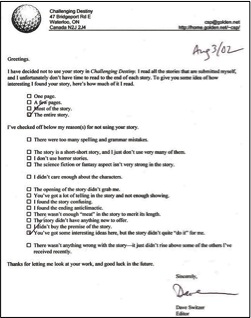
Some publishers and agents use a checklist, which can provide you with very good feedback (see example below from Challenging Destiny for my short story, Arc of Time which found a home in several places after this rejection).

The next letter that rejected my short story Angel of Chaos (which later turned into Butterfly in Peking) provided enough insight to why they didn’t choose it that I could have gone one of two ways: 1) I could have left the story as it was and submitted elsewhere; or 2) I could have emailed them with a suggestion that I’d be willing to revise if they would reconsider a revision according to their specifications. I’ve done this in the past and published. This time I decided not to because I liked the story the way it was. space & time rejection

One magazine I submitted to gives your story to two independent readers whose comments they include along with their rejection or acceptance. This is great feedback for you! What I found frus-tratingly amusing was that the accolades of the reviewers didn’t guarantee the acceptance of my story. While my story Arc of Time generated very positive comments from both reviewers, the magazine still decided against publishing and the rejection letter gave no reason (see reviewer’s comments below):

Reviewer #1:I love the way this story is set up, switching back and forth from the different points of view. The “trippiness” is very appealing and works well with the modern/fantastical contrast.”

Reviewer #2:This was an intriguing and extraordinary clever story. I didn’t have a clue about the jape at the end until I got to the last page. And then it unfolded beautifully. The theological tie-ins were smart and fun and showed either some Mormon extrapolative thought or extreme knowledge of Biblical lore.” talebones rejection
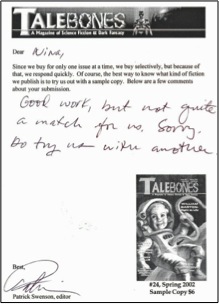
You’d have thought, eh? But they rejected anyway. Below is an example of a form letter with a handwritten comment added along with signature and an invite to try them again. When this happens, by all means, try them again!

Make Rejection Work for You

One way to see your way through rejection is to find ways to distance yourself from your story once you’ve sent it off and to see the whole process of submission-rejection-acceptance as a business. The very best way to do this is to submit lots of stories and to keep submitting them. With novels, this is a little harder to do but you can certainly be working on the next one once you’ve submitted the first.

When I was writing short stories, I kept a list of what and where I sub-mitted, along with the most important item: where to submit NEXT. At any given time, I made sure that I had at least x-number of submissions out there and each story had a designated place to go if it returned. As soon as a story came back from magazine A, I simply re-packaged it and sent it to magazine B. The critical part of the list was to have a contingency for each story: the next place where I would send the story once it returned. I was planning on the story being rejected with the hope that it would be accepted; that way, a rejection became part of a story’s journey rather than a final comment.

FictionWriter-front cover-2nd ed-webI ran my submissions like a bus terminal. A story was in and out so fast it never had a chance to cool off. And, since I had five other pieces out there, I could do this with little emotion. I was running a fast-paced “story depot”, after all. All my stories had to be out there as soon as possible; if they were sitting in the terminal, they were doing nothing for me. Now, ask me if this worked. D*** right! Soon after adopting this process, I started selling. I think several things were happening and galvanizing into sales: publishers were getting to know me; I got more and more familiar with the market and my professionalism paid off.


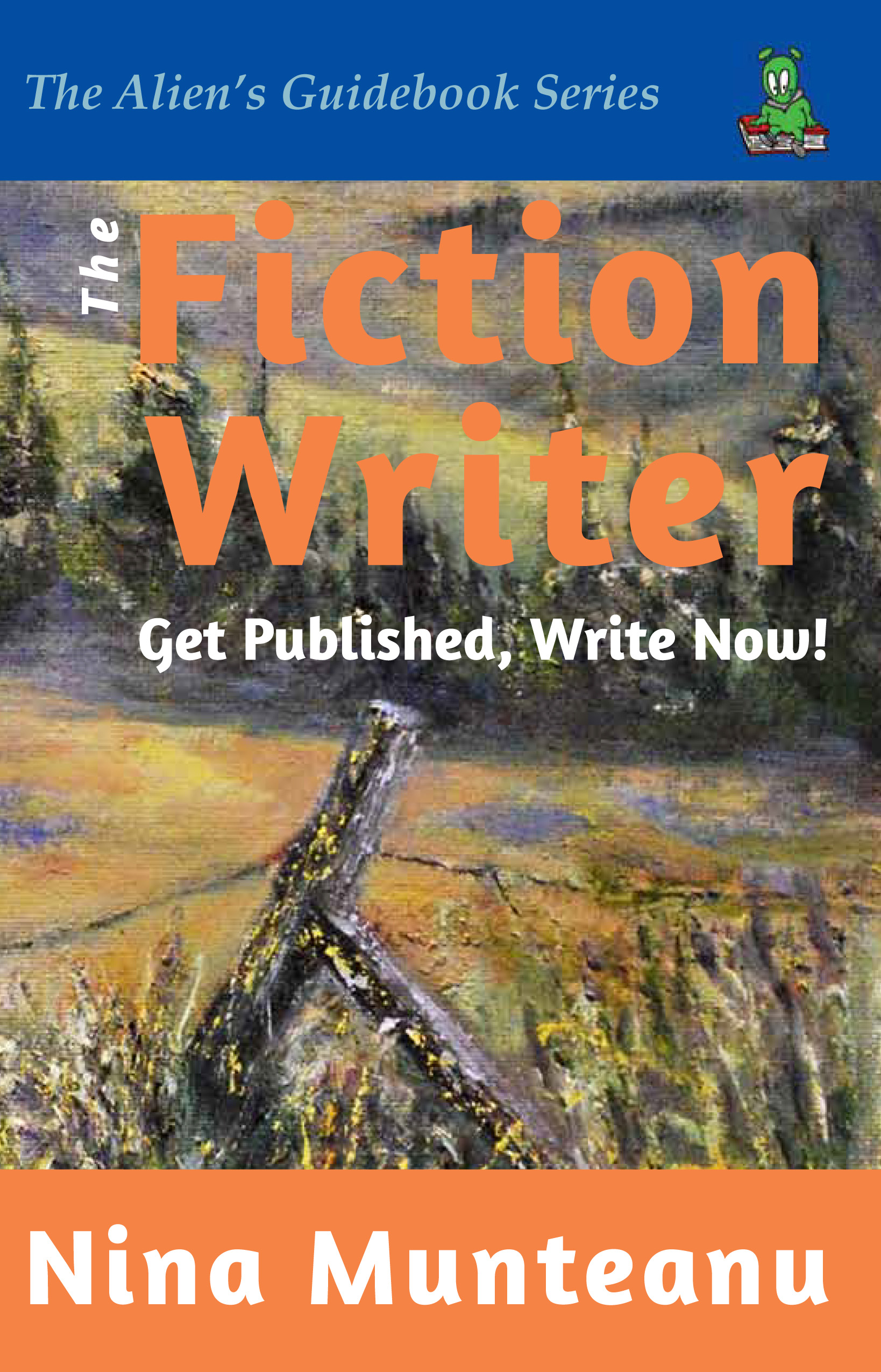
This article is an excerpt from Chapter R of The Fiction Writer: Get Published, Write Now! (Starfire, 2009).


nina-2014aaNina Munteanu is an ecologist and internationally published author of award-nominated speculative novels, short stories and non-fiction. She is co-editor of Europa SF and currently teaches writing courses at George Brown College and the University of Toronto. Visit www.ninamunteanu.ca for the latest on her books.


Rejection, Part 1: How to Accept Rejection

hirtle beachNS

Pebbles on Hirtle Beach, NS (photo by Nina Munteanu)

We’ve all suffered rejection and disappointment. Perhaps that job you coveted or someone you loved who might have even led you on before dropping you. It hurts. But you move on. And it does get better. Eventually. It does, trust me. It helps by starting with knowing that we don’t always get what we want, but we always get what we need…

Being a published writer involves accepting rejection. It’s part of the job description. Think of rejection as an integral part of your road to success. If you have never been rejected then you haven’t really tried, have you? There are several ways that you can gain a good perspective on your rejection letters and even make them work to your advantage.

Adopt a Healthy Perspective

One way is to adopt a realistic, objective and healthy viewpoint on your story’s rejection:

  • View selling manuscripts as a “cold call” business: When you view it this way, you will treat it that way. Until you establish a relationship with your market, selling becomes a numbers game. The more you send, the more likely you are to get a hit. It’s all in the statistics.
  • View rejections as an opportunity. Rejections can provide you with the opportunity to learn and re-evaluate, usually of appropriate market and publisher subjectivity rather than writing quality.
  • View rejections as the beginning of a relationship. Not all rejections are final; in fact most aren’t. Most rejections by a publisher or magazine editor stem from story redundancy, lack of space or editorial requirements. Many rejection letters will reflect this (e.g., “Thanks, but this isn’t a match for us…do try us again.” They mean it. It just means that the story wasn’t right—they may have run something too similar to it already or it didn’t fit with the other pieces or theme or whatever.)
  • View rejections as part of your success journey. Rejection is a given in the writing business and a necessary aspect of your journey as a soon-to-be and published writer (you don’t stop getting rejections once you’re published!). Often a story may be considered “before its time”; too different, a risk and is therefore harder to place. This is often why a book that was rejected so many times becomes a great hit once it is published. The very quality that made it hard for a publisher to accept made it a success with the readership: its refreshing yet topical originality.
  • View rejections as your first step to success. Take heart in the fact that you reached this stage in your writing career. Getting that first rejection in the mail is a great affirmation that you have taken that first significant step to becoming a serious writer. It means that you’ve completed a work and had the courage to enter it into the world.

Acceptance begins with rejection.

Make Rejection Work for You

You can maintain a more objective view on your rejections by keeping an objective view on your submissions. This can be accomplished by submitting a lot and submitting often. Treat your submissions—and rejections—like a business. The best way to do this is to submit lots of stories and to keep submitting them. The critical part of this process is to always have a contingency ready for each story submitted: once a story is returned, you have a place to send it already. Most professional writers will recommend that you do not revise the story before resending it out. This is because many rejections occur not on account of poor writing, but because of poor or unlucky marketing.

Remember that You’re in Great Company

Virtually every writer of merit who has published has had their work rejected several times. Beatrix Potter’s The Tale of Peter Rabbit was turned down so many times that she initially self-published. Irving Stone’s Lust for Life was rejected sixteen times before a publisher finally picked it up and sold about twenty-five million copies. Not bad for a story that was passed off as “a long, dull novel about an artist.” Jonathan Livingston Seagull was turned down twenty-three times and Dune twenty-one times. There are a bazillion examples; I’ve just picked a few. Go check J.K. Rowling’s track record for rejections before getting her Harry Potter published…

FictionWriter-front cover-2nd ed-webI’ll be talking more about how to read a rejection letter, how to recognize their sub-text messages, and how to make the most out of them in Part 2, the evolution of rejection letters.


This article is an excerpt from my fiction writing guidebook The Fiction Writer: Get Published, Write Now! (Starfire, 2009).


nina-2014aaNina Munteanu is an ecologist and internationally published author of award-nominated speculative novels, short stories and non-fiction. She is co-editor of Europa SF and currently teaches writing courses at George Brown College and the University of Toronto. Visit www.ninamunteanu.ca for the latest on her books.

The Art and Magic of Storytelling: Part 1, Sparking the Premise

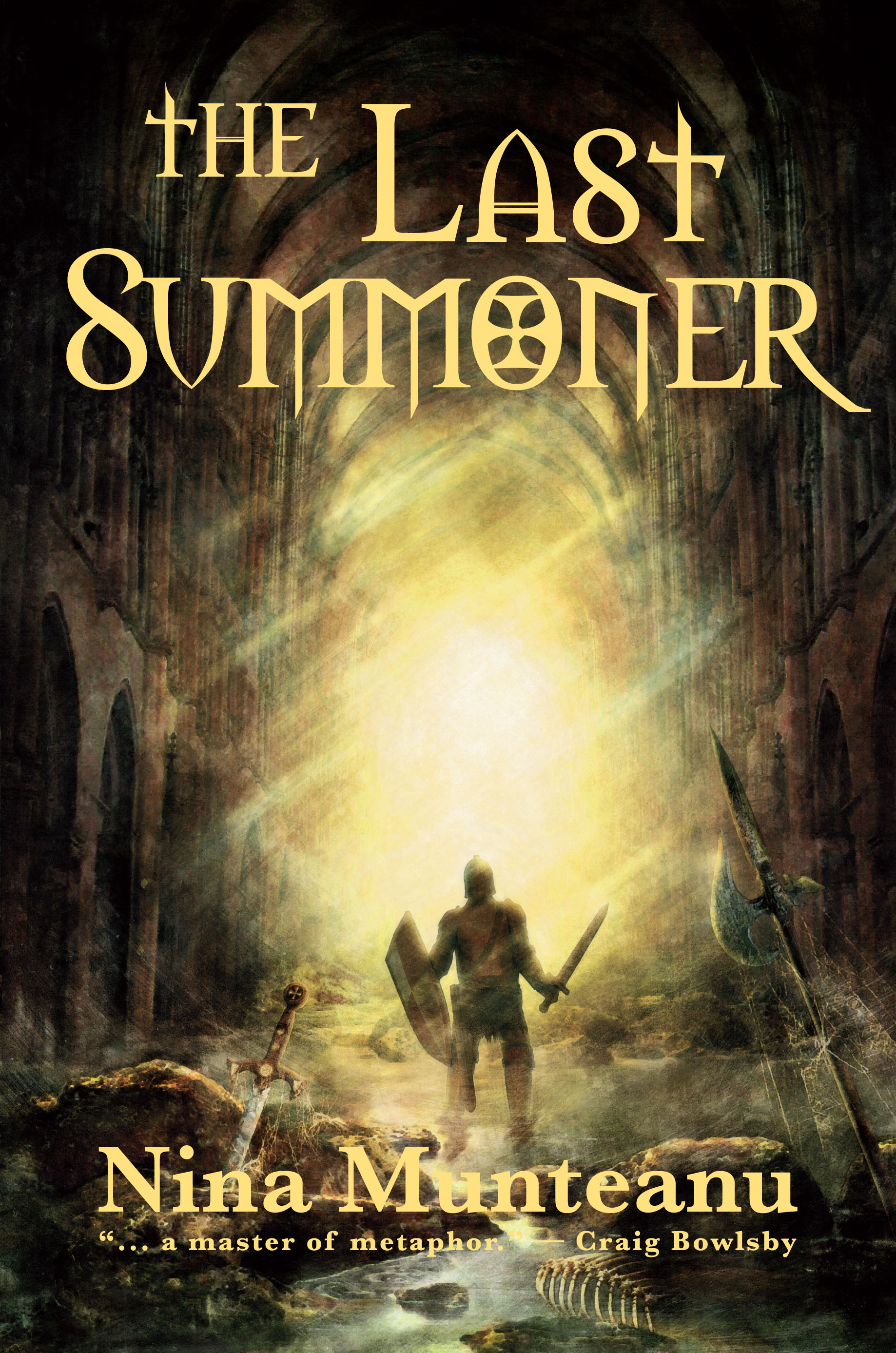
Cover1_LastSummoner-frontcover copyFrom where do we get our stories?

This is a question I am asked time and again. My readers, friends and colleagues alike marvel at my imagination, and ask me how I create these fantastical worlds and situations. Cornered in a moment of inarticulate bliss (this often happens to me), I shrug and blather off some ridiculously obscure tale of luciferous logolepsy.

The simple of it is that it always comes as a spark. Followed by inspiration. And from there, a story emerges. Premise to dramatization. So, let me tell you a story about how my 2012 historical fantasy The Last Summoner —about a medieval time traveler who must save the past from the future—came to be.

It all began with the Battle of Grunwald and the Fate of the Teutonic Knights—that is, when I stumbled upon it during an Internet ramble. But, in fact, it started before that—the spark, that is.

My part in this piece of history really began sometime in 2008 with the vision of an incredible image by Croatian artist Tomislav Tikulin (who had done the cover art for a previous novel Darwin’s Paradox). On Tikulin’s website I glimpsed the image of a magnificent knight, standing in a war-littered mire and gazing up, questioning, at the vaulted ceiling of a drowned cathedral. A great light shone upon the knight in streams of white gold. It sent my imagination soaring with thoughts of chivalry, adventure and intrigue.

Who was this knight standing in the mire?…

teutons3-close1

With that image imprinted inside me, the next nexus moment came when I stumbled across a significant but little-known battle in the medieval Baltic, the Battle of Grunwald. It would turn out to be the defining battle for what are now the countries of Poland and Lithuania. On June 14th 1410, they were still part of Prussia and tyrannized by the Teutonic Order, who were Christianizing the pagan Baltic on behalf of the Pope. In truth, the Order had been for centuries gathering wealth and land for colonizing Germans in their drang nach osten; they built sturdy castles (many of which still stand today) and a force of monk warriors, feared for their cunning strategy and treacherous combat abilities.

The Battle of Grunwald was, in fact, an upset in history. The Teutonic Order was powerful, intimidating and extremely capable. They should have won; but the peasant armies of Prussia slaughtered the Order, killing most of its knights. Historians debate that the hochmeister’s arrogance—indeed, the arrogance of the entire Order—precipitated their downfall. They underestimated their adversaries and got sloppy. After the Polish and Lithuanian armies outsmarted the Order and slayed their hochmeister, along with many of their knights, the Order’s own peasant slaves finished the job using clubs, pitchforks and stones.

Intrigued by this little known order of religious crusaders and their bizarre fate in an upset battle with a peasant army, I pursued the premise of an alternative consequence: what if the Teutonic Knights had NOT underestimated their enemy and won the Battle of Grunwald? Would they have continued their catastrophic sweep of North-east Europe into Russia and beyond? Would they have continued their catastrophic sweep of north- east Europe into Russia and beyond? Would they have claimed the whole for Germany’s expansionist lebensraum movement, fueled by its sonderweg, a dialectic that would ultimately lead to the killing fields of the Holocaust? What if the success of the Teutonic Order helped consolidate a united fascist elite, ambitious to conquer the world? And what if, as a result, Nazism sprang up 100 years earlier?

The Last Summoner, arose from this premise. Enter our heroine, young 14-year old Vivianne Schoen, Baroness von Grunwald, a self-centered romantic who dreams that her ritter (her knight) will rescue her from an arranged marriage to some foreign  warrior. As a result of an impetuous choice, she makes the startling discovery that she can alter history—but not before she’s branded a witch and must flee through a time-space tear into an alternate present-day France ruled by fascists. There, she learns that every choice has its price.

Warrior Woman Silhouette

Spanning from medieval Poland to present day Paris, France, The Last Summoner explores the sweeping consequences of our “subtle” choices. From the smallest grab to the most sweeping gesture, we are accountable for the world we’ve made. During her 600-year journey to save the world and undo the history she authored, Vivianne learns wisdom and humility. Through the paradox of history, she learns that what might have seemed the right choice for an immediate future, turns out to be disastrous for a distant future. To win is also to lose; to save oneself one must surrender oneself; and to save the world one need only save a single soul.

knight-cameoThe knight standing in the mire is Vivianne.

The Last Summoner, published by Starfire World Syndicate, was released in 2012 and remained a Canadian bestseller on Amazon for several months. It represents my first historical fantasy in an otherwise repertoire of hard science fiction. The Polish and Lithuanians celebrate June 14th with pride, erecting mock-ups of the battle annually. Some day I hope to participate.

The cover art for The Last Summoner is that very image that inspired my story. The Universe gifted me with the chance to acquire the image from Mr. Tikulin and a publisher willing to purchase it. I’d entered my own dream.

p.s. definition for luciferous logolepsy: “an illuminating obsession with words”

p.p.s. A novelette version, Summoning the Future’s Past, was released April 2021 in Italian by Delos Digital entitled l’Ultima Evocatrice.

This article first appeared on Warpworld on Nov. 30, 2013.

nina-2014aaNina Munteanu is an ecologist and internationally published author of award-nominated speculative novels, short stories and non-fiction. She is co-editor of Europa SF and currently teaches writing courses at George Brown College and the University of Toronto. Visit www.ninamunteanu.ca for the latest on her books.

.

Ten Questions You Need to Ask Your Characters Before They Can Stay In Your Story

zermatt-matterhorn02

The Matterhorn, Zermatt, Switzerland (photo by Nina Munteanu)

Your story lives and breathes through your characters. Through them your premise, idea and your plot come alive. Characters give your story meaning; they draw in the reader who lives the journey through them. Without them you wouldn’t have a story—you’d have a treatise.

Here are some questions you need to ask each of your characters:

  1. Will the story fall apart or be significantly diminished if you disappear? If not, you don’t need to be there; you aren’t fulfilling a role in the book. Hugo award winning author Robert J. Sawyer reminds us that “story-people are made-to-order to do a specific job”: they tell a story. In real life, people may act through no apparent motivation, be confusing, incoherent and make pointless statements or actions. Story characters show more clear motivations, coherence, and consistency. They don’t clutter your story with muddle and confusion like real people do. They fit into your story like a major puzzle piece.
  2. What is your role? (e.g., protagonist, antagonist, mentor, catalyst, etc.). Each character fulfills a dramatic function in your story. You can’t just be there because you’re cute. Well, ok, maybe. But even being cute can and should provide a dramatic function in the story by exploring how that quality is viewed and treated by others. As with setting, which serves a similar purpose as character in story, every aspect of both minor and major characters interact with and illuminate story theme, premise and plot.
  3. What archetype do you fulfill? In the “hero’s journey” plot approach, each character fulfills one to several archetypes, which help define how they service the plot and theme of the story. The mentor archetype, for instance, generally believes in and enables the hero on his journey. The threshold guardian, on the other hand does not have faith in the hero and obstructs him on his journey. The hero archetype, usually on a quest (for truth, forgiveness, home, victory, faith, etc.), must negotiate her world of archetypes to reach her destination.
  4. How do you contribute to the major or minor theme of the book? This is particularly relevant for all major characters and their associated sub-plots. Sawyer stresses that “your main character should illuminate the fundamental conflict suggested by your premise.” All other characters, in turn, either help reflect the main character’s journey or the overall story premise and theme. If your book is about forgiveness, each character helps illuminate your exploration of this theme.
  5. Are you unique? If the reader can’t distinguish you from other characters, chances are you need to be eliminated because of point number 1 anyway. In order to contribute to story, characters must provide a sufficiently distinguishable feature, complete with sub-plot, on the story landscape. The more varied and rich the landscape is, the more interesting it will be. Fictional characters achieve distinction through individual traits that readers recognize and empathize with. Authors use vernacular and body language to achieve colorful fictional characters.
  6. Are you interesting? If you aren’t interesting to the reader, you won’t do your job. Readers need to notice you, distinguish you and find something about you that will keep their interest—even if it’s something annoying. Just remember to be consistent—unless inconsistency is part of your character.
  7. What is your story arc? Do you develop, change, and learn something by the end? If not, you will be two-dimensional and less interesting. This is just as true for minor characters as for main characters. The more characters the author imbues with the depth to develop, the more multi-layered the story will become. This is because each character and her associated arc provides her own perspective to the theme. This is what is truly meant by “richness” — not the richness of infinite detail, like a baroque painting, but of infinite meaning like an impressionist work. Choose your minor characters as you choose your major characters.
  8. What major obstacle(s) must you overcome? You need these to struggle and “grow” and change; otherwise there is no tension in the story, no development and movement and no story arc. Your character will be like a still-life with no movement, no direction and no interest. The more your character changes over a story, the more she will be noticed and remembered.
  9. What’s at stake for you (theme), and for the world (plot), and how do these tie together? If a writer is unable to tie these together in story, the story will fail to evoke emotional involvement and empathy. It will lack cohesiveness and will not give the reader a fulfilling conclusion with ultimate satisfaction through the character’s journey related to theme (the hero’s journey, essentially).
  10. Do you change from beginning to end? If you don’t develop throughout the story, then you aren’t growing as a result of the thematic elements and plot issues presented in the story. In other words, you haven’t learned your lesson. While it’s ok for some characters not to develop (e.g., to be one note or flat or plain old stubbornly the same) this is disastrous for any of your main characters. Just ensure that the changes you make your character go through are warranted and relevant to the theme.

JournalWritert FrontCover copy 2Characters help the writer achieve empathy and commitment from the reader. Characters are really why readers keep reading. If the reader doesn’t invest in the characters, she won’t really care what happens next. It is important to be mindful of the emotional and narrative weight of a character and achieve balance between characters. For instance, the foil of the protagonist should carry equal weight; otherwise the reader won’t believe the match-up. Equally, a large cast—often used in epic fantasies or historical pieces—can be used successfully, but only if each character is given a clearly distinguishable personality and role.
References:


Nina Munteanu is an ecologist and internationally published author of award-nominated speculative novels, short stories and non-fiction. She is co-editor of Europa SF and currently teaches writing courses at George Brown College and the University of Toronto. Visit www.ninamunteanu.ca for the latest on her books.


Using the Subtext of Body Language in Storytelling

Maple-sugar spring-LR

Sugar maple leans over the Little Rouge River, Ontario (photo by Nina Munteanu)

Kinesics is the study of “body language”, which explores how movements and gestures project a person’s hidden thoughts. Blushing is an obvious reaction. But more subtle ones can be used. When body language contradicts verbal expression, tension, conflict and interesting scenarios increase. This is a great opportunity for writers.

According to Janet Lee Carey, author of Dragon’s Keep, body language:

  • Shows the subtle undercurrent of communications between characters (of which either may not be consciously aware).
  • Shows the comic or tragic elements behind the dialogue.
  • Reveals the character’s true feelings (regardless of what he or she is saying).

In order to accomplish this, the writer must learn to accurately interpret the subtle signals of body language and translate them into the written form. One way is to look at yourself. Ask yourself: what do you do when you’re nervous? Excited? Thrilled? Sad? Angry? How do you do housework when you’re angry? When you’re happy? It helps to look at the same action under different moods to distill out the finer nuances of gesture and movement.

Pay attention to your own body, suggests Carey. “How do you sit? How do you move? How do you breathe?” Pay attention to your moods and what your body does then. For instance, what do you do with your hands when you’re nervous? How do you speak when you’re impatient? How do you cook when you’re happy? How about when you’re mad?

Carey lists the areas of the body where emotions can be detected by other characters. These include: skin, breathing (swallowing), eyes, eyebrows, ears, lips, jaw, neck, shoulders, arms, hands, back, sexual organs, legs and feet. On the other hand, physical areas where a character may feel an emotion but not show it is: pain in the body, skin, tongue, throat, heart, stomach, sexual organs, and pulse.

You can use body language imaginatively in several ways. Here are a few:

  • Amplification and contradiction: use body movements and facial expressions to either enhance or contradict the verbal expression
  • Reactions to invasion of personal space: show signs of restlessness, such as hunching of the shoulders, tucking in of the chin, backing up
  • Masking: this is when a character defends personal spac by showing indifference or confidence while masking their true feelings (e.g., remember when Like faced the Emperor in that last battle aboard the Deathstar? Despite his quiet show of confidence, he swallowed [his fear]).

Body language can either amplify or contradict what is said between two characters. The latter, of course, is usually more interesting, because it sets up tension and underlying conflict.

The following is an example of amplification:

“So, what happened?” Jenny asked, leaning forward and gazing directly at Mark.

Jenny’s body language matches her dialogue, amplifying her genuine concern. Here’s an example of contradiction:

“Hey, great to see you,” Dave said, crossing his arms and edging back to slouch against the wall.

Tom wandered to the fridge and opened it to look inside. “Can I have a beer?”

Dave fixed a hard smile at Tom. “Sure.”

FictionWriter-front cover-2nd ed-webIt’s obvious that Dave isn’t happy to see Tom, and his body language contradicts what he said. This makes for compelling reading. Subtext (beneath the surface of dialogue) adds interest and intrigue, particularly when it contradicts or complicates the verbal message.
 

References

Munteanu, Nina. 2009. The Fiction Writer: Get Published, Write Now! Starfire World Syndicate. Louisville, KY. 266pp.


Nina Munteanu is an ecologist and internationally published author of award-nominated speculative novels, short stories and non-fiction. She is co-editor of Europa SF and currently teaches writing courses at George Brown College and the University of Toronto. Visit www.ninamunteanu.ca for the latest on her books.

Are You a Closet Synesthete?

StoneStairs-oakforest Rouge

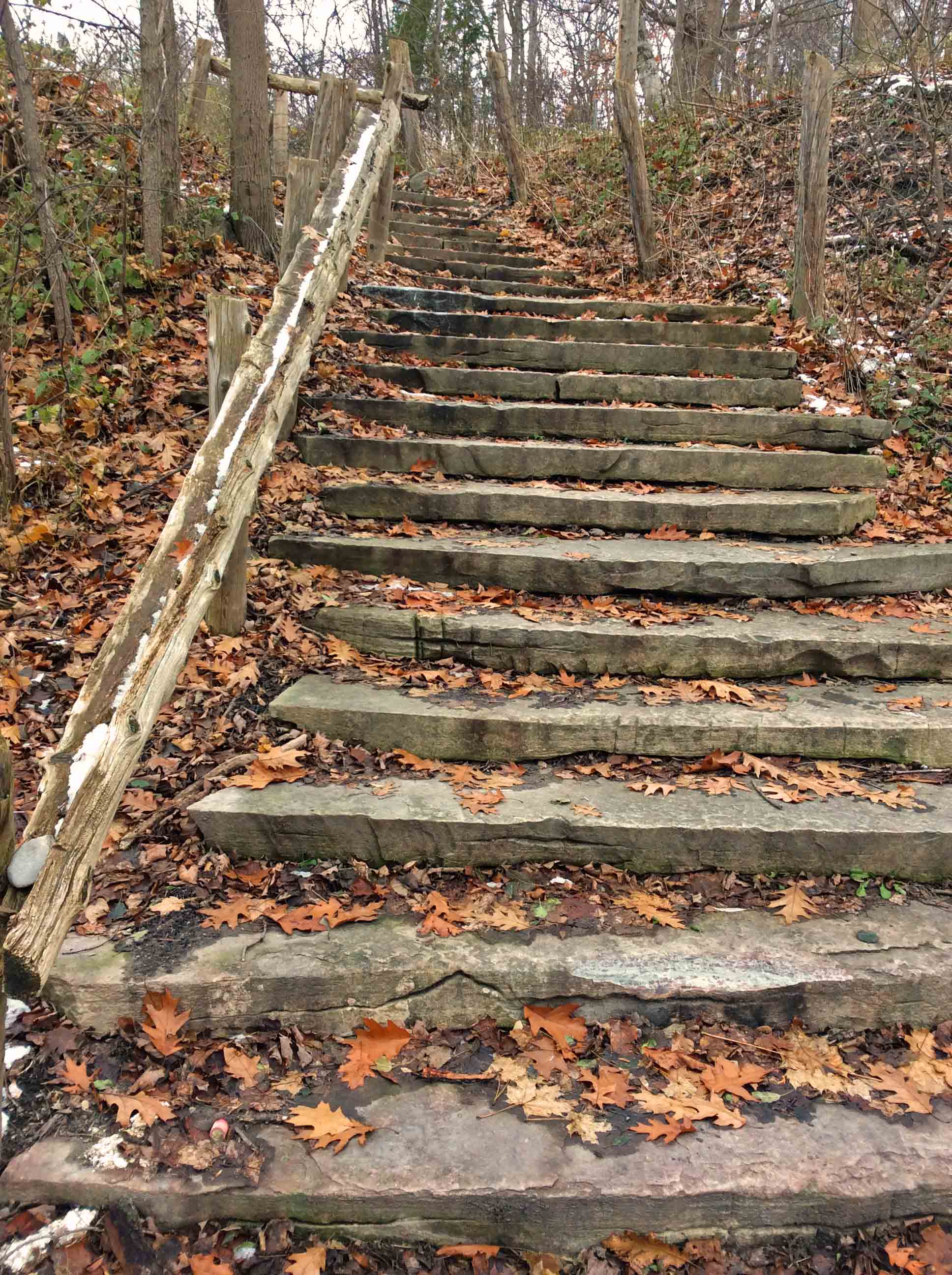
Stairway leading to Rouge River Park, ON (photo by Nina Munteanu)

“A person with synesthesia might hear and taste her husband’s voice as buttery golden brown, feel the flavor of food on her fingertips, sense the letter J as shimmering magenta or the number 5 as emerald green,” says the introduction to David Eagleman and Richard Cytowic’s 2009 book Wednesday Is Indigo Blue. The book explores the neuroscience and genetics behind the multi-sensory experience called synesthesia.

In a strange and compelling May 2008 article in Wired Magazine entitled “Poetry Comes from Our Tree-Climbing Ancestors”, Brandon Kelm asks where synesthesia comes from:

“Perhaps [synesthetes] are under the influence of hallucinogenic drugs…Or maybe they’re simply good with metaphors,” he suggests irreverently. Kelm is actually pretty close to the truth, according to neuroscientist V.S. Ramachandran, who stressed that “what appears as metaphor is a literal sensory experience for synesthetes.” This may explain why synesthesia is eight times more common among poets, artists, novelists and women than the general population. According to Eagleman and Cytowic, one in twenty people experiences synesthesia in a palpable form.

According to Ramachandran, synesthesia developed to help our ancestors climb trees. “Doing so requires a vision-informed mental map of the branches before us,” says Kelm, “as well as a touch-informed mental map of our limbs’ positions. Somehow these have to correlate. Which is quite a trick, when you think about it. Once early primates pulled off that feat of abstraction, it wasn’t long
– evolutionarily speaking — before we were drawing on cave walls and whispering sweet nothings and holding Shakespeare revivals,” Kelm adds pithily.

Synesthesia comes from syn, for together, and aisthêsis, for sensation or perception in Greek. People with synesthesia experience a blending of the senses (e.g., sight and hearing) or of characteristics in a sense modality (e.g., associating colors with written letters). According to Eagleman and Cytowic synesthesia occurs when “a triggering stimulus evokes the automatic, involuntary, affect-laden, and conscious perception of a physical or conceptual property that differs from that of the trigger.” Synesthesia can involve not only the union of two or more different sense modalities, but also different dimensions of perception, such as spatial extension, personality or gender.

Synesthetic Metaphor in Literature

According to Lakoff and Johnson, “[t]he essence of metaphor is understanding and experiencing one kind of thing in terms of another”. However, “… metaphor is not just a matter of language, that is, of mere words. … [O]n the contrary, human thought processes are largely metaphorical” (emphasis in original).

We use synesthetic metaphors all the time, without thinking about it. Examples of cross-sensory (synesthetic) metaphors include: “loud shirt,” “bitter wind” or “prickly laugh”, “dark sounds”, and “sweet smells”. Many of these cross-sensory terms have been so often used to become cliché.

I first made intentional use of synesthesic metaphors in my space thriller trilogy The Splintered Universe. The main protagonist was the human galactic detective Rhea Hawke, who’d been tecked as a young girl with the ability to smell emotions. The premise opened up for me an entire suite of delicious possibilities to describe feelings and emotions through metaphoric imagery and cross-senses (another reason I so love the genre of science fiction).

In the following scene Rhea goes against her first rule of engagement and lets a man into her life:

“Rhea, stay with me, here,” Serge whispered into my hair with sudden excitement. “Move in. Stay.”

I smelled his enticing fragrance of strawberries and musk and knew what I wanted to say.

“I’ll think about it.”

In the next scene, Rhea challenges new boyfriend, Serge, whose past she knows nothing about and he responds:

His face flushed and he smiled carelessly. “I must have dreamt it,” he said, emitting a burst of confusing aromas, a complex mixture of sweet meadow flowers, fishy smell of a lake, and the musk of bog and cottonwoods.

In the scene below, having determined that Serge is not an innocent bystander but a calculating spy, Rhea chases him to haul him into the precinct:

Then I spotted Serge. He’d run to the far end of the room.

Upon hearing me enter, he’d turned and met my gaze head on.

“Rhea!” he shouted, obviously feigning delighted surprise.

I knew he’d recognized me earlier during my pursuit. I’d smelled his spike of excitement. Now I felt him emit yet another smell, a rather pleasant mixture of fermenting fruit and young wine, and felt a thrill surge through me in response. I didn’t show it and pointed my MEC steadily at his chest with my lips pursed in venomous resolution.

A hunting dog will eventually lose its life on the mountain—old Chinese proverb.”


The Unity of the Senses

Synesthesia is far more common in children than adults. It is also thought to occur universally in infants during their first few weeks of life, reflecting a brain that is still in the process of differentiating their combined sensory experiences.

Mathematician and philosopher Gottfried Leibniz once wrote that our sense perceptions are occult qualities, whose familiarity does little to clarify their essential nature.

Writer Oyang Teng tells us that “long before brain imaging technology showed that even basic perceptual acts involve many different areas of the brain, common observation (and common sense) showed that there is no strict autonomy of any of the senses; rather, they each exist as interconnected aspects in a continuum of perception.”

In his 1927 paper, “The Unity of the Senses” Erich von Hornbostel adds that, “looking more closely, the apparent exception becomes the rule, and one must search in order to find the private property of any one sense.”

Cedars hug fence-EloraGorge

Cedars hugging stone wall in Elora Gorge Park (photo by Nina Munteanu)

Cytowic and Eagleman argue that perception is already multisensory, though for most of us its multiple dimensions exist beyond the reach of consciousness. Reality, they point out, is more subjective than most people realize. Synesthesia is a window on the mind and brain; highlighting the amazing differences in the way people see the world. “The difference between synesthetic and nonsynesthetic brains is not whether cross talk exists” Cytowic and Eagleman note “but rather its degree.”

How about that tingly feeling you get when you hear music you like, or the fact that you salivate when you see salty food? Synesthesia.

If you’re interested in whether you have more synesthesic tendencies than the average person, go to Kelm’s May 2008 article on Wired Magazine and take the test. Then let me know…

P.S. The Wired Magazine article is not available on the Internet (I read it the old fashioned way: in print). But here is a site, The Frog Croaked Blue, that will give you similar questions to answer to determine whether you’re a synesthete. When I took the test recently, I was diagnosed as not being a synesthete but with good visual imagery and a rare trait that goes hand in hand with synesthesia.


Nina Munteanu is an ecologist and internationally published author of award-nominated speculative novels, short stories and non-fiction. She is co-editor of Europa SF and currently teaches writing courses at George Brown College and the University of Toronto. Visit www.ninamunteanu.ca for the latest on her books.