.
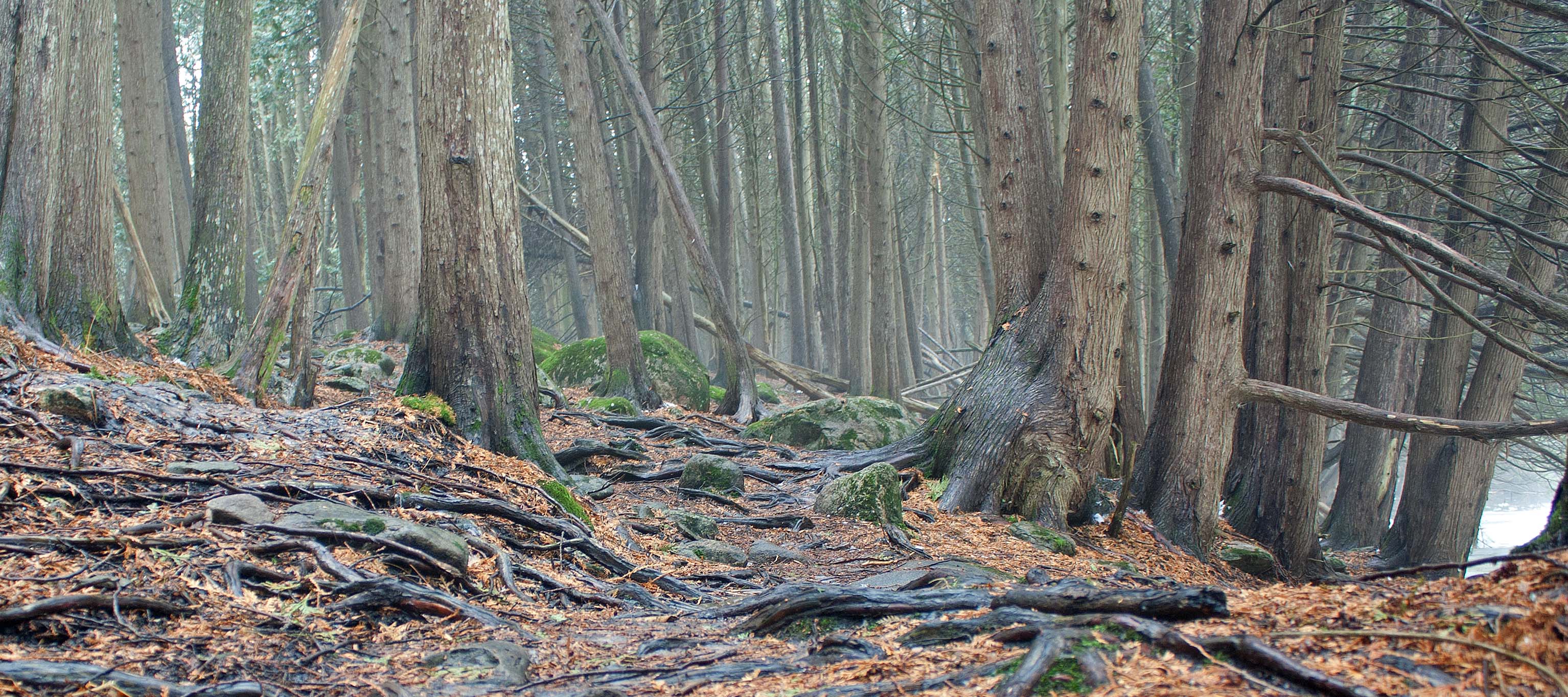
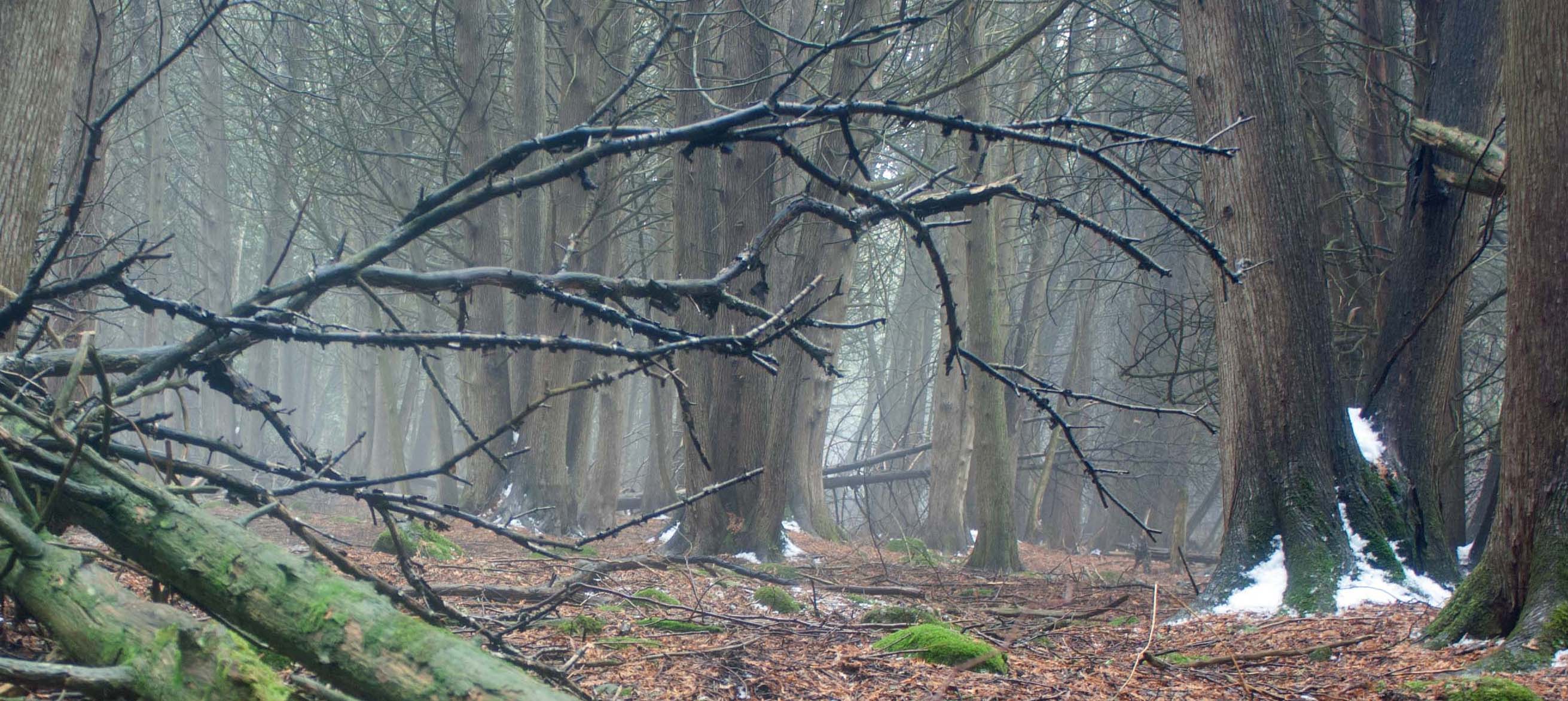
It was a cold November day, after a light snow, as I wandered the Jackson Creek old-growth forest. Centuries-old cedar, pine and hemlock towered above me, giving off the fresh scent of forest. The trees creaked and cracked, swaying in a mischievous wind. I left the main path and descended the leaf-strewn slope toward the river. My boots pressed through a frosty crust into the spongy ground of dead leaves and organic soil. I stopped and breathed in the fresh coolness of the air. A damp mist huddled among the trees, adding wisps of mystery to the ancient forest. It was as though I’d entered an enchanted forest in some fanciful fairy tale.

.
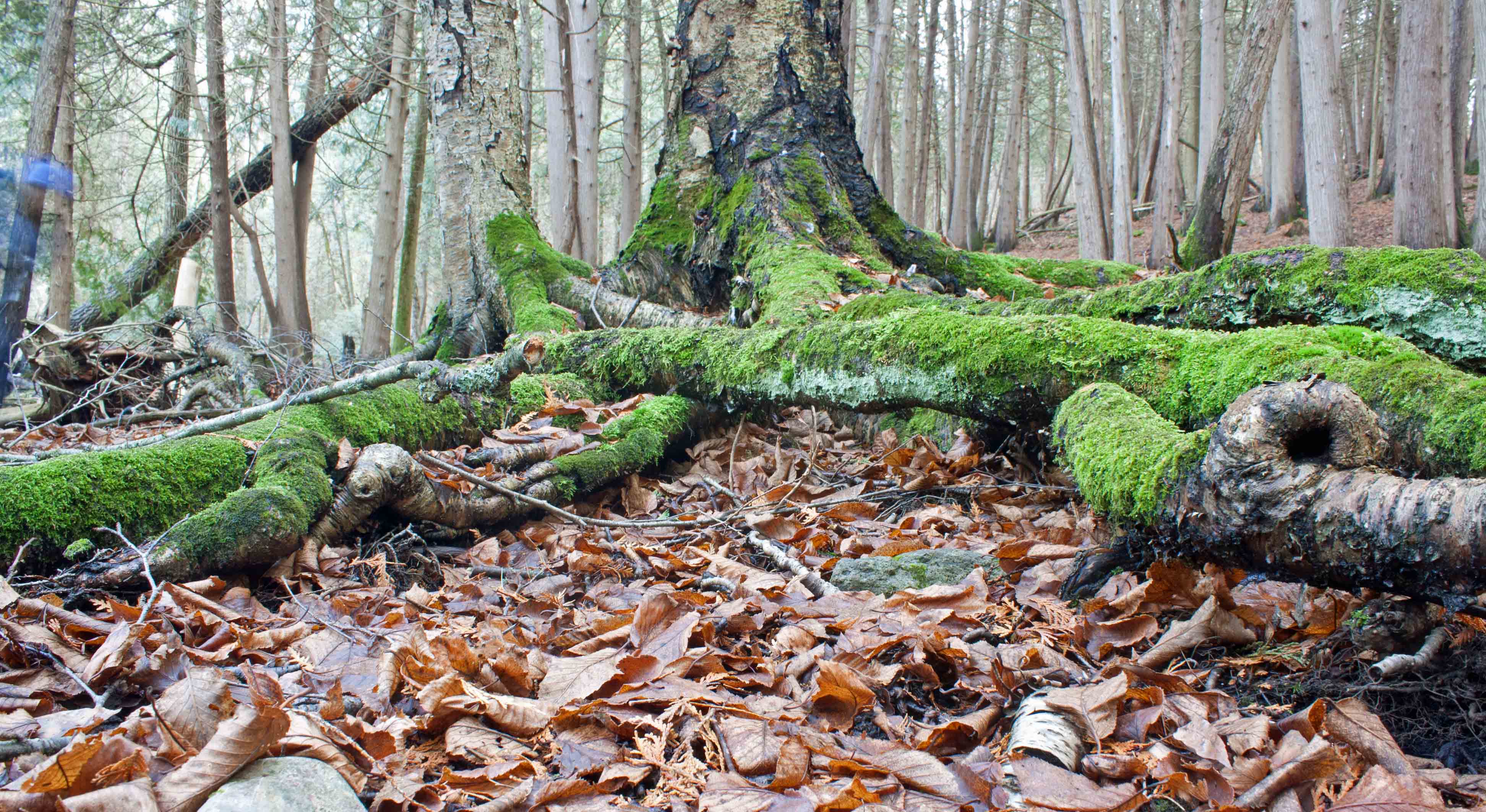
Not far from the river, I approached an old yellow birch tree, large trunk rising as tall as some of the cedars and pines around it. Golden flakes of bark curled and formed craggy patterns around the girth of the old tree. Radiating out from the tree, moss-covered roots snaked out like tangled ropes in a profusion of brilliant green. This was fairy country, I suddenly thought.
I dropped to my knees, crouching down, and set up my tripod and camera to capture this magical tree from the perspective of the forest floor. Head almost touching the ground, I inhaled the scent of loam and decaying leaves. The fresh pungency of cedar, pine, and humid moss hung in the air. Nearby, the river chortled and bubbled in a content symphony of motion. A curious red squirrel parked itself on a log nearby to watch me. It didn’t scold me like they normally did when I entered the forest; like it understood… It then occurred to me, as I set up my equipment under the squirrel’s careful stare, that I was in the presence of an enchantment. Like I was peering into a secret dance of feral celebration. But being there and appreciating it, I had now become part of it; I was Alice going down the rabbit hole into a true wonderland…
It was then that I glimpsed it as I carefully took my timed pictures. A blur of blue. What had I witnessed? A motion? A colour? Then it was gone. But in that moment, I’d felt the spark of an elation that comes with a glimpse into a secret world.
.
When I returned home to look at the images I saw that my camera had captured a wispy blue entity that flowed into its view and peered around the old birch at me with a kind of curious though mischievous grin.
Had I just captured a blue sprite? Something was unmistakably there!

.
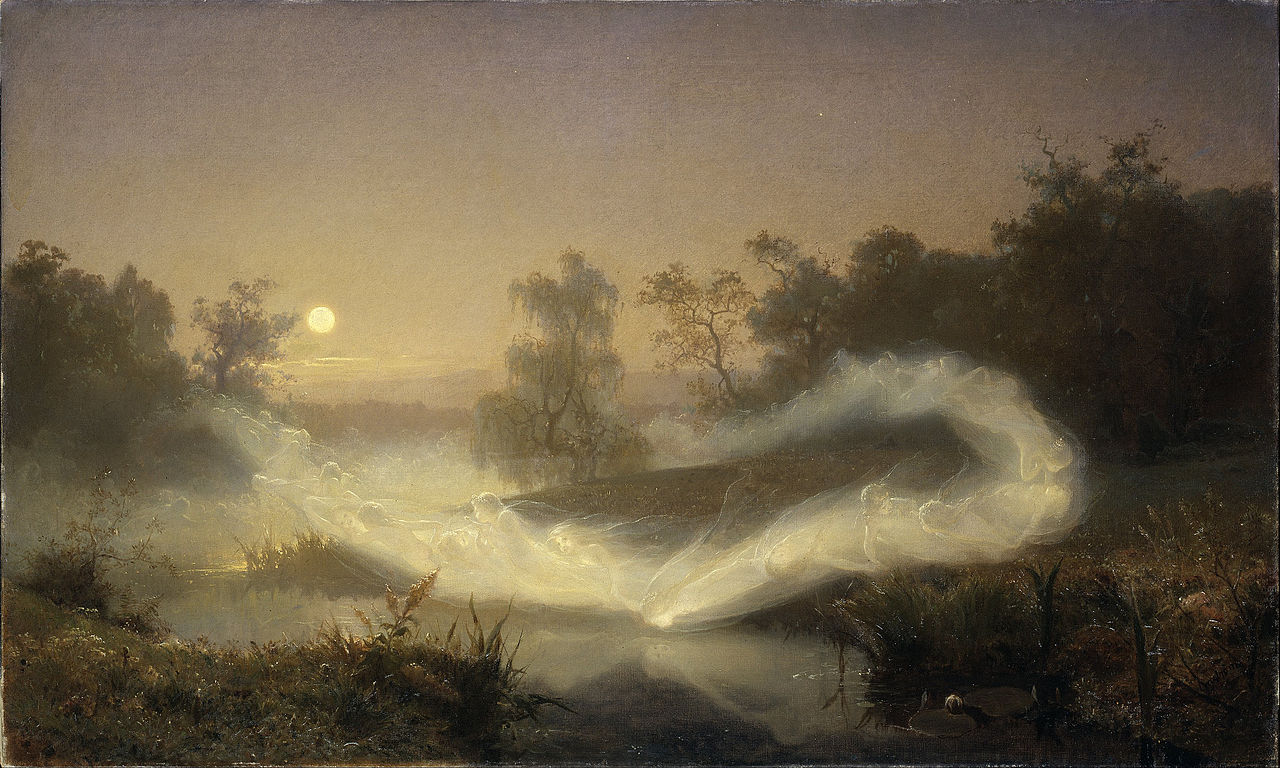
I read up on sprites. According to European lore, a sprite is a supernatural entity. They are often depicted as fairy-like creatures or as an ethereal entity. The word sprite comes from the Latin spiritus (“spirit”), via the French esprit.
Given that the sprite I’d observed was blue and we were close to the river, I wondered if it was not a forest or wood sprite, but a water sprite. According to alchemist Paracelsus, the term ‘water sprite’ is used for any elemental spirit associated with water. They can breathe water or air and sometimes can fly. They also possess the power of hydrokinesis, which is the ability to create and manipulate water at will. Also known as ‘water nymphs’ and naiads (or nyads), these divine entities tend to be fixed in one place. Slavic mythology calls them vilas. Sprites are not corporeal beings (like selkies, mermaids and sirens) given that they are not purely physical; they are more like local deities than animals. This explained the wispy nature of the being I’d seen peering at me from the tree.
.
After consulting with several friends—some who purported to know much more about sprites than I did—I concluded that this sprite was, in fact, a forest sprite and it was blue because it was near the water. Friend Merridy suggested that “forest sprites, normally green, may turn blue if a nearby brook calls to them.” She added that “water sprites can be distinguished by their chatty nature. They rarely go beyond the banks of a river or brook. Forest sprites are mostly silent.” Which this one certainly was. Friend Craig then pondered, “Are digital sprites in our world or in an electro-magnetic world? Or something else?” He was referring to them showing up on my camera without me even noticing they were there. When I told him I would return in search of them he observed, “if you’re looking for them that might be when they hide. Or maybe not. Any type of sprite is probably good, mischievous or friendly.” Thanks, Craig! That was helpful…


.
I visited the forest many times after but saw no sign of any sprites. Perhaps Craig was right; they were hiding from me.
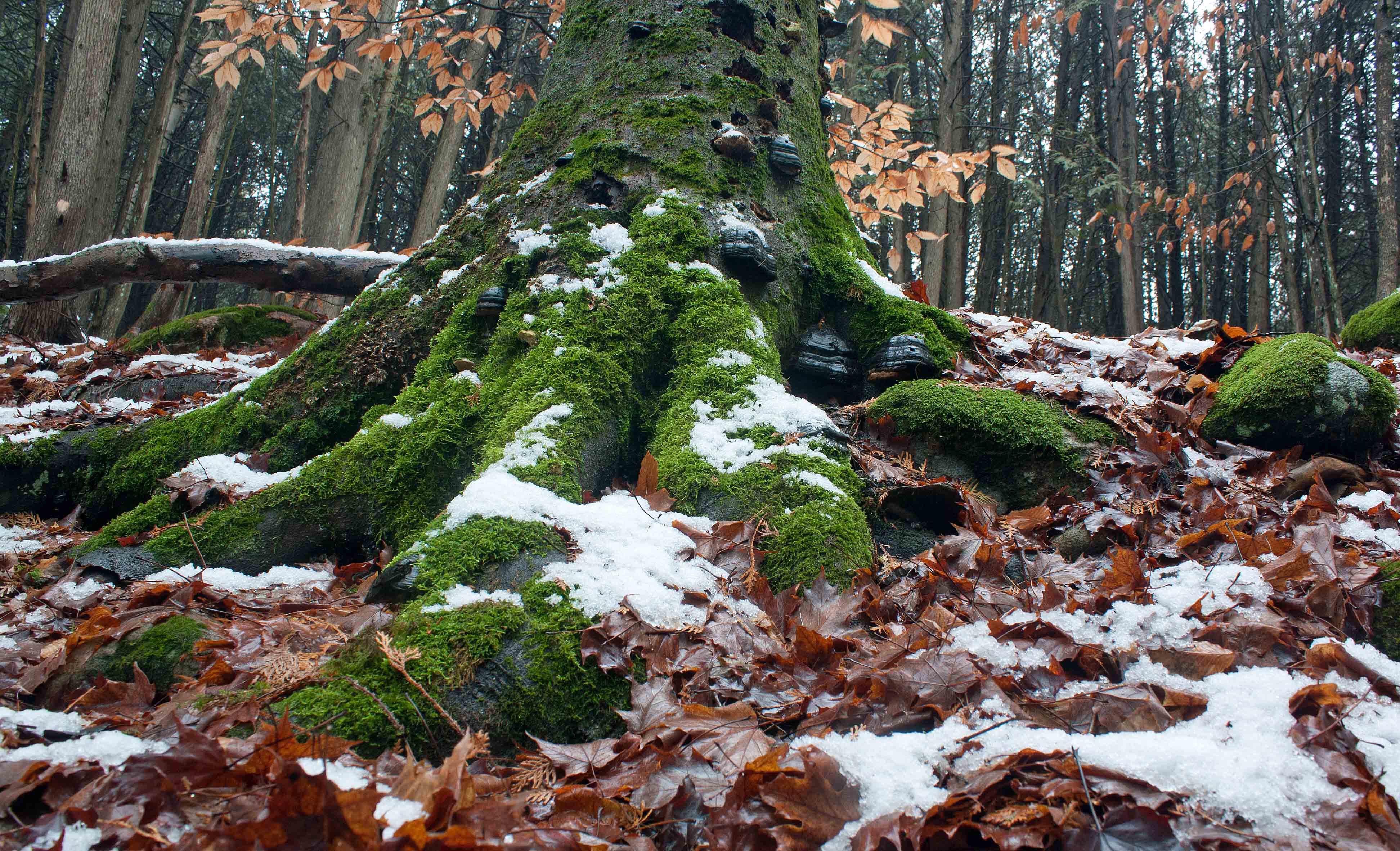
Then, on a foggy late December day, after a light dusting of snow, I returned to document the ice forming in the river. Islands and columns of ice had created a new topography for the flowing waters of Jackson Creek. Ice sheets also covered the forest path in places—making the walk somewhat treacherous. At times, I had to scramble and seize hold of branches to haul my way up precipitous banks from where I’d captured sculptures of ice ‘pearls,’ ‘platforms,’ and ‘columns’ on the river.


.
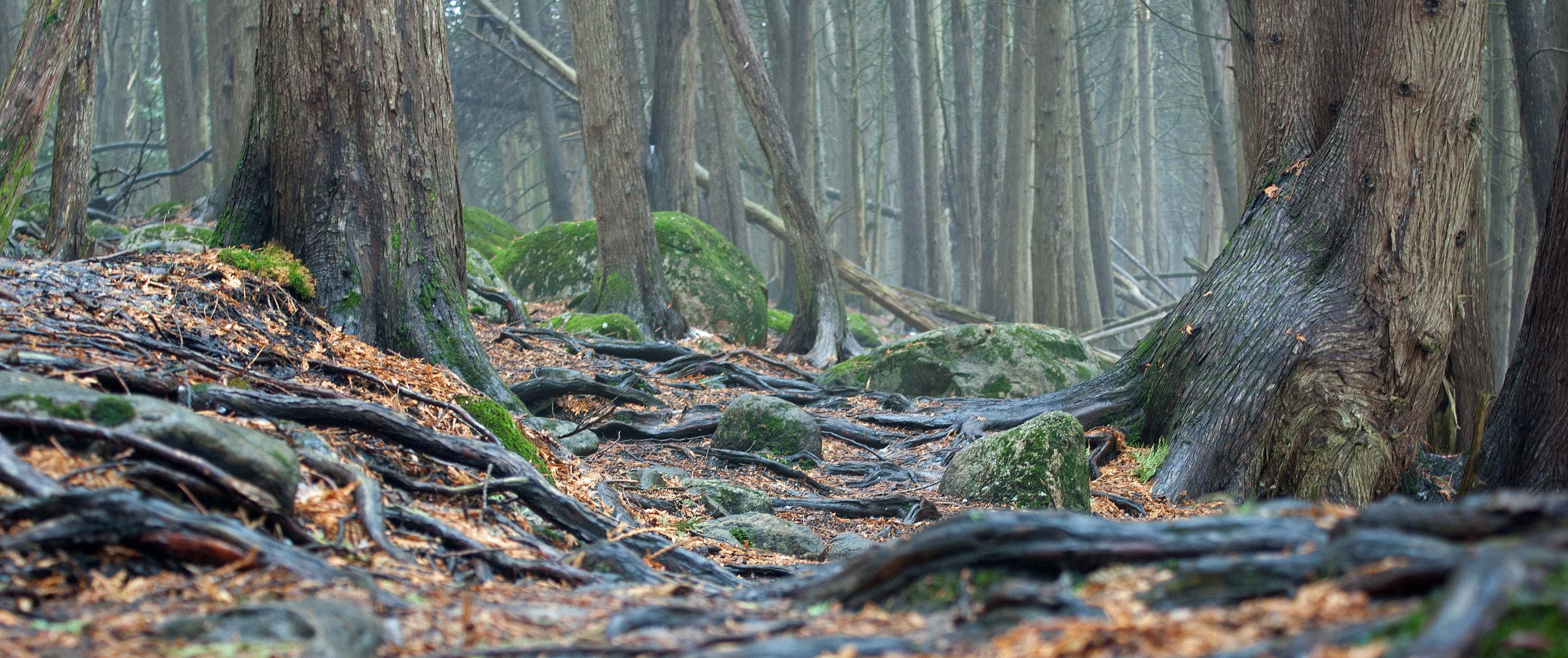
The fog grew thick as my walk eventually led me into an area of eccentric lopsided cedars in a ‘drunken’ stand by the river bank. The cedars sent out a tangled tapestry of gnarly roots I had to negotiate. I could feel the earth-magic. I dropped to my knees again and set my camera and tripod to the level of the roots. That is when I saw the blue sprite again! This time the sprite wasn’t playful; it appeared startled and disoriented. But, I managed to capture it as it fled the scene in wisps of blue smoke. As I left the forest, my thoughts returned to this serendipitous moment. Had I interrupted the wood /earth sprite in its work in the forest? These sprites are known to have the power of chlorokinesis, the ability to grow and control plants at will. When I checked my images at home, the sprite appeared to float near one of the cedars.

.
When she saw the image, friend Merridy asked, “was the sprite entering the tree?” Thinking of incantations, friend Dyana asked if I’d had my recording feature on, which I’d never thought to do. On second thought, she decided that it might be dangerous. Not a good idea to anger a sprite. Friend Gabriela then challenged me: “did you ask what message they have for you, Nina? They keep showing up in your way, they might have a message for you or to be delivered through you to…” whoever… I hadn’t thought of that either. How would I hear their message when they were silent and so fleeting, I challenged back. She wisely responded, “Just ask yourself the question; you might be surprised when your next thought brings the answer. Since everything is energy, and you saw them at least twice, you’re probably connected with them.”

.
I didn’t tell her that the question that came to mind after seeing the sprite was: I wonder what’s for dinner!
I must ponder this more, however.
Thinking of Gabriela’s interesting remark, I am reminded of a rather sad but evocative tale by Vladimir Nabokov entitled “The Wood Sprite.” Told in the first person, it recounts the narrator’s experience when he was visited at his desk by an old wood sprite, “powdered with the pollen of the frosty, starry night.” The creature tells of his exile from a country wood in Russia, all cut down and burned amid the treachery of war.
Now that I think of it, I know the blue sprite’s message. And now you know it too.
p.s. January 2025: You can read my short story “The Water Sprite“, inspired by this experience, in several places, but most recently in Exile Edition‘s anthology “Through the Portal: Tales from a Hopeful Dystopia.”
.

Nina Munteanu is a Canadian ecologist / limnologist and novelist. She is co-editor of Europa SF and currently teaches writing courses at George Brown College and the University of Toronto. Visit www.ninamunteanu.ca for the latest on her books. Nina’s bilingual “La natura dell’acqua / The Way of Water” was published by Mincione Edizioni in Rome. Her non-fiction book “Water Is…” by Pixl Press(Vancouver) was selected by Margaret Atwood in the New York Times‘Year in Reading’ and was chosen as the 2017 Summer Read by Water Canada. Her novel “A Diary in the Age of Water” was released by Inanna Publications (Toronto) in June 2020.
 In Animal Farm, George Orwell uses animals to describe the revolution against a totalitarian regime (e.g. the overthrow of the last Russian Csar and the Communist Revolution of Russia). The animals embrace archetypes to symbolize the actions and thoughts of various sectors within that world. The pigs are the leaders of the revolution; Mr. Jones represents the ruling despot who is overthrown; the horse Boxer is the ever-loyal and unquestioning labor class.
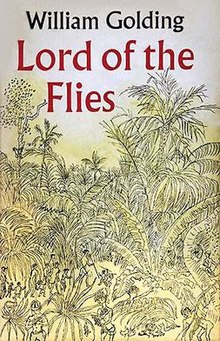 In Lord of the Flies, William Golding explores the conflict in humanity between the impulse toward civilization and the impulse toward savagery. The symbols of the island, the ocean, the conch shell, Piggy’s glasses, and the Lord of the Flies, or the Beast, represent central ideas that reinforce this main theme. Each character has recognizable symbolic significance: Ralph represents civilization and democracy; Piggy represents intellect and rationalism; Jack represents self-interested savagery and dictatorship; and Simon (the outsider in so many ways) represents altruistic purity.
 Excellent examples of satires with less obvious allegorical structure (but it’s there) can be found in the genre of science fiction—a highly metaphorical literature that makes prime use of place and setting with archetypal characters to satirize an aspect of society. Brave New World by Aldous Huxley is a satirical response to his observation of humans’ addiction to (sexual) pleasure and vulnerability to mind control and the dumbing of civilization in the 1930s. George Orwell’s Nineteen Eight-Four satirizes humanity’s vulnerability to fascism, based on his perception of humans’ sense of fear and helplessness under powerful governments and their oppressive surveillance. Margaret Atwood’s The Handmaid’s Tale satirizes a society in which a woman struggles in a fundamentalist Christian dictatorship patriarchy where women are forced into a system of sexual slavery for the ruling patriarchy.
 This article is an excerpt from “

 Nina Munteanu Writing Coach