Place ultimately portrays what lies at the heart of a story. Place as character provides an archetype that story characters connect with and navigate in ways that depend on the story’s theme, particularly in allegories that rely strongly on metaphor. Theme is essentially the “so what part” of a story; what is at stake for the character on their journey. Theme is the backbone—the heart—of the story, driving characters to journey through time and place toward some kind of fulfillment. There is no story without theme. And there is no theme without place.
When place is the environment—a forest, meadow, swamp or heathland—the author has an opportunity to go beyond simple backdrop, even beyond deeper metaphor, to intimately portray the voice of ‘the Other.’ Eco-literature brings awareness to environment as ‘Other’; eco-literature intimately explores humanity’s role in defining ‘the Other’ by portraying environment on a journey as character with agency and sometimes with voice—often through character coupling. Nineteenth Century author Thomas Hardy recognized the tenuous position of wilderness during Victorian Britain with increasing industrialization and urbanization. Taming Nature to achieve ordered beauty had become an obsession; Hardy recognized this and mourned the loss of pre-industrial agrarian landscapes to human greed and modernization.
.
Thomas Hardy’s Heath: Return of the Native
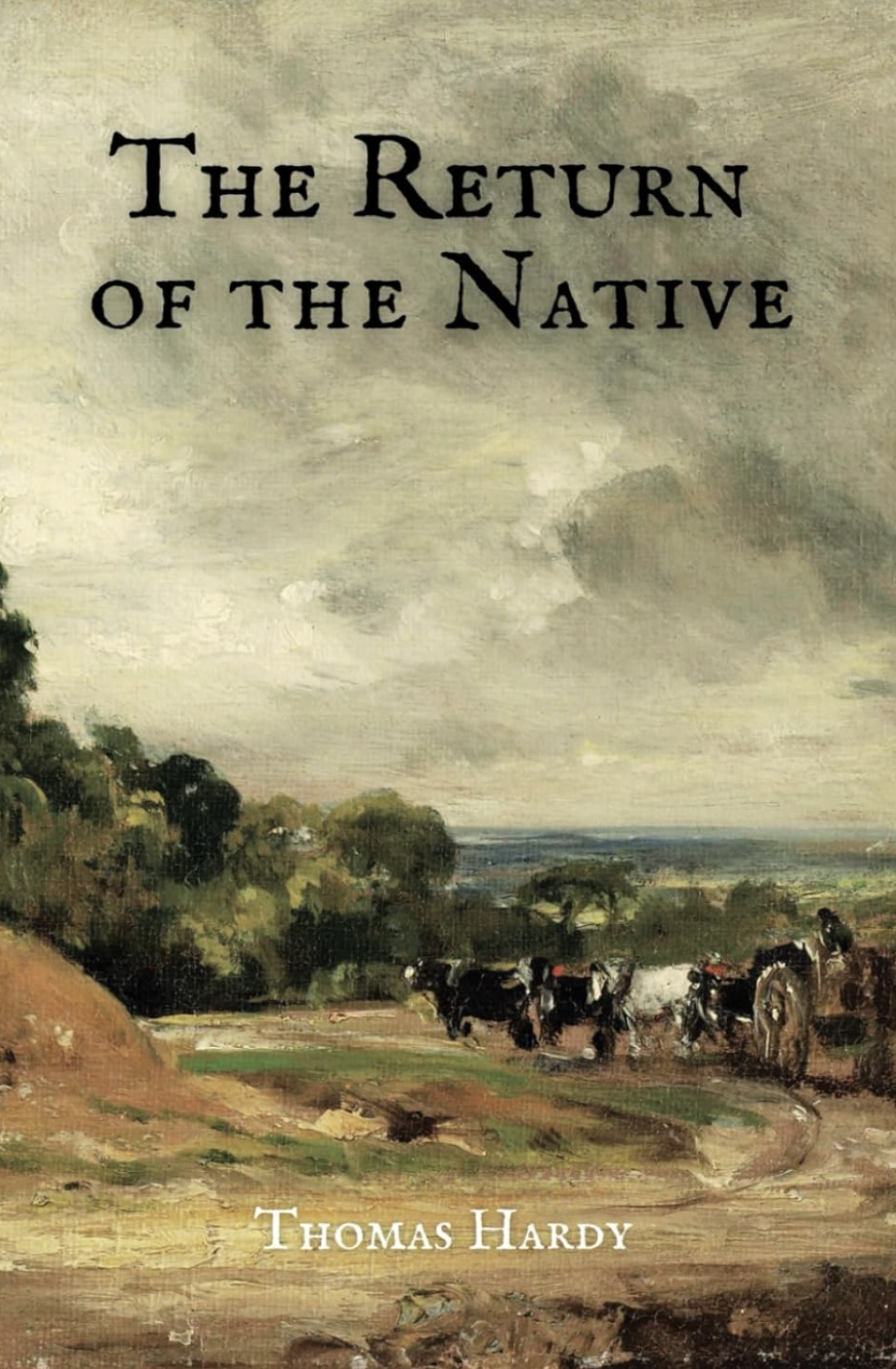
For Victorian author Thomas Hardy, trees, meadows, winding brooks and country roads were far more than back-drop for his world and his stories. Elements of the natural world were characters that impacted other characters in a world dominated by nature.
Perhaps best known for his melancholic stories of fatalistic, ironic tyrannies, Thomas Hardy wrote with a tender and poetic sensibility about Nature, and particularly the heath where he grew up. All of Hardy’s writings embody a strong sense of place. Nature—like his omniscient narrative form—lies beyond the scope of humanity: vast, amoral, and unfathomed; and yet, inextricably linked to the feckless actions of its humans. Egdon Heath in Return of the Native remains one of Hardy’s most enduring characters and best examples of the power of place in story.
.
Author D.H. Lawrence evocatively personified Hardy’s bleak heathland: “Egdon, whose dark soil was strong and crude and organic as the body of a beast.”
Egdon Heath is a metaphoric black hole from which no light escapes. None of Hardy’s characters escape the embrace of this behemoth. Dark, swarthy and associated with the night: “The face of the heath by its mere complexion added half an hour to evening; it could in like manner retard the dawn, sadden noon, anticipate the frowning storms scarcely generated, and intensify the opacity of a moonless midnight to a cause of shaking dread.” Each character is touched by the heath’s brooding grip and each feels its power differently: hapless Wildeve; idealist Clym; desperate Eustacia and suffering Thomasin.
.
Cixin Liu’s Forests: The Three Body Problem
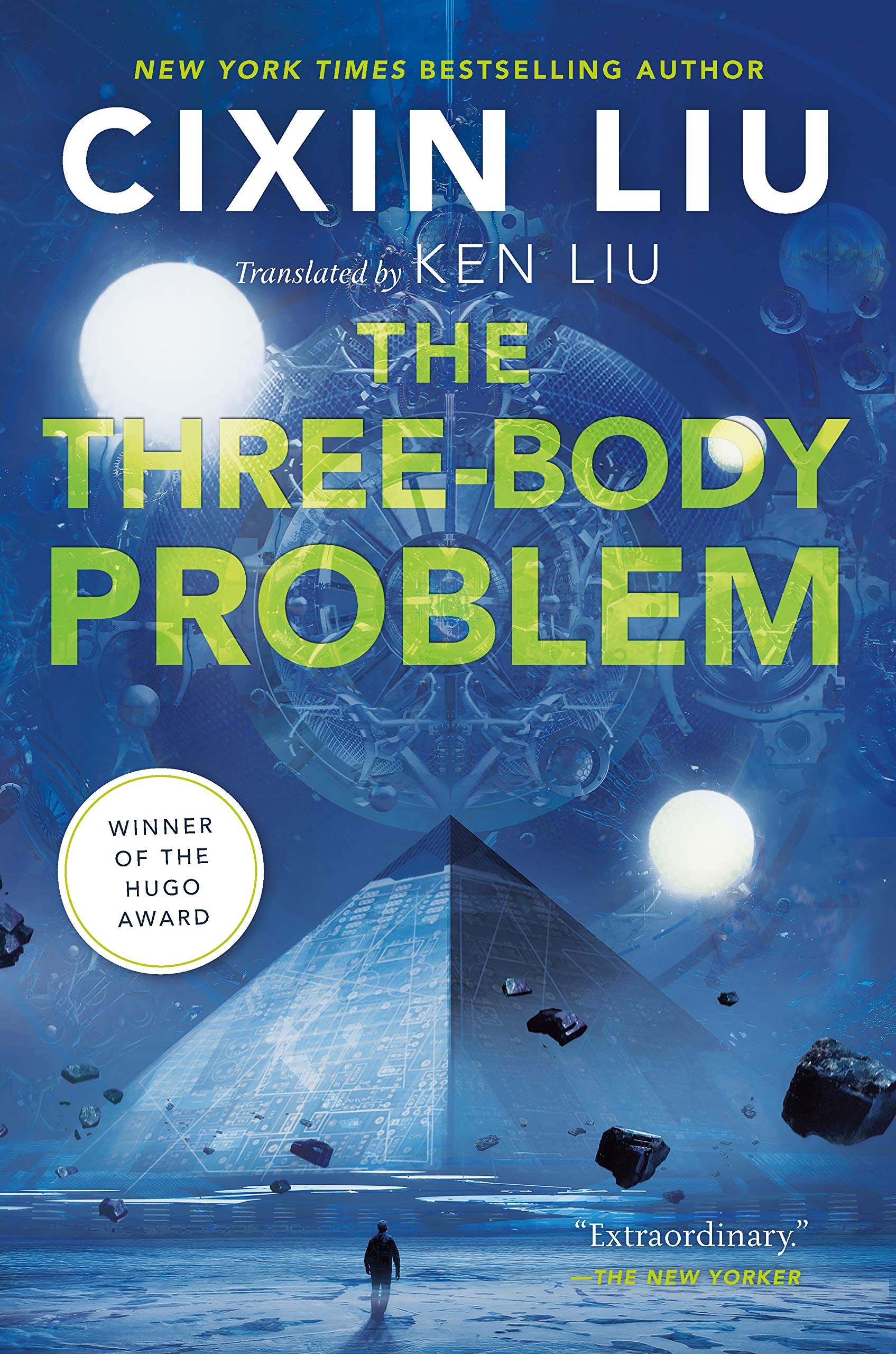
Cixin Liu’s The Three Body Problem—set against the backdrop of China’s Cultural Revolution—follows Wenji Ye, disillusioned by the massive environmental deforestation in the labour camps she is sent to work:
Her company wielded hundreds of chain saws like a swarm of steel locusts, and after they passed, only stumps were left. The fallen Dahurian larch, now bereft of branches, was ready to be taken away by tractor. Ye gently caressed the freshly exposed cross section of the felled trunk. She did this often, as though such surfaces were giant wounds, as though she could feel the tree’s pain … The trunk was dragged away. Rocks and stumps in the ground broke the bark in more places, wounding the giant body further. In the spot where it once stood, the weight of the fallen tree being dragged left a deep channel in the layers of decomposing leaves that had accumulated over the years. Water quickly filled the ditch. The rotting leaves made the water appear crimson, like blood.
.
Frank Herbert’s Desert: Dune

Frank Herbert’s Dune chronicles the journey of young Paul Atreides, Duke Leto’s son, who according to the indigenous Fremen prophesy will eventually bring them freedom from their enslavement by the colonialists—The Harkonens—and allow them to live unfettered on the planet Arrakis, known as Dune.
But, as the title of the book clearly reveals, this story is about place—a harsh desert planet whose 800 kph sandblasting winds could flay your flesh—and the power struggle between those who covet its arcane treasures and those who wish only to live free from slavery. Place—and its powerful symbols of desert, water and spice—lies at the heart of this epic story about taking, giving and sharing. When he thinks of Dune, the newly placed Duke Atreides uses water metaphors: “He sighed, glanced back at the dry landscape where the flowers were gone now—trampled by the dew gatherers, wilted under the early sun.”
.
“The desert stretched out like a static ocean. [It] lay there full of moon-silvered waves—shadows of angles that lapsed into curves and, in the distance, lifted to the misted gray blur of another escarpment.”
The immense sandworms of Frank Herbert’s Dune are strong archetypes of Nature—large and graceful creatures whose movements in the vast desert sands resemble the elegant whales of our oceans:
It came from their right with an uncaring majesty that could not be ignored. A twisting burrow-mound of sand cut through the dunes within their field of vision. The mound lifted in front, dusting away like a bow wave in water.
.
Annie Proulx’s Forest: Barkskins
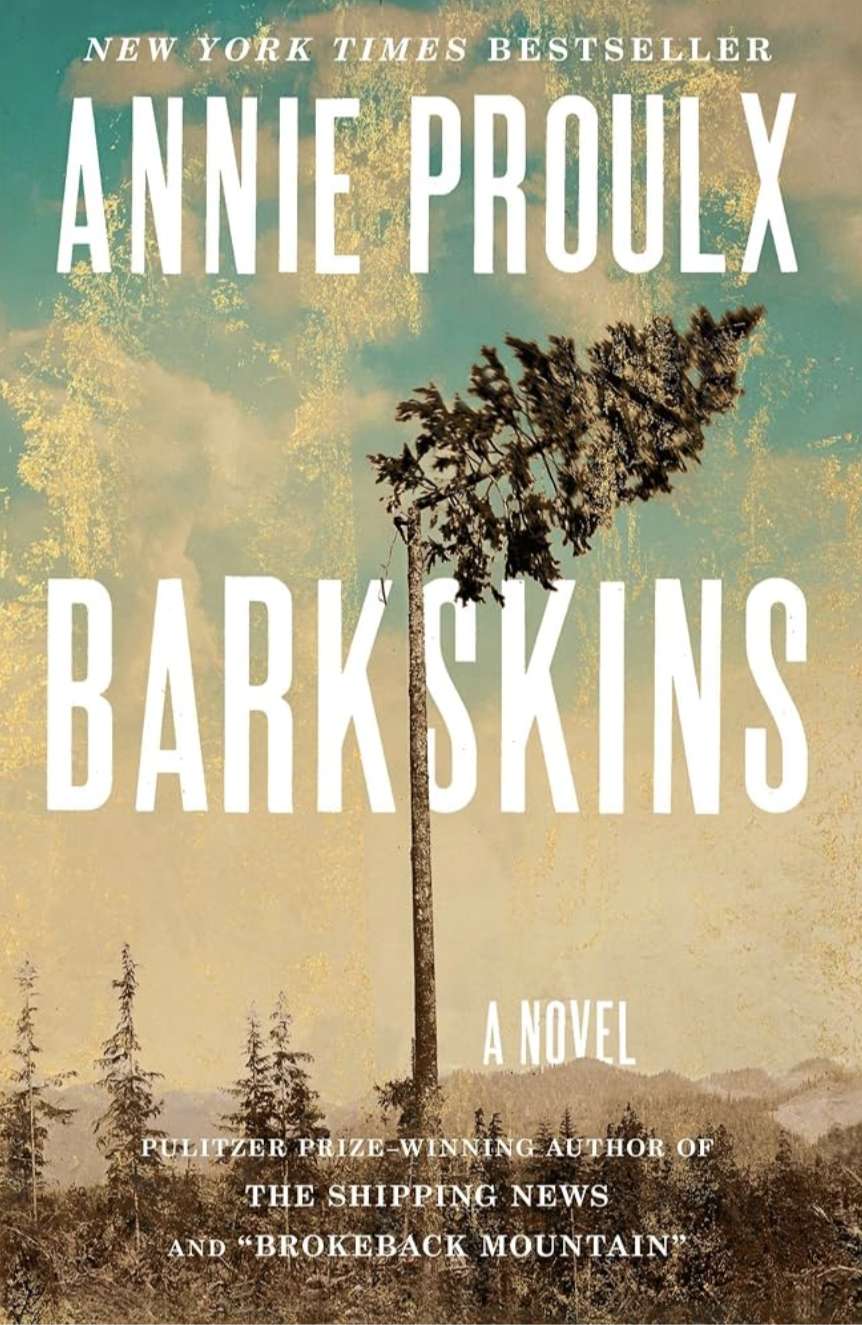
The opening combines subtle to obvious images of an “unwelcoming” wilderness—as dark behemoth—and foreshadows the forest’s eventual destruction by settlers intent on conquering Nature. Proulx’s 300-year saga starts with the arrival of the Europeans in Canada’s pristine forest
Within the first ten pages we gain a rich and potent collage of first impressions by the settlers of “the moody darkness” of the New France forest, previously only seen by the “sauvages.” The barkskins “tramped up the muddy path toward a line of black mist … In a few hours the sodden leaf mold gave way to pine duff. Fallen needles muted their passage, the interlaced branches absorbed their panting breaths … evergreens larger than cathedrals, cloud-piercing spruce and hemlock. The monstrous deciduous trees stood distant from each other, but overhead their leaf-choked branches merged into a false sky, dark and savage …They walked on through the dim woods, climbing over mossy humps, passing under branches drooping like funeral swags,” hearing pines hissing in the wind,” and crossing “snarling water,” and “swarms of mosquitoes in such millions that their shrill keening was the sound of the woods.”
.
These bleak impressions of a harsh environment crawling with pests such as bébites and moustiques underlie the combative mindset of the settlers to conquer and seize what they can of a presumed infinite resource. By page seventeen, we know that mindset well. René asks why they must cut so much forest when it would be easier to use the many adequate clearings to build their houses and settlements. Trépagny fulminates: “Easier? Yes, easier, but we are here to clear the forest, to subdue this evil wilderness.”
For them, the vast Canadian boreal forest was never-ending and for the taking: “It is the forest of the world. It is infinite. It twists around as a snake swallows its own tail and has no end and no beginning,” Trépagny claims.
.
Richard Power’s Forest: The Overstory
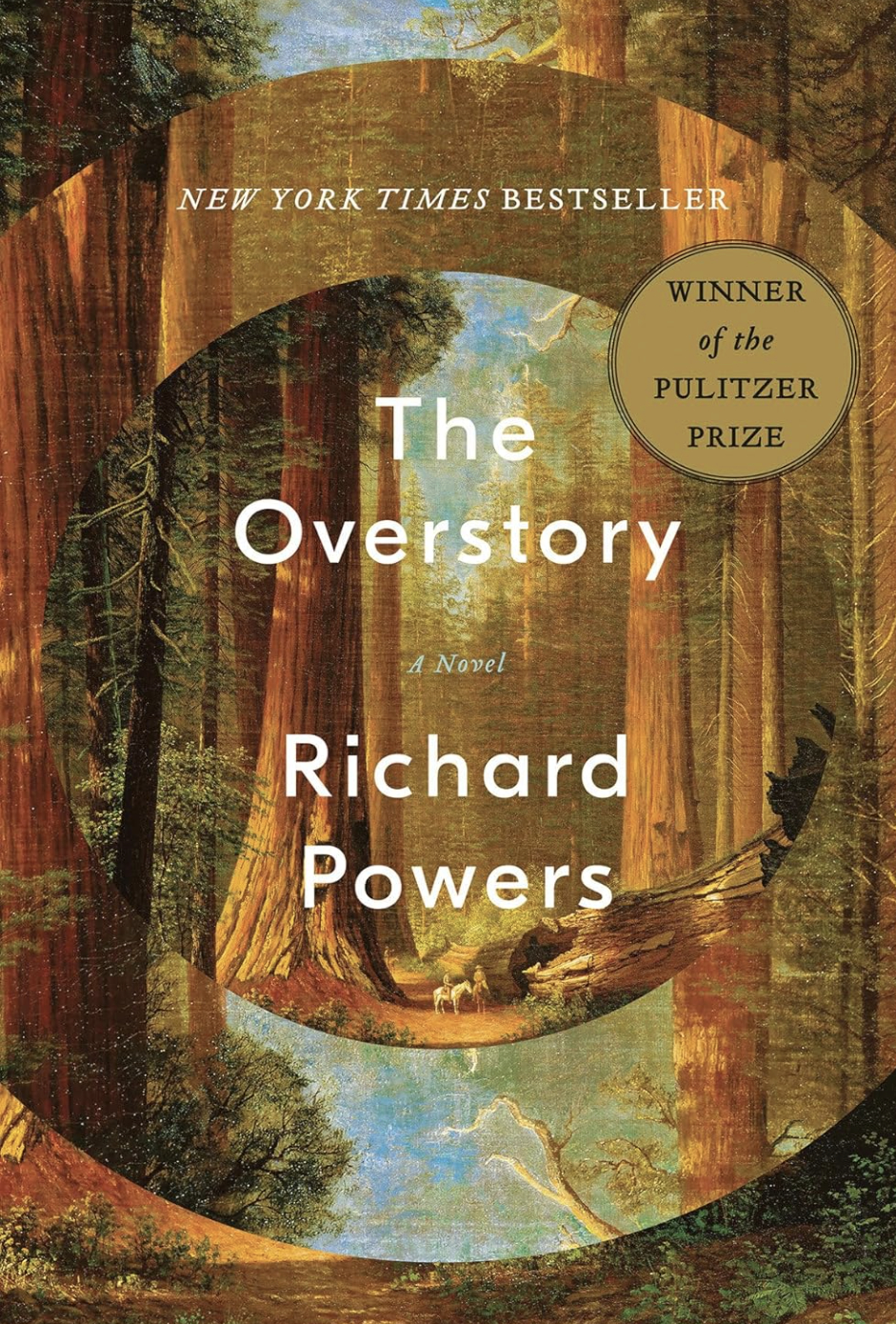
Richard Powers’s The Overstory follows the life-stories of nine characters and their journey with trees. At its heart is the pivotal life of botanist Patricia Westerford, whose work resembles that of UBC’s Suzanne Simard. Westerford is a shy introvert who discovers that trees communicate, learn, trade goods and services—and have intelligence. When she shares her discovery, she is ridiculed by her peers and eventually loses her position at the university.
Like the marcescent beech, Patricia finds herself asynchronous with the rest of the forestry department at Purdue, in fact with the entire forestry discipline in the country. She disagrees with their edict of needing to “clean the forest of snags and wind throw to improve forest health.” She disagrees with their use of terms like thrifty young forests and decadent old forests, mean annual increment and economic maturity—not ecological but economic terms based on exploitation and human utility.
.
Patricia’s early conviction that these silent trees are social creatures, sets her on a singular path that will push the boundaries of doctrine and a hegemony of human utility. She assiduously sets out to prove her premise of social trees and in so doing, becomes the forest. “She works all day in the woods, her back crawling with chiggers, her scalp with ticks, her mouth filled with leaf duff, her eyes with pollen, cobwebs like scarves around her face, bracelets of poison ivy, her knees gouged by cinders, her nose lined with spores, the backs of her thighs bitten Braille by wasps, and her heart as happy as the day is generous.” Like Ovid, she is becoming.
Patricia writes in her book The Secret Forest:
There are no individuals in a forest, no separable events. The bird and the branch it sits on are a joint thing. A third or more of the food a big tree makes may go to feed other organisms. Even different kinds of trees form partnerships. Cut down a birch, and a nearby Douglas fir may suffer … Fungi mine stone to supply their trees with minerals. They hunt springtails, which they feed to their hosts. Trees, for their part, store extra sugar in their fungi’s synapses, to dole out to the sick and shaded and wounded. A forest takes care of itself, even as it builds the local climate it needs to survive.
.
Delia Owens’s Swampland: Where the Crawdads Sing
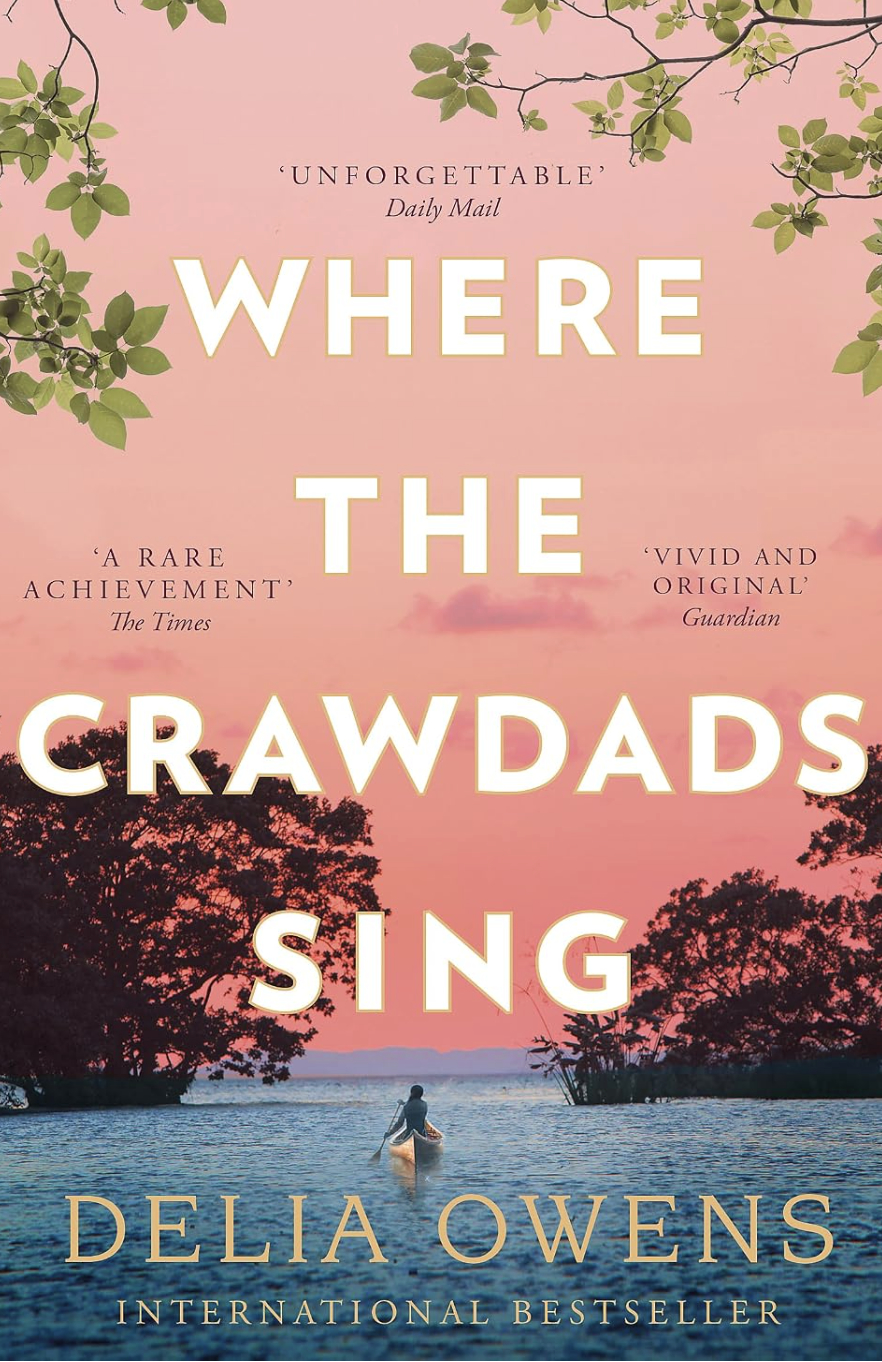
The swampland is beautifully and evocatively portrayed as a living character; its ‘journey’ is closely linked to the Kya, the main protagonist, as development encroaches both swamp and girl through commercial logging, and wetland drainage to build resort hotels. Kya lives with an unbiased understanding of a quiet biological life, surviving through natural instinct in a circle of life and death: a swamp knows all about death, and does not define it as a tragedy or a sin, thinks Kya who sees the swampland as her mother, teacher and sanctuary, embracing her with a protective mantle of natural beauty and wonder. Whenever she stumbled, it was the land who caught her. When the town marginalizes Kya, calling her “The Marsh Girl”, the swamp shields her from the prejudice and cruelty of the human world, providing an intimate protective barrier. In turn, Kya uses her book advance to buy several hundred acres of marsh as a protected wildlife refuge.
.
In her article on Great Ecology, Liz Clift writes, “During the period in which Where the Crawdads Sing is set, wetlands were typically seen as a nuisance—and that comes through in the story-telling, when developers want to drain the marsh for a development. Wetlands were also seen as mosquito-infested, buggy, smelly, or even an eyesore. A significant number of wetlands around the world, including in the US, have been lost due to land development and agriculture, which is unfortunate because wetlands are rich with biodiversity and play a key role in maintaining both freshwater and saltwater fisheries, support water quality, and protect against flooding.” This is not a phenomenon or attitude of the past; it unfortunately remains prevalent, particularly in North America.
What Delia Owens achieves in Where the Crawdads Sing is two-fold: 1) the reader knows more about the value of the marsh but also gains a sense of its beauty as seen through the eyes of Kya; and, 2) through the strong connection with the main character and use of evocative metaphor, Owens transforms the marsh into a real character.
.
Why Make Place a Character…
Why is this important? Think of a place you know. I’ll use the house I grew up in. To any passerby, the house is just another two-storey cornflower-blue house with veranda on a quiet residential street, lined by trees. But for me, the house carries memories of my childhood, of running up and down the creaky foot-worn stairs, or sharing ghost stories with friends on the back porch as the waning twilight revealed the winking fireflies outside. Playing dolls with my sister in the stuffy attic. The sweet pungent aroma of my father’s pipe smoke in the livingroom and my mother’s thrush-like voice resonating from the kitchen as she baked German sugar cookies. I loved that house, with all its idiosyncratic groans and whistles in the wind and the echoes of cheerful laughter over the years. That house was a character.
Once this happens, once place becomes a character, we find ourselves caring for it.
In story, it is the characters we care about; it is the characters that we cheer for and follow on their journey of loss, redemption or victory.
This is why writers of eco-fiction depict environment as a character. We must first relate and connect before we care; we must first care before we act. Eco-fiction authors also use the device of character-coupling to help readers care. The examples above provide this method through their ‘othered’ characters, who, in turn, relate to the ‘othered’ environment. In another article, I provide more examples of character-coupling in the literature that enable readers to connect to otherwise arcane aspects of their environment through their connection to a character they can relate to.
.
.
Parts of this article are excerpted from The Ecology of Story: World as Character.
.
References:
Munteanu, Nina. 2013. “The Ecology of Story: World as Character.” Pixl Press, Vancouver. 200pp.
Munteanu, Nina. 2024. “The Use of Character-Coupling in Eco-Literature to Give Voice to the Other, Part 1: Introduction” February 18, 2024.
Munteanu, Nina. 2024. “The Use of Character-Coupling in Eco-Literature to Give Voice to the Other, Part 2: Types of Character-Coupling in Seven Examples of Eco-Literature” February 2024.
.

.
Nina Munteanu is a Canadian ecologist / limnologist and novelist. She is co-editor of Europa SF and currently teaches writing courses at George Brown College and the University of Toronto. For the latest on her books, visit www.ninamunteanu.ca. Nina’s bilingual “La natura dell’acqua / The Way of Water” was published by Mincione Edizioni in Rome. Her non-fiction book “Water Is…” by Pixl Press (Vancouver) was selected by Margaret Atwood in the New York Times ‘Year in Reading’ and was chosen as the 2017 Summer Read by Water Canada. Her novel “A Diary in the Age of Water” was released by Inanna Publications (Toronto) in June 2020. You can read her just released eco-fiction thriller Gaia’s Revolution by Dragon Moon Press.
.