A man tries to survive In the ruins of a bloody war between Gaians and Technocrats where Techno-clones rule.
Here’s an excerpt:
The ruins of the city rippled in the heat like a bad movie. Gunther raked his fingers through his hair and paced the exposed second floor of the dilapidated building. His gaze panned the city. Haze the color of rust lingered over phantom pools on the horizon.
“It’s hot as hell,” he complained, shrugging his Computerized Automatic Rifle over his shoulder. His camouflage fatigues clung to his body like something he needed to shed. “I’m dying in this heat.” Several flies buzzed around his head and he flapped his gangly arm madly in the air. “Damn flies.”
Slouched against some rubble, Rick ignored him and ran diagnostics on the CARifle stretched out on his lap, verifying the output data on his eye-com. Rick’s sullen face was barely visible under the V-set strapped to his head. Gunther pulled out a stick of gum, unraveled the wrapper and pushed the wad into his mouth. Smacking his lips, he savored the mint flavor and tossed the wrapper.
“Ass hole!” Rick snapped. “Pick that up.”
Gunther snatched the wrapper. The rifle slipped off his shoulder and clattered to the ground. Forcing on a nervous grin he scrambled to pick up the weapon then stepped on the vee-set he’d yanked off earlier.
“We’re Gaians.” Rick’s finger stabbed the green band on his arm. “Protectors of the Earth, ass hole.” He turned back to his CARifle and muttered, “Just like a filthy Techno. . . no idea why you’re doing anything.”
Gunther replaced the V-set on his head and slung the CARifle over his shoulder. He sagged under its weight and let his gaze stray to where the roof had been blasted away. The air smelled of smoke and burning metal. He blinked away the sweat that ran into his eyes and squinted at the sun, suspended in a yellow dust cloud. “Those lousy Technos caused this heat wave. We’re turning into a desert!”
Rick ignored him and kept tinkering with his weapon.
“Hell, if it weren’t for this revolution,” Gunther continued, “the planet would be toast already . . .” he trailed, lost for a moment in a terrifying place. More flies buzzed furiously around his head. “Get off!” he shouted and shook his head violently. He frowned and muttered, “We better see some action soon.” Gunther poked the rubble with his rifle. “When I took this post I was glad I’d be toasting any coward Technos trying to escape the city.” He raised his rifle, aimed at an imaginary target and made clicking sounds with his tongue. “When I asked the Gaian committee for this post—”
“Ass hole!” Rick spat. “You didn’t ask for it; they assigned you.”
Gunther half-grinned, exposing dirty teeth, and shrugged.
Rick spit on the ground. “I know your story, turd. You hid in some hole during the whole clone siege. Waiting to find out who won so you could take their side.”
Gunther inhaled the gum and coughed.
Rick sneered. “I figure they put you with me to keep an eye on you. Make sure you don’t run away like them other Technos.” He rubbed the graying stubble on his creased face and his eyes narrowed to slits. “Hell, you were probably a Techno before we found you. Come to mind, you look like one of them. . . .”
You can read the complete story of “The Spectator” in the Teoria Omicron ezine. An earlier version of this story was published under the title “Frames” in my short story collection Natural Selectionpublished by Pixl Press.
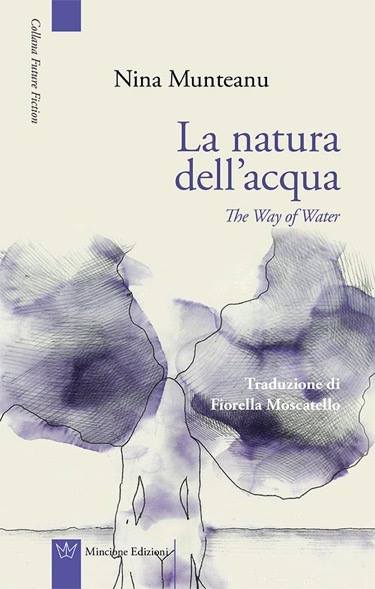
Nina Munteanu is a Canadian ecologist / limnologist and novelist. She is co-editor of Europa SF and currently teaches writing courses at George Brown College and the University of Toronto. Visit www.ninamunteanu.ca for the latest on her books. Nina’s bilingual “La natura dell’acqua / The Way of Water” was published by Mincione Edizioni in Rome. Her non-fiction book “Water Is…” by Pixl Press (Vancouver) was selected by Margaret Atwood in the New York Times ‘Year in Reading’ and was chosen as the 2017 Summer Read by Water Canada. Her novel “A Diary in the Age of Water” was released by Inanna Publications (Toronto) in June 2020.
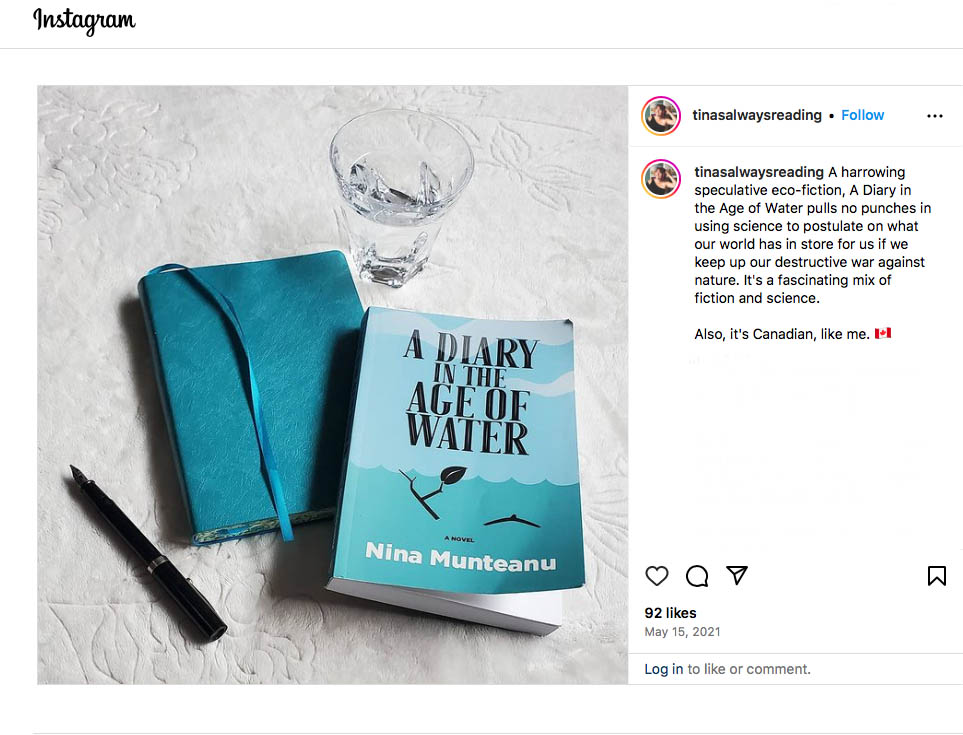
I recently came across this beautiful Instagram post by TinasAlwaysReading, and was reminded of a wonderfully in-depth review of my eco-fiction novel A Diary in the Age of Water that Tina did on Sound & Fury Book Reviews.
You can watch the review below:
Sound & Fury reviews “A Diary in the Age of Water” by Nina Munteanu
Nina Munteanu is a Canadian ecologist / limnologist and novelist. She is co-editor of Europa SF and currently teaches writing courses at George Brown College and the University of Toronto. Visit www.ninamunteanu.ca for the latest on her books. Nina’s bilingual “La natura dell’acqua / The Way of Water” was published by Mincione Edizioni in Rome. Her non-fiction book “Water Is…” by Pixl Press (Vancouver) was selected by Margaret Atwood in the New York Times ‘Year in Reading’ and was chosen as the 2017 Summer Read by Water Canada. Her novel “A Diary in the Age of Water” was released by Inanna Publications (Toronto) in June 2020.
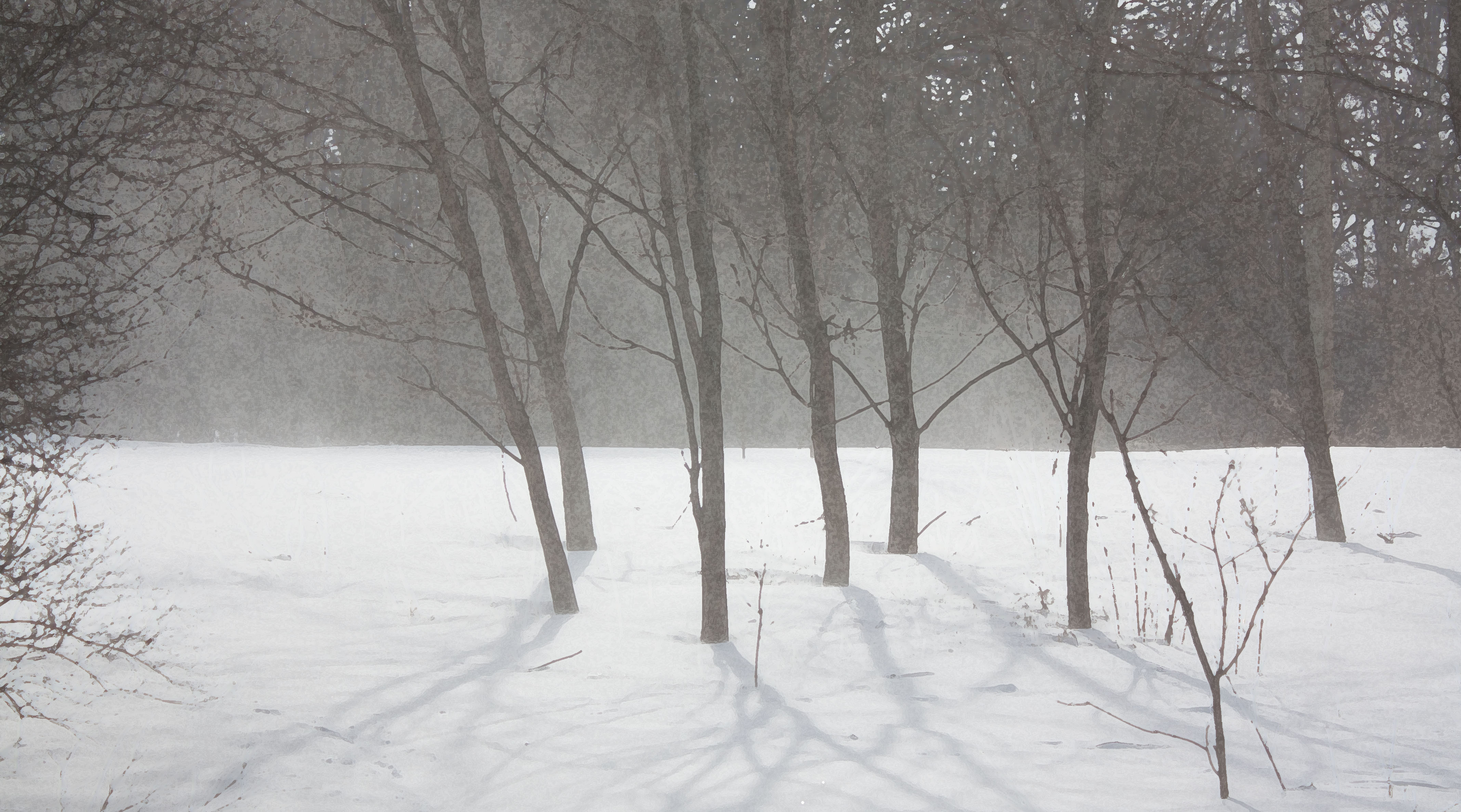
A trickster wind stirs up clouds of drifting snow, ON (photo and rendition by Nina Munteanu)
Not long ago, I was driving through a short tunnel that I typically take to go to work and, glancing back through the rearview mirror, I didn’t see what I expected to see. For some reason—perhaps it was the light or my wandering mind—the familiar scene looked unfamiliar; it was as though I’d entered a new dimension.
It felt ‘Otherly’ and I briefly experienced a titillating excitement akin to a protagonist journeying into a new world in some novel.
Indeed, the rhetoric of ‘Otherness’ in most fiction is typically portrayed through the singular point of view (POV) and discourse of a protagonist on a journey. The very nature of the term ‘Other’ used in any narrative suggests exclusion. According to Patricia Kerslake of Central Queensland University, the postcolonial notion of the Other arises through a mutual process of exclusion that inspires the very idea of ‘alien’ by imposing expectation on perception. Kerslake argues that: “When one culture imposes its perceptions on another, in that it begins to see the Other not as they are but as, in [Edward W.] Said’s words, ‘they ought to be’, then the process of representation becomes inevitable: a choice is made to see a ‘preferred’ real”.
In most forms of literature The POV ‘voice’ represents the Self, the inclusive ‘us’ (worldview) in its encounter with the Other, which in turn is the ‘not us.’ In his book Orientalism: Western Conceptions of the Orient Edward W. Said contended that for there to even be an ‘us’, there has to be a ‘not-us’. The resulting power dynamic of “them and us,” of Other and Self, is created and controlled by perceptions of the singular POV voice that usually represents ‘us.
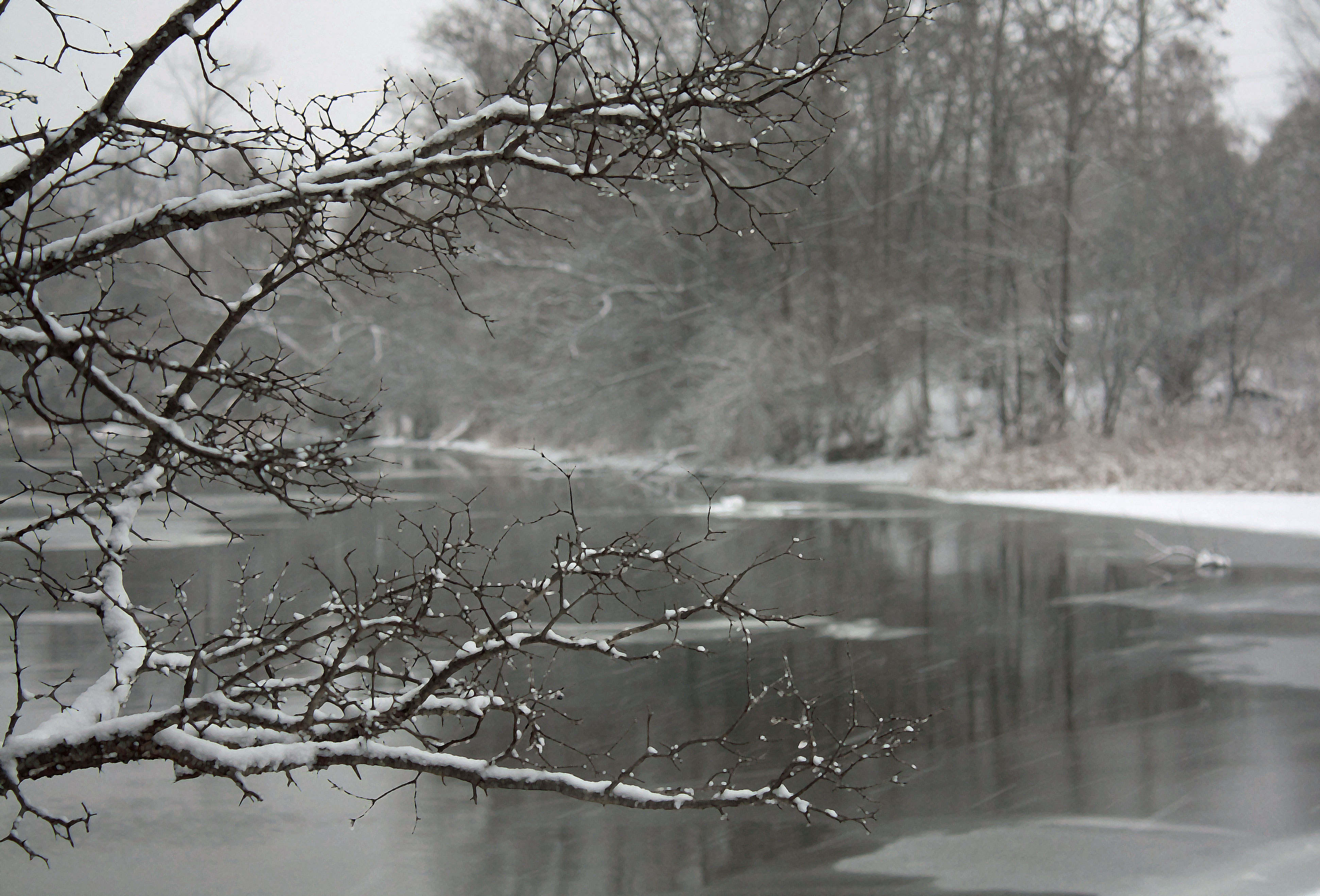
Tree branches overlook river during snowfall, ON(photo and rendition by Nina Munteanu)
‘The Other’ in Various Genres of Literature
In most genres of literature, the Other is often relegated to this dichotomous portrayal. In post-apocalyptic and metaphoric journey stories the Other may be the harsh environment or a calamity through which the protagonist must find their own strength to survive; in military stories it is clearly the enemy, seldom portrayed with compassion or understanding but there to test our hero; in coming-of-age stories it may be the oppressive rule or established world the hero must overcome; in science fiction it may be the hostile or unknowable aliens who must be defeated. According to Ursula K. Le Guin, science fiction displays a legacy of silencing the Other and rendering it impotent to establish and confirm humanity’s superior position in the world. Given that science fiction (SF) literature is rooted in culture, and often helps construct national identity, SF often confirms worldview, and in so doing creates internal Others (Brioni and Comberiati). According to Hermann, by failing to escape our boundary conflicts, SF simply constructs “new situations of restriction and otherness.” Kerslake argues that “silencing the Other provides SF with an indirect ability to define the potential of humankind”.1
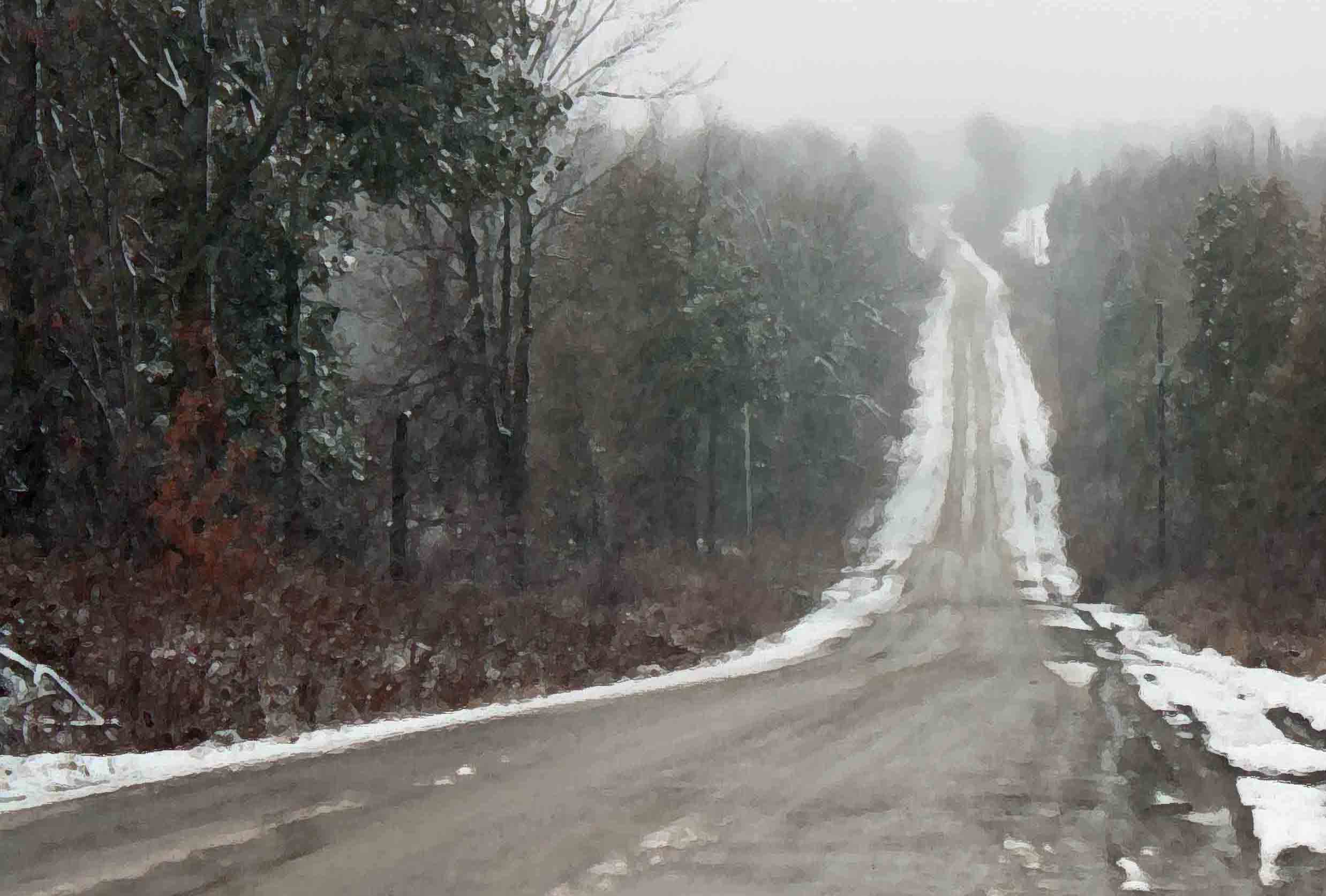
Country road in the Kawarthas, ON (photo and rendition by Nina Munteanu)
‘The Other’ in Eco-Literature
While eco-literature overlaps with many genres, it appears to differ from SF and other genres portrayal of Other through its unique intention to give voice to otherwise voiceless characters, and it often does this through masterful use of character-coupling. Mary Woodbury defines eco-literature or eco-fiction as literature “made up of fictional tales that reflect important connections, dependencies, and interactions between people and their natural environments.” The environment—or an aspect of the environment—plays a major role in eco-literature, either as premise or as itself a character on a journey.
Eco-Literature is preeminently the literature of bringing awareness to the plight of the environment as both character and as Other and explores humanity’s role in that plight.
Eco-literature may go beyond raising awareness to link environmental abuse with concepts of jingoistic hubris; it may raise issues of human intersectionality, misogyny, marginalization, oppression of class, privilege, sexuality and race, and misuse of power. Violent acts perpetrated on environment—when environment is personified as ‘character’ and/or coupled directly to a character—elicit powerful emotion and clearly demonstrate how social/human injustice reflects environmental injustice.
At the heart of much eco-literature lie strong relationships forged between a major character (often main protagonist) and a minor character (as avatar for the environment such as place or ecosystem, a being, animal or plant) or an aspect of their environment—itself a character and archetype. The strong connection between protagonist and environment—whether antagonistic or sympathetic—fosters unique communication that provides ‘voice’ to the environment as Other and as Othered. The environment may serve as a symbolic connection to theme and can illuminate through the sub-text of metaphor a core aspect of a main or minor character and their journey: the over-exploited white pine forests for the lost Mi’kmaq in Annie Proulx’s Barkskins; the mystical life-giving sandworms for the beleaguered Fremen of Arrakis in Frank Herbert’s Dune.
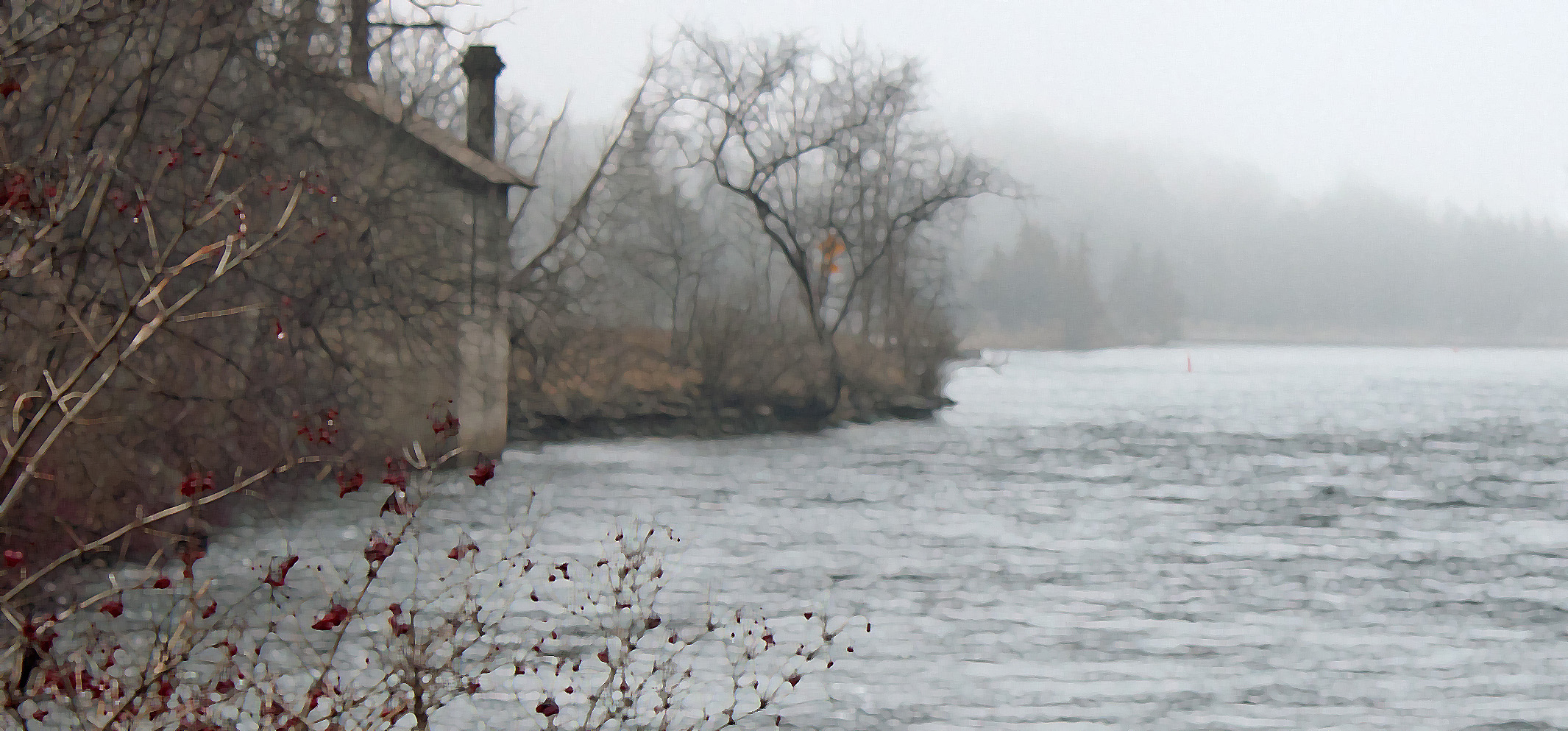
Old shed overlooks the Otonabee river on a snowy-foggy day, ON (photo and rendition by Nina Munteanu)
Giving Voice to the Other Through Character-Coupling
The coupling of protagonist with avatar—character-coupling—creates powerful drama and visceral connection to environmental issues and needs. Character-coupling characterizes environment, the Other, and effectively provides it with a voice, often through relationship. It elicits reader engagement, sparking new understandings and motivations toward a better caring of this world. The Other’s voice may be understandable (e.g. in many fables such as The Bear), arcane, tumultuous or fearsome (Memory of Water), or enduring and silently profound (The Breathing Hole).
Eco-literature is particularly poised to make meaningful character-couplings between mostly human protagonist and environmental characters or representatives. This is because the protagonist provides relatable qualities for easy reader empathy, while the Othered character is often less relatable—often an arcane aspect of the environment, such as water (Memory of Water) or a forest (The Overstory). Character-couplings illuminate a core aspect of the main character’s journey and/or the reader’s journey. From direct and intimate (The Breathing Hole, The Bear) to associated and inferred (The Windup Girl, Barkskins), different forms of character couplings often provide a new understanding of the plight and viewpoint of the Other. The protagonist’s link to the Other provides a readable map for the reader to follow and make their own connection.2
Dogwood shrubs and trees line a marsh in Ontario (photo and rendition by Nina Munteanu)
Women Coupled with Nature as Other
Since before the industrial revolution, and very much to this day, the prevailing western worldview toward the wildness of nature has been to dominate it and constrain it. The conviction that humans are separate from and superior to nature was established by Judeo-Christian beliefs and the Cartesian hegemony that laid the foundations of modern anthropocentrism (White). Ecofeminist Ynestra King argues that “we live in a culture that is founded on the repudiation, [exploitation], and domination of nature … the Other that has no voice”. King further argues that, “Women, who are identified with nature, have been similarly objectified and subordinated in patriarchal society”.
The modern ecofeminist movement contends that a long historical precedent of associating women with nature has led to the oppression of both. Ecofeminists note that “women and nature were often depicted as chaotic, irrational, and in need of control, while men were frequently characterized as rational, ordered, and thus capable of directing the use and development of women and nature” (Miles).
French philosopher and writer Simone de Beauvoir elegantly explores this connection:
Man seeks in woman the Other as Nature and as his fellow being. But we know what ambivalent feelings Nature inspires in man. He exploits her, but she crushes him, he is born of her and dies in her; she is the source of his being and the realm that he subjugates to his will; Nature is a vein of gross material in which the soul is imprisoned, and she is the supreme reality…Woman sums up Nature as Mother. Wife, and Idea; these forms now mingle and now conflict, and each of them wears a double visage.
Simone de Beauvoir
Because of this association and history, some of the most powerful character-couplings in eco-literature are of women protagonists coupled with natural avatar: the Inuk widow with polar bear cub in the clifi allegory The Breathing Hole; the girl and bear in the allegory-fable The Bear; the windup girl Emiko and the Cheshire cats in the cautionary tale The Windup Girl; the tea master Noria and water in the post-ecosystem collapse novel Memory of Water; the ecologist, Patricia Westerford, with the giant trees in The Overstory.3
Heavy snow on the river, ON (photo and rendition by Nina Munteanu)
Footnotes:
The Other has often been metaphorically portrayed in SF by aliens that lack a distinct voice or viewpoint; some portrayal has reflected a fearful imperialistic colonialism by representing Other as adversary such as an invading monster with no regard for humans (e.g. Robert Heinlein’s The Number of the Beast; H.G. Wells’s War of the Worlds). Kerslake argues that the traits of the Other “fall characteristically—and conveniently—into those spaces we choose not to recognize in ourselves, the ‘half-imagined, half-known: monsters, devils, heroes, terrors, pleasures, desires’ of Said’s ‘Orient’”. The Martians of Ray Bradbury’s Martian Chronicles—who also have no voice—reflect our indigenous peoples under the yoke of settler colonialism and an exploitive resource-extraction mindset. The monster of Mary Shelley’s Frankenstein—also with no voice—exemplifies the disabled/deformed unsavory departure from our ‘perfect’ self-image; to be chased, destroyed and nullified.
In some stories the protagonist is Othered in some way, providing a more direct link to the experience of being the Other or being Othered. For instance, in Mishell Baker’s Borderline, disabled protagonist Millie provides the connection to the greater theme of Othering “lesser beings.” In Costi Gurgu’s Recipearium, the protagonists are not human; they are alien creatures that dwell inside the dead carcass of a monster, representing Other as main character.
Excellent examples that overtly deal with some of these injustices include The Fifth Season trilogy by N.K. Jemisin and The Marrow Thieves by Cherie Dimaline.
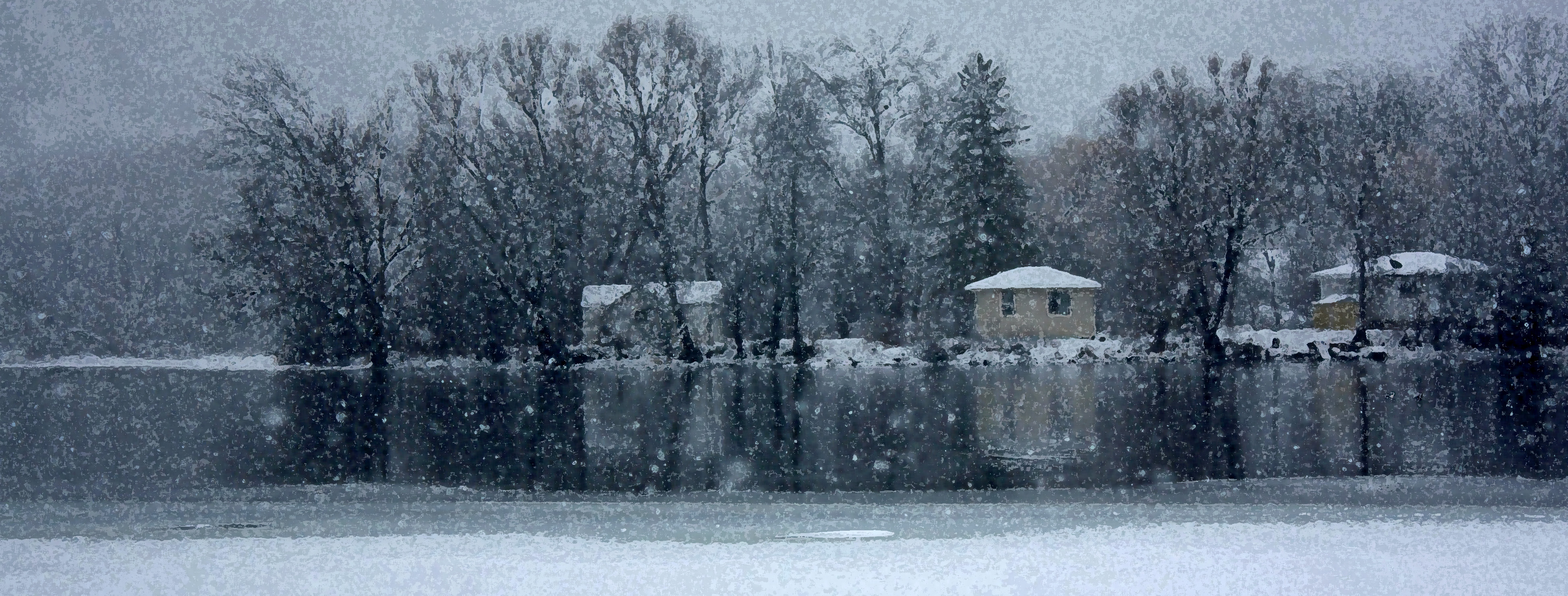
Snow-covered houses line the river during a snowstorm, ON (photos and rendition by Nina Munteanu)
.
In Part 2 of this series, I discuss seven examples of literature that use meaningful and impactful character coupling to achieve a voice for the marginalized, neglected and abused.
.
References:
Agamben, Giorgo. Homo Sacer: Sovereign Power and Bare Life. Stanford University Press. 1998. 228pp.
Bacigalupi, Paolo. The Windup Girl. Night Shade Books, New York. 2015. 466pp.
de Beauvoir, Simone. “The Second Sex.” Modern Library, Random House, New York. 1968. p.144 In:
Dwyer, Jim. Where the Wild Books are: A Field Guide to Ecofiction. University of Nevada Press, Reno, Nevada. 2010. 264pp.
Ganz, Marshall and Emily S. Lin. “Learning to Lead: a Pedagogy of Practice.” The Handbook for Teaching Leadership: Knowing, Doing, and Being, edited byIn Scott A. Sook, Nitin Nohria, and Rakesh Khurana. Thousand Oaks: SAGE Publications, 2012. 354p.
Herbert, Frank. Dune. Ace, New York. 1965. 884pp.
Itäranta, Emmi. Memory of Water. Harper Voyager. New York. 2014. 266pp.
Kerslake, Patricia. “The Self and Representations of the Other in Science Fiction.” Chapter 1. Science Fiction and Empire, Liverpool University Press, 2007, pp. 8-24.
King, Ynestra. “The Ecology of Feminism and the Feminism of Ecology.” Chapter 2. Healing the Wounds: The Promise of Ecofeminism, edited by Judith Plant. New Society Pub, 1989, pp. 18-28.
Krivak, Andrew. The Bear. Bellevue Literary Press, New York, NY. 2020. 221pp.
Miles, Kathryn. “Ecofeminism: sociology and environmentalism.” Britannica, britannica.com/topic/ecofeminism.
The rotary trail on a heavy-snow day, ON (photo and rendition by Nina Munteanu)
Nina Munteanu is a Canadian ecologist / limnologist and novelist. She is co-editor of Europa SF and currently teaches writing courses at George Brown College and the University of Toronto. Visit www.ninamunteanu.ca for the latest on her books. Nina’s bilingual “La natura dell’acqua / The Way of Water” was published by Mincione Edizioni in Rome. Her non-fiction book “Water Is…” by Pixl Press (Vancouver) was selected by Margaret Atwood in the New York Times ‘Year in Reading’ and was chosen as the 2017 Summer Read by Water Canada. Her novel “A Diary in the Age of Water” was released by Inanna Publications (Toronto) in June 2020.
Maude Barlow, author of Boiling Point, Chairman of the Council of Canadians
Like a car, every novel has its point of ignition: a spark that sets it in motion. This occurs when a premise or idea comes together with an incendiary moment of clarity or a thematic question. Mine—though I didn’t know it at the time—happened in a church on the Summer of 2016.
I was in a United Church on Bloor Street, in Toronto’s Annex, watching a talk given by Maude Barlow on water justice. The radical talk was based on her recent book Boiling Point, a comprehensive exploration of Canada’s water crisis—a crisis that most Canadians weren’t—and still aren’t—aware. Canada is steward to a fifth of the world’s fresh water, after all. It is a water-rich country. Of the dozen largest inland lakes in the world, Canada holds eight of them. So, why water crisis? Barlow explains. And you should read Boiling Point, particularly if you’re Canadian. It will open your eyes to the politics of water and how multinational corporations—like Nestlé—are already grabbing and funneling water away from Canadians and into the global profit machine.
I sat close to the front of the Church sanctuary to best see her. But I soon noticed that many people had elected to sit in the gallery above. I found myself focusing on a young mother and her little girl. The girl had some paper and crayons and was busy with that as the enthusiastic mother listened to Maude deliver dire facts about corporate water high-jacking and government complicity.
I saw a story there.
What mother would take her pre-school child to a socio-political talk on water? I would later reflect that memory of the mother and her little girl through my characters Una and her little daughter Lynna, the diarist in my novel A Diary in the Age of Water (eventually published in 2020 with Inanna Publications).
Fresh water flows down the barrel of a hand-operated water pump.
My novel really began with a short story I was invited to write in 2015 by editors of Future Fiction and Mincione Edizioni about water and politics in Canada; the premise of this story would later find it’s way into the larger novel. I had long been thinking of potential ironies in Canada’s water-rich heritage. The premise I wanted to explore was the irony of people in a water-rich nation experiencing water scarcity: living under a government-imposed daily water quota of 5 litres as water bottling and utility companies took it all. I named the story “The Way of Water.” It was about a young woman (Hilda) in near-future Toronto who has run out of water credits for the public wTap; by this time houses no longer have potable water and their water taps have been cemented shut; the only way to get water is through the public wTaps—at great cost. She is in a line of people; she’s two metres from water—and dying of thirst.
“The Way of Water” captures a vision that explores the nuances of corporate and government corruption and deceit together with global resource warfare. In this near-future, Canada is mined of all its water by thirsty Chinese and US multinationals—leaving nothing for the Canadians. Rain has not fallen on Canadian soil in years due to advances in geoengineering and weather manipulation that prevent rain clouds from going anywhere north of the Canada-US border. If you’re wondering if this is possible, it’s already happening in China and surrounding countries.
The story first appeared in 2015 in Future Fiction, edited by Francesco Verso, and in 2016 as a bilingual (English and Italian) book and essay published by Mincione Edizioni in Rome. The story has so far been reprinted seven times in magazines and anthologies, including “Cli-Fi: Canadian Tales of Climate Change Anthology” (Exile Editions, Bruce Meyer, ed), in 2017, “Future Fiction: New Dimensions in International Science Fiction” (Francesco Verso & Bill Campbell, eds; Future Fiction / Rosarium Publishing, Rome and Greenbelt, MD) in 2018; and in Little Blue Marble Magazine (Katrina Archer, ed) in January, 2019 and in their ‘Best of’ anthology. It was then published in 2022 in Metastellar Magazine and later in their ‘Best of’ anthology. “The Way of Water” received generous praise from review sites and the press worldwide.
After the success of this short story, I realized that I needed to tell the larger story—how did the world—Canada—get to where Hilda was? Her mysterious mother, the limnologist Lynna who was taken away by the RCMP in 2063, clamored for more attention. I remembered that four-year old girl and her mother in the gallery at Maude Barlow’s talk on water politics. And I thought of my characters: young Lynna and her mother Una. How does a daughter of an activist mother behave and think? How best to express her voice? I had earlier written a short story that was a mix of correspondence (emails) and third person narrative (“The Arc of Time” in Natural Selection, later reprinted in Metastellar Magazine), which I felt captured the voices of the characters well. I realized that a diary by Lynna would be an ideal way for her to express her unique worldview and cynicism—yet allow her vulnerable humanity to reveal itself through this unique relationship with her diary. The remaining characters and their narratives emerged easily from there: Una, her activist mother; Daniel, her conspiracy theorist colleague (and her conscience); Orvil, the water baron (and lover she betrayed); and Hilda, her “wayward” supposedly mind-challenged daughter—who appears in the short story that takes place later.
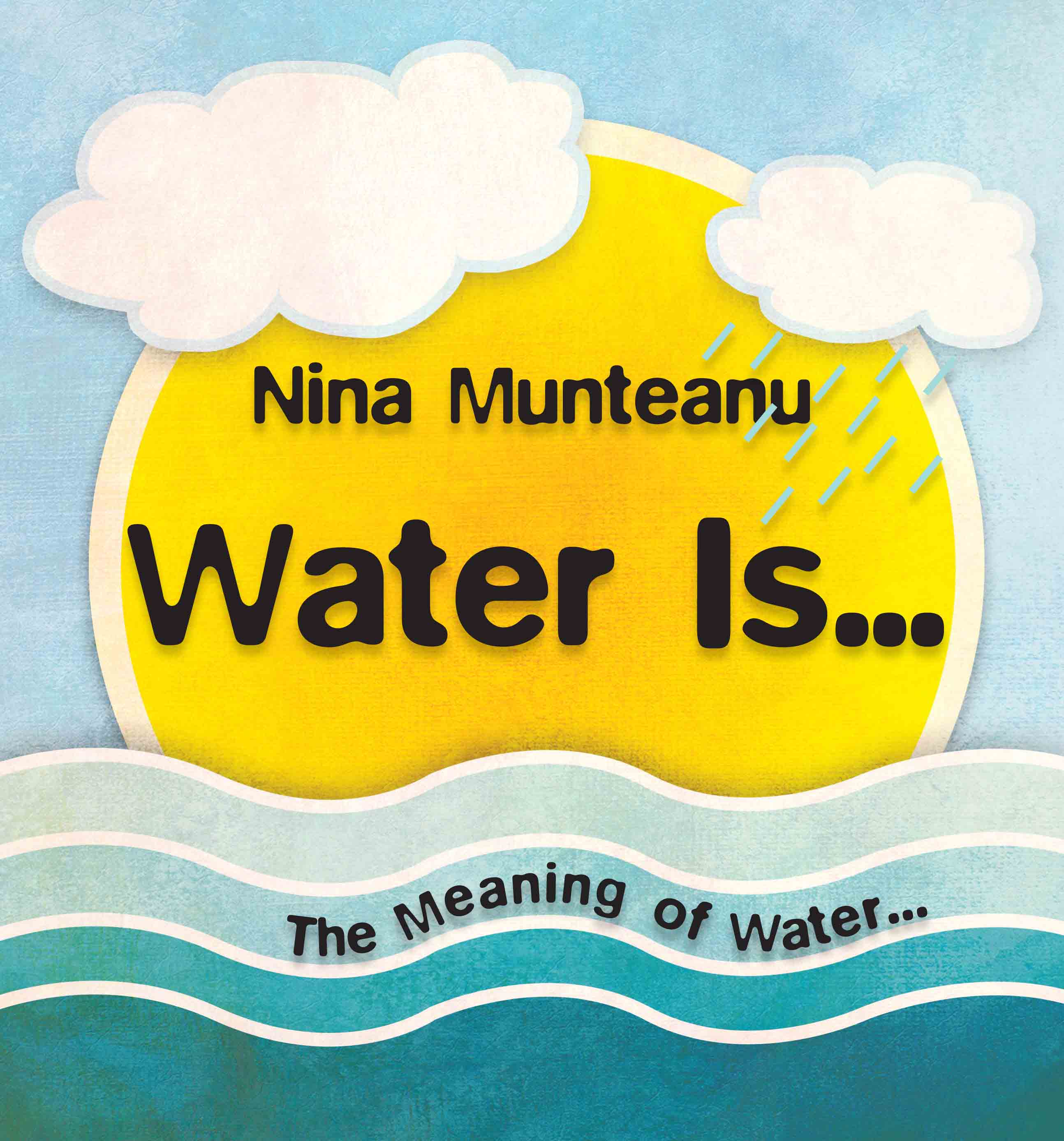
I had a lot of material; I had already been researching water issues and climate change in my activism as a science writer and reporter. In 2016, Pixl Press had published “Water Is… The Meaning of Water”,essentially a biography of water, written from the perspective of mother, environmentalist and scientist. I had practiced as a limnologist for over twenty-five years and could mine my various personal experiences in the field, lab and office with genuine realism. I chose Wetzel’s Limnology (the classic text book I used in my introductory limnology course) for quotes to each of Lynna’s entries; this added an opportunity to provide additional metaphor and irony through Lynna’s scientific voice. I placed the child Lynna (who was born in 2012) into actual events in Toronto, where I currently live. This pushed the story further into the area of documentary and blurred the lines between fiction and non-fiction to achieve a gritty and textured reality. Lynna also taught limnology at the University of Toronto, where I currently teach.
Just as Water Is… served as a watershed for all my relevant experiences as mother, environmentalist and scientist, A Diary in the Age of Water would galvanize many of my personal experiences, doubts, challenges and victories into compelling story. Although parts of the story wrote themselves, the entire book was not easy to write. There were times when I had to walk away from the book to gain some perspective—and optimism—before continuing. When I found myself drowning in Lynna’s voice, I invoked Hilda to guide me to shore. I found a balance that worked and compelled. Ultimately this opened to some of the best internal conflict and tension I have experienced in my writing.
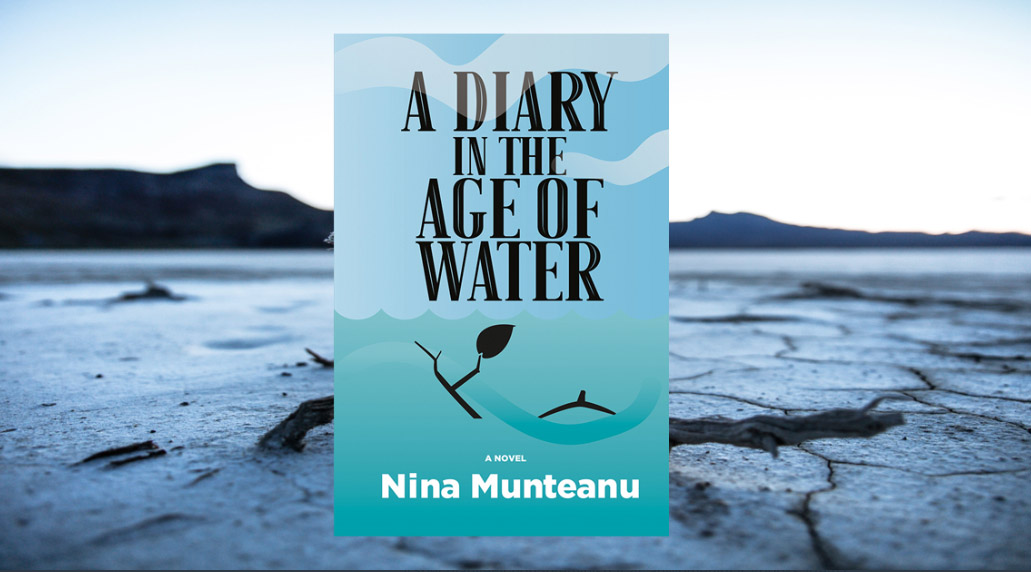
Like water itself, A Diary in the Age of Water expresses through many vessels and in many perspectives, spanning hundreds of years—and four generations of women—with a context wider than human life. Through its characters, A Diary in the Age of Waterexplores the big question of humanity’s deadlock with planetary wellness and whether one is worth saving at the expense of the other. One of the characters asks Lynna the hard question: “If you had the chance to save the planet [stop the mass extinctions, deforestation and pollution ravaging the planet], but it was at the expense of humanity, would you do it?”
Water is, in fact, a character in the book—sometimes subtle and revealed in subtext, other times horrific and roaring with a clamorous voice. Water plays both metaphoric and literal roles in this allegorical tale of humanity’s final journey from home. The story explores identity and our concept of what is “normal”—as a nation and an individual—in a world that is rapidly and incomprehensibly changing—and in which each of us plays a vital role simply by doing or not doing.
A Diary in the Age of Water promises to leave you adjusting your frame of reference to see the world, yourself—and water—in a different way.
Illustration on Liisbeth article (photo collage by PK Mutch and Dreamstime
This is what PK Mutch of Liisbeth and Ariel Kroon (PhD graduate of English Literature at the University of Alberta and co-editor at Solarpunk Magazine) say about A Diary in the Age of Water, published by Inanna Publications in 2020:
The novel has received wonderful praise and prizes, including the Literary Titan Award, the Foreword Indies Award and finalist in the International Book Awards. I wonder if Maude Barlow has read it?… Maybe I (or someone) should get her a copy, huh?…
Maude Barlow with ‘Save our River’ sign
Maude Barlow is a Canadian activist and author of Blue Gold, Boiling Point and several other books on water justice. She chairs the board of Washington-based Food and Water Watch and Ottawa-based Blue Planet Project. Maude co-founded the Council of Canadians and chaired its board for over three decades.
Nina Munteanu is a Canadian ecologist / limnologist and novelist. She is co-editor of Europa SF and currently teaches writing courses at George Brown College and the University of Toronto. Visit www.ninamunteanu.ca for the latest on her books. Nina’s bilingual “La natura dell’acqua / The Way of Water” was published by Mincione Edizioni in Rome. Her non-fiction book “Water Is…” by Pixl Press (Vancouver) was selected by Margaret Atwood in the New York Times ‘Year in Reading’ and was chosen as the 2017 Summer Read by Water Canada. Her novel “A Diary in the Age of Water” was released by Inanna Publications (Toronto) in June 2020.
Writer and curator Mary Woodbury shares eight novels about water where fact and fiction mingle, tried by imagination, to reveal important truths about our shifting relationships with this vital and lively agent in an era of climate crisis,” writes the magazine Climate Cultures.
“While facts are something we can and should pay attention to as we follow scientific integrity, models, and reports, another mode of telling the story about water has been alive forever: churned, spoken, and written by authors who dream up fictional stories related to our past, present, and future world. Where fact and fiction mingle like this is an area of reflection and speculation, tied by imagination. These tales of water ripple out once the pebble sinks in. The intersectionality of diverse water fiction results in reader empathy, learning, inspiration, and shared commonalities around the world. Local dignity comes alive against a backdrop of planetary crises.”
She chooses the following eco-novels to discuss:
“Land-Water-Sky (Ndè-Ti-Yat’a)” by Katłıà “Oil on Water” by Helon Habila “A Diary in the Age of Water” by Nina Munteanu “The Water Knife” by Paolo Bacigalupi “Memory of Water” by Emmi Itäranta “Fever Dream” by Samanta Schweblin “Lagoon” by Nnedi Okorafor “Bangkok Wakes to Rain” by Pitchaya Sudbanthad
Here’s what she writes about my novel:
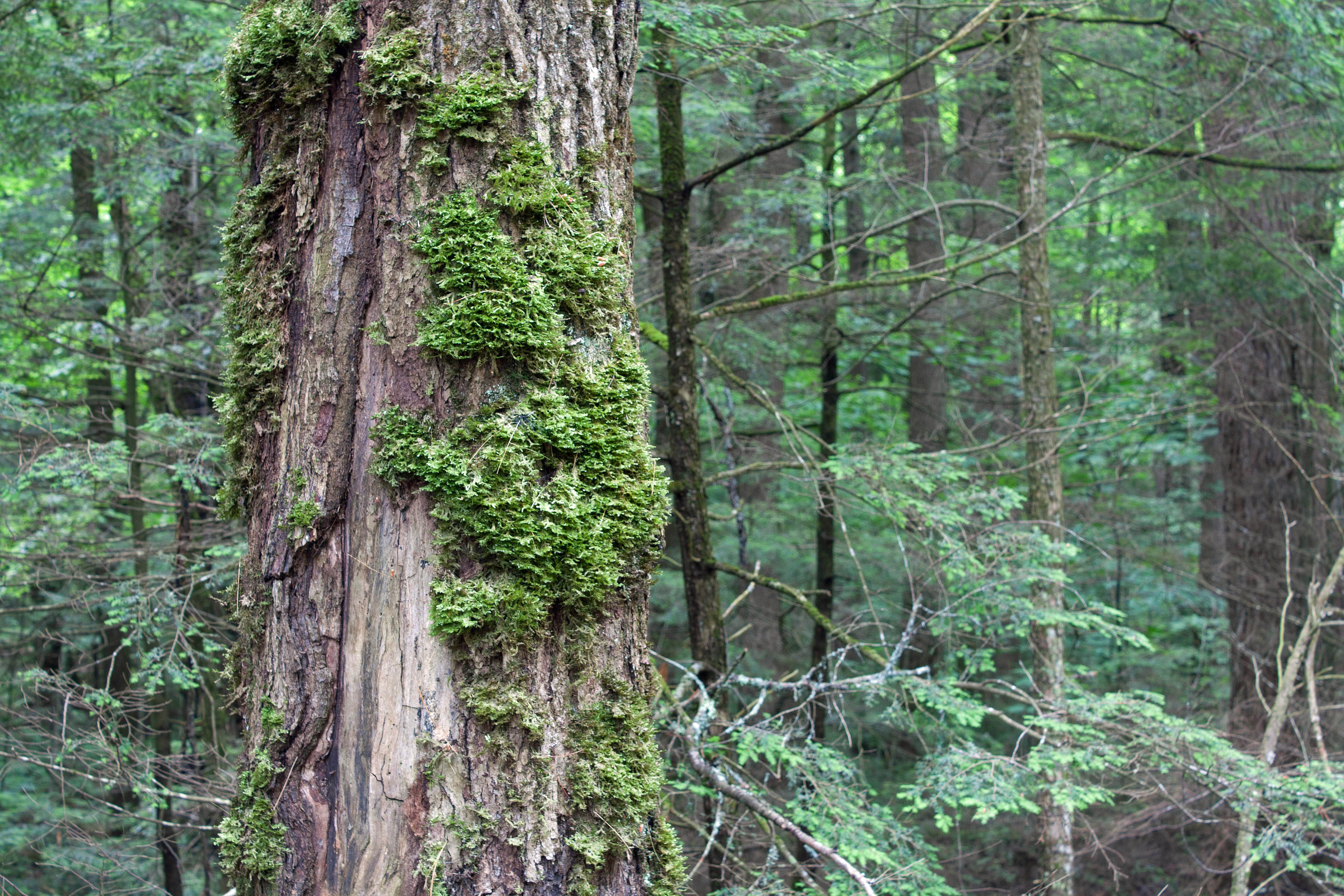
Ancient Eastern Hemlock in Catchacoma old-growth forest, ON (photo by Nina Munteanu)
NINA MUNTEANU is a Canadian ecologist / limnologist and novelist. She is co-editor of Europa SF and currently teaches writing courses at George Brown College and the University of Toronto. Visit www.ninamunteanu.ca for the latest on her books. Nina’s bilingual “La natura dell’acqua / The Way of Water” was published by Mincione Edizioni in Rome. Her non-fiction book “Water Is…” by Pixl Press(Vancouver) was selected by Margaret Atwood in the New York Times ‘Year in Reading’ and was chosen as the 2017 Summer Read by Water Canada. Her novel “A Diary in the Age of Water” was released by Inanna Publications (Toronto) in June 2020.










 Nina Munteanu Writing Coach