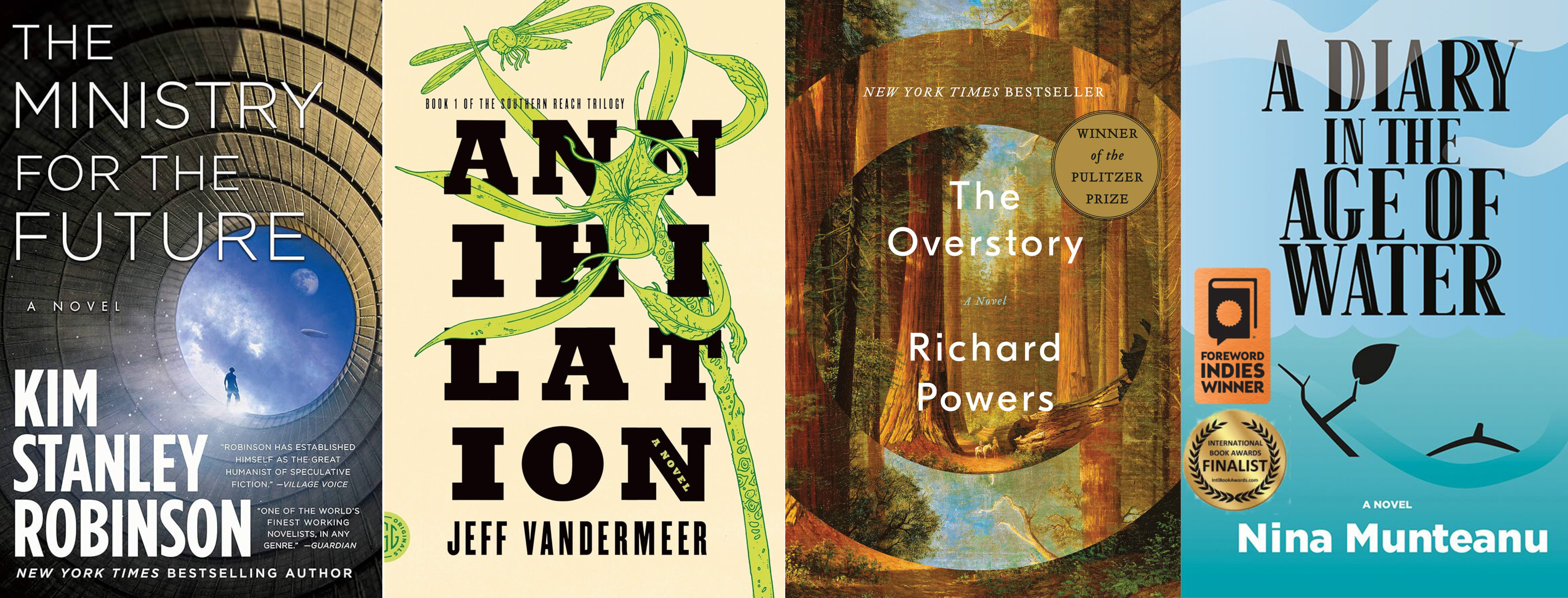
Inventor/author Kyo Hwang Cho recently identified Nina Munteanu, Kim Stanley Robinson, Jeff VanderMeer, and Richard Powers as Leading Voices in Eco-Science Fiction in an article on the LinkedIn Skyhome Newsletter.
Cho wrote:
Kim Stanley Robinson: Robinson is renowned for integrating ecological themes into his narratives. His works like The Ministry for the Future and the Mars Trilogy explore climate change, sustainability, and alternative socio-economic systems. His stories often centre around scientists striving for environmental reform.
Jeff VanderMeer: Best known for the Southern Reach Trilogy, beginning with Annihilation, VanderMeer delves into a nature-reclaimed mystery zone called Area X. His work blends ecological concerns with surreal and speculative storytelling, offering a unique lens on environmental collapse.
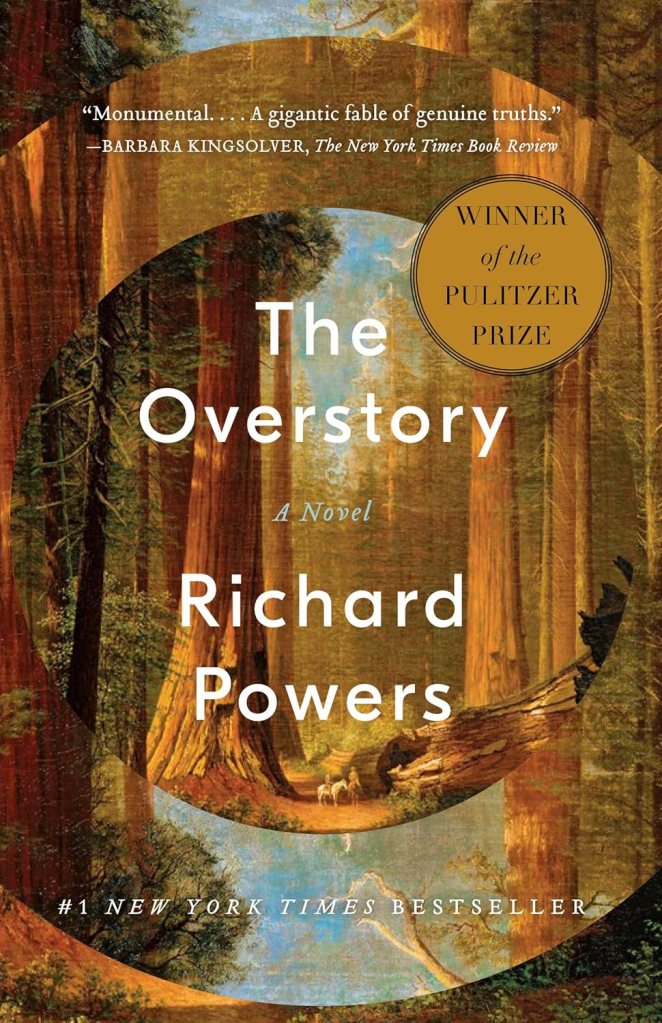
Richard Powers: While not strictly a science fiction author, Powers’s novels such as The Overstory and Playground revolve around nature’s impact on human lives and vice versa. His writing emphasizes the deep interconnectedness of species and ecosystems.
Nina Munteanu: A Canadian ecologist and writer, Munteanu’s stories explore how humans interact with the environment. Her narratives often examine the intersection of science, climate crisis, and spiritual transformation.
.
.
Cho included the following Noteworthy Eco-Science Fiction Works:
“The Ministry for the Future”: A speculative exploration of global climate crisis responses through policy, activism, and emergent technology.
“Annihilation”: A surreal expedition into a wilderness zone that defies scientific explanation, echoing the unpredictability of nature itself.
“The Overstory”: A web of interconnected lives bound by trees, showing how the natural world can act as both witness and protagonist. [Inclusion of this book in the eco-SciFi subgenre is a stretch: however, like my own book, there are elements of speculation, and some subtle fantastical elements that one can argue place it in a scifi setting]
“A Diary in the Age of Water”: A dystopian look at a future shaped by water scarcity, societal collapse, and ecological memory.
Cho defines Eco-SciFi this way: “Eco-SciFi is a subgenre of SciFi that foregrounds ecological consciousness, blending speculative fiction with climate science, ethics, and planetary survival.” He includes a table that distinguishes Eco-SciFi from traditional Sci-Fi in several core areas from core theme, tone and motivation to protagonists and ‘message.’
.
.
Nina Munteanu is a Canadian ecologist / limnologist and novelist. She is co-editor of Europa SF and currently teaches writing courses at George Brown College and the University of Toronto. Visit www.ninamunteanu.ca for the latest on her books. Nina’s bilingual “La natura dell’acqua / The Way of Water” was published by Mincione Edizioni in Rome. Her non-fiction book “Water Is…” by Pixl Press (Vancouver) was selected by Margaret Atwood in the New York Times ‘Year in Reading’ and was chosen as the 2017 Summer Read by Water Canada. Her novel “A Diary in the Age of Water” was released by Inanna Publications (Toronto) in June 2020.
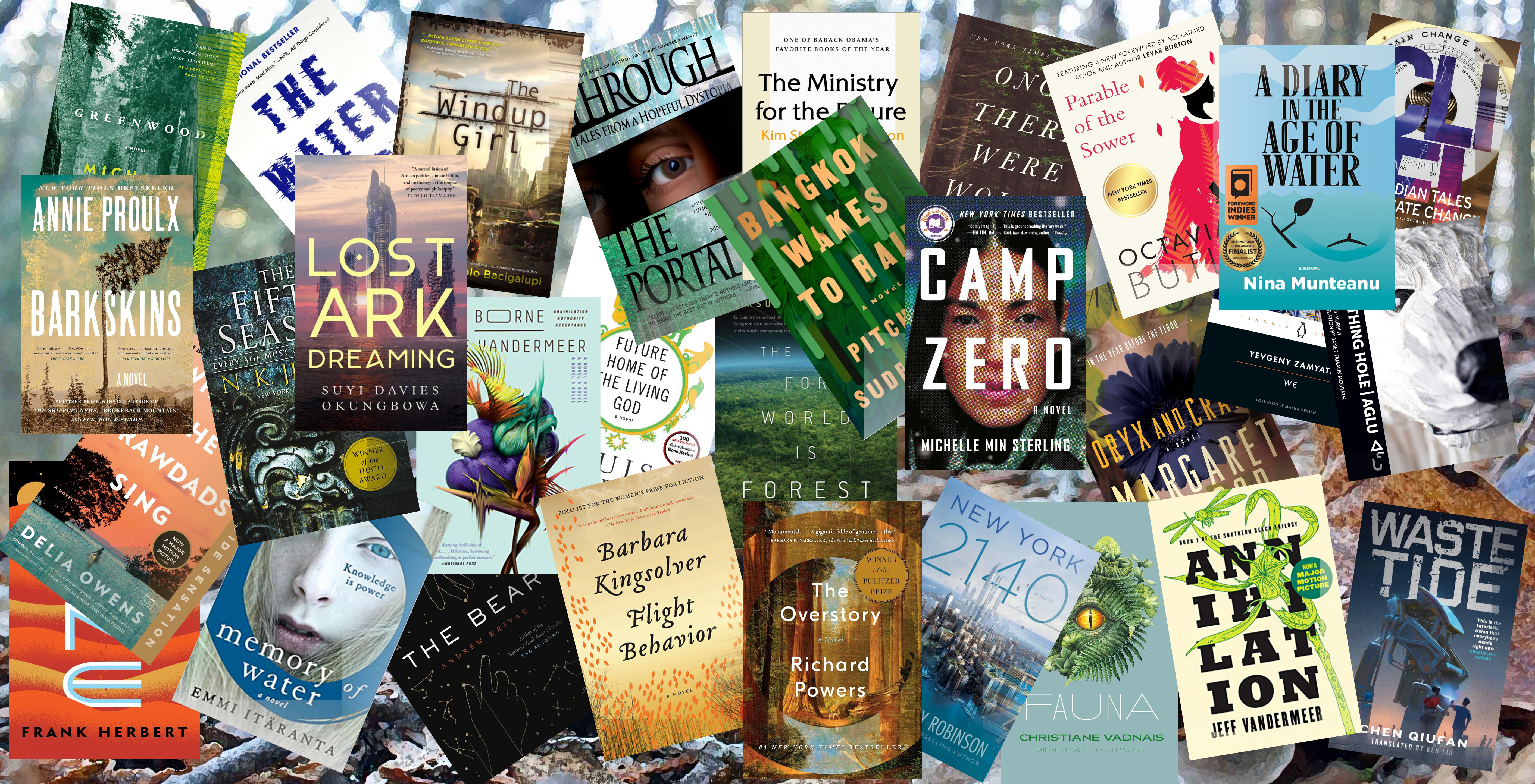
Here is my current list of 30 favourite eco-fiction novels and short story collections that have impacted me, and incited me to think, to feel and to act.
Flight Behavior is a multi-layered metaphoric study of “flight” in all its iterations: as movement, flow, change, transition, beauty and transcendence. Flight Behavior isn’t so much about climate change and its effects and its continued denial as it is about our perceptions and the actions that rise from them: the motives that drive denial and belief. When Dellarobia questions Cub, her farmer husband, “Why would we believe Johnny Midgeon about something scientific, and not the scientists?” he responds, “Johnny Midgeon gives the weather report.” Kingsolver writes: “and Dellarobia saw her life pass before her eyes, contained in the small enclosure of this logic.”
.
The Overstory follows the life-stories of nine characters and their journey with trees–and ultimately their shared conflict with corporate capitalist America. At the heart of The Overstory is the pivotal life of botanist Patricia Westerford, who will inspire movement. Westerford is a shy introvert who discovers that trees communicate, learn, trade goods and services—and have intelligence. When she shares her discovery, she is ridiculed by her peers and loses her position at the university. What follows is a fractal story of trees with spirit, soul, and timeless societies–and their human avatars.
.
The Maddaddam Trilogy is a work of speculative dystopian fiction that explores the premise of genetic experimentation and pharmaceutical engineering gone awry. On a larger scale the cautionary trilogy examines where the addiction to vanity, greed, and power may lead. Often sordid and disturbing, the trilogy explores a world where everything from sex to learning translates to power and ownership. The dark poetry of Atwood’s smart and edgy slice-of-life commentary is a poignant treatise on our dysfunctional society. Atwood accurately captures a growing zeitgeist that has lost the need for words like honor, integrity, compassion, humility, forgiveness, respect, and love in its vocabulary. And she has projected this trend into an alarmingly probable future. This is subversive eco-fiction at its best.
.
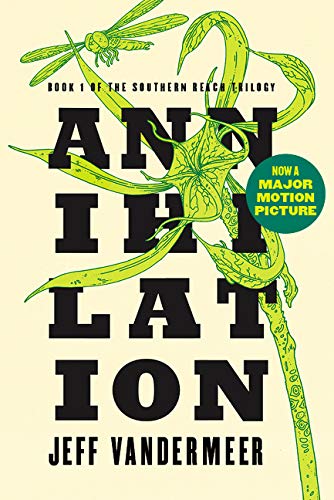
Annihilation is a science fiction eco-thriller that explores humanity’s impulse to self-destruct within a natural world of living ‘alien’ profusion. Annihilation is a bizarre exploration of how our own mutating mental states and self-destructive tendencies reflect a larger paradigm of creative-destruction—a hallmark of ecological succession, change, and overall resilience. VanderMeer masters the technique of weaving the bizarre intricacies of ecological relationship, into a meaningful tapestry of powerful interconnection. Bizarre but real biological mechanisms such as epigenetically-fluid DNA drive aspects of the story’s transcendent qualities of destruction and reconstruction. On one level Annihilation acts as parable to humanity’s cancerous destruction of what is ‘normal’ (through climate change and habitat destruction); on another, it explores how destruction and creation are two sides of a coin.
.
Barkskins chronicles two wood cutters who arrive from the slums of Paris to Canada in 1693 and their descendants over 300 years of deforestation in North America. Proulx weaves generational stories of two settler families into a crucible of terrible greed and tragic irony. The bleak impressions by immigrants of a harsh environment crawling with pests underlies the combative mindset of the settlers who wish only to conquer and seize what they can of a presumed infinite resource. From the arrival of the Europeans in pristine forest to their destruction under the veil of global warming, Proulx lays out a saga of human-environmental interaction and consequence that lingers with the aftertaste of a bitter wine.
.
Memory of Water is a work of speculative fiction about a post-climate change world of sea level rise. Symbols of water as shapeshifter archetype and its omnipotent life- and death-giving associations flow throughout the story, from the ‘fishfires’ in the northern skies to the painted blue circles on the doors of water criminals about to die. Water couples to main character Tea Master Noria, to explore consequences of commodification and exploitation. Teamaster Noria Kaitio guards its secrets; she alone knows the location of the hidden water source, coveted by the new government. Told in the literary fiction style of emotional nuances, Itäranta’s lyrical narrative follows a deceptively quiet yet tense pace that builds like a slow tide into compelling crisis and a poignant end.
.
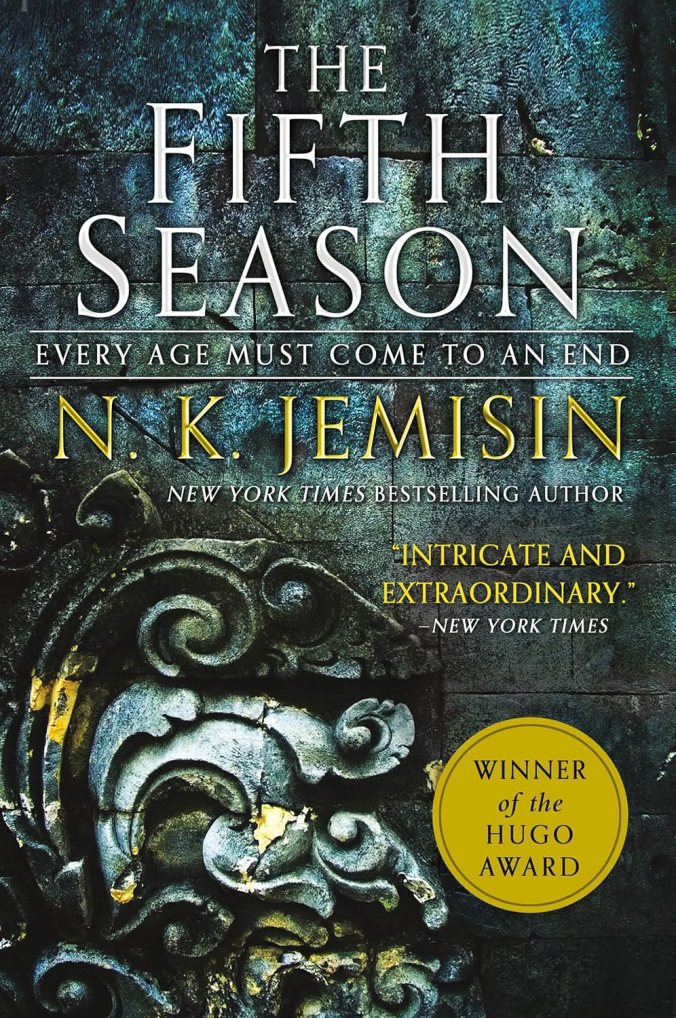
The Broken Earth Trilogy is a fantasy trilogy set in a far-future Earth devastated by periodic cataclysmic storms known as ‘seasons.’ These apocalyptic events last over generations, remaking the world and its inhabitants each time. Giant floating crystals called Obelisks suggest an advanced prior civilization. The first book of the trilogy introduces Essun, an Orogene—a person gifted with the ability to draw magical power from the Earth such as quelling earthquakes. The trilogy focuses on the dangers of marginalization, oppression, and misuse of power. Jemison’s cautionary dystopia explores the consequence of the inhumane profiteering of those who are marginalized and commodified.
.
The Windup Girl is a work of mundane science fiction that occurs in 23rd century post-food crash Thailand after global warming has raised sea levels and carbon fuel sources are depleted. Thailand struggles under the tyrannical boot of predatory ag-biotech multinational giants that have fomented corruption and political strife through their plague-inducing genetic manipulations. The rivalry between Thailand’s Minister of Trade and Minister of the Environment represents the central conflict of the novel, reflecting the current global conflict of neoliberal promotion of globalization and unaccountable exploitation with the forces of sustainability and environmental protection. Given the setting, both are extreme and there appears no middle ground for a balanced existence using responsible and sustainable means. The Windup Girl, Emiko, who represents the future, is precariously poised.
.
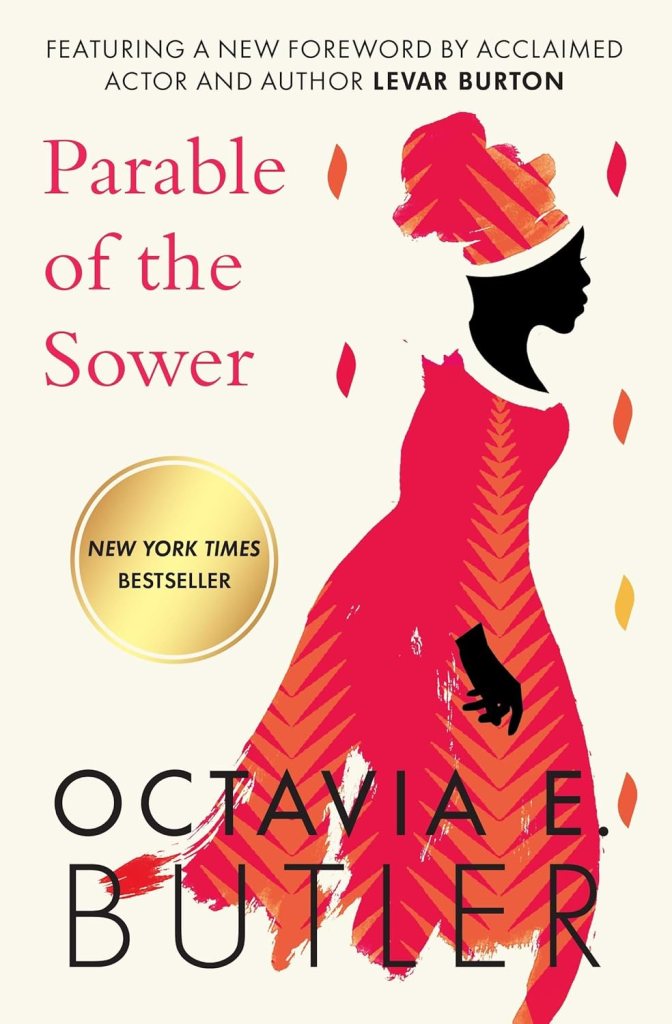
Parable of the Sower is a science fiction dystopian novel set in 21stcentury America where civilization has collapsed due to climate change, wealth inequality and greed. Parable of the Soweris both a coming-of-age story and cautionary allegorical tale of race, gender and power. Told through journal entries, the novel follows the life of young Lauren Oya Olamina—cursed with hyperempathy—and her perilous journey to find and create a new home. What starts as a fight to survive inspires in Lauren a new vision of the world and gives birth to a new faith based on science: Earthseed. Written in 1993, this prescient novel and its sequel Parable of the Talent speak too clearly about the consequences of “making America Great Again.”
.
The Water Knife is set in the near-future in the drought-stricken American southwest, where corrupt state-corporations have supplanted the foundering national government. Water is the new gold—to barter, steal, and murder for. Corporations have formed militias and shut down borders to climate refugees, fomenting an ecology of poverty and tragedy. Massive resorts—arcadias—constructed across the parched landscape, flaunt their water-wealth in the face of exploited workers and gross ecological disparity. Water is controlled by corrupt gangsters and “water knives” who cleverly navigate the mercurial nature of water rights in a world where “haves” hydrate and “have nots” die of thirst.
.
A Diary in the Age of Water explores the socio-political consequences of corruption in Canada, now owned by China and America as an indentured resource ‘reservoir’; it is a story told through four generations of women and their unique relationship with water during a time of great unheralded change. Centuries from now, in a dying boreal forest in what used to be northern Canada, Kyo, a young acolyte called to service in the Exodus, yearns for Earth’s past—the Age of Water—before the “Water Twins” destroyed humanity. Looking for answers and plagued by vivid dreams of this holocaust, Kyo discovers the diary of Lynna, a limnologist from that time of severe water scarcity just prior to the destruction. In her work for a global giant that controls Earth’s water, Lynna witnesses and records in her diary the disturbing events that will soon lead to humanity’s demise.
.
Waste Tide is an eco-techno thriller with compelling light-giving characters who navigate the dark bleak world of profiteers and greedy investors. Mimi is a migrant worker off the coast of China who scavenges through piles of hazardous technical garbage to make a living. She struggles, like the environment, in a larger power struggle for profit and power; but she finds a way to change the game, inspiring others. The story of Mimi and Kaizong—who she inspires—stayed with me long after I put the book down.
.
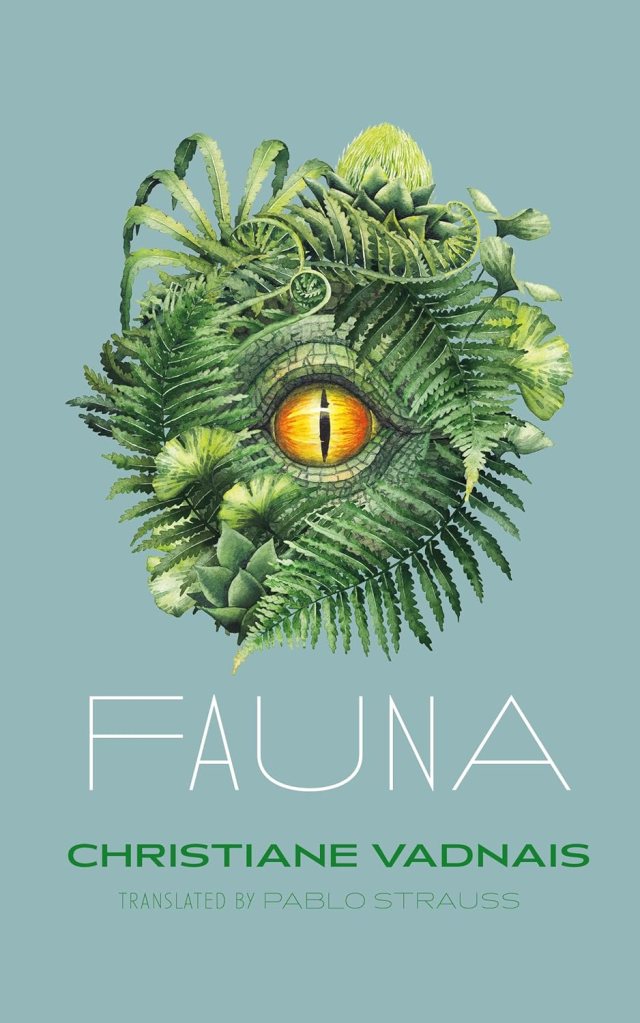
Fauna is at once beautiful and terrifying. Vadnais’s liquid prose immersed me instantly in her flowing story about change in this Darwinian eco-horror ode to climate change. I felt connected to the biologist Laura as she navigated through a torrent of rising mists and coiling snakes and her own transforming body with the changing world around her. It was an emotional rollercoaster ride that made me think.
.
The Word for World is Forest chronicles the struggles of the indigenous people under the conquering settlers through empathetic characters. The irony of what the indigenous peoples must do to save themselves runs subtle but tragic throughout the narrative. Given its relevance to our own colonial history and present situation, this simple tale rang through me like a tolling bell.
.
The Breathing Hole story begins in 1535, when the Inuk widow Hummiktuq risks her life to save a lost one-eared polar bear cub on an ice floe and adopts him. She names him Angu’ruaq. We soon learn that Angu’ruaq is timeless when we encounter him in scenes over the centuries from the Franklin Expedition in 1845 (who he helps by bringing them food) to 2031 when Angu’ruaq—old, hungry, his fur yellowing—returns to the breathing hole where long-dead Hummiktuq rescued him. By then the glaciers have receded and the ground is slush. Murphy’s spare and focused narrative achieves a timeless, dreamlike quality that plays strongly on the emotional connections of the reader; it elicits immense empathy for the Other in a deeply moving saga on the tragic dance of colonialism and climate change.
.
The Bearby Andrew Krivak is a fable of a post-anthropocene Earth told through the point of view of a young girl—possibly the only remaining human in the world—and the bear that guides her. Unlike the polar bear of The Breathing Hole, who remains silent and is clearly victimized by humanity’s actions, the black bear of The Bear lives with agency in a post-anthropocene world; he proselytizes and tells stories to instruct the girl on living harmoniously with Nature. His actions and elegant use of speech reflect his archetype as mentor in this story. This is foreshadowed in the fairytale the girl’s father recounts to her of a bear that saved a village from a cruel despot through cleverness and a sense of community.
.
Duneuses powerful world building and symbols of desert, water and spice coupled to the indigenous Fremen, to address exploitation and oppression by colonial greed.
The novel chronicles the journeys of new colonists and indigenous peoples of the desert planet Arrakis, enslaved by its previous colonists. The planet known as Dune lies at the heart of an epic story about taking, giving and sharing. The planet also serves as symbol to any new area colonized by settlers and already inhabited by Othered indigenous. It is the Mars of Martian Chronicles, the Bangkok of The Windup Girl, the North America of Barkskins.
.
Camp Zero, set in the remote Canadian north, is a feminist climate fiction that explores a warming climate through the perilous journeys of several female characters, each relating to her environment in different ways. Each woman exerts agency in surprising ways that include love, bravery and shared community. The strength of female power carried me through the pages like a braided river heading to a singular ocean. These very different women journey through the dark ruins of violent capitalism, colonialism and patriarchy—flowing past and through hubristic men pushing north with agendas and jingoistic visions—to triumph in an ocean of solidarity. I empathized with each woman as she found her strength and learned to wield true heroism—one based on collaboration and humble honesty.
.
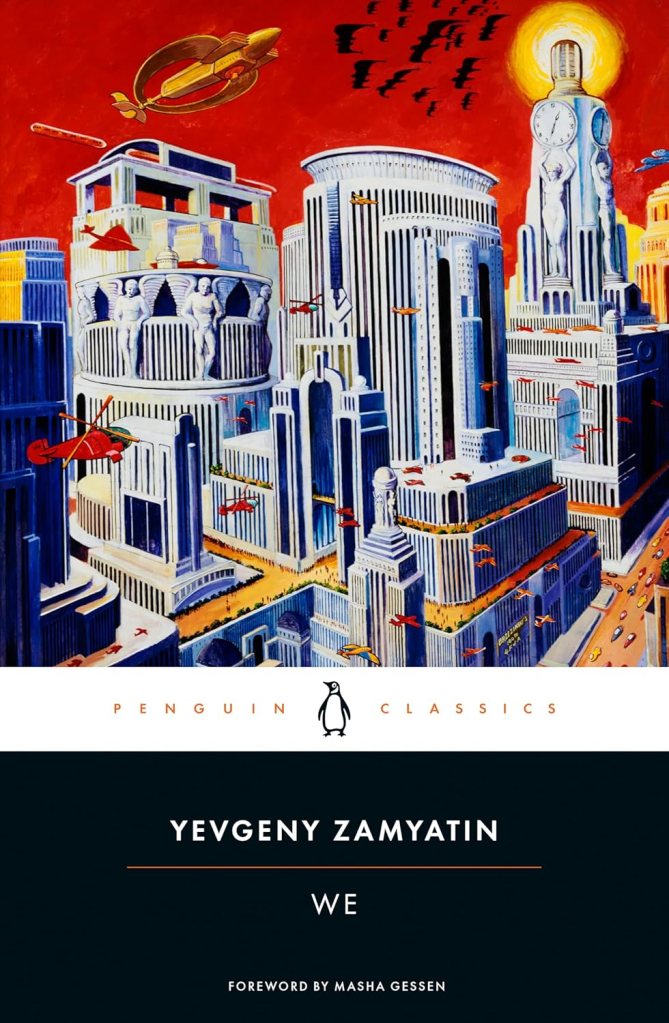
We, written in 1920, is a hopeful dystopic work of courageous and unprecedented feminism. While the story centres on logical D-503, a man vacuously content as a number in the One State, it is I-330—Zamyatin’s unruly heroine—who stole my attention. Confident, powerful and heroic, the liberated I-330 embraces the Green Wind of change to influence D-503. A force of hope and resilience, she braves torture to successfully orchestrate a revolution that breaches the Green Wall—feats typically relegated to a male protagonist in novels of that era. When pregnant O-90 refuses to surrender her child to the State, I-330 helps her escape to the outside, where the Green Wind of freedom blows. I resonated with Zamyatin’s cautionary tale on the folly of logic without love and Nature.
.
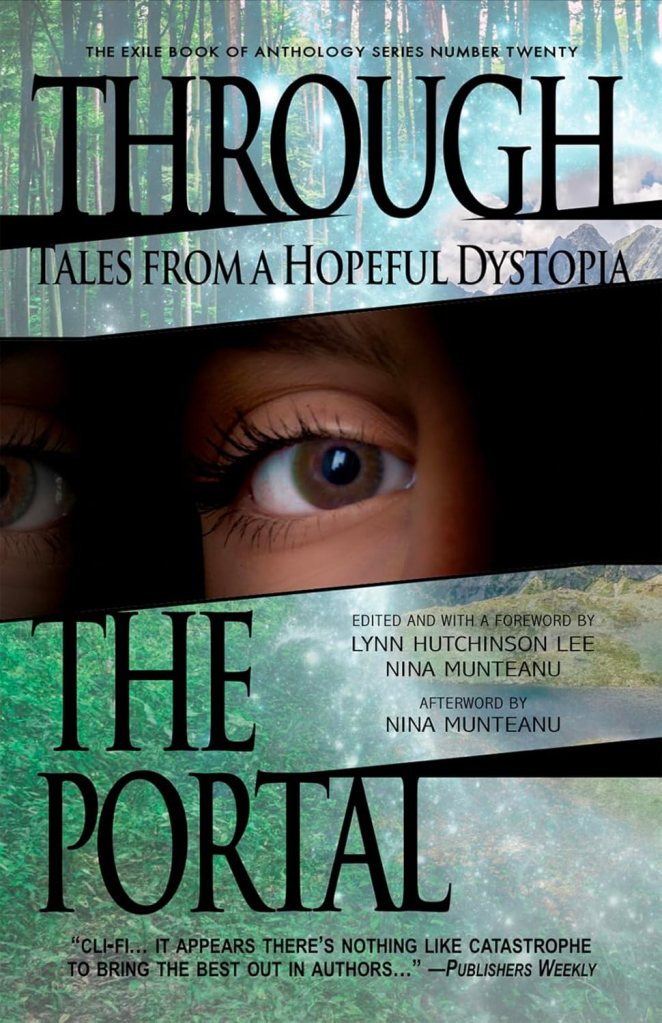
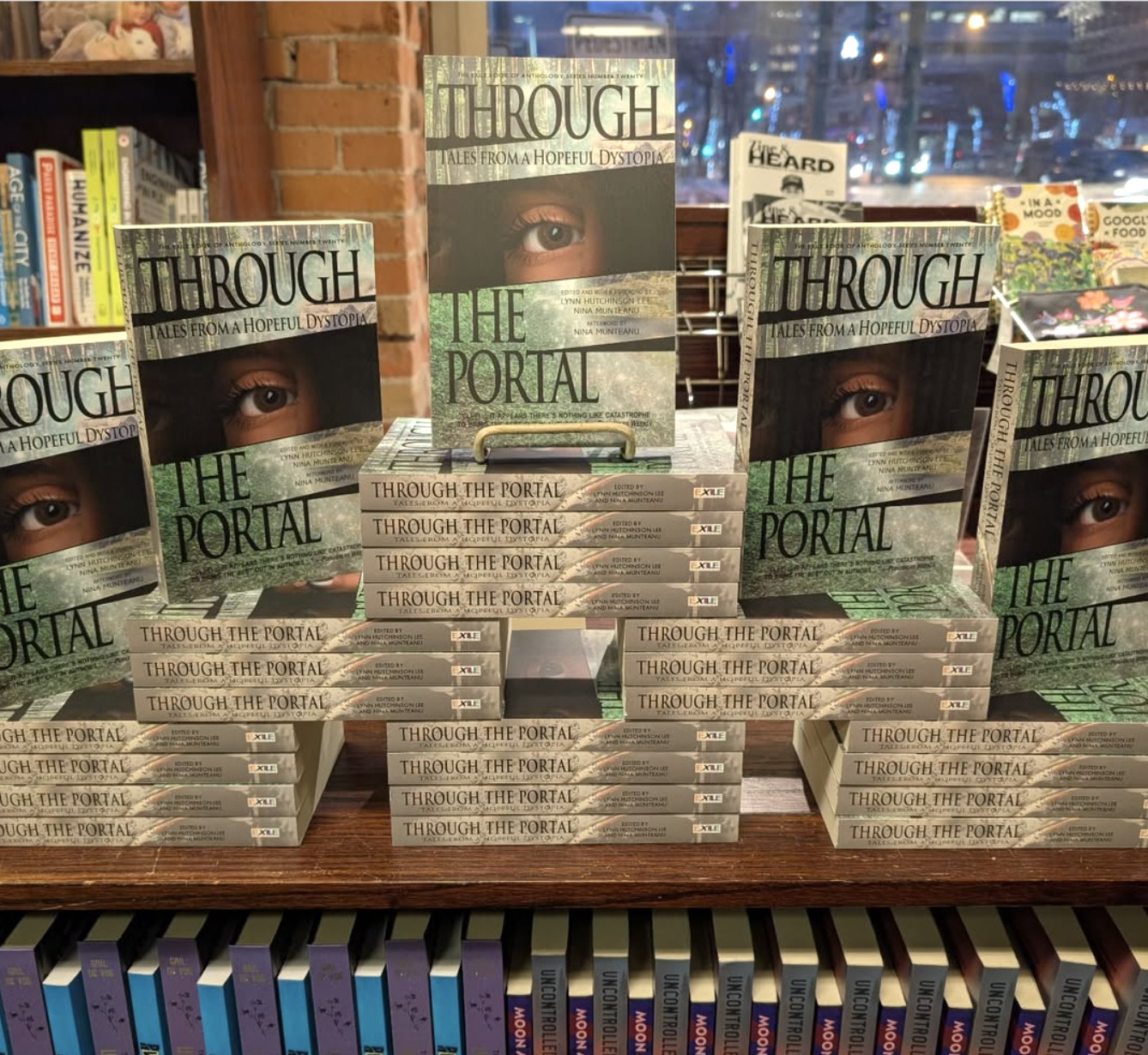
In Through the Portal: Tales from a Hopeful Dystopia, award-winning authors of speculative fiction Lynn Hutchinson Lee and Nina Munteanu present a collection that explores strange new terrains and startling social constructs, quiet morphing landscapes, dark and terrifying warnings, lush newly-told folk and fairy tales.
.
I list other significant and impactful eco-fiction books below:
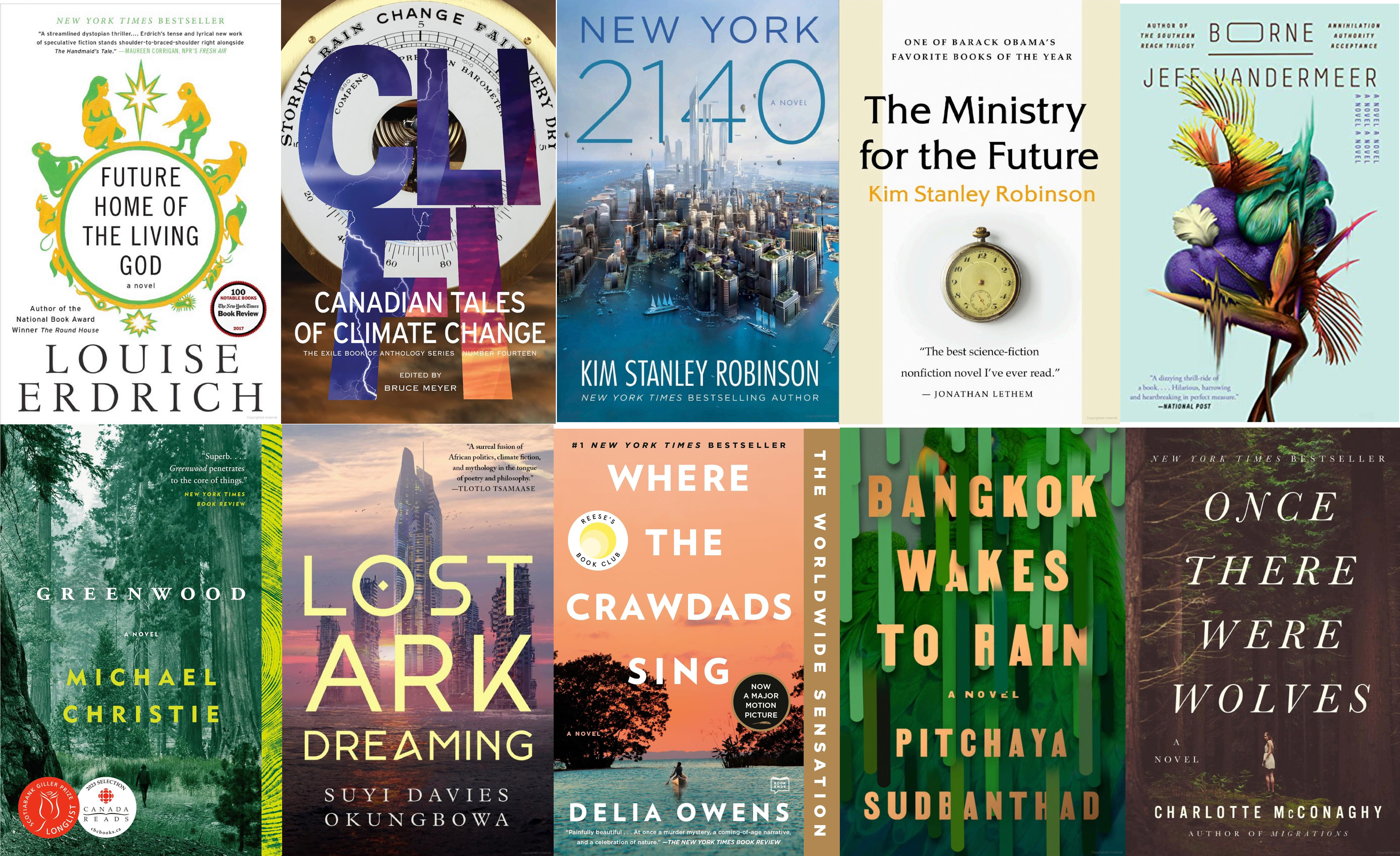
New York 2140 by Kim Stanley Robinson
Canadian Tales of Climate Change (edited) by Bruce Meyer
Ministry for the Future by Kim Stanley Robinson
Borne by Jeff Vandermeer
Bangkok Wakes to Rain by Pitchaya Sudbanthad
Future Home of the Living God by Louise Erdrich
Lost Arc Dreaming by Suyi Davies Okungbowa
Greenwood by Micheal Christie
Where the Crawdads Sing by Della Owens
Once There Were Wolves by Charlotte McConaghy
.
.
Nina Munteanu is a Canadian ecologist / limnologist and novelist. She is co-editor of Europa SF and currently teaches writing courses at George Brown College and the University of Toronto. Visit www.ninamunteanu.ca for the latest on her books. Nina’s bilingual “La natura dell’acqua / The Way of Water” was published by Mincione Edizioni in Rome. Her non-fiction book “Water Is…” by Pixl Press (Vancouver) was selected by Margaret Atwood in the New York Times ‘Year in Reading’ and was chosen as the 2017 Summer Read by Water Canada. Her novel “A Diary in the Age of Water” was released by Inanna Publications (Toronto) in June 2020.
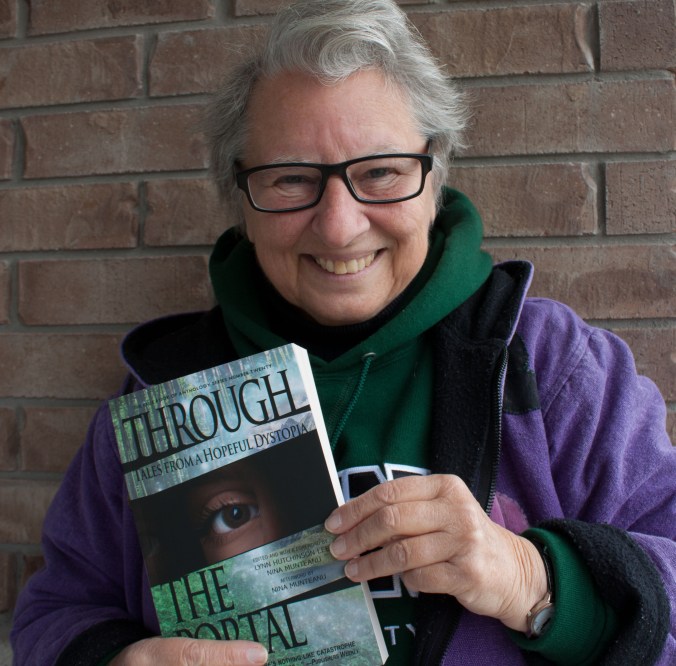
Through the Portal anthology continues to garner attention and accolades by reviewers, booksellers, and readers throughout Canada. Released December 31, 2024 and launched in several locations in Canada, Portal is celebrated for its hopeful lens on an otherwise bleak future with thirty-five unique short stories, flash fiction, and poetry and an afterward.
There are many faces for hope; this anthology has thirty-six of them. Each story in the anthology features a unique hopeful lens that draws from a diversity of authors from around the world and throughout Canada. Stories that touch on nostalgia to respect, enlightenment to endurance. In these tales that range from compassion and healing to cautionary warnings of dark insight, hope may wear a human face or the face of a tree, black crow, or leaf.
Hopeful dystopias are so much more than an apparent oxymoron: they are in some fundamental way the spearhead of the future – and ironically often a celebration of human spirit by shining a light through the darkness of disaster. In Through the Portal: Tales from a Hopeful Dystopia, award-winning authors of speculative fiction Lynn Hutchinson Lee and Nina Munteanu present a collection that explores strange new terrains and startling social constructs, quiet morphing landscapes, dark and terrifying warnings, lush newly-told folk and fairy tales.—Exile Editions
“A stunning collection of short stories and poetry that address our most existential concerns.”
Dragonfly.eco
“Will ingenuity, love, and respect for the earth help us work through whatever changes might lie ahead? Through the Portal offers hope that these qualities, if not enough in and of themselves, will help us find our way.”
The Seaboard Review
.
Nina Munteanu is a Canadian ecologist / limnologist and novelist. She is co-editor of Europa SF and currently teaches writing courses at George Brown College and the University of Toronto. Visit www.ninamunteanu.ca for the latest on her books. Nina’s bilingual “La natura dell’acqua / The Way of Water” was published by Mincione Edizioni in Rome. Her non-fiction book “Water Is…” by Pixl Press (Vancouver) was selected by Margaret Atwood in the New York Times ‘Year in Reading’ and was chosen as the 2017 Summer Read by Water Canada. Her novel “A Diary in the Age of Water” was released by Inanna Publications (Toronto) in June 2020.
Mermaids, arborists, and pollinators are among the characters to be found in Through the Portal: Tales from a Hopeful Dystopia. Edited by Lynn Hutchinson Lee and Nina Munteanu, this eco-fiction collection gathers over thirty stories that fall under the general umbrella of hopeful dystopias…
Through the Portal offers intriguing and imaginative glimpses into the future. As [one of its short stories] “A Fence Made of Names” suggests, we often don’t appreciate what we have until we lose it. By showing us what we stand to lose, these stories offer a reason to increase our actions to preserve the planet…
While many of the tales hint at dark times ahead, it was refreshing to find so many that offered a ray of hope despite that. Whether it’s finding the will to live another day, returning to a better relationship with the land and the Earth, or taking steps to improve the world in even a small way, these stories affirm humanity’s potential for resilience in challenging times.
Will ingenuity, love, and respect for the earth help us work through whatever changes might lie ahead? Through the Portal offers hope that these qualities, if not enough in and of themselves, will help us find our way.
Nina Munteanu is a Canadian ecologist / limnologist and novelist. She is co-editor of Europa SF and currently teaches writing courses at George Brown College and the University of Toronto. Visit www.ninamunteanu.ca for the latest on her books. Nina’s bilingual “La natura dell’acqua / The Way of Water” was published by Mincione Edizioni in Rome. Her non-fiction book “Water Is…” by Pixl Press (Vancouver) was selected by Margaret Atwood in the New York Times ‘Year in Reading’ and was chosen as the 2017 Summer Read by Water Canada. Her novel “A Diary in the Age of Water” was released by Inanna Publications (Toronto) in June 2020.
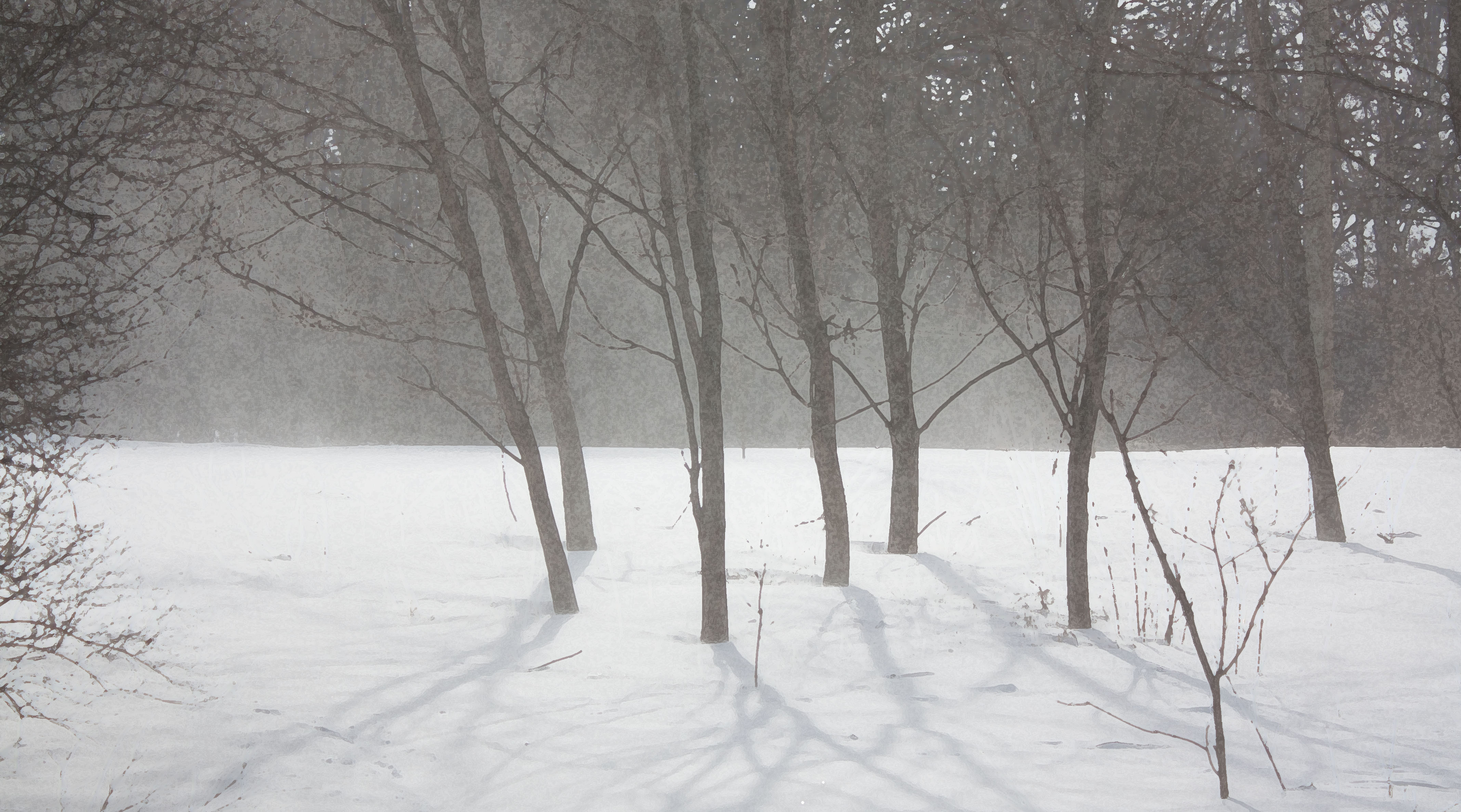
A trickster wind stirs up clouds of drifting snow, ON (photo and rendition by Nina Munteanu)
Not long ago, I was driving through a short tunnel that I typically take to go to work and, glancing back through the rearview mirror, I didn’t see what I expected to see. For some reason—perhaps it was the light or my wandering mind—the familiar scene looked unfamiliar; it was as though I’d entered a new dimension.
It felt ‘Otherly’ and I briefly experienced a titillating excitement akin to a protagonist journeying into a new world in some novel.
Indeed, the rhetoric of ‘Otherness’ in most fiction is typically portrayed through the singular point of view (POV) and discourse of a protagonist on a journey. The very nature of the term ‘Other’ used in any narrative suggests exclusion. According to Patricia Kerslake of Central Queensland University, the postcolonial notion of the Other arises through a mutual process of exclusion that inspires the very idea of ‘alien’ by imposing expectation on perception. Kerslake argues that: “When one culture imposes its perceptions on another, in that it begins to see the Other not as they are but as, in [Edward W.] Said’s words, ‘they ought to be’, then the process of representation becomes inevitable: a choice is made to see a ‘preferred’ real”.
In most forms of literature The POV ‘voice’ represents the Self, the inclusive ‘us’ (worldview) in its encounter with the Other, which in turn is the ‘not us.’ In his book Orientalism: Western Conceptions of the Orient Edward W. Said contended that for there to even be an ‘us’, there has to be a ‘not-us’. The resulting power dynamic of “them and us,” of Other and Self, is created and controlled by perceptions of the singular POV voice that usually represents ‘us.
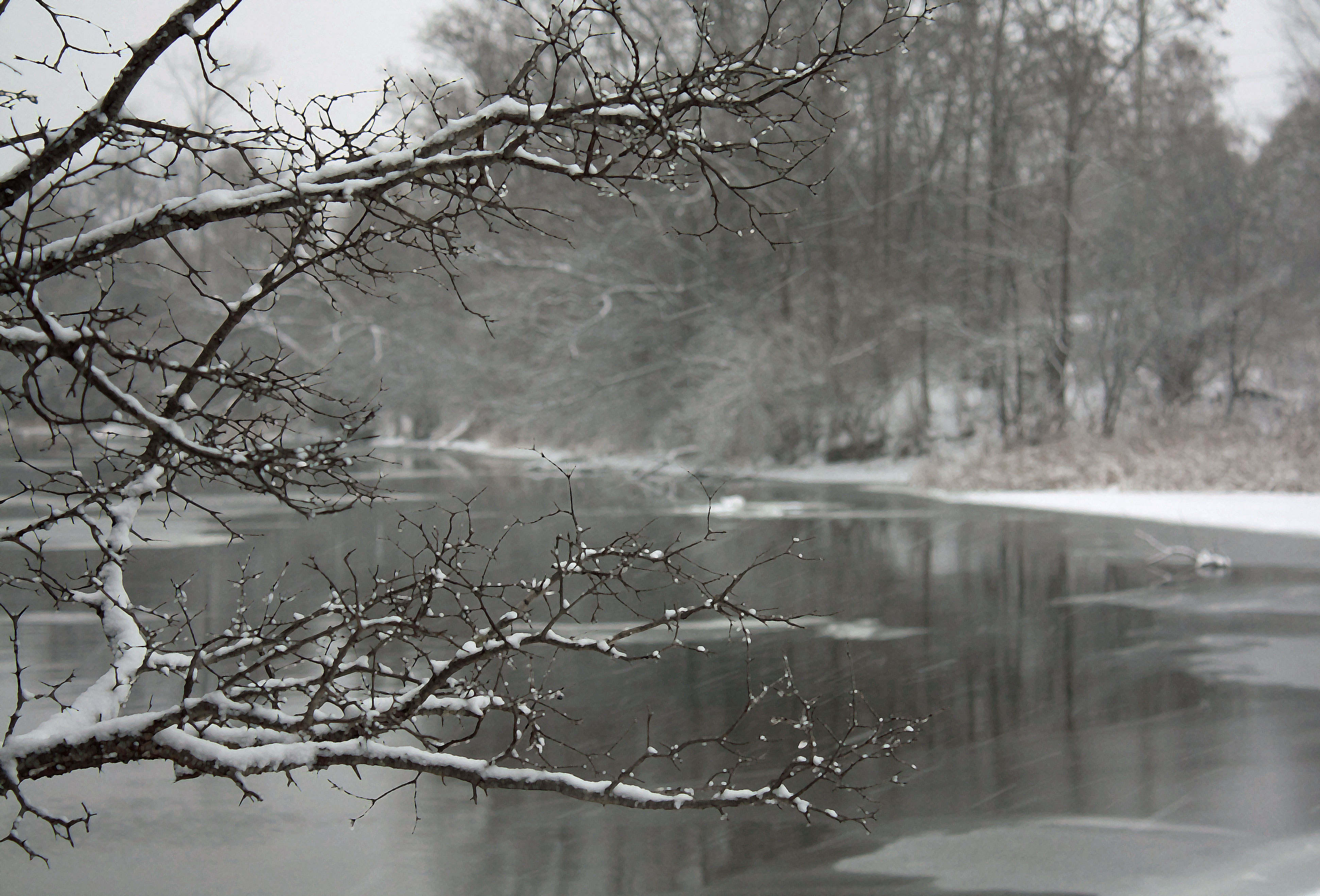
Tree branches overlook river during snowfall, ON(photo and rendition by Nina Munteanu)
‘The Other’ in Various Genres of Literature
In most genres of literature, the Other is often relegated to this dichotomous portrayal. In post-apocalyptic and metaphoric journey stories the Other may be the harsh environment or a calamity through which the protagonist must find their own strength to survive; in military stories it is clearly the enemy, seldom portrayed with compassion or understanding but there to test our hero; in coming-of-age stories it may be the oppressive rule or established world the hero must overcome; in science fiction it may be the hostile or unknowable aliens who must be defeated. According to Ursula K. Le Guin, science fiction displays a legacy of silencing the Other and rendering it impotent to establish and confirm humanity’s superior position in the world. Given that science fiction (SF) literature is rooted in culture, and often helps construct national identity, SF often confirms worldview, and in so doing creates internal Others (Brioni and Comberiati). According to Hermann, by failing to escape our boundary conflicts, SF simply constructs “new situations of restriction and otherness.” Kerslake argues that “silencing the Other provides SF with an indirect ability to define the potential of humankind”.1
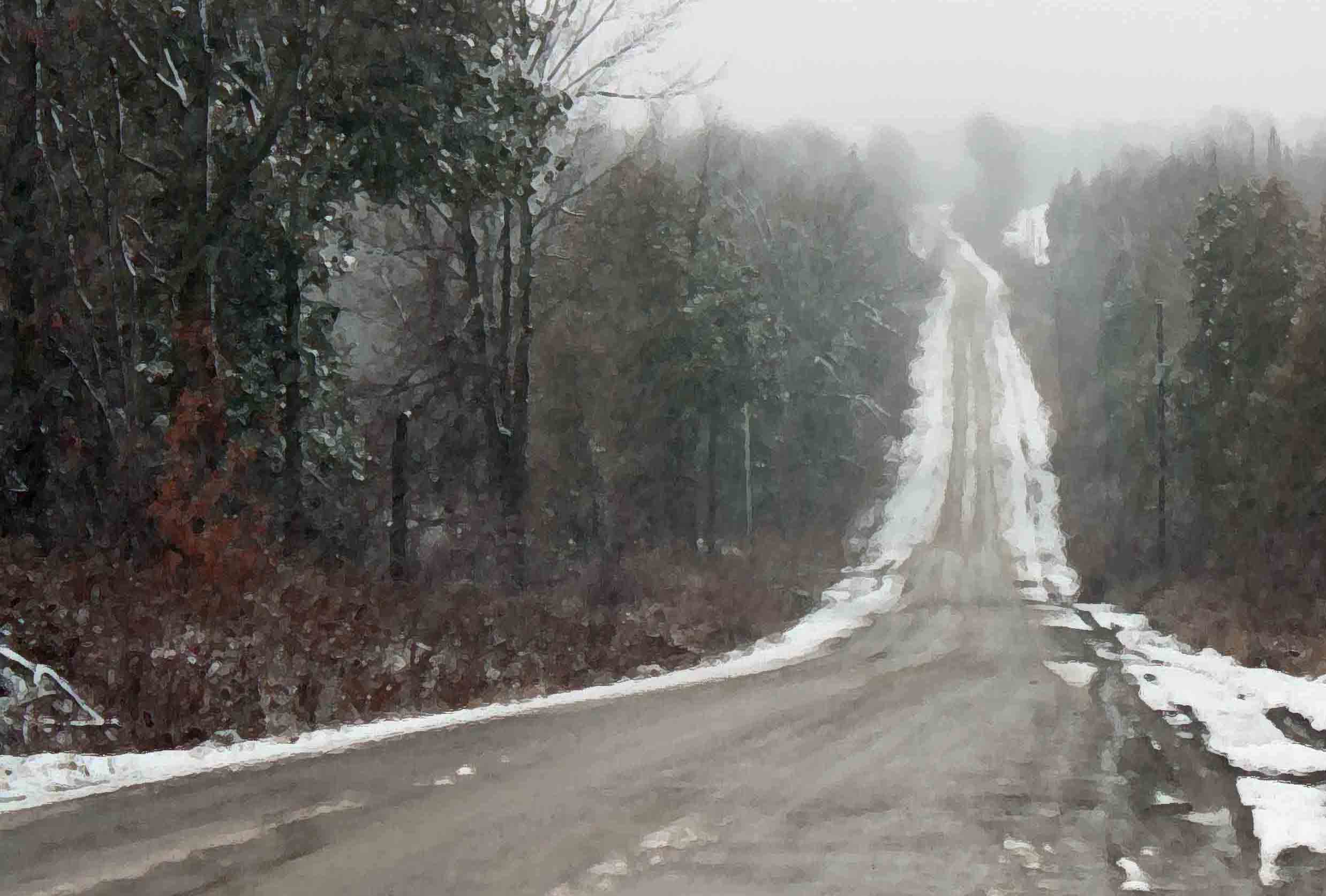
Country road in the Kawarthas, ON (photo and rendition by Nina Munteanu)
‘The Other’ in Eco-Literature
While eco-literature overlaps with many genres, it appears to differ from SF and other genres portrayal of Other through its unique intention to give voice to otherwise voiceless characters, and it often does this through masterful use of character-coupling. Mary Woodbury defines eco-literature or eco-fiction as literature “made up of fictional tales that reflect important connections, dependencies, and interactions between people and their natural environments.” The environment—or an aspect of the environment—plays a major role in eco-literature, either as premise or as itself a character on a journey.
Eco-Literature is preeminently the literature of bringing awareness to the plight of the environment as both character and as Other and explores humanity’s role in that plight.
Eco-literature may go beyond raising awareness to link environmental abuse with concepts of jingoistic hubris; it may raise issues of human intersectionality, misogyny, marginalization, oppression of class, privilege, sexuality and race, and misuse of power. Violent acts perpetrated on environment—when environment is personified as ‘character’ and/or coupled directly to a character—elicit powerful emotion and clearly demonstrate how social/human injustice reflects environmental injustice.
At the heart of much eco-literature lie strong relationships forged between a major character (often main protagonist) and a minor character (as avatar for the environment such as place or ecosystem, a being, animal or plant) or an aspect of their environment—itself a character and archetype. The strong connection between protagonist and environment—whether antagonistic or sympathetic—fosters unique communication that provides ‘voice’ to the environment as Other and as Othered. The environment may serve as a symbolic connection to theme and can illuminate through the sub-text of metaphor a core aspect of a main or minor character and their journey: the over-exploited white pine forests for the lost Mi’kmaq in Annie Proulx’s Barkskins; the mystical life-giving sandworms for the beleaguered Fremen of Arrakis in Frank Herbert’s Dune.
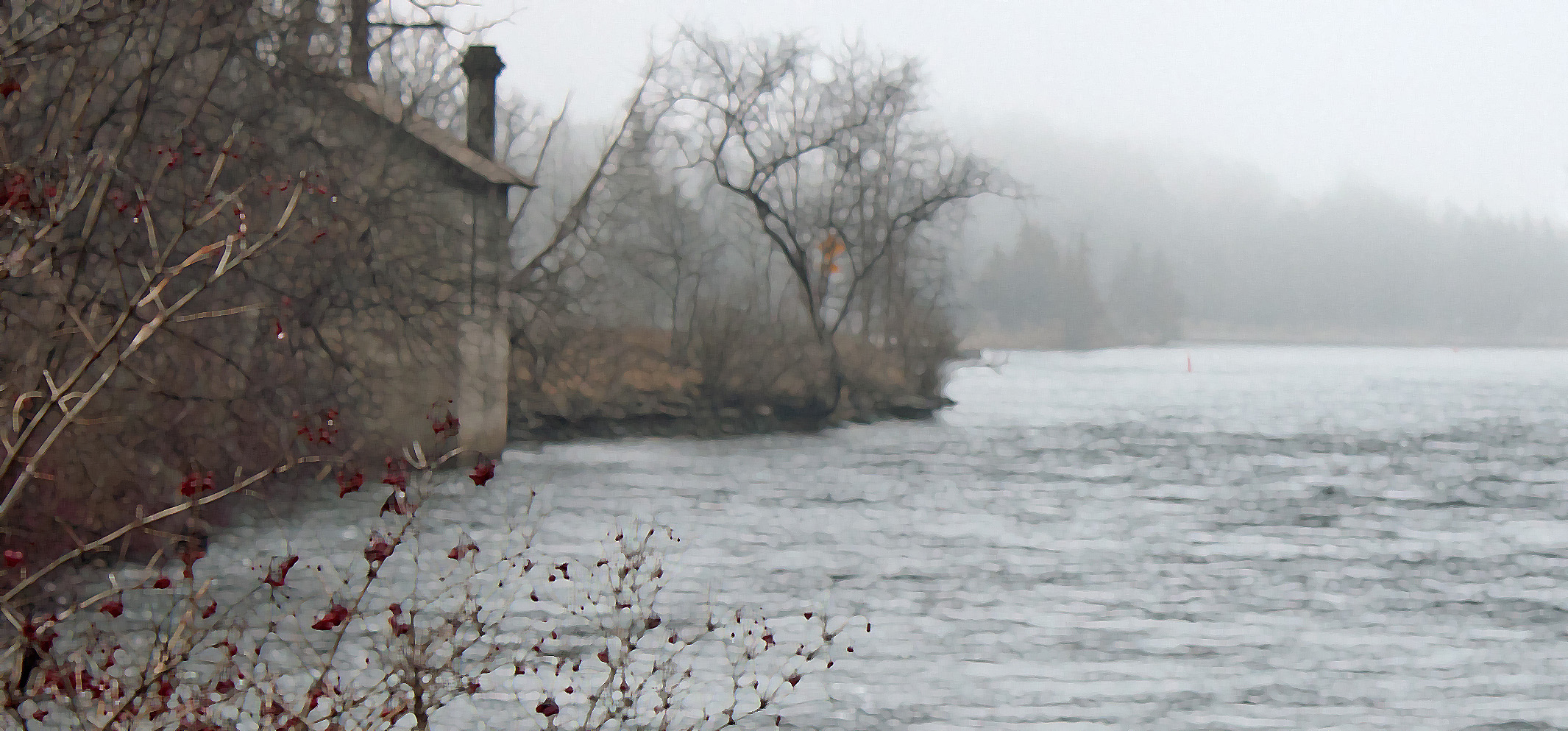
Old shed overlooks the Otonabee river on a snowy-foggy day, ON (photo and rendition by Nina Munteanu)
Giving Voice to the Other Through Character-Coupling
The coupling of protagonist with avatar—character-coupling—creates powerful drama and visceral connection to environmental issues and needs. Character-coupling characterizes environment, the Other, and effectively provides it with a voice, often through relationship. It elicits reader engagement, sparking new understandings and motivations toward a better caring of this world. The Other’s voice may be understandable (e.g. in many fables such as The Bear), arcane, tumultuous or fearsome (Memory of Water), or enduring and silently profound (The Breathing Hole).
Eco-literature is particularly poised to make meaningful character-couplings between mostly human protagonist and environmental characters or representatives. This is because the protagonist provides relatable qualities for easy reader empathy, while the Othered character is often less relatable—often an arcane aspect of the environment, such as water (Memory of Water) or a forest (The Overstory). Character-couplings illuminate a core aspect of the main character’s journey and/or the reader’s journey. From direct and intimate (The Breathing Hole, The Bear) to associated and inferred (The Windup Girl, Barkskins), different forms of character couplings often provide a new understanding of the plight and viewpoint of the Other. The protagonist’s link to the Other provides a readable map for the reader to follow and make their own connection.2
Dogwood shrubs and trees line a marsh in Ontario (photo and rendition by Nina Munteanu)
Women Coupled with Nature as Other
Since before the industrial revolution, and very much to this day, the prevailing western worldview toward the wildness of nature has been to dominate it and constrain it. The conviction that humans are separate from and superior to nature was established by Judeo-Christian beliefs and the Cartesian hegemony that laid the foundations of modern anthropocentrism (White). Ecofeminist Ynestra King argues that “we live in a culture that is founded on the repudiation, [exploitation], and domination of nature … the Other that has no voice”. King further argues that, “Women, who are identified with nature, have been similarly objectified and subordinated in patriarchal society”.
The modern ecofeminist movement contends that a long historical precedent of associating women with nature has led to the oppression of both. Ecofeminists note that “women and nature were often depicted as chaotic, irrational, and in need of control, while men were frequently characterized as rational, ordered, and thus capable of directing the use and development of women and nature” (Miles).
French philosopher and writer Simone de Beauvoir elegantly explores this connection:
Man seeks in woman the Other as Nature and as his fellow being. But we know what ambivalent feelings Nature inspires in man. He exploits her, but she crushes him, he is born of her and dies in her; she is the source of his being and the realm that he subjugates to his will; Nature is a vein of gross material in which the soul is imprisoned, and she is the supreme reality…Woman sums up Nature as Mother. Wife, and Idea; these forms now mingle and now conflict, and each of them wears a double visage.
Simone de Beauvoir
Because of this association and history, some of the most powerful character-couplings in eco-literature are of women protagonists coupled with natural avatar: the Inuk widow with polar bear cub in the clifi allegory The Breathing Hole; the girl and bear in the allegory-fable The Bear; the windup girl Emiko and the Cheshire cats in the cautionary tale The Windup Girl; the tea master Noria and water in the post-ecosystem collapse novel Memory of Water; the ecologist, Patricia Westerford, with the giant trees in The Overstory.3
Heavy snow on the river, ON (photo and rendition by Nina Munteanu)
Footnotes:
The Other has often been metaphorically portrayed in SF by aliens that lack a distinct voice or viewpoint; some portrayal has reflected a fearful imperialistic colonialism by representing Other as adversary such as an invading monster with no regard for humans (e.g. Robert Heinlein’s The Number of the Beast; H.G. Wells’s War of the Worlds). Kerslake argues that the traits of the Other “fall characteristically—and conveniently—into those spaces we choose not to recognize in ourselves, the ‘half-imagined, half-known: monsters, devils, heroes, terrors, pleasures, desires’ of Said’s ‘Orient’”. The Martians of Ray Bradbury’s Martian Chronicles—who also have no voice—reflect our indigenous peoples under the yoke of settler colonialism and an exploitive resource-extraction mindset. The monster of Mary Shelley’s Frankenstein—also with no voice—exemplifies the disabled/deformed unsavory departure from our ‘perfect’ self-image; to be chased, destroyed and nullified.
In some stories the protagonist is Othered in some way, providing a more direct link to the experience of being the Other or being Othered. For instance, in Mishell Baker’s Borderline, disabled protagonist Millie provides the connection to the greater theme of Othering “lesser beings.” In Costi Gurgu’s Recipearium, the protagonists are not human; they are alien creatures that dwell inside the dead carcass of a monster, representing Other as main character.
Excellent examples that overtly deal with some of these injustices include The Fifth Season trilogy by N.K. Jemisin and The Marrow Thieves by Cherie Dimaline.
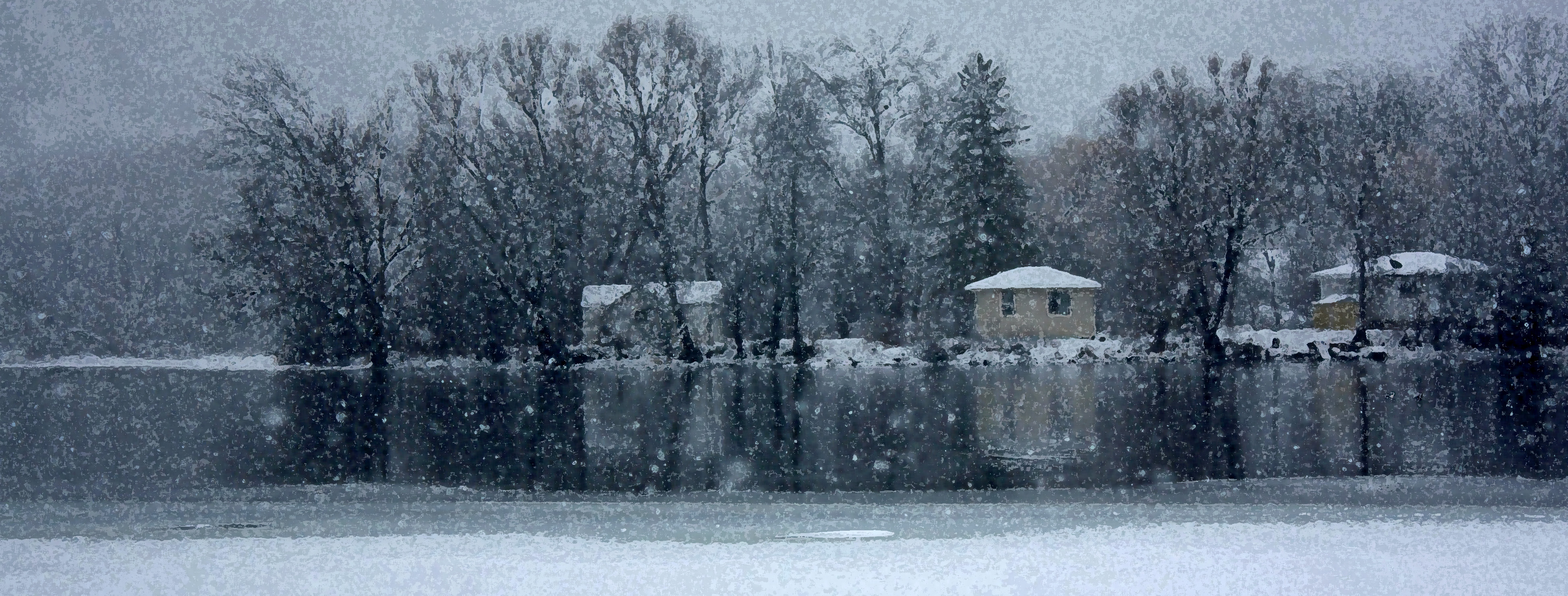
Snow-covered houses line the river during a snowstorm, ON (photos and rendition by Nina Munteanu)
References:
Agamben, Giorgo. Homo Sacer: Sovereign Power and Bare Life. Stanford University Press. 1998. 228pp.
Bacigalupi, Paolo. The Windup Girl. Night Shade Books, New York. 2015. 466pp.
de Beauvoir, Simone. “The Second Sex.” Modern Library, Random House, New York. 1968. p.144 In:
Dwyer, Jim. Where the Wild Books are: A Field Guide to Ecofiction. University of Nevada Press, Reno, Nevada. 2010. 264pp.
Ganz, Marshall and Emily S. Lin. “Learning to Lead: a Pedagogy of Practice.” The Handbook for Teaching Leadership: Knowing, Doing, and Being, edited byIn Scott A. Sook, Nitin Nohria, and Rakesh Khurana. Thousand Oaks: SAGE Publications, 2012. 354p.
Herbert, Frank. Dune. Ace, New York. 1965. 884pp.
Itäranta, Emmi. Memory of Water. Harper Voyager. New York. 2014. 266pp.
Kerslake, Patricia. “The Self and Representations of the Other in Science Fiction.” Chapter 1. Science Fiction and Empire, Liverpool University Press, 2007, pp. 8-24.
King, Ynestra. “The Ecology of Feminism and the Feminism of Ecology.” Chapter 2. Healing the Wounds: The Promise of Ecofeminism, edited by Judith Plant. New Society Pub, 1989, pp. 18-28.
Krivak, Andrew. The Bear. Bellevue Literary Press, New York, NY. 2020. 221pp.
Miles, Kathryn. “Ecofeminism: sociology and environmentalism.” Britannica, britannica.com/topic/ecofeminism.
The rotary trail on a heavy-snow day, ON (photo and rendition by Nina Munteanu)
Nina Munteanu is a Canadian ecologist / limnologist and novelist. She is co-editor of Europa SF and currently teaches writing courses at George Brown College and the University of Toronto. Visit www.ninamunteanu.ca for the latest on her books. Nina’s bilingual “La natura dell’acqua / The Way of Water” was published by Mincione Edizioni in Rome. Her non-fiction book “Water Is…” by Pixl Press (Vancouver) was selected by Margaret Atwood in the New York Times ‘Year in Reading’ and was chosen as the 2017 Summer Read by Water Canada. Her novel “A Diary in the Age of Water” was released by Inanna Publications (Toronto) in June 2020.
The interview covers some of water’s anomalous properties and why Nina decided to write a book that spans and integrates such a wide variety of angles and subjects from traditional science to spirituality.
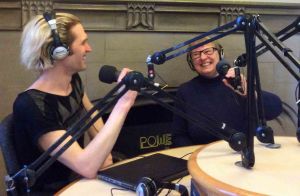
Saryn and Nina discuss some of water’s controversial properties and the claims about water and how geopolitics plays a role in this. She brings in her own career as a limnologist and how she broke away from her traditional role of scientist to create a biography of water that anyone can understand—at the risk of being ostracized by her own scientific community (just as Carl Sagan and David Suzuki were in the past).
Saryn shared how Ray John Jr., an Indigenous teacher, on a previous show reminded us why these things matter.
Nina responded with, “The why of things and hence the subtitle: the Meaning of Water. What does it mean to you… That’s what’s missing a lot of the time. We are bombarded with information, knowledge and prescriptions but the subliminal argument underneath—the why—why should it matter to me—is often missing. That becomes the sub-text. And it’s nice when it comes to the surface.”
Hart House, University of Toronto
Nina Munteanu is an ecologist, limnologist and internationally published author of award-nominated speculative novels, short stories and non-fiction. She is co-editor of Europa SF and currently teaches writing courses at George Brown College and the University of Toronto. Visit www.ninamunteanu.ca for the latest on her books.


















 Saryn and Nina discuss some of water’s controversial properties and the claims about water and how geopolitics plays a role in this. She brings in her own career as a limnologist and how she broke away from her traditional role of scientist to create a biography of water that anyone can understand—at the risk of being ostracized by her own scientific community (just as Carl Sagan and David Suzuki were in the past).
 Nina responded with, “The why of things and hence the subtitle: the Meaning of Water. What does it mean to you… That’s what’s missing a lot of the time. We are bombarded with information, knowledge and prescriptions but the subliminal argument underneath—the why—why should it matter to me—is often missing. That becomes the sub-text. And it’s nice when it comes to the surface.”
 Nina Munteanu is an ecologist, limnologist and internationally published author of award-nominated speculative novels, short stories and non-fiction. She is co-editor of Europa SF and currently teaches writing courses at George Brown College and the University of Toronto. Visit
  Nina Munteanu Writing Coach