When Writers Use the Present—or the Past—to inform The Future in Their Science Fiction Novel

The Darwin duology by Dragon Moon Press, depicting the late 21st Century, by Nina Munteanu

In my 2007 novel Darwin’s Paradox and its 2010 prequel Angel of Chaos—dystopian tales set in an unrecognizable post-climate change Canada at the end of the 21st Century—the father of the main character lectures his impressionable young daughter about how climate change helped create the heathland scrub that replaced the mixed woodlands of the old Carolinian and sub-Boreal environments:

“What’s over there?” She points to a far, dark hill. 

“Woodland. This was all forest before the cities got built and the climate changed.” 

“Climate changed?” 

“Yes, honey.” He focuses on the distance. “Caused the revolution thirty years ago. Since then the Ecologists have virtually eliminated our greenhouse gas emissions. Of course, the planet will be feeling the effects of global warming for decades to come. Perhaps centuries.” 

“They saved the planet, didn’t they?” 

His brows knit. “Perhaps they did, perhaps they didn’t,” he says enigmatically. 

I’d originally written the novel and its prequel in the seventies, before entering university. So, you might think that I was incredibly imaginative and prescient to come up with such climate devastation. But this simply isn’t so (well, not entirely, anyway). Just as with Margaret Atwood—who says: “When I wrote the Handmaid’s Tale, nothing went into it that had not happened in real-life somewhere at some time”—I was simply reading the signs.

Margaret Atwood demonstrating a fire-proof version of her book The Handmaid’s Tale

When it came to climate change, of course, I had some help. During my days at university, studying limnology, and in the 1980s and ‘90s when I worked as an environmental scientist and consultant, I encountered evidence of a changing environment and climate; people in the environmental sciences certainly knew the dangers of climate change long before it entered the common zeitgeist.

Science fiction dystopias aren’t so much predictive as realistically projecting possibilities based on current or past social patterns (these past social patterns, as Santayana notes, have a way of returning to us when we don’t pay attention to them). This notion lies at the root of the term cautionary tale and what makes one truly harrowing or terrifying; we sense to our very core how likely these scenarios are.

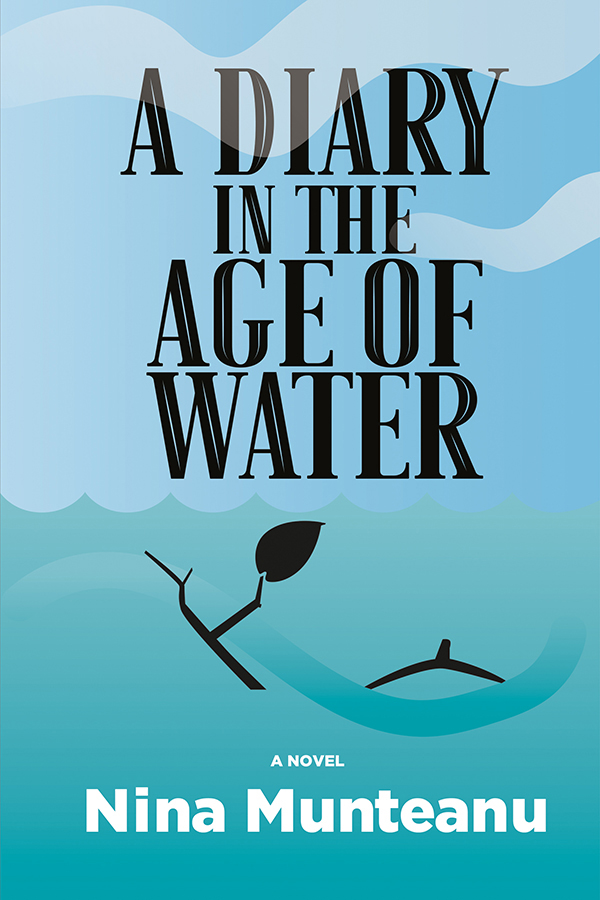
My near-future climate dystopia released by Inanna Publications in 2020

Response to my 2020 cautionary tale A Diary in the Age of Water reflects this visceral reaction by readers who shared that this blur of fiction with non-fiction and sense of realism—a “this could happen” quality—totally unbalanced them and engrossed them. Comments included “unique and captivating,” “unsettling and yet deliciously readable,” “strangely compelling” “scary and comforting at the same time,” “made my heart clench,” “a book of genuine power.”

Scene from Michael Radford’s film “Nineteen Eighty-Four” released in 1984, based on George Orwell’s 1949 novel

Indeed, many successful predictions have been made in speculative fiction. In 1961, Stanislaw Lem’s novel Return From the Stars predicted the invention of the touch pad, iPhone, iPad and Kindle. The telescreens that monitored the citizens of George Orwell’s Oceania in his dystopian 1949 novel Nineteen Eighty-Four was reflected, twenty years later, in the first CCTV installed in the United Kingdom. Philip K. Dick’s Minority Report accurately predicted personalized ads, voice-controlled homes, facial and optical recognition, and gesture-based computing. Self-driving cars were showcased in many speculative books and films such as Bladerunner, and Isaac Asimov’s I, Robot.

Scene from the film Minority Report with Tom Cruise

But many speculations have also not been realized. No flying cars—OK, some companies such as Toyota, Hyundai and Tesla are working on prototypes. While NASA plans to construct a surface habitat called Artemis Base Camp so that astronauts can remain on the moon’s surface for days or perhaps even weeks, it is far from happening soon. Also, no rotating space stations and space elevator—yet.

Many envisioned totalitarian/dystopian states in speculative fiction have also not been realized (e.g. We, Nineteen Eighty-Four, Brave New World, Fahrenheit 451, Handmaid’s Tale, Hunger Games, The Dispossessed, V for Vendetta )—though one could argue that aspects of each world envisioned by an author has occurred or is occurring in some form. One need only recall Edward Snowdon’s disclosures of NSA’s insidious surveillance to see parallels with Orwell’s Nineteen Eighty-Four. And as Margaret Atwood famously said in the quote above, nothing goes into her stories “that have not happened in real-life somewhere at some time.”

“The function of science fiction is not only to predict the future but to prevent it.”

Ray Bradbury

There are, in most cases, no technological impediments to the flying car, the jetpack, and moon-bases; only cultural ones. “These SF predictions ought to be viewed as visions of where we could be, as opposed to where we will be, or, keeping Bradbury in mind, visions of where we don’t want to go and, thankfully, have mostly managed to avoid to date,” says Steve Davidson of Grasping for the Wind. “Perhaps it’s all cultural,” he adds. Science fiction writer and futurist David Brin says that he is “more interested in exploring possibilities than likelihoods, because a great many more things might happen than do.”

In his book Four Futures: Life After Capitalism Peter Frase writes: “the importance of assessing possibility rather than likelihood is that it puts our collective action at the centre, while making confident predictions only encourages passivity.” In his 2010 essay, David Brin cites Orwell’s 1984 as a “self-preventing prophecy” that helped prevent the scenario (at least in its fullest).

George Orwell wrote his dystopian satire in 1949 about a mind-controlled society in response to the Cold War. The book was a metaphor “against totalitarianism and for democratic socialism,” said Orwell in his 1947 essay Why I Write, adding that, “Good prose is like a windowpane.” Was Orwell’s Nineteen Eighty-Four a failed novel because the real 1984 didn’t turn out quite like his 1984? Hardly. Hugo Award-winning novelist Robert J. Sawyer argues that we consider it a success, “because it helped us avoid that future. So just be happy that the damn dirty apes haven’t taken over yet.”

References:

Brin, David. 2010. “The Self-Preventing Prophecy: Or How a Dose of Nightmare Can Help Tame Tomorrow’s Path.” in Abbott Gleason et al. eds., On Nineteen Eighty-Four: Orwell and Our Future. Princeton University Press, Princeton, p.222.

Frase, Peter. 2016. “Four Futures: Life After Capitalism.” Verso Press, London. 150pp.

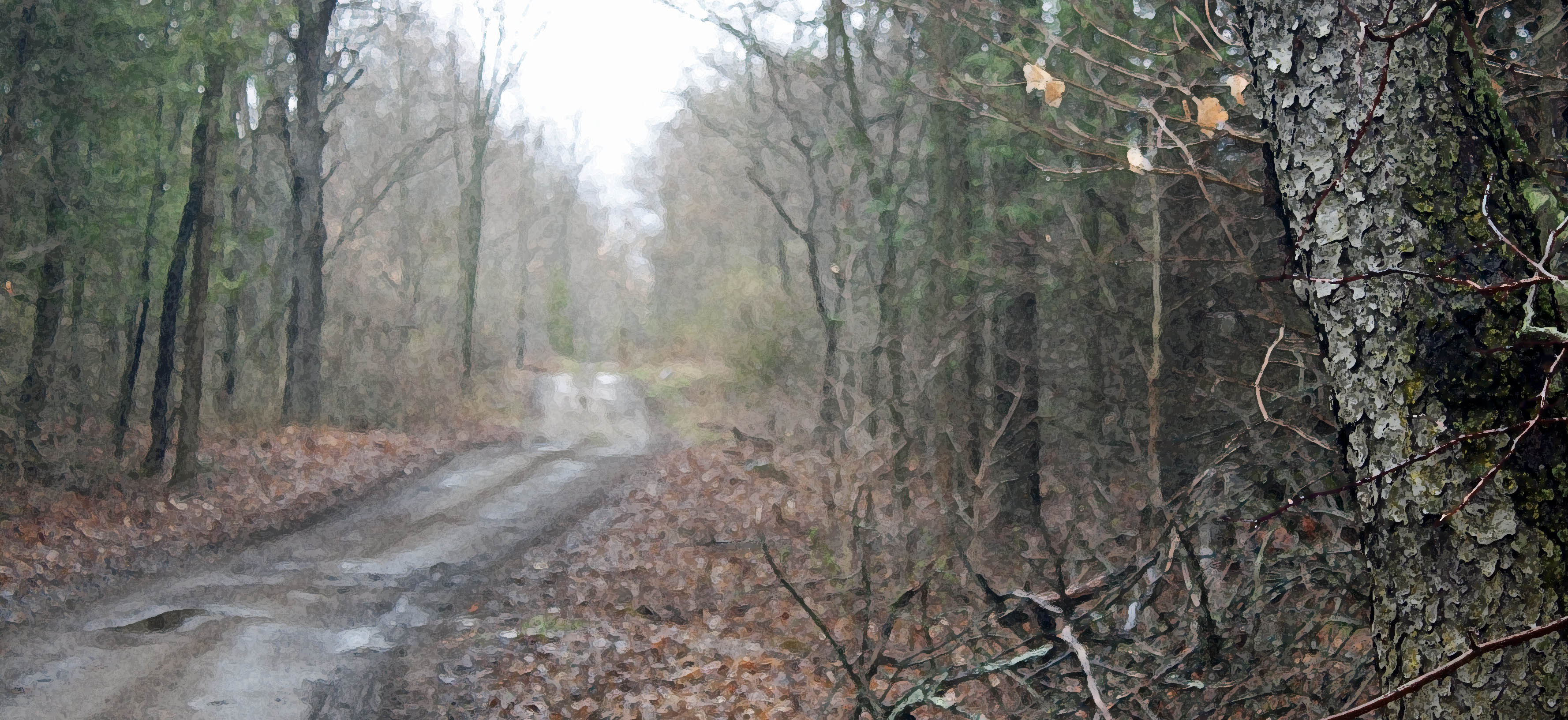
Country road in the Kawarthas during a foggy morning, ON (photo by Nina Munteanu)

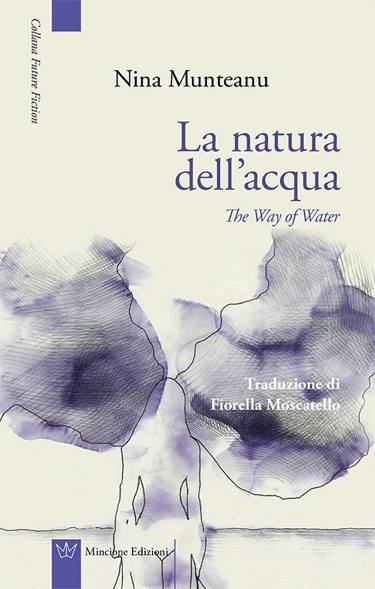
Nina Munteanu is a Canadian ecologist / limnologist and novelist. She is co-editor of Europa SF and currently teaches writing courses at George Brown College and the University of Toronto. Visit www.ninamunteanu.ca for the latest on her books. Nina’s bilingual “La natura dell’acqua / The Way of Water” was published by Mincione Edizioni in Rome. Her non-fiction book “Water Is…” by Pixl Press(Vancouver) was selected by Margaret Atwood in the New York Times‘Year in Reading’ and was chosen as the 2017 Summer Read by Water Canada. Her novel “A Diary in the Age of Water” was released by Inanna Publications (Toronto) in June 2020.

Apex Magazine Interviews Nina Munteanu About Story, Ecology, and The Future

Issue  #128 of Apex Magazine featured an interview that Rebecca E. Treasure did with me, posted on December 10, 2021. We discussed the power of story, the use of dystopian narrative, and the blur between fiction and non-fiction to create meaningful eco-fiction. Here’s part of the interview. For the complete interview go here:

INTERVIEW

Nina Munteanu, author of “Robin’s Last Song,” is a prolific creator with multiple books, podcasts, short stories, and nonfiction essays in publication. Her work spans genre, from eco-fiction to historical fantasy to thrillers, and of course, science fiction. Her work as an ecologist informs all of her writing, which circles around an essential exploration; the relationship between humanity and our environment.

 At the top of Nina Munteanu’s website, there is a quote: “I live to write, I write to live.” This sentiment is reflected in her fiction, which is not just about characters in compelling situations solving their problems with compassion, but is about all of us, our planet, our environment, and our future.

Rebecca E. Treasure

Nina Munteanu sat down with Apex for a conversation about story, ecology, and the future.

APEX MAGAZINE: “The Way of Water” in Little Blue Marble is such a powerful piece touching on water scarcity and friendship, a dry future and the potential for technology to overtake natural ecology. “Robin’s Last Song” explores extinction, human fallibility, friendship, and again, that conflict between technology and nature. Do you think we’re heading toward the kind of dystopia shown in these stories?

NINA MUNTEANU: The scenarios portrayed in these eco-fiction narratives are deeply grounded in current realities that involve a kind of dissonance between technology and natural processes—more specifically our myopic use of technological “fixes” to make nature more efficient for our use, whether it’s to mine water from the air (disrupting the water cycle) or gene-hack monocrops to increase yield (compromising the crop’s resilience and long-term productivity). It isn’t so much the technology, but the thought process driving its use that is undermining the environment we live in. Our unwillingness to think of ourselves as part of the very environment we’re manipulating for shortsighted purposes could certainly bring about some version of these dystopias.   

While these narratives are based on the realistic premise of current and projected water use and food production, their trajectories are fluid and multi-faceted. We still have many directions we can go. Concrete precedents set by a changing climate and our several-century interference will ensure continued extinction of species, reduction of bio-diversity, the proliferation of unstable simple ecosystems prone to crashing, and an unruly water cycle. Despite these, planetary responses remain fluid and unpredictable; there is so much about the natural world we still don’t know. And that is what my story “Robin’s Last Song” touches on: even when it looks utterly bleak and nothing seems left, Nature surprises us with hidden gifts. If nothing else, we are humbled by it. And a little wiser, hopefully.

AM: Your stories show readers the kind of world we could be facing if nothing changes. Do you believe such disaster is preventable?

NM: Humanity can destroy habitats and ecosystems; but we can’t destroy the planet—well, not yet anyway. We can only change it. Earth will endure. The question is: as Nature changes will we endure? We are currently destroying and simplifying the ecosystems that best support our species, and heralding in those that may not. Ecologists use a term “natural succession” to describe when one species or group of species create better conditions for another group that will succeed them. We are in danger of doing this. And we’re taking down a lot with us. This planet has experienced four major extinction events in the past (wiping out up to 90% of its species) and each time life came back in full force; but each time, that life looked different from what had preceded it.

To ensure our own survival, we need to ensure the survival of our supporting network: forests that balance a climate best suited to us; a biodiversity that brings resilience; a clean healthy ocean that nurtures all life. But I am hopeful. We need creativity and joy and connection to do this right. We are creators at heart and are more joyful when creating. We are capable of creating so much beauty in our music, art, and science. When faced with insurmountable odds and terrible circumstance, our earnest hearts fill with kindness and compassion. Some countries have embraced the Happy Index—over the GDP—to measure their success. Bhutan has achieved carbon negativity and others are following its lead. We know what the solutions are. We have the technologies. We understand the science. We just need the will.

As Yuval Harari noted, we remain an insecure species; despite our curiosity and capacity for wonder, we are prone to fear, suspicion, and defensive action in the face of the unknown. Our preoccupation with “self” in all its iterations limits our ability to gain a more healthy perspective and to see ourselves as part of our environment, not apart from it. Our hubris and separation comes from that same insecurity. Like the hero in the hero’s journey, we’ve strayed from our “home” to find ourselves. The changes in the world that we’re largely responsible for creating (e.g., climate change, habitat destruction, and oversimplification) are also part of our journey to find ourselves. When we find our humility and our unique gifts to the world, we can prevent disaster. It won’t be the tool—technology—that does it. It will be the wisdom that comes with loss of ego, allowing us to forge a partnership with the rest of the world, human and non-human.

With the wisdom of feminine energy emerging from the shadows and lighting its voice with kindness, humility, compassion, unity, and wholeness, I’m ever hopeful. It’s time to grow up, forgive ourselves and each other, and become whole.

For the entire interview, go to Apex Magazine, December 10, 2021.

Birch trees and marsh on a foggy winter morning, ON (photo and rendition by Nina Munteanu)

Rebecca E. Treasure grew up reading science fiction and fantasy in the foothills of the Rocky Mountains. After grad school, she began writing fiction. Rebecca has lived many places, including the Gulf Coast of Mississippi and Tokyo, Japan. She currently resides in Texas Hill Country with her husband, where she juggles two children, two corgis, a violin studio, and writing. She only drops the children occasionally. To read more visit www.rebeccaetreasure.com.

NINA MUNTEANU is a Canadian ecologist / limnologist and novelist. She is co-editor of Europa SF and currently teaches writing courses at George Brown College and the University of Toronto. Visit  www.ninamunteanu.ca for the latest on her books. Nina’s bilingual “La natura dell’acqua / The Way of Water” was published by Mincione Edizioni in Rome. Her non-fiction book “Water Is…” by Pixl Press(Vancouver) was selected by Margaret Atwood in the New York Times ‘Year in Reading’ and was chosen as the 2017 Summer Read by Water Canada. Her novel “A Diary in the Age of Water” was released by Inanna Publications (Toronto) in June 2020.

On Writing Hopeful Dystopias and the Blur of Fiction with Non-Fiction

‘Hopeful dystopias’ are much more than an apparent oxymoron; they are in some fundamental way, the spearhead of the future—and ironically often a celebration of human spirit by shining a light through the darkness of disaster. I discussed this in a recent interview on Solarpunk Futures Podcast.

In a recent interview on the CBC Radio show Ideas “Beyond Dystopia”, Canadian author Margaret Atwood (who penned the dystopic The Handmaid’s Tale and Maddaddam trilogy) said much the same thing. Atwood argued that dystopias and cautionary tales ultimately embrace an element of hope, through a character’s experience. Dystopias can serve as a road map for individual endurance, resilience, and triumph through disaster.

I talked with Solarpunk Futures about how the purposeful blur of fiction with non-fiction in my latest eco-novel A Diary in the Age of Water produced a heightened relevance to the dystopic journey for the reader.

Solarpunk: Your latest book is an eco-novel, or rather something of a fiction-nonfiction hybrid perhaps, called A Diary in the Age of Water. Tell us a bit about that novel and the role that water plays in the story.

Nina: A Diary in the Age of Water follows the climate-induced journey of Earth and humanity through four generations of women and their battles against a global giant that controls and manipulates Earth’s water. The book spans over forty years (from the 2020s to the 2060s) and into the far future, mostly through the diary of a limnologist, which is found by a future water-being. While A Diary in the Age of Water is a work of fiction, its premise and much of its story are firmly based on real events, people and phenomena. The dramatization of these through four main characters carry the reader into consequence and accountability. Water’s relationship with each character provides four different perspectives on the value of water to humanity—from the personal and practical to the spiritual and existential. For readers with an evidence-based approach to learning about water’s importance, the diarist provides interesting facts on water in each of her entries in the form of epigraphs (mostly from Robert Wetzel’s Limnology). Things like: watershed, hypolimnion, aquifer, thalweg, clapotis gaufre, and petrichor, to name a few…

I chose a diary format to purposely blur the fiction with non-fiction. I was writing about both the far and the near future and much of it was based—like Margaret Atwood and her books—on real events and real people. I wanted personal relevance to what was going on, particularly with climate change. I also wanted to achieve a gritty realism of “the mundane” and a diary felt right. Lynna—the diarist—is a reclusive inexpressive character, so I thought a personal diary would help bring out her thoughts and feelings. There’s nothing like eves-dropping to make the mundane exciting. The diary-aspect of the book characterizes it as “mundane science fiction” by presenting an “ordinary” setting for characters to play out. The tension arises from insidious cumulative events and circumstances that slowly grow into something incendiary. The real events are the fuel that incite a slow-burn fictional drama that blurs the reader’s perception of reality and heightens its relevance.

Solarpunk: Can you give us an example of an event in your book where the lines between fiction and nonfiction get blurred?

Nina: In the diary entry entitled “Watershed,”, for July 14, 2049, Lynna writes:

Today, CanadaCorp announced that the collection of rainwater was illegal. As of today, I could be arrested for using my rain catcher and cistern. I’ve decided to continue using the cistern, and I’ve warned Hildegard not to breathe a word to anyone at school about what we’re doing with the water. Thankfully, I have time to train her in the art of subterfuge before she starts Grade Two in the fall.

What follows in the story is a series of greater water restrictions that mimic some of the currenet ongoing scenarios in other parts of the world (e.g. illegal rainwater collection in parts of the USA; shutting down of home water taps in Detroit; required and restricted water collection at public water taps in parts of the world).

Lynna’s August 13, 2051 diary entry in my 2020 novel seemed to predict the atmospheric river disaster that befell British Columbia in November 2021:

In the mid- to late-twenties the west coast succumbed to massive atmospheric river storms. San Francisco. Los Angeles. Seattle. Even earthquakes seemed to follow climate change’s lead. The earthquake / tsunami that hit Vancouver Island in 2029 shifted the Earth’s axis by three inches, Daniel informed me. The American military stormed over the border with swift aid. “Did you know that they never left?” Daniel asked me. I hadn’t known that. But I wasn’t surprised either.

Of course, these “predictions” were really just good research into the current scientific knowledge and what current circumstances may naturally generate in the future. I was just doing a good job at reading water.

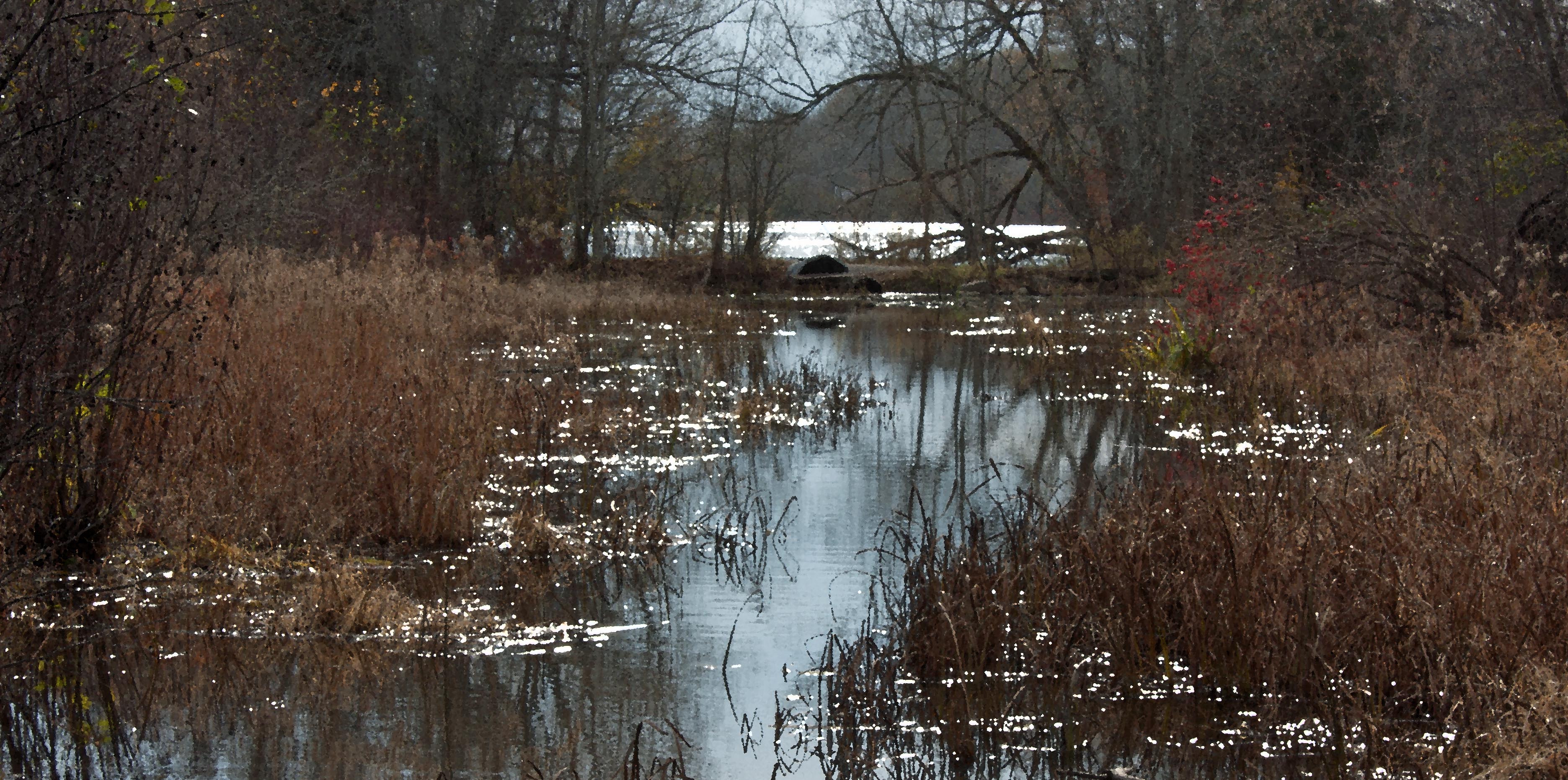
Thompson Creek marsh in early winter, ON (photo and rendition by Nina Munteanu)

Given that cli-fi features climate change, environmental destruction, and species extinction, you must think ‘how can it not be all doom and gloom?’ But dystopias often do reflect—in their depiction of terrible circumstance—an element of triumph, of overcoming adversity, and ultimately of hope. In fact, dystopias generally draw on a writer’s optimism; else, why would we write these cautionary tales? A strong belief in humanity underlies much of eco-fiction. Solarpunk is a rising light of eco-fiction that has emerged recently in response to the denial-despair dilemma many of us face when we think of climate change. This kind of eco-fiction features ingenuity, generativity, independence, and community. And it ultimately leads us through it all toward the light. A Diary in the Age of Water is in fact a dystopia with elements of solarpunk.

You can listen to the entire podcast interview on Solarpunk Futures: Imagining a New World here.

Thompson Creek Marsh in early winter, ON (photo and rendition by Nina Munteanu)

Nina Munteanu is a Canadian ecologist / limnologist and novelist. She is co-editor of Europa SF and currently teaches writing courses at George Brown College and the University of Toronto. Visit www.ninamunteanu.ca for the latest on her books. Nina’s bilingual “La natura dell’acqua / The Way of Water” was published by Mincione Edizioni in Rome. Her non-fiction book “Water Is…” by Pixl Press(Vancouver) was selected by Margaret Atwood in the New York Times ‘Year in Reading’ and was chosen as the 2017 Summer Read by Water Canada. Her novel “A Diary in the Age of Water” was released by Inanna Publications (Toronto) in June 2020.

“A Diary in the Age of Water” Reviewed in Alternatives Journal

Shanella Ramkissoon reviews my latest eco-fiction mundane science fiction novel “A Diary in the Age of Water” in Issue 46 of Alternatives Journal (Playbook for Progress):

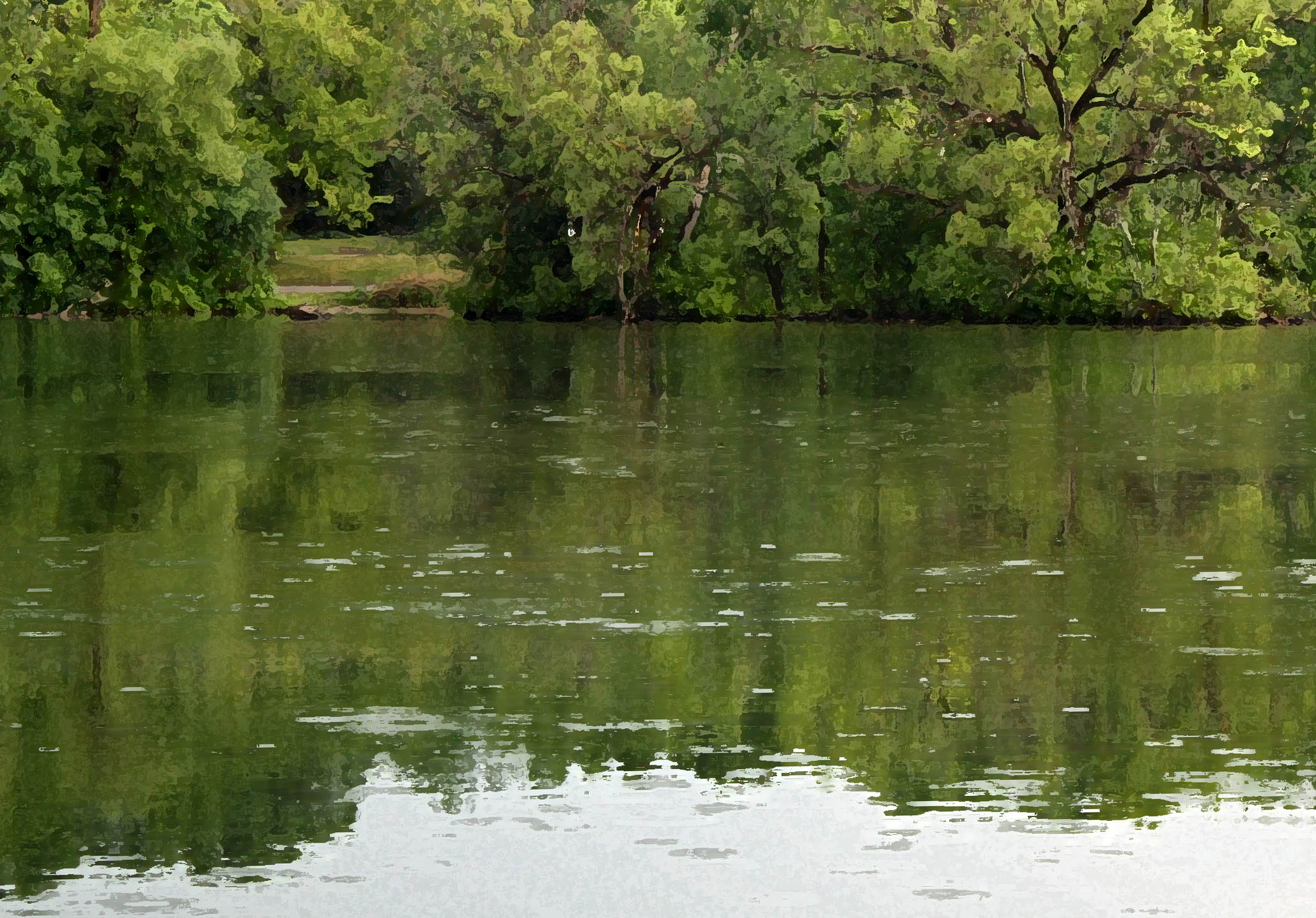
Rain falls on the Otonabee River, ON (photo and rendition by Nina Munteanu)

Nina Munteanu is a Canadian ecologist / limnologist and novelist. She is co-editor of Europa SF and currently teaches writing courses at George Brown College and the University of Toronto. Visit www.ninamunteanu.ca for the latest on her books. Nina’s bilingual “La natura dell’acqua / The Way of Water” was published by Mincione Edizioni in Rome. Her non-fiction book “Water Is…” by Pixl Press(Vancouver) was selected by Margaret Atwood in the New York Times ‘Year in Reading’ and was chosen as the 2017 Summer Read by Water Canada. Her novel “A Diary in the Age of Water” was released by Inanna Publications (Toronto) in June 2020.

Nina Munteanu Talks Water, Writing, and Weather on ‘All About Canadian Books’

I recently had the pleasure of chatting with Crystal Fletcher on “All About Canadian Books” about my recent clifi dystopian novel “A Diary in the Age of Water.” We covered a number of topics from water’s over 70 anomalous properties–virtually all of them life-giving–to how water seems to inform all aspects of my life, particularly my writing life. Crystal was particularly fascinated with the four generations of women in the book and we talked at length about how these characters were developed and the roles they played in the greater saga.

After bringing up the Toronto Star’s question of me (“What keeps you up at night about climate change”) in which I admitted that I lose sleep over the thought of how my son and his children will fair in this changing world, Crystal admitted that “Your book, Nina, is an eye opener…it freaked me out when I was reading it…and now I’m losing sleep!”

Hardwood forest back lit by glittering Otonabee River, ON (photo and rendition by Nina Munteanu)

“A Diary in the Age of Water” Listed as Ecological Fiction That Inspires Action

In the Spring issue of Ecology & Action, Mary Woodbury, author and publisher of Dragonfly.eco, lists some of her favourite Eco-Fiction that Inspires Action. Among them is Nina Munteanu’s eco-novel “A Diary in the Age of Water.”

“Fiction exploring humanity’s impacts on nature is becoming more popular. It has the distinct ability to creatively engage and appeal to readers’ emotions. In fact, it can stir environmental action. A survey I took last year showed that 88% of its participants were inspired to act after reading ecological fiction.

Principled by real science and exalting our planet’s beauty, these stories are works of art. They live within classic modes of fiction exploring the human condition, but also integrate the wild. They can be referred to as “rewilded stories.” The following Canadian titles are some of my favourites in this genre.”

MARY WOODBURY

Dirt road to Long Lake in a misty light rain in early spring, ON (photo and dry brush rendition by Nina Munteanu)

Nina Munteanu is a Canadian ecologist / limnologist and novelist. She is co-editor of Europa SF and currently teaches writing courses at George Brown College and the University of Toronto. Visit www.ninamunteanu.ca for the latest on her books. Nina’s bilingual “La natura dell’acqua / The Way of Water” was published by Mincione Edizioni in Rome. Her non-fiction book “Water Is…” by Pixl Press(Vancouver) was selected by Margaret Atwood in the New York Times‘Year in Reading’ and was chosen as the 2017 Summer Read by Water Canada. Her novel “A Diary in the Age of Water” was released by Inanna Publications (Toronto) in June 2020.

Nina Munteanu Talks About “A Diary in the Age of Water” with Sustainably Geeky

Jackson Creek swells in early winter, ON (photo and dry brush rendition by Nina Munteanu)

I appeared recently on the Sustainably Geeky Podcast Episode 34 “We’re in Hot Water” to talk with host Jennifer Hetzel about my latest eco-novel “A Diary in the Age of Water” published by Inanna Publications

Here is their blurb about the episode:

“In this bonus episode, we continue our conversation with limnologist and cli-fi author Nina Munteanu. We discuss her book A Diary in the Age of Water and what led her to write this dystopian tale of a future that revolves around water scarcity. Nina’s background as a limnologist gives her a unique perspective on the challenges that await us if we do not address climate change.”

Click below to listen:

Nina Munteanu is a Canadian ecologist / limnologist and novelist. She is co-editor of Europa SF and currently teaches writing courses at George Brown College and the University of Toronto.  Visit www.ninamunteanu.ca for the latest on her books. Nina’s bilingual “La natura dell’acqua / The Way of Water” was published by Mincione Edizioni in Rome. Her non-fiction book “Water Is…” by Pixl Press(Vancouver) was selected by Margaret Atwood in the New York Times‘Year in Reading’ and was chosen as the 2017 Summer Read by Water Canada. Her novel “A Diary in the Age of Water” was released by Inanna Publications (Toronto) in June 2020.

W.O.W Interviews Nina Munteanu on “A Diary in the Age of Water”

Thompson Creek outlet, ON (photo and rendition by Nina Munteanu)

I recently chatted with Darshaun McWay on W.O.W. Podcast about my recent novel A Diary in the Age of Water.

We talked about the story, its main characters–including water as a character–and why I write about water. We also covered why the book is written partly as a diary. Margaret Atwood’s name came up a few times…

Here is the W.O.W description of the interview:

Nina Munteanu chats with Darshaun McAway of W.O.W. Podcast about her new clifi novel “A Diary in the Age of Water”: a novel about the journeys of four generations of women and their unique relationship with water during a time of great environmental change. Darshaun and Nina talk about her use of water as a character, her choice of heroines and her use of a diary format to tell the story.  Nina shares that the book–set in the near future as a limnologist’s diary and the far future with an evolved human–explores the premise of a water-scarce Canada whose water now belongs to the USA, who, in turn, is owned by China. The events about which the diarist writes are based on real historic events and people. Nina brings her considerable scientific, limnological and research skills to bear in describing a future Canada both dystopic and harrowing–yet very familiar. One real event taken as premise in the book that Nina shared with Darshaun is the American NAWAPA plan of the 1960s that went to congress and was (and still is) seriously discussed for years following: the plan was to divert massive amounts of fresh water from Canada and store by inundating the Rocky Mountain Trench and piped south to hydrate dwindling aquifers in the USA.

W.O.W Interview with Nina Munteanu and Darshaun McAway

Nina Munteanu is a Canadian ecologist / limnologist and novelist. She is co-editor of Europa SF and currently teaches writing courses at George Brown College and the University of Toronto. Visit www.ninamunteanu.ca for the latest on her books. Nina’s bilingual “La natura dell’acqua / The Way of Water” was published by Mincione Edizioni in Rome. Her non-fiction book “Water Is…” by Pixl Press(Vancouver) was selected by Margaret Atwood in the New York Times ‘Year in Reading’ and was chosen as the 2017 Summer Read by Water Canada. Her novel “A Diary in the Age of Water” was released by Inanna Publications (Toronto) in June 2020.

Eco-Fiction: What Readers Get From It and How to Prevent Polemic

Mary Woodbury on Dragonfly.eco recently shared a survey of over a hundred readers to determine the impact that eco-fiction had on them. What did environmental fiction mean to readers? What about it appealed to them? What were their favourite works? And did it incite them to action? The answers were both expected and surprising. Given the sample size and some study limitations on audience and diversity, the results are preliminary still. However, they remain interesting and enlightening.

theoverstorySome of the most impactful novels according to the readers surveyed include Barbara Kingsolver’s Flight Behavior, Richard Power’s The Overstory, Margaret Atwood’s MaddAddam trilogy, Cormac McCarthy’s The Road, Edward Abbey’s Monkey Wrench Gang, and Ursula K. Le Guin’s Hainish Cycle series.

Readers gave Woodbury several reasons why they enjoyed and found eco-novels impactful:

  • Realism or compelling account of or reflection of society, scary or not
  • Goes beyond readers’ culture–expands minds
  • Humorous
  • Story focused on characters versus an issue
  • Learned something new
  • Opened readers’ minds
  • Captured imagination
  • Positive endings
  • Good storytelling
  • Interesting characters
  • Suspense and/or psychological burn

One reader mentioned that what appealed to them about Emmi Itäranta’s Memory of Water was the style of writing. It provoked “feelings of utter beauty but also unease.”

One reader enjoyed Cormac Mccarthy’s The Road “for its spare post-apocalyptic world where even language seems to run out.”

Of Cherie Dimaline’s The Marrow Thieves a reader wrote that “The dystopic beginning felt so real, and then the positive ending was so good. I loved it and it made me think about how climate change can possibly have impacts beyond just our physical and mental health, but also our dreams!”

A reader of Frank Herbert’s Dune wrote that “it was the first time I’d seen a literary rendering of an ecosystem that felt real. The ideas of ecology are woven into this story in a way I didn’t think was possible for fiction. Interconnection is hard to think about, hard to grasp, and Dune showed me that fiction, done well, can really help with this.” The same reader acknowledged that in Annihilation Jeff VenderMeer “mastered the technique.”

FavTopics Eco-Fiction

Graph from Environmental Fiction Impact Survey by Mary Woodbury

When asked the question “Do you think that environmental themes in fiction can impact society, and if so, how?” 81% agreed and qualified their answers:

  • Fiction can encourage empathy and imagination. Stories can affect us more than dry facts. Fiction reaches us more deeply than academic understanding, moving us to action.
  • Fiction can trigger a sense of wonder about the natural world, and even a sense of loss and mourning. Stories can immerse readers into imagined worlds with environmental issues similar to ours.
  • Fiction raises awareness, encourages conversations and idea-sharing. Fiction is one way that helps to create a vision of our future. Cautionary tales can nudge people to action and encourage alternative futures. Novels can shift viewpoints without direct confrontation, avoid cognitive dissonance, and invite reframed human-nature relationships through enjoyment and voluntary participation.
  • Environmental themes can reorient our perspective from egocentrism to the greater-than-human world.
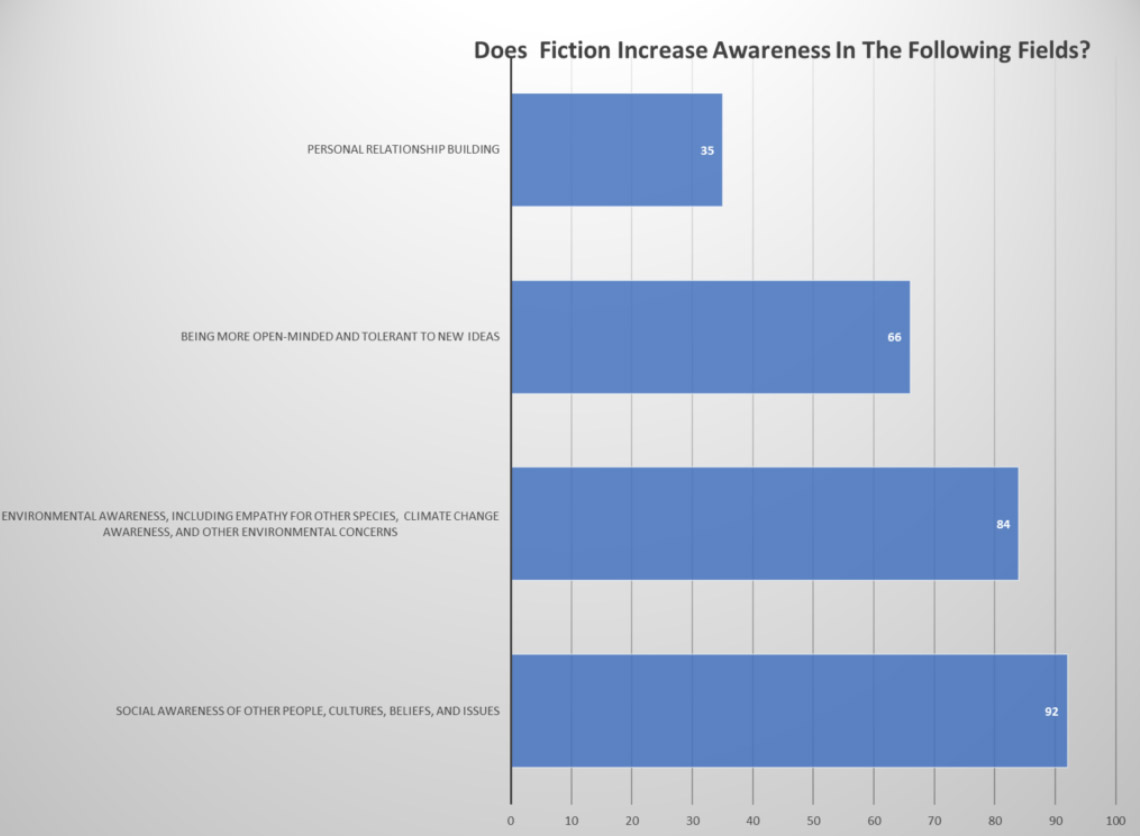
Awareness in Fields

Graph from Environmental Fiction Impact Survey by Mary Woodbury

In summary, Woodbury writes:

“The sample size (103) seems to be a good one for people who are mostly familiar with the idea of eco-fiction (and similar environmental/nature fiction genres and subgenres), though I was still hoping to get a larger, more diverse group of participants. The majority of respondents were highly educated middle-aged women. The majority of the group read from 1-29 novels a year. Favorite novels represented mostly North American or European authors (male and female about equally, with J.R.R. Tolkien, Barbara Kingsolver and Margaret Atwood consistently a favorite), with the majority of readers enjoying literary fiction the most, followed by dystopia/utopia and then science fiction.”

Woodbury notes that the genres of science fiction and fantasy were well represented in the survey, “both as favorite and most impactful novels, despite literary fiction being the favorite genre among the participants.” Of novels that respondents enjoyed, “readers were most impacted by good storytelling.” Polemic was not well regarded.


Achieving Impactful Eco-Fiction & Avoiding Polemic Through Use of Metaphor

The key to impact and enjoyment for a reader lies in good storytelling. The very best storytelling uses metaphor and oblique description to achieve a deeper meaning. The greatest art must be left to interpretation; not directly dispensed. Great art is felt and experienced viscerally; not just taken in intellectually. Great art shows; not tells.

EcologyOfStoryIn my writing guidebook The Ecology of Story: World as Character, I discuss the various ways that the use of metaphor achieves depth and meaning in story, particularly in eco-fiction. One impactful way is in the choice of setting. In the chapter on Place as Metaphor, I write:

Everything in story is metaphor, Ray Bradbury once told me. That is no more apparent than in setting and place, in which a story is embedded and through which characters move and interact.

Metaphor is the subtext that provides the subtleties in story, subtleties that evoke mood, anticipation, and memorable scenes. Richard Russo says, “to know the rhythms, the textures, the feel of a place is to know more deeply and truly its people.” When you choose your setting, remember that its primary role is to help depict theme. This is because place is destiny.

What would the book Dune be without Arrakis, the planet Dune? What would the Harry Potter books be without Hogwarts?

Metaphor provides similarity to two dissimilar things through meaning. In the metaphor “Love danced in her heart” or the simile “his love was like a slow dance”, love is equated with the joy of dance. By providing figurative rather than literal description to something, metaphor invites participation through interpretation.

When I write “John’s office was a prison,” I am efficiently and sparingly suggesting in five words—in what would normally take a paragraph—how John felt about his workplace. The reader would conjure imagery suggested by their knowledge of a prison cell: that John felt trapped, cramped, solitary, stifled, oppressed—even frightened and threatened. Metaphor relies on sub-text knowledge. This is why metaphor is so powerful and universally relevant: the reader fully participates—the reader brings in relevance through their personal knowledge and experience and this creates the memorable aspect to the scene.

Metaphor is woven into story through the use of devices and constructs such as depiction of the senses, personification, emotional connections, memories, symbols, archetypes, analogies and comparisons. Sense, and theme interweave in story to achieve layers of movement with characters on a journey. All through metaphor.

Symbols and Archetypes

In Emmi Itäranta’s Memory of Water—about a post-climate change world of sea level rise—water is a powerful archetype, whose secret tea masters guard with their lives. Water, with its life-giving properties and other strange qualities, has been used as a powerful metaphor and archetype in many stories: from vast oceans used as a powerful metaphor and archetype in many stories: from vast oceans of mystery, beauty and danger—to the relentless flow of an inland stream. Margaret Atwood’s The Penelopiad is one example:

Water does not resist. Water flows. When you plunge your hand into it, all you feel is a caress. Water is not a solid wall, it will not stop you. But water always goes where it wants to go, and nothing in the end can stand against it. Water is patient. Dripping water wears away a stone. Remember that, my child. Remember you are half water. If you can’t go through an obstacle, go around it. Water does.

In my short story The Way of Water (La natura dell’acqua), water’s connection with love flows throughout the story:

The Way of Water-COVERThey met in the lobby of a shabby downtown Toronto hotel. Hilda barely knew what she looked like but when Hanna entered the lobby through the front doors, Hilda knew every bit of her. Hanna swept in like a stray summer rainstorm, beaming with the self-conscious optimism of someone who recognized a twin sister. She reminded Hilda of her first boyfriend, clutching flowers in one hand and chocolate in the other. When their eyes met, Hilda knew. For an instant, she knew all of Hanna. For an instant, she’d glimpsed eternity. What she didn’t know then was that it was love. 

Love flowed like water, gliding into backwaters and lagoons with ease, filling every swale and mire. Connecting, looking for home. Easing from crystal to liquid to vapour then back, water recognized its hydrophilic likeness, and its complement. Before the inevitable decoherence, remnants of the entanglement lingered like a quantum vapour, infusing everything. Hilda always knew where and when to find Hanna on Oracle, as though water inhabited the machine and told her. Water even whispered to her when her wandering friend was about to return from the dark abyss and land unannounced on her doorstep. 

In a world of severe water scarcity through climate catastrophe and geopolitical oppression, the bond of these two girls—to each other through water and with water—is like the shifting covalent bond of a complex molecule, a bond that fuses a relationship of paradox linked to the paradoxical properties of water. Just as two water drops join, the two women find each other in the wasteland of intrigue. Hilda’s relationship with Hanna—as with water—is both complex and shifting according to the bonds they make and break.

Using the Senses 

Readers don’t just “watch” a character in a book; they enter the character’s body and “feel”.

How do writers satisfy the readers’ need to experience the senses fully? Description, yes. But how cold is cold? What does snow really smell like? What color is that sunset? How do you describe the taste of wine to a teetotaler?

Literal description is insufficient. To have the sense sink in and linger with the reader, it should be linked to the emotions and memories of the character experiencing it. By doing this, you are achieving several things at the same time: describing the sense as the character is experiencing it—emotionally; revealing additional information on the character through his/her reaction; and creating a more compelling link for the reader’s own experience of the sense.

Senses can be explored by writers through metaphor, linking the sense to memories, using synesthesia (cross-sensory metaphor), linking the sense psychologically to an emotion or attitude, and relating that sense in a different way (e.g., describing a visual scene from the point of view of a painter or photographer—painting with light). How a sense is interpreted by your protagonist relies on her emotional state, memories associated with that sense and her attitude.

Using Personification

TheWindupGirl Paolo BacigalupiEnvironmental forces—such as weather, climate, forests, mountains, water systems—convey the mood and tone of both story and character. These environmental forces are not just part of the scenery. To a writer, they are devices used in plot, theme and premise. They may also be a compelling character, particularly in eco-fiction, climate-fiction, and speculative fiction. Dystopian fiction often explores a violent world of contrast between the affluent and vulnerable poor that often portrays the aftermath of economic and environmental collapse (e.g., Maddaddam Trilogy, The Windup Girl, Snowpiercer, Interstellar, Mad Max). In any fiction genre it is important to get the science right. Readers of fiction with strong environmental components, however, expect to learn as much from the potential reality as from the real science upon which the premise depends.

In Memory of Water, Emmi Itäranta personifies this life-giving substance whose very nature is tightly interwoven with her main character. As companion and harbinger, water is portrayed simultaneously as friend and enemy. As giver and taker of life.
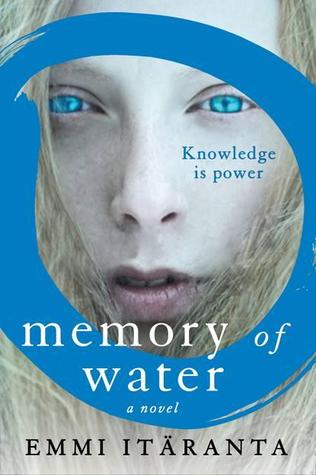
Memory of Water Emmi ItarantaWater is the most versatile of all elements … Water walks with the moon and embraces the earth, and it isn’t afraid to die in fire or live in air. When you step into it, it will be as close as your own skin, but if you hit it too hard, it will shatter you … Death is water’s close companion. The two cannot be separated, and neither can be separated from us, for they are what we are ultimately made of: the versatility of water, and the closeness of death. Water has no beginning and no end, but death has both. Death is both. Sometimes death travels hidden in water, and sometimes water will chase death away, but they go together always, in the world and in us. 

Personification of natural things provides the reader with an image they can clearly and emotionally relate to and care about. When a point-of-view character does the describing, we get a powerful and intimate indication of their thoughts and feelings—mainly in how they connect to place (often as symbol). When this happens, place and perception entwine in powerful force.

Donald Maass writes in Writing the Breakout Novel Workbook: “The beauty of seeing a locale through a particular perspective is that the point-of-view character cannot be separated from the place. The place comes alive, as does the observer of that place, in ways that would not be possible if described using objective point of view.” The POV character’s relationship to place helps identify the transformative elements of their journey. Such transformation is the theme of the story and ultimately portrays the story’s heart and soul.

Connecting Character with Environment

Strong relationships and linkages can be forged in story between a major character and an aspect of their environment (e.g., home/place, animal/pet, minor character as avatar/spokesperson for environment [e.g. often indigenous people]). In these examples the environmental aspect serves as symbol and metaphoric connection to theme. They can illuminate through the sub-text of metaphor a core aspect of the main character and their journey: the grounding nature of the land of Tara for Scarlet O’Hara in Gone With the Wind; the sacred white pine forests for the Mi’kmaq in Barkskins; The dear animals for Beatrix Potter of the Susan Wittig Albert series.

The immense sandworms of Frank Herbert’s Dune are strong archetypes of Nature—large and graceful creatures whose movements in the vast desert sands resemble the elegant whales of our oceans:

It came from their right with an uncaring majesty that could not be ignored. A twisting burrow-mound of sand cut through the dunes within their field of vision. The mound lifted in front, dusting away like a bow wave in water. 

Misunderstood, except by the indigenous Fremen, the giant sandworms are targeted as a dangerous nuisance by the colonists—when, in fact, they are closely tied to the ecological cycles of the desert planet through water and spice.
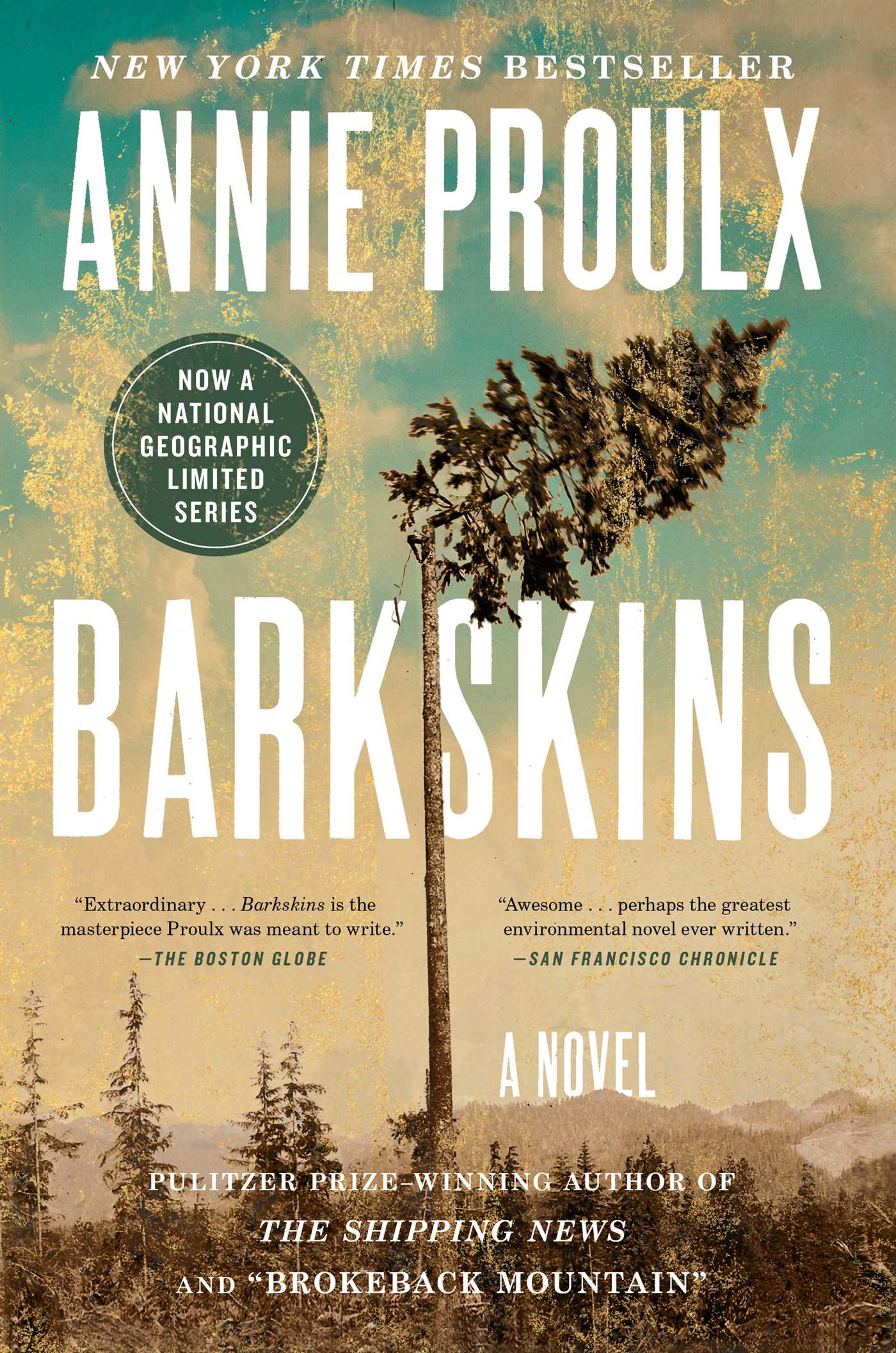
Barkskins Annie ProulxAnnie Proulx opens her novel Barkskins with a scene in which René Sel and fellow barkskins (woodcutters) arrive from France in the late seventeenth century to the still pristine wilderness of Canada to settle, trade and accumulate wealth:

In twilight they passed bloody Tadoossac, Kébec and Trois-Rivières and near dawn moored at a remote riverbank settlement … Mosquitoes covered their hands and necks like fur. A man with yellow eyebrows pointed them at a rain-dark house. Mud, rain, biting insects and the odor of willows made the first impression of New France. The second impression was of dark vast forest, inimical wilderness.

These bleak impressions of a harsh environment crawling with pests such as bébites and moustiques underlie the combative mindset of the settlers to conquer and seize what they can of a presumed infinite resource. By page seventeen, we know that mindset well. René asks why they must cut so much forest when it would be easier to use the many adequate clearings to build their houses and settlements. Trépagny fulminates: “Easier? Yes, easier, but we are here to clear the forest, to subdue this evil wilderness.” He further explains the concept of property ownership that is based on strips of surveyable land parcels—an application of the enclosure system. For them, the vast Canadian boreal forest was never-ending and for the taking: “It is the forest of the world. It is infinite. It twists around as a snake. swallows its own tail and has no end and no beginning,” Trépagny claims.
Leaves dead litter-long sh TNS

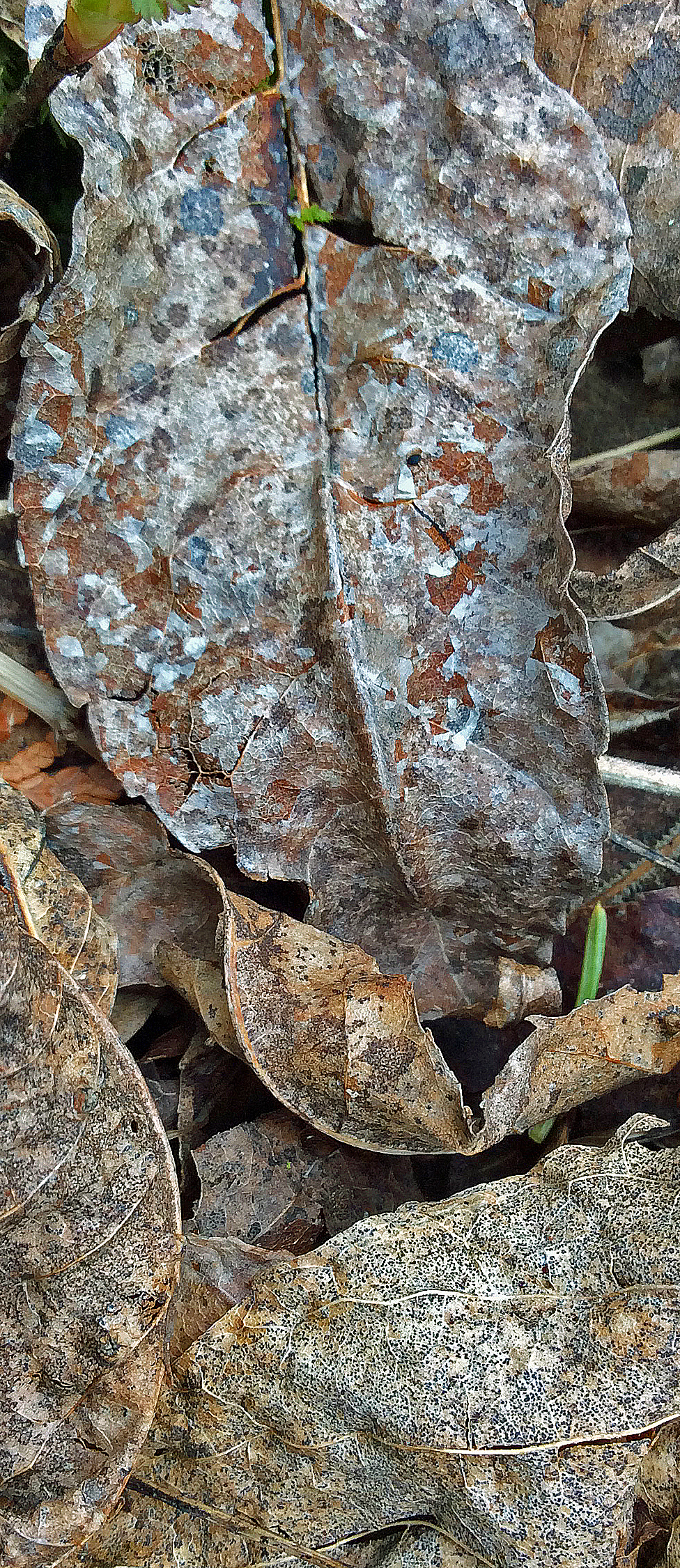
Leaf litter in Ontario forest (photo by Nina Munteanu)

Annie Proulx’s Barkskins chronicles two immigrants who arrive in Canada in 1693 (René Sel and Charles Duquet) and their descendants over 300 years of deforestation of North America; a saga that starts with the arrival of the Europeans in pristine forest and ends with a largely decimated forest under the veil of global warming. “Barkskins” (woodcutters) are, in fact indentured servants who were brought from the Paris slums to the wilds of New France to clear the land, build and settle. Sel is forced to marry a native woman and their descendants live trapped between two cultures; Duquet runs away to become a fur trader and builds a timber empire.

The Mi’kmaq are interwoven with the land and the forest. Missionary Pere Crème, who studies language makes this observation of the natives and the forest:

He saw they were so tightly knitted into the natural world that their language could only reflect the union and that neither could be separated from the other. They seemed to believe they had grown from this place as trees grow from the soil, as new stones emerge aboveground in spring. He thought the central word for this tenet, weji-sqalia’timk, deserved an entire dictionary to itself. 

The foreshadowing of doom for the magnificent forests is cast by the shadow of how settlers treat the Mi’kmaq people. The fate of the forests and the Mi’kmaq are inextricably linked through settler disrespect for anything indigenous and a fierce hunger for “more” of the forests and lands. Ensnared by settler greed, the Mi’kmaq lose their own culture and their links to the natural world erode with grave consequence. In a pivotal scene, Noë, a Mi’kmaw descendent of René Sel, grows enraged when she sees a telltale change in her brothers:

The offshore wind had shifted slightly but carried the fading clatter of boots on rock. They were wearing boots instead of moccasins. Noë knew what that meant but denied it … The men should be setting out to hunt moose, but because of the boots she knew they were going to work for the French logger.


Other Articles on Environmental Fiction, Eco-Fiction and Climate Fiction 

Can Dystopian Eco-Fiction Save the Planet?

Science Fiction on Water Justice & Climate Change

Windup Girl: When Monsanto Gets Its Way

Eco-Artist Roundtable with Frank Horvat on Green Majority Radio


Thanks to Mary Woodbury for the permission to share her survey results here. Much of the second part of this article is excerpted from the “Story” section of  The Ecology of Story: World as Character.
grape leaves in fall-halifax copy

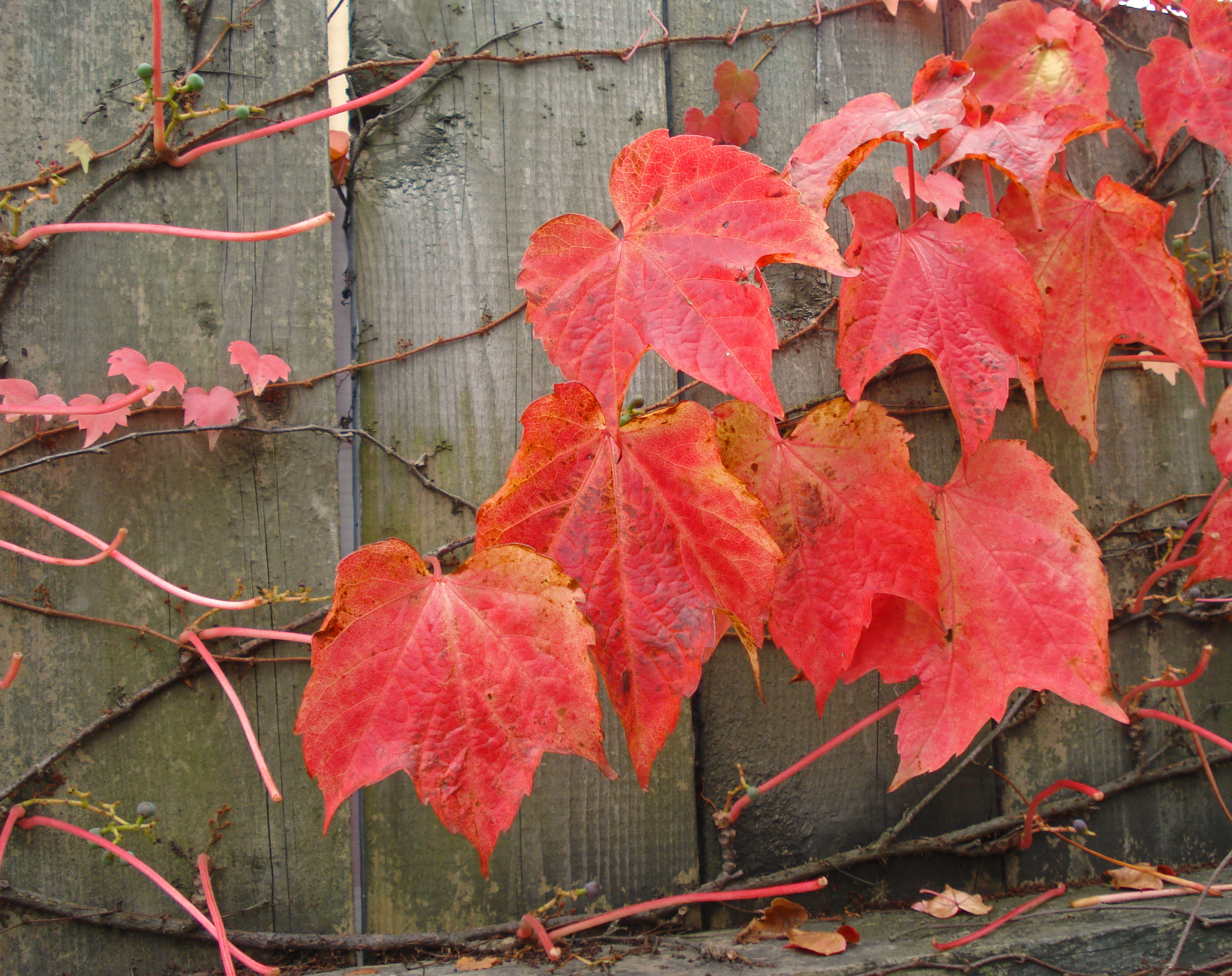
Grape leaves on fence in Toronto, ON (photo by Nina Munteanu)

nina-2014aaa

Nina Munteanu is a Canadian ecologist / limnologist and novelist. She is co-editor of Europa SF and currently teaches writing courses at George Brown College and the University of Toronto. Visit www.ninamunteanu.ca for the latest on her books. Nina’s bilingual “La natura dell’acqua / The Way of Water” was published by Mincione Edizioni in Rome. Her non-fiction book “Water Is…” by Pixl Press(Vancouver) was selected by Margaret Atwood in the New York Times ‘Year in Reading’ and was chosen as the 2017 Summer Read by Water Canada. Her novel “A Diary in the Age of Waterwas released by Inanna Publications (Toronto) in June 2020.

Launch of “A Diary in the Age of Water” by Nina Munteanu

june 18 launch evite1

Diary Water cover finalOn June 18th, Toronto book publishing house Inanna Publications launched its second spring series and A Diary in the Age of Water, my near-future/far-future speculative fiction book was among them.
A Diary in the Age of Water follows the climate-induced journey of Earth and humanity through four generations of women, each with a unique relationship to water.

Evoking Ursula LeGuin’s unflinching humane and moral authority, Nina Munteanu takes us into the lives of four generations of women and their battles against a global giant that controls and manipulates Earth’s water. In a diary that entwines acute scientific observation with poignant personal reflection, Lynna’s story unfolds incrementally, like climate change itself. Particularly harrowing are the neighbourhood water betrayals, along with Lynna’s deliberately dehydrated appearance meant to deflect attention from her own clandestine water collection. Her estrangement from her beloved daughter, her “dark cascade” who embarks upon a deadly path of her own, is heartwrenching. Munteanu elegantly transports us between Lynna’s exuberant youth and her tormented present, between microcosm and macrocosm, linking her story and struggles – and those of her mother, daughter and granddaughter – to the life force manifest in water itself. In language both gritty and hauntingly poetic, Munteanu delivers an uncompromising warning of our future.

—Lynn Hutchinson Lee


NINA-RENEE-TOAST2a

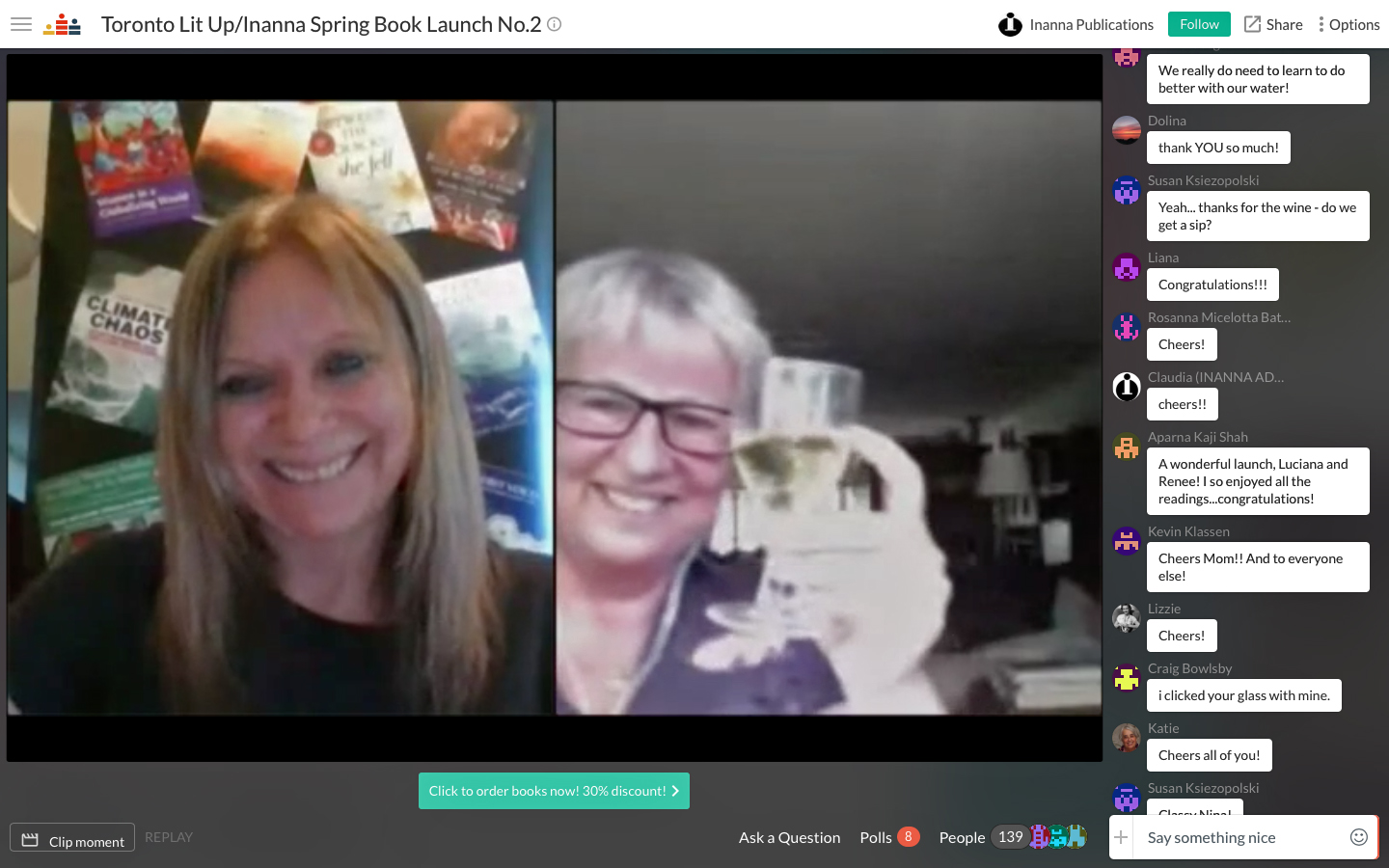
Renee Knapp and Nina Munteanu toast Inanna and all participants at the launch

A Diary in the Age of Water starts with young Kyo in the dying boreal forest of what used to be northern Canada. Kyo yearns inordinately for the Age of Water, a turbulent time of great change, before the “Water Twins” destroyed humanity. Looking for answers and plagued by vivid dreams of this holocaust, Kyo discovers the diary of Lynna, a limnologist from a time just prior to the destruction.

At the book launch, I read from Lynna’s first diary entry—in 2045. I then answered questions from audience members who came from Canada’s coast to coast:


What inspired you to write this book?

The Way of Water-COVERWho really… My publisher in Rome (Mincione Edizioni) had asked me for a short story on water and politics. I wanted to write about Canada and I wanted something ironic… so I chose water scarcity in Canada, a nation rich in water. “The Way of Water” (“La natura dell’acqua”) resulted, which has been reprinted in several magazines and anthologies, including Cli-Fi: Canadian Tales of Climate Change (Exile Editions), Future Fiction: New Dimensions in International Science Fiction (Future Fiction/Rosarium Publishing), Little Blue Marble Magazine, and Climate Crisis Anthology (Little Blue Marble). The story was about young Hilde—the daughter of the diarist—dying of thirst in Toronto… It begged for more … so the novel came from it…


Why did you choose to write your novel as a diary?

I was writing about both the far and the near future and much of it was based—like Margaret Atwood and her books—on real events and even real people. I wanted personal relevance to what’s going on, particularly with climate change.  I also wanted to achieve a gritty realism of the mundane and a diary felt right. The diarist—Lynna—is also a reclusive inexpressive character, so I thought a personal diary would help bring out her thoughts and feelings. There’s nothing like eves-dropping to make the mundane exciting.


If the oceans are rising because the ice caps are melting, is the ocean actually getting less salty?

The short answer is “yes.” As glaciers melt and introduce fresh water to the ocean—contributing to the rise in sea level—salinity is reduced in the surrounding sea. This has far-reaching consequences that lie beyond just rising sea levels and promise to affect all ocean life. Because freshwater is less dense than seawater—hence the saltwater wedge we experience on the lower Fraser River in Vancouver—freshwater increase in seawater will interfere with the pattern, mixing, and movement of ocean currents; this could be devastating to ocean life. The overall movement of ocean currents throughout the planet is called the Great Ocean Conveyor—or Atlantic Meridional Overturning Circulation (AMOC)—which circulates ocean water very much like in a lake, with dense water sinking beneath warmer, less salty water. As my diarist in the book writes, dumping in more and more freshwater into the ocean has slowed the sinking (and mixing) and the whole machine is slowing down. Freshwater is jamming the conveyor. If it stalls, this would unbalance the heat flux of the planet with more climate devastation.

Illustration 17 AMOC

Sketch of Atlantic Meridional Overturning Circulation (AMOC) from “A Diary in the Age of Water” Inanna Publications (sketch by Nina Munteanu)

The main protagonist is a limnologist; so are you; is there any resemblance?

Oh yes! Well, apart from the obvious—we both chose the same scientific discipline, we have similar views on the environment and humanity’s place in it. I might even have some of her foibles…hopefully not ALL of them… But, I’d say that all good characters have a piece of ourselves in them. Some dark and some light. The resemblance is heightened because she is depicted through her diary, which adds a gritty realism and a highly personal aspect to the fiction. In truth there’s a piece of me in each of the four women depicted in the story.


What is happening to the water in Ontario?

Water quality in Ontario waterways has not improved in the last decade and this can be placed squarely on the shoulders of local, regional and provincial governments and their failure to legislate and act. Inaction varies from lack of regulations and policing of industry to lack of city infrastructure and lack of ecological foresight.

SONY DSC

Cladophora alga in Lake Ontario

Lake Ontario itself receives pollution from Chicago, Sarnia, Detroit, Cleveland, Buffalo, Hamilton and Toronto. Pollution includes agricultural runoff (such as excess nutrients and cancer-causing pesticides and herbicides), disease-carrying sewage, and hormone-disrupting storm water runoff. Nine million people rely on the lake for drinking water. Greatest threats to the lake’s health come from urban development, electricity generation, sewage, and storm water contamination. In cities with large amounts of impervious surfaces, storm water runs over pavement and parking lots, picking up oil and other pollutants before flowing into a nearby river or stream. Flash floods are often accompanied by sewage overflow, which carries numerous pathogens. In addition, storm water picks up toxic heavy metals, endocrine disrupting chemicals and pharmaceuticals. All with devastating consequences to humans, never mind aquatic life and other wildlife.

Every five years the Conservation Authority Watershed Report Cards provide an assessment of ground and surface water quality in various watersheds of Ontario. The latest one by the TRCA (Toronto and Region Conservation Authority) in 2018 gave an overall grade of “D” (unchanged from 2013). They cited storm water runoff and lack of its management improvement as the chief reason for the poor grade. Increasing chloride concentrations in the Toronto region (mostly from liberal use of road salt) poses a real problem to aquatic life.


Log over water forest-DeasPark copy

Forest swamp in Deas Park, BC (photo by Nina Munteanu)

You mentioned that each of the four generations of women have a singular relationship with water. What role does water play in the book?

Well, in some important way, water is the fifth character. You could say even the main character. Water is the theme that carries each woman on her personal journey with climate change and the devastation that occurs—through water, I might add. Climate change is a water phenomenon, after all… So, water—like place and setting—plays a subtle yet powerful role in the story, influencing each character in her own way and bringing them together in the overall journey of humanity during a time of great and catastrophic change.


Are there other ages/epochs?

Yes. The story begins in the far future with young Kyo during the Age of Trees, after the end of the Age of Water. It is, in fact, the end of that age as well and that is why she prepares for the Exodus to “humanity’s” new home.

All Inanna titles are 30% off with coupon code: summer20. Please also consider purchasing “A Diary in the Age of Water” from an independent bookstore this summer. Find your local bookstore: http://open-book.ca/News/Your-Community-Your-Bookstore. And here is the current map of independent bookstores that are doing curbside pick up and delivery across Canada.


Beach stones foam HB-NS drybrush

Surf on Hirtle Beach, NS (photo and illustration by Nina Munteanu)

nina-2014aaa

Nina Munteanu is a Canadian ecologist / limnologist and novelist. She is co-editor of Europa SF and currently teaches writing courses at George Brown College and the University of Toronto. Visit www.ninamunteanu.ca for the latest on her books. Nina’s bilingual “La natura dell’acqua / The Way of Water” was published by Mincione Edizioni in Rome. Her non-fiction book “Water Is…” by Pixl Press(Vancouver) was selected by Margaret Atwood in the New York Times‘Year in Reading’ and was chosen as the 2017 Summer Read by Water Canada. Her novel “A Diary in the Age of Waterwas released by Inanna Publications (Toronto) in June 2020.