
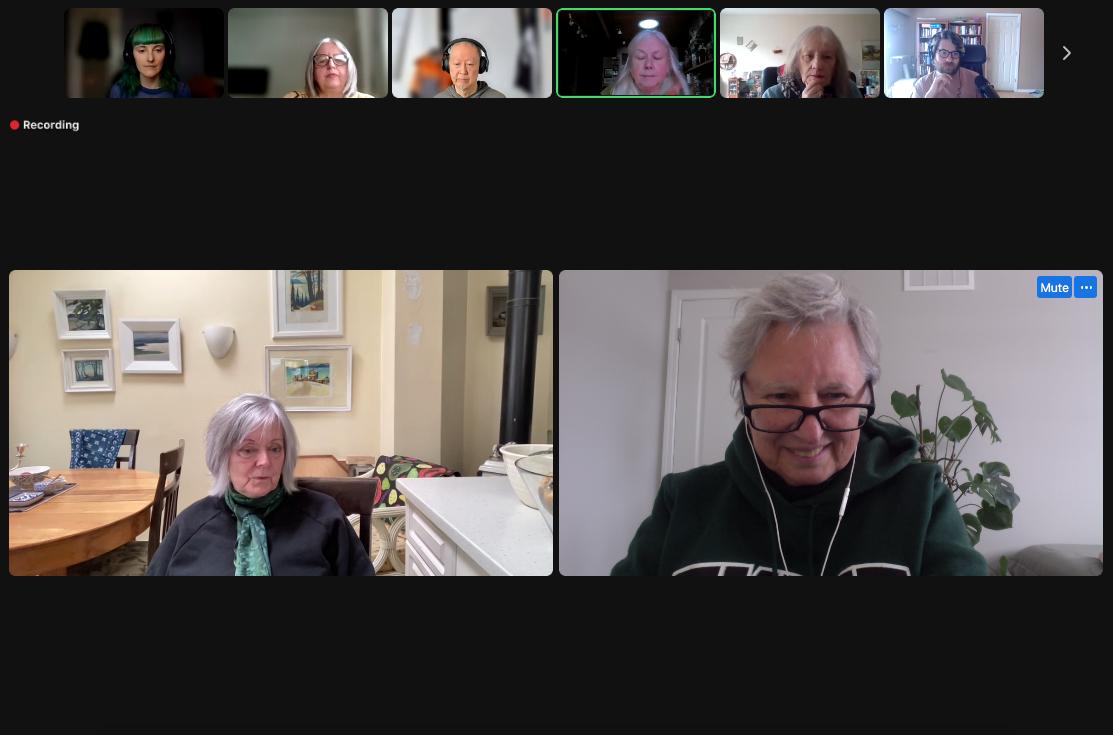
I recently participated in author readings from the eco-fiction anthology “Through the Portal: Tales from a Hopeful Dystopia.” Co-editor Lynn Hutchinson Lee and I opened the session with some introductory remarks, followed by readings by four of the anthology writers: Annaliese Schultz, Jade Wallace, Isabella Mori, and Matt Freeman.
.
The readings generated a lot of discussion about the nature and role of eco-fiction and stories in general on how we view the world and how that, in turn, influences the choices we make in life. Below, I include a short story excerpt and audience reaction for each author who read.
Annaliese Schultz read from her story Water & Oil. “Bursting from months, maybe years, of inertia born of dismay (engendered by the unending disasters of the world), Zip is instantly galvanized and greater than himself and gone.” One audience member shared that her story “sounded horrifyingly too possible.”
Jade Wallace read from her story Pluck. “It was only after I started working at the florist a few months ago that I began to think of plants as things that move. I learned that algae may swim towards the light; sundew can catch insects in their stalks; the leaves of touch-me-nots will slouch when they feel rain.” A member of the audience shared that “with what we now know about the way trees/plants communicate with each other, it was a neat story of crossing over to try to tell humans something.”
.

.
Isabella Mori read from her story Shift. “Red Nelly, that’s what they called my grandmother; always looked a little dishevelled. So did her living room. Four book shelves were squeezed into the small room, sagging with dark tomes, oversized coffee-table books, Greenpeace brochures, and video cassettes that even her questionable looking TV couldn’t play anymore.” Someone in the audience mentioned that the author had woven a very human story. “Stories are sometimes better teachers than all other forms available to us. I felt moments of warmness and reflection.” Another audience member added, “The wisdom of animals and plants—there’s hope for the planet. I’m ordering this book from my local independent as soon as I close his meeting!”
Matt Freeman read from his story Birdseed: “Near the end I began to devote the bulk of my time to what I believed to be a gregarious individual of the species Corvus brachyrhynchos—the American Crow. By then a chemical scythe had begun to carve up the clouds hanging over the lands of ‘Vancouver’ in a psychedelic frenzy, and the shocked blue skyline often bled in shades of lime.” One audience member shared, “I loved he way ‘birdish’ words kept appearing: perch, cage. This may be Matt’s first published story, but I’m sure it won’t be the last.” Another audience member shared, “I loved the connection with the wisdom and personification of your crow.”
.

.
The readings generated a lot of discussion about the nature and role of eco-fiction and stories in general on how we view the world and how that, in turn, influences the choices we make in life.
Audience members shared that they found the readings inspiring. One member shared, “I find stories and poems have a more transcendent or at least deeper connection when read aloud. I wasn’t sure what to expect. So glad to be a part of this reading. The book sounds amazing.” Another member shared, “Keep hope alive!”
For more about how this anthology came about go to my previous post on Through the Portal.
.

.
Hopeful dystopias are so much more than an apparent oxymoron: they are in some fundamental way the spearhead of the future – and ironically often a celebration of human spirit by shining a light through the darkness of disaster. In Through the Portal: Tales from a Hopeful Dystopia, award-winning authors of speculative fiction Lynn Hutchinson Lee and Nina Munteanu present a collection that explores strange new terrains and startling social constructs, quiet morphing landscapes, dark and terrifying warnings, lush newly-told folk and fairy tales.–Exile Editions
“A stunning collection of short stories and poetry that address our most existential concerns.”
Dragonfly.eco
“Will ingenuity, love, and respect for the earth help us work through whatever changes might lie ahead? Through the Portal offers hope that these qualities, if not enough in and of themselves, will help us find our way.”
The Seaboard Review
.

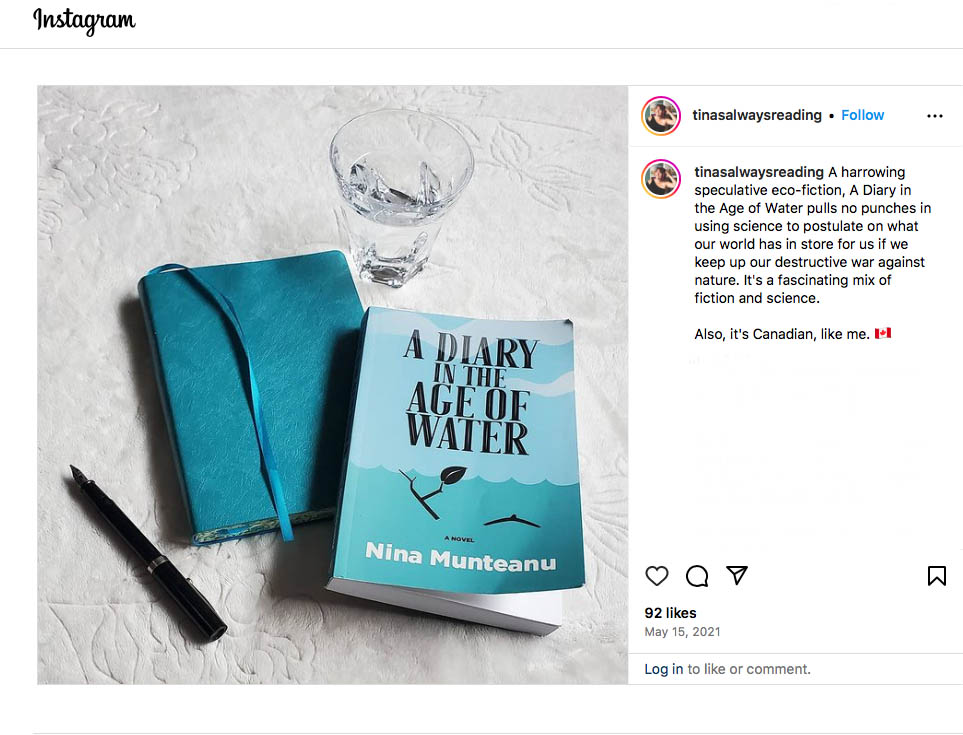
Nina Munteanu is a Canadian ecologist / limnologist and novelist. She is co-editor of Europa SF and currently teaches writing courses at George Brown College and the University of Toronto. Visit www.ninamunteanu.ca for the latest on her books. Nina’s bilingual “La natura dell’acqua / The Way of Water” was published by Mincione Edizioni in Rome. Her non-fiction book “Water Is…” by Pixl Press (Vancouver) was selected by Margaret Atwood in the New York Times ‘Year in Reading’ and was chosen as the 2017 Summer Read by Water Canada. Her novel “A Diary in the Age of Water” was released by Inanna Publications (Toronto) in June 2020.




 Nina Munteanu Writing Coach