Nina Munteanu Interviewed on “The Icaria Trilogy”

In March this year, Calgary writer Simon Rose interviewed me on his blog about the recent release of the first book of The Icaria Trilogy, Gaia’s Revolution.

Below is the interview:

My guest today is Nina Munteanu, Canadian author, essayist, and blogger. Nina has published over a dozen fiction and non-fiction books, mostly on the environment. She does a column on Reality Skimming Press and blogs about the environment on her site The Meaning of Water. Today, we’ll be discussing her just-released ecological thriller, Gaia’s Revolution, Book 1 of The Icaria Trilogy, put out by Dragon Moon Press in Calgary.

Simon: So, what’s the Trilogy about?

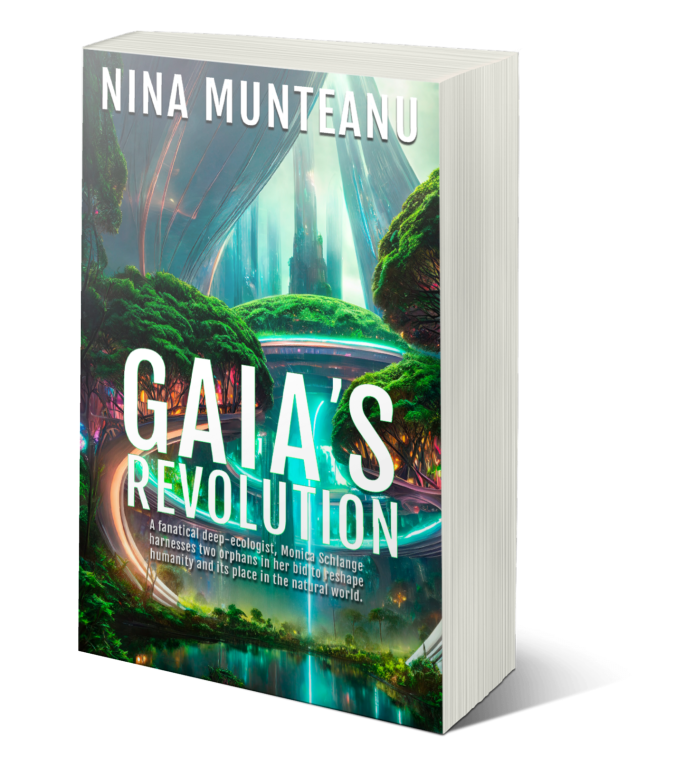
Nina: It’s a bit of a saga that starts in Berlin in 2022 (Book 1, Gaia’s Revolution) and moves to the Toronto area in Canada, through several generations over seven decades (Books 2 and 3). The trilogy explores a collapsing capitalist society in Canada through ravages of climate change and a failing technology. Book 1 starts with ambitious twin brothers Eric, a gifted engineer, and Damien Vogel, a brilliant scientist, who escape the growing racial violence of Berlin, to ‘peaceful’ Canada in a rivalry to control the evolution of the human race. The warring brothers set off a violent revolution that destroys the Canadian technocratic government and whose weapons ultimately risk the survival of humanity. Fanatical deep ecologist Monica Schlange snares both brothers in her gambit to reshape humanity and its place in the natural world. Three orphaned children, caught in the web of intrigue and violence, will ultimately determine the direction of humanity by introducing the first veemelds (people who can communicate with machines), a new environmental disease, and a new set of rules neither brother envisioned.

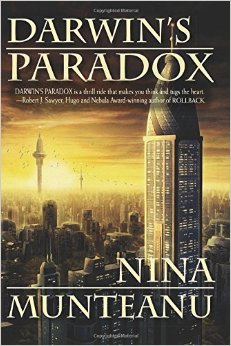
By 2095 (Book 2, Angel of Chaos and Book 3, Darwin’s Paradox), humanity—now under Gaian rule—has fled inside environmental dome cities called Icarias, chased inside by an unruly environment. Icarians struggle with Darwin’s Disease—a mysterious neurological environmental pandemic. Icaria 5 (formerly Toronto, Canada) is one of many enclosed cities within the slowly recovering toxic wasteland of North America, and where the protagonist Julie Crane (daughter of one of the orphans in Gaia’s Revolution and a veemeld) lives and works. Julie must deal with the ghosts of the characters in Book 1: including her dead and discredited father, now implicated in spreading subversive science and charged with several political assassinations.

Simon: A technocratic government in Canada? How did you envision that?

Nina: My premise involves several key climate disasters coupled with a highly unpopular decision by the Liberal government to welcome millions of climate refugees, providing housing and amenities that disaster-affected Canadians did not get. This scenario and accompanying sentiment is not new. In 2015, Angela Merkel welcomed over a million refugees from Iraq and Syria into Germany; public support quickly waned and the far right exploited rejection of the policy. Continuing with my premise, increased unrest grew in Canada as protests mobilized the far-right and gave voice to Christian fundamentalists, white supremacists, anti-Semitic conspiracy theorists and Islamophobic nationalists. The growing rift between the polarized major parties opened a gap filled by a new party, neither far right nor far left and based on the logic and merit of science & technology: the Technocratic Party of Canada. The party skyrocketed in popularity with an intelligent population who were fed up with political sophistry and empty rhetoric and excuses. The Technocrats had a plan that made sense and they demonstrated the expertise to carry it out: ways to successfully adapt to climate change, using technology and scientific research. The party subscribed to a scientific management approach, a Taylorism approach based on four principles: select methods based on science; assign jobs based on aptitude; monitor performance; and divide workload based on a systems approach. But, as you read above, they, too, are overthrown for something else: the Gaian dynasty of deep ecologists.  

Simon: You’ve brought in many characters in this saga. Who is your favourite?

Nina: You’ll laugh: the main antagonist of Gaia’s Revolution, Monica Schlange (and what she becomes). I really enjoyed writing about the twin brothers—contrasting them despite their twin origins. I also enjoyed writing the three orphan characters: about their terrible journey to safety when the violent revolution moved from the cities to the countryside. I also enjoyed writing Julie’s character (in Books 2 and 3), her journey as a veemeld (gifted and cursed) and being the daughter of a traitor, who must find her way in a treacherous world of lies and intrigue. But my favourite is Monica Schlange: the fanatical deep ecologist, revolutionary, shape-shifter, bad-ass warrior, villain with a conscience. She is a paradox: she cares immensely about the planet, the welfare of the planet’s ecosystems and displays compassion for the orphans; but she has no qualms about killing a man in cold blood—which she does, on several occasions.

There is a scene where twin brother Eric unleashes a techno-clone to murder a colleague of Monica’s; techno-clones are hybrid cyborgs, DNA-altered men merged with synthetics and weapons fused into them, all connected by a hive mind. Monica takes on this murder-machine and cleverly dispatches him—when no one else has been able to. This quickly earns her a reputation as a Badass warrior and soon images of her face—scar across her temple—is plastered everywhere by the revolutionaries.

Throughout the first book, I provide a few moments of perspective into Monica’s past. An only child, she grew up on one of the last independent dairy farms in Ontario—before the Technocrats seized it and converted it into a Corporation Farm using scientific agriculture. It killed her father, who she dearly loved. Her mother took to whoring with the first trucker who came along, abandoning her. A ruthless eco-terrorist and subversive, Monica is bent on destroying the capitalist-technocratic machinery to save the planet at the expense of human domination. An unscrupulous eco-terrorist, she uses sabotage and internet tampering to disrupt and hurt climate offenders. She is the quintessential anti-hero. I guess you could say that I realized some terrible fantasies through this character.

Simon: What are you currently working on?

Nina: Not much. I’m taking a wee break from novel-writing and focusing on marketing. I’m currently shopping an eco-fiction novel around that takes place in southern Ontario and the Kurpiowska Forest in Poland during the communist era (specifically the 50s to 70s). I did a lot of research for that book and it was so fascinating!

I am actively coaching writers to publication (see www.NinaMunteanu.me) and writing nature and environmental articles for various magazines and my own blogs (www.TheMeaningOfWater.com). I’m also curating a column on Lynda Williams’s Reality Skimming Press blog on sustainability. Called “Sustainability Over Ambition”, the column consists of a series of articles and interviews I’m conducting with mostly Canadian authors on that complex subject. If you’re a Canadian author, feel free to reach out to me if you’re interested in being interviewed.   

Simon: Tell me a little more about your coaching services?

Nina: My coaching includes advice on all story aspects (like storyboarding, world building, character, plot, etc.). I also edit, but my service usually encompasses far more, such as narrative flow, sentence structure, meaning, clarity, and concision. I look at just about every kind of fiction, except horror. I help writers with their nonfiction such as memoirs, biographies, how-to books, and technical books. I also do technical and scientific editing of papers and reports.

Simon: Where can people buy Gaia’s Revolution and the entire trilogy?

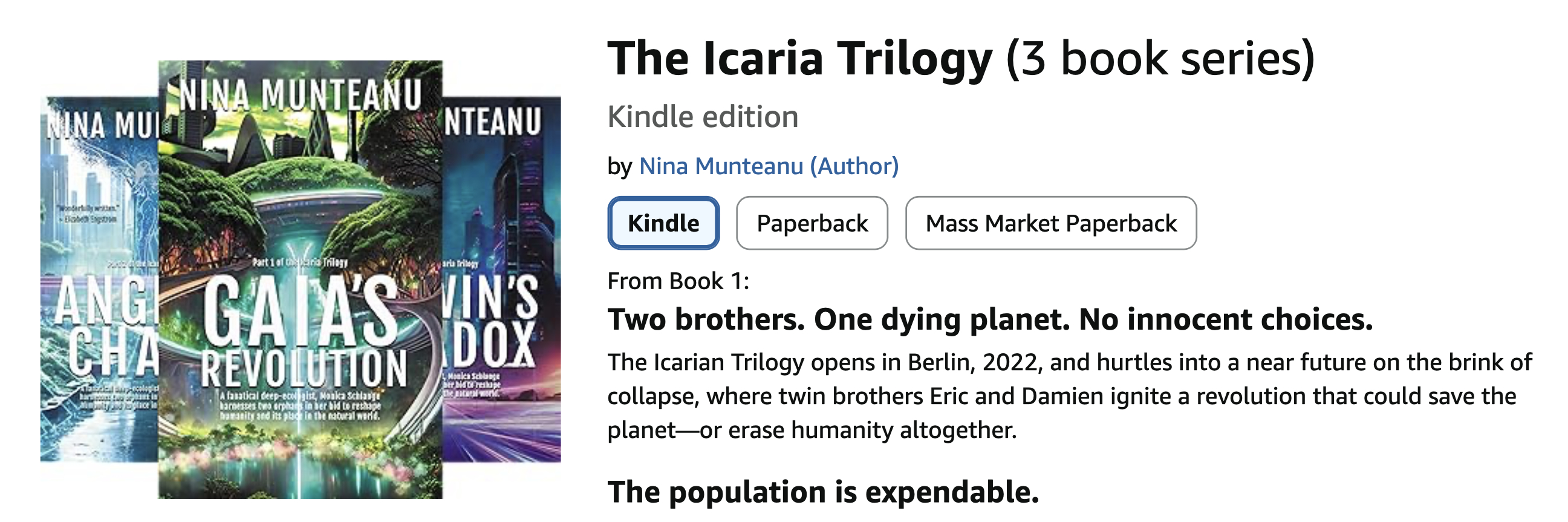
Nina: The entire Icaria Trilogy can be purchased on Amazon and other online and brick and mortar bookstores, such as Chapters. Books 2 and 3 are also available in many libraries throughout Canada, given that they’ve been out for a while.

Simon: Thanks, Nina, for being my guest here today and the very best of luck with The Icaria Trilogy.

The Icaria Trilogy by Dragon Moon Press

Nina Munteanu is a Canadian ecologist / limnologist and novelist. She is co-editor of Europa SF and currently teaches writing courses at George Brown College and the University of Toronto. Visit  www.ninamunteanu.ca for the latest on her books. Nina’s bilingual “La natura dell’acqua / The Way of Water” was published by Mincione Edizioni in Rome. Her non-fiction book “Water Is…” by Pixl Press (Vancouver) was selected by Margaret Atwood in the New York Times ‘Year in Reading’ and was chosen as the 2017 Summer Read by Water Canada. Her novel “A Diary in the Age of Water” was released by Inanna Publications (Toronto) in June 2020. Her latest novel “Gaia’s Revolution” was released in 2026 by Dragon Moon Press.

The Icaria Trilogy: The Story Behind the Prequel to the Prequel…


Today my eco-fiction novel Gaia’s Revolution (Book 1 of The Icaria Trilogy) releases through Dragon Moon Press in paperback and ebook form on Amazon (and other book retailers).

Gaia’s Revolution explores a collapsing capitalist society in Canada through ravages of climate change and a failing technology. The story is told through the lives of ambitious twin brothers Eric and Damien Vogel, and the woman who plays them like chess pieces in her gambit to ‘rule the world.’ The novel starts out in Berlin—with a scuffle between police and climate activists of Letzte Generation-then moves to Toronto Canada, where an unlikely revolution is brewing… 

Book 2 (Angel of Chaos) and Book 3 (Darwin’s Paradox of The Icaria Trilogy are already available in bookstores worldwide in both ebook and print form.

The Icaria Trilogy by Dragon Moon Press

This day is special for me in a number of ways. Today is also my dad’s birthday. He passed away a while ago, but I know he is here with me as this is happening. You see, when I was just 15, I’d written my first book, an early version of Angel of Chaos. My dad, who had met and befriended an editor at Doubleday, and proud of my accomplishment, arranged a meeting with me and the editor to look at my book. I put on my highest pumps—I could barely walk in them!—and best outfit and met with the gentleman. He did not take my book for publication but praised my work and gave me some wonderful advice. “Keep writing!” he said. I have carried that meeting and advice to this day and thank my dad for his belief in me as a writer—particularly given that he had been pushing for me to become a teacher or nurse. Four decades later, a more polished version of that same book was published in 2010 by Dragon Moon Press (as Angel of Chaos, the prequel to Darwin’s Paradox, which was published in 2007). 

Birch forest in Ontario (photo and rendition by Nina Munteanu)

The Icaria Trilogy by Dragon Moon Press

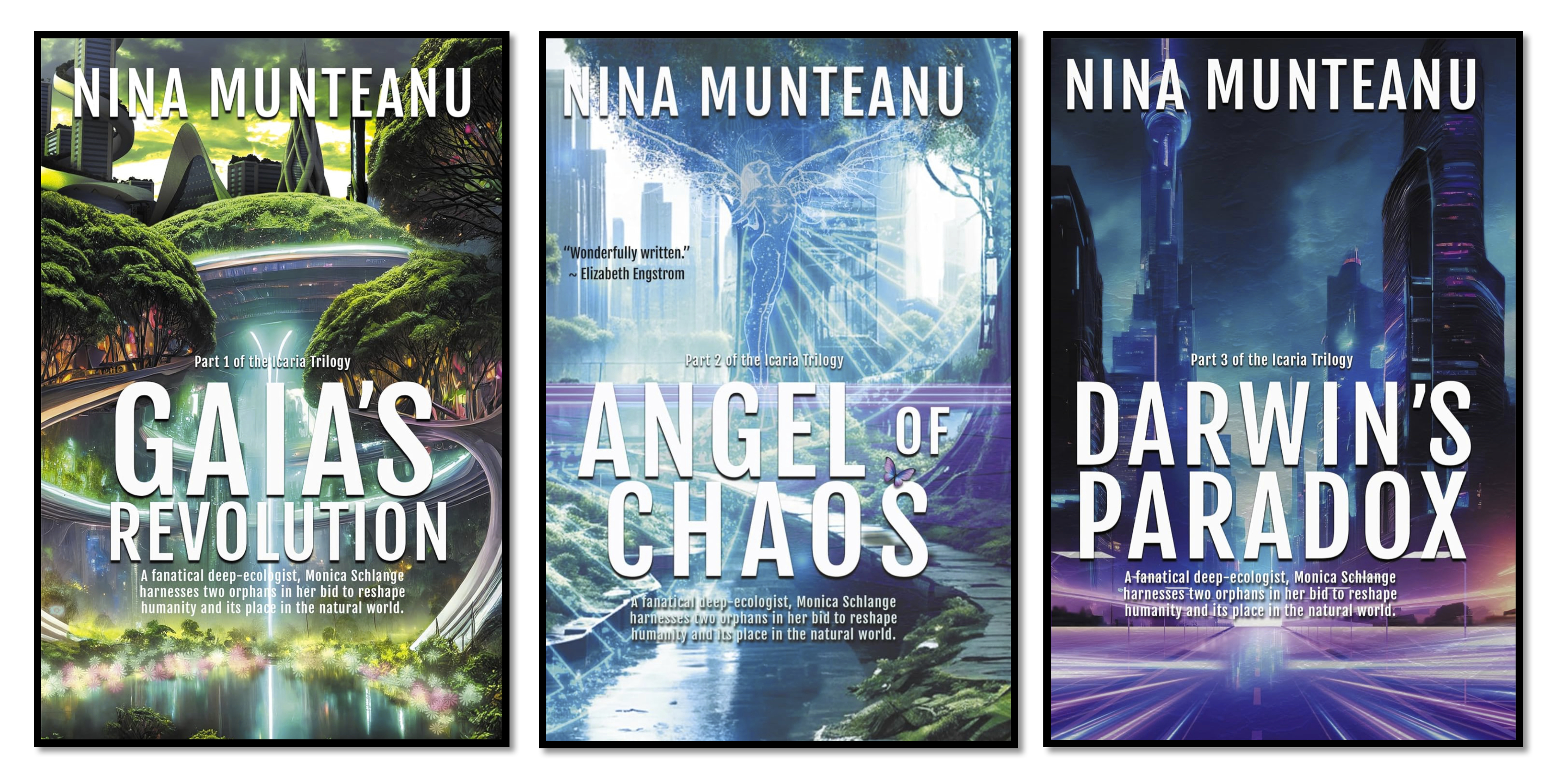
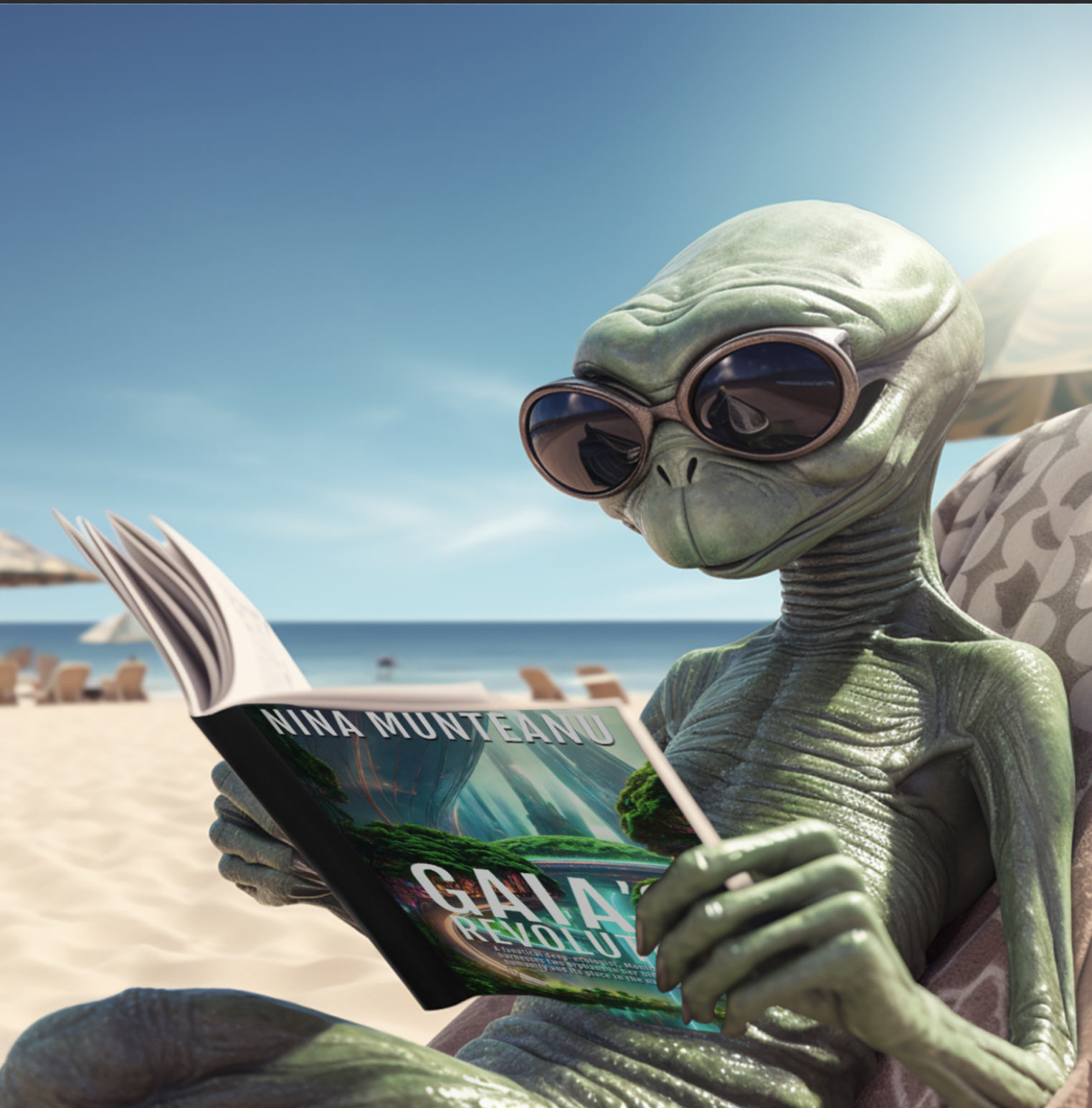
Now, with newly written Gaia’s Revolution (the prequel to the prequel) released, Dragon Moon has reissued new covers for the entire trilogy. Here they are! Oh! And look who’s already reading Gaia’s Revolution!

Aliens get to read everything before we do…

Nina Munteanu is an award-winning novelist and short story writer of eco-fiction, science fiction and fantasy. She also has three writing guides out: The Fiction WriterThe Journal Writer; and The Ecology of Writing and teaches fiction writing and technical writing at university and online. Check the Publications page on this site for a summary of what she has out there. Nina teaches writing at the University of Toronto and has been coaching fiction and non-fiction authors for over 20 years. You can find Nina’s short podcasts on writing on YouTube. Check out this site for more author advice from how to write a synopsis to finding your muse and the art and science of writing.

“Gaia’s Revolution”, Life After Capitalism: The Promise & Spectre of Deep Ecology—Part 1

Twin brothers—a brilliant scientist and a gifted engineer—escape the growing racial violence of Berlin, to ‘peaceful’ Canada in a rivalry to control the evolution of the human race.

My novel Gaia’s Revolution, the first of The Icaria Trilogy—releasing March 10, 2026, by Dragon Moon Press—explores a collapsing capitalist society in Canada through ravages of climate change, water shortages, plague, and a failing technology. The story is told through the lives of ambitious twin brothers Eric and Damien Vogel, and the woman who plays them like chess pieces in her gambit to rule the world.

The novel starts on December 13th, 2022, in Berlin, the day several members of the climate activist group Letzte Generation* to which Damien belongs, are raided by police who seize their computers and phones. Damien is a quiet scholar, an introvert and deep ecologist*, devoted to the teachings of Arne Næss and George Sessions, who promoted an environmental philosophy of eight basic principles of deep ecology.  Næss and Sessions advocated that all living beings have intrinsic value, independent of their utility to human needs. Their philosophy has become a movement that promotes a holistic, eco-centric worldview demanding radical, structural changes to human society to prioritize nature’s flourishing.  

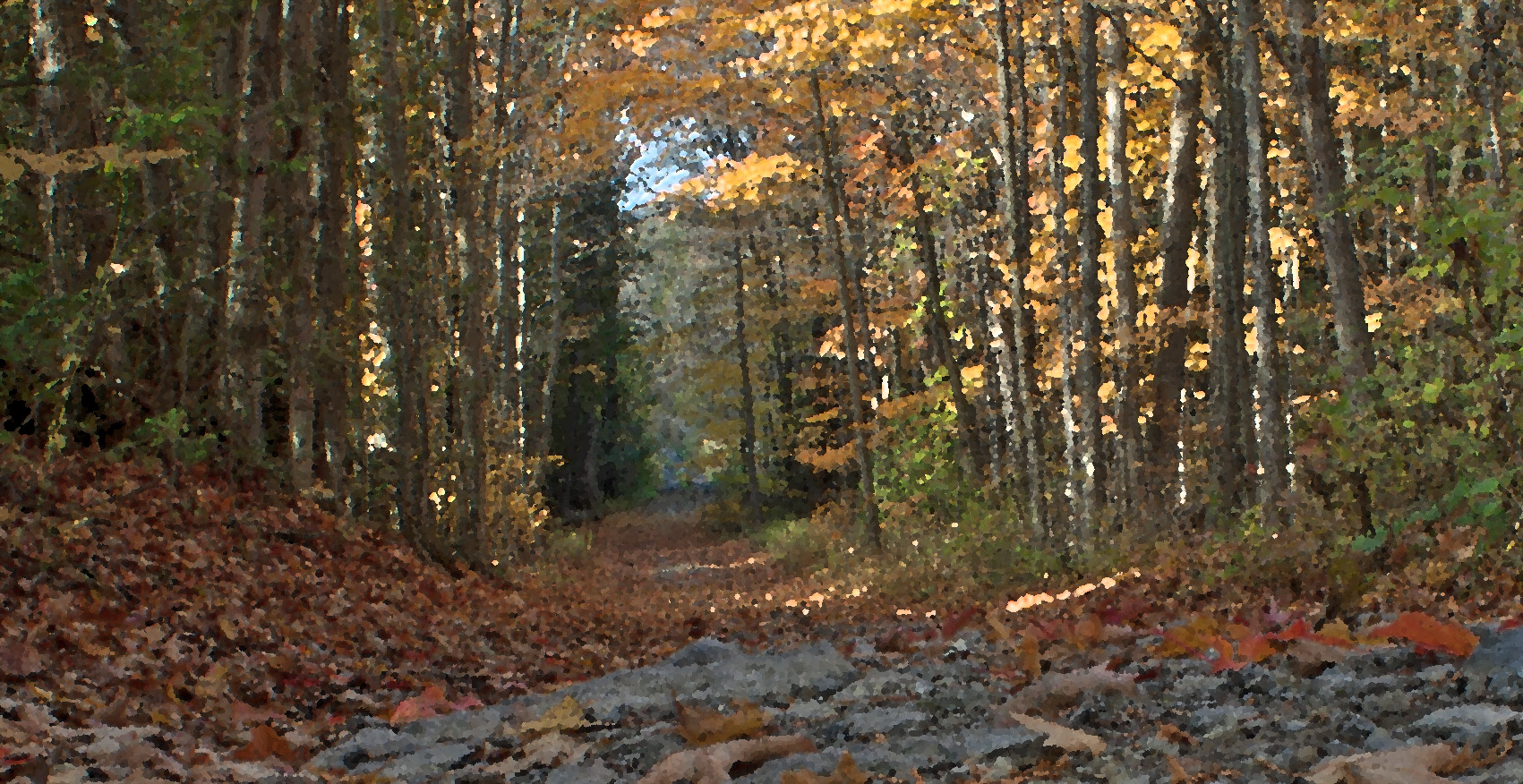
Road through a beech tree forest, ON (photo and rendition by Nina Munteanu)

Damien later meets with his extrovert anarchist brother in Treffpunkt, near the university campus, and they argue ideology and revolution. Eric contends that the only way humanity will survive is to adapt to climate change by somehow overthrowing the bourgeois plutocrats through violent revolution: preventing the small ruling class carving out a comfortable life for itself while the rest of the world suffers terrible deprivation. Eric pulls out the worn copy of B.F. Skinner’s Walden Two from his jacket pocket, slaps it on the table and pushes it toward Damien. “That’s the answer, Dame.”

Each brother plans to create a new humanity: Eric’s plan is to control humanity through gene manipulation and behaviour engineering (aka Walden Two); Damien’s plan is to draw on deep ecology and use environmental triggers with biotechnologies to empower humanity with physical/chemical abilities to adapt to climate and its changing environment via transhumanist AI.

Neither addresses the elephant in the room: population. Only a much-reduced population will ensure success for either plan.

To this point, Eric, who is far more cynical and ruthless, thinks Damien naïve and feckless in his deep ecological view:

Damien too easily prescribes to the old leftist shibboleth of Nature being the answer to everything and Market being evil. His deep ecology utopia would spring from an atavistic rejection of modern life, a return to ‘the ancient farm.’ But how that fantasy could be achieved without a drastic population reduction is beyond his brother’s imagination. Damien fetishizes the natural world. Just like he does their mother. The naïve fool is a blind romantic, refusing to see reality right in front of him: that Nature is ultimately cruel, cold, and preoccupied with its own survival. Just like their mother.–Eric Vogel, Gaia’s Revolution

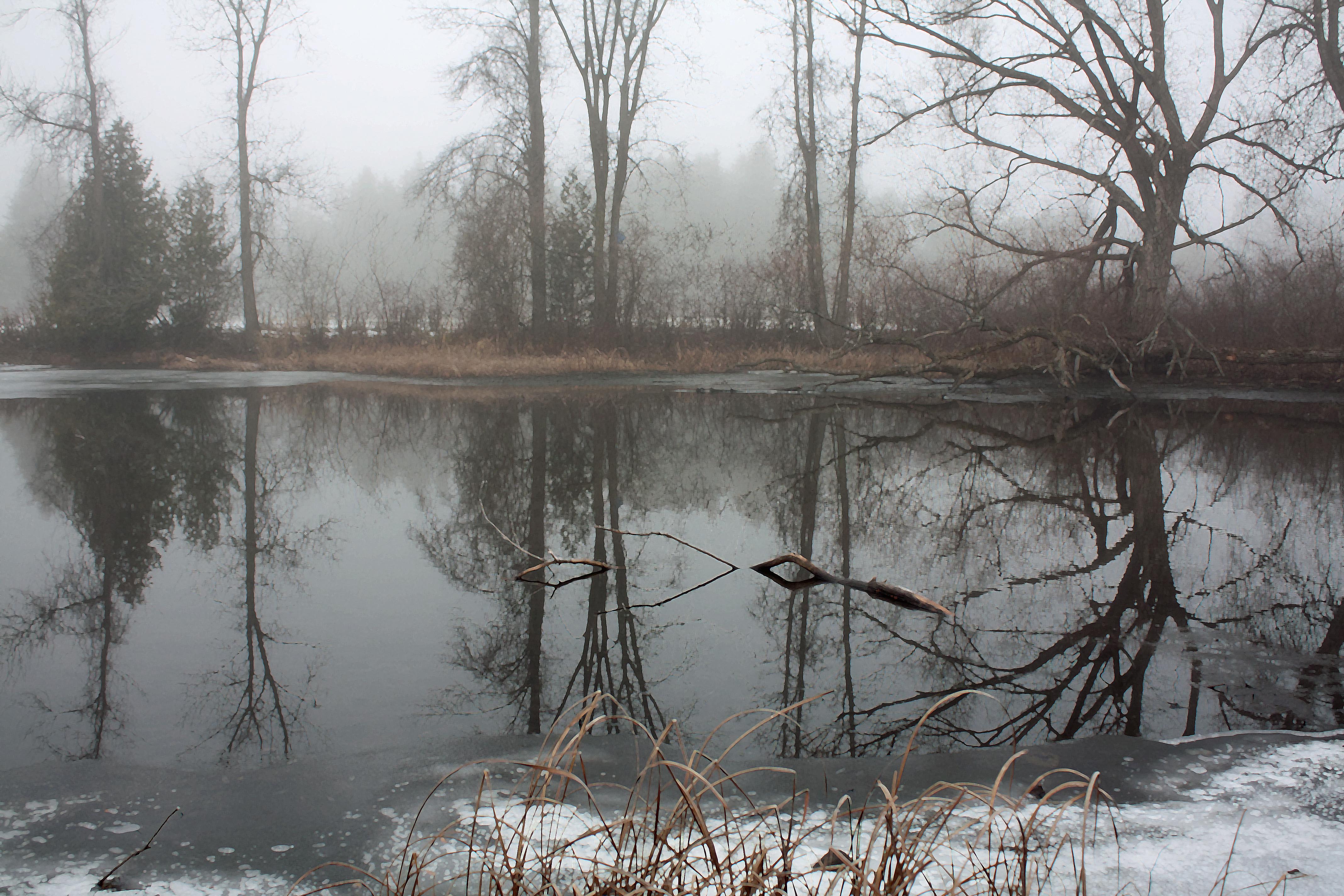
Foggy morning on an Ontario marsh in winter (photo and rendition by Nina Munteanu)

Eight Basic Principles of Deep Ecology*

In 1984, ecologists Arne Næss and George Sessions set out the following Basic Principles of Deep Ecology:

  • The well-being and flourishing of human and nonhuman Life on Earth have value in themselves (synonyms: intrinsic value, inherent value). These values are independent of the usefulness of the non-human world for human purposes.
  • Richness and diversity of life forms contribute to the realization of these values and are also values in themselves.
  • Humans have no right to reduce this richness and diversity except to satisfy vital needs.
  • The flourishing of human life and cultures is compatible with a substantial decrease of the human population. The flourishing of nonhuman life requires such a decrease.
  • Present human interference with the nonhuman world is excessive, and the situation is rapidly worsening.
  • Policies must therefore be changed. These policies affect basic economic, technological, and ideological structures. The resulting state of affairs will be deeply different from the present.
  • The ideological change is mainly that of appreciating life quality (dwelling in situations of inherent value) rather than adhering to an increasingly higher standard of living. There will be a profound awareness of the difference between big and great.
  • Those who subscribe to the foregoing points have an obligation directly or indirectly to try to implement the necessary changes.
Finn Slough old shed, BC (photo by Nina Munteanu)

Eric plans to address the 5th Basic Principle of Deep Ecology—present human interference with the nonhuman world is excessive and the situation is rapidly worsening— by using nefarious means to meet the 4th Basic Principle of Deep Ecology: the flourishing of human life and cultures is compatible with a substantial decrease of the human population and the flourishing of nonhuman life requires such a decrease. With a reduced population, he plans to make the remaining principles (e.g. 6th and 7th) realizable through his behaviour engineering.

But Eric hasn’t accounted for fanatical deep ecologist / eco-terrorist Monica Schlange in his plan… (More on this shapeshifting character in Part 2).

The Icaria Trilogy by Dragon Moon Press

You can pre-order the ebook of Gaia’s Revolution by Dragon Moon Press on Amazon. Release date is March 10, 2026. The print version will release soon after. Book 2 (Angel of Chaos) and Book 3 (Darwin’s Paradox) of theThe Icaria Trilogy are already available in both ebook and print form.

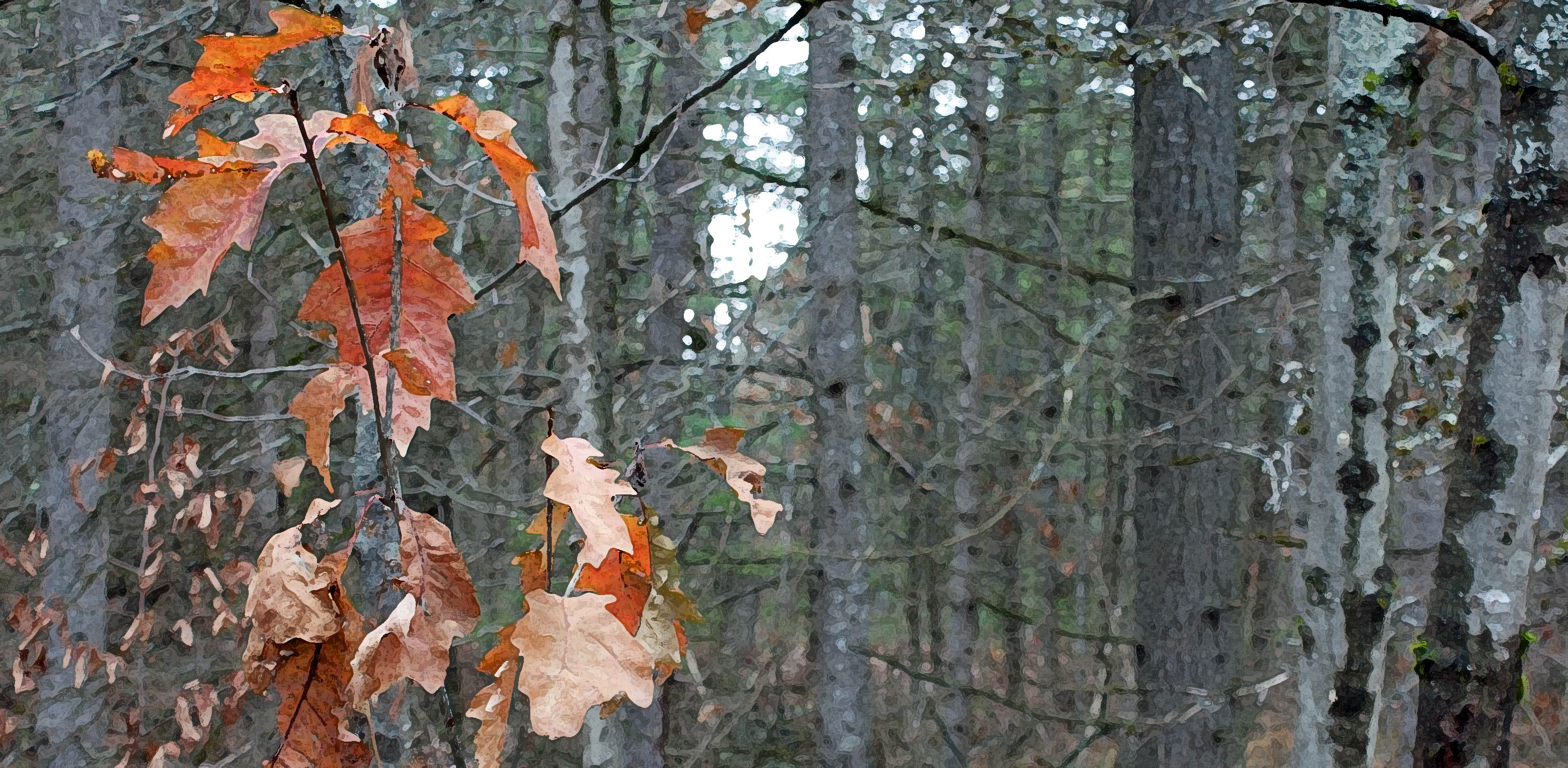
Oak leaves light up a dark pine forest in fall, ON (photo by Nina Munteanu)

References:

Munteanu, Nina. 2026. “Gaia’s Revolution, Part 1 of Icaria Trilogy.” Dragon Moon Press, Calgary, AB. 369 pp.

Munteanu, Nina. 2010. “Angel of Chaos, Part 2 of Icaria Trilogy.” Dragon Moon Press, Calgary, AB. 518 pp.

Munteanu, Nina. 2007. “Darwin’s Paradox, Part 3 of Icaria Trilogy.” Dragon Moon Press, Calgary, AB. 294 pp.

Sessions, George, Bill Devall. 2000. “Deep Ecology: Living as if Nature Mattered.” Gibbs Smith. 267pp.

Skinner, B.F. 1948. “Walden Two” The Macmillan Company, New York. 301pp.

Terminology:

*Deep Ecology: An environmental philosophy and social movement advocating that all living beings have intrinsic value, independent of their utility to human needs. Coined by Arne Næss in 1972, it promotes a holistic, ecocentric worldview—often termed “ecosophy”—that demands radical, structural changes to human society to prioritize nature’s flourishing.

*Letzte Generation: a prominent European climate activist group, founded in 2021, known for its acts of civil disobedience—such as roadblocks, defacing art, and vandalizing structures—to pressure governments on climate action. The term was chosen because they considered themselves to be the last generation before tipping points in the earth’s climate system would be reached. They are mostly active in Germany, Italy, Poland and Canada. In Germany, they have faced accusations of forming a criminal organization, leading to police raids.

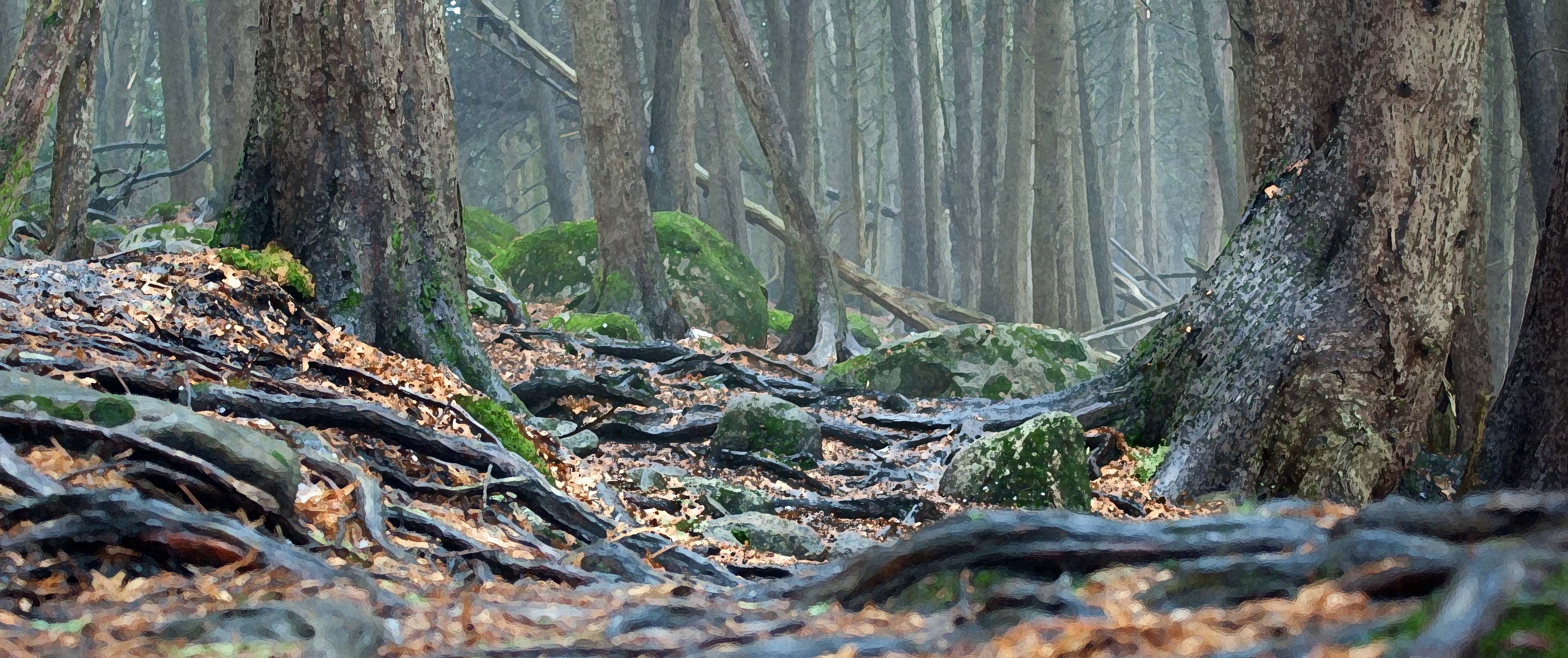
Root-covered cedar-pine forest in early winter, ON (photo and rendition by Nina Munteanu)

Nina Munteanu is a Canadian ecologist / limnologist and novelist. She is co-editor of Europa SF and currently teaches writing courses at George Brown College and the University of Toronto. For the latest on her books, visit www.ninamunteanu.ca. Nina’s bilingual “La natura dell’acqua / The Way of Water” was published by Mincione Edizioni in Rome. Her non-fiction book “Water Is…” by Pixl Press (Vancouver) was selected by Margaret Atwood in the New York Times ‘Year in Reading’ and was chosen as the 2017 Summer Read by Water Canada. Her novel “A Diary in the Age of Water” was released by Inanna Publications (Toronto) in June 2020.

Nina Munteanu Talks to Hi-Sci-Fi Radio…

darwins-paradoxHi-Sci-Fi Radio (a podcast radio show out of CJSF 90.1FM in Burnaby, British Columbia) interviewed Nina Munteanu about the paradoxes of her eco-thriller “Darwin’s Paradox” by Dragon Moon Press (Edge Publishing).

A devastating disease. A world on the brink of violent change. And one woman who can save it or destroy it all. Julie Crane must confront the will of the ambitious virus lurking inside her to fulfill her final destiny as Darwin s Paradox, the key to the evolution of an entire civilization.

Nina and Irma Arkus talked synchronicity, autopoiesis, Nature’s intelligence and whether algae can sing in this entertaining interview on science fiction and all things wonderful and strange.

Darwin’s Paradox is a thrill ride that makes you think and tugs the heart.”–Robert J. Sawyer, Hugo and Nebula Award-winning author of Quantum Night