.
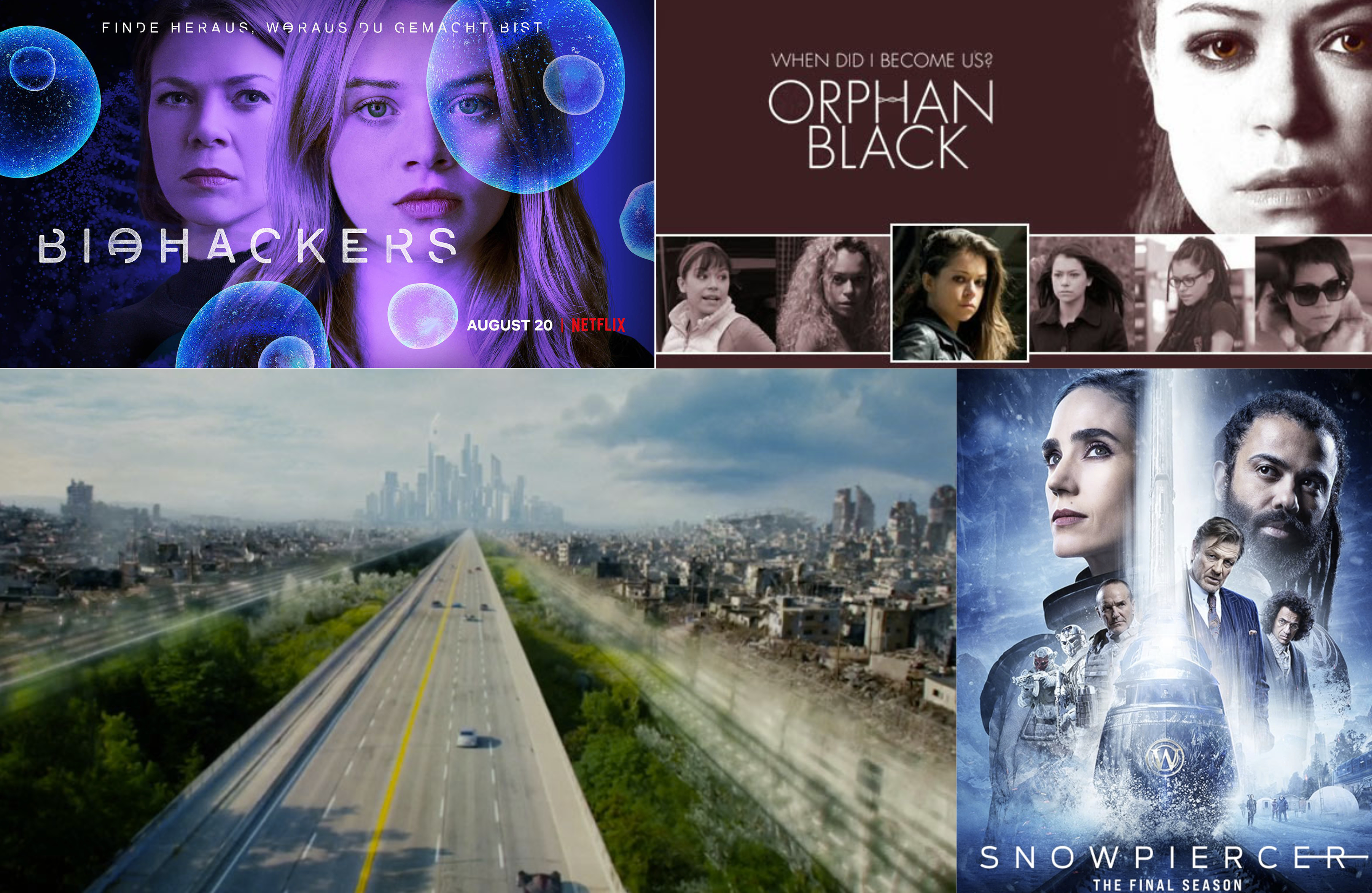
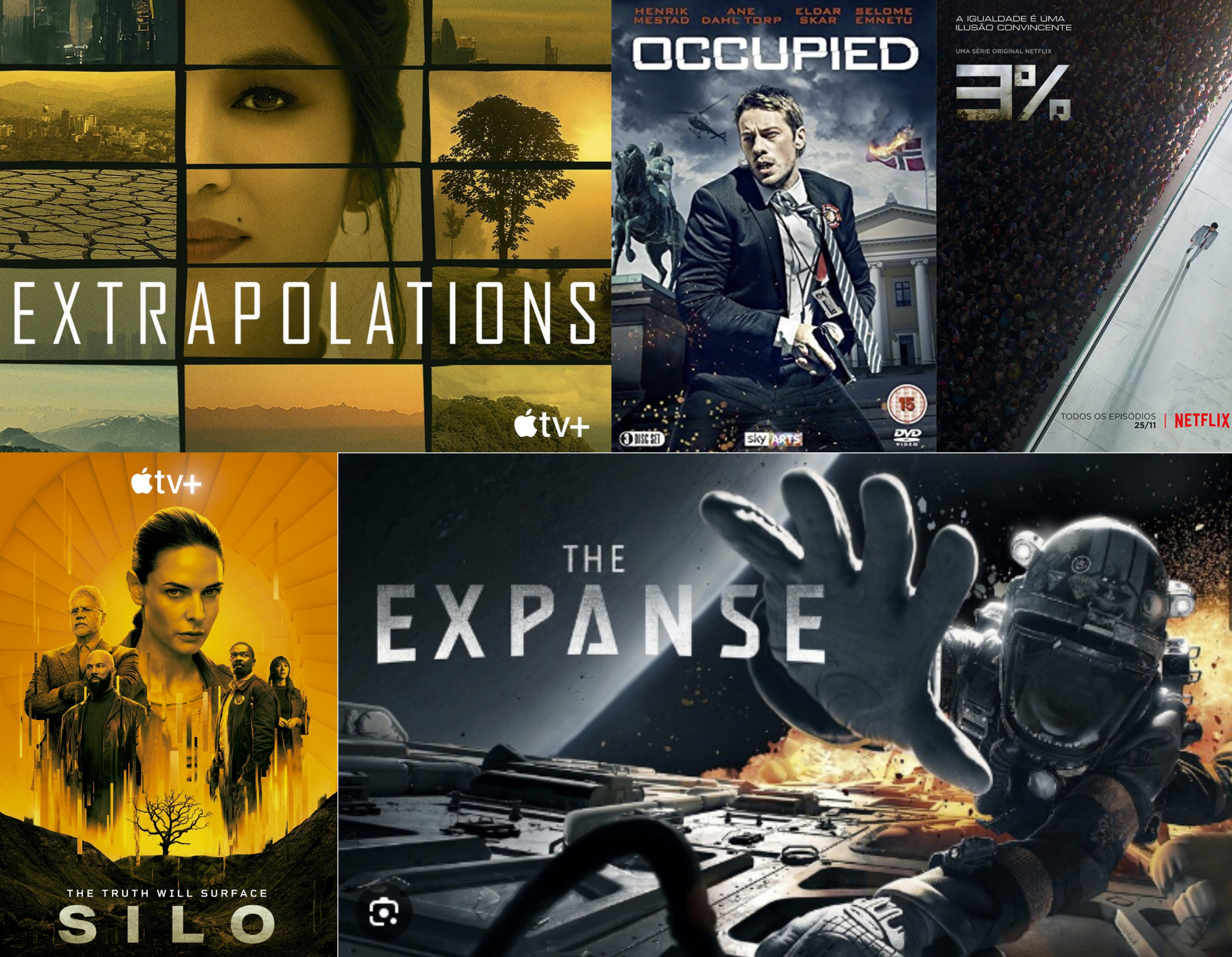
I’ve selected ten TV series that have intrigued me, moved me, and stayed with me for various reasons that touch on: abuse of justice, including eco-justice and environmental abuse; technology use and abuse; and the effects and horrors of climate change.
Some are well known; others not so well known. All approach storytelling with a serious dedication to depth of character, important themes, realistic world building, and excellent portrayal by actors. The world-building is extremely well done—in some cases rivalling Ridley Scott’s best—with convincing portrayals of worlds that are at times uncanny in their realism. Worlds that reflect story from an expansive landscape to the mundane minutiae of daily life: like the cracked phone device of Detective Miller in The Expanse or the dirty fingernails of engineer Juliette Nichols in the Down Deep of Silo. Stories vary in their treatment of important themes from whimsical and often humorous ironies to dark and moody treatises on existential questions. In my opinion, these TV series rival the best movies out there, often reflecting large budgets (but not always) and a huge commitment by producers. The ten TV series I’ve selected here come from around the world: Brazil, Germany, France, Norway, Canada and the United States.
In Part 1, I look at five TV series that touch on ethical issues we are facing today; issues that reach far into existential questions of what it means to be human. These TV series explore synthetic biology, cloning and gene editing, political justice, and justice in space colonization and exploitation.
.
.
BIOHACKERS: When Synthetic Biology Meets Ethical Intrigue
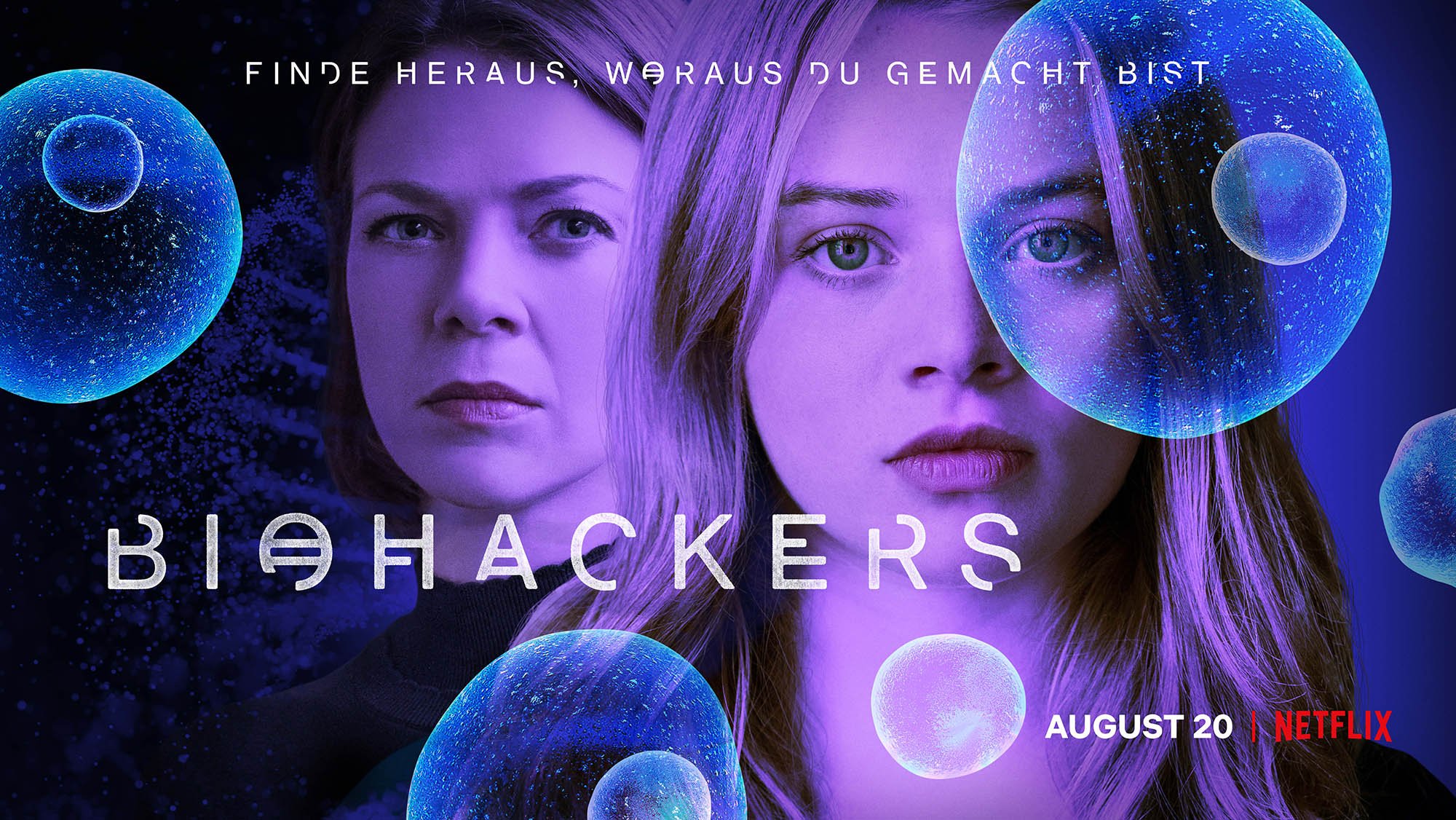
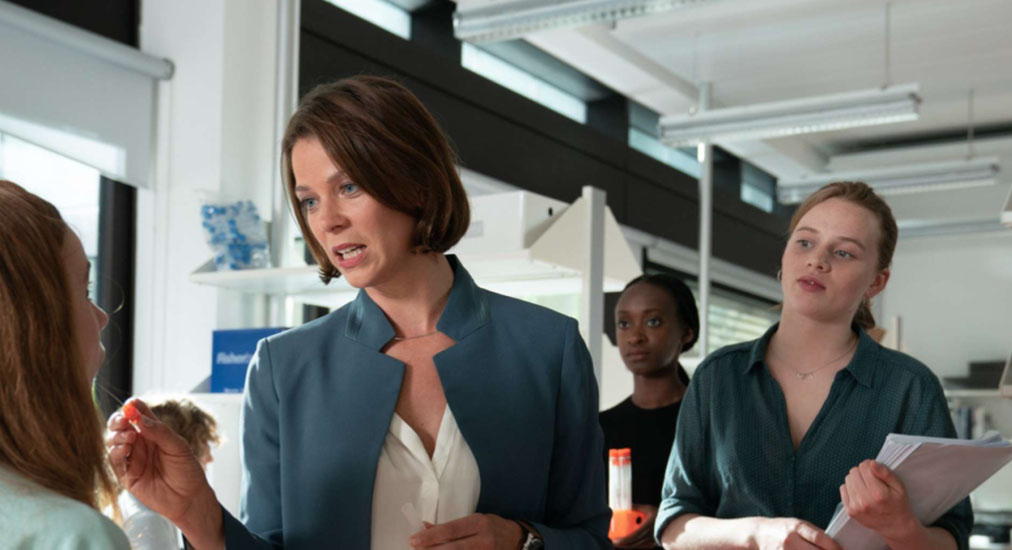
This fast-paced techno-thriller created by Christian Ditter has at the very centre of its intrigue synthetic biology. In the journal Science Dov Greenbaum describes this German TV series as “a fictional tale centred around the sociotechnological movement known as do-it-yourself (DIY) biology, in which amateurs, professionals, anarchists, and civic-minded citizens push the boundaries of mainstream biology.” The show centres on Mia Akerlund (played by Luna Wedler) a secretive med-student prowling for answers to the death of her twin brother and her antagonist, the enterprising Machiavellian and narcissistic Professor Tanja Lorenz (Jessica Schwarz). But the real star of the show is biohacking: human enhancement or augmentation to improve health, performance, or well-being. Biohacking ranges from efforts to improve brain function to faster weight loss. Some are relatively safe to try at home; others may pose health risks. Among others, the show features glow-in-the-dark mice, gene-modded weed, underwater pills that extend your ability to hold your breath, and payment microchips in your hand.
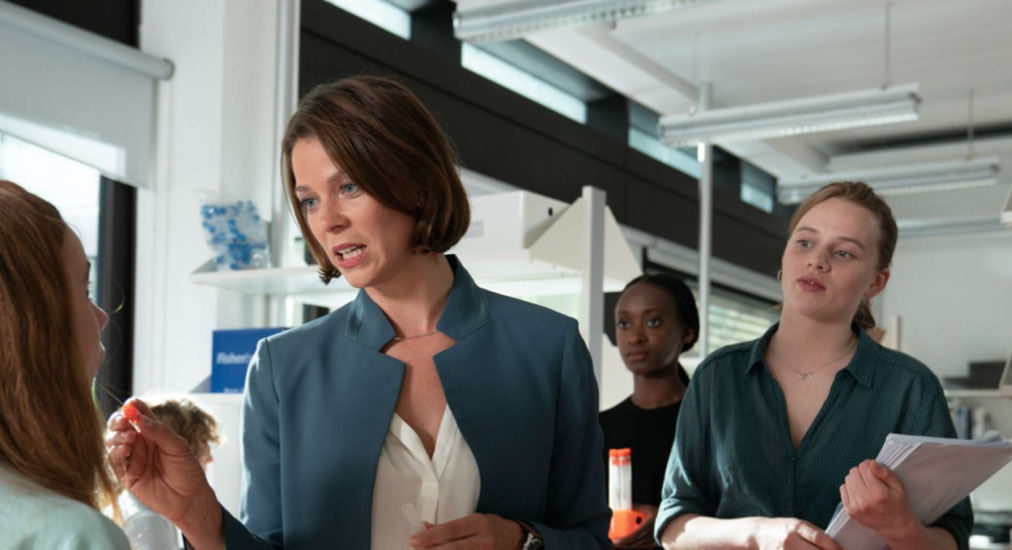
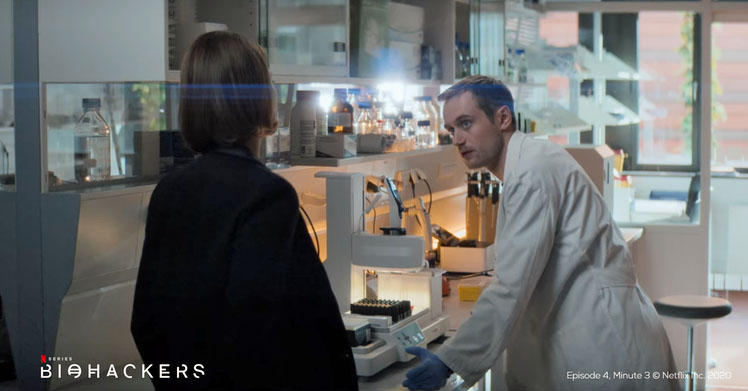
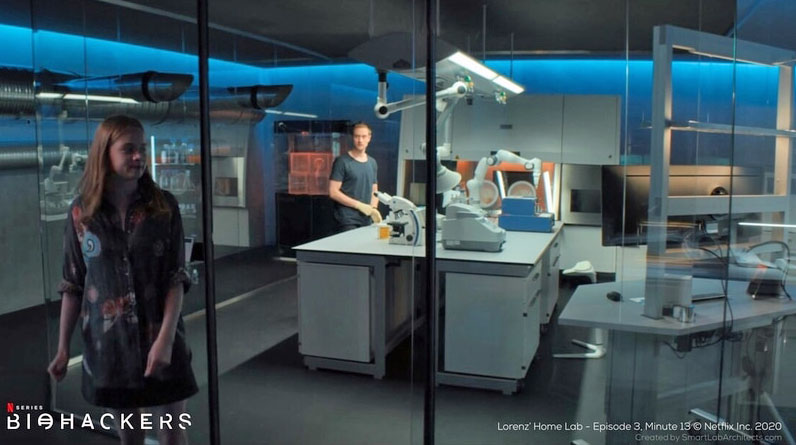
The series lent a critical realism to the story by using accurate world building, real sets and equipment from genetics labs and university settings. Dov Grenbaum’s article in the journal Science entitled “Biology’s brave new world” celebrates the show for its accurate representation of complex laboratory equipment and procedures and how it accurately represents the intricacies, motivations and ethical issues of biohacking from sophisticated big-business gene therapies to DIY homespun biology.
Biohackers opens with a disturbing scene of bioterrorism on a train headed to Berlin. All passengers suddenly choke and fall unconscious—except for young med student Mia Akerlund, who tries to help and fails. From that explosive flash-forward scene, the show jumps back to two weeks prior, as college freshman Mia settles into Freiburg University’s prestigious medical school, and betrays a particular interest in synthetic biology, biohacking and genome editing. We soon learn that she is obsessed by celebrated professor and geneticist/entrepreneur Tanja Lorenz (who runs a biopharmaceutical company and has an entire building dedicated to her research with huge neon logo of her name). Both women are connected by a dark secret to do with Mia’s twin brother who mysteriously died when still a boy. Mia quickly gains a position working for Lorenz, which plunges her into the dangerous intrigue of illegal genetic experiences.
.

.
An early, rather enlightening, scene of the first episode is of Mia’s first introductory biology class given by celebrated gene therapy tycoon Professor Lorenz. Not only does the scene introduce the controversial subject of synthetic biology; it reveals a disturbing sense of what’s at stake and the danger of scientific hubris. Tall, svelte and confident in a smart haircut and tailored suit, Lorenz struts like a self-proclaimed goddess in front of a student-crowded lecture hall and preaches the benefits of synthetic biology. When she asks the class “What is synthetic biology?” and a student replies “with the help of synthetic biology, we can alter existing life forms or create new ones,” Lorenz prickles beyond her already frosty demeanor and impatiently berates the students for their lack of vision. She challenges them to think bigger: “Synthetic biology transforms us from creatures into creators. It’s not just the future of medicine, but of humankind. We can cease entire infections before the outbreak … We eliminate genetic disorders. But if we don’t do our work exceedingly well, it could end our species. It is on us to find a way; this is your future. Your responsibility. You are the creators of tomorrow. We make God obsolete…”
Science, academia and intrigue are skillfully woven in an intelligent mystery-thriller that not only represents science accurately but delivers commentary on the ethical and moral questions of this highly dynamic and rapidly evolving field of science.
Biohackers touches on several ethical and moral questions, such as genetic modification of stem cells, access to advanced gene therapies, and privacy and consent surrounding genomic data. Synthetic biologist Elsa Sotiriadis warns that, “this topic will likely become an ethical minefield in the coming years. On the one hand, we need large and diverse datasets to train medical AI and develop therapies. But on the other, there’s nothing as personal as your literal blueprint. Unlike stolen credit cards, you can’t change your genomic data. I like that Biohackers brings this up.”
.
.
Ten Significant Science Fiction TV Series:
Biohackers (Germany)
Orphan Black (Canada)
Occupied (Norway)
Missions (France)
Expanse (USA)
Incorporated (USA)
3% (Brazil)
Snowpiercer (USA)
Silo (USA)
Extrapolations (USA)
.

Nina Munteanu is a Canadian ecologist / limnologist and novelist. She is co-editor of Europa SF and currently teaches writing courses at George Brown College and the University of Toronto. Visit www.ninamunteanu.ca for the latest on her books. Nina’s bilingual “La natura dell’acqua / The Way of Water” was published by Mincione Edizioni in Rome. Her non-fiction book “Water Is…” by Pixl Press (Vancouver) was selected by Margaret Atwood in the New York Times ‘Year in Reading’ and was chosen as the 2017 Summer Read by Water Canada. Her novel “A Diary in the Age of Water” was released by Inanna Publications (Toronto) in June 2020.






 Nina Munteanu Writing Coach