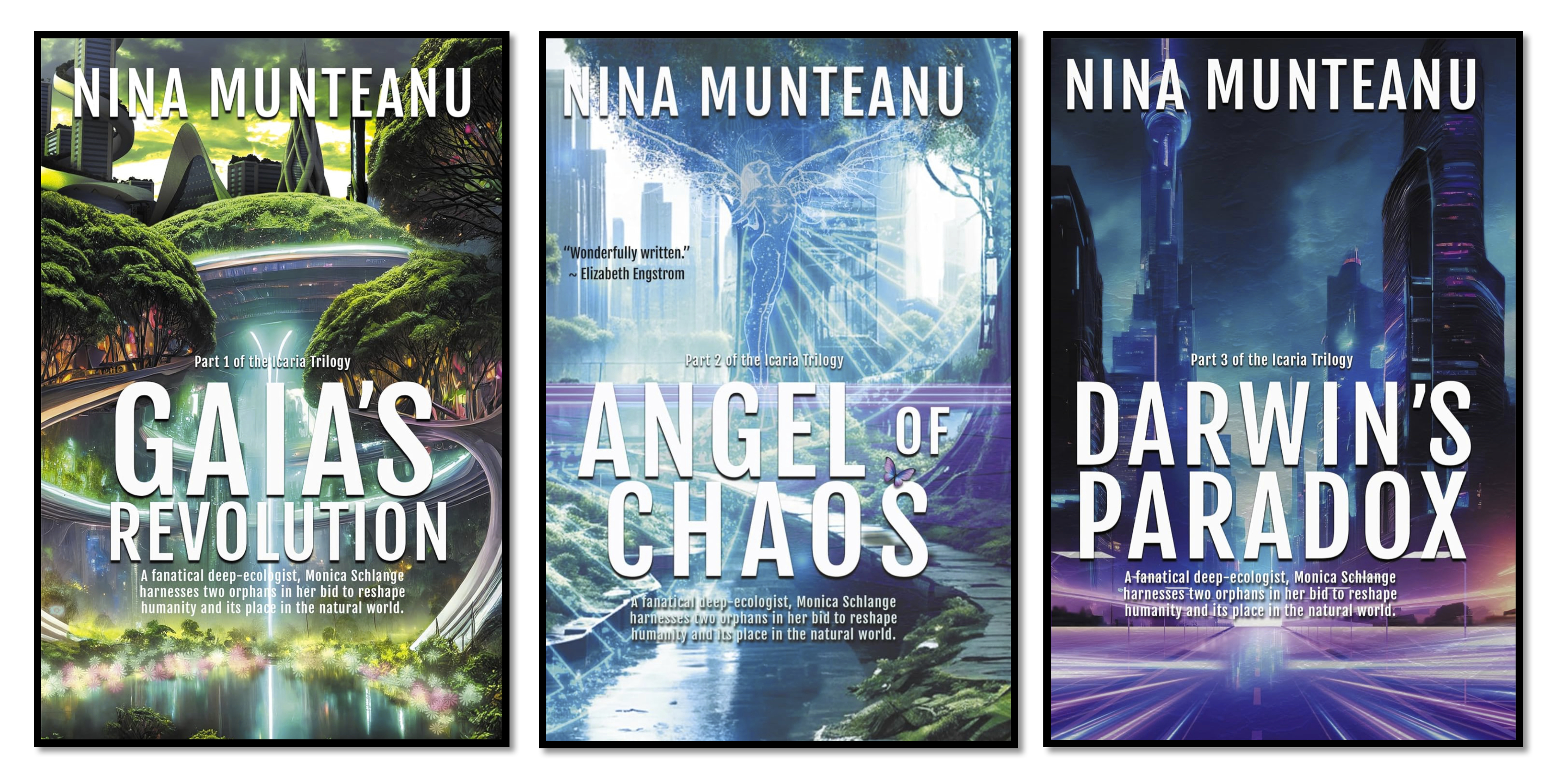
I’m an ecologist. So, when I read books, particularly eco-fiction, I enjoy various authors’ representation of ecologists in literature. Portrayals have ranged quite a bit too. I’ve encountered ecologists, deep ecologists and eco-terrorists. Like real ecologists, these characters are often misunderstood, disrespected or even oppressed for their message of science. This is often by governments, organizations and individuals ruled by agendas of personal or institutional greed. These characters may become morally compromised, driven by righteous anger, on a terrible mission…
Below are six examples. Some have explored political representations such as environmental technocracy (aka: Rogue Harvest, Gaia’s Revolution). Others have featured radical environmentalists and eco-terrorists (e.g. The Overstory, A Diary in the Age of Water), and even anti-humanists (e.g.: Three Body Problem).
.
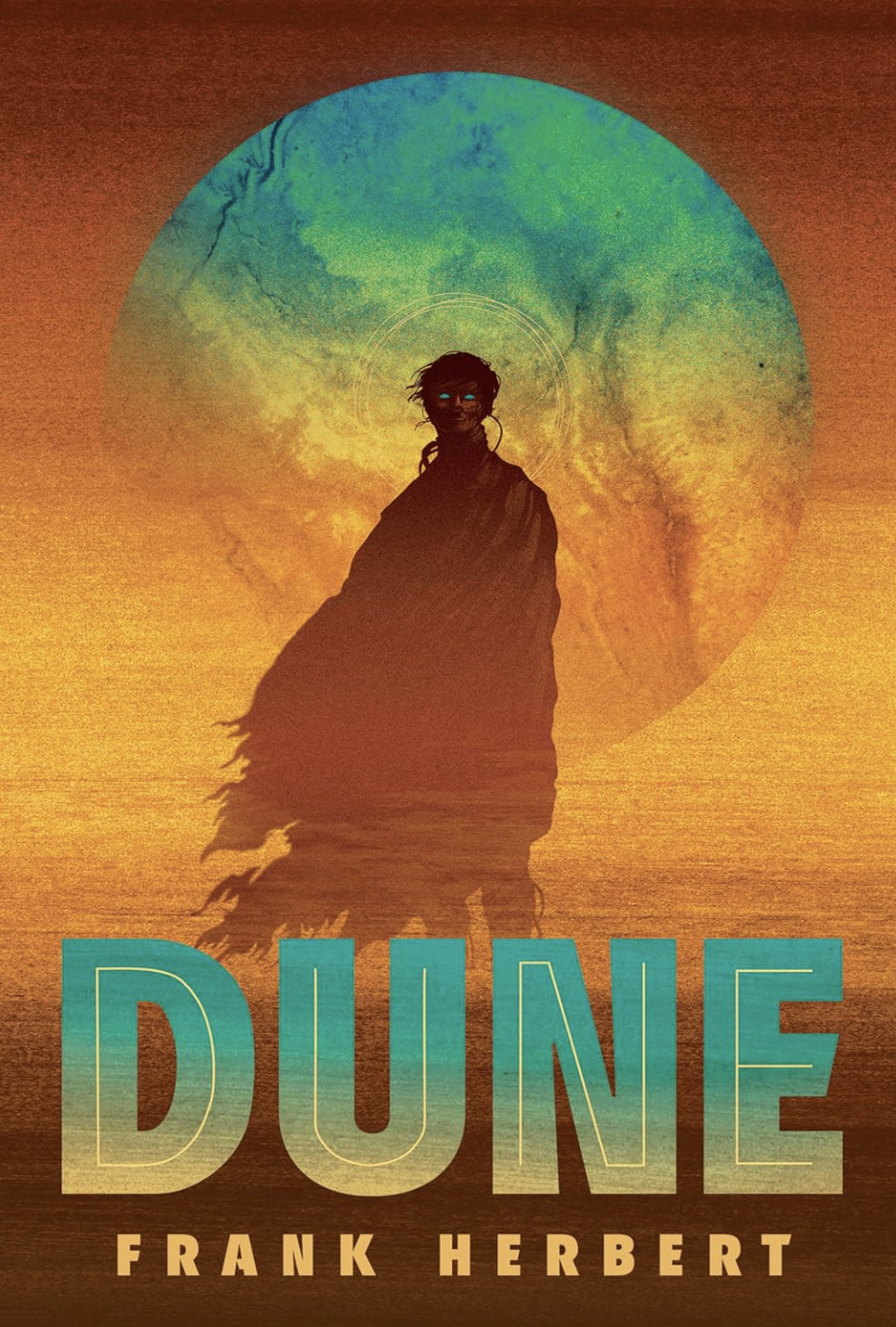
Dune (Chilton Books, 1965) by Frank Herbert:
Dune chronicles the journey of young Paul Atreides, who according to the indigenous Fremen prophesy will eventually bring them freedom from their enslavement by the colonialists—The Harkonens—and allow them to live in ecological harmony with the planet Arrakis, known as Dune. As the title of the book clearly reveals, this story is about place—a harsh desert planet whose 800 kph sandblasting winds could flay your flesh—and the power struggle between those who covet its arcane treasures and those who wish only to live free from slavery. Place—and its powerful symbols of desert, water and spice—lies at the heart of this epic story about taking, giving and sharing. This is nowhere more apparent than in the fate of the immense sandworms, strong archetypes of Nature—large and graceful creatures whose movements in the vast desert sands resemble the elegant whales of our oceans.
.
The subtle connections of the desert planet with the drama of Dune is most apparent in the actions, language and thoughts of the Imperial ecologist-planetologist, Kynes—who rejects his Imperial duties to “go native.” He is the voice of the desert and, by extension, the voice of its native people, the Fremen.
Quotes: (Kynes thinks to himself as he is dying in the desert, abandoned there without water or protection): The highest function of ecology is understanding consequences.
.
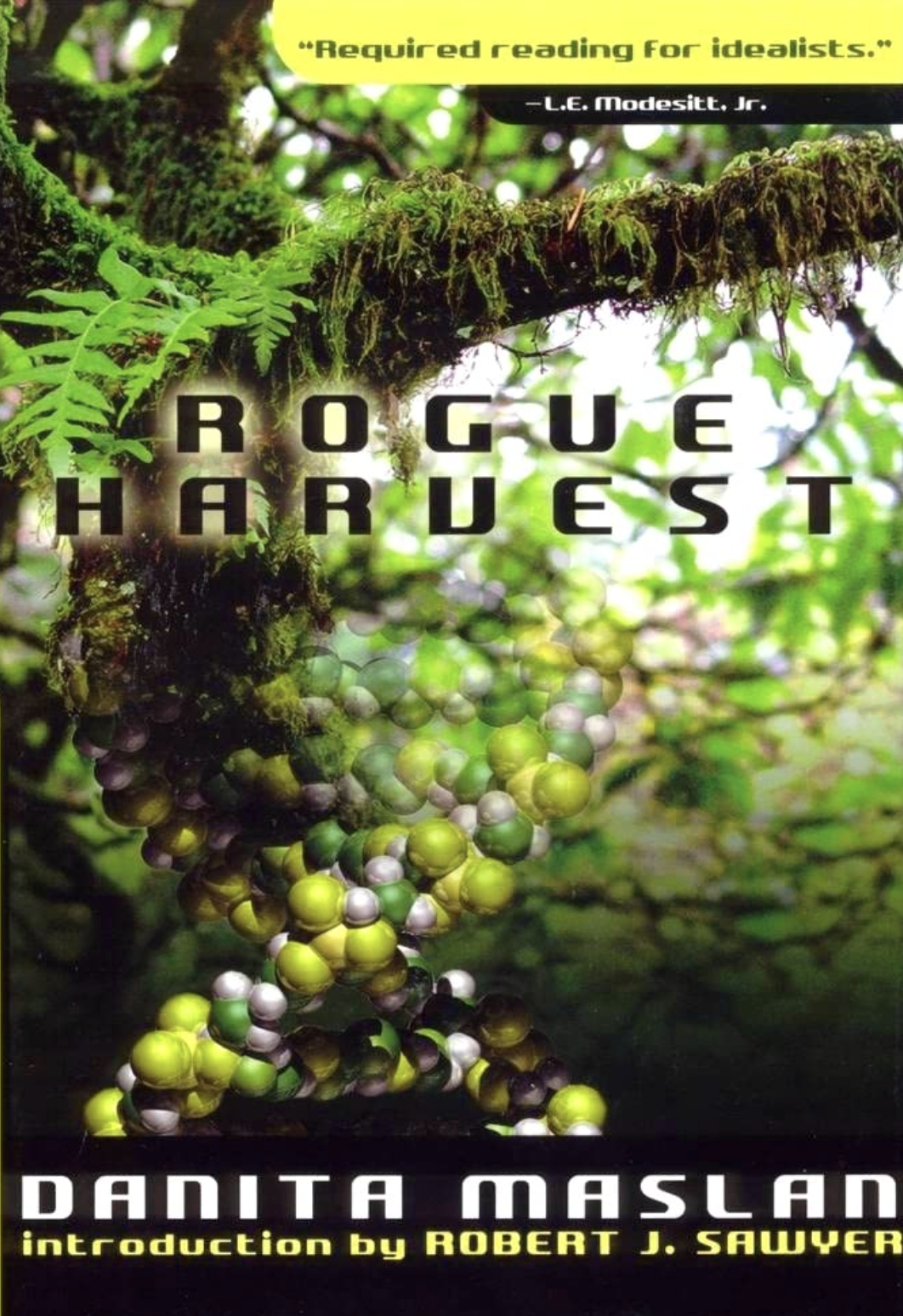
Rogue Harvest (Red Deer Press, 2005) by Danita Maslan:
Sometime in the future, Earth is recovering from a devastating 50-year plague that has destroyed most of its natural forests and grasslands and killed two out of every three people. Environmental technocrats now run the world under strict rule: while virgin ecosystems are re-created from original templates through genetic engineering, no human is permitted to set foot in these sanctuaries. As sanctuaries grow ever larger, humanity is pressed into over-crowded cities where boredom and strife dominate.
.
The preservationist organization Emerald Coalition is run by (deep) ecologists who hire reclamation company EcoTech to “recreate the world their great, great grandparents lost.” Main characters wish to open-up the protected nature preserves to regular folk—creating a long-standing conflict between preservation (wilderness not accessed by humans) and conservation (areas where humans extract resources with some environmental risk): demonstrating that, given responsibility for actions within an ecosystem, not all humans behave as they should.
.
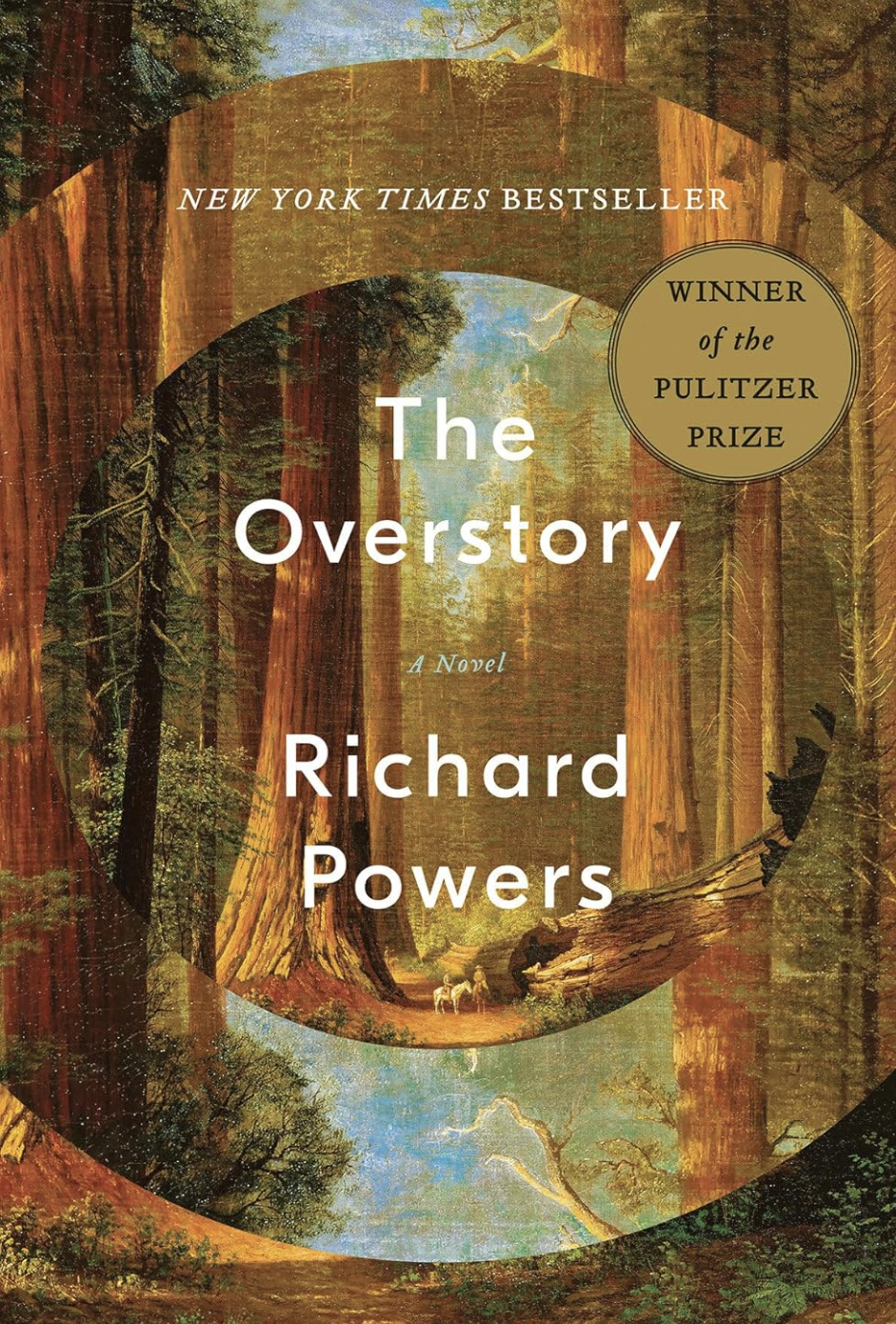
The Overstory (Vintage Canada, 2021) by Richard Powers:
The Overstory is a Pulitzer Prize winning work of literary fiction that follows the life-stories of nine characters and their journey with trees—and ultimately their shared conflict with corporate capitalist America. Like all functional ecosystems, these disparate characters—and their trees—weave into each other’s journey toward a terrible irony. Each in their own way battles humanity’s canon of self-serving utility—from shape-shifting Acer saccharum to selfless sacrificing Tachigali versicolor—toward a kind of creative destruction.
.
At the heart of The Overstory is the pivotal life of botanist/ecologist Patricia Westerford, who inspires a movement. Westerford—whose work resembles that of Diana Beresford-Kroeger (author of The Global Forest) and UBC’s Suzanne Simard— is a shy introvert who discovers that trees communicate, learn, trade goods and services—and have intelligence. When she shares her discovery, she is ridiculed by her peers and loses her position at the university. But, just as with Lynn Margulis and her theory of endosymbiosis, Westerford is finally validated. She is the archetypal ‘mother tree’, the metaphoric Tachigali versicolor, who ultimately brings the tangle of narratives together through meaning. What follows is a fractal story of trees with spirit, soul, and timeless societies—and their human avatars.
Quotes (Westerford writes in her book The Sacred Forest): There are no individuals in the forest, no separable events. The bird and the branch it sits on are a joint thing. A third or more of the food a big tree makes may go to feed other organisms. Even different kinds of trees form partnerships. Cut down a birch, and a nearby Douglas fir may suffer…Fungi mine stone to supply their trees with minerals. They hunt springtails, which they feed to their hosts. Trees, for their part, store extra sugar in their fungi’s synapses, to dole out to the sick and shaded and wounded. A forest takes care of itself, even as it builds the local climate it needs to survive…A tree is a wondrous thing that shelters, feeds, and protects all living things. It even offers shade to the axmen who destroy it.
.
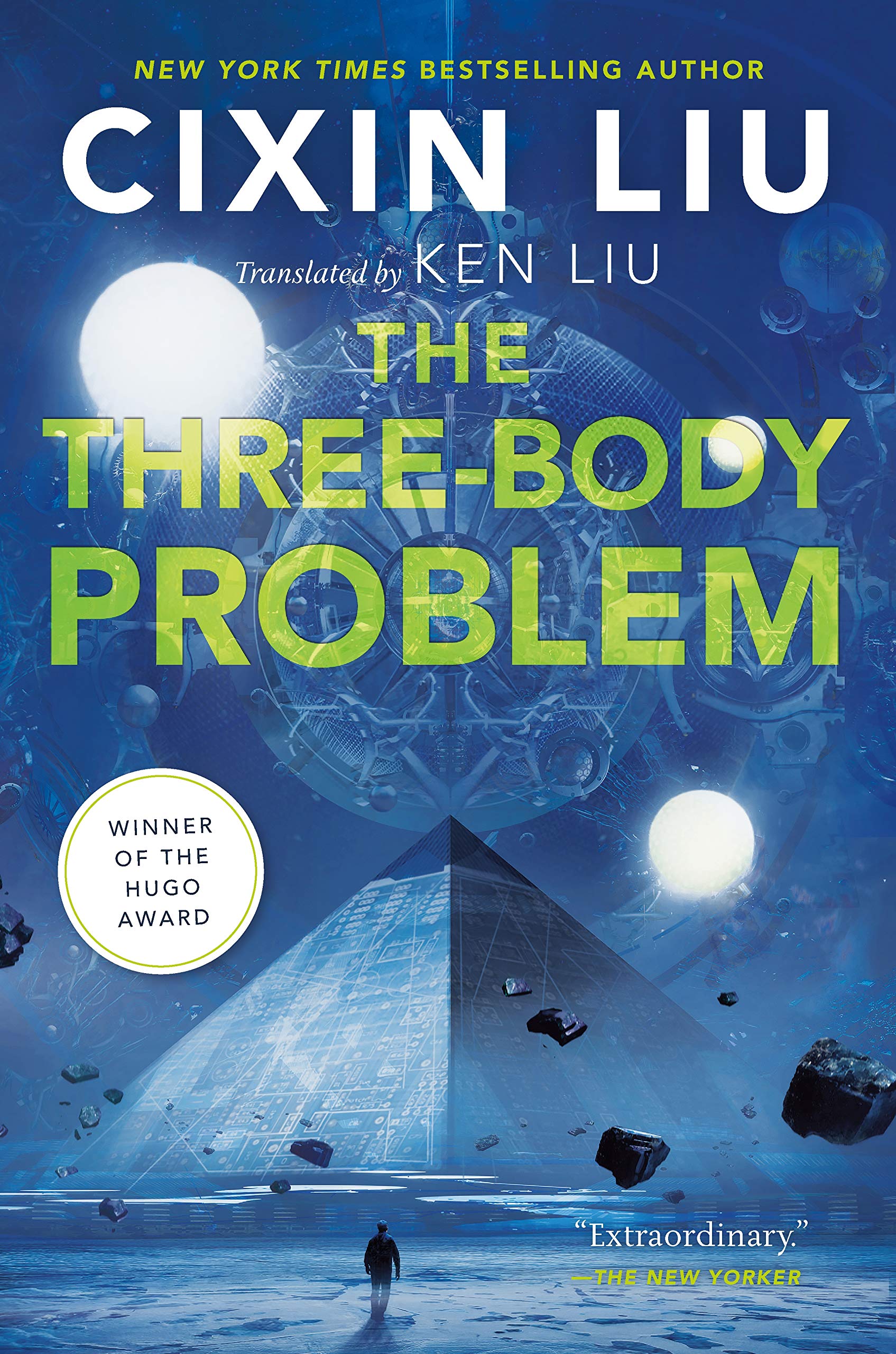
Three Body Problem (Tor, 2014) by Liu Cixin:
Cixin Liu’s The Three Body Problem—set against the backdrop of China’s Cultural Revolution—follows astrophysicist Ye Wenji, disillusioned by the massive environmental deforestation in the labour camps she is initially sent to work after witnessing the execution of her scientist father in a brutal cleansing at the height of the Cultural Revolution. Already cynical about humanity’s failed culture and science—Wenjie acquires a contraband copy of Rachel Carson’s Silent Spring. The book and revelation she experiences from it sets in motion a frightening notion linking the mindset behind the Cultural Revolution and destruction of the environment. Looking from Nature’s perspective, these were indistinguishable: Is it possible that the relationship between humanity and evil is similar to the relationship between the ocean and an iceberg floating on its surface? Both the ocean and the iceberg are made of the same material. That the iceberg seems separate is only because it is in a different form. In reality, it is but a part of the vast ocean.…It was impossible to expect a moral awakening from humankind itself, just like it was impossible to expect humans to lift off the earth by pulling up on their own hair. To achieve moral awakening required a force outside the human race.
.
Wenjie is sent to the Chinese version of SETI where a secret military project sends signals into space to establish contact with aliens. Wenjie succeeds in amplifying their message to aliens on the dying planet Trisolaris. Despite a warning that the Trisolarians mean only to invade, Wenjie invites them to Earth. To ensure the arrival of the Trisolaris aliens, she collaborates with radical environmentalist Michael Evans—an oil billionaire’s son who is disgusted with humanity’s destruction of Nature. Wenjie believes the aliens will somehow ensure humanity’s transcendence; Evans, however, applauds the coming invasion as the best route to achieve the eradication of humanity and the survival of the rest of the planet and finances the ETO (Earth-Trisolaris Organization) in eco-terrorist activities to protect non-human life—by essentially annihilating humanity.
Quotes: (Wenjie observes the deforestation of an Inner Mongolian labour camp where she was sent to work): Ye Wenjie could only describe the deforestation that she witnessed as madness… Whatever they laid eyes on, they cut down. Her company wielded hundreds of chain saws like a swarm of steel locusts, and after they passed, only stumps were left. The fallen Dahurian larch, now bereft of branches, was ready to be taken away by tractor. Ye gently caressed the freshly exposed cross section of the felled trunk. She did this often, as though such surfaces were giant wounds, as though she could feel the tree’s pain… The trunk was dragged away. Rocks and stumps in the ground broke the bark in more places, wounding the giant body further. In the spot where it once stood, the weight of the fallen tree being dragged left a deep channel in the layers of decomposing leaves that had accumulated over the years. Water quickly filled the ditch. The rotting leaves made the water appear crimson, like blood.
.
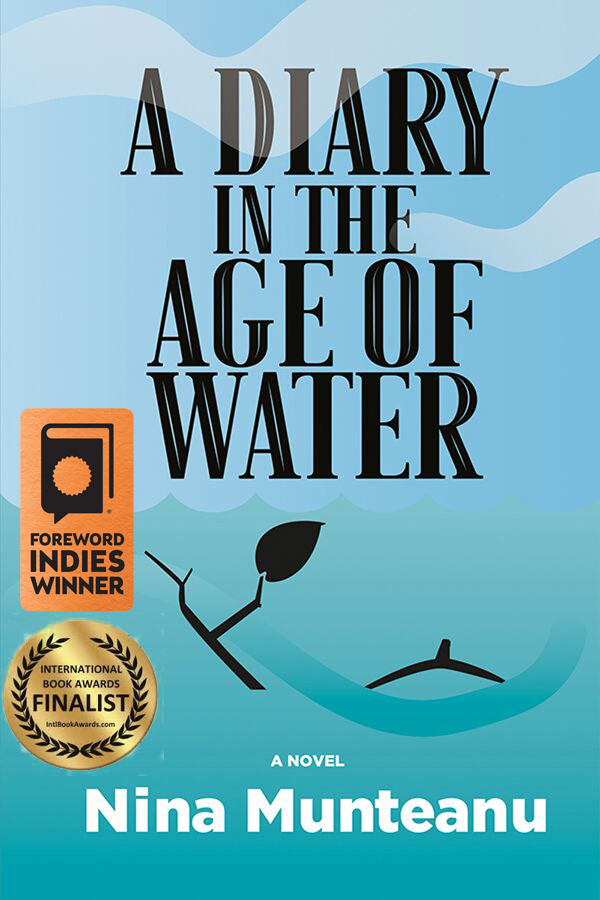
A Diary in the Age of Water (Inanna Publications, 2020) by Nina Munteanu:
A Diary in the Age of Water follows the climate-induced journey of Earth and humanity through four generations of women, each with a unique relationship to water.
Centuries from now, in a dying boreal forest in what used to be northern Canada, Kyo, a young acolyte called to service in the Exodus, yearns for Earth’s past—the Age of Water, before the “Water Twins” destroyed humanity. Looking for answers and plagued by vivid dreams of this holocaust, Kyo discovers the diary of Lynna, a limnologist from a time just prior to the destruction. The diary spans a 40-year period in the mid-21st century and describes a planet in the grip of severe water scarcity. Lynna, in her work for an international utility that controls everything to do with water, witnesses and records the disturbing events that will soon lead to humanity’s demise.
.
Lynna Dresden is an aquatic ecologist (specifically a limnologist), who’s personal philosophy and world view overlaps with deep ecology. However, she demurs from activism through a fear for reprisals on her and her young daughter. This backfires for her as her daughter later embraces eco-terrorism in her radical behaviour.
Quotes: Lynna Dresden: “The slow violence of free-market capitalism isn’t so much the deliberate and focused actions of a few evil men as the accumulated negligence of an undiscriminating collective of unimaginative humans.” “When you look at a quiet deep pond, you don’t see the bottom, you see yourself reflected there. The calmer the pond the more you see of you; the less of the pond.” “Water—Nature’s herald—is talking loudly to us in the language of irony.”
.
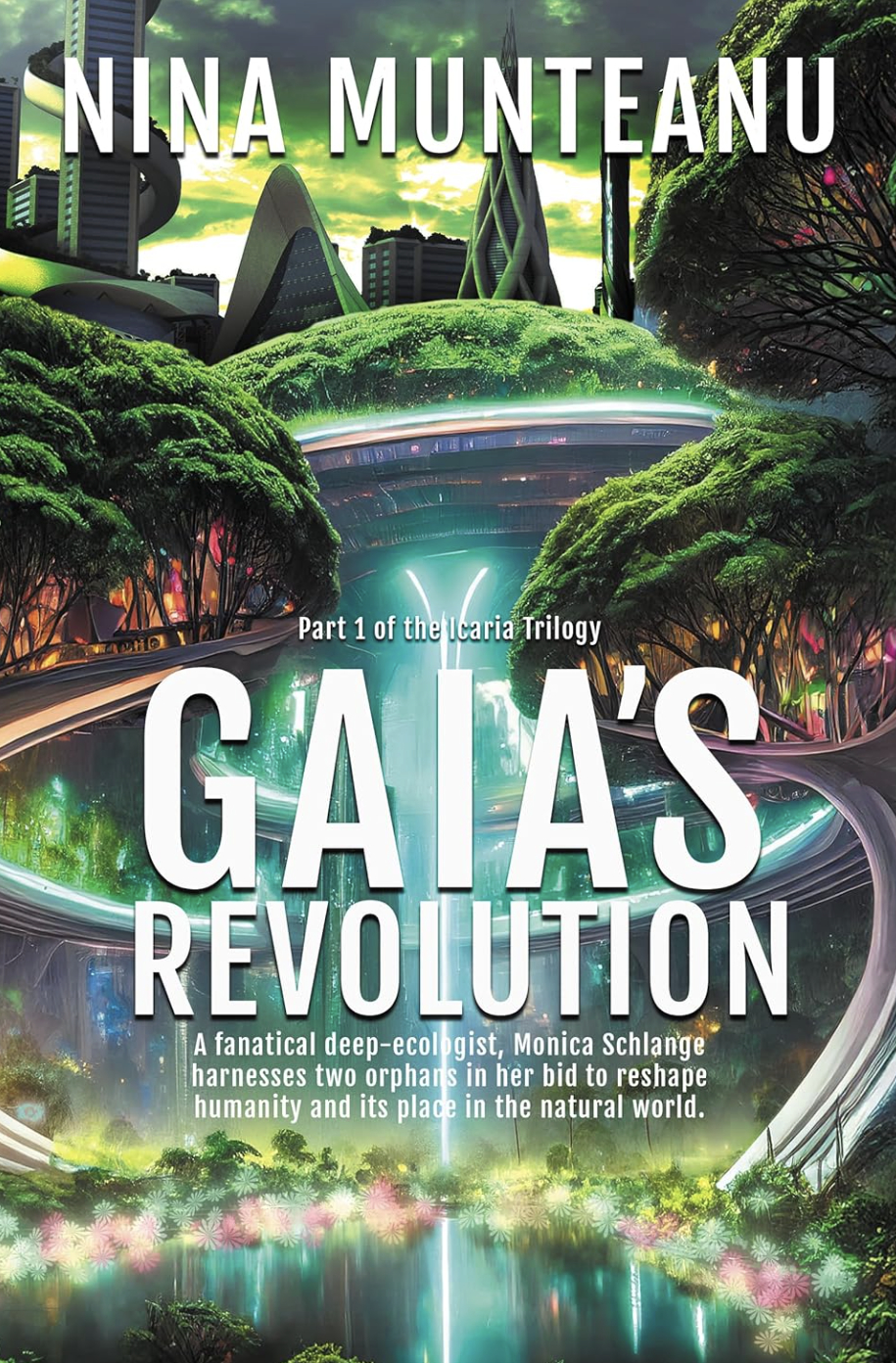
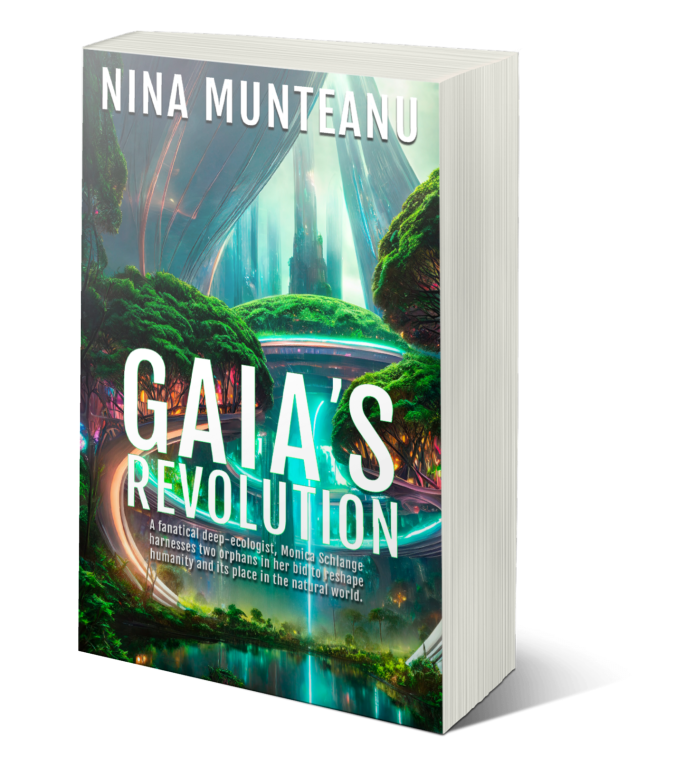
Gaia’s Revolution, Book 1 of The Icaria Trilogy (Dragon Moon Press, 2026) by Nina Munteanu:
Monica Schlange is orphaned by the technocratic corporation, and with a vengeful heart turns to deep ecology and eco-terrorism. A remaining relative helps put her through the University of Toronto, where she studies environmental ethics under Aisha Habib, herself a deep ecologist but also a powerful member of the Technocratic Party in Canada. Schlange’s thesis topic is entitled Ethical Considerations on the Ecological Impact of Corporation Farm Anthropocentrism on the Stability of Gaia Through Ten Metrics. A techno-wiz, Schlange orchestrates a viral social media fiasco that reveals very compromising intel on the Canadian prime minister. She also exposes the environmental minister’s role in a terrible fishing scandal on the central coast of British Columbia that causes the deaths of two Heiltsuk women. Intending covert mischief, Schlange shacks up with a corporate oligarch, looking to bring him and his biotechnology firm down. After the revolution, she garners a position in the governing triad in which she fanatically promotes a ruthless deep ecology agenda.
.
Quotes (After dispatching a fearsome techno-clone—cloned weaponized hybrid-human): Monica straightens, panting out sobbing breaths, and manages a predatory smile. Ambitious men are always underestimating her. Even Techno-clones … Especially Techno-clones.
(after putting down her oligarch-lover in a late-night skirmish when he catches her stealing documents): “Don’t get up…Next time I see you, I will kill you.”
.
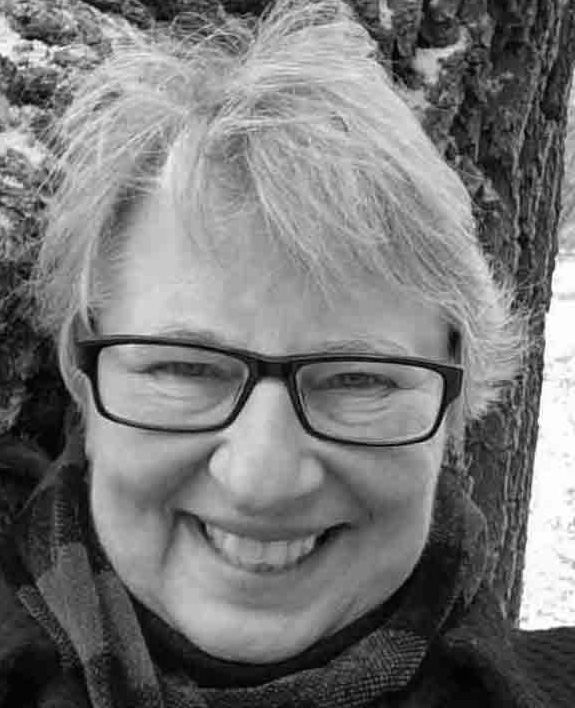
Nina Munteanu is a Canadian ecologist / limnologist and novelist. She is co-editor of Europa SF and currently teaches writing courses at George Brown College and the University of Toronto. For the lates on her books, visit www.ninamunteanu.ca. Nina’s bilingual “La natura dell’acqua / The Way of Water” was published by Mincione Edizioni in Rome. Her non-fiction book “Water Is…” by Pixl Press (Vancouver) was selected by Margaret Atwood in the New York Times ‘Year in Reading’ and was chosen as the 2017 Summer Read by Water Canada. Her novel “A Diary in the Age of Water” was released by Inanna Publications (Toronto) in June 2020. Her most recent eco-fiction thriller Gaia’s Revolution (Dragon Moon Press) released March 2026.
.