I’m an ecologist; I study environmental relationships. Something you’d think is easy to learn and very accessible; we’re surrounded by it, after all. We live, work and play in it. While I learned about environmental relationships with my eco-minded parents, I didn’t learn it or experience it in my school growing up. With the exception of some indigenous schools (which teach respect for the spirit of wildness), most of us certainly didn’t learn about environmental relationships in our schools.
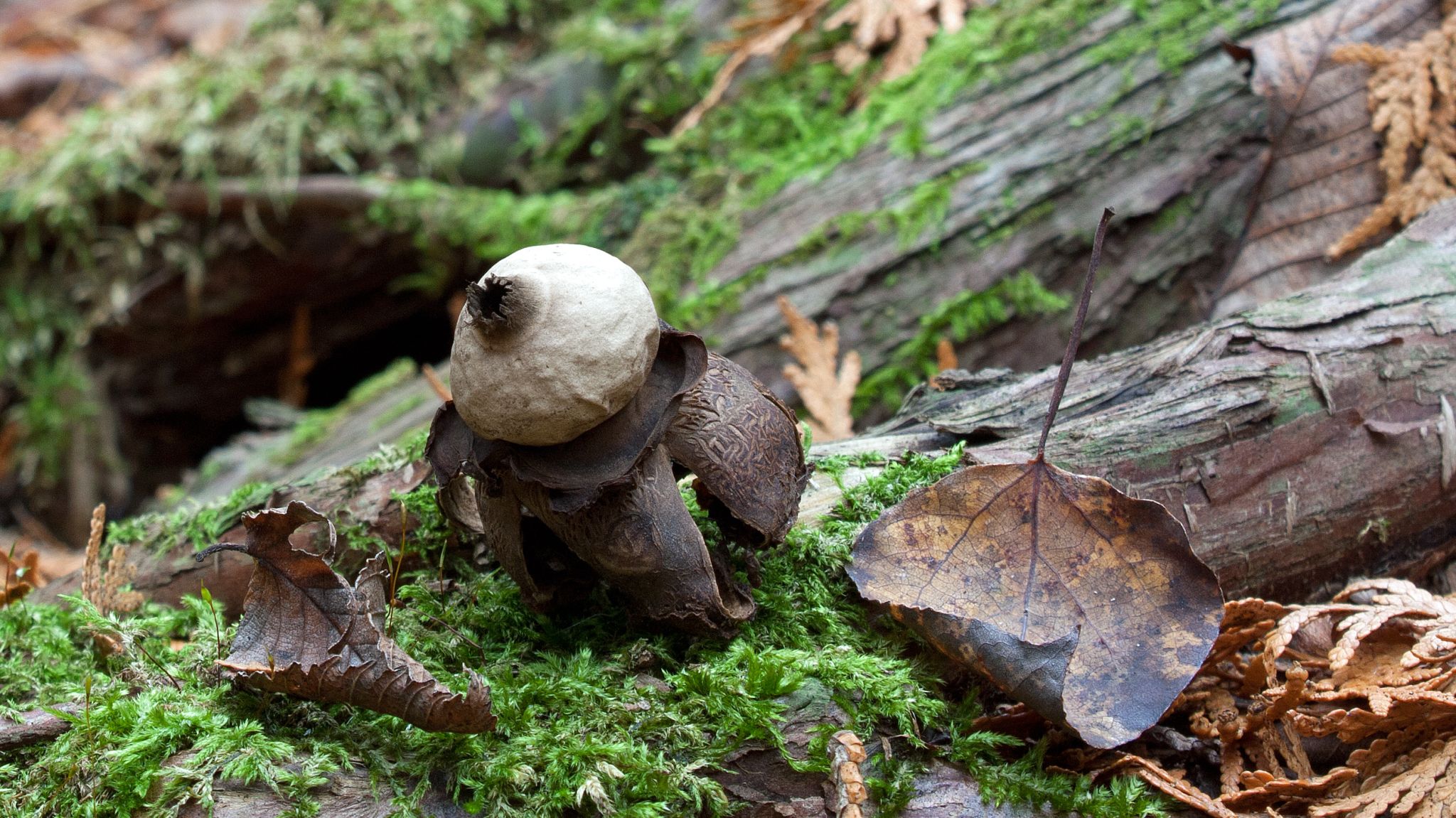
Earthstar sits on moss-covered rotting cedar log as new cedar roots take hold, ON (photo by Nina Munteanu)
Most Canadians live in a city; we don’t really understand what the natural environment is. Many of us have learned to ignore it, stop recognizing it, pocket it away as we go about our busy lives in the city. A park is a bit of greenery. A tree is a decoration that provides shade. Shrubs border a mall.
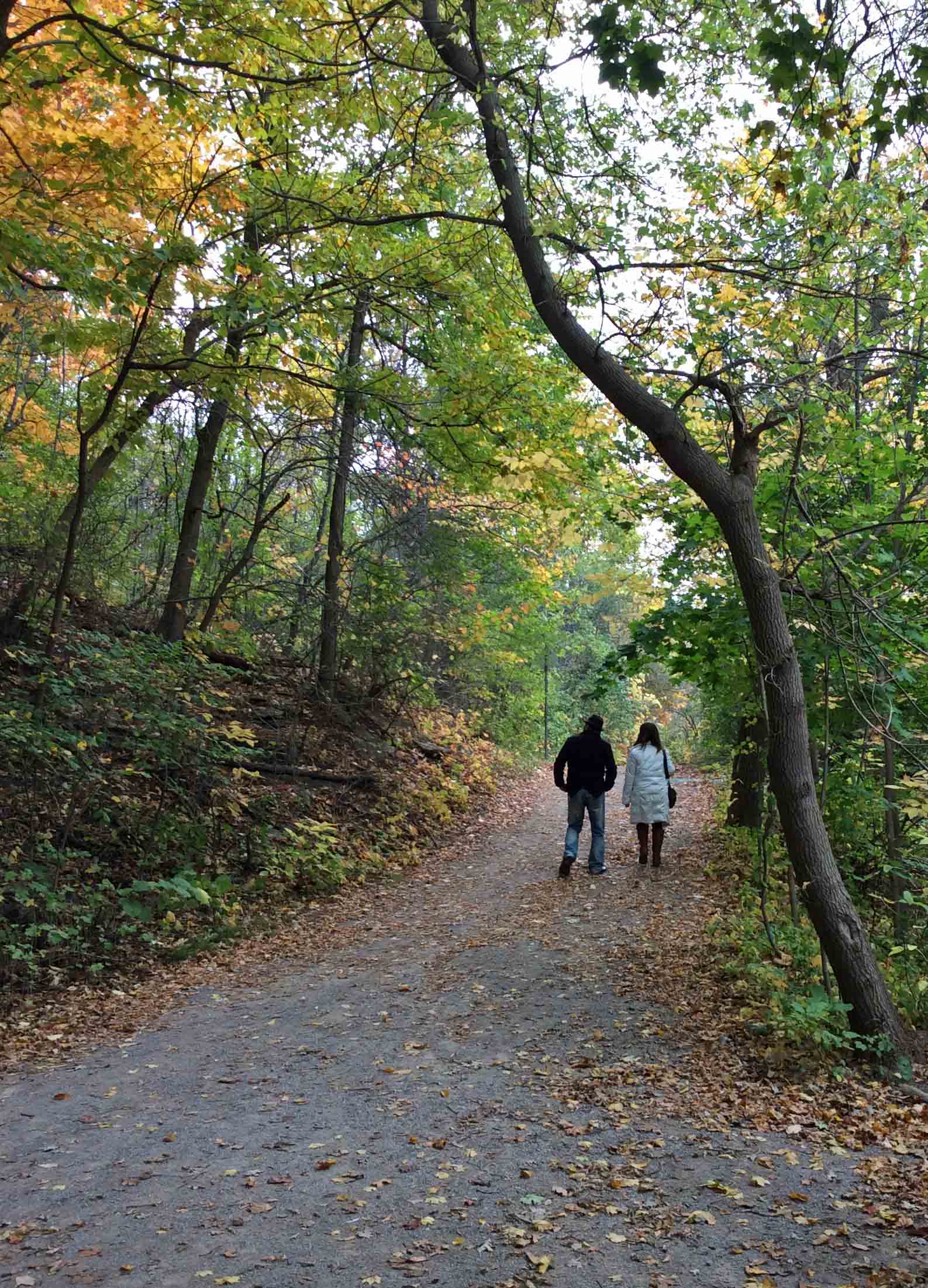
Walk through urban forest along the Credit River, ON (photo by Nina Munteanu)
But if we can’t even recognize the natural environment, how can we understand its functional role in the intricate well-being of this entire precious planet and ultimately ourselves?
It is no wonder then that most Canadians—though we may intellectually accept climate change and its effects on this planet (because we’re smarter than some)—likely do not viscerally understand or appreciate why and how it will drastically change our lives. For most of us, climate change—as with Nature—is something that is happening to someone else, somewhere else. From those far away calamities to the quiet struggles no one talks about. We hear and lament over the flooding in Bangladesh or the Maldives. Or the wildfires in northern British Columbia. Or the bomb cyclones of the eastern seaboard.
Meanwhile, the polar bear struggles quietly with disappearing sea ice in the Canadian arctic. The koala copes quietly with the disappearing eucalyptus. Coral reefs quietly disappear in an acidifying ocean. Antarctic penguins silently starve with disappearing krill due to ice retreat. And while jellyfish invade the Mediterranean, UK seas and northeast Atlantic, the humble Bramble Cay melomys slips quietly into extinction—the first mammal casualty of climate change.
Yellow Creek flows through an urban forest in the heart of Toronto, ON (photo by Nina Munteanu)
So, those of us who are enlightened speak of climate resilience and adaptation. We talk of arming our cities with words like green infrastructure, stormwater management, urban runoff control, flood mitigation. Ecological literacy. But what are these things to us? They are tools, yes. Good tools to combat and adapt to the effects of climate change. But will they create resilience? I think not.
I’m a limnologist and I’ve consulted for years as a scientist and an environmental consultant. I played a role in educating industry, in the use of mitigating tools, in changing the narrative even.
Trail through urban forest on a foggy winter day in Peterborough, ON (photo by Nina Munteanu)
But I’ve come to realize that resilience comes only from within and through a genuine connection with our environment. Tools, no matter how proficient, are only as good as how they are used based on intention from a deep understanding. It isn’t enough to achieve the HOW of things; we must embrace the WHY of things. And that comes from the heart. We must feel it in our hearts. Or it won’t work. And we quite simply won’t survive.
Various flowers and trees of Ontario (photos by Nina Munteanu)
Canadians celebrate our multi-cultural heritage. We pride ourselves in our tolerance and welcoming nature. Our national anthem speaks of our land. Our national symbols embrace nature with the maple, beaver, caribou and loon. Yet who of us knows the habitat of the loon—now at risk, by the way (climate change will impact much of its breeding grounds). Who knows what the boreal forest—which makes up over half of our country—is? How it functions to keep this entire planet healthy, and what that ecosystem needs, in turn, to keep doing it? How to help it from literally burning up?
Ecology isn’t rocket science. Ecology is mostly common sense. Ecology is about relationship and discovery. Ecology is a lifestyle choice, based on respect for all things on this planet and a willingness to understand how all things work together.
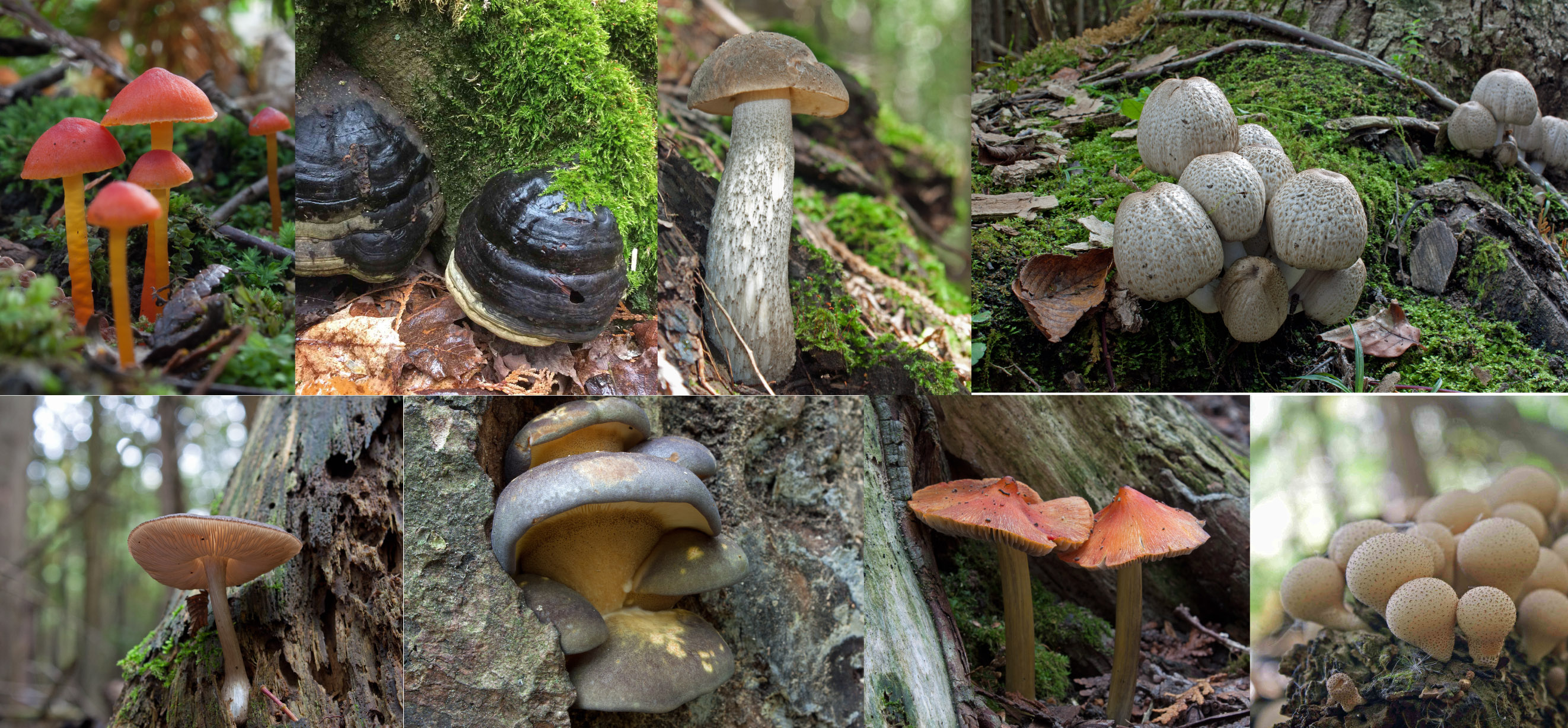
Various mushrooms in Ontario forests (photos by Nina Munteanu)
Here’s what I’ve learned to keep me caring and remain positive and not become apathetic or fall into despair:
I’ve learned to open myself to discovery. To find Nature, even if it is in the city. To connect with something natural and wild and to find and savour the wonder of it. All that matters will naturally come from that.
Become curious and find something to love.
When you do, you will find yourself. And that is where you will find resilience. What colour is it? It doesn’t need to be green…
Throughout this article I’ve shown you some of my colours…
Red fox skull emerges on a leaf-strewn icy bank of Jackson Creek, ON (photo by Nina Munteanu)
Here are the steps I taught myself toward healthy resilience (the first two steps are both the hardest and the easiest):
Step 1:Slow down, pay attention. Give yourself the time to relax and look around your local surroundings. Until you slow down to actually look, you will not really take in your surroundings. You need to be in the moment. Only then can you take the time to use all your senses to take in your environment. Try to look at it from a different perspective. Notice the light, the smells and sounds. What is different? What is the same?
Step 2:Lower your guard, open yourself to curiosity. Rely on as many senses as you can (sight, hearing, smell, texture, taste) to sample your environment and show some humility to ask questions. Whenever I go out, particularly in Nature, I make a point of coming home with three gifts, discoveries that make me smile or think and wonder. I’m hardly ever disappointed.
Step 3: Process what you’ve seen and discovered. Do some follow-up research to questions that may arise. Look at consequences. Share with others, discuss. From there it will be easy to ‘take responsibility’ for some section of nature that you really like; perhaps a particular tree in a park or a short path through an urban forest or stretch of urban stream. This can easily lead to good stewardship.
Step 4: Take responsibility for your chosen part of Nature. Get to know it well, how it works, what it needs, what’s right and what’s wrong. Do something about it and share with others.
Step 5: You’re there. You are resilient.
Barred owl hiding in plain sight in an urban forest near Peterborough, ON (photo by Nina Munteanu)
Nina Munteanu is a Canadian ecologist / limnologist and novelist. She is co-editor of Europa SF and currently teaches writing courses at George Brown College and the University of Toronto. Visit www.ninamunteanu.ca for the latest on her books. Nina’s bilingual “La natura dell’acqua / The Way of Water” was published by Mincione Edizioni in Rome. Her non-fiction book “Water Is…” by Pixl Press (Vancouver) was selected by Margaret Atwood in the New York Times ‘Year in Reading’ and was chosen as the 2017 Summer Read by Water Canada. Her novel “A Diary in the Age of Water” was released by Inanna Publications (Toronto) in June 2020.
Look and you will find it—what is unsought will go undetected —Sophocles
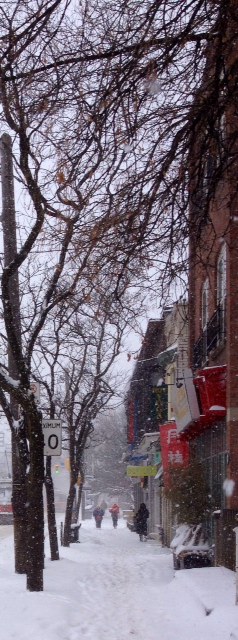
Snow in the Beaches, Ontario
During a time when I had a demanding job as an scientist with an environmental consulting job, was a devoted wife and mother and community volunteer, I wrote and successfully marketed five books, over a dozen short stories and many articles and reviews. Some people, including my publishers, thought I never slept (true) or had cloned myself (possibly). They couldn’t believe my productivity when I was so busy with life.
But I did what I did, because I’d worked out a system. One that I could live by. One that fit my lifestyle. One created out of respect for my art as part of my “busy” life of commitments.
The truth of it is that we all lead busy lives. If you are going to finish that novel you’ve been working on over the years or book of poems sitting in the bottom dresser drawer, you need to make a commitment. Aside from giving your art the respect it deserves, it comes down to creating a time and place to write.
It starts with being realistic about your daily schedules and routines and inclinations and picking a time and place accordingly. Try to be consistent. It’s actually best to create a routine related to both time and place; the key is to be realistic about it. Don’t fight your inclinations or habits; instead, build your writing into your lifestyle. This will ensure success.
Nina Munteanu teaching in Mahone Bay, NS
Choose a Sacred Time
Finding the time to write is critical to succeeding. If you don’t dedicate time to write, you won’t write. Believe me, you won’t. Make it sacred.
Writer Louise DeSalvo shared a common story about her experience: “Many people I know who want to write but don’t (my husband, Ernie, for example) or who want to write more than they have but say they can’t find the time (my friend Marla) have told me that taking the time to write seems so, well, self-indulgent, self-involved, frivolous even. And that finding the time to write—even a diary, much less fiction or memoir or poetry—in their busy schedules is impossible. I’ll write when I have the time, they say.”
It doesn’t work that way. You don’t find time; you must create it. Writing of any kind is a commitment you make to yourself. So, choose a time that’s right for you. If you’re a morning person, don’t pick the end of the day when you don’t function as well. Instead, pick the early morning to write, a time before everyone else gets up and the day’s distractions pile up.
It’s actually best to create a routine related to time of the day (e.g., fixed time such as every morning or right after supper) or based on some other constant in your life, say the school calendar or your daily activities. The key is to be realistic about the time(s) you’ve chosen. In other words, your goals should be realistic and realizable.
The second part of the commitment is sharing it with your family and friends so that they will respect your sacred writing time. By sharing how important it is to you, you also give them the gift of sharing the experience with you and they are more likely to respect your time alone to write. This is also why choosing a routine makes more sense; it is something your family and friends will better remember and abide by. Making it easy for others is part of making it easy for you.
Find Your Own Rhythm
The Beaches boardwalk (photo by Nina Munteanu)
There’s no rule for when and how often you write. Because frequency and schedule of writing depends on the kind of writing you do (e.g., novel, short stories, articles, research) and on your own rhythms, you must decide what works best.
Most writers recommend that you commit to a regular writing schedule that is realistic to your overall routine and biorhythms. Some recommend you write in the morning, after a refreshing sleep; others suggest you write at night, at the end of the day when your memories are more fresh with the day’s activities and stimulations. Yet others suggest you take time out during the day to jot down relevant experiences as close to the time as the muse hits you, then spend some time at the end of the day compiling it into your work.
In the end, it’s up to you to choose what works for you and your own rhythms. When is the best time for you to write? And for how long or how many pages? Once you decide, stick to that schedule.
Choose a Sacred Place
Writing is a reflective activity that requires the right environment. The best environment is a quiet one with no interruptions and where you are alone. A reflective environment will let you find a connection with your muse. You need a place where you can relax and not worry about someone barging in or other things distracting you from your reflections. You should also feel physically comfortable and the place should meet your time requirements.
Because the suitability of a place can change with the time of day, learn the rhythms that affect the place you wish to write in. For example, the kitchen may be the centre of activity during the day but an oasis of quietude during the evening. Similarly, learn what kind of environment stimulates and nurtures your writing. Does music help or do you need complete quiet? Do you respond to nature’s soft breezes and sounds or do you prefer to surround yourself with the anonymous murmur of a crowded café for company?
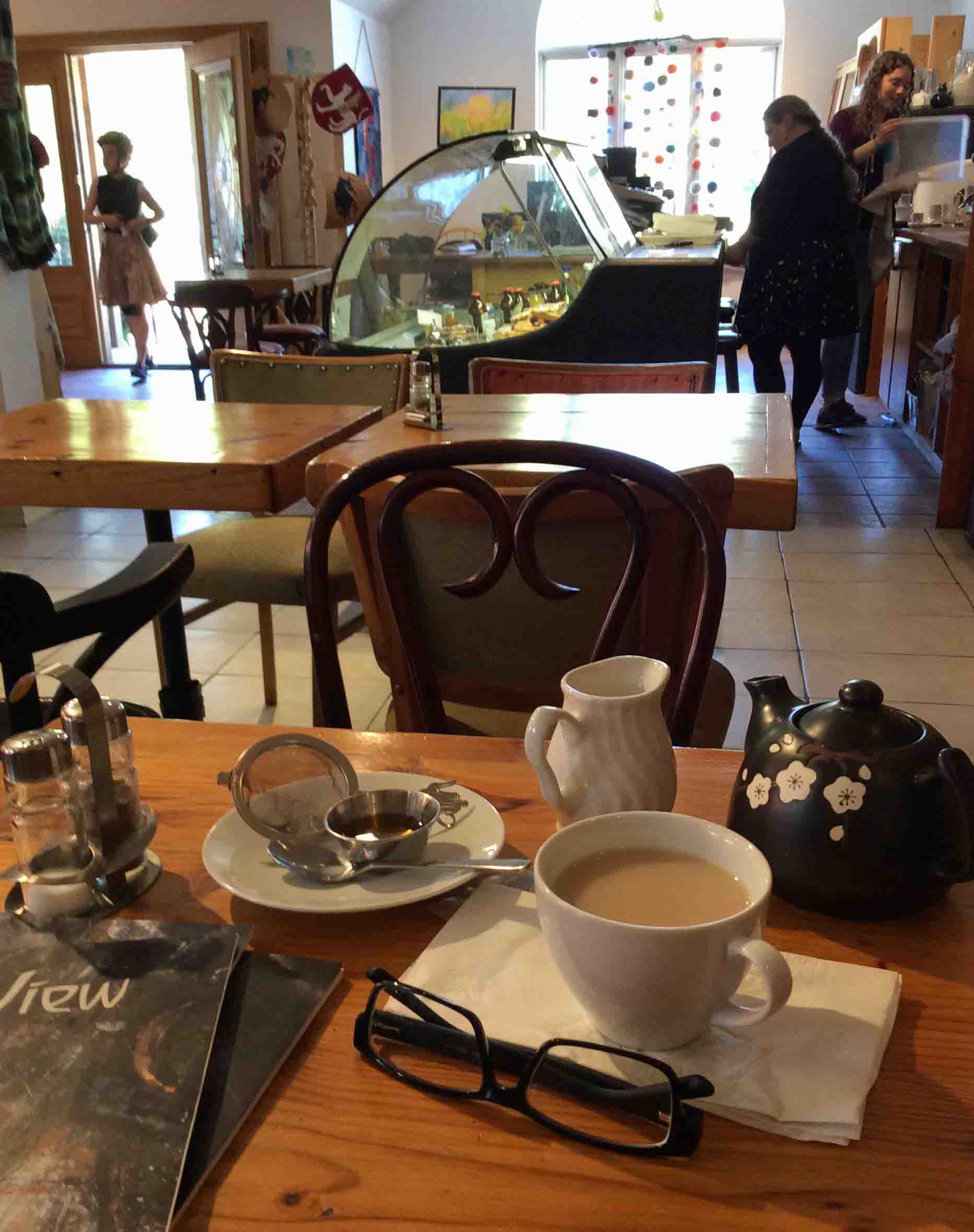
a coffee shop in Val David, Quebec (photo by Nina Munteanu)
Places that work for me include the local coffee shop, where its desultory conversations and laughter—and wonderful smells of fresh coffee—provide a pleasant living-landscape for my muse. I also enjoy my daily walk with a notebook or iPad in the park along the river near my house. I teach writing at the University of Toronto St George campus in downtown Toronto and just recently discovered an enclave that excited my muse. The outside breezeway at Knox College, with arched ceiling and columns, adorned with hanging plants, is pure magic. The breezeway cuts through an outside courtyard of gardens and yard, populated with songbirds and the gentle rustle of a refreshing breeze. Benches and small tables and chairs line the breezeway, ensuring a writer’s sanctuary.
Where you write may reflect what you’re writing and vice versa. To some extent, you are environment and environment is you. You might try a few places first and see what happens to your muse. What you write while sitting under an apple tree in the breeze hearing the birds singing may differ from what you write while sitting in your living room by the crackling fireplace with music playing or sitting at your desk in your bedroom in total silence or in a crowded café surrounded by cheerful bustle.
Again, as with your choice of time, tell your family and friends about your sacred place. Provide rules, if you have to. Let’s say it’s a desk in the study. You may, for instance, let others know that your “mess” is part of a work in progress, perhaps even explain a little about it so they understand the nature of what you’re doing and why it should not be touched or moved or used, even while you are away from it. This will ensure that they respect your things and what you’re doing.
In the end, it comes to finding the right integration and balance of time and place. Letting others know of your choices is equally important; this will ensure that they can help you, not hinder you in your writing. While writing is to a large extent an activity done in solitude, the journey is far from secluded. Ensure that you have a good support network.
Nina Munteanu is a Canadian ecologist / limnologist and novelist. She is co-editor of Europa SF and currently teaches writing courses at George Brown College and the University of Toronto. Visit www.ninamunteanu.ca for the latest on her books. Nina’s bilingual “La natura dell’acqua / The Way of Water” was published by Mincione Edizioni in Rome. Her non-fiction book “Water Is…” by Pixl Press (Vancouver) was selected by Margaret Atwood in the New York Times ‘Year in Reading’ and was chosen as the 2017 Summer Read by Water Canada. Her novel “A Diary in the Age of Water” will be released by Inanna Publications (Toronto) in June 2020.
I’ve written many articles and over a dozen books and readers often remark on my imagination with something akin to awe and incredulity. I often get asked where I get my ideas. Let me tell you a story first…
A Toronto friend—himself a prolific letter writer—shares that his ideas come to him during his daily walks (you’ll find his witty, humorous and somewhat pithy letters in the National Post, Globe and Mail or Toronto Star … almost weekly). David Honigsberg doesn’t use his car (that’s reserved for when his son is in town) and he walks every opportunity he gets, whether it’s a short jaunt to the coffee shop several blocks from his work place or a long trek to his home in Mount Pleasant after a lunch engagement near Bloor and Yonge. He tells me that he uses his phone to capture his “eureka” moments in what may now be considered unorthodox—he doesn’t make digital notes (it’s not that kind of phone!) but instead leaves a series of voice mails on his home phone. When he gets home, David replays his messages and writes out his letter to the editor.
What Dave does is not new to creative thinkers all over the world and throughout time. He shares great company with people who used walking as a venue toward creative thinking (and writing); people like Aristotle, Charles Darwin, Charles Dickens, Ludwig van Beethoven, Friedrich Nietzsche, William Wordsworth, Henry David Thoreau, Steve Jobs, and Soren Kierkegaard—just to name a few. All great walkers.
Snow day in Forest Hill, Ontario (photo by Nina Munteanu)
Aristotle conducted his lectures while walking the grounds of his school in Athens. His followers, who chased him as he walked, were known as the peripatelics (e.g., Greek for meandering). Darwin refined his ideas on natural selection and other topics during his frequent walks along his “thinking path”, a gravel road called Sandwalk Wood near his home in southeast England. Dickens walked for miles each day and once said, “If I could not walk far and fast, I think I should just explode and perish.” Beethoven often took solitary walks. He strolled the Viennese woods for hours, finding inspiration for his works and jotting them down on a notepad that he carried with him. Nietzsche loved his walks in the mountains. He wrote, “it is only ideas gained from walking that have any worth.” For Wordsworth, the act of walking was one in the same with the act of writing poetry.
Both involved rhythm and meter. Henry David Thoreau was known for his great walkabouts. Walking through nature for Thoreau was a pilgrimage without a destination—more discovery and rapture. “Taking a long walk was [Steve Job’s] preferred way to have a serious conversation,” wrote Job’s biographer Walter Isaacson. Writer and avid walker, Soren Kierkegaard writes:
“Above all, do not lose your desire to walk. Everyday, I walk myself into a state of well-being and walk away from every illness. I have walked myself into my best thoughts, and I know of no thought so burdensome that one cannot walk away from it.”
In the April 2014 issue of the Journal of Experimental Pshychology: Learning, Memory and Cognition, Stanford researchers Marily Oppezzo and Daniel L. Schwartz demonstrated that walking boosts creative inspiration. Using the Guildford’s Alternative Uses Test they showed that the act of walking, whether inside or outside, significantly increased creativity for 81% of the participants. Oppezzo and Schwartz were able to demonstrate that the creative ideas generated while walking were not irrelevant or far-fetched, but innovative and practical.
Snow day walk in The Beach (photo by Nina Munteanu)
In the September 3 2014 issue of TheNew Yorker, journalist Ferris Jabr describes why this is the case:
“The answer begins with changes to our chemistry. When we go for a walk, the heart pumps faster, circulating more blood and oxygen not just to the muscles but to all the organs—including the brain. Many experiments have shown that after or during exercise, even very mild exertion, people perform better on tests of memory and attention. Walking on a regular basis also promotes new connections between brain cells, staves off the usual withering of brain tissue that comes with age, increases the volume of the hippocampus (a brain region crucial for memory), and elevates levels of molecules that both stimulate the growth of new neurons and transmit messages between them.”
It isn’t just strolling or sauntering that stimulates the creative mind to new heights.
Author hiking Highland River, Ontario (photo by Merridy Cox)
Stoking the creative artist inside you may be as simple as giving your mind the chance to wander—and taking the time to pay attention. In her book The Artist’s Way Julia Cameron talks about how “rhythm” and regular, repetitive actions play a role in priming the artistic well. She lightheartedly describes how the “s” activities work so well for this: showering, swimming, scrubbing, shaving, strolling, steering a car. I can testify to the latter—how many great plot ideas have I cooked up while driving to work! Filmmaker Steven Spielberg claimed that his best ideas came to him while he was driving the freeway. Negotiating through the flow of traffic triggered the artist-brain with images, translated into ideas. “Why do I get my best ideas in the shower?” Einstein was known to have remarked. Scientists tell us that this is because showering is an artist-brain activity.
The magic part in this is to pay attention. Pay attention to your life experiences; don’t ignore them. Sit up in the bus and watch people, play with the images, sounds and smells. Get sensual and let your eyes, ears, nose and limbs delight in the world. It’s amazing how interesting the world becomes once you start paying attention.
So, to answer the question above about where I get my ideas: in one word, everywhere.
Of course, I find those “s” activities mentioned above very helpful in quieting my mind to “listen” to my creative spirit and see; they calm and focus me. I would add another “s” word–scrawling–to the list. While Dave sends a voice message home on his phone when he gets an idea, I carry a notebook with me to jot down my eureka moments. I find writing by hand additionally helps in the creative process. What works best for me is a walk in Nature. Nothing beats that…having a dialogue with the wind, or the chiming birds and rustling trees, the gurgling brook or surging sea or tiny insect, the soothing sun…rough bark of a fir tree… The texture of the world…
Snowy path in Scarborough, Ontario (photo by Nina Munteanu)
“The texture of the world, its filigree and scrollwork, means that there is the possibility for beauty here, a beauty inexhaustible in its complexity, which opens to my knock, which answers in me a call I do not remember calling, and which trains me to the wild and extravagant nature of the spirit I seek.”—Annie Dillard, Pilgrim at Tinker Creek
References:
Cameron, Julia. 1992. “The Artist’s Way”. Penguin Putnam Inc., New York, NY. 222pp.
Dillard, Annie. 1974. Pilgrim at Tinker Creek. Harper Perennial. 304pp.
Downden, Craig. 2014. “Steve Jobs was Right About Walking” In: The National Post, December 23, 2014.
Munteanu, Nina. 2013. The Journal Writer: Finding Your Voice. Pixl Press, Vancouver, BC. 170pp.
Oppezzo, Marily and Daniel L. Schwartz. 2014. “Give Your Ideas Some Legs: The Positive Effect of Walking on Creative Thinking”, Journal of Experimental Psychology: Learning, Memory, and Cognition, Vol. 40, No. 4: 1142-1152.
Nina Munteanu is a Canadian ecologist / limnologist and novelist. She is co-editor of Europa SF and currently teaches writing courses at George Brown College and the University of Toronto. Visit www.ninamunteanu.ca for the latest on her books. Nina’s bilingual “La natura dell’acqua / The Way of Water” was published by Mincione Edizioni in Rome. Her non-fiction book “Water Is…” by Pixl Press (Vancouver) was selected by Margaret Atwood in the New York Times ‘Year in Reading’ and was chosen as the 2017 Summer Read by Water Canada. Her novel “A Diary in the Age of Water” will be released by Inanna Publications (Toronto) in 2020.
I don’t often get writer’s block. I just walk out of it into Nature.
My favourite place to walk is the forest, along a river.
Walking in a forest unclutters my mind and soul. The forest is simple in its natural complexity. Its beauty combs out the tangles of human complexity like a dam dissolving and grounds me back to the simplicity of natural life.
The river trickles in the background as I step through dappled light and inhale the organic scents of the forest. The forest and the river help me re-align and focus—without trying. That’s the magic of it. It’s in the not trying.
My favourite park is the little woodland of the Little Rouge River, located off a small road hidden from the sprawling desert of suburbia.
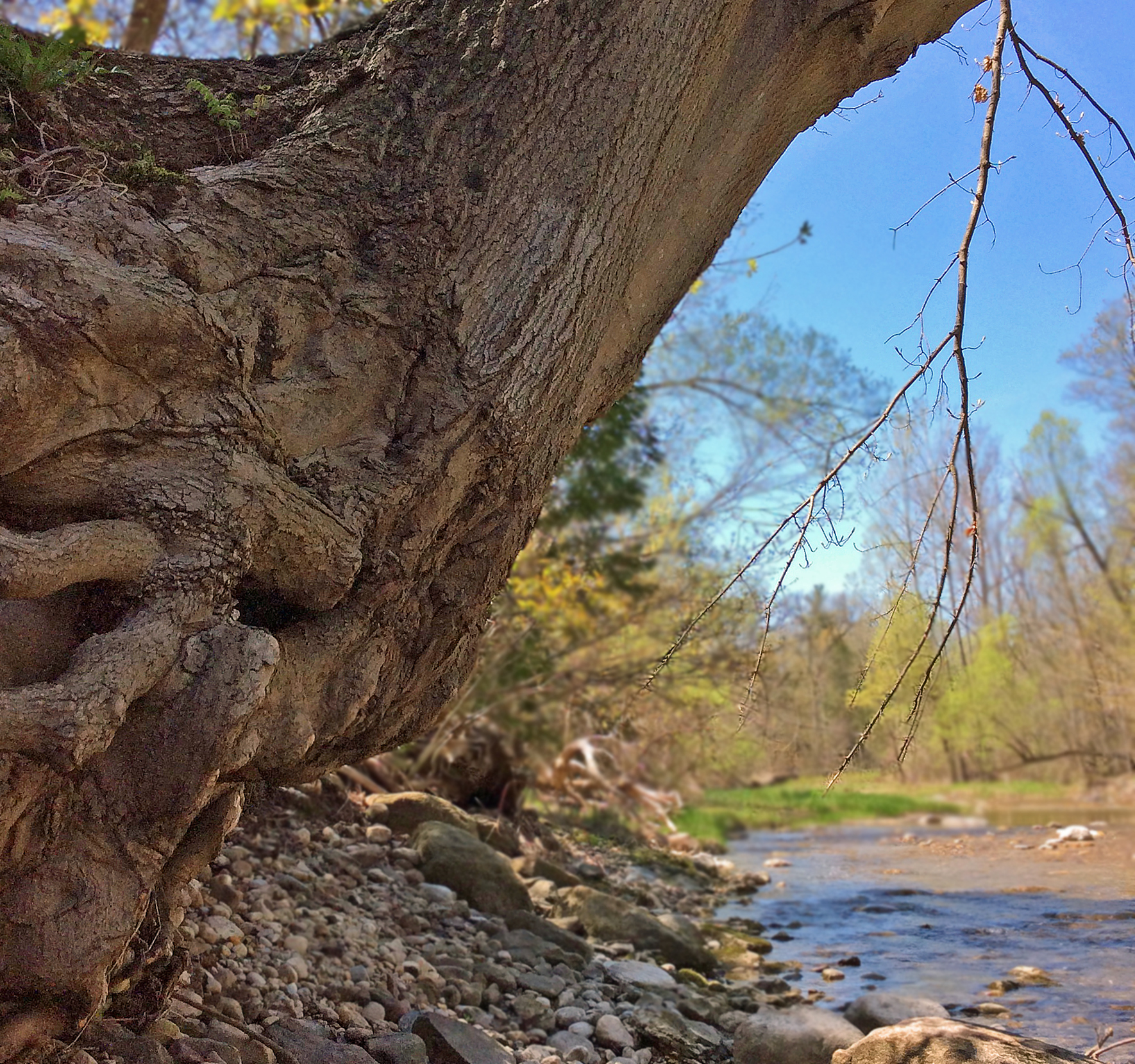
my old maple leaning over the Little Rouge River (photo by Nina Munteanu)
It was spring when I first entered this forest. I inhaled its complex smell, awakening with spring flowers. At my entrance, chipmunks scattered and scolded me for interrupting their calm. I chuckled and thought that I’d seen more within the space of one minute here than I had in a year in the suburb I currently live in. A duff-strewn path led me beneath the pungent smell of pine and cedar. I made my way toward the riverbank where beech and maple leaned over the water. I found a place to write.
When I returned in the fall, the forest was a mix of colour. Most of the deciduous trees had dropped their leaves in a revealing show of textured grays, gray-browns and blacks. The bare trunks and fractal branches contrasted with the deep greens of the conifers. Rogue trees—like the oak and beech—still claimed their leaves, adding deep russet tones to the varied grays and deep greens of the canopy. The forest was now more open, emerging with ancient magnificence from a soft brown carpet on the ground. The air was fresh with the scent of loam, decaying leaves and saprophyte activity.
A shallow part of the Little Rouge ices over with the first snowfall in late autumn (photo by Nina Munteanu)
I strayed off the path toward the riverbank again. I was looking for the old sugar maple I’d spent time with the previous spring. After several bends in the river, I saw it, leaning precipitously over the river like an old man sharing an intimate story. It had already lost its leaves; they covered the ground in a soft carpet. The old tree literally hugged the bank in a braided network of snaking roots; like a carved figurehead hugs the prow of a great tall ship.
Burl on my maple (photo by Nina Munteanu)
Eager to see my old friend up close, I scrambled down the overhanging bank using the old maple’s root “stairway,” then ungracefully dropped onto the cobbles below. Every part of my gnarly old maple tree was splendid. Its shaggy trunk stretched up with typical silhouette of branching-out arms that every Canadian kid drew when they were six. The horizontal roots stretched out in a tangle and stitched the bank together, keeping it intact.
The Little Rouge River calls me to sit and listen to its flowing song—a joyful playful symphony of breaths, chortles and open-throated froth. I sit. And still my breath. I find my whole body relax from the tension of the suburban drive. I am home, sighing with a rhythm I’d forgotten. Re-aligning. Bones with rock. Rock with twig. Twig with root. The animals no longer scold me. They have resumed their natural rhythm, as I merge into scenery. And write…
****
gnarly cedar roots (photo by Nina Munteanu)
What I do is not new to creative thinkers all over the world and throughout time. I share great company with people who used walking (usually in Nature) as a venue toward creative thinking (and writing). All great walkers.
Aristotle conducted his lectures while walking the grounds of his school in Athens. His followers, who chased him as he walked, were known as the peripatelics (e.g., Greek for meandering). Darwin refined his ideas on natural selection and other topics during his frequent walks along his “thinking path”, a gravel road called Sandwalk Wood near his home in southeast England. Dickens walked for miles each day: “If I could not walk far and fast, I think I should just explode and perish.” Beethoven often took solitary walks. He strolled the Viennese woods for hours, finding inspiration for his works and jotting them down on a notepad that he carried with him. Nietzsche loved his walks in the mountains: “it is only ideas gained from walking that have any worth.” For Wordsworth, the act of walking was one in the same with the act of writing poetry. Both involved rhythm and meter. Henry David Thoreau was known for his great walkabouts. Walking through nature for Thoreau was a pilgrimage without a destination—more discovery and rapture.
Yellow birch trunk (photo by Nina Munteanu)
Stanford researchers demonstrated that walking boosts creative inspiration. They showed that the act of walking significantly increased creativity for 81% of the participants and that the creative ideas generated while walking were not irrelevant or far-fetched, but innovative and practical.
“The answer begins with changes to our chemistry,” writes journalist Ferris Jabr in The New Yorker (2014). “When we go for a walk, the heart pumps faster, circulating more blood and oxgen not just to the muscles but to all the organs—including the brain. Many experiments have shown that after or during exercise, even very mild exertion, people perform better on tests of memory and attention. Walking on a regular basis also promotes new connections between brain cells, staves off the usual withering of brain tissue that comes with age, increases the volume of the hippocampus (a brain region crucial to memory) and elevates levels of molecules that both stimulate the growth of new neurons and transmit messages between them.”
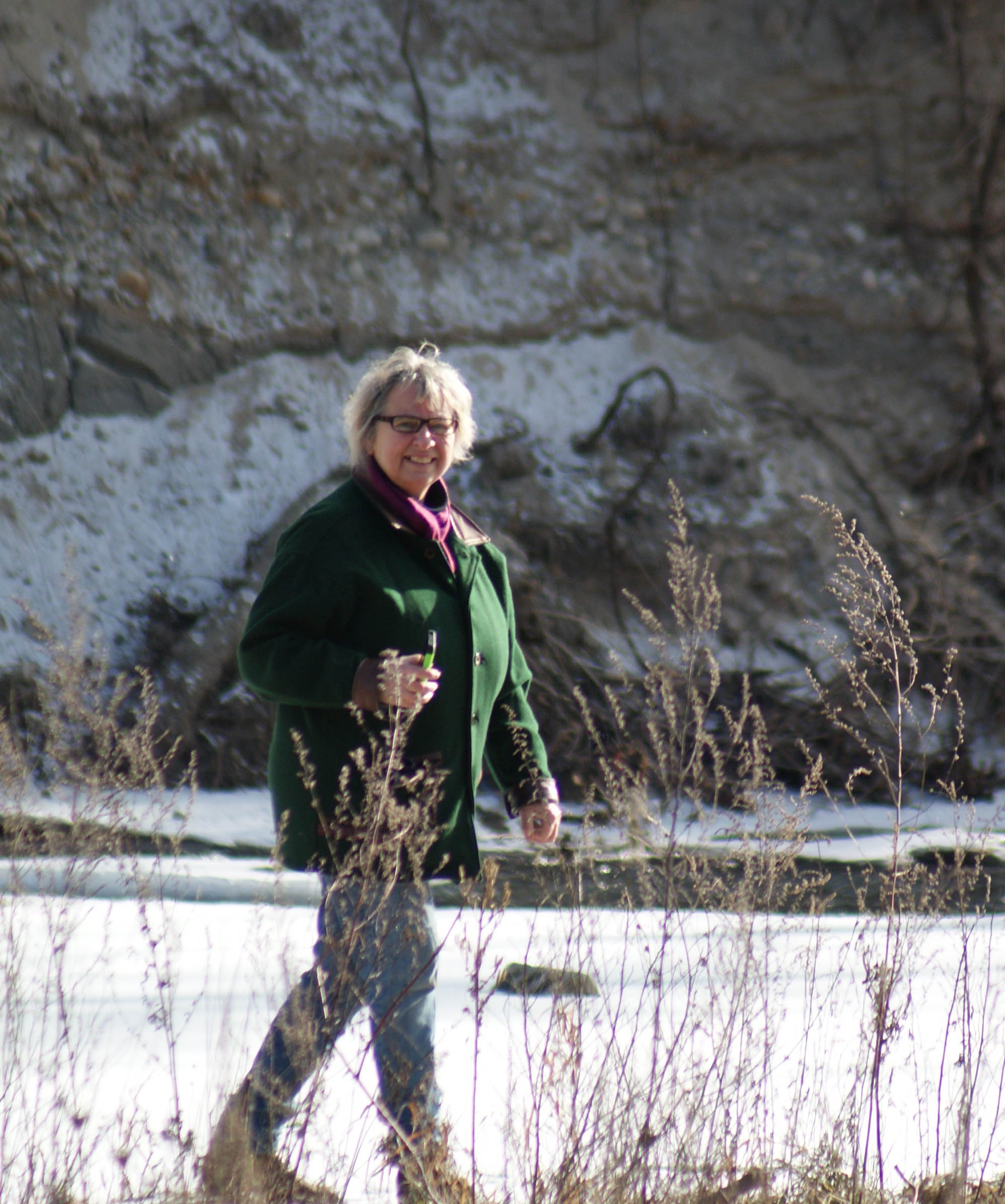
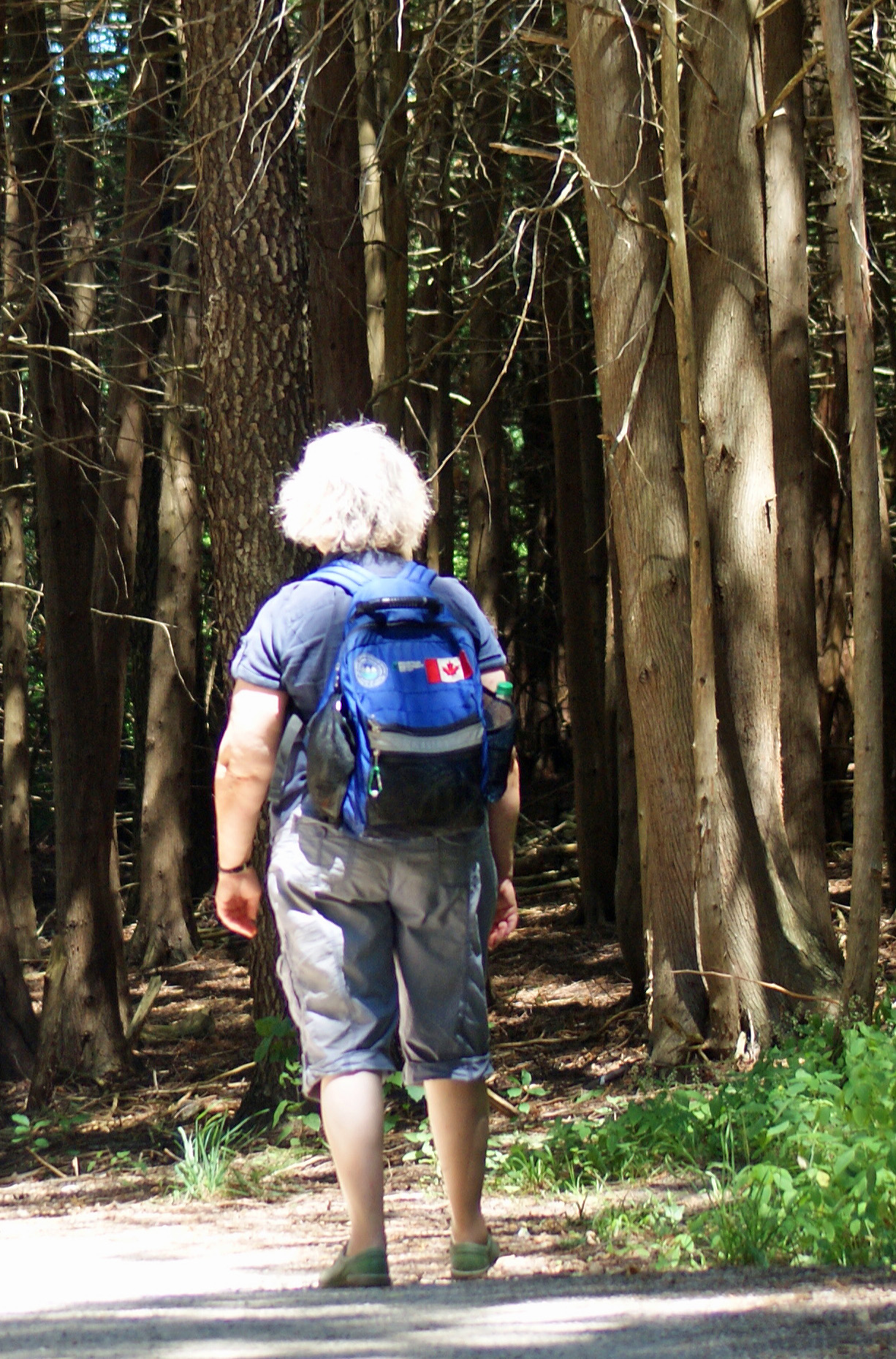
Nina Munteanu walks the forest (photo by Merridy Cox)
While walking is good for our creativity and general well-being, walking in a park or wilderness is so much better. Researchers in Europe and Japan found that anxiety and depression was significantly reduced in the presence of green space and that it boosted attentiveness, focus and academic performance. Vegetation creates “a halo of improved health.” Dr. Frances Kuo at the University of Illinois demonstrated that just seeing a tree helps cognition and promotes a sense of well-being. While a human-made environment of objects—cars and buildings—requires high-frequency processing in the brain; a landscaped environment allows the observer to relax his or her attention, resulting in reduced muscle tension, lower heart rate, and a generally less stressful physiology.
Finding a favourite tree might be the best thing you do to boost your creativity.
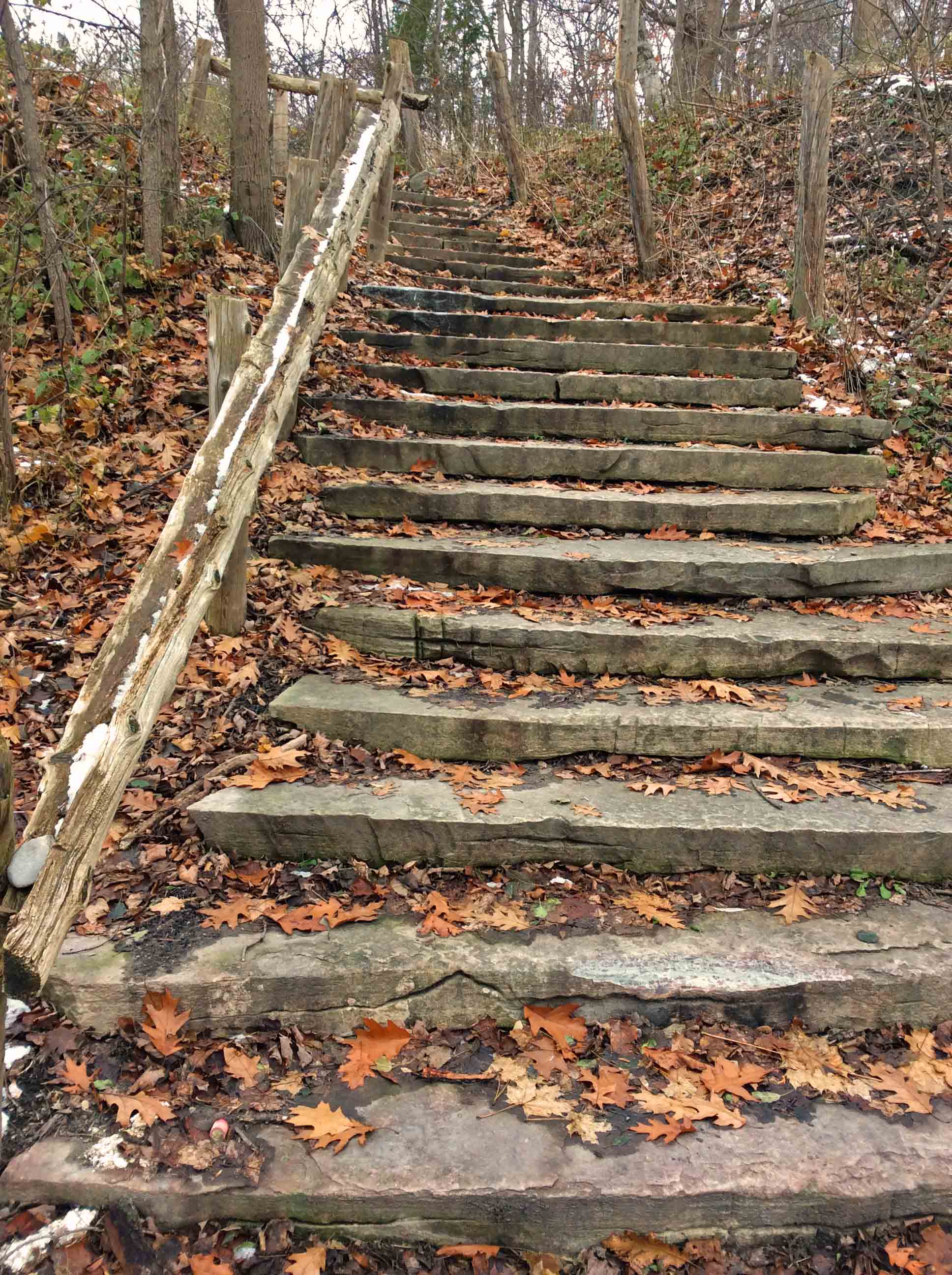
Forest path in Nova Scotia (photo by Nina Munteanu)
References:
Nina Munteanu by a large willow tree (photo Jane Raptor)
Cameron, Julia. 1992. “The Artist’s Way”. Penguin Putnam Inc., New York, NY. 222pp.
Deasey, Louise. 2015. “Negative Ions Are Great for Your Health”. Body and Soul.
Munteanu, Nina. 2013. The Journal Writer: Finding Your Voice. Pixl Press, Vancouver, BC. 170pp.
Oppezzo, Marily and Daniel L. Schwartz. 2014. “Give Your Ideas Some Legs: The Positive Effect of Walking on Creative Thinking”, Journal of Experimental Psychology: Learning, Memory, and Cognition, Vol. 40, No. 4: 1142-1152.
Wells, Nancy M. 2000. “At Home with Nature: Effects of ‘Greenness’ on Children’s Cognitive Functioning”. Environment and Behavior 32 (6): 775–795.
Nina Munteanu is an ecologist and internationally published author of award-nominated speculative novels, short stories and non-fiction. She is co-editor of Europa SF and currently teaches writing courses at George Brown College and the University of Toronto. Visit www.ninamunteanu.ca for the latest on her books. Nina’s recent book is the bilingual “La natura dell’acqua / The Way of Water” (Mincione Edizioni, Rome). Her latest “Water Is…” is currently an Amazon Bestseller and NY Times ‘year in reading’ choice of Margaret Atwood.











 Nina Munteanu Writing Coach