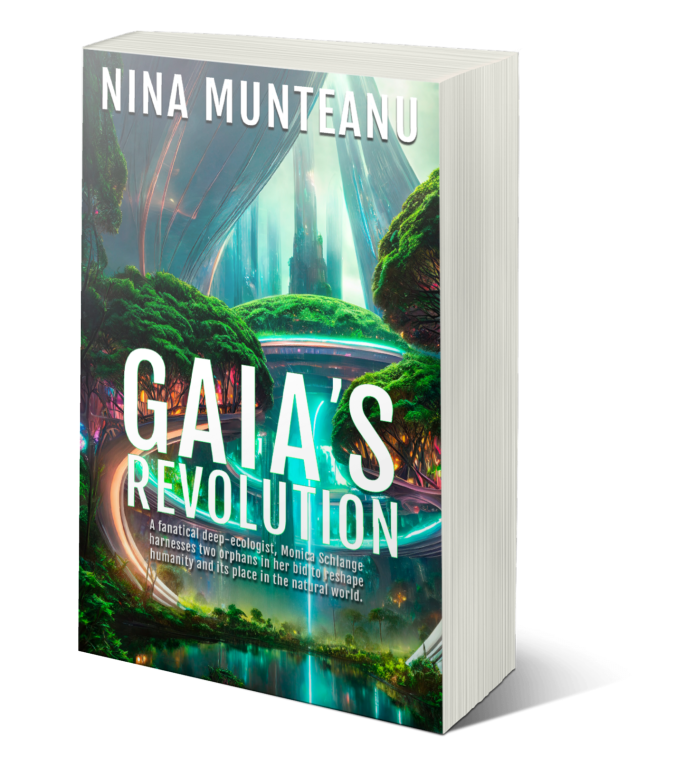
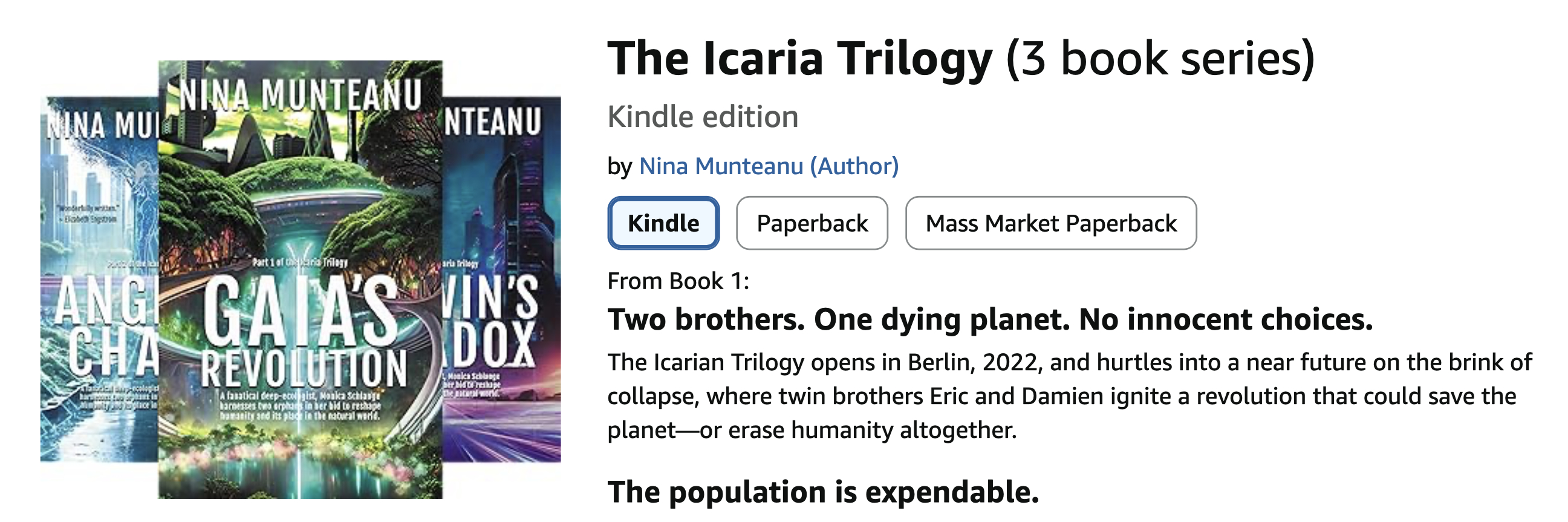
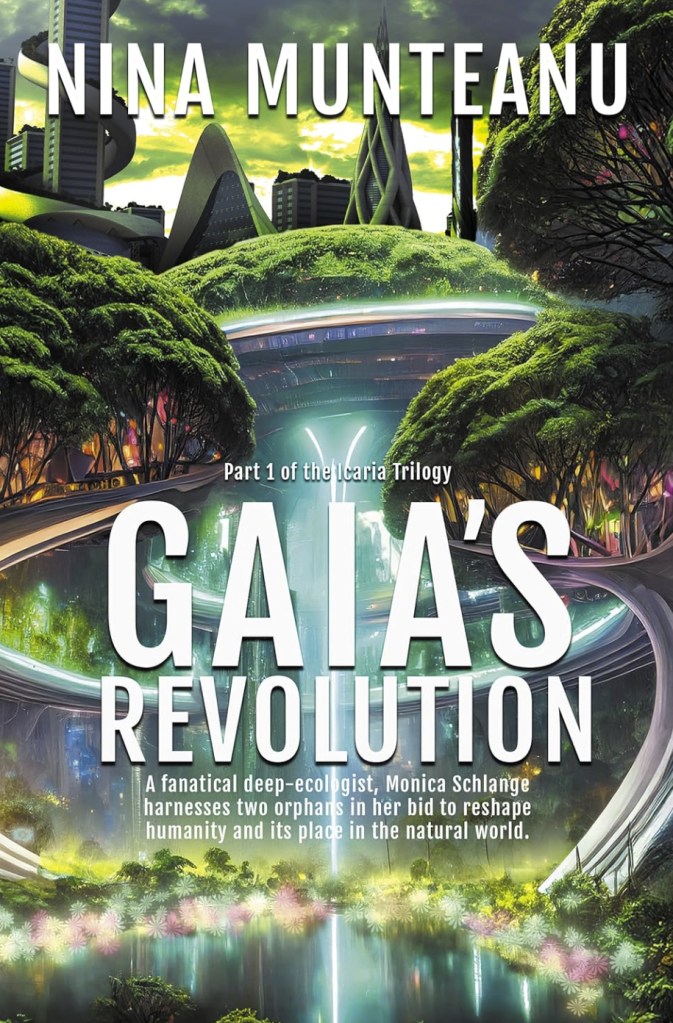
Today my eco-fiction novel Gaia’s Revolution (Book 1 of The Icaria Trilogy) releases through Dragon Moon Press in paperback and ebook form on Amazon (and other book retailers).
Gaia’s Revolution explores a collapsing capitalist society in Canada through ravages of climate change and a failing technology. The story is told through the lives of ambitious twin brothers Eric and Damien Vogel, and the woman who plays them like chess pieces in her gambit to ‘rule the world.’ The novel starts out in Berlin—with a scuffle between police and climate activists of Letzte Generation-then moves to Toronto Canada, where an unlikely revolution is brewing…
This day is special for me in a number of ways. Today is also my dad’s birthday. He passed away a while ago, but I know he is here with me as this is happening. You see, when I was just 15, I’d written my first book, an early version of Angel of Chaos. My dad, who had met and befriended an editor at Doubleday, and proud of my accomplishment, arranged a meeting with me and the editor to look at my book. I put on my highest pumps—I could barely walk in them!—and best outfit and met with the gentleman. He did not take my book for publication but praised my work and gave me some wonderful advice. “Keep writing!” he said. I have carried that meeting and advice to this day and thank my dad for his belief in me as a writer—particularly given that he had been pushing for me to become a teacher or nurse. Four decades later, a more polished version of that same book was published in 2010 by Dragon Moon Press (as Angel of Chaos, the prequel to Darwin’s Paradox, which was published in 2007).
.
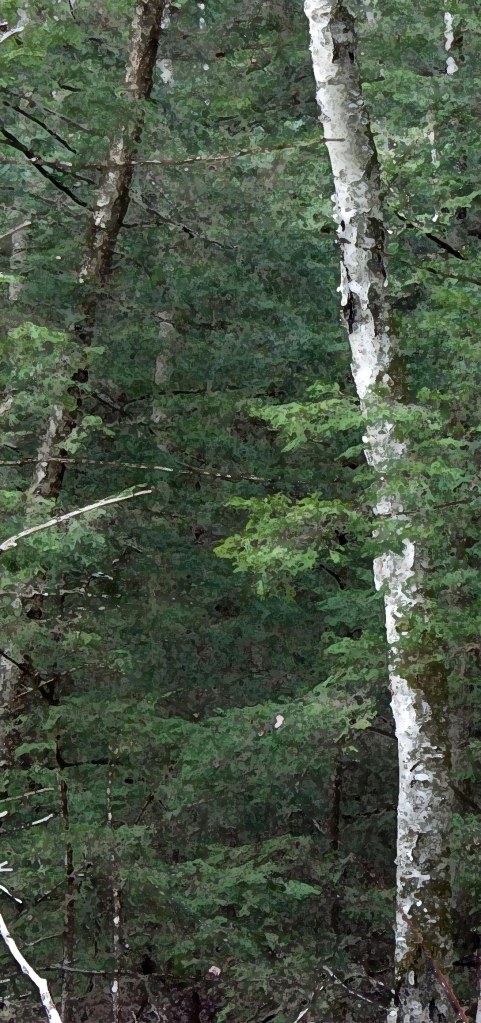
Birch forest in Ontario (photo and rendition by Nina Munteanu)
.
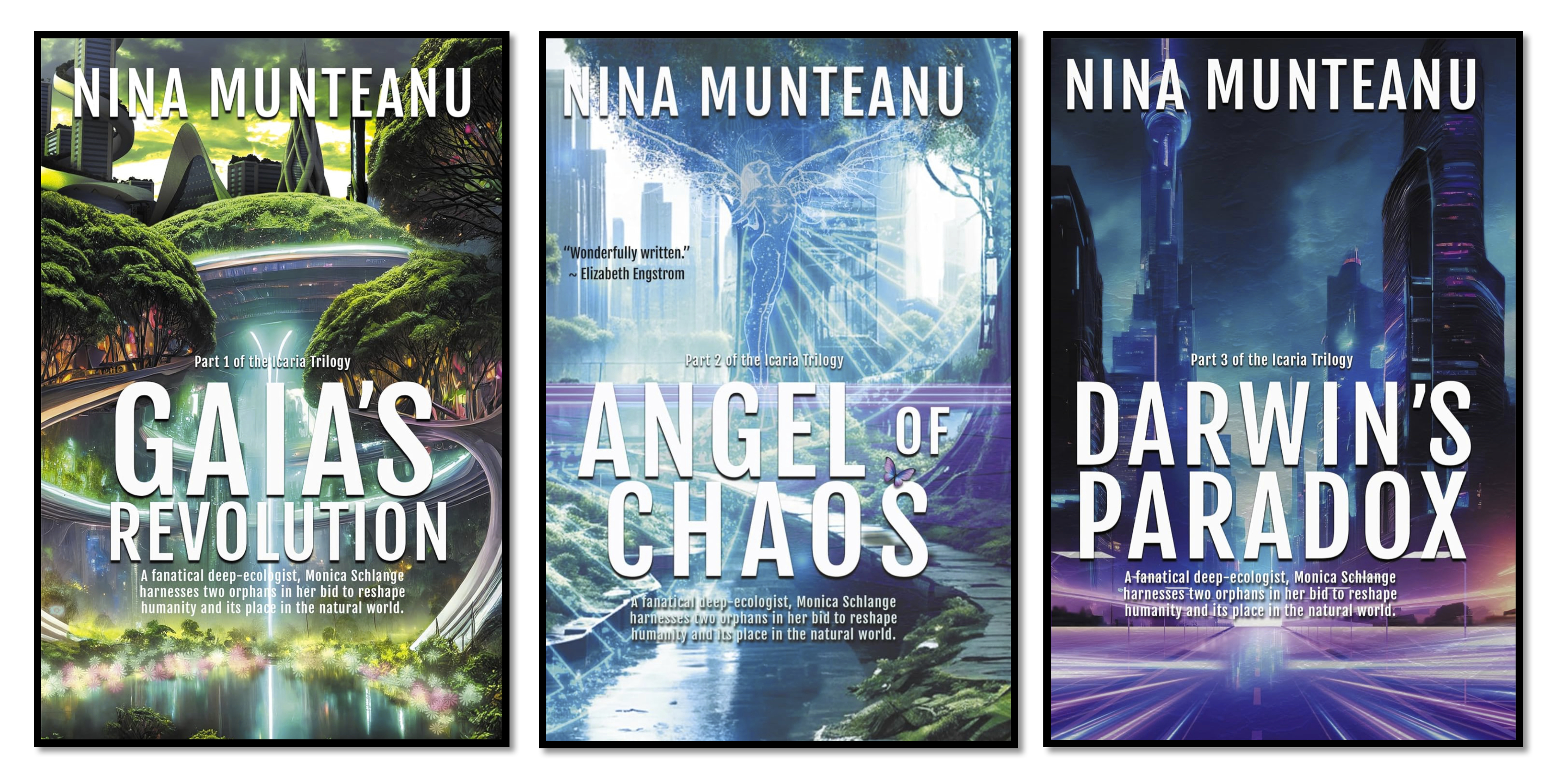
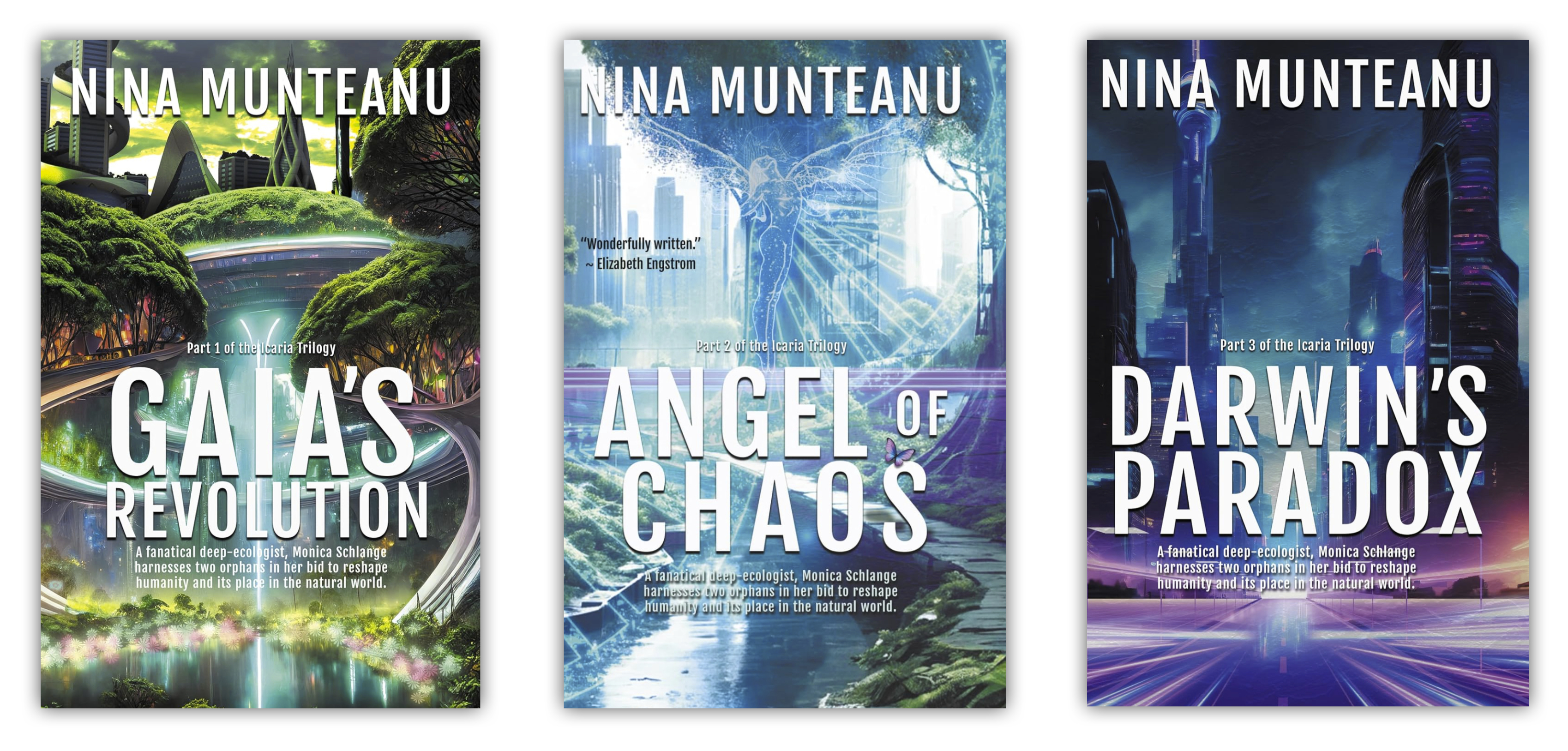
The Icaria Trilogy by Dragon Moon Press
.
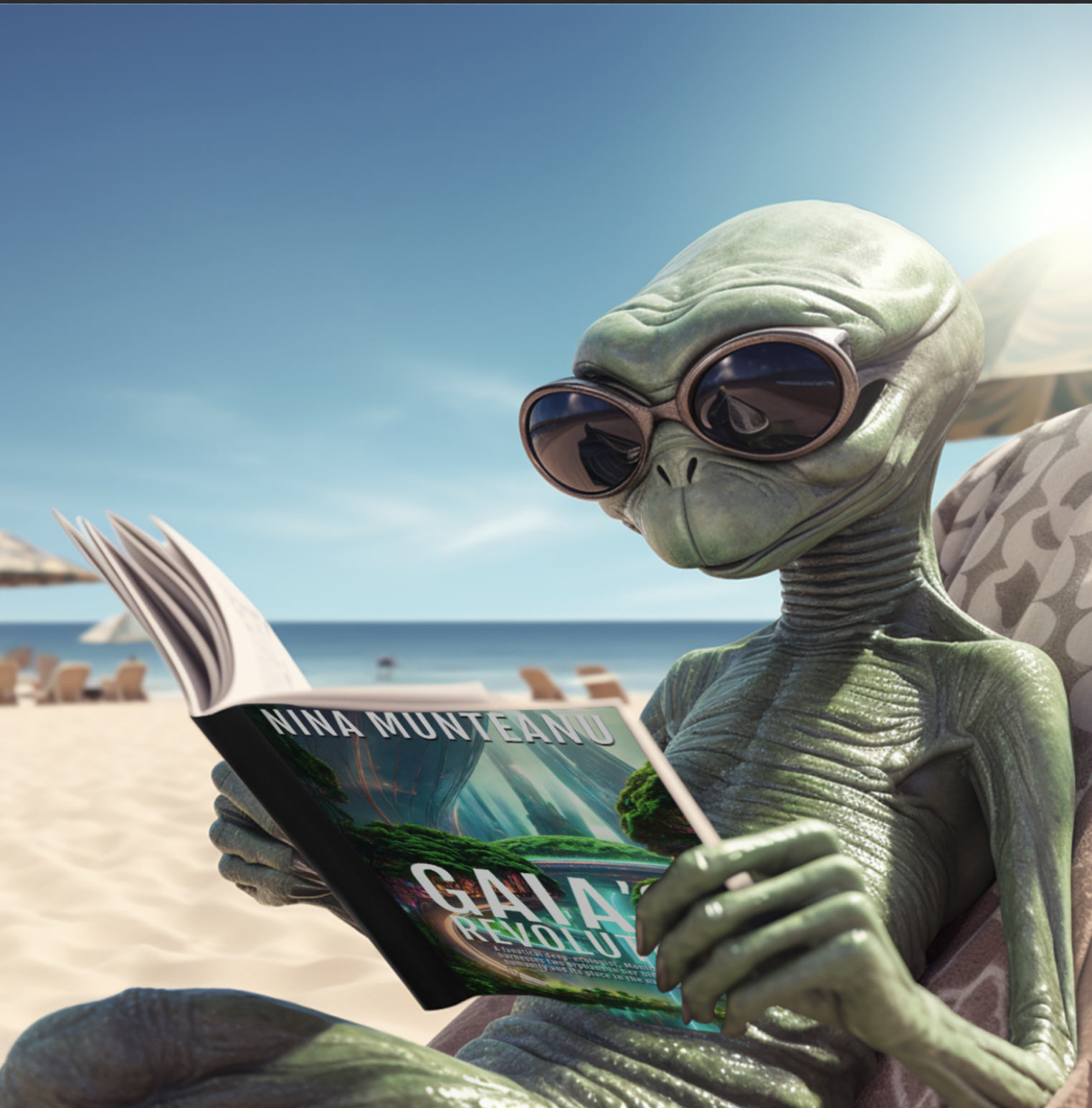
Now, with newly written Gaia’s Revolution (the prequel to the prequel) released, Dragon Moon has reissued new covers for the entire trilogy. Here they are! Oh! And look who’s already reading Gaia’s Revolution!
.
Aliens get to read everything before we do…
.
Nina Munteanu is an award-winning novelist and short story writer of eco-fiction, science fiction and fantasy. She also has three writing guides out: The Fiction Writer; The Journal Writer; and The Ecology of Writing and teaches fiction writing and technical writing at university and online. Check the Publications page on this site for a summary of what she has out there. Nina teaches writing at the University of Toronto and has been coaching fiction and non-fiction authors for over 20 years. You can find Nina’s short podcasts on writing on YouTube. Check out this site for more author advice from how to write a synopsis to finding your muse and the art and science of writing.
A fanatical deep-ecologist, Monica Schlange, harnesses two orphans in her bid to reshape humanity and its place in the natural world.
.
My upcoming book Gaia’s Revolution(Book 1 of The Icaria Trilogy by Dragon Moon Press) explores a collapsing capitalist society in Canada through ravages of climate change and a failing technology. The story is told through the lives of ambitious twin brothers Eric—a gifted engineer—and Damien Vogel—a brilliant scientist and deep ecologist*—and the woman who plays them like chess pieces in her gambit to ‘rule the world.’
.
The brothers meet at Treffpunkt, a café near Humboldt University in Berlin, nursing Kellerbiers over a late lunch of Einsbeinmit Sauerkraut. They argue ideology and reform. Canada represents an ideal canvas for revolution, argues Eric. Damien is puzzled by this. To him Canada represents a quietly reposed nation of polite intellectuals who accept a healthy multicultural society and whose practical leaders are connected with their people. Not a restive rabble ripe for change.
As if reading his brother’s mind, Eric replies:
“Because it’s a huge nation with a lot of space and few people,” Eric argues. “Did you know that Canada holds on average only 4 people per square kilometer? Germany stuffs 240 people in the same area. And China, which is virtually the same size as Canada, holds 153 people per square kilometer.” He picks up Walden Two and waves it at Damien. “Canada is a perfect place to start these [Walden Two colonies called Icarias*]. And, with global warming, we could settle in the boreal.” He then slides the book back in his pocket and leans back, eyes sparkling with purpose. “But the real reason to start a revolution there is because, like you, Canadians are naïve. Even their leaders. And this is because, unlike the rest of the world, they are still asleep…
“Climate is not our enemy, Dame; it’s our friend. Climate is our fierce archangel of change. And let’s not forget that ‘crisis is opportunity…” … He grins, self-pleased, like a wolf in a hen house. Then he practically snarls out, “We must first destroy before we can create. We must be unruly like climate. We must be relentless like climate. We must ride that wave before we can become the wave, Bruder. And then by being that wave, we change the world.”
.
Pine cedar forest in Ontario (photo and rendition by Nina Munteanu)
.
The brothers escape the growing racial violence of Berlin, to ‘peaceful’ Canada in a rivalry to control the evolution of the human race. Years later, Eric Vogel, who has created a niche for himself in the technocratic government*, sits in the Canadian prime minister’s office and imagines what a post-capitalist world will look like and how his twin brother Damien—left behind in Germany—would disagree with his vision:
Damien too easily prescribes to the old leftist shibboleth of Nature being the answer to everything and Market being evil. His deep ecology utopia would spring from an atavistic rejection of modern life, a return to ‘the ancient farm.’ But how that fantasy could be achieved without a drastic population reduction is beyond his brother’s imagination. Damien fetishizes the natural world. Just like he does their mother. The naïve fool is a blind romantic, refusing to see reality right in front of him: that Nature is ultimately cruel, cold, and preoccupied with its own survival. Just like their mother.
.
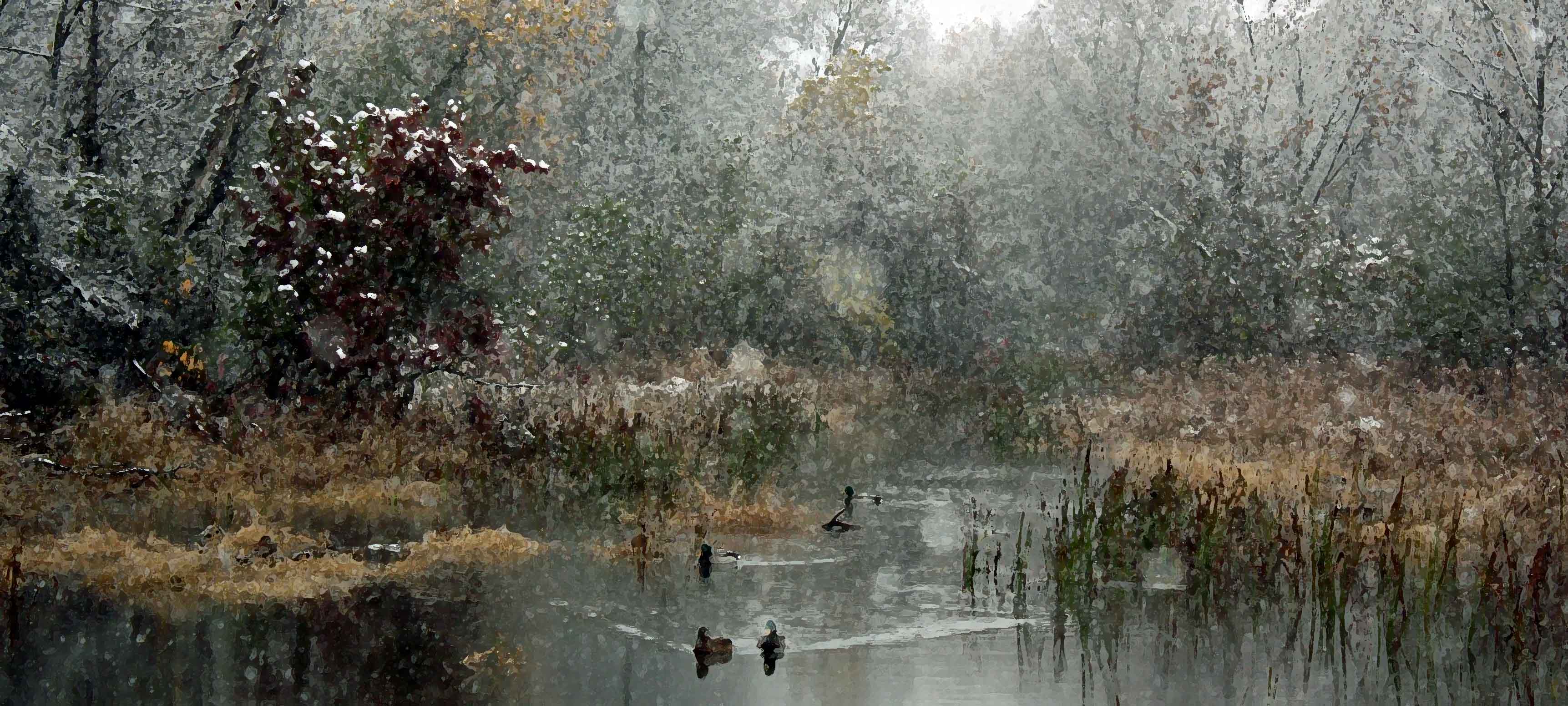
First snow in an Ontario marsh (photo and rendition by Nina Munteanu)
.
Each brother plans to create a new humanity: one to control through gene manipulation and behaviour engineering; the other to empower through biotechnology and transhumanist AI. The warring brothers end up in Canada and set off a violent revolution that destroys the Canadian technocratic government and whose weapons ultimately risk the survival of humanity. Deep ecologist Monica Schlange snares the brothers in her gambit to reshape humanity and its place in the natural world. Three orphaned children, caught in the web of intrigue and violence, will ultimately determine the direction of humanity by introducing the first veemelds (people who can communicate with machines), a new environmental disease (Darwin), and a new set of rules neither brother envisioned.
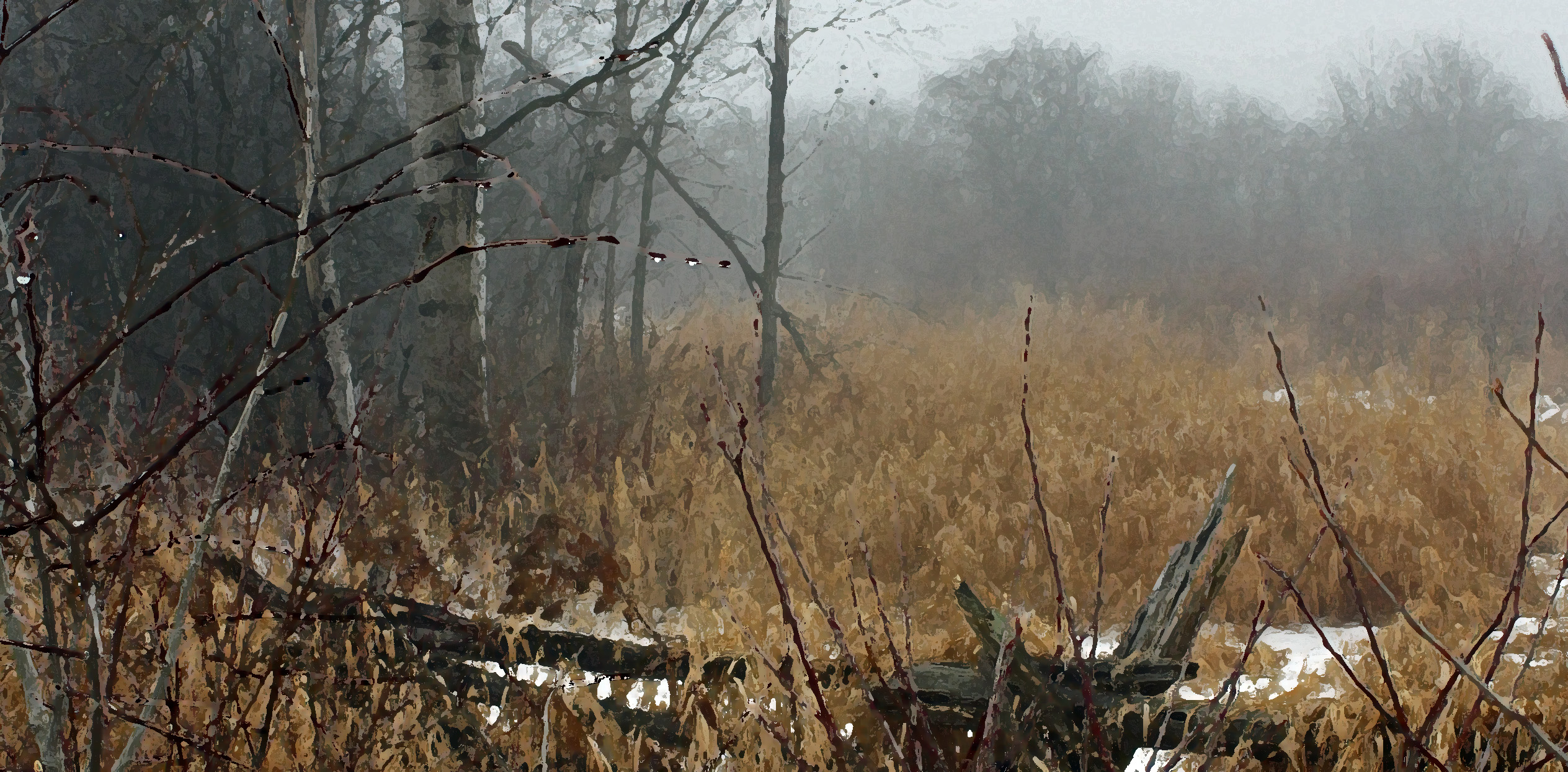
Birch trees in a winter marsh, ON (photo and rendition by Nina Munteanu)
.
References:
Munteanu, Nina. 2026. “Gaia’s Revolution, Part 1 of Icaria Trilogy.” Dragon Moon Press, Calgary, AB. 369 pp.
Munteanu, Nina. 2010. “Angel of Chaos, Part 2 of Icaria Trilogy.” Dragon Moon Press, Calgary, AB. 518 pp.
Munteanu, Nina. 2007. “Darwin’s Paradox, Part 3 of Icaria Trilogy.” Dragon Moon Press, Calgary, AB. 294 pp.
Sessions, George, Bill Devall. 2000. “Deep Ecology: Living as if Nature Mattered.” Gibbs Smith. 267pp.
Skinner, B.F. 1948. “Walden Two” The Macmillan Company, New York. 301pp.
.
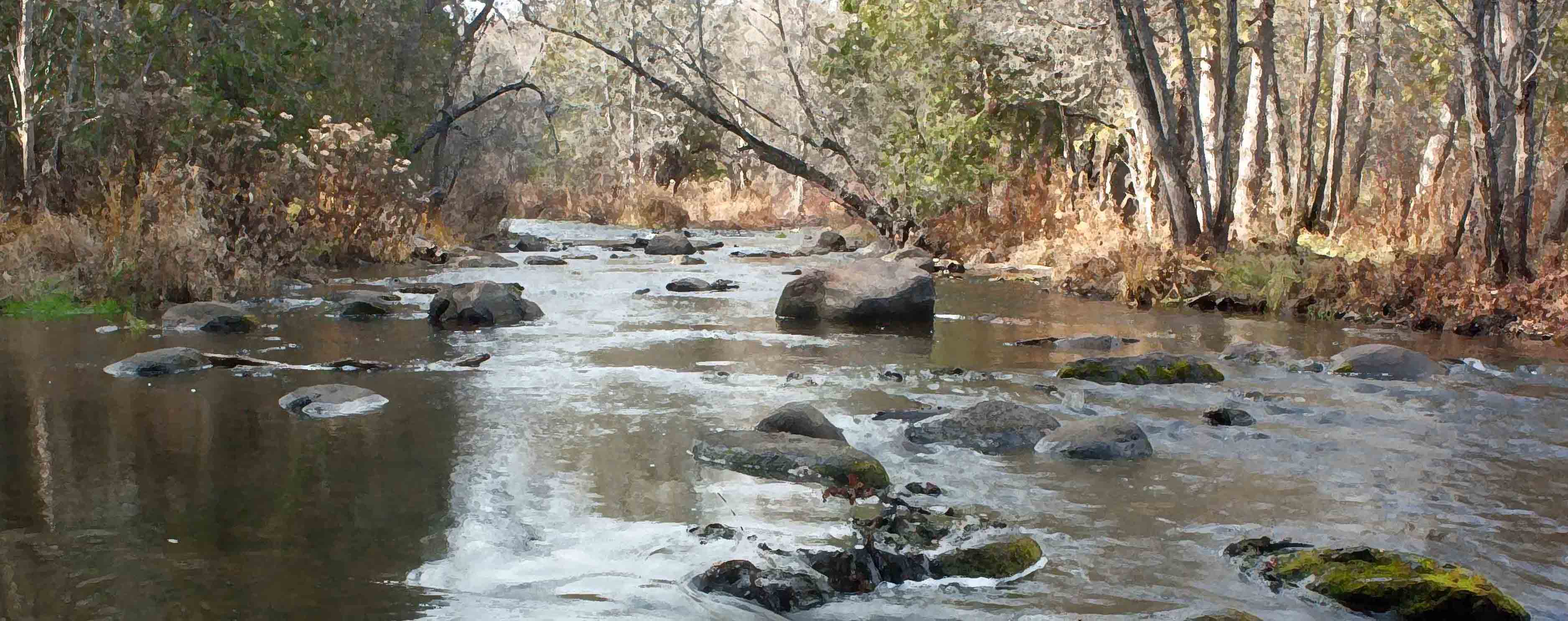
Jackson Creek in the fall, ON (photo and rendition by Nina Munteanu)
.
Terminology:
*Deep Ecology: An environmental philosophy and social movement advocating that all living beings have intrinsic value, independent of their utility to human needs. Coined by Arne Naess in 1972, it promotes a holistic, ecocentric worldview—often termed “ecosophy”—that demands radical, structural changes to human society to prioritize nature’s flourishing.
*Icaria: the name of Étienne Cabet’s utopia. Cabet was a French lawyer in Dijon, who published his novel Voyage en Icarie in 1839. The novel was a sort of manifesto-blueprint of utopian socialism, with elements of communism (abolished private property and individual enterprise), influenced by Fourierist and Owenite thinking. Key elements, such as the four-hour work day, are reflected in B.F. Skinner’s Walden Two. The novel explores a society in which capitalist production is replaced by workers’ cooperatives with a focus on small communities.
*Technocracy: A form of government in which the decision-maker(s) are selected based on their expertise in a given area; any portion of a bureaucracy run by technologists. Technocracies control society or industry through an elite of technical experts. The term was initially used to signify the application of the scientific method to solving social problems.
.
Nina Munteanu is an award-winning novelist and short story writer of eco-fiction, science fiction and fantasy. She also has three writing guides out: The Fiction Writer; The Journal Writer; and The Ecology of Writing and teaches fiction writing and technical writing at university and online. Check the Publications page on this site for a summary of what she has out there. Nina teaches writing at the University of Toronto and has been coaching fiction and non-fiction authors for over 20 years. You can find Nina’s short podcasts on writing on YouTube. Check out this site for more author advice from how to write a synopsis to finding your muse and the art and science of writing.
“Bourgeois society stands at the crossroads, either transition to socialism or regression into barbarism.”—Rosa Luxemburg, 1915
.
I wrote my first novel in 1969 when I was fifteen. Caged in World was a hundred-page speculative story about a world that had moved “inside” to escape the ravages of a post climate-change environment. It would later become Book 2 of The Icaria Trilogy. I was already disillusioned with my world. I saw how corporations and governments and society in general—individuals around me—‘othered’ the environment by either treating it with disrespect and apathy or outright ignoring it in a kind of torpor of obliviousness. As though it didn’t exist.
.
I remember being chastised by a school teacher for thinking globally about what was happening to the planet at our hands: worldwide deforestation (e.g., clearcutting the old-growth forests of Canada), infilling saltwater and freshwater marshes, massive use of pesticides and fertilizers, contamination of lakes, unregulated mining and toxic pollution, and ultimately climate change. Stick to local concerns, he advised me; recycling and such.
I remember wondering if I was just being weird. That my odd sensibility for the planet-entire was just a nina-thing. I prayed that I was not alone and it wasn’t just a nina-thing.
.
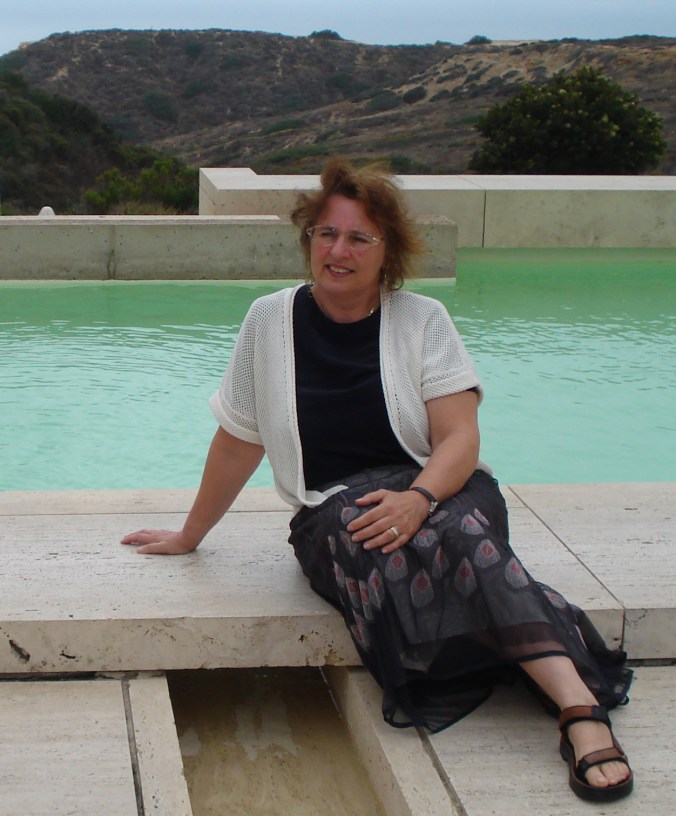
(Photo: Nina Munteanu, Salk Institute, California)
Throughout high school and university, I read scientific papers, news articles and books on revolution. I became a student of climate change long before the term entered the zeitgeist. I studied industrial capitalism and its roots in neoliberalism and colonialism. I noted how the post-war expansion of capitalism shifted from Fordist mass production to flexible automation, technology and AI. I saw the rise of multinational corporations, income inequality, and the commodification of everything—from water to human beings (Foucault’s homo economicus).
.
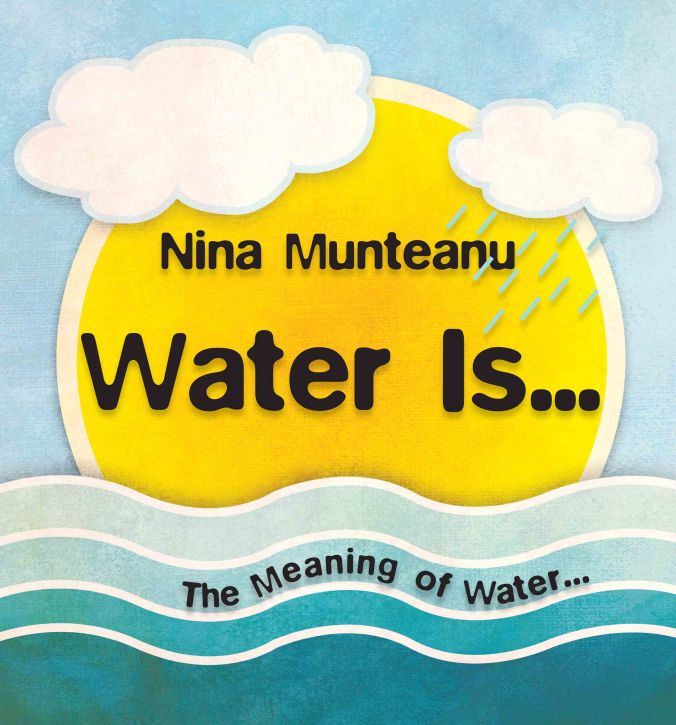
I pursued a university degree in ecology and limnology to study and help protect the environment and educate industry and their governments in the process. I became an expert on water. See my book Water Is…The Meaning of Water, which celebrates water from twelve perspectives (and got a shout out from Margaret Atwood!).
.
I soon concluded that a hegemony that follows the economic system of late capitalism inevitably commodifies and ‘others’ with ruthless purpose. Once something (or someone) is commodified, they are given a finite value and purpose outside their own existence. They become an object, a symbol to use and trade. They become a resource to manipulate, exchange, and dispose of with impunity. And through this surrender to utility, they become ‘othered.’ The consumer. The trees of the forest. Water. Homo sacer*. Each has a role to play in the late capitalist narrative of digital abundance and physical scarcity.
Capitalism hasn’t been kind to the environment. Economic pundits and sociologists insist that Capitalism is devolving. But what will replace it? Cloud capital? Technofeudalism? Something else?
.
Deep Ecology* & Gaia’s Revolution
The Icaria Trilogy (Dragon Moon Press)
.
My three Icaria novels—starting with Gaia’s Revolution, (the first of The Icaria Trilogy, releasing March 10, 2026, by Dragon Moon Press)—chronicle the collapse of a capitalist society in Canada as climate change, water shortages, habitat destruction, plague and a failing technology devastate the Canadian population.
.
Gaia’s Revolution (Book 1 of The Icaria Trilogy) explores a transition in Canada from semi-socialized capitalist system to a technocratic* meritocracy of technologists and scientists. Triggered by catastrophic environmental and sociological tipping points and following violent revolution, a dictatorship of deep ecologists* called Gaians seize power. By the end of the book, enclosed cities called Icarias* now populate North America. Separated from their environment, humans now live inside domes protecting them from a hostile and toxic environment.
.
In truth, the deep ecologists are keeping people “inside” not to protect humanity from a toxic wasteland but to protect the environment from a toxic humanity.
.
How realistic is this vision? Well, it is science fiction, after all, and though it takes liberties with its narrative, it is science-based and ultimately draws on precedent. As Margaret Atwood so astutely attested of her cautionary SF book The Handmaid’s Tale: “I didn’t put in anything that we haven’t already done, we’re not already doing, we’re seriously trying to do, coupled with trends that are already in progress.”
Science fiction is itself powerful metaphor; it is the fiction of political and social allegory or satire and makes astute social commentary about a world and civilization: how it has come to be, how it works—or doesn’t—and how it may evolve.
So, it is visionary and predictive? I prefer to think as Ray Bradbury:
.
“The function of science fiction is not only to predict the future, but to prevent it.”–Ray Bradbury
.
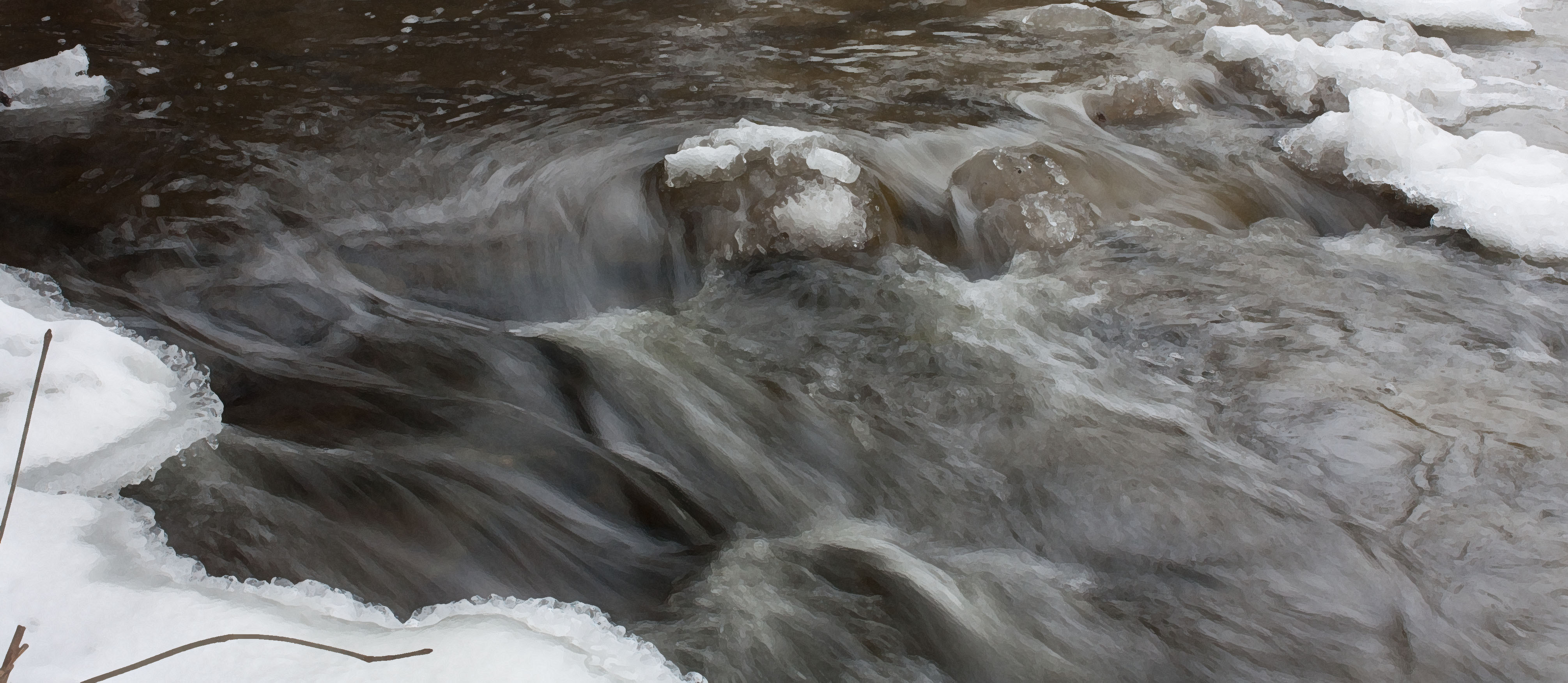
Jackson Creek in winter, ON (photo and rendition by Nina Munteanu)
.
References:
Angus, Ian. 1012. “The Spectre of 21st Century Barbarism.” Climate & Capitalism, August 20, 2012.
Atwood, Margaret. 2004. “The Handmaid’s Tale and Oryx and Crake ‘In Context'”. PMLA. 119 (3): 513–517.
Bradbury, Ray. 1991. “Yestermorrow: Obvious Answers to Impossible Futures” and “Beyond 1984: The People Machines” by Ray Bradbury, dated 1982, Page 155, Joshua Odell Editions: Capra Press, Santa Barbara, California.
Foucault, Michel. 2010. “The Birth of Biopolitics (Naissance de la biopolitique): Lectures at the Collège de France, 1978-1979.” Picador. 368pp.
Luxemburg, Rosa. 1915. “The Junius Pamphlet: The Crisis in the German Democracy”, Marxist.org.
Munteanu, Nina. 2026. “Gaia’s Revolution, Part 1 of Icaria Trilogy.” Dragon Moon Press, Calgary, AB. 369 pp.
Munteanu, Nina. 2010. “Angel of Chaos, Part 2 of Icaria Trilogy.” Dragon Moon Press, Calgary, AB. 518 pp.
Munteanu, Nina. 2007. “Darwin’s Paradox, Part 3 of Icaria Trilogy.” Dragon Moon Press, Calgary, AB. 294 pp.
Neuman, Sally. 2006. “‘Just a Backlash’: Margaret Atwood, Feminism, and The Handmaid’s Tale“. University of Toronto Quarterly. 75 (3): 857–868.
Sessions, George, Bill Devall. 2000. “Deep Ecology: Living as if Nature Mattered.” Gibbs Smith. 267pp.
Skinner, B.F. 1948. “Walden Two” The Macmillan Company, New York. 301pp.
Streeck, Wolfgang. 2014. “How Will Capitalism End?” New Left Review 2 (87): 47p.
.
Terminology:
*Deep Ecology: An environmental philosophy and social movement advocating that all living beings have intrinsic value, independent of their utility to human needs. Coined by Arne Næss in 1972, it promotes a holistic, ecocentric worldview—often termed “ecosophy”—that demands radical, structural changes to human society to prioritize nature’s flourishing.
*Homo sacer: a figure from Roman law denoting a person excluded from society who is outside human law (can be killed) and divine law (cannot be sacrificed). The term represents “bare life”: stripped of political rights, legal protection, and social value. Philosopher Giorgo Agamben popularized the term to describe individuals excluded from the political community, such as refugees, stateless persons, or camp detainees. The term illustrates the power of a sovereign in deciding which lives are worthy of protection and which are not.
*Icaria: the name of Étienne Cabet’s utopia. Cabet was a French lawyer in Dijon, who published his novel Voyage en Icarie in 1839. The novel was a sort of manifesto-blueprint of utopian socialism, with elements of communism (abolished private property and individual enterprise), influenced by Fourierist and Owenite thinking. Key elements, such as the four-hour work day, are reflected in B.F. Skinner’s Walden Two. Cabet’s novel explores a society in which capitalist production is replaced by workers’ cooperatives with a focus on small communities.
*Letzte Generation: a prominent European climate activist group, founded in 2021, known for its acts of civil disobedience—such as roadblocks, defacing art, and vandalizing structures—to pressure governments on climate action. The term was chosen because they considered themselves to be the last generation before tipping points in the earth’s climate system would be reached. They are mostly active in Germany, Italy, Poland and Canada. In Germany, they have faced accusations of forming a criminal organization, leading to police raids.
*Technocracy: A form of government in which the decision-maker(s) are selected based on their expertise in a given area; any portion of a bureaucracy run by technologists. Technocracies control society or industry through an elite of technical experts. The term was initially used to signify the application of the scientific method to solving social problems.
.
Nina Munteanu is an award-winning novelist and short story writer of eco-fiction, science fiction and fantasy. She also has three writing guides out: The Fiction Writer; The Journal Writer; and The Ecology of Writing and teaches fiction writing and technical writing at university and online. Check the Publications page on this site for a summary of what she has out there. Nina teaches writing at the University of Toronto and has been coaching fiction and non-fiction authors for over 20 years. You can find Nina’s short podcasts on writing on YouTube. Check out this site for more author advice from how to write a synopsis to finding your muse and the art and science of writing.
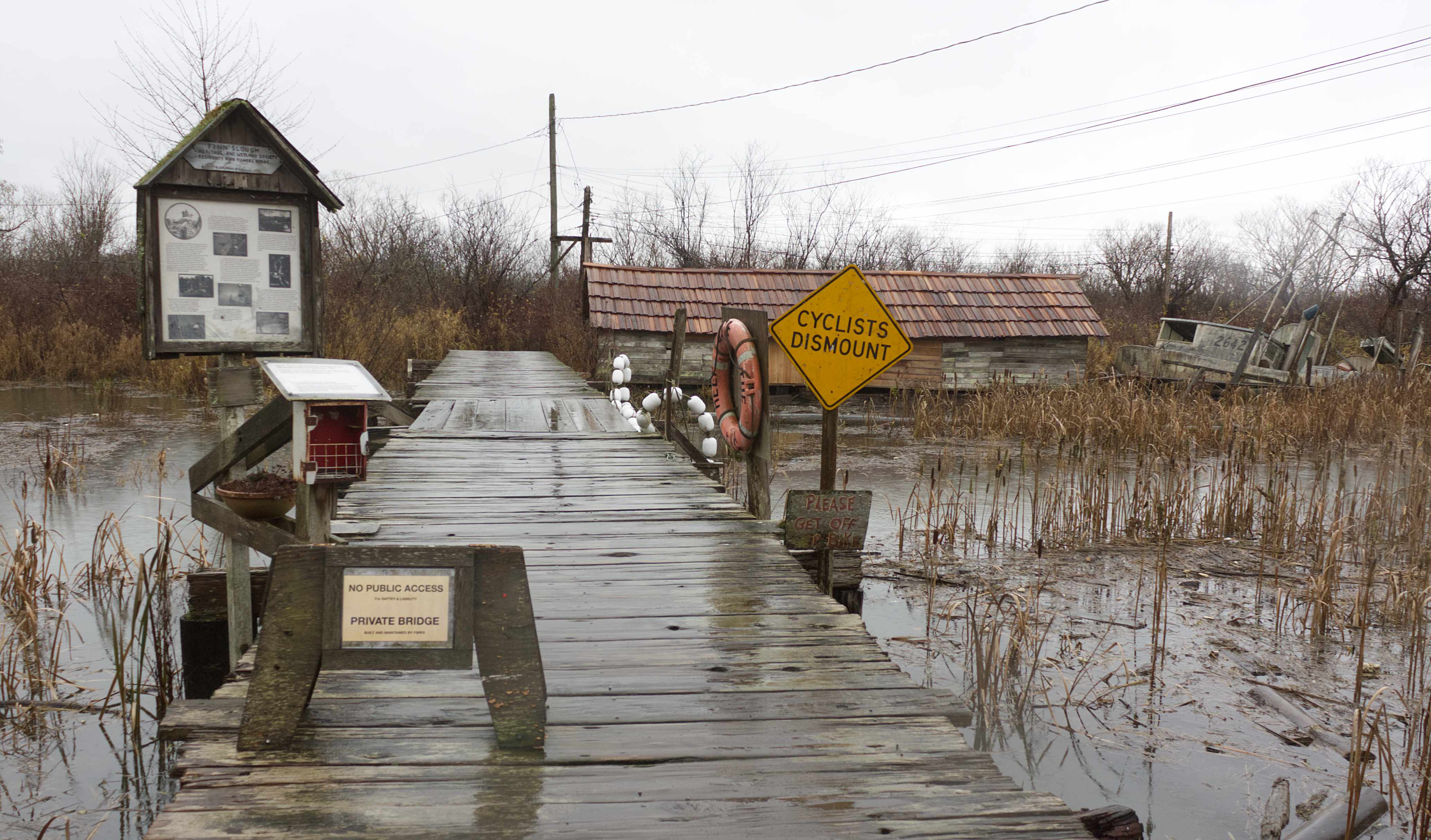
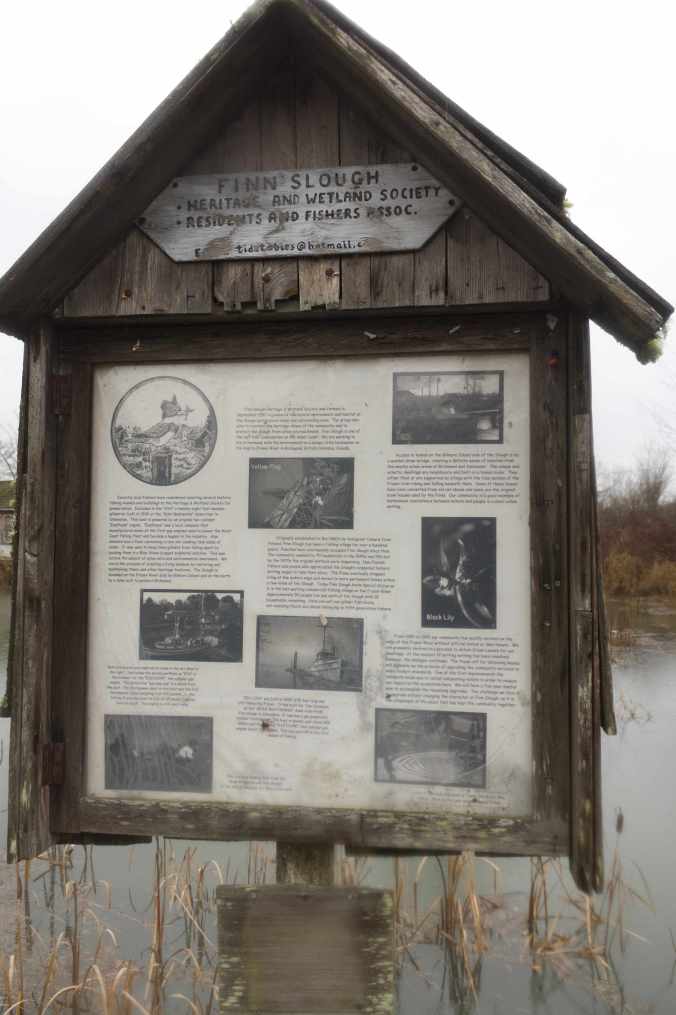
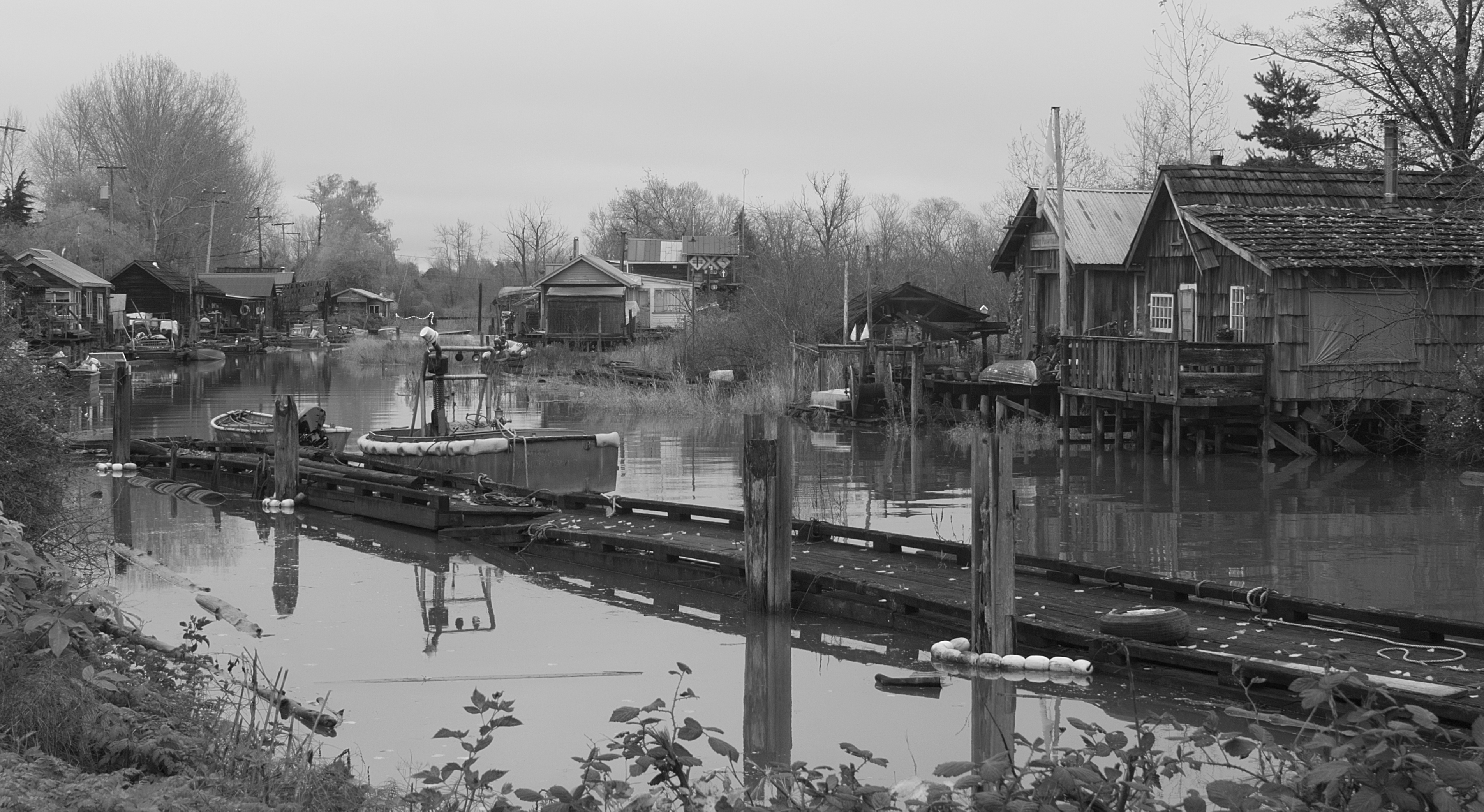
Not long ago, I went for a drive through the pastoral area of Lulu Island and ended up heading south along No. 4 Road in Steveston. As I wound my way toward Dyke Road, I found myself revisiting an old haunt from years ago: the little homesteader community—former Finnish fishing village—of Finn Slough. I remember first discovering this rather charming and eclectic settlement perched on stilted houses along the marsh of Finn Slough back in the 1980s when I briefly lived in Richmond. A sign by the bridge across the slough to Gilmour Island, where Number 4 Road meets Dyke Rd, provides a history of the Finnish community by Historian and Archivist David Dorrington who describes Finn Slough as a place “where nature and history gently coexist.”
.
Finn Slough bridge to Gilmour Island, BC (photo by Nina Munteanu)
.
The area was settled in the late 1880s by immigrant Finnish fishermen and their families, seeking a new life from the poverty and repression of the Russian empire in Finland. They built their buildings on pilings to accommodate the changing tides. One of the first and most important buildings was a sauna. The fishing community also built bluestone tanks, used to clean their linen nets. They also had rack floats and net sheds. In those days—when downtown Richmond didn’t exist—it would take an entire day to go one way from Finn Slough to Vancouver (now a 30-minute drive). Steveston was pretty much only canneries. Once a week, says the sign, the Finnish community would dress up in their ‘best clothes’ and take several boats to Steveston, Ladner or New Westminster to buy the week’s supplies. And if the weather was good, they would have a picnic on one of the river islands and sing along with accordion music. The homesteader village established without property boundaries, city ordinances, provincial regulations or any governing body.
.
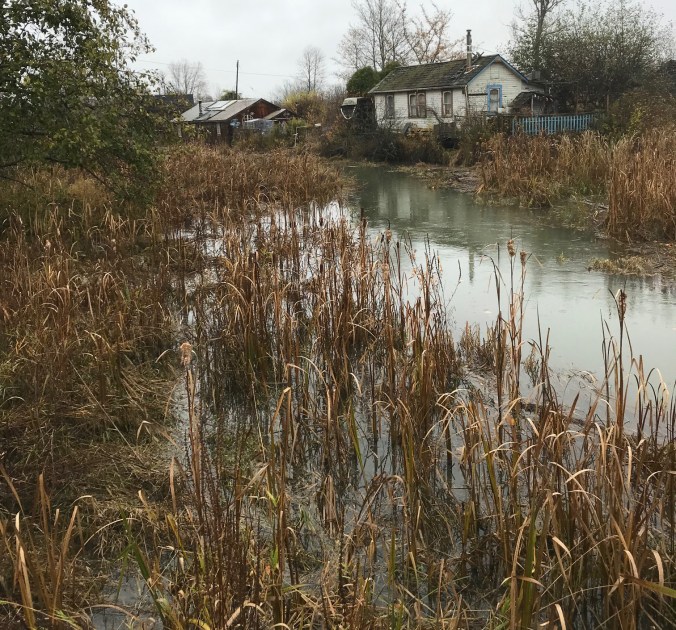
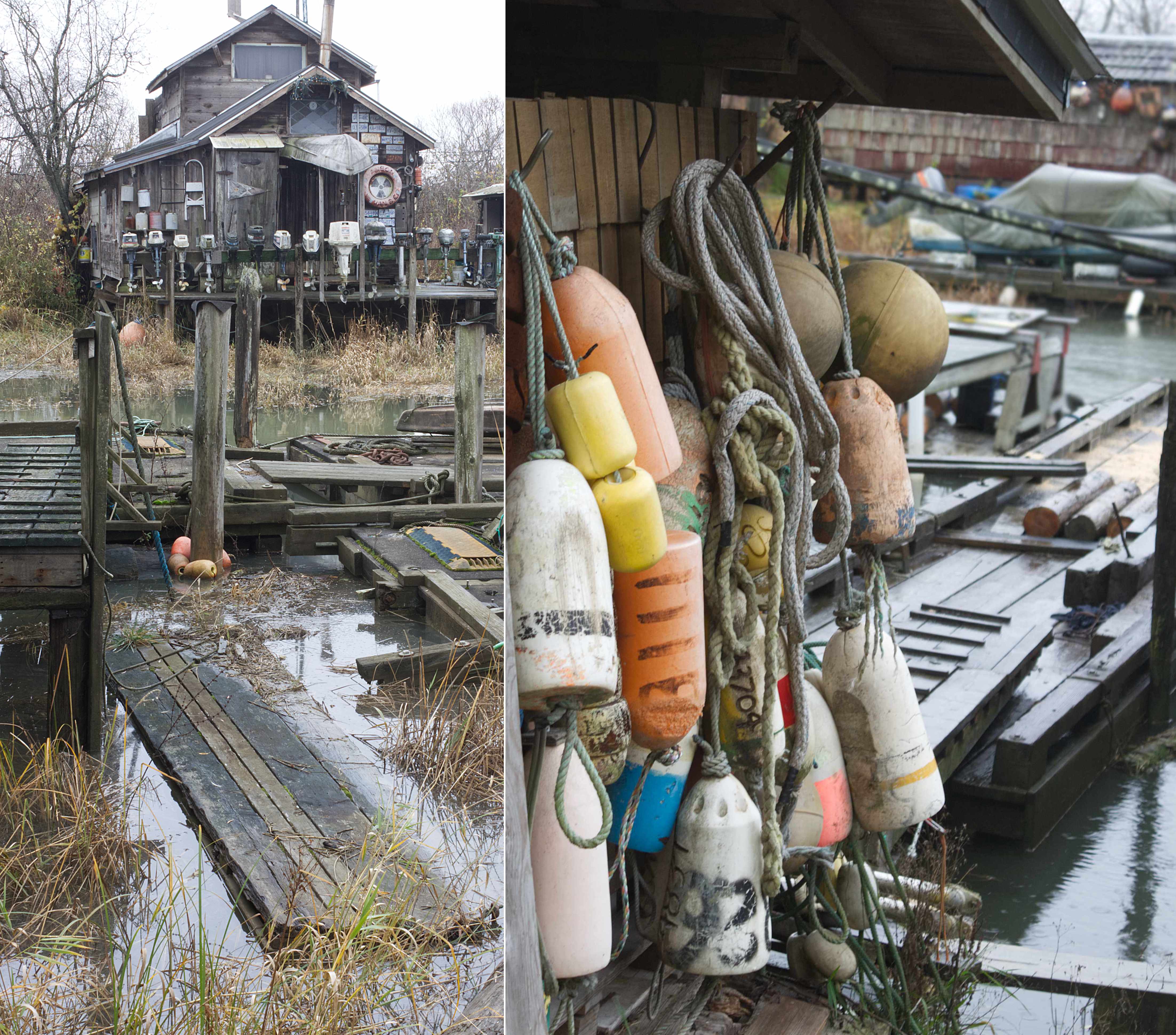
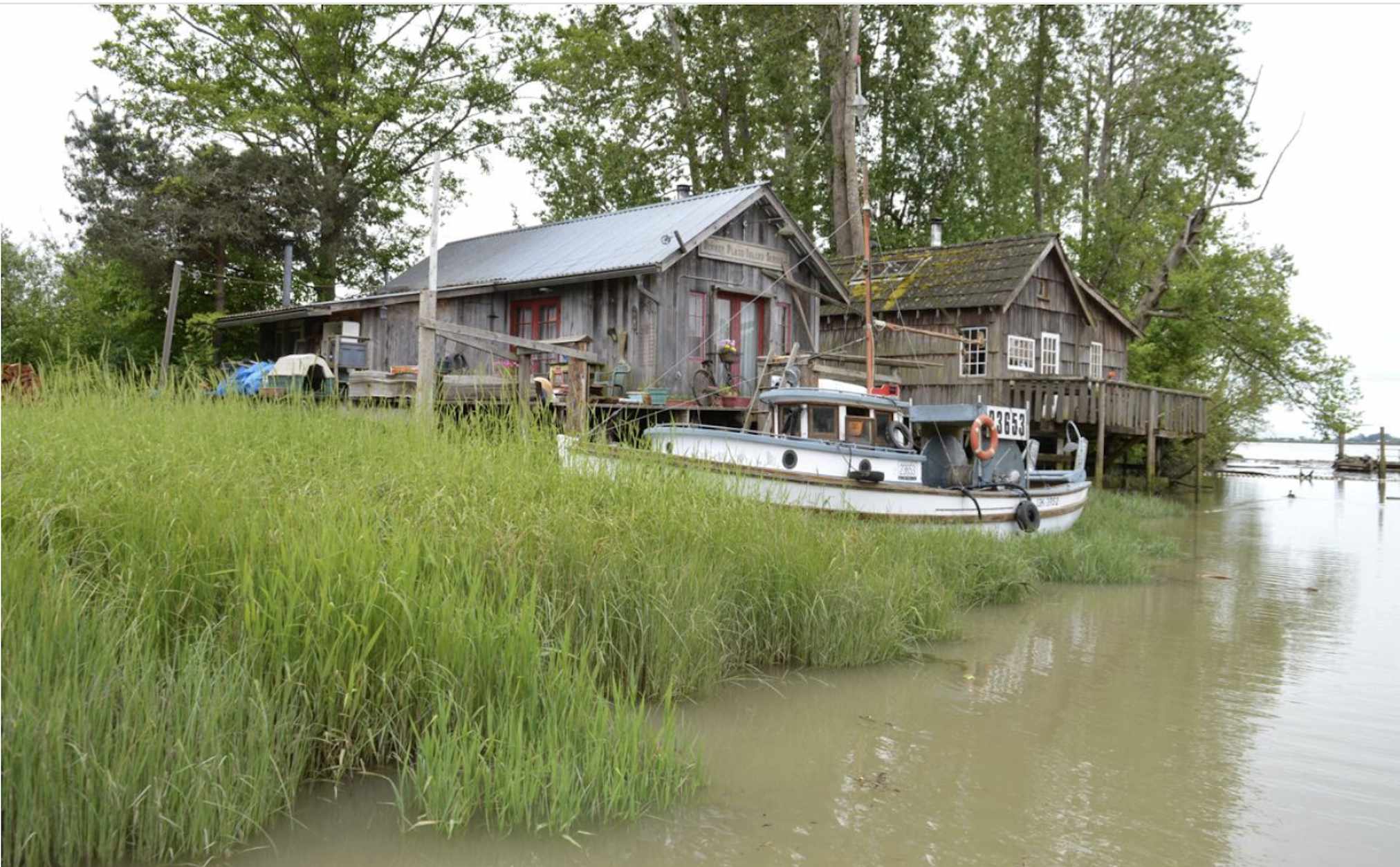
It was raining as I got out my camera to capture some of the eccentric houses on pilings, half-collapsed sheds, beached boats at low tide, old fishnet shacks with funky marine décor, scow houses with signs like “Don’t Mess with Nature”, and house boats floating with the tides. One stilted house featured an entrance way roof made by an inverted boat and a porch railing made of boat engines.
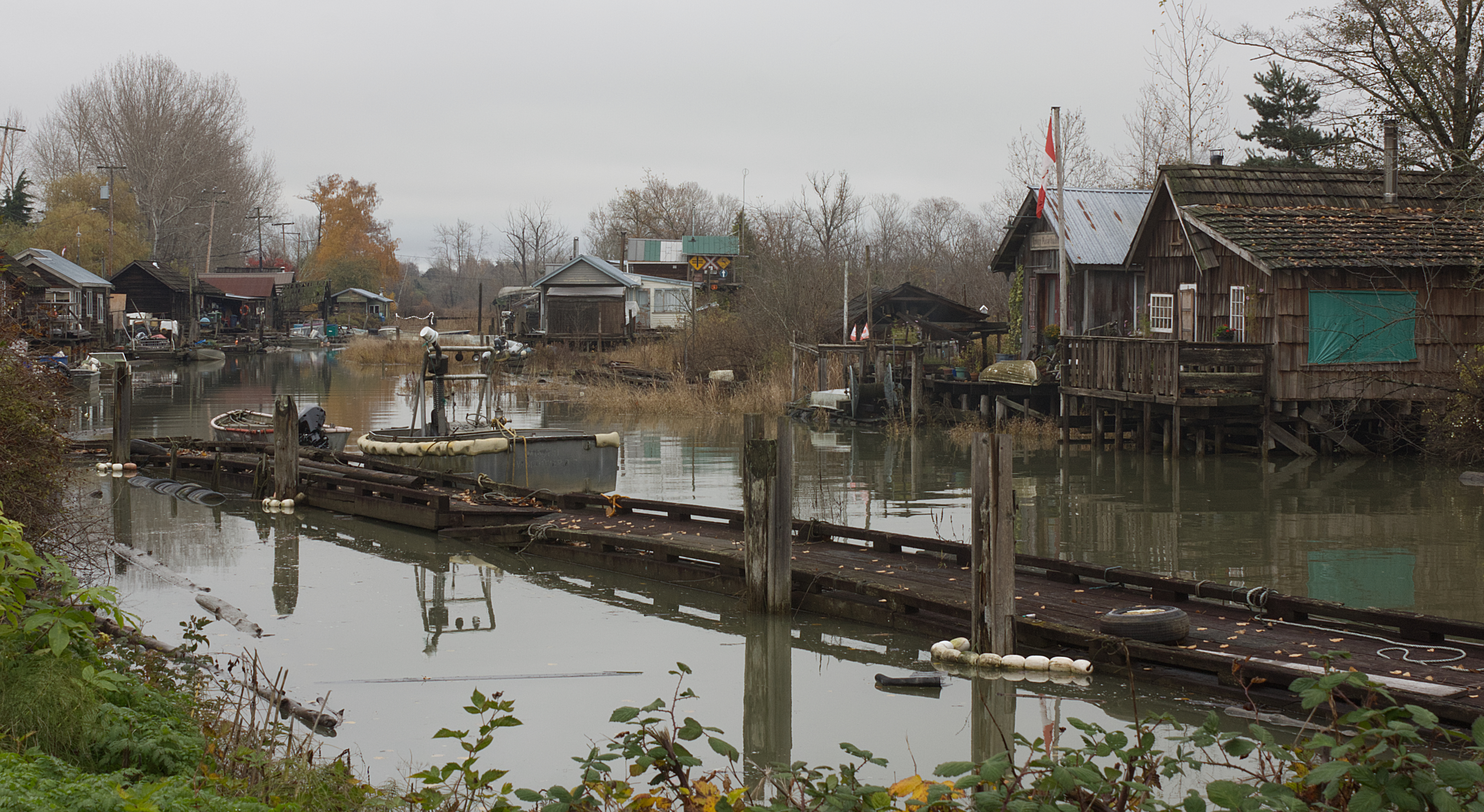
Finn Slough, BC (photo by Nina Munteanu)
.
Marine-decorated houses on pilings in Finn Slough, BC (photos by Nina Munteanu)
.
This settlement was built by Finnish fishermen over a hundred years ago. I had visions of people rowing their boats around the slough—to the various wharfs, boardwalks, houses on pilings, and shores. Fishing for various Pacific Salmon (Chinook, Coho, Pink and Sockeye), Steelhead, Lingcod, Halibut, and Sturgeon. I’m told that this relic fishing village was one of several fishing shantytowns scattered along the shores of the Fraser River. Around 70 households existed in Finn Slough in the ‘40s to ‘50s; 30 people live there now. Most, I’m told, are an eclectic mixture of artists, musicians, and actors. Dorrington writes: “This historic settler village and important natural habitat is an intertidal Slough—a place of transitions, with the ebb and flow of tides, migrating birds, indigenous plants and animals. This Slough is an important safe haven for juvenile Salmon and other wildlife, as with all wetlands, it is an important ecosystem.”
.
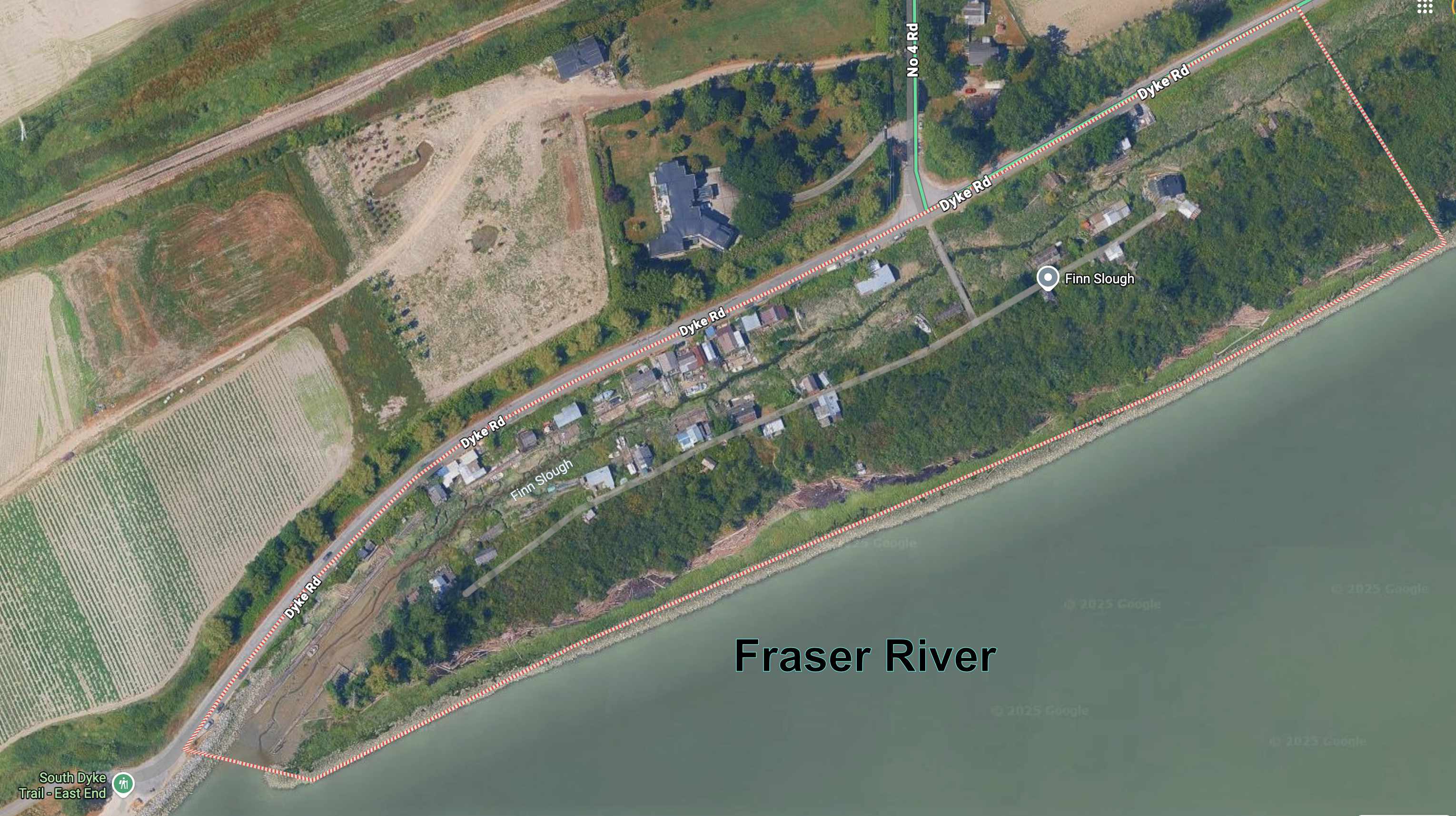
Aerial photo showing Finn Slough in relation to the Fraser River (image by Google)
.
Blogger Eve Lazarus contemplates the colourful history of this unique settlement that some call charming and others would describe as a chaotic decrepit mess of squatters in a drowning marsh: “the back-to-the-landers, the evil property developer from back east who wants to pave over the shanty town with condos and a park, and a few levels of government that would rather fill pot holes than be caught up in this drama. Ironically, it’s the red tape that seems to be the saviour in this story.”
I walked gingerly on the rickety wooden bridge that leads to several homes on Gilmour Island and stopped at the sign warning me that I was crossing at my own risk. I found myself thinking ‘who lives here? What kind of person chooses to stay here, in this uncertain environment where the direct effects of climate change relentlessly threaten?
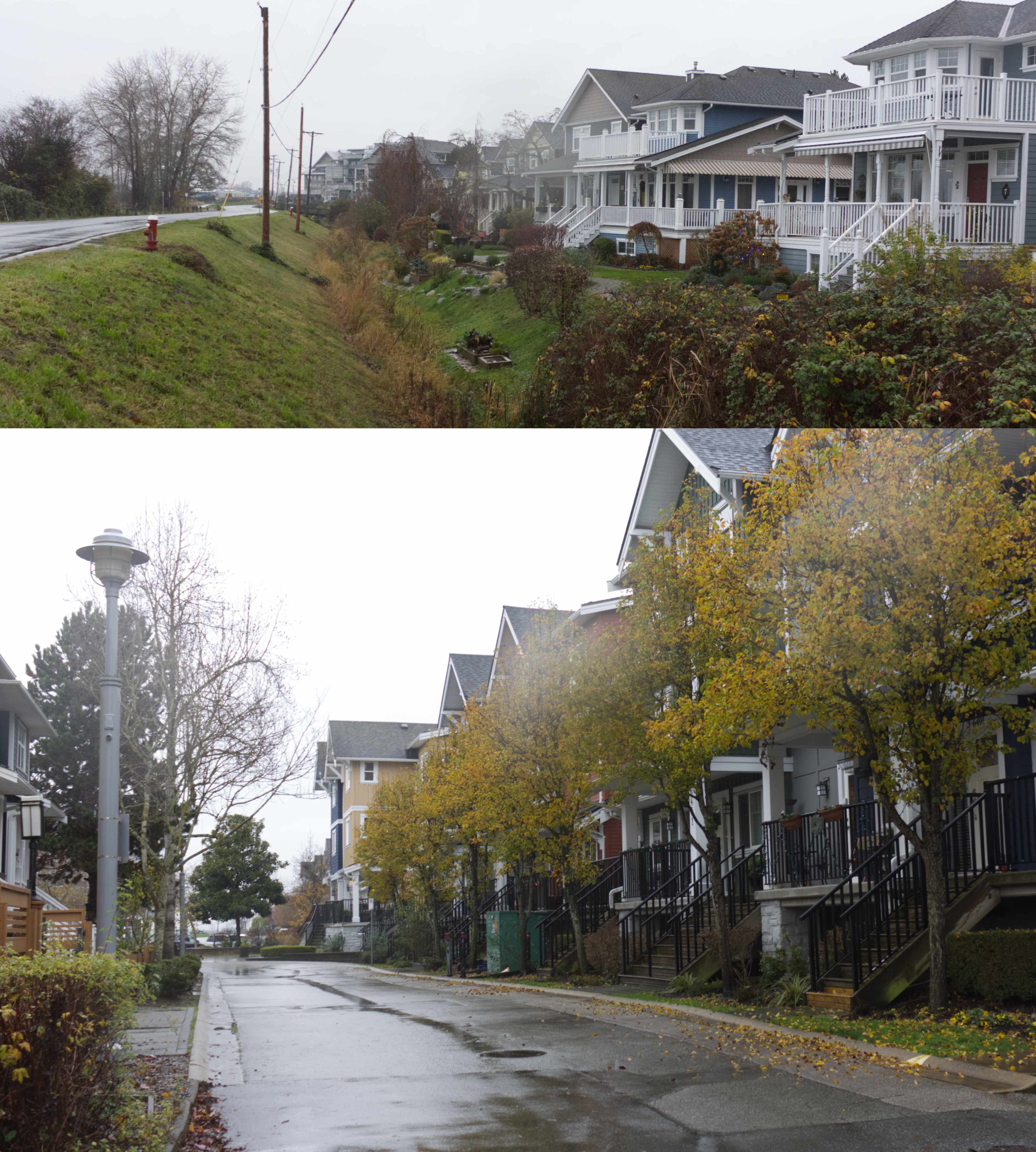
I thought of this as I drove west along Dyke Road toward No. 2 Road and encountered the contrast of posh Steveston Waterfront Estate houses with safe river views from behind dykes.
Sign on history of Finn Slough, BC (photo by Nina Munteanu)
.
New riverview subdivision of townhomes in Steveston, BC (photos by Nina Munteanu)
.
Finn Slough & Climate Change
Finn Slough close to mouth to Fraser River (photo by Gordon Katic, CBC)
.
Gordon Katic of CBC tells us that Finn Slough lies on the front lines of climate change. “Nestled on the banks of the Fraser River, this community will eventually be overcome by flooding as sea levels rise.” I’m not surprised; the slough community lies on the edge of a saltwater marsh. Coastal erosion from increased tanker traffic in the Fraser River has also increased, impacting the marsh’s ability to act as a buffer for wave action.
As climate-change increases the frequency and severity of flooding and coastal storm surges, BC municipalities are preparing for the sea level to rise by half a meter by the year 2050. Actions include investment in protective dikes. But Finn Slough’s homesteader community sits outside the dike system. Several homes have already flooded from seasonal high tides. Even the boardwalks that connected the homes flooded, leaving people stranded. Tamsin Lyle, engineer with Ebbwater Consulting says bleakly, “It’s not a good news story. Probably 60-70 years from now, this entire piece of land is going to be underwater every single day.”
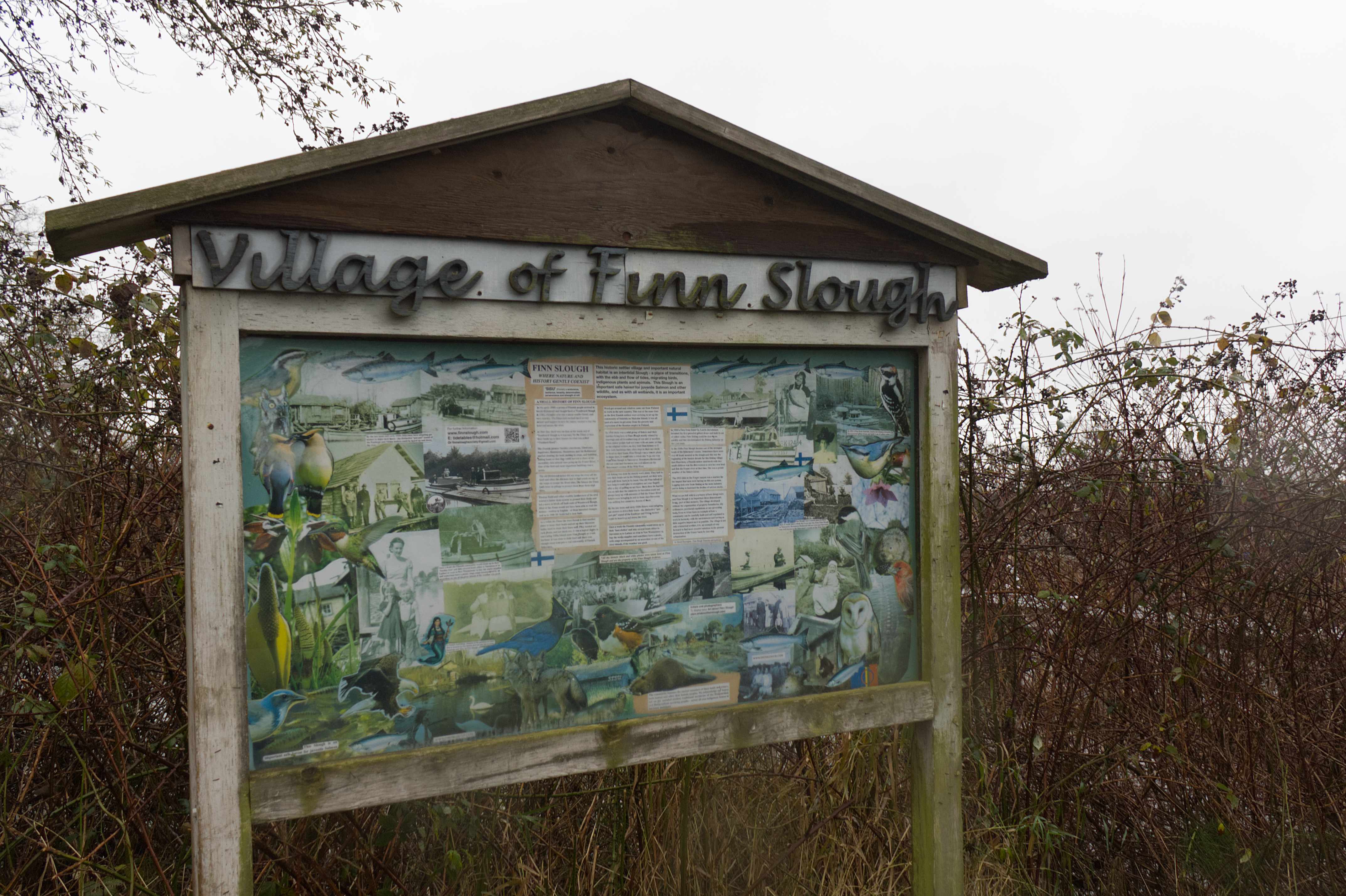
Meantime, the community is finding ways to cope with the rise. One is simply to raise the houses currently on stilts. Gus Jacobson, community elder of Finn Slough, told the CBC that over his lifetime living there, the water has risen at least 18 inches. Jacobson is helping others in the community to raise their houses, docks, boardwalks and bridge. According to Jacobson, Finn Slough’s motto is “sisu”, a Finnish word that roughly translates to “stubborn perseverance.” The sign in front of the bridge defines “sisu” as Finnish for: endurance, resilience, tenacity, determination, perseverance and strength of will.
.
Finn Slough village sign on Dyke Road, Steveston, BC (photo by Nina Munteanu)
.
Stephen Sheppard, professor of landscape planning at the University of British Columbia, noted that the best option is a managed retreat: “Managed retreat refers to a strategy where over time the community or infrastructure that is at risk to sea level rise would get pulled back—literally removed—or in essence, relocated, or they might relocate themselves.”
.
Finn Slough is one of the last tidal communities on the West Coast and the last working commercial fishing village on the Fraser River. For over a hundred years this community has existed without official status or land tenure.
.
Charmed or doomed by climate change? Will the community adapt and prevail or exodus in the frustration and defeat of a ‘managed retreat’? Lyle gave CBC her prognosis: “I suspect that Finn Slough is going to be our canary in the region [Lulu Island].”
.
Finn Slough, BC (photo by Nina Munteanu)
.
References:
Dorrington, David. “Finn Slough: where nature and history gently coexist,” sign located at Dyke Rd. at end of No. 4 Rd.
Katic, Gordon. 2017. “As a BC fishing village is slowly submerged, meet the people who refuse to leave.” CBC Radio, October 2. 2017
Lazarus, Eva. 2013. “Steveston’s Finn Slough.” Eve Lazarus Blog, September, 2013.
.
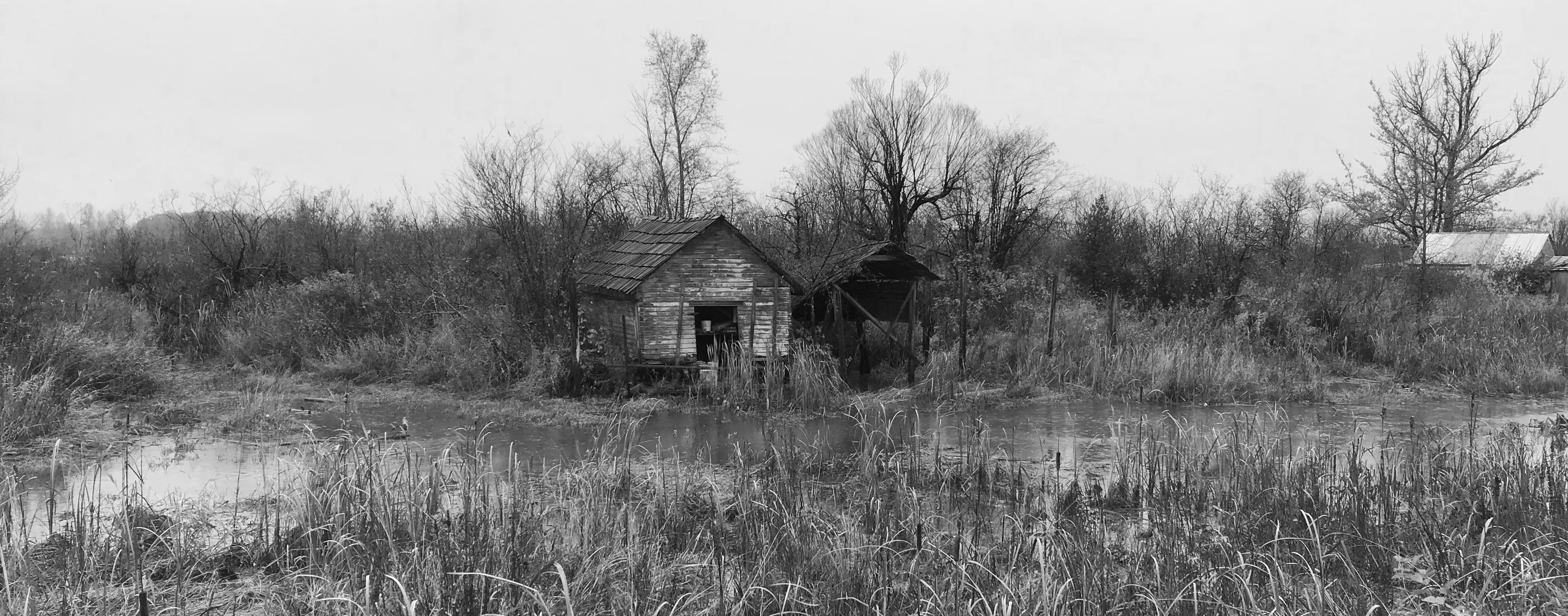
Finn Slough old shed, BC (photo by Nina Munteanu)
.
Nina Munteanu is an award-winning novelist and short story writer of eco-fiction, science fiction and fantasy. She also has three writing guides out: The Fiction Writer; The Journal Writer; and The Ecology of Writing and teaches fiction writing and technical writing at university and online. Check the Publications page on this site for a summary of what she has out there. Nina teaches writing at the University of Toronto and has been coaching fiction and non-fiction authors for over 20 years. You can find Nina’s short podcasts on writing on YouTube. Check out this site for more author advice from how to write a synopsis to finding your muse and the art and science of writing.
It was several years ago, in 2020, that Terry Birdgenaw approached me as a writing coach to look at his first novel. When he described its premise, I was hooked right away and agreed to give it an editorial review. It was the beginning of a wonderful and rich experience with Terry’s books, now a series entitled The Antunite Chronicles. From the start, I was impressed and fascinated with his imagination and accurate use of science to produce a diverting allegorical CliFi series about cyborg insects on a far-away planet that serves as metaphor to developing autocracies on Earth.
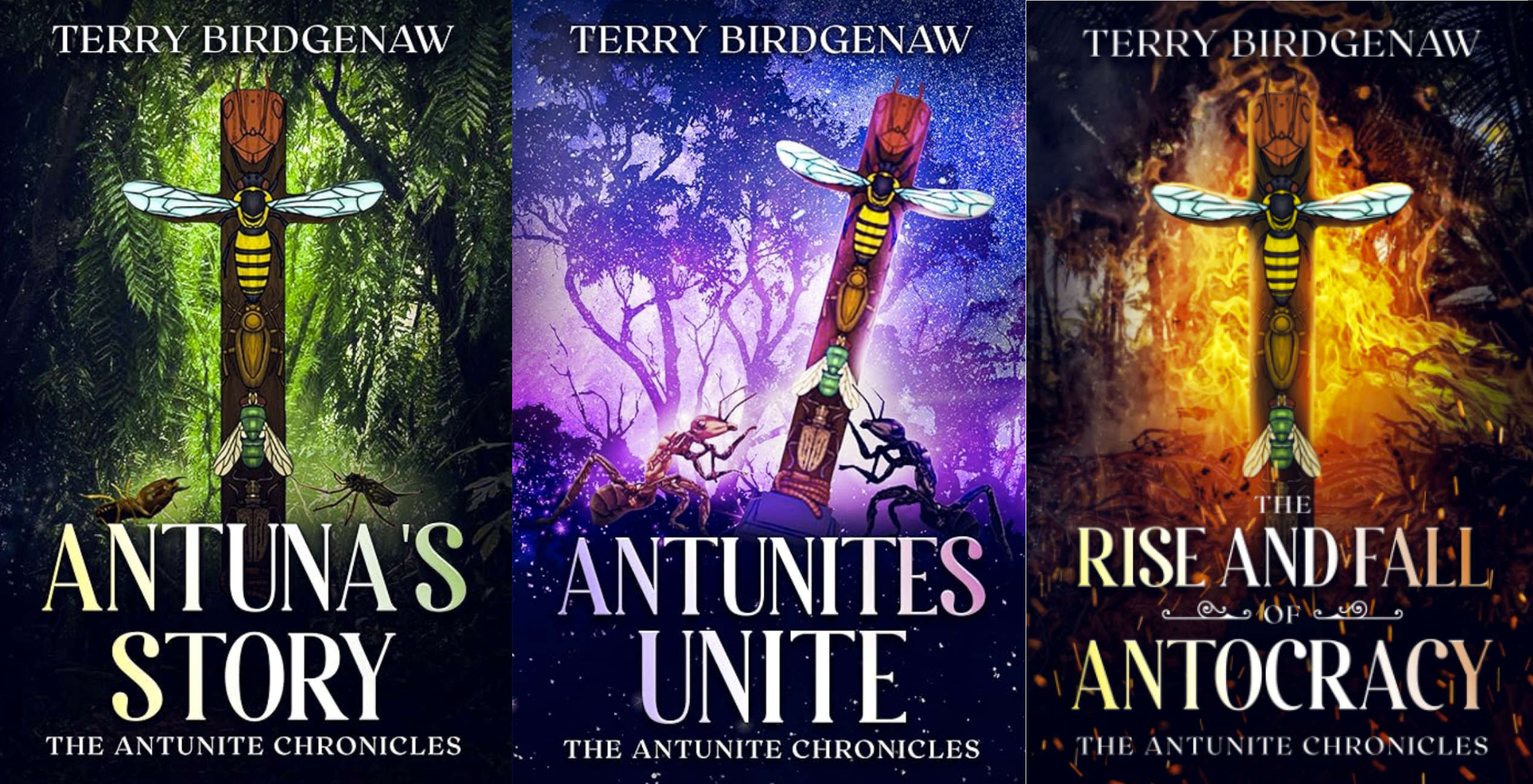
Terry has three books out, with a fourth upcoming. The three books in this YA series take place on a far-away planet and moon, serving as a political and environmental allegory of an evolving technological society and failed democracy. They include: Antuna’s Story; The Rise and Fall of Antocracy; and Antunites Unite. The theme of induced climate change and environmental destruction runs deeply through the first three books. The fourth book, soon to release, is Cyborg Contact, which returns us to Earth. I’ll let Terry describe the series in the following interview I conducted with him on November 26:
.
Nina: Your background and expertise is in neuroscience and psychology with over 150 scientific publications. You are Harold Griffith Professor of Anesthesia Research at McGill University in Montreal and your main research focus is on the mechanisms underlying neuroplasticity and its influence on the perception of pain. What got you started writing this incredible series, an adventure story that embraces ecology and entomology? What gave you the idea to create this imaginative modern allegory on the evolution of a technological society using insects as your main characters?
Terry: Oddly enough, I was not originally planning to write fiction. My inspiration came from my school librarian wife, Ann Birdgenaw, when she began writing the second book of her children’s chapter book series, Black Hole Radio. Her series features fifth-grade kids who travel through a wormhole to different planets, aiding the inhabitants they discover. She was considering what kind of planet and civilization her explorers would encounter, and I gave her some ideas about a giant cyborg-insect world that she ran with. Having some skin in the game, I participated beyond my welcome, offering plotlines that were far too advanced for her 7- to 11-year-old readers. Graciously, Ann suggested I take my ideas and write the backstory for her book, Black Hole Radio – Bilaluna, but target my book at young adults and adults. Thus began my fiction writing adventure. It was a rough start, but with the help of a tolerant book coach, my planned novella rapidly expanded to a trilogy. Perhaps a quick study because of years of scientific writing, I still credit Nina with opening in me an imaginative creativity I never knew I possessed.
.
Nina: The narrative of your stories is from the POV of various insects and in some way, the stories are dramatizations of real and accurate ecological relationships of insects with their environment and each other. How did you prepare for this—both in relaying accurate ecologies and in realizable dramatization and characterization of your main characters—all insects? How did you avoid what I would call the Disney-effect: anthropomorphising insect characters into human archetypes to achieve reader engagement? How did you create that balance between realistic representation and empathic portrayal?
Terry: Although my books are parodies with characters who face political and ecological problems and anthropomorphise human dilemmas, I did not want them to be simply furry or slimy stand-ins for the humans they satirize. Thus, I drew on my long-standing expertise as a scientific researcher to delve deeply into entomology, ecology and environmental science. Fascinated by the richness of insect activities and interactions and the similarity between insect and human behaviour, I endeavoured to exploit my newly acquired knowledge within the pages of my story. I was inspired both by Orwellian dystopias and works such as Bernard Werber’s Empire of the Ants and Laline Paull’s The Bees. But more than that, I learned to let myself be taken into the world my insects lived in, experiencing both their instinctive realities and the human predicaments I intended to lampoon in equal measure.
.
Nina: I noticed some fun metaphoric descriptions and expressions that incorporated insect terms to represent human counterparts. Did these come to you easily or were they a lot of work over time? Can you describe the process you used? For instance, did you spend a lot of time watching ants on the sidewalk?
Terry: Some phrases like ‘she shook her antenna to tune her attention’, ‘I took that as a back-clawed compliment’, or ‘he is such a hindgut hole’ came easily to me as differences in insect and human anatomy necessitated them. Others, like the expressions explained in my dictionary of pheromonal insect emotions, took much more reflection. This literary technique was inspired by your writing guide, The Fiction Writer, when you described how to add colour to one’s writing by using word pairings that mix up the senses, like the well-known one ‘biting cold’. This excellent advice led me to develop an extensive lexicon of insect emotions/non-verbal speech, including word combinations such as abrasive aroma, bitter bouquet, frosty fragrance, and vacillating vapour. They were not all alliterations, but some, like ‘she emitted an effervescent essence, were clearly intended to be. I didn’t watch ants walking, but I thought a lot about how they might communicate their emotions pheromonally.
.
Nina: One of the things I enjoyed throughout your series is how you seamlessly imparted interesting facts about insects on our planet in the storytelling. I learned a lot about various insects! Tell us a little about the process you used to achieve this so effectively.
Terry: As a long-time researcher, I have learned how to find and use facts from scientific literature and reliable web-based information on many subjects within and outside my scientific field. Insect behaviour is little known, but often fascinating, and I enjoyed both discovering many details and incorporating them into fiction scenes. Sometimes I was required to dig even deeper than I initially expected to make my stories scientifically accurate. One of these cases had a very significant impact on a critical component of my book’s key plot. In Antunites Unite, ants are separated into a hierarchy of castes based on exoskeleton colour. Although clearly an anti-racism story, I originally wrote it with black ants as oppressors of both brown and red ants. Perhaps influenced by previous literature and movies, where the bad guys are often dressed in black, I had a feeling that some readers might interpret my choice as having a racist underpinning. I convinced myself that readers would not take the colour choice as representative of human ethnicity. However, the last beta reader to comment on the book made such an interpretation and confirmed my fear that some readers might see it as the opposite of my intention. So, while I debated altering the colour schemes, I dug deeper into the entomological discovery of a phenomenon my story paralleled, involving what entomologists call slave-maker ants. When my extensive research confirmed that red ants are more often the ants using raids to steal the eggs of other ants to be raised as slave-like workers for the dominant reds, I knew I had to reverse the colours. And this was no easy task, because all the characters in each caste took names that reflected their colour, like Ruby and Obsidiant. There were also many humorous references to colour, such as black widow spiders and lava fields, that needed to be reworked. It was an editing nightmare: Rose became Raven, and Raven – Rose, while Cole gave way to Clay, and Jett morphed to Jasper, etc., etc., etc. But in the end, it was true to nature and avoided any unwanted racial interpretations.
.
Nina: In your first three books—a political modern satire on developing autocracies and human-induced climate change—you explore the technological and biological evolution of an insect exo-community in which certain species—ants for instance—acquire the ability to become cyborgs, ANTs, growing in size and abilities to navigate their world more effectively with related achievements—and consequences. As an ecologist, I was fascinated by how you portrayed the changing relationship of these beings to their environment as they evolved. Do you see a parallel with human society? Can you elaborate on this?
Terry: Yes, on a macro level. That is, technology can benefit society immensely, but it can also cause significant harm when coupled with greed, wilful ignorance of scientific warnings, and leaders misleading the public. I highlight one line of poetry written by my narrator in The Rise and Fall of Antocracy: “Like Peter and the crows, tis science, truth and reality denied ere climate is crucified.” Cyborg insects were created to enhance the production of honey, which was their currency. Cyborg ants, who most craved both power and honey, deceived the public to the detriment of the environment and ignored the science that provided evidence of environmental changes, which most insectoids on the planet denied. Perhaps an obvious cataclysmic message to those in our world, but many on this Earth apparently need to be hit over the head to see where this all may lead.
.
Nina: Tell us about your latest book, the fourth in the series, Cyborg Contact, in which one of the cyborg ANTs returns to Earth through a wormhole with an important mission. I found that, while the first three books served as satirical allegory to a developing technological society through the evolving insect communities, the fourth book—being a first contact—shifts into more of an exploration of ‘the other,’ its perception and treatment by humans and their civilizations. Can you expand on this? How does humanity’s perception and treatment of the ‘other’ factor into our treatment of our environment and the growing phenomenon of climate change?
Terry: I might disagree and point out that ‘exclusion of the other’ is a dominant theme in all four books. The difference is that in Cyborg Contact, the main character embodies ‘the other’, so it hits home more strongly. What could be more ‘otherly’ than an alien (from another planet) who is treated like an illegal alien and hunted by ICE agents? And, too, aside from being hunted, many other dangers the alien experiences on Earth, including hurricanes, droughts, mudslides, and forest fires, are all caused by climate change, which has accelerated in the near-future North America our hero traverses. It seems that for some world leaders, a lack of empathy for others is paired with a disregard for the environment.
.
Nina: Who is reading your books? And who should be who isn’t?
Terry: They are read by both young adults and adults; sometimes by parents reading to their pre-teens. They are not New York Times best sellers, but are highly celebrated by those who have read them. They should be read by all sci-fi and fantasy readers aged 13 and up who enjoy a thought-provoking read, except those who support fascism.
.
Nina: How have your books been generally received? I understand that your trilogy has won the Firebird Book Award. Congratulations! What are people saying about your books?
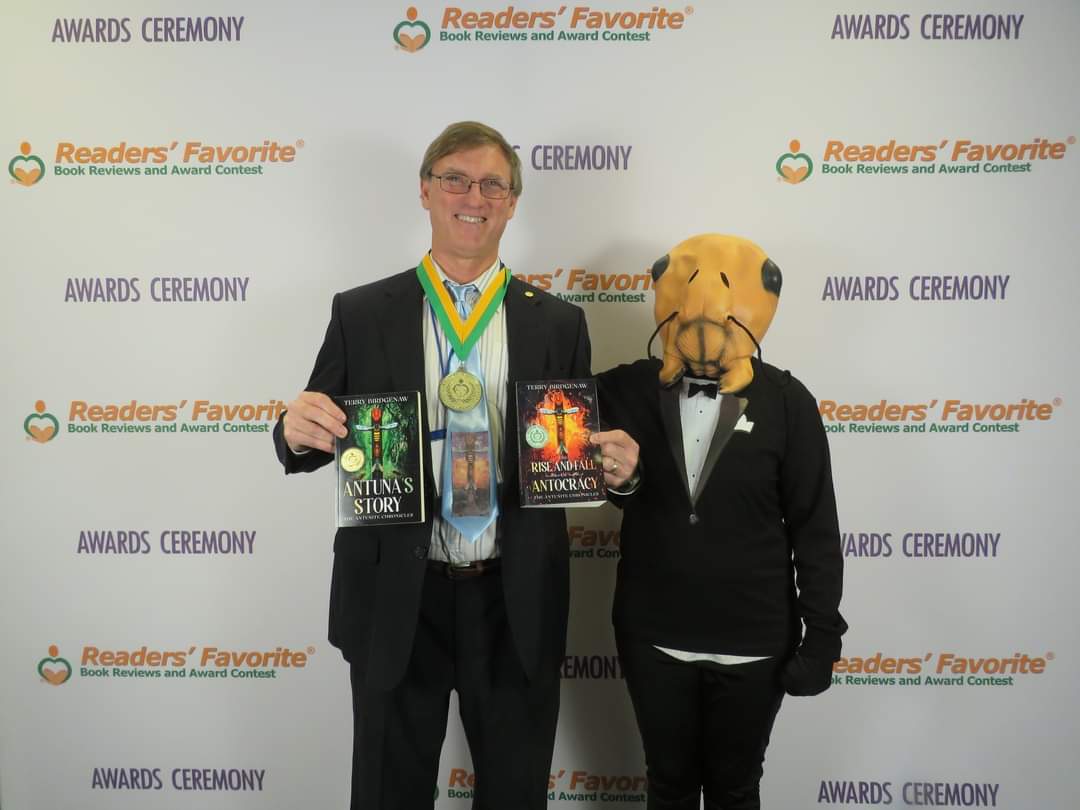
Terry: Editorial reviews have been stellar, and the books have received awards from most of the contests to which they have been entered. Awards for all three books include Gold Medal/Badge (Readers’ Favourite, Literary Titan), First Place Prize (Firebird, Entrada Incipere), Silver & Bronze Medal (Firebird, Bookfest), Honourable Mention (Readers’ Favourite), and Finalist (American Writing Awards, Chanticleer, The Wishing Shelf). Most notable review comments describe the books as: “soon-to-be a bestseller”, “takes speculative fiction to a new level”, “fantastical to a degree not seen elsewhere in any Sci-Fi dystopian fiction”, “as big in spirit as any literary giant in the genre” and “holds its ground next to Brave New World, Dune, Animal Farm, and 1984”. These reviews have “blown me away”, like an enthusiastic reader’s comment on Antuna’s Story.
.
Nina: What’s next for Terry Birdgenaw?
Terry: Finish editing Book 4 and writing a dystopian novel featuring humans for a change.
.
Nina: That sounds very intriguing! Thanks for coming out for the interview, Terry.
Terry: My pleasure, Nina.
.
The first three books of the Antunite Chronicles series by Terry Birdgenaw
.
You can find Terry’s books all over the place, including Amazon. Find out more about Terry on his website and check out Terry’s interview on SF Canada in which he talks more about his heritage and interests.
Terry Birdgenaw and one of his fans
.
Terry Birdgenaw with Narrant at award ceremonies
.
Nina Munteanu is a Canadian ecologist / limnologist and novelist. She is co-editor of Europa SF and currently teaches writing courses at George Brown College and the University of Toronto. Visit www.ninamunteanu.ca for the latest on her books. Nina’s bilingual “La natura dell’acqua / The Way of Water” was published by Mincione Edizioni in Rome. Her non-fiction book “Water Is…” by Pixl Press (Vancouver) was selected by Margaret Atwood in the New York Times ‘Year in Reading’ and was chosen as the 2017 Summer Read by Water Canada. Her novel “A Diary in the Age of Water” was released by Inanna Publications (Toronto) in June 2020.
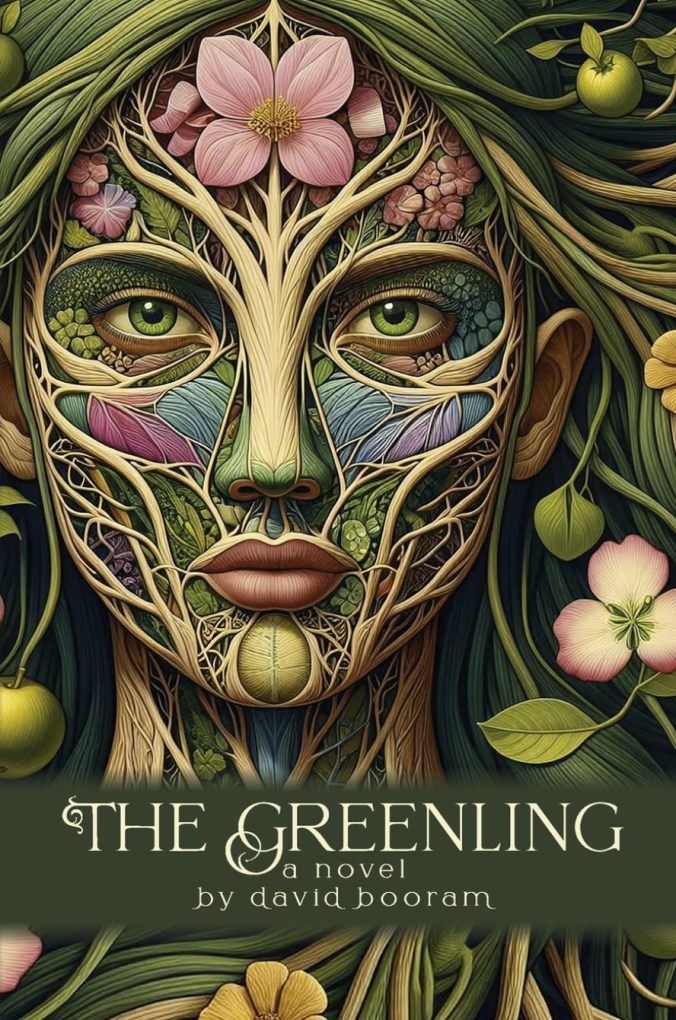
The Greenling by David Booram is an exploration of an intriguing ‘Nature evolving’ premise, told through a coming-of-age narrative.
Responding to continued human tampering, a growing sentient Nature calls a young environmental activist to action in a planetary reset. The main character is Noah, ostracized by her peers due to her unique perspective on the world and her activism for Nature. This makes her a candidate for Nature’s planetary reset.
.
While I felt that the story used over-simplified fantasm and eco-terrorism in a way not to my liking, I found most intriguing Booram’s use of biosemiosis, the notion that all life finds meaning.
Coincidently, I had agreed to read Booram’s eco-fiction novel (without knowing much about it) after a social media conversation we’d had during a time when I was working on my most recent novel, tentatively called (Re)Genesis. My novel relied heavily on the concept of biosemiosis. Its premise of dark karma—when Nature learns to reflect back what we send out—made use of real examples of learning, pattern recognition, anticipation and adaptation in non-human life. (Another coincidence at this same time occurred when another author approached me to read their work on coincidence, which I am currently reading).
In the 1930s, Jakob von Uexküll coined the term Umwelt (species-specific reality or subjective environment) to define a life process that involved semiotic interactions. He argued that an organism’s behaviour results from activity that attributes meaning to the world around it, rather than merely mechanically reacting to stimuli. Building on this notion, Friedrich S. Rothschild coined the term “biosemiosis” in 1962 to postulate that life has its subjective interpretation of the world around it (its Umwelt), a segment of the world that has significance and meaning based on that life’s biology and needs. Developing biosemiosis further, Thomas Sebeok later contended that all organisms are enveloped in a cloud of messages about themselves and their situation, which they constantly transmit, receive, and interpret. Life itself is a process of signification and meaning-making, from bacteria and plants to mammals and birds. Biosemiosis involves pattern recognition, anticipation, flexibility, goal-directed movement, memory, and learning.
Perhaps most intriguing is how The Greenling touches on humanity’s growing zeitgeist of not just planetary awareness but of sensibility, a sense that we are interlinked with all other life and nonlife, that we are all more than the sum of our parts. And only then—when we make meaning of our Umwelt—can we transcend from our toxic insecurities and bullying ways.
The Greenling is worth reading for how it weaves climate facts into compelling personal story. I also find refreshing that Booram gives full agency to the environment, Nature, and its nonhuman representatives.
I have been writing, reading, and studying eco-fiction for several decades and what I found noteworthy is how agency of the environment, as character, has changed over the years and how Nature’s portrayal has evolved from ‘other’ with little agency to ‘not other’ with much agency. For more on this concept and change, I urge you to read my two essays on this evolution:
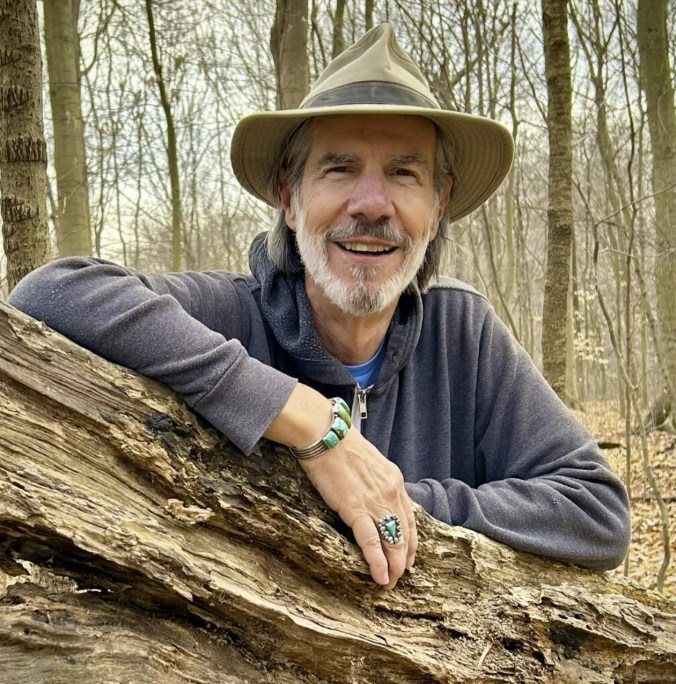
David Booram is the cofounder and director of Fall Creek Abbey, an urban retreat center in Indianapolis, where he and his wife Beth lead The School of Spiritual Direction and offer individual and group spiritual direction. He is the founder of Direction 4 Life Work, through which he is a career counselor.
.
Nina Munteanu is a Canadian ecologist / limnologist and novelist. She is co-editor of Europa SF and currently teaches writing courses at George Brown College and the University of Toronto. Visit www.ninamunteanu.ca for the latest on her books. Nina’s bilingual “La natura dell’acqua / The Way of Water” was published by Mincione Edizioni in Rome. Her non-fiction book “Water Is…” by Pixl Press (Vancouver) was selected by Margaret Atwood in the New York Times ‘Year in Reading’ and was chosen as the 2017 Summer Read by Water Canada. Her novel “A Diary in the Age of Water” was released by Inanna Publications (Toronto) in June 2020.
I’ve selected ten TV series that have intrigued me, moved me, and stayed with me for various reasons that touch on: abuse of justice, including eco-justice and environmental abuse; technology use and abuse; and the effects and horrors of climate change.
Some are well known; others not so well known. All approach storytelling with a serious dedication to depth of character, important themes, realistic world building, and excellent portrayal by actors. The world-building is extremely well done—in some cases rivalling Ridley Scott’s best—with convincing portrayals of worlds that are at times uncanny in their realism. Worlds that reflect story from an expansive landscape to the mundane minutiae of daily life: like the cracked phone device of Detective Miller in The Expanse or the dirty fingernails of engineer Juliette Nichols in the Down Deep of Silo. Stories vary in their treatment of important themes from whimsical and often humorous ironies to dark and moody treatises on existential questions. In my opinion, these TV series rival the best movies out there, often reflecting large budgets (but not always) and a huge commitment by producers. The ten TV series I’ve selected in this series come from around the world: Brazil, Germany, France, Norway, Canada and the United States.
In Part 2, I focus on five TV series that explore issues to do with resource allocation, adaptations to climate change and corporate / government biopolitics.
.
.
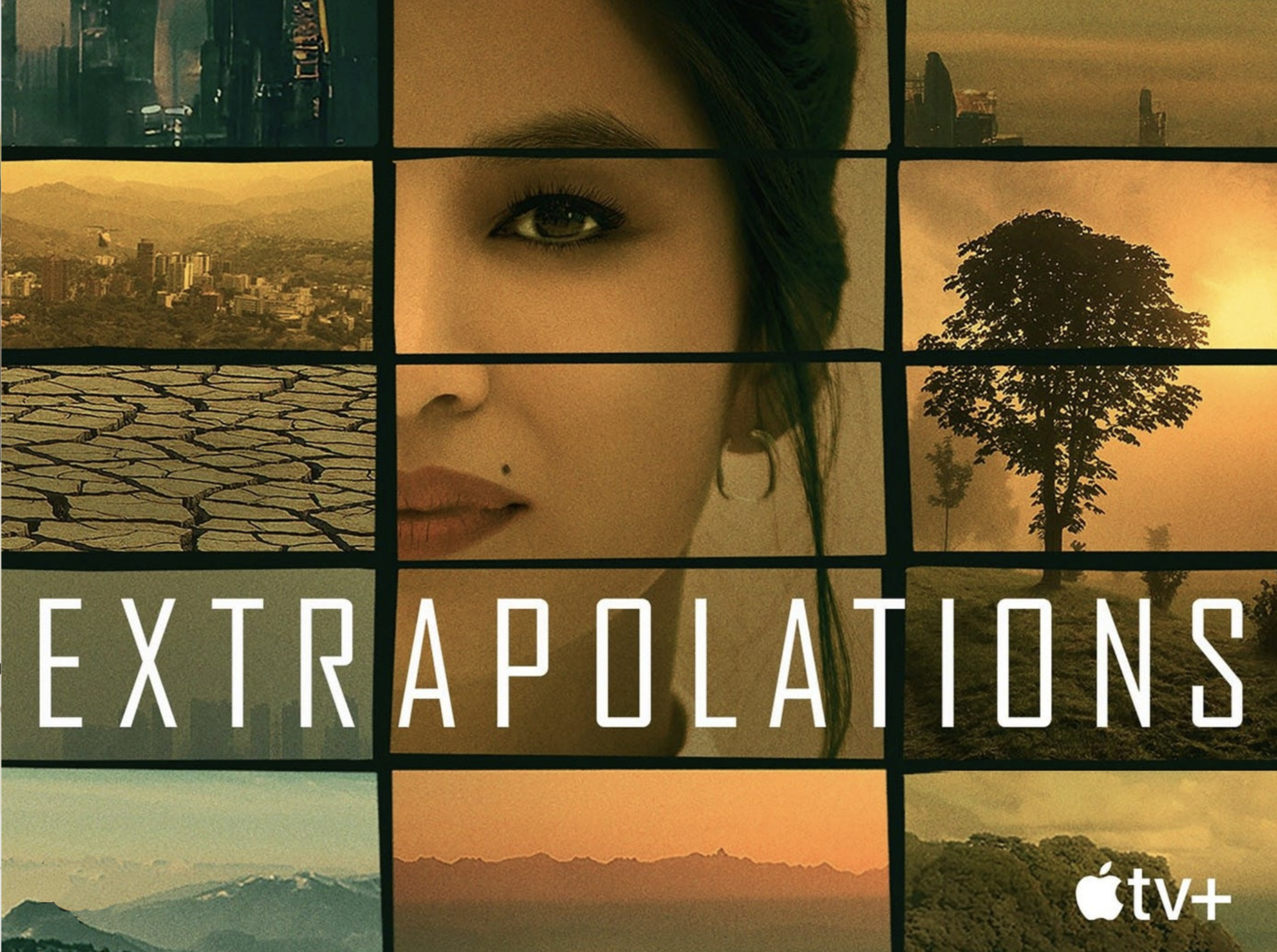
EXTRAPOLATIONS: A Journey into A Climate Changed Future
Extrapolations is an intelligent and vividly filmed mini-series of eight interconnected moral tales told over thirty-three years that extrapolate how our planet’s changing climate will affect family, work, faith, and—ultimately—our survival. Each episode focuses on the perspective of a few key characters whose choices often have significance consequence: from the myopic exploitation of greedy corporate moguls and feckless concessions of bureaucrats to the solidarity of common folk breaking the law to survive and scary solutions of eco-terrorists with messianic complexes. Emotions run raw and these characters you will either love or hate.
.
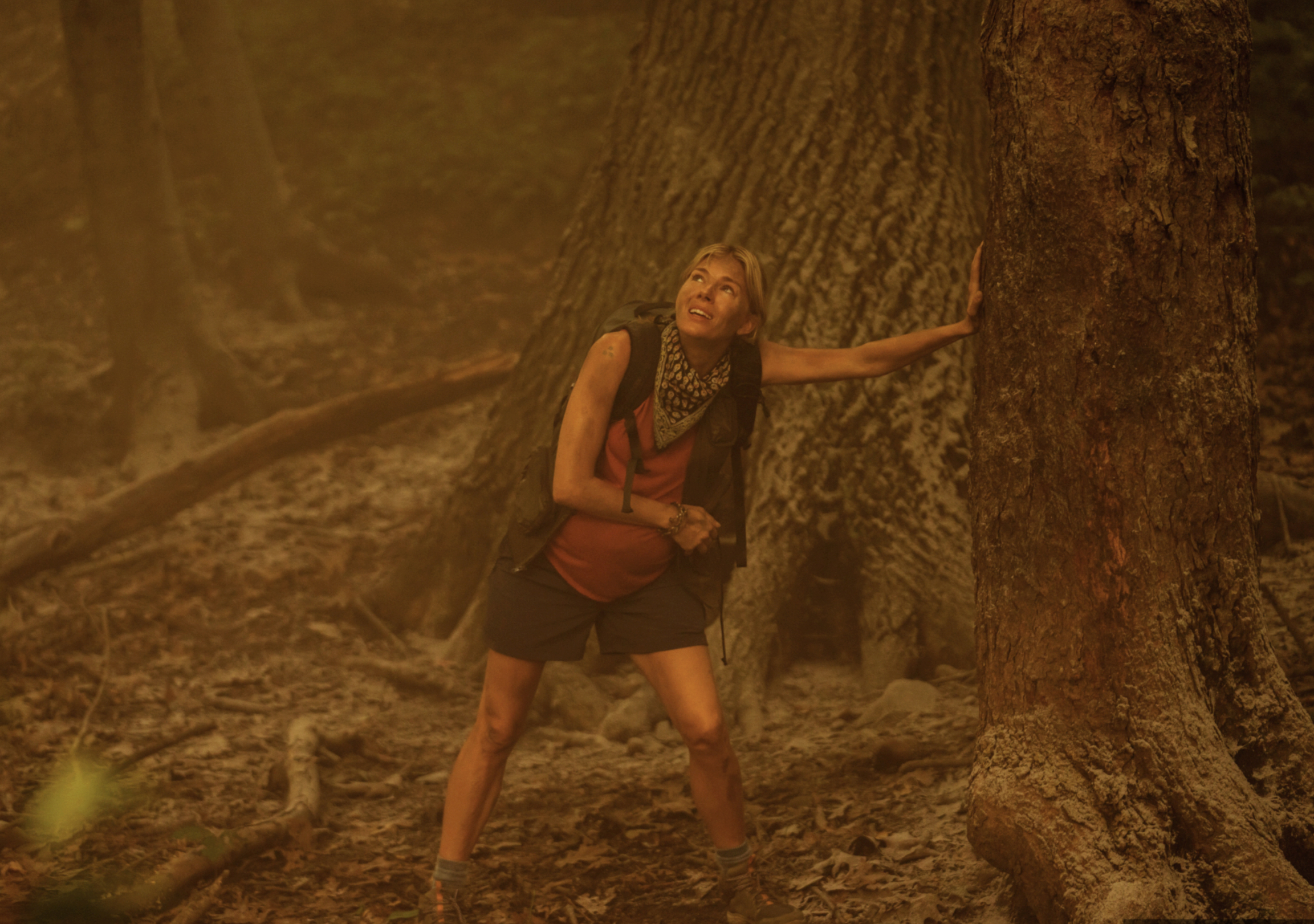
Rebecca Shearer (Sienna Miller) braves a wildfire in “A Raven Story”
.
Each episode adds its own installment of personal choice and tragedy. The first episode takes place a decade from now and is named “A Raven Story.” This first installment sets the tone of the entire series with an unsettling tirade of self-serving human actions to a sweeping tide of brewing climate disasters. What follows is a bleak procession of climate change calamity from growing wildfires and powerful hurricanes to sea level rise, melting glaciers, species extinction, and acidifying oceans. A few characters, trying to address environmental disaster, struggle with choices to either gamble the present for the future or gamble the future for the present. In the last scene, a climate activist Carmen Jalilo (Yara Shahidi) sums up the trajectory of the entire series. “What does an increase in global temperatures by two degrees Celsius mean to you and to me? It means that when the temperatures go up, our imagination must increase even more. It means that when the sea level rises we must rise up as well. It means that when forest fires obscure the horizon we must look toward each other and find our way forward. We cannot give up and go home for one simple reason. We already are home; this is our only home.”
Each episode in the procession of climate change is both a literal and metaphoric fable of our relationship to our environment, the creatures that live with us—our nonhuman relatives—and to each other: the real cause—and potential solution—to the calamities of climate change.
Episode 2, “Whale Fall”, features a beautiful heartfelt interaction between marine biologist Rebecca Shearer (Sienna Miller) and the last humpback whale in 2046. It is a solastalgic dirge on the sixth extinction event. When the whale asks the biologist “how might it be different” Shearer answers simply: “It will only change if we do, if we stop lying about the world, if we stop expecting the ones who come after us to fix it because we did not.”
.
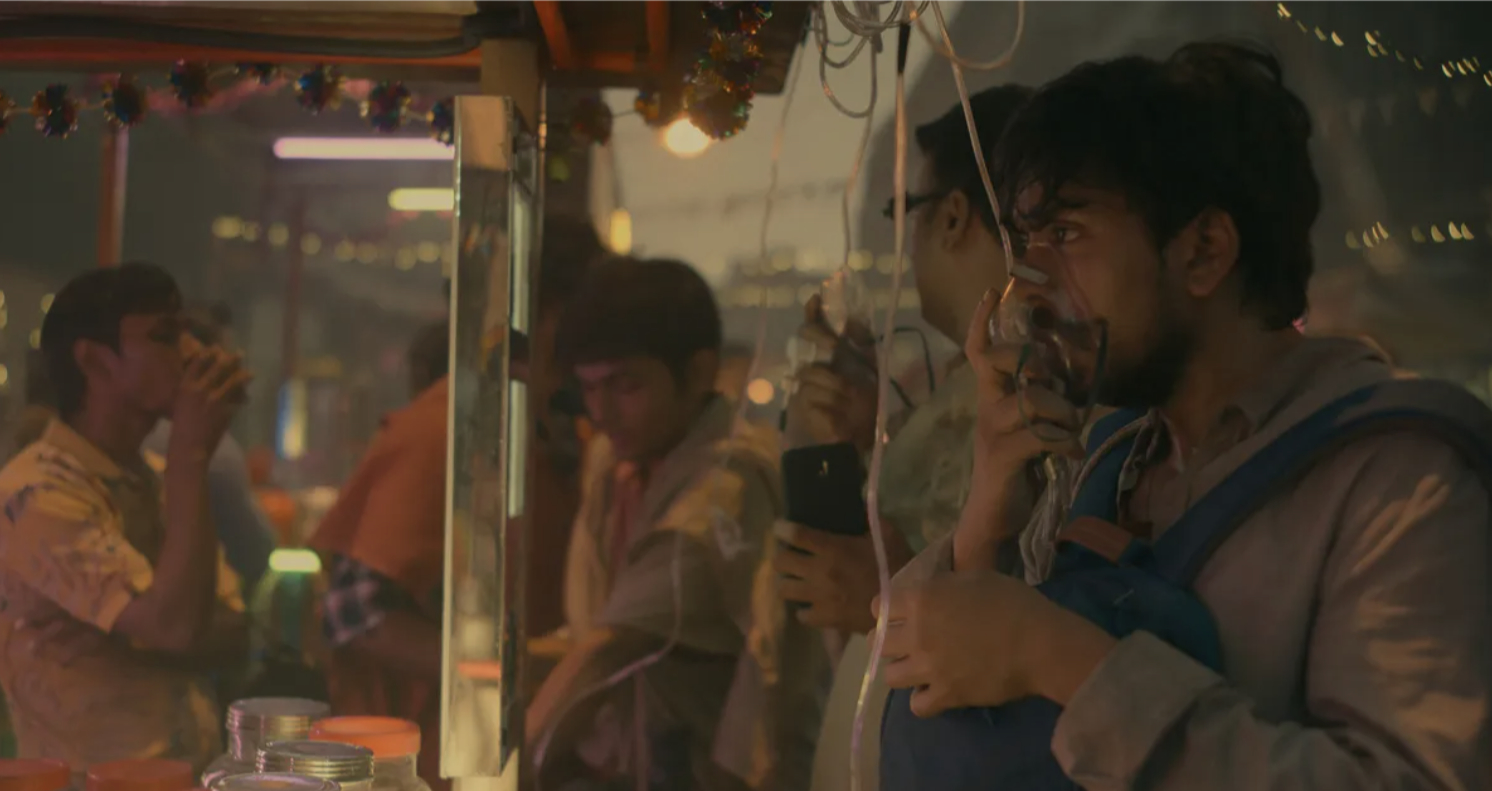
Gurav (Adarsh Gourav) buys a puff of clean air in Mumbai
.
Episode 4, “Nightbirds”, oozes with such vivid visuals and angles, you can almost smell the stink in the air of Mumbai in 2056. Venders on the streets sell oxygen masks by the puff and real rice doesn’t exists; just the “synthetic, processed crap.” Driver Gurav (Adarsh Gourav) and handler Neel (Gaz Choudhry) flout the daytime curfew to transport illegal cargo (stolen seeds free of corporate branding) and a crazed geneticist to where they can be used in Varanasi. The drive becomes a nightmarish journey that touches on many aspects of ordinary life under the heel of climate change and the lengths that people will go to simply survive.
In Episode 6, “Lola”, the metaphors continue as this episode in 2066 explores the devastating memory loss of a main character through vascular dementia brought on by excessive carbon dioxide and heat. In the end, he has forgotten enough to forget that it even matters.
In 2017, I wrote an article about environmental generational amnesia. A term coined by Peter Kahn, professor of psychology at the University of Washington to explain how each generation can only recognize—and appreciate—the ecological changes they experience in their lifetimes.
In witnessing the collapse of large fish populations on the west coast, University of British Columbia fisheries biologist, Daniel Pauly observed that people just went on fishing ever smaller fish, resulting in what he called a “creeping disappearance” of overall fish stocks. He called this impaired vision “shifting baseline syndrome,” a willing ignorance of consequence based on short-term gain. This is because we are not connected. And because we aren’t connected, we simply don’t care. Environmental generational amnesia is really part of a larger amnesia, one that encompasses many generations; a selective memory driven by lack of connection and short-sighted greed.
Extrapolations ends in 2070 as Crypto mining has radically increased carbon output, higher temperatures are killing and disabling people en masse, and the weight of water in the higher oceans has altered the tectonic plates. While an element of hope glimmers in each episode, even if just through personal triumph and resilience, it is particularly notable in the last episode for reasons you need to watch to understand.
Each episode showcases an intimate personal journey woven into the larger story and strung in an anthology driven by a relentless changing climate and unruly environment. Make no mistake; the planet Earth, in the throws of climate change, is the main character here. This ambitious series dared to be more than human-centric, transcending beyond anthropocentric and androcratic worldviews in an attempt to elicit empathy for our entire world particularly the non human world. The series pointed to a more eco-centric view of this precious and beautiful world we live in. As a result, it suffered criticism.
Extrapolations was generally panned by critics and viewers alike as less than potent or even uninteresting and “flat” because it apparently traded character depth for scientific extrapolation and exposure. I couldn’t disagree more. I was gripped from the start by this large story. Characters throughout the episodes provided a panoply of understated archetypes to represent a cross section of humanity in the throws of climate catastrophe. Characters I either loved or hated or wanted to smack to wake them up. And I couldn’t help cheering when a certain miserable cruel human was offed by, of all things, a walrus mother protecting her pup.
I found the series incredibly potent for its realistic portrayal of a tortured environment at the hands of human apathy and fecklessness. I felt solastalgia creep into my bones as I witnessed this bleak future. There was something utterly tragic about a young corporate executive escaping her stressful job by retreating to a pretend autumn forest in a virtual chamber—when the real thing was no longer available. The loss of our wildlife and trees. Pure fresh air. Blue skies. Healthy oceans and freshwater. These are all things most of us still take for granted or don’t even care about.
Individual scenes lingered long after they were gone: people wearing galoshes to attend a drowning synagogue in Miami; two seed smugglers defying day curfews against overwhelming heat and noxious air quality to deliver contraband seeds to farmers in Mumbai; a news reel listing the extinction of the Polar Bear and the African Elephant as a young boy cuddles his stuffed animal version. I cried for these majestic creatures, fallen at our hands. And I cried for us at our great loss.
Ultimately, this series is all about the choices we make for this planet and our survival on it. Extrapolations makes it clear that choices, any choices, can be key to saving life on this planet. This series is not just a clear clarion call but a heartfelt exhortation for us to be brave and act now. In any way we can.
Nina Munteanu is a Canadian ecologist / limnologist and novelist. She is co-editor of Europa SF and currently teaches writing courses at George Brown College and the University of Toronto. Visit www.ninamunteanu.ca for the latest on her books. Nina’s bilingual “La natura dell’acqua / The Way of Water” was published by Mincione Edizioni in Rome. Her non-fiction book “Water Is…” by Pixl Press (Vancouver) was selected by Margaret Atwood in the New York Times ‘Year in Reading’ and was chosen as the 2017 Summer Read by Water Canada. Her novel “A Diary in the Age of Water” was released by Inanna Publications (Toronto) in June 2020.
I’ve selected ten TV series that have intrigued me, moved me, and stayed with me for various reasons that touch on: abuse of justice, including eco-justice and environmental abuse; technology use and abuse; and the effects and horrors of climate change.
Some are well known; others not so well known. All approach storytelling with a serious dedication to depth of character, important themes, realistic world building, and excellent portrayal by actors. The world-building is extremely well done—in some cases rivalling Ridley Scott’s best—with convincing portrayals of worlds that are at times uncanny in their realism. Worlds that reflect story from an expansive landscape to the mundane minutiae of daily life: like the cracked phone device of Detective Miller in The Expanse or the dirty fingernails of engineer Juliette Nichols in the Down Deep of Silo. Stories vary in their treatment of important themes from whimsical and often humorous ironies to dark and moody treatises on existential questions. In my opinion, these TV series rival the best movies out there, often reflecting large budgets (but not always) and a huge commitment by producers. The ten TV series I’ve selected in this series come from around the world: Brazil, Germany, France, Norway, Canada and the United States.
In Part 2, I focus on five TV series that explore issues to do with resource allocation, adaptations to climate change and corporate / government biopolitics.
.
.
SNOWPIERCER:Capitalism is a Perpetual Motion Train in a Frozen World
.
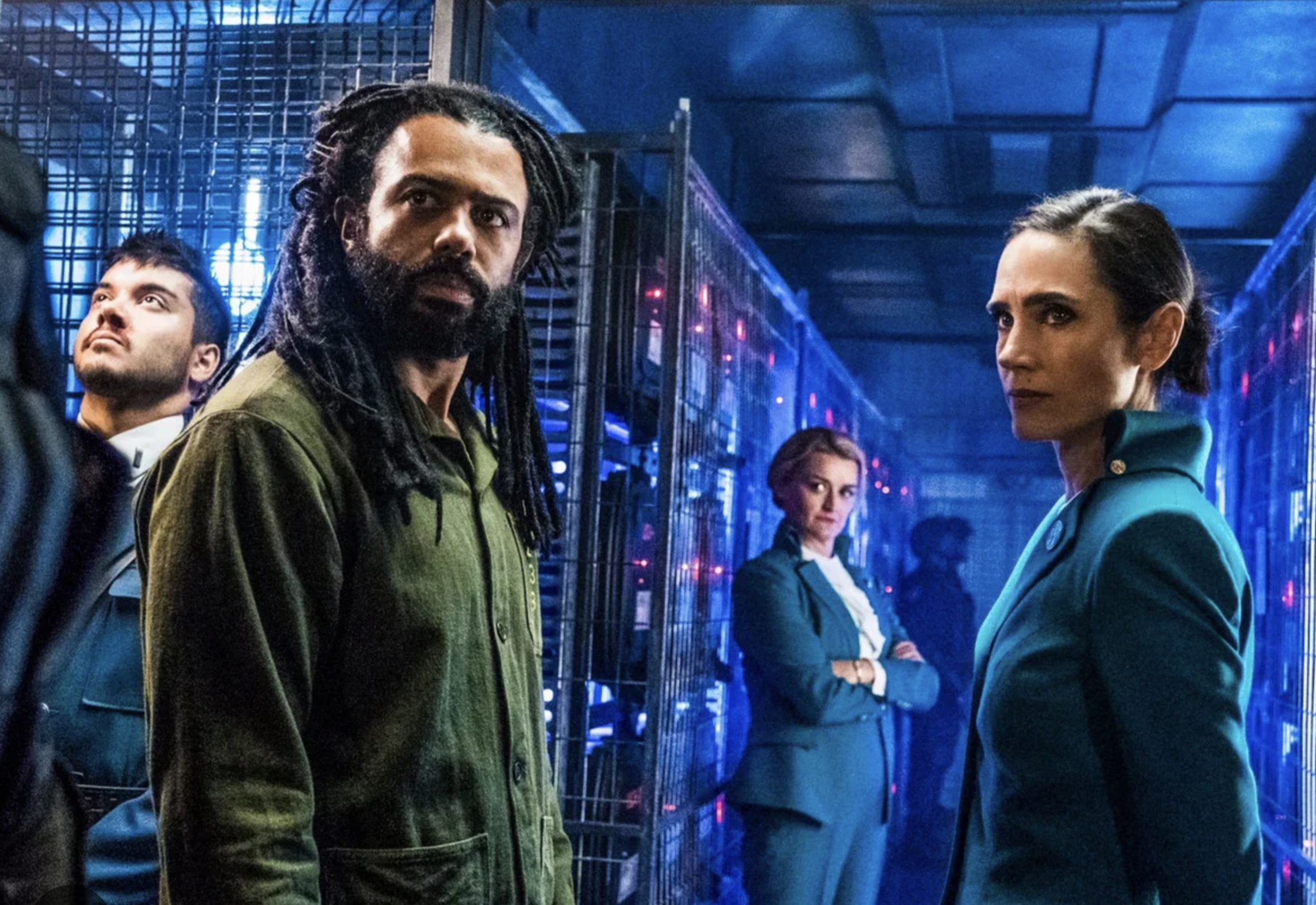
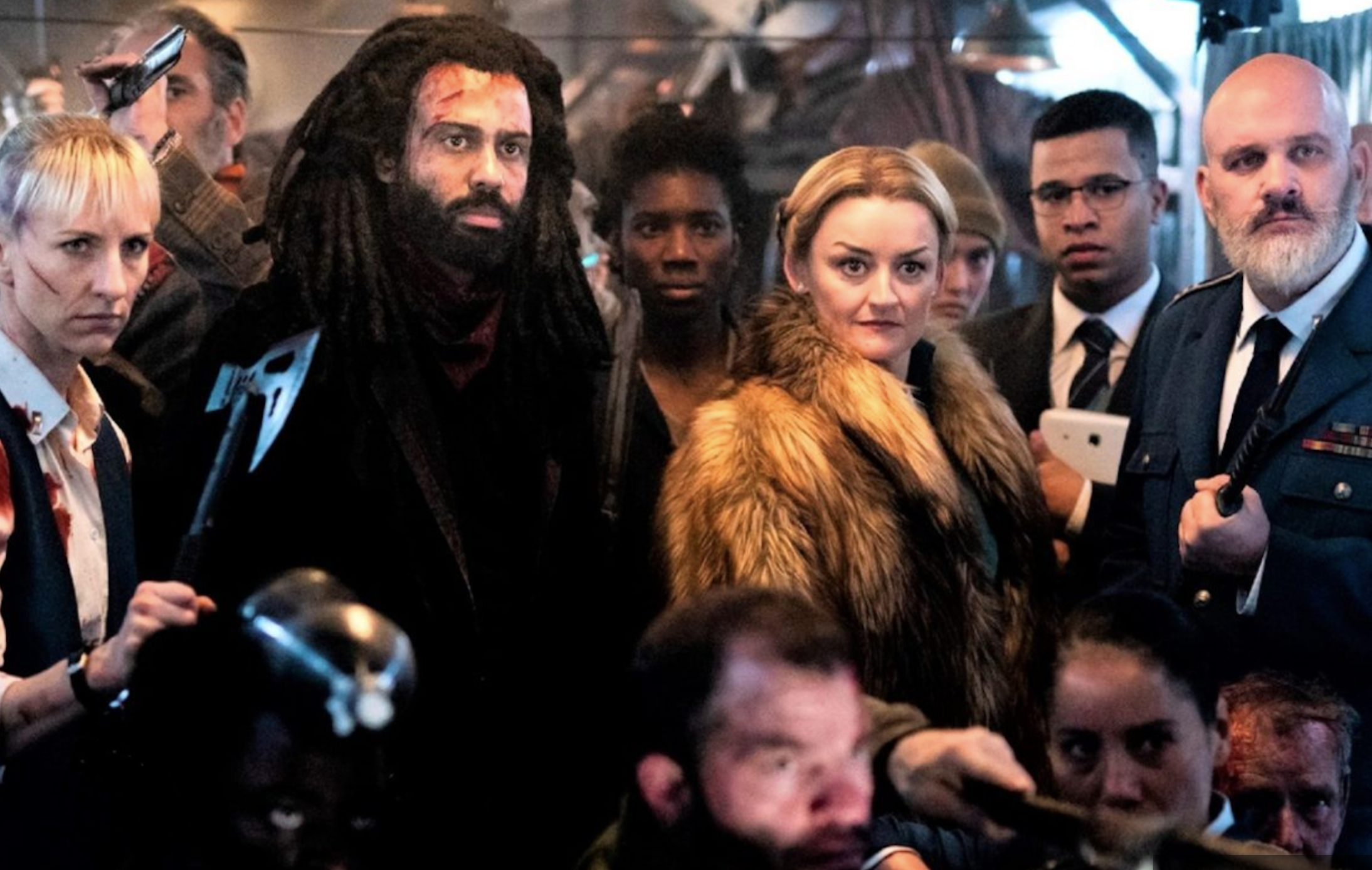
Snowpiercer is an American post-apocalyptic dystopian thriller that reboots the 2013 film Snowpiercer by Bong Jooh-ho. Snowpiercer is a perpetually moving train that circles the globe carrying the remnants of humanity seven years after the world has become a frozen wasteland, thanks to a botched climate fix. The train is divided up by class – first class, where all the wealthy people live; second and third class where the workers reside, and the tail – the end of the train, where the poor starve, live in total darkness, and are exploited for sex and labor.
.
Passengers in the tail of the train
.
The train, of course, serves as a metaphor for class struggle, elitism and social injustices. The train’s self-contained closed ecosystem is maintained by an ordered social system, imposed by a stony militia. Those at the front enjoy privileges and luxurious living conditions, though most drown in a debauched drug stupor; those at the back live on next to nothing and must resort to savage means to survive. The TV show, as with the film, isn’t so much about climate change—as a study on how society functions—or rather copes—within a decadent capitalist system, based on an edict of productivity: serve the machine of “life” and keep the order at all cost. Chief of Hospitality Melanie Cavill (secretly chief engineer of the train) as much as tells this to homicide detective Andre Layton (from the back of the train) when she enlists him to solve the first murder in the elite section of the train.
.
Melanie Cavill, head of Hospitality, enlists Andre Layton as detective to investigate a murder on the train
.
The TV show diverges from the film in several important ways.
My original review of the movie touched on style and political agenda:
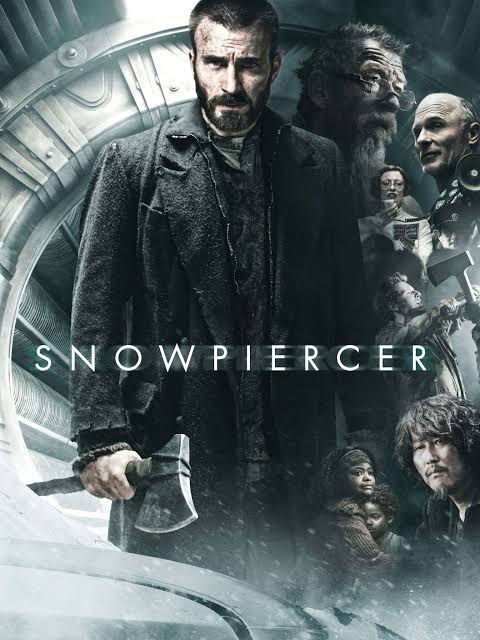
Bong Joon-Ho’s 2013 motion picture Snowpiercer is a stylish post-climate change apocalypse allegory. A dark pastiche of surrealistic insanity, welded together with moments of poetic pondering and steam-punk slick in a frenzied frisson you can almost smell. Joon-Ho casts each scene in metallic grays and blues that make the living already look half-dead. The entire film plays like a twisted steampunkish baroque symphony. Violence personified in a garish ballet.
.
Poster for the movie version of Snowpiercer
.
I drew on Aaron Bady’s commentary on the film in The New Inquiry which discussed reform capitalism* to conclude that the movie “Snowpiercer is about hard choices and transcendence. Save humanity but at the consequence of our souls? Or transcend the machine that has robbed us of our souls at the expense of our mortality? The film continually questions our definition of what life is and what makes life worth living … Ultimately, Bong Jung-Ho’s message with the ending of this baroque political allegory is the vindication of a choice against reform capitalism for something new, that there is indeed “Life after Capitalism”, not easy but worth living…”
The Snowpiercer TV series takes a different approach to the end of the world and capitalism metaphor, weaving in more intrigue in its plot (a murder) with elements of detecting by the only homicide detective left on the train and in the world—a self-styled revolutionary from the back of the train. Much of the entertaining tensions arise from the interactions of Detective Andre Layton (Daveed Diggs) and Hospitality head Melanie Cavill (Jennifer Connelly) and second in command Ruth Wardell (Alison Wright); there are also strong performances by the train’s Breakman, Bess Till (Mickey Sumner) and later Mr. Wilford (Sean Bean) who was supposedly running the train but had been secretly thrown off the train by head engineer Cavill.
.
Snowpiercer crew prepare to encounter another train in the freeze
.
The focus of the TV show has been more on the potential survival of a handful of what’s left of humanity with competing agendas on how this is best achieved, whether the freeze is indeed unfreezing and some part of the world has become hospitable or at least livable. Trading the film’s baroque metaphors to capitalism for a more literal approach to climate change and living in a post climate change world, the TV series focuses more on real questions facing this ragtag of humanity. How to keep it together when rifts naturally form based on unequal resource allocation and space in the limited ecosystem of the train. Given that the show plays out in several seasons, there is room to expand and further explore socialism, democracy, fascist rule and environmental activism. Class divisions are explored through a large cast of morally ambiguous characters, each with a plot arc, and more opportunities to explore not just first class but second and third class, showcasing more nuanced and varied elements to the class struggle and ambitions of people.
.
.
*Reform Capitalism: “Reform and revolution are shibboleths that distinguish liberals from radicals,” explains Aaron Bady of The New Inquiry. “While liberals want to reform capitalism, without fundamentally transforming it, radicals want to tear it up from the roots (the root word of “radical” is root!) and replace capitalism with something that isn’t capitalism…If you’re the kind of leftist who thinks that the means of production just need to be in better hands—Obama, for example, instead of George W. Bush, or Elizabeth Warren instead of Obama, or Bernie Sanders instead of Elizabeth Warren, and so on—then this movie buries a poison pill inside its protein bar: soylent green is people.”
Nina Munteanu is a Canadian ecologist / limnologist and novelist. She is co-editor of Europa SF and currently teaches writing courses at George Brown College and the University of Toronto. Visit www.ninamunteanu.ca for the latest on her books. Nina’s bilingual “La natura dell’acqua / The Way of Water” was published by Mincione Edizioni in Rome. Her non-fiction book “Water Is…” by Pixl Press (Vancouver) was selected by Margaret Atwood in the New York Times ‘Year in Reading’ and was chosen as the 2017 Summer Read by Water Canada. Her novel “A Diary in the Age of Water” was released by Inanna Publications (Toronto) in June 2020.
I’ve selected ten TV series that have intrigued me, moved me, and stayed with me for various reasons that touch on: abuse of justice, including eco-justice and environmental abuse; technology use and abuse; and the effects and horrors of climate change.
Some are well known; others not so well known. All approach storytelling with a serious dedication to depth of character, important themes, realistic world building, and excellent portrayal by actors. The world-building is extremely well done—in some cases rivalling Ridley Scott’s best—with convincing portrayals of worlds that are at times uncanny in their realism. Worlds that reflect story from an expansive landscape to the mundane minutiae of daily life: like the cracked phone device of Detective Miller in The Expanse or the dirty fingernails of engineer Juliette Nichols in the Down Deep of Silo. Stories vary in their treatment of important themes from whimsical and often humorous ironies to dark and moody treatises on existential questions. In my opinion, these TV series rival the best movies out there, often reflecting large budgets (but not always) and a huge commitment by producers. The ten TV series I’ve selected in this series come from around the world: Brazil, Germany, France, Norway, Canada and the United States.
In Part 2, I focus on five TV series that explore issues to do with resource allocation, adaptations to climate change and corporate / government biopolitics.
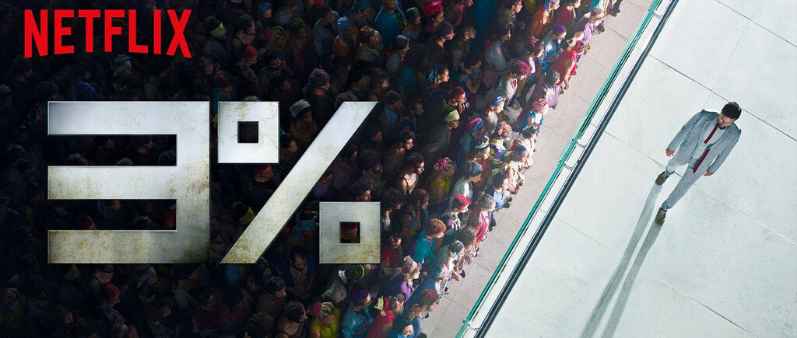
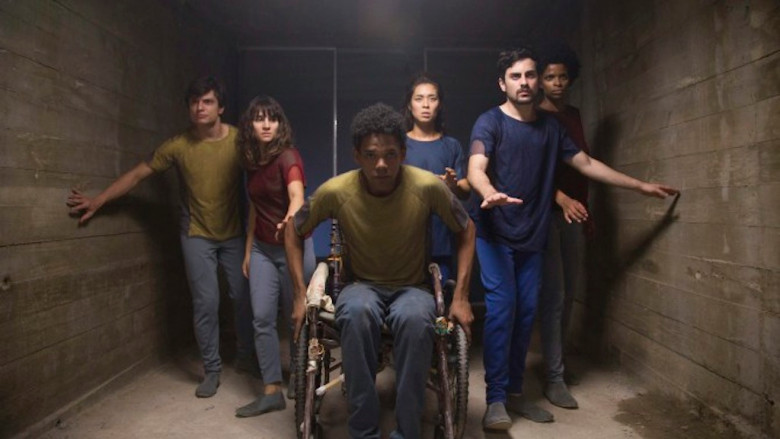
This Brazilian dystopian thriller was created by Pedro Aguilera and directed by Cesar Charlone. It is set in the near future after the planet has fallen into a divided haves and have-nots through some calamity. Three percent of the population live well on an island in the Atlantic Ocean, called Offshore (Mar Alto). The remaining 97% struggle Inland with poverty and scarcity. A selection process lies between them.
Every year the 97% send their 20-year olds to undergo The Process, a grueling Hunger Games-style contest run by the Offshore elite to replenish their numbers. Only 3% of the candidates will be considered worthy. They must pass psychological, emotional and physical tests to earn a place in Mar Alto. Candidates cheat in self-service; others violently impose Darwinian entitlement and survival of the fittest; yet others rely on reciprocal altruism.
.
Candidates undergo a test in The Process
.
By the time Season 1 is over, candidates will have committed a full range of desperate and unsavory acts to make the cut—the stakes are high, after all: secure a position in the 3% elite or die in squalor and poverty. After being eliminated during the interview process, one youth throws himself off the balcony of the testing centre.
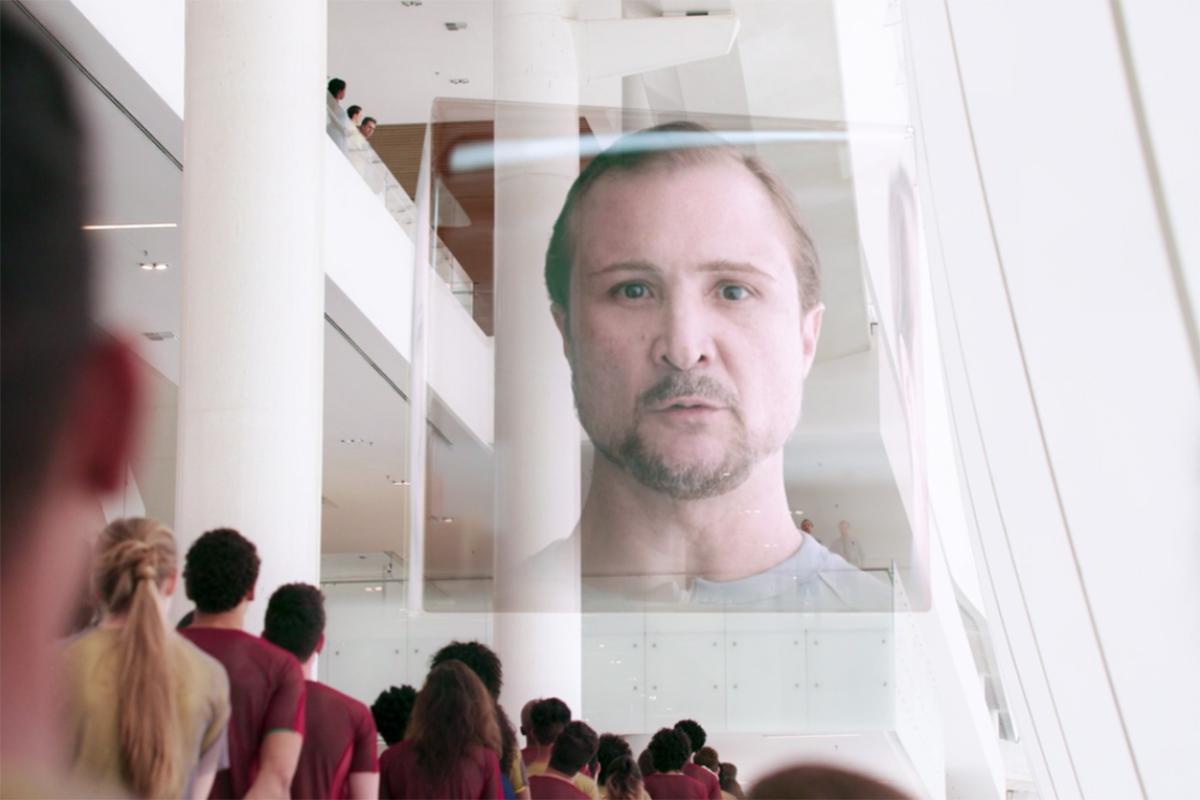
Inland is valued by the elite only for its reserve of youth to recruit Offshore’s strictly controlled population (you only find out how in the last show of Season 1). As for what personality and fitness The Process tests for is also uncertain. “You each create your own merit,” says Ezequiel, who runs The Process, to the candidates. “No matter what happens … you deserve this.” The corollary is that if they don’t have merit—value, as determined by Ezequiel’s Process—they don’t deserve to move Offshore. There is, of course, a resistance to The Process, called The Cause. They cause stirrings of unrest and may even be responsible for the first murder in Offshore in over 100 years—which puts Ezequiel’s Process under question. Ezequiel dismisses The Cause by suggesting that it operates “in the name of a false or hypocritical equality.”
.
Ezekuiel speaks to the candidates
.
There is no inherent equality or fair entitlement in a land of scarcity; there is only proof of merit to a limited resource. This meritocratic notion—and the need to prove one’s worth to be accepted—is so ingrained in society that not even the poor question it. It was American writer John Steinbeck who argued that socialism would never take off in America because the poor see themselves as “temporarily embarrassed capitalists.”
“3% is a brutal commentary on the world’s rising income inequality and the lengths we’re all willing to go to improve our lot,” writes Matthew Gault of Motherboard. “It’s a world of extreme income inequality where techno-fascists rule with an iron fist.”
With each episode, 3% examines the motivations and paradoxes of heroism and villainy, sometimes turning them on their sides until they touch with such intimacy you can’t tell them apart. At its deepest, 3% explores the nature of humanity—from its most glorious to its most heinous—under the stress of scarcity and uncertainty. How we behave under these polarizing challenges ultimately determines who we are.
.
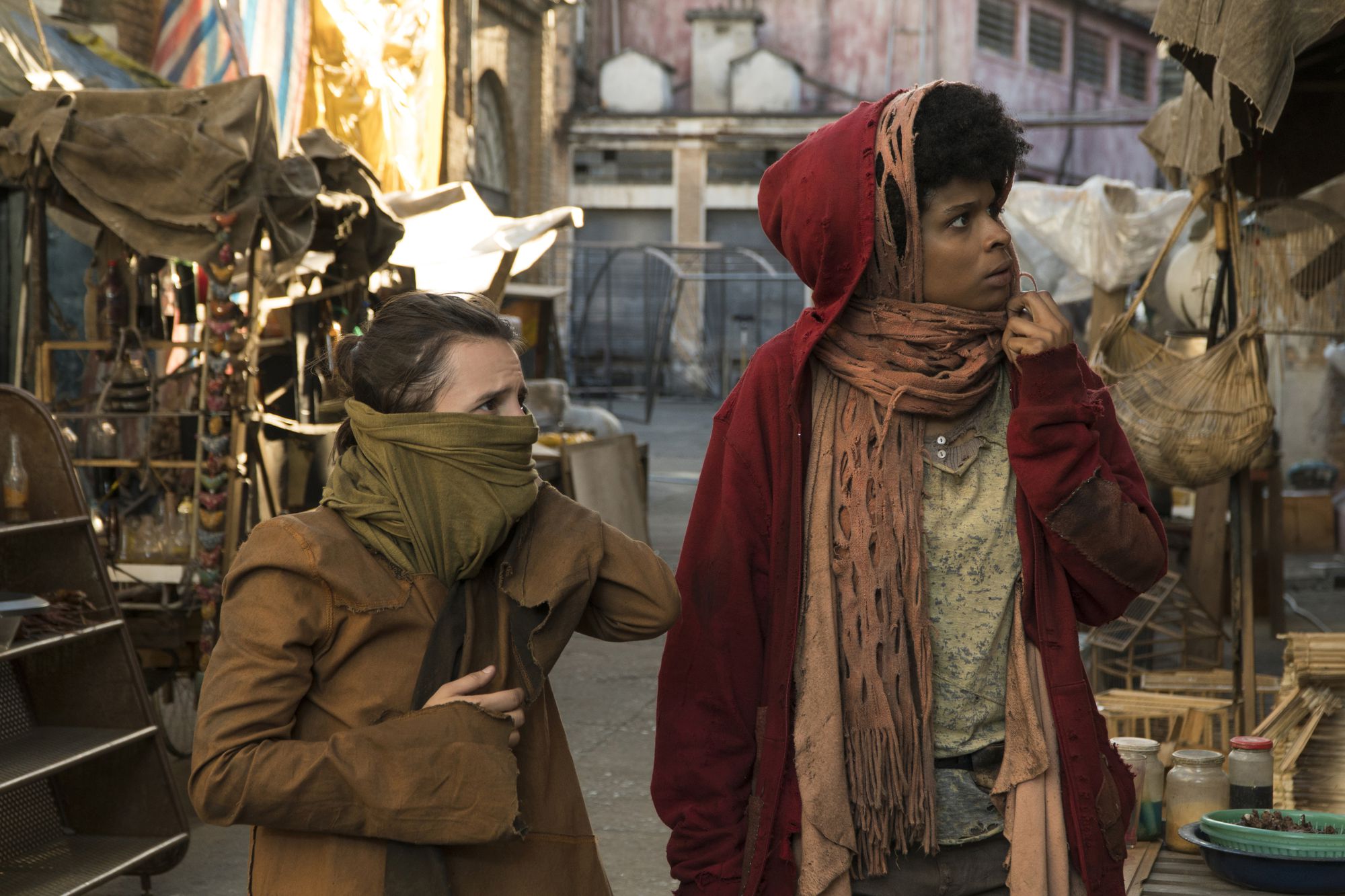
Two 3% candidates navigate the slums they are trying to escape with The Process
Nina Munteanu is a Canadian ecologist / limnologist and novelist. She is co-editor of Europa SF and currently teaches writing courses at George Brown College and the University of Toronto. Visit www.ninamunteanu.ca for the latest on her books. Nina’s bilingual “La natura dell’acqua / The Way of Water” was published by Mincione Edizioni in Rome. Her non-fiction book “Water Is…” by Pixl Press (Vancouver) was selected by Margaret Atwood in the New York Times ‘Year in Reading’ and was chosen as the 2017 Summer Read by Water Canada. Her novel “A Diary in the Age of Water” was released by Inanna Publications (Toronto) in June 2020.
I’ve selected ten TV series that have intrigued me, moved me, and stayed with me for various reasons that touch on: abuse of justice, including eco-justice and environmental abuse; technology use and abuse; and the effects and horrors of climate change.
Some are well known; others not so well known. All approach storytelling with a serious dedication to depth of character, important themes, realistic world building, and excellent portrayal by actors. The world-building is extremely well done—in some cases rivalling Ridley Scott’s best—with convincing portrayals of worlds that are at times uncanny in their realism. Worlds that reflect story from an expansive landscape to the mundane minutiae of daily life: like the cracked phone device of Detective Miller in The Expanse or the dirty fingernails of engineer Juliette Nichols in the Down Deep of Silo. Stories vary in their treatment of important themes from whimsical and often humorous ironies to dark and moody treatises on existential questions. In my opinion, these TV series rival the best movies out there, often reflecting large budgets (but not always) and a huge commitment by producers. The ten TV series I’ve selected in this series come from around the world: Brazil, Germany, France, Norway, Canada and the United States.
In Part 2, I focus on five TV series that explore issues to do with resource allocation, adaptations to climate change and corporate / government biopolitics.
.
.
INCORPORATED:A Post-Climate-Change Corporate Scrabble for Resource & Power
.
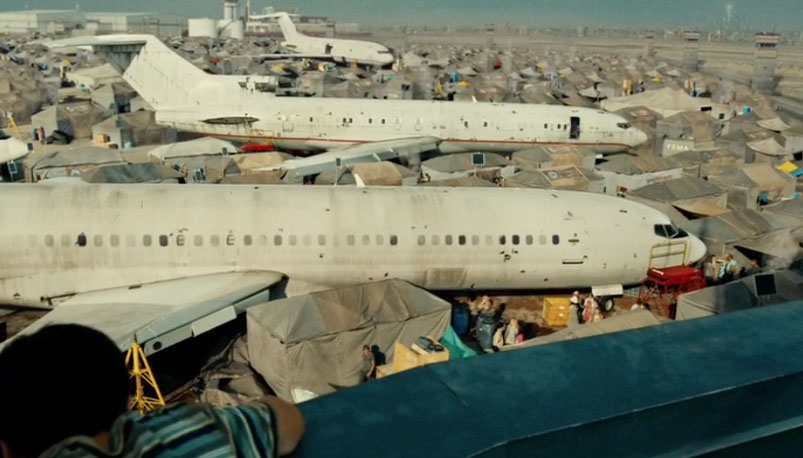
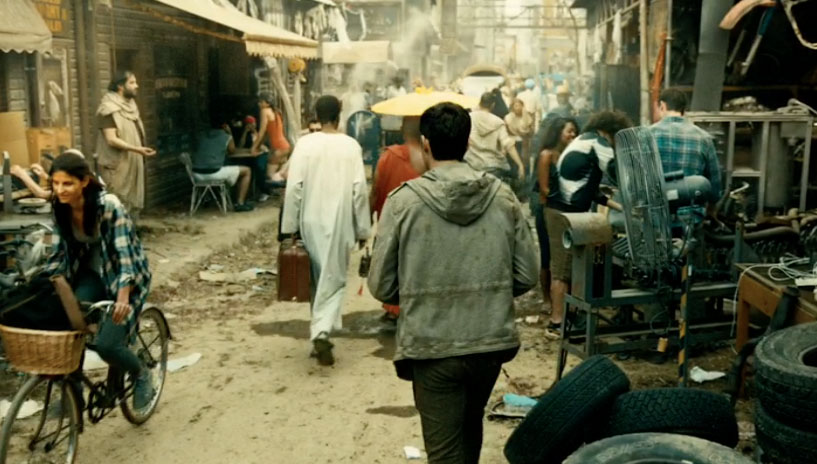
This American science fiction thriller offers a chilling glimpse of a post-climate change dystopia. Created by David and Alex Pastor and produced by Ben Affleck, Matt Damon, Ted Humphrey and Jennifer Todd, the show (filmed in Toronto, Canada) opens in 82 °F Milwaukee in November 2074 after environmental degradation, widespread famine and mismanagement have bankrupted governments. We learn later that Milwaukee Airport served as a FEMA climate relocation centre that resembles an impoverished shantytown. In the wake of the governments demise, a tide of multinational corporations has swept in to control 90% of the globe and ratified the 29th amendment, granting them total sovereignty.
.
Spiga CEO talks to her employees
Corporations fight a brutal covert war for market share and dwindling natural resources. Like turkey vultures circling overhead, they position themselves for what’s left after short-sighted government regulations, lack of corporate check and FEMA mismanagement have ‘had their way’ with the planet. The world is now a very different place. There is no Spain or France. Everything south of the Loire is toxic desert; New York City reduced to a punch line in a joke. Reykjavik and Anchorage are sandy beach destinations and Norway is the new France—at least where champagne vineyards are concerned. Asia and Canada are coveted for their less harsh climates.
Corporates live in a world isolated from the real world of poverty
.
Those who work for the corporations live in privilege behind the sentried walls of the Green Zones. The rest fend for themselves with scarcity in the contaminated slums of the Red Zones.
Incorporated is an ‘Alice in Wonderland’ mixture of realizable technological advances, gadgetry and thrilling—if not chilling—consequence: like self-driving cars, intelligent writsbands, surrogate pregnancies and remote deliveries, genetic testing of ‘inferiors’, DNA theft, and malware sabotage.
Like a Seurat painting, the subtle details of the show change with perspective and build into a subliminal realism you can’t shake: from the food porn in the opening scene to eating rats in climate relocation camps or drinking dirty Red Zone water that costs $5. In Cost Containment we learn that Spiga competitor Inazagi is developing salt-tolerant crops that, like the mangroves, will thrive on irrigated seawater in the deserts left by an exploitive short-sighted America: Iowa, Missouri, Kansas—all the dust storm states. In a later episode, a murdered corporate executive is found by two dowsers on the dried lakebed of Missouri’s Lake Lotawana. We hear about the “oil wars” in Capetown.
.
A Spiga employee caught with malwear
.
The first episode (Vertical Mobility) opens to a corporate ‘traitor’ being dragged into “the quiet room”, rumoured to be a torture chamber run by taciturn head of security Julian Morse (Dennis Haysbert). The scene shifts to the Green zone suburban house of corporate climber Ben Larson (Sean Teale). As he prepares to go to work, the news streams of hurricanes breaching levies; Canada building a wall to stem the tide of illegal American climate refugees–12 million already there; offshore oil rigs in the waters of the former Arctic ice cap; and finally to the “terrorist” bombing of the R&D lab of biochemical giant Spiga, where Ben works. Spiga, we later learn, plays the same games as Monsanto and Nestle to ensure profits at the expense of well-being.
FEMA camps for climate refugees sprout everywhere
.
Aaron Pruner of Screener TV asks, “Could climate change push us into a collapsed society, informed consistently by the ongoing threat of class warfare? Will we eventually be separated by electric fences and really big walls [like Incorporated]? Are fear and greed going to be the currencies of our reality? These burning questions should sound far-fetched and silly, but as we watch tale of Incorporated unfold, it’s hard not to wonder what our own future will bring.” Far-fetched and silly? Is it any more far-fetched and silly than voting in a president who claims that the Chinese invented climate change to make American manufacturing non-competitive?
.
Climate refugee camp
.
Nina Munteanu is a Canadian ecologist / limnologist and novelist. She is co-editor of Europa SF and currently teaches writing courses at George Brown College and the University of Toronto. Visit www.ninamunteanu.ca for the latest on her books. Nina’s bilingual “La natura dell’acqua / The Way of Water” was published by Mincione Edizioni in Rome. Her non-fiction book “Water Is…” by Pixl Press (Vancouver) was selected by Margaret Atwood in the New York Times ‘Year in Reading’ and was chosen as the 2017 Summer Read by Water Canada. Her novel “A Diary in the Age of Water” was released by Inanna Publications (Toronto) in June 2020.







 Nina Munteanu Writing Coach