When Water Speaks: quotes from A Diary in the Age of Water

“There is no depression more debilitating than knowing that you cannot go back home, even though you’re already there.”

Lynna Dresden

“This is a significant book for our times … creative, inventive, and possibly prescient.”

DAVID CAMERON, Amazon Review

“Profound and brilliant.  Scary and comforting at the same time. Life will go on. Water will go on.”

NINA DARRELL Amazon Review
Bridge over creek in Trent Nature Sanctuary during heavy snowfall, ON (photo and rendition by Nina Munteanu)

When Water Speaks: quotes from A Diary in the Age of Water

“What if water doesn’t like being owned or ransomed? What if it doesn’t like being channelled into a harsh pipe system or into a smart cloud to go where it normally doesn’t want to go? What if those hurricanes and tornadoes and floods are water’s way of saying that it’s had enough?”

Hilde Dresden

“Thoroughly researched and cleverly executed, A Diary in the Age of Water is a must-read, especially for those who are longing for nature, and touch, while fearing both.”

CARA MOYNES, Amazon Review

“This novel made my heart clench…An extremely detailed and downright terrifying look into the future of our planet. A Diary in the Age of Water will appeal to lovers of eco-fiction and hard speculative fiction.”

GOODREADS REVIEW
Maple tree branches hover over shallows of Otonabee River, ON (photo and rendition by Nina Munteanu)

When the Permafrost Thaws…

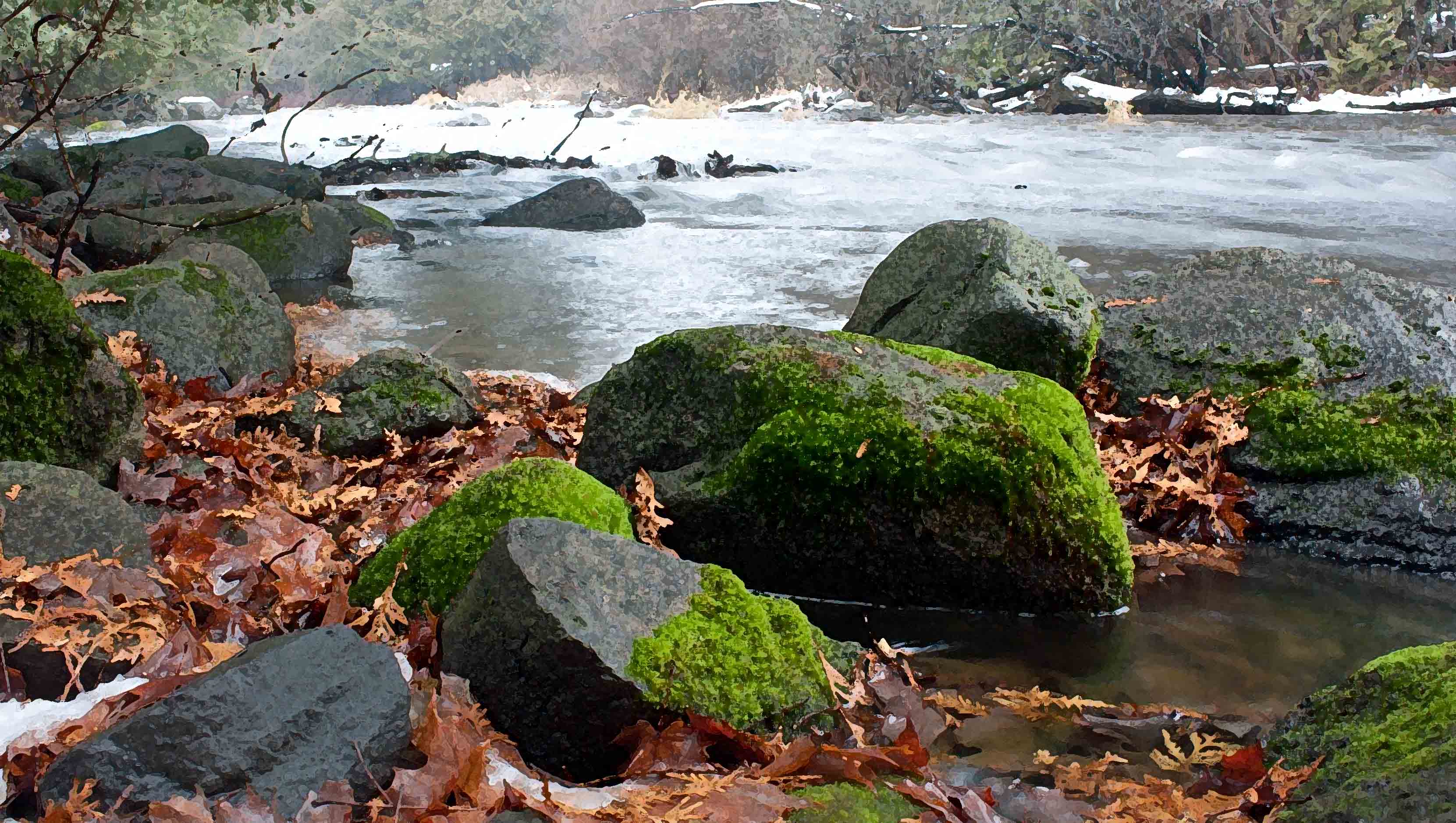
Ice and snow cover the Otonabee River in winter, ON (photo and rendition by Nina Munteanu)

In my upcoming novel “Gaia’s Revolution,” one of the protagonists, Damien Vogel, contemplates in 2022 a key event from 2020 that only a few seem to take seriously:

In Siberia in June 2020, record heat of thirty degrees Centigrade, over the average of 11 degrees, collapsed permafrost and caused oil tanks in Norilsk to rupture. Over twenty thousand tonnes of diesel spilled into the Pyasina lake and river system. Damien remembers looking at the veins of red on satellite images from space. That disaster is just the beginning of what the ‘sleeping bear’ of methane hydrates promise to unleash when the permafrost reaches a critical thaw and those hydrates awaken. Melting permafrost is a quiet sleeper in the climate change procession, he considers. At a microscopic level, in the chemistry of the water and in the change in the atmosphere, a time bomb is ticking.

A decade later, Damien’s twin brother, Eric, notes that:

“Back in the ‘20s scientists started noticing major permafrost melt on the Siberian Shelf,” Eric goes on. “The melting released hydrates, which set the oil and gas companies frothing at the mouth with joy and the climate scientists spinning in a panic because of what they knew it meant for the planet. It was the harbinger of the largest methane ‘burp’ ever.”

Eric then adds:

“Permafrost thaw kicked us into this devastating global warming, Dame, and everyone—even the climate modellers—ignored it, because they didn’t have enough data. Gott verdammt! They’re all still asleep, Dame!”

In his book The Treeline, Ben Rawlence writes about the ongoing extinction of indigenous peoples in the north as the treeline migrates northward into tundra and the permafrost and sea ice change and go extinct themselves.

Ice fragments on the Otonabee River, ON (photo by Nina Munteanu)

Methane & The Clathrate Gun Hypothesis 

Because methane is present in much smaller concentrations many scientists have mistakenly deemed it as important as carbon dioxide in the climate change equation; however, it is becoming obvious that methane poses a real and largely unacknowledged danger. Methane is twenty times more efficient in trapping heat than carbon dioxide. Permafrost—which is currently melting rapidly in the north—contains almost twice as much carbon as is currently in the atmosphere. In the rapidly warming Arctic (warming twice as fast as the globe as a whole), the upper layers of this frozen soil are thawing, allowing deposited organic material to decompose and release methane.

.

The clathrate gun hypothesis is the notion that sea temperature rises (and/or drops in sea levels) may trigger a catastrophic positive feedback on climate:  warming would cause a sudden release of methane from methane clathrate (hydrate) compounds buried in seabeds, in the permafrost, and under ice sheets.

Something of this nature has already occurred in Siberia in 2020. In his book The Treeline Ben Rawlence reports the following warning by Dutch scientist Dr. Ko van Huissteden, a leading authority on permafrost:

“It is hard to measure methane release … [but] some studies have suggested that an unstable seabed could release a methane ‘burp’ of 500-5000 gigatonnes, equivalent to decades of greenhouse gas emissions, contributing to an abrupt jump in temperature that humans will be powerless to arrest.” (Wadhams, 2015)

Creation of gas hydrates requires high pressure; water; gas—mainly methane—and low temperatures. Three environments considered suitable for this process to occur include: sub-seabed along the world’s continental margins; permafrost areas on land and off shore; and a process for storing methane hydrates: ice sheets. As long as the climate is cold and the ice sheet stable, the gas hydrate zone remains stable. As the ice sheets melt, the pressure on the ground decreases; hydrates destabilize and release methane into rising seawater and finally into the atmosphere.

A recent study in Science revealed that hundreds of massive, kilometer-wide craters on the ocean floor in the Arctic were formed by substantial methane expulsions. Because methane is a powerful greenhouse gas, temperatures would rise exponentially. Once started, this runaway process could be as irreversible as the firing of a gun—and on a time scale less than a human lifetime.

The sudden release of large amounts of natural warming gas from methane clathrate deposits in runaway climate change could be a cause of past, future, and present climate changes.

Latest research on the Greenland ice sheet and elsewhere throughout the Arctic has revealed major methane discharges in Arctic lakes in areas of permafrost thaw. Scientists are exploring areas where methane is bubbling to the surface and releasing to the atmosphere.

If human emissions continue at their current rate, rapidly changing ocean currents and retreating ice sheets may uncork methane from under ice caps, ocean sediments and Arctic permafrost, causing a jump in radiative forcing. Even if rapid ice sheet disintegration were to scatter large amounts of ice into the oceans, the net cooling effect would be strongly countered and likely overwhelmed. The areas that did cool would likely trigger severe weather outbreaks.

As I write, we are pumping out CO2 into the atmosphere at a rate 10 times faster than at any point in the past 66 m years, with the resulting sea level rises, extreme weather events, heat waves, droughts, unseasonal storms, and stress on biodiversity around the globe.  Research published in the journal Nature Geoscience demonstrates that “the world has entered ‘uncharted territory’ and that the consequences for life on land and in the oceans may be more severe than at any time since the extinction of the dinosaurs,” writes Damian Carrington of The Guardian.

In an interview with Guardian reporter John Abraham, Woods Hole expert Robert Max Holmes, exhorted:

It’s essential that policymakers begin to seriously consider the possibility of a substantial permafrost carbon feedback to global warming. If they don’t, I suspect that down the road we’ll all be looking at the 2°C threshold in our rear-view mirror.

Ice break up on the Otonabee River in early spring, ON (photo by Nina Munteanu)

References:

Hansen, James and Sato, Makiko; Update of Greenland ice sheet mass loss: Exponential?; (26 December 2012).

Adams, J., M.A. Maslin and E. Thomas Sudden climate transitions during the Quaternary; Progress in Physical Geography, 23, 1, 1-36 (1999)

Andreassen et al. 2017. “Massive blow-out craters formed by hydrate-controlled methane expulsion from the Arctic seafloor,” Sciencescience.sciencemag.org/cgi/doi … 1126/science.aal4500


Carrington, Damian. 2016. “Carbon emission release rate ‘unprecedented’ in past 66 m years.” The Guardian, March 21, 2016.

Hansen, James and Sato, Makiko. 2012. Update of Greenland ice sheet mass loss: Exponential?; (26 December 2012).

Portnov et al. 2016. Ice-sheet-driven methane storage and release in the ArcticNature Communications 7

Rawlence, Ben. 2022. “The Treeline.” Jonathan Cape, London. 342pp.

Sachs, Julian and Anderson, Robert. 2005. Increased productivity in the subantarctic ocean during Heinrich events; Nature 434, 1118-1121;(28 April 2005).

Sojtaric, Maja. 2016. Ice Sheets May be Hiding Vast Reservoirs of Powerful Greenhouse GasCAGE.

Wadhams, Peter. 2015. “A Farewell to Ice.” Penguin.

Flowing water in a river, ON (photo by Nina Munteanu)

Nina Munteanu is a Canadian ecologist / limnologist and novelist. She is co-editor of Europa SF and currently teaches writing courses at George Brown College and the University of Toronto. Visit www.ninamunteanu.ca for the latest on her books. Nina’s bilingual “La natura dell’acqua / The Way of Water” was published by Mincione Edizioni in Rome. Her non-fiction book “Water Is…” by Pixl Press (Vancouver) was selected by Margaret Atwood in the New York Times ‘Year in Reading’ and was chosen as the 2017 Summer Read by Water Canada. Her novel “A Diary in the Age of Water” was released by Inanna Publications (Toronto) in June 2020.

This entry was posted in booksCanadaChoices for WaterClimate Changeeco-fictionecologyenvironmentSciencesustainabilityThe FutureWater Is and tagged arctic ice meltArctic OceanBen Rawlenceclathrate gun hypothesisClimate Changeeco-fictionecologyenvironmentGaia’s Revolutionglobal warmingice sheetsmelting permafrostmethanemethane clathratesmethane hydratespermafrostpermafrost thawrunaway climate changeScienceThe Treelinewater. Bookmark the permalinkEdit

Nina Munteanu on The Role of Stories in the Climate Action Movement

Jackson Creek after a fresh snowfall, ON (photo and rendition by Nina Munteanu)

Issue  #128 of Apex Magazine featured an interview that Rebecca E. Treasure did with me. We discussed the power of story, the use of dystopian narrative, and the blur between fiction and non-fiction to create meaningful eco-fiction. Below we talk about the role of stories in the climate action movement. For the complete interview go here:

AM: Your work takes complex topics that are nonetheless critical to humanity’s future and pulls stories with compelling characters out of them, making the science accessible, the warnings personal to the reader. This has always been one of the callings of science fiction. What is the role of stories in the climate action movement?

NM: Our capacity and need to tell stories is as old as our ancient beginnings. From the Paleolithic cave paintings of Lascaux to our blogs on the internet, humanity has always shared story. Story is powerful in how it helps us define who we are, what’s important to us, and where we are going. Stories compel with intrigue, stir our emotions, connect with our souls through symbols, archetypes and metaphor. Stories inspire action. We live by the stories we tell.

For too long, our stories have promoted a dominant worldview of exploitation and capitalism. We’ve been telling the patriarchal story of “othering” for too long; we need a new voice and a new worldview to replace our old stories of conquering and taming a “savage land” and “savage people.” When Copernicus proclaimed in 1543 that the sun did not revolve around the Earth, it took a long time for the world to accept and let go of its Ptolemaic Earth-centered view. But the world did come around eventually to the point now that this is common knowledge and lies embedded in our daily lives and language.

Storytelling about how the Earth takes care of us and how we can take care of Earth is urgently needed.

This means shifting our stories from an exploitive capitalist narrative of separation toward an inclusive partnership narrative. This means embracing a more eco-centric worldview; a worldview in which humanity is not central, but lies embedded within greater planetary forces and phenomena. A worldview that sees humanity only as part of a greater entity, as participant in a greater existential celebration of life and the elements. A humanity that must learn to play along, not bully and take over. A humanity that must embrace compassion, respect and kindness; a humanity directed by humility—not hubris. It is my firm belief that until our worldview embraces humility in partnership with the natural world—until we cast off our self-serving, neo-liberal, capitalist ideologies—we will remain hampered in our journey forward. When we change our stories, we change our lives and we change the world along with it.

This is already happening with the emergence of a strong eco-voice by writers through the feminine voice, the gylanic voice, the voice of the marginalized, of ecology and the environment itself. Authors such as Barbara Kingsolver, Annie Proulx, Margaret Atwood, Richard Powers, Emmi Itäranta, Jeff Vandermeer, Cherie Demaline, Christiane Vadnais, Pitchaya Sudbanthad, Chen Qiufan, Paolo Bacigalupi, Grace Dillon, Andrew Krivak, Kim Stanley Robinson, and Coleen Murphy … These all give Nature a face and voice to care about. And caring is the first step.

For the entire interview, go to Apex Magazine, December 10, 2021.

Nina Munteanu and her award-winning eco-novel “A Diary in the Age of Water”

Nina Munteanu is a Canadian ecologist / limnologist and novelist. She is co-editor of Europa SF and currently teaches writing courses at George Brown College and the University of Toronto. Visit www.ninamunteanu.ca for the latest on her books. Nina’s bilingual “La natura dell’acqua / The Way of Water” was published by Mincione Edizioni in Rome. Her non-fiction book “Water Is…” by Pixl Press(Vancouver) was selected by Margaret Atwood in the New York Times‘Year in Reading’ and was chosen as the 2017 Summer Read by Water Canada. Her novel “A Diary in the Age of Water” was released by Inanna Publications (Toronto) in June 2020.

Apex Magazine Interviews Nina Munteanu About Story, Ecology, and the Future—Part 2

Issue  #128 of Apex Magazine featured an interview that Rebecca E. Treasure did with me, posted on December 10, 2021. We discussed the power of story, the use of dystopian narrative, and the blur between fiction and non-fiction to create meaningful eco-fiction. Here’s part two of the interview. For the complete interview go here:

INTERVIEW

Nina Munteanu, author of “Robin’s Last Song,” is a prolific creator with multiple books, podcasts, short stories, and nonfiction essays in publication. Her work spans genre, from eco-fiction to historical fantasy to thrillers, and of course, science fiction. Her work as an ecologist informs all of her writing, which circles around an essential exploration; the relationship between humanity and our environment.

 At the top of Nina Munteanu’s website, there is a quote: “I live to write, I write to live.” This sentiment is reflected in her fiction, which is not just about characters in compelling situations solving their problems with compassion, but is about all of us, our planet, our environment, and our future.

Nina Munteanu sat down with Apex for a conversation about story, ecology, and the future.

APEX MAGAZINE: Your novels and short stories examine the role and evolution of humanity in the context of nature and technology. As an ecologist, what do you believe needs to happen—internationally, nationally, locally, and personally—to restore our planet and move forward in a sustainable way?

NINA MUNTEANU: All things animate and inanimate naturally oscillate toward equilibrium or balance in a kind of stable chaos of polarities. Goethe and Hegel told us this long ago. Our actions have exacerbated this oscillation through massive extraction, habitat destruction, and pollution with associated conflicts, take-over and subjugation. Everything is connected and all have contributed to climate change and habitat change. Our mission—given that we’re responsible for much of that imbalance—is to help the planet return itself to balance. That means ensuring that Nature’s natural checks can do their job to ensure functional forests and phytoplankton, a healthy ocean, a resilient biodiversity—all systems that we rely on for our own healthy existence. Restoring our denuded global forests, and the oceans will need the concerted and united efforts of all nations and individuals. We have the knowledge, the science, and technology; all that is needed is the will. And that can only change as our own narrative changes. That’s where storytelling plays a key part. Surveys have proven that fiction can be deeply persuasive through character journey that convinces at a deeper more emotional level (as opposed to a litany of facts that appeals only at an intellectual level).

AM: Do you believe industry and sustainability are compatible? What about colonialism and sustainability? Capitalism? In other words, is sustainability something we can achieve with our current systems, or is global systemic change required?

NM: Some people—mostly economists—would say definitely yes to the first question; we just need to be conservationist in our approach to doing business. But the very basis of capitalism is exploitation, not conservation. The driving force behind capitalism is fear and uncertainty and its main process is exploitation. From an ecologist’s perspective, this makes sense for a community during its early succession and growth stage …  when it first colonizes a new area. Ecologists call this approach r-selected (for rate), based on the need to be profligate and fast-growing to successfully establish. But as we reach a climax community and our carrying capacity—where we are now—this r-selected approach no longer works. We need an economic model that better matches this new paradigm. NOT based on continued growth! A climax global economy, one based on cooperation not competition. Elisabet Sahtouris calls this ecological economy “ecosophy.” In his book Designing Regenerative Cultures, Daniel Christian Wahl talks about changing our evolutionary narrative from one based on fear defined by a perception of scarcity, competition, and separation to one based on love defined by a perception of abundance, a sense of belonging, collaboration, and inclusion. He promotes a regenerative economy based on true reciprocation.

And moving forward we can take a lesson from Robin Wall Kimmerer who promotes a gift economy—an economy of abundance—whose basis lies in recognizing the value of kindness, sharing, and gratitude in an impermanent world. This is what she says: “Climate change is a product of [our] extractive economy and is forcing us to confront the inevitable outcome of our consumptive lifestyle, genuine scarcity for which the market has no remedy. Indigenous story traditions are full of these cautionary teachings. When the gift is dishonored, the outcome is always material as well as spiritual. Disrespect the water and the springs dry up. Waste the corn and the garden grows barren. Regenerative economies which cherish and reciprocate the gift are the only path forward. To replenish the possibility of mutual flourishing, for birds and berries and people, we need an economy that shares the gifts of the Earth, following the lead of our oldest teachers, the plants.”

AM: The language in your stories is richly thematic, using strong description to weave the subtext into the piece. For example, “killing two squirrels with one stone.” Is that something that comes about organically as you compose a piece, or a more intentional part of editing?

NM: I use both processes to achieve a final narrative that is multi-layered with metaphor, symbols, and deep meaning. The first process is through intuition derived through intimacy; the second process is more deliberate and generated through objectivity. Insights from intimacy come about organically, during moments of true inspiration, when my muse connects me to the deeper truth of a character’s voice and actions. Given that the inner story runs many layers (some of which I, as writer, may not even be overtly aware) and links in a fractal relationship with the outer story, those moments of inner inspiration happen as if of their own accord. That’s what writers mean when they admit that their characters “talk” to them and instruct them on what to write. When a writer achieves that level of intimacy and understanding, they can let the muse guide them.

Much of the description that is woven into story is generated through the editing process when I read the manuscript as a reader. The process involves letting the story sit for a while so when I return to it, I am reading more objectively. During this process, I apply my knowledge in storytelling craft to showcase combustible moments in plot, and work in foreshadowing, subtext, and compelling metaphor. A writer can’t add metaphor without context related to story theme (otherwise this may result in what the industry calls “purple prose”). Metaphor—given its roots in the deeper psyche of a culture—must arise organically from a deep, sometimes intuitive, understanding—where the personal meets the universal.   

AM: Your work takes complex topics that are nonetheless critical to humanity’s future and pulls stories with compelling characters out of them, making the science accessible, the warnings personal to the reader. This has always been one of the callings of science fiction. What is the role of stories in the climate action movement?

NM: Our capacity and need to tell stories is as old as our ancient beginnings. From the Paleolithic cave paintings of Lascaux to our blogs on the internet, humanity has always shared story. Story is powerful in how it helps us define who we are, what’s important to us, and where we are going. Stories compel with intrigue, stir our emotions, connect with our souls through symbols, archetypes and metaphor. Stories inspire action. We live by the stories we tell.

For too long, our stories have promoted a dominant worldview of exploitation and capitalism. We’ve been telling the patriarchal story of “othering” for too long; we need a new voice and a new worldview to replace our old stories of conquering and taming a “savage land” and “savage people.” When Copernicus proclaimed in 1543 that the sun did not revolve around the Earth, it took a long time for the world to accept and let go of its Ptolemaic Earth-centered view. But the world did come around eventually to the point now that this is common knowledge and lies embedded in our daily lives and language.

Storytelling about how the Earth takes care of us and how we can take care of Earth is urgently needed. This means shifting our stories from an exploitive capitalist narrative of separation toward an inclusive partnership narrative. This means embracing a more eco-centric worldview; a worldview in which humanity is not central, but lies embedded within greater planetary forces and phenomena. A worldview that sees humanity only as part of a greater entity, as participant in a greater existential celebration of life and the elements. A humanity that must learn to play along, not bully and take over. A humanity that must embrace compassion, respect and kindness; a humanity directed by humility—not hubris. It is my firm belief that until our worldview embraces humility in partnership with the natural world—until we cast off our self-serving, neo-liberal, capitalist ideologies—we will remain hampered in our journey forward. When we change our stories, we change our lives and we change the world along with it.

This is already happening with the emergence of a strong eco-voice by writers through the feminine voice, the gylanic voice, the voice of the marginalized, of ecology and the environment itself. Authors such as Barbara Kingsolver, Annie Proulx, Margaret Atwood, Richard Powers, Emmi Itäranta Cherie Demaline, Grace Dillon, and Cormac McCarthy give Nature a face and voice to care about. And caring is the first step.

AM: Your stories also bridge fiction with nonfiction, using speculative fiction as a lens to bring your subject into focus for the reader. How does that work? Why do you approach story in this way?

NM: Marcie McCauley with Temz Review observed that, “[Munteanu] does not appear to view fiction and non-fiction as separate territories; or, if she does, then this book [A Diary in the Age of Water] is a bridge between them.” In Herizons, Ursula Pflug called the book “a bit of a hybrid, and Munteanu a risk-taker.” Buried in Print wrote of the same book, “ultimately it exists in an in-between place, some mystical elements of the generational tale possibly alienating the dedicated science-y readers and the instructional elements possibly alienating fiction devotees. And, yet, I read on: strangely compelling.”

I find that I enjoy this in-between place that blurs fiction with nonfiction. It’s more edgy, gripping, and believable, albeit fantastical, even playfully challenging at times. For instance, I may subvert facts, creating semi-facts to tease the discerning reader (e.g. when the diarist in “A Diary in the Age of Water” observed that President Trump had gone blind from staring at the sun during an eclipse; while Trump did stare directly at the sun without eye protection during an eclipse in 2017, he did not go blind—yet). Readers have told me that the story was more impactful; they honestly didn’t know what was taken from fact and what was fictionalized. Such narrative reads like a true story and there is little more tantalizing than eavesdropping on another’s real experience and intrigue. The risk—that the blur will either confuse the reader or invalidate its truths and message—is hopefully addressed through compelling narrative that engages the reader. But this is also why I tend to include an extensive bibliography at the end of a novel or short story.

Readers have told me that my fiction/nonfiction storytelling trope, like “mundane science fiction,” grips my stories with a more keen sense of relevance. Given that I am writing mostly climate fiction and eco-fiction these days, that sense of relevance is exactly what I wish to achieve. 

AM: A last question. Both “The Way of Water” and “Robin’s Last Song” showcase the relationships women have with each other, the importance of human connection, the damage that disconnecting from each other can do and, inversely, the power of connection. In your view, what is the role of individuals and local communities in the climate crisis?

NM: There are many things we can do as individuals and as part of a community. I was recently asked this question by the Toronto Star and I responded with three things:

●      First, plant a tree; make an actual difference through action. By doing that, we get out from hiding under the bed and face the monster of climate change and show that we care and that we are not alone.

●      Second, vote for green politicians. Politicians need to hear directly from their communities. They need you to push them to act on climate change.

●      Third, find your tribe and create a movement. Everyone says that people have the power, but that power comes best through numbers and solidarity. Find your tribe and you’ll find yourself more motivated. So, start with you and your home: plant trees; put in a rain garden; put in permeable driveways and solar panels; lower meat intake, especially beef; don’t buy bottled water. Then connect with your physical community and social media community. Let them know what you’re doing and why. Work with your community. All members of a community can help change how your street looks and behaves by communicating with your local government, attending meetings, and having a voice. Initiate a tree-planting program in your parks and street greens. Do stream or lake cleanups. Let the leaders of your community know you care and are willing to do something about it. The wave of change starts local and ripples out into a global phenomenon. Change comes from the heart and heart is where the home is.

For the entire interview, go to Apex Magazine, December 10, 2021.

Birch trees and marsh on a foggy morning in winter, ON (photo and rendition by Nina Munteanu)

Rebecca E. Treasure grew up reading science fiction and fantasy in the foothills of the Rocky Mountains. After grad school, she began writing fiction. Rebecca has lived many places, including the Gulf Coast of Mississippi and Tokyo, Japan. She currently resides in Texas Hill Country with her husband, where she juggles two children, two corgis, a violin studio, and writing. She only drops the children occasionally. To read more visit www.rebeccaetreasure.com.

NINA MUNTEANU is a Canadian ecologist / limnologist and novelist. She is co-editor of Europa SF and currently teaches writing courses at George Brown College and the University of Toronto. Visit  www.ninamunteanu.ca for the latest on her books. Nina’s bilingual “La natura dell’acqua / The Way of Water” was published by Mincione Edizioni in Rome. Her non-fiction book “Water Is…” by Pixl Press(Vancouver) was selected by Margaret Atwood in the New York Times ‘Year in Reading’ and was chosen as the 2017 Summer Read by Water Canada. Her novel “A Diary in the Age of Water” was released by Inanna Publications (Toronto) in June 2020.

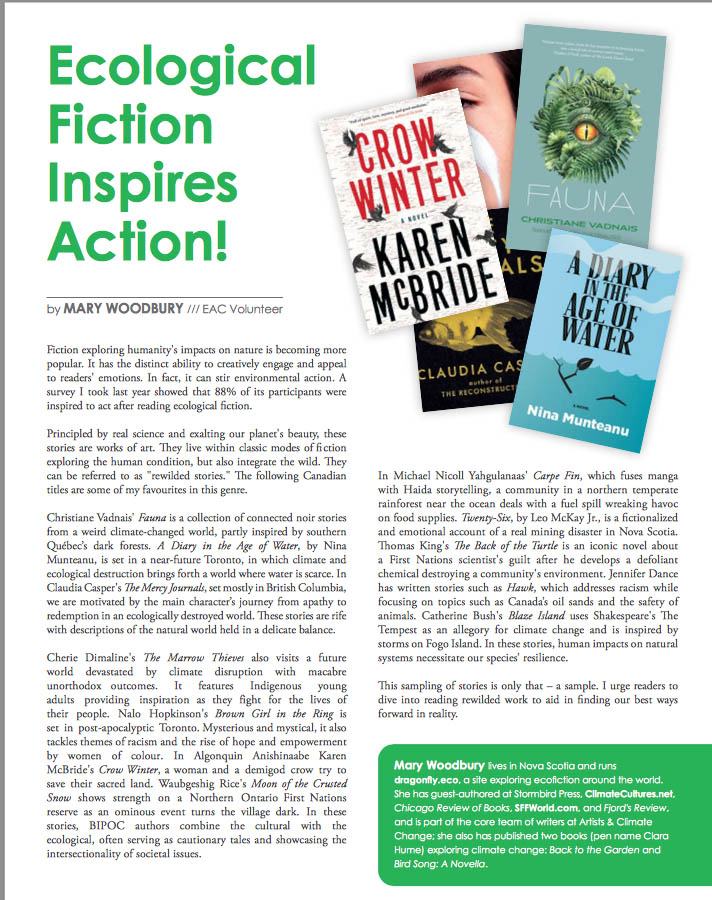
‘A Diary in the Age of Water’ Listed as Ecological Fiction That Inspires Action

In the Spring 2021 Issue of Ecology & Action, author and Dragonfly.eco publisher Mary Woodbury lists some of her favourite eco-fiction that inspires action. Nina Munteanu’s clifi eco-novel “A Diary in the Age of Water” is among them:

“Fiction exploring humanity’s impacts on nature is becoming more popular. It has the distinct ability to creatively engage and appeal to readers’ emotions. In fact, it can stir environmental action. A survey I took last year showed that 88% of its participants were inspired to act after reading ecological fiction.
Principled by real science and exalting our planet’s beauty, these stories are works of art. They live within classic modes of fiction exploring the human condition, but also integrate the wild. They can be referred to as “rewilded stories.” The following Canadian titles are some of my favourites in this genre.”

Mary Woodbury, Dragonfly.eco
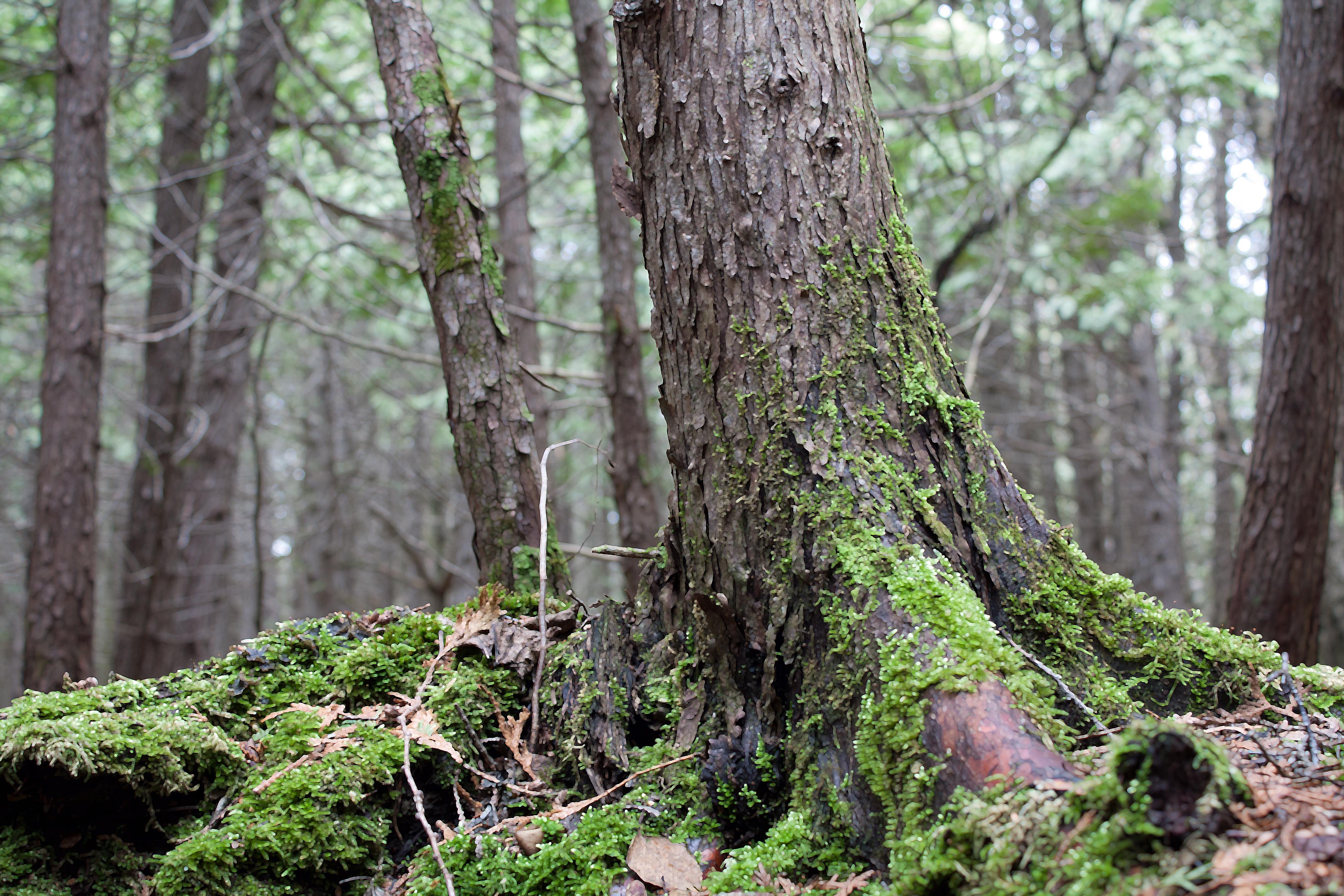
Mossy cedar tree in Trent Nature Sanctuary, ON (image and rendition by Nina Munteanu)

NINA MUNTEANU is a Canadian ecologist / limnologist and novelist. She is co-editor of Europa SF and currently teaches writing courses at George Brown College and the University of Toronto. Visit  www.ninamunteanu.ca for the latest on her books. Nina’s bilingual “La natura dell’acqua / The Way of Water” was published by Mincione Edizioni in Rome. Her non-fiction book “Water Is…” by Pixl Press(Vancouver) was selected by Margaret Atwood in the New York Times ‘Year in Reading’ and was chosen as the 2017 Summer Read by Water Canada. Her novel “A Diary in the Age of Water” was released by Inanna Publications (Toronto) in June 2020.

What Would You Give Up to Save the Planet? A Conversation On Identity vs Action

Jonathan Safron Foer

That is the question American novelist Jonathan Safron Foer asks us in his 2019 book We Are the Weather: Saving the Planet Begins at Breakfast.

“This is a life-changing book and will alter your relationship to food forever.”—Alex Preston, The Guardian

.

In an October 19, 2019 interview with Jason McBride of The Globe and Mail, Foer answers that question (e.g. researchers have proven that animal agriculture is the No. 1 or 2 source of greenhouse gas emissions, depending on what’s included in the calculation, and the No. 1 cause of deforestation [91% of the Amazon burning and deforestation is for animal agriculture]. Grazing animals produce high amounts of methane and require large amounts of water and land).

Foer argues that “the climate crisis can only be solved if we radically reduce the amount of meat (and eggs and milk and cheese) we eat,” writes McBride, who calls the book philosophical and personal: in the book, Foer devotes many pages to his own hypocrisy around food. Foer responds with, “it’s not being hard on myself to be honest. We’re so used to measuring our distance from this unattainable ethical perfection. Which is unnecessary and often precludes action more than it inspires it. We need to applaud each other for making efforts.” Foer makes the point that, “if you were to ask me in 10 years if half of Americans or Canadians would be vegetation, I would say it’s extremely unlikely. But if you were to ask me in two years would half of the meals eaten in America and Canada be vegetarian, I could really see that happening. It’s the same outcome, with regards to the environment, with regards to animals, but one is based on identities and one is based on actions.”

Foer agreed with ecologist Bill McKibben when he argued that we can’t solve our problems one consumer at a time; we have to do it as societies or civilizations. “But,” said Foer, “the changes that we make in our lives, when they’re accumulated, have a known and significant impact on the climate…they have a known and significant impact on culture and on legislators.”

“It’s not that individual change wouldn’t be enough, it’s that individuals can’t [won’t] change.”

“I think one of the big problems with climate change now … is how the story is told, and how the conversation is had. For years, we were battling ignorance or misinformation. Now, people know. It’s not a significant number of people who deny the science of climate change. It’s a question of connecting the dots, emotionally, primitively even. So that what we know and what we care about is converted into action.”

What will you give up for something you love?

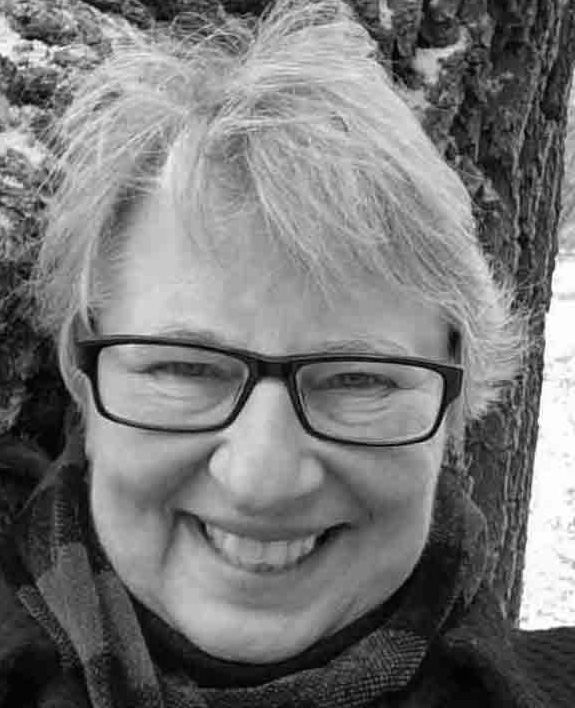
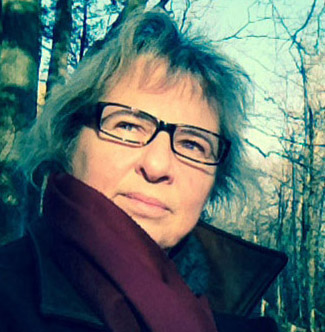
Nina Munteanu walks Emily Tract Park, ON (photo by Merridy Cox)

Nina Munteanu is a Canadian ecologist / limnologist and novelist. She is co-editor of Europa SF and currently teaches writing courses at George Brown College and the University of Toronto. Visit www.ninamunteanu.ca for the latest on her books. Nina’s bilingual “La natura dell’acqua / The Way of Water” was published by Mincione Edizioni in Rome. Her non-fiction book “Water Is…” by Pixl Press(Vancouver) was selected by Margaret Atwood in the New York Times ‘Year in Reading’ and was chosen as the 2017 Summer Read by Water Canada. Her novel “A Diary in the Age of Water” was released by Inanna Publications (Toronto) in June 2020.