“There simply aren’t enough Canadians to protect our wilderness; but if there were enough of us, there’d be no wilderness left to protect.”
Lynna Dresden
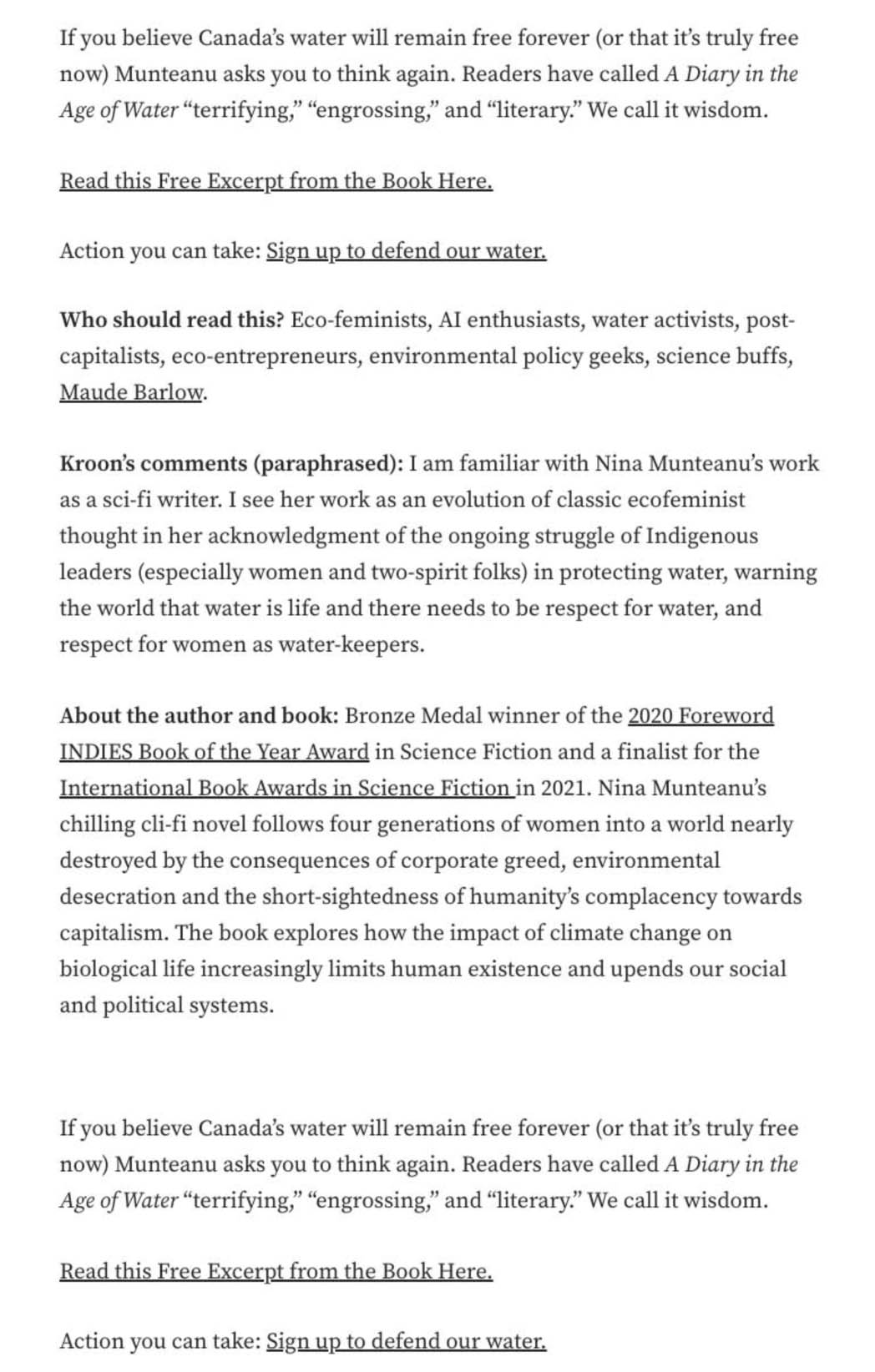
“Strangely compelling.”
BURIED IN PRINT
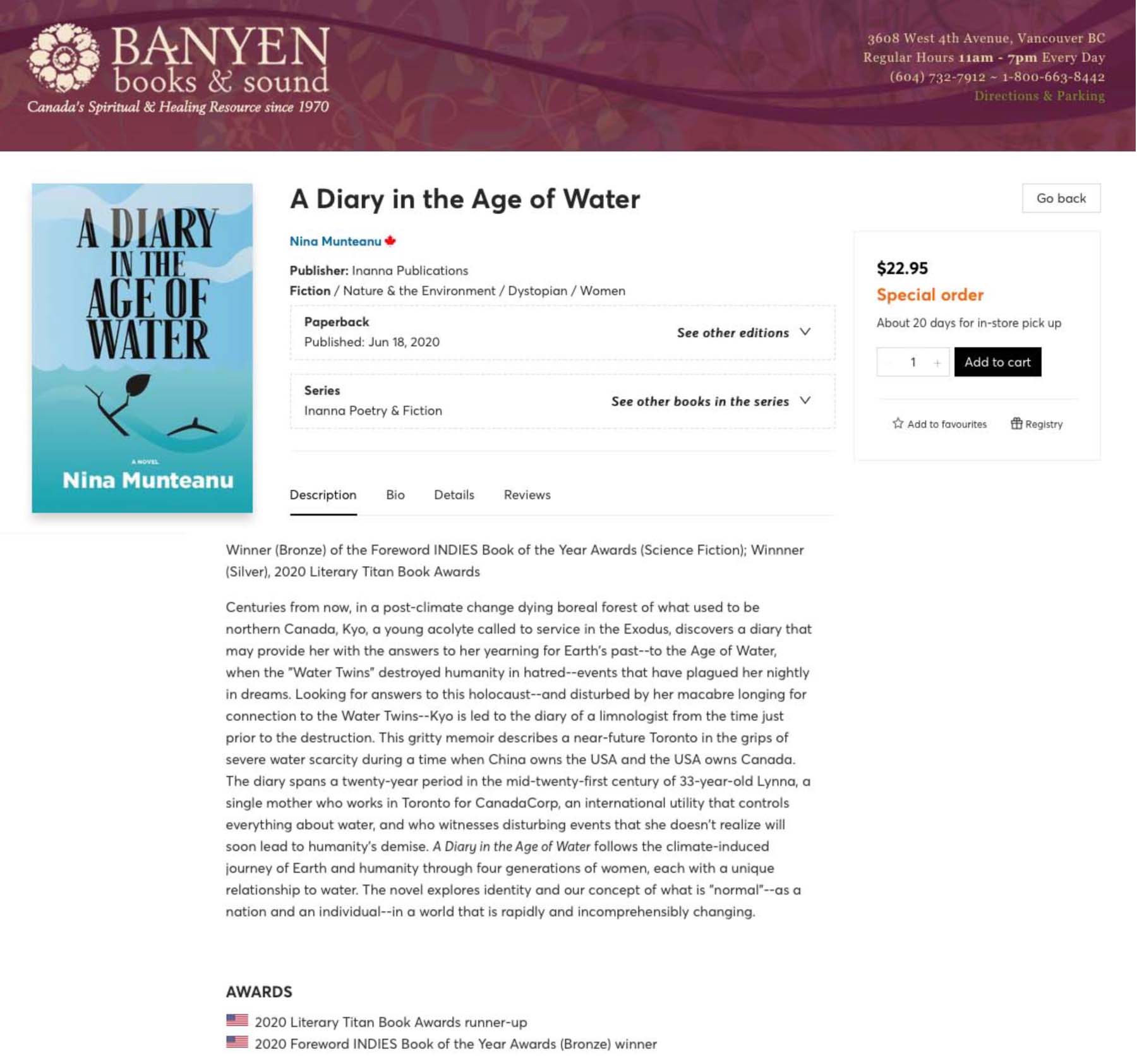
“A Diary in the Age of Water, is simply and beautifully told, profoundly true; a novel that invites us to embrace the wisdom of ages. The story stirs its readers, teaches them about the importance of water, and leaves an imprint on the canvas of the literary and scientific world.”
LUCIA MONICA GOREA, author of Journey Through My Soul
Boys explore the shore of the Otonabee River, ON (photo and rendition by Nina Munteanu)
“Nothing in nature stays the same. Or if it does, it’s because change has brought it back to what it once was.”
Lynna Dresden
“Munteanu excels at extrapolating today’s science into a stark vision of what we face in the next decades. Environmentalists, science fact enthusiasts, and science fiction fans will be shaken by this cautionary tale of climate change. Great for fans of James Lawrence Powell’s The 2084 Report, Kim Stanley Robinson’s The Ministry for the Future.”
PUBLISHERS WEEKLY
Thompson Creek, ON (photo and rendition by Nina Munteanu)
“We hold ourselves apart from our profligate nature. But we aren’t unique. We are more part of Nature than we admit. Using the thread of epigenetics and horizontal gene transfer, Nature stitches in us a moving tapestry of terrible irony. The irony lies in our conviction that we were made in the inimitable divine image of God. That we are special. Water flows endlessly through us, whether we are devout Catholics or empty vessels with no purpose. Water makes no distinction. It flows through us even after we bury ourselves.”
Lynna Dresden
A Diary in the Age of Water is “Unsettling and yet deliciously readable … Brilliant.”
THE PRAIRIE BOOK REVIEW
Swamp forest by country road, Kawarthas, ON (photo and rendition by Nina Munteanu)
“When you look at a deep pond, you don’t see the bottom. Instead, you see yourself reflected there. The calmer the pond, the more you see of you, the less of the pond.”
Lynna Dresden
A Diary in the Age of water is “delightfully unique … a story where there is a lot more underneath the gleaming surface.”
Poplar trees in fall, ON (photo and rendition by Nina Munteanu)
I just finished reading Ben Rawlence’s 2022 book The Treeline. It is a book that made me think. It made me cry. It made me despair. It also gave me hope.
Cattails line a snow-covered marsh with spruce and fir behind, ON (photo and rendition by Nina Munteanu)
I was gripped by this honest and unflinching exploration on the moving treeline with climate change and what it will mean for humanity. Beautifully written and rigorously reported, Rawlence invited me on a journey of all major treelines over the globe from Scotland, Norway and Russia, to Alaska, Canada and Greenland. Throughout his description of a warming world and a vanishing way of life, Rawlence meditates on the many repercussions on how humans live.
Pine-cedar forest in Ontario (photo and rendition by Nina Munteanu)
He aptly describes the forests of the world as the ‘heartbeat of the planet,’ the cycles of breathing and the pulses of life from the spike of oxygen in the spring when trees put out their leaves to the peaks and troughs over day and night that regulate plant photosynthesis and respiration. The peaks and troughs are getting shallower, he writes. With more carbon dioxide in the air the trees work less; they inhale less and exhale less oxygen.
“The planet is a finely tuned system. A few degrees of change in its orbit can usher in an ice age; a few degrees of temperature change can transform the distribution of species, can melt glaciers and create oceans. In the future, when the ice is gone, there may be no such thing as a treeline at all. As the stable currents of air and water associated with the Gulf Stream, the polar front, polar vortex and Beaufort Gyre dissipate or fluctuate, the Arctic Ocean melts completely, and the Rossby waves in the upper atmosphere go haywire, the fine gradations of temperature, altitude and latitude first observed by Alexander von Humboldt will become decoupled and ecological transition zones scrambled. Instead of a majestic sweeping zone of forest around the planet, we might find discontinuous pockets of trees in odd places, refugees from soil and temperatures long gone, and crocodiles once again at the North Pole.”
Ben Rawlence, The Treeline
Snow-covered river shoreline with mixed forest, ON (photo and rendition by Nina Munteanu)
Rawlence brings this all into perspective to our present situation and the role science has played in our hubristic illusion of control:
“An unfortunate side effect of science is the illusion of human mastery: the idea that if we know what is happening then we can control. The irony is that we might have been able to. The tragedy is that it is too late. The chain reaction is under way. The curve only gets steeper from here…five metres of sea level rise is locked in; it’s just a question of how fast the ice melts. Once again, the models seem to underestimate the speed…”
Ben Rawlence, The Treeline
Willow by a river at first snow, ON (photo and rendition by Nina Munteanu)
What is most unfortunate for us, for humanity, is that we have known all this for some time. But we’ve done little. “Industrialist capitalism and its export colonialism” with its exploitive gaze that drives our needs and wants and actions has chosen to ignore the signs. That exploitive gaze ignored that we are not only embedded in but dependent upon the natural world and all the forests to live and flourish.
Tamarack and birch trees in the fall, ON (photo and rendition by Nina Munteanu)
What Rawlence does acknowledge is a way out of our self-created doom and accompanying solastalgia:
“Our present emergency is forcing us to remember what, until recently, we have always known: that there is a web of communication, meaning and significance beyond us, a world of life forms constantly chattering, shouting and flirting and hunting each other, indifferent to human affairs. And there is solace in such a vision. The way out of the depression and grief and guilt of the carbon cul-de-sac we have driven down is to contemplate the world without us. To know the earth, that life, will continue its evolutionary journey in all its mystery and wonder. To widen our idea of time, and of ourselves. If we see ourselves as part of a larger whole, then it is the complete picture that is beautiful, worthy of meaning and respect, worth perhaps dying for, safe in the knowledge that life is not the opposite of death but a circle, as the forest teaches us, a continuum.”
Ben Rawlence, The Treeline
Poplar trees line a road in the Ontario country (photo and rendition by Nina Munteanu)
The planet will be alright. Species will go and others will come. Earth has experienced five extinction events (we are currently experiencing the sixth extinction event now) and after each, life flourished again, albeit different life.
Is there still hope for humanity? Perhaps—if we set our hubris aside and embrace humility and kindness. And, if in that humility, we can adapt our way through the succession we’ve triggered. There might be hope for us still…
Rawlence devotes his epilogue called “Thinking Like a Forest” to the wisdom of the indigenous people who have for millennia co-existed sustainably with the natural ecosystems of the Earth. “The Koyukon, the Sámi, the Nganasan, the Anishinaabe are just a few of the countless indigenous peoples whose world view attests to our foundational reliance on the forest.”
Time to learn from them.
Trees at sunset in winter, ON (photo and rendition by Nina Munteanu)
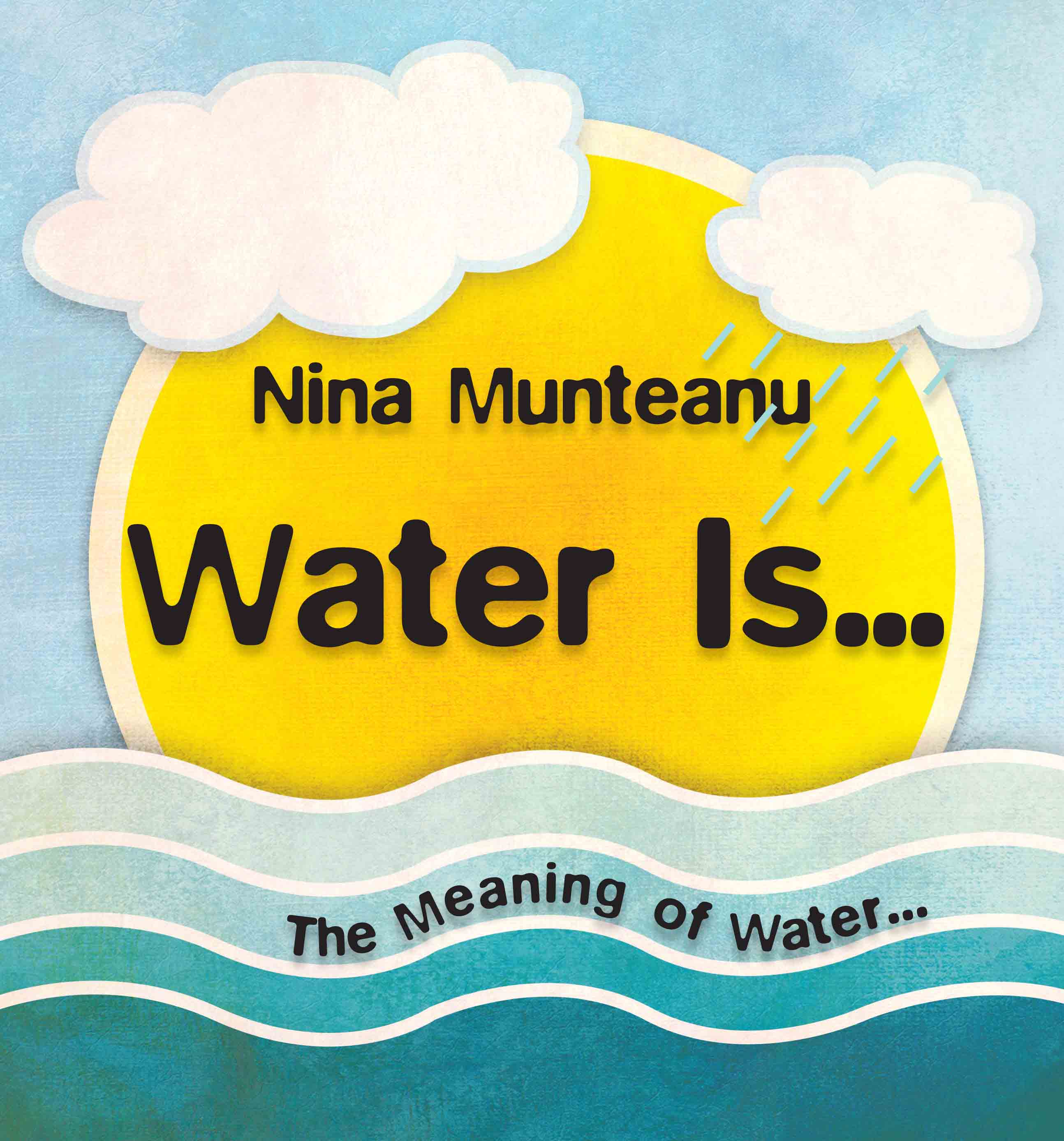
Nina Munteanu is an ecologist and internationally published author of award-nominated speculative novels, short stories and non-fiction. She is co-editor of Europa SF and currently teaches writing courses at George Brown College and the University of Toronto. Visit www.ninamunteanu.ca for the latest on her books. Nina’s recent book is the bilingual “La natura dell’acqua / The Way of Water” (Mincione Edizioni, Rome). Her latest “Water Is…” is currently an Amazon Bestseller and NY Times ‘year in reading’ choice of Margaret Atwood.
Alvar in spring, ON (photo and rendition by Nina Munteanu)
In my previous article, “Five Things Writers Wish Editors Knew—and Followed,” I focused on clarifying expectations between editors and writers from the writer’s point of view.
Part 2, this article, focuses on this same relationship from the editor’s point of view. If you are a writer, this article serves as a workable checklist of what you should expect from a good editor.
Realizing Expectations
Indie authors often come to editors with unclear and, at times, unreasonable or unrealistic expectations on services. Many writers know very little about the kind of editing we do and the different levels of effort (time and associated fee) required. They do not understand the difference between “copy-editing” and “structural editing”, particularly as it pertains to their own work. In fact, many indie writers don’t even know what their MS requires. This is because of two things: 1) they can’t objectively assess their own work, particularly in relation to market needs; and 2) many authors have not sufficiently considered their “voice” or brand and matched it to a relevant target market. Both of these will influence how the writer comes into the relationship and the nature of their expectations.
It is best to be “up front” with everything, from understanding a writer’s work and market expectations to establishing your fees, your time, and the nature of your services. This is why a savvy editor will ask for a one to several page example of the author’s writing prior to offering their services and finalizing the nature of a potential relationship. Such an exchange may, in turn, include a sample of the editor’s work for the writer to assess. This exchange helps clarify the process for both parties.
A savvy editor will want to establish with the author the following things prior to taking him/her on as a client and embarking on the actual editing task:
The nature of the writer’s work: a writer’s work should harmonize with the editor and achieve a good fit; e.g., I edit fiction and non-fiction; however, I do not edit horror, because I simply can’t relate to it and don’t care for it. More on this below.
The author’s expectations and target market: this is key to establishing the kind of editing required for the author’s piece. Is it good enough to just copy-edit or will the piece require substantive edits to succeed in the identified market? This often requires open and frank communication between editor and author.
Nature and time of submission: on which the schedule is based.
Schedule and deadlines for deliverables: based on the editor’s realistic timing (including other work) and the nature of the editing job (to be established by some reliable means).
Nature of communication: form and frequency; partly to ensure that the writer does not abuse the communication stream with a barrage of emails, e-chats, phone calls, etc.)
Nature and cost of deliverables: e.g., use of track changes; inclusion of summary letter; follow up meetings, etc.
Mutual agreement on fees, fee structure and payment details: what, how and when.
Inclusion and nature of contract: this may include an NDS, if desired.
By clarifying these, you and the author create a new set of realistic agreed-upon expectations.
Fitting Writer with Editor
The right fit for editor and writer includes more than harmonizing genre, writing style, and content. The fit includes personality. A professional editor and writing colleague of mine recently shared on our list-serve about his experience as both a freelance and publishing house editor. The editor shared that a majority of writers responded to his edits with comments like, “finally, someone who just comes out and plainly tells me what’s wrong!” However, others complained: “why are you so mean?” The editor admitted to using humor liberally in his assessments and was described by one of his clients as “playfully harsh.” While the work of this editor is no doubt impeccable, the added humor may not be a good fit for some writers, particularly those who are not highly confident in their work.
Knowing your own brand of editing and being up front with it is part of achieving a good fit with a writer and can avoid huge headaches down the line for both of you.
Toward Honesty & Moral Integrity
I and some of my editing colleagues have run across several cases of indie writers who have come to us with “already edited works” that they believed only needed proofing or minor edits, but in fact called for substantive editing and story coaching to fulfill market requirements. The previous editor had either done a poor job of editing or the author had done a poor job of incorporating the edits. Either way, I was now in the position to inform this author, who had already spent several thousand dollars on edits, that his work required more than a “trim job off the top” to meet the standards demanded by the market.
My colleague suggested that it is unethical to copy-edit a manuscript that obviously requires structural editing or has serious “story” problems. I’m inclined to agree. The key lies in the expectations of the author and his/her intended market. This is where the editor’s knowledge of “matching work to market” becomes a critical part of the relationship with the author, whether you take him/her on as a client or not. I talked more about this in an article on Boldface: “The Moving Target of Indie Publishing: What Every Editor (and Writer) Needs to Know.” Honesty is best. Following the path of moral integrity may not put food on the table; but it will maintain your reputation as an editor of quality, which will keep the roof over your head.
Below is a mock email of a general response to a writer’s inquiry for help on their MS:
Dear Alice,
Thank you for your interest in my editing services. I am still taking on clients and would be happy to help you.
In your initial letter, you included a brief description of your story. It sounds intriguing and interesting. Science fiction is my passion (I’ve published nine SF books so far).
Before we proceed, I need a few things from you to ensure we are a good fit and to help me do the best I can for your project. First, can you please send me a short sample of your work (2-3 pages) and a very short summary. From this I’ll be able to confirm the kind of editing that best suits your project. For the kinds of editing/coaching services and associated fees please refer to this page on my website: xxxx.
Can you also answer the following questions?
1. (If they haven’t included the genre or a short premise, I ask them for one). 2. How do you intend to publish this book (traditional, indie, self-publish)? 3. Who would you say is your intended audience and market? 4. Is his book a sand alone or par of a trilogy or series? 5. Is the book complete (firs draft or higher? If not, how much is written?
Based on this, I will suggest the kind of editing (and coaching) required to best fit your needs. This may be one or a combination of the following: 1) an evaluation/assessment at $xx/page; 2) copy-editing (with some substantive editing) at $xx/page; or 3) story coaching at $xx/hour. As outlined on my webpage (xxxx), I provide digital commentary (line by line) in your manuscript (in Word through track changes) accompanied by a summary letter with recommendations. You can find examples of what I do on this page of my website: xxxx. Once I’ve determined what services best suit your work and you are in agreement with the service and fees, I will draw up a contract for you and I to sign. The contract will stipulate a reasonable schedule that you and I can agree on for the process and deliverables.
Once the contract is signed by both of us, I would ask that you send me your material along with Paypal payment for the first half of the agreed total fee by the date marked in the contract.
I look forward to hearing from you.
Best Wishes, Nina
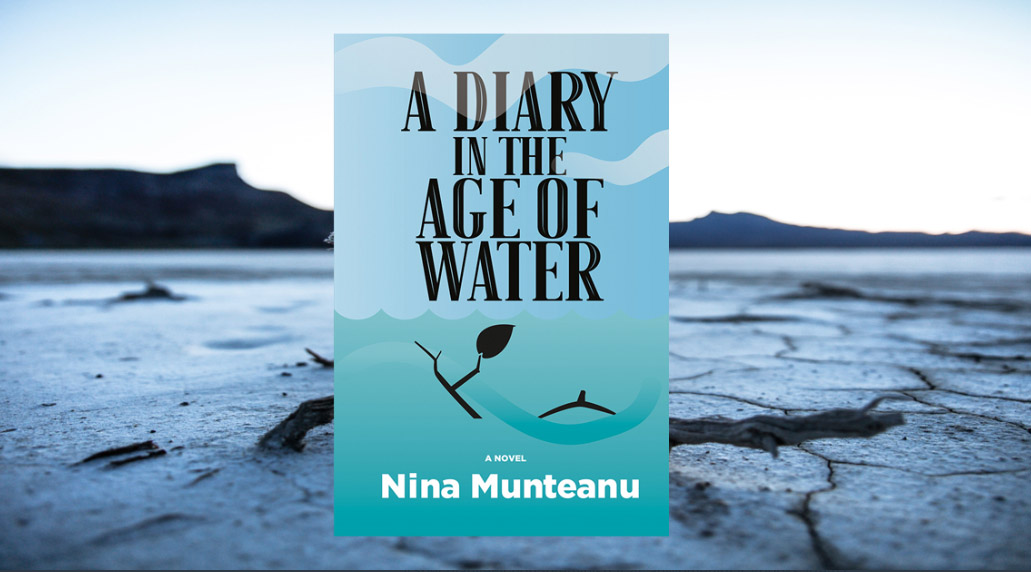
Nina Munteanu is a Canadian ecologist / limnologist and novelist. She is co-editor of Europa SF and currently teaches writing courses at George Brown College and the University of Toronto. Visit www.ninamunteanu.ca for the latest on her books. Nina’s bilingual “La natura dell’acqua / The Way of Water” was published by Mincione Edizioni in Rome. Her non-fiction book “Water Is…” by Pixl Press (Vancouver) was selected by Margaret Atwood in the New York Times ‘Year in Reading’ and was chosen as the 2017 Summer Read by Water Canada. Her novel “A Diary in the Age of Water” was released by Inanna Publications (Toronto) in June 2020.
“As Nature tames a lake over time, one thing replaces another. As it undergoes a natural succession from oligotrophic to highly productive eutrophic, a lake’s beauty mellows and it surrenders to the complexities of destiny. Minimalism yields to a baroque richness that, in turn, heralds extinction. The lake shrinks to a swamp then buries itself under a meadow.”
Lynna Dresden
’A Diary’ is a brilliant story…Munteanu writes with fresh, stimulating style.”
CRAIG H. BOWLSBY, author of The Knights of Winter
Outlet of Thompson Creek at sunset, ON (photo and rendition by Nina Munteanu)
Ice and snow cover the Otonabee River in winter, ON (photo and rendition by Nina Munteanu)
In my upcoming novel “Gaia’s Revolution,” one of the protagonists, Damien Vogel, contemplates in 2022 a key event from 2020 that only a few seem to take seriously:
In Siberia in June 2020, record heat of thirty degrees Centigrade, over the average of 11 degrees, collapsed permafrost and caused oil tanks in Norilsk to rupture. Over twenty thousand tonnes of diesel spilled into the Pyasina lake and river system. Damien remembers looking at the veins of red on satellite images from space. That disaster is just the beginning of what the ‘sleeping bear’ of methane hydrates promise to unleash when the permafrost reaches a critical thaw and those hydrates awaken. Melting permafrost is a quiet sleeper in the climate change procession, he considers. At a microscopic level, in the chemistry of the water and in the change in the atmosphere, a time bomb is ticking.
A decade later, Damien’s twin brother, Eric, notes that:
“Back in the ‘20s scientists started noticing major permafrost melt on the Siberian Shelf,” Eric goes on. “The melting released hydrates, which set the oil and gas companies frothing at the mouth with joy and the climate scientists spinning in a panic because of what they knew it meant for the planet. It was the harbinger of the largest methane ‘burp’ ever.”
Eric then adds:
“Permafrost thaw kicked us into this devastating global warming, Dame, and everyone—even the climate modellers—ignored it, because they didn’t have enough data. Gottverdammt! They’re all still asleep, Dame!”
In his book The Treeline, Ben Rawlence writes about the ongoing extinction of indigenous peoples in the north as the treeline migrates northward into tundra and the permafrost and sea ice change and go extinct themselves.
Ice fragments on the Otonabee River, ON (photo by Nina Munteanu)
Because methane is present in much smaller concentrations many scientists have mistakenly deemed it as important as carbon dioxide in the climate change equation; however, it is becoming obvious that methane poses a real and largely unacknowledged danger. Methane is twenty times more efficient in trapping heat than carbon dioxide. Permafrost—which is currently melting rapidly in the north—contains almost twice as much carbon as is currently in the atmosphere. In the rapidly warming Arctic (warming twice as fast as the globe as a whole), the upper layers of this frozen soil are thawing, allowing deposited organic material to decompose and release methane.
.
The clathrate gun hypothesis is the notion that sea temperature rises (and/or drops in sea levels) may trigger a catastrophic positive feedback on climate: warming would cause a sudden release of methane from methane clathrate (hydrate) compounds buried in seabeds, in the permafrost, and under ice sheets.
Something of this nature has already occurred in Siberia in 2020. In his book The Treeline Ben Rawlence reports the following warning by Dutch scientist Dr. Ko van Huissteden, a leading authority on permafrost:
“It is hard to measure methane release … [but] some studies have suggested that an unstable seabed could release a methane ‘burp’ of 500-5000 gigatonnes, equivalent to decades of greenhouse gas emissions, contributing to an abrupt jump in temperature that humans will be powerless to arrest.” (Wadhams, 2015)
Creation of gas hydrates requires high pressure; water; gas—mainly methane—and low temperatures. Three environments considered suitable for this process to occur include: sub-seabed along the world’s continental margins; permafrost areas on land and off shore; and a process for storing methane hydrates: ice sheets. As long as the climate is cold and the ice sheet stable, the gas hydrate zone remains stable. As the ice sheets melt, the pressure on the ground decreases; hydrates destabilize and release methane into rising seawater and finally into the atmosphere.
A recent study in Science revealed that hundreds of massive, kilometer-wide craters on the ocean floor in the Arctic were formed by substantial methane expulsions. Because methane is a powerful greenhouse gas, temperatures would rise exponentially. Once started, this runaway process could be as irreversible as the firing of a gun—and on a time scale less than a human lifetime.
The sudden release of large amounts of natural warming gas from methane clathrate deposits in runaway climate change could be a cause of past, future, and present climate changes.
Latest research on the Greenland ice sheet and elsewhere throughout the Arctic has revealed major methane discharges in Arctic lakes in areas of permafrost thaw. Scientists are exploring areas where methane is bubbling to the surface and releasing to the atmosphere.
If human emissions continue at their current rate, rapidly changing ocean currents and retreating ice sheets may uncork methane from under ice caps, ocean sediments and Arctic permafrost, causing a jump in radiative forcing. Even if rapid ice sheet disintegration were to scatter large amounts of ice into the oceans, the net cooling effect would be strongly countered and likely overwhelmed. The areas that did cool would likely trigger severe weather outbreaks.
As I write, we are pumping out CO2 into the atmosphere at a rate 10 times faster than at any point in the past 66 m years, with the resulting sea level rises, extreme weather events, heat waves, droughts, unseasonal storms, and stress on biodiversity around the globe. Research published in the journal Nature Geoscience demonstrates that “the world has entered ‘uncharted territory’ and that the consequences for life on land and in the oceans may be more severe than at any time since the extinction of the dinosaurs,” writes Damian Carrington of The Guardian.
In an interview with Guardian reporter John Abraham, Woods Hole expert Robert Max Holmes, exhorted:
It’s essential that policymakers begin to seriously consider the possibility of a substantial permafrost carbon feedback to global warming. If they don’t, I suspect that down the road we’ll all be looking at the 2°C threshold in our rear-view mirror.
Ice break up on the Otonabee River in early spring, ON (photo by Nina Munteanu)
Wadhams, Peter. 2015. “A Farewell to Ice.” Penguin.
Flowing water in a river, ON (photo by Nina Munteanu)
Nina Munteanu is a Canadian ecologist / limnologist and novelist. She is co-editor of Europa SF and currently teaches writing courses at George Brown College and the University of Toronto. Visit www.ninamunteanu.ca for the latest on her books. Nina’s bilingual “La natura dell’acqua / The Way of Water” was published by Mincione Edizioni in Rome. Her non-fiction book “Water Is…” by Pixl Press (Vancouver) was selected by Margaret Atwood in the New York Times ‘Year in Reading’ and was chosen as the 2017 Summer Read by Water Canada. Her novel “A Diary in the Age of Water” was released by Inanna Publications (Toronto) in June 2020.