My Books Selling at Banyen Books & Sound, Vancouver

Water Is… sits on the shelf at Banyen Books (photo by Nina Munteanu)

My books “Water Is… The Meaning of Water” and “A Diary in the Age of Water” are selling at Banyen Books in Kitsilano, Vancouver. While “A Diary in the Age of Water” is on Banyen’s virtual shelf for order, “Water Is…” sits on a shelf in the Water: Life-force & Resource / Ecology section.

“Water Is…” sits on the ‘water as life-force & resource’ shelf at Banyen Books, Vancouver (photo by Nina Munteanu)

Banyen Books is located in Kitsilano on the south side of W 4th Avenue on the corner of Dunbar under a grove of healthy oak trees. Across the store is Aphrodite’s Organic Pies, itself a destination for awesome pies. Banyen Books is a beautiful store. It is spacious and surrounded with the warmth of wood and plants. Its wonderful atmosphere invites you to browse the shelves and sit on the comfortable chairs to read. Banyen Books has become a destination for me whenever I’m in Vancouver.
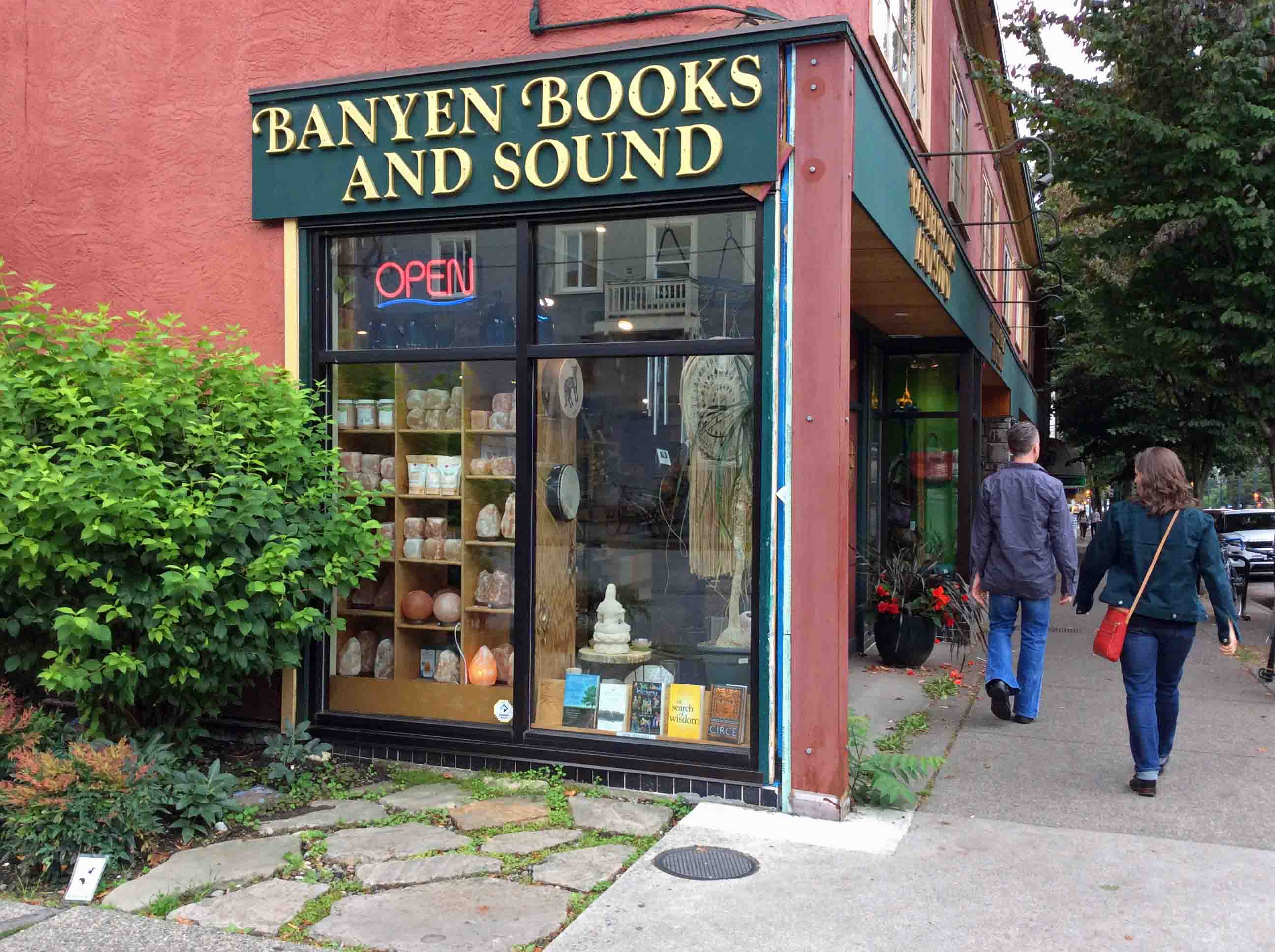
Banyen Books on the corner of W 4th and Dunbar, Vancouver, BC (photo by Nina Munteanu)

Since opening in 1970 Banyen Books has become Canada’s most comprehensive metaphysical bookstore, offering a broad spectrum of resources from humanity’s spiritual, healing, and earth wisdom traditions. Here is how they put it:

Banyen is an oasis, a crossroads, a meeting place… for East and West, the “old ways” and current discoveries and syntheses. Our beat is the “Perennial Philosophy” as well as our evolving learning edges and best practices in a wide variety of fields, from acupuncture to Zen, from childbirth and business to the Hermetic Mysteries, from the compost pile to the celestial spheres. We’re “in the philosophy business,” on “a street in the philosophy district” (as an old cartoon wagged). We welcome and celebrate the love of wisdom, be it in art, science, lifecraft, healing, visioning, religion, psychology, eco-design, gardening… Our service is to offer life-giving nourishment for the body (resilient, vital), the mind (trained, open), and the soul (resonant, connected, in-formed). Think of us as your open source bookstore for the “University of Life”.

Whenever I’m in Vancouver to visit family and friends, I make at least one stop at Banyen Books and often come out with an armful of books. On my most recent stop, I purchased a book on plant intelligence and several beautiful journals (I use a journal for each book project I work on).

My latest purchase at Banyen Books (photo by Nina Munteanu)

Banyen Books & Sound:

3608 West 4th Avenue
Vancouver, BC
604-732-7912

HOURS:

Mon-Fri: 10am-9pm
Sat: 10am-8pm
Sun: 11am-7pm
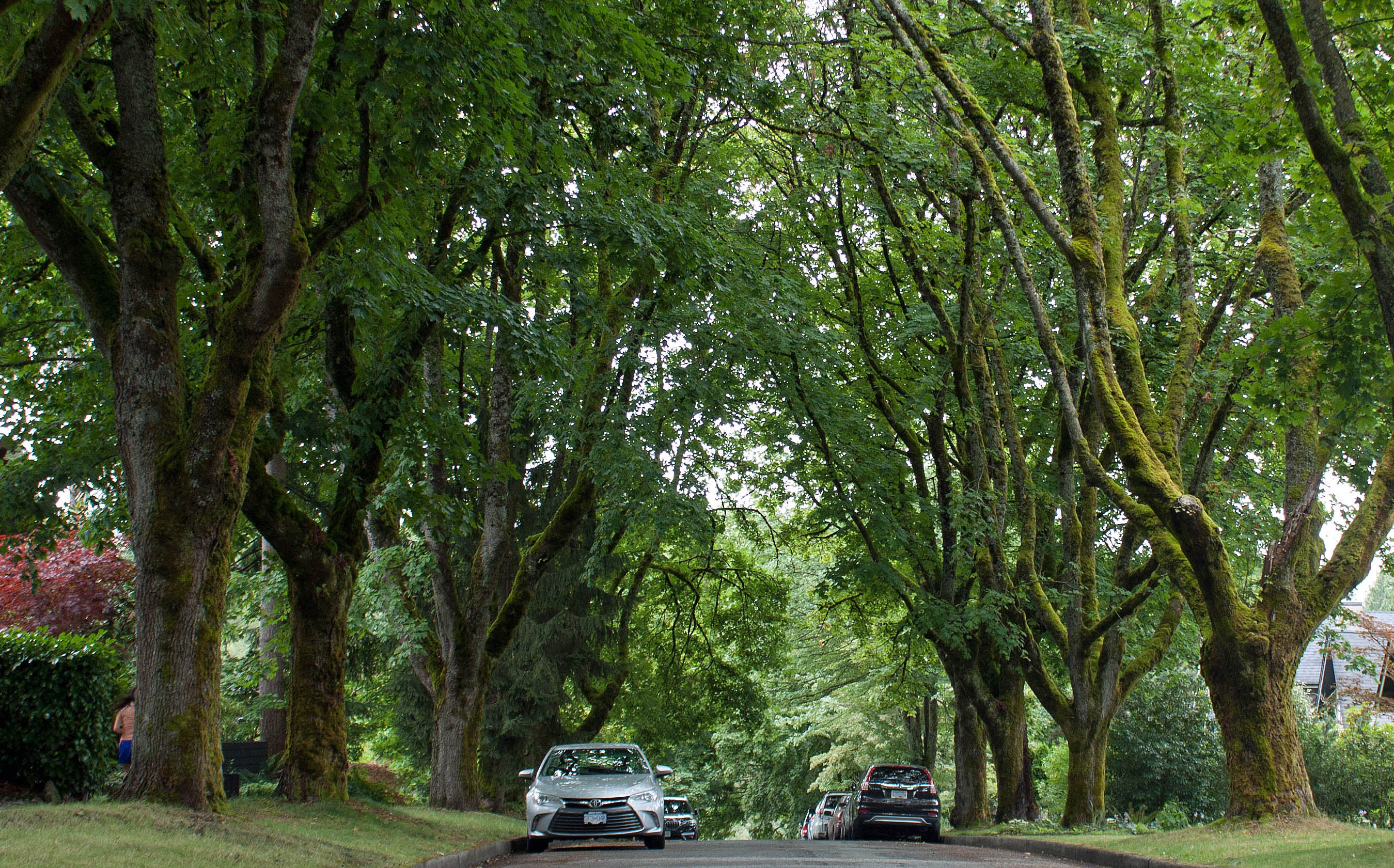
19th Avenue in Vancouver, BC (photo by Nina Munteanu)

Nina Munteanu is a Canadian ecologist / limnologist and novelist. She is co-editor of Europa SF and currently teaches writing courses at George Brown College and the University of Toronto. Visit www.ninamunteanu.ca for the latest on her books. Nina’s bilingual “La natura dell’acqua / The Way of Water” was published by Mincione Edizioni in Rome. Her non-fiction book “Water Is…” by Pixl Press (Vancouver) was selected by Margaret Atwood in the New York Times ‘Year in Reading’ and was chosen as the 2017 Summer Read by Water Canada. Her novel “A Diary in the Age of Water” was released by Inanna Publications (Toronto) in June 2020.

Book Review: Nina’s “Favourite 3 Reads Of 2023– Feminist Eco-Fiction

In late 2023, I was invited by Shepherd to post an article of my favourite three reads of 2023. I had earlier that year posted on Shepherd an article describing what I considered to be the best eco-fiction books that make you care and give you hope.

I started out by reviewing what I had read in 2023. It looked like I’d read about thirty odd books, almost half and half non-fiction to fiction. That’s not many, but I’m a slow reader. I pore through each book at a snail’s pace, spending time making notes with some, particularly the non-fiction books, which I use to research my writing. With fiction, I dive in deep and thoroughly savor each word and sentence like a mouthful of an excellent meal made with loving hands. Books varied from non-fiction scholarly works on forest ecosystems (The Treeline by Ben Rawlence) and post-capitalism (Four Futures by Peter Frase) to literary fiction, political thrillers, speculative fiction, clifi, and eco-fiction.

It was a tough choice, but I came up with three choices and a thematic rationale that resonated with me and made a deep kind of sense for that year: all three books were eco-fiction of sorts and featured hopeful stories of strong women, acting out of compassion and in solidarity with intelligence, kindness and courage. For me, 2023 was a year of strong feminine energy for the planet and my favourite books reflect that. Here they are (read the original article on Shepherd here):

The first of my favourite three books of 2023 is Michelle Min Sterling’s Camp Zero.

Set in the remote Canadian north—a place I love for its harsh beauty—this feminist climate fiction explores a warming climate through the perilous journeys of several female characters, each relating to her environment in different ways. Each woman exerts agency in surprising ways that include love, bravery and shared community. The strength of female power carried me through the pages like a braided river heading to a singular ocean. These very different women journey through the dark ruins of violent capitalism, colonialism and patriarchy—flowing past and through hubristic men pushing north with agendas and jingoistic visions—to triumph in an ocean of solidarity. I empathized with each woman as she found her strength and learned to wield true heroism—one based on collaboration and humble honesty.

My second favourite book of 2023 is Yevgeni Zamyatin’s We.

I enjoyed this 1920 hopeful dystopia for its courageous and unprecedented feminism. While the story centres on logical D-503, a man vacuously content as a number in the One State, it is I-330—Zamyatin’s unruly heroine—who stole my attention. Confident, powerful and heroic, the liberated I-330 embraces the Green Wind of change to influence D-503. A force of hope and resilience, she braves torture to successfully orchestrate a revolution that breaches the Green Wall—feats typically relegated to a male protagonist in novels of that era. When pregnant O-90 refuses to surrender her child to the State, I-330 helps her escape to the outside, where the Green Wind of freedom blows. I resonated with Zamyatin’s cautionary tale on the folly of logic without love and Nature.

My third favourite book of 2023 is Hugh Howie’s Wool (first of the SILO series).

Juliette—humble and gutsy, kind and relentlessly motivated in her journey for the truth—kept the pages turning for me. Juliette is a mechanic from the Down-Deep of the underground Silo, humanity’s last refuge to a toxic world. When Juliette inexplicably lands the job of sheriff, she treats her new position as a tool to seek the truth about her lover’s mysterious recent death. At her own peril, she pulls on threads that ultimately reveal a great conspiracy.

Juliette’s literal and metaphoric rise from the Down-Deep to the Up-Top is a feminist’s journey that transcends intersectional barriers as she battles small-minded men of power and maintains her integrity by refusing to abide by the inhumane Up-Top rules of order. By the end, I sensed a victory for humankind through womankind.

Also check out Shepherd’s 100 best books of 2023.

You might be interested in two of my own eco-fiction novels that feature several strong female protagonists:

Darwin’s Paradox follows the complex dynamic of a brave mother and her willful teenage daughter, both ‘gifted’ by a virus living inside them. Accused of murder and deliberately spreading the virus that killed many, Julie fled the enclosed city and settled in the climate wastelands with her husband and their child. Years later, when their harsh refuge is threatened by city forces seeking mother and daughter for experimentation, Julie leaves her family and gives herself up to the city, hoping they will abandon pursuing her daughter. Still psychically connected to the city’s AI community (now evolving into an autonomous entity with the intelligent virus), Julie entangles with political intrigue while her daughter, who followed her to the city, stumbles into her mother’s violent past. 

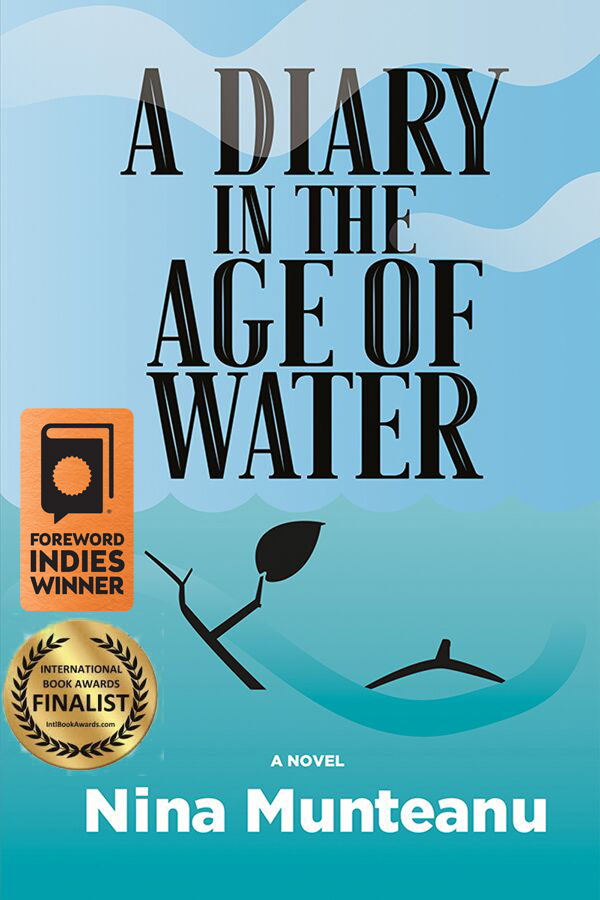
A Diary in the Age of Water follows the climate-induced journey of Earth and humanity through four generations of women, each with a unique relationship to water. Centuries from now, in a dying boreal forest in what used to be northern Canada, Kyo, a young acolyte called to service in the Exodus, yearns for Earth’s past—the Age of Water—before the “Water Twins” destroyed humanity. Looking for answers and plagued by vivid dreams of this holocaust, Kyo discovers the diary of Lynna, a limnologist from that time of severe water scarcity just prior to the destruction. In her work for a global giant that controls Earth’s water, Lynna witnesses and records in her diary the disturbing events that will soon lead to humanity’s demise.

.

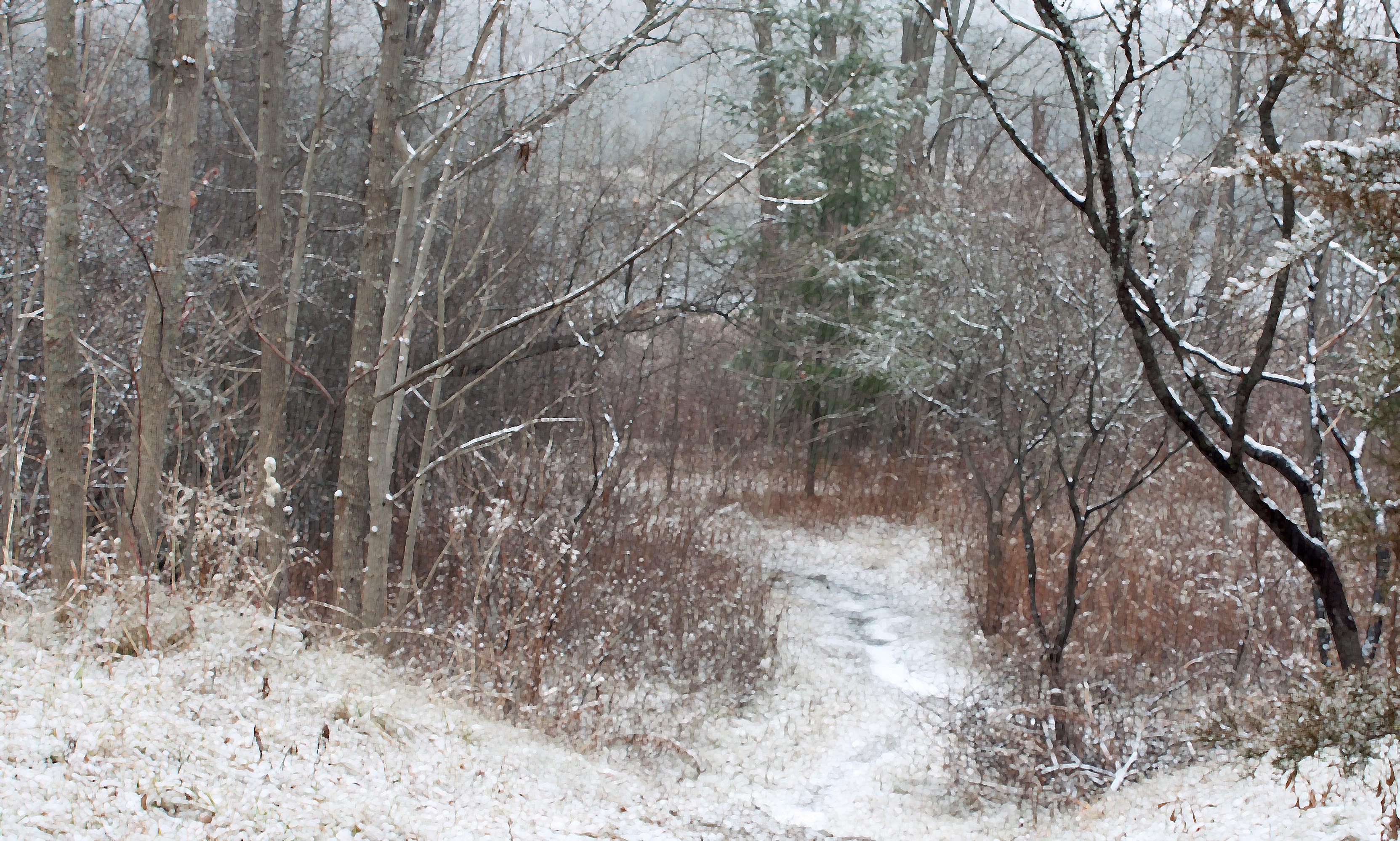
Path through a mixed forest in early winter, ON (photo and rendition by Nina Munteanu)

Nina Munteanu is a Canadian ecologist / limnologist and novelist. She is co-editor of Europa SF and currently teaches writing courses at George Brown College and the University of Toronto. Visit www.ninamunteanu.ca for the latest on her books. Nina’s bilingual “La natura dell’acqua / The Way of Water” was published by Mincione Edizioni in Rome. Her non-fiction book “Water Is…” by Pixl Press (Vancouver) was selected by Margaret Atwood in the New York Times ‘Year in Reading’ and was chosen as the 2017 Summer Read by Water Canada. Her novel “A Diary in the Age of Water” was released by Inanna Publications (Toronto) in June 2020.

Twelve Books on Climate and Environment for the Holidays

Gift guide: 12 books on climate can environment for the holidays

“For this year’s holiday gift guide,” writes Dr. Michael Svoboda, “Yale Climate Connections has gathered celebrated anthologies, deep-dives into climate-related science and solutions, inspiring books from or about spiritual leaders, and visionary works of climate fiction.”

All were recently published, some within the month, writes Svoboda. These twelve books address decades of writing on climate change, reassess the challenges, offer hope and guidance for action, and envision very different climate-changed futures.

There is, for instance, the anthology The Fragile Earth: Writing from the New Yorker on Climate Change (Harper Collins),which includes Bill McKibben’s seminal essay “The End of Nature.” The anthology All We Can Save(Penguin Random House) edited by Ayana Elizabeth Johnson and Katharine K. Wilkinson is a collection of works dedicated to leadership “more characteristically feminine and more faithfully feminist, rooted in compassion, connection, creativity, and collaboration.”

Hope, guide to action and challenges are provided by Future Sea (University of Chicago Press) by Deborah Rowan Wright, The New Map (Penguin Random House) by Daniel Yergin, Solved:How the World’s Great Cities are Fixing the Climate Crisis (University of Toronto Press) by David Miller, Let Us Dream (Simon & Schuster) by Pope Francis. Tales of Two Planets (Penguin Random House) edited by John Freeman explores inequality and the impact of climate change.

Stand Up! Speak Up! (Penguin Random House) by Andrew Joyner celebrates the inspiration of youth in taking up action through hope, activism and community. Our Only Home: A Climate Appeal to the World (Hanover Square) by the Dalai Lama and Franz Alt is a manifesto that will empower us to take action and save the environment. 

The novel The 2084 Report (Simon & Schuster) by James Lawrence Powell provides an “oral history” through interviews of the devastating effects of the Great Warming, which are both fascinating and frightening. My own novel A Diary in the Age of Water (Inanna Publications) chronicles the journeys of four generations of women, each carrying a unique relationship with water over a time of catastrophic change. Told in the form of a diary by a limnologist, the story explores a Canada mined for its water by United States, which, in turn, is owned by China. The Ministry for the Future (Hachette Book Group—Orbit) a novel by Kim Stanley Robinson uses fictional eyewitness accounts to tell the story of how climate change will affect us all.

Yale Climate Connections:

Edited by veteran journalist and journalism educator Bud Ward, Yale Climate Connections provides content developed by a network of experienced independent freelance science journalists, researchers, and educators across the country.Yale Climate Connections is an initiative of the Yale Center for Environmental Communication (YCEC), directed by Dr. Anthony Leiserowitz of the Yale School of the Environment, Yale University.

Dr. Michael Svoboda, an expert on climate change, is a professor at George Washington University and frequent contributor to Yale Climate Connections.

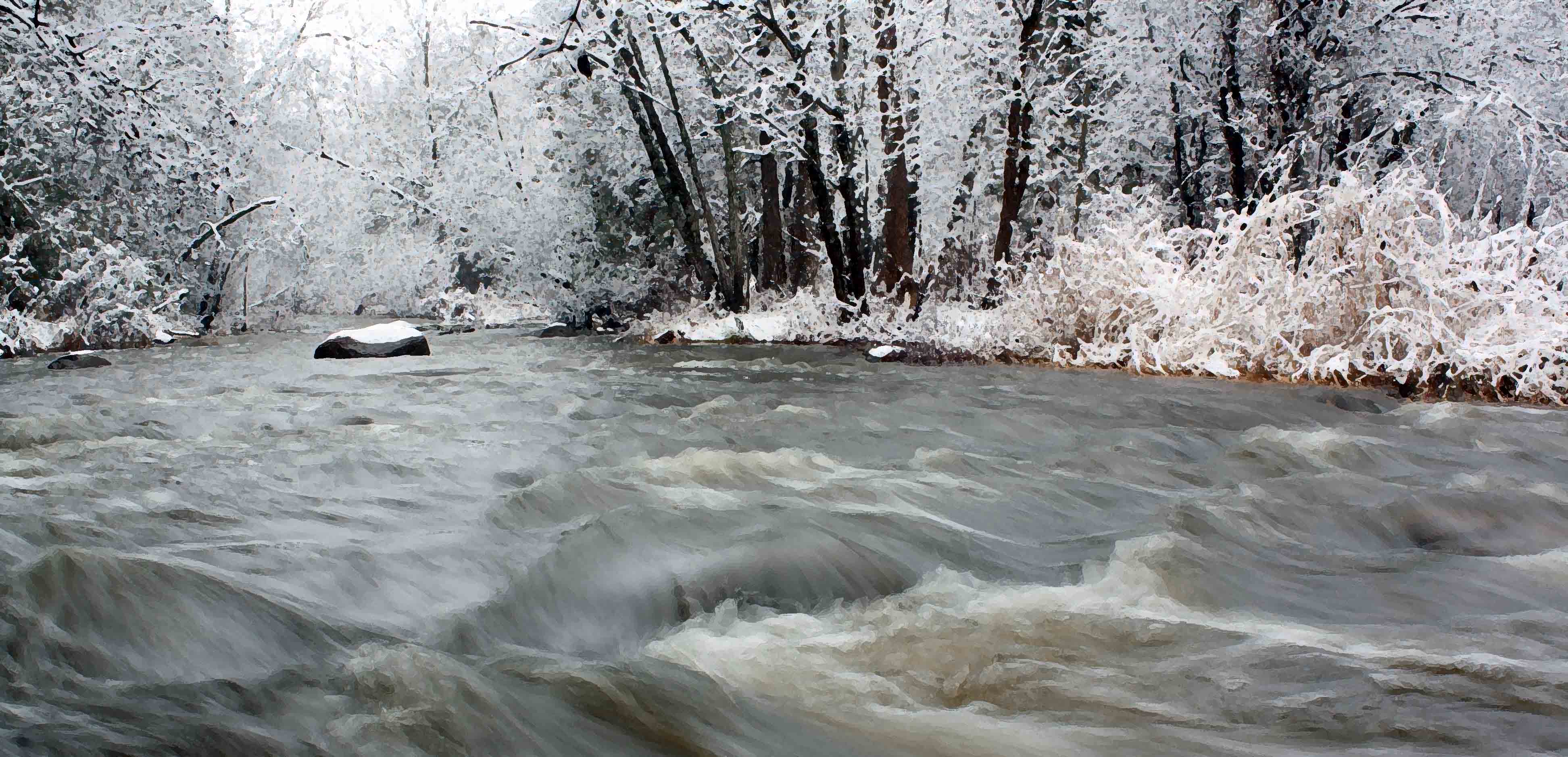
Jackson Creek in early winter, ON (photo and rendition by Nina Munteanu)

Nina Munteanu is a Canadian ecologist / limnologist and novelist. She is co-editor of Europa SF and currently teaches writing courses at George Brown College and the University of Toronto. Visit www.ninamunteanu.ca for the latest on her books. Nina’s bilingual “La natura dell’acqua / The Way of Water” was published by Mincione Edizioni in Rome. Her non-fiction book “Water Is…” by Pixl Press(Vancouver) was selected by Margaret Atwood in the New York Times ‘Year in Reading’ and was chosen as the 2017 Summer Read by Water Canada. Her novel “A Diary in the Age of Water” was released by Inanna Publications (Toronto) in June 2020.