Review of “A Diary in the Age of Water”: Women, Water, Numinosity, and the Transformation of the World

“It is a novel to learn from, and it is a novel to take forward into life as inspirational guide. Each of us is called upon to examine, not only our relationship with water, but with all Earth gifts.”

Jane Buchan, author & educator

Vermont author Jane Buchan recently wrote a review of my 2020 eco-fiction novel A Diary in the Age of Water. Here is an excerpt:

As climate, social, and political crises escalate, one source of guidance becomes essential to our continued optimism and activism: a Numinous Story… A Diary in the Age of Water by Nina Munteanu, is, for many of us alive in these terrifying times, a numinous story. It meanders through our consciousness with the enlightening science of fresh-water lakes and rivers and streams, sometimes heavy with sediment and toxicity, sometimes fast flowing and cleansing, sometimes terrifying with truths smacking us down with the force of a tidal bore. Its characters are story tellers and story receivers, and despite their diverse natures, all the stories they tell reveal the many threats to our source of life on Earth – our water.

Nina Munteanu’s novel structure is perfect for the weaving of human scientific and mystical relationships with water.  It’s initial and final sections create a frame for the inner story of bitterness, despair, self-serving behaviours, and corporate rapaciousness described by a professional scientist, a limnologist named Lynna. In the outer story we meet Kyo and Nam, Kyo’s mentor, as well as Ho, a librarian and keeper of a remnant of rare books. These characters exist on the other side of a mysterious cataclysm, the causes of which are the novel’s key themes.

Kyo, a small, four-armed blue being whose story begins and ends the novel, introduces us to the characters who form the larger diary section framed by the opening Library section and final Seed Ship section. Kyo makes glancing references to Una, mother of Lynna, and Lynna, mother of Hilde. Only Lynna is fully realized through her own perceptions and thoughts, these expressed in diary entries beginning in the spring of 2045 and ending in the late fall of 2066. Her diary, taking up 250 pages of this 303-page novel, provides the chronological spine connecting our past and present to a possible future that is not the one most humans want to think about, let alone welcome.

A Diary in the Age of Water is best sipped and savoured rather than gulped. Gulping will lead to choking for most non-scientist readers, and this book deserves to be experienced as it is written, in slow, undulating, revelatory waves… Like all complex stories, A Diary in the Age of Water requires patience, something our video-oriented age does not foster. The richest stories ask that we learn to hold many apparently divergent story threads at once. One of my fears as I read the diary was that the darkness of greed and short-sighted thinking and feeling would win out over that wondrous mystical relationship with the world that Una carried. While Una does her best to pass the experience of the sacred on to Lynna, Una’s spiritual influence is eclipsed by Lynna’s oppressive dependence on scientific knowledge to the exclusion of all else.

Through these characters, Nina Munteanu offers a warning for our times. Science is vitally important to our understanding of natural systems but science best serves us when it is balanced with an experience of the responsiveness of the natural world, a responsiveness that evokes our reverence and respect. Every culture honours the spiritual nature of the greater-than-human world, encoding its reverence in mythology, folktales, and wisdom traditions. – all keepers of numinous stories that transform our relationships with one another and the world. When we live honouring the sacred nature of all life, we become partners and co-creators. When we do not, we are highly dangerous parasites…

Lynna is called to hold the science of water firmly in her mind as her heart slowly opens to water’s responsiveness, water’s intelligence, water’s generosity, water’s love. It is a huge transformation for her, because science has been her safe place, her refuge. But knowing how something works is only the first part of the journey for those of us alive on this watery planet; we must all experience the why – the joy of unbreakable interconnections that make our lives meaningful… It is not Una’s daughter, Lynna, who carries this numinosity forward. It is Hilde, Una’s granddaughter, whose name means, significantly, Warrior Woman. How Kyo fits in to this lineage is one of the novel’s most unique speculations, one best discovered by reading the entire novel.

This novel is rich with information about water’s evolutionary journeys; it also describes the horrors of human greed that directly impact our relationships with water. It is not an easy book, but it is an important one, especially for people ready to engage, to advocate, to stand against the corporate insanity currently destroying Earth’s delicate balances. It is a novel to learn from, and it is a novel to take forward into life as inspirational guide. Each of us is called upon to examine, not only our relationship with water, but with all Earth gifts.

Go to Jane’s site Winterblooms to read the full review, worth reading in its entirety for its rich and poetic narrative.

Jane Buchan is a writer currently living in Vermont and originally from southwest Ontario. Her books include Under the Moon, Kinder Sadist and her latest, The Buttes. She is also an emotional Freedom Techniques (EFT) coach, Master Trainer and educator.

Jackson Creek flowing through ice formations (photo and rendition by Nina Munteanu)

Nina Munteanu is a Canadian ecologist / limnologist and novelist. She is co-editor of Europa SF and currently teaches writing courses at George Brown College and the University of Toronto. Visit www.ninamunteanu.ca for the latest on her books. Nina’s bilingual “La natura dell’acqua / The Way of Water” was published by Mincione Edizioni in Rome. Her non-fiction book “Water Is…” by Pixl Press (Vancouver) was selected by Margaret Atwood in the New York Times ‘Year in Reading’ and was chosen as the 2017 Summer Read by Water Canada. Her novel “A Diary in the Age of Water” was released by Inanna Publications (Toronto) in June 2020.

Water Scarcity and ‘A Diary in the Age of Water’

My eco-fiction book A Diary in the Age of Water was recently cited along with Paolo Bacigalupi’s book The Water Knife, in an article on conflict risk in international transboundary water bodies.

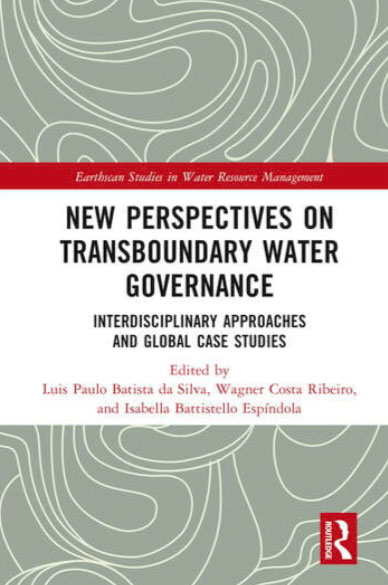
The citation was made in Ken Conca’s article (Chapter 1: “Climate change, adaptation, and the risk of conflict in international river basins: Beyond the conventional wisdom”) of the 2024 Routledge book New Perspectives on Transboundary Water Governance: Interdisciplinary Approaches and Global Case Studies” (edited by Luis Paulo Batista da Silva, Wagner Costa Ribeiro, and Isabela Battistello Espíndola).

Conca begins his chapter with a statistic—an estimated 310 rivers in the world cross national borders, form borders, or both—and goes on to discuss the risk of conflict that naturally arises in such situations. Conca traces a rich history of disputes, with one of the oldest occurring between Lagash and Umma (present-day southern Iraq) in 2500 BCE. Conca explores the early warning indicators explored by the World Resources Institute that imply “a future in which our bordered politics, combined with hydrologic interdependencies, could yield a combustible mix of tension and grievances” and adds that several rivers flagged in the WRI study lie in regions of crhonic tension and political instability. He then includes a 2013 quote by former UN Secretary-General Ban Ki-moon:

“Our experiences tell us that environmental stress, due to lack of water, may lead to conflict, and would be greater in poor nations … population growth will make the problem worse. So will climate change. As the global economy grows, so will its thirst. Many more conflicts lie just over the horizon.” Ban also stated that climate change promised “an unholy brew that can create dangerous security vacuums” in which “mega-crises may well become the new normal.”

Conca makes his point by quoting the U.S. Center for Strategic and International Studies: “the real wild card for political and social unrest in the Middle East over the next 20 years is not war, terrorism, or revolution—it is water.”

Conca makes the connection with narratives of fiction:

“This framing of scarcity-induced conflict risk has even crept into the world of fiction. Paulo Bacigalupi’s dystopian novel The Water Knife (2016) portrays a parched southwestern United States of the near future. He foresees American states militarizing both their water relations (with corporate militias destroying infrastructure meant to divert water) and their borders (with the water-rich states seeking to keep thirsty migrant out, and the water poor states seeking to keep them in). Nina Munteanu’s A Diary in the Age of Water (2020) envisions Canada as a wholly-owned colony of the United States (itself owned by China). She describes a world in which Niagara Falls has been turned off and pet ownership is outlawed as an unacceptable water burden.”

Conca unpacks various misconceptions on sources of conflict and conflict resolution to do with transboundary water bodies. The chapter is very enlightening, as is the entire book!

The 2024 Routledge book New Perspectives on Transboundary Water Governance: Interdisciplinary Approaches and Global Case Studies” (edited by Luis Paulo Batista da Silva, Wagner Costa Ribeiro, and Isabela Battistello Espíndola) is described by the publisher below:

This book presents a novel examination of transboundary water governance, drawing on global case studies and applying new theoretical approaches.

Excessive consumption and degradation of natural resources can either heighten the risks of conflicts or encourage cooperation within and among countries, and this is particularly pertinent to the governance of water. This book fills a lacuna by providing an interdisciplinary examination of transboundary water governance, presenting a range of novel and emerging theoretical approaches. Acknowledging that issues vary across different regions, the book provides a global view from South and Central America, Africa, Asia, and the Middle East, with the case studies offering civil society and public managers concrete situations that indicate difficulties and successes in water sharing between bordering countries. The volume highlights the links between natural resources, political geography, international politics, and development, with chapters delving into the role of paradiplomacy, the challenges of climate change adaptation, and the interconnections between aquifers and international development. With rising demand for water in the face of climate change, this book aims to stimulate further theoretical, conceptual, and methodological debate in the field of transboundary water governance to ensure peaceful and fair access to shared water resources.

This book will be of interest to students and scholars of water resource governance from a wide variety of disciplines, including geography, international relations, global development, and law. It will also be of interest to professionals and policymakers working on natural resource governance and international cooperation.

Nina Munteanu is a Canadian ecologist / limnologist and novelist. She is co-editor of Europa SF and currently teaches writing courses at George Brown College and the University of Toronto. Visit  www.ninamunteanu.ca for the latest on her books. Nina’s bilingual “La natura dell’acqua / The Way of Water” was published by Mincione Edizioni in Rome. Her non-fiction book “Water Is…” by Pixl Press (Vancouver) was selected by Margaret Atwood in the New York Times ‘Year in Reading’ and was chosen as the 2017 Summer Read by Water Canada. Her novel “A Diary in the Age of Water” was released by Inanna Publications (Toronto) in June 2020.

My Books Selling at Banyen Books & Sound, Vancouver

Water Is… sits on the shelf at Banyen Books (photo by Nina Munteanu)

My books “Water Is… The Meaning of Water” and “A Diary in the Age of Water” are selling at Banyen Books in Kitsilano, Vancouver. While “A Diary in the Age of Water” is on Banyen’s virtual shelf for order, “Water Is…” sits on a shelf in the Water: Life-force & Resource / Ecology section.

“Water Is…” sits on the ‘water as life-force & resource’ shelf at Banyen Books, Vancouver (photo by Nina Munteanu)

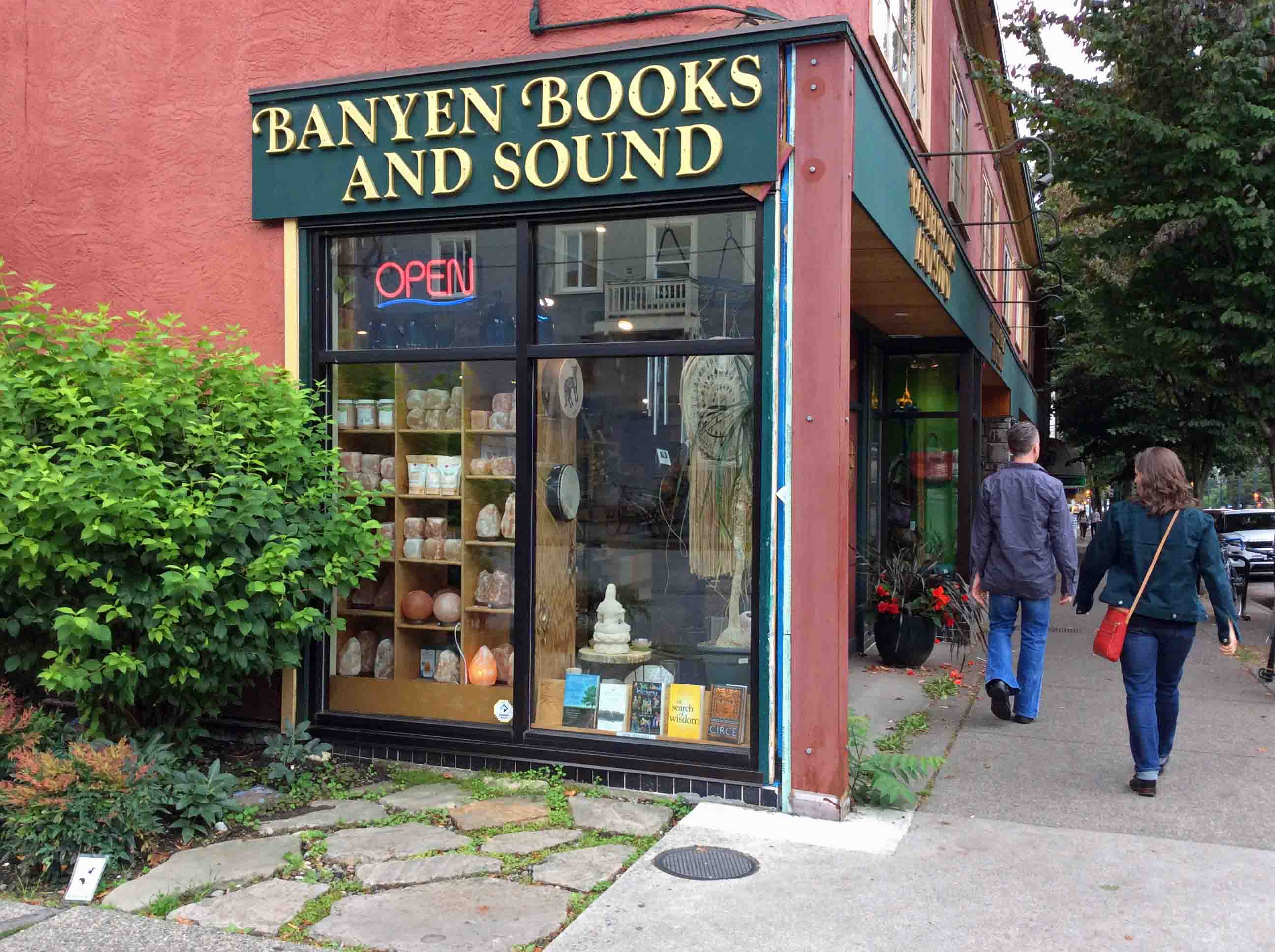
Banyen Books is located in Kitsilano on the south side of W 4th Avenue on the corner of Dunbar under a grove of healthy oak trees. Across the store is Aphrodite’s Organic Pies, itself a destination for awesome pies. Banyen Books is a beautiful store. It is spacious and surrounded with the warmth of wood and plants. Its wonderful atmosphere invites you to browse the shelves and sit on the comfortable chairs to read. Banyen Books has become a destination for me whenever I’m in Vancouver.

Banyen Books on the corner of W 4th and Dunbar, Vancouver, BC (photo by Nina Munteanu)

Since opening in 1970 Banyen Books has become Canada’s most comprehensive metaphysical bookstore, offering a broad spectrum of resources from humanity’s spiritual, healing, and earth wisdom traditions. Here is how they put it:

Banyen is an oasis, a crossroads, a meeting place… for East and West, the “old ways” and current discoveries and syntheses. Our beat is the “Perennial Philosophy” as well as our evolving learning edges and best practices in a wide variety of fields, from acupuncture to Zen, from childbirth and business to the Hermetic Mysteries, from the compost pile to the celestial spheres. We’re “in the philosophy business,” on “a street in the philosophy district” (as an old cartoon wagged). We welcome and celebrate the love of wisdom, be it in art, science, lifecraft, healing, visioning, religion, psychology, eco-design, gardening… Our service is to offer life-giving nourishment for the body (resilient, vital), the mind (trained, open), and the soul (resonant, connected, in-formed). Think of us as your open source bookstore for the “University of Life”.

Whenever I’m in Vancouver to visit family and friends, I make at least one stop at Banyen Books and often come out with an armful of books. On my most recent stop, I purchased a book on plant intelligence and several beautiful journals (I use a journal for each book project I work on).

My latest purchase at Banyen Books (photo by Nina Munteanu)

Banyen Books & Sound:

3608 West 4th Avenue
Vancouver, BC
604-732-7912

HOURS:

Mon-Fri: 10am-9pm
Sat: 10am-8pm
Sun: 11am-7pm

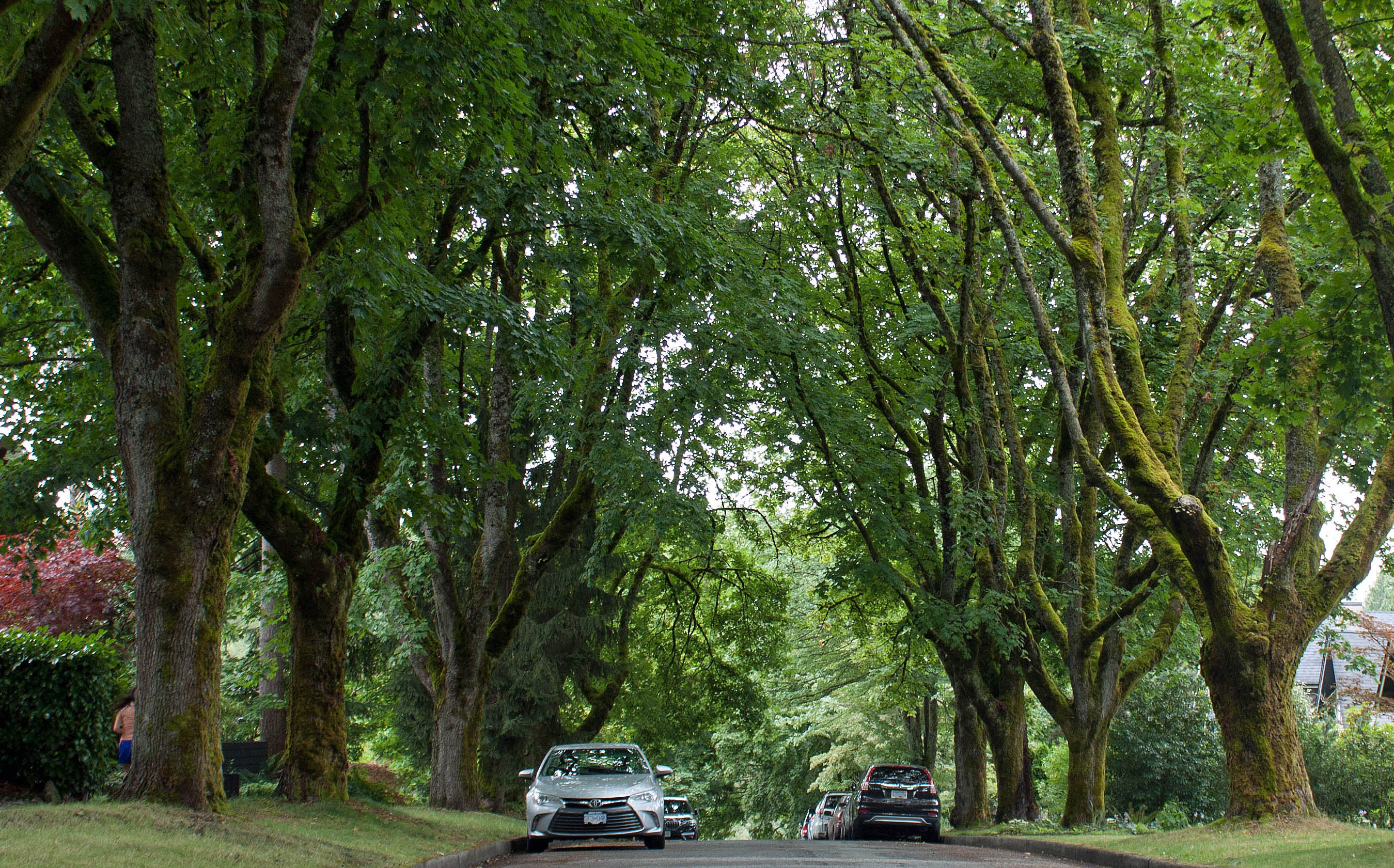
19th Avenue in Vancouver, BC (photo by Nina Munteanu)

Nina Munteanu is a Canadian ecologist / limnologist and novelist. She is co-editor of Europa SF and currently teaches writing courses at George Brown College and the University of Toronto. Visit www.ninamunteanu.ca for the latest on her books. Nina’s bilingual “La natura dell’acqua / The Way of Water” was published by Mincione Edizioni in Rome. Her non-fiction book “Water Is…” by Pixl Press (Vancouver) was selected by Margaret Atwood in the New York Times ‘Year in Reading’ and was chosen as the 2017 Summer Read by Water Canada. Her novel “A Diary in the Age of Water” was released by Inanna Publications (Toronto) in June 2020.

Climate Cultures Magazine Lists Nina Munteanu’s “A Diary in the Age of Water” Among Eight Eco-Fiction Novels to Read

Writer and curator Mary Woodbury shares eight novels about water where fact and fiction mingle, tried by imagination, to reveal important truths about our shifting relationships with this vital and lively agent in an era of climate crisis,” writes the magazine Climate Cultures.

In an article entitled, “Where Waters and Fictions Meet,” Mary Woodbury opens with this:

“While facts are something we can and should pay attention to as we follow scientific integrity, models, and reports, another mode of telling the story about water has been alive forever: churned, spoken, and written by authors who dream up fictional stories related to our past, present, and future world. Where fact and fiction mingle like this is an area of reflection and speculation, tied by imagination. These tales of water ripple out once the pebble sinks in. The intersectionality of diverse water fiction results in reader empathy, learning, inspiration, and shared commonalities around the world. Local dignity comes alive against a backdrop of planetary crises.”

She chooses the following eco-novels to discuss:

“Land-Water-Sky (Ndè-Ti-Yat’a)” by Katłıà
“Oil on Water” by Helon Habila
“A Diary in the Age of Water” by Nina Munteanu
“The Water Knife” by Paolo Bacigalupi
“Memory of Water” by Emmi Itäranta
“Fever Dream” by Samanta Schweblin
“Lagoon” by Nnedi Okorafor
“Bangkok Wakes to Rain” by Pitchaya Sudbanthad

Here’s what she writes about my novel:

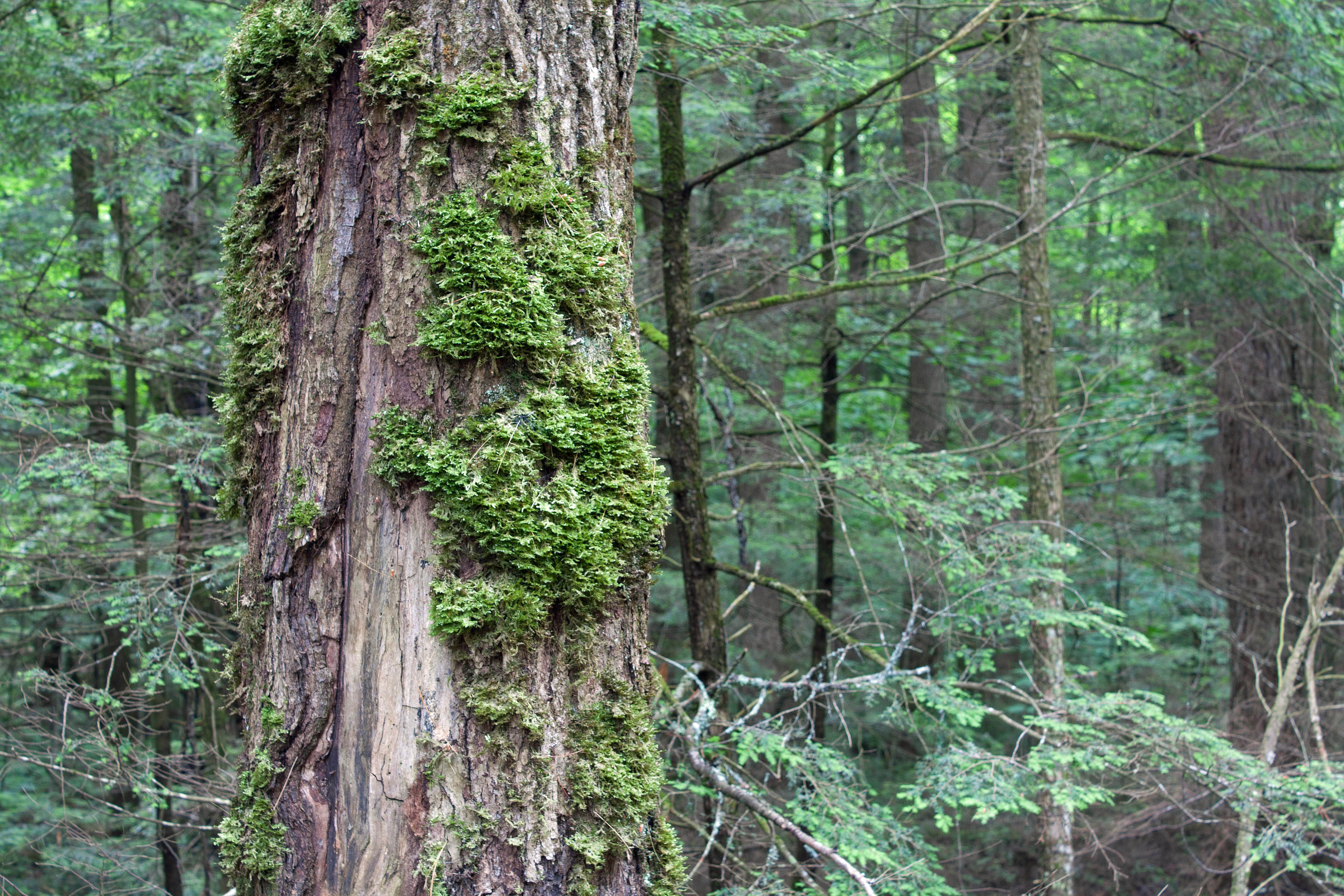
Ancient Eastern Hemlock in Catchacoma old-growth forest, ON (photo by Nina Munteanu)

NINA MUNTEANU is a Canadian ecologist / limnologist and novelist. She is co-editor of Europa SF and currently teaches writing courses at George Brown College and the University of Toronto. Visit  www.ninamunteanu.ca for the latest on her books. Nina’s bilingual “La natura dell’acqua / The Way of Water” was published by Mincione Edizioni in Rome. Her non-fiction book “Water Is…” by Pixl Press(Vancouver) was selected by Margaret Atwood in the New York Times ‘Year in Reading’ and was chosen as the 2017 Summer Read by Water Canada. Her novel “A Diary in the Age of Water” was released by Inanna Publications (Toronto) in June 2020.

‘Buried in Print’ Reviews “A Diary in the Age of Water”

Nina Munteanu’s novel A Diary in the Age of Water (2020) will not suit every reader.” 

“It’s hard to resist identifying the author with Lynna, the most prominent character, who also works as a limnologist, although her employment is increasingly precarious, as her timeline hastens toward ecological devastation.

A predominantly female cast, a mythic forming narrative and, most saliently, the focus on water, all made this an interesting read for me.

The book’s epigraphs are from Maude Barlow and the chapter’s epigraphs from textbook definitions (sometimes excerpts from limnology tests), and there are even cutaway diagrams that you’d expect in lecture hall.

Ultimately it exists in an in-between place, some mystical elements of the generational tale possibly alienating the dedicated science-y readers and the instructional elements possibly alienating fiction devotees. And, yet, I read on: strangely compelling.”

Buried in Print

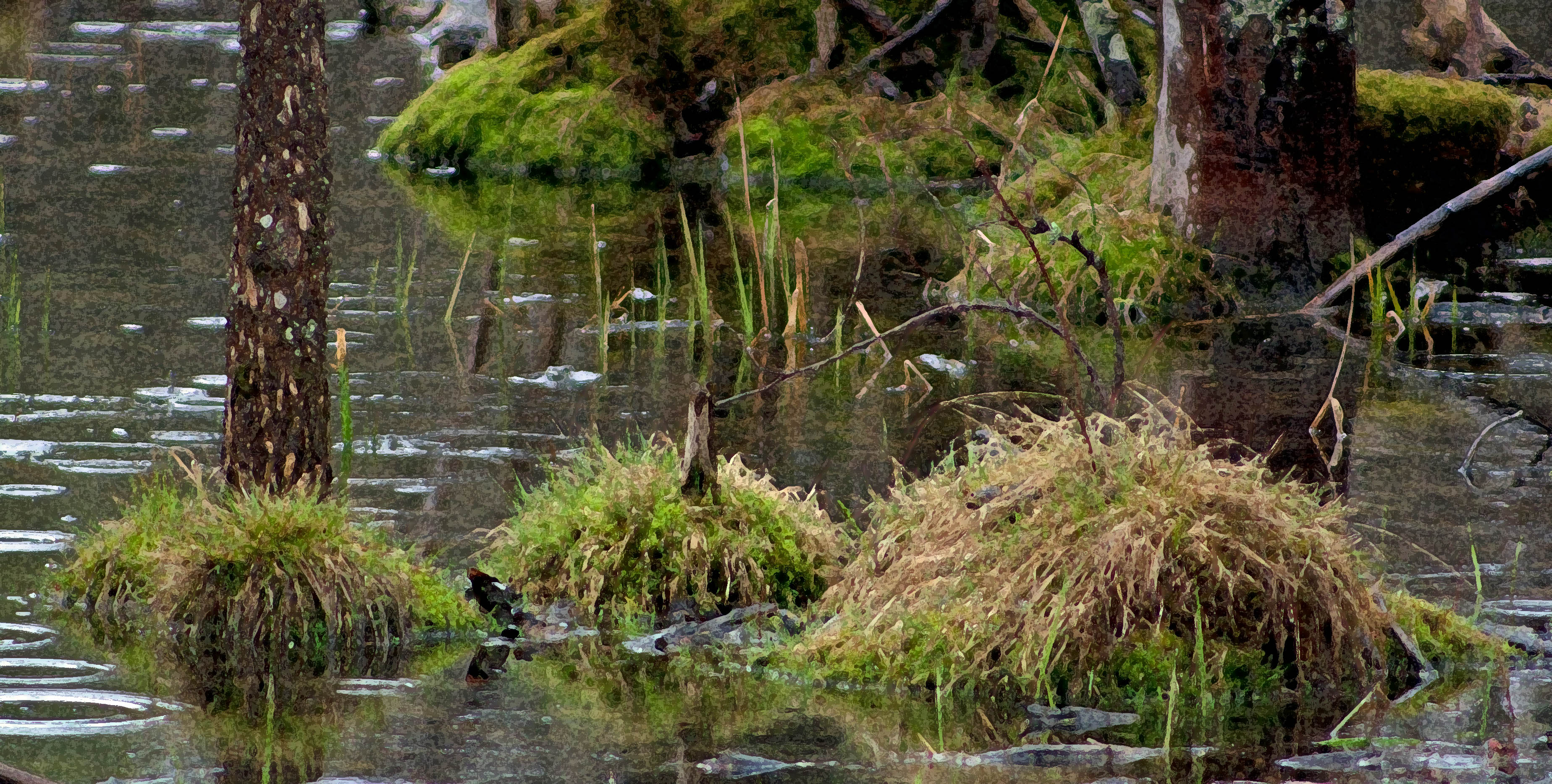
Forest swamp in Kawarthas in spring, ON (photo and dry brush rendition by Nina Munteanu)

Nina Munteanu is a Canadian ecologist / limnologist and novelist. She is co-editor of Europa SF and currently teaches writing courses at George Brown College and the University of Toronto. Visit www.ninamunteanu.ca for the latest on her books. Nina’s bilingual “La natura dell’acqua / The Way of Water” was published by Mincione Edizioni in Rome. Her non-fiction book “Water Is…” by Pixl Press(Vancouver) was selected by Margaret Atwood in the New York Times ‘Year in Reading’ and was chosen as the 2017 Summer Read by Water Canada. Her novel “A Diary in the Age of Water” was released by Inanna Publications (Toronto) in June 2020.

Age of Water Podcast: Interview with Emmi Itäranta

Emmi Itaranta 1

Emmi Itäranta

We are now living in the Age of Water. Water is the new “gold”, with individuals, corporations and countries positioning themselves around this precious resource. Water is changing everything. The Age of Water Podcast covers anything of interest from breaking environmental news to evergreen material. This also includes human interest stories, readings of eco-literature, discussion of film and other media productions of interest.

In this episode of Age of Water, we join award-winning Finnish author Emmi Itäranta in the UK, where she talks about her eco-fiction including The Memory of Water and how her childhood in Finland helped shape her own activism.

ListenNow button


Emmi ItarantamemoryofwaterEmmi Itäranta is an award-winning Finnish author. She holds a MA in Drama from the University of Tampere and worked as a columnist, theatre critic, script writer and press officer. She wrote her debut novel Memory of Water simultaneously in Finnish and English during a creative writing course. The English version was published by HarperCollins in 2014 in the United States, United Kingdom and Australia and was nominated for the 2014 Philip K. Dick Award, and the Golden Tentacle Award and the Arthur C. Clarke Award. The book was translated into over a dozen languages throughout the world. Her novel The City of Woven Streets (The Weaver) won the City of Tampere Literary Award. Emmi Itäranta lives in Canterbury, United Kingdom.


nina-2014aaa

Nina Munteanu is a Canadian ecologist / limnologist and novelist. She is co-editor of Europa SF and currently teaches writing courses at George Brown College and the University of Toronto. Visit www.ninamunteanu.ca for the latest on her books. Nina’s bilingual “La natura dell’acqua / The Way of Water” was published by Mincione Edizioni in Rome. Her non-fiction book “Water Is…” by Pixl Press (Vancouver) was selected by Margaret Atwood in the New York Times ‘Year in Reading’ and was chosen as the 2017 Summer Read by Water Canada. Her novel “A Diary in the Age of Water” will be released by Inanna Publications (Toronto) in June 2020.