
.
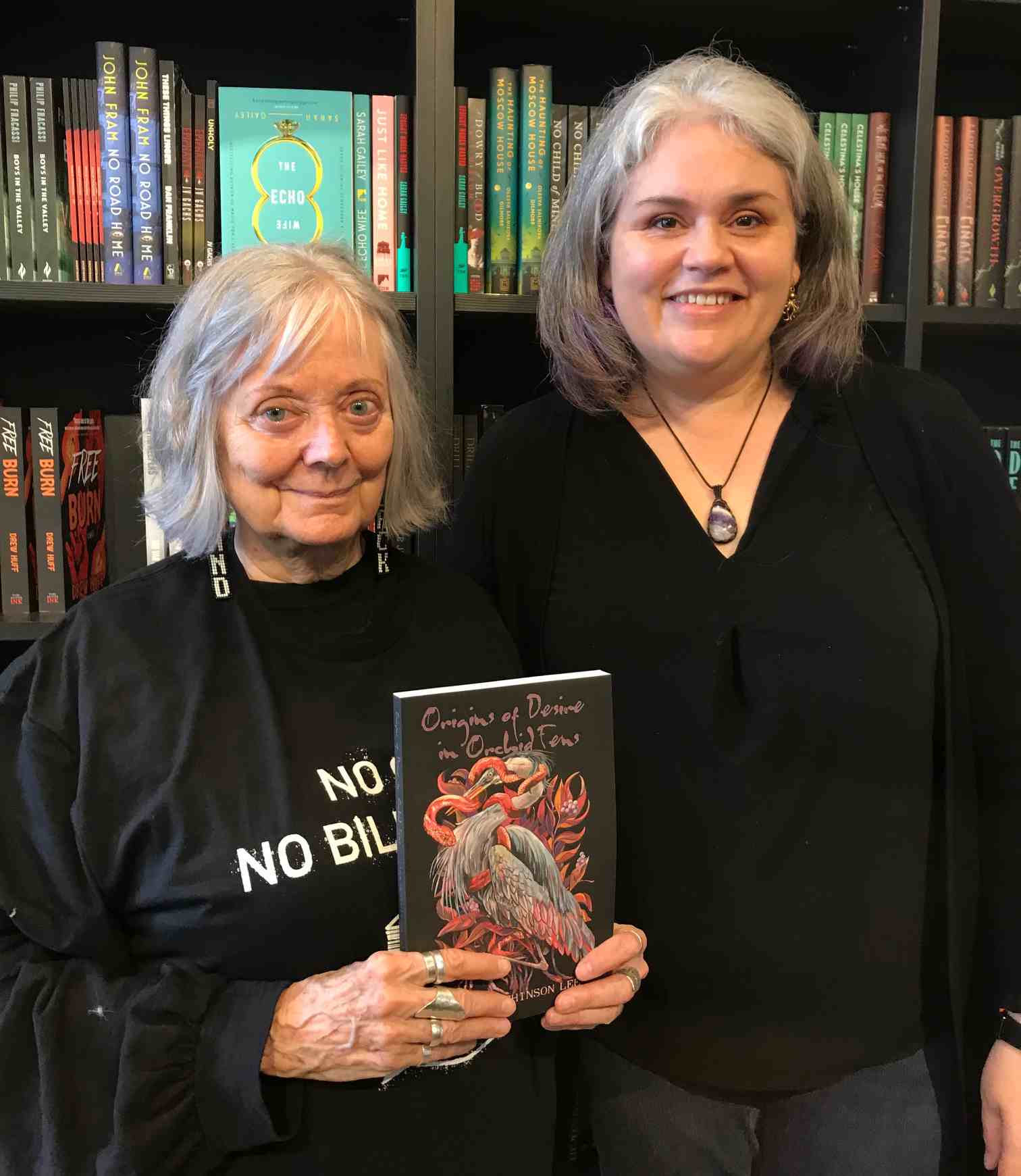
A short time ago, my good friend Lynn Hutchinson Lee was launching her eco-fiction book “Origins of Desire in Orchid Fens” published by Stelliform Press at Little Ghosts Bookstore on Dundas St. W. in Toronto. Also reading from their current eco-fiction were Rebecca Campbell (“The Other Shore”) and Mahaila Smith (“Seed Beetle”).
.

.
I drove from Peterborough along country roads to Toronto that morning. When I got there, I parked my car at Lynn’s place and walked without my umbrella in the light drizzle through the urban treed neighbourhood toward Little Ghosts Bookstore—about a forty-minute walk. Of course, it started to seriously rain at some point, but I cheerfully continued, noting how vibrant the vegetation and flowers had become and how progressively more damp I was becoming.
.
.
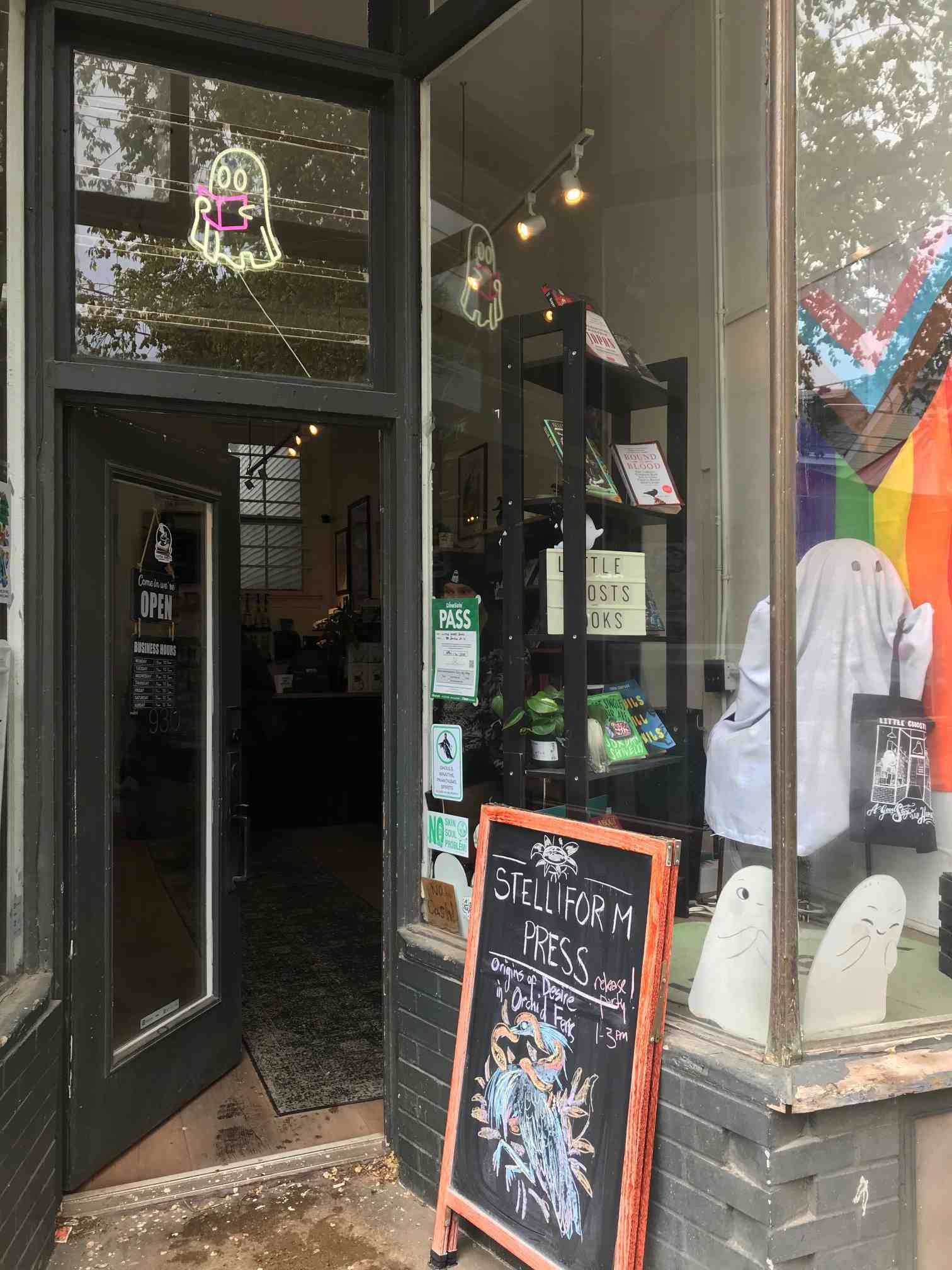
I entered the bookstore dripping but on time and negotiated the small crowd, greeting some people I knew, as I steered myself toward the small café in the bookstore to order a hot beverage. I found myself admiring the small two-tiered bookstore with lovely Casper ghost motifs. As Lynn began her reading, I noticed a large skeleton peering right back at me through the café window next to her (see top photo).
.
.
The Book:
Here’s how the publisher described the book:
A dizzying and beautiful debut, Origins of Desire in Orchid Fens explores life as a Romany woman in Canada, and the flowers that refuse to die.
Orchid Lovell is a young Romany woman haunted by a fear of being found out. Her family has been chased out of town before. After settling in a seemingly idyllic northern mining town that she soon understands as rife with unseen cruelty, Orchid finds solace in a lush orchid fen where she doesn’t fear the town’s judgement. Amid the green beauty of the fen, Orchid meets her beloved Jack, and marries him in a secret blackfly-infested ceremony.
But the town’s waters don’t only harbor life. In the nearby creek, dead girls take revenge on the men who murdered them, luring them into murky waters. Despite the unyielding nature of the water spirits, one man evades their violence. After a devastating attack linked to the expansion of the mine, Orchid’s fate is entwined with the panni raklies’ ruthless justice.
Written in over 100 dreamy mini-chapters, this novella explores the tenuous reality of the Romany diaspora living in troubled times on troubled lands.
“The prose is sensuous and lyrical, saturated with earthy, evocative enchantment … In the powerful and intimate novel Origins of Desire in Orchid Fens, a bold, loving heroine confronts racism, sexism, and classism.”
Foreword Reviews
“Every page seethes, oozes, and drips with the atmosphere of the fertile, foggy wetlands of Eastern Canada.”
Kyle R. Garton, Strange Horizons
.
The Bookstore:
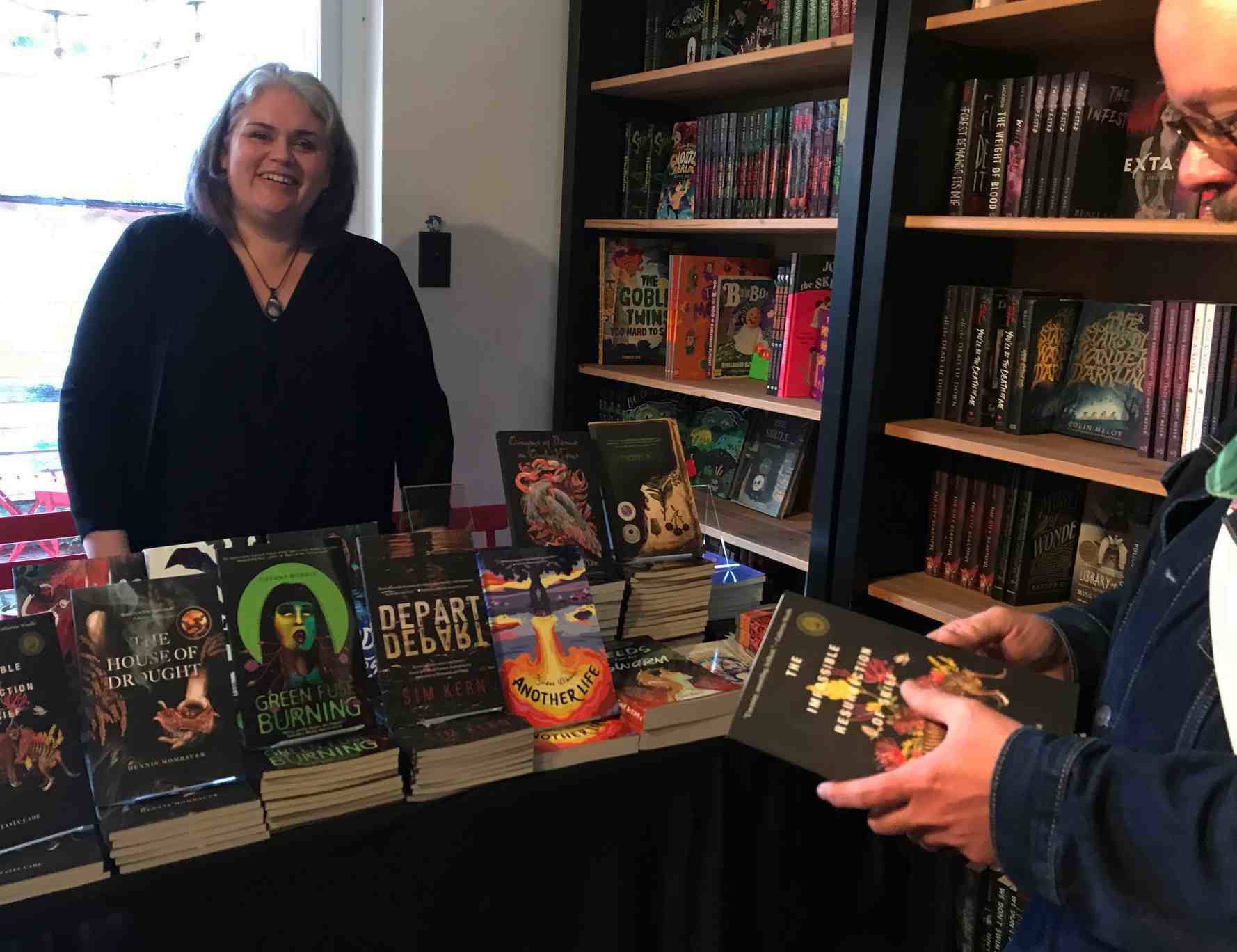
Despite the dark subject matter, the small bookstore was inviting and well lit inside from large front and back windows, with happy Casper-ghost décor and store keepers with sunny dispositions and friendly manners. This small indie bookstore with funky fun interior hosts a great selection of indie horror, a café with delicious drinks and a “chill place to hang out” and a 12-foot skeleton in the patio who oversees the café through the window. What more does a reader want?

.

Nina Munteanu is a Canadian ecologist / limnologist and novelist. She is co-editor of Europa SF and currently teaches writing courses at George Brown College and the University of Toronto.
Visit www.ninamunteanu.ca for the latest on her books. Nina’s bilingual “La natura dell’acqua / The Way of Water” was published by Mincione Edizioni in Rome. Her non-fiction book “Water Is…” by Pixl Press (Vancouver) was selected by Margaret Atwood in the New York Times ‘Year in Reading’ and was chosen as the 2017 Summer Read by Water Canada. Her novel “A Diary in the Age of Water” was released by Inanna Publications (Toronto) in June 2020.
.













 We are now living in the Age of Water. Water is the new “gold”, with individuals, corporations and countries positioning themselves around this precious resource. Water is changing everything. The Age of Water Podcast covers anything of interest from breaking environmental news to evergreen material. This also includes human interest stories, readings of eco-literature, discussion of film and other media productions of interest.
 Proulx immerses the reader in rich sensory detail of a place and time, equally comfortable describing a white pine stand in Michigan and logging camp in Upper Gatineau to a Mi’kmaq village on the Nova Scotia coast or the stately Boston home of Charles Duquet. The foreshadowing of doom for the magnificent forests is cast by the shadow of how settlers treat the Mi’kmaq people. The fate of the forests and the Mi’kmaq are inextricably linked through settler disrespect and a fierce hunger for “more.”
 “The reader comes to realize that the novel isn’t really about the human characters so much as it is about the forests,” Gus Powell of
 Nina Munteanu Writing Coach