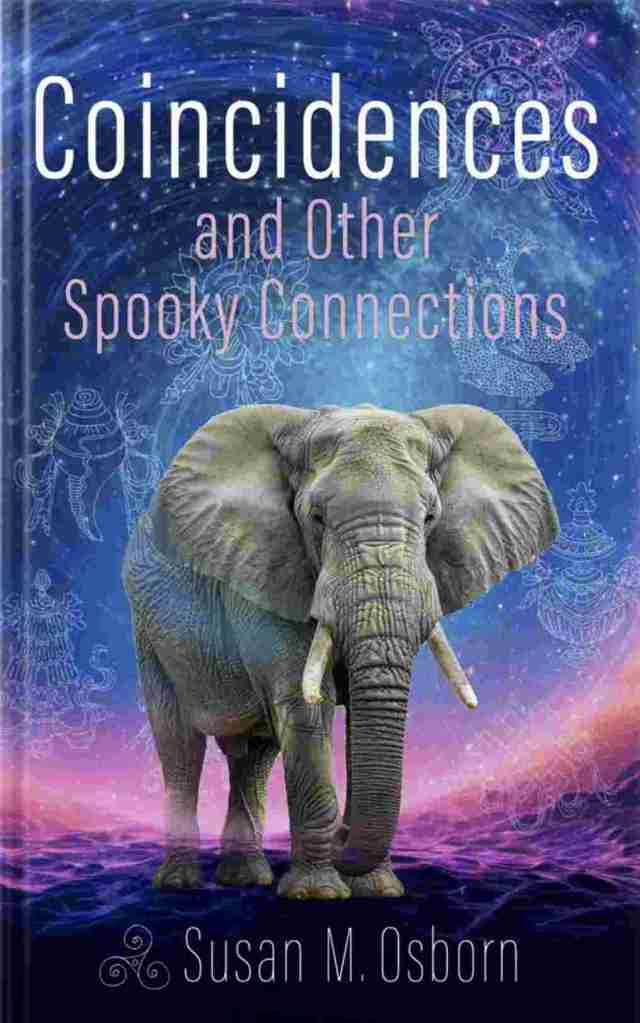
Book Review: “Coincidences and Other Spooky Connections” by Susan M. Osborn

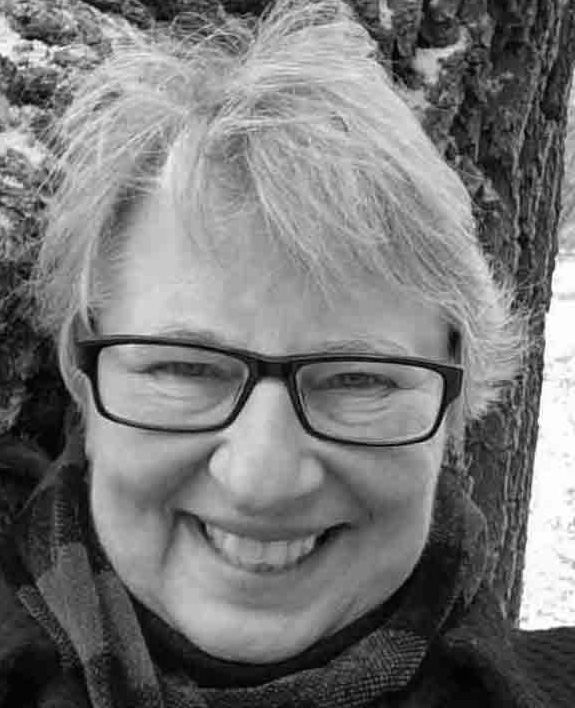
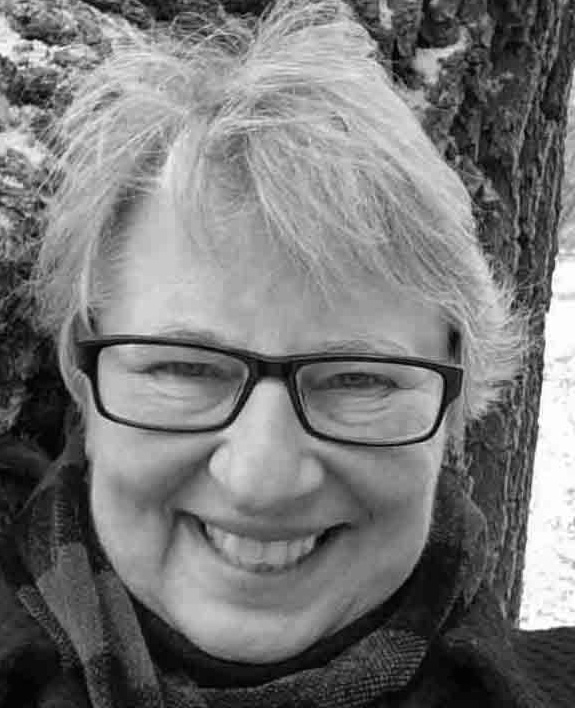
Susan M. Osborn explores the nature, influence—and importance—of coincidence, synchronicity and serendipitous discovery in our lives.

The book is laid out in ten chapters, each featuring some aspect of coincidence, synchronicity, and events of pure serendipity. Within each chapter, the narrative flows from biography to historic exposition or topical study, unraveling delicious facts, suppositions, dreams and fantasies coiled up in patterns and signs of potential significance.

Locked between the many entertaining and enlightening examples of synchronicity experienced by famous and not-so-famous people, are gems of interesting and notable facts and astute observations—from the origins and history of the term synchronicity with Jung’s early work in archetypes to the origins of “serendipity” with Horace Walpole to the foundations and influences of the ‘I Ching’.

The latter part of Osborn’s title, “and Other Spooky Connections”, riffs off Albert Einstein’s famous quote about “spooky actions at a distance”, a reference to quantum entanglement, which describes how two particles may remain connected regardless of the distance between them. Einstein asserted that quantum entanglement violated the principles of a realistic, deterministic universe. And, yet, experiments have repeatedly verified the reality of quantum entanglement. This speaks to the power of connection. All the “spooky connections” described in Osborn’s book ultimately address a common theme of all life: to make meaning of our world. I believe that this is essentially the purpose of all life. It even has a term: biosemiosis, which describes how all life is involved in meaning-making.

I agree with Osborn when she writes, “we can solve many of our problems if we have more than one way to look at them.” And this is how she has laid out her book, offering “a way to look at the world from a wider perspective” to gain insight from an otherwise chaotic and seemingly random pattern. When we learn from chaos, we are making meaning and fulfilling what all life is doing. This too is biosemiosis: the notion that all life embraces a process of signification and meaning-generation—from mammals to bacteria—that recognizes its Umwelt (species-specific environmental reality) through the production, action, and interpretation of non-linguistic signs and codes.

Ultimately, Osborn’s stories, disclosures and explorations challenge the reader to become more mindful and ‘present’ in our world, to exercise curiosity, integrate more aspects of our reality to arrive at meaning so we can forge connections—even spooky ones—that open doors of possibility and fulfill us with purpose and joy.

References:

Barbieri, Marcelo. 2008 (ed). “Introduction to Biosemiotics: The New Biological Synthesis” Springer, Netherlands. 525pp.

Hoffmeyer, Jesper. 2001. “Seeing virtuality in nature.” Semiotica 134.

Kull, K. 2016. “The biosemiotics concept of the species.” Biosemiotics 9:61-71.

Lowenhaupt Tsing, Anna. 2015. “The Mushroom at the End of the World: On the Possibility of Life in Capitalist Ruins” Princeton University Press, New Jersey. 331pp.

Trewavas, Anthony. 2003. “Aspects of Plant Intelligence.” Annals of Botany 92(1): 1-20.

Uexküll, Jakob von. 1931. “Die Rolle des Subjekts in der Biologie.” Die Naturwissenschaften 19: 385-391.

Uexküll, Jakob von. 1940 (1982). “The theory of meaning.” Semiotica 42(1): 25-82.

Nina Munteanu is a Canadian ecologist / limnologist and novelist. She is co-editor of Europa SF and currently teaches writing courses at George Brown College and the University of Toronto. Visit  www.ninamunteanu.ca for the latest on her books. Nina’s bilingual “La natura dell’acqua / The Way of Water” was published by Mincione Edizioni in Rome. Her non-fiction book “Water Is…” by Pixl Press (Vancouver) was selected by Margaret Atwood in the New York Times ‘Year in Reading’ and was chosen as the 2017 Summer Read by Water Canada. Her novel “A Diary in the Age of Water” was released by Inanna Publications (Toronto) in June 2020.

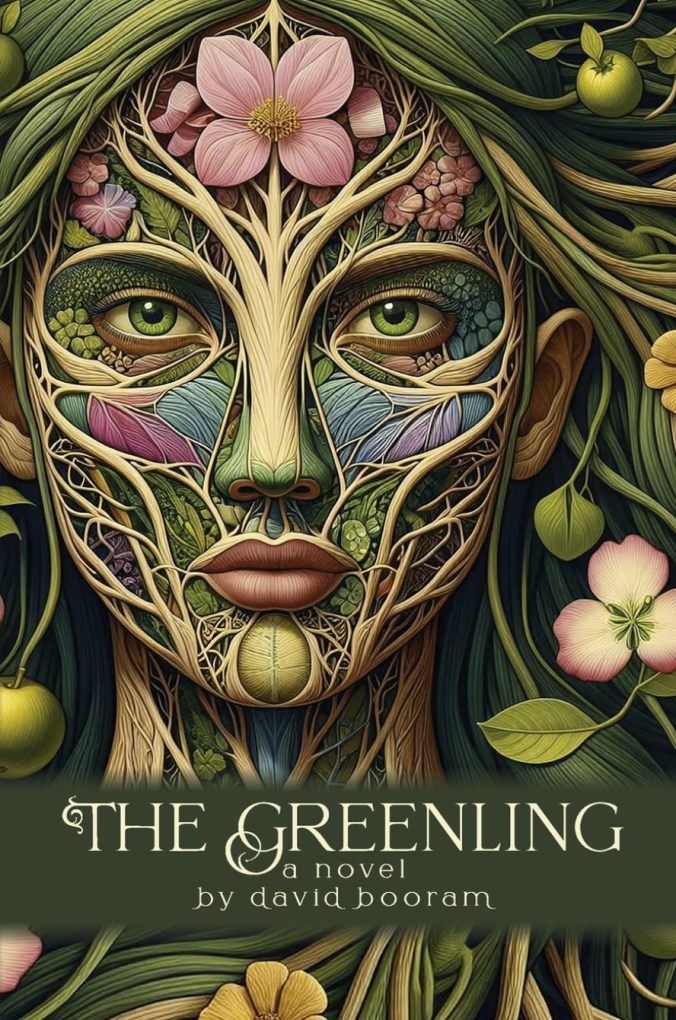
Book Review: “The Greenling”—When Nature Uses Biosemiosis To Change the World

The Greenling by David Booram is an exploration of an intriguing ‘Nature evolving’ premise, told through a coming-of-age narrative.

Responding to continued human tampering, a growing sentient Nature calls a young environmental activist to action in a planetary reset. The main character is Noah, ostracized by her peers due to her unique perspective on the world and her activism for Nature. This makes her a candidate for Nature’s planetary reset.

While I felt that the story used over-simplified fantasm and eco-terrorism in a way not to my liking, I found most intriguing Booram’s use of biosemiosis, the notion that all life finds meaning.

Coincidently, I had agreed to read Booram’s eco-fiction novel (without knowing much about it) after a social media conversation we’d had during a time when I was working on my most recent novel, tentatively called (Re)Genesis. My novel relied heavily on the concept of biosemiosis. Its premise of dark karma—when Nature learns to reflect back what we send out—made use of real examples of learning, pattern recognition, anticipation and adaptation in non-human life. (Another coincidence at this same time occurred when another author approached me to read their work on coincidence, which I am currently reading).  

In the 1930s, Jakob von Uexküll coined the term Umwelt (species-specific reality or subjective environment) to define a life process that involved semiotic interactions. He argued that an organism’s behaviour results from activity that attributes meaning to the world around it, rather than merely mechanically reacting to stimuli. Building on this notion, Friedrich S. Rothschild coined the term “biosemiosis” in 1962 to postulate that life has its subjective interpretation of the world around it (its Umwelt), a segment of the world that has significance and meaning based on that life’s biology and needs. Developing biosemiosis further, Thomas Sebeok later contended that all organisms are enveloped in a cloud of messages about themselves and their situation, which they constantly transmit, receive, and interpret. Life itself is a process of signification and meaning-making, from bacteria and plants to mammals and birds. Biosemiosis involves pattern recognition, anticipation, flexibility, goal-directed movement, memory, and learning.

Perhaps most intriguing is how The Greenling touches on humanity’s growing zeitgeist of not just planetary awareness but of sensibility, a sense that we are interlinked with all other life and nonlife, that we are all more than the sum of our parts. And only then—when we make meaning of our Umwelt—can we transcend from our toxic insecurities and bullying ways.

The Greenling is worth reading for how it weaves climate facts into compelling personal story. I also find refreshing that Booram gives full agency to the environment, Nature, and its nonhuman representatives.

I have been writing, reading, and studying eco-fiction for several decades and what I found noteworthy is how agency of the environment, as character, has changed over the years and how Nature’s portrayal has evolved from ‘other’ with little agency to ‘not other’ with much agency. For more on this concept and change, I urge you to read my two essays on this evolution:

The Use of Character-Coupling in Eco-Literature to Give Voice to the Other, Part 1: Introduction

The Use of Character-Coupling in Eco-Literature to Give Voice to the Other, Part 2: Types of Character-Coupling in Seven Examples of Eco-Literature

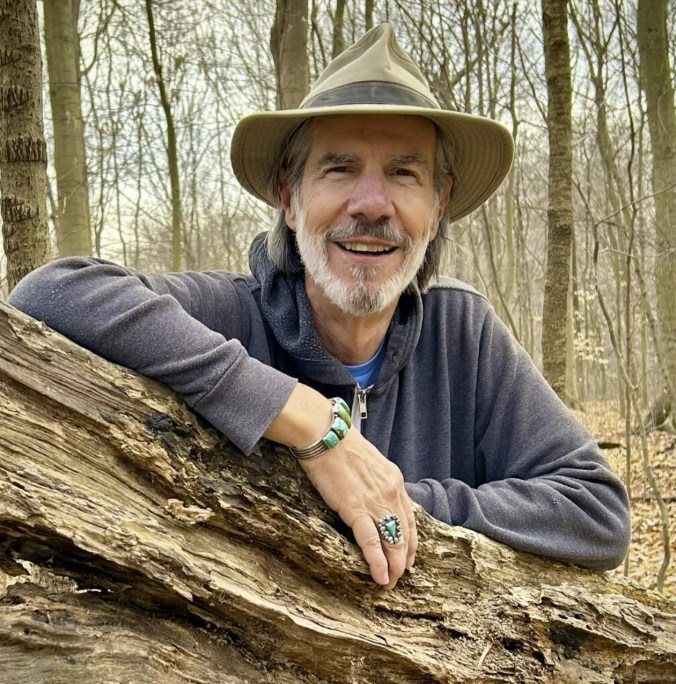
David Booram is the cofounder and director of Fall Creek Abbey, an urban retreat center in Indianapolis, where he and his wife Beth lead The School of Spiritual Direction and offer individual and group spiritual direction. He is the founder of Direction 4 Life Work, through which he is a career counselor.

Nina Munteanu is a Canadian ecologist / limnologist and novelist. She is co-editor of Europa SF and currently teaches writing courses at George Brown College and the University of Toronto. Visit  www.ninamunteanu.ca for the latest on her books. Nina’s bilingual “La natura dell’acqua / The Way of Water” was published by Mincione Edizioni in Rome. Her non-fiction book “Water Is…” by Pixl Press (Vancouver) was selected by Margaret Atwood in the New York Times ‘Year in Reading’ and was chosen as the 2017 Summer Read by Water Canada. Her novel “A Diary in the Age of Water” was released by Inanna Publications (Toronto) in June 2020.

.