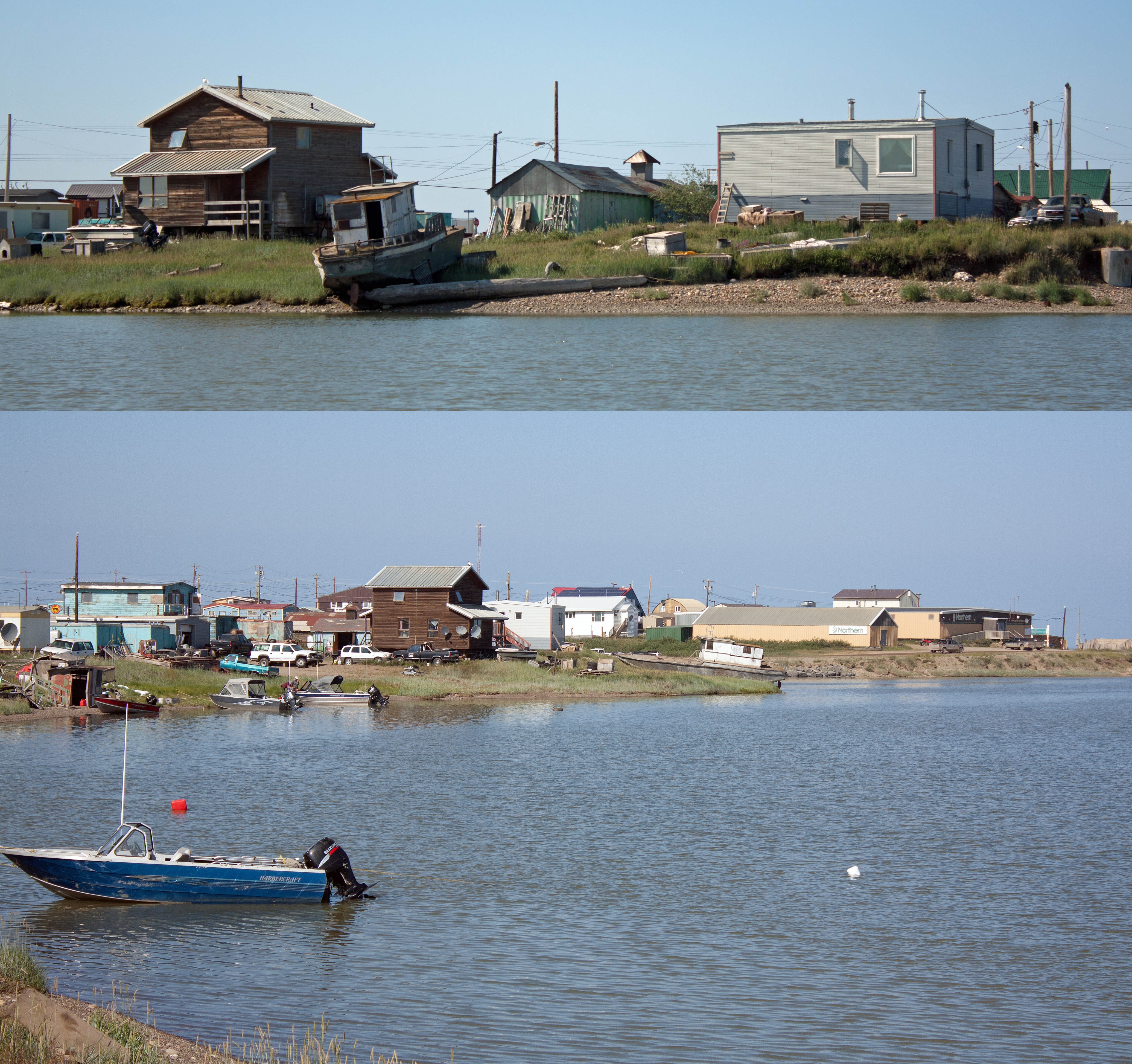
The sleepy village of Tuktoyaktuk on the Arctic Ocean, NWT (photos by Nina Munteanu)
.
A few years ago, I travelled to the village Tuktoyaktuk in the Northwest Territories on the Arctic Ocean. I was researching my upcoming eco-fiction book Thalweg with Inanna Publications (scheduled for release in early 2027). I drove with my friend Anne Voute; we rented a Dodge Dakota truck and drove the Dempster Highway north from Inuvik and the recently completed NWT Highway 10 (completed in 2017), which provides the remaining 140 km stretch to the Arctic Ocean.
.
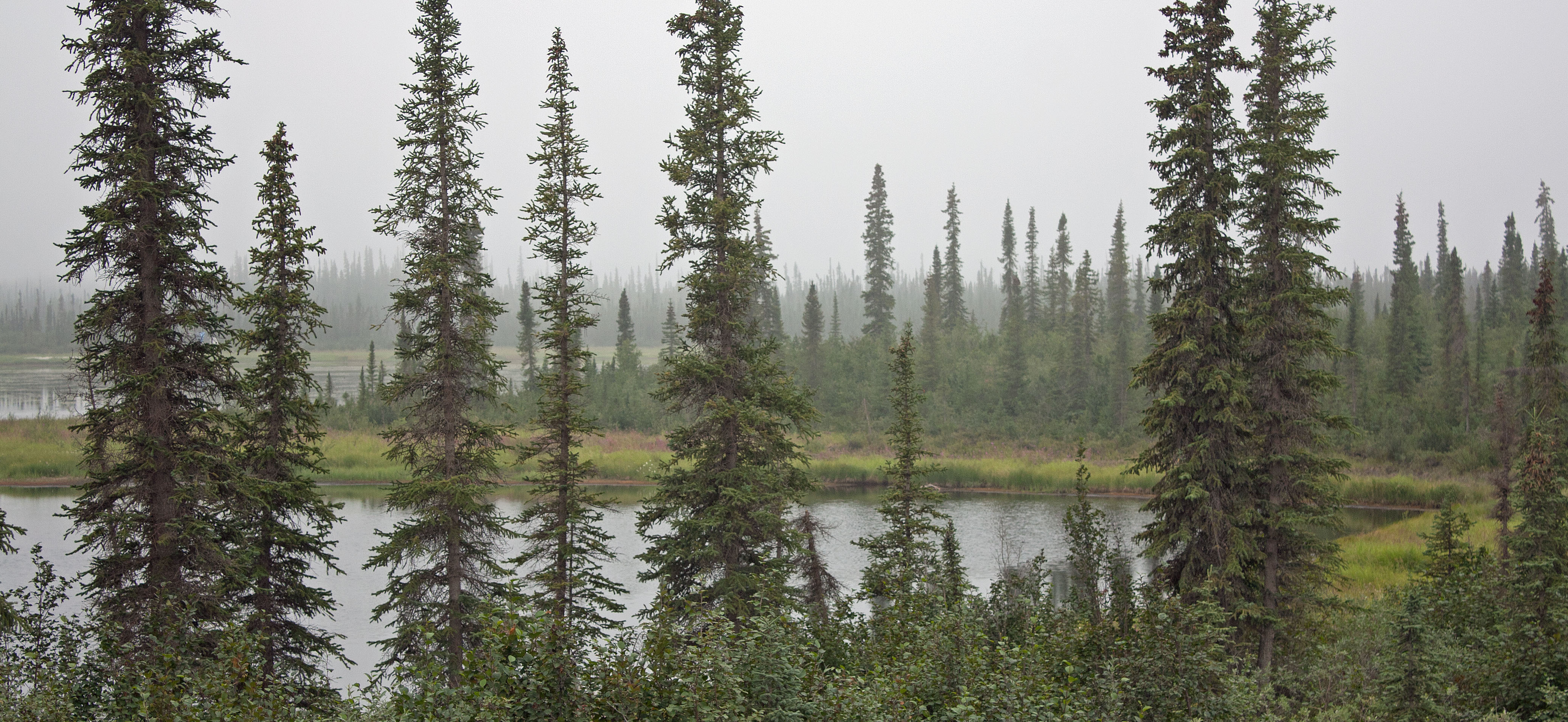
Black spruce forest along the Dempster Highway north of Fort McPherson, NWT (photo by Nina Munteanu)
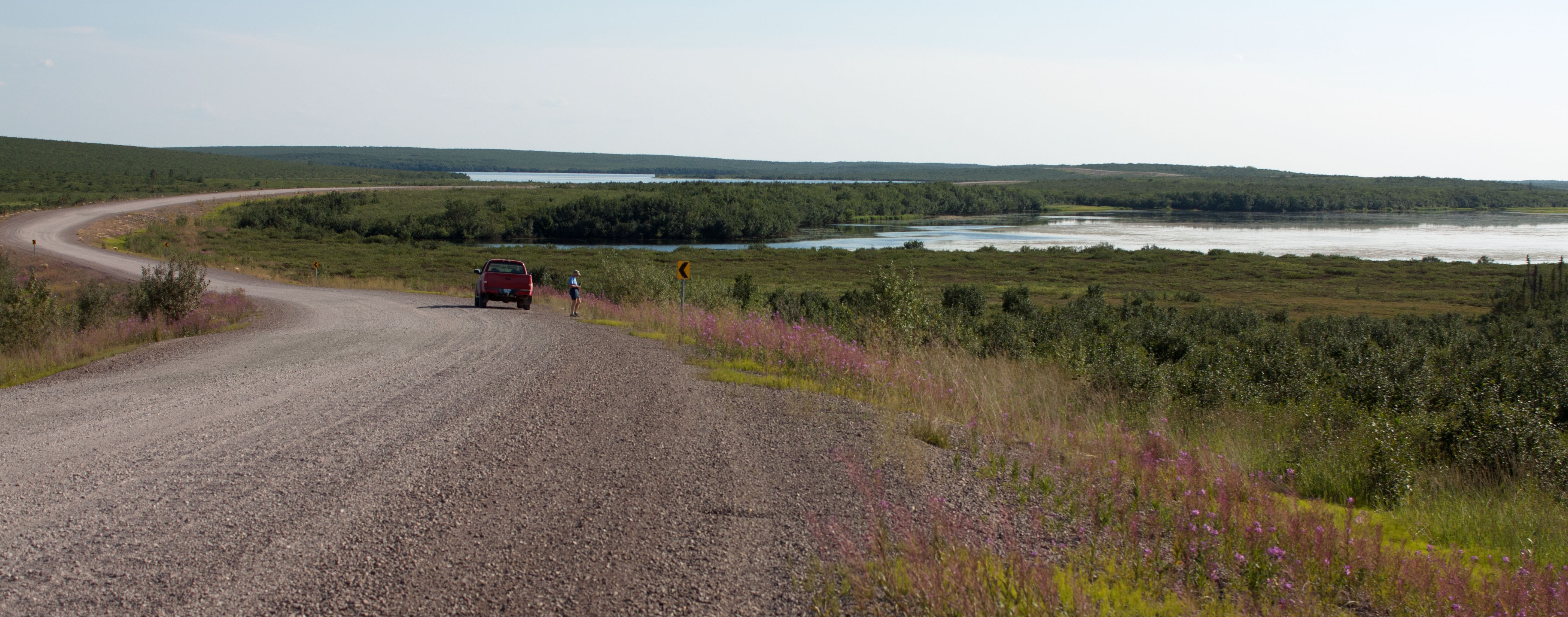
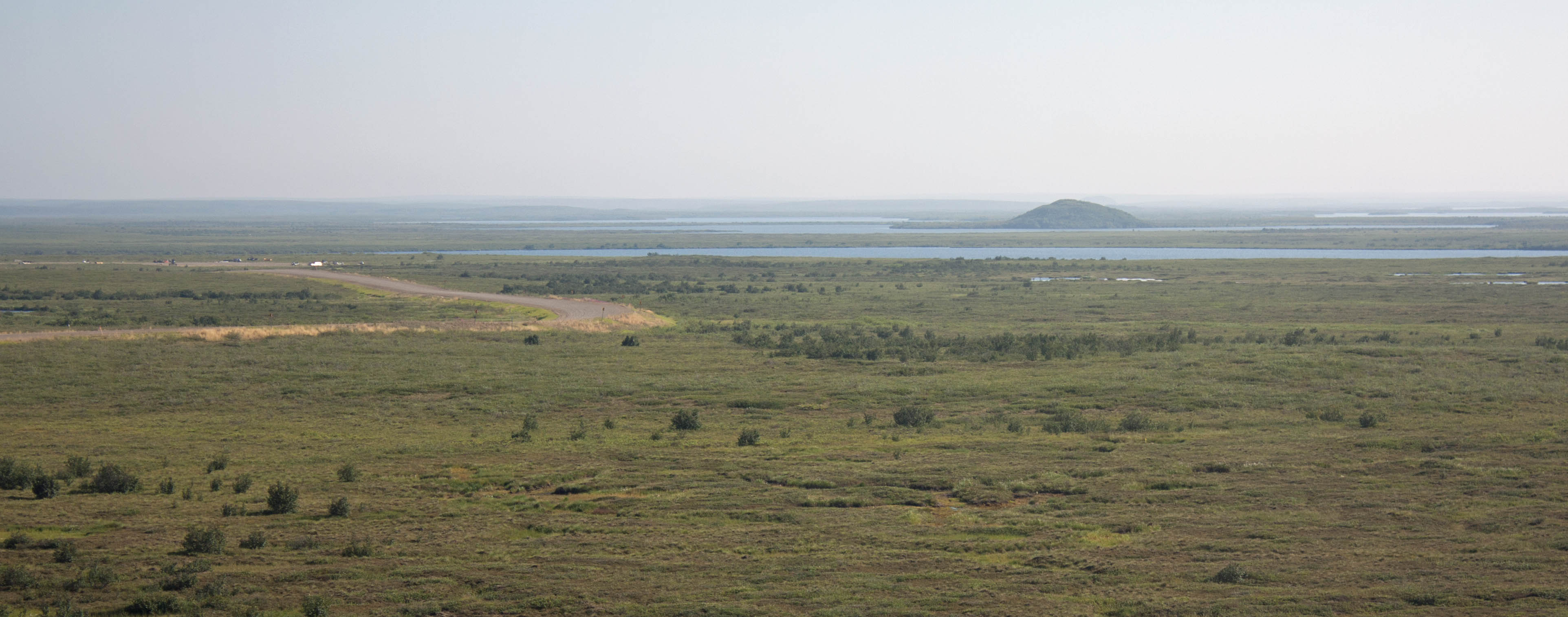
Highway 10 to Tuk winds through the tundra and Husky Lakes, NWT (photo by Nina Munteanu)
.
In Thalweg, main character Bobby-Jo is a Gwich’in limnologist who grew up in Fort McPherson in the Arctic Circle, land of permafrost.
.
Poster Child of Permafrost
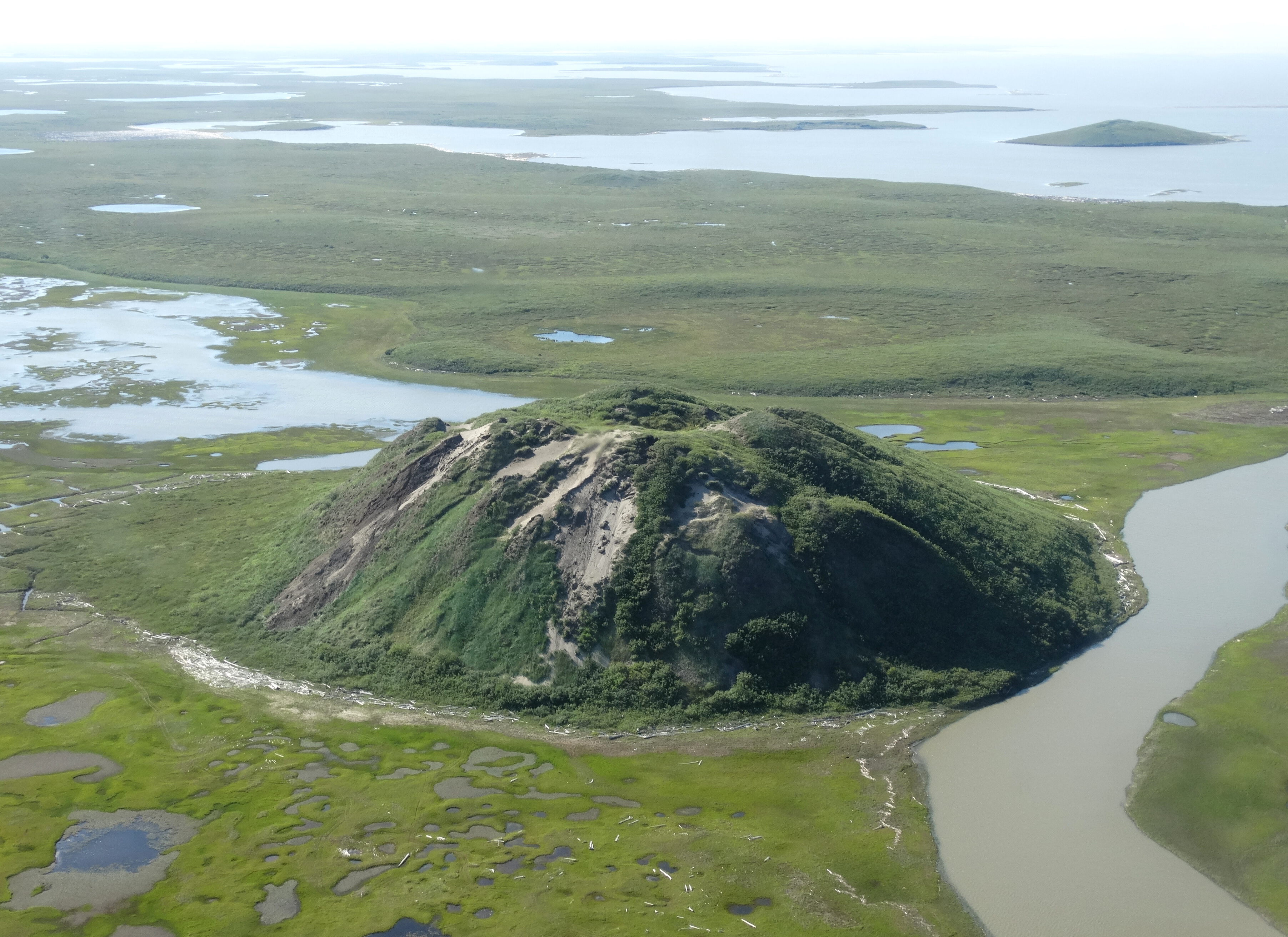
Ibyuk Pingo, near Tuk, NWT (photo shot from Cessna 172 by Adam Jones, 2013; Wikipedia Commons)
.
The poster child of permafrost is the conical ice-cored pingo, common in the Pleistocene Coastal Plain. Pingo is an Inuit word that means conical hill.
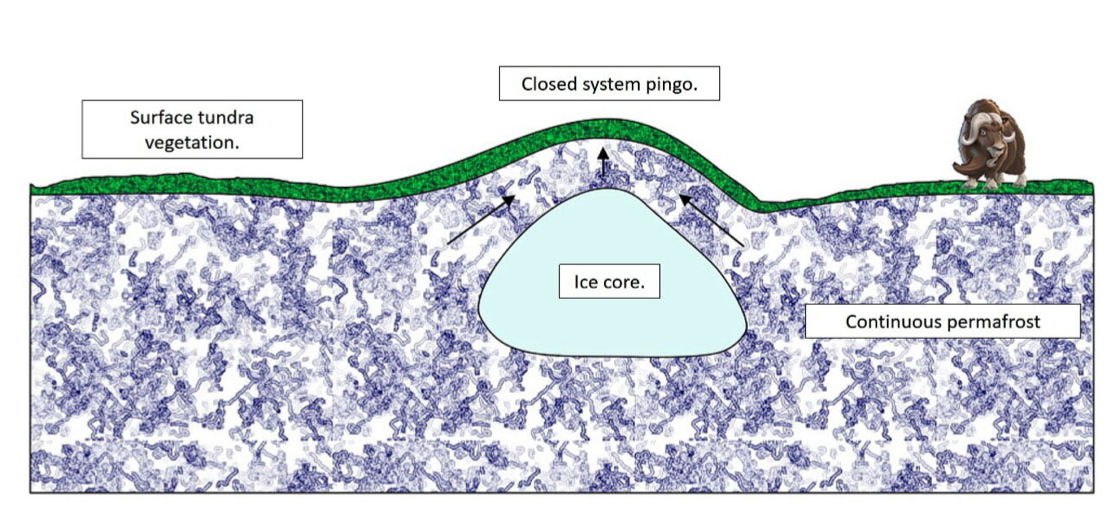
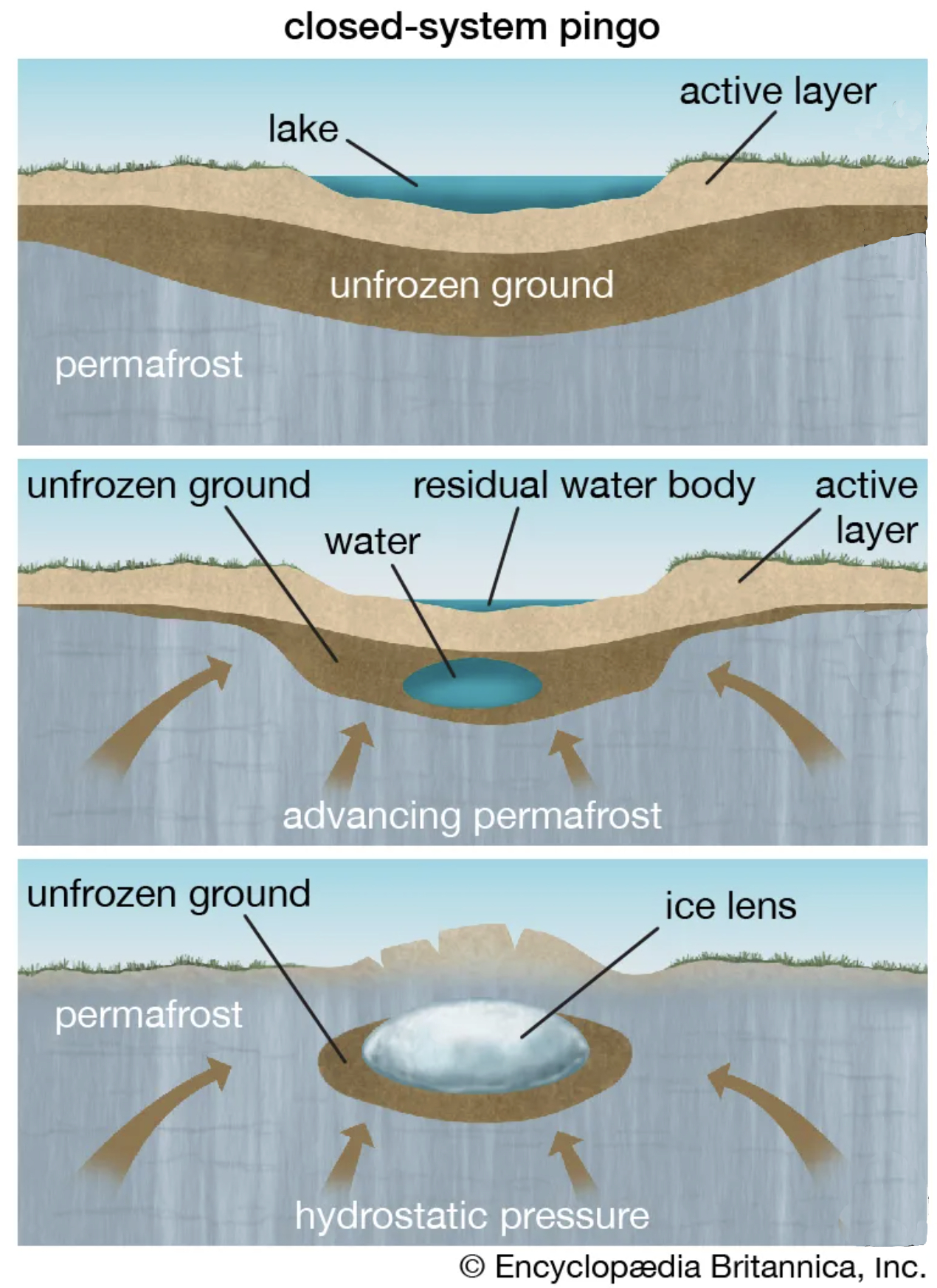
Pingos form when a mass of water is trapped beneath permafrost under pressure. Also called hydrolaccoliths, these huge mounds of earth with ice cores can reach up to 70 meters in height and 600 meters in diameter. Pingos usually grow a few centimeters a year, with the largest having taken decades or even centuries to form. Pingos eventually break down and collapse. They collapse when the ice core melts. This may happen when cracks form on the sides of the pingo that may reach down as far as the ice core, exposing the ice to warm air and sunlight. Once the core completely thaws, what remains is a doughnut-shaped ring of raised tundra enclosing a small round lake. Evidence of collapsed pingos in an area suggests that there was once permafrost there.
Hydrostatic (closed-system) Pingo (illustration by E. Ginn, 2021)
Development of closed-system pingo (illustration by Encyclopedia Brittanica)
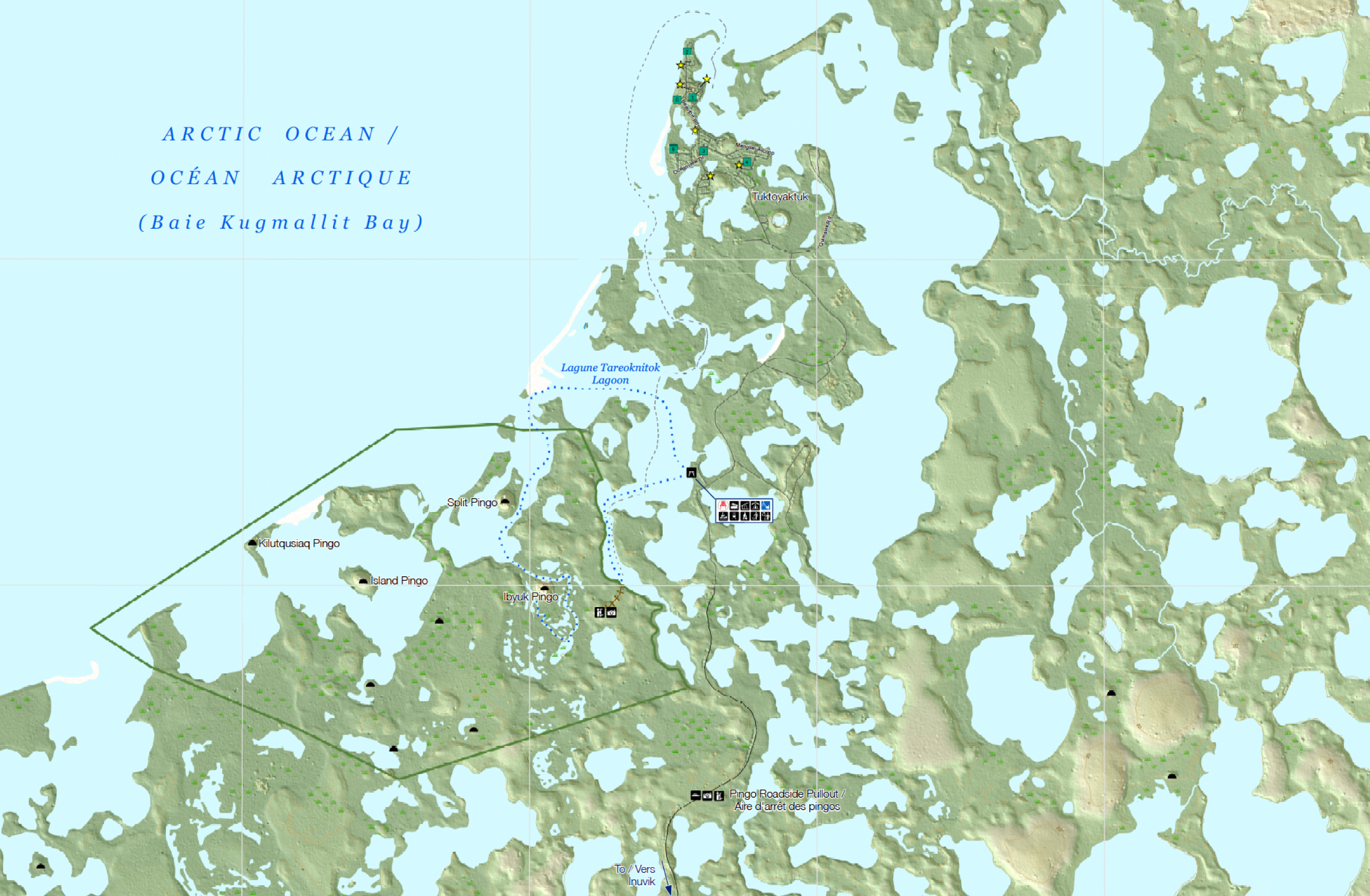
Map of major pingos in the Tuk area, NWT (pingos marked with black semi-circle)
.
One quarter of the world’s pingos, more than fourteen hundred of them, are in the Tuktoyaktuk Peninsula, part of the Mackenzie Delta of the Northwest Territories of Canada. The Inuvialuit and their Thule ancestors used these cone-like hills as navigational landmarks or lookouts when looking for caribou or whales. Hunters also used hollow pingos to freeze meat.
.
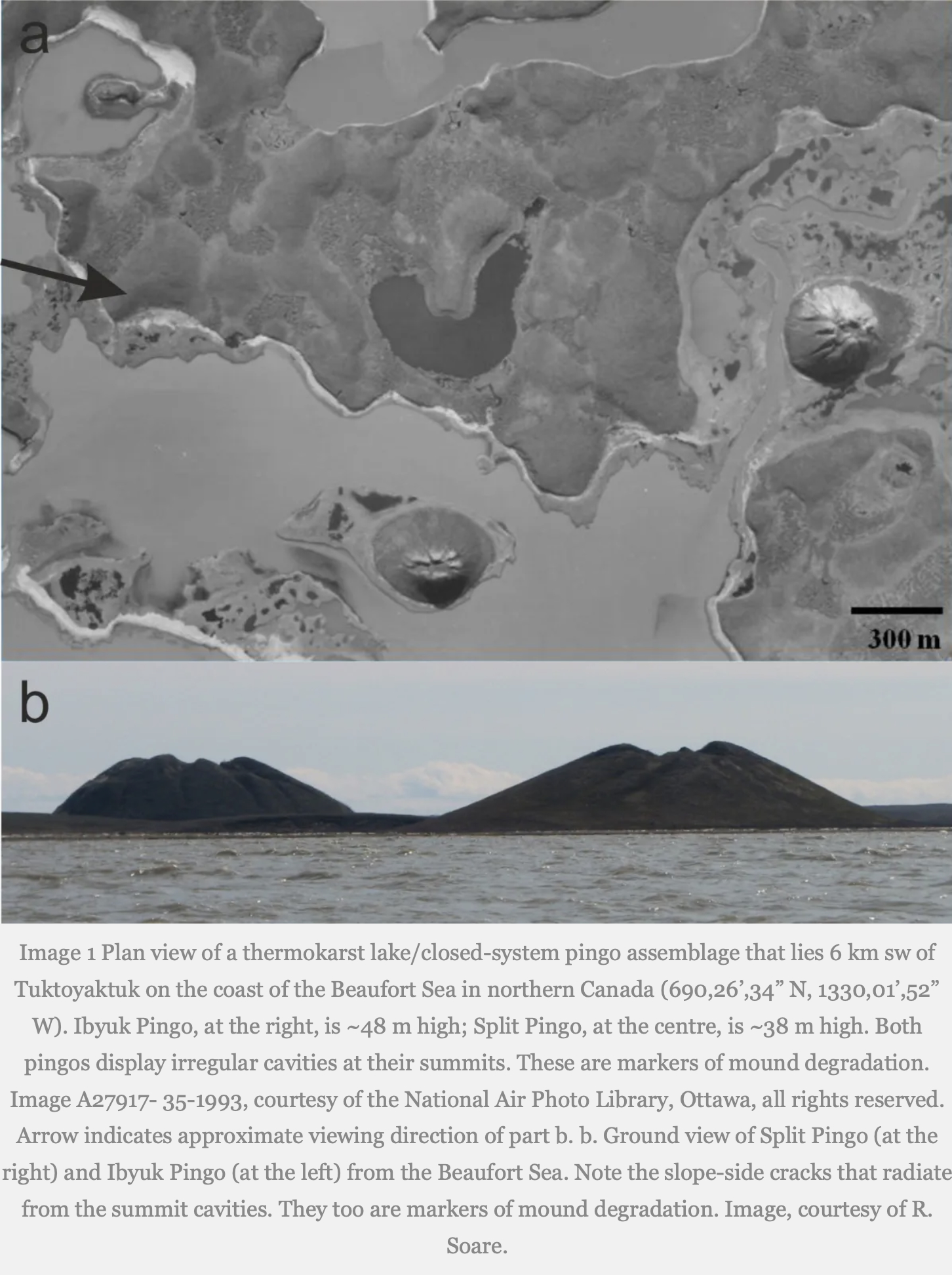
Ibyuk and Split Pingos (photos by National Air Photo Library, Ottawa)
.
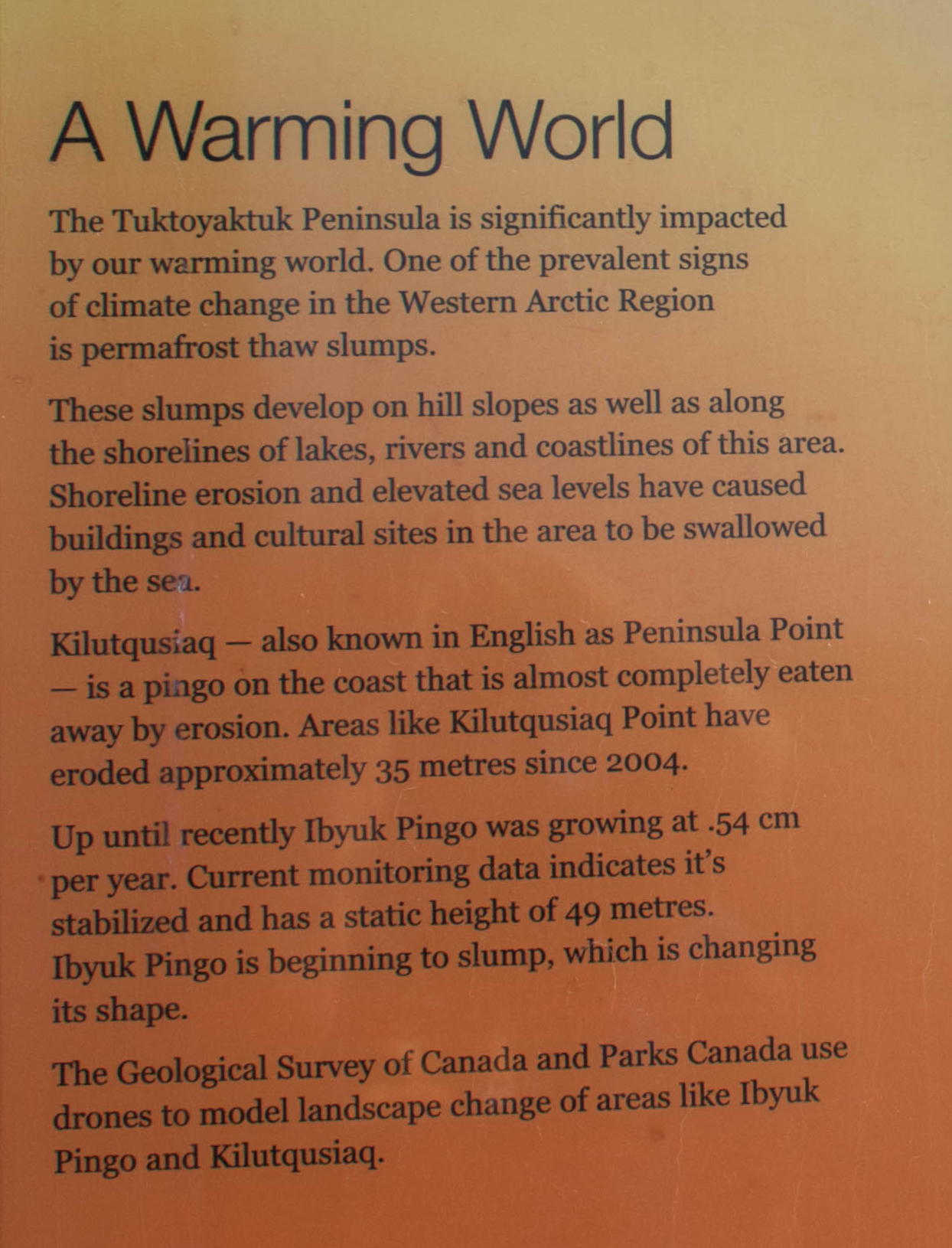
Pingo National Landmark protects eight pingos with the most famous being Ibyuk and Split. Ibyuk is about 50 meters high; it is the tallest pingo in Canada and the second tallest in the world and estimated to be more than 1,000 years old. It is also the world’s largest growing pingo, up to recently growing at a rate of about half a centimeter per year. With ongoing climate change, this is also changing. A local information sign in Tuk mentioned that Ibyuk Pingo has stopped growing and is beginning to slump, which is changing its shape. Kilutqusiaq—Peninsula Point—is a pingo on the coast that is almost completely eaten away by erosion: having eroded about 35 metres since 2004.
.
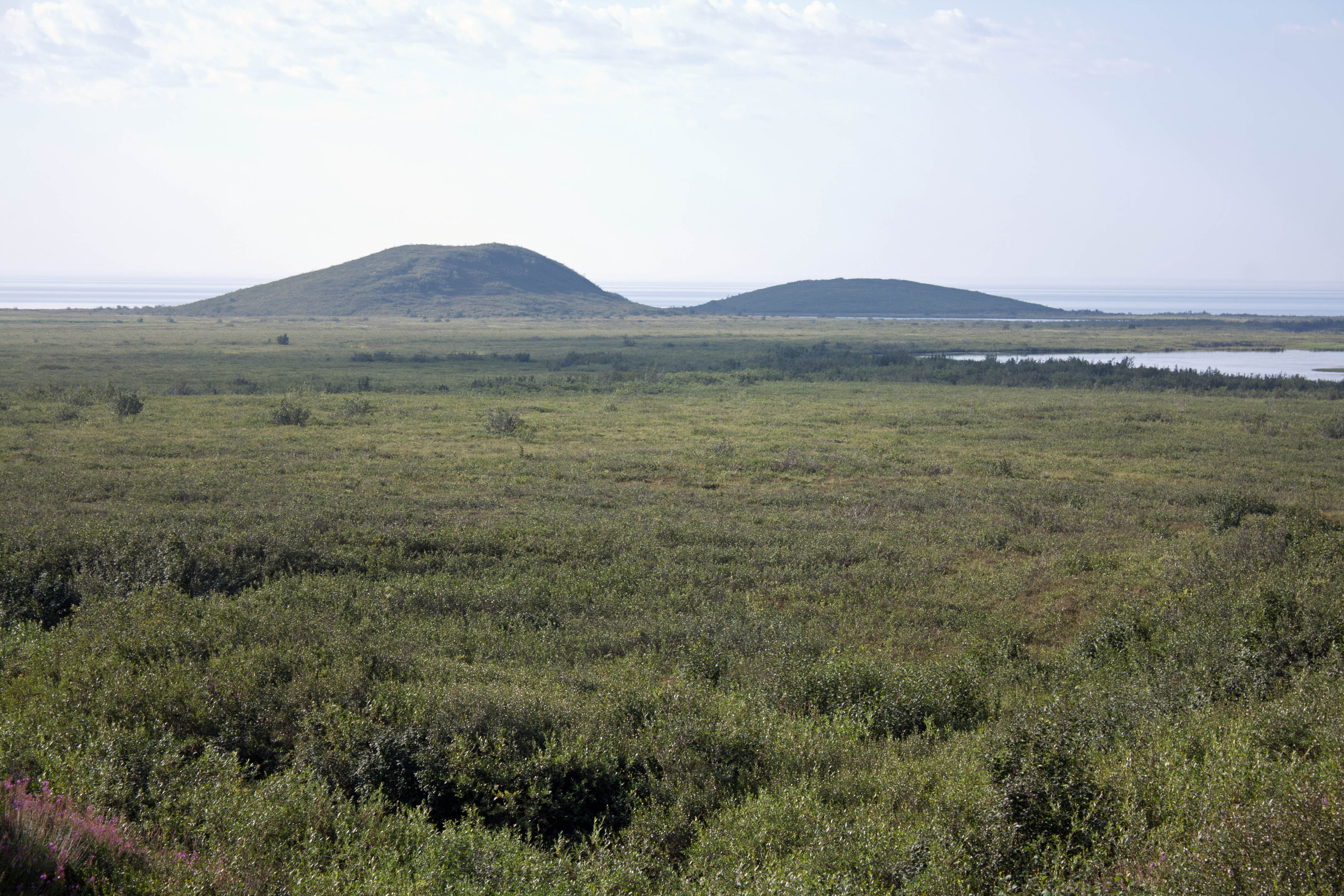
Pingos viewed across tundra near Tuk, NWT (photo by Nina Munteanu)
.
Climate change in the Arctic has caused some permafrost thaw slumps on lake shores, rivers and coastlines; shoreline erosion and sea level rise has swallowed buildings and cultural sites in the Tuk area. Kilutqusiaq—Peninsula Point—is a pingo on the coast that is almost completely eaten away by erosion: having eroded about 35 metres since 2004.
.
Tuk sign on warming climate impact on pingos
.
In the time of my novel Thalweg—2050s—hundreds of pingos near Tuktoyaktuk are caving in and forming circular ponds due to climate change. Giant ice-pimples are exploding as methane-rich gas hydrates decompose and form pressure bombs of combustible methane. The subsidence creates huge sink holes as wide as a house and deeper than hell.
.
Thalweg
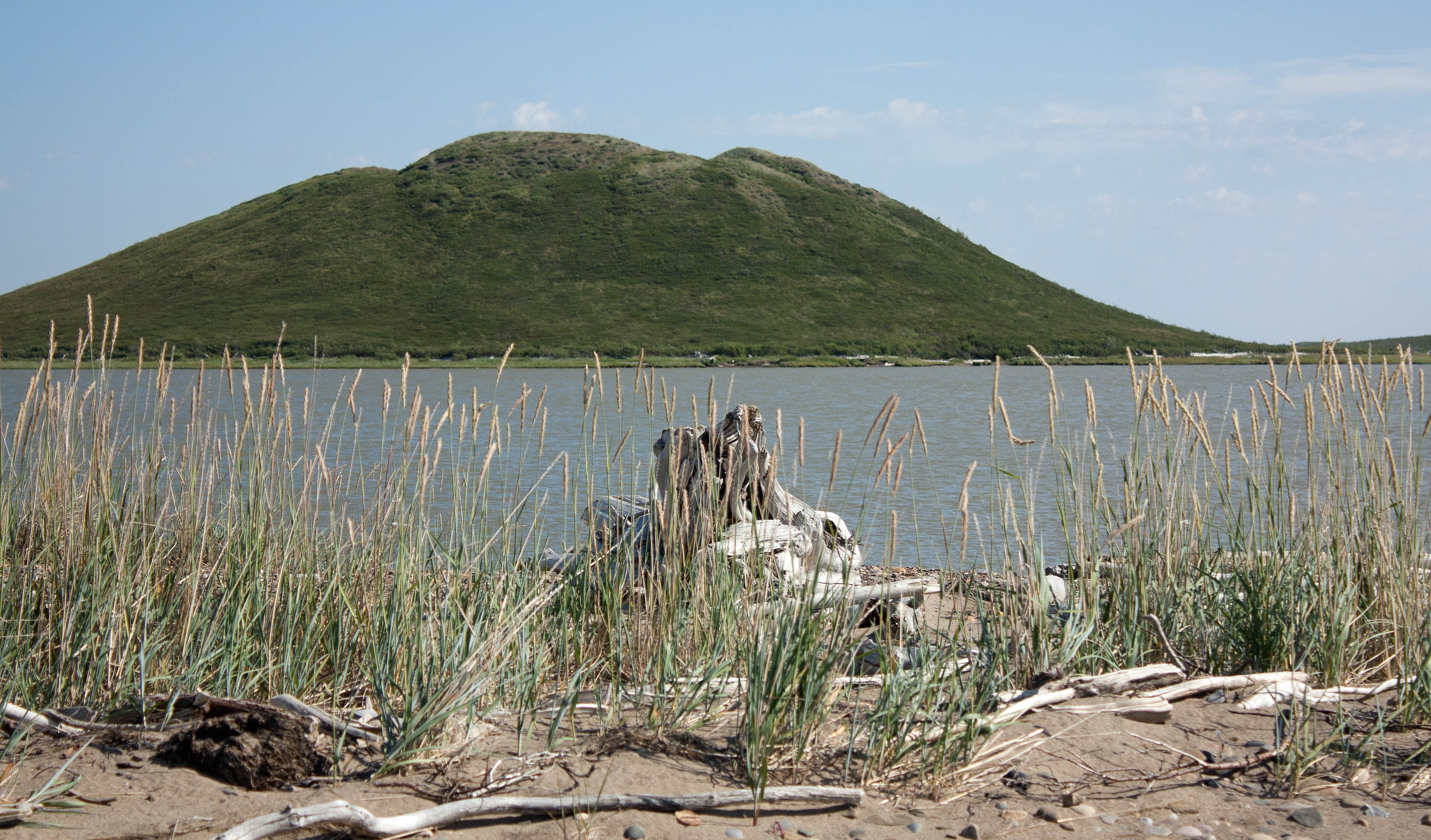
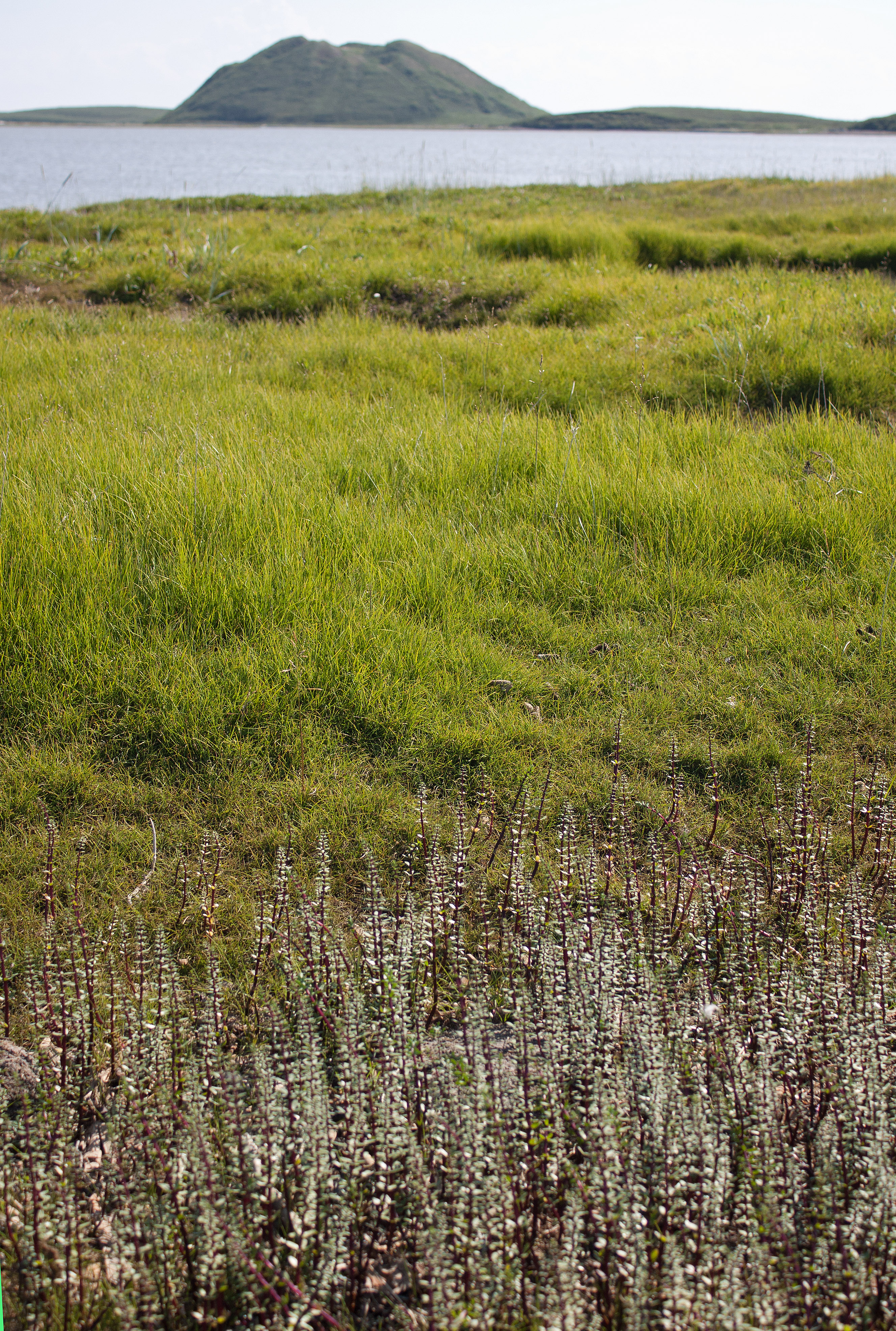
Ibyuk Pingo seen from nearby sandspit, NWT (photo by Nina Munteanu)
.
During her travels, Bobby-Jo thinks of her Inuvialuit friend Mary Steen in Tuk where giant pingos are thawing and exploding—thanks to climate change and permafrost thaw.
When we were kids, Mary took me up the Ibyuk Pingo, the giant cone mountain over a thousand years old. It’s the second highest in the world at forty-nine metres high and three hundred metres across and was still growing a few centimeters a year at its centre—despite the warming climate. Ibyuk is a hydrostatic pingo, which means it formed in an area of continuous permafrost and grew up from a large thermokarst lake. Expelled pore water from permafrost aggradation pushed up the old lake silts and sands from below, and the ice-mountain rose up like a giant frozen pimple above the ancient drained lake flats.
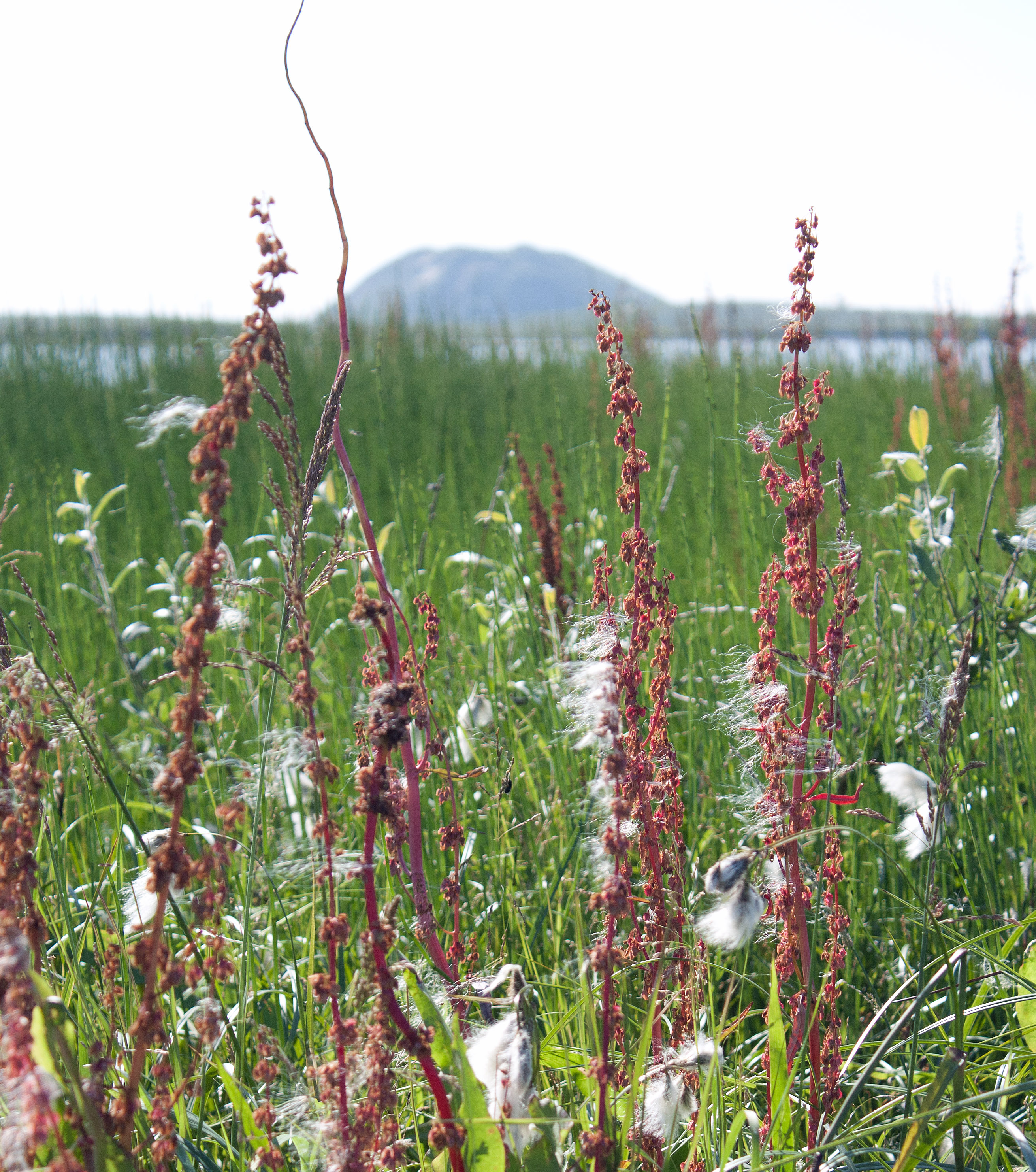
Ibyuk Pingo from a nearby spit of cottongrass and marsh grass, NWT (photo by Nina Munteanu)
.
We shouldn’t have been there; regrowth from trampling is extremely slow, often taking over half a century. The tundra moss, lichen, shrubs and krummholtz help insulate the pingo against ice core melting. When the ice core of the ice-cone is exposed, particularly if the vegetation blanket has broken open by dilation cracks or through erosion, the ice thaws and the mountain eventually collapses. During our climb, Mary and I noticed deep furrows in the vegetated soil layer. They cut down the slope as if a giant bear had clawed it and revealed the pingo’s icy sores.
When Mary and I returned to Tuk from our adventure, she got into trouble with her parents; someone had spotted us climbing the ice mountain and told them. I got a lecture and Mary was grounded for a week.
Because I was visiting, I was grounded alongside her. Pingos are living things, her parents told us sternly. They breathe, they grow, they shrink, they ebb and flow like water; they pulsate vertically. And we’d been in great danger. The Ibyuk Pingo was unstable—not just from a warming climate but from yahoos sliding down its steep sandy slopes and kids climbing where they shouldn’t. Did we know that the depth to its ice crust under the crater pond was shallow and fragile? When we were at the summit, the crater could have collapsed with sudden drainage of the pond and we would have disappeared in a roiling black sink hole!
When I last spoke with Mary five months ago, she told me that the area was starting to look like a moonscape, with craters everywhere. I thought of our little adventure on Ibyuk and decided that my analogy of a pimple or boil was appropriate given that pingos ruptured and flung their icy guts outward with explosive force. Mary admitted in a voice trembling with emotion that Ibyuk, the giant pingo we’d hiked up, had finally collapsed from massive coastal erosion and sea level rise. But not before it exploded.
.
.
Thalweg releases with Inanna Publications in Spring 2027.
.
Road through tundra to Tuk with pingo in background, NWT (photo by Nina Munteanu)
.
Glossary:
Pingo: A dome-shaped mound consisting of a layer of soil over a large core of ice in a permafrost area. Pingos form when a mass of water is trapped beneath permafrost (ground that is frozen for at least two years) under cryostatic or hydraulic pressure. One quarter of the world’s pingos are in the Tuktoyaktuk peninsula, more than fourteen hundred. Most are closed-system hydrostatic pingos, pingos formed in an area of continuous permafrost from pore water expulsion caused by permafrost aggradation at the bottom of a drained lake.
Permafrost Degradation: A naturally or artificially caused decrease in the thickness and areal extent of permafrost (Jorgenson, 2013). Widespread degradation of near-surface permafrost (40-80%) is projected by 2100 (Abbott & Jones, 2015). Release of greenhouse gases from thawing permafrost is likely the largest terrestrial feedback to climate change and one of the most likely to occur (Abbott & Jones, 2015). Degradation of permafrost soils can lead to the collapse, drainage and disappearance of water bodies (Vincent et. al., 2011). Jorgenson categorized twenty-three types of permafrost degradation based on dominant ice type, hydrologic regime, heat source and mass transfer.
.
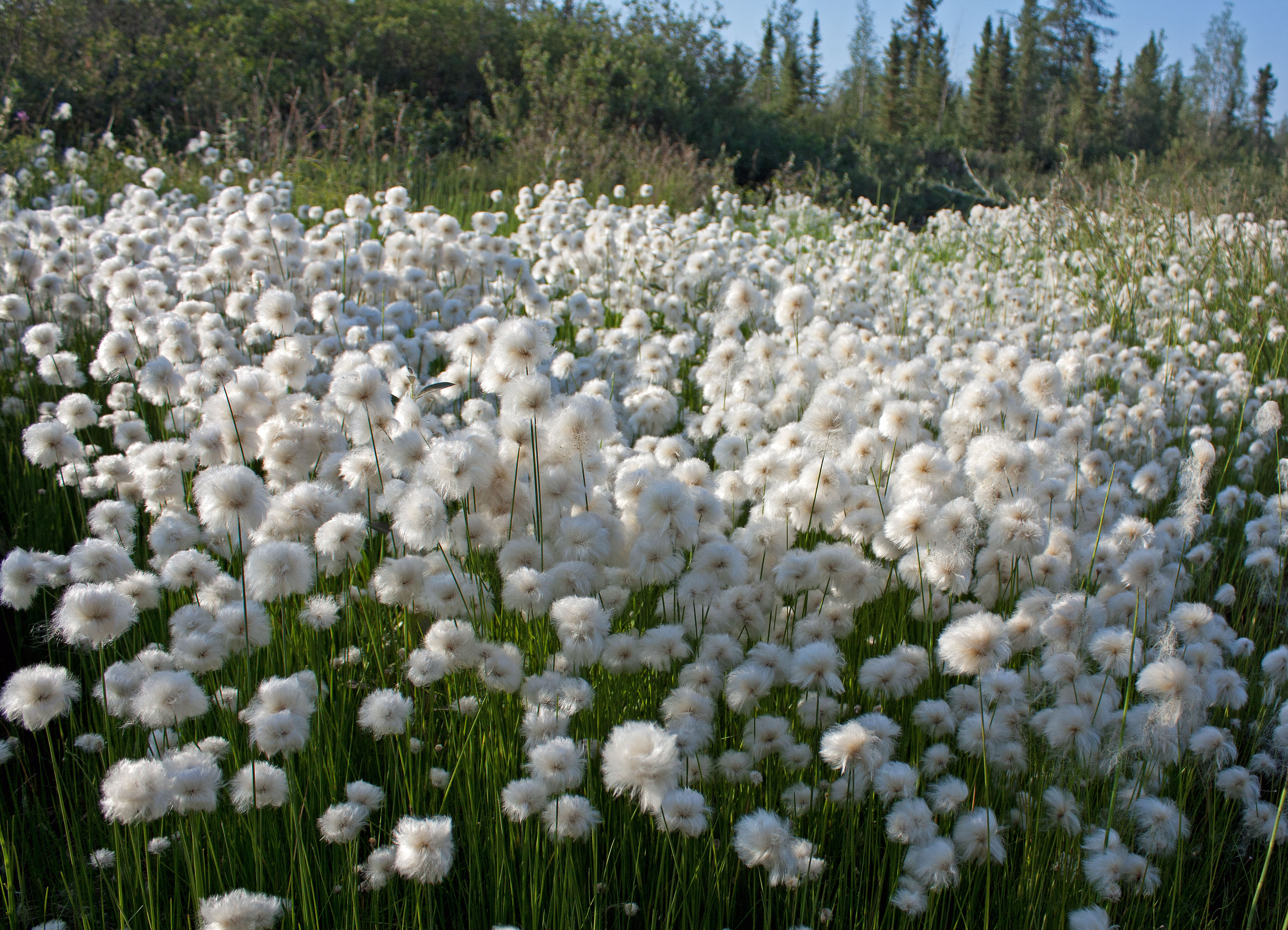
Cottongrass field with black spruce behind, off the Tuk highway, NWT (photo by Nina Munteanu)
.
References:
Abbot, Benjamin W. and Jeremy B. Jones. 2015. “Permafrost collapse alters soil carbon stocks, respiration, CH4, and N2O in upland tundra.” Global Change Biology 21: 4570-4587.
Jorgenson, M.T. and T.F. Osterkamp. 2005. “Response of boreal ecosystems to varying modes of permafrost degradation.” Can. J. For. Res. 35: 2100-2111.
Jorgenson, M.T. 2013. “Thermokarst Terrains.” In: John F. Shroder (Editor-in-chief), Giardino, R., and Harbor, J. (Volume Editors). Treatise on Geomorphology, Vol 8, Glacial and Periglacial Geomorphology, San Diego. Academic Press. pp. 313-324.
Harris, S.A.., French, H.M., Heginbottom, J.A.., Johnston, G.H., Ladanyi, B., Sego, D.C., van Everdingen, R.O., (eds.). 1988. “Glossary of permafrost and related ground-ice terms.” Technical Memorandum 142, Permafrost Subcommittee, National Research Council of Canada.
Mackay, J.R. 1998. “Pingo growth and collapse, Tuktoyaktuk peninsula area, western Arctic coast, Canada: a long-term field study.” Geographie Physique Quaternaire 52(3): 1-53.
Munteanu, Nina. 2027 (upcoming release; in press). “Thalweg.” Inanna Publications, Toronto, ON.
Vincent, Warwick F., et.al. 2011. “Ecological Implications of Changes in the Arctic Cryosphere.” Ambio 30: 87-99.
Ibyuk Pingo seen from nearby grass-covered sandspit, NWT (photo by Nina Munteanu
.
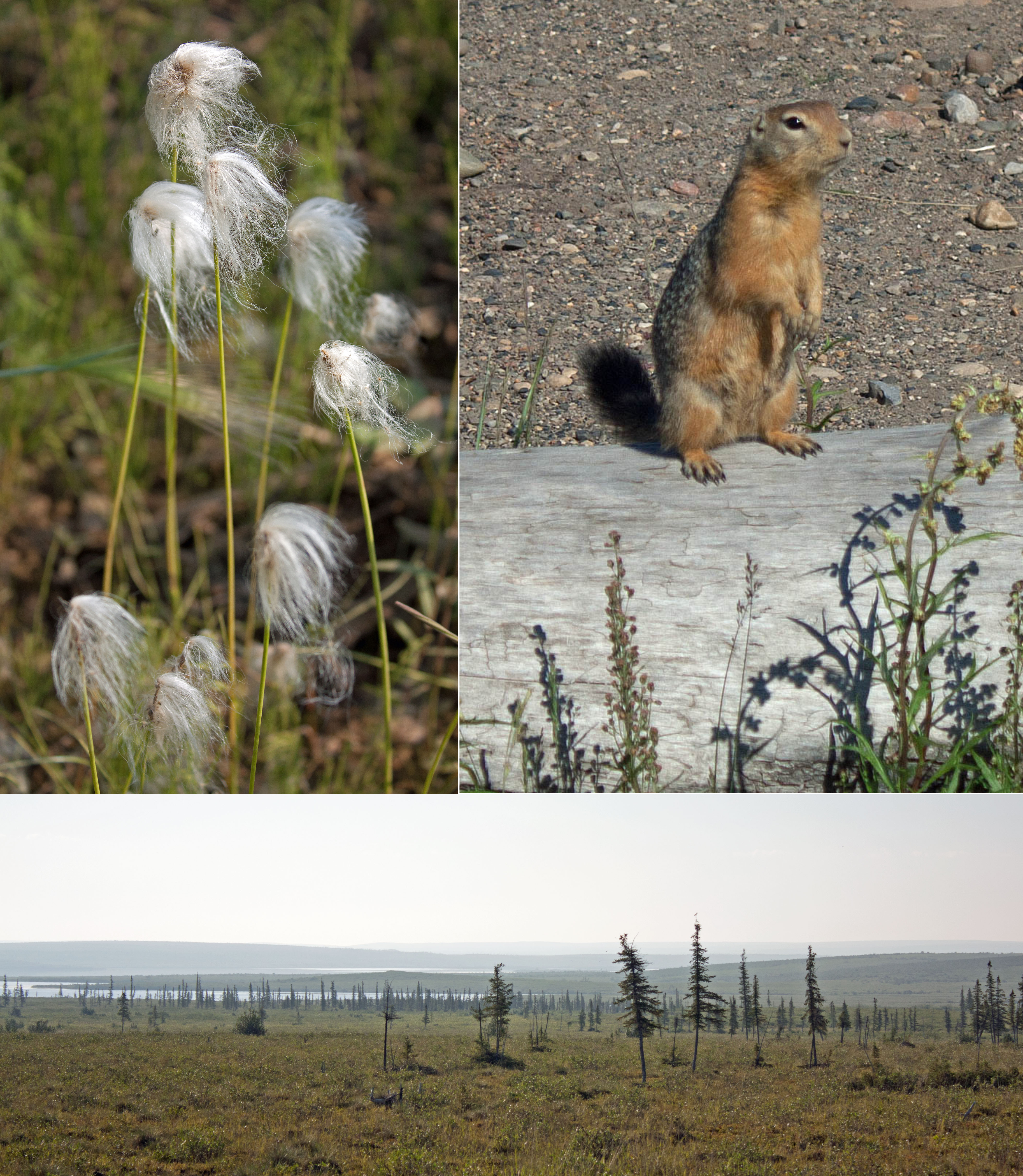
Scenes from in and near Tuk: top left, cottongrass; top right, ground squirrel; bottom, tundra scattered with spruce trees along Highway 10, NWT (photos by Nina Munteanu)
.
Nina Munteanu is a Canadian ecologist / limnologist and novelist. She is co-editor of Europa SF and currently teaches writing courses at George Brown College and the University of Toronto. For the lates on her books, visit www.ninamunteanu.ca. Nina’s bilingual “La natura dell’acqua / The Way of Water” was published by Mincione Edizioni in Rome. Her non-fiction book “Water Is…” by Pixl Press (Vancouver) was selected by Margaret Atwood in the New York Times ‘Year in Reading’ and was chosen as the 2017 Summer Read by Water Canada. Her novel “A Diary in the Age of Water” was released by Inanna Publications (Toronto) in June 2020.You can read her just released eco-fiction thriller Gaia’s Revolution by Dragon Moon Press.