.
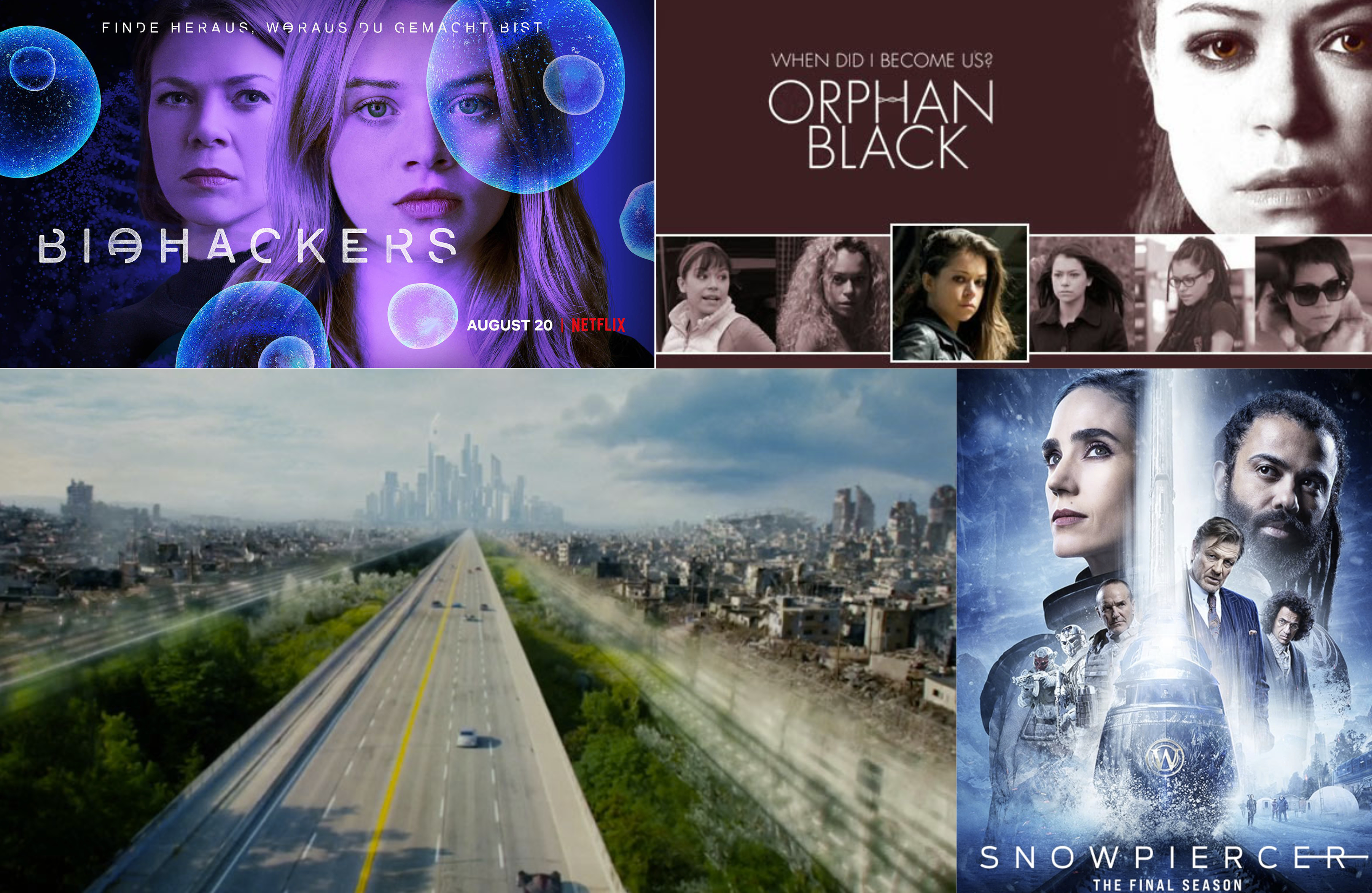
I’ve selected ten TV series that have intrigued me, moved me, and stayed with me for various reasons that touch on: abuse of justice, including eco-justice and environmental abuse; technology use and abuse; and the effects and horrors of climate change.
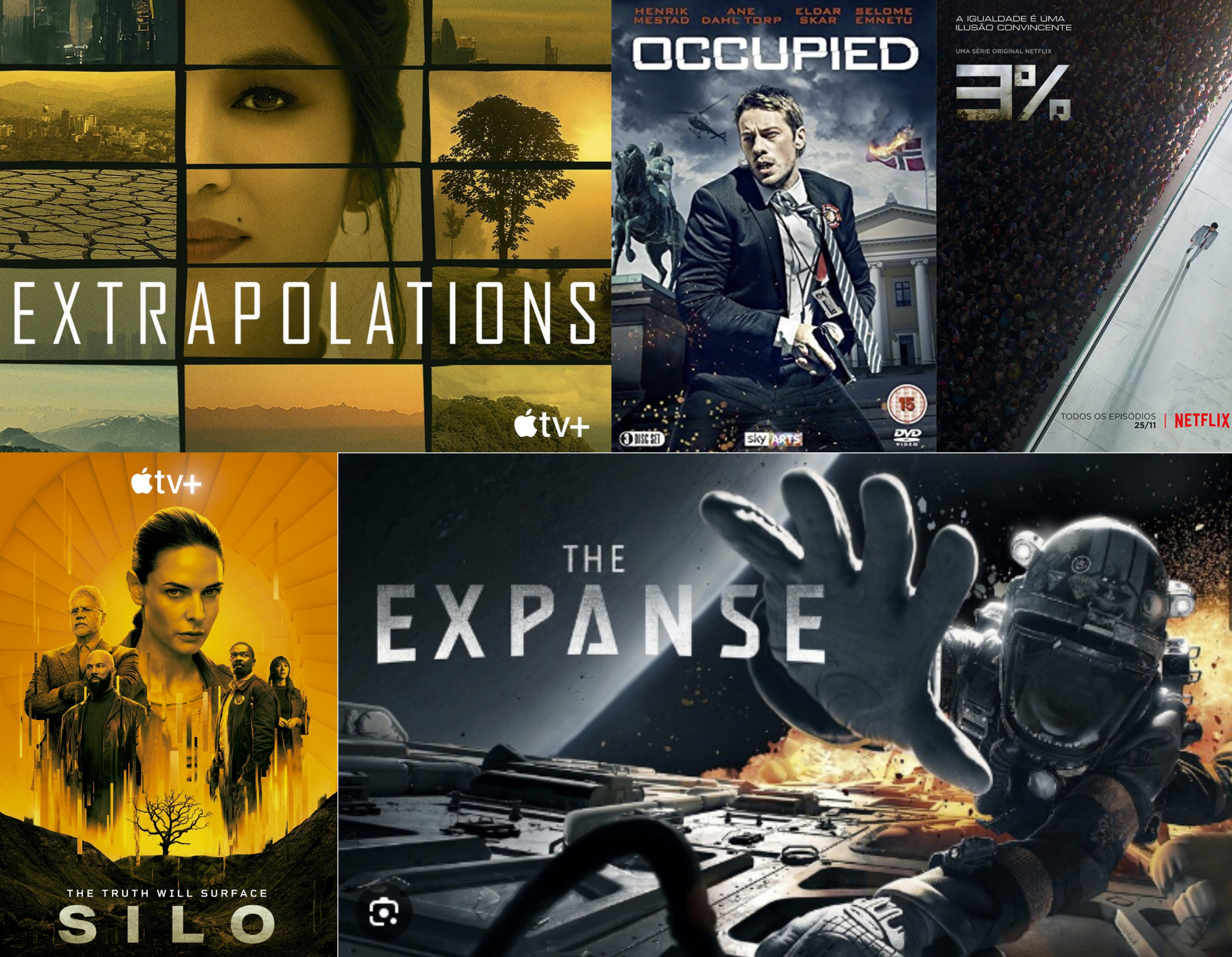
Some are well known; others not so well known. All approach storytelling with a serious dedication to depth of character, important themes, realistic world building, and excellent portrayal by actors. The world-building is extremely well done—in some cases rivalling Ridley Scott’s best—with convincing portrayals of worlds that are at times uncanny in their realism. Worlds that reflect story from an expansive landscape to the mundane minutiae of daily life: like the cracked phone device of Detective Miller in The Expanse or the dirty fingernails of engineer Juliette Nichols in the Down Deep of Silo. Stories vary in their treatment of important themes from whimsical and often humorous ironies to dark and moody treatises on existential questions. In my opinion, these TV series rival the best movies out there, often reflecting large budgets (but not always) and a huge commitment by producers. The ten TV series I’ve selected in this series come from around the world: Brazil, Germany, France, Norway, Canada and the United States.
In Part 2, I focus on five TV series that explore issues to do with resource allocation, adaptations to climate change and corporate / government biopolitics.
.
.
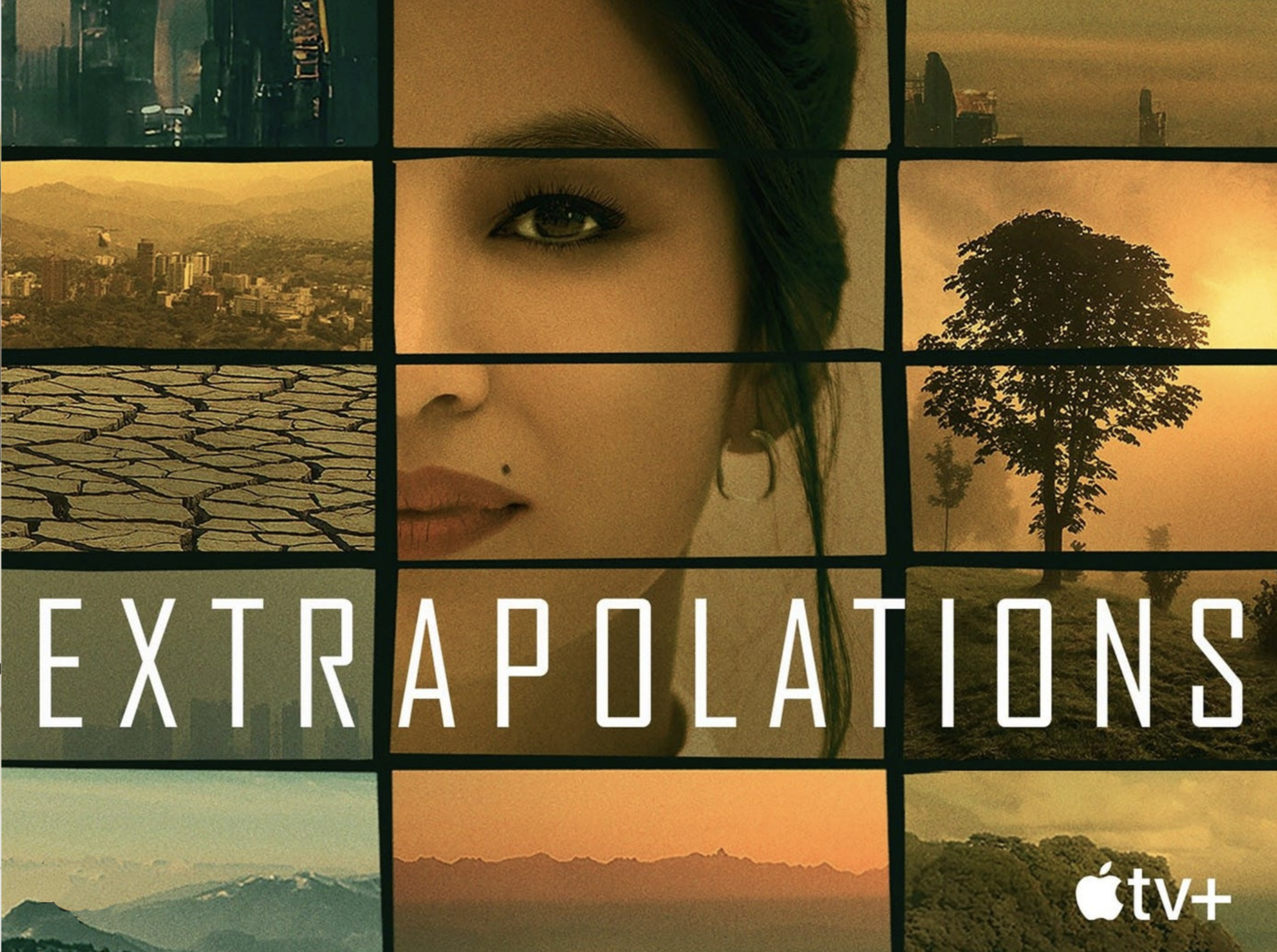
EXTRAPOLATIONS: A Journey into A Climate Changed Future
Extrapolations is an intelligent and vividly filmed mini-series of eight interconnected moral tales told over thirty-three years that extrapolate how our planet’s changing climate will affect family, work, faith, and—ultimately—our survival. Each episode focuses on the perspective of a few key characters whose choices often have significance consequence: from the myopic exploitation of greedy corporate moguls and feckless concessions of bureaucrats to the solidarity of common folk breaking the law to survive and scary solutions of eco-terrorists with messianic complexes. Emotions run raw and these characters you will either love or hate.
.
.
Each episode adds its own installment of personal choice and tragedy. The first episode takes place a decade from now and is named “A Raven Story.” This first installment sets the tone of the entire series with an unsettling tirade of self-serving human actions to a sweeping tide of brewing climate disasters. What follows is a bleak procession of climate change calamity from growing wildfires and powerful hurricanes to sea level rise, melting glaciers, species extinction, and acidifying oceans. A few characters, trying to address environmental disaster, struggle with choices to either gamble the present for the future or gamble the future for the present. In the last scene, a climate activist Carmen Jalilo (Yara Shahidi) sums up the trajectory of the entire series. “What does an increase in global temperatures by two degrees Celsius mean to you and to me? It means that when the temperatures go up, our imagination must increase even more. It means that when the sea level rises we must rise up as well. It means that when forest fires obscure the horizon we must look toward each other and find our way forward. We cannot give up and go home for one simple reason. We already are home; this is our only home.”
Each episode in the procession of climate change is both a literal and metaphoric fable of our relationship to our environment, the creatures that live with us—our nonhuman relatives—and to each other: the real cause—and potential solution—to the calamities of climate change.
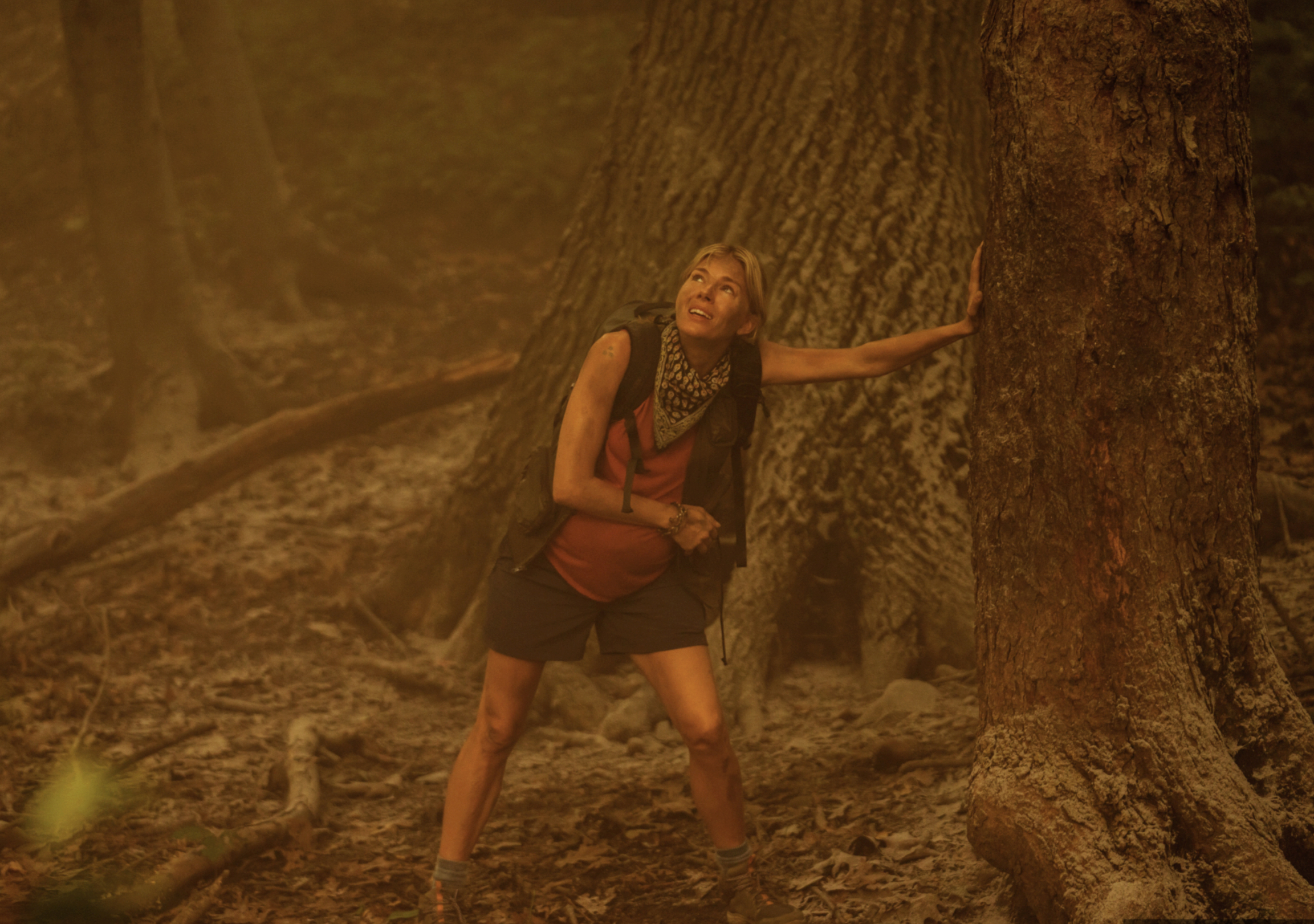
Episode 2, “Whale Fall”, features a beautiful heartfelt interaction between marine biologist Rebecca Shearer (Sienna Miller) and the last humpback whale in 2046. It is a solastalgic dirge on the sixth extinction event. When the whale asks the biologist “how might it be different” Shearer answers simply: “It will only change if we do, if we stop lying about the world, if we stop expecting the ones who come after us to fix it because we did not.”
.
.
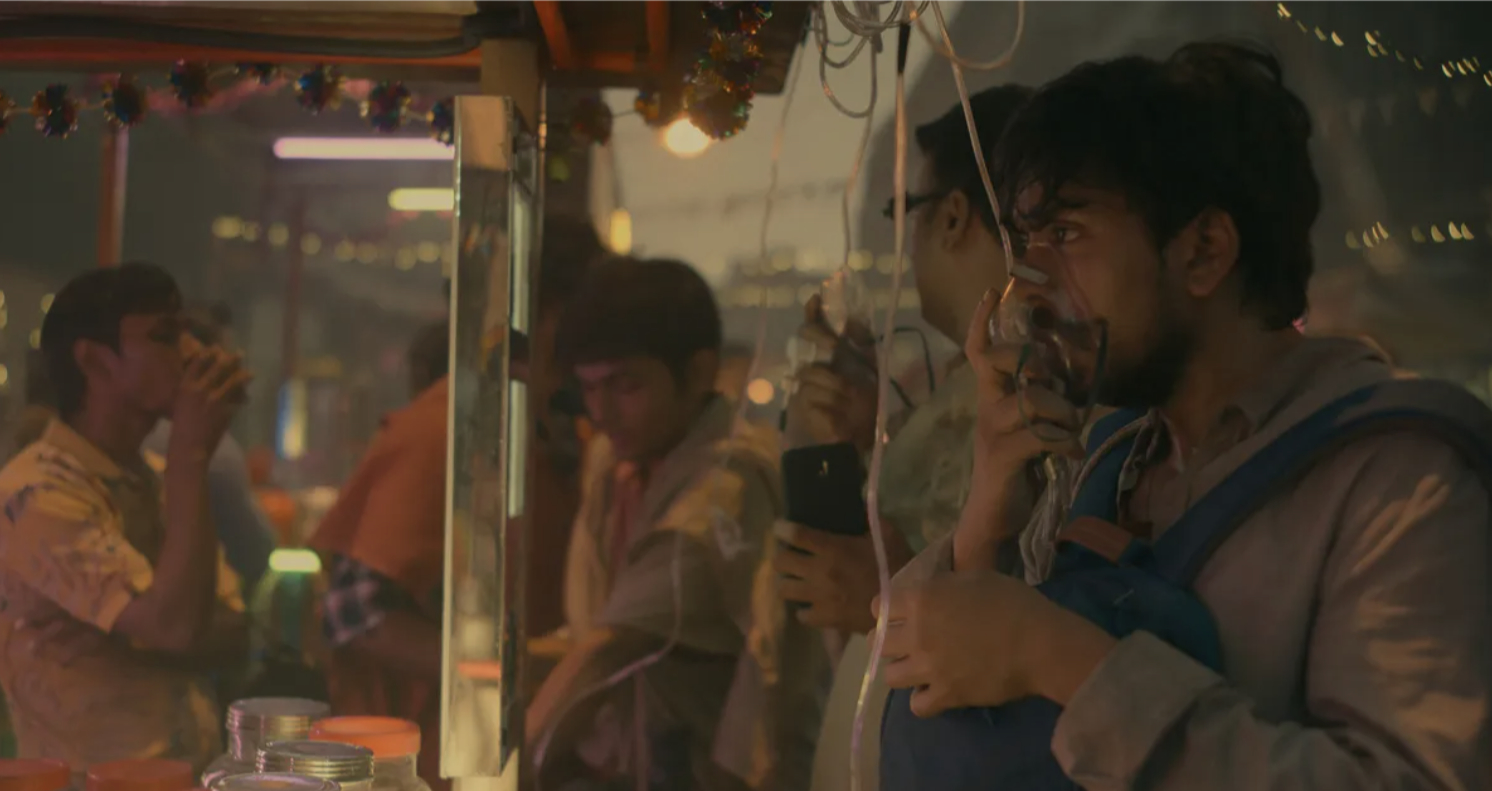
Episode 4, “Nightbirds”, oozes with such vivid visuals and angles, you can almost smell the stink in the air of Mumbai in 2056. Venders on the streets sell oxygen masks by the puff and real rice doesn’t exists; just the “synthetic, processed crap.” Driver Gurav (Adarsh Gourav) and handler Neel (Gaz Choudhry) flout the daytime curfew to transport illegal cargo (stolen seeds free of corporate branding) and a crazed geneticist to where they can be used in Varanasi. The drive becomes a nightmarish journey that touches on many aspects of ordinary life under the heel of climate change and the lengths that people will go to simply survive.
In Episode 6, “Lola”, the metaphors continue as this episode in 2066 explores the devastating memory loss of a main character through vascular dementia brought on by excessive carbon dioxide and heat. In the end, he has forgotten enough to forget that it even matters.
In 2017, I wrote an article about environmental generational amnesia. A term coined by Peter Kahn, professor of psychology at the University of Washington to explain how each generation can only recognize—and appreciate—the ecological changes they experience in their lifetimes.
In witnessing the collapse of large fish populations on the west coast, University of British Columbia fisheries biologist, Daniel Pauly observed that people just went on fishing ever smaller fish, resulting in what he called a “creeping disappearance” of overall fish stocks. He called this impaired vision “shifting baseline syndrome,” a willing ignorance of consequence based on short-term gain. This is because we are not connected. And because we aren’t connected, we simply don’t care. Environmental generational amnesia is really part of a larger amnesia, one that encompasses many generations; a selective memory driven by lack of connection and short-sighted greed.
Extrapolations ends in 2070 as Crypto mining has radically increased carbon output, higher temperatures are killing and disabling people en masse, and the weight of water in the higher oceans has altered the tectonic plates. While an element of hope glimmers in each episode, even if just through personal triumph and resilience, it is particularly notable in the last episode for reasons you need to watch to understand.
Each episode showcases an intimate personal journey woven into the larger story and strung in an anthology driven by a relentless changing climate and unruly environment. Make no mistake; the planet Earth, in the throws of climate change, is the main character here. This ambitious series dared to be more than human-centric, transcending beyond anthropocentric and androcratic worldviews in an attempt to elicit empathy for our entire world particularly the non human world. The series pointed to a more eco-centric view of this precious and beautiful world we live in. As a result, it suffered criticism.
Extrapolations was generally panned by critics and viewers alike as less than potent or even uninteresting and “flat” because it apparently traded character depth for scientific extrapolation and exposure. I couldn’t disagree more. I was gripped from the start by this large story. Characters throughout the episodes provided a panoply of understated archetypes to represent a cross section of humanity in the throws of climate catastrophe. Characters I either loved or hated or wanted to smack to wake them up. And I couldn’t help cheering when a certain miserable cruel human was offed by, of all things, a walrus mother protecting her pup.
I found the series incredibly potent for its realistic portrayal of a tortured environment at the hands of human apathy and fecklessness. I felt solastalgia creep into my bones as I witnessed this bleak future. There was something utterly tragic about a young corporate executive escaping her stressful job by retreating to a pretend autumn forest in a virtual chamber—when the real thing was no longer available. The loss of our wildlife and trees. Pure fresh air. Blue skies. Healthy oceans and freshwater. These are all things most of us still take for granted or don’t even care about.
Individual scenes lingered long after they were gone: people wearing galoshes to attend a drowning synagogue in Miami; two seed smugglers defying day curfews against overwhelming heat and noxious air quality to deliver contraband seeds to farmers in Mumbai; a news reel listing the extinction of the Polar Bear and the African Elephant as a young boy cuddles his stuffed animal version. I cried for these majestic creatures, fallen at our hands. And I cried for us at our great loss.
Ultimately, this series is all about the choices we make for this planet and our survival on it. Extrapolations makes it clear that choices, any choices, can be key to saving life on this planet. This series is not just a clear clarion call but a heartfelt exhortation for us to be brave and act now. In any way we can.
.
Ten Significant Science Fiction TV Series:
Biohackers (Germany)
Orphan Black (Canada)
Occupied (Norway)
Missions (France)
Expanse (USA)
Incorporated (USA)
3% (Brazil)
Snowpiercer (USA)
Silo (USA)
Extrapolations (USA)
.

Nina Munteanu is a Canadian ecologist / limnologist and novelist. She is co-editor of Europa SF and currently teaches writing courses at George Brown College and the University of Toronto. Visit www.ninamunteanu.ca for the latest on her books. Nina’s bilingual “La natura dell’acqua / The Way of Water” was published by Mincione Edizioni in Rome. Her non-fiction book “Water Is…” by Pixl Press (Vancouver) was selected by Margaret Atwood in the New York Times ‘Year in Reading’ and was chosen as the 2017 Summer Read by Water Canada. Her novel “A Diary in the Age of Water” was released by Inanna Publications (Toronto) in June 2020.
.
 Nina Munteanu Writing Coach