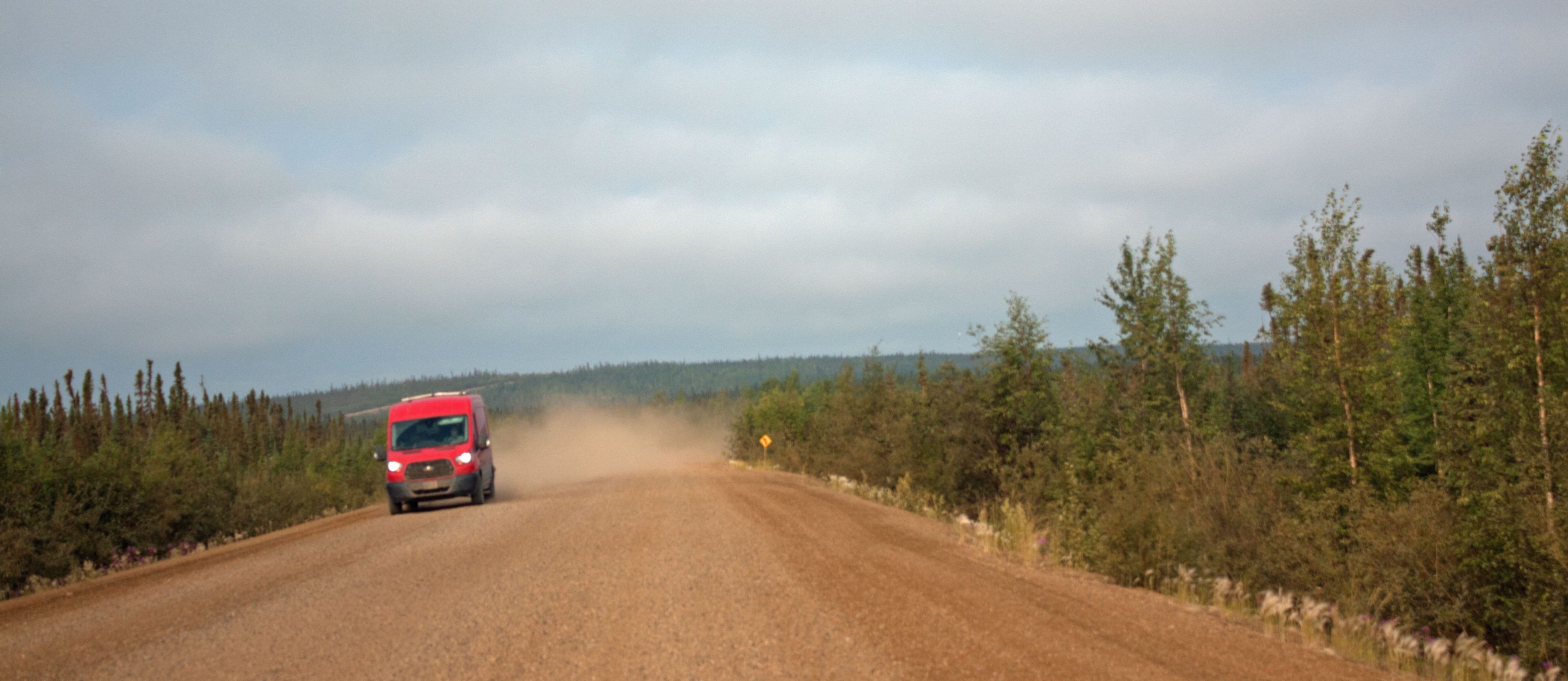
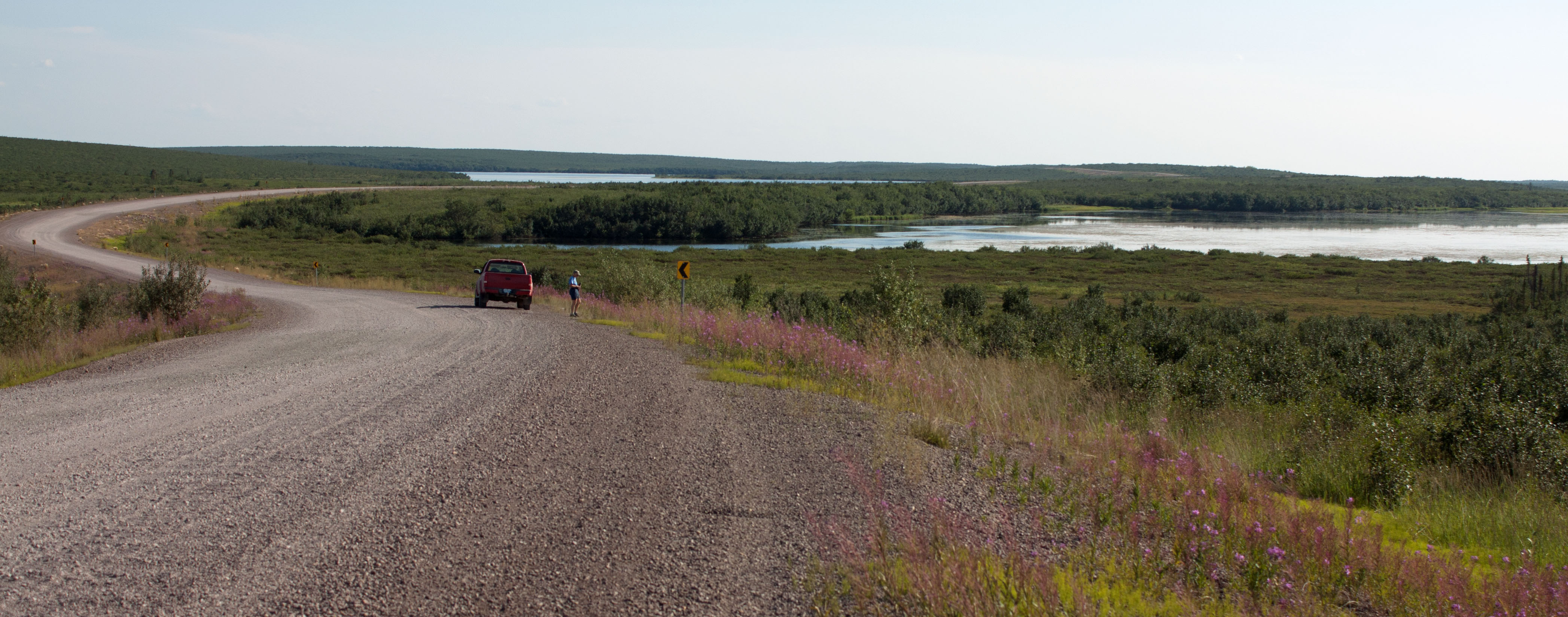
Dempster Highway, north of Fort McPherson, NWT (photo by NIna Munteanu)
.
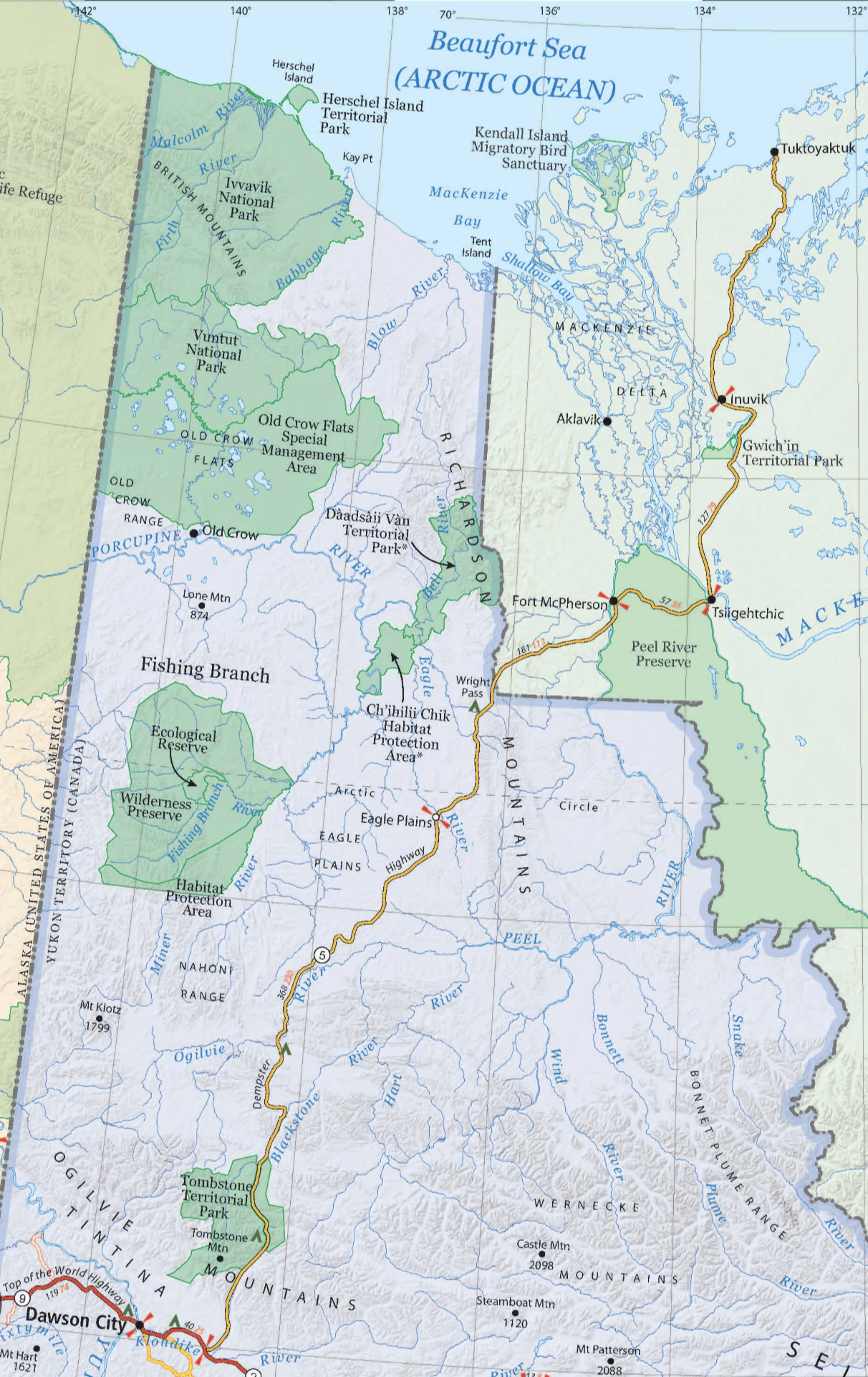
In my upcoming eco-fiction novel Thalweg, Gwich’in limnologist Bobby-Jo makes her way back home to Fort McPherson, NWT, after the sudden flood of the Peel River has all but destroyed her Arctic hometown. She starts in Dawson City and takes the challenging gravel Dempster Highway north.
The Dempster is renowned for its remote beauty and driving hazards. Drivers today are cautioned to take sufficient provisions, including a tire-fixing kit and spare tires. By the time Bobby-Jo is driving the Dempster in the 2050s, the permafrost is actively thawing. One of the characters describes it as: “a thin ribbon of shale and mud floating tenuously on an unstable sea of melting ice, slushy rock, and murky water.”
The Dempster is a temperamental gravel and shale road originally built in 1978 when explorers found oil and gas in the deep bedrock of Eagle Plains. The highway roughly follows Jack Dempster’s original trail that he learned from the Gwich’in and old dogsled routes. They used two-metre thick berms of gravel and shale to prevent the road from sinking into the ground; other materials would cause the permafrost to thaw and buckle the road, creating small lakes. When the uunjit discovered that the deposits weren’t large enough to exploit, the Dempster turned into a ghost road. The road to riches turned into the road to nowhere, abandoned to the rugged wilderness of mountains and tundra and the wildlife that inhabit it. The Dempster was left to itself and its people.
Below is a short excerpt of Bobby-Jo’s experience driving the Dempster north from Dawson City:
On a cloudy morning in late August, I drove the North Klondike Highway and turned north on the Dempster as it started to rain. After a few kilometres, the cracked pavement gave way to loose gravel. The car slid along the slick mud like a sled on snow.
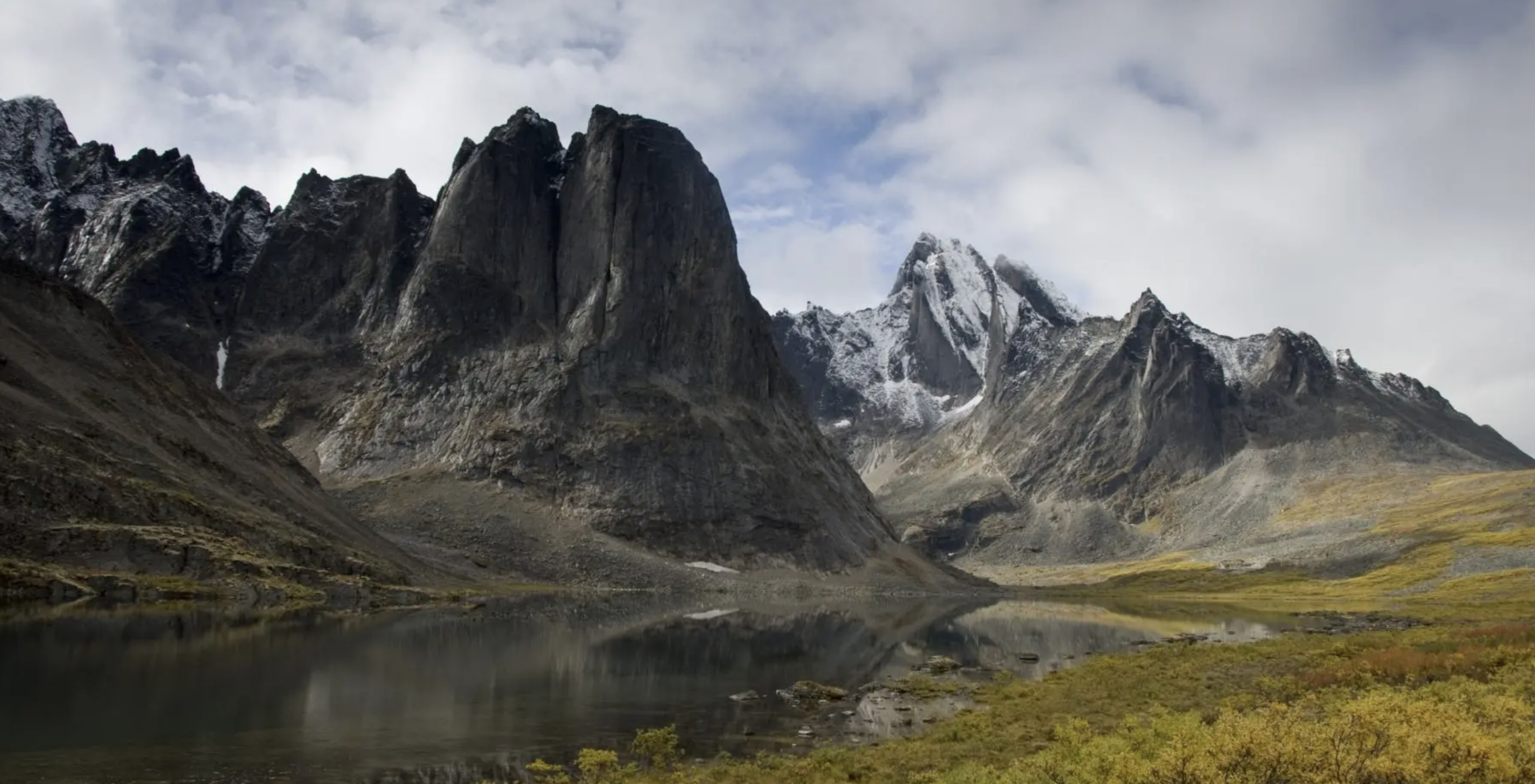
The first stretch of the Dempster followed a wide valley of moraines fed by glaciers in the high granite peaks of the southern Ogilvie Mountains. In Tombstone Territorial Park I stopped the car and stepped out into the cold breeze to rest my eyes on the bald sheer towering rock that rose out of a broad sloping alpine valley with peaks sharp enough to cut the sky like a knife.
Gold, russet, gray-green, stunning yellow and purple carpeted the valley floor with impressionistic swirls of lichen, alpine shrubs, cotton grass and blazing fireweed. Dark flecks of stunted spruce trees and dwarf birch and willow added contrast. A fine mist flowed and pooled in the depressions of the lower slopes.
I breathed in the freshness of sub-arctic air and moist earth. It had stopped raining, but the moisture that clung to the air brought out an incredible richness of fragrances, an aria of sweet floral scents mixed with earth and tree pitch. It smelled like home. I inhaled slowly and deeply, filling my lungs with ancestral energy. It resonated deep inside me where this place lay embedded in my soul.
.
Tombstone Territorial Park (photo by Yukon Travel)
.
My Experience on The Dempster and The North
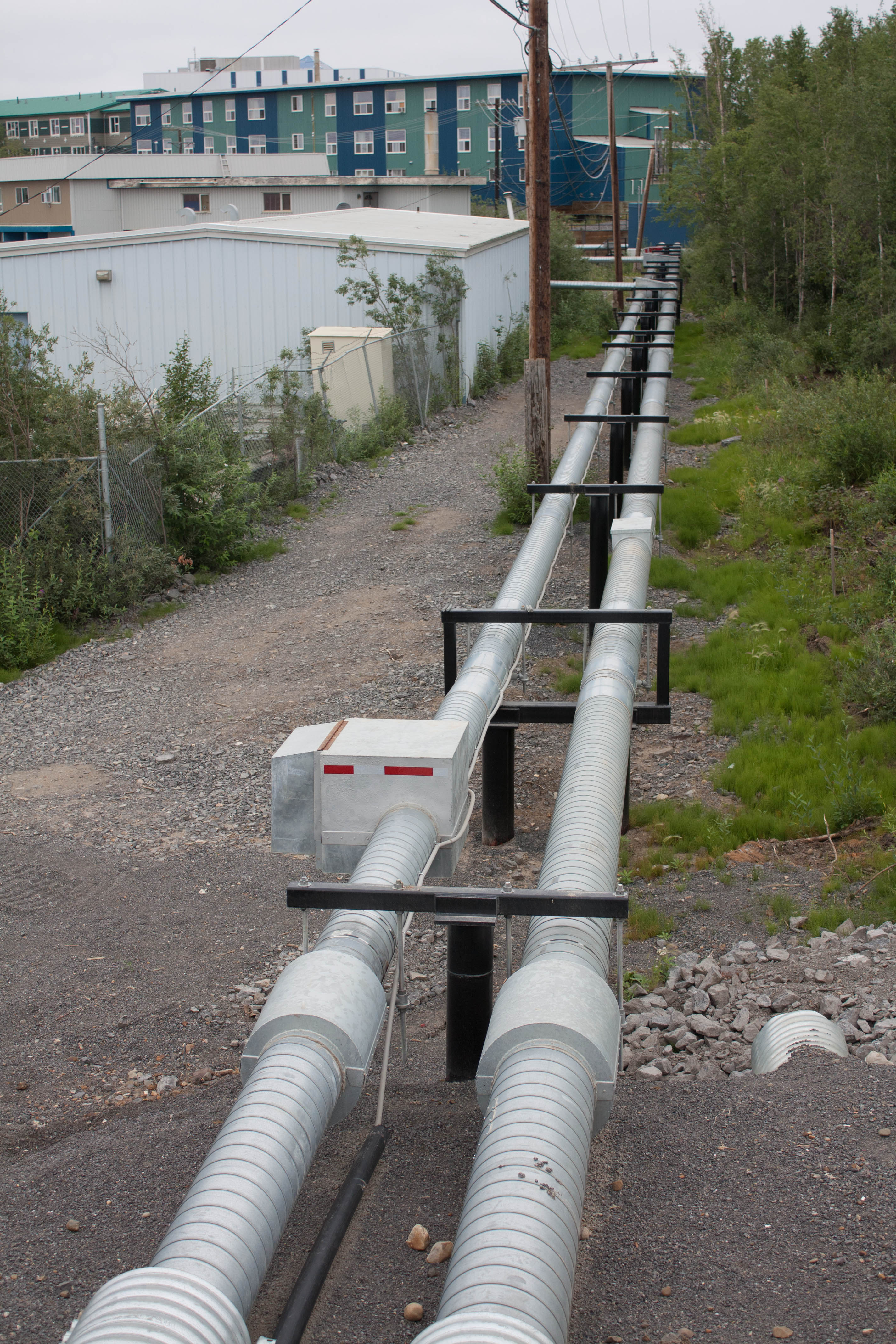
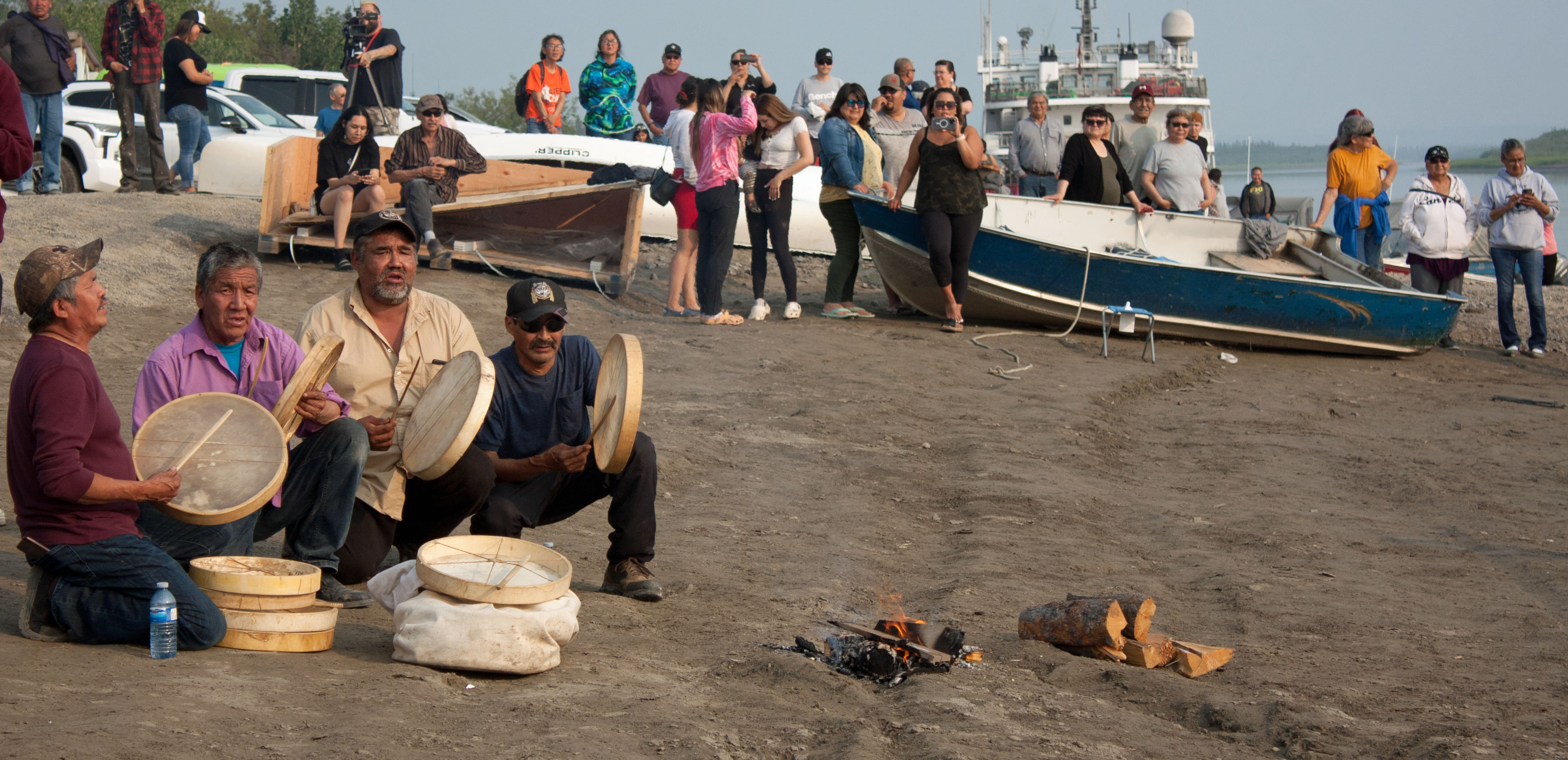
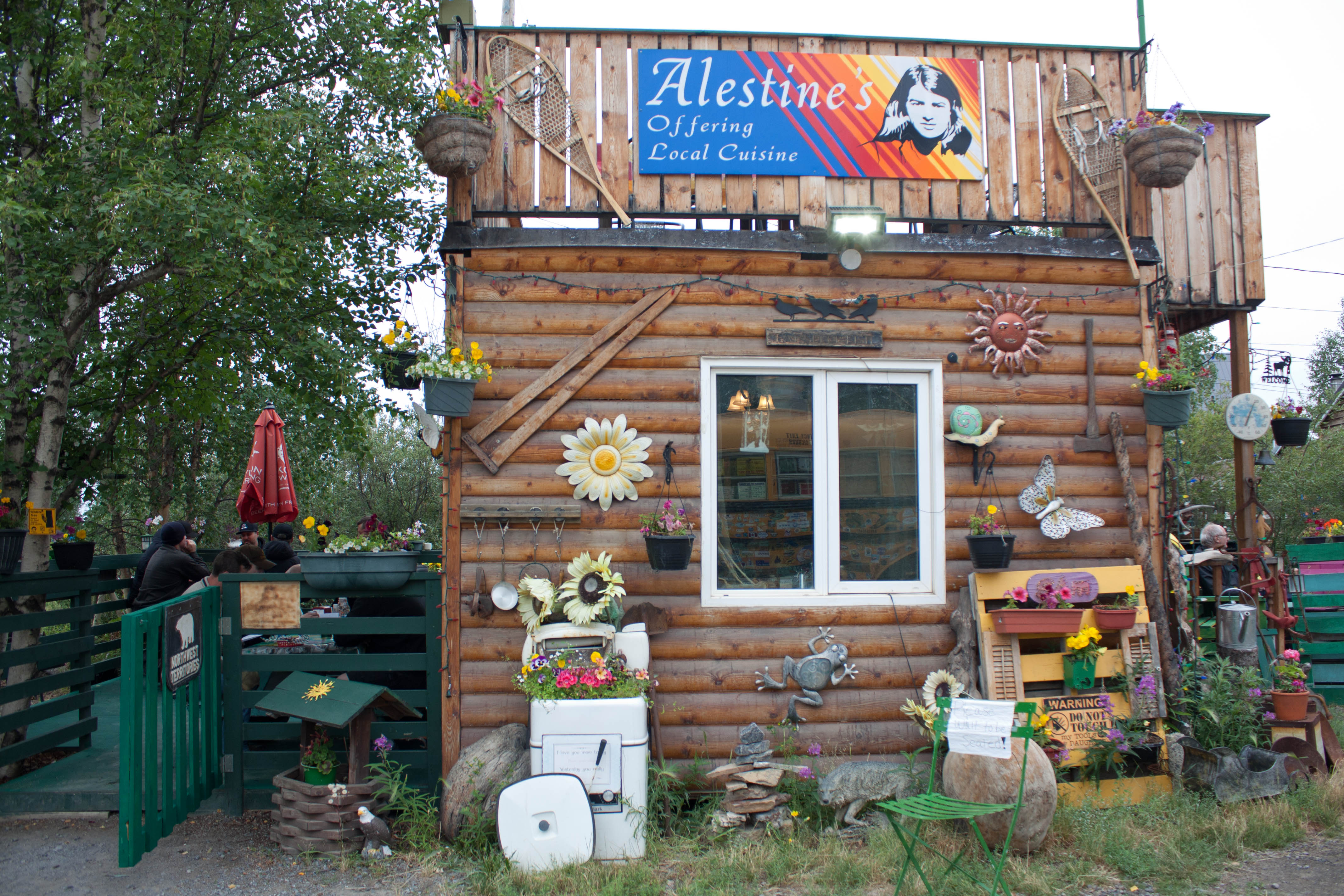
My good friend and story consultant Anne accompanied me on my research trip North. We first flew to Inuvik, whose stilted buildings all have utilidors (above ground piping) running among them to prevent the permafrost beneath from heating up. Already, some buildings were sinking and the new hospital developed a small pingo (ice pimple) beneath it; the ice was heaving and cracking the floors. Anne and I got to Inuvik just in time to witness a canoe race from Aklavik along the Mackenzie River, the first in many years. We ate whitefish tacos at Alestine’s, a funky bistro.
.
Utilidors in Inuvik, NWT (photo by Nina Munteanu)
.
Drummers bring in the canoes during the race from Aklavik, Inuvik, NWT (photo by Nina Munteanu)
Alestine’s Patio, Inuvik, NWT (photo by Nina Munteanu)
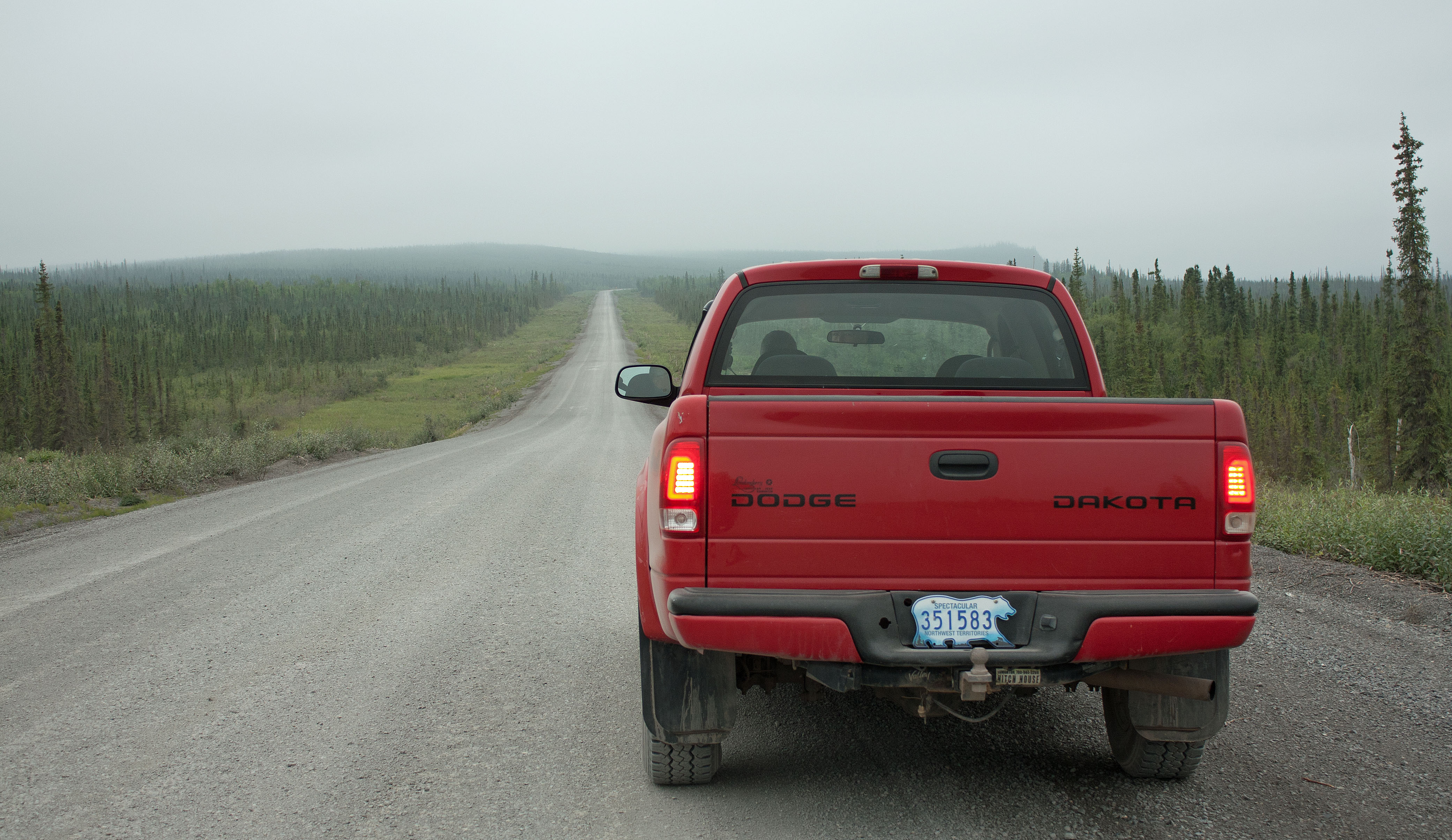
The Dakota truck on the Dempster Highway, NWT (photo by Nina Munteanu)
.
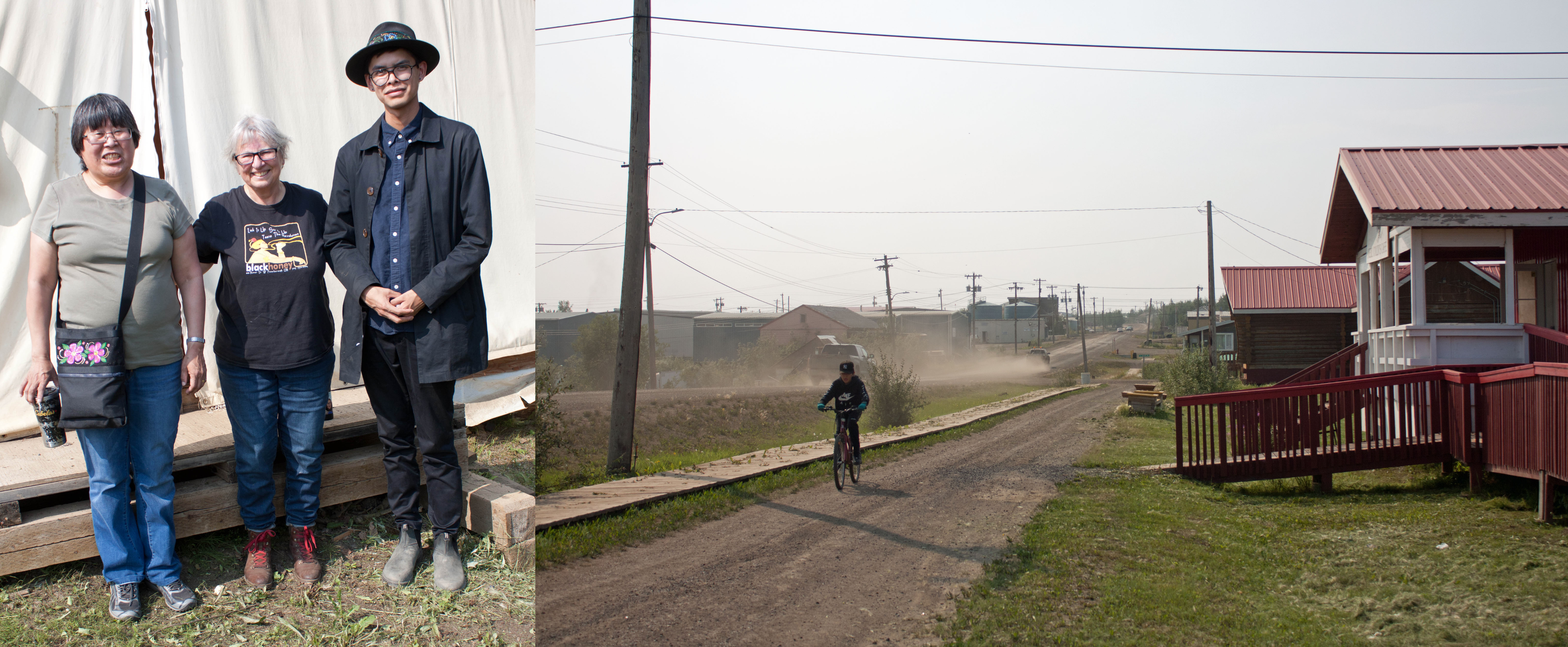
We rented a Dakota truck and drove the Dempster south to Fort McPherson on the Peel River to meet with my new Gwich’in friends who helped keep Thalweg authentic and respectful: Sharon Snowshoe (head of the Gwich’in Council) and Arlyn Charlie (a gifted writer). The town—which was totally destroyed in my speculative novel—was a small dusty community with one main street, a school, a church, and a few shops.
.
Left: Sharon Snowshoe and Arlyn Charlie with Nina Munteanu; Right: main street of Fort McPherson (photos by Anne Voute and Nina Munteanu)
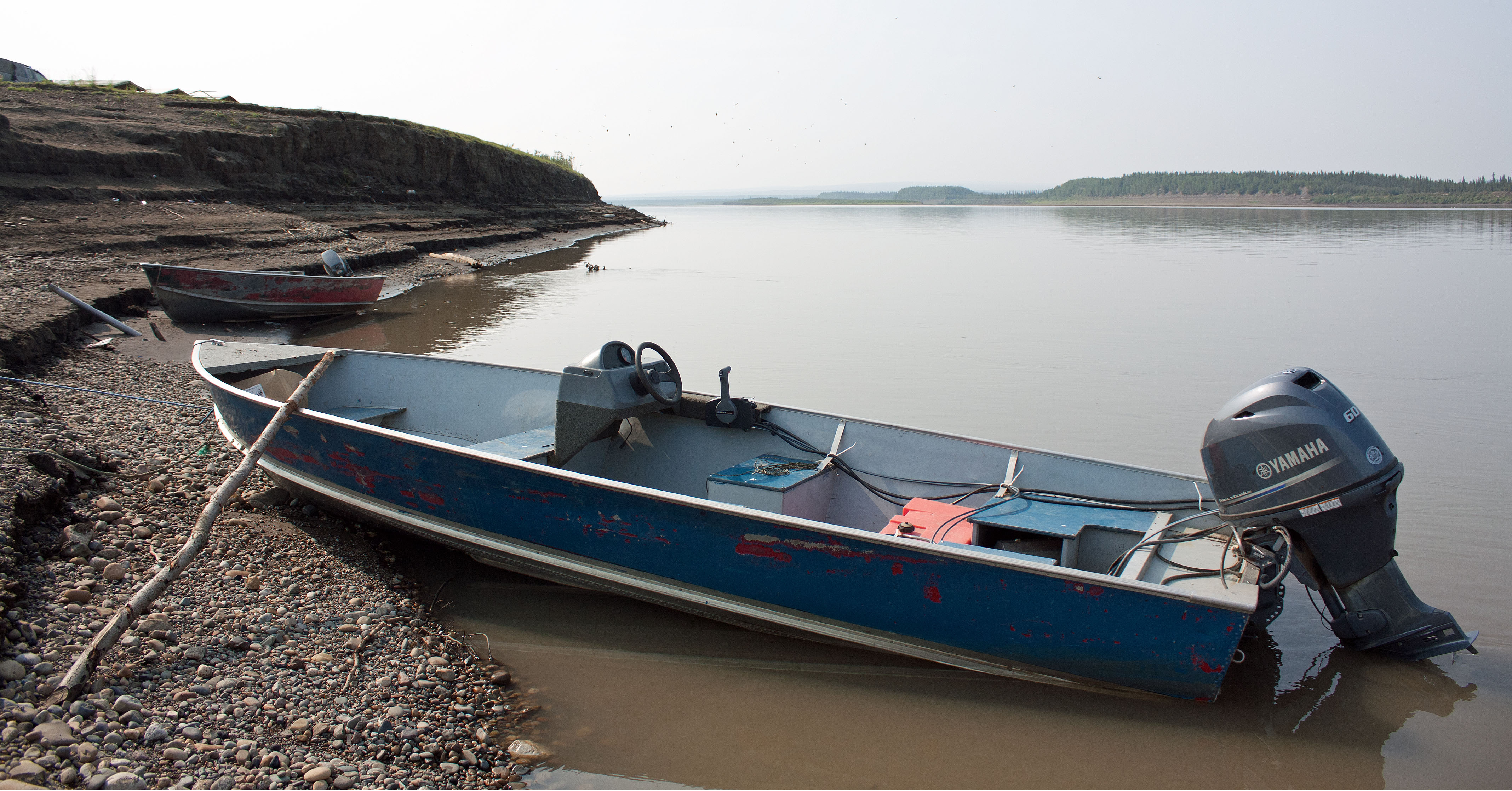
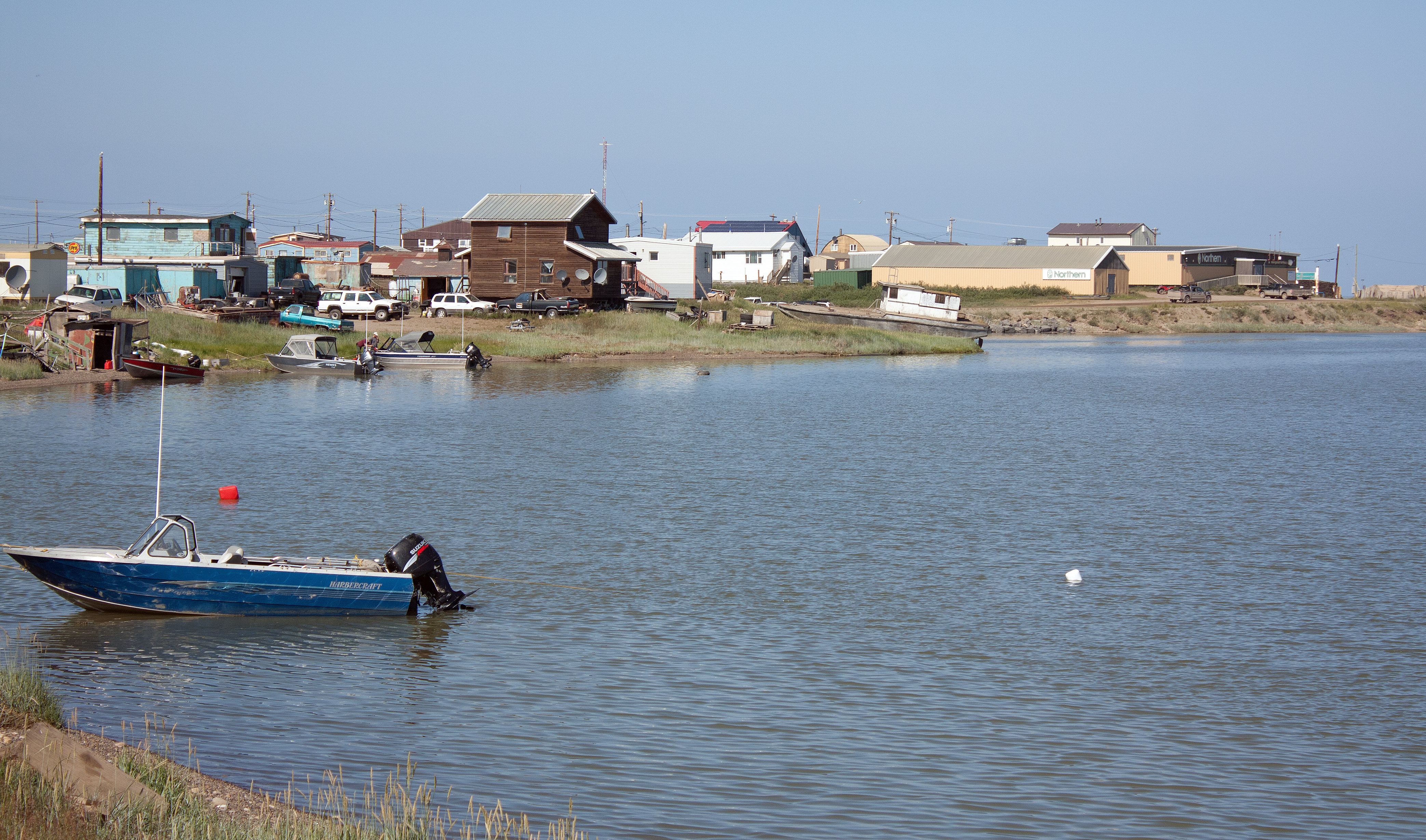
Boats moored on the Peel River, Fort McPherson, NWT (photo by Nina Munteanu)
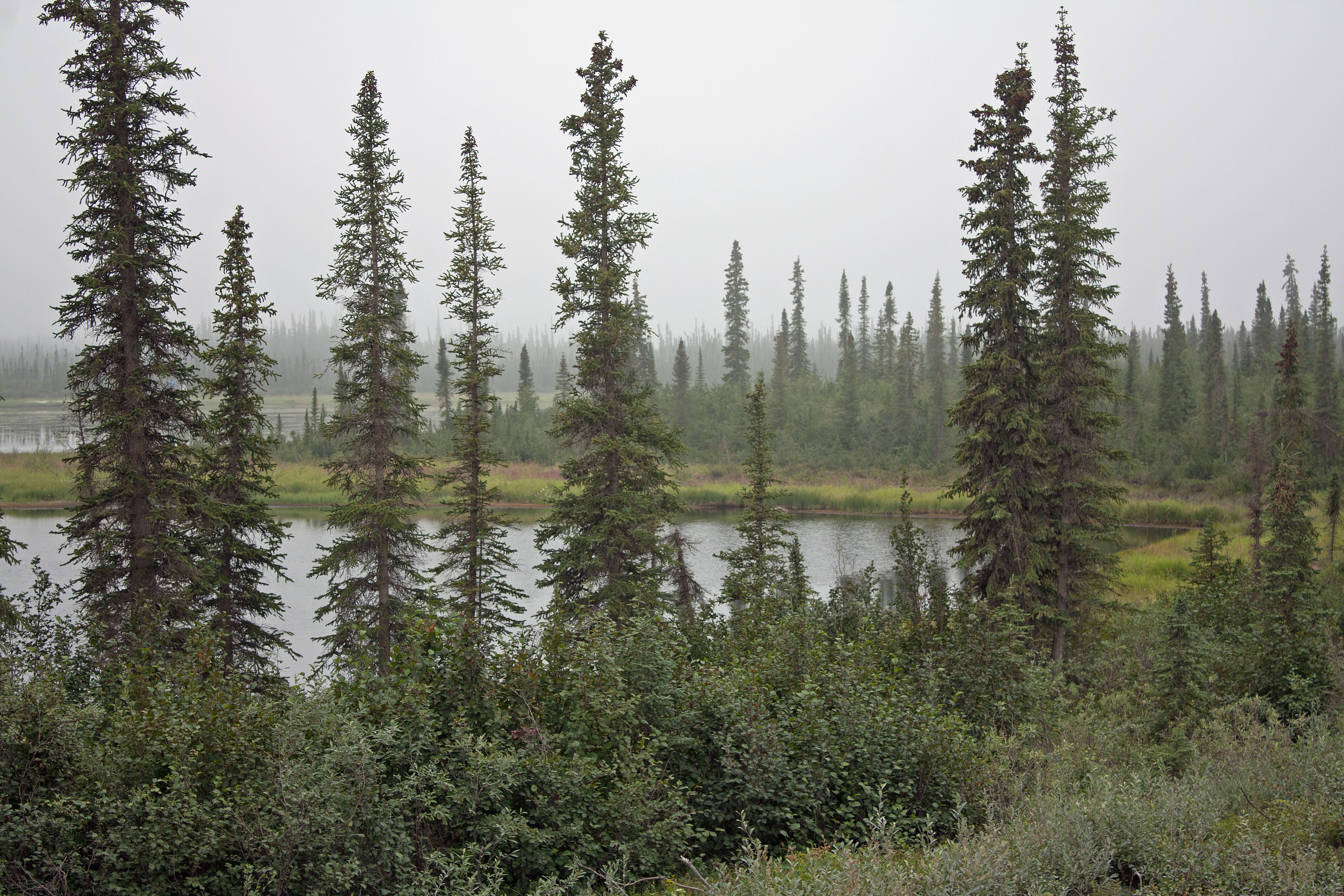
Black spruce forest and marsh in the morning mist off the Dempster Highway, north of Fort McPherson, NWT (photo by Nina Munteanu)
.
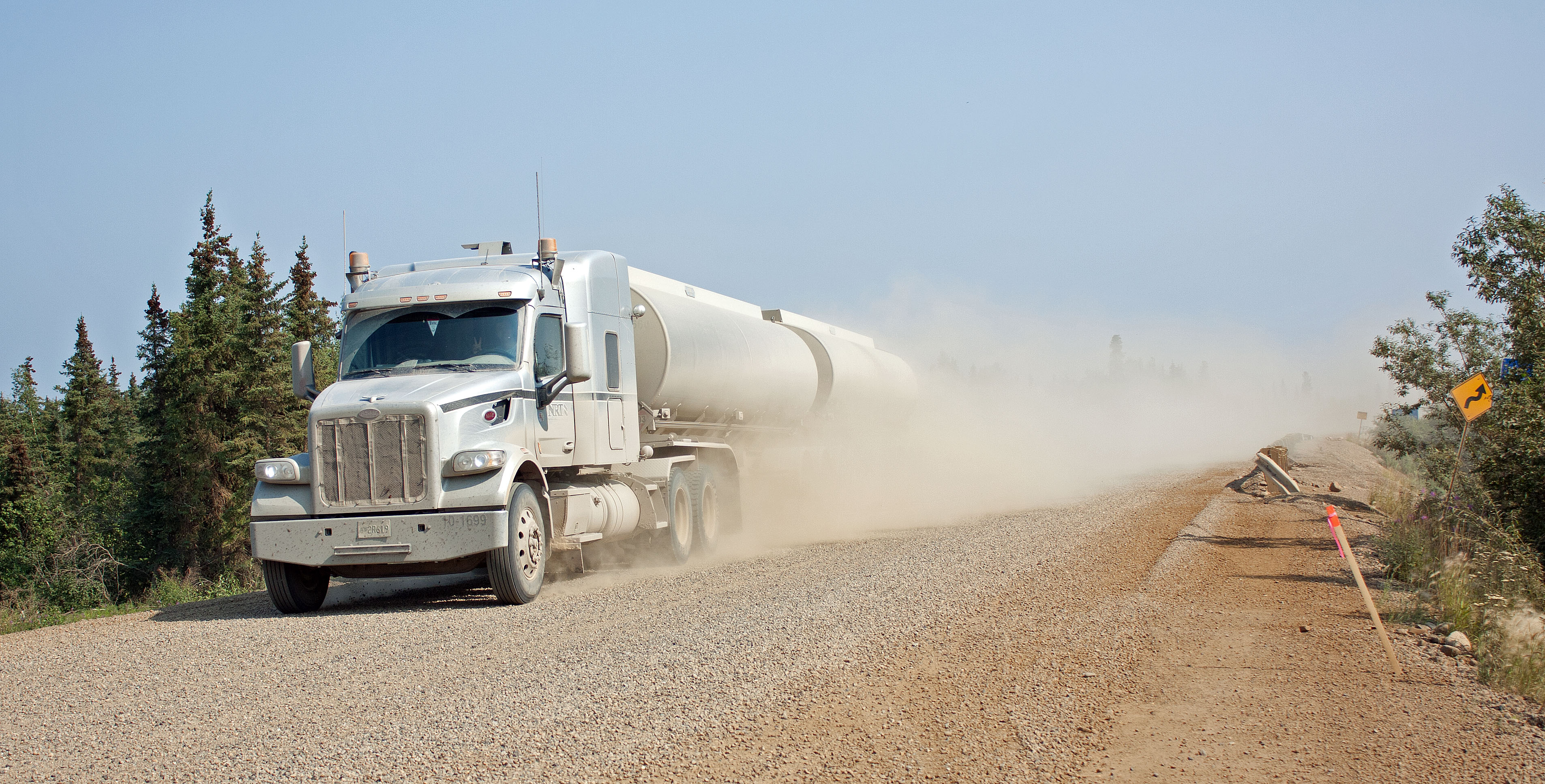
Driving the iconic Dempster through spruce forest and tundra / marsh, felt invigorating and humbling at the same time. This remote road to the Arctic North felt steeped in history and many stories. As I write this (three years after our trip) Anne, who was the driver, reminds me that the Dempster was surprisingly smooth; probably the result of a recent resurfacing.
.
Tanker truck speeds past us on the newly graded Dempster Highway, north of Fort McPherson, NWT (photo by Nina Munteanu)
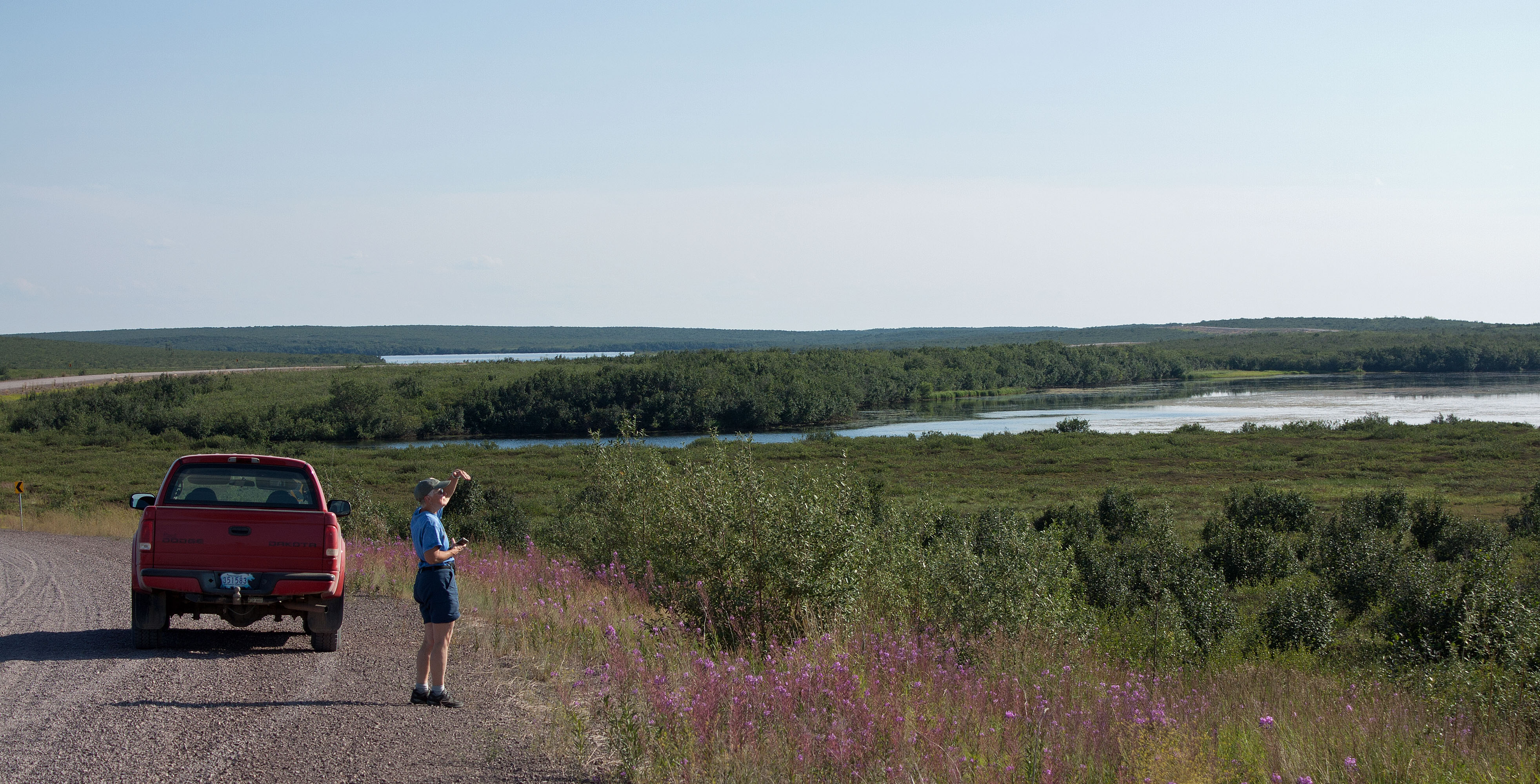
Anne stands by the Dakota, taking in the view from the Tuk Highway, NWT (photo by Nina Munteanu)
.
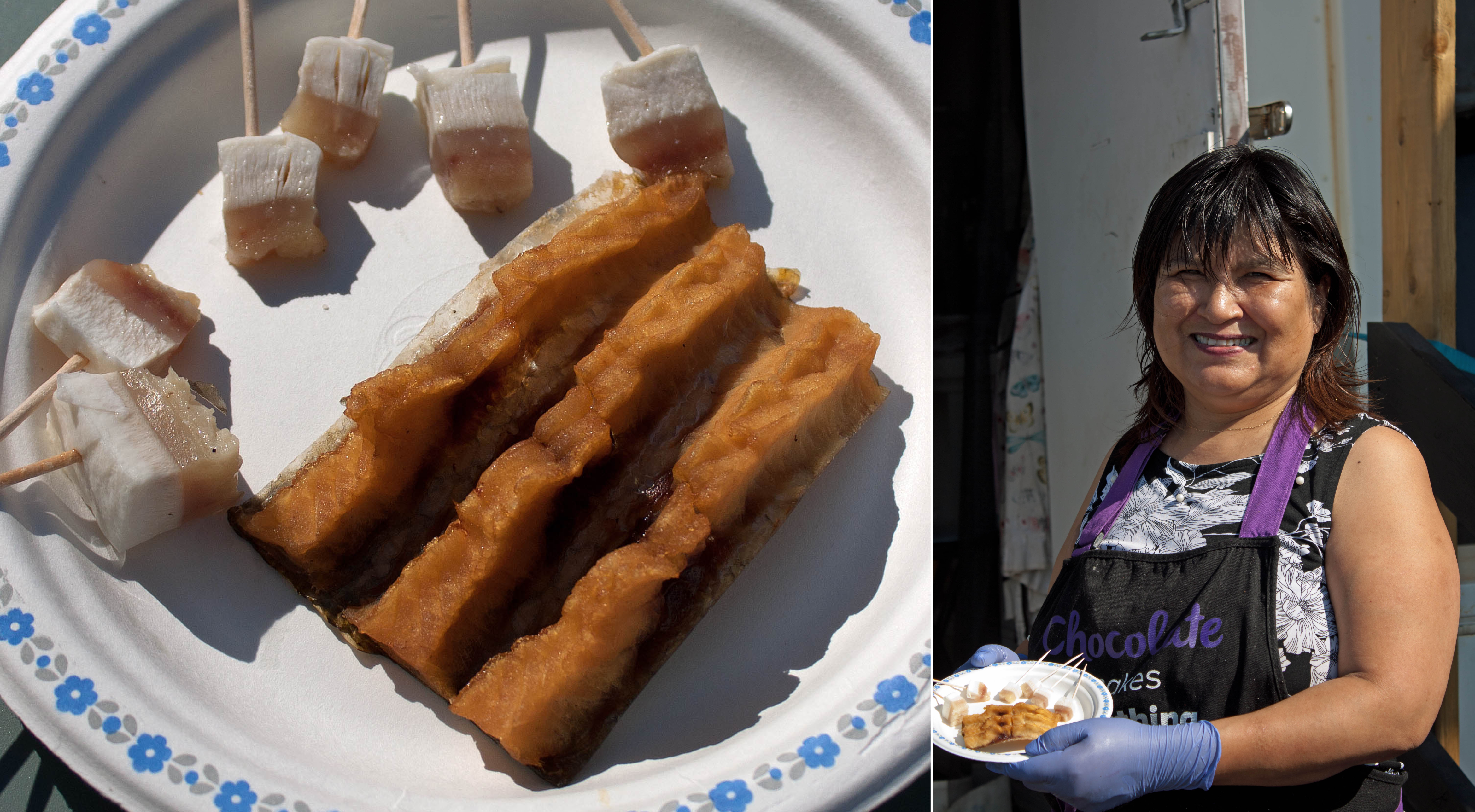
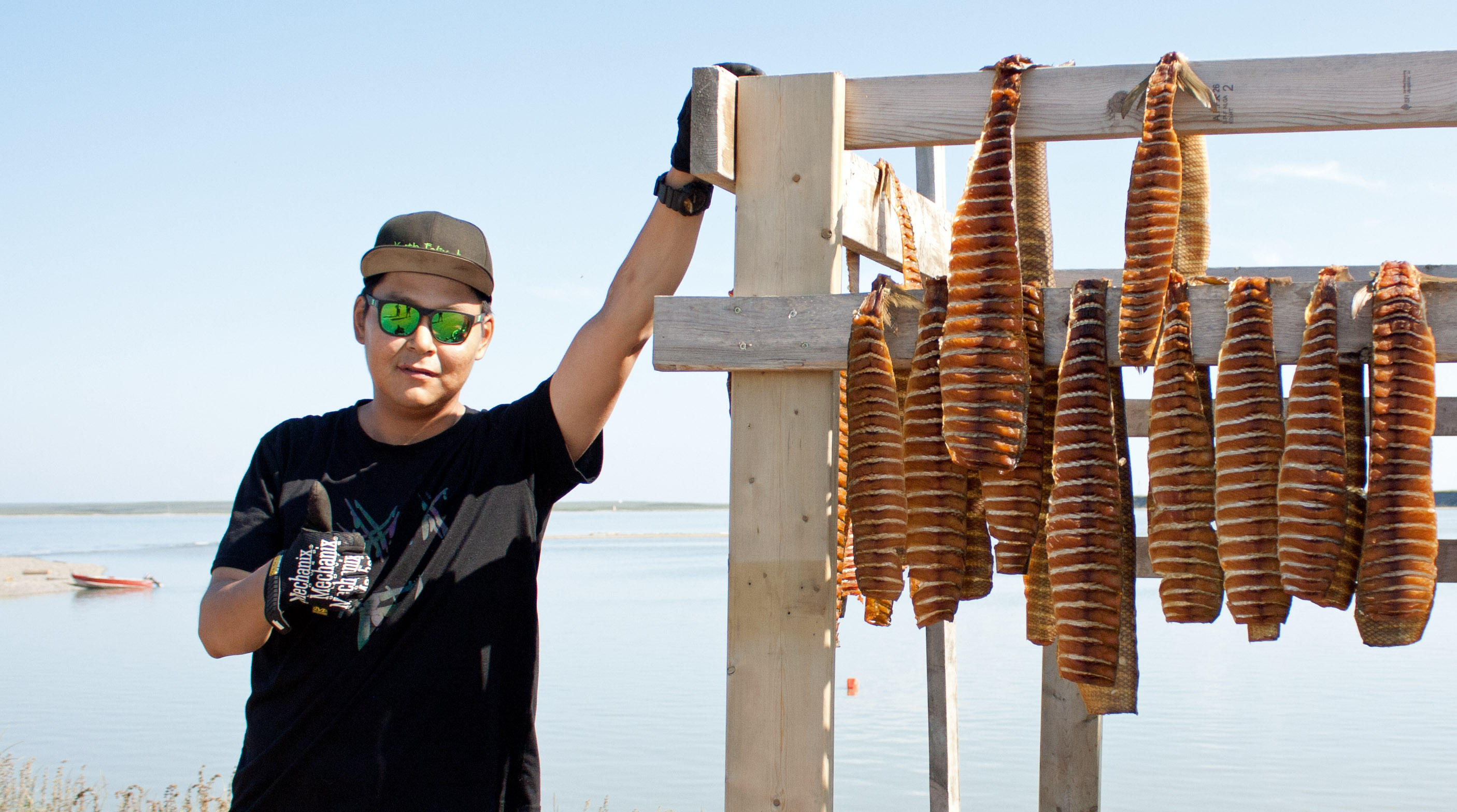
The new highway to Tuk, by contrast, was uneven and blemished with pot holes. The drive took us to the Beaufort Sea of the Arctic Ocean, which was surprisingly warm and fresh. I found no lingering marine smell or salt water tackiness to the touch. I then remembered that the Mackenzie River emptied into the Beafort Sea right next to the community. The best place to eat was Grandma’s Kitchen, where we enjoyed muktuk (whale blubber) and dried whitefish. Grandma Joanne served us out of her trailer and we ate overlooking the Arctic Ocean, kept company by ground squirrels looking for a handout.
.
Left: muktuk and dried whitefish served by Right: Grandma Joanne, Grandma’s Kitchen, Tuk, NWT (photos by Nina Munteanu)
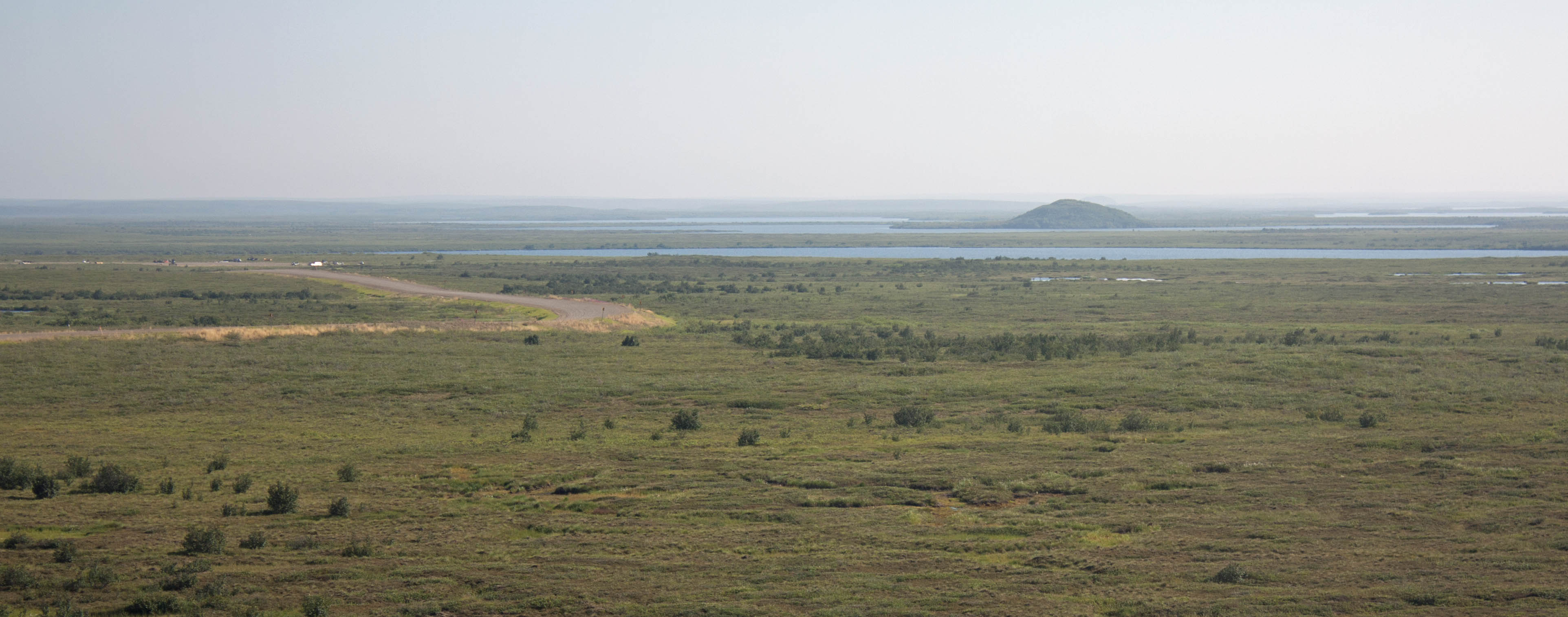
View of tundra and pingo from Tuk Highway, NWT (photo by Nina Munteanu)
.
I felt an abiding sense of home as I brushed through the tundra, among Labrador Tea, cloudberries and bearberries, boots sinking into sphagnum and crowberry, with a stunning view of Ibyuk and Split Pingos in the distance. Tuktoyaktuk sits on the edge of the Arctic Sea; boats of all kinds line the shores. Normally a quiet town, we’d landed there during some festivities, which brought in locals from all around. Anne and I strolled along the main street, talking with friendly Inuvialuit.
.
Shoreline of Arctic Ocean at Tuk, NWT (photo by Nina Munteanu)
Kieth Felix stands next to his rack of drying whitefish, Tuk, NWT (photo by Nina Munteanu)
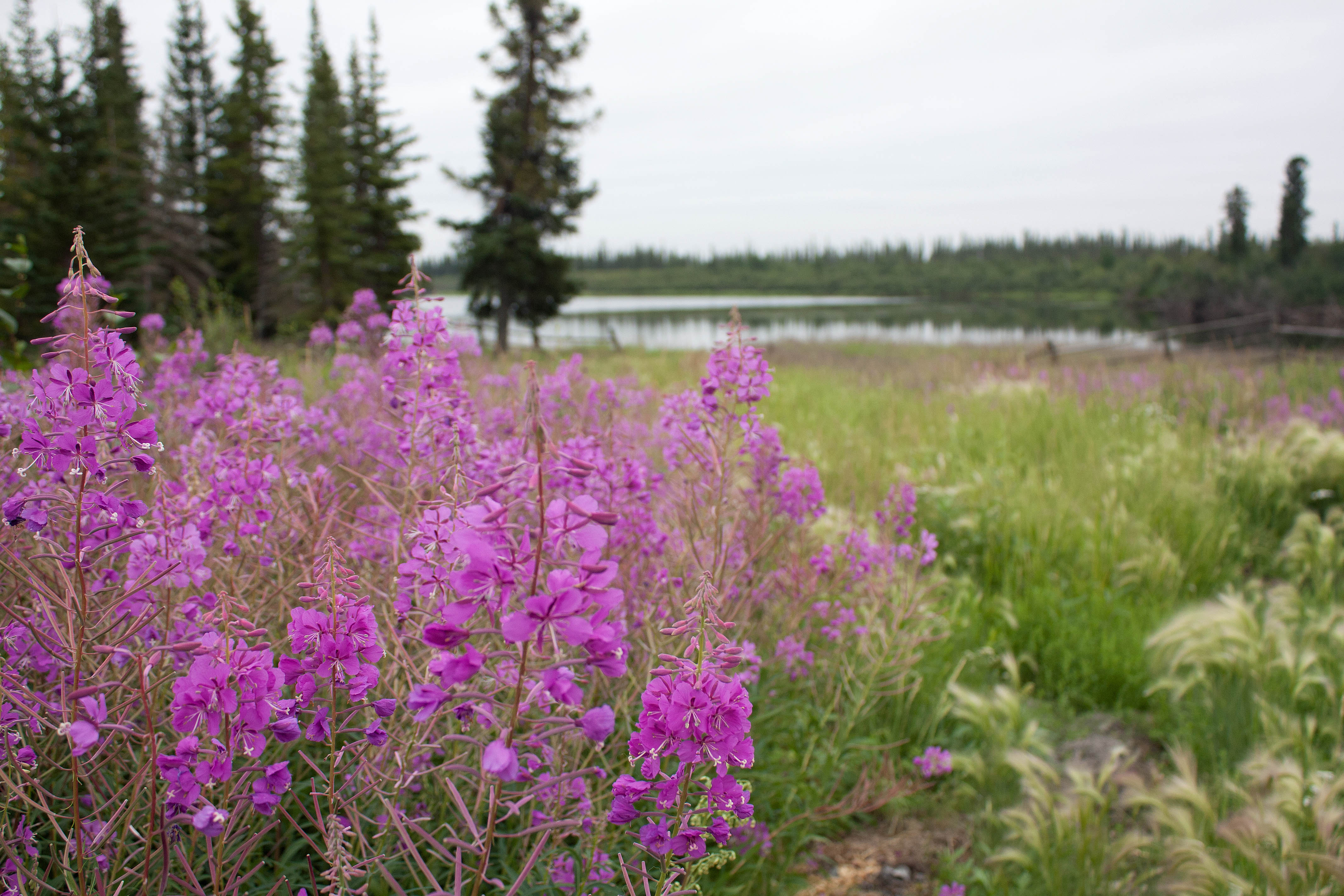
Fireweed and marsh near Inuvik, NWT (photo by Nina Munteanu)
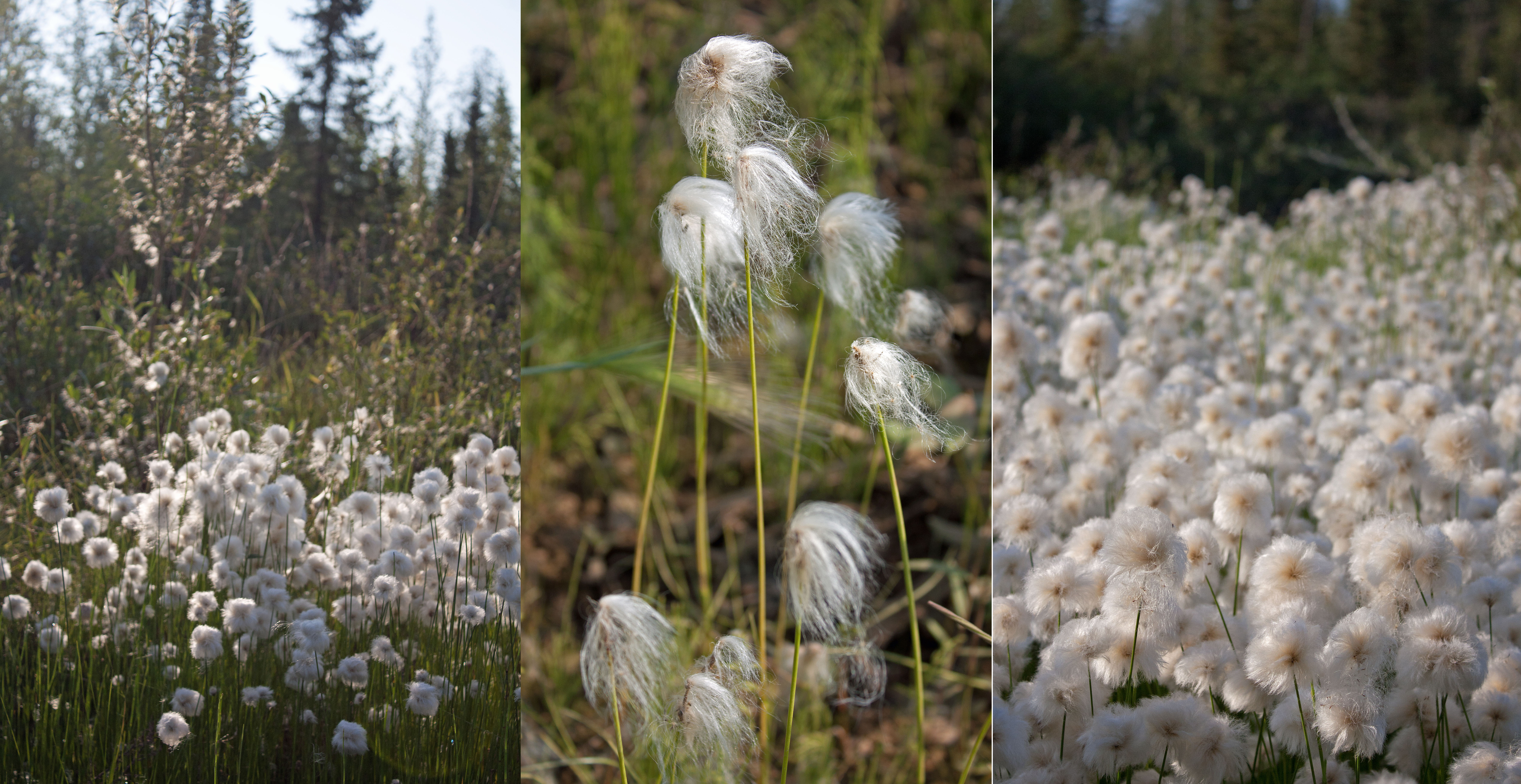
Iconic cotton grass found throughout the north along the Dempster and Tuk Highways, NWT (photos by Nina Munteanu)
.
The North is a celebration of contrasts. A wilderness of rugged beauty, often misunderstood. A place, both harsh and desolate yet incredibly rich and beautiful. A wild place that promises infinite possibilities.
.
Tuk Highway winds through tundra by the Eskimo Lakes, NWT (photo by Nina Munteanu)
.
Climate change is changing all that; the permafrost is thawing. along with the melting pingos, land is sinking and exposing dangerous sinkholes, ground slumping and landslides are increasing, coastlines are eroding to the sea, waterways are acidifying, and wildlife habits are changing:
Climate change and habitat destruction were silently destroying the Gwich’in’s way of life. Though, you’d never think it, looking at the pristine-like wilderness along the Dempster. That was the problem: much of the destruction was invisible. It isn’t seen; it’s felt I could hear Johnny say.
That was the North. More a mindset than a place. For most Canadians the North encompassed this collective myth of vast inaccessibility, and hostile grandeur. Early settlers’ portrayal of the North as hostile and isolated came from their inability to read the land and its rhythms, to know where the animals were and why they were there. The uunjit didn’t feel the land, Johnny kept saying. And because of that they would not know how to adapt to change.
Thalweg releases with Inanna Publications in Spring 2027.
.
.
The Dempster Highway
.
Nina Munteanu is a Canadian ecologist / limnologist and novelist. She is co-editor of Europa SF and currently teaches writing courses at George Brown College and the University of Toronto. For the lates on her books, visit www.ninamunteanu.ca. Nina’s bilingual “La natura dell’acqua / The Way of Water” was published by Mincione Edizioni in Rome. Her non-fiction book “Water Is…” by Pixl Press (Vancouver) was selected by Margaret Atwood in the New York Times ‘Year in Reading’ and was chosen as the 2017 Summer Read by Water Canada. Her novel “A Diary in the Age of Water” was released by Inanna Publications (Toronto) in June 2020.You can read her just released eco-fiction thriller Gaia’s Revolution by Dragon Moon Press.
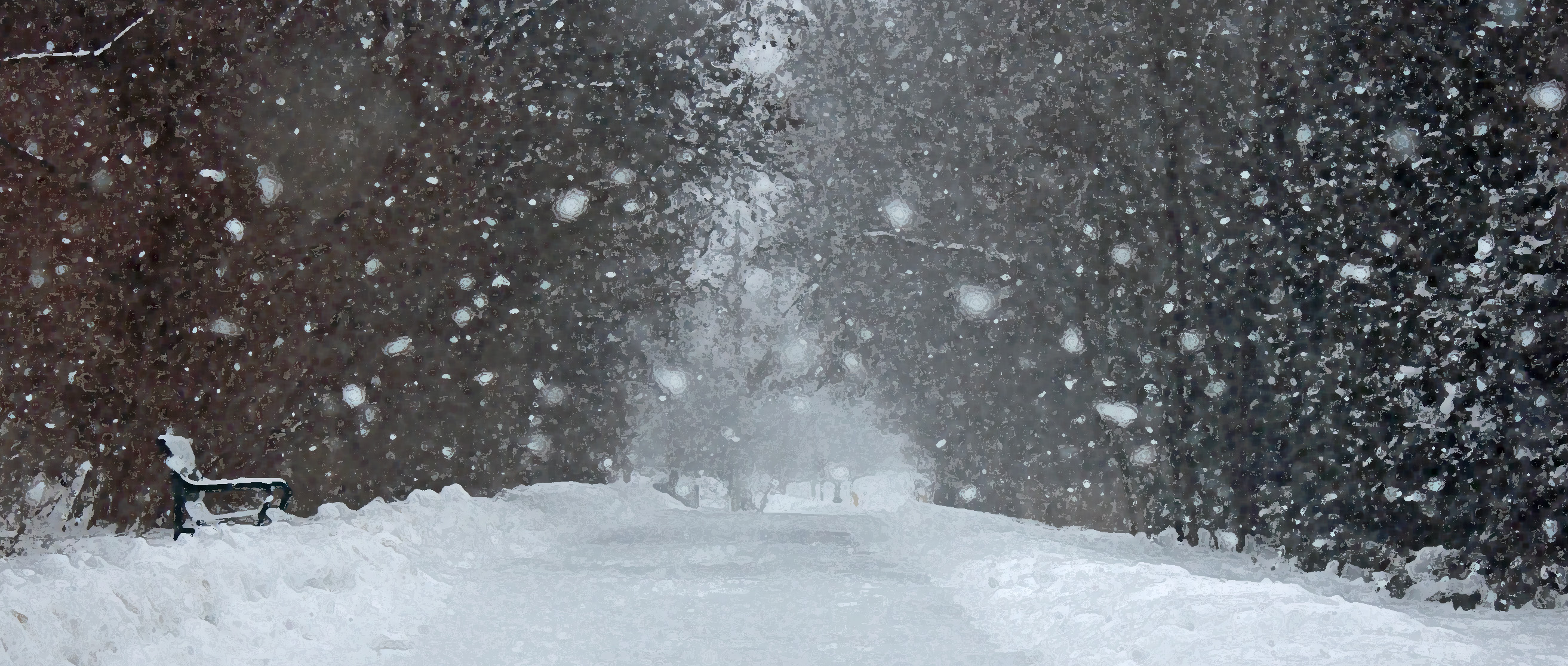
Heavy snowfall where I live in Ontario (photo by Nina Munteanu)
I currently live in Ontario, Canada, where the four seasons are still distinct and winter comes with signature cold temperature well below zero degrees Centigrade along with lots and lots of snow. I grew up in Quebec, where the snow often piled up higher than I stood tall. Temperatures often went into the minus zero teens and twenties with wind chills reaching minus thirty degrees. This called for the right equipment. Insulated coat or jacket, snow pants, wool toque and mittens and/or gloves that are also well insulated. And, of course, warm snow boots.
Nina on a walk during a snowstorm, ON (photo by Merridy Cox)
Country road in the Kawarthas, ON (photo and rendition by Nina Munteanu)
Nina’s car on ‘walkabout’ through Kawartha country after a fresh snowfall, ON (photo and rendition by Nina Munteanu)
Farm in the Kawarthas, ON (photo and rendition by Nina Munteanu)
Cows on a farm in the Kawarthas, ON (photo and rendition by Nina Munteanu)
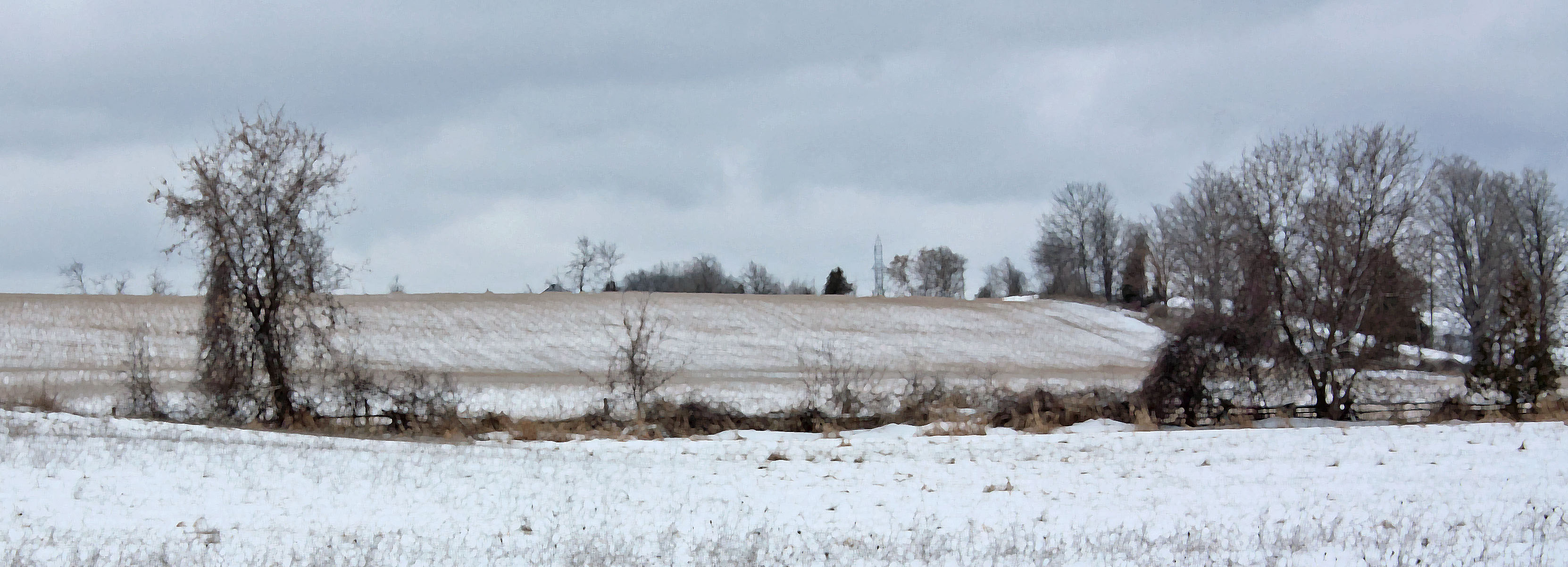
Country field in Kawarthas, ON (photo and rendition by Nina Munteanu)
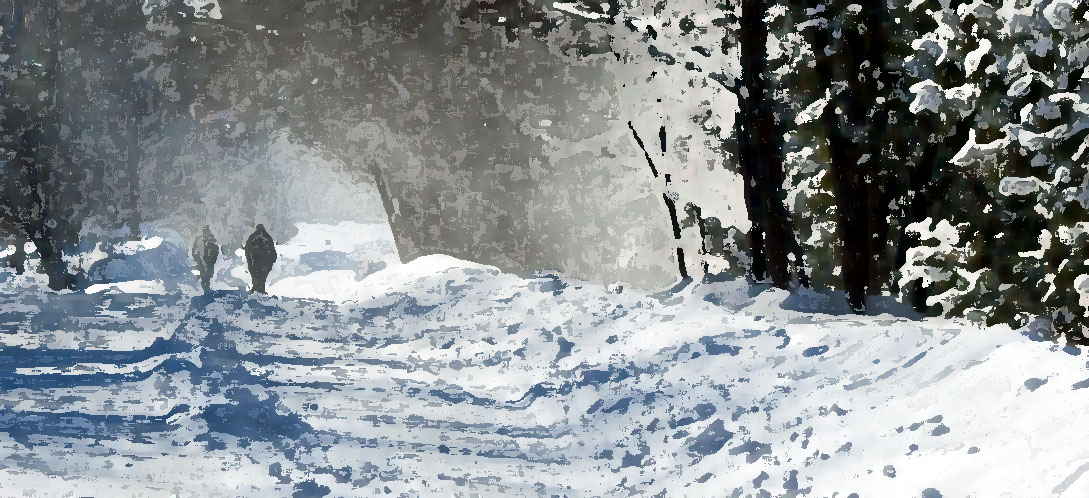
School kids heading to class after a fresh snow, ON (photo by Nina Munteanu)
The Rotary Trail after a fresh snowfall, ON (photo and rendition by Nina Munteanu)
Heavy snow falls on a trail in the Kawarthas, ON (photo and rendition by Nina Munteanu)
Since moving to the West Coast then back east to Ontario, I’ve come to realize that I love winters. I love how snow covers everything, how it quiets the landscape and changes it in subtle ways. I love the frigid wind, how it bites the face with invigorating energy, reminding me that I am so alive. I love the sounds of winter, of walking on snow, crunching and squeaking, of the howl of the wind and the creaking and groaning of the trees, or the cracking and booming of the ice forming and reforming on the river.
Bridge over creek in Trent Nature Sanctuary during heavy snowfall, ON (photo and rendition by Nina Munteanu)
Jackson Creek after a fresh snowfall, ON (photo and rendition by Nina Munteanu)
Woman and her dog walk through cedar swamp forest after a fresh snowfall, ON (photo and rendition by Nina Munteanu)
Riparian forest clothed in fresh snow, ON (photo and rendition by Nina Munteanu)
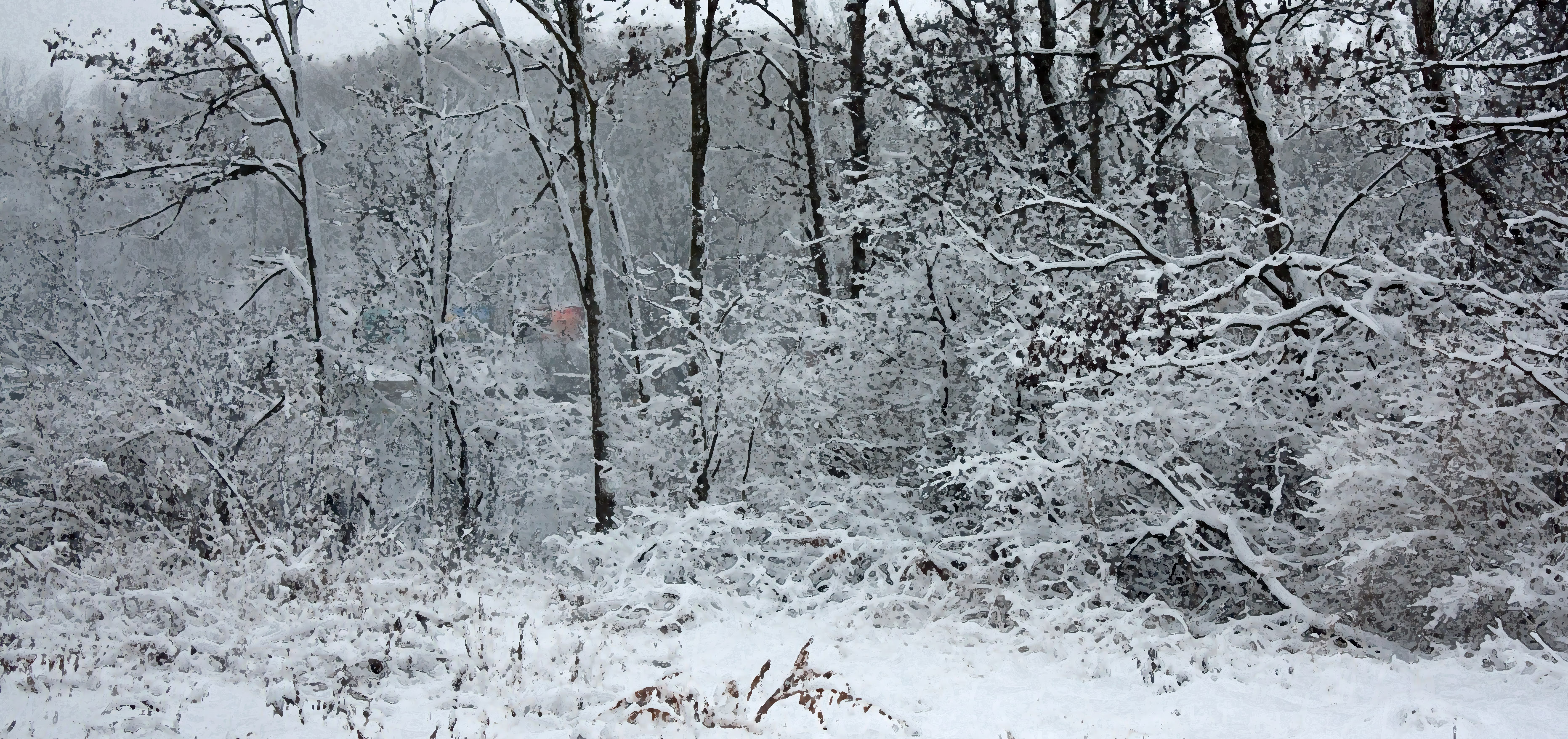
Riparian forest after a fresh snowfall, ON (photo and rendition by Nina Munteanu)
I am currently finishing my fiction book Thalweg, which takes place throughout Canada, but predominantly in northern British Columbia and the arctic of the Northwest Territories. My main character, a Gwich’in scientist, explores the land during a time of climate change, and much of it involves the expansive vast snowfields of northern Canada in which she describes the look, smell, feel, and sounds of snow. She thinks with great fondness of home in the Arctic where snow prominently features and, bringing in all her senses, of course, includes sound:
There are many different kinds of snow, and any native of the north can recognize them. We can not only tell something of the quality of weather from it, but also its history. Without having experienced the day or history of the place, we will know simply from walking through it. For instance, on a minus twenty-degree Centigrade day, when the cold bites your face and your breath coils out of your mouth like steam, old snow shines under a raking sun like an ice sheet. As though clear plastic was stretched over it. Sometimes, a hoar frost will form on the glassy thin layer, adding more glitter. Walking through it creates a symphony of crunch, pop and skittle sounds as each step breaks through the thin brittle layer into soft snow underneath. The scattering flat shards tingle like glass across the glistening ice-snow sheet.
Fresh snow that has fallen on a frigid night of minus fifteen degrees in a drier climate is fluffy, individual snowflakes glinting like jewels in the sun, and emits a high-pitched squeak and crunch as your boots press down on it. The colder the temperature, the higher the squeak. I just made that up. I’m not sure if it’s true. But considering the relationship of harmonics with temperature, it’s plausible.
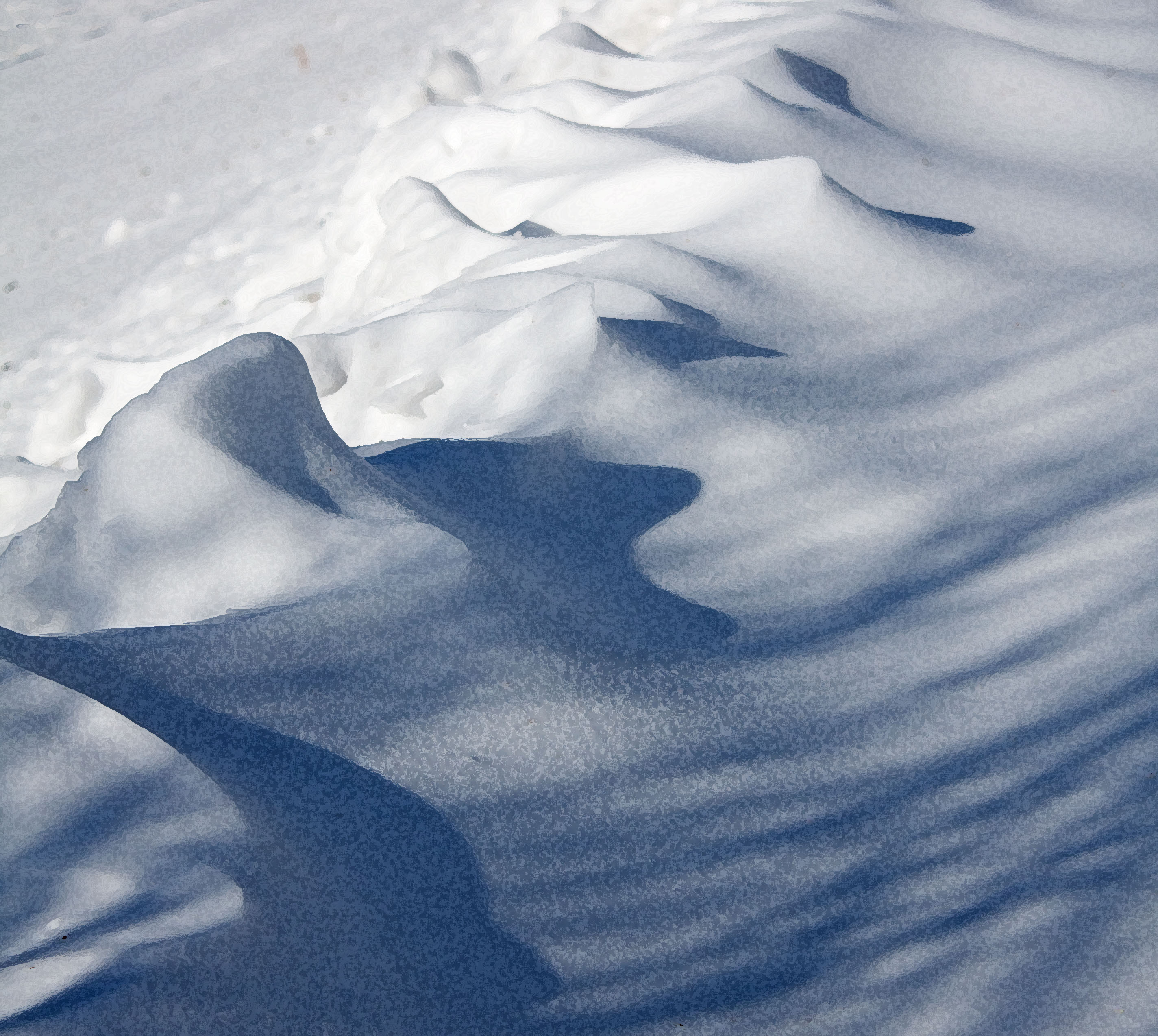
Squeaky snow is the snow of my home up north, where it arrives in a thick passion in October with the winter darkness, and where a constant minus 16°C to minus 30°C pervades until spring, six months later. The snow resembles powdered sugar, glittering like millions of tiny mica flakes under the moonlight of an arctic winter night. It covers everything, the ground, the trees and tiniest vegetation with a white blanket of snow. And when the wind teases the trees, they rain glitter-dust. In places where the north wind freely drifts across open landscape, sastrugi form; frozen wavelets, mini-barchans and dune chains that resemble the wave ripples of a sandy white beach. In some vast open areas, the wind will sculpt a frozen sea of irregular ridges and grooves up to a metre high. Mary’s friend Jem from Igloolik calls these snowdrifts qimugruk, whose distinctive shapes become permanent features of the snowscape, with tips always pointing west-northwest. Igloolik hunters use these uqalurait to set their bearings when travelling across the expansive tundra, particularly during poor visibility from storms or darkness.
Tracks through a small path by the river, ON (photo and rendition by Nina Munteanu)
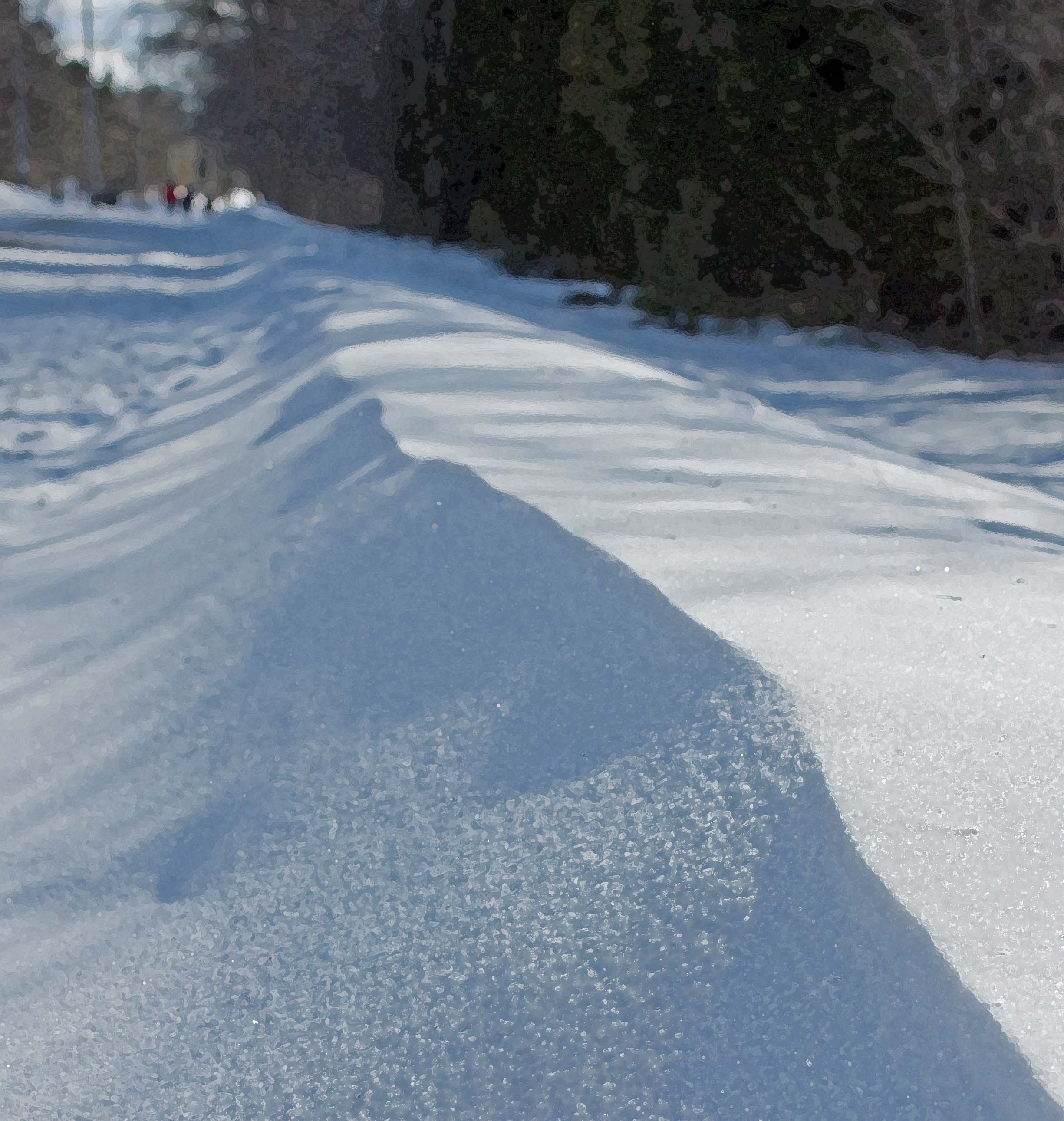
Snow drift on a trail by the river, ON (photo and rendition by Nina Munteanu)
One of the sensitivity readers for Thalweg, anthropologist and Gwich’in scholar Ingrid Kritsch, related to me an interesting account during attempts to open up to oil and gas development the Arctic National Wildlife Refuge–a critical area where the Porcupine Caribou herd calve. “To many Americans, it was just a big, white, barren expanse of unused lands,” said Ingrid. She recalled a Senator speaking for development on these lands. The Senator held up a blank sheet of white paper and claimed “this is what the area looks like!”
The vast snowfields look nothing like that…
Snow drifts in Ontario (photo and rendition by Nina Munteanu)
…Now, don’t forget to play in the snow…
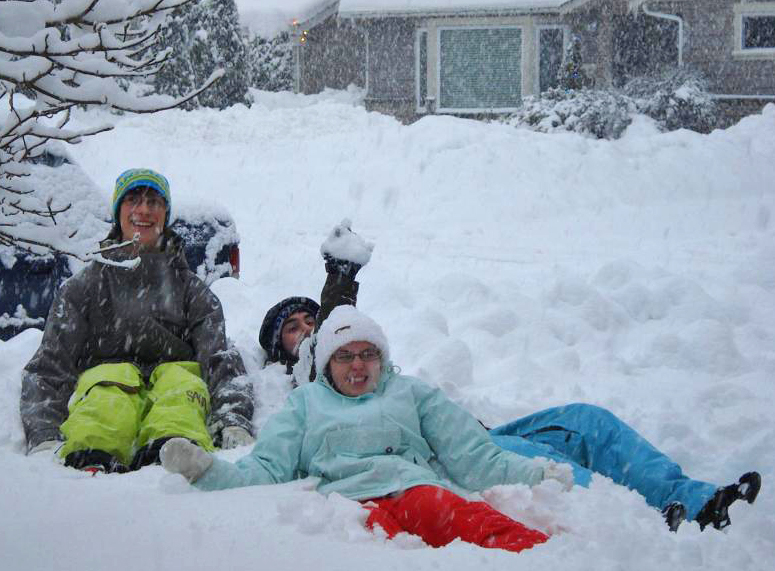
Author’s son and friends play in fresh snow on Christmas in BC (photo by Nina Munteanu)
Nina Munteanu reads a book with her cup of tea in +8 degree C, ON (photo by Merridy Cox)
Nina Munteanu is a Canadian ecologist / limnologist and novelist. She is co-editor of Europa SF and currently teaches writing courses at George Brown College and the University of Toronto. Visit www.ninamunteanu.ca for the latest on her books. Nina’s bilingual “La natura dell’acqua / The Way of Water” was published by Mincione Edizioni in Rome. Her non-fiction book “Water Is…” by Pixl Press(Vancouver) was selected by Margaret Atwood in the New York Times‘Year in Reading’ and was chosen as the 2017 Summer Read by Water Canada. Her novel “A Diary in the Age of Water” was released by Inanna Publications (Toronto) in June 2020.