When Art Tangos with Science

Imagination is more important than knowledge—Albert Einstein


patterns-Cedar log moss2-LR

Cedar log (photo by Nina Munteanu)

I tell stories. I’m also a scientist. I use the scientific method in my research to seek truth; I also find truth presented to me through the symbols of intuition.

A few years ago, I was introduced to Krista Fogel, a University of British Columbia masters student, who was investigating the use of creative art in high-ability scientists. She named her thesis: “The Self-Perceived Experience of Investigating Science with an Artistic Spirit: A Hermeneutic Phenomenological Study of High Ability Scientists Who Also Engage in the Arts”. Hermeneutic, by the way, is the development and study of theories of the interpretation and understanding of texts (I had to look it up) and phenomenology is an approach to philosophy through the study of phenomena.

Krista wanted to interview me as part of her project. I was flattered, of course. Me, a High Ability Scientist? Who’d told her that? Once I got past my own humble angst, I found Krista’s questions bracing; they reopened a world of compelling ideas I had carried with me for some time. The concept of using art to do good science has dwelled inside me since registration day at Concordia University when I quit my fine arts program to pursue a science degree only to come full circle and write fiction. I got my Masters Degree in Ecology and Limnology and was then working as a scientist for an environmental consulting firm (I now write and teach writing full time). I did research, drove boats, collected samples and analyzed data then wrote up my findings and made recommendations. I wrote science fiction novels on the side.

“History shows that eminent scientists, such as Leonardo da Vinci, also engaged in the arts,” said Fogel. She went on to cite 400 other famous scientists who also practiced art at a high level. “If not entirely engaged in the arts, scientists throughout history have at least engaged in science with an artistic spirit. Scientists and artists use common tools for thinking such as intuition and imaginative processes.”

Krista and I met several times at the local Starbucks, where I “toked” on coffee as she fumbled with her notes. A young gal with a direct but unassuming gaze and a gentle smile, Krista asked me to share my personal experience of mixing art with science. Every good scientist is an artist at heart: science is the tool and art is the process.

Fogel concluded that when conducting scientific investigations with an artistic spirit, the scientist holds her heart central, from which the artist springs. This “allows us to connect with serendipitous occurrences, which breed discovery,” Fogel added.

patterns2-log-beetl holes-LR

Decaying log with insect bore holes (photo by Nina Munteanu)

You can train your mind as both artist and scientist to become more aware of serendipitous occurrences around you. I call it being in sync and wrote about it in a previous article here (“Writing in Sync”). Often, when I’m researching a novel, I pick up things serendipitously. Something will come up that just fits with what I was searching for. An article pops up in the news. Or I’m talking to someone and they bring up just the topic I am researching. These things always happen to me. This occurs not only in my fiction writing but in my scientific pursuits. Some years ago, I was doing a pollution study using glass slides for colonizing algae to compare communities of an urban stream to those of an agricultural stream. I was really looking to see the difference between communities of these different stream environments when I discovered that the algae were colonizing the glass surfaces according to the current. Compelled with more questions of why, how and what if, I pursued this new line of research (which turned out to be far more interesting than my original research premise) and wrote several ground-breaking papers on it.

Indeed, questions like “why” and “what if” are germane to both art and science; the ‘what if’ question is the science fiction writer’s mantra and the premise, which comes from the artist part of you: imagination and an inquisitive and open mind. The idea of seemingly unrelated events intersecting to produce meaningful patterns has spawned new notions of thought from the scientific study of spontaneous order in the universe (synchrony), to Synchromysticism — the discovery of convergent archetypal symbols in pop culture (e.g., books, music and film).

Writer and philosopher Jake Kotze suggests that, “Synchronicity happens when we notice the bleed-through from one seemingly separate thing into another — or when we for a brief moment move beyond the mind’s divisions of the world.” Synchronicity and serendipitous discovery, like metaphor, appears when we change the way we look at things.

Serendipitous discovery comes to us through peripheral vision. Like our muse, it doesn’t happen by chasing after it; it sneaks up on us when we’re not looking. It comes to us when we focus outward and embrace our wonder for this world. When we quiet our minds and nurture our souls with beauty. It is then that what we had been seeking naturally comes to us. Like a gift.

Author Sibyl Hunter tells us that “Sync operates as an undercurrent of divine awareness personified through the myriad processes and symbols that make up the building blocks of our reality. Within that current, we spin our modern-day myths into books, fairy tales and movies, subconsciously retelling ourselves the same story over and over.” This also holds true in the models and metaphors of scientific genius, which often spring from the creativity of an intuitive heart and imaginative mind.

According to Mark A. Runco (California State University) “creativity depends on originality, while accomplishment and achievement reflect other problem-solving skills. Creative thinking involves at least three things: 1) the cognitive capacity to transform experience into original interpretations, 2) an interest in producing original interpretations, and 3) discretion.” The title of Piaget’s monograph, To Understand Is to Invent, reflects the fact that we do not have an authentic understanding of our experience until we construct that understanding for ourselves. In other words, “it is one thing to memorize some datum; it is quite another to discover it for one’s self; only then do we understand,” says Runco. Fogel concurs: “what Piaget called invention is a kind of creation, a creation of personal meaning. Piaget tied assimilation to imaginative play into creative interpretation.”

Blue-green fungus pattern

Decaying log displaying spalting (photo by Nina Munteanu)

According to Dean Keith Simonton (University of California), even the most illustrious creative geniuses of history have careers riddled by both hits and misses, both successes and failures. He uses Albert Einstein as an example. A man who has achieved almost mythical status as a genius, Einstein’s career “was plagued by terrible ideas, false starts and surprising disasters.” Simonton tells the story of Einstein’s debate with Niels Bohr over the implications of quantum theory, in which Einstein offered a series of arguments that Bohr countered. Bohr once even pointed out that Einstein failed to take into consideration the theory of relativity! According to some, Einstein wasted the final years of his career working on a unified field theory that was almost universally rejected by his colleagues. Einstein defended his missteps by noting that errors can advance science so long as they are not trivial; the greater the error, the greater the opportunity for new perspective and discovery.

It is left for us to simply recognize the dance.


nina-2014aaNina Munteanu is an ecologist and internationally published author of award-nominated speculative novels, short stories and non-fiction. She is co-editor of Europa SF and currently teaches writing courses at George Brown College and the University of Toronto. Visit www.ninamunteanu.ca for the latest on her books. Read Nina’s climate/eco-fiction Darwin’s ParadoxAngel of Chaos and Natural Selection.


Eight Ways to Move From Prosaic to Spectacular

Nina-reading-Ward Is

Reading on Algonquin Island, Lake Ontario (photo by Nina Munteanu)

What makes some writing stunning and other writing lackluster? Mostly, it’s the language—the words—you use. And, it isn’t just what words you use; it’s how you use them. Here are a few things you need to consider when translating your work into something that “sings”.

  1. Use Active Verbs and Reduce Modifiers

Many writers, not just beginners, slide into the pattern of using passive and weak verbs (e.g., were, was, being, etc.). Then they add a modifier to strengthen it. It doesn’t. Actively look for strong, vivid verbs. This is the key to good writing. Active and powerful verbs move a story forward. For instance, which version is more compelling?

Jill was walking quickly into the room.

or…

Jill stomped into the room.

The second example not only more quickly and efficiently demonstrates how Jill entered the room, but demonstrates with what attitude. There is no substitute for the use of powerful, appropriate verbs in sentences.   

2. Avoid Excessive & Meaningless Prose

Novice writers often use too many words to describe an event, action or scene. An overabundance of words slows down the story and obscures plot and action. Excessive prose includes:

Repetition: many beginning writers will often first tell then show in a scene. You don’t need to do both; trust the reader to get the “show”.

Extraneous words: e.g. “he started to think” instead of “he thought”; use of the obvious such as “she saw the big man lying on the bed” instead of “a big man lay on the bed” (“she saw” is implied through her POV). This second example also demonstrates how you can shift the readers’ attention from “her seeing” (in the first phrase) to “the man lying” on the bed (in the revised phrase). This simple change can create a much more powerful sentence through the seamless shift in reader attention.

Dull description not related to plot: I recently edited a writer’s over 400-page urban fantasy that contained far too much ordinary detail. Detail that, in small doses, may have enlightened the reader on the qualities of the protagonist; but in larger doses ground the narrative to a boring halt.

When you look for a more efficient and purposeful way to say something, you cut out unnecessary detail. Remember that virtually all description should be related to the plot and theme of the story.

3. Use Alliteration, Metaphor, Simile, Personification

These devices bring lyricism and cadence and powerful imagery to your prose. However, as with anything powerful, you need to use these judiciously. Use them where you wish to convey a strong image and to punctuate your prose.

4. Be Mindful of Word Accuracy

More often than you might think, a writer inadvertently misuses a word to convey an idea or emotion. For instance, let’s consider the following sentence, which describes a character’s reaction to a dog being cruelly mishandled:

“What are they doing?” Jack said crossly.

The modifier crossly suggests that Jack lacks compassion; it infers petulant annoyance.

“What are they doing?” Jack scowled.

Scowled still suggests the same icy disdain, though it may have been delivered with false bravado or through genuine discomfort from a hidden compassion. If the writer wished to convey shock, disgust or compassion, the following would better represent that sentiment:

“What are they doing?” Jack said, eyes wide.

Or:

“What are they doing?” Jack stammered.

5. Avoid Using Words like “Felt” or “Seem”

These “telly” words prevent the reader from directly experiencing the story by imposing a level of interpretation. For example, “he felt himself falling” can be improved to “he fell”. If you want to spice up the phrase, use another verb: “he toppled” “he stumbled” or “he crashed”.

6. Read your Writing Aloud & Punctuate Your Pauses

It isn’t just a clever metaphor when they say your writing style is called your “voice”; because your readers “listen” to what you write. Reading out loud helps define cadence, tone and pace of your prose and streamlines your writing. When you read aloud, pay attention to where you naturally pause. You may wish to put in a comma, semi-colon or period there.

7. Size and Vary Your Paragraphs  

Paragraphs are visual elements that help people read; they break up text on a page in logical places to provide white space for reader ease. I’ve heard people quote the “two-inch” rule for maximum paragraph length and I concur. This is one of the reasons some passages are harder to read than others; long paragraphs are more tiring to the eye. Find those logical breaks and put them in. Varying paragraph length creates a more interesting story “landscape” for the reader. Don’t be afraid to go to some extremes like using the one sentence – or even one word – paragraph.

Looking at Ward Island from Algonquin Is.

View of Ward Island from Algonquin Island (photo by Nina Munteanu

8. Size and Vary Your Sentences  

As with paragraphs, overly long sentences can try a reader’s patience and you may lose them entirely. Too many short choppy sentences can also reduce your prose to a mundane level. Varying your sentence length in a paragraph creates the lyricism and cadence that makes prose enjoyable to read.

For more tips on how to improve your writing for publication, go check my writing guide series The Alien Guidebook Series.

nina-2014aaNina Munteanu is an ecologist and internationally published author of award-nominated speculative novels, short stories and non-fiction. She is co-editor of Europa SF and currently teaches writing courses at George Brown College and the University of Toronto. Visit www.ninamunteanu.ca for the latest on her books. Read Nina’s climate/eco-fiction Darwin’s ParadoxAngel of Chaos and Natural Selection.

Flight Behavior

In a world that’s quickly heating up and drying up, you can’t go home again—even if you never leave—Clive Thompson


flightbehaviourBarbara Kingsolver’s 2012 novel Flight Behavior was, according to The Globe and Mail, the first novel that dealt “specifically, determinedly and overtly with climate change. And “only Kingsolver could pull it off,” they add.

The premise of climate change and its affect on the monarch butterfly migration is told through the eyes of Dellarobia Turnbow, a rural housewife, who yearns for meaning in her life.

The book starts with her scrambling up the forested mountain—slated to be clear cut—behind her eastern Tennessee farmhouse; she is desperate to take flight from her dull and pointless marriage of myopic routine. The first line of Kingsolver’s book reads: “A certain feeling comes from throwing your good life away, and it is one part rapture.” Dellarobia thinks she’s about to throw away her ordinary life by running away with the telephone man. But the rapture she’s about to experience is not from the thrill of truancy; it will come from the intervention of Nature:monarch butterfly-migrating

A small shift between cloud and sun altered the daylight, and the whole landscape intensified, brightening before her eyes. The forest blazed with its own internal flame. “Jesus,” she said, not calling for help, she and Jesus weren’t that close, but putting her voice in the world because nothing else present made sense…The mountain seemed to explode with light. Brightness of a new intensity moved up the valley in a rippling wave. Like the disturbed surface of a lake. Every bough glowed with an orange blaze. “Jesus God,” she said again…Trees turned to fire…The flame now appeared to lift from individual treetops in shows of orange sparks, exploding the way a pine log does in a campfire when it’s poked. The sparks spiraled upwards in swirls like funnel clouds….It was a lake of fire, something far more fierce and wondrous than either of those elements alone. The impossible…She was on her own here, staring at glowing trees. Fascination curled itself around her fright. This was no forest fire. She was pressed by the quiet elation of escape and knowing better and seeing straight through to the back of herself, in solitude. She couldn’t remember when she’d had such room for being. This was not just another fake thing in her life’s cheap chain of events, leading up to this day of sneaking around in someone’s thrown-away boots. Here that ended. Unearthly beauty had appeared to her, a vision of glory to stop her in the road. For her alone these orange boughs lifted, these long shadows became brightness rising. It looked like the inside of joy, if a person could see that. A valley of lights, and ethereal wind.

It had to mean something.

Although Dellarobia doesn’t realize it yet, that moment proves life-changing for her: no longer “watching a nearly touchable lover behind her eyelids but now seeing flame in patterns that swirled and rippled. A lake of fire.” That day, she participates in the sheep shearing, greatly distracted from a new awakening to the power and wisdom of Nature:

Monarch Butterfly (Danaus plexippus). Monarch Butterflies cluste

Monarch butterfly

“Watch and learn, Dellarobia thought, feeling an unaccustomed sympathy for the animals, whose dumb helplessness generally aggrieved her. Today they struck her as cannier than the people. If the forest behind them burned, these sheep would come to terms with their fate in no time flat. Flee or cower, they’d make their best call and fill up their bellies with grass to hedge their bets. In every way more realistic about their circumstances. And the border collies too. They would watch, ears up, forepaws planted, patiently bearing with the mess made by undisciplined humans as the world fell down around them.”

Entomologist Ovid Byron (in response to a reporter’s suggestion that scientists disagree about whether it’s happening and whether humans have a role) talks about the tipping point we’ve ignorantly raced past: “The Arctic is genuinely collapsing. Scientists used to call these things the canary in the mine. What they say now is, the canary is dead. We are at the top of Niagara Falls… in a canoe. There is an image for your viewers. We got here by drifting, but we cannot turn around for a lazy paddle back when you finally stop pissing around. We have arrived at the point of an audible roar. Does it strike you as a good time to debate the existence of the falls?” Ovid (really Kingsolver) effectively reiterates what most scientists know: that we have already crossed the tipping point of no return. There is no point in looking back to restore what we are losing; there is only the option of looking forward to adapt—and assist—as best we can.

Climate change—and all that is associated with it—is altering our planet irreparably, one sure-footed step at a time. The irony is that, as audible a roar climate change is for scientists like Ovid, to most of us climate change whispers insidious notes too subtle for us to comprehend or care about.

How does one grasp the gravity of a few degrees difference in temperature? The subtle rise in sea level? The almost imperceptible shift in the migratory pattern of a bird? When we are already so disconnected from Nature and lack the sensibilities—and compassion—to recognize and empathize with her trials and tribulations. Kingsolver suggests—quite accurately, I think—that only scientists can truly appreciate the portent of these subtle changes because it speaks in a language only they can understand.monarch copy

Flight Behavior resonated with Kristen Poppleton, climate change educator, who shared that Kingsolver was spot on in her “description of the grief and sensation of loss most of us in this business of climate change education, communication and science carry around daily.” This type of grief is so prevalent, in fact, that it has a name: solastalgia. Poppleton empathized with scientist Ovid’s grief as Kingsolver writes, “The one thing most beloved to him was dying.  Not a death in the family…but maybe as serious as that.  He’d chased this life for all his years; it had brought him this distance…Now began the steps of grief.  It would pass through this world…while most people paid no attention.”

Flight Behavior isn’t so much about climate change and its effects and its continued denial as it is about our perceptions and the actions that rise from them: the motives that drive denial and belief. This is no more apparent than in Kingsolver’s use of biblical references of fire and flood. Both water and flame are potent cleansing agents. They evoke powerful change. They represent givers—and takers—of life. Together, fire and water frame Kingsolver’s book with a strong metaphoric beginning and end that embrace creative destruction.

monarch-butterfly-migrationKathleen Byrne of The Globe and Mail writes: “We begin in flames and end in flood, which suits the biblical (and scientific) parameters of a novel whose setting in Tennessee’s Appalachian mountains is the nexus of a God-fearing religious literalism and an untaught but unbudging righteousness that finds expression in the view that “weather is the Lord’s business.”

When Dellarobia questions Cub, her farmer husband, “Why would we believe Johnny Midgeon about something scientific, and not the scientists?” he responds, “Johnny Midgeon gives the weather report.” Kingsolver writes:  “and Dellarobia saw her life pass before her eyes, contained in the small enclosure of this logic.” Because Johnny told me

clouds-wyoming

Mammatous clouds, Wyoming (photo by Nina Munteanu)

Ovid shares with Dellarobia a terrible insight about science and our perceptions of scientists:

“There are always more questions. Science as a process is never complete. It is not a foot race, with a finish line…. People will always be waiting at a particular finish line: journalists with their cameras, impatient crowds eager to call the race, astounded to see the scientists approach, pass the mark, and keep running. It’s a common misunderstanding, [Ovid] said. They conclude there was no race. As long as we won’t commit to knowing everything, the presumption is we know nothing.”

The grief that Poppleton feels, voiced by Kingsolver through her character Ovid, is really a grief for us, for the “home” we grew up in and love. The world we made. Near the end of Kingsolver’s book, Dellarobia makes this observation: “Mistakes wreck your life. But they make what you have. It’s kind of all one…it’s no good to complain about your flock, because it’s the put-together of all your past choices.”

Male_monarch_butterfly-buddleiaWe—humanity—may not be around here for much longer. Nature will endure without us. Planet Earth will continue, in some form and Nature and life will endure, evolve, and flourish—in its own way. It will change, perhaps grow more unruly than it is already, but Gaia will continue after she has kicked us off. Ecologists have long recognized the pattern of colonization, exploitation, decadence and succession. How hubristic of humanity not to include itself in that cycle. The cycle of continuing change. We grasp—we clamor—for the world we knew—even as we senselessly impose irreparable change. Shaving forests to the ground so water has no where else to go but down and in a torrent. Creating hot deserts by diverting great rivers somewhere else. Mining vast oil and mineral reserves by scraping the earth until it “bleeds” from unhealable wounds.

Evolution and Nature march on, greater than us, encompassing us—whether we recognize it or not—and in ways we can’t imagine (and science is only beginning to discover).  Our vast Universe is so much more than we are capable of even imagining.

Flight Behavior is a multi-layered metaphoric study of “flight” in all its iterations: as movement, flow, change, transition, beauty and transcendence.

Kingsolver ends her book with Dellarobia caught in a mountain flood that may take her

kingsolver-barbara-ap1credit-david-wood

Barbara Kingsolver

life; yet, she remains suspended—transfixed in the moment of the miracle unfolding before her. The monarchs survived the winter and are taking flight:

“The vivid blur of their reflections glowed on the rumpled surface of the water, not clearly defined as individual butterflies but as masses of pooled, streaky color, like the sheen of floating oil, only brighter, like a lava flow. That many.

She was wary of taking her eyes very far from her footing, but now she did that, lifted her sights straight up to watch them passing overhead. Not just a few, but throngs, an airborne zootic force flying out in formation, as if to war…Her eyes held steady on the fire bursts of wings reflected across the water, a merging of flame and flood. Above the lake of the world, flanked by white mountains, they flew out to a new earth.”

And a new earth is what we can be sure of. Whether we’ll be there is debatable—unless we too change.


Nina MunteanuNina Munteanu is an ecologist and internationally published author of award-nominated speculative novels, short stories and non-fiction. She is co-editor of Europa SF and currently teaches writing courses at George Brown College and the University of Toronto. Visit www.ninamunteanu.ca for the latest on her books. Read Nina’s climate/eco-fiction Darwin’s Paradox, Angel of Chaos and Natural Selection.


The Way of Water (La natura dell’acqua)

la natura dell'acquaShe imagines its coolness gliding down her throat. Wet with a lingering aftertaste of fish and mud. She imagines its deep voice resonating through her in primal notes; echoes from when the dinosaurs quenched their throats in the Triassic swamps.

Water is a shape shifter.

It changes yet stays the same, shifting its face with the climate. It wanders the earth like a gypsy, stealing from where it is needed and giving whimsically where it isn’t wanted.

Dizzy and shivering in the blistering heat, Hilda shuffles forward with the snaking line of people in the dusty square in front of University College where her mother used to teach. The sun beats down, crawling on her skin like an insect. She’s been standing for an hour in the queue for the public water tap.


“La immagina scenderle fresca giù per la gola, con un persistente retrogusto umido di pesce e fango. La immagina risuonarle dentro con voce cupa, una voce primordiale; gli echi del tempo in cui i dinosauri placavano la sete nelle paludi del Triassico.

L’acqua è un mutaforma.

Cambia pur restando la stessa, muta il proprio volto insieme al clima. Vaga per il pianeta come una nomade, rubando da dove è necessaria e dandosi per capriccio dove non serve.

Frastornata e tremante nel caldo afoso, Hilda si trascina a fatica dietro al serpente di persone sul piazzale polveroso di fronte al college universitario in cui insegnava sua madre. Il sole picchia e le striscia sulla pelle come un insetto. È in fila da un’ora davanti al distributore pubblico di acqua.


“The Way of Water” is a near-future vision that explores the nuances of corporate and government corruption and deceit together with resource warfare. An ecologist and technologist, Nina Munteanu uses both fiction and non-fiction to examine our humanity in the face of climate change and our changing relationship with technology and Nature.

The bilingual print book by Mincione Edizioni showcases this short story in Italian and English along with a recounting of what inspired it: “The Story of Water” (“La storia dell’acqua”).

See reviews for “The Way of Water” (“La natura dell’acqua”) below:

Simone Casevecchia of SoloLibri.net

Net Massimo (English)

Net Massimo (Italian)

laNaturaDell'Acqua-coverAfter the release of the print book, Future Fiction released “The Way of Water” (“La natura dell’acqua”) in ebook format. The ebook contains the “Way of Water” story and another story, “Virtually Yours” (“Virtualmente tua”) alongside “The Story of Water” (non-fiction), which can be purchased in either Italian or Engish versions.

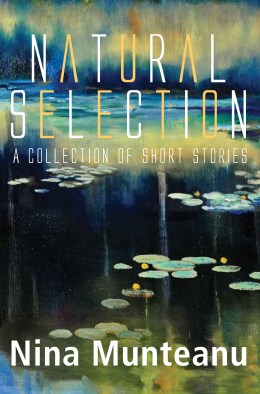
“Virtually Yours” was first published in Issue #4 of Neo-Opsis Science Fiction Magazine (Canada); it was reprinted in several languages in other countries including USA, Poland, Romania, Greece, and now Italy. It also appears as one of nine stories on human evolution in Natural Selection, a Canadian collection of short stories (Pixl Press) that examine the evolution of humanity with Nature and technology.

Nina’s short stories have received praise for their world building, depth of character, compelling plot and use of evocative metaphor:NaturalSelection-front-FB

“.a stunning example of good storytelling with an excellent setting and cast of characters.”–Tangent Online

“…Written with flare and a conscience…Munteanu shines a light on human evolution and how the choices we do or don’t make today, may impact our planet and future generations. The science is fascinating and so are these nine short stories.”—J.P. McLean, author of The Gift Legacy

“…Fascinating dramas set in a world too close to our own…the science was so interesting, combining visionary metaphysical speculation with AI corporate tech in scenarios that often seemed chillingly possible.”—Amazon review

“…Jealousy, lust, loneliness, grief and love are all drivers of these taut and fascinating narratives.”—Amazon review

“…a fantastic collection of stories by a deeply-involved writer, based in Canada.”—Amazon review

“…a well written, thought provoking collection of stories that will leave you hoping the future that Nina Munteanu projects never happens…Nina Munteanu is a gifted writer. Each story surprises and delights.”—Allan Stanleigh, author of USNA

“Actually brought to mind Niven’s Tales of Known Space…Nina’s stories tease you.”—D. Merchant, Louisianna Tech University College


The Way of Water can be purchased as:

WayofWater copy 2Ebook (Italian OR English) with additional short story “Virtually Yours” through Future Fiction (Mincione Edizioni) for €1,99  at:

Print book (Italian AND English) through Mincione Edizioni for €7,00 at:

Eramosa River 3

Eramosa River, Ontario (photo by Nina Munteanu)


Translated into Italian by Fiorella Moscatello. Print book cover by Laura Cionci. Ebook cover by Brad Sharp.

Launch of “Water Is…” Celebrates Our Connection With Water

MimicoCreek-spring2

Mimico Creek (photo N. Munteanu)

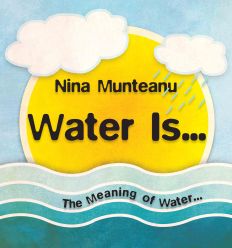
On June 12th, Councillor Jim Tovey, Mississauga Nation knowledge keeper Nancy Rowe and others helped me celebrate the launch of my long-awaited book “Water Is…” (three years in the making!) with a water blessing of Mimico Creek and various water-engaging activities.

The environmental event “celebrated water and our connection with it” at Islington Golf Course in Etobicoke. The 75 people who attended also included the Toronto and Region Conservation Authority, Credit Valley Conservation Authority, Lake Ontario Waterkeeper, Ecologos (WaterDocs), Rethink Sustainability Initiatives, poets, writers and artists.

In her powerful and compelling blessing, Nancy Rowe said, “Water is life, water is healing, we owe everything to water.” Despite the celebration, Mimico’s ironic reality was reflected in the ceremony: “You used to be able to drink this water,” Rowe lamented as she used tap water for the water blessing ceremony.

NancyRowe-by MaureenPogue

Nancy Rowe blesses the water (photo Maureen Pogue)

Vince D’Elia of TRCA gave Mimico Creek a failed report card and spoke about the need to educate the public on water and watersheds. Given that Mimico Creek flows some 33 km within a 77 square km watershed that encompasses three jurisdictions (Brampton, Mississauga, and Toronto); harmonizing efforts is no easy task.

Yasmin Glanville Jim Tovey Travis Belanger Michelle Stone

Jim Tovey with Yasmin Glanville, Travis Belanger and Michelle Stone (photo K. September)

Councillor Tovey stressed connection of individuals, communities and jurisdictions to create awareness and action in re-wilding our watersheds and to foster beauty. He highlighted Mississauga’s extensive planning and investment into these initiatives, saying that they are setting the precedent for all Canadian cities for sustainability planning.

Claire Lawson of LOWaterkeeper proclaimed that, “We are Lake Ontario,” referring to us being 70% water and the constant circulation of water on the planet. She gave us the 6 steps to water leadership: 1) know your watermark; 2) orient yourself; 3) get out there; 4) know the rules; 5)  participate; and 6) dedicate yourself. She told us why sharing our personal watermarks was so important and urged participants to share their watermark–a personal story that connected them with a particular waterbody and event–to help promote meaning and protection of waterbodies around the world.

Ro Omrow, with Ecologos (WaterDocs) invited participants to sign a petition to make Toronto a Blue Community. Initiated by the Council of Canadians, a Blue Community is one that:

  • recognizes water as a human right
  • bans the sale of bottled water in public facilities and at municipal events
  • promotes publicly financed, owned and operated water and wastewater services
Tasnim-ART-web-KS

Tasnim Jivaji sets up her water art at Nina’s launch/event (photo K. September)

Colleague, Naturalist friend, editor, indexer and poet, Merridy Cox, shared her watermark. Liana Di Marco read her poem “Rewilding the Sacred”, which appears in my book. John Ambury, whose poem also appears in my book read “Moving Waters.”

Liana-WAS

Liana Di Marco signing her pledge

Mississauga artist Tasnim Jivaji exhibited her water-inspired art. Originally from Mombasa, Kenya, Jivaji said, “In all my travels, in all the places around the world, it has never been the concrete that takes my breath away; it is always the body of water.”

The event also included a Water Action Station, which featured a three-step process toward successful water-action:

Step 1: buy my book (learning–step one toward water literacy, of course!)
Step 2: pin your prioritized water charity (Pixl Press is donating a portion of book sales toward several water charities; engagement)
Step 3: sign a pledge to Cousteau’s Bill of Rights for Future Generations(commitment to action)
The mission of the Cousteau society and this bill is to “educate people to understand, to love and to protect the water systems of the planet, marine and fresh water, for the well-being of future generations.”


According to Tovey, my book “Water Is…” bridges the gap from awareness to appreciation, connection and final action.

This book came from a lifetime’s dedication to water, humanity and our environment–from the moment I realized as a little girl that I felt the planet. I firmly think that water is the “glue” that can help us all connect and this book is the result.

Water is the ultimate gift and connecting force.

In the months and years to come we may see water further commodified, abused, and persecuted, figuring in tensions, take-overs and wars … Or not … That depends on us, everyone of us. We’re over 70% water, after all.

We ARE water…

What we think, feel and do, so does water.

#WhatIsWATER
#TheMeaningOfWater

Images taken by Kevin September (@SeptemberSphere; http://kevinseptember.com) unless otherwise shown.

Praise for “Water Is…” from around the world: 

This book emotionally connected me with water. As a result it fed my perception about the value of life. It reminded me that life reveals in each space a complex system that is full of surprise and beauty. A system of which I am part, without separation.”—Laura Fres, One Deep Sustainability, Barcelona, Spain

A sumptuous collection of treasures…from the basics of matter itself to the social and spiritual aspects of this substance, which touches our lives so much and is still not really understood.”—Dr. B. Kröplin and Regine C. Henschel, “World in a Drop”, Germany

Congratulations, Nina! Water Is… is an adventurous, surprising and inspiring book that could not feel more timely. The writing swept me away on a journey through history, landscape and our entire universe, yet brought me back home in the end with a fresh perspective on the significance of water.”—Emmi Itäranta, author of Memory of Water, United Kingdom

“If you don’t want to read all those other books on water, just read this one.”—John Stewart, Mississauga News, Ontario, Canada

“[Nina] is immersed well enough in water to tell us about how we should think about it. And the way she goes about it in this book is awfully good…A fine achievement.”—Joseph Planta, The Commentary, Vancouver, Canada

This book leaves me impressed. From science to science fiction, from philosophy to religion, from history to fairytale, the role of water is illustrated and illuminated. Water is probably the best investigated and least understood substance on this world, yet we still don’t know how to describe it in a better way than calling it H2O. This book tries to zero in on the missing part, the great unknown of water, and it does it in a very intelligent and charming way.”—Elmar C. Fuchs, scientist, WETSUS Program Manager, Netherlands

Kudus to Nina Munteanu for sharing her deep wisdom, experience and knowledge of humanity’s greatest natural resource!  As Leonardo da Vinci said, “We forget that the water cycle and the life cycle are one.” We forget at our own peril and so I am deeply grateful for this book by so highly qualified an author!”—Elisabet Sahtouris, evolution biologist, futurist, author of Gaia’s Dance: The story of Earth & Us, USA

The Writer-Editor Relationship, Part 2: Five Things Writers Wish Editors Knew—and Followed

patterns-Cedar log moss2-LR

Cedar log (photo by Nina Munteanu)

In my previous article, “The Writer-Editor Relationship, Part 1: Editors Preparing Writers,” I focused on clarifying expectations between editors and writers from the editor’s point of view. Part 2, this article, focuses on this same relationship from the writer’s point of view.

Clarity of expectation, honesty, and mutual respect are key features in a productive and successful writer-editor relationship. Writers expect editors to inform them if their expectations are out of line, and writers rely on editors’ honesty and transparency to let them know if they are comfortable with the task being asked of them. This, of course, is predicated on the editor’s full understanding of what that task is; again, it is the responsibility of the editor to determine the scope of work from the author—just as a doctor will ask key questions to diagnose a patient. If an editor has reservations, caveats, or limitations with the project, these should be shared upfront. Honesty is always best, and it should start right from the beginning so that mutual respect is cemented.

Below is a list of five things that writers wish editors knew—and followed.

  1. Edit to preserve the writer’s voice through open and respectful dialogue

Losing your voice to the “hackings of an editor” is perhaps a beginner writer’s greatest fear. This makes sense, given that a novice writer’s voice is still in its infancy; it is tentative, evolving, and striving for an identity. While a professional editor is not likely to “hack,” the fear may remain well-founded.

A novice’s voice is often tangled and enmeshed in a chaos of poor narrative style, grammatical errors, and a general misunderstanding of the English language. Editors trying to improve a novice writer’s narrative flow without interfering with voice are faced with a challenge. Teasing out the nuances of creative intent amid the turbulent flow of awkward and obscure expression requires finesse—and consideration. Good editors recognize that every writer has a voice, no matter how weak or ill-formed, and that voice is the culmination of a writer’s culture, beliefs, and experiences. Editing to preserve a writer’s voice—particularly when it is weak and not fully formed—needs a “soft touch” that invites more back-and-forth than usual, uses more coaching-style language, and relies on good feedback.

An editor colleague of mine consistently accompanies her edits with the question, “Does this change preserve your meaning?” This prompt both focuses on “voice” and reminds the writer that the editor is considering it, which fosters a nurturing environment of mutual respect. Editors who are not familiar with working with writers in the early stage of their careers may wish to defer to one who is more experienced.

Editors also need to consider how the author’s narrative voice harmonizes with the standard in the author’s targeted genre and niche market. Pursuing respectful and open dialogue about how the author’s voice fits or doesn’t fit that standard is another responsibility of a good editor and one an author will come to rely on—particularly early on in their career.

  1. Understand—and embrace—the market and genre of your writer

Writers are often told to write what they know. This edict applies equally to editors: edit what you “know” and understand. Each form of writing—from literary and genre fiction to journalism, the memoir, and technical writing—encompasses an overall style, culture and vision, associated language, and even “jargon” that is important to understand to succeed with readers. Even writers who subvert the trope need to first understand what they are subverting, and so does the editor.

I write and edit science fiction and fantasy. I do it very well, because I have a passion for it and I intimately understand its world and language, including where the boundaries lie and where the risks—and sublime nuances of originality—also lie. I worked as a scientist for over 20 years and have published papers in peer-reviewed journals, so I am comfortable editing technical and scientific papers. I live that world. On the other hand, I do not read, nor do I understand or care for, the horror fiction genre. Not only would I do a lousy job editing a work of horror, but I wouldn’t provide the discerning editorial advice to best place that work in the horror market. It is in the area of market niche that one editor will shine over another based on their familiarity with, and current activity in, that industry sector. This is ultimately what writers are paying for: the multi-layered understanding of the editor that comes with a full embrace of that world.

Editors should ensure a good fit and the best chance for success by not taking on work in a genre with which they are neither familiar nor comfortable. Think of the author. Which leads me to the next point:

  1. Be honest and practice moral integrity: Don’t take on a writer’s work unless you like and believe in it

 When I was starting out as a writer with my first novel, I shopped it around to many agents, hoping for representation. While the book was eventually published with great success, many agents had rejected it. Literary agents take on clients and shop their books to publishing houses. They usually charge a percentage of the take and are not paid (if they are good agents) until the book is sold to a publishing house. Payment, therefore, is predicated on success. In many cases, an agent would respond with good things to say about my first manuscript but would not take it on, citing this common phrase: “It just didn’t excite me enough.” I was initially puzzled by this response. If they liked it, why didn’t they take it on? But “I like” isn’t the same as “I’m excited.” I soon realized the importance that excitement played in the agent’s business. They were my advocate, after all. If they weren’t eager about the book, how could they sell it to someone else? And if they couldn’t sell it to someone else, how could they get paid?

While the editor is usually paid up front and/or upon deliverable, they fulfill a similar role: that of advocate. If an editor takes on a writer’s work without enjoying it or believing in it, they are much less likely to do a good job. And both lose when that happens.

When we just do a job for the money and not for the passion of doing something well, we run the risk of losing on all fronts. We run the risk of being dishonest in our assessments and then doing a shabby job. And then losing our reputation. Be an advocate and be honest; sometimes, that means saying “no” to a project and explaining why. The writer will benefit and will thank you for it—if not right away, then eventually.

  1. Edit professionally and appropriately to promised deliverable

In my capacity as writing coach, I have met with several writers who have complained that their work had been insufficiently or inappropriately edited. This can occur for several reasons: (a) lack of time; (b) incompetence; or (c) inappropriate match-up.

  • Lack of time 

As a writer, I once experienced an insufficient copy edit by a freelance professional editor. In fact, this particular editor was a good editor and had impeccably edited a previous work of mine. When I submitted my “edited” work to a beta reader, he pointed out many places that my copy editor had missed. A few is OK, but she’d missed many. From subsequent correspondence, I deduced that my editor had been overrun with other projects and had skimmed mine a little too fast. Unfortunately, this was unacceptable, given that I’d agreed to pay her a professional rate for a specific deliverable: a copy-edited, proofed, and publication-ready manuscript.

The ultimate message here for editors is, don’t take on a writer’s work and make promises of delivering until you know what you’re getting into and know that you can do it in the time you suggested. Honesty is best here. If you are too busy to meet the specified deadline, say so and refer the writer to another respected editor if they can’t wait. And don’t worry about “losing” the client—you haven’t. But that editor I mentioned in the previous paragraph did.

  • Incompetence 

Unfortunately, most editors who are incompetent are unaware of it. One of my professional writer-editor colleagues at SF Canada invoked the Dunning-Kruger Effect (“at a certain point, people who really don’t know something don’t know that they don’t know it”) to share her story of what passes for editorial input in “an age of homonym errors.” She suggested that some self-appointed editors are convinced they have significant skills but allow a large error rate.

This is where organizations like Editors Canada become invaluable. Editors Canada certifies editors for skills in various editing fields and forms (that is, structural-, stylistic-, and copy editing and proofreading). If you are a professional editor with certification, ensure that you make this known to the writer; many writers not only don’t understand the various editing forms (for example, copy editing vs. structural editing), they also don’t necessarily recognize competence until after the job is done—when it’s too late.

  • Inappropriate match-up 

This is similar to point 2, which talks about matching writer and editor through genre and market. A good fit also includes temperament, schedules, communication style, and other considerations that will affect the editor-writer relationship and the natural progress of the project. As editor, I have encountered a few clients whose communications with me created tension and misunderstanding. We mutually agreed to terminate our arrangement early on, which saved much tension and grief. The transparency of the relationship allowed us to recognize the mismatch early on and attend to it before it became problematic and wasted both our time and efforts.

  1. Keep the relationship—and language—professional and respectful 

Without necessarily expressing this, the majority of writers—particularly beginning writers and, by default, indie/self-published writers—seek a professional editor who will treat them with respect. What this translates into is the use of professional language, tone, and behaviour. Writers aren’t looking for an editor to be their “friend.” Writers are also not looking for a professional editor to validate their work or them as people. Writers seek professional editors to give them honest and helpful advice that will help them create the very best work they can for eventual publication.

Simple. Not so simple.

As an editor who is also a writer (who gets edited a lot), I provide rationale as much as I can for the suggestions I make to writers. This helps establish and maintain a respectful and collaborative relationship between author and editor through the use of professional language, tone, and behaviour. Think of it as a doctor-patient relationship; I’ve dropped doctors like hot potatoes who are not willing to sit with me as an equal and discuss their prognoses. I want to know why, and ultimately, it’s my decision. The editor is an expert, but so is the writer.

The writer-editor relationship is foremost a professional one. As an editor, I feel it is my duty to promote integrity and respect with the writer, and this hopefully within a safe and nurturing environment for the achievement of mutual excellence.

This article was copy edited by Nicole North.


Nina MunteanuNina Munteanu is an ecologist and internationally published author of award-nominated speculative novels, short stories and non-fiction. She is co-editor of Europa SF and currently teaches writing courses at George Brown College and the University of Toronto. Visit www.ninamunteanu.ca for the latest on her books.

Nina Talks Water at Word Up in Barrie

Unity Market-outside

Unity Market & Cafe outside patio

Every month on the second Thursday, Word Up in Barrie hosts readings by writers, poets, and spoken word artists. From pros to amateurs, and all genres of writing, Word Up’s open mic has welcomed writers of all genres, from amateurs to winners of the Governor General’s Award.

The volunteer run group holds its reading night at the artisanal Unity Market and Café, on Toronto Street, just a walk away from Barrie’s charming downtown core and harbor on Lake Simcoe. Apart from its famous “scuffins” (an amalgam of muffin and scone, generously filled with savory goodness), the market is a gestalt meeting place for creativity, holding events almost daily.

I heartily accepted when Linda Laforge invited me to speak about my last project to those in attendance last Thursday. My latest book is Water Is…, a non-fiction work that took me three years to write and the culmination of a career and life with water.

Shane-Unity Market

Shane making a tea

I talked about how the book came about—linking it to how I came about—and the process of research and writing—which morphed into something beyond what I had initially conceived. The book in some ways wrote itself, telling me to go here and there; gathering friends and colleagues to me—some from far away—to provide important information I needed to put into the book.

I ended my talk with a description of the Watermark Project, a Lake Ontario Water Keepers initiative to give narrative to our connections with water—exactly what I’d intended with Water Is…

Barrie-tulips

Barrie harbor front

What followed was an open mic that resonated with water connections from a short story about death to learning how to heal with water. Damian Lopes, Barrie’s Poet Laureate, delivered a compelling poem on Canadian sociopolitics.

The open mic closed with Shane Dennis’s freestyle oration—a spontaneous stream-of-consciousness flow of powerful imagery that both summarized the night’s readings and set it aflame and into flight.

Damian Lopes won the raffle for a free Water Is… book. And I sold a few books to a few hydrophiles. A wonderful evening!

Thanks, Linda, Aaron, Bruce and Shane!


For more about my book Water Is… and about water see TheMeaningOfWater.com.

word up banner

Nina at Word Up-Barrie

The Writer-Editor Relationship, Part 1: Editors Preparing Writers


Log patterns 6

Spalting patterns on decaying log (photo by Nina Munteanu) 

As indie publishing soars into new heights and successes, writers are looking more and more to freelance editors to help them create works of merit that will stand out in the market. Whether this process is seamless and productive or fraught with difficulties relies on the relationship established between editor and writer—at the outset and throughout.

The writer-editor relationship—like any relationship—works best when communication between parties is transparent and clear. What ultimately drives misunderstanding—or its corollary, harmony—is “expectation” and how it is met. Clarifying expectations on both sides is paramount to creating a professional and productive relationship with few hitches.

Realizing Expectations

Indie authors often come to editors with unclear and, at times, unreasonable or unrealistic expectations on services. Many writers know very little about the kind of editing we do and the different levels of effort (time and associated fee) required. They do not understand the difference between “copy-editing” and “structural editing”, particularly as it pertains to their own work. In fact, many indie writers don’t even know what their MS requires. This is because of two things: 1) they can’t objectively assess their own work, particularly in relation to market needs; and 2) many authors have not sufficiently considered their “voice” or brand and matched it to a relevant target market. Both of these will influence how the writer comes into the relationship and the nature of their expectations.

It is best to be “up front” with everything, from understanding a writer’s work and market expectations to establishing your fees, your time, and the nature of your services. This is why a savvy editor will ask for a one to several page example of the author’s writing prior to offering their services and finalizing the nature of a potential relationship. Such an exchange may, in turn, include a sample of the editor’s work for the writer to assess. This exchange helps clarify the process for both parties.

A savvy editor will want to establish with the author the following things prior to taking him/her on as a client and embarking on the actual editing task:

  1. The nature of the writer’s work: a writer’s work should harmonize with the editor and achieve a good fit; e.g., I edit fiction and non-fiction; however, I do not edit horror, because I simply can’t relate to it and don’t care for it. More on this below.
  2. The author’s expectations and target market: this is key to establishing the kind of editing required for the author’s piece. Is it good enough to just copy-edit or will the piece require substantive edits to succeed in the identified market? This often requires open and frank communication between editor and author.
  3. Nature and time of submission: on which the schedule is based.
  4. Schedule and deadlines for deliverables: based on the editor’s realistic timing (including other work) and the nature of the editing job (to be established by some reliable means).
  5. Nature of communication: form and frequency; partly to ensure that the writer does not abuse the communication stream with a barrage of emails, e-chats, phone calls, etc.)
  6. Nature and cost of deliverables: e.g., use of track changes; inclusion of summary letter; follow up meetings, etc.
  7. Mutual agreement on fees, fee structure and payment details: what, how and when.
  8. Inclusion and nature of contract: this may include an NDS, if desired.

By clarifying these, you and the author create a new set of realistic agreed-upon expectations.

Fitting Writer with Editor

The right fit for editor and writer includes more than harmonizing genre, writing style, and content. The fit includes personality. A professional editor and colleague of mine recently shared on our list-serve about his experience as both a freelance and publishing house editor. The editor shared that a majority of writers responded to his edits with comments like, “finally, someone who just comes out and plainly tells me what’s wrong!” However, others complained: “why are you so mean?” The editor admitted to using humor liberally in his assessments and was described by one of his clients as “playfully harsh.” While the work of this editor is no doubt impeccable, the added humor may not be a good fit for some writers, particularly those who are not highly confident in their work.

Knowing your own brand of editing and being up front with it is part of achieving a good fit with a writer and can avoid huge headaches down the line for both of you.

Toward Honesty & Moral Integrity

I and some of my editing colleagues have run across several cases of indie writers who have come to us with “already edited works” that they believed only needed proofing or minor edits, but in fact called for substantive editing and story coaching to fulfill market requirements. The previous editor had either done a poor job of editing or the author had done a poor job of incorporating the edits. Either way, I was now in the position to inform this author, who had already spent several thousand dollars on edits, that his work required more than a “trim job off the top” to meet the standards demanded by the market.

My colleague suggested that it is unethical to copy-edit a manuscript that obviously requires structural editing or has serious “story” problems. I’m inclined to agree. The key lies in the expectations of the author and his/her intended market. This is where the editor’s knowledge of “matching work to market” becomes a critical part of the relationship with the author, whether you take him/her on as a client or not. I talked more about this in a previous article on Boldface, “The Moving Target of Indie Publishing: What Every Editor (and Writer) Needs to Know.” Honesty is best. Following the path of moral integrity may not put food on the table; but it will maintain your reputation as an editor of quality, which will keep the roof over your head.

Below is a mock email of a general response to a writer’s inquiry for help on their MS:

Dear Alice,

Thank you for your interest in my editing services. I am still taking on clients and would be happy to help you.

In your initial letter, you included a brief description of your story. It sounds intriguing and interesting. Science fiction is my passion (I’ve published nine SF books so far).

Before we proceed, I need a few things from you to ensure we are a good fit and to help me do the best I can for your project. First, can you please send me a short sample of your work (2-3 pages) and a very short summary. From this I’ll be able to confirm the kind of editing that best suits your project. For the kinds of editing/coaching services and associated fees please refer to this page on my website: xxxx.

Can you also answer the following questions?

1.     (If they haven’t included the genre or a short premise, I ask them for one).

2.     How do you intend to publish this book (traditional, indie, self-publish)?

3.     Who would you say is your intended audience and market?

4.     Is this book a stand alone or part of a trilogy or series?

5.     Is the book complete (first draft or more)? If not, how much is written?

Based on this, I will suggest the kind of editing (and coaching) required to best fit your needs. This may be one or a combination of the following: 1) an evaluation/assessment at $xx/page; 2) copy-editing (with some substantive editing) at $xx/page; or 3) story coaching at $xx/hour. As outlined on my webpage (xxxx), I provide digital commentary (line by line) in your manuscript (in Word through track changes) accompanied by a summary letter with recommendations. You can find examples of what I do on this page of my website: xxxx.

Once I’ve determined what services best suit your work and you are in agreement with the service and fees, I will draw up a contract for you and I to sign. The contract will stipulate a reasonable schedule that you and I can agree on for the process and deliverables.

Once the contract is signed by both of us, I would ask that you send me your material along with Paypal payment for the first half of the agreed total fee by the date marked in the contract.

I look forward to hearing from you.

Best Wishes,

Nina


Nina MunteanuNina Munteanu is an ecologist and internationally published author of award-nominated speculative novels, short stories and non-fiction. She is co-editor of Europa SF and currently teaches writing courses at George Brown College and the University of Toronto. Visit www.ninamunteanu.ca for the latest on her books.


The Moving Target of Indie Publishing: What Every Editor & Writer Needs to Know

patterns-Cedar log moss2-LR

Decaying cedar log (photo by Nina Munteanu)

I’m a writer and an editor. I’ve written and published novels, short stories, and non-fiction books with traditional publishing houses and indie publishers. I’ve also self-published. As editor, I serve as the in-house copy editor for a publishing house in the United States and have acted as acquisition editor for several anthologies put out by a local indie publisher. I also coach novice writers to publication and edit in that capacity.  You could say I know the industry from many angles and perspectives. That’s been good for me, because this industry is a moving target, and it’s good to triangulate on a moving object. The entire publishing industry is evolving, and it’s a slippery evolution.

Even the words we use are slippery. Indie. Hybrid. Publisher.

Many people, like award-winning author Kristine Kathryn Rusch, when they use the terms indie writer and indie publishing, include what some call self-publishing in their definitions of indie, “because so many [professional] writers who are not with traditional publishers have started their own presses. It’s not accurate to lump all writers who are not following the traditional route into the self-publishing basket any longer.” According to Rusch, an indie publisher is anyone who is not a traditional publisher. For this article, I’ve adopted Rusch’s definition to provide the full range of expectations for editors working with writers in the indie field. I define a traditional publisher as an established and often larger publishing house or press that (1) follows traditional submission criteria; (2) does not charge writers; (3) pays out royalties; and (4) employs in-house editors.

Indie writing and publishing can then be described in several ways depending on where the writer submits and by what mechanism and what model they use. All of these will affect a writer’s needs and perceptions for an editor and, in turn, an editor’s expectations as well.

Table 1 (below) outlines the five major models of indie writing and publishing.

Table 1: Types of indie writing / publishing models
1. Small independent press


(not writer’s)


Author submits to a small press that does not require author to pay for publishing costs. House may pay small royalties. Acceptance criteria limit submissions. There may or may not be formal distribution.
2. Small independent press


(not writer’s)


Author submits to a small press that may require author to pay for part of the publishing costs. House typically does not pay royalties but may provide complimentary copies and/or author’s rate for copies. Acceptance criteria may still apply to submissions. Distributor is typically the Ingram/Amazon model.
3. Small independent press


(writer as sole proprietor or part of a consortium; also called self-publishing by some)

Author can write and publish as they please. Costs of publication are born solely by the writer(s), and royalties come straight from profit. No acceptance criteria apply. Distribution is typically the Ingram/Amazon model.
4. Service publisher


(e.g., iUniverse, Friessen; this is self-publishing, even though the publisher’s name appears on the work)


Author can write and publish as they please. All publication costs born by writer. Service will include copy editing, layout, cover design, printing, some distribution, and some promotion—all at cost (based on service package). Distribution is typically the Ingram/Amazon model.
5. Self-publishing


(e.g., the publication is in the author’s name)

Author can write and publish as they please. Author uses à la carte style of self-publishing in which they do (or hire others to do) the production of the work (e.g., editing, layout, cover, printing, distribution, and promotion).

Depending on which model an author uses for their work, their perceived need and actual need for an editor prior to submission and publication will be affected. I distinguish between perceived and actual because, unfortunately, in many cases, these diverge: an author may not think they need a certain kind of editing for their work when they do. The opposite is more rare: the author thinking they need an editor when they don’t. (More on this in a future article.)

The availability of these models and their hybrid cousins has provided writers with a cornucopia of often confusing choices. In many cases, I find that writers are not even aware of which choice is best for them. Part of the reason is that writers carry forward ideas from the old model. Unfortunately, this often translates into misconceived ideas about and expectations of editors. (That’s another article too.)

For editors, it’s important to recognize these different models and what they, in turn, provide and expect from authors. A savvy editor translates into a savvy author. Your advice, when driven from a place of publishing industry knowledge, will be invaluable to authors seeking your services. And they will come to rely on this as much as, if not more than, your actual editing.

By its very nature, indie publishing has given the freelance editor an opportunity to take on a new role—a service that agents used to and still do provide to many traditionally published authors: that of industry consultant. In the traditional model, an author would seek an agent who would then not only sell their work to a publisher but also provide advice on what to expect in the market as well as help with career-longevity choices (which include branding)—questions many novice authors haven’t even considered, never mind answered sufficiently. Most indie authors will not engage an agent, but most will (should) hire an editor. So, instead of an agent, the freelance editor becomes the first stop in the publishing industry for an indie author. This has become one of my primary roles as editor and writing coach. And this is again because most writers, when they start out, do not know what direction they want to go—mainly because they aren’t familiar enough with what is available to them and the ramifications to their careers.

Here’s an example: one client, working on her first novel, wanted my advice on whether she should try a traditional publisher or just forgo and self-publish. An editor possessing savvy knowledge of the industry and now knowing something of the author’s work and ambitions can bring informed and constructive advice to the author.

The ramifications on how I handle and edit a story directly follows which route the author has decided to follow. This is every bit as relevant to an author publishing with a traditional publishing house, an indie press, or self-publishing. Style—whether it’s that of a publishing house or the author’s brand—relies on consistent application of voice and tone. Just as publishing houses embrace different and unique styles, so do authors. In fact, if they are self-publishing, this is even more important.

The editor plays a crucial role in helping an author establish their voice, style, and, ultimately, their brand. And, perhaps, this becomes one of the principle differences between traditional and indie publishing. While voice and style is predetermined to some extent by traditional publishing houses (hence, they employ their own editors to impose a style in some cases), it’s left to the author—and their freelance editor—to determine this in the indie scene. The structure of traditional publishing is both more orderly and more confining. Indie publishing—particularly self-publishing—is an infinite melting pot of creativity. Some view it as one big mess. In fact, it’s a chaos of astonishing opportunity. It’s a chance for intimate collaboration that demands mutual respect. Freelance editors are poised as both gatekeepers and enabling wizards of the indie world.

Table 2 (below) describes a freelance editor’s focus in the five indie models.

Table 2: Editing for different indie models
1. Small independent press


(with submission criteria similar to a traditional model)


Authors often think they don’t need a freelance editor if they’re submitting to a press with in-house editors; this is incorrect. Those who have had their work edited prior to submission to a press—even a small press—will have a much higher chance of being accepted. The freelance editor’s job, then, will include attending to the style of the publishing house.
2. Small independent press


(without submission criteria)


While authors may not recognize the need for an editor when submitting to an indie publisher without submission criteria, the need for editing remains—particularly because many of these presses don’t employ or have sufficiently qualified editors. Excellence in presentation and nurturing a strong author voice are the freelance editor’s responsibility.
3. Small independent press


(writer’s own press)

Given that the author has carte blanche on what to write and publish, a freelance editor’s role in recognizing, harmonizing with, and helping to establish a genuine and strong author’s voice becomes most important.
4. Service publisher


Authors have misconceptions about service publishers and particularly their editors. I’ve had several clients come to me after recognizing that their works were not well represented by the provider’s in-house editor. Service publisher in-house editors do not represent a particular style, voice, or brand (given that most are underpaid students and there is no style identity); the freelance editor role is as with #3.
5. Self-publishing


The same criteria exist here as for model #3.
Log patterns 6

Spalting patterns on decaying log (photo by Nina Munteanu)

The take home: Freelance editors can flourish in the indie writing and publishing field by (1) establishing their expertise in the industry and what it requires (taking on the role of consultant, which agents normally provide in the traditional model); (2) recognizing a need for strong authorial voices and helping to foster them; and (3) promoting point #2 with consistency in style, tone, etc.


Nina MunteanuNina Munteanu is an ecologist and internationally published author of award-nominated speculative novels, short stories and non-fiction. She is co-editor of Europa SF and currently teaches writing courses at George Brown College and the University of Toronto. Visit www.ninamunteanu.ca for the latest on her books.