“A Diary in the Age of Water” at the Memorial University Bookstore
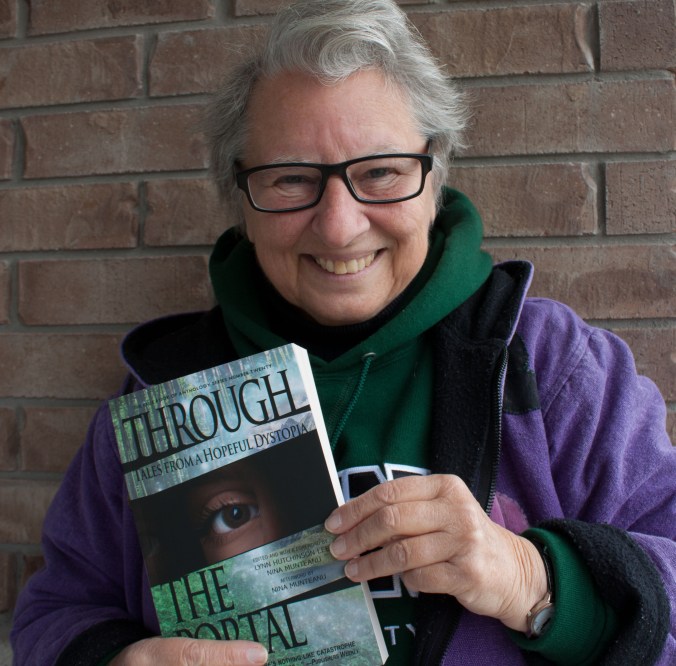
Instructor Keif Godbout-Kinney has made my eco-fiction novel A Diary in the Age of Water required reading in their course Feminist Practices and Global Change (GNDR 3008) at Memorial University, Newfoundland. The book is currently selling at the Memorial University Bookstore.
The Gender Studies course examines connections between feminist theories and activism for social and political change on a global scale.
.
.
My novel, told mostly through the diary of a limnologist, describes a world in the grips of severe water scarcity during a time when China owns the USA and the USA owns Canada. The diary spans a twenty-year period in the mid-twenty-first century of 33-year-old Lynna, a single mother who works in Toronto for CanadaCorp, an international utility that controls everything about water, and who witnesses disturbing events that she doesn’t realize will soon lead to humanity’s demise. A Diary in the Age of Water follows the climate-induced journey of Earth and humanity through four generations of women, each with a unique relationship to water. The novel explores identity and our concept of what is “normal”—as a nation and an individual—in a world that is rapidly and incomprehensibly changing.
.
Nina Munteanu is a Canadian ecologist / limnologist and novelist. She is co-editor of Europa SF and currently teaches writing courses at George Brown College and the University of Toronto. Visit www.ninamunteanu.ca for the latest on her books. Nina’s bilingual “La natura dell’acqua / The Way of Water” was published by Mincione Edizioni in Rome. Her non-fiction book “Water Is…” by Pixl Press (Vancouver) was selected by Margaret Atwood in the New York Times ‘Year in Reading’ and was chosen as the 2017 Summer Read by Water Canada. Her novel “A Diary in the Age of Water” was released by Inanna Publications (Toronto) in June 2020.
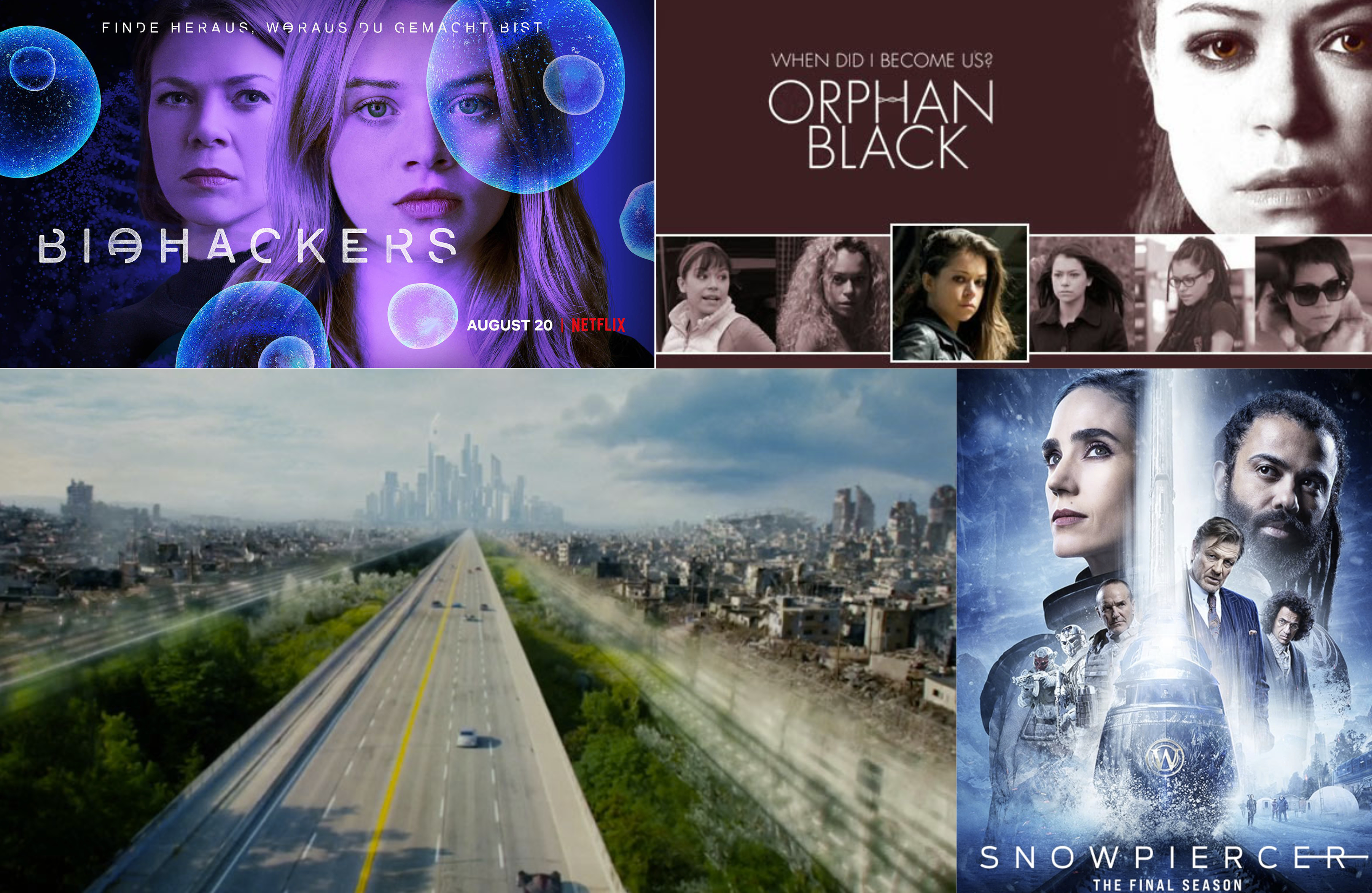
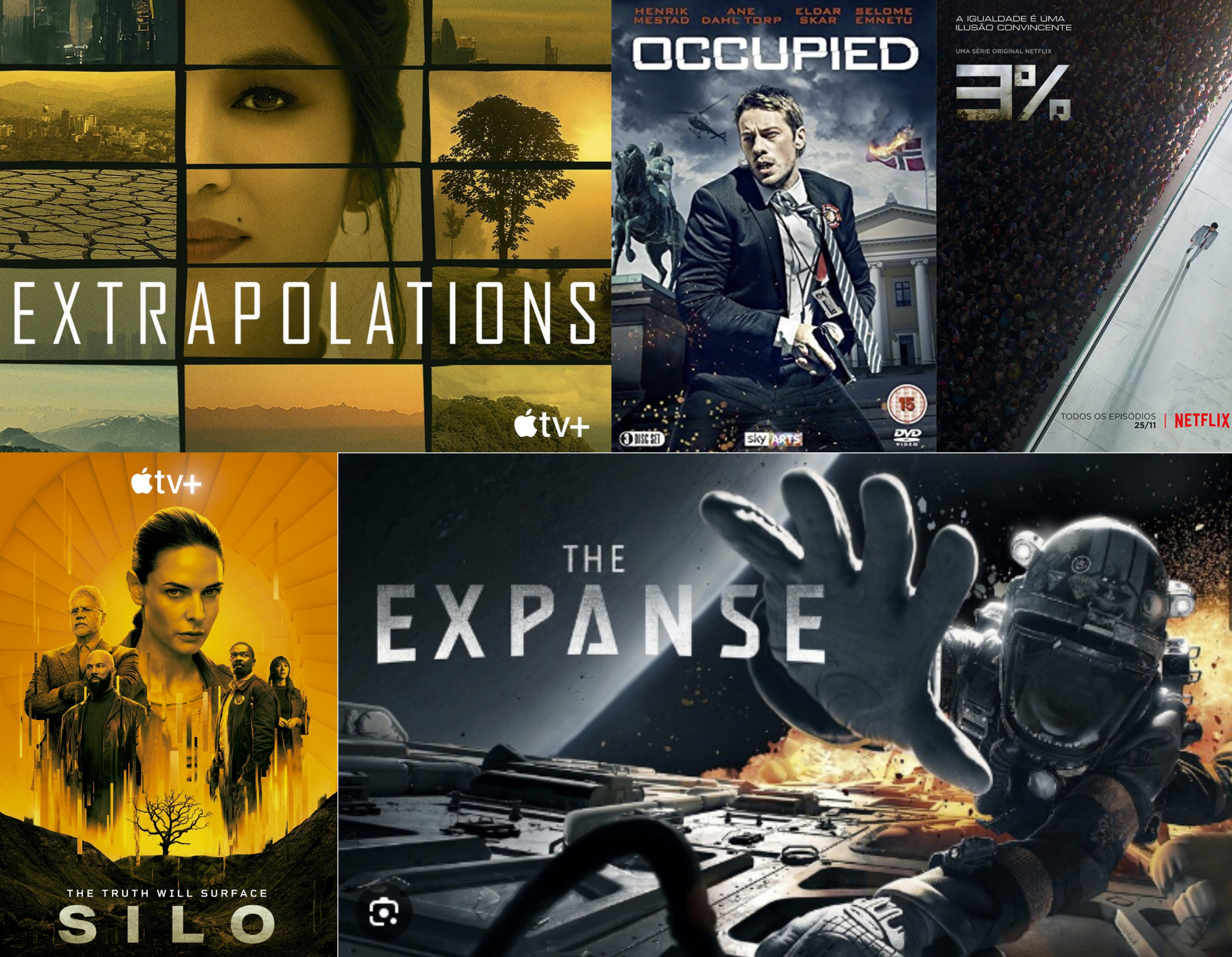
I’ve selected ten TV series that have intrigued me, moved me, and stayed with me for various reasons that touch on: abuse of justice, including eco-justice and environmental abuse; technology use and abuse; and the effects and horrors of climate change.
Some are well known; others not so well known. All approach storytelling with a serious dedication to depth of character, important themes, realistic world building, and excellent portrayal by actors. The world-building is extremely well done—in some cases rivalling Ridley Scott’s best—with convincing portrayals of worlds that are at times uncanny in their realism. Worlds that reflect story from an expansive landscape to the mundane minutiae of daily life: like the cracked phone device of Detective Miller in The Expanse or the dirty fingernails of engineer Juliette Nichols in the Down Deep of Silo. Stories vary in their treatment of important themes from whimsical and often humorous ironies to dark and moody treatises on existential questions. In my opinion, these TV series rival the best movies out there, often reflecting large budgets (but not always) and a huge commitment by producers. The ten TV series I’ve selected here come from around the world: Brazil, Germany, France, Norway, Canada and the United States.
In Part 1, I look at five TV series that touch on ethical issues we are facing today; issues that reach far into existential questions of what it means to be human. These TV series explore synthetic biology, cloning and gene editing, and justice in space colonization and exploitation.
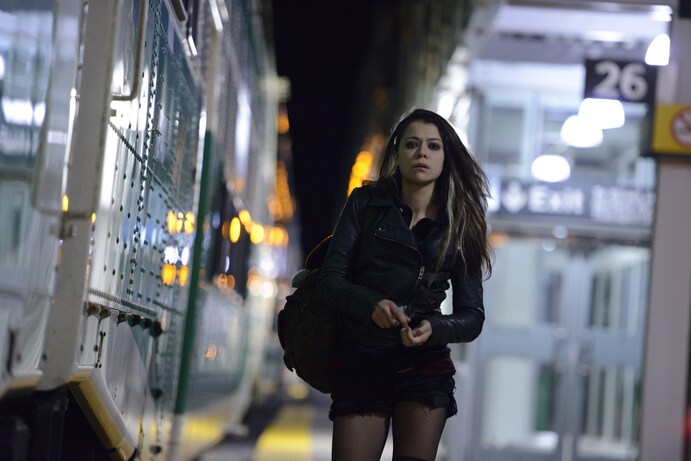
Shot in and around Toronto, Ontario, the series focuses on Sarah Manning, a fringe-dweller with questionable friends, who assumes the identity of her clone, cop Elizabeth (Beth) Childs, after witnessing her suicide and stealing her stuff. In Season 1 alone, seven clones are revealed. Those still alive include suburban housewife Alison Hendrix, university evolutionary biologist Cosima Niehaus, corporate mogul Rachel Duncan, and crazed sociopath Helena.
Toronto is filmed brilliantly in a vague every-city pastiche that combines the look of London’s eastside, NYC and northern Europe all in one. Like its characters, the show is both sparsely existentialist and baroque funk. Besides Sarah’s own diverse clones there is foster brother Felix and his various friends or cronies who add significant colour to this film-noir set. Unsavory antagonists not only add intrigue but provide significant texture from sophisticated and subtle to the banal and truly terrifying. And like biology itself—perhaps the true main character here—all the characters are shape-shifters, looking for balance in a shifting world where “normal” keeps chasing itself.
.
Sarah Manning at the train station where she meets her first clone (image by Orphan Black)
.
Orphan Black is a slick, sophisticated and edgy exploration of human evolution that raises issues about the moral and ethical implications of bio-engineering and genetic tampering—specifically human cloning (currently against the law), personal identity, and intellectual property. Manson and Fawcett enlist symbols and clever metaphor to enrich the story with layers of depth—no item is free of meaning: from the seemingly innocuous naming of a transit station (Huxley Station) in the show’s premiere, or Delphine’s passing reference to “a brave new world” to a terse discussion between a religious extremist and a restaurant proprietor over the merits of factory-farmed eggs: “They’re not normal,” the extremist complains. “They’ve been interfered with.” There is nothing normal about Orphan Black.
.
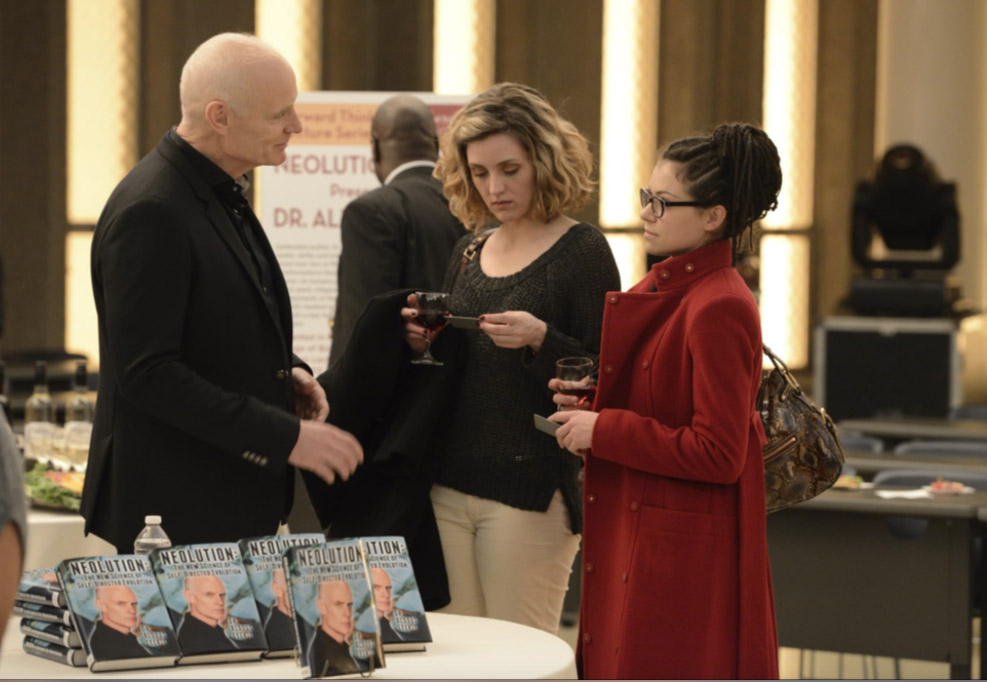
Cosiima meets Dr. Aldous Leaky of Neolution, a transhumanist organization about self-directed evolution
.
Episode titles in Season One quoted parts of Charles Darwin’s evolutionary text On The Origin of Species. Titles like “Natural Selection” (series premiere) and “Parts Developed in an Unusual Manner” elucidate concepts of evolution and survival of the fittest. Season 2 adopts the works of Sir Francis Bacon, reflecting the ethical and moral implications of scientific pursuit in a world of contrasting philosophies and values.
In Orphan Black, The Dyad Institute, a biotech corporation with arcane connections to invisible powers and eugenics, patented the clones as theirs to do with as they please—which might be anything. The ownership of the clones’ genomes by The Dyad Institute would be lawful if all the clones’ DNA was entirely synthetically made. The company would also have exclusive rights to study the clones’ genome, effectively placing the clone Cosima under copyright infringement if she decided to study and apply her research (on herself) outside of the Dyad Institute. If the clones were synthetic, like the DNA created by scientist Dr. Craig Venter, then the Dyad Institute would be in a unique situation with regards to ethics and newly emerging considerations of human rights yet to be determined. For instance, how much of the clones really belong to the company that made them? What even constitutes a person?
.
Nina Munteanu is a Canadian ecologist / limnologist and novelist. She is co-editor of Europa SF and currently teaches writing courses at George Brown College and the University of Toronto. Visit www.ninamunteanu.ca for the latest on her books. Nina’s bilingual “La natura dell’acqua / The Way of Water” was published by Mincione Edizioni in Rome. Her non-fiction book “Water Is…” by Pixl Press (Vancouver) was selected by Margaret Atwood in the New York Times ‘Year in Reading’ and was chosen as the 2017 Summer Read by Water Canada. Her novel “A Diary in the Age of Water” was released by Inanna Publications (Toronto) in June 2020.
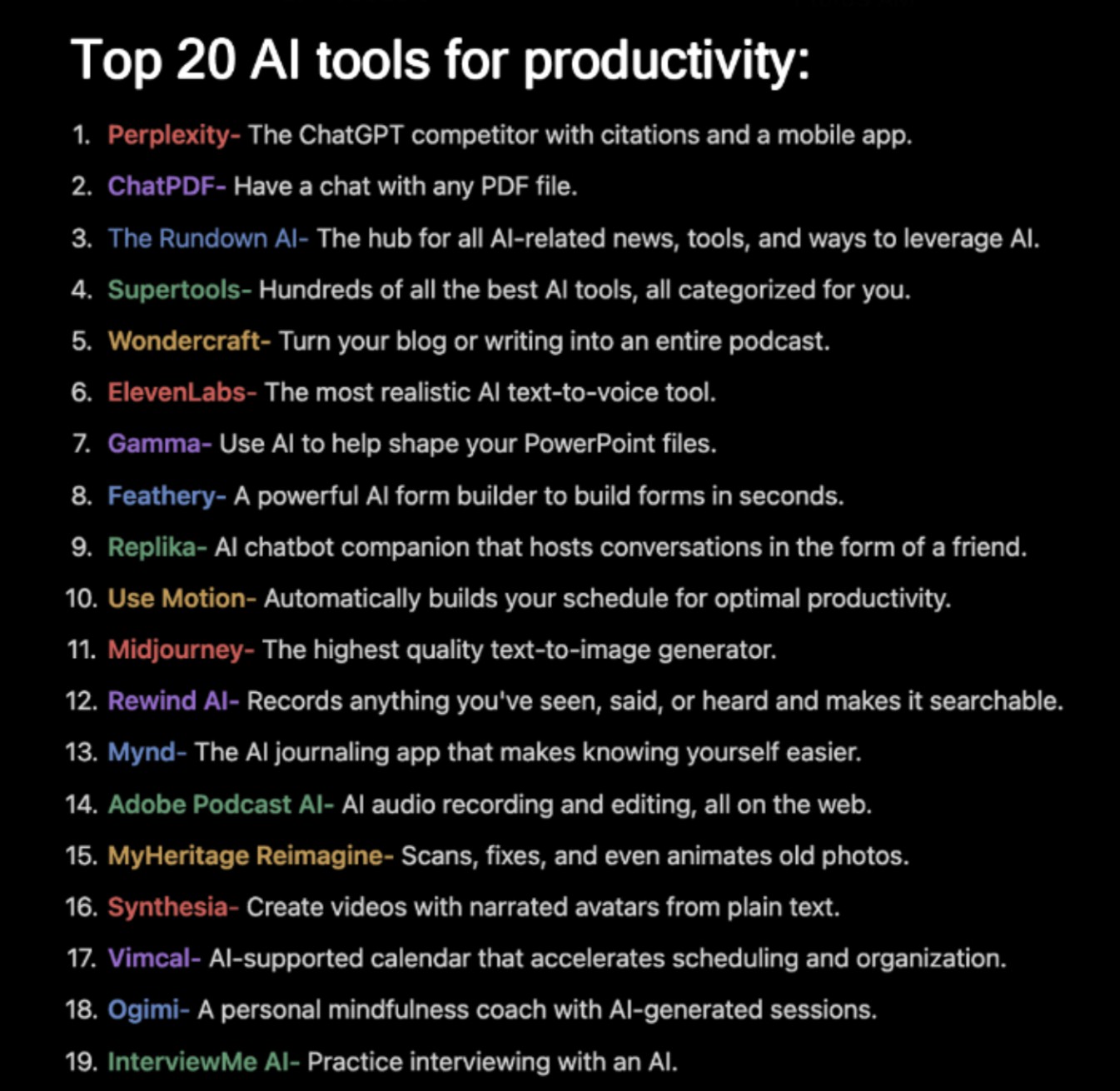
I recently ran across a list posted on social media of the 20 most popular AI tools for productivity in writing. I only knew two of them. This heightened my anxiety about what I know and am prepared for in the use of genAI, particularly in academic settings, where I teach writing at university. And it got me thinking why I was so anxious…
.
I shared the list with my colleagues at the university writing centre and one instructor who was actively following AI tools admitted that they knew only a few of the listed tools as well. They further shared that they were feeling increasingly apprehensive about genAI’s impact on higher education. “It’s hard not to feel overwhelmed,” they ended.
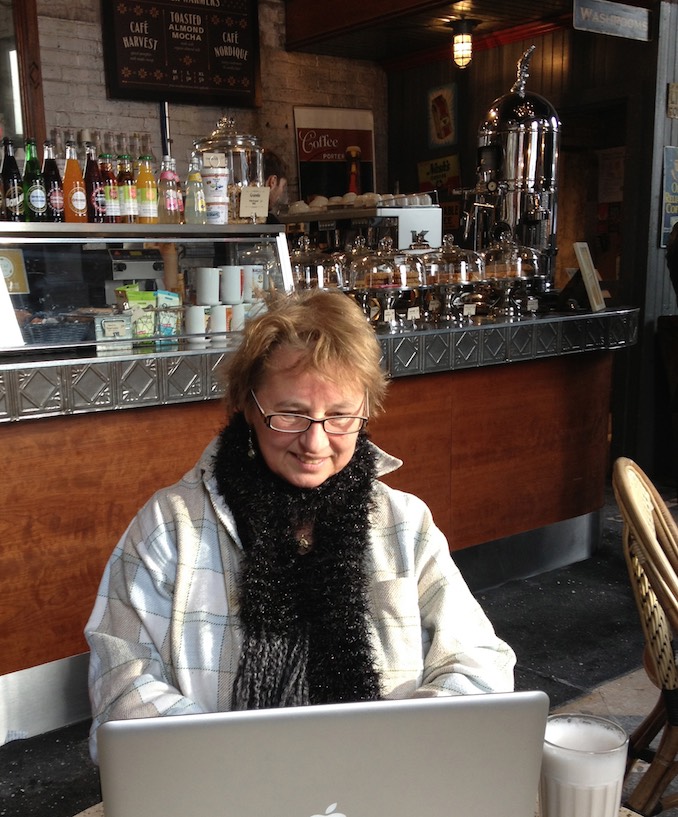
(Photo: Nina writing her novel at a cafe)
.
This was my exact sentiment: a kind of apprehensive excitement. An understanding that all communicators stand at the precipice of a major paradigm shift in tool use. The ramifications this will have on all aspects of effective and efficient communication will span from redefining plagiarism to reinventing creativity. As with all powerful tools—aside from the obvious threat of misuse—there is always something lost with the gain and I wonder what we are losing with all this. I have some ideas, and they do bother me from time to time.
.
Applications of Generative AI (image by Neebel Technologies)
I do think it important for me as a communicator and writing instructor to understand the trade offs and to work with them.
When the world adopted the portable calculator, rote knowledge of basic math suffered. I know; I tested it during a lab exam when I was teaching college biology many years back. I forbid the use of calculators in the test and many students, who had lost the ability to do long division or multiplication by hand, lost marks. For some reason, I’m still not sure of, it was important for me to insist on students doing math longhand (a basic skill fast becoming obsolete like cursive writing) and punish those who had lost the art. Perhaps I was drawing on Isaac Asimov’s possibly prescient 1957 short story satire The Feeling of Power, which explored the limitations of a future world that lost its basic skills to machines. The corollary, I suppose, is that more complex and conceptual math gained some ground through this handy and efficient tool. Machines have their advantages, certainly. And generative AI is just one sophisticated aspect of machine use.
.
.
Consequences to Creative Writing
In my world of professional fiction authors, there is a palpable fear of being replaced by AI as story creators: a version of the ultimate science fiction horror plot of being taken over by the machine world (I’ve even exploited that in my SF thrillers Angel of Chaos and Darwin’s Paradox).
Given our unique powers of imagination, I don’t think that will happen (very soon, if ever successfully). Though, as we dummy-down and simplify complex stories for fast-paced multiplex audiences addicted to fast-paced bite-sized and easy to digest entertainment, AI-generated narratives could get by. How is all this affecting the publishing industry now? I recently learned that one of the top five online science fiction magazines, Metastellar, accepts AI-assisted stories with the proviso that “they better be good.” And Metastellar provides some convincing reasons. This has become a hot topic among my fellow professional writers at SF Canada. One colleague informed me that a “new publisher Spines plans todisrupt industry by publishing 8000 AI books in 2025 alone.” On checking the news release, I discovered that Spines is, in fact, a tech firm trying to make its mark on publishing, primarily through the use of AI. The company offers the use of AI to proofread, produce, publish, and distribute books. They are, in fact, a vanity publishing platform (essentially a service for self-publishing), charging up to $5000 a book and often taking just three weeks to go from manuscript to a published title. The quality of what they will produce is unclear—and questionable.
All to serve as metaphor for what I and my colleagues at university are striving to achieve with students in their academic writing: excellence in communication, particularly in conveying complex scenarios that require creative solutions where clear, concise, and convincing writing is requisite.
.
I still find myself reluctant to use AI in my writing and communication, though I’ve at times slid into using AI for research and initial summaries to save time. I do this rarely because I absolutely enjoy doing research. I enjoy challenging my brain to summarize key points and write a good line. I enjoy the thrill of unanticipated discoveries, which always happen on these forays. I also recognize that many people do not share my enthusiasm for these brain exercises.
(Photo: Nina writing in another cafe)
.
I think that AI alone will not replace human mind for unique creativity. I didn’t say “can not.” It could; but it won’t. This is because even as genAI becomes infused in many aspects of life pursuit, there will remain those like that rare mathematician capable of doing math by hand in The Feeling of Power, valued not just because they are rare, but because in that rarity, they fulfill a critical role. When the machines stalled in their ability to move society forward in The Feeling of Power and all seemed lost, this archaic mathematician presented new innovation with basic math. I’m not suggesting that the technology will all break down, plunging the world into darkness (though this remains a possibility and is still a great plot for science fiction); but I submit that diversity rules over monopoly when it comes to survival.
.
Five Mass Extinctions
.
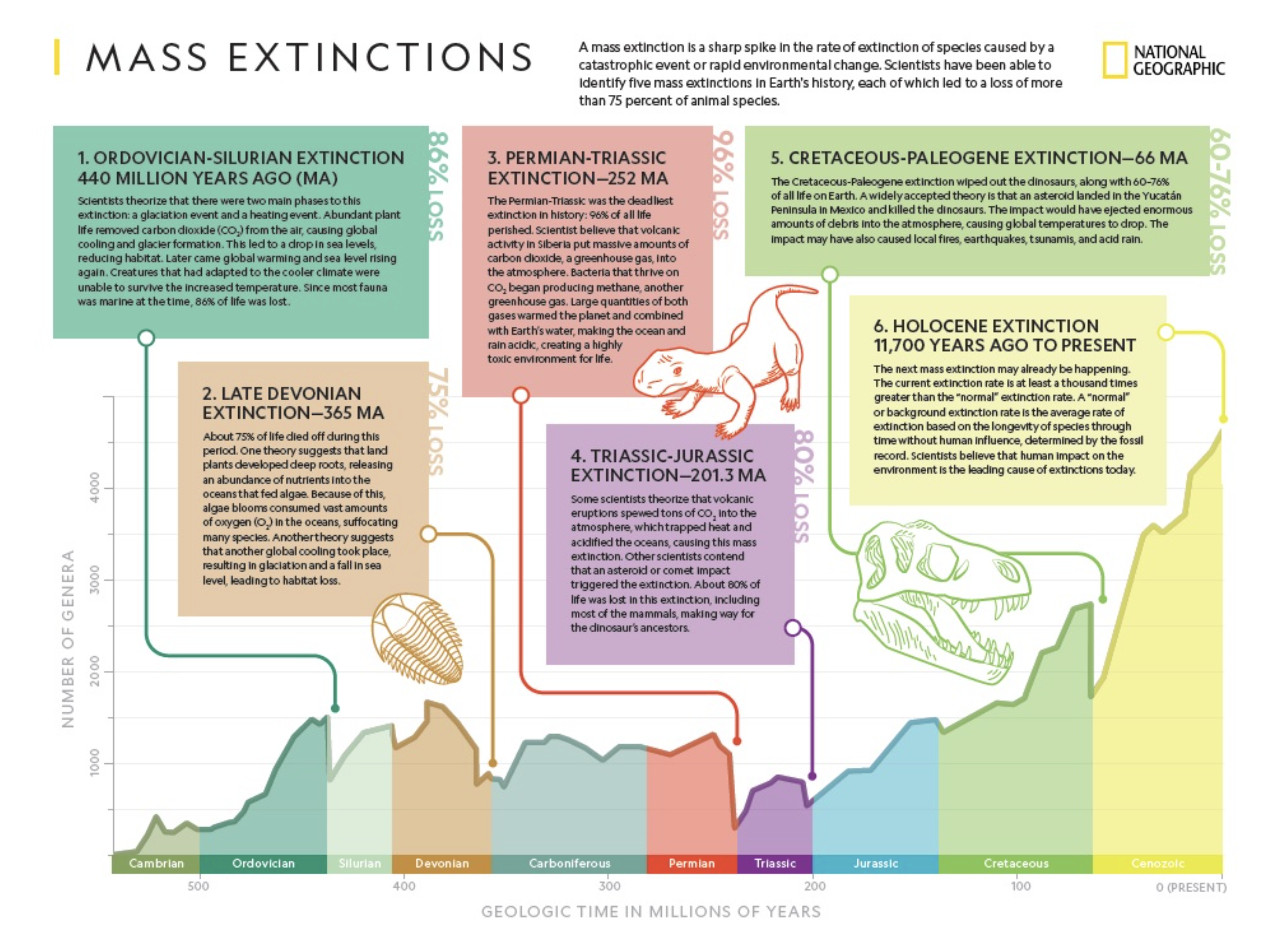
This may seem a rather dark projection of the future, but consider that over the millennia, after five mass extinctions and with the sixth mass extinction underway, diversity has always saved the world. Within that necessary diversity, it is the nurtured rarities, the outliers, the misfits and nonconformists that survived the destruction of the previous world. Each time, diversity made that possible. As though engrained in Nature’s world building.
.
Mass Extinctions (image by National Geographic)
.
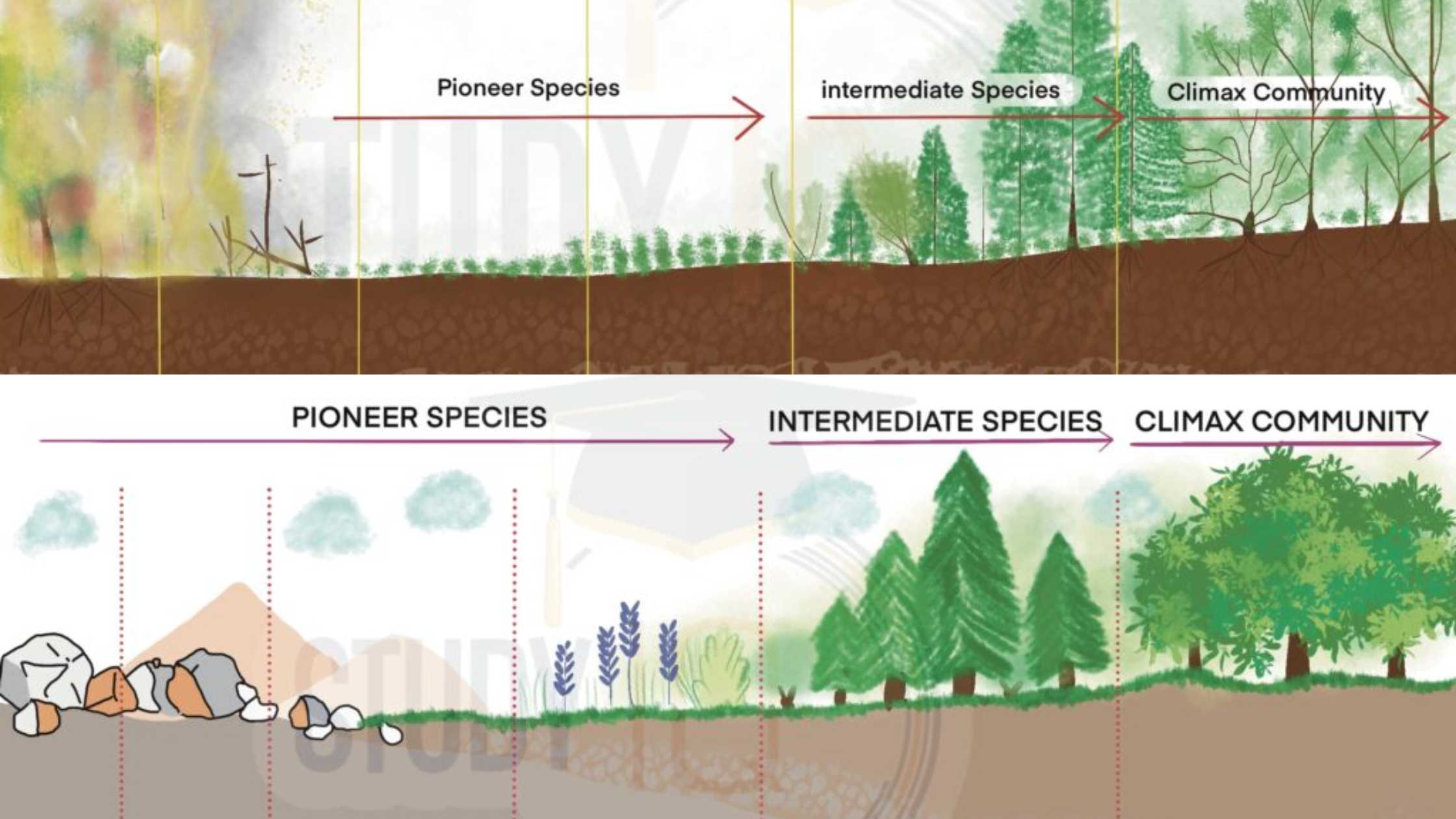
Ecologists call it ecological succession, others use the term “creative-destruction” to describe the recursive pattern of living and non-living things of the planet. Both describe how the oligarchs of an established climax ecosystem fail due to change or disturbance and are replaced by a previous rare misfit or immigrant better suited to the new environment.
.
Primary and secondary succession in two different ecosystems
.
I think AI is part of our succession. Our use of AI in all its forms will represent a diversity of reaction and action that represent our own diversity and potential to survive in a changing world. All to say: relax and embrace the outliers.
.
Writing in nature (photo by Nina Munteanu)
As William Gibson so famously said in 1993: The Future is already here; it’s just not evenly distributed. And maybe that’s a good thing…
.
So…
…To AI, or not to AI, that is the question: Whether ’tis nobler in the mind to suffer The slings and arrows of terrible writing, Or to take arms against a sea of scribbles And by opposing end them. To think—to write, No more; and by writing to say we end The heart-ache and the thousand natural shocks That tech is heir to: ’tis a consummation Devoutly to be wish’d. To think, to write; To write, perchance to create—ay, there’s the rub: For in that creation of unique thoughts what others may come, When we have shuffled off this genAI…
.
Writing in Nature (photo by Nina Munteanu)
.
Nina Munteanu is a Canadian ecologist / limnologist and novelist. She is co-editor of Europa SF and currently teaches writing courses at George Brown College and the University of Toronto. Visit www.ninamunteanu.ca for the latest on her books. Nina’s bilingual “La natura dell’acqua / The Way of Water” was published by Mincione Edizioni in Rome. Her non-fiction book “Water Is…” by Pixl Press (Vancouver) was selected by Margaret Atwood in the New York Times ‘Year in Reading’ and was chosen as the 2017 Summer Read by Water Canada. Her novel “A Diary in the Age of Water” was released by Inanna Publications (Toronto) in June 2020.
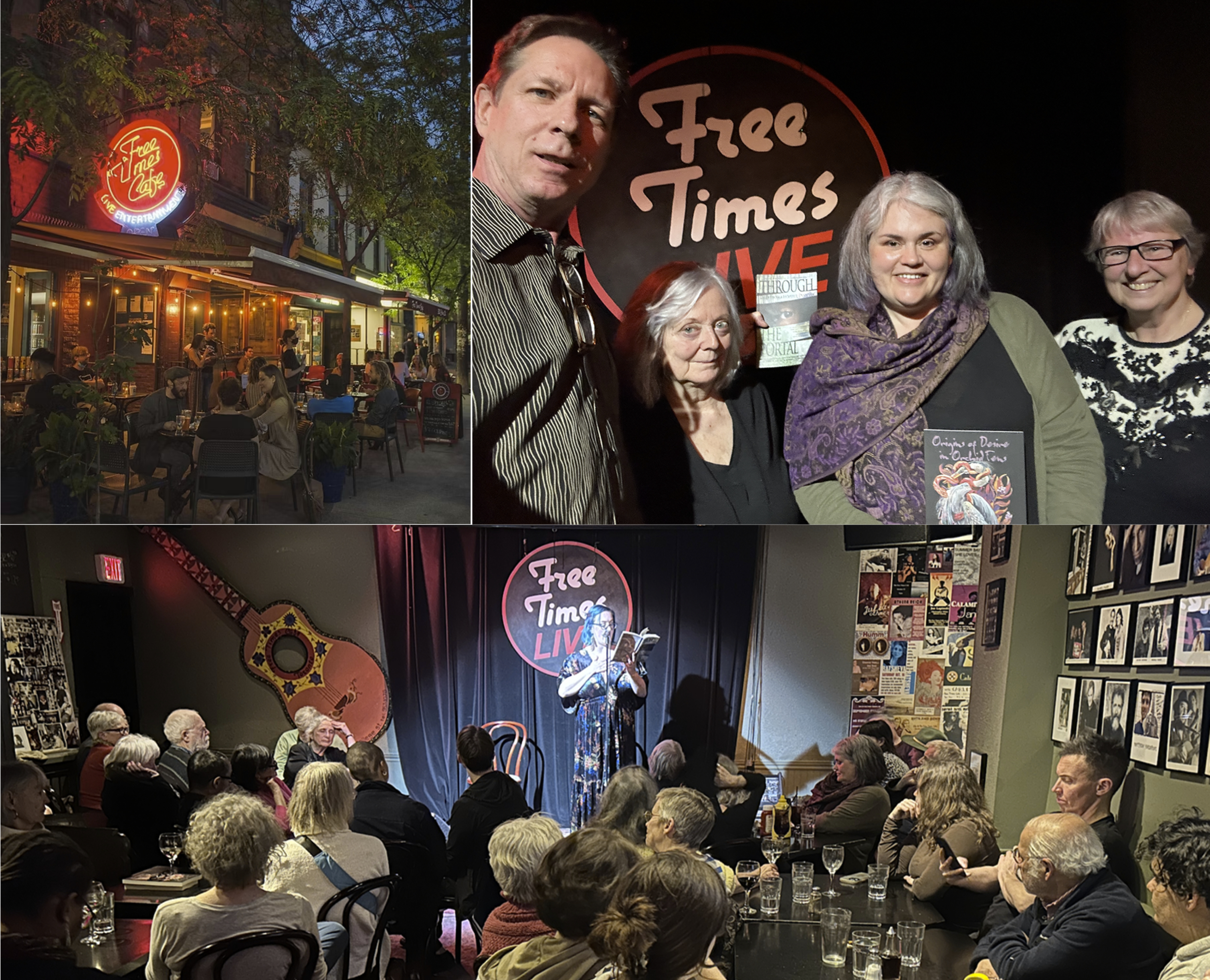
Free Times Cafe venue at night (photo by Ashish Pillai)
.
Appropriately, on the eve of Earthday, Exile Editions and Stelliform Press launched two eco-fiction books at one of Toronto’s oldest and established cultural/dining venues, Free Times Café, by Kensington Market. Both books were works of eco-fiction and climate fiction that focused on issues of environmental treatment and destruction. Both works focused on hope.
.
Top left: Free Times Cafe venue at night (photo by Nick Wons). Top right: Michael Callaghan of Exile Editions, Lynn Hutchinson Lee, Selena Middleton of Stelliform Press, Nina Munteanu. Bottom: Lynne Sargent reads from Portal.
.
Exile launched their anthology Through the Portal: Tales of a Hopeful Dystopia, edited by Lynn Hutchinson Lee and Nina Munteanu. It was their twentieth in a series; this one focused on hope in a climate-changing world that is progressively becoming more dystopic. Short stories and poems were read by authors.
.
Top left: Ursula Pflug reads from Portal. Top right: Michael Callaghan introduces the anthology. Bottom: Lynn Hutchinson Lee reads from her novel Origins of Desire in Orchid Fens.
.
Stelliform launched Origins of Desire in Orchid Fens a novel written by Lynn Hutchinson Lee, who read several excerpts of her novel.
Both works have received much praise.
.
.
Nina Munteanu is a Canadian ecologist / limnologist and novelist. She is co-editor of Europa SF and currently teaches writing courses at George Brown College and the University of Toronto. Visit www.ninamunteanu.ca for the latest on her books. Nina’s bilingual “La natura dell’acqua / The Way of Water” was published by Mincione Edizioni in Rome. Her non-fiction book “Water Is…” by Pixl Press (Vancouver) was selected by Margaret Atwood in the New York Times ‘Year in Reading’ and was chosen as the 2017 Summer Read by Water Canada. Her novel “A Diary in the Age of Water” was released by Inanna Publications (Toronto) in June 2020.
Script Lichen on a white birch tree, Trent Forest, ON (photo by Nina Munteanu)
I’m an ecologist and limnologist (someone who studies water systems). But I’m a writer too. I write novels and short stories and lots of articles on nature and science for various magazines including my own sites. I walk almost daily in the local forests and by the river near my place and write about my adventures there. So, when I encountered lichens that ‘write’ I was more than intrigued. What? You don’t believe that lichens can write? Well, read on…
Lichens that Write
Script Lichen on a poplar tree; A. showing grey-green thallus on poplar bark; B. close up showing the squiggly apothecia or fruiting bodies, Trent Nature Sanctuary, ON (photo by Nina Munteanu)
.
It was a warmish day in early fall as I was walking through the lowland mixed beech-hemlock stand in the Mark S. Burnham old-growth forest. I was studying an old beech tree and chanced on some interesting growths on a neighbouring young beech tree. It looked like pale green to grey paint and covered in black dots like bits of soot. I surmised that the powdery ‘paint’ was one of the crustose dust lichens (e.g., Lepraria or Lecanora) that like to colonize trees. On closer inspection, I saw that the black ‘dots’ were in fact dark squiggles, concentrated at the centre of the grey-white smear of leprose (powdery) lichen (the thallus). The dark squiggles, raised like tiny eskers, resembled hieroglyphs, strange symbols, scrawled there in cryptic code like the poetry of shy forest sprites. My first thought was that these dark squiggles were a parasitic fungus or some insect egg infestation on the crustose patch of grey-green lichen; the latter was a stretch considering the strange patterns of the markings.
When I returned home and did more research, I discovered that the mysterious markings were in fact the raised fruiting bodies (apothecia) of the Common Script Lichen (Graphis scripta), a pale green-grey crustose and leprose lichen that prefers smooth bark on which to write its stories.
Common Script Lichen (Graphis scripta)
The apothecia of Graphis scripta aren’t always visible, becoming more prominent in late fall and winter. I was lucky to see them. These lichens start rather inconspicuously as green-grey smears on a tree, eventually developing visible squiggles of apothecia (elongated, branched fruiting bodies) that may look like a pair of lips, called lirellae. During my winter excursions in several nearby forests I’ve seen the Common Script Lichen on the smooth bark of young red and sugar maple, white and yellow birch, alder and poplar trees.
.
Script Lichen colonizing A. sugar maple, B. yellow birch, and C. white birch, Trent Forest, ON (photos by Nina Munteanu)
There are many species of Script Lichen in the Graphis genus. Wikipedia lists a few hundred of them, most with squiggly apothecia. Other literary lichens include the Scribble Lichens (e.g., Opegrapha and Alyxoria), Comma Lichens (e.g., Chrysothrix, Arthonia, Arthothelium), Asterisk Lichens (Arthonia) and the Dot Lichens (e.g. Arthonia or Micarea) which should be named Period Lichens, if you ask me.
Script Lichen colonizing a young poplar tree and displaying ‘mosaic’ of darker lining where thalli meet, Trent Forest, ON (photo by Nina Munteanu)
.
But here’s the thing.
While Graphis scripta is busy colonizing maple or poplar bark, another lichen is busy growing on it! Graphis scripta is a common host to the lichenicolous Arthonia graphidicola, a lichen without a thallus whose apothecia (fruiting bodies), which resemble G. scripta apothecia, colonize the host thallus then erupt through the host’s thallus—somewhat like the alien in Alien, though without the devastating mess left behind (as in a dead eviscerated human). The apothecia of A. graphidicola, which appear as rounded, many-sided, or elongated structures, are difficult to distinguish from the host’s own apothecia, which is bizarre and reminds me of the cuckoo bird that parasitizes a wren’s nest by dropping off its look-a-like egg, which the wren looks after—often at the expense of its own.
I’m not making all this up; go see the British Lichen Society. Some researchers suggest that the apothecia of A. graphidicola are smaller and less elongated or elaborate as those of G. scripta (check out the image below for comparison). This lichenicolous lichen may also show its presence by staining the thallus of its host pink. I may have witnessed that before I learned about this interesting tell.
.
Apothecia of Arthonia graphidicola, shown at top centre, and larger and more elongated Graphis scripta apothecia, shown at bottom centre (photo by iNaturalist)
.
A lichenicolous lichen is basically a lichen that grows on or in another lichen. Diederich et al. (2018) estimated over 2,000 species worldwide of lichenicolous fungi—many that evolve into lichen once they colonize a host—known to live on lichens as host-specific parasites, pathogens, saprotrophs and commensals. Lichenicolous lichens are considered a subset of this group with a few hundred species recognized so far. According to Knudsen (2013) lichenicolous lichen have a two-stage cycle. Many start as juvenile non-lichenized fungal parasites which then develop into a lichen by stealing an algal partner from the host lichen. More on this delightful process in another article.
Nimis et al. (2024) suggest that at least some lichenicolous lichen are not true “parasites”, as they are often called, but gather their algal partners (photobionts), which have already adapted to local ecological conditions, from their hosts, and eventually develop an independent thallus.
So, in the end, I may have been right after all in thinking the black marks were a fungal parasite. They still might be! I’m reminded of Augustus De Morgan’s famous ditty about fleas and thought I would adapt it for lichens:
Big lichen have little lichen upon their backs to mine them, and little lichen have lesser lichen, and so ad infinitum.
Bark Scribble Lichen (Alyxoria varia)
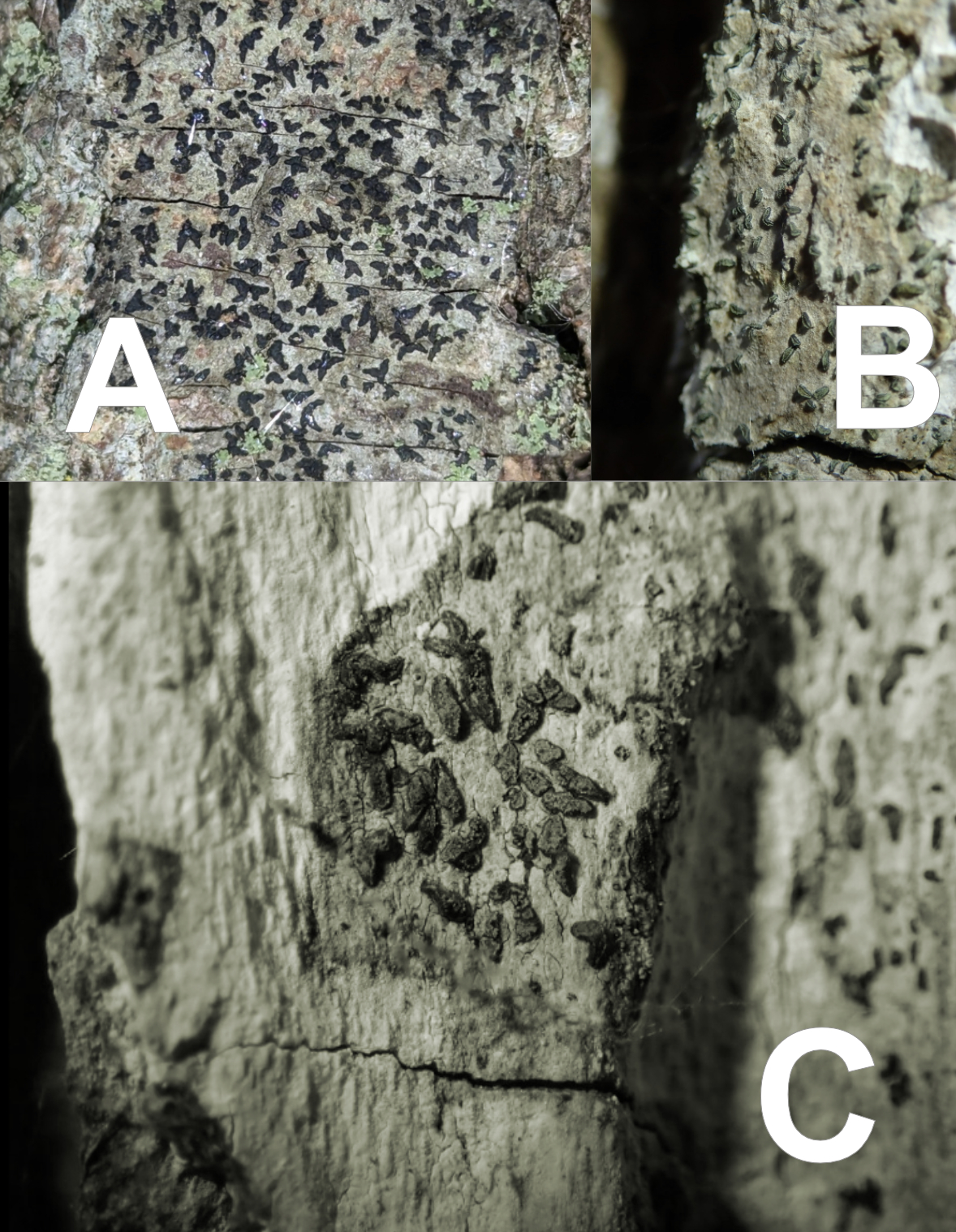
Bark Scribble on bark of deciduous tree (A. and B. photos by Jurga Motiejunaite; C. by William Van Hamessen in iNaturalist.org)
.
Another writing lichen is the Bark Scribble, Alyxoria varia, previously classified in the genus Opegrapha. The site iNaturalist.org tells us that Alyxoria varia “is thought to represent a complex of species with uncertain phylogenetic placement.” All to say that the jury isn’t out yet and it may change its name again. Its common name, scribble lichen, refers to the form of its ascomata (fruiting bodies) that are long or short, sometimes branched with blackened walls and bases. The thallus of Bark Scribble is hidden mostly within the bark itself. Fungi of Great Britain and Ireland tell us that this writing lichen is most frequently found on the shaded neutral to basic rough bark, especially of oak, maple and elm. I spotted what I think is this lichen on an old maple tree in a mixed forest.
.
Sugar maple tree bark with ‘specks’ (apothecia) of Bark Scribble, Mark S. Burnham Forest, ON (photo by Nina Munteanu)
Bark Scribble Lichen (Alyxoria varia) on the bark of an old maple tree, Trent Forest, ON (photo by Nina Munteanu)
.
Lichens that Punctuate
Lichens don’t just write ‘words’; they also punctuate. As with word-use there are numerous commas (comma Llchen), periods (button and dot lichen) and even asterisks (asterisk lichen). Some lichens even map. Those I’ve encountered are included below.
.
Frosted Comma Lichen (Chrysothrix caesia)
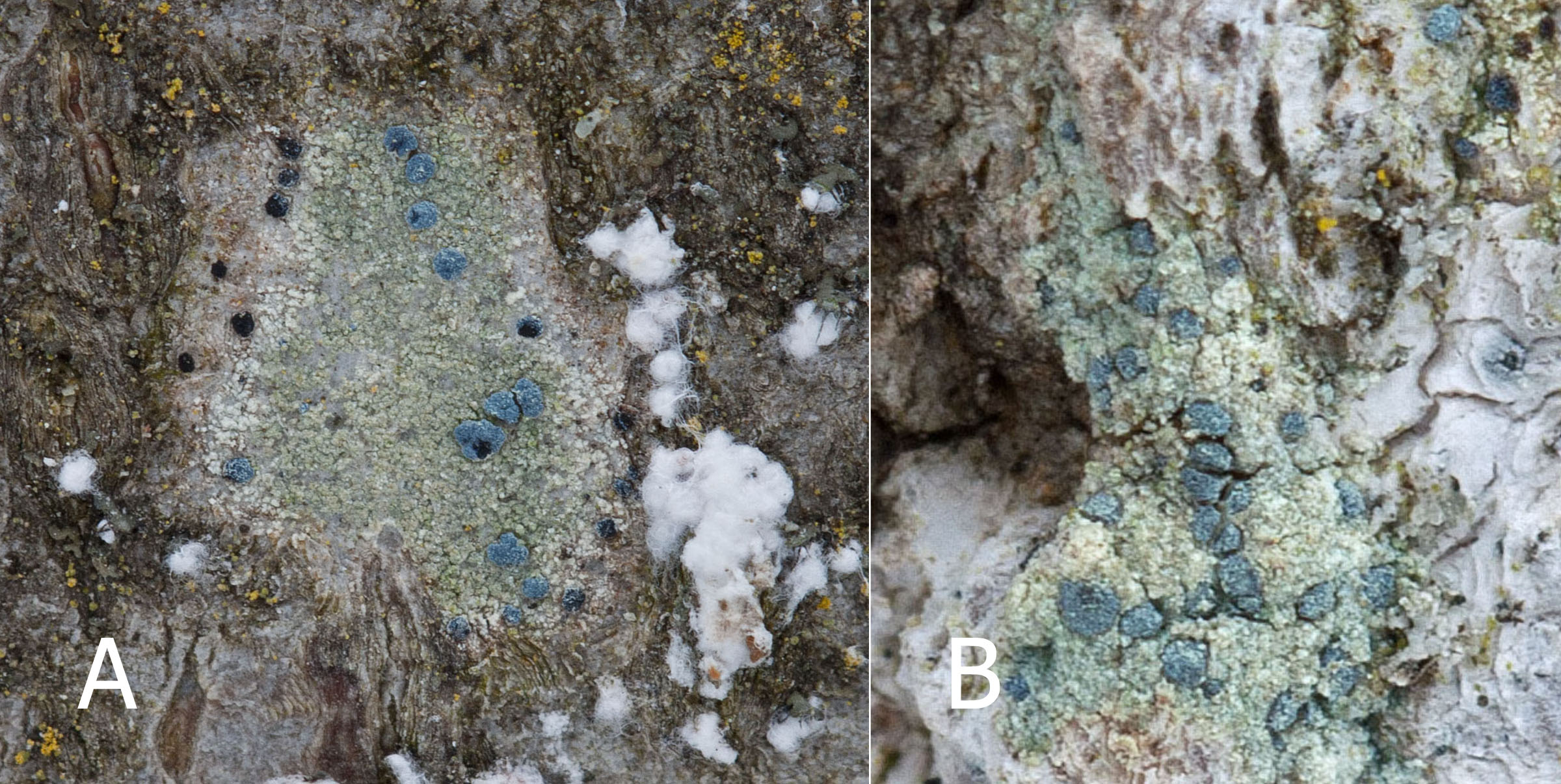
Two views of Frosted Comma Lichen, A. on a poplar tree and B. on a birch tree, Trent Forest, ON (photos by Nina Munteanu)
.
I found this lichen growing on a young red maple in the Trent Forest in mid-winter. Known to prefer exposed bark near water, where I found it, this lichen forms a small dime- or quarter-sized whitish-to-pale-green-yellow granular thallus with ‘frosted’ pruinose blue fruiting bodies (called ascomata on this lichen). Apparently, it only fruits in winter, so I was seeing its best face. Its photobiont is a coccal green alga.
.
Aspen Comma Lichen (Arthonia patelluta)
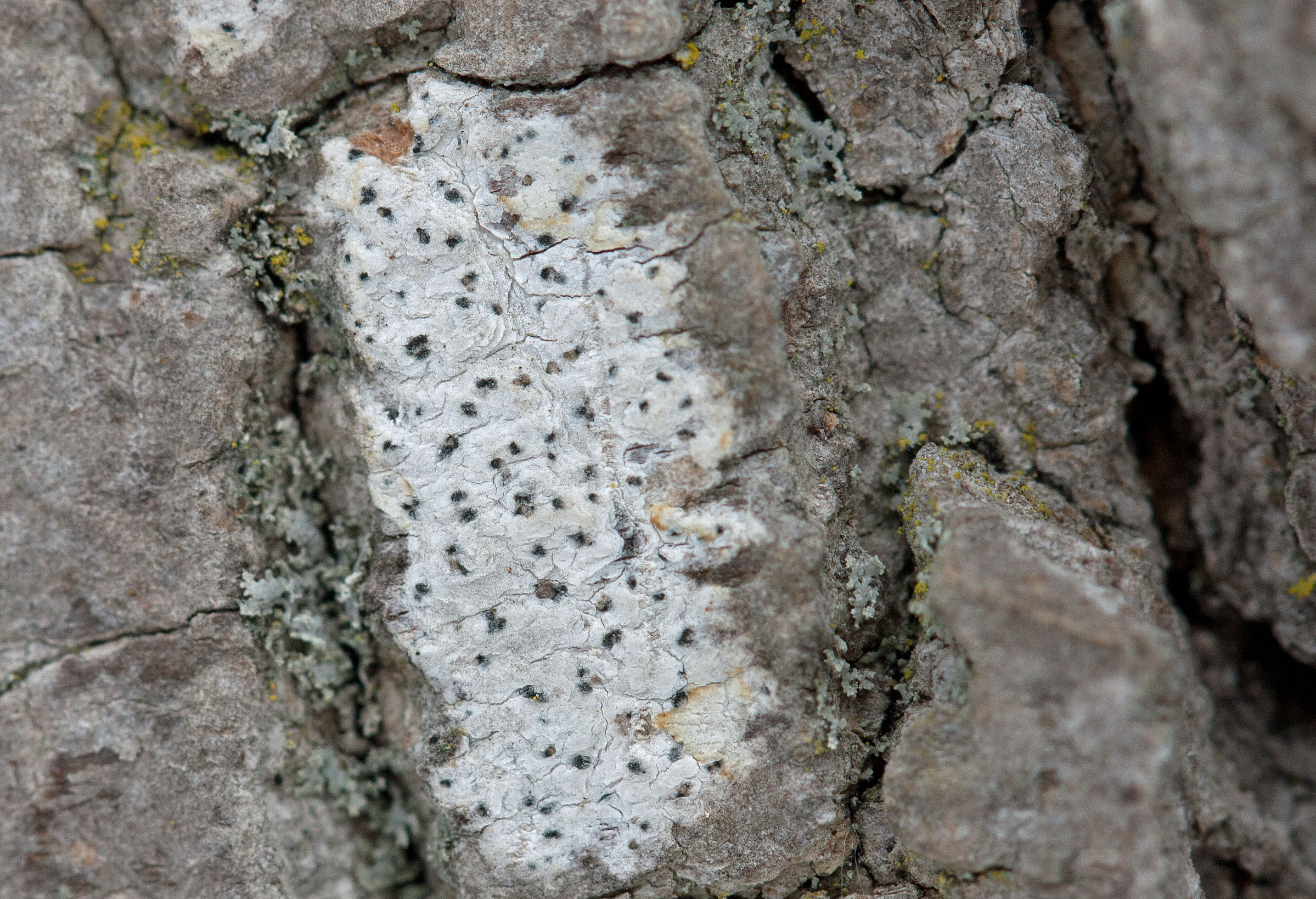
Aspen Comma Lichen (below the Common Script Lichen) on a Trembling Aspen tree, Trent Forest, ON (photo by Nina Munteanu)
.
I found the Aspen Comma Lichen on … you guessed it … an aspen tree, likely a Trembling Aspen (Populus tremuloides), in the Trent Forest. This crustose lichen had a powdery whitish thallus and black ‘frosted’ pruinose mostly roundish black dots that looked more like ‘periods’ than ‘commas’; these are the fruiting bodies (called ascomata on this lichen). The Aspen Comma Lichen prefers the smooth bark of younger poplar (Aspen) trees, forming a very thin grey-white thallus and rounded black apothecia.
.
Comma Lichen (Arthothelium spectabile)
Comma Lichen on a maple tree, Trent Forest, ON (photo by Nina Munteanu)
.
I found this comma lichen on several maple trees, mostly young ones. At least this comma lichen looks a little more like a ‘comma’, with a whitish powdery thallus on which are scattered tiny black not quite round ‘frosted’ epruinose fruiting bodies. This lichen is known to prefer the bark of hardwood trees. Italic 8.0 describes this lichenicolous species as having a crustose thallus, mostly endosubstratic (living inside the substrate whether bark or lichen), effuse, greyish white to greenish grey and with apothecia that are rounded or angular and black epruinose, slightly convex rough disk. Its algal partner is Trentepohlia.
.
Comma Lichen on an old maple tree, Trent Forest (photo by Nina Munteanu)
.
Asterisk Lichen (Arthonia radiata)
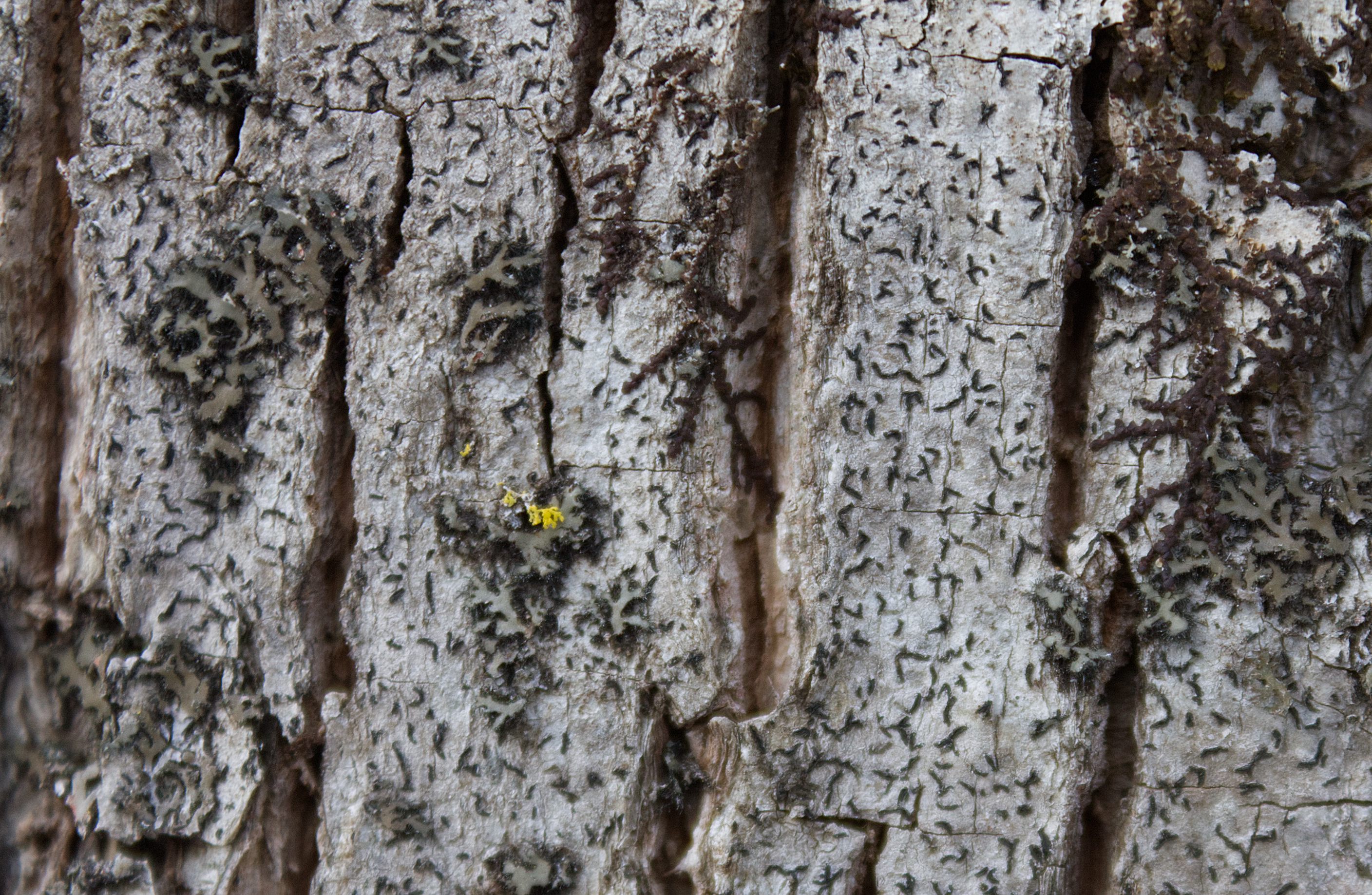
Asterick Lichen (Arthonia radiata) showing squiggly apothecia on a poplar tree, Trent Forest, ON (photo by Nina Munteanu)
.
The Asterisk Lichen, whose fruiting bodies in fact can resemble an asterisk, is a common and widespread corticolous lichen that prefers the smooth bark of many young trees and shrubs. I didn’t see this lichen but look forward to finding it. According to iNaturalist, Its pale white to grey thallus forms a mosaic-like pattern on the bark, often separated from its surroundings by a thin brown line, (see photo below); I also witnessed this with the Common Script Lichen (see image above in Script Lichen section). The tiny black ‘unfrosted’ apothecia (fruiting bodies) are star-like (stellate), round or elongated.
.
Asterisk Lichen (Arthonia radiata) showing branched squiggles of apothecia and brown border on a poplar tree, Trent Forest, ON (photo by Nina Munteanu)
.
Lichens that Map
Yellow Map Lichen (goes green when wet) on granite outcrop, Catchacoma Forest, ON (photo by Nina Munteanu)
.
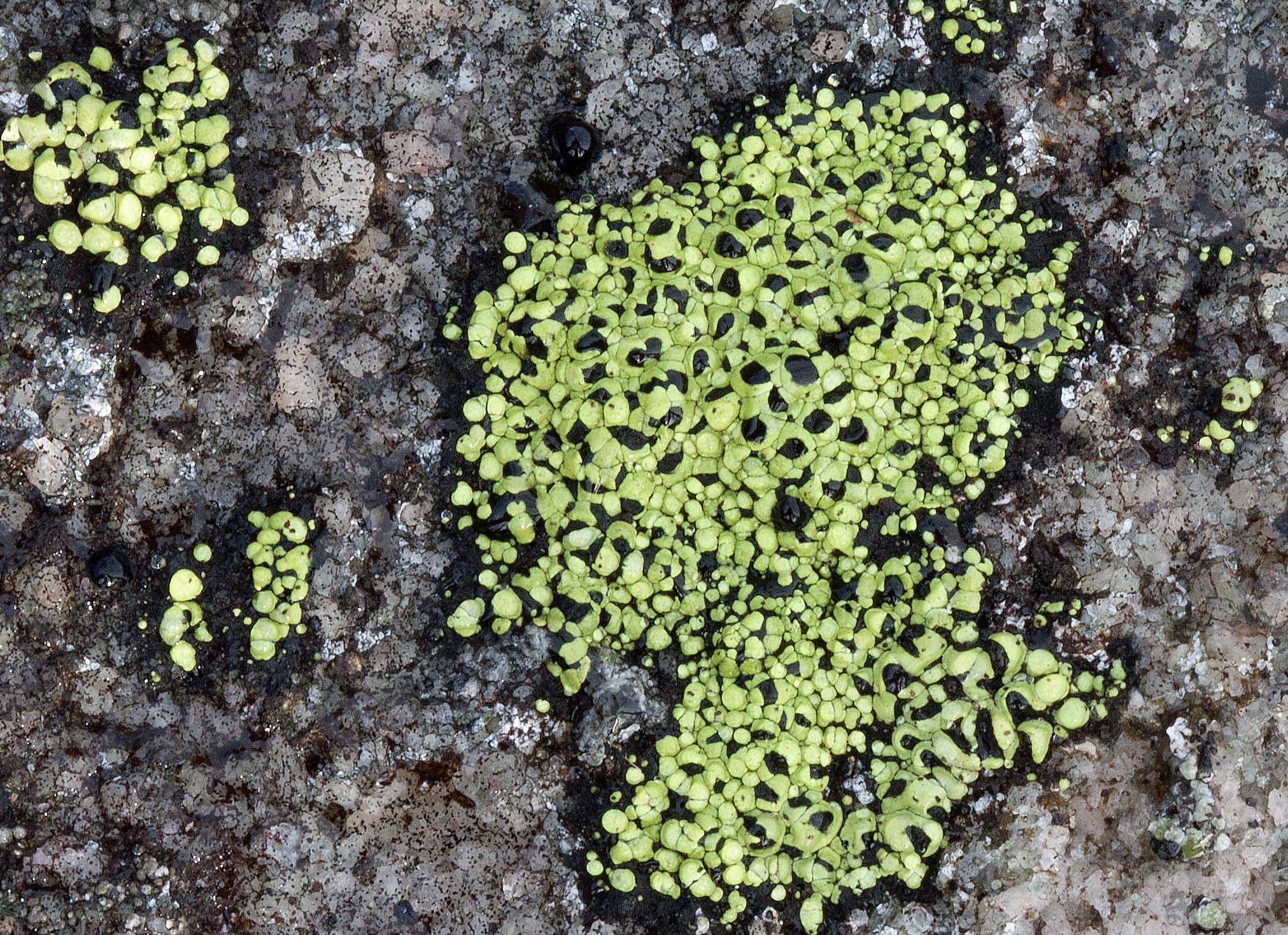
If we push the narrative to include illustration and mapping, we have the Yellow Map Lichen (Rhizocarpon geographica), a saxicolous lichen that I found colonizing a granite outcrop in the wetland of Catchacoma old-growth forest, Ontario. Yellow Map Lichenis normally found on silicate rocks. Lichenologist William Purvis describes them as “minute yellow green islands, which contain the pigment rhizocarpic acid, growing on a black layer lacking algae.” The black edging of the thallus is called the prothallus, a fungal layer that advances out and contains allelopathic chemicals to ward off competitors.
There is something strangely invigorating about the thought of lichen that express themselves. A kind of gestalt presence, a genius that defies Cartesian epistemology. Nature winking. The Natur und Kunst of Goethe’s naturphilosophie.
Patches of Graphis scripta lichen on a young poplar tree, Trent Forest, ON (photo by Nina Munteanu)
“Nature! We are surrounded and embraced by her; powerless to separate ourselves from her, and powerless to penetrate beyond her … We live in her midst and know her not. She is incessantly speaking to us, but betrays not her secret. …She has always thought and always thinks; though not as man, but as Nature. …She loves herself, and her innumerable eyes and affections are fixed upon herself. She has divided herself that she may be her own delight. She causes an endless succession of new capacities for enjoyment to spring up, that her insatiable sympathy may be assuaged. …The spectacle of nature is always new, for she is always renewing the spectators. Life is her most exquisite invention; and death is her expert contrivance to get plenty of life.”
Johann Wolfgang von Goethe
.
References:
Deiderich, P., JD. Lawrey, and D. Ertz. 2018. “The 2018 classification and checklist of lichenicolous fungi with 2000 non-lichenized, obligately lichenicolous taxa.” The Bryologist 121(3): 340-425.
Friedl, T. 1987. “Thallus development and phycobionts of the parasitic lichen Diploschistes muscorum.” Lichenologist 19(2): 183-191.
Knudsen, Kerry, John W. Sheard, Jana Kocourkova, and Helmut Mayrhofer. 2013. “A new lichenicolous lichen from Europe and western North America in the genus Dimelaena (Physciaceae).” The Bryologist 116(3): 257-262.
Nimis, Pier Luigi, Elena Pittao, Monica Caramia, Piero Pitacco, Stefano Martellos, and Lucia Muggia. 2024. “The ecology of lichenicolous lichens: a case-study in Italy.” MycoKeys 105: 253-266.
Purvis, William. 2000. “Lichens.” Natural History Museum, London. 112pp.
.
Nina Munteanu is a Canadian ecologist / limnologist and novelist. She is co-editor of Europa SF and currently teaches writing courses at George Brown College and the University of Toronto. Visit www.ninamunteanu.ca for the latest on her books. Nina’s bilingual “La natura dell’acqua / The Way of Water” was published by Mincione Edizioni in Rome. Her non-fiction book “Water Is…” by Pixl Press (Vancouver) was selected by Margaret Atwood in the New York Times ‘Year in Reading’ and was chosen as the 2017 Summer Read by Water Canada. Her novel “A Diary in the Age of Water” was released by Inanna Publications (Toronto) in June 2020.
I’ve selected ten TV series that have intrigued me, moved me, and stayed with me for various reasons that touch on: abuse of justice, including eco-justice and environmental abuse; technology use and abuse; and the effects and horrors of climate change.
Some are well known; others not so well known. All approach storytelling with a serious dedication to depth of character, important themes, realistic world building, and excellent portrayal by actors. The world-building is extremely well done—in some cases rivalling Ridley Scott’s best—with convincing portrayals of worlds that are at times uncanny in their realism. Worlds that reflect story from an expansive landscape to the mundane minutiae of daily life: like the cracked phone device of Detective Miller in The Expanse or the dirty fingernails of engineer Juliette Nichols in the Down Deep of Silo. Stories vary in their treatment of important themes from whimsical and often humorous ironies to dark and moody treatises on existential questions. In my opinion, these TV series rival the best movies out there, often reflecting large budgets (but not always) and a huge commitment by producers. The ten TV series I’ve selected here come from around the world: Brazil, Germany, France, Norway, Canada and the United States.
In Part 1, I look at five TV series that touch on ethical issues we are facing today; issues that reach far into existential questions of what it means to be human. These TV series explore synthetic biology, cloning and gene editing, political justice, and justice in space colonization and exploitation.
.
.
BIOHACKERS: When Synthetic Biology Meets Ethical Intrigue
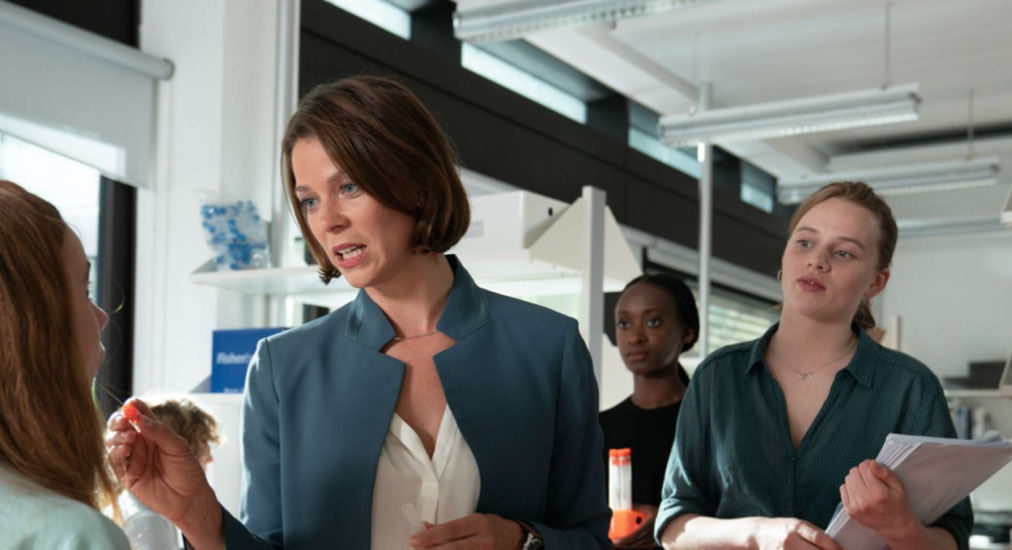
This fast-paced techno-thriller created by Christian Ditter has at the very centre of its intrigue synthetic biology. In the journal Science Dov Greenbaum describes this German TV series as “a fictional tale centred around the sociotechnological movement known as do-it-yourself (DIY) biology, in which amateurs, professionals, anarchists, and civic-minded citizens push the boundaries of mainstream biology.” The show centres on Mia Akerlund (played by Luna Wedler) a secretive med-student prowling for answers to the death of her twin brother and her antagonist, the enterprising Machiavellian and narcissistic Professor Tanja Lorenz (Jessica Schwarz). But the real star of the show is biohacking: human enhancement or augmentation to improve health, performance, or well-being. Biohacking ranges from efforts to improve brain function to faster weight loss. Some are relatively safe to try at home; others may pose health risks. Among others, the show features glow-in-the-dark mice, gene-modded weed, underwater pills that extend your ability to hold your breath, and payment microchips in your hand.
The series lent a critical realism to the story by using accurate world building, real sets and equipment from genetics labs and university settings. Dov Grenbaum’s article in the journal Scienceentitled “Biology’s brave new world” celebrates the show for its accurate representation of complex laboratory equipment and procedures and how it accurately represents the intricacies, motivations and ethical issues of biohacking from sophisticated big-business gene therapies to DIY homespun biology.
Biohackers opens with a disturbing scene of bioterrorism on a train headed to Berlin. All passengers suddenly choke and fall unconscious—except for young med student Mia Akerlund, who tries to help and fails. From that explosive flash-forward scene, the show jumps back to two weeks prior, as college freshman Mia settles into Freiburg University’s prestigious medical school, and betrays a particular interest in synthetic biology, biohacking and genome editing. We soon learn that she is obsessed by celebrated professor and geneticist/entrepreneur Tanja Lorenz (who runs a biopharmaceutical company and has an entire building dedicated to her research with huge neon logo of her name). Both women are connected by a dark secret to do with Mia’s twin brother who mysteriously died when still a boy. Mia quickly gains a position working for Lorenz, which plunges her into the dangerous intrigue of illegal genetic experiences.
.
Lorenz and her grad student Jasper discuss experiments in their sophisticated lab (image from Biochackers)
.
An early, rather enlightening, scene of the first episode is of Mia’s first introductory biology class given by celebrated gene therapy tycoon Professor Lorenz. Not only does the scene introduce the controversial subject of synthetic biology; it reveals a disturbing sense of what’s at stake and the danger of scientific hubris. Tall, svelte and confident in a smart haircut and tailored suit, Lorenz struts like a self-proclaimed goddess in front of a student-crowded lecture hall and preaches the benefits of synthetic biology. When she asks the class “What is synthetic biology?” and a student replies “with the help of synthetic biology, we can alter existing life forms or create new ones,” Lorenz prickles beyond her already frosty demeanor and impatiently berates the students for their lack of vision. She challenges them to think bigger: “Synthetic biology transforms us from creatures into creators. It’s not just the future of medicine, but of humankind. We can cease entire infections before the outbreak … We eliminate genetic disorders. But if we don’t do our work exceedingly well, it could end our species. It is on us to find a way; this is your future. Your responsibility. You are the creators of tomorrow. We make God obsolete…”
Science, academia and intrigue are skillfully woven in an intelligent mystery-thriller that not only represents science accurately but delivers commentary on the ethical and moral questions of this highly dynamic and rapidly evolving field of science.
Biohackers touches on several ethical and moral questions, such as genetic modification of stem cells, access to advanced gene therapies, and privacy and consent surrounding genomic data. Synthetic biologist Elsa Sotiriadis warns that, “this topic will likely become an ethical minefield in the coming years. On the one hand, we need large and diverse datasets to train medical AI and develop therapies. But on the other, there’s nothing as personal as your literal blueprint. Unlike stolen credit cards, you can’t change your genomic data. I like that Biohackers brings this up.”
.
Lorenz does a throat swab for DNA on a candidate in her experiment as Mia looks on (image from Biohackers)
Nina Munteanu is a Canadian ecologist / limnologist and novelist. She is co-editor of Europa SF and currently teaches writing courses at George Brown College and the University of Toronto. Visit www.ninamunteanu.ca for the latest on her books. Nina’s bilingual “La natura dell’acqua / The Way of Water” was published by Mincione Edizioni in Rome. Her non-fiction book “Water Is…” by Pixl Press (Vancouver) was selected by Margaret Atwood in the New York Times ‘Year in Reading’ and was chosen as the 2017 Summer Read by Water Canada. Her novel “A Diary in the Age of Water” was released by Inanna Publications (Toronto) in June 2020.
Art is the oar that guides us through dystopian rivers
Mary Woodbury, dragonfly.eco
.
Through the Portal: Tales from a Hopeful Dystopiathe ecofiction anthology edited by Lynn Hutchinson Lee and me and published December 2024 by Exile Editions, recently received another wonderful review from Mary Woodbury at dragonfly.eco. Here is an excerpt:
As the world teeters on disaster, what saves us ranges from graceful failure to full-fledged resistance and opposition. Through the Portal, an anthology of eco-fiction, offers 35 artful, provoking stories to propel us forward. The book serves to reconnect us with Nature in diverse storytelling, from cautionary tales to fiction that brims with hope while also helping us grieve what we’ve lost—described as solastalgia.
The anthology is a stunning collection of short stories and poetry that address our most existential concerns through metaphysical, epic, solarpunk, mythological, and contemporary perspectives. From landscape and weather transformations to stars, fairy tales, parking lots, mermaids, whales, storms, bees, and much more, the reader is treated to a journey of colorful narratives woven into a chronology: imagination, after the fall, and Earth hour.
Hopeful dystopias are so much more than an apparent oxymoron: they are in some fundamental way the spearhead of the future—and ironically often a celebration of human spirit by shining a light through the darkness of disaster. In Through the Portal: Tales from a Hopeful Dystopia, award-winning authors of speculative fiction Lynn Hutchinson Lee and Nina Munteanu present a collection that explores strange new terrains and startling social constructs, quiet morphing landscapes, dark and terrifying warnings, lush newly told folk and fairy tales.—Exile Editions
.
Nina Munteanu is a Canadian ecologist / limnologist and novelist. She is co-editor of Europa SF and currently teaches writing courses at George Brown College and the University of Toronto. Visit www.ninamunteanu.ca for the latest on her books. Nina’s bilingual “La natura dell’acqua / The Way of Water” was published by Mincione Edizioni in Rome. Her non-fiction book “Water Is…” by Pixl Press (Vancouver) was selected by Margaret Atwood in the New York Times ‘Year in Reading’ and was chosen as the 2017 Summer Read by Water Canada. Her novel “A Diary in the Age of Water” was released by Inanna Publications (Toronto) in June 2020.
Some years ago now, when the Dalai Lama was attending the 2009 Vancouver Peace Summit, he was quoted as saying, “The world will be saved by the western woman.”
This set the media buzzing on what His Holiness meant and—perhaps more importantly—how his statement resonates with us, and how his “call” affects the western woman.
Marianne Hughes, executive director of the Interaction Institute for Social Change (IISC), pondered the idea of the aging woman as hag (originally a representation of feminine power) and how it relates to the Dalai Lama’s statement on her blog. “I’m not entirely sure what [the Dalai Lama] meant,” said Hughes, “But I am wondering if when he travels across the globe and sees so many of our sisters impoverished and repressed he sees western women of all ages in a position to speak out for justice and to take on the responsibilities of “the hag”… to take loving care of the planet and its people.”
The original meaning of the word “hag” in Gaelic originally referred to a saint with great powers who was responsible for the land, the waters and the people. The term has since been distorted through patriarchal propaganda into something far less flattering and powerful. The “Hag” is currently being redefined as a strong, beautiful and ageless woman and has its similarities with “the Crone”, the third stage of a woman’s life and evolution from maiden to mother to crone. Postmenopausal women currently comprise the largest demographic group in America. With our increased lifespan, the ancient tripartite divisions of Maiden, Mother, and Crone are more meaningful in women’s lives as the Crone stage occupies one third of our lifespan. Moreover, our current Crone generation (those born in the forties and fifties) is the first in the history of humankind that can claim (and has already claimed) economic autonomy and power.
According to Dr. Linda E. Savage (author of “Reclaiming Goddess Sexuality”) “Each stage of a woman’s life is organized around what Goddess Cultures called the blood mysteries: menarche, (the first monthly flow of blood); childbirth, which is accompanied by blood from birthing; and menopause, when a woman’s “wise blood” remains inside her to give her wisdom. These are still powerful landmarks, which profoundly influence women’s lives. They function as psychological gateways to the change in consciousness required by each new stage.”
Savage describes the Crone as a powerful shamanic figure in society: “The developmental task of the Crone Stage is sharing wisdom. In Neolithic times, Crone women were the tribal matriarchs. Their heightened awareness of human nature yielded great insight and they were the source of wise counsel for important decisions. Spiritually, this is the Mastery phase. The Wise Woman teaches knowledge gained from her skills and life experience. It is a time of reaching into her spiritual depths, utilizing her powers of intuition, and finding meaning in her visions from the dream world. Some Crone women are masters of healing at the highest level. The Crone Stage of life, more than any other, is a time of giving back to society the cumulative wisdom of the years. Many women have an urge to speak out, to organize others, to take action. They have the energy to get more involved in the world-at-large. It is often Crone energy that leads to changes being made in society. As the Crone woman moves further into her life path she feels the urge to teach others and to cultivate her passions. It can be the most productive time in womens’ lives.”
Crone energy isn’t necessarily limited to Crones. It is an energy that may be carried by anyone at any age. Ariane de Bonvoisin, writing for the Huffington Post, made the following observation:
“Most people I meet have a new fear—the fear of not being relevant, the fear of not making a difference, the fear of working on things that don’t really matter in the important times of transition we live in. We’re hungry to be part of making things better. We want to create, we want to do what we love again and find our voice. We sense intuitively that we have a critical role to play in shaping the future of our world. And yet, so many of us give in to excuses of not being good enough, young enough, smart enough, wealthy enough, creative enough. We still play small, still give in to the ‘victim’ archetype. We still buy into what society’s beliefs are and put them right above our own. But we don’t really have time for these fears. If I could create a vaccine, instead of the flu one, I’d create one against fear. It’s what holds us back, every one of us, in every area of our life. And, while we’re holding back, time just moves on faster than ever. We are at a critical time in the evolution of our planet, a time where each one of us is waking up. We feel it.
Our intuition is growing more acute. Our inner microphone, as I like to call it, is getting harder and harder to turn off, so that we can’t just go along with our normal day. There’s a rise in consciousness where we feel more connected to others, a part of something bigger going on, where we each have a role to play. The most important thing isn’t to get the promotion, or stay in the marriage, or lose those 10 pounds. The most important thing is for us to remember who we are—why we are here—to do the inner work and find what are our ‘spiritual’ reasons for being on the planet. Yes we do have something great to accomplish. Now. At any age. Wherever we are.”
I found yet another revealing comment on her blog post that reminded me of another statement by His Holiness: that the next Dalai Lama might be a woman. The commentator told the story of the Buddhist Goddess Tara, who is highly revered in Tibet and was a most promising student of Buddhism. The monks told her she should come back as a man so that she could reincarnate and finish her spiritual journey and become a Buddha. She responded that male/female has no meaning since spiritual beings have perfectly balance aspects of both and in reality can incarnate as either gender. She made a resolution to always come back as a woman. I see this proclamation as a metaphor for choosing “feminine wisdom” or “Goddess Wisdom”, represented by the depth of forgiveness, kindness, tenderness, openness, vulnerability, tolerance, honor, integrity, sacred courage, humility, trust and faith.
So, why “the Western Woman”? We are not particularly known on the globe for these traits, nor does the western philosophy we espouse typically embrace these ideal traits. The western woman has more often been stereotyped (and vilified) with the following characteristics: vanity, pride, shallowness, self-centeredness, self-serving ambition, competitiveness, and pettiness.
While we can, in fact, accept these as our stereotypic weaknesses (it is part of our shallow consumer culture and capitalist model, after all), it is for this very reason that the western woman represents the salvation of the world. Not only do we have the means, as Marianne Hughes pointed out, but we are in the best position to convince.
We are the necessary paradox that spawns evolution. The darkness that sparks light. The chaos that creates stability. The inertia that initiates change.
Viburnam berries, ON (photo by Nina Munteanu)
.
Nina Munteanu is a Canadian ecologist / limnologist and novelist. She is co-editor of Europa SF and currently teaches writing courses at George Brown College and the University of Toronto. Visit www.ninamunteanu.ca for the latest on her books. Nina’s bilingual “La natura dell’acqua / The Way of Water” was published by Mincione Edizioni in Rome. Her non-fiction book “Water Is…” by Pixl Press(Vancouver) was selected by Margaret Atwood in the New York Times ‘Year in Reading’ and was chosen as the 2017 Summer Read by Water Canada. Her novel “A Diary in the Age of Water” was released by Inanna Publications (Toronto) in June 2020.
A recent favourable review of Through the Portal: Tales from a Hopeful Dystopia (edited by Lynn Hutchinson Lee and Nina Munteanu, released by Exile Editions) appeared in On Spec Magazine. The review by Lorina Stephens applauded the anthology for its genuine Canadian perspective, excellent writing, and “remarkable voice of many.”
.
Excerpts of the review follow below:
“What unfolds in these 35 stories is a quintessentially Canadian perspective on climate change, the probable dystopia of our own making, and how we as not only humans, but Canadians, may deal with the breakdown of environment and society, of how we construct mythology to interpret our experience.”
The stories, writes Stephens, “are filled with that remarkable pragmatism and resilience, little say a reverence for the land, which seems to be hardwired into a people who deal with constant change, and sometimes extremes, dictated by climate and geography.”
“…the quality of the writing from this enclave of writers is quite remarkable…I am steadfast in my praise of the skill of these writers, and the stories they’ve crafted, collected into this remarkable voice of many.”
“The stories manage that most adroit of transformations from genre fiction meant as escapism and consumable, to that other dimension which is provoking, illuminating, and exactly what good literary fiction should engender.”
Through the Portal has received other favourable reviews:
“Through the Portal offers intriguing and imaginative glimpses into the future.” – The Seaboard Review
“A stunning collection of short stories and poetry that address our most existential concerns through metaphysical, epic, solarpunk, mythological, and contemporary perspectives.” – dragonfly.eco.
Nina Munteanu is a Canadian ecologist / limnologist and novelist. She is co-editor of Europa SF and currently teaches writing courses at George Brown College and the University of Toronto. Visit www.ninamunteanu.ca for the latest on her books. Nina’s bilingual “La natura dell’acqua / The Way of Water” was published by Mincione Edizioni in Rome. Her non-fiction book “Water Is…” by Pixl Press (Vancouver) was selected by Margaret Atwood in the New York Times ‘Year in Reading’ and was chosen as the 2017 Summer Read by Water Canada. Her novel “A Diary in the Age of Water” was released by Inanna Publications (Toronto) in June 2020.
My guest today is Calgary author Simon Rose, who has published nineteen novels for children and young adults, eight guides for writers, more than 100 nonfiction books, and many articles on a wide variety of topics. Today, we’re going to chat about his Shadowzone series, which was first published in 2017, with a second edition in 2025.
Nina: So, what’s the Shadowzone series all about?
Simon: The series involves the discovery of a grim dystopian version of Earth that’s ruled by a totalitarian dictatorship, the threat of a deadly virus, and a race against time to save the lives of millions. Without giving too much away, here’s a synopsis for each of the novels.
While watching intense flashes of lightning during a violent storm, Ben experiences mysterious and disturbing visions of another world, one that’s very different from his own. In the chain of events that follow, Ben encounters Charlie, a girl from a dark version of Earth, a planet doomed by the effects of environmental catastrophe, where the leaders will stop at nothing to complete their deadly mission.
On a doomed version of Earth, the sinister schemes of the Ministry are moving ever closer to completion, with dire consequences for the inhabitants of two worlds. For Ben and Charlie, an unlikely alliance, unexpected reunions, and the mysterious prophecy of the Chosen One offer a glimmer of hope, with the ever-present prospect of betrayal, as they embark on an unpredictable journey into the unknown.
In a dark parallel world, following attacks by its most determined opponents, the Ministry has been forced to change its plans. Yet the ruthless Director-General is prepared to sacrifice anyone to achieve an entirely new beginning, no matter what the cost. In a deadly race against time, as events spiral out of control, Ben and Charlie must risk their lives in a desperate attempt to save two worlds from destruction.
.
Nina: What inspired you to write these three books? What’s the story behind the story?
Simon: The original idea was about someone capturing mysterious images on a video camera of a person that no one else could see. It was around the time that a local hospital was about to be demolished. I imagined that my character was filming the event and captured the image of the person stepping seemingly unharmed from the rubble as the building came down.
For a while, that’s all I had, and it was one of those ideas that I was never sure would come to anything. It was early in my writing career, and I put it aside and worked on other stories, but I’d periodically add another element to the story about the camera and the mysterious individual. At one point, I decided that the person that the boy caught on film wasn’t a ghost but from another dimension or perhaps a parallel universe and they were attempting to contact him for some reason. I then began to add details of this other Earth and the reasons for the connection to our world, and it went from there. An initial concept involving kidnappings from hospitals didn’t quite work, so instead, and before the arrival of the recent pandemic, I developed the idea of a deadly virus, which was a good fit with the type of government running the other Earth. Once that was all in place, I was able to get to work.
Nina: Was it always going to be a series?
Simon: Shadowzone was originally only one novel, but once I’d finished it, I immediately realized that the story wasn’t over and that I need to write more. The final installment was written very quickly, and, in the process, I knew that I needed to expand the earlier sections too, so in the end I had a trilogy.
Nina: So of course, people need to read all three 🙂
Simon: You could certainly just read Shadowzone, but there’s a cliffhanger ending and hopefully most people will feel utterly compelled to read on and learn what happens next. Into The Web and Black Dawn also don’t make sense if you haven’t read the first book in the series. Taken together, it’s an exciting, fast paced adventure that I hope everyone will really enjoy.
Nina: So, is it a good idea for authors to write a series of books?
Simon: It can be, but only if you have enough material for multiple books. If readers are sufficiently interested in the story and the characters after completing the first installment, they’d usually like to read more. However, the story or theme has to be strong enough to warrant more adventures. The reader won’t appreciate a novel that’s overloaded with filler, just for the sake of creating a series, and might avoid any books by the same author in the future.
Nina: And you’re doing adaptations of the Shadowzone books for TV and movies, aren’t you?
Simon: Yes, I’ve created a synopsis for a three-season TV series based on the Shadowzone books. I’ve also created a script for the initial episode, based on the first novel in the series. The three books involve a dark parallel version of Earth, mysterious portals, and the threat of a deadly virus. The dystopian setting has proved popular over the years and will probably continue to appear on screen. There has been interest in the project from people involved in film and TV projects and I’m certainly open to working with others to bring this one to life.
I’ve also seen some TV shows recently in which although there were adult characters, the main ones were in their mid or late teens and the show could be watched and enjoyed by adults. The lead characters were the same age as those in the Shadowzone books and in the novels in my paranormal Flashback series. That encouraged me to work on adaptations of the stories for the screen, since it seemed that there might be a market for them. I’m continuing to work on further episodes for the first season of the Shadowzone TV series.
Nina: What are you currently working on?
Simon: I always have a few current projects and right now, along with the script adaptations, I’m working on another historical fantasy novel series, this time set in the early years of World War II. I’m also working on more books in the same genre as my previously published paranormal Flashback novels, a fantasy series, and a historical fiction novel. I also teach writing courses at the University of Calgary and am working with some authors in the Alexandra Writers Centre’s Author Development Program.
Anyone interested in keeping up to date with the projects that I’m working on is always welcome to subscribe to my monthly newsletter, which you can do at www.simon-rose.com.
Nina: You work with other authors looking to publish, don’t you?
Simon: Yes, I offer coaching, editing, consulting, and mentoring services for writers of novels, short stories, fiction, nonfiction, biographies, and in many other genres, plus do work with writers of scripts and screenplays. I’m a writing instructor and mentor at the University of Calgary and served as the Writer-in-Residence with the Canadian Authors Association. You can find details of some of the projects I’ve worked on with other authors, along with some references and recommendations, at www.simon-rose.com.
Nina: So where can people buy all the books in the Shadowzone series?
Simon: The books can be purchased at most of the usual places, as follows:

























 Nina Munteanu Writing Coach