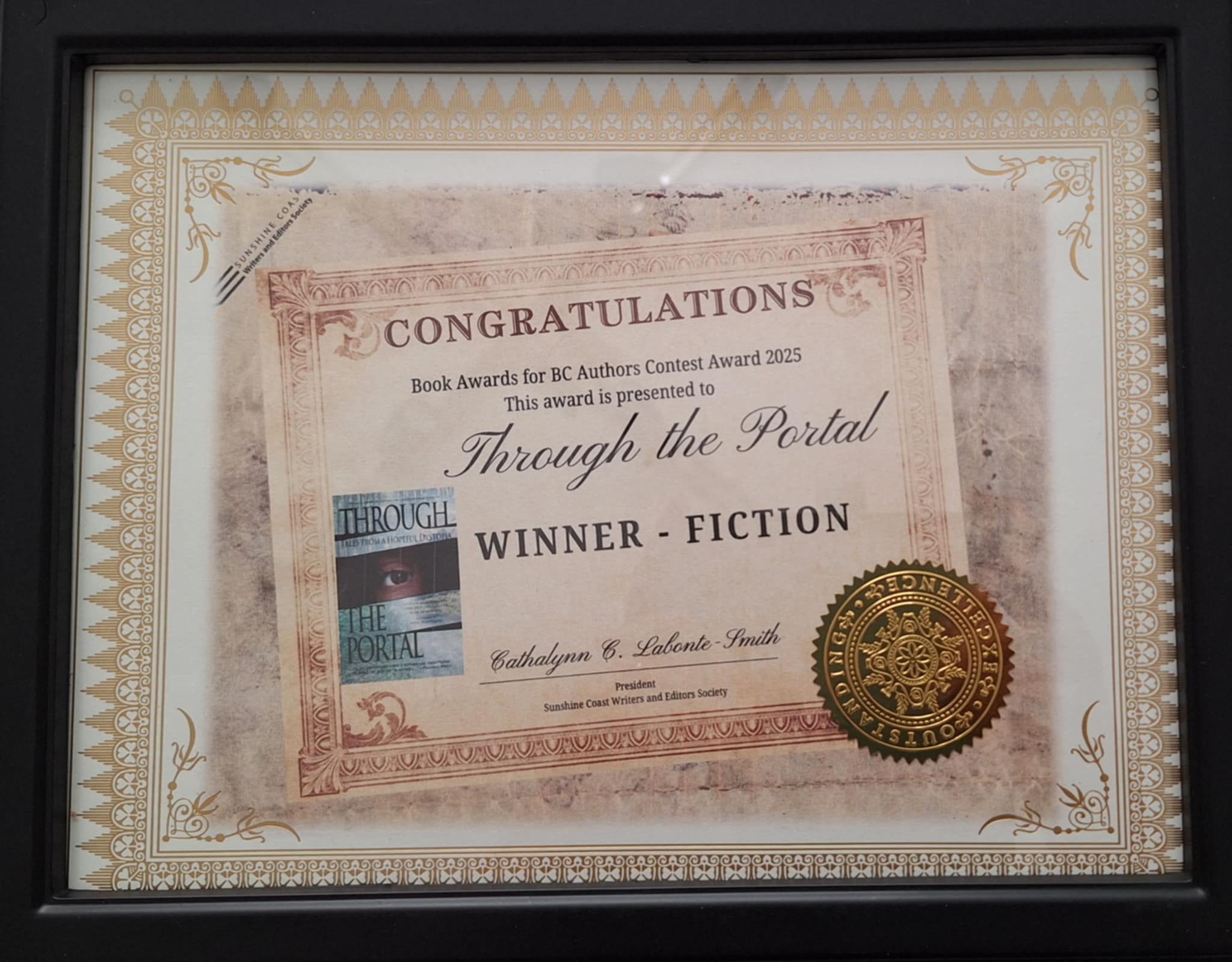
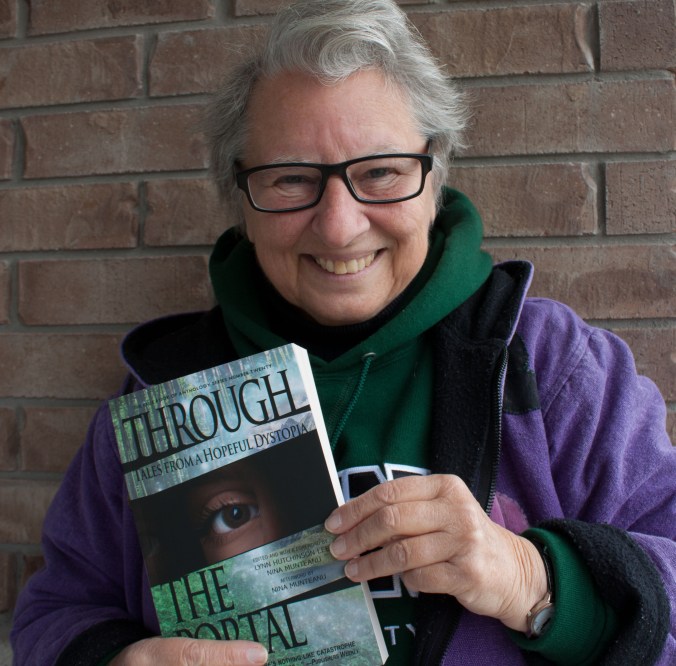
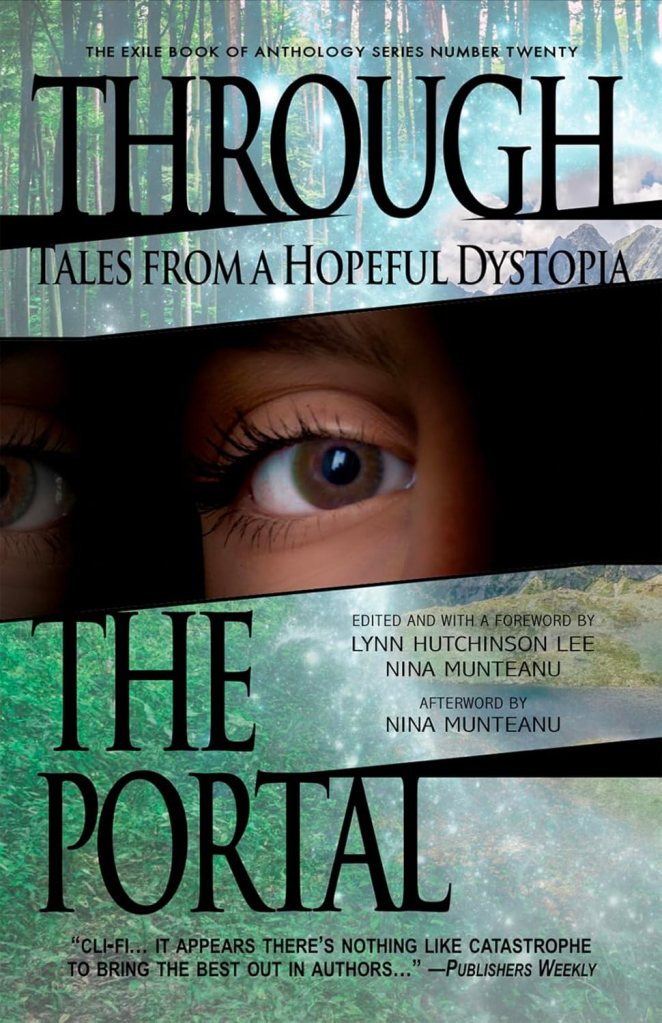
Given that several of the authors in the anthology are BC writers, Through the Portal: Tales from a Hopeful Dystopia(edited by Lynn Hutchinson Lee and Nina Munteanu) was considered and became part of the short list for fiction.
Post Script: On August 23, 2025, “Through the Portal” won the award for fiction. Here is what the judges said:
“Every story in here is a delicious short gem.”
“An ambitious project with an unusual slant of positivity in the face of a dystopian future has turned into a solid piece of work, incorporating a good range of stories, some very literary and abstract, others simple tales of destruction and regrowth or the hope of regrowth.”
“Characters and situations in the selected stories show optimism and the power of the human spirit across a wide array of possible near- and far-term futures.”
“Most of the situations are inherently believable based on what we know about climate, industry, and the powerful politics of denialism.”
.
Nina Munteanu is a Canadian ecologist / limnologist and novelist. She is co-editor of Europa SF and currently teaches writing courses at George Brown College and the University of Toronto. Visit www.ninamunteanu.ca for the latest on her books. Nina’s bilingual “La natura dell’acqua / The Way of Water” was published by Mincione Edizioni in Rome. Her non-fiction book “Water Is…” by Pixl Press (Vancouver) was selected by Margaret Atwood in the New York Times ‘Year in Reading’ and was chosen as the 2017 Summer Read by Water Canada. Her novel “A Diary in the Age of Water” was released by Inanna Publications (Toronto) in June 2020.
The lavender fields at Laveanne, ON (photo by Nina Munteanu)
.
Two years ago on this day, I tracked down Laveanne the lavender farm I’d heard about near Campbellcroft, Ontario. I’d seen the sign somewhere and just had to remind myself where that was. It was a sunny hot day in July and I was ready for adventure. My memory served me well and in no time I was driving east on Country Road 9 (Ganaraska Rd.) from Highway 28. The turn off to Gilmour Rd. came soon, well signed, and I was eventually driving a road that more resembled a lane until I arrived at the purple fields of the farm.
The 1.6 hectare family-run farm was started by partners Sabena and Gary in 2013 and now includes a lovely outdoor café and gift shop offering a wide diversity of lavender-related products. You can also buy a lavender plant from their nursery. When I asked her about the name they chose—Laveanne—for their enterprise, she explained: “lkjlkjlkjl”
I came to experience the lavender fields; so, relegating the café and gift shop for later, I set out into the undulating aromatic fields. As I inhaled a complex mixture of alluring mystery, I felt like I was entering some paysage Provençal painted by Annie Rivière, embraced by an arcane beauty of colour and scent and sound that conspired into an abiding sense of calm and joy.
The lavender fields at Laveanne: top left, rows of English lavender; top right, lavender labyrinth; bottom left, bumblebee in flight among lavender blooms; bottom right, Red Admiral butterfly settles on a lavender influorescence. (photos by Nina Munteanu)
.
The Smell of Lavender
The aroma was subtle yet lingered as I walked the four acres of lavender, along stubby rows of deep purple that snaked up and into a rolling horizon. It was early enough for many of the flowers to still be in bud, displaying an intensely deep purple. This colour grows brighter as more flowers burst into bloom later in the month, attracting more and more honeybees. I was in a kind of aromatic heaven, accompanied by the constant hum of honeybees buzzing from flower to flower and the occasional flutter of a Red Admiral butterfly, flashing its bright blue-orange wings as it stopped briefly to gorge on the lavender’s nectar. The scent was an airy symphony of sweet floral with herbal, camphor-like woodsy undertones. I detected the mildest hint of rosemary and coriander.
.
Chemistry of lavender smells (image by Andy Brunning / Compound Interest)
.
I’m told that lavender’s aroma comes mainly from linalool and linalyl acetate, both part of the terpene family. Linalool, which helps repel mosquitos, is widely used in fragrances as well as many personal care products and aromatherapies. This terpene also found in mint, cinnamon, coriander, and citrus fruits; it is the chief chemical responsible for the recognizable spicy floral smell of marijuana (the skunky smell of cannabis is from another terpene, myrcene). Linalool is of course known for its calming and soothing effects. It reduces stress and anxiety, helps relax the body and enhance sleep quality, and helps provide relief from pain and inflammation. Two other terpenes, 1,8-cineole and camphor add some hint of scent as well as having insecticidal and repellent properities (such as repelling moths). These terpenes are also found in rosemary, hence the hint of rosemary scent in lavender. I’m told that over 300 compounds exist in lavender’s essential oil, though not all contribute to aroma. Two enantiomers of linalool include the enantiomer licareol, responsible for the scent of lavender, and the enantiomer coriandrol, also found in coriander seed oils and sweet orange flowers.
.
Lavender Labyrinth
Reflection Labyrinth at Laveanne lavender farm, ON (photo by Nina Munteanu)
.
In the middle of the field I even found an over 30 metre diameter nine circuit modified Neo-Medieval labyrinth. Laveanne tells us that labyrinths are designed following sacred geometry and, unlike mazes that are built to challenge and confuse, are designed for meditation and relaxation. I walked the Reflection Labyrinth, among aromatic lavender and buzzing bees, feeling very content and relaxed.
I asked Sabena about what got them started farming lavender and she related the story of her son’s herb business “Grow Tasty”, which started a lavender collection. It went from a private collection to a larger enterprise after they saw a brochure from a lavender farm in Quebec and, after visiting the farm, were inspired to start their own lavender farm.
.
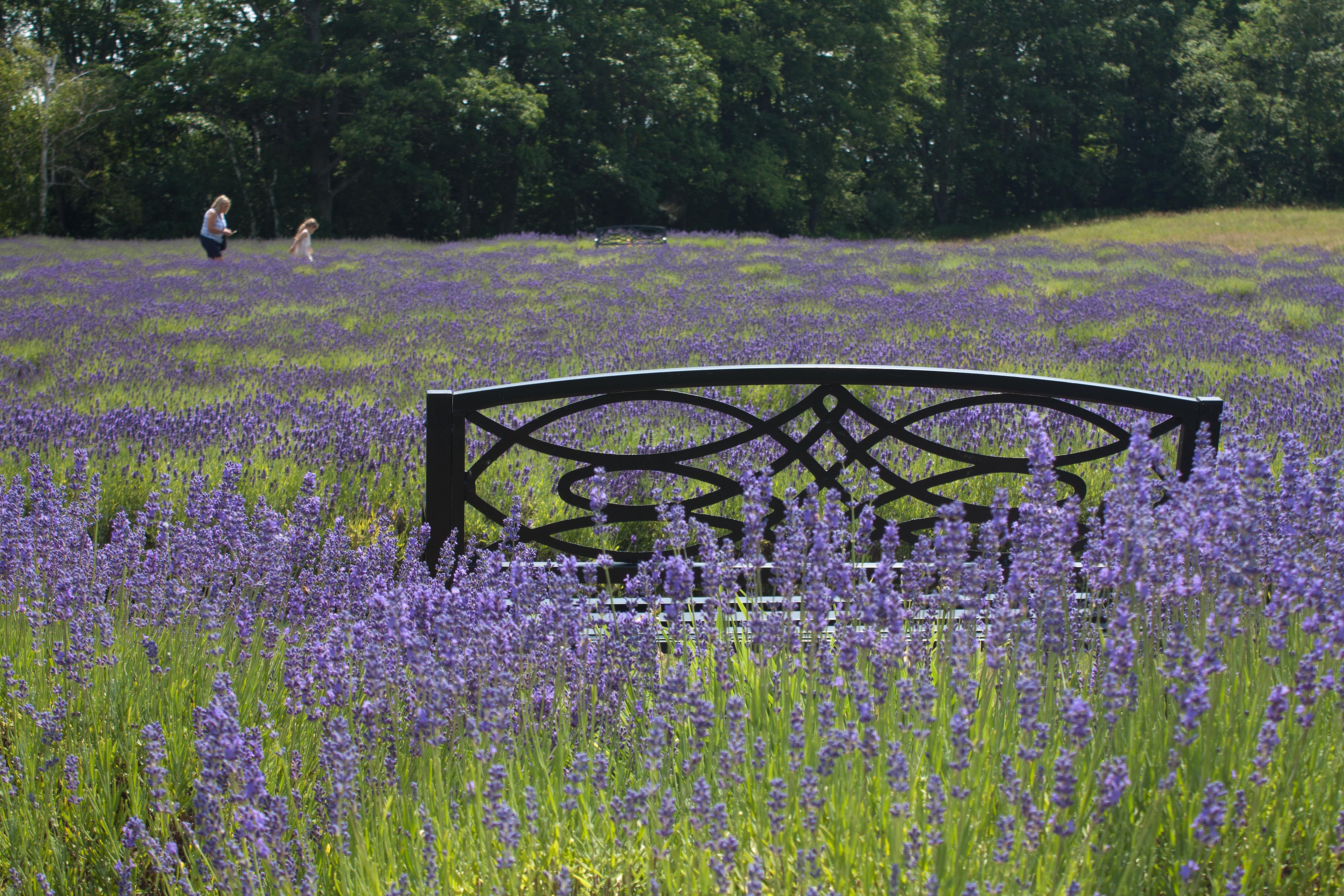
Bench faces the labyrinth at Laveanne lavender farm, ON (photo by Nina Munteanu)
.
Growing Lavender
Lavender is indigenous to the mountains of the Mediterranean region of western Europe. The plant spread rapidly to other parts of the world with travelers and by the sixteenth century, lavender was gracing English gardens. The first lavender plants made it to America with the European settlers. Lavender has been used medicinally for several millennia. It was used in ancient Egypt for mummification and Romans scented their public bathhouses with lavender. The name lavender comes from the Latin verb lavare—to wash.
High Country Gardens tells us that lavender “is known for its soothing, relaxing qualities and has been used to treat hyperactivity, insomnia, headaches, toothaches, sore joints, and rumbling digestive systems.” They add about early cleansing uses of lavender that “Early household use started with lavender strewn on the floors of castles and sick rooms as a disinfectant and deodorant. It was sold in bunches by street vendors and placed in linen closets as an insecticide to protect linens from moths.”
Sabena tells me that growing lavender successfully can be a challenge in Ontario. Given that lavender is not native to Ontario, it’s important to make it comfortable here. All species of lavender are sun lovers. These semi-woody and semi-evergreen perennials thrive in well-drained soil. They are drought tolerant and pest and disease resistant, but unless they are happy, they won’t do well. Summer pruning, after they have flowered, keeps them vigorous. They also need wind protection; being semi-evergreen makes them susceptible to windburn or drying out.
.
The Lavender Experience
At the outdoor café, which faces the fields, I treated myself to some lavender shortbread cookies with a refreshing lavender iced tea and sat to enjoy the glorious view.
Their shop offers a wonderful selection of lavender-infused products (from soaps to moisturizers, bath products to mists and essential oils), culinary goods such as spices and teas, as well as local jewelry and lavender treats. In the shop, I had to restrain myself, but managed to come away with a few prizes: homemade lavender shortbread cookies; lavender soap, and lavender essential oil.
.
A few lavender products from Laveanne (photo by Nina Munteanu)
.
Lavender Essential Oil
Leveanne’s essential oil is steam distilled from English lavender (Lavandula angustifolia), the preferred species for the oil’s healing properties and consists of a complex mixture of phytochemicals. Sebena mentions being inspired by René-Maurice Gattefossé, the father of modern aromatherapy, who widely experimented with English lavender oil in 1910 after he suffered severe burns in a laboratory experiment fire. Gattefossé found that the oil helped with so many body functions, the brain, nerves, paralysis, lethargy and rheumatism. He found it also effective in helping against stress, insomnia, headaches, acne, infections, and calming to skin irritations (burns, eczema). The oil also promotes healing and prevents scarring by stimulating the cells of a wound to regenerate more quickly. I keep my bottle handy and apply on wounds with good effect. Lavender essential oil is antibacterial, antifungal, antiseptic analgesic, anti-anxiety, antidepressant, calming, anti-inflammatory and an immune stimulant.
.
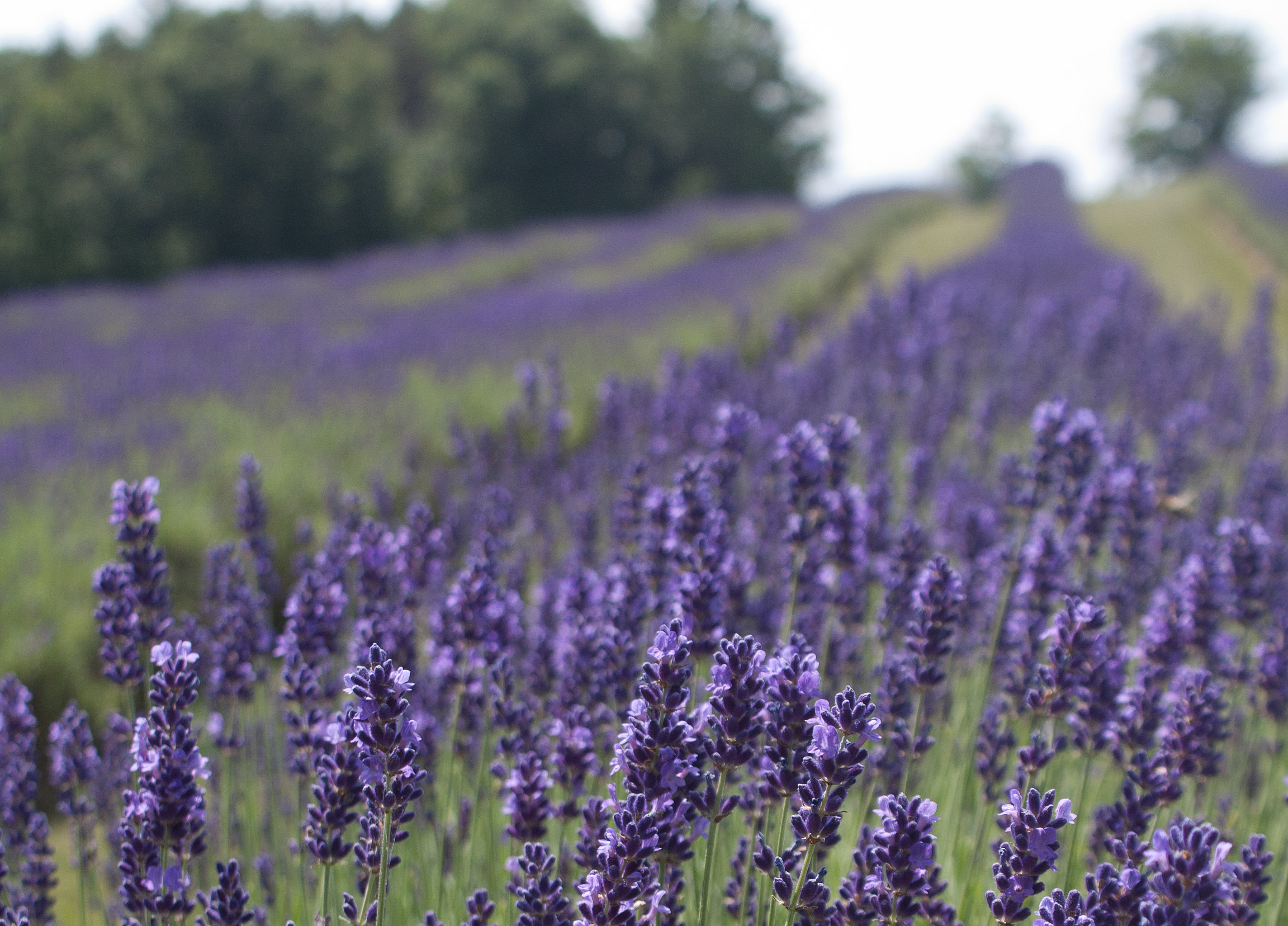
Lavender field, Laveanne, ON (photo by Nina Munteanu)
.
Nina Munteanu is a Canadian ecologist / limnologist and novelist. She is co-editor of Europa SF and currently teaches writing courses at George Brown College and the University of Toronto. Visit www.ninamunteanu.ca for the latest on her books. Nina’s bilingual “La natura dell’acqua / The Way of Water” was published by Mincione Edizioni in Rome. Her non-fiction book “Water Is…” by Pixl Press (Vancouver) was selected by Margaret Atwood in the New York Times ‘Year in Reading’ and was chosen as the 2017 Summer Read by Water Canada. Her novel “A Diary in the Age of Water” was released by Inanna Publications (Toronto) in June 2020.
Author Nina Munteanu holding copy of Tales of Science II (photo by Jane Raptor)
.
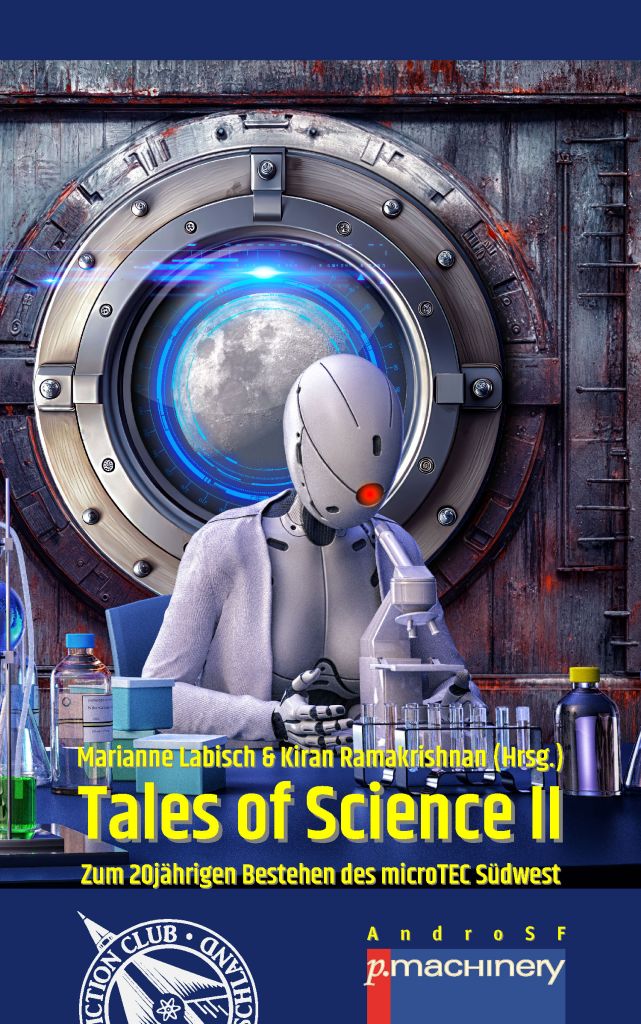
A few weeks ago, I looked into my mail box and found my contributor’s copy of “Tales of Science II” Anthology (edited by Marianne Labisch & Kiran Ramakrishnan) with my short story Die Polywasser-Gleichung (“The Polywater Equation”) inside. Beaming, I did a little dance because the anthology was marvelous looking! And it was all in German! (My mother is German, so I could actually read it; bonus!).
This science-fiction anthology, for which I was invited to contribute, collected seventeen short stories, all based on sound science. Here’s how the book jacket blurb (translated from German) describes the anthology:
.
It’s all just fiction. Someone made it up; it has nothing to do with reality, right? Well, in this anthology, there’s at least a grain of truth in all the stories, because scientific sponsors collaborated with authors. Here, they looked into the future based on current research What does such an experiment look like? See for yourself what the authors and scientific sponsors have come up with: about finding a way to communicate with out descendants, finding the ideal partner, conveying human emotions to an AI, strange water phenomena [that’s my story], unexpected research findings, lonely bots, and much more. The occasion for this experiment is the 20th anniversary of the microsystems technology cluster microTEC Südwest e. V.
(cover image and illustrations by Mario Franke and Uli Benkick)
.
In our initial correspondence, editor Marianne Labisch mentioned that they were “looking for short stories by scientists based on their research but ‘spun on’ to create a science fiction story;” she knew I was a limnologist and was hoping I would contribute something about water. I was glad to oblige her, having some ideas whirling in my head already. That is how “The Polywater Equation” (Die Polywasser-Gleichung) was born.
I’d been thinking of writing something that drew on my earlier research on patterns of colonization by periphyton (attached algae, mostly diatoms) in streams using concepts of fluid mechanics. Elements that worked themselves into the story and the main character, herself a limnologist, reflected some aspects of my own conflicts as a scientist interpreting algal and water data (you have to read the story to figure that out).
As I mentioned, the short story drew on my scientific work, which you can read about in the scientific journal Hydrobiologia. I was studying the community structure of periphyton (attached algae) that settled on surfaces in freshwater streams. My study involved placing glass slides in various locations in my control and experimental streams and in various orientations (parallel or facing the current), exposing them to colonizing algae. What I didn’t expect to see was that the community colonized the slides in a non-random way. What resulted was a scientific paper entitled “the effect of current on the distribution of diatoms settling on submerged glass slides.”
.
A. Distribution of diatoms on a submerged glass slide parallel to the current; treated diatom frustules are white on a dark background. B. diagram of water movement around a submerged glass slide showing laminar flow on the inner face and turbulent flow on the edges (micrograph photo and illustration by Nina Munteanu)
.
For more details of my work with periphyton, you can go to my article called Championing Change. How all this connects to the concept of polywater is something you need to read in the story itself.
.
The Phenomenon of Polywater
The phenomenon started well before the 1960s, with a 19th century theory by Lord Kelvin (for a detailed account see The Rise and Fall of Polywater in Distillations Magazine). Kelvin had found that individual water droplets evaporated faster than water in a bowl. He also noticed that water in a glass tube evaporated even more slowly. This suggested to Kelvin that the curvature of the water’s surface affected how quickly it evaporated.
.
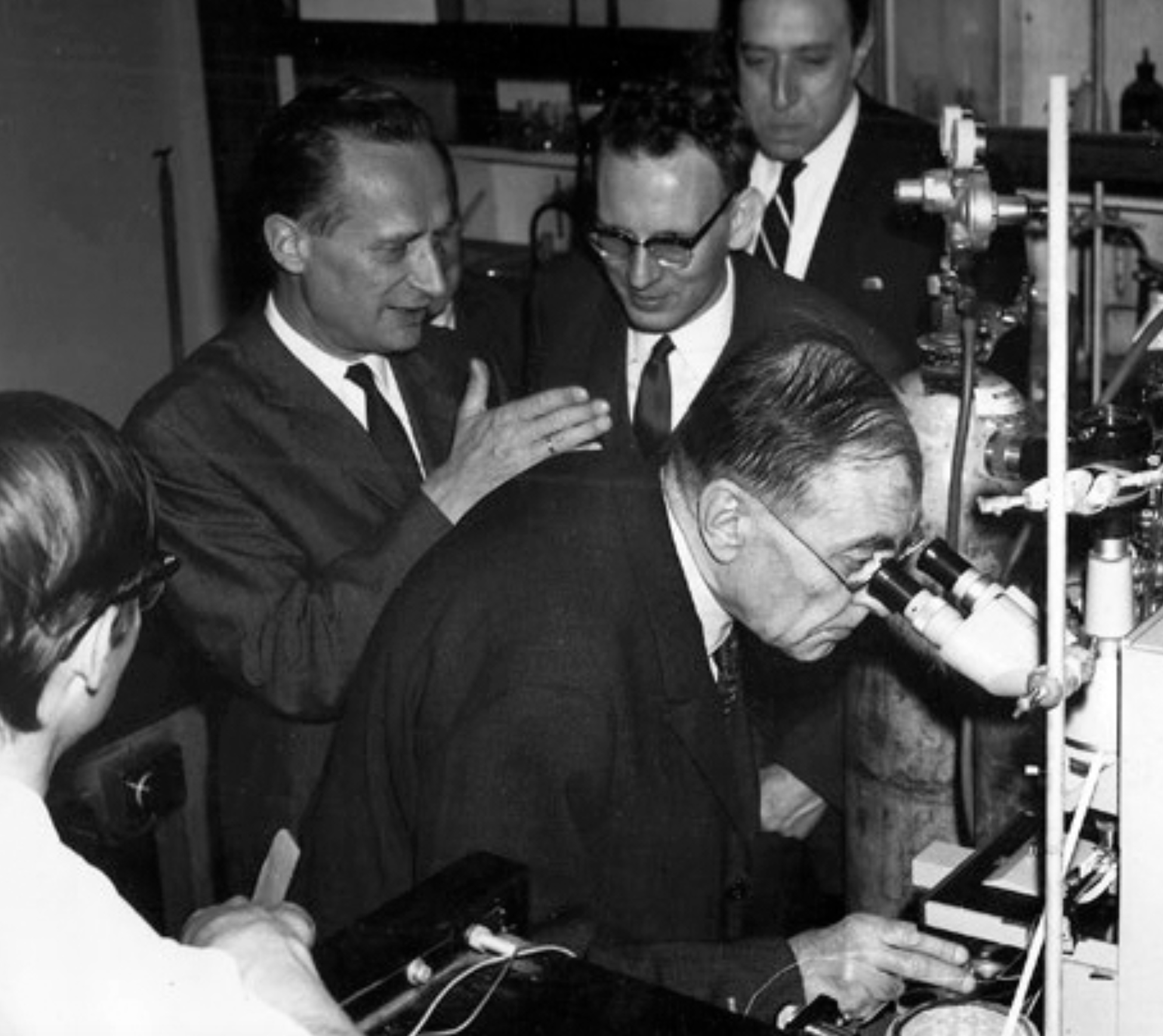
Soviet chemist Boris Deryagin peers through a microscope in his lab
.
In the 1960s, Nikolai Fedyakin picked up on Lord Kelvin’s work at the Kostroma Technological Institute and through careful experimentation, concluded that the liquid at the bottom of the glass tube was denser than ordinary water and published his findings. Boris Deryagin, director of the Institute of Physical Chemistry in Moscow, was intrigued and his team confirmed that the substance at the bottom of the glass tube was denser and thicker than ordinary water and had additional anomalous properties. This phase of water had a thick, gel-like consistency; it also had a higher stability, like a polymer, over bulk water. It demonstrated a lower freezing point, a higher boiling point, and much higher density and viscosity than ordinary water. It expanded more than ordinary water when heated and bent light differently. Deryagin became convinced that this “modified water” was the most thermodynamically stable form of water and that any water that came into contact with it would become modified as well. In 1966, Deryagin shared his work in a paper entitled “Effects of Lyophile Surfaces on the Properties of Boundary Liquid Films.” British scientist Brian Pethica confirmed Deryagin’s findings with his own experiments—calling the odd liquid “anomalous water”—and published in Nature. In 1969, Ellis Lippincott and colleagues published their work using spectroscopic evidence of this anomalous water, showing that it was arranged in a honeycomb-shaped network, making a polymer of water—and dubbed it “polywater.” Scientists proposed that instead of the weak Van der Waals forces that normally draw water molecules together, the molecules of ‘polywater’ were locked in place by stronger bonds, catalyzed somehow by the nature of the surface they were adjacent to.
.
Molecular structure of polywater
.
This sparked both excitement and fear in the scientific community, press and the public. Industrialists soon came up with ways to exploit this strange state of water such as an industrial lubricant or a way to desalinate seawater. Scientists further argued for the natural existence of ‘polywater’ in small quantities by suggesting that this form of water was responsible for the ability of winter wheat seeds to survive in frozen ground and how animals can lower their body temperature below zero degrees Celsius without freezing.
When one scientist discounted the phenomenon and blamed it on contamination by the experimenters’ own sweat, the significance of the results was abandoned in the Kuddelmuddel of scientific embarrassment. By 1973 ‘polywater’ was considered a joke and an example of ‘pathological science.’ This, despite earlier work by Henniker and Szent-Györgyi, which showed that water organized itself close to surfaces such as cell membranes. Forty years later Gerald Pollack at the University of Washington identified a fourth phase of water, an interfacial water zone that was more stable, more viscous and more ordered, and, according to biochemist Martin Chaplin of South Bank University, also hydrophobic, stiffer, more slippery and thermally more stable. How was this not polywater?
.
The Polywater Equation
In my story, which takes place in Berlin, 2045, retired limnologist Professor Engel grapples with a new catastrophic water phenomenon that looks suspiciously like the original 1960s polywater incident:
The first known case of polywater occurred on June 19, 2044 in Newark, United States. Housewife Doris Buchanan charged into the local Water Department office on Broad Street with a complaint that her faucet had clogged up with some kind of pollutant. She claimed that the faucet just coughed up a blob of gel that dangled like clear snot out of the spout and refused to drop. Where was her water? she demanded. She’d paid her bill. But when she showed them her small gel sample, there was only plain liquid water in her sample jar. They sent her home and logged the incident as a prank. But then over fifty turbines of the combined Niagara power plants in New York and Ontario ground to a halt as everything went to gel; a third of the state and province went dark. That was soon followed by a near disaster at the Pickering Nuclear Generating Station in Ajax, Ontario when the cooling water inside a reactor vessel gummed up, and the fuel rods—immersed in gel instead of cooling water—came dangerously close to overheating, with potentially catastrophic results. Luckily, the gel state didn’t last and all went back to normal again.
If you read German, you can pick up a copy of the anthology in Dussmanndas KulturKaufhaus or Thalia, both located in Berlin but also available through their online outlets. You’ll have to wait to read the English version; like polywater, it’s not out yet.
Henniker, J.C. 1949. “The depth of the surface zone of a liquid”. Rev. Mod. Phys. 21(2): 322–341.
Kelderman, Keene, et. al. 2022. “The Clean Water Act at 50: Promises Half Kept at the Half-Century Mark.” Environmental Integrity Project (EIP). March 17. 75pp.
Munteanu, N. & E. J. Maly, 1981. The effect of current on the distribution of diatoms settling on submerged glass slides. Hydrobiologia 78: 273–282.
Szent-Györgyi, A. 1960. “Introduction to a Supramolecular Biology.” Academic Press, New York. 135 pp.
Roemer, Stephen C., Kyle D. Hoagland, and James R. Rosowski. 1984. “Development of a freshwater periphyton community as influenced by diatom mucilages.” Can. J. Bot.62: 1799-1813.
Schwenk, Theodor. 1996. “Sensitive Chaos.” Rudolf Steiner Press, London. 232 pp.
Szent-Györgyi, A. 1960. “Introduction to a Supramolecular Biology.” Academic Press, New York. 135 pp.
Wilkens, Andreas, Michael Jacobi, Wolfram Schwenk. 2005. “Understanding Water”. Floris Books, Edinburgh. 107 pp.
.
Nina Munteanu is a Canadian ecologist / limnologist and novelist. She is co-editor of Europa SF and currently teaches writing courses at George Brown College and the University of Toronto. Visit www.ninamunteanu.ca for the latest on her books. Nina’s bilingual “La natura dell’acqua / The Way of Water” was published by Mincione Edizioni in Rome. Her non-fiction book “Water Is…” by Pixl Press (Vancouver) was selected by Margaret Atwood in the New York Times ‘Year in Reading’ and was chosen as the 2017 Summer Read by Water Canada. Her novel “A Diary in the Age of Water” was released by Inanna Publications (Toronto) in June 2020.
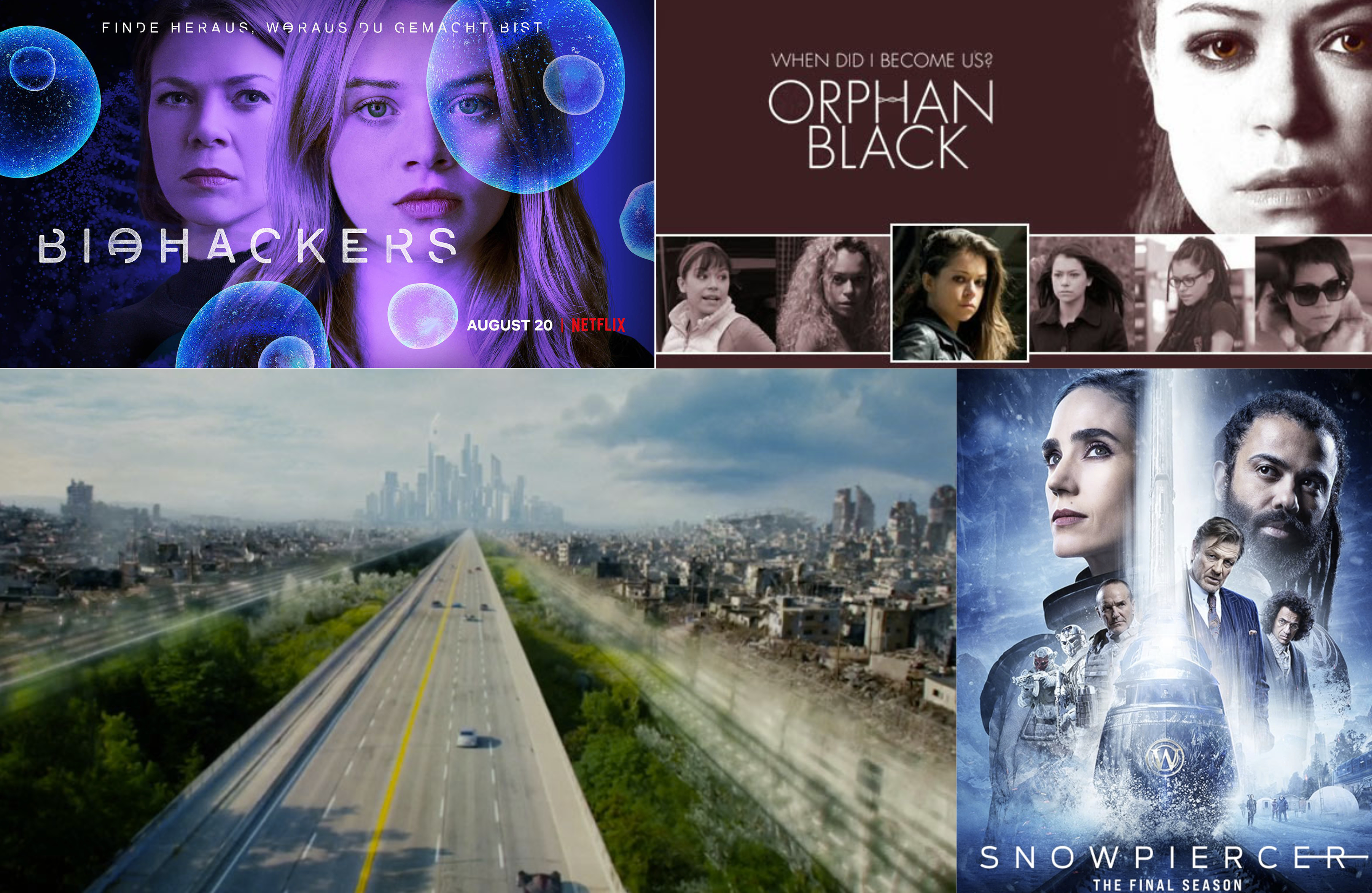
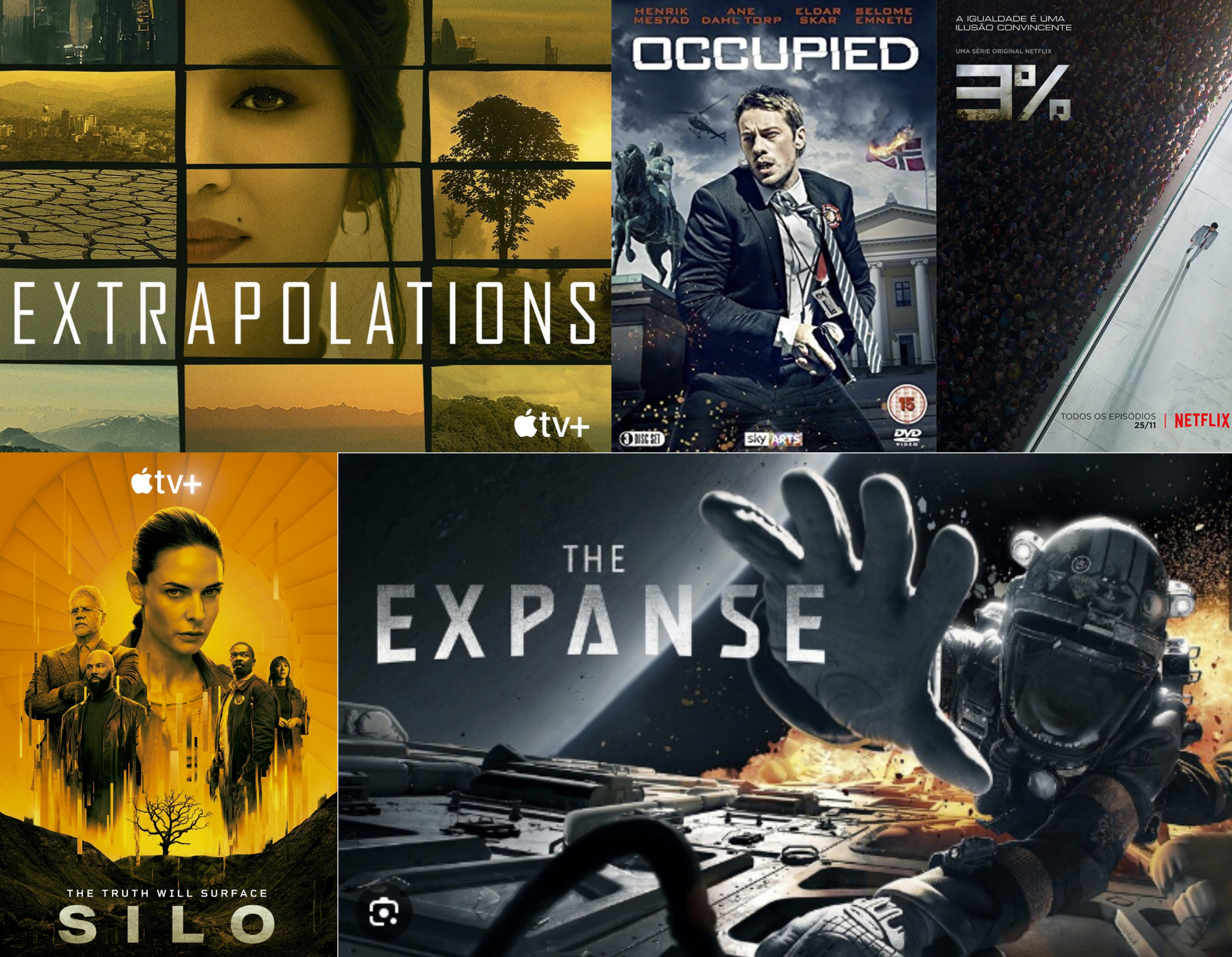
I’ve selected ten TV series that have intrigued me, moved me, and stayed with me for various reasons that touch on: abuse of justice, including eco-justice and environmental abuse; technology use and abuse; and the effects and horrors of climate change.
Some are well known; others not so well known. All approach storytelling with a serious dedication to depth of character, important themes, realistic world building, and excellent portrayal by actors. The world-building is extremely well done—in some cases rivalling Ridley Scott’s best—with convincing portrayals of worlds that are at times uncanny in their realism. Worlds that reflect story from an expansive landscape to the mundane minutiae of daily life: like the cracked phone device of Detective Miller in The Expanse or the dirty fingernails of engineer Juliette Nichols in the Down Deep of Silo. Stories vary in their treatment of important themes from whimsical and often humorous ironies to dark and moody treatises on existential questions. In my opinion, these TV series rival the best movies out there, often reflecting large budgets (but not always) and a huge commitment by producers. The ten TV series I’ve selected here come from around the world: Brazil, Germany, France, Norway, Canada and the United States.
In Part 1, I look at five TV series that touch on ethical issues we are facing today; issues that reach far into existential questions of what it means to be human. These TV series explore synthetic biology, cloning and gene editing, and justice in space colonization and exploitation.
This stylish and intelligent science fiction TV series is set 200 years in the future when humanity has colonized the moon, Mars and the Asteroid Belt to mine minerals and water. Humanity has split three ways culturally, ethnically and even biologically: Earth is currently run by the United Nations; Mars is an independent state, devoted to terraforming with high technology; and the Belt contains a diverse mix of mining colonies, settlers, workers and entrepreneurs. Belters’ physiology differ from their Earth or Mars cousins, given their existence in low gravity.
.
Ceres mining colony
.
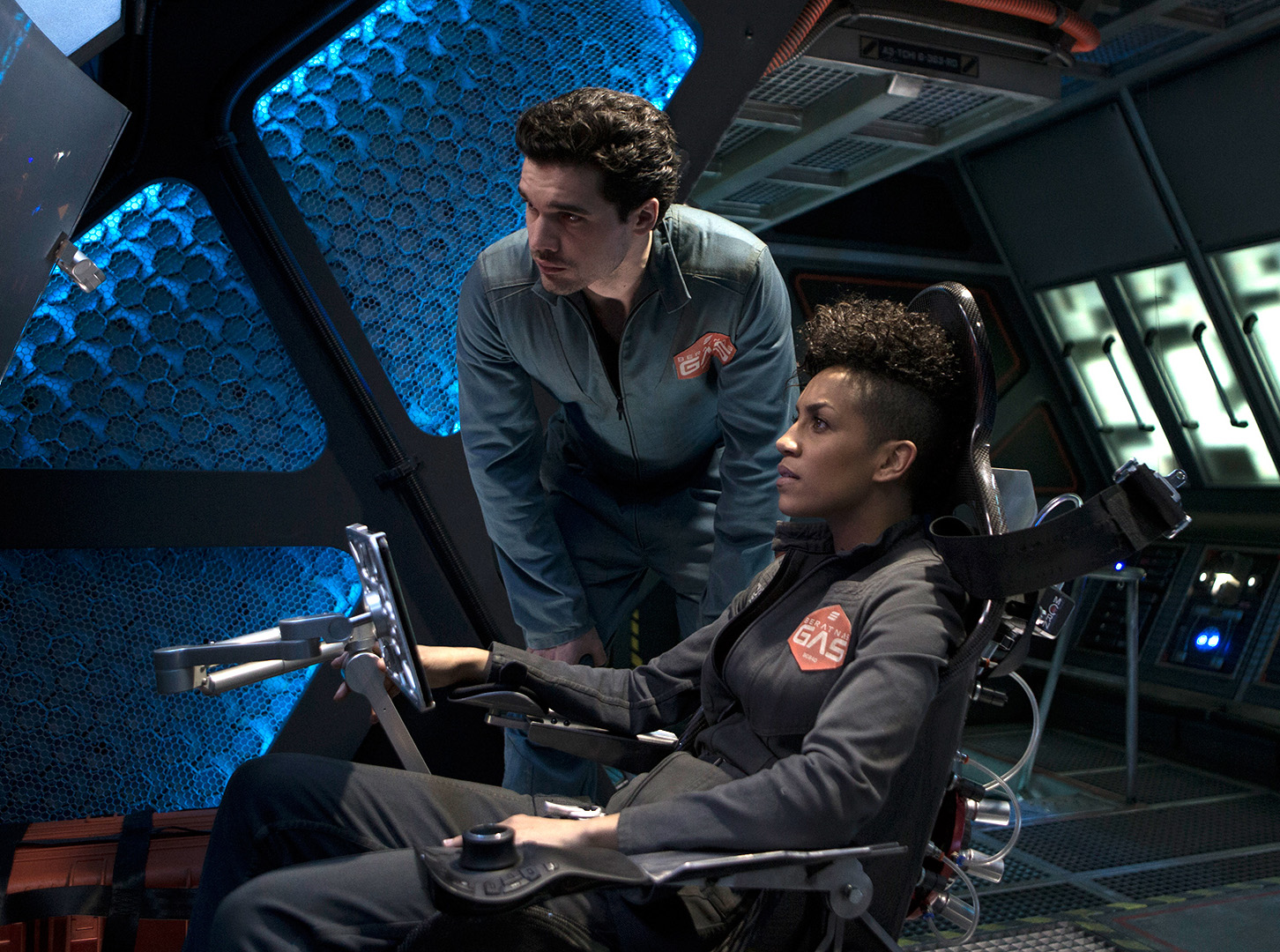
The series, based on novels by James S.A Corey (aka Daniel Abraham and Ty Franck) follows three main characters: U.N. Deputy Undersecretary Chrisjen Avasaraia (Shohreh Aghdashloo) on Earth; police detective Josephus Miller (Thomas Jane) a native of Ceres (in the Belt); and ship’s officer Jim Holden (Steven Strait) and his crew as each unravels a piece of a conspiracy that threatens peace in the solar system and the survival of humanity. The only person who may stand a chance of figuring out the big picture is Chrisjen Avasarala, a brilliant 23rd-century Machiavelli. She will stop at nothing in her search for the truth, including gravity torturing a Belter or playing her friends and contacts like chess pieces to find answers. Chrisjen is a complex and paradoxical character. Her passionate search for the truth together with unscrupulous methods, make her one of the most interesting characters in the growing intrigue of The Expanse. The Expanse further dignifies itself with subtle nuances of multi-layered social commentary—sewn into virtually every interaction.
.
Chrisjen Avasaraia (Shohreh Aghdashloo) attends a conference with Mars delegates on Earth
.
The subtle details and rich set-pieces of The Expanse universe rival the best world building of Ridley Scott. I was reminded of the grit and immediacy of Bladerunner. The Expanse is SF without feeling like SF; it just feels real. Powerful storytelling—from judicious use of slow motion, odd shot angles, haunting music and background sounds, to superlative acting—draws you into a complete and realizable world. This even translates into the speech used by the various groups; with belters having their own Creol speech.
.
Detective Miller meets with terrorist leader Anderson Dawes on Ceres
.
The Expanse is a sophisticated SF film noir thriller that elevates the space opera sub-genre with a meaningful metaphoric exploration of issues relevant in today’s world—issues of resource allocation, domination & power struggle, values, prejudice, and racism. I found the music by Clinton Shorter particularly appropriate: subtle, edgy, haunting, and deeply engaging. Like the story, characters and world. Amidst the unfolding intrigue of war, corruption and secrecy, a rich tapestry of characters take shape: from an agoraphobic detective born on Ceres to an Earther ship’s captain looking only for an escape from his home.
.
James Holden and Naome Nagata aboard their ship
.
Onboard the MCRN Donnager, Martian Lopez asks his prisoner Holden if he misses Earth and Holden grumbles, “If I did, I’d go back.” Lopez then dreamily relates stories his uncle told him about the “endless blue sky and free air everywhere. Open water all the way to the horizon.” Then he turns a cynical eye back on Holden. “I could never understand your people. Why, when the universe has bestowed so much upon you, you seem to care so little for it.” Holden admits, “Wrecking things is what Earthers do best…” Then he churlishly adds, “Martians too, by the look of your ship.” Lopez retorts, “We are nothing like you. The only thing Earthers care about is government handouts. Free food, free water. Free drugs to forget the aimless lives you lead. You’re shortsighted. Selfish. It will destroy you. Earth is over, Mr. Holden. My only hope is that we can bring Mars to life before you destroy that too.”
.
Julie Mao trapped in a holding cell of a pirate ship
.
The message is clear. Cherish what you have. Cherish your home and take care of it. We’re reminded time and again that we aren’t doing a good job of it. As the seasons progress and the rift grows between those who hold power and those who don’t, issues of sovereignty arise that spark inevitable violence and war.
Nina Munteanu is a Canadian ecologist / limnologist and novelist. She is co-editor of Europa SF and currently teaches writing courses at George Brown College and the University of Toronto. Visit www.ninamunteanu.ca for the latest on her books. Nina’s bilingual “La natura dell’acqua / The Way of Water” was published by Mincione Edizioni in Rome. Her non-fiction book “Water Is…” by Pixl Press (Vancouver) was selected by Margaret Atwood in the New York Times ‘Year in Reading’ and was chosen as the 2017 Summer Read by Water Canada. Her novel “A Diary in the Age of Water” was released by Inanna Publications (Toronto) in June 2020.
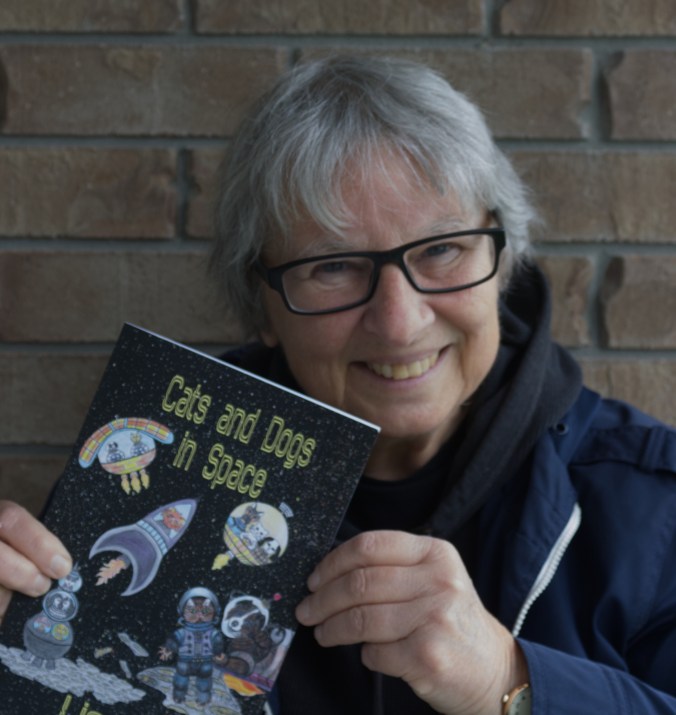
Nina cheerfully showing off copy of “Cats and Dogs in Space” by Lisa Timpf
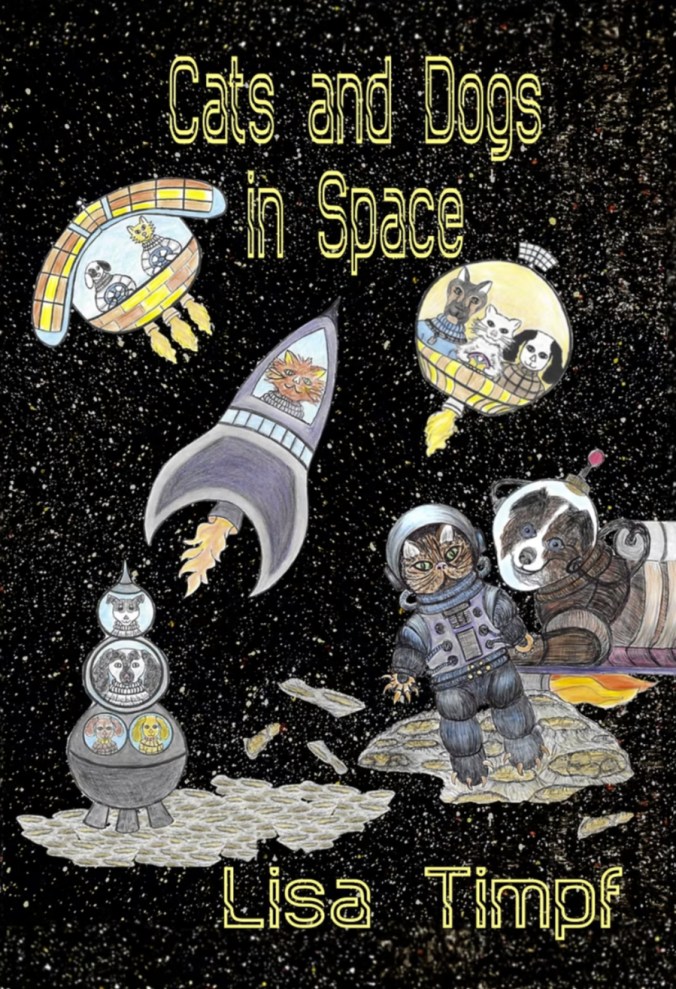
Recently I was delighted to get in the mail a copy of this fetchy slim book of poetry Cats and Dogs in Space (Hiraeth Books, 2025) with cool cover. In this delightful poetry book, speculative writer Lisa Timpf showcases her talented imagination and insight on our feline and dog companions.
The slim 70-page book is parsed into four sections inspired by headlines, legends & folklore, the great hereafter, and imaginings of the future. Each section showcases an aspect of these furry characters with great aplomb.
In her poems inspired by headlines, the headlines often speak volumes; like a mini-poem within a poem, they capture the fractal truths we only sense. “The Truth Is Out” inspired from the headline: “Cats classified as ‘invasive alien species’ by Polish institute,” the headline—whether real or imagined—says it all. The poem then proceeds to dissect this possibility with acumen and, of course, humour: Many questions remain, including when did their ships arrive…the next move is up to them. We can only wait to see what our feline overlords have in mind for us.
In Nursery Rhymes for Changing Times, Timpf applies a pithy dry humour to several folklore characters:
Cupboards empty again— Mother Hubbord’s dog orders biscuits online
exterminator’s visit just completed— visiting cat pursues the Queen’s computer mouse
video of fiddling cat draws millions of likes— dish and spoon regret departure
.
In The Unknown, Timpf muses over the seasons following the passing of a beloved dog. The poem is heartfelt and beautifully metaphoric, pulling at my heartstrings with thoughts of the hereafter and our own journey into the unknown: …a skein of northbound geese, loose=strung, spans across the sky proclaiming, as they go, that we all must trace our path one day into the unknown after.
The ‘Cats and Dogs of the Future’ section is brim with fetchy titles such as The Sand Dogs of Mars and Steampunk Paradise. In A Cat’s Confession, we get wonderful insight into a cat’s psyche, as a cat from the future lists a litany of its transgressions that somehow end not with humility, guilt and apology but with logical recrimination.
Applying an edgy, sometimes warped, sense of humour—required when dealing with cats—and a tender sensibility of animal/human psychology, Timpf’s Cats and Dogs in Space explores the universe of these two species, vividly capturing their unique idiosyncrasies and influence on us from joyful to frustrated, from humorous to sentimental. This volume of poems is so much more than an exploration of cats and dogs in space; it embraces the very spaces they occupy, from the depth of our souls to the many liminal folds of existence.
.
Nina Munteanu is a Canadian ecologist / limnologist and novelist. She is co-editor of Europa SF and currently teaches writing courses at George Brown College and the University of Toronto. Visit www.ninamunteanu.ca for the latest on her books. Nina’s bilingual “La natura dell’acqua / The Way of Water” was published by Mincione Edizioni in Rome. Her non-fiction book “Water Is…” by Pixl Press (Vancouver) was selected by Margaret Atwood in the New York Times ‘Year in Reading’ and was chosen as the 2017 Summer Read by Water Canada. Her novel “A Diary in the Age of Water” was released by Inanna Publications (Toronto) in June 2020.
I’ve selected ten TV series that have intrigued me, moved me, and stayed with me for various reasons that touch on: abuse of justice, including eco-justice and environmental abuse; technology use and abuse; and the effects and horrors of climate change.
Some are well known; others not so well known. All approach storytelling with a serious dedication to depth of character, important themes, realistic world building, and excellent portrayal by actors. The world-building is extremely well done—in some cases rivalling Ridley Scott’s best—with convincing portrayals of worlds that are at times uncanny in their realism. Worlds that reflect story from an expansive landscape to the mundane minutiae of daily life: like the cracked phone device of Detective Miller in The Expanse or the dirty fingernails of engineer Juliette Nichols in the Down Deep of Silo. Stories vary in their treatment of important themes from whimsical and often humorous ironies to dark and moody treatises on existential questions. In my opinion, these TV series rival the best movies out there, often reflecting large budgets (but not always) and a huge commitment by producers. The ten TV series I’ve selected here come from around the world: Brazil, Germany, France, Norway, Canada and the United States.
In Part 1, I look at five TV series that touch on ethical issues we are facing today; issues that reach far into existential questions of what it means to be human. These TV series explore synthetic biology, cloning and gene editing, and justice in space colonization and exploitation.
.
.
MISSIONS:A Corporate Race to Colonize Mars Unravels Existential Questions
.
Created by Henri Debeurme, Julien LaCombe and Ami Cohen, this French TV series on the exploration of Mars explores human evolution, ancient history, trans-humanism, artificial intelligence, and environmental issues in a thrilling package of intrigue, adventure and discovery. From the vivid realism of the Mars topography to the intricate, realistic and well-played characters and evocative music by Étienne Forget, Missions builds a multi-layered mystery with depth that thrills with adventure and complex questions and makes you think long after the show is finished.
.
Cosmonauts Yuri Gagarin and Vladimir Komorov before the tragic crash
.
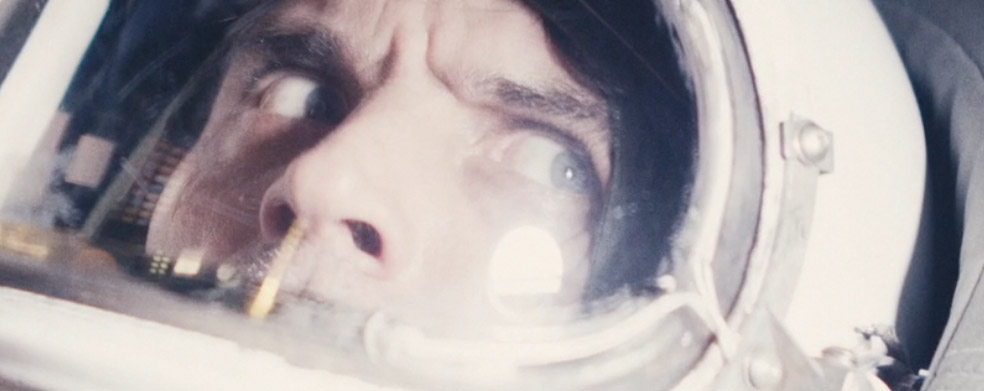
The first episode of Season One starts with a real tragedy: the first human to die in space flight; the 1967 fatal crash landing of the Russian Soyus 1 piloted by Cosmonaut Vladimir Komorov. In the opening scene of Missions, we never see the actual crash landing; instead, as Komarov hurtles to the ground, he suddenly sees a strange white light and then we cut to the present day. Now in an alternate present day, the international crew of the space ship Ulysses is readying for its journey to Mars. Days before the Ulysses mission takes off from Earth, psychologist Jeanne Renoir is asked to replace the previous psychologist who died suddenly in a freak accident. Soon after they land on Mars, the crew finds none other than Cosmonaut Komorov lying unconscious on the Martian surface, looking as he did in 1967.
.
Jeanne reaches for a small pyramid left on the alien stand
.
So begins this surrealistic mystery that transcends history, identity and our concepts of reality with tantalizing notions of Atlantis, the mythical metal Orichalcum, programmable DNA-metal, and much more. The first season of Missions focuses on cynical Jeanne Renoir as she unravels the mystery of Mars; a mystery that ties her inextricably to Komarov. When she first interviews the Martian Komarov, he surprises her by using her late father’s call to adventure: “Mars delivers!” We then find that Komarov is her father’s hero for his selfless action to save his friend, and her father considered him “the bravest man of this time.” Jeanne is intrigued. Who—what—is this man they’ve rescued? Surely not the dead cosmonaut resurrected from 1967?
Throughout the series, choices and actions by each crew member weave narrative threads that lead to its overarching theme of self-discovery and the greater question of humanity’s existence.
From the beginning, we glimpse a surreal connection between Jeanne and Komarov and ultimately between Earth and Mars: from her childhood admiration for the Russian’s heroism on Earth to the “visions” they currently share that link key elements of her past to Mars and Komarov’s strange energy-giving powers, to Jeanne’s own final act of heroism on Mars. “You’re the reason I’m here,” he confesses to her in one of their encounters. “You have an important decision to make; one you’ve made in the past…”
.
Jeanne leaves the spaceship in search of answers on Mars
As the storyline develops, linking Earth and Mars in startling ways, and as various agendas—personal missions—are revealed, we finally clue in on the main question that Missions is asking: are we worth saving?
In a flashback scene of her interaction with Komarov, Jeanne recalls Komarov telling her that, “people dream of other places, while they can’t even look after their own planet… You must remember your past in order to think about your future. Do you think Earth has a future?” When she responds that she doesn’t know, he challenges with “Yes, you do…You know the answer and it terrifies you.”
Nina Munteanu is a Canadian ecologist / limnologist and novelist. She is co-editor of Europa SF and currently teaches writing courses at George Brown College and the University of Toronto. Visit www.ninamunteanu.ca for the latest on her books. Nina’s bilingual “La natura dell’acqua / The Way of Water” was published by Mincione Edizioni in Rome. Her non-fiction book “Water Is…” by Pixl Press (Vancouver) was selected by Margaret Atwood in the New York Times ‘Year in Reading’ and was chosen as the 2017 Summer Read by Water Canada. Her novel “A Diary in the Age of Water” was released by Inanna Publications (Toronto) in June 2020.
Lynn Hutchinson Lee reads from her novel at Little Ghosts Bookstore, overseen by a 12-foot skeleton (photo by Nina Munteanu)
.
A short time ago, my good friend Lynn Hutchinson Lee was launching her eco-fiction book “Origins of Desire in Orchid Fens” published by Stelliform Press at Little Ghosts Bookstore on Dundas St. W. in Toronto. Also reading from their current eco-fiction were Rebecca Campbell (“The Other Shore”) and Mahaila Smith (“Seed Beetle”).
.
Launch poster
.
I drove from Peterborough along country roads to Toronto that morning. When I got there, I parked my car at Lynn’s place and walked without my umbrella in the light drizzle through the urban treed neighbourhood toward Little Ghosts Bookstore—about a forty-minute walk. Of course, it started to seriously rain at some point, but I cheerfully continued, noting how vibrant the vegetation and flowers had become and how progressively more damp I was becoming.
.
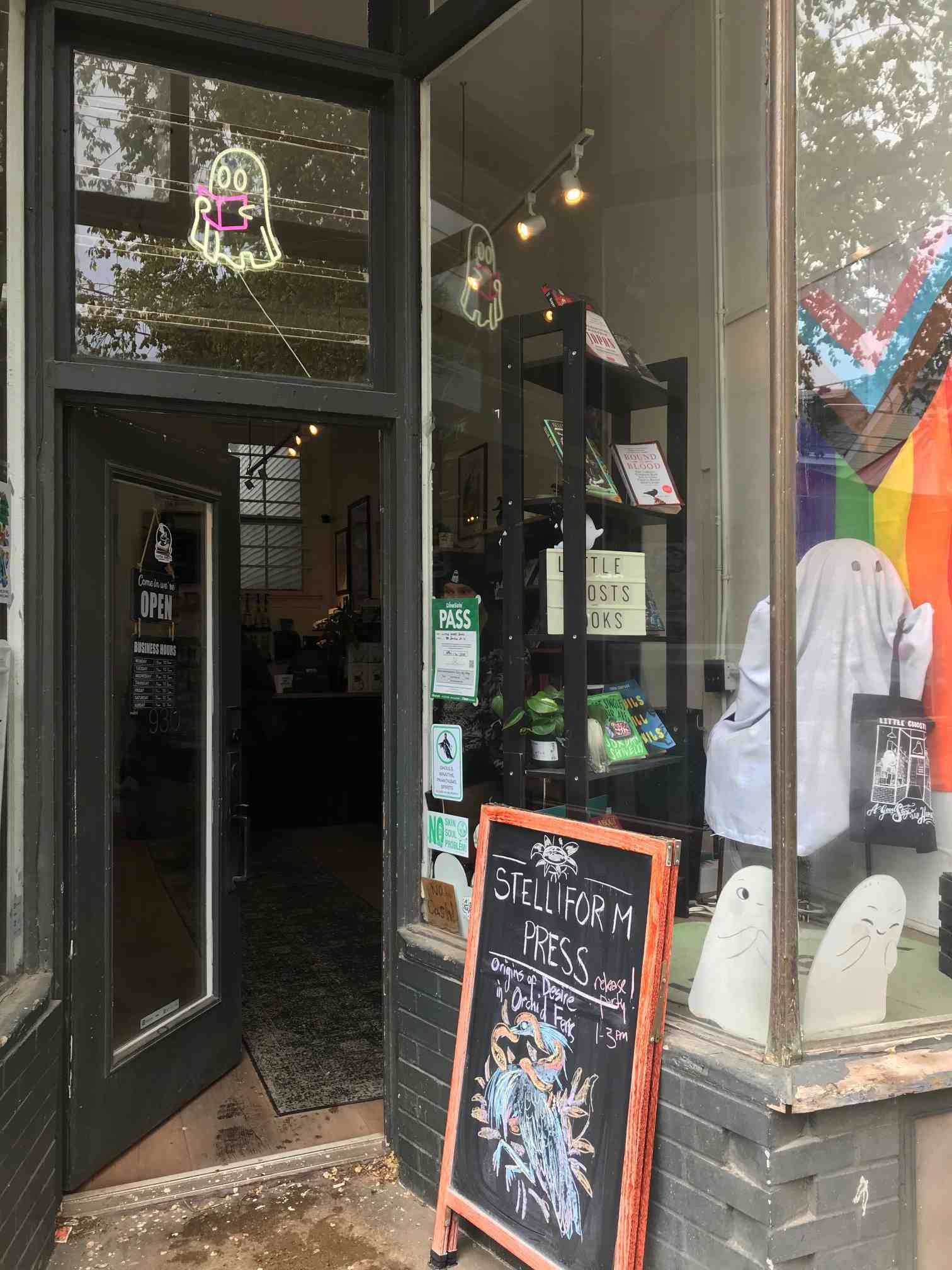
Entrance to Little Ghosts Bookstore (photo by Nina Munteanu)
.
I entered the bookstore dripping but on time and negotiated the small crowd, greeting some people I knew, as I steered myself toward the small café in the bookstore to order a hot beverage. I found myself admiring the small two-tiered bookstore with lovely Casper ghost motifs. As Lynn began her reading, I noticed a large skeleton peering right back at me through the café window next to her (see top photo).
.
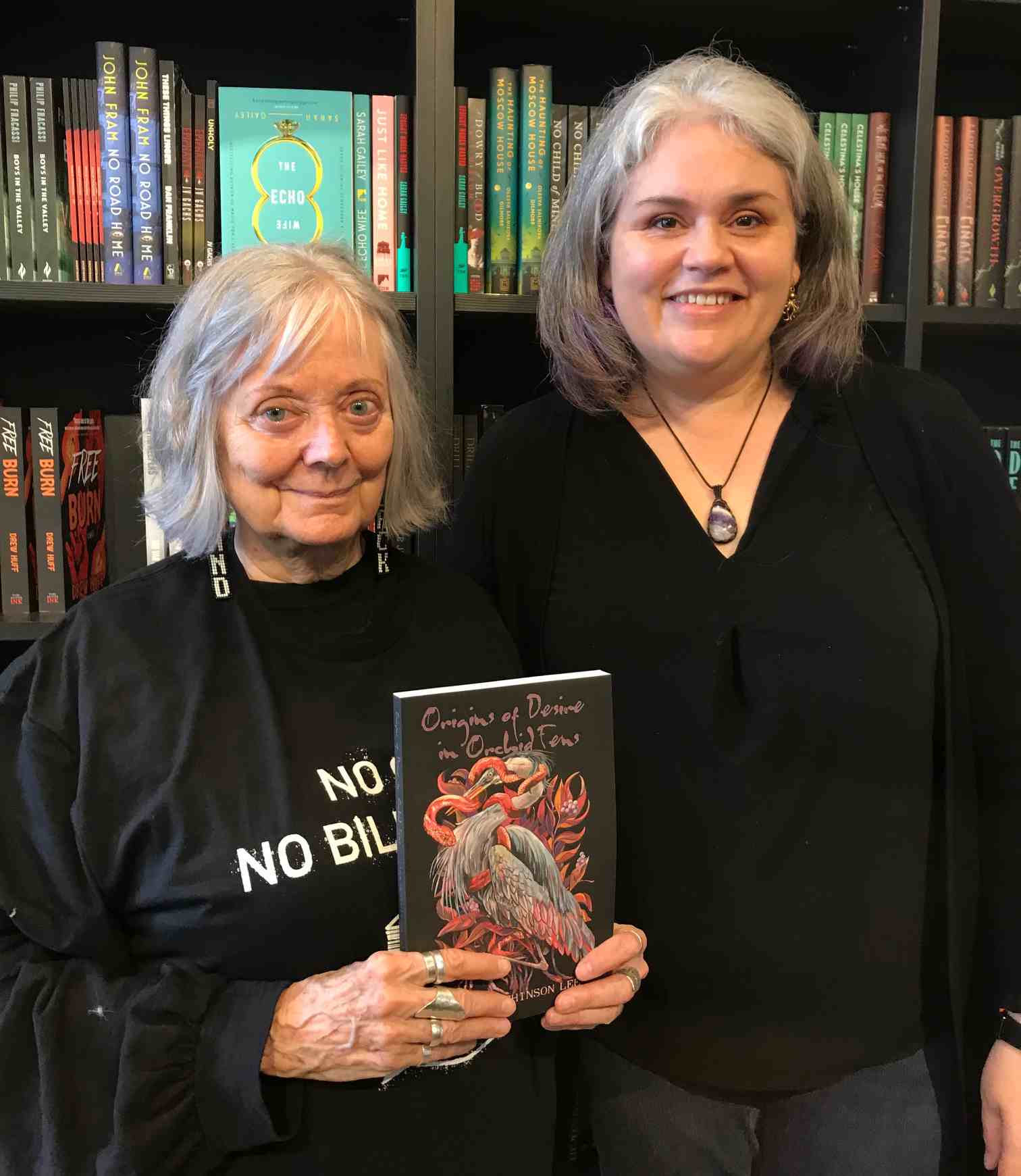
Author Lynn Hutchinson Lee holds her book at Little Ghosts Bookstore with publisher Selena Middleton (photo by Nina Munteanu)
.
The Book:
Here’s how the publisher described the book:
A dizzying and beautiful debut, Origins of Desire in Orchid Fens explores life as a Romany woman in Canada, and the flowers that refuse to die.
Orchid Lovell is a young Romany woman haunted by a fear of being found out. Her family has been chased out of town before. After settling in a seemingly idyllic northern mining town that she soon understands as rife with unseen cruelty, Orchid finds solace in a lush orchid fen where she doesn’t fear the town’s judgement. Amid the green beauty of the fen, Orchid meets her beloved Jack, and marries him in a secret blackfly-infested ceremony.
But the town’s waters don’t only harbor life. In the nearby creek, dead girls take revenge on the men who murdered them, luring them into murky waters. Despite the unyielding nature of the water spirits, one man evades their violence. After a devastating attack linked to the expansion of the mine, Orchid’s fate is entwined with the panni raklies’ ruthless justice.
Written in over 100 dreamy mini-chapters, this novella explores the tenuous reality of the Romany diaspora living in troubled times on troubled lands.
“The prose is sensuous and lyrical, saturated with earthy, evocative enchantment … In the powerful and intimate novel Origins of Desire in Orchid Fens, a bold, loving heroine confronts racism, sexism, and classism.”
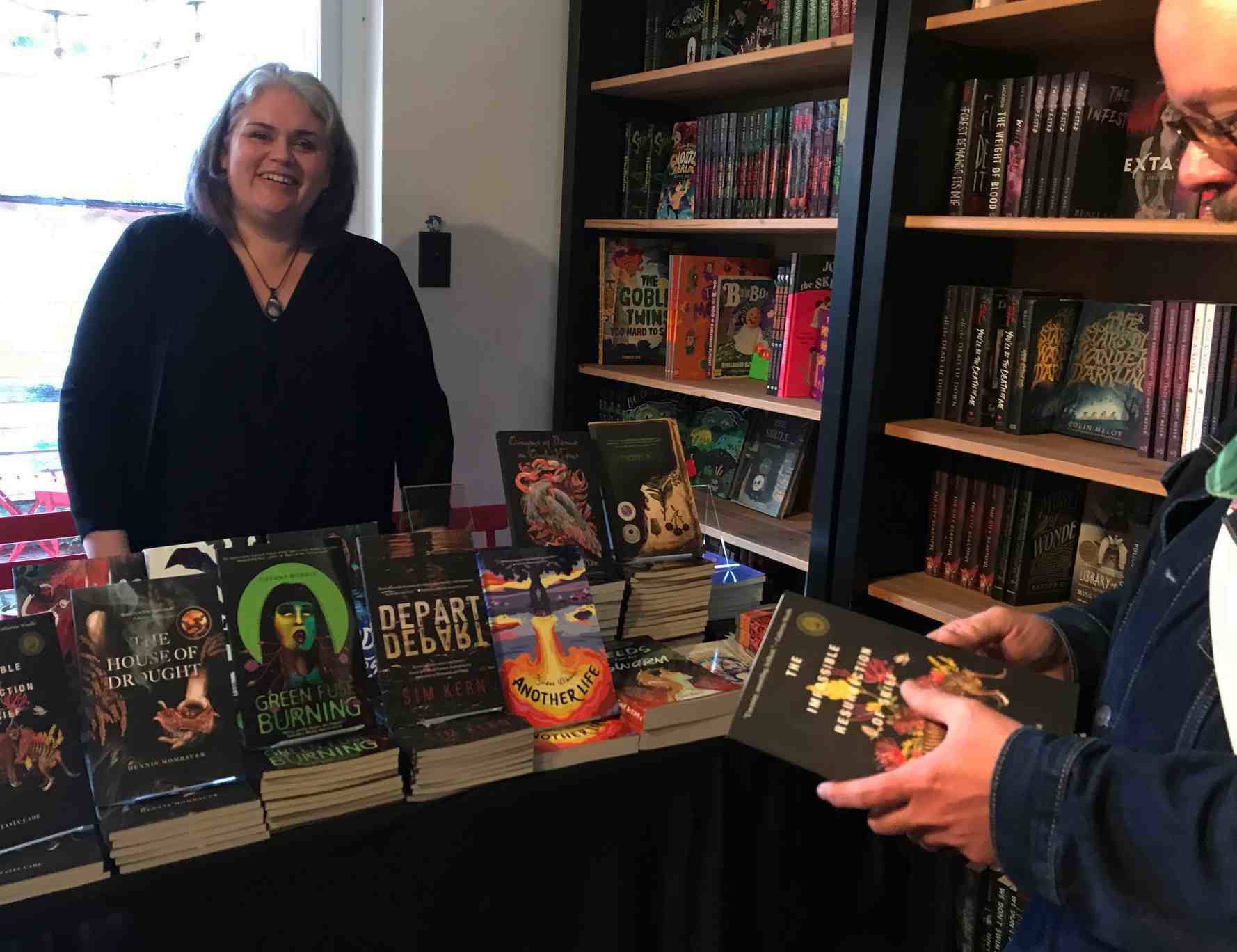
Publisher Selena Middleton with Stelliform books on display at Little Ghosts Bookstore (photo by Nina Munteanu)
.
The Bookstore:
Despite the dark subject matter, the small bookstore was inviting and well lit inside from large front and back windows, with happy Casper-ghost décor and store keepers with sunny dispositions and friendly manners. This small indie bookstore with funky fun interior hosts a great selection of indie horror, a café with delicious drinks and a “chill place to hang out” and a 12-foot skeleton in the patio who oversees the café through the window. What more does a reader want?
Little Ghosts Bookstore t-shirt
.
Nina Munteanu is a Canadian ecologist / limnologist and novelist. She is co-editor of Europa SF and currently teaches writing courses at George Brown College and the University of Toronto.
Visit www.ninamunteanu.ca for the latest on her books. Nina’s bilingual “La natura dell’acqua / The Way of Water” was published by Mincione Edizioni in Rome. Her non-fiction book “Water Is…” by Pixl Press (Vancouver) was selected by Margaret Atwood in the New York Times ‘Year in Reading’ and was chosen as the 2017 Summer Read by Water Canada. Her novel “A Diary in the Age of Water” was released by Inanna Publications (Toronto) in June 2020.
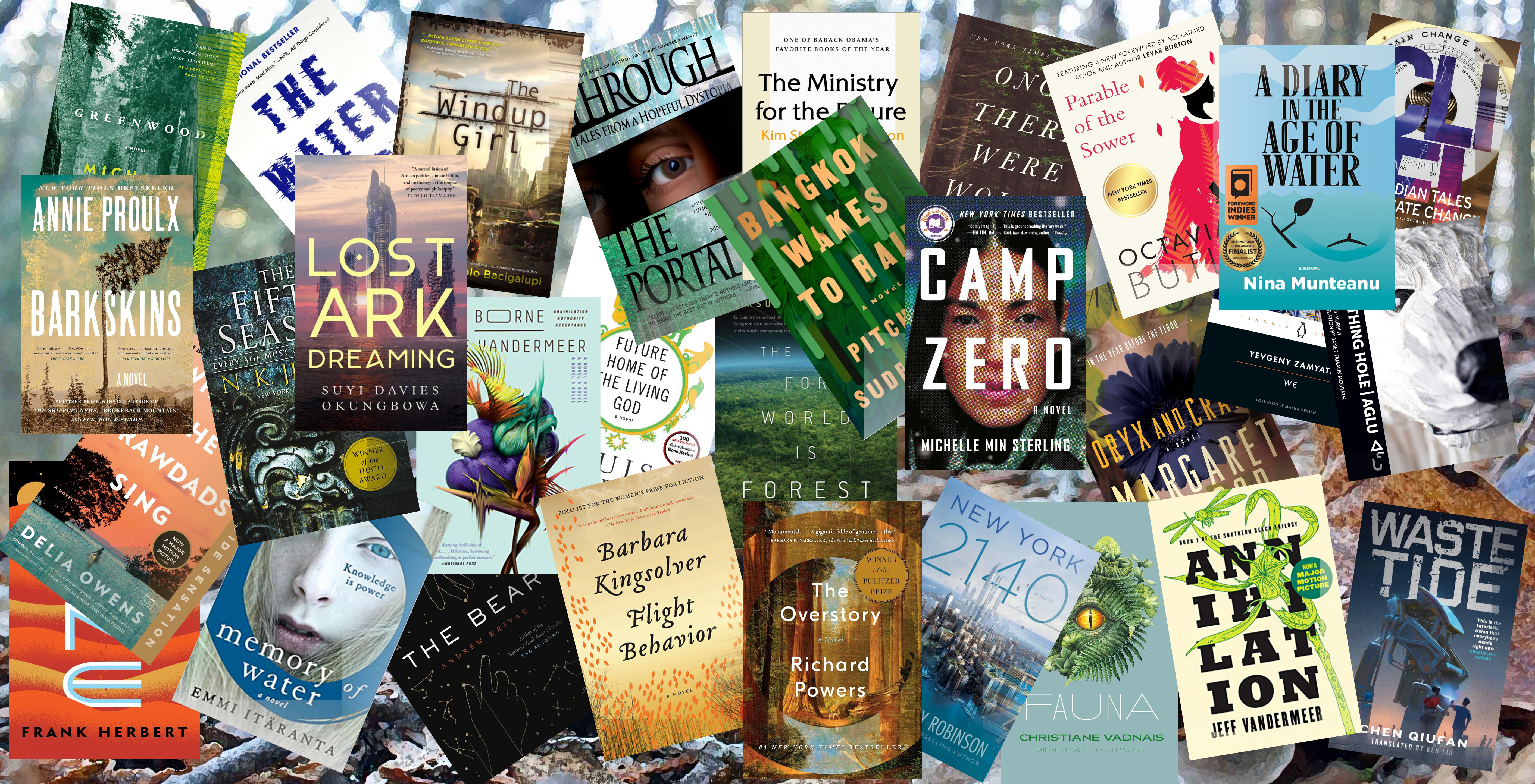
Here is my current list of 30 favourite eco-fiction novels and short story collections that have impacted me, and incited me to think, to feel and to act.
Flight Behavior is a multi-layered metaphoric study of “flight” in all its iterations: as movement, flow, change, transition, beauty and transcendence. Flight Behavior isn’t so much about climate change and its effects and its continued denial as it is about our perceptions and the actions that rise from them: the motives that drive denial and belief. When Dellarobia questions Cub, her farmer husband, “Why would we believe Johnny Midgeon about something scientific, and not the scientists?” he responds, “Johnny Midgeon gives the weather report.” Kingsolver writes: “and Dellarobia saw her life pass before her eyes, contained in the small enclosure of this logic.”
.
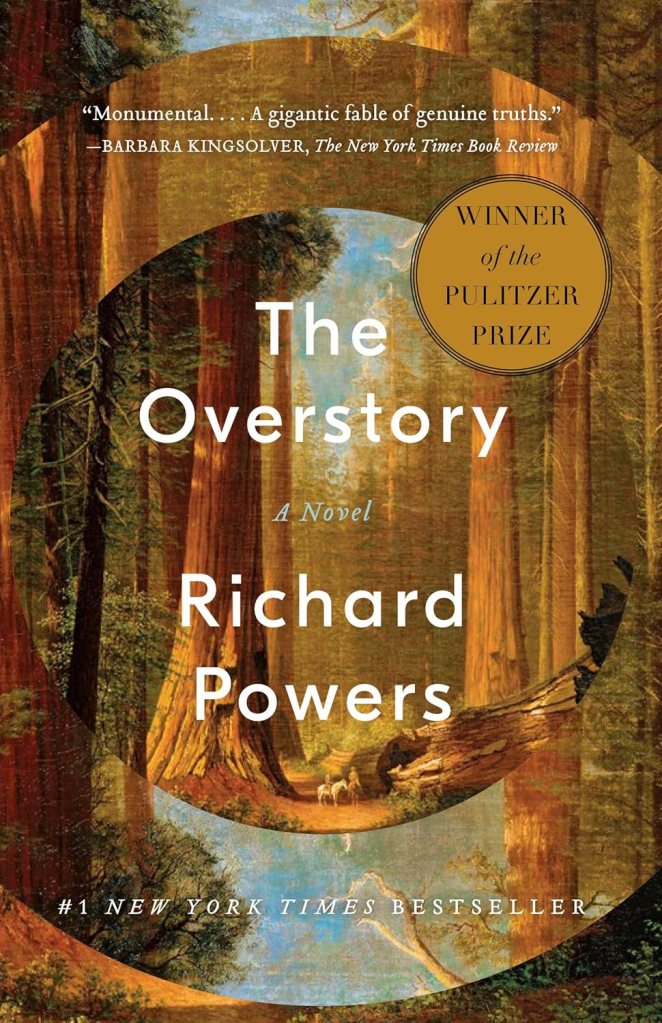
The Overstory follows the life-stories of nine characters and their journey with trees–and ultimately their shared conflict with corporate capitalist America. At the heart of The Overstory is the pivotal life of botanist Patricia Westerford, who will inspire movement. Westerford is a shy introvert who discovers that trees communicate, learn, trade goods and services—and have intelligence. When she shares her discovery, she is ridiculed by her peers and loses her position at the university. What follows is a fractal story of trees with spirit, soul, and timeless societies–and their human avatars.
.
The Maddaddam Trilogy is a work of speculative dystopian fiction that explores the premise of genetic experimentation and pharmaceutical engineering gone awry. On a larger scale the cautionary trilogy examines where the addiction to vanity, greed, and power may lead. Often sordid and disturbing, the trilogy explores a world where everything from sex to learning translates to power and ownership. The dark poetry of Atwood’s smart and edgy slice-of-life commentary is a poignant treatise on our dysfunctional society. Atwood accurately captures a growing zeitgeist that has lost the need for words like honor, integrity, compassion, humility, forgiveness, respect, and love in its vocabulary. And she has projected this trend into an alarmingly probable future. This is subversive eco-fiction at its best.
.
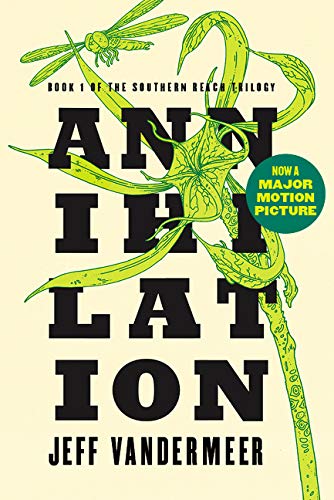
Annihilation is a science fiction eco-thriller that explores humanity’s impulse to self-destruct within a natural world of living ‘alien’ profusion. Annihilation is a bizarre exploration of how our own mutating mental states and self-destructive tendencies reflect a larger paradigm of creative-destruction—a hallmark of ecological succession, change, and overall resilience. VanderMeer masters the technique of weaving the bizarre intricacies of ecological relationship, into a meaningful tapestry of powerful interconnection. Bizarre but real biological mechanisms such as epigenetically-fluid DNA drive aspects of the story’s transcendent qualities of destruction and reconstruction. On one level Annihilation acts as parable to humanity’s cancerous destruction of what is ‘normal’ (through climate change and habitat destruction); on another, it explores how destruction and creation are two sides of a coin.
.
Barkskins chronicles two wood cutters who arrive from the slums of Paris to Canada in 1693 and their descendants over 300 years of deforestation in North America. Proulx weaves generational stories of two settler families into a crucible of terrible greed and tragic irony. The bleak impressions by immigrants of a harsh environment crawling with pests underlies the combative mindset of the settlers who wish only to conquer and seize what they can of a presumed infinite resource. From the arrival of the Europeans in pristine forest to their destruction under the veil of global warming, Proulx lays out a saga of human-environmental interaction and consequence that lingers with the aftertaste of a bitter wine.
.
Memory of Water is a work of speculative fiction about a post-climate change world of sea level rise. Symbols of water as shapeshifter archetype and its omnipotent life- and death-giving associations flow throughout the story, from the ‘fishfires’ in the northern skies to the painted blue circles on the doors of water criminals about to die. Water couples to main character Tea Master Noria, to explore consequences of commodification and exploitation. Teamaster Noria Kaitio guards its secrets; she alone knows the location of the hidden water source, coveted by the new government. Told in the literary fiction style of emotional nuances, Itäranta’s lyrical narrative follows a deceptively quiet yet tense pace that builds like a slow tide into compelling crisis and a poignant end.
.
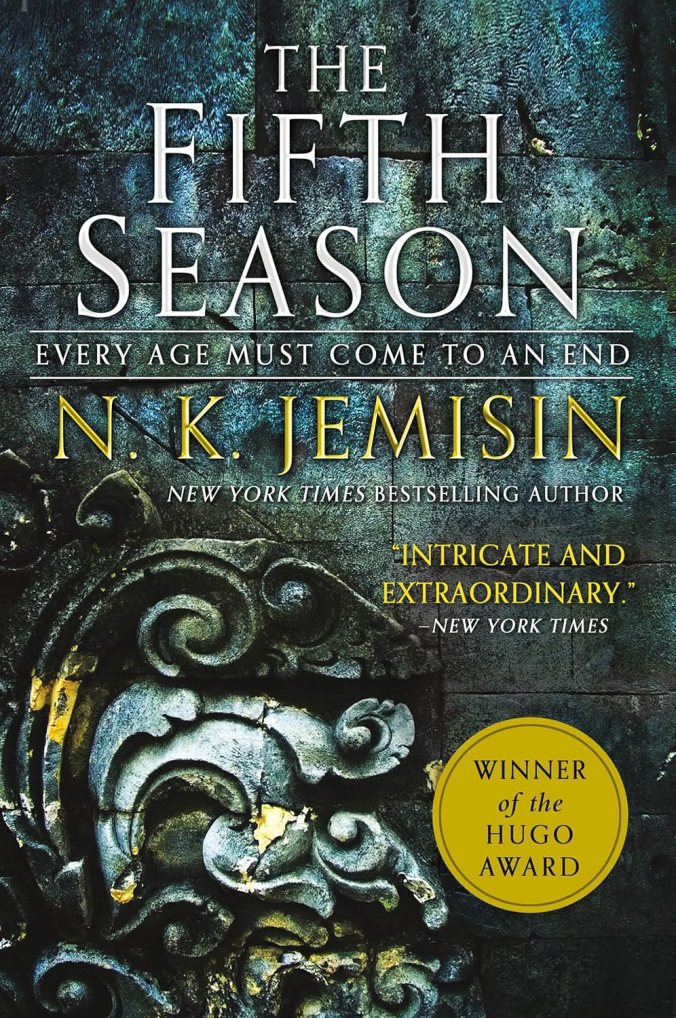
The Broken Earth Trilogy is a fantasy trilogy set in a far-future Earth devastated by periodic cataclysmic storms known as ‘seasons.’ These apocalyptic events last over generations, remaking the world and its inhabitants each time. Giant floating crystals called Obelisks suggest an advanced prior civilization. The first book of the trilogy introduces Essun, an Orogene—a person gifted with the ability to draw magical power from the Earth such as quelling earthquakes. The trilogy focuses on the dangers of marginalization, oppression, and misuse of power. Jemison’s cautionary dystopia explores the consequence of the inhumane profiteering of those who are marginalized and commodified.
.
The Windup Girl is a work of mundane science fiction that occurs in 23rd century post-food crash Thailand after global warming has raised sea levels and carbon fuel sources are depleted. Thailand struggles under the tyrannical boot of predatory ag-biotech multinational giants that have fomented corruption and political strife through their plague-inducing genetic manipulations. The rivalry between Thailand’s Minister of Trade and Minister of the Environment represents the central conflict of the novel, reflecting the current global conflict of neoliberal promotion of globalization and unaccountable exploitation with the forces of sustainability and environmental protection. Given the setting, both are extreme and there appears no middle ground for a balanced existence using responsible and sustainable means. The Windup Girl, Emiko, who represents the future, is precariously poised.
.
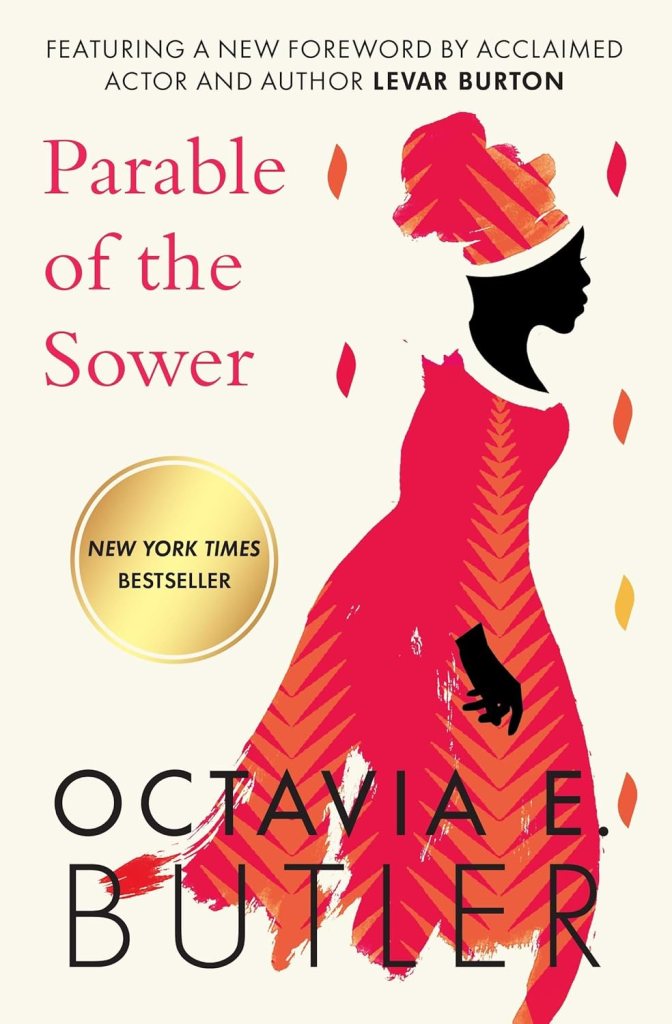
Parable of the Sower is a science fiction dystopian novel set in 21stcentury America where civilization has collapsed due to climate change, wealth inequality and greed. Parable of the Soweris both a coming-of-age story and cautionary allegorical tale of race, gender and power. Told through journal entries, the novel follows the life of young Lauren Oya Olamina—cursed with hyperempathy—and her perilous journey to find and create a new home. What starts as a fight to survive inspires in Lauren a new vision of the world and gives birth to a new faith based on science: Earthseed. Written in 1993, this prescient novel and its sequel Parable of the Talent speak too clearly about the consequences of “making America Great Again.”
.
The Water Knife is set in the near-future in the drought-stricken American southwest, where corrupt state-corporations have supplanted the foundering national government. Water is the new gold—to barter, steal, and murder for. Corporations have formed militias and shut down borders to climate refugees, fomenting an ecology of poverty and tragedy. Massive resorts—arcadias—constructed across the parched landscape, flaunt their water-wealth in the face of exploited workers and gross ecological disparity. Water is controlled by corrupt gangsters and “water knives” who cleverly navigate the mercurial nature of water rights in a world where “haves” hydrate and “have nots” die of thirst.
.
A Diary in the Age of Water explores the socio-political consequences of corruption in Canada, now owned by China and America as an indentured resource ‘reservoir’; it is a story told through four generations of women and their unique relationship with water during a time of great unheralded change. Centuries from now, in a dying boreal forest in what used to be northern Canada, Kyo, a young acolyte called to service in the Exodus, yearns for Earth’s past—the Age of Water—before the “Water Twins” destroyed humanity. Looking for answers and plagued by vivid dreams of this holocaust, Kyo discovers the diary of Lynna, a limnologist from that time of severe water scarcity just prior to the destruction. In her work for a global giant that controls Earth’s water, Lynna witnesses and records in her diary the disturbing events that will soon lead to humanity’s demise.
.
Waste Tide is an eco-techno thriller with compelling light-giving characters who navigate the dark bleak world of profiteers and greedy investors. Mimi is a migrant worker off the coast of China who scavenges through piles of hazardous technical garbage to make a living. She struggles, like the environment, in a larger power struggle for profit and power; but she finds a way to change the game, inspiring others. The story of Mimi and Kaizong—who she inspires—stayed with me long after I put the book down.
.
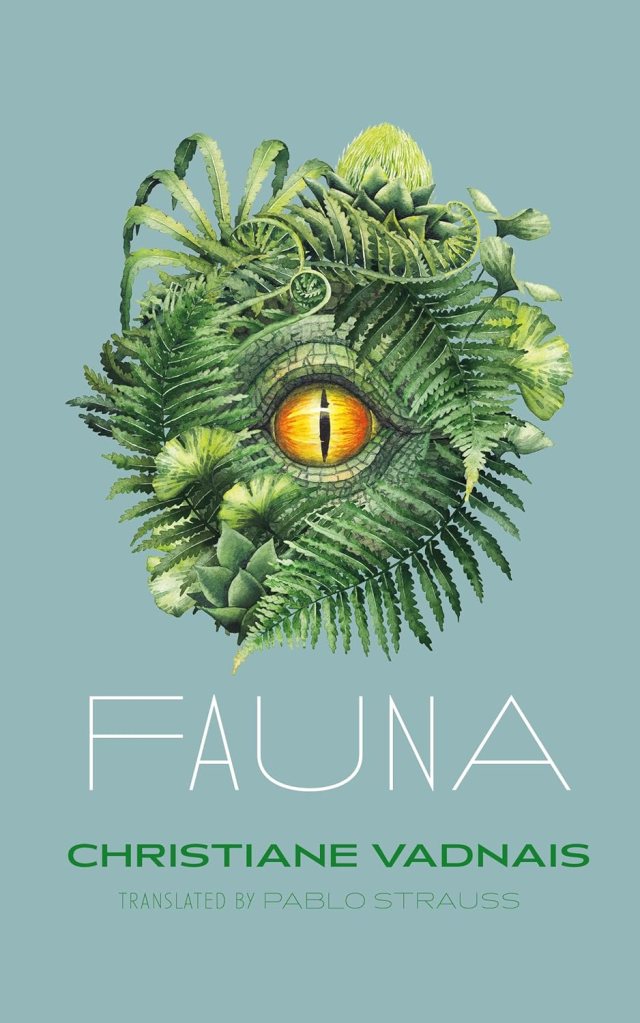
Fauna is at once beautiful and terrifying. Vadnais’s liquid prose immersed me instantly in her flowing story about change in this Darwinian eco-horror ode to climate change. I felt connected to the biologist Laura as she navigated through a torrent of rising mists and coiling snakes and her own transforming body with the changing world around her. It was an emotional rollercoaster ride that made me think.
.
The Word for World is Forest chronicles the struggles of the indigenous people under the conquering settlers through empathetic characters. The irony of what the indigenous peoples must do to save themselves runs subtle but tragic throughout the narrative. Given its relevance to our own colonial history and present situation, this simple tale rang through me like a tolling bell.
.
The Breathing Hole story begins in 1535, when the Inuk widow Hummiktuq risks her life to save a lost one-eared polar bear cub on an ice floe and adopts him. She names him Angu’ruaq. We soon learn that Angu’ruaq is timeless when we encounter him in scenes over the centuries from the Franklin Expedition in 1845 (who he helps by bringing them food) to 2031 when Angu’ruaq—old, hungry, his fur yellowing—returns to the breathing hole where long-dead Hummiktuq rescued him. By then the glaciers have receded and the ground is slush. Murphy’s spare and focused narrative achieves a timeless, dreamlike quality that plays strongly on the emotional connections of the reader; it elicits immense empathy for the Other in a deeply moving saga on the tragic dance of colonialism and climate change.
.
The Bearby Andrew Krivak is a fable of a post-anthropocene Earth told through the point of view of a young girl—possibly the only remaining human in the world—and the bear that guides her. Unlike the polar bear of The Breathing Hole, who remains silent and is clearly victimized by humanity’s actions, the black bear of The Bear lives with agency in a post-anthropocene world; he proselytizes and tells stories to instruct the girl on living harmoniously with Nature. His actions and elegant use of speech reflect his archetype as mentor in this story. This is foreshadowed in the fairytale the girl’s father recounts to her of a bear that saved a village from a cruel despot through cleverness and a sense of community.
.
Duneuses powerful world building and symbols of desert, water and spice coupled to the indigenous Fremen, to address exploitation and oppression by colonial greed.
The novel chronicles the journeys of new colonists and indigenous peoples of the desert planet Arrakis, enslaved by its previous colonists. The planet known as Dune lies at the heart of an epic story about taking, giving and sharing. The planet also serves as symbol to any new area colonized by settlers and already inhabited by Othered indigenous. It is the Mars of Martian Chronicles, the Bangkok of The Windup Girl, the North America of Barkskins.
.
Camp Zero, set in the remote Canadian north, is a feminist climate fiction that explores a warming climate through the perilous journeys of several female characters, each relating to her environment in different ways. Each woman exerts agency in surprising ways that include love, bravery and shared community. The strength of female power carried me through the pages like a braided river heading to a singular ocean. These very different women journey through the dark ruins of violent capitalism, colonialism and patriarchy—flowing past and through hubristic men pushing north with agendas and jingoistic visions—to triumph in an ocean of solidarity. I empathized with each woman as she found her strength and learned to wield true heroism—one based on collaboration and humble honesty.
.
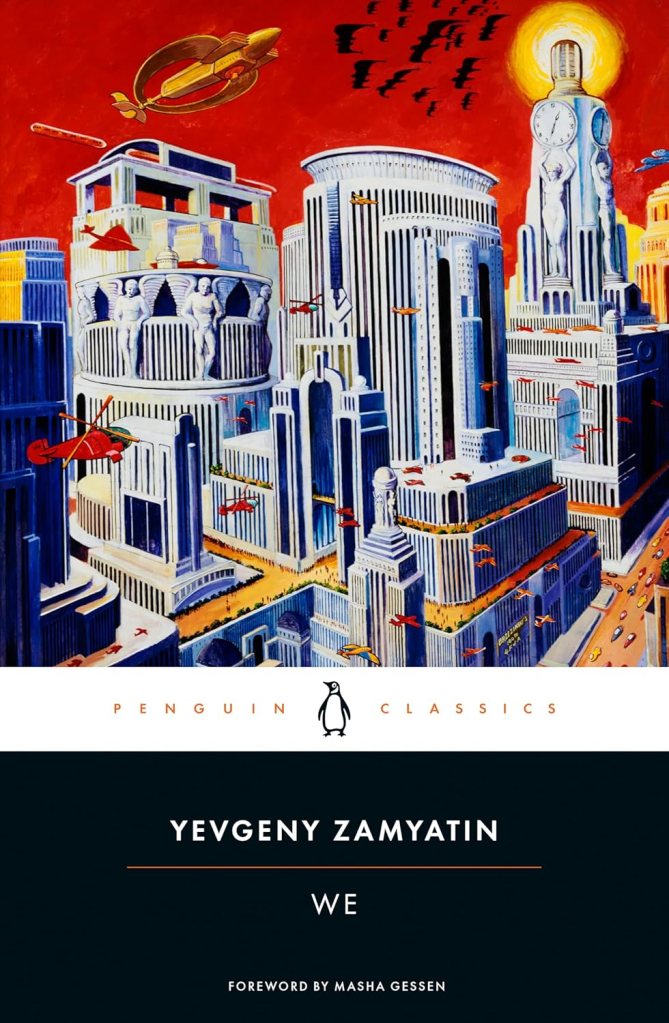
We, written in 1920, is a hopeful dystopic work of courageous and unprecedented feminism. While the story centres on logical D-503, a man vacuously content as a number in the One State, it is I-330—Zamyatin’s unruly heroine—who stole my attention. Confident, powerful and heroic, the liberated I-330 embraces the Green Wind of change to influence D-503. A force of hope and resilience, she braves torture to successfully orchestrate a revolution that breaches the Green Wall—feats typically relegated to a male protagonist in novels of that era. When pregnant O-90 refuses to surrender her child to the State, I-330 helps her escape to the outside, where the Green Wind of freedom blows. I resonated with Zamyatin’s cautionary tale on the folly of logic without love and Nature.
.
In Through the Portal: Tales from a Hopeful Dystopia, award-winning authors of speculative fiction Lynn Hutchinson Lee and Nina Munteanu present a collection that explores strange new terrains and startling social constructs, quiet morphing landscapes, dark and terrifying warnings, lush newly-told folk and fairy tales.
.
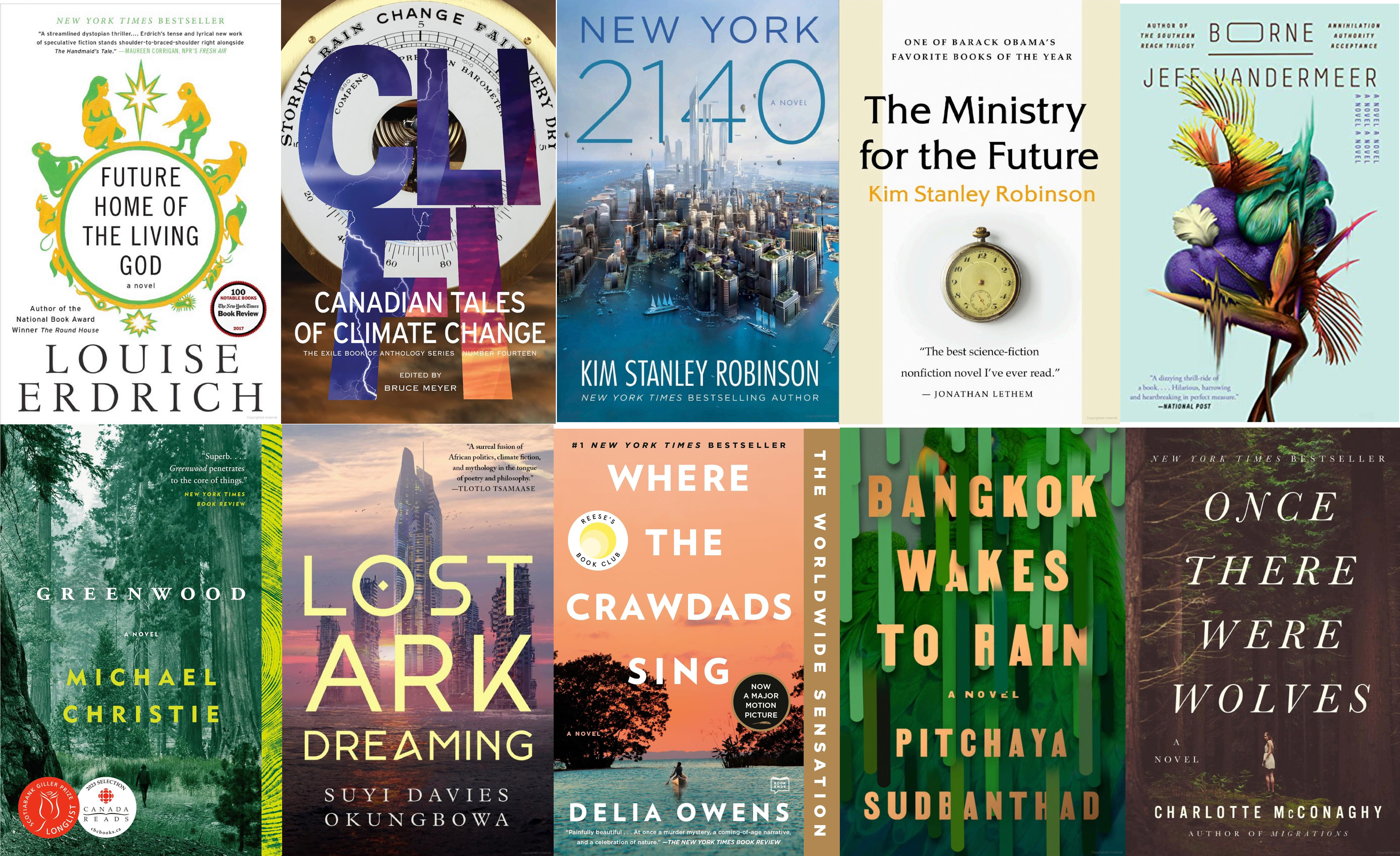
I list other significant and impactful eco-fiction books below:
New York 2140 by Kim Stanley Robinson
Canadian Tales of Climate Change (edited) by Bruce Meyer
Ministry for the Future by Kim Stanley Robinson
Borne by Jeff Vandermeer
Bangkok Wakes to Rain by Pitchaya Sudbanthad
Future Home of the Living God by Louise Erdrich
Lost Arc Dreaming by Suyi Davies Okungbowa
Greenwood by Micheal Christie
Where the Crawdads Sing by Della Owens
Once There Were Wolves by Charlotte McConaghy
.
.
Nina Munteanu is a Canadian ecologist / limnologist and novelist. She is co-editor of Europa SF and currently teaches writing courses at George Brown College and the University of Toronto. Visit www.ninamunteanu.ca for the latest on her books. Nina’s bilingual “La natura dell’acqua / The Way of Water” was published by Mincione Edizioni in Rome. Her non-fiction book “Water Is…” by Pixl Press (Vancouver) was selected by Margaret Atwood in the New York Times ‘Year in Reading’ and was chosen as the 2017 Summer Read by Water Canada. Her novel “A Diary in the Age of Water” was released by Inanna Publications (Toronto) in June 2020.
I teachscholarly writing at the University of Toronto through several writing centres; I’m helping students with their assignments in engineering, the health sciences and humanities. All are generating scholarly papers on various topics with various purposes; anything from a critical assessment, literature review, position paper, or reflection essay to a lessons learned document, research proposal, or thesis chapter. Everyone is using some kind of AI when generating, writing and editing their works. And there are plenty of AI tools to choose from. Some of the most common AI tools used by my students include: Grammarly for grammar; Perplexity as a research tool, text summarizer and conversational AI search engine; Paperpal for editing, Google Scholar as a search engine, ChatGPT to summarize works, brainstorm ideas, provide quiz questions, or even generate human-like text in a first draft.
All these assignments are purpose-built and students must successfully address their assignment requirements to succeed. In some ways, the idea, topic and handling of the topic are assigned; the student need only carefully and clearly address it.
But, when creating something new, like a piece of fiction or even a non-fiction article, professional writers are essentially walking into a new world, not restricted by “assignment guidelines or requirements”; they truly must face the blank page.
.
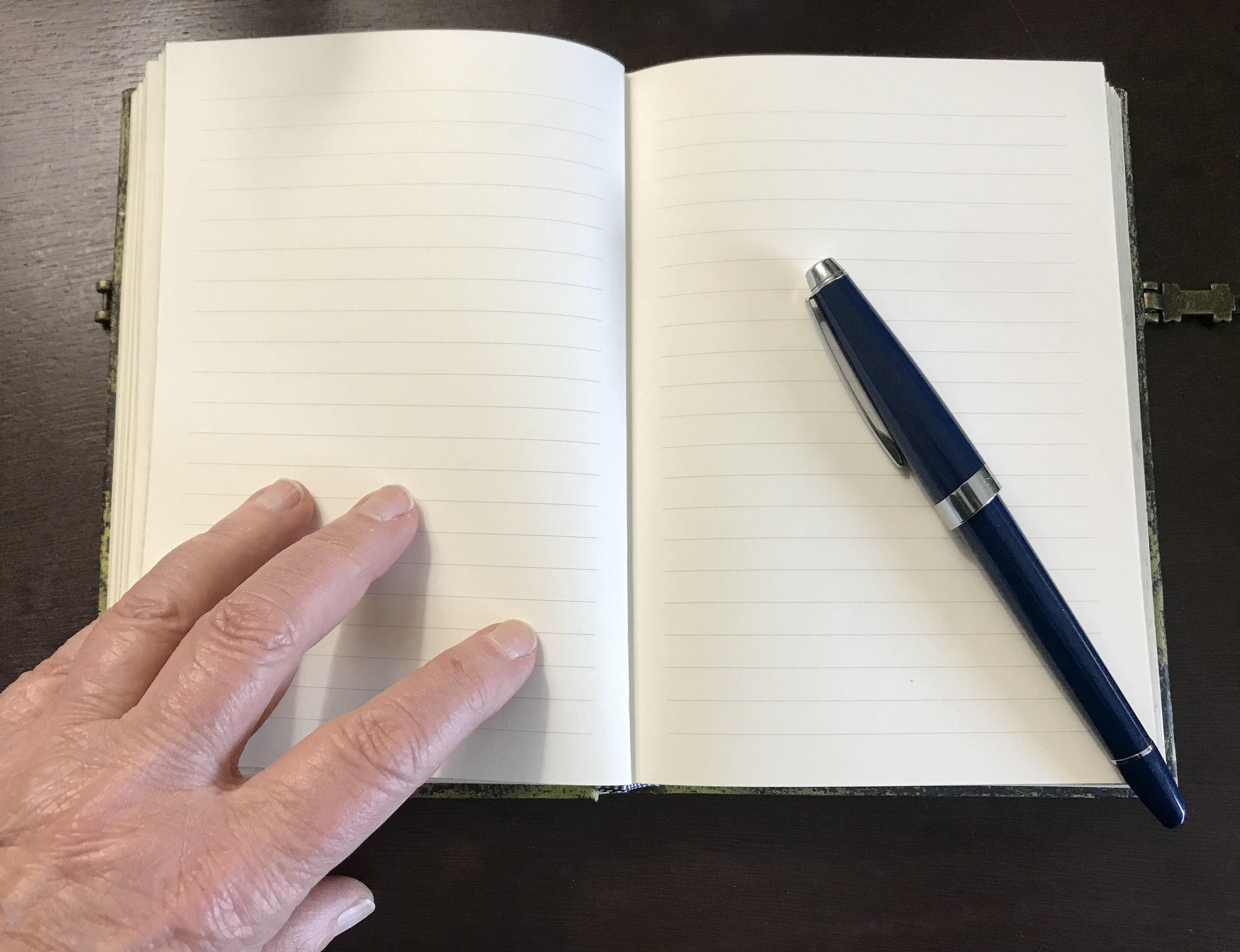
The blank pages of a notebook (photo by Nina Munteanu)
.
There’s no precedence for creating a piece of fiction. Yes, certainly inspiration is involved, but the work of something unique must start with a blank page. Professional writers often dread facing the blank page. It even has a name: blank page syndrome, or writer’s block, the feeling of being overwhelmed or even paralyzed by the prospect of starting. Alex Elkjær Vasegaard tells us that “it may come from the fear of not being good enough, of not knowing enough, or of the vastness of the potential ahead.”
I recently read a post on LinkedIn by writing colleague Erik Buchanan, which resonated with me. I asked his permission to quote it here and he gladly gave it:
Just got a recommended post from a marketing person claiming that using AI allows you to get past the hardest part of writing: “the blank page.”
I blocked them, and I’m putting what I was going to reply to them here instead, because they are not a person who will be open to this rant:
If you cannot get past the blank page, you are not a writer.
If you use AI to get past the blank page, you’re still not a writer, and now you’re a thief.
You’re using other writers’ words, fed into an information aggregator and splatted out like a drunk’s meal vomited onto the sidewalk. And you’re scooping it up and claiming it’s fresh food.
You want to write? Write something.
Speaking as one who has written 18 novels (more than half ghostwritten for money), 150 articles, short stories, instruction manuals, sales copy, website copy, commercial scripts, short films and now a feature film (currently being re-written) it’s not that hard.
Using AI means you’re too lazy to learn the craft.
Don’t do it.
.
A blank page is more than a simple page that is empty. It offers something new, without precedence to write, draw or create. Whether it’s a physical sheet of paper in a notebook or a white space in a digital document, the blank page represents a fresh beginning and wonderful potential for unique creation.
.
Erik’s point is so Germaine to the creative writing process. The blank page is an open door to possibility; it is a writer’s first step in creating something uniquely their own. Plot, character, setting and language—such as technique, style, words and phrases—certainly make a novel wonderful to read; but it is the unique idea, the spark, the premise and theme that carry that novel into greatness and keep it memorable.
Coming up with first words on a blank page (photo by Nina Munteanu)
.
Poet Alberto Blanco challenges our notion of the blank page being blank: From the tree it was made from, the rain and sun that allowed the tree to grow, and the people that created it, it soon becomes clear that a blank page contains the whole cosmos.
In “The Blank Page: A Meditation on the Creative Process and Life’s Journey” Alex ElkjærVasegaard describes the blank page as “an expanse of white, unsullied by ink or pixels. It’s the void that calls for creation. It’s the challenge that every artist, writer, and thinker faces. But isn’t that just a beautiful metaphor for life itself?”
Erik, I too would have blocked that marketer. I doubt they are a writer…
.
“Who then … tells a finer tale than any of us? Silence does. And where does one read a deeper tale than upon the most perfectly printed page of the most precious book? Upon the blank page. When a royal and gallant pen, in the moment of its highest inspiration, has written down its tale with the rarest ink of all — where, then, may one read a still deeper, sweeter, merrier and more cruel tale than that? Upon the blank page.”—Karen Blixen, Last Tales
.
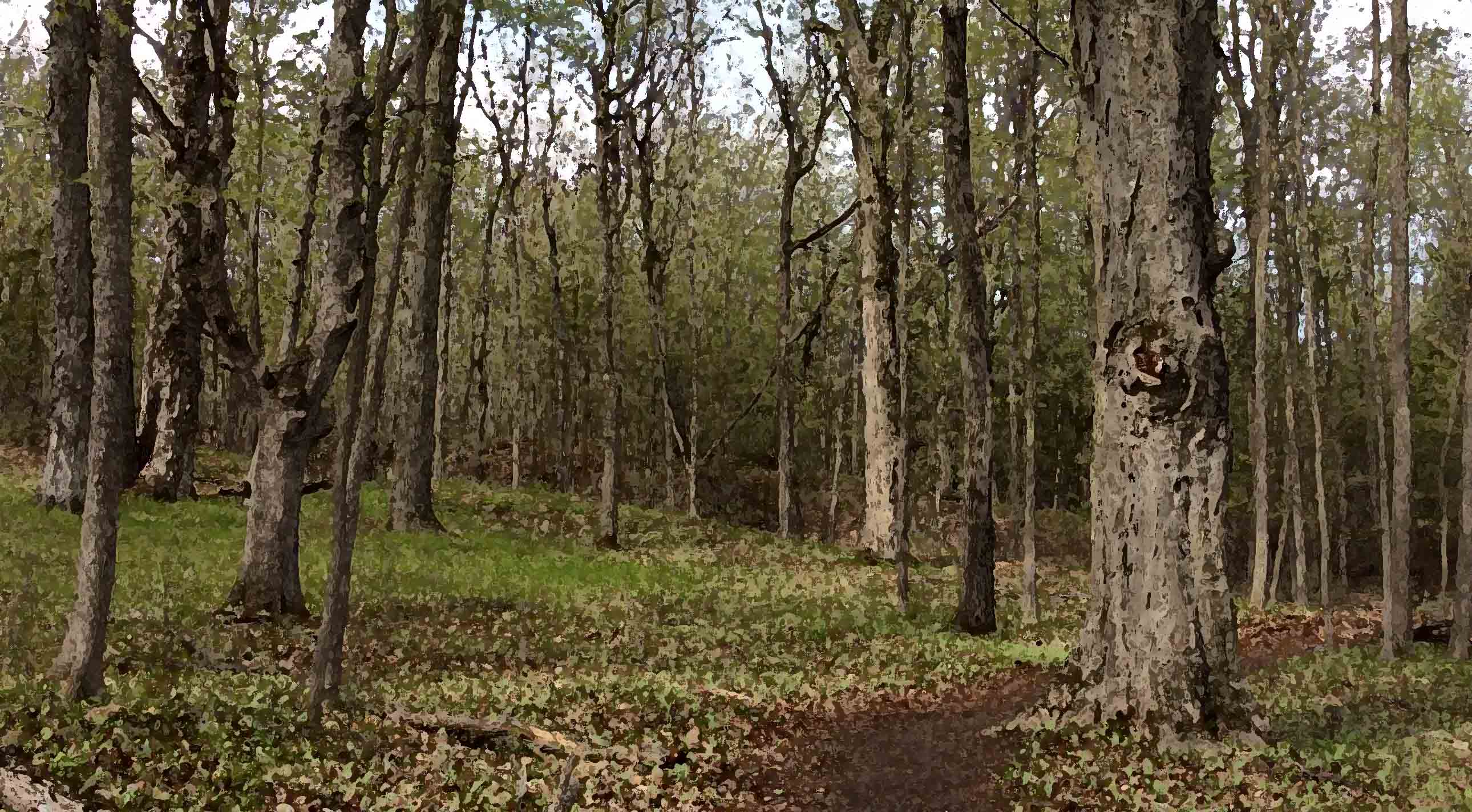
Maple beech forest in early spring, ON (photo and rendition by Nina Munteanu)
.
Nina Munteanu is a Canadian ecologist / limnologist and novelist. She is co-editor of Europa SF and currently teaches writing courses at George Brown College and the University of Toronto.
Visit www.ninamunteanu.ca for the latest on her books. Nina’s bilingual “La natura dell’acqua / The Way of Water” was published by Mincione Edizioni in Rome. Her non-fiction book “Water Is…” by Pixl Press (Vancouver) was selected by Margaret Atwood in the New York Times ‘Year in Reading’ and was chosen as the 2017 Summer Read by Water Canada. Her novel “A Diary in the Age of Water” was released by Inanna Publications (Toronto) in June 2020.
I’ve selected ten TV series that have intrigued me, moved me, and stayed with me for various reasons that touch on: abuse of justice, including eco-justice and environmental abuse; technology use and abuse; and the effects and horrors of climate change.
Some are well known; others not so well known. All approach storytelling with a serious dedication to depth of character, important themes, realistic world building, and excellent portrayal by actors. The world-building is extremely well done—in some cases rivalling Ridley Scott’s best—with convincing portrayals of worlds that are at times uncanny in their realism. Worlds that reflect story from an expansive landscape to the mundane minutiae of daily life: like the cracked phone device of Detective Miller in The Expanse or the dirty fingernails of engineer Juliette Nichols in the Down Deep of Silo. Stories vary in their treatment of important themes from whimsical and often humorous ironies to dark and moody treatises on existential questions. In my opinion, these TV series rival the best movies out there, often reflecting large budgets (but not always) and a huge commitment by producers. The ten TV series I’ve selected here come from around the world: Brazil, Germany, France, Norway, Canada and the United States.
In Part 1, I look at five TV series that touch on ethical issues we are facing today; issues that reach far into existential questions of what it means to be human. These TV series explore synthetic biology, cloning and gene editing, and justice in space colonization and exploitation.
.
.
Prime Ministerial bodyguard Hans Martin Djupbik (Eldar Skar) chases a would-be assassin
.
OCCUPIED: A Real and Present Threat
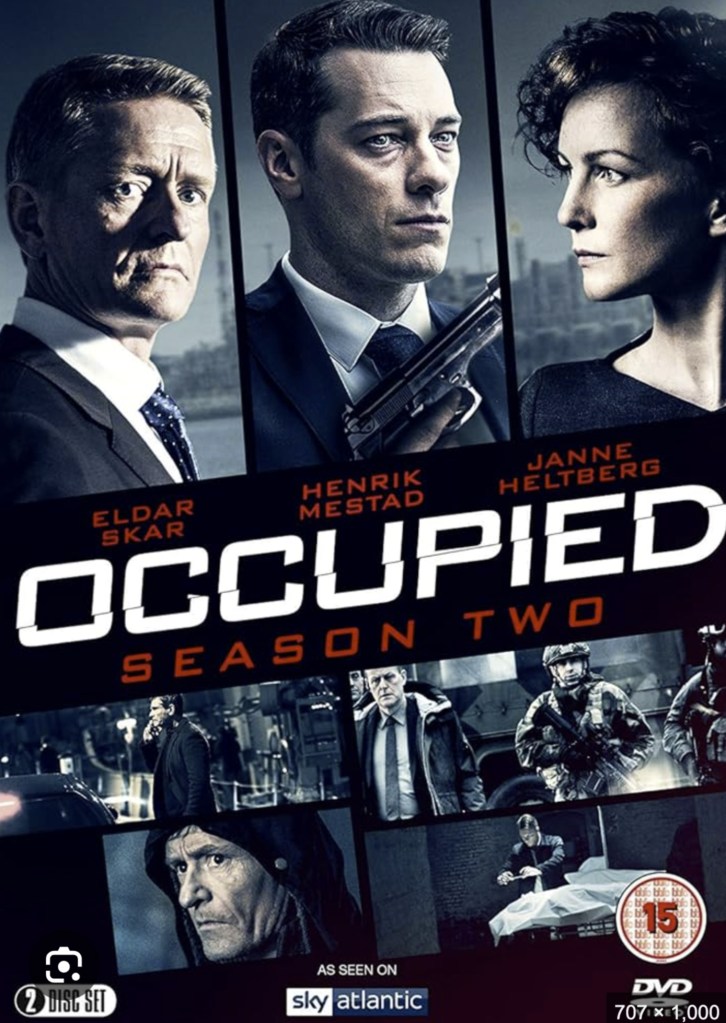
In 2016, Occupied (Okkupert), Norway’s most expensive television production to date captivated viewers across Europe. A political thriller about a Green prime minister, committed to renewable energy, overthrown by close neighbour Russia to control his country’s abundant natural gas and oil reserves gripped many viewers, left on the edge of their seats when episode 10 failed to resolve the deadlock. In a review entitled “Bear Lurking in the Fjords” Mark Melton of Providence noted that the first episode of Occupied broke the channel’s rating records as more than 50% of viewers aged 20 to 49 watched, and the show went on to Netflix with English subtitles.
.
The Norwegian Prime Minister Jesper Berg (Henrik Mestad) faces hard decisions in Occupied
.
Melton shares the intriguing premise. “Sometime in the near future, civil wars prevent Middle Eastern countries from exporting enough oil to meet global demand. Energy independent due to shale gas, an isolationist United States no longer sees a need to have a global presence and pulls out of NATO [shades of the present!] Meanwhile, global warming has become so rampant that a hurricane hits Norway and kills over 600 people. In response, Norwegians elect environmentalists who halt all oil production to help stop climate change. Without Norway’s oil, the European Union falls into a crippling recession. Because the Norwegian Prime Minister refuses to budge, the EU asks Russia to occupy Norway and restart oil production.”
What follows is a captivating three season political action-thriller that explores potential real-life questions for leaders throughout the world. When the first season of Occupied aired, the Russians were a fictional threat. Now, it seems, reality has caught up to fiction.
Melton writes that when Jo Nesbø, a well known Norwegian crime novelist, first pitched the story, people told him the idea was far-fetched. Then the real-world Russian invasion happened on the day the show started shooting, adding tremendous relevance to the fiction envisaged. Given the post-Crimea tensions (and what is now happening in the Ukraine), it is not surprising that the Russian government is not pleased with Occupied adds Melton. Before the show aired, the Russian ambassador in Oslo complained that the show would frighten “the Norwegian audience with a non-existing threat from the east.”
.
The three season series moves at a swift pace with Season One quickly instating the Russian occupation as the Norwegian PM Jesper Berg (Henrik Mestad) sells Norway’s future to prevent bloodshed from its Russian aggressors. Resistance flares up and intrigue rises from all quarters including the Russian occupiers with some Norwegians profiting from the occupation and others arming themselves and doing sabotage.
Hans Martin Djupbik (Eldar Skar) stops an assassination
.
I found Prime Ministerial bodyguard Hans Martin Djupbik (Eldar Skar), who at one point saves the life of Russian Ambassador Irina Sidorova (Ingeborga Dapkunaite), one of the show’s most intriguing characters. Eventually becoming head of state security, Hans Marin plays a difficult balancing act between Norwegian and Russian interests in the conflict between principle and realpolitik. Ultimately, this unsustainable position impacts him on several levels, including his personal life, as forces literally pull him apart.
Melton notes that Hans Martin first appears as an archetypal hero who uses his position in security and intelligence to help save democracy. And viewers, says Melton, have many opportunities to cheer for him. However, given his unique position and relationship with the Russian occupiers, his actions at times become morally ambiguous and this catches up with him in season three, which is a heartbreaker. I wasn’t happy with how it ended for Hans Martin, who, in my opinion was not just a main protagonist, but also the show’s chief casualty and archetype for integrity and even innocence. It was hard to watch as the relentless political machinations seized him in a vicious spider web of nefarious intrigue even as he tried so hard to play fair throughout. Given the show’s trajectory, the shocking end of season three seemed inevitable and necessary; for in his final and tragic act, Hans Martin re-affirmed his integrity and archetype as hero for democracy and freedom.
.
In a ruthless war for resources and sovereignty, Hans Martin—like heroic integrity—becomes the main casualty.
.
Hans Martin Djupbik (Eldar Skar) follows a lead
.
Given the current situation today, Occupied appears frighteningly prescient and possible. “Democracy is a key value that becomes a rallying cry for the resistance,” writes Melton. “Without a strong NATO these characters struggle to preserve their freedoms and democracy. Norway spends more on its military today than it did at the end of the Cold War (adjusted for inflation), but other NATO countries provide equipment and personnel necessary for Norway’s defense. It is easy to understand why Norwegians may fear a world without the alliance. Occupied has reminded European audiences what Russia has already done,” and what it may yet do…
.
The Norwegian PM and his aide discuss next moves
.
The intriguing machinations of geopolitics aside, Occupied is foremost an environmental thriller about the specter of climate change. In 2020, Taylor Antrim of Vogue writes: “Occupied is the most relevant thing on TV right now, a hyper-entertaining drama that treats the climate emergency with the seriousness it deserves.” In his review entitled, “Occupied is the Climate-Crisis Thriller You Should Be Watching,”Antrim tells us that “Norway is one of those hyper-progressive, enlightened countries that should be free of the world’s social ills—but what unfolds on Occupied is a cheat sheet of all the disquieting trends of our time. First, the country becomes gripped by nativism, with ‘Free Norway’ activists turning on ordinary Russians living within their borders. Then there are escalating acts of domestic terrorism and violence. And by season three, in which climate warriors turn to guerrilla cyber tactics and Free Norway activists commit grotesque acid attacks on accused Russian collaborators, Berg has been transformed from an idealist into a power-mad operator. The brilliance of the show is you never know whom to root for. The stalwart and handsome head of the security services? The crusading Marxist journalist? The steely Russian diplomat who understands realpolitik better than anyone?”
.
Russisn diplomat Irina Sidorova and head of Norwegian Security Hans Martin talk deals
.
.
In the end, Antrim exhorts: “Occupied may be entertainment, but the extreme measures its young eco-activists are fighting for (an entirely renewables-based energy system) no longer seem extreme. This is a show that understands that we are marching toward a tipping point, and by the climactic end of the season a desperate, riven country is demanding that the world change its path at any cost.”
Nina Munteanu is a Canadian ecologist / limnologist and novelist. She is co-editor of Europa SF and currently teaches writing courses at George Brown College and the University of Toronto. Visit www.ninamunteanu.ca for the latest on her books. Nina’s bilingual “La natura dell’acqua / The Way of Water” was published by Mincione Edizioni in Rome. Her non-fiction book “Water Is…” by Pixl Press (Vancouver) was selected by Margaret Atwood in the New York Times ‘Year in Reading’ and was chosen as the 2017 Summer Read by Water Canada. Her novel “A Diary in the Age of Water” was released by Inanna Publications (Toronto) in June 2020.




































 Nina Munteanu Writing Coach