The Careful Writer: Common Pitfalls of the Beginning Novelist: Part 2–Language

patterns2-log-beetl holes-LR

Log with insect bores (photo by Nina Munteanu)

Here are five things that I guarantee will improve your story:

  1. Voice: This is the feel and tone that applies to the overall book (narrative voice) and to each character. The overall voice is dictated by your audience, who you’re writing for: youth, adults, etc. It’s important to give each character a distinctive “voice” (including use of distinct vernacular, use of specific expressions or phrases, etc.). This is one way a reader can identify a character and find them likeable—or not. In a manuscript I recently reviewed, I noticed that the characters spoke in a mixture of formal and casual speech. This confuses the reader and bumps them out of the “fictive dream”. Consistency is very important for readers. They will abandon a story whose writing is not consistent. So, my advice to this writer was to pick one style for each character and stick to it. Voice includes what a character says. It incorporates language (both speech and body movements), philosophy, humor. How a character looks, walks, talks, laughs, is all part of this. Let’s take laughter for instance: does your character tend to giggle, titter, chortle, gafaw, belly-laugh? Do any of your characters have conflicts with one another? Either through differences in opinions, agendas, fears, ambitions… etc. One learns so much from the kind of interaction a character has with his/her surroundings (whether it’s another character or a scene).
  2. Point of View (POV): Many beginner’s novels are often told through no particular POV. Many first manuscripts often start in the omniscient POV (that of the narrator) and ever so often may lapse into one of the character’s POV briefly. This makes for very “telling vs showing” type of writing (not to mention being inconsistent again). 90% of writers do not write this way because it tends to be off-putting, it distances the reader from the characters, and is very difficult to achieve and be consistent with. Most writers prefer to use limited third person POV (told from one or a few key characters; that is, you get into the head and thoughts of only a few people: all the observations are told through their observations, what they see, feel and think). This bonds the reader to your characters and makes for much more compelling reading. I would highly suggest you adopt this style. That’s not to say that you can’t use several POVs… just not at the same time; it is the norm to use chapter or section breaks to change a POV.
  3. Passive vs. Active Verbs: beginners often use a lot of passive verbs (e.g., were, was, being, etc.). Some use too may modifiers. Try to find more active verbs. Many writers fall into the pattern of using verbs that are weak and passive (and then adding a modifier to strengthen it…it doesn’t). Actively look for strong, vivid verbs. This is a key to good writing. I can’t emphasize this enough. For instance, which version is more compelling: ‘she walked quickly into the room’ or ‘she stormed into the room’?
  4. Show, don’t tell: this is partly a function of POV and use of active verbs. Once you change to 3rd person, much of this will naturally resolve itself. An example of telling vs. showing is this: [He was in a rage and felt betrayed. “You lied, Clara,” he said angrily, grabbing her hand.] instead, you could show it: [His face smoldered. “You lied, Clara,” he roared, lunging for her.] Telling also includes large sections of exposition, either in dialogue or in narrative. This happens a lot in beginning writer’s stories. It takes courage and confidence to say less and let the reader figure it out. Exposition needs to be broken up and appear in the right place as part of the story. Story is paramount. “Telling” is one of the things beginning writers do most and editors will know you for one right away. Think of the story as a journey for both writer and reader. The writer makes a promise to the reader that s/he will provide a rip-roaring story and the reader comes on side, all excited. This is done through a confident tease in the beginning and slow revelation throughout the story to keep it compelling. Exposition needs to be very sparingly used, dealt out in small portions.
  5. TheFictionWriter-NMUnclutter your writing: There is a Mennonite adage that applies to writing: “less is more”. Sentences in early works tend to be full of extra words (e.g., using “ing” verbs, add-ons like “he started to think” instead of simply “he thought”). Cut down the words in your paragraphs (often in the intro chapters) by at least 20%. Be merciless; you won’t miss them, believe me, and you will add others later in your second round of edits.


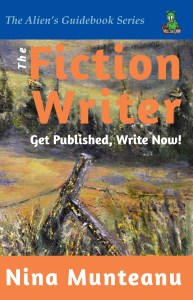
This is an excerpt from The Fiction Writer: Get Published, Write Now! (Starfire)


nina-2014aaNina Munteanu is an ecologist and internationally published author of award-nominated speculative novels, short stories and non-fiction. She is co-editor of Europa SF and currently teaches writing courses at George Brown College and the University of Toronto. Visit www.ninamunteanu.ca for the latest on her books.

The Careful Writer: Common Pitfalls of the Beginning Novelist: Part 1–Characters

patterns2-log-beetl holes-LR

Decaying log with insect bores (photo by Nina Munteanu)

Have you ever wondered how an editor decides not to read your cherished tome past the second paragraph of the first page and has pegged you as a beginning writer? This used to really bug me… Now, as a published author, mentor, and writing coach I read a lot of unpublished manuscripts. I now recognize what these editors do.

So, I’d like to share what I’ve learned over the years (some of the very same comments that have been made of my work, I am now sharing with you). I’ll be providing you my advice in three parts: 1) characters; 2) language; and 3) structure.

Let’s start with characters, since they are in my opinion, the most important part of a novel:

Characters carry the theme of the book. Each character needs to have a role in advancing the plot and/or theme; each character needs a reason to be there. A character therefore needs to be distinctive and usually shows some character development (as story arc) from beginning to end of story. Your characters are the most important part of your book (more so than the plot or premise). Through them your book lives and breathes. Through them your premise, your plot (which is essentially just a way to create problems for your characters to live out their development) and story come alive. Through them you achieve empathy and commitment from the reader and his/her willingness to keep reading to find out what’s going to happen next: if the reader doesn’t invest in the characters, they won’t really care what happens next.

Characters need to be real. They come to life by giving them individual traits and real weaknesses and heroic qualities that are consistent and have qualities readers can recognize and empathize with. You play these against each other to achieve drama. For instance, a man who is afraid of heights but who must climb a mountain to save his love is far more compelling than one who is not; a military man who fears responsibility but must lead his team into battle; a scientist who is afraid of failure; etc.

Characters of beginning writers often suffer from lack of distinction, or purpose, and often simply clutter up a story. For a character to “come alive” their “voice” must be distinct. Give them distinctive body movements, dress, facial features and expressions that reveal character, inner feelings, emotions, fears, motivations, etc. Then keep them consistent. There are several techniques writers use to increase empathy for a character. This includes use of third person POV, keeping the story with focus on fewer rather than many characters, creating character dossiers and keeping them consistent, providing each character a distinctive “voice” (figuratively), as in how they behave, say, react, etc. Another way to make your characters distinct (and works to also tie into plot and theme) is to make your characters not get along. Make them argue, disagree (at least!), have suspicions, betray one another, laugh and ridicule, etc. By doing this you increase tension, conflict (two things every book requires) and you enlighten the reader into each of the characters involved. Make them fight or argue over what they believe in – or not. You need to describe your characters in effective brief but vivid language as the reader encounters them.

Here are some questions you need to ask about your characters:

  1. if I can remove the character, will the book fall apart? (if not, you don’t need that character; they aren’t fulfilling a role in the book);
  2. how does the character portray the major or minor theme of the book? (that’s what characters are there for)
  3. what is the role of the character? (e.g., protagonist, antagonist, mentor, catalyst, etc.)
  4. what is the story arc of the character? Does he or she develop, change, do they learn something by the end? If not, they will be two-dimensional and less interesting
  5. what major obstacle(s) must the character overcome?
  6. who are your major protagonist(s) (the main character who changes the most)?
  7. who are your major antagonist(s) (those who provide trouble for your protagonists, the source of conflict, tension, the obstacle: one of their own?
  8. what’s at stake: for the world (plot); for each individual (Theme) and how do these tie together? Every character has a role to fulfill in the plot and to other characters. Don’t be afraid to totally remove characters if they do not fulfill a role.

To summarize, each character is there for a purpose and this needs to be made apparent to the reader (intuitively through characterization, their failings, weaknesses, etc.). Make them bleed, hurt, cry, feel. This needs to be clear to the reader, who wants to empathize with some of them and hate others. How characters interact with their surroundings and each other creates tension, a key element to good storytelling. Tension, of course builds further with the additional conflict of protagonist with antagonists. But, in truth, it’s more fun to read about the tension from WITHIN a group that’s supposed to be together. Think of Harry Potter and what was juicy there… It wasn’t really Voldemort … it was what went on at Hogwarts between Harry and his friends and not-so-friends. That is what makes a story memorable; that is what makes a story something you can’t put down until you’ve finished it.

TheFictionWriter-NMPart 2 of the Beginning Novelist will focus on language.

This is an excerpt from The Fiction Writer: Get Published, Write Now! (Starfire)


nina-2014aaNina Munteanu is an ecologist and internationally published author of award-nominated speculative novels, short stories and non-fiction. She is co-editor of Europa SF and currently teaches writing courses at George Brown College and the University of Toronto. Visit www.ninamunteanu.ca for the latest on her books.


He said, She said: Using Dialogue

Steveston-boats

Boats in Steveston, BC (photo by Nina Munteanu)

One of the most important devices to spice up narrative and increase pace is the use of dialogue. There’s a reason for this: we read dialogue more quickly; it’s written in more fluid, conversational English; it tends to create more white space on a page with less dense text, more pleasing to the reader’s eye.  Dialogue is action. It gets readers involved.

Good dialogue neither exactly mimics actual speech (e.g., it’s not usually mundane, repetitive or broken with words like “uh”) nor on the other extreme does it proselytize or educate the reader through long discourse (unless the character is that kind of person). Good dialogue in a story should be somewhere in the middle. While it should read as fluid conversation, dialogue remains a device to propel the plot or enlighten us to the character of the speaker). No conversation follows a perfect linear progression. People interrupt one another, talk over one another, often don’t answer questions posed to them or avoid them by not answering them directly. These can all be used by the writer to establish character, tension, and relationship.

Below, I provide a few tips when using dialogue in your story.

  • Show, don’t tell: a common error of beginning writers is to use dialogue to explain something that both participants should already know but the reader doesn’t. It is both awkward and unrealistic and immediately exposes you as a novice. For instance, avoid the use of “As you know…” It’s better to keep the reader in the dark for a while than to use dialogue to explain something. Which brings us to the next point.
  • Have your characters talk to each other, not to the reader: for instance, “Hello, John, you loser drunk and wayward son of the most feared gangster in town!” could be improved to, “You stink like a distillery, John! Wait ‘til papa’s thugs find you!”
  • Avoid adverbs: e.g., he said dramatically, she said pleadingly; instead look for better ways to express the way they said it with actual dialogue. That’s not to say you can’t use adverbs (I believe J.K. Rowling is notorious for this), just use them sparingly and judiciously.
  • Avoid tag lines that repeat what the dialogue already tells the reader: e.g., “I’m sorry,” he apologized. “Do you have a dog?” she asked.
  • He said, she said: reduce tag lines where possible and keep them simple by using “said”; another sign of a novice is the overuse of words other than said (e.g., snarled, hissed, purred, etc.). While these can add spice, keep them for special places as they are noticed by the reader and will distract otherwise.
  • Pay consistent attention to a character’s “voice”: each character has a way of speaking that identifies them as a certain type of person. This can be used to identify class, education, culture, ethnicity, proclivities, etc. For instance one character might use Oxford English and another might swear every third word.
  • Use speech signatures: pick out particular word phrases for characters that can be their own and can be identified with them. If they have additional metaphoric meaning to the story, even better. For instance, I know a person who always adds “Don’t you think?” to almost everything they say. This says something about how that person… well, thinks… I knew another person who always added “Do you see?” at the end of their phrase. Again rather revealing.
  • Intersperse dialogue with good descriptive narrative: don’t forget to keep the reader plugged into the setting. Many beginning writers forget to “ground” the reader with sufficient cues as to where the characters are and what they’re doing while they are having this great conversation. This phenomenon is so common, it even has a name. It’s called “talking heads.”
  • Contradict dialogue with narrative: when dialogue contradicts body language or other narrative cues about the speaker, this adds an element of compelling tension and heightens reader excitement while telling them something important. Here are a few examples:

“How’d it go?”

“Great,” he lied.

“I feel so much better now,” she said, eyes darting away from him.

Well, you get the picture, anyway.

This is an excerpt from The Fiction Writer: Get Published, Write Now! (Starfire)


nina-2014aaNina Munteanu is an ecologist and internationally published author of award-nominated speculative novels, short stories and non-fiction. She is co-editor of Europa SF and currently teaches writing courses at George Brown College and the University of Toronto. Visit www.ninamunteanu.ca for the latest on her books.

Nina Talks Writing on Dragon Page

michael-stackpoleSome years ago, I was interviewed by Michael Stackpole (New York Times bestselling author of over 40 novels, including “I, Jedi” and “Rogue Squadron”) and Michael Mennenga (CEO of “Slice of Sci-Fi”) on Dragon Page Cover to Cover.

michael mennengaWe talked about my book “The Fiction Writer: Get Published, Write Now!” and what new writers fret over. A lot of the discussion focused on how to handle rejection and I shared my “bus terminal” model (also in my book), which worked very well. For details on our discussion about the industry and craft of writing, listen below:


DragonPage-FictionWriter

The Bus Terminal Model:

FictionWriter-front cover-2nd ed-webHere is an excerpt from The Fiction Writer, Chapter R:

One way to see your way through rejection is to find ways to distance yourself from your story once you’ve sent it off and to see the whole process of submission-rejection-acceptance as a business. The very best way to do this is to submit lots of stories and to keep submitting them. With novels, this is a little harder to do but you can certainly be working on the next one once you’ve submitted the first.

When I was writing short stories, I kept a list of what and where I submitted, along with the most important item: where to submit NEXT. At any given time, I made sure that I had at least x-number of submissions out there and each story had a designated place to go if it returned. As soon as a story came back from magazine A, I simply re-packaged it and sent it to magazine B. The critical part of the list was to have a contingency for each story: the next place where I would send the story once it returned. I was planning on the story being rejected with the hope that it would be accepted; that way, a rejection became part of a story’s journey rather than a final comment.

I ran my submissions like a bus terminal. A story was in and out so fast it never had a chance to cool off. And, since I had five other pieces out there, I could do this with little emotion. I was running a fast-paced “story depot”, after all. All my stories had to be out there as soon as possible; if they were sitting in the terminal, they were doing nothing for me.


nina-2014aaNina Munteanu is an ecologist and internationally published author of award-nominated speculative novels, short stories and non-fiction. She is co-editor of Europa SF and currently teaches writing courses at George Brown College and the University of Toronto. Visit www.ninamunteanu.ca for the latest on her books.

Eight Ways to Move From Prosaic to Spectacular

Nina-reading-Ward Is

Reading on Algonquin Island, Lake Ontario (photo by Nina Munteanu)

What makes some writing stunning and other writing lackluster? Mostly, it’s the language—the words—you use. And, it isn’t just what words you use; it’s how you use them. Here are a few things you need to consider when translating your work into something that “sings”.

  1. Use Active Verbs and Reduce Modifiers

Many writers, not just beginners, slide into the pattern of using passive and weak verbs (e.g., were, was, being, etc.). Then they add a modifier to strengthen it. It doesn’t. Actively look for strong, vivid verbs. This is the key to good writing. Active and powerful verbs move a story forward. For instance, which version is more compelling?

Jill was walking quickly into the room.

or…

Jill stomped into the room.

The second example not only more quickly and efficiently demonstrates how Jill entered the room, but demonstrates with what attitude. There is no substitute for the use of powerful, appropriate verbs in sentences.   

2. Avoid Excessive & Meaningless Prose

Novice writers often use too many words to describe an event, action or scene. An overabundance of words slows down the story and obscures plot and action. Excessive prose includes:

Repetition: many beginning writers will often first tell then show in a scene. You don’t need to do both; trust the reader to get the “show”.

Extraneous words: e.g. “he started to think” instead of “he thought”; use of the obvious such as “she saw the big man lying on the bed” instead of “a big man lay on the bed” (“she saw” is implied through her POV). This second example also demonstrates how you can shift the readers’ attention from “her seeing” (in the first phrase) to “the man lying” on the bed (in the revised phrase). This simple change can create a much more powerful sentence through the seamless shift in reader attention.

Dull description not related to plot: I recently edited a writer’s over 400-page urban fantasy that contained far too much ordinary detail. Detail that, in small doses, may have enlightened the reader on the qualities of the protagonist; but in larger doses ground the narrative to a boring halt.

When you look for a more efficient and purposeful way to say something, you cut out unnecessary detail. Remember that virtually all description should be related to the plot and theme of the story.

3. Use Alliteration, Metaphor, Simile, Personification

These devices bring lyricism and cadence and powerful imagery to your prose. However, as with anything powerful, you need to use these judiciously. Use them where you wish to convey a strong image and to punctuate your prose.

4. Be Mindful of Word Accuracy

More often than you might think, a writer inadvertently misuses a word to convey an idea or emotion. For instance, let’s consider the following sentence, which describes a character’s reaction to a dog being cruelly mishandled:

“What are they doing?” Jack said crossly.

The modifier crossly suggests that Jack lacks compassion; it infers petulant annoyance.

“What are they doing?” Jack scowled.

Scowled still suggests the same icy disdain, though it may have been delivered with false bravado or through genuine discomfort from a hidden compassion. If the writer wished to convey shock, disgust or compassion, the following would better represent that sentiment:

“What are they doing?” Jack said, eyes wide.

Or:

“What are they doing?” Jack stammered.

5. Avoid Using Words like “Felt” or “Seem”

These “telly” words prevent the reader from directly experiencing the story by imposing a level of interpretation. For example, “he felt himself falling” can be improved to “he fell”. If you want to spice up the phrase, use another verb: “he toppled” “he stumbled” or “he crashed”.

6. Read your Writing Aloud & Punctuate Your Pauses

It isn’t just a clever metaphor when they say your writing style is called your “voice”; because your readers “listen” to what you write. Reading out loud helps define cadence, tone and pace of your prose and streamlines your writing. When you read aloud, pay attention to where you naturally pause. You may wish to put in a comma, semi-colon or period there.

7. Size and Vary Your Paragraphs  

Paragraphs are visual elements that help people read; they break up text on a page in logical places to provide white space for reader ease. I’ve heard people quote the “two-inch” rule for maximum paragraph length and I concur. This is one of the reasons some passages are harder to read than others; long paragraphs are more tiring to the eye. Find those logical breaks and put them in. Varying paragraph length creates a more interesting story “landscape” for the reader. Don’t be afraid to go to some extremes like using the one sentence – or even one word – paragraph.

Looking at Ward Island from Algonquin Is.

View of Ward Island from Algonquin Island (photo by Nina Munteanu

8. Size and Vary Your Sentences  

As with paragraphs, overly long sentences can try a reader’s patience and you may lose them entirely. Too many short choppy sentences can also reduce your prose to a mundane level. Varying your sentence length in a paragraph creates the lyricism and cadence that makes prose enjoyable to read.

For more tips on how to improve your writing for publication, go check my writing guide series The Alien Guidebook Series.

nina-2014aaNina Munteanu is an ecologist and internationally published author of award-nominated speculative novels, short stories and non-fiction. She is co-editor of Europa SF and currently teaches writing courses at George Brown College and the University of Toronto. Visit www.ninamunteanu.ca for the latest on her books. Read Nina’s climate/eco-fiction Darwin’s ParadoxAngel of Chaos and Natural Selection.