The Journal Writer: Benefits of Expressive Writing

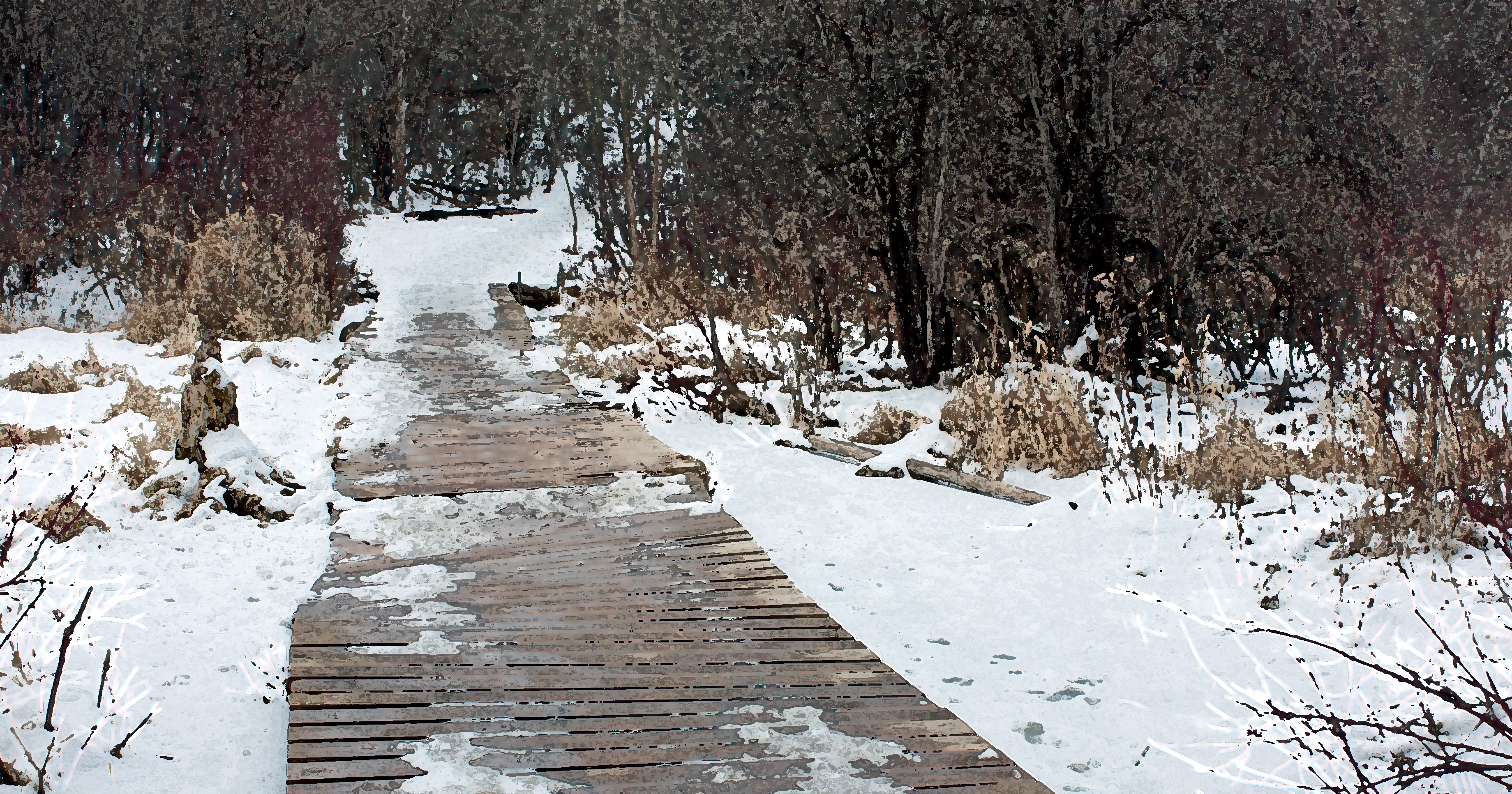
Boardwalk through marsh in a swamp forest, ON (photo and rendition by Nina Munteanu)

The creation of something new is not accomplished by the intellect but by the play instinct acting from inner necessity. The creative mind plays the objects it loves

Carl Jung

You don’t have to take my word for it or that of my writing colleagues either. Psychologists, neuroscientists and other researchers have revealed health and emotional benefits of expressive writing. The meditative action of handwriting alone has proven beneficial. Think of the poetry of laying down an intelligent pattern over a surface: the subtle “prayer” of pen to paper to the renewal of self-discovery.

Over the past 20 years, a growing body of literature has shown beneficial effects of writing about traumatic, emotional and stressful events on physical and emotional health. For instance, researchers have shown that college students writing about their deepest thoughts and feelings for only 15 minutes over 4 consecutive days experienced significant health benefits four months later (Pennebaker & Beall, 1986). Table 1 summarizes some of the long-term benefits of expressive writing.

TABLE 1: Long-Term Benefits of Expressive Writing
HealthSocial & Behavioral
Fewer stress-related visits to the doctorReduced absenteeism from work
Improved immune system functioningQuicker re-employment after job loss
Reduced blood pressureImproved working memory
Improved lung functionImproved sporting performance
Improved liver functionHigher student’s grade point average
Fewer days in hospitalAltered social and linguistic behavior
Greater psychological well-being 
Reduced depressive symptoms 
Fewer post-traumatic intrusion and avoidance symptoms 
Reference: Baikie & Wilhelm, 2005 

DeSalvo shares something a friend of hers confided to her: “Why is it that I always get sick after I finish a book, and not while I’m writing? Crazy as it sounds,” she concluded, “it must be that writing keeps me healthy.” Although writing can’t cure us, some studies suggest that it might prolong our lives, says DeSalvo. It can help us “to accomplish that shift in perspective marked by acceptance, authenticity, depth, serenity and wisdom that is the hallmark of genuine healing.”

Expressive writing produces significant benefits for people with a variety of medical problems. Some of the major ones appear in Table 2 below.

TABLE 2: Medical Conditions Benefiting from Expressive Writing
Lung functioning in ASTHMA
Disease severity (improvements in joint stiffness) in RHEUMATOID ARTHRITIS
Pain and physical health in CANCER
Immune response in HIV Infection
Hospitalisations for CYSTIC FIBROSIS
Pain intensity in women with CHRONIC PELVIC PAIN
Sleep-onset latency in POOR SLEEPERS
Post-operative course
Reference: Baikie & Wilhelm, 2005
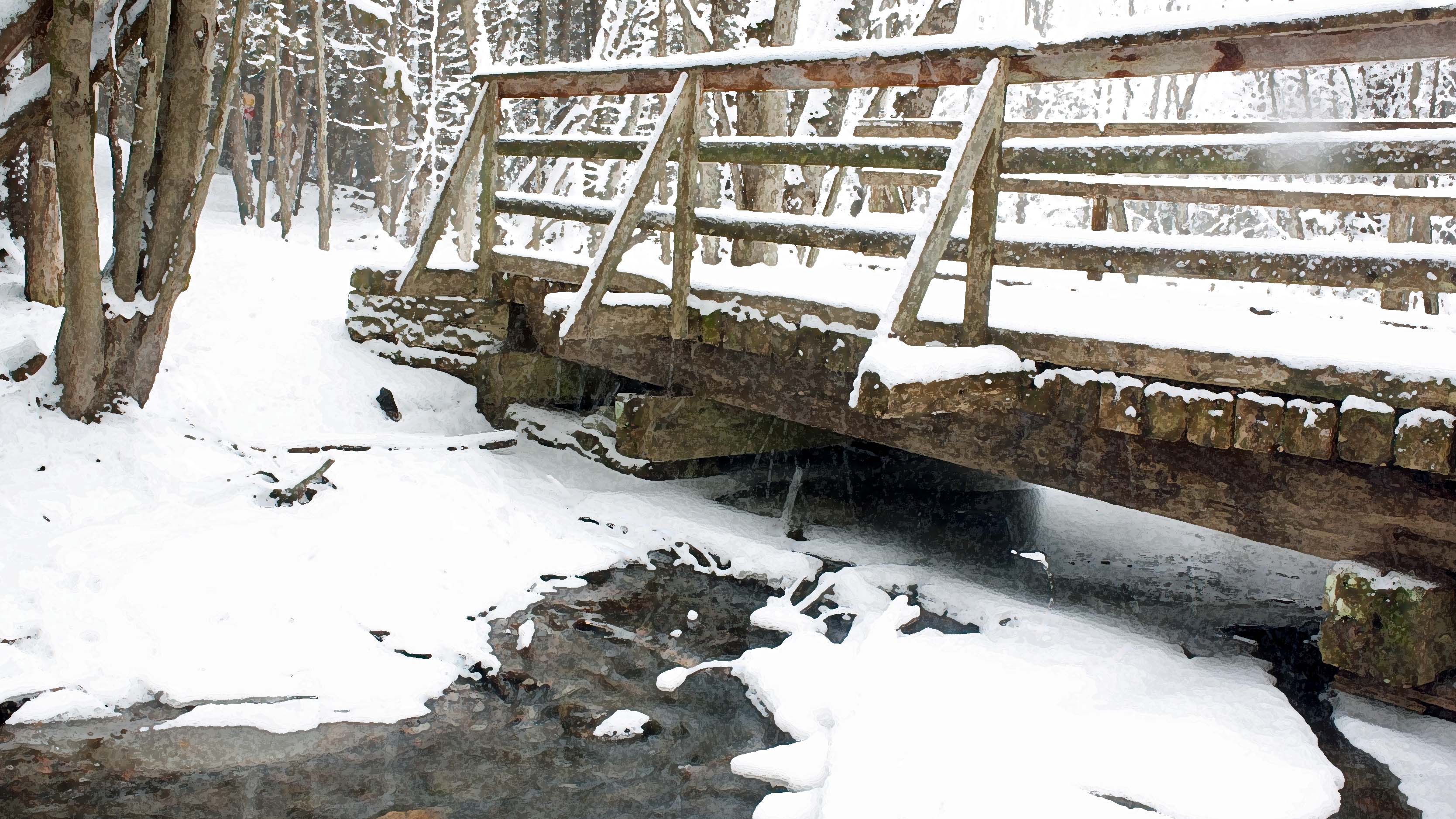
Wooden bridge over creek in a forest park, ON (photo and rendition by Nina Munteanu)

This article is an excerpt from The Journal Writer: Finding Your Voice (Pixl Press, 2013) by Nina Munteanu.

The Journal Writer is the second writing guide in the Alien Guidebook Series. This comprehensive guidebook will help you choose the best medium, style and platform for your expressive writing. The guide provides instruction on issues of safety, using the computer and electronic devices, social media and the internet.

Engaging, accessible, and easily applicable…Brava, Nina, brava.”—David Merchant, Instructor, Louisianna Tech University

Straight up, fact-filled, enriching, joyful and thorough…Nina is honest, she is human and she wants you to succeed.”—Cathi Urbonas, Halifax writer

1.7  References

Baikie, Karen & Kay Wilhelm. 2005. “Emotional and physical health benefits of expressive writing.” Advances in Psychiatric Treatment. 11: 338-346.

DeSalvo, Louise. 1999. “Writing as a Way of Healing: How Telling Our Stories Transforms Our Lives.” Beacon Press, Boston. 226pp.

Hieb, Marianne. 2005. “Inner Journeying Through Art-Journaling”. Jessica Kingsley Publishers, London, England. 176pp.

Holly, Mary Louise. 1989. “Writing to Grow. Keeping a personal-professional journal”. Heinemann. Portsmouth, New Hampshire.

Klug, Ron. 2002. “How to Keep a Spiritual Journal: a guide to journal keeping for inner growth and personal discovery.” Augsburg, Minneapolis, 4th ed.

Moon, Jennifer. 1999. “Learning Journals: A handbook for academics, students and professional development”. Kogan Page. London.

Pennebaker, James. W. 1990. “Opening Up: The Healing Power of Confiding in Others”. Morrow, New York, NY.

Pennebaker, James W., and Sandra Klihr Beall. 1986. “Confronting a Traumatic Event: Toward an Understanding of Inhibition and Disease”. Journal of Abnormal Psychology 95, no. 3: 274-81.

Munteanu, Nina. 2013. “The Journal Writer: Finding Your Voice.” Pixl Press, Vancouver. 170pp.

Nina Munteanu enjoys a snowstorm

NINA MUNTEANU is a Canadian ecologist / limnologist and novelist. She is co-editor of Europa SF and currently teaches writing courses at George Brown College and the University of Toronto. Visit  www.ninamunteanu.ca for the latest on her books. Nina’s bilingual “La natura dell’acqua / The Way of Water” was published by Mincione Edizioni in Rome. Her non-fiction book “Water Is…” by Pixl Press(Vancouver) was selected by Margaret Atwood in the New York Times ‘Year in Reading’ and was chosen as the 2017 Summer Read by Water Canada. Her novel “A Diary in the Age of Water” was released by Inanna Publications (Toronto) in June 2020.

The Journal Writer: Why Keep a Journal?

Old maple tree under snow dusting in a mixed cedar-pine forest in early winter, ON (photo and rendition by Nina Munteanu)

There are as many reasons for writing a journal as there are people in the world: to express, to heal and clarify, to create, learn and influence, to record, to celebrate, to share with friends or the world even…and everything in-between. The journal is a way to connect—to yourself and to others—with gentleness, compassion and deeper understanding. It’s a “safe home” where your deepest thoughts can reside without fear of judgment, blame or need for justification. A place where you can be just you.

Late afternoon sun glimmers through cedar-pine forest in winter, ON (photo and rendition by Nina Munteanu)

What is a Journal?

Most people think of a journal as a bound notebook with text, sketches and pasted-in mementos. But it can also be a binder full of memorabilia and notes, a collection of digital information on a computer, CD or flash drive, or an audio tape. According to Ron Klug (2002), a journal is essentially a “day book” where you record daily happenings. But it is much more than that. The journal is a tool for self-discovery, an aid to concentration and finding clarity, a “mirror for the soul”, a training ground for a writer and a good friend and confidant. It is at its heart a place of learning and being.

Mary Louise Holly (1989) describes a journal as “a reconstruction of experience and, like the diary, has both objective and subjective dimensions, but unlike diaries, the writer is (or becomes) aware of the difference. The journal…is a book that someone returns to. It serves purposes beyond recording events and pouring out thoughts and feelings. Like the diary, the journal is a place to ‘let it all out’. But the journal is also a place for making sense of what is out.” The journal helps you assess the next step and help you find direction. I talk more about this in Chapter 5 of my guide The Journal Writer: Finding Your Voice.

Swamp forest reflected in icing pond, ON (photo and rendition by Nina Munteanu)

Some reject journaling as too self-absorbing; the truth is that most of us during some part of our lives are too little connected to ourselves. We keep so busy, filling our lives with activities, filling our senses with stimuli, running at full tilt. We may be constantly communicating with others through cell phones, computers, notebooks, at school and at work. But we aren’t communicating with ourselves. For that to happen we need to quiet our minds and our environment to have a meaningful self-dialogue. This is the gift that journaling brings to us.  It helps us find the depth of ourselves and lead richer more truthful lives. The key is to use it to learn.

A journal need not be the dark brooding place many people envision when they think of diaries and journals. A journal can be a happy place, a place to celebrate one’s explorations and achievements and self-education. Here’s what journal writer Jennifer Moon (1999) says about her journal:

A journal is a friend that is always there and is always a comfort. In bad moments I write, and usually end up feeling better. It reflects back at me things that I can learn about my world and myself. It represents a private space in my life, a beautiful solitude, the moments before I go to sleep just to stop and note what there is about the day or about my life at the time. I think that it has enabled me to feel deeper and more established as a person, more in control and more trusting of life. On a less introverted note, I think that it contributes to my ability to write in general, and it underlies an interest in poetry and creative writing which awaits a quieter time in my life for fulfillment. 

–Jennifer Moon

Remember, it is just as important to record your happy, wonderful, scintillating and inspirational experiences as those dark moments.

Moss-covered base of a cedar tree under a light dust of snow in early winter, ON (photo and rendition by Nina Munteanu)

Why Keep a Journal?

Writer Louise DeSalvo shared an interesting story about what expressive writing means to her. Here’s what she said:

“Many people I know who want to write but don’t (my husband, Ernie, for example) or who want to write more than they have but say they can’t find the time (my friend Marla) have told me that taking the time to write seems so, well, self-indulgent, self-involved, frivolous even. And that finding the time to write—even a diary, much less fiction or memoir or poetry—in their busy schedules is impossible. I’ll write when I have the time, they say.”

–Louise DeSalvo

DeSalvo adds, “what if writing weren’t such a luxury? What if writing were a simple, significant, yet necessary way to achieve spiritual, emotional, and psychic wholeness? To synthesize thought and feeling, to understand how feeling relates to events in our lives and vice versa? What if writing were as important as a basic human function and as significant to maintaining and promoting our psychic and physical wellness as, say, exercise, healthful food, pure water, clean air, rest and repose, and some soul-satisfying practice?”

Journal writing encourages engagement and reflection. It helps you deepen your self-understanding and make added sense of your life and what you believe. It can provide you with added perspective on you and the world, by giving you a greater awareness of what is happening to and around you in your daily world. Writing a journal can help you write better and help improve your skills in observing, recording and interpretation. It can also help you set goals and manage your time and priorities.

Give yourself the permission to write. Give yourself the gift of expression.

Beech tree with marcescent leaves in early winter, ON (photo and rendition by Nina Munteanu)

This article is an excerpt from The Journal Writer: Finding Your Voice (Pixl Press, 2013) by Nina Munteanu.

The Journal Writer is the second writing guide in the Alien Guidebook Series. This comprehensive guidebook will help you choose the best medium, style and platform for your expressive writing. The guide provides instruction on issues of safety, using the computer and electronic devices, social media and the internet.

Engaging, accessible, and easily applicable…Brava, Nina, brava.”—David Merchant, Instructor, Louisianna Tech University

Straight up, fact-filled, enriching, joyful and thorough…Nina is honest, she is human and she wants you to succeed.”—Cathi Urbonas, Halifax writer

References:

Baikie, Karen & Kay Wilhelm. 2005. “Emotional and physical health benefits of expressive writing.” Advances in Psychiatric Treatment. 11: 338-346.

DeSalvo, Louise. 1999. “Writing as a Way of Healing: How Telling Our Stories Transforms Our Lives.” Beacon Press, Boston. 226pp.

Holly, Mary Louise. 1989. “Writing to Grow. Keeping a personal-professional journal”. Heinemann. Portsmouth, New Hampshire.

Klug, Ron. 2002. “How to Keep a Spiritual Journal: a guide to journal keeping for inner growth and personal discovery.”Augsburg, Minneapolis, 4th ed.

Moon, Jennifer. 1999. “Learning Journals: A handbook for academics, students and professional development.” Kogan Page. London.

Munteanu, Nina. 2013. “The Journal Writer: Finding Your Voice.” Pixl Press, Vancouver. 170pp.

Nina Munteanu is a Canadian ecologist / limnologist and novelist. She is co-editor of Europa SF and currently teaches writing courses at George Brown College and the University of Toronto. Visit www.ninamunteanu.ca for the latest on her books. Nina’s bilingual “La natura dell’acqua / The Way of Water” was published by Mincione Edizioni in Rome. Her non-fiction book “Water Is…” by Pixl Press(Vancouver) was selected by Margaret Atwood in the New York Times ‘Year in Reading’ and was chosen as the 2017 Summer Read by Water Canada. Her novel “A Diary in the Age of Water” was released by Inanna Publications (Toronto) in June 2020.

The Aroma of Story

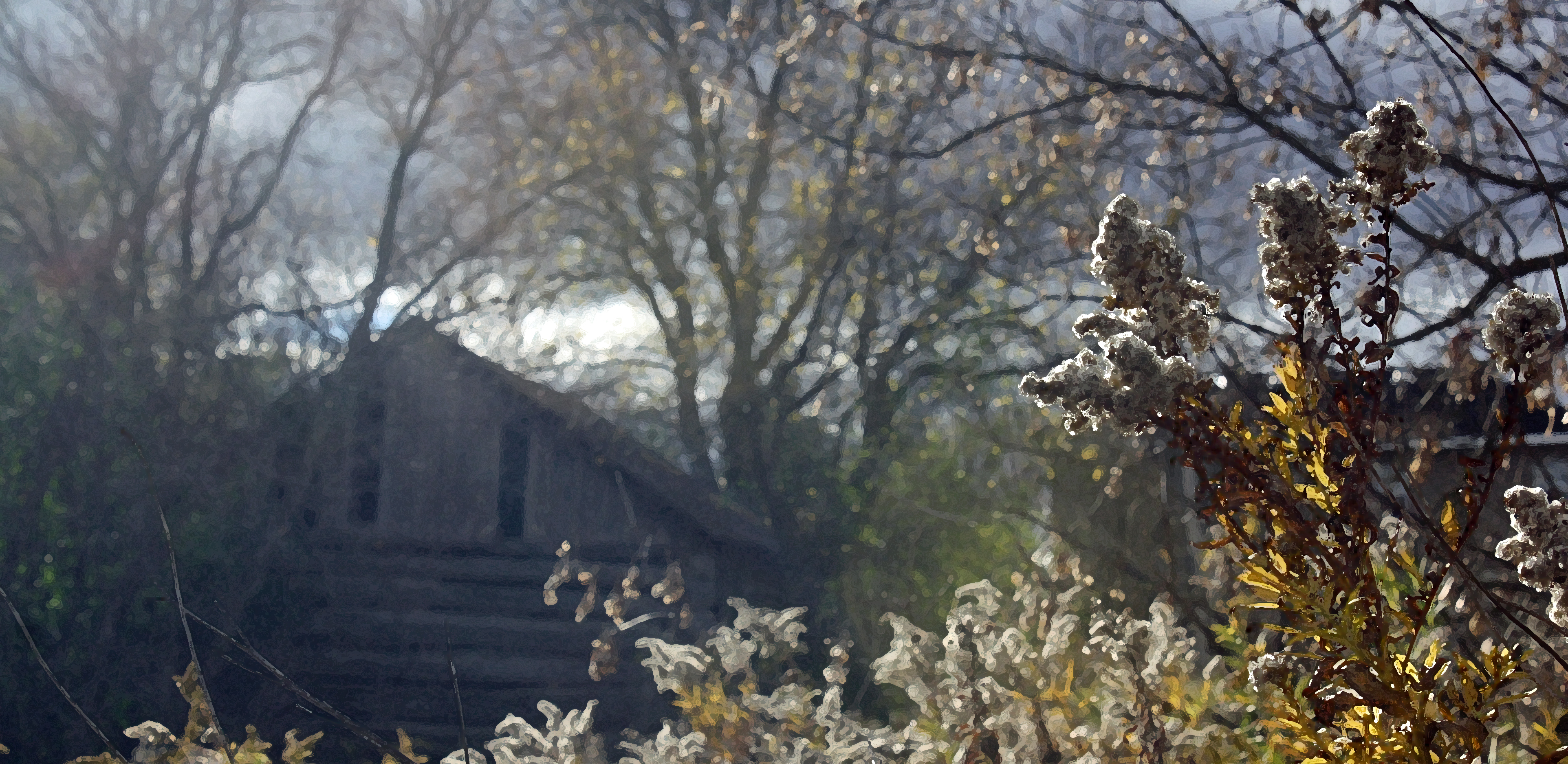
Old cabin behind seeding goldenrods, ON (photo and rendition by Nina Munteanu)

One of my favourite smells is of pipe tobacco smoke. 

But here’s the thing:  I’m really not a fan of smoking. Both my parents were chain smokers (who wasn’t back then?) and I quickly discovered that cigarette butts carried thousands of ugly toxins and lasted years on the ground. In the one rebellious occasion that I skipped school with two school mates to spend the day in the forest, I accidentally lit my hair on fire trying to light the cigarette. Taking the karmic connection seriously, I decided that was the end of both skipping school and smoking for me.   

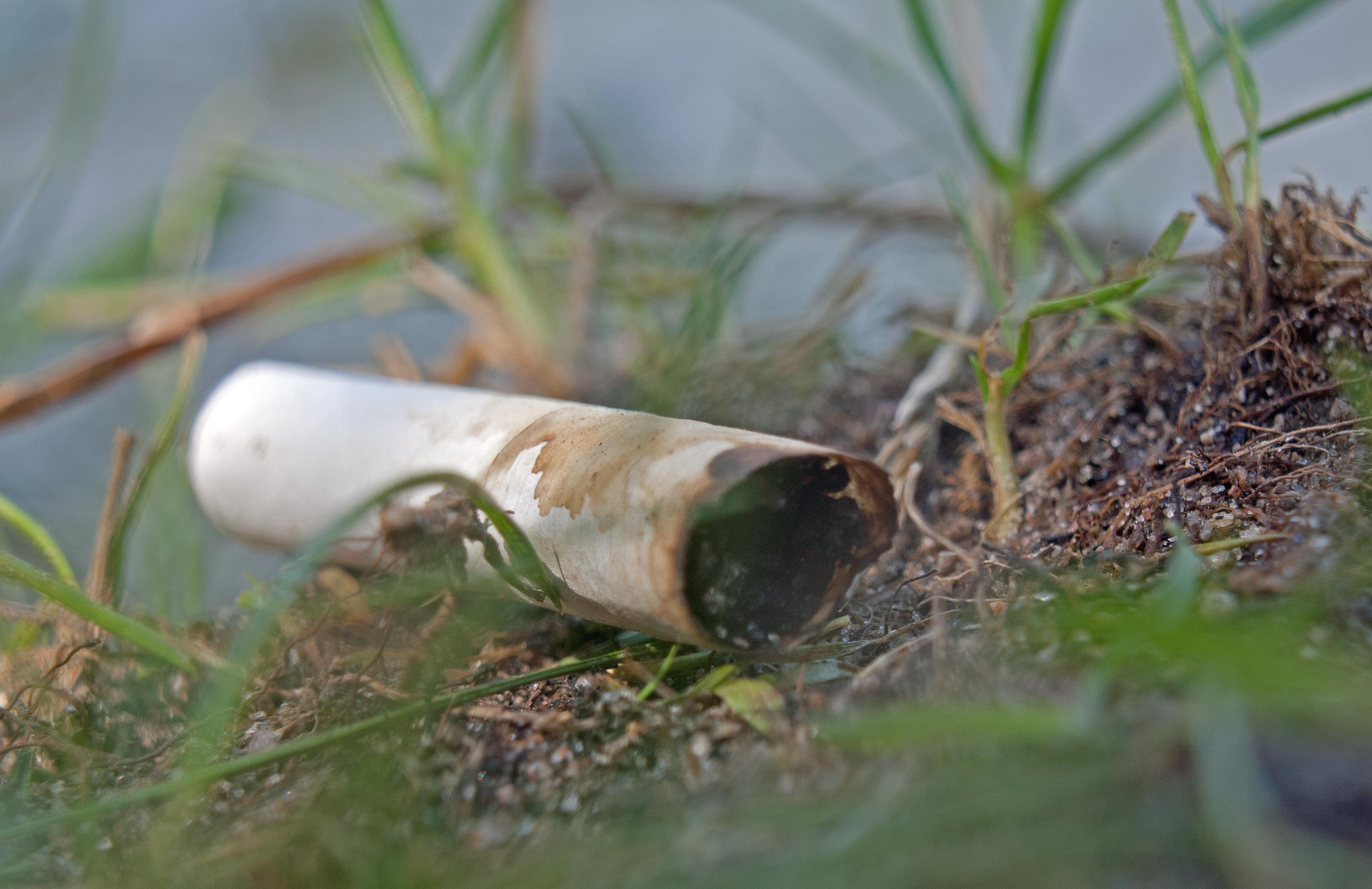
Cigarette butt found near a river in a park, ON (photo by Nina Munteanu)

So, why the allure with pipe smoke?

Well, to begin my rationalization, pipe smoke is nothing like cigarette smoke. Cigarette smoke squeals up my nose and mouth, choking my breath with an acrid burning that lodges like a smothering cancer in my throat; pipe smoke coils heavy and loose into my nostrils with lazy notes of fermenting cherry or plum.

There’s more to it, obviously . . . 

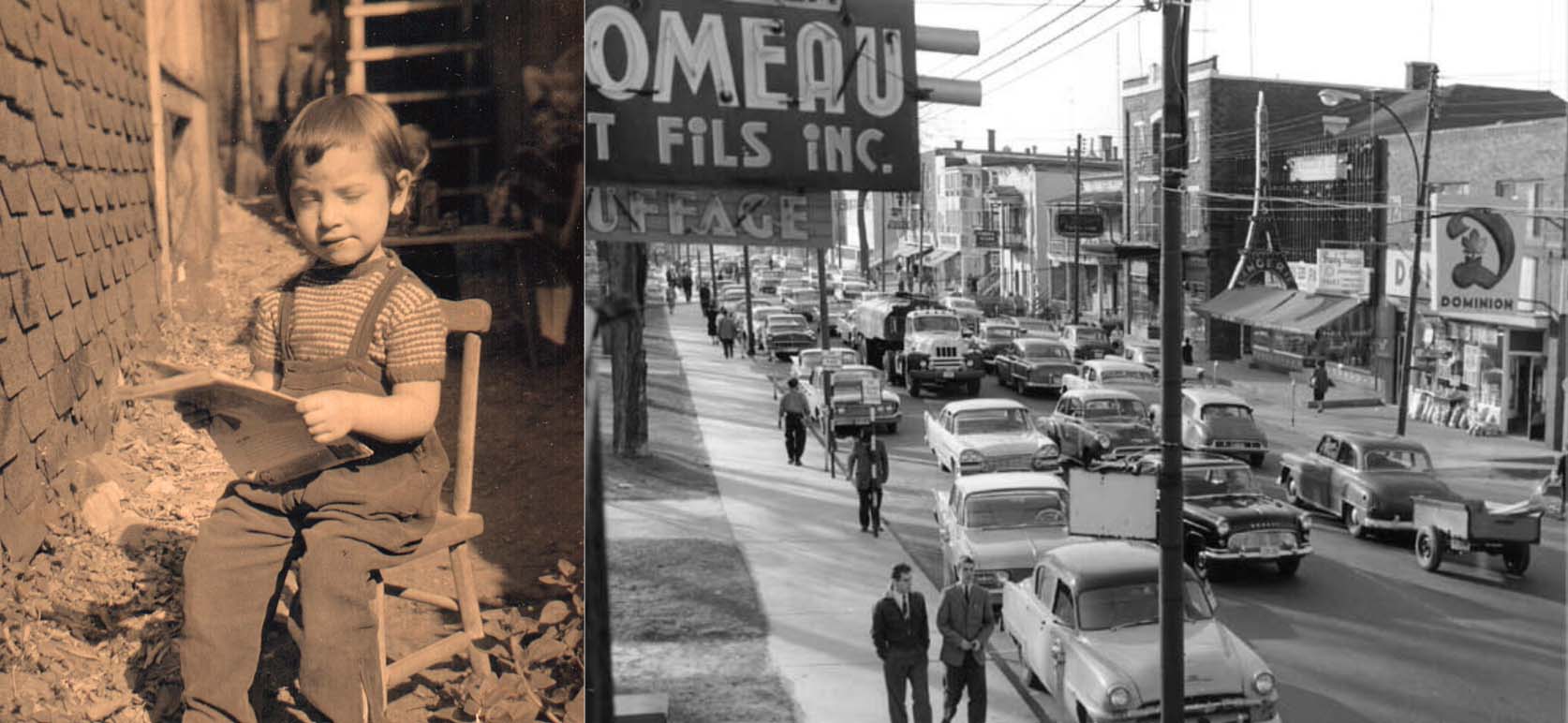
Left: Four-year old Nina Munteanu pretending to read; Right: Rue Principal in Granby, Quebec in the early 1960s

When I was little, one of my favourite things to do was hide behind the comic stand in the back corner of William’s General Store and read comic books. Superman, Supergirl, Green Lantern, Magnus Robot Fighter. So many more . . .

Mr. Williams knew I was there. I was, after all, hiding in plain sight, as kids generally do. But he was a kind man and let me stay and read for free. He recognized someone who loved story. 

The store was a typical general store of that era. Long and narrow, dark wood walls covered in paraphernalia. Shelves and stands cramped full with stuff. Anything from toys and penny candy to games, puzzles, watches, newspapers, pocket books and magazines, household necessities, shoeshine kits, canned goods and preserves, pocket knives, to cigars, pipes and the tobacco and lighters to go with them. A smoky mist settled on everything in the store and the place gave off the complex scent of old polished wood with a tobacco undercurrent. Williams might have smoked a pipe himself; I don’t recall. However, my sense-mind has wonderfully coupled that evocative aroma with a sense of freedom to immerse myself in fantastical worlds of imagination. And, in turn, to imagine my own worlds. 

That place and my experience in it not only gave me an abiding love for pipe smoke; it made me the storyteller I am today.  

Taste and smell appear to linger most in memory and yet are often neglected by writers. According to the California Institute of Technology, smell is generally considered the sense tied most closely to human memory. Smell profoundly influences people’s ability to recall past events and experiences. “A smell from your distant past can unleash a flood of memories that are so intense and striking that they seem real,” says Dr. Karl (Kruszelnicki), author of Great Moments in Science. “This kind of memory, where an unexpected re-encounter with a scent from the distant past brings back a rush of memories, is called a ‘Proustian Memory’.”

In Remembrance of Things Past, Marcel Proust writes: 

When from a long-distant past nothing subsists, after the people are dead, after the things are broken and scattered, taste and smell alone, more fragile but more enduring, more immaterial, more persistent, more faithful, remain poised a long time, like souls.

In this excerpt of The Florist’s Daughter by Patricia Hampl, fragrance permeates with meaning: 

The flower shop was here and it was my father’s domain, but it was also marvelously other, this place heavy with the drowsy scent of velvet-petaled roses and Provencal freesias in the middle of winter, the damp-earth spring fragrance of just-watered azaleas and cyclamen all mixed up with the headachey smell of bitter chocolate. 

In John Steinbeck’s East of Eden, his main character recalls the following memories, through several evocative smells: 

I remember my childhood names for grasses and secret flowers. I remember where a toad may live and what time the birds awaken in the summer— and what trees and seasons smelled like—how people looked and walked and smelled even. The memory of odors is very rich. 

Barrels of aging bourbon in Kentucky (photo by Nina Munteanu)

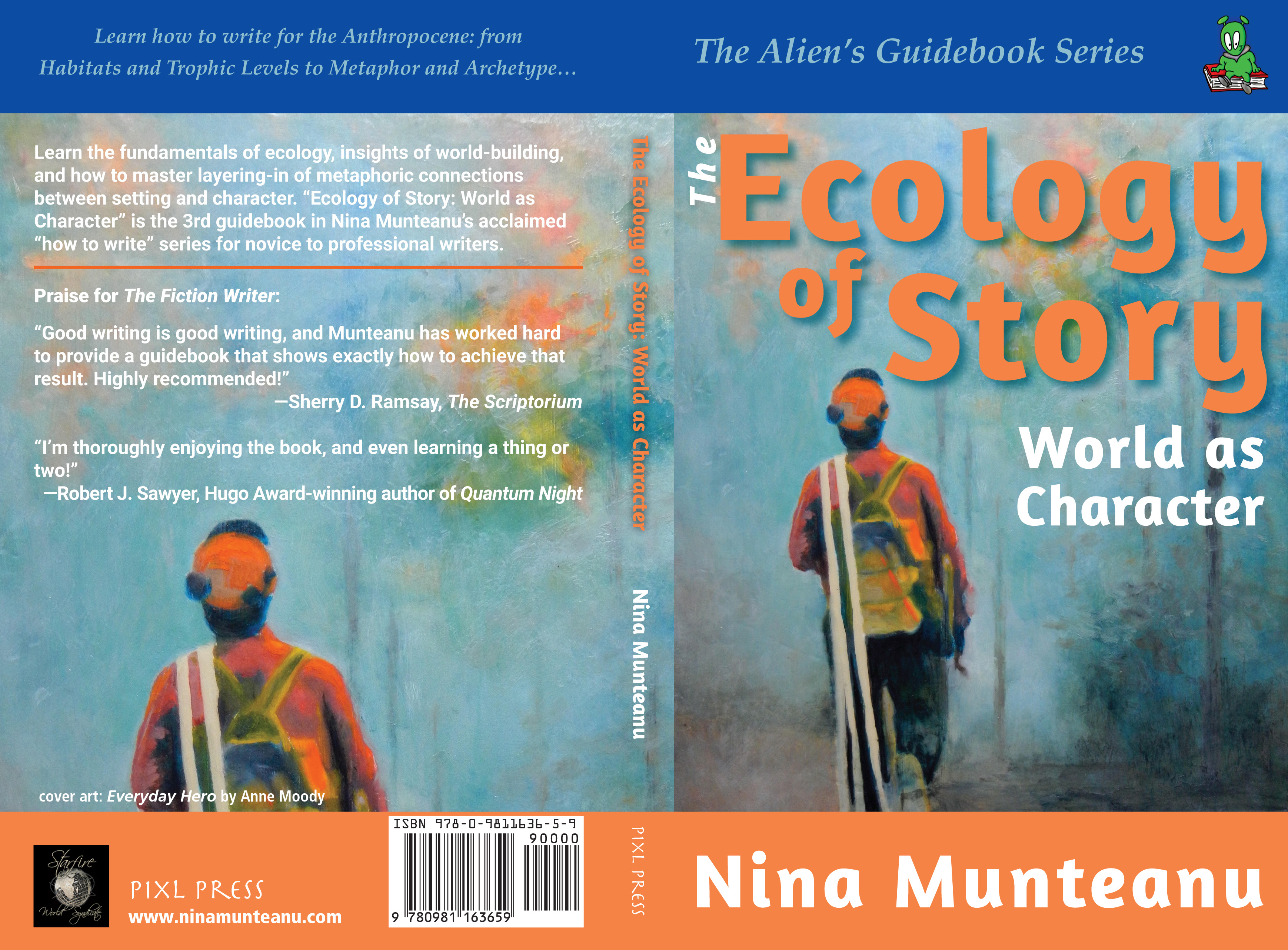
In Part 2 of my writing guidebook The Ecology of Story: World as Character, I discuss how the various senses—not just smell—are strong tools in storytelling and provide examples and working exercises.

Psychologist Michael McCollough argues that environment plays a key role in human behaviors, such as forgiveness and revenge. He theorizes that various social environments can cause either forgiveness or revenge to prevail. McCollough relates his theory to game theory. In a tit-for-tat strategy, cooperation and retaliation are comparable to forgiveness and revenge. The choice between the two can be beneficial or detrimental, depending on what the game partner (or organism) chooses. The brain’s limbic system processes external stimuli related to emotions, social activity, and motivation; these then propagate an instinctual behavioural response. Examples include maternal care, aggression, defense, and social hierarchy; these behaviours are influenced by sensory input, such as sight, sound, touch, and—of course—smell.

Parts of this article are excerpted from the third book of The Alien Guidebook Series:The Ecology of Story: World as Character.

Nina Munteanu is a Canadian ecologist / limnologist and novelist. She is co-editor of Europa SF and currently teaches writing courses at George Brown College and the University of Toronto. Visit www.ninamunteanu.ca for the latest on her books. Nina’s bilingual “La natura dell’acqua / The Way of Water” was published by Mincione Edizioni in Rome. Her non-fiction book “Water Is…” by Pixl Press(Vancouver) was selected by Margaret Atwood in the New York Times‘Year in Reading’ and was chosen as the 2017 Summer Read by Water Canada. Her novel “A Diary in the Age of Water” was released by Inanna Publications (Toronto) in June 2020.

Paradox in the Details: The Role of Place in Story

Nina Munteanu at When Words Collide 2021

A few weeks ago, I (virtually) participated in When Words Collide, one of Canada’s prime writing festivals in Calgary, Alberta. I was a featured writer, sitting on several panels and conducting presentations and lectures.
One of the two presentations I did was on the role of place in story

The role of place in story is a topic close to my heart and one I recently wrote an entire writing guidebook on: The Ecology of Story: World as Character. In my coaching sessions with writers and in my writing courses at George Brown College and the University of Toronto, I’ve observed in the novice writer a need for more effective integration of setting and place in story. All too often, the lack of meaningful integration translated into a lost opportunity to explore the POV character and the story’s theme. The lack of meaningful use of place in story can result in a lacklustre story, overly vague characterizations and a story that lacks metaphoric depth and relevance.

The presentation and following discussion drew from my guidebook Ecology of Story and I used many examples from a wide range of literature to overview topics covered in the book, such as:

  • Place as character & archetype
  • Place as metaphor (personification, symbols, allegory)
  • Place and first impressions (openings)
  • Place and emotion (over time and by POV)
  • Place through the senses
  • Place as environmental force (including climate change)

We also discussed how characters connect with their environment and I introduced the metaphoric connection between the Mi’kmaq and the white pine forests in Annie Proulx’s Barkskins, among others.

I concluded the presentation with a discussion on the “paradox in the details”: the more specific description is, the more universal its appeal. This is because the details can establish relevance and realism to the scene and the POV character experiencing them. Vagueness and lack of tangibility are avoided through specificity. The key, however, is to use details that resonate with the theme and tone of the book: as metaphor. Details as metaphor is what you want to achieve. 

Because, as Ray Bradbury once told me, “everything in story is metaphor.” 

The Ecology of Story: World as Character is presented in two parts.

Part 1 provides a comprehensive summary of the science of ecology, the study of relationships, and links to useful metaphor.

Part 2 discusses world and place in story. Here I discuss how the great writers have successfully integrated place with theme, character and plot to create a multi-layered story with depth and meaning. Part 2 also contains several writing exercises and detailed case studies.

Nina Munteanu is a Canadian ecologist / limnologist and novelist. She is co-editor of Europa SF and currently teaches writing courses at George Brown College and the University of Toronto. Visit www.ninamunteanu.ca for the latest on her books. Nina’s bilingual “La natura dell’acqua / The Way of Water” was published by Mincione Edizioni in Rome. Her non-fiction book “Water Is…” by Pixl Press(Vancouver) was selected by Margaret Atwood in the New York Times ‘Year in Reading’ and was chosen as the 2017 Summer Read by Water Canada. Her novel “A Diary in the Age of Water” was released by Inanna Publications (Toronto) in June 2020.

How To Write Great Dialogue

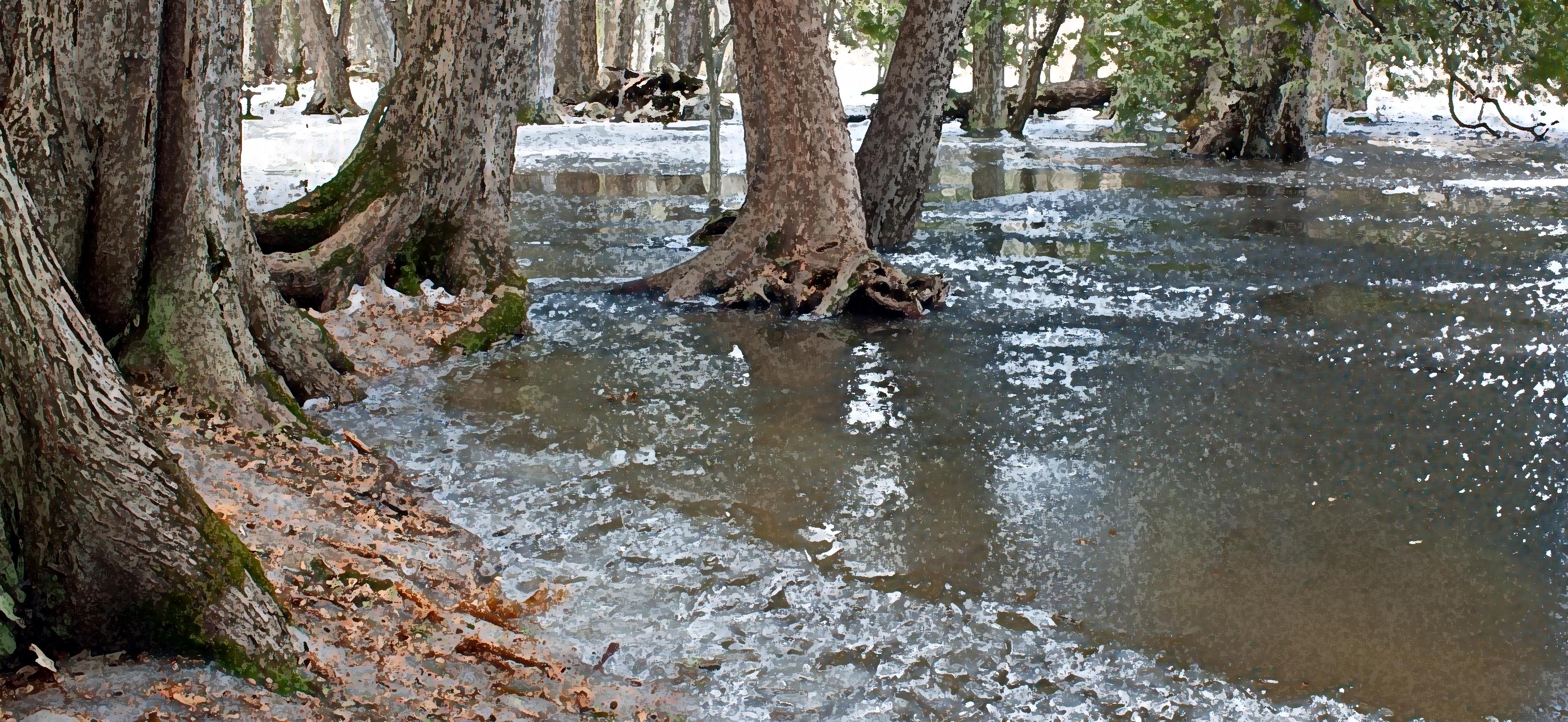
Cedar trees in ice shallows of Jackson Creek, ON (photograph and dry brush rendition by Nina Munteanu)

Dialogue spices narrative and increases pace because it is read more quickly. Dialogue is pleasing to the reader’s eye and gets readers involved. Dialogue is action.

Five tools for achieving relevant and exciting dialogue include: showing not telling; simplification; voice; interactive devices, and use of narrative.

Defining Dialogue and its Purpose in Story

Good dialogue neither mimics actual speech (e.g., it’s not usually mundane, repetitive or broken with words like “uh”) nor does it educate the reader through long discourse (unless the character is that kind of person). Good dialogue in a story should be somewhere in the middle. While it should read as fluid conversation, dialogue remains a device to propel the plot or enlighten the reader to the character of the speaker). No conversation follows a perfect linear progression. People interrupt one another, talk over one another, often don’t answer questions posed to them or avoid them by not answering them directly. These can all be used by the writer to establish character, tension, and relationship.

The writer uses dialogue to move the story along, increase tension and speed up pace. Dialogue helps define setting, characters and objects. It allows characters to confront each other and crystallizes relationships and situations. Dialogue can effectively deliver a punch or blow in a conflict. It can cue into a transition to a new scene

Show, Don’t Tell

Beginning writers commonly use dialogue to explain something that both participants should already know but the reader doesn’t. It is both awkward and unrealistic and immediately exposes the writer as a novice. Writers should avoid the use of “As you know…” It’s better to keep the reader in the dark for a while than to use dialogue to explain something. On the same note, characters should talk to one another, not indirectly to the reader through polemic or long dissertation and exposition.

Use Relevant Tag Lines and Reduce Them

When using tag lines for dialogue, take care to avoid the use of redundant tag lines. For instance: “I’m sorry,” he apologized; “Do you have a dog?” she asked. The primary purpose of a tag is to establish whois speaking, not necessarily how; the howis usually achieved through the actual speech. Novice writers tend to avoid “said” and replace with creative but distracting verbs (e.g., snarled, hissed, purred) or add excessive speech modifiers (e.g., he said pleadingly or he said dramatically). Instead, look for ways to express the way they said it in actual dialogue. Let the dialogue speak for itself. In the example—“He can’t be there!” she said in disbeliefdisbeliefis unnecessary because the dialogue already shows it. In truth, most professional writers use said and let the dialogue do the talking.

Develop Character “Voice” & Speech Signatures

Each of us develops our own idiosyncratic way of speaking, based on our ethnic background, the community or region we grew up in, our education and the circles we frequent. Writers can create a character’s distinctive “voice” by introducing a unique vernacular to each character. This can take on the form of a certain repeated phrase, a body movement (itself a “language”), a stutter or speech intonation or accent. For instance, I know a person who adds “don’t you think?” to almost everything he says. This says something about how that person thinks. Another person I know uses “do you see?” at the end of his phrase. Again, rather revealing. The writer can add additional depth to these specific traits by linking them to metaphor.

Use Oblique Conversation & Overlapping Speech

People often don’t respond directly to questions posed them. This may be due to them avoiding the question or excitement or rudeness. The writer can make use of these as devices to enlighten the reader on theme, plot and character, while making the conversation more interesting and realistic. People cut each other off or talk over one another all the time. You can incorporate this into your dialogue to achieve a note of hastiness, abruptness, nervousness or panic.

Intersperse Dialogue with Descriptive Narrative

Many beginning writers forget to “ground” the reader with sufficient cues as to where the characters are and what they’re doing while they are talking. This phenomenon is so common, it even has a name. It’s called “talking heads.” As writers we must achieve a balance between a lack of setting, which disorients the reader, and info-dump, which halts conversation and slows pace considerably. Narrative can also be used to contradict what’s actually said through body language or by simply telling the reader. My previous article “title” discusses ways you can use body language to reveal subtle undercurrent of communications between characters, the comic or tragic elements behind dialogue, and a character’s true feelings.  Here are some examples:

“How did it go?”

“Great,” he lied.

“Yes, I feel so much better now,” she said, eyes wandering from his.

Well, you get the picture. And I just revealed myself as a visual thinker…

Cedar trees inundated by ice sheet in shallows of Jackson Creek, ON (photo and dry brush rendition by Nina Munteanu)

Nina Munteanu is a Canadian ecologist / limnologist and novelist. She is co-editor of Europa SF and currently teaches writing courses at George Brown College and the University of Toronto. Visit www.ninamunteanu.ca for the latest on her books. Nina’s bilingual “La natura dell’acqua / The Way of Water” was published by Mincione Edizioni in Rome. Her non-fiction book “Water Is…” by Pixl Press(Vancouver) was selected by Margaret Atwood in the New York Times‘Year in Reading’ and was chosen as the 2017 Summer Read by Water Canada. Her novel “A Diary in the Age of Water” was released by Inanna Publications (Toronto) in June 2020.

Nina Munteanu Talks Water and Writing on Minddog TV, New York

I was recently interviewed by Matt Nappo on Minddog TV in New York, where we talked about the science and magic of water, climate change and how to not become cynical, the process of writing, what scares us and what takes us through it into great storytelling.

Here’s the interview:

Matt Nappo interviews limnologist and clifi author Nina Munteanu on minddog TV
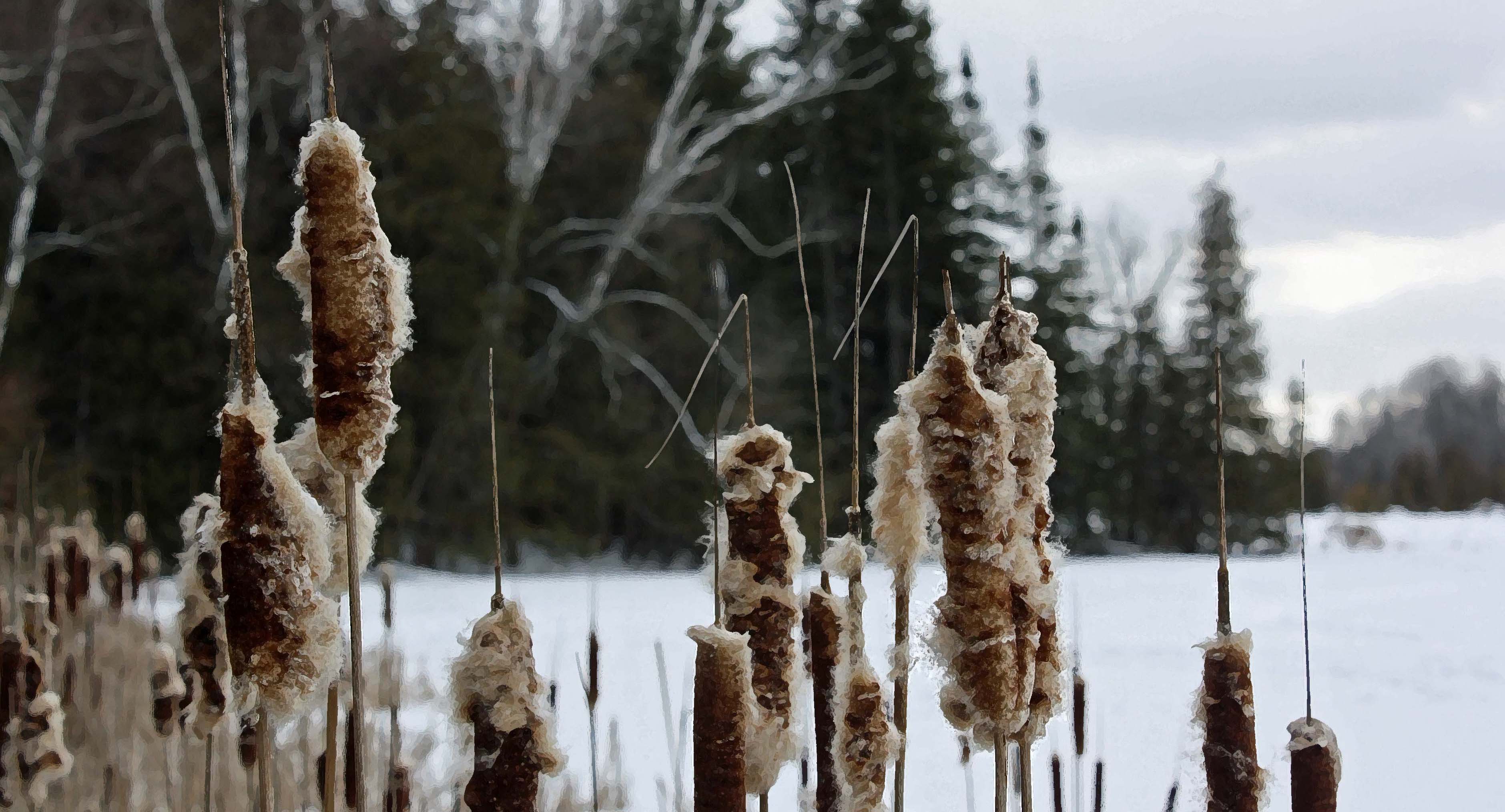
Cattails oversee the snowy plain of the iced-over Trent Canal, ON (photo and dry brush rendition by Nina Munteanu)

Nina Munteanu is a Canadian ecologist / limnologist and novelist. She is co-editor of Europa SF and currently teaches writing courses at George Brown College and the University of Toronto. Visit www.ninamunteanu.ca for the latest on her books. Nina’s bilingual “La natura dell’acqua / The Way of Water” was published by Mincione Edizioni in Rome. Her non-fiction book “Water Is…” by Pixl Press(Vancouver) was selected by Margaret Atwood in the New York Times‘Year in Reading’ and was chosen as the 2017 Summer Read by Water Canada. Her novel “A Diary in the Age of Water” was released by Inanna Publications (Toronto) in June 2020.

Eco-Fiction: What Readers Get From It and How to Prevent Polemic

Mary Woodbury on Dragonfly.eco recently shared a survey of over a hundred readers to determine the impact that eco-fiction had on them. What did environmental fiction mean to readers? What about it appealed to them? What were their favourite works? And did it incite them to action? The answers were both expected and surprising. Given the sample size and some study limitations on audience and diversity, the results are preliminary still. However, they remain interesting and enlightening.

theoverstorySome of the most impactful novels according to the readers surveyed include Barbara Kingsolver’s Flight Behavior, Richard Power’s The Overstory, Margaret Atwood’s MaddAddam trilogy, Cormac McCarthy’s The Road, Edward Abbey’s Monkey Wrench Gang, and Ursula K. Le Guin’s Hainish Cycle series.

Readers gave Woodbury several reasons why they enjoyed and found eco-novels impactful:

  • Realism or compelling account of or reflection of society, scary or not
  • Goes beyond readers’ culture–expands minds
  • Humorous
  • Story focused on characters versus an issue
  • Learned something new
  • Opened readers’ minds
  • Captured imagination
  • Positive endings
  • Good storytelling
  • Interesting characters
  • Suspense and/or psychological burn

One reader mentioned that what appealed to them about Emmi Itäranta’s Memory of Water was the style of writing. It provoked “feelings of utter beauty but also unease.”

One reader enjoyed Cormac Mccarthy’s The Road “for its spare post-apocalyptic world where even language seems to run out.”

Of Cherie Dimaline’s The Marrow Thieves a reader wrote that “The dystopic beginning felt so real, and then the positive ending was so good. I loved it and it made me think about how climate change can possibly have impacts beyond just our physical and mental health, but also our dreams!”

A reader of Frank Herbert’s Dune wrote that “it was the first time I’d seen a literary rendering of an ecosystem that felt real. The ideas of ecology are woven into this story in a way I didn’t think was possible for fiction. Interconnection is hard to think about, hard to grasp, and Dune showed me that fiction, done well, can really help with this.” The same reader acknowledged that in Annihilation Jeff VenderMeer “mastered the technique.”

FavTopics Eco-Fiction

Graph from Environmental Fiction Impact Survey by Mary Woodbury

When asked the question “Do you think that environmental themes in fiction can impact society, and if so, how?” 81% agreed and qualified their answers:

  • Fiction can encourage empathy and imagination. Stories can affect us more than dry facts. Fiction reaches us more deeply than academic understanding, moving us to action.
  • Fiction can trigger a sense of wonder about the natural world, and even a sense of loss and mourning. Stories can immerse readers into imagined worlds with environmental issues similar to ours.
  • Fiction raises awareness, encourages conversations and idea-sharing. Fiction is one way that helps to create a vision of our future. Cautionary tales can nudge people to action and encourage alternative futures. Novels can shift viewpoints without direct confrontation, avoid cognitive dissonance, and invite reframed human-nature relationships through enjoyment and voluntary participation.
  • Environmental themes can reorient our perspective from egocentrism to the greater-than-human world.
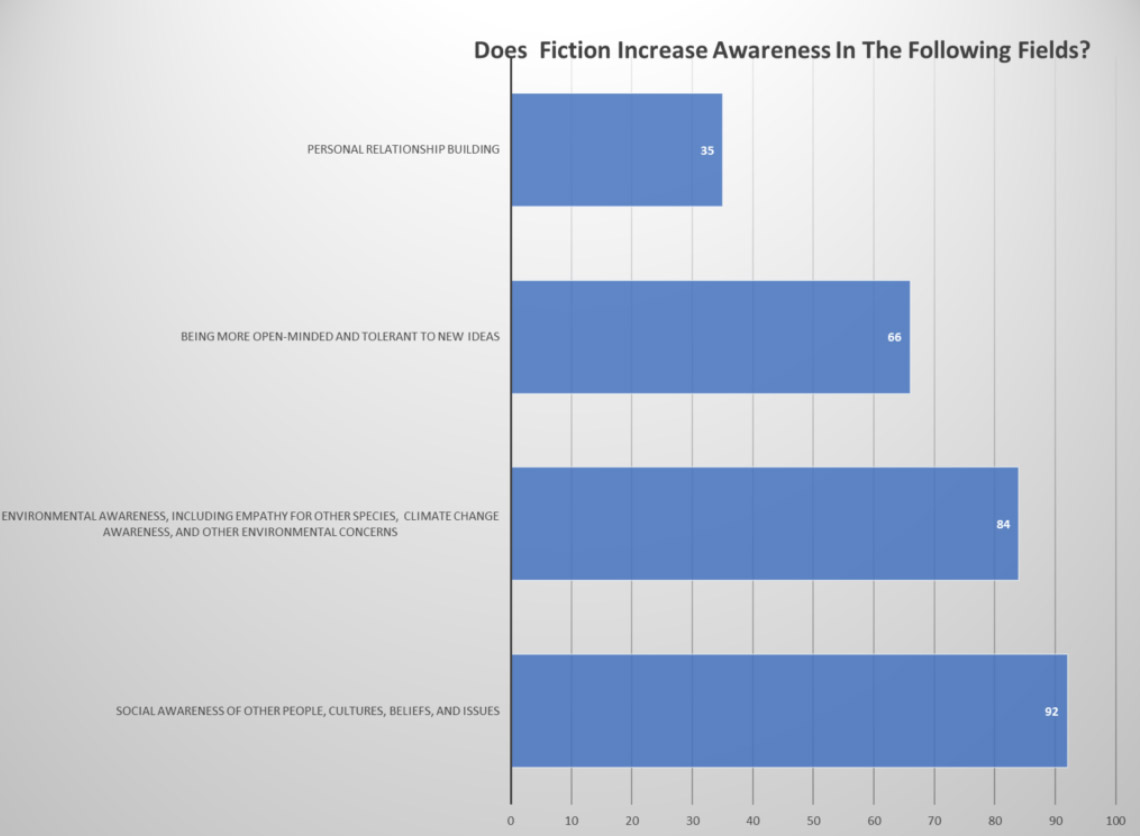
Awareness in Fields

Graph from Environmental Fiction Impact Survey by Mary Woodbury

In summary, Woodbury writes:

“The sample size (103) seems to be a good one for people who are mostly familiar with the idea of eco-fiction (and similar environmental/nature fiction genres and subgenres), though I was still hoping to get a larger, more diverse group of participants. The majority of respondents were highly educated middle-aged women. The majority of the group read from 1-29 novels a year. Favorite novels represented mostly North American or European authors (male and female about equally, with J.R.R. Tolkien, Barbara Kingsolver and Margaret Atwood consistently a favorite), with the majority of readers enjoying literary fiction the most, followed by dystopia/utopia and then science fiction.”

Woodbury notes that the genres of science fiction and fantasy were well represented in the survey, “both as favorite and most impactful novels, despite literary fiction being the favorite genre among the participants.” Of novels that respondents enjoyed, “readers were most impacted by good storytelling.” Polemic was not well regarded.


Achieving Impactful Eco-Fiction & Avoiding Polemic Through Use of Metaphor

The key to impact and enjoyment for a reader lies in good storytelling. The very best storytelling uses metaphor and oblique description to achieve a deeper meaning. The greatest art must be left to interpretation; not directly dispensed. Great art is felt and experienced viscerally; not just taken in intellectually. Great art shows; not tells.

EcologyOfStoryIn my writing guidebook The Ecology of Story: World as Character, I discuss the various ways that the use of metaphor achieves depth and meaning in story, particularly in eco-fiction. One impactful way is in the choice of setting. In the chapter on Place as Metaphor, I write:

Everything in story is metaphor, Ray Bradbury once told me. That is no more apparent than in setting and place, in which a story is embedded and through which characters move and interact.

Metaphor is the subtext that provides the subtleties in story, subtleties that evoke mood, anticipation, and memorable scenes. Richard Russo says, “to know the rhythms, the textures, the feel of a place is to know more deeply and truly its people.” When you choose your setting, remember that its primary role is to help depict theme. This is because place is destiny.

What would the book Dune be without Arrakis, the planet Dune? What would the Harry Potter books be without Hogwarts?

Metaphor provides similarity to two dissimilar things through meaning. In the metaphor “Love danced in her heart” or the simile “his love was like a slow dance”, love is equated with the joy of dance. By providing figurative rather than literal description to something, metaphor invites participation through interpretation.

When I write “John’s office was a prison,” I am efficiently and sparingly suggesting in five words—in what would normally take a paragraph—how John felt about his workplace. The reader would conjure imagery suggested by their knowledge of a prison cell: that John felt trapped, cramped, solitary, stifled, oppressed—even frightened and threatened. Metaphor relies on sub-text knowledge. This is why metaphor is so powerful and universally relevant: the reader fully participates—the reader brings in relevance through their personal knowledge and experience and this creates the memorable aspect to the scene.

Metaphor is woven into story through the use of devices and constructs such as depiction of the senses, personification, emotional connections, memories, symbols, archetypes, analogies and comparisons. Sense, and theme interweave in story to achieve layers of movement with characters on a journey. All through metaphor.

Symbols and Archetypes

In Emmi Itäranta’s Memory of Water—about a post-climate change world of sea level rise—water is a powerful archetype, whose secret tea masters guard with their lives. Water, with its life-giving properties and other strange qualities, has been used as a powerful metaphor and archetype in many stories: from vast oceans used as a powerful metaphor and archetype in many stories: from vast oceans of mystery, beauty and danger—to the relentless flow of an inland stream. Margaret Atwood’s The Penelopiad is one example:

Water does not resist. Water flows. When you plunge your hand into it, all you feel is a caress. Water is not a solid wall, it will not stop you. But water always goes where it wants to go, and nothing in the end can stand against it. Water is patient. Dripping water wears away a stone. Remember that, my child. Remember you are half water. If you can’t go through an obstacle, go around it. Water does.

In my short story The Way of Water (La natura dell’acqua), water’s connection with love flows throughout the story:

The Way of Water-COVERThey met in the lobby of a shabby downtown Toronto hotel. Hilda barely knew what she looked like but when Hanna entered the lobby through the front doors, Hilda knew every bit of her. Hanna swept in like a stray summer rainstorm, beaming with the self-conscious optimism of someone who recognized a twin sister. She reminded Hilda of her first boyfriend, clutching flowers in one hand and chocolate in the other. When their eyes met, Hilda knew. For an instant, she knew all of Hanna. For an instant, she’d glimpsed eternity. What she didn’t know then was that it was love. 

Love flowed like water, gliding into backwaters and lagoons with ease, filling every swale and mire. Connecting, looking for home. Easing from crystal to liquid to vapour then back, water recognized its hydrophilic likeness, and its complement. Before the inevitable decoherence, remnants of the entanglement lingered like a quantum vapour, infusing everything. Hilda always knew where and when to find Hanna on Oracle, as though water inhabited the machine and told her. Water even whispered to her when her wandering friend was about to return from the dark abyss and land unannounced on her doorstep. 

In a world of severe water scarcity through climate catastrophe and geopolitical oppression, the bond of these two girls—to each other through water and with water—is like the shifting covalent bond of a complex molecule, a bond that fuses a relationship of paradox linked to the paradoxical properties of water. Just as two water drops join, the two women find each other in the wasteland of intrigue. Hilda’s relationship with Hanna—as with water—is both complex and shifting according to the bonds they make and break.

Using the Senses 

Readers don’t just “watch” a character in a book; they enter the character’s body and “feel”.

How do writers satisfy the readers’ need to experience the senses fully? Description, yes. But how cold is cold? What does snow really smell like? What color is that sunset? How do you describe the taste of wine to a teetotaler?

Literal description is insufficient. To have the sense sink in and linger with the reader, it should be linked to the emotions and memories of the character experiencing it. By doing this, you are achieving several things at the same time: describing the sense as the character is experiencing it—emotionally; revealing additional information on the character through his/her reaction; and creating a more compelling link for the reader’s own experience of the sense.

Senses can be explored by writers through metaphor, linking the sense to memories, using synesthesia (cross-sensory metaphor), linking the sense psychologically to an emotion or attitude, and relating that sense in a different way (e.g., describing a visual scene from the point of view of a painter or photographer—painting with light). How a sense is interpreted by your protagonist relies on her emotional state, memories associated with that sense and her attitude.

Using Personification

TheWindupGirl Paolo BacigalupiEnvironmental forces—such as weather, climate, forests, mountains, water systems—convey the mood and tone of both story and character. These environmental forces are not just part of the scenery. To a writer, they are devices used in plot, theme and premise. They may also be a compelling character, particularly in eco-fiction, climate-fiction, and speculative fiction. Dystopian fiction often explores a violent world of contrast between the affluent and vulnerable poor that often portrays the aftermath of economic and environmental collapse (e.g., Maddaddam Trilogy, The Windup Girl, Snowpiercer, Interstellar, Mad Max). In any fiction genre it is important to get the science right. Readers of fiction with strong environmental components, however, expect to learn as much from the potential reality as from the real science upon which the premise depends.

In Memory of Water, Emmi Itäranta personifies this life-giving substance whose very nature is tightly interwoven with her main character. As companion and harbinger, water is portrayed simultaneously as friend and enemy. As giver and taker of life.
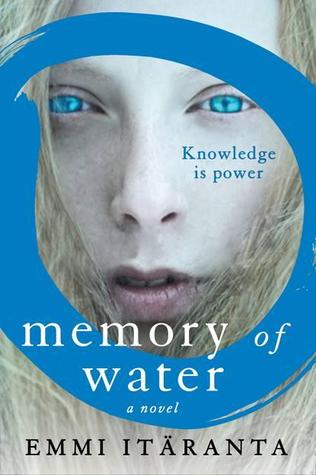
Memory of Water Emmi ItarantaWater is the most versatile of all elements … Water walks with the moon and embraces the earth, and it isn’t afraid to die in fire or live in air. When you step into it, it will be as close as your own skin, but if you hit it too hard, it will shatter you … Death is water’s close companion. The two cannot be separated, and neither can be separated from us, for they are what we are ultimately made of: the versatility of water, and the closeness of death. Water has no beginning and no end, but death has both. Death is both. Sometimes death travels hidden in water, and sometimes water will chase death away, but they go together always, in the world and in us. 

Personification of natural things provides the reader with an image they can clearly and emotionally relate to and care about. When a point-of-view character does the describing, we get a powerful and intimate indication of their thoughts and feelings—mainly in how they connect to place (often as symbol). When this happens, place and perception entwine in powerful force.

Donald Maass writes in Writing the Breakout Novel Workbook: “The beauty of seeing a locale through a particular perspective is that the point-of-view character cannot be separated from the place. The place comes alive, as does the observer of that place, in ways that would not be possible if described using objective point of view.” The POV character’s relationship to place helps identify the transformative elements of their journey. Such transformation is the theme of the story and ultimately portrays the story’s heart and soul.

Connecting Character with Environment

Strong relationships and linkages can be forged in story between a major character and an aspect of their environment (e.g., home/place, animal/pet, minor character as avatar/spokesperson for environment [e.g. often indigenous people]). In these examples the environmental aspect serves as symbol and metaphoric connection to theme. They can illuminate through the sub-text of metaphor a core aspect of the main character and their journey: the grounding nature of the land of Tara for Scarlet O’Hara in Gone With the Wind; the sacred white pine forests for the Mi’kmaq in Barkskins; The dear animals for Beatrix Potter of the Susan Wittig Albert series.

The immense sandworms of Frank Herbert’s Dune are strong archetypes of Nature—large and graceful creatures whose movements in the vast desert sands resemble the elegant whales of our oceans:

It came from their right with an uncaring majesty that could not be ignored. A twisting burrow-mound of sand cut through the dunes within their field of vision. The mound lifted in front, dusting away like a bow wave in water. 

Misunderstood, except by the indigenous Fremen, the giant sandworms are targeted as a dangerous nuisance by the colonists—when, in fact, they are closely tied to the ecological cycles of the desert planet through water and spice.
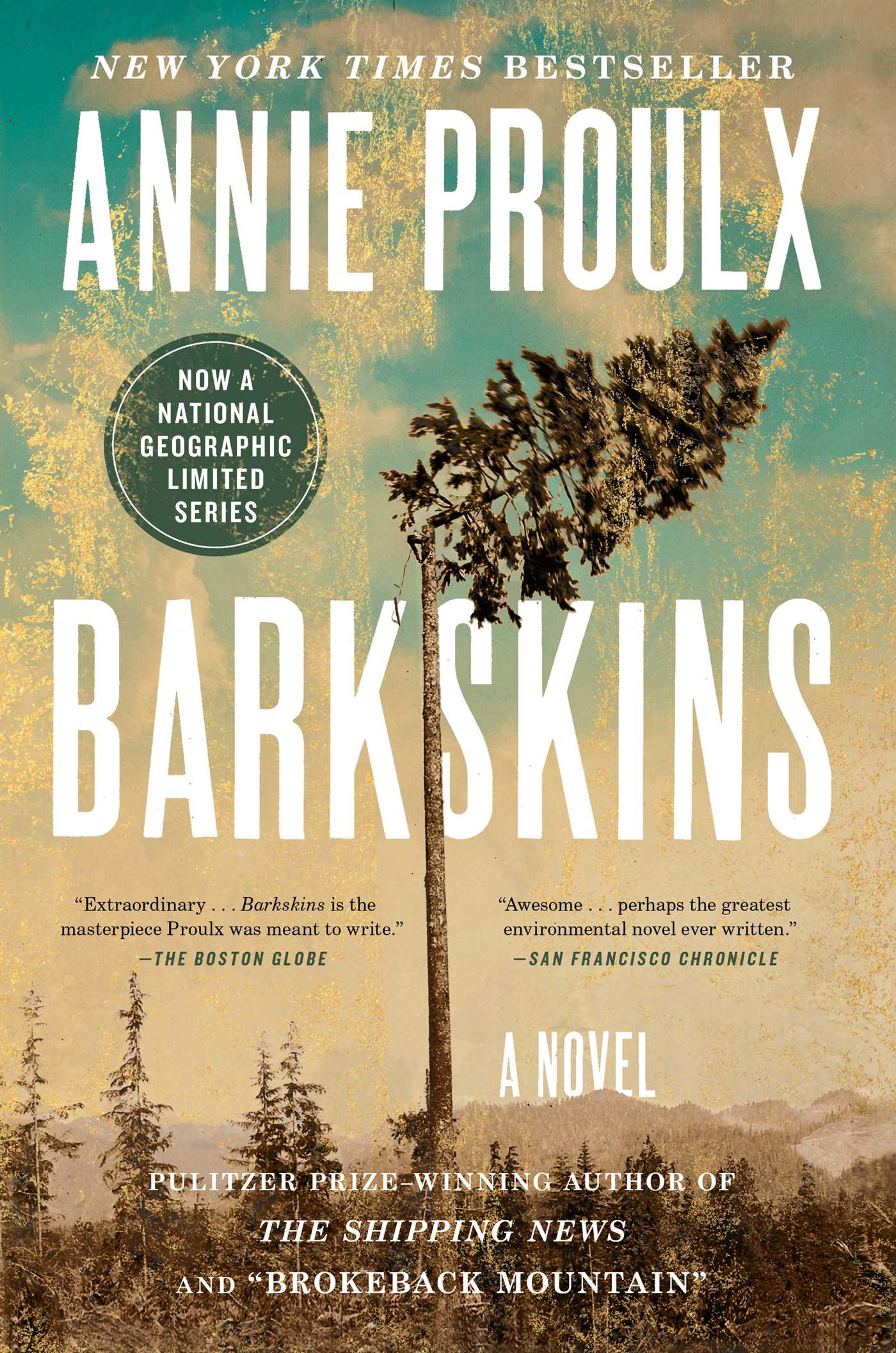
Barkskins Annie ProulxAnnie Proulx opens her novel Barkskins with a scene in which René Sel and fellow barkskins (woodcutters) arrive from France in the late seventeenth century to the still pristine wilderness of Canada to settle, trade and accumulate wealth:

In twilight they passed bloody Tadoossac, Kébec and Trois-Rivières and near dawn moored at a remote riverbank settlement … Mosquitoes covered their hands and necks like fur. A man with yellow eyebrows pointed them at a rain-dark house. Mud, rain, biting insects and the odor of willows made the first impression of New France. The second impression was of dark vast forest, inimical wilderness.

These bleak impressions of a harsh environment crawling with pests such as bébites and moustiques underlie the combative mindset of the settlers to conquer and seize what they can of a presumed infinite resource. By page seventeen, we know that mindset well. René asks why they must cut so much forest when it would be easier to use the many adequate clearings to build their houses and settlements. Trépagny fulminates: “Easier? Yes, easier, but we are here to clear the forest, to subdue this evil wilderness.” He further explains the concept of property ownership that is based on strips of surveyable land parcels—an application of the enclosure system. For them, the vast Canadian boreal forest was never-ending and for the taking: “It is the forest of the world. It is infinite. It twists around as a snake. swallows its own tail and has no end and no beginning,” Trépagny claims.
Leaves dead litter-long sh TNS

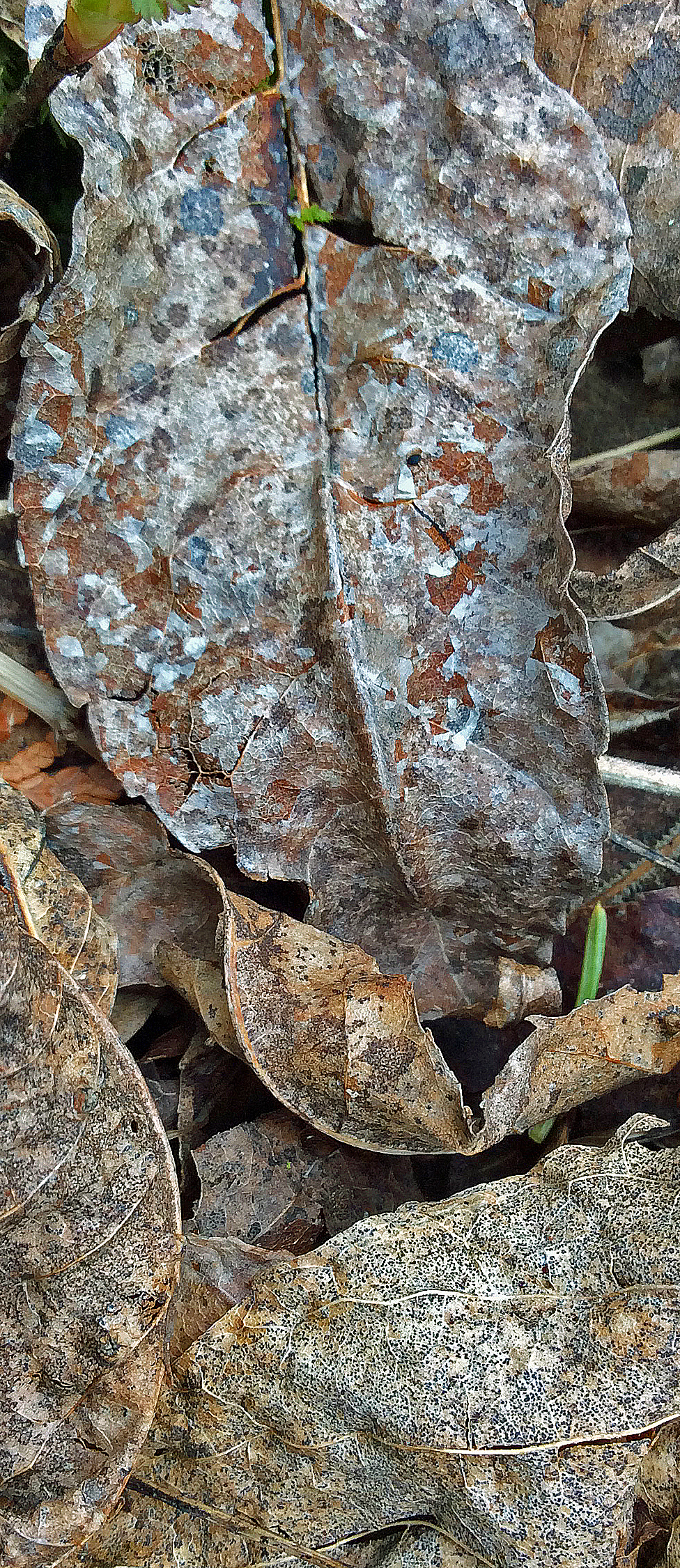
Leaf litter in Ontario forest (photo by Nina Munteanu)

Annie Proulx’s Barkskins chronicles two immigrants who arrive in Canada in 1693 (René Sel and Charles Duquet) and their descendants over 300 years of deforestation of North America; a saga that starts with the arrival of the Europeans in pristine forest and ends with a largely decimated forest under the veil of global warming. “Barkskins” (woodcutters) are, in fact indentured servants who were brought from the Paris slums to the wilds of New France to clear the land, build and settle. Sel is forced to marry a native woman and their descendants live trapped between two cultures; Duquet runs away to become a fur trader and builds a timber empire.

The Mi’kmaq are interwoven with the land and the forest. Missionary Pere Crème, who studies language makes this observation of the natives and the forest:

He saw they were so tightly knitted into the natural world that their language could only reflect the union and that neither could be separated from the other. They seemed to believe they had grown from this place as trees grow from the soil, as new stones emerge aboveground in spring. He thought the central word for this tenet, weji-sqalia’timk, deserved an entire dictionary to itself. 

The foreshadowing of doom for the magnificent forests is cast by the shadow of how settlers treat the Mi’kmaq people. The fate of the forests and the Mi’kmaq are inextricably linked through settler disrespect for anything indigenous and a fierce hunger for “more” of the forests and lands. Ensnared by settler greed, the Mi’kmaq lose their own culture and their links to the natural world erode with grave consequence. In a pivotal scene, Noë, a Mi’kmaw descendent of René Sel, grows enraged when she sees a telltale change in her brothers:

The offshore wind had shifted slightly but carried the fading clatter of boots on rock. They were wearing boots instead of moccasins. Noë knew what that meant but denied it … The men should be setting out to hunt moose, but because of the boots she knew they were going to work for the French logger.


Other Articles on Environmental Fiction, Eco-Fiction and Climate Fiction 

Can Dystopian Eco-Fiction Save the Planet?

Science Fiction on Water Justice & Climate Change

Windup Girl: When Monsanto Gets Its Way

Eco-Artist Roundtable with Frank Horvat on Green Majority Radio


Thanks to Mary Woodbury for the permission to share her survey results here. Much of the second part of this article is excerpted from the “Story” section of  The Ecology of Story: World as Character.
grape leaves in fall-halifax copy

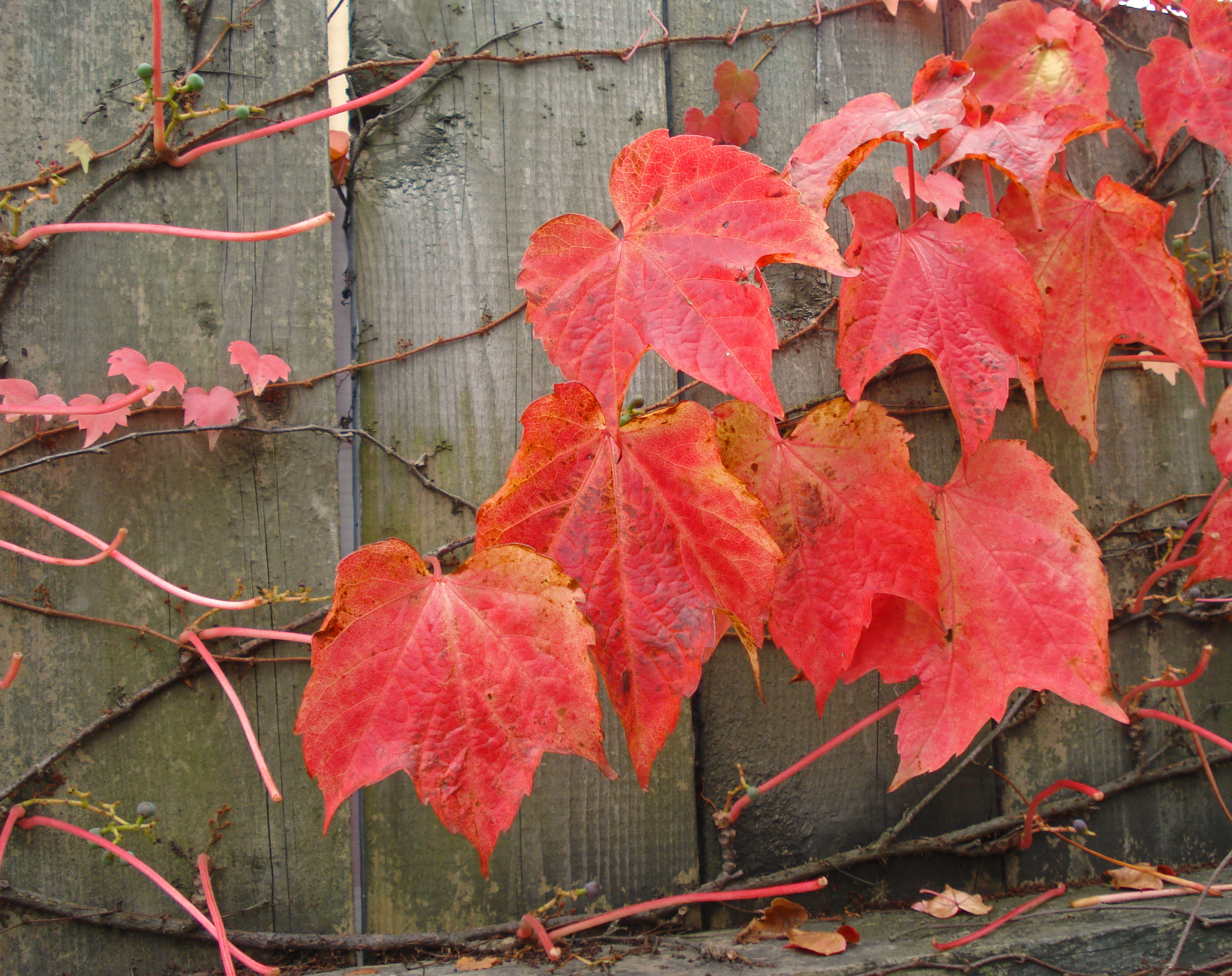
Grape leaves on fence in Toronto, ON (photo by Nina Munteanu)

nina-2014aaa

Nina Munteanu is a Canadian ecologist / limnologist and novelist. She is co-editor of Europa SF and currently teaches writing courses at George Brown College and the University of Toronto. Visit www.ninamunteanu.ca for the latest on her books. Nina’s bilingual “La natura dell’acqua / The Way of Water” was published by Mincione Edizioni in Rome. Her non-fiction book “Water Is…” by Pixl Press(Vancouver) was selected by Margaret Atwood in the New York Times ‘Year in Reading’ and was chosen as the 2017 Summer Read by Water Canada. Her novel “A Diary in the Age of Waterwas released by Inanna Publications (Toronto) in June 2020.
An Interview with a Bull Thistle

Story is place, and place is character—Nina Munteanu

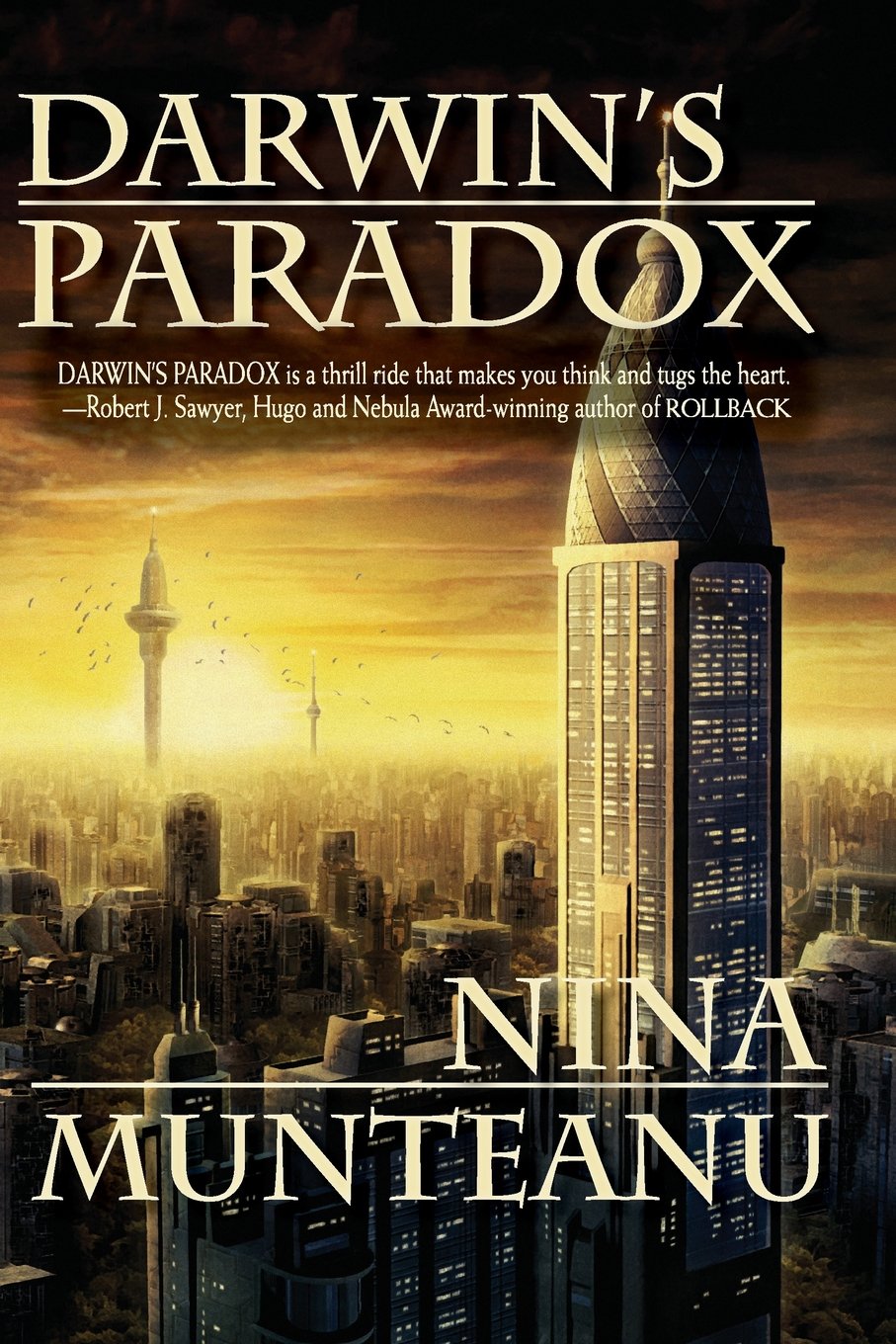
Darwins Paradox-2nd edI write mostly eco-fiction. Even before it was known as eco-fiction, I was writing it. My first book—Darwin’s Paradox—published in 2007 by Dragon Moon Press as science fiction, was also eco-fiction. It takes place in 2075 after climate change has turned southern Ontario into a heathland and Toronto into a self-enclosed city. My latest eco-fiction—A Diary in the Age of Water published in 2020 by Inanna Publications—is set mostly in Toronto from the near-future to 2065 and beyond.

As a writer of eco-fiction and climate fiction, I’m keenly aware of the role environment plays in story. Setting and place are often subtle yet integral aspects of story. In eco-fiction, they can even be a “character,” serve as archetypes and present metaphoric connections to characters on a journey (see my guidebook The Ecology of Story: World as Character published by Pixl Press for more discussion on all aspects of nature’s symbols in writing).

EcologyOfStoryThings to consider about place as character begin with the POV character and how they interact with their environment and how they reflect their place. For instance, is that interaction obvious or subtle? Is that environment constant or changing, stable or unstable, predictable, or variable? Is the place controllable or not, understandable or not? Is the relationship emotional, connected to senses such as memory?

Place as character serves as an archetype that story characters connect with and navigate in ways that depend on the theme of the story. A story’s theme is essentially the “so what part” of the story. What is at stake for the character on their journey. Theme is the backbone—the heart—of the story, driving characters to journey through time and place toward some kind of fulfillment. There is no story without theme. And there is no theme without place.

Archetypes are ancient patterns of personality shared universally by humanity (e.g. the “mother” archetype is recognized by all cultures). When place or aspects of place act as an archetype or symbol in story—particularly when linked to theme—this provides a depth of meaning that resonates through many levels for the reader.

In Ray Bradbury’s The Martian Chronicles, Mars symbolizes a new Eden. Like Bradbury’s aboriginal Martians—who are mostly invisible—the planet is a mirror that reflects humanity’s best and worst. Who we are, what we are, what we bring with us and what we may become. What we inadvertently do—to others, and finally to ourselves—and how the irony of chance can change everything.

“Nature’s symbols are powerful archetypes that reveal compelling story,” writes Donald Maass in Write the Breakout Novel Workbook.

Diary Water cover finalWater has been used as a powerful archetype in many novels. In my latest novel, A Diary in the Age of Water, water plays an important role through its unique metaphoric connection with each of the four main characters; how they relate to it and understand it, and act on its behalf. Water in A Diary in the Age of Water is often personified; water reflects various symbolic and allegorical interpretations and embraces several archetypes including herald-catalyst, trickster, shapeshifter, and shadow.

Strong relationships and linkages can be forged in story between a major character and an aspect of their environment (e.g., home/place, animal/pet, minor character as avatar/spokesperson for environment).

FictionWriter-cover-2nd edIn these examples the environmental aspect serves as symbol and metaphoric connection to theme. They can illuminate through the sub-text of metaphor a core aspect of the main character and their journey: the grounding nature of the land of Tara for Scarlet O’Hara in Margaret Mitchel’s Gone With the Wind; the white pine forests for the Mi’kmaq in Annie Proulx’s Barkskins; The animals for Beatrix Potter of the Susan Wittig Albert series.

All characters—whether the main POV character, or a minor character or personified element of the environment—have a dramatic function in your story. In my writing courses at George Brown College and The University of Toronto and in my guidebook The Fiction Writer, I provide a list of questions you can ask your character to determine if they are functioning well in the story and if they should even stay in the story. I call it interviewing your character. You can interview any character in your story; it can provide incredible insight. And speaking of character…

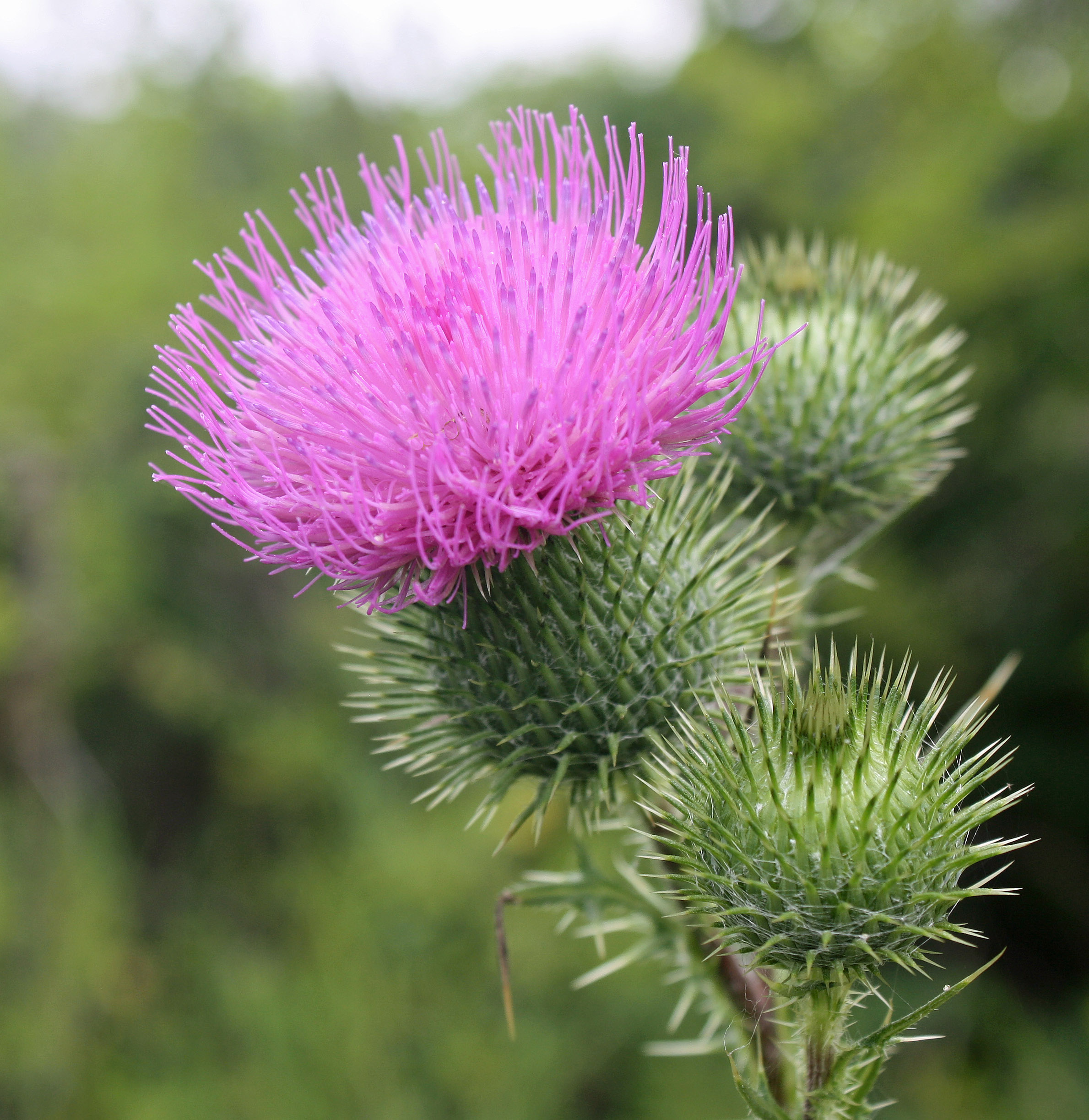
I have of late been walking daily to a lovely meadow beside a stream and thicket where brilliant Bull thistles have burst into flower. I felt the need to research this beautiful yet dangerously prickly plant and why it peaked my interest…

Thistle group 2 Pb copy

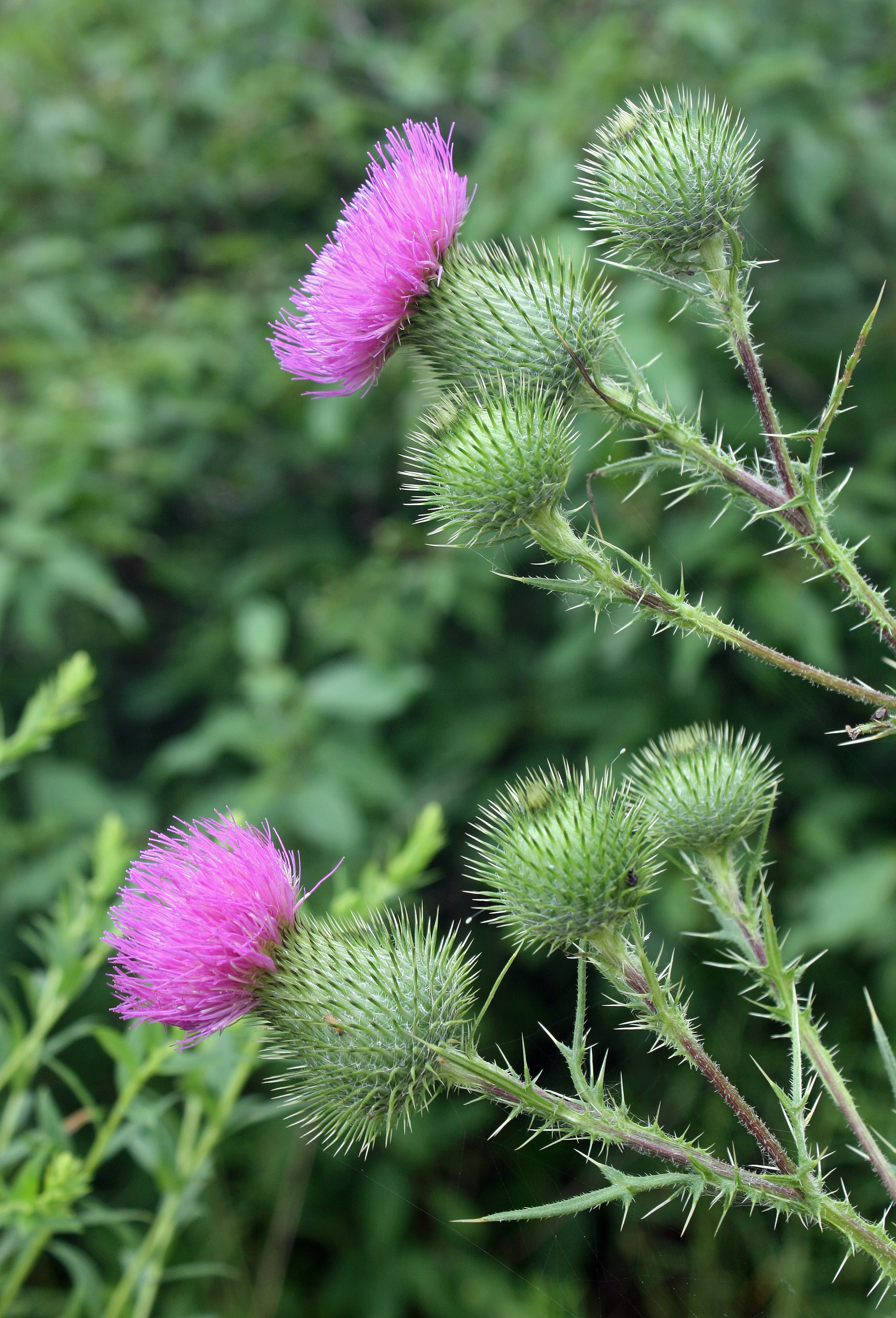
Bull Thistle, ON (photo by Nina Munteanu)

 Interview With the Bull Thistle

Nina: Pardon my saying, but you seem to scream paradox. You’re dangerously beautiful. Alluring yet aloof. Standoffish, even threatening. For instance, how is it that you have such a beautiful single purple-pink flower at the top of such a nasty prickly stem and leaves?

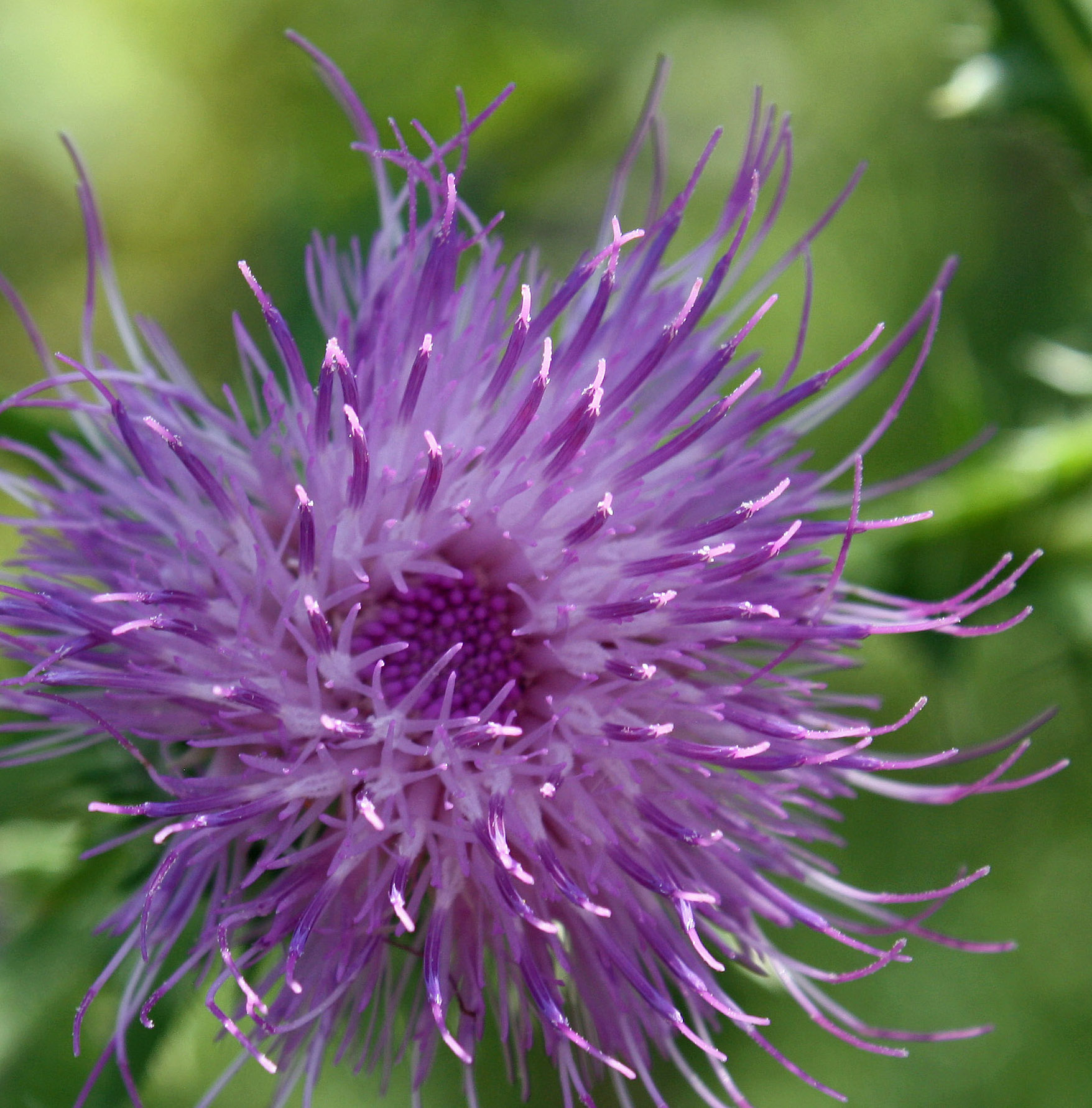
Bull Thistle: First of all, it isn’t just a flower at the top; it’s a flower head of over two hundred flowers called florets. Each flower head is a tight community of tube disk bisexual florets arranged in Fibonacci spirals and protected by a collection of spiked bracts called an involucre. And inside the protective outer shell, embedded in a fleshy domed receptacle, are the tiny ovaries, waiting patiently to be fertilized and grown into a seed or achene.

Thistle honey bee 2 closer

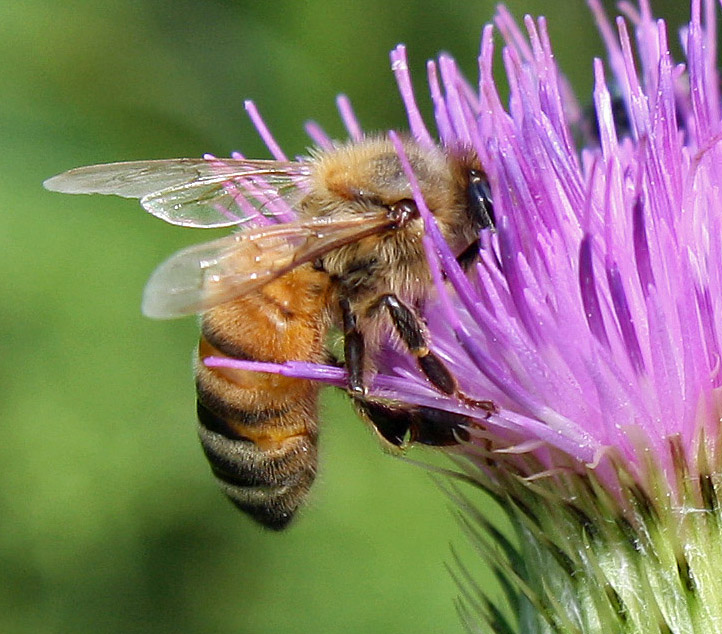
Honey bee getting nectar from the thistle flower head (photo by Nina Munteanu)

Nina: Ah, I beg your pardon. But you still have all those sharp spikes everywhere. I’m guessing they are to protect your developing young, the ovaries. But doesn’t that isolate you? Keep you from integrating in your ecosystem?

Bull Thistle: The bristles are specifically aimed at predators who wish to harm us, eat us, bore into us, pull us out of the earth. We have many friends—the pollinators, the bees, wasps, and butterflies that help us cross-pollinate from plant to plant. And the birds—particularly the goldfinches—also help.

Nina: Wait. Don’t goldfinches eat your babies—eh, seeds?

Bull Thistle: They do. But they also help disperse our children. They land on our dried involucres—now opened to reveal the seeds and their pappus. The birds pull the seeds out by the thistle down that rides the wind. The birds eat the seeds and also use the thistle down to make their nests. But—like the squirrels who love oak acorns—the birds miss as many as they eat. By carrying the down to their nests, they also help the seeds travel great distances farther than the wind would have carried them. By dislodging the seeds in bunches, they help the seeds break away from the receptacle and meet the wind. The pappus, which is branched and light like a billowing sail, carries the seed on the wind to germinate elsewhere to help us colonize.

Thistle opened involucre scattering seeds

Opened involucre with achenes and pappus ready to disperse, ON (photo by Nina Munteanu)

Nina: So, your enemy is also your friend… The shadow character, who helps the hero on her journey by presenting a perilous aspect of enlightenment.

Bull Thistle: If you say so. What we understand is that Nature’s resilience derives from the balance of give and take over time. Prey and predator. Death, decay, transcendence. Destruction and creation. Ecological succession and change are a gestalt expression of Gaia wisdom as each individual fulfills its particular existential niche. Even if that is to die…for others to live.

Nina: Yes, the hero’s journeyBut you’re not originally from here, are you? You were brought to North America from Eurasia. Some consider you an interloper, a disturbance. You could serve the shadow or trickster archetype yourself—outcompeting the native thistle, creating havoc with pasture crops. You can tolerate adverse environmental conditions and adapt to different habitats, letting you spread to new areas. Your high seed production, variation in dormancy, and vigorous growth makes you a serious invader. You cause wool fault and physical injury to animals. Storytellers might identify you metaphorically with the European settler in the colonialism of North America; bullying your way in and destroying the natives’ way of life.

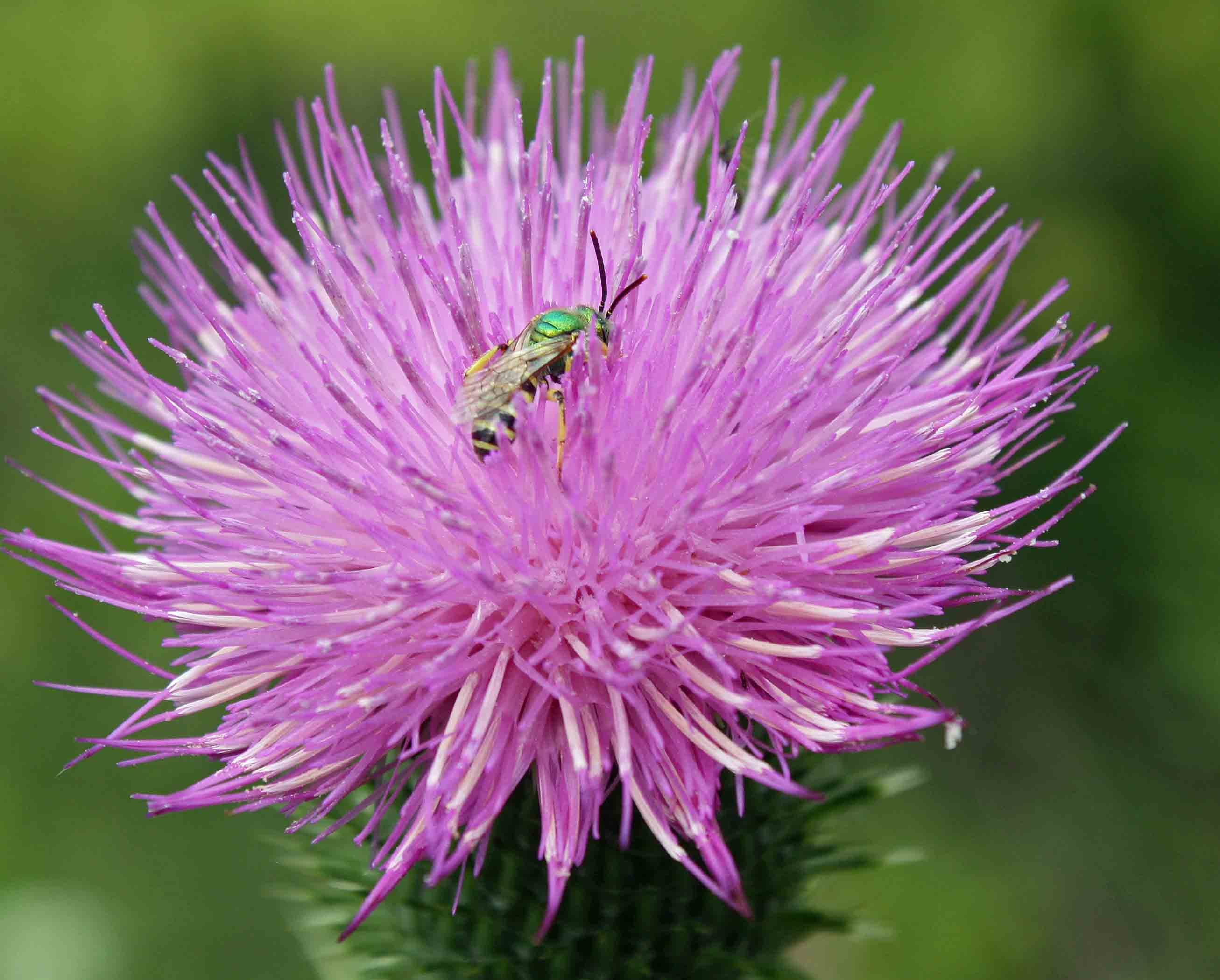
Bull Thistle: We’re unaware of these negative things. We don’t judge. We don’t bully; we simply proliferate. We ensure the survival of our species through adaptation. Perhaps we do it better than others. You’ve lately discovered something we’ve felt and acted on for a long time. Climate is changing. We must keep up with the times… But to address your original challenge, if you did more research, you would find that we serve as superior nectar sources for honey bees (Apis spp.), bumblebees (Bombus spp.) and sweat bees (Anastogapus spp.) who thoroughly enjoy our nectar.

Thistle head sweat bee Pb copy

Sweat bee draws the sweet nectar of the Bull Thistle, ON (photo by Nina Munteanu)

We’re considered a top producer of nectar sugar in Britain. Cirsium vulgare—our official name—has ranked in the top 10 for nectar production in a recent UK survey.  The goldfinch relies on our seed and down. And we’ve provided food, tinder, paper, and medicine to humans for millennia. As some of your indigenous people point out, it’s a matter of attitude. Change is opportunity.

Thistle group Pb copyNina: I guess that every weed was once a native somewhere. I also agree that times are changing—faster than many of us are ready for, humans included. If you were to identify with an archetype, which would you choose?

Bull Thistle: That would depend on the perceiver, we suppose. Some of us think of us as the hero, journeying through the change and struggling to survive; others see us as the herald, inciting movement and awareness by our very existence; some of us identify with the trickster, others with the shapeshifter—given how misunderstood we are. In the end, perhaps, we are the mentor, who provides direction through a shifting identity and pointing the way forward through the chaos of change toward enlightenment.

Nina: Yes, I suppose if someone stumbled into your nest of prickles, incredible awareness would result. Speaking of that very awareness, this brings me back to my original question: why are you so beautiful yet deadly?

Bull Thistle: We are the purest beauty—only attained through earnest and often painful awareness. We are the future and the beauty of things to come.

Thistle head on full of pollen close

Flower head of Bull Thistle, ON (photo by Nina Munteanu)

You can read more on this topic in Nina’s writing guidebook series, particularly The Fiction Writer: Get Published, Write Now! and The Ecology of Story: World as Character.

Relevant Articles:

The Ecology of Story: Revealing Hidden Characters of the Forest

Ecology of Story: World as Character” Workshop at When Words Collide

Ecology of Story: Place as Allegory

Ecology of Story: Place as Symbol

Ecology of Story: Place as Metaphor

Ecology of Story: Place as Character & Archetype

nina-2014aaa

Nina Munteanu is a Canadian ecologist / limnologist and novelist. She is co-editor of Europa SF and currently teaches writing courses at George Brown College and the University of Toronto. Visit www.ninamunteanu.ca for the latest on her books. Nina’s bilingual “La natura dell’acqua / The Way of Water” was published by Mincione Edizioni in Rome. Her non-fiction book “Water Is…” by Pixl Press(Vancouver) was selected by Margaret Atwood in the New York Times ‘Year in Reading’ and was chosen as the 2017 Summer Read by Water Canada. Her novel “A Diary in the Age of Waterwas released by Inanna Publications (Toronto) in June 2020.
 

Age Of Water Podcast: Nina Reads from “The Overstory”

AoW Logo-smallWe are now living in the Age of Water. Water is the new “gold”, with individuals, corporations and countries positioning themselves around this precious resource. Water is changing everything. The Age of Water Podcast covers anything of interest from breaking environmental news to evergreen material. This also includes human interest stories, readings of eco-literature, discussion of film and other media productions of interest.

In this episode of Age of Water, Nina reads from the eco-fiction book “Overstory” by Richard Powers, an exploration of the relationship of trees and humanity…


At the heart of Richard Powers’s The Overstory are the pivotal lives of two women, botanist Patricia Westerford and college student Olivia Vandergriff. Both will inspire a movement against the destruction of forests.

theoverstoryPatricia Westerford—whose work resembles that of Diana Beresford-Kroeger (author of The Global Forest) and UBC’s Suzanne Simard—is a shy introvert who discovers that trees communicate, learn, trade goods and services, and have intelligence. When she shares her discovery, she is ridiculed by her peers and loses her position.  But, just as with Lynn Margulis and her theory of endosymbiosis, Westerford is finally validated. She is the archetypal ‘mother tree’, the metaphoric Tachigali versicolor, who ultimately brings the tangle of narratives together through meaning. Westerford writes in her book The Secret Forest:

“There are no individuals in a forest, no separable events. The bird and the branch it sits on are a joint thing. A third or more of the food a big tree makes may go to feed other organisms. Even different kinds of trees form partnerships. Cut down a birch, and a nearby Douglas fir may suffer…Fungi mine stone to supply their trees with minerals. They hunt springtails, which they feed to their hosts. Trees, for their part, store extra sugar in their fungi’s synapses, to dole out to the sick and shaded and wounded. A forest takes care of itself, even as it builds the local climate it needs to survive…A tree is a wondrous thing that shelters, feeds, and protects all living things. It even offers shade to the axmen who destroy it.”

Olivia Vandergriff miraculously survives an electrocution to become an ecowarrior after she begins to hear the voices of the trees. She rallies others to embrace the urgency of activism in fighting the destruction of California’s redwoods and even camps in the canopy of one of the trees to deter the logging. When the ancient tree she has unsuccessfully protected is felled, the sound is “like an artillery shell hitting a cathedral.” Vandergriff weeps for this magnificent thousand-year old tree. So do I. Perhaps the real heroes of this novel are the ancient trees.

EcologyOfStoryIn his review of Overstory in The Guardian, Banjamin Markovits wrote, “ There is something exhilarating…in reading a novel whose context is wider than human life. Like Moby-DickThe Overstory leaves you with a slightly adjusted frame of reference… And I found, while reading, that some of what was happening to his characters passed into my conscience, like alcohol into the bloodstream, and left a feeling behind of grief or guilt, even after I put it down.”

I further explore the use of metaphor and other storytelling devices used by Richard Powers in his strongly symbolic novel in my writing guidebook “Ecology of Story: World as Character.”


nina-2014aaa

Nina Munteanu is a Canadian ecologist / limnologist and novelist. She is co-editor of Europa SF and currently teaches writing courses at George Brown College and the University of Toronto. Visit www.ninamunteanu.ca for the latest on her books. Nina’s bilingual “La natura dell’acqua / The Way of Water” was published by Mincione Edizioni in Rome. Her non-fiction book “Water Is…” by Pixl Press (Vancouver) was selected by Margaret Atwood in the New York Times ‘Year in Reading’ and was chosen as the 2017 Summer Read by Water Canada. Her novel “A Diary in the Age of Waterwas released by Inanna Publications (Toronto) in June 2020.
Age of Water Podcast: Nina Reads from “Barkskins”

AoW Logo-smallWe are now living in the Age of Water. Water is the new “gold”, with individuals, corporations and countries positioning themselves around this precious resource. Water is changing everything. The Age of Water Podcast covers anything of interest from breaking environmental news to evergreen material. This also includes human interest stories, readings of eco-literature, discussion of film and other media productions of interest.

In this episode of Age of Water, Nina reads from the novel “Barkskins” by Annie Proulx a poignant exploration of the forest industry in Canada and North America.


Annie Proulx’s Barkskins chronicles two immigrants who arrive in Canada in 1693 (Rene Sel and Charles Duquet) and their descendants over 300 years of deforestation of North America starting with the arrival of the Europeans to contemporary global warming. “Barkskins” (woodcutters) are, in fact indentured servants who were brought from the Paris slums to the wilds of New France “to clear the land, to subdue this evil wilderness,” says their seigneur. Sel is forced to marry a native woman and their descendants live trapped between two cultures; Duquet runs away to become a fur trader and build a timber empire.

Barkskins AnnieProulxProulx immerses the reader in rich sensory detail of a place and time, equally comfortable describing a white pine stand in Michigan and logging camp in Upper Gatineau to a Mi’kmaq village on the Nova Scotia coast or the stately Boston home of Charles Duquet. The foreshadowing of doom for the magnificent forests is cast by the shadow of how settlers treat the Mi’kmaq people. The fate of the forests and the Mi’kmaq are inextricably linked through settler disrespect and a fierce hunger for “more.”

The novel rolls out events in a relentless stream of life and death; no character is safe from the ravages of nature or the notions of that time period. While most of the book flows like a great amoral river—filled with feckless, unheroic and at times miserable characters—there are moments of emotional shoring. They act like exclamation marks for their rarity.

EcologyOfStory“The reader comes to realize that the novel isn’t really about the human characters so much as it is about the forests,” Gus Powell of The National Post concludes of Barkskins. “As [the forests] disappear, the narrative seems to recede in importance, revealing a crucial interdependence between the human and the natural world previously handled almost entirely as subtext. This is especially true in the novel’s closing, where the anger and despair that have characterized the novel shift into an outspoken environmental advocacy.”

I further explore the use of metaphor and other storytelling devices used by Annie Proulx in this strongly symbolic novel in my writing guidebook “Ecology of Story: World as Character.”


nina-2014aaa

Nina Munteanu is a Canadian ecologist / limnologist and novelist. She is co-editor of Europa SF and currently teaches writing courses at George Brown College and the University of Toronto. Visit www.ninamunteanu.ca for the latest on her books. Nina’s bilingual “La natura dell’acqua / The Way of Water” was published by Mincione Edizioni in Rome. Her non-fiction book “Water Is…” by Pixl Press(Vancouver) was selected by Margaret Atwood in the New York Times‘Year in Reading’ and was chosen as the 2017 Summer Read by Water Canada. Her novel “A Diary in the Age of Waterwas released by Inanna Publications (Toronto) in June 2020.