The Careful Writer: Common Pitfalls of the Beginning Novelist: Part 1–Characters

patterns2-log-beetl holes-LR

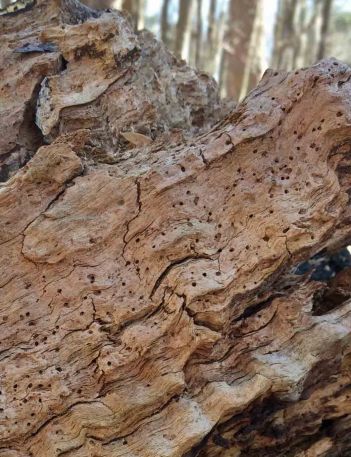
Decaying log with insect bores (photo by Nina Munteanu)

Have you ever wondered how an editor decides not to read your cherished tome past the second paragraph of the first page and has pegged you as a beginning writer? This used to really bug me… Now, as a published author, mentor, and writing coach I read a lot of unpublished manuscripts. I now recognize what these editors do.

So, I’d like to share what I’ve learned over the years (some of the very same comments that have been made of my work, I am now sharing with you). I’ll be providing you my advice in three parts: 1) characters; 2) language; and 3) structure.

Let’s start with characters, since they are in my opinion, the most important part of a novel:

Characters carry the theme of the book. Each character needs to have a role in advancing the plot and/or theme; each character needs a reason to be there. A character therefore needs to be distinctive and usually shows some character development (as story arc) from beginning to end of story. Your characters are the most important part of your book (more so than the plot or premise). Through them your book lives and breathes. Through them your premise, your plot (which is essentially just a way to create problems for your characters to live out their development) and story come alive. Through them you achieve empathy and commitment from the reader and his/her willingness to keep reading to find out what’s going to happen next: if the reader doesn’t invest in the characters, they won’t really care what happens next.

Characters need to be real. They come to life by giving them individual traits and real weaknesses and heroic qualities that are consistent and have qualities readers can recognize and empathize with. You play these against each other to achieve drama. For instance, a man who is afraid of heights but who must climb a mountain to save his love is far more compelling than one who is not; a military man who fears responsibility but must lead his team into battle; a scientist who is afraid of failure; etc.

Characters of beginning writers often suffer from lack of distinction, or purpose, and often simply clutter up a story. For a character to “come alive” their “voice” must be distinct. Give them distinctive body movements, dress, facial features and expressions that reveal character, inner feelings, emotions, fears, motivations, etc. Then keep them consistent. There are several techniques writers use to increase empathy for a character. This includes use of third person POV, keeping the story with focus on fewer rather than many characters, creating character dossiers and keeping them consistent, providing each character a distinctive “voice” (figuratively), as in how they behave, say, react, etc. Another way to make your characters distinct (and works to also tie into plot and theme) is to make your characters not get along. Make them argue, disagree (at least!), have suspicions, betray one another, laugh and ridicule, etc. By doing this you increase tension, conflict (two things every book requires) and you enlighten the reader into each of the characters involved. Make them fight or argue over what they believe in – or not. You need to describe your characters in effective brief but vivid language as the reader encounters them.

Here are some questions you need to ask about your characters:

  1. if I can remove the character, will the book fall apart? (if not, you don’t need that character; they aren’t fulfilling a role in the book);
  2. how does the character portray the major or minor theme of the book? (that’s what characters are there for)
  3. what is the role of the character? (e.g., protagonist, antagonist, mentor, catalyst, etc.)
  4. what is the story arc of the character? Does he or she develop, change, do they learn something by the end? If not, they will be two-dimensional and less interesting
  5. what major obstacle(s) must the character overcome?
  6. who are your major protagonist(s) (the main character who changes the most)?
  7. who are your major antagonist(s) (those who provide trouble for your protagonists, the source of conflict, tension, the obstacle: one of their own?
  8. what’s at stake: for the world (plot); for each individual (Theme) and how do these tie together? Every character has a role to fulfill in the plot and to other characters. Don’t be afraid to totally remove characters if they do not fulfill a role.

To summarize, each character is there for a purpose and this needs to be made apparent to the reader (intuitively through characterization, their failings, weaknesses, etc.). Make them bleed, hurt, cry, feel. This needs to be clear to the reader, who wants to empathize with some of them and hate others. How characters interact with their surroundings and each other creates tension, a key element to good storytelling. Tension, of course builds further with the additional conflict of protagonist with antagonists. But, in truth, it’s more fun to read about the tension from WITHIN a group that’s supposed to be together. Think of Harry Potter and what was juicy there… It wasn’t really Voldemort … it was what went on at Hogwarts between Harry and his friends and not-so-friends. That is what makes a story memorable; that is what makes a story something you can’t put down until you’ve finished it.

TheFictionWriter-NMPart 2 of the Beginning Novelist will focus on language.

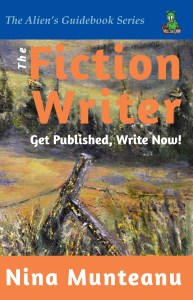
This is an excerpt from The Fiction Writer: Get Published, Write Now! (Starfire)


nina-2014aaNina Munteanu is an ecologist and internationally published author of award-nominated speculative novels, short stories and non-fiction. She is co-editor of Europa SF and currently teaches writing courses at George Brown College and the University of Toronto. Visit www.ninamunteanu.ca for the latest on her books.


He said, She said: Using Dialogue

Steveston-boats

Boats in Steveston, BC (photo by Nina Munteanu)

One of the most important devices to spice up narrative and increase pace is the use of dialogue. There’s a reason for this: we read dialogue more quickly; it’s written in more fluid, conversational English; it tends to create more white space on a page with less dense text, more pleasing to the reader’s eye.  Dialogue is action. It gets readers involved.

Good dialogue neither exactly mimics actual speech (e.g., it’s not usually mundane, repetitive or broken with words like “uh”) nor on the other extreme does it proselytize or educate the reader through long discourse (unless the character is that kind of person). Good dialogue in a story should be somewhere in the middle. While it should read as fluid conversation, dialogue remains a device to propel the plot or enlighten us to the character of the speaker). No conversation follows a perfect linear progression. People interrupt one another, talk over one another, often don’t answer questions posed to them or avoid them by not answering them directly. These can all be used by the writer to establish character, tension, and relationship.

Below, I provide a few tips when using dialogue in your story.

  • Show, don’t tell: a common error of beginning writers is to use dialogue to explain something that both participants should already know but the reader doesn’t. It is both awkward and unrealistic and immediately exposes you as a novice. For instance, avoid the use of “As you know…” It’s better to keep the reader in the dark for a while than to use dialogue to explain something. Which brings us to the next point.
  • Have your characters talk to each other, not to the reader: for instance, “Hello, John, you loser drunk and wayward son of the most feared gangster in town!” could be improved to, “You stink like a distillery, John! Wait ‘til papa’s thugs find you!”
  • Avoid adverbs: e.g., he said dramatically, she said pleadingly; instead look for better ways to express the way they said it with actual dialogue. That’s not to say you can’t use adverbs (I believe J.K. Rowling is notorious for this), just use them sparingly and judiciously.
  • Avoid tag lines that repeat what the dialogue already tells the reader: e.g., “I’m sorry,” he apologized. “Do you have a dog?” she asked.
  • He said, she said: reduce tag lines where possible and keep them simple by using “said”; another sign of a novice is the overuse of words other than said (e.g., snarled, hissed, purred, etc.). While these can add spice, keep them for special places as they are noticed by the reader and will distract otherwise.
  • Pay consistent attention to a character’s “voice”: each character has a way of speaking that identifies them as a certain type of person. This can be used to identify class, education, culture, ethnicity, proclivities, etc. For instance one character might use Oxford English and another might swear every third word.
  • Use speech signatures: pick out particular word phrases for characters that can be their own and can be identified with them. If they have additional metaphoric meaning to the story, even better. For instance, I know a person who always adds “Don’t you think?” to almost everything they say. This says something about how that person… well, thinks… I knew another person who always added “Do you see?” at the end of their phrase. Again rather revealing.
  • Intersperse dialogue with good descriptive narrative: don’t forget to keep the reader plugged into the setting. Many beginning writers forget to “ground” the reader with sufficient cues as to where the characters are and what they’re doing while they are having this great conversation. This phenomenon is so common, it even has a name. It’s called “talking heads.”
  • Contradict dialogue with narrative: when dialogue contradicts body language or other narrative cues about the speaker, this adds an element of compelling tension and heightens reader excitement while telling them something important. Here are a few examples:

“How’d it go?”

“Great,” he lied.

“I feel so much better now,” she said, eyes darting away from him.

Well, you get the picture, anyway.

This is an excerpt from The Fiction Writer: Get Published, Write Now! (Starfire)


nina-2014aaNina Munteanu is an ecologist and internationally published author of award-nominated speculative novels, short stories and non-fiction. She is co-editor of Europa SF and currently teaches writing courses at George Brown College and the University of Toronto. Visit www.ninamunteanu.ca for the latest on her books.

Resonating with the Universe

Eramosa River 3

Eramosa River, Guelph (photo by Nina Munteanu)

Does art imitate life or does life imitate art? Which came first? Story or reality? Do we dream about our past or of another reality? What is déjà vu…really?  What came BEFORE the Big Bang? Did time even exist before we defined it?

The most frequent question asked of writers is “where do you get your ideas?” to which we often bumble some inadequate reply and evoke that indefinable abstruse term MUSE. But what is muse…really? Intuition? Divine inspiration?

In a quote from his autobiographical essay, Philip Pullman says, “It’s important to put it like that: not ‘I am a writer’ but rather ‘I write stories’. If you put the emphasis on yourself rather than your work, you’re in danger of thinking that you’re the most important thing. But you’re not. The story is what matters and you’re only the servant, and your job is to get it out on time and in good order.” But where do they come from, Philip?

In my 2012 historical fantasy “The Last Summoner” (Starfire), the young Baroness Vivianne discovered that she could alter History. Having travelled into the future (e.g., 2010 from 1410 Poland), she used hindsight to recreate a new path for humanity, one devoid of two world wars and the evils consequently unleashed. Vivianne traveled back in time and tried to subvert critical events (time/space nodes) involving Emperor Wilhelm II, Annie Oakley, Nikola Tesla and others. In each case, her interference failed to alter the event in the way she had hoped. In fact, while the details of History differed, the end result remained pretty much the same. For instance, it seemed that no matter what she did to prevent World War I, it happened anyway.

Vivianne discovered that she was unable to alter History the way she’d intended. She found to her dismay that every time she set out to alter a crucial event, quirky consequences ensued and events did not yield to her clever manipulations—as though History had an uncooperative conscience and a predetermined destiny to fulfill.

OK… That’s just me being the writer, subverting the protagonist with obstacles played out in ever-twisting plots and subplots. But, what if…

What if… History (as in any realized reality) is predetermined through its harmonic relationship with other realizable realities? Given that all mass and energy is governed and expressed through frequency, and given that in physics (and music) frequencies exist as multiples of some fundamental frequency; then does it not follow that threads of realizable realities, intertwined around a fundamental path (of history), would move inexorably toward a common destiny?

A recent article I ran across on a writer’s forum discussed how artists tend to mimic each other’s ideas, or come up with the same ideas at the same time. Aside from outright stealing (which happens a lot less than people think), multiple and independent formulation of same ideas is also more common than people think. And it’s increasing. Multiple-independent discoveries (and inventions) have increased in society a thousand-fold since the nineteenth century. Some followers of Jungian thought suggest that this is because the fabric of our society is acting more and more like a neural network, learning, interacting and sharing toward the achievement of a common zeitgeist.

What if… the whole of our society behaves like an autopoietic system, self-organized, adaptive, evolving and tapping into—and possibly influencing—a common super consciousness? One related to a fundamental frequency?

Ray Tomes of the Alexandria City Meeting in 1996 suggested that “the pattern of cycles found in every field of study on earth, in astronomy and also in music are all explained by a simple rule that says that a single initial frequency will generate harmonics and each of these will do the same.”

Why do galaxies and stars form where they do? Toss a handful of sand on a drum and then beat it (not at the centre); you will find that the sand moves to certain places and congregates into predetermined patterns. These are the nodes of the standing waves in the drum. The standing waves are electromagnetic waves (e.g., radio waves, light and x-rays etc). Consider the “predetermined” beauty of natural phenomena. Consider the Fibonacci numbers and the golden mean in nature. Consider fractals and the Mandelbrot Set, quantum entanglement, and Schumann Resonance. Consider synchronicity, autopoiesis and self-organization…

Einstein tells us that, “everything in life is vibration.” Schroedinger’s wave function describes us as vibrating waves.

The normal standing wave created in the Schumann Cavity (the cavity formed by the Earth’s conducting surface and the ionosphere) occurs at a wavelength equal to the circumference of the Earth, and at a base frequency (and highest intensity) of between 6-8 Hz (7.83 Hz). This is called Schumann Resonance Frequency, after the man who formulated it mathematically in 1954 (after Nikola Tesla described it in the late 1800s). Some call this basic frequency the Earth’s “heartbeat” or the “tuning fork” of the planet, suggesting that it generates natural healing properties when living things are entrained to its rhythm. It turns out that all biological systems resonate at this same frequency range. The electrical resonance of the Earth lies between 6-8 Hz. This coincides with alpha rhythms produced by the human brain during meditation, relaxation and creativity.

“Vibrations are dynamic things not unlike living things,” John Keely, researcher in harmonics, adds. “They are active and prolific in their dynamics as are their harmonic offspring. These discrete tones of the harmonics interact with each other… They will in a very natural way mix, merge and divide among themselves just like living cells.”

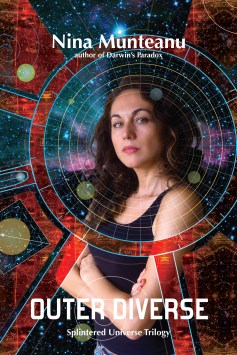
Get-Rhea-Hawke01 copyIn “Outer Diverse”, the first book of “The Splintered Universe Trilogy” (Starfire), Galactic Guardian Rhea Hawke speaks with Ka, an alien mystic, about music, frequency and harmony. And something called “the music of the spheres”. Says Ka:

“…The particular tone of the planet’s song is dependent upon the ratio of its orbit, just like the relationship of a keynote to its octave. The cosmic beauty of the octave is that it divides wholeness into two audibly distinguishable parts, yet remains recognizable as the same musical note…We, of course, now know that ratios in frequencies of spectra of elements compare to intervals in a musical chord,” Ka went on, leaning forward on his massive feathered arms. “Given that a pitch of sound is analogous to the color of light, both being caused by the frequencies of their waves, we can characterize entire worlds based on these properties,” he ended, beak-mouth breaking into a beaming grin that showed his round little teeth.  “It was your Kepler—a scientist I believe—who suggested that when planets formed angles equivalent to particular harmonic ratios, a resonance was created both in the archetypal ‘Earth soul’ and in the souls of individuals born under those configurations…He called it a celestial Front Cover ONLY-webimprint,” Ka continued, now leaning forward with his cup in both hands, “and said that in the vital power of the human being, ignited at birth, that remembered image glows. That geometric-harmonic imprint is the music that impels each listener to dance … from the particle to the cosmic. Your own heart finds its shifting harmony between excessive order and complete randomness, encompassing complex variability—a symphony—in its beating pattern. Sound—vibration—is the language of the mind and the secret to creation.”

We are creatures of this planet, co-evolved with Earth’s environment through the helix structure of our DNA and the water coursing through us; this is reflected in our behavior, culture, intelligence and beliefs. Our entire bodies resonate with all other life at a similar frequency as the planet Earth. Our brains in their most “divine” state of creativity, prayer or meditation reflect the same frequency. We are a gestalt culmination of light, wave-pulse, matter and motion resonating with this beloved planet Earth. Our minds, bodies and souls “sing” its choral aria. What is muse if not this wonderful “intent”?

So, which came first? Story or reality?


nina-2014aaNina Munteanu is an ecologist and internationally published author of award-nominated speculative novels, short stories and non-fiction. She is co-editor of Europa SF and currently teaches writing courses at George Brown College and the University of Toronto. Visit www.ninamunteanu.ca for the latest on her books.


Write What You Know–Write “From the Inside Out”

Canadian ForestWhen I first heard the writer’s edict “write what you know” I rejoined: but I write science fiction—I write about the unknown. What I still had to learn was that by describing “the other” SF really describes “us”. We explore ourselves through our relationship with the unknown. We do this by ensuring that all our plotlines reflect theme.
Write About What You Know

How many times have you been told to write about what you know? And how many times have you trusted that advice? Well, how interesting is that?!? We think our lives are dull, boring, and mundane. We write – and read – to get away from it, don’t we?

nina-LL-interviewe-closer

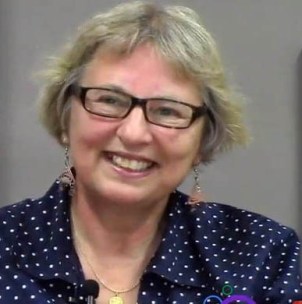
Nina Munteanu

Well, yes…and no…

In the final analysis, even good “escapist” writing, like some science fiction, despite its alien settings and creatures of imagination, is grounded in the realities of our every-day lives, which form the basis of human nature. Love, ambition, trust, hate, envy, honor, courage. All these are universal human traits which the writer taps into and ultimately writes about.

“In the 19th century, John Keats wrote to a nightingale, an urn, a season. Simple, everyday things that he knew,” say Kim Addonizio and Dorianne Laux in The Writer’s Guide to Creativity. “Walt Whitman described the stars, a live oak, a field. They began with what they knew, what was at hand, what shimmered around them in the ordinary world.”

Writing about what you know isn’t about literal truths; it’s about what you know inside your heart. Write from the inside out. Write about what excites you; what frightens you; what angers you, makes you sad, happy. As SF author Marg Gilks says, “You know more than you think.”

Twisted Truths & Inner Knowledge

Writers can use our own knowledge and experiences in everyday life and translate them into something far from ordinary. You start with universal experiences.

Get Emotional

What excites you; what frightens you; what angers you, makes you sad, happy. These are emotions we all feel. When we give our characters experiences similar to our own, we breathe life into both character and experience and provide the reader an anchor for her heart.

Get Sensational

You know how it feels to have your knees shake with fatigue after a long climb or the hair-raising trepidation of walking into a dark place. Use these sensations to make your writing more sensual with added dimensions of reality.

Get People Around You

My neighbor has a funny way of focusing his gaze slightly off me when he talks, like he can’t look me directly in the eyes. When he approaches my house to deliver the paper, Dennis strides with a lilting gait as he listens to hip-hop on his ipod.

Drawing from what you observe and know of the people around you is one of a writer’s most treasured resources for character description. I always carry a notebook with me no matter where I go, even if it’s only to the grocery store.

The Magic of Storytelling

A writer is like a magician. You play upon what readers all “know” then surprise them with the unexpected.

Unleashing your imagination and letting it soar while grounding yourself in the realities of universal truths is the stuff of which stories are made. This is what most of us mean when we say “write what you know.”

“Unless you are writing about a personal tragedy,” says Tina Morgan of Fiction Factor, “you will have to use your imagination. Use the creativity that drives you to write in the first place. Take those feelings you have every day and amplify them. Make them more intense, more vivid. Before you know it, you will be ‘writing what you know’.”

“Next time you hear ‘write what you know,’ ” says Gilks, “you’ll realize that you know an awful lot about what matters most in a story’s success. It’s waiting only to be shaped by your imagination.”

Write Real

Literary Agent, Rachelle Gardner, provided a great definition of “write what you know” on her blog. Here’s an excerpt:

Most people think “write what you know” means you have to put characters in situations you’re personally familiar with. If you’re a mom with five kids, you should write a mom story. If you’ve fought cancer and won, you should write about that. But in my opinion, that’s not what it means.

Write what you know means write with authenticity about thoughts, feelings, experiences of life. Be honest. Write from a deep place. Don’t write from the surface. Whether you’re writing about parenthood or cancer or anything else… be real.
—Rachell Gardner

Don’t reflect what you know from other people or the media… write what you know from your own inner life.

An excerpt of this article appeared in CBC’s Canada Writes.

Nina-CanadaWrites2012

Nina Talks Writing on Dragon Page

michael-stackpoleSome years ago, I was interviewed by Michael Stackpole (New York Times bestselling author of over 40 novels, including “I, Jedi” and “Rogue Squadron”) and Michael Mennenga (CEO of “Slice of Sci-Fi”) on Dragon Page Cover to Cover.

michael mennengaWe talked about my book “The Fiction Writer: Get Published, Write Now!” and what new writers fret over. A lot of the discussion focused on how to handle rejection and I shared my “bus terminal” model (also in my book), which worked very well. For details on our discussion about the industry and craft of writing, listen below:


DragonPage-FictionWriter

The Bus Terminal Model:

FictionWriter-front cover-2nd ed-webHere is an excerpt from The Fiction Writer, Chapter R:

One way to see your way through rejection is to find ways to distance yourself from your story once you’ve sent it off and to see the whole process of submission-rejection-acceptance as a business. The very best way to do this is to submit lots of stories and to keep submitting them. With novels, this is a little harder to do but you can certainly be working on the next one once you’ve submitted the first.

When I was writing short stories, I kept a list of what and where I submitted, along with the most important item: where to submit NEXT. At any given time, I made sure that I had at least x-number of submissions out there and each story had a designated place to go if it returned. As soon as a story came back from magazine A, I simply re-packaged it and sent it to magazine B. The critical part of the list was to have a contingency for each story: the next place where I would send the story once it returned. I was planning on the story being rejected with the hope that it would be accepted; that way, a rejection became part of a story’s journey rather than a final comment.

I ran my submissions like a bus terminal. A story was in and out so fast it never had a chance to cool off. And, since I had five other pieces out there, I could do this with little emotion. I was running a fast-paced “story depot”, after all. All my stories had to be out there as soon as possible; if they were sitting in the terminal, they were doing nothing for me.


nina-2014aaNina Munteanu is an ecologist and internationally published author of award-nominated speculative novels, short stories and non-fiction. She is co-editor of Europa SF and currently teaches writing courses at George Brown College and the University of Toronto. Visit www.ninamunteanu.ca for the latest on her books.

Story and Metaphor in Art Form: How Writing and Painting Whisper or Shout Their Truths

God whispers to us in our pleasures, speaks in our conscience, but shouts in our pains; it is His megaphone to rouse a deaf world—C.S. Lewis

Prospect Point-fog

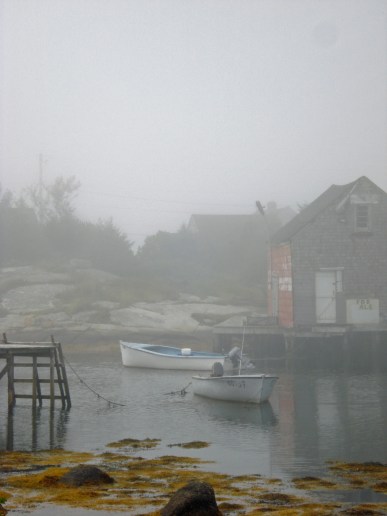
Prospect Point in the fog, NS (photo by Nina Munteanu)

A short while ago I painted on a canvas for the first time in over twenty years…okay, thirty years. It was a thrilling experience but also refreshing and freeing to use a different medium to express myself and tap into that place—that force—that resides inside us and speaks to us.

Part of the thrill was that I was being coached by a good friend of mine who is a master painter and teacher. What’s interesting is that while she instructed me on some of the painting methods, it struck us both how many similarities existed in composition, technique and structure between visual art and storytelling.

Take direction, for instance. A writer uses plot and subplots to move a story and its characters through a textured and colored tapestry of theme. According to my friend, every painting flows, often directionally (like many photographs) from the lower left to upper right, leading the eye from one place to another, exploring a theme, idea or emotion. Plot is motion. So is the paint brush.

You think only writers tell stories. Well, look again at visual art. Every work of art expresses an artist’s feelings, thoughts and emotions; an artist’s story. We are all stories, after all, and we all have many stories inside us. The writer’s medium is the word; the painter’s is the visual image. Isn’t it a truism that a picture is worth a thousand words? The range and type of story varies equally in both media. For instance, writing ranges from poetry or poetic prose (e.g., Ulysses by James Joyce) that requires substantial interpretation to allegory (obvious symbols) or creative non-fiction (like this blog post) whose artistry lies mostly in its composition and reporting style. Paintings also display a range from the poetry of abstract or surrealistic art (e.g., the surrealism of Salvadore Dali), which requires more interpretation, to realistic “photographic” art whose interpretation lies more in its composition (e.g., the detailed realism of Tomislav Tikulin).

The “language” that writers and painters use finds its parallels in form, structure and intent.

For example, let’s take metaphor. The writer uses one concept or image to evoke the feeling of another; “raining cats and dogs” for instance. The painter can evoke the feeling of one medium with another, achieving the same effect through metaphor—producing a stronger more compelling image through oblique metaphor and another perspective. For instance, a painter using acrylics may evoke the tone and emotion of a watercolor by using soft brushstrokes or another medium (e.g., using a sponge or cloth to apply the paint) and lighter softer colors to achieve that signature wash.

A story’s depth is achieved through animating three-dimensional characters that reflect a multi-layered theme. A painting’s depth works through the dance of light, shadows and textures and the use of techniques like fading and detail. Chiaroscuro in story and in painting play on contrast, perspective and the interplay of light and color to pull the viewer and reader deep into the artwork.

Painters echo elements from one part of a painting to another to make it cohesive and provide a “complete” piece that is ultimately satisfying to the viewer. Painters do this by using repeated elements like shapes, curves, and color schemes to get the same flow, or using a faded version of a similar image elsewhere. Techniques that writers use to achieve the same echoing effects for a satisfying story include parallel plotting, mirrored plots, framing (particularly of story promise with climax and dénouement), and themed beginnings and endings.

You’ve heard of writer’s block? There’s also painter’s block; the painter staring at the white canvas, paint brush poised to make that first stroke. Luckily, there’s something called painting-over the dry; not unlike editing a paragraph using the control-shift “x” and “v” key on the computer. Writers continually revise their first drafts, cutting out extraneous exposition and adding thematic details. The writer’s revision process is all about fine-tuning, simplifying and polishing. Painters also “edit” their art through similar means. We even use similar language for both media: “polishing”, “adding color”, “making it flow”, “adding texture”, etc.

Every artist is a reporter of life and truth; every artist chooses the medium that best expresses his or her art. I started out in the visual arts. I was all ready to pursue a fine arts degree in university to become a commercial artist. Then, right on registration day, I opted out of art altogether and went into the science program. Heck, I went all the way to getting a Masters of Science degree, taught university science courses and consulted in the environment. Now, here I am writing science fiction and eco-fiction and teaching writing to engineers and scientists and science fiction writers. Cool, how we choose our path…


nina-2014aaNina Munteanu is an ecologist and internationally published author of award-nominated speculative novels, short stories and non-fiction. She is co-editor of Europa SF and currently teaches writing courses at George Brown College and the University of Toronto. Visit www.ninamunteanu.ca for the latest on her books.

The Art & Science of World Building: The Tools You Need to Make a Believable World

Vanc Library-Atrium2
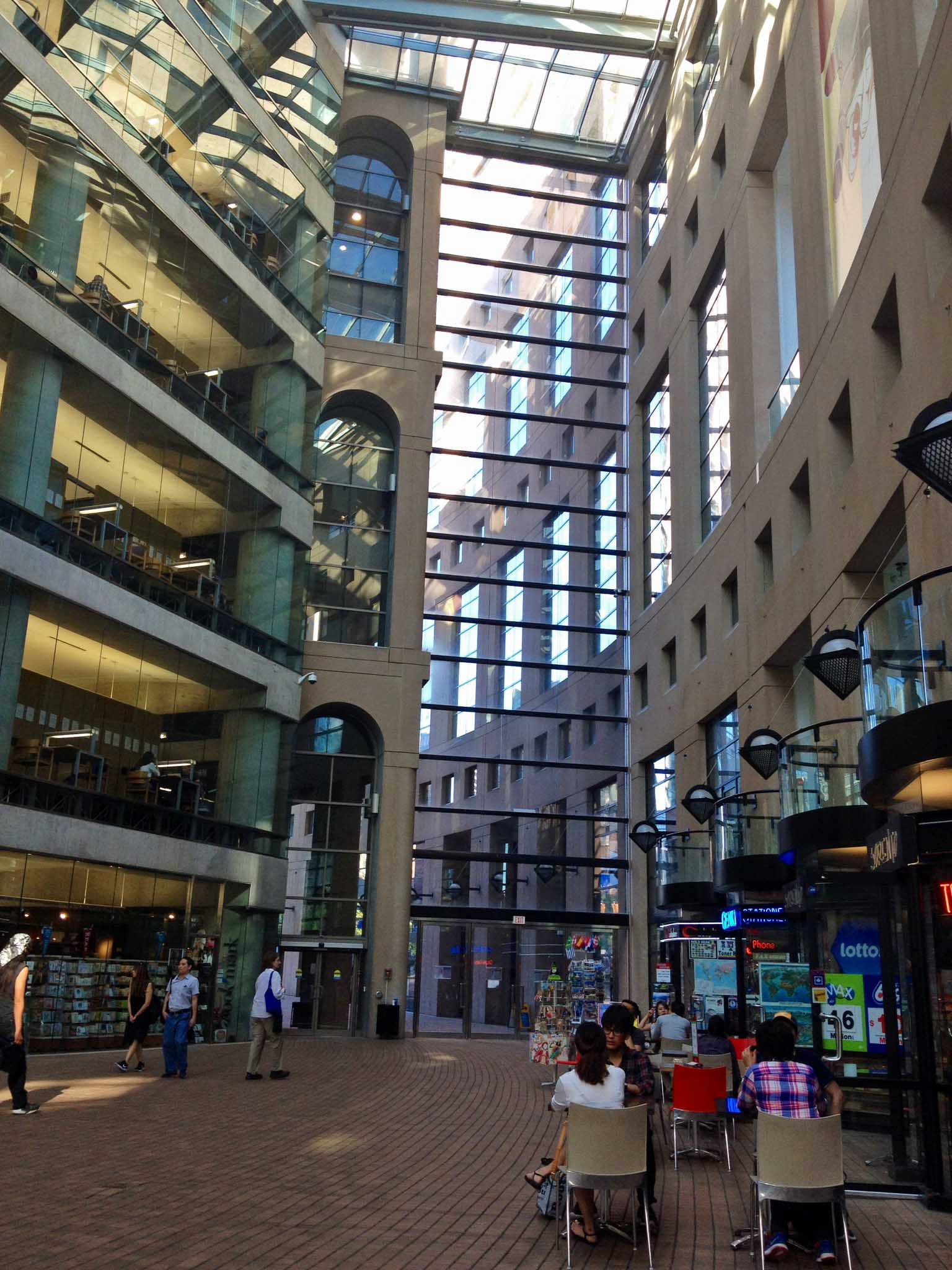
Vancouver Central Library (photo by Nina Munteanu)

Most fantasy and science fiction novels require major world-building, which involves both real and imagined aspects.

World building spices real physical and social facts with the author’s imagination to create a civilization, a political structure, a culture and zeitgeist as backdrop and influence to story. Writers define world-building as the process of constructing an imaginary world, usually associated with a fictional universe.

Popularized at science fiction workshops during the 1970s, the term describes the development of an imaginary setting that is coherent and possesses a history, geography, and ecology that is rich, unique and resonates with the story’s premise.

The list below provides things to consider when first building your world:

  • The world (e.g., on Earth or not)
  • Physical and historical features (climate, geography, resources)
  • Magic and magicians (e.g., rules of magic, technology)
  • Peoples and customs (e.g., language, ethics and values, religion)
  • Social organization & structure (e.g., government, politics, conflicts, fashion, entertainment)
  • Commerce & trade (e.g., industry, transportation, communication)

Science vs. Art In World-Building

EcologyOfStory

If a novel is a historical fantasy set on Earth, science is not a critical part of world building; if a novel is set on some probable planet in the Andromeda Galaxy, then science becomes an integral part. But, in both cases the writer needs to do his or her research. In the case of the historical fantasy, world building will be based on accurate historical information, even if an alternate history is being written.

Part of the reason people read historical epics is to learn more about that particular civilization and time period. The reader trusts that the writer will give him or her the facts on the world, while taking liberties on the remaining story elements. Similarly, a science fiction reader opens the first book in Larry Niven’s Ringworld series with the expectation of learning about a made-up world based on accurate principals of science.

A lot of science fiction is written by nonscientists. That said, many science fiction readers— particularly those who enjoy hard science fiction—expect your science to be not only plausible but somewhat proven and your premise to be based upon sound scientific principle. They expect your research to be impeccable because they are expecting to learn something—in science.

World-Builder’s Disease? 

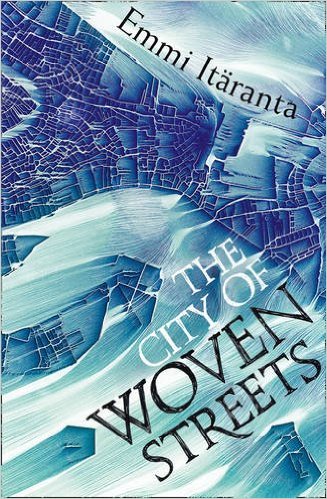
City of Woven Streets

“Fantasy writers have a penchant for working up histories of imaginary empires that can run for hundreds of pages, full of maps and chronologies and genealogical trees a yard long,” says Ansen Dibell, author of The Elements of Writing Fiction: Plot. “Similarly, science fiction writers can fall in love with their hardware and want to show it off,” he adds and describes this as a kind of narrative cancer, a “World-Builder’s disease.”

Most writers who world-build keep extensive files of background information on their worlds. In some cases, these can be published as companions to the main book series (e.g., J.K. Rowling’s books on Quiddich or magical creatures, which most certainly came from her extensive background notes). Dibell’s point is that this information doesn’t belong in the main book, where it can interfere with the process of storytelling. It becomes “info dump”, which is often very static, lacks drama, and proves ultimately boring.

Tying Your World to Theme and Plot

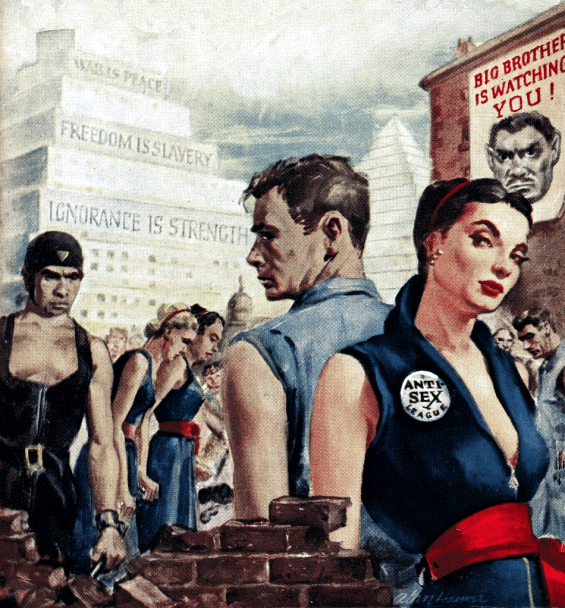
NineteenEightyFour
“Nineteen Eighty Four” by George Orwell

What’s important to remember is that the world you build is part of the story. It isn’t just a lot of “interesting” detail. The world you build, like a character in your story, plays a role in defining and supporting its theme. The major qualities of your world are, therefore, best derived for plot and thematic reasons—which come from “story”. The rest—the details—are things you can find in books, websites or get from experts in your local university, etc.  Don’t let science intimidate you; but ensure that you get it right by using your resources and verifying your information with an expert. Use your local libraries, universities, colleges, and online resources. Interview scientists, technical people and other writers. That’s part of being a writer too.

Nina Munteanu is an ecologist and internationally published author of award-nominated speculative novels, short stories and non-fiction. She is co-editor of Europa SF and currently teaches writing courses at George Brown College and the University of Toronto. Visit www.ninamunteanu.ca for the latest on her books.

Parallel Plotting: Mirror, Mirror on the Wall…

tree water deer lake

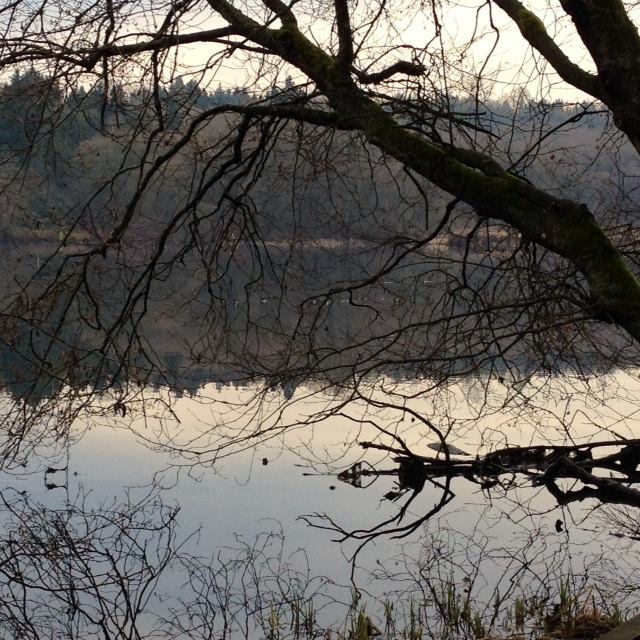
Deer Lake, Burnaby (photo by Nina Munteanu)

“The common definition of plot,” says Ansen Dibell, author of Elements of Fiction Writing: Plot, “is that it’s whatever happens in the story.” But, “it doesn’t tell you how to make one,” he adds. “Plot is built of significant events in a given story—significant because they have important consequences.”

Dibell describes plot as a tapestry of pattern, form, shape and colour that share recognizable meanings. And subplots are the threads that make up the story’s fabric. Parallel plots, braided plots … even the terms reflect a flowing river. This is an apt metaphor, particularly given that, as Dibell reminds us, “plot is a verb.” It is the engine that moves the story.

Subplots are more common in long fiction, where they are used to deepen a story and add layers that make it more intriguing and tease out more depth to the story. Subplots may provide varying aspects of a theme, from community to individual as played out by different characters. Ultimately, subplots and how they are crafted, provide the writer with the means to transcend plot into what Dibell calls pattern.

Parallel Plotlines & Patterns

Dibell describes “braided” plots, in which two or more subplots are woven together, and parallel plotlines, in which two plots share almost equal footing. This happens when strong protagonists carry each plot. Parallel plotlines often run counterpoint to each other in pace, tone and color. Each plot becomes richer and stronger when contrasted with the other. And they are always connected in some way, in many ways.

In Matrix Reloaded, Neo’s introspective and thoughtful plot with the architect of the matrix runs counterpoint with Trinity’s action plot as she sabotages the matrix and battles an agent. Both demonstrate conflict and tension but the tone and pace are opposite. This contrast only heightens each plot line.

Notice also how the two plot lines are connected and eventually converge in the final scene where Neo saves Trinity’s life by restarting her heart. Earlier on in, while Trinity is totally engrossed in her problems, Neo becomes aware of her struggle through the architect’s artful hint; this prompts Neo to choose his path to join her plot. His awareness is the bridge between the two plotlines. If you look carefully, you will find many other ways the two plotlines are connected, visually, mentally and viscerally and how they inevitably draw together in that riveting last scene; “how thoroughly,” Dibell says, “the story belongs to itself.”

Mirrored Pattern on the Wall…

Scenes, characters, and plots can be mirrored. It starts with identifying two situations that can be tagged for connection and built-in recurrence. Mirrored plots often run as double stories concurrently or through alternating flashback narration. Good examples include The Empire Strikes Back, Wuthering Heights and Lord of the Rings. My short story, The Arc of Time, used a double plot set 40,000 years apart, one played out with real characters and the other in the form of e-letters between two lovers. Both plots converged in the end.

Mirrored plots are achieved by setting up pairs of opposite and/or complimentary scenes that share emotional resonance.

Dibell provides these hints to create effective mirroring scenes:

  • Repeat one or more lines of dialogue (e.g. the “I love you” “I know” between Han and Leia in Star Wars).
  • Repeat a brief description of emotion.
  • Have the two situations go through similar stages.
  • Use similar imagery.
  • Ensure that subject and terms are the same.
  • Keep the polarities and emotional content the same.

Ultimately, the pattern that develops forms a moving story that has rhythm and cadence.

In short, nothing should happen at random. Plot should stem from “character under adversity” often with an urgent personal agenda. The plot of a story synthesizes the individual character subplots and sub-themes and resonates with the overarching theme.

For more writing tips on writing fiction (and non-fiction or memoir) check out “The Alien Guidebook Series” on writing.

Nina Munteanu is an ecologist and internationally published author of award-nominated speculative novels, short stories and non-fiction. She is co-editor of Europa SF and currently teaches writing courses at George Brown College and the University of Toronto. Visit www.ninamunteanu.ca for the latest on her books.

The Power of Myth in Storytelling

“If a being from another world were to ask you, ‘How can I learn what it’s like to be human?’ a good answer would be, ‘Study mythology.’ ”—Joseph Campbell

chillon-dungeon-storeroom

the dungeons of Chillon Castle, Switzerland (photo by Nina Munteanu)

For Joseph Campbell, perhaps our era’s most influential student of mythology, myths express our basic need to explain, celebrate and immortalize the essence of life. Given that life itself has no “meaning”—it simply is—it is our stories (pulled from the ethers of our “muse”) that give meaning to life. We tell stories about how the world began, our struggles to survive, our victories against greed and evil. Each culture clothes its stories according to the place and time and associated issues. And each defines its heroes and villains accordingly. At the root of all these lies a universal and timeless human experience; where metaphor and imagery of myth transcend culture, time and place to encompass all of humanity and our striving journey toward truth, grace and peace. This is why all myth, from Plutarch’s Theseus & the Minotaur to George Lucus’s Star Wars, resonates with us, regardless of whether it was created yesterday or thousands of years ago.

Greek, Roman, Norse, African and Asian myths all address fundamental questions about our humanity: the fall of Icarus, Jason and the Argonauts, Romulus and Remus, Oedipus, Medusa, Perseus, King Arthur, Oedisseus, Vassilisa, Siegfried and the Nibelungenleid, Beowulf and Grendel, Jonah and the whale, Isolde and Tristan, Persephone and the underworld, Orpheus and Eurydice, Hercules, Osiris, Gilgamesh … the list is endless.

Artist as Mythmaker … and Shaman

“There’s an old romantic idea in German, das Volk dichtet, which says that the ideas and poetry of the traditional cultures come out of the folk. They do not,” says Campbell. “They come out of an elite experience, the experience of people particularly gifted, whose ears are open to the song of the universe.” He is referring to the artist, who speaks to “the folk”, who answer and create an interaction. “The first impulse in the shaping of the folk tradition,” says Campbell, “comes from above, not from below.” He is referring to the divine source, the muse, the gift of “seeing” bestowed on those willing to open themselves to it. According to Campbell, “The function of the artist is the mythologization of the environment and the world.” Like the shamans of ancient times, the storyteller— whether painter, writer, actor, singer or filmmaker— interprets the divinity in nature for others. We interpret unseen things for a tangible world.

Artists are the mythmakers — the shamans — of today. The ancient shaman’s authority came from individual psychological experience, not a social ordination (like a priest). A shaman’s powers were symbolized through his own familiars and the deities of his own personal experience. His personal truth. As artists we wholly participate in our “landscape”. Like Dante, we journey to the depths of our world, become its deepest truths to emerge later and share.

The Mythic Hero’s Journey in Story

In my opinion, the best stories follow the mythic hero’s journey plot structure. This is because “hero’s journey” stories are transformative for not only the protagonist (our hero) but for readers following along and identifying with her. Stories that pull a reader through the three steps of a human being’s evolution (separation, transformation, and return) promise great depth and fulfillment. This is what great storytelling does: they take us on a transformative journey of learning, through challenges of change to realize a prevailing victory. Writers are the shamans of today and the heroes we write about are our agents of change. Through our artistic drama of metaphor, we make commentary on the world and what it means to be human.

The hero archetype is particularly interesting, given that he or she is essentially us as we journey to prevail over the obstacles of our fears, weaknesses, and disappointments. Every hero is on a quest or mission (whether she realizes it or not). The true mark of a hero is in her willingness to sacrifice something of value, perhaps even her life, on behalf of an ideal or a group and ultimately for the greater good. A hero is the ultimate altruist. And she is you, the artist.

The Power of Mythologist

chateau-chillon-lake-geneva

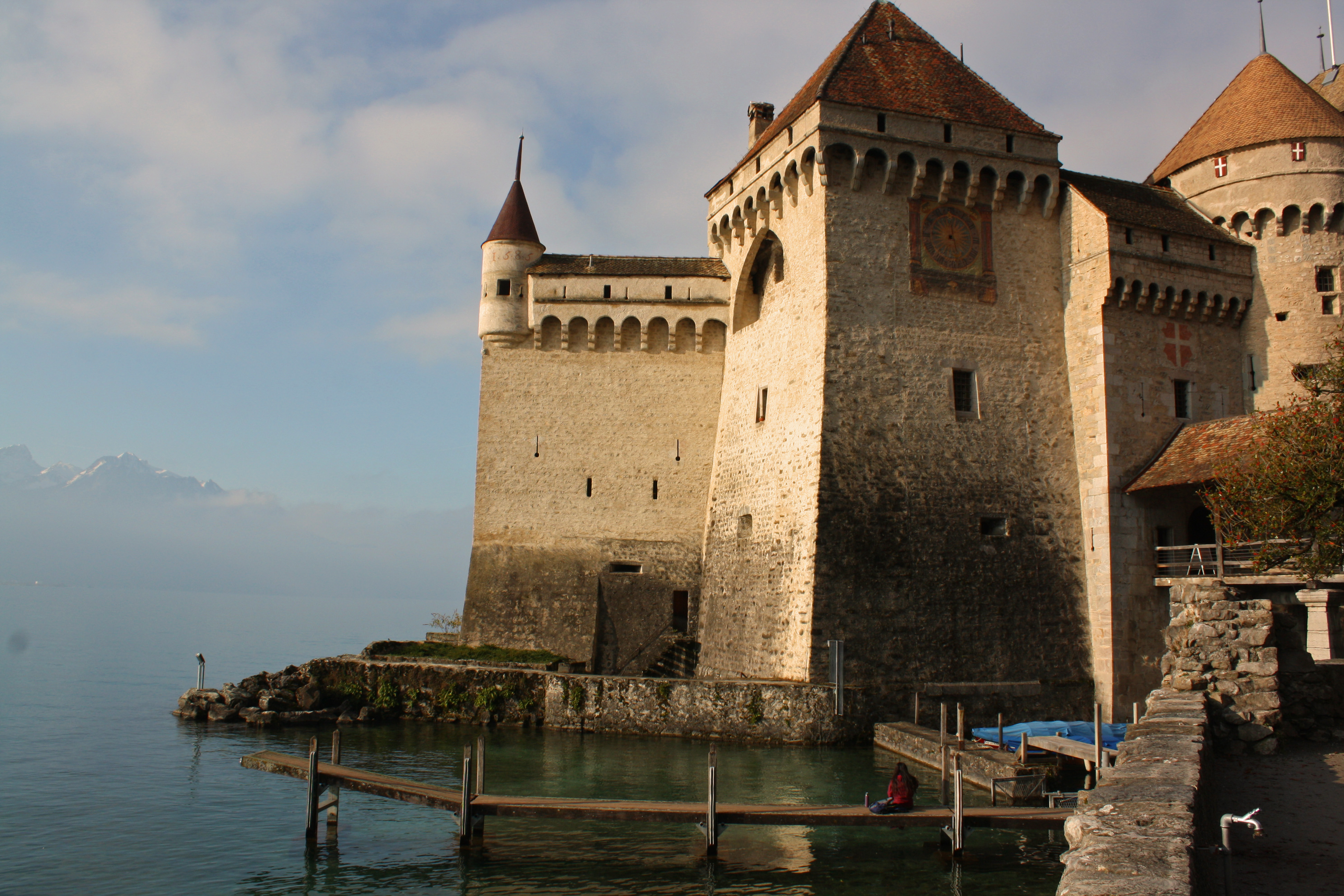
Chateau Chillon, Lake Geneva, Switzerland (photo by Nina Munteanu)

I recall a discussion with a young friend some time ago about her knowledge of writers vs. book titles (she knew few names of writers, even those whose works she had enjoyed, but could happily recite book titles). I realized that she chose her books based on their cover and the promised story within—with no attention placed on the author and no intention of following the author’s other works.

“When you find an author who really grabs you, read everything s/he has done,” says Campbell. “Don’t say, ‘oh, I want to know what so-and-so did’—and don’t read the best-seller list. Just read what this one author has given you … the world opens up in a way that is consistent with a certain point of view … When you go from one author to another, you may be able to tell us the date when each wrote such and such —but he hasn’t said anything to you.”

Nina Munteanu is an ecologist and internationally published author of award-nominated speculative novels, short stories and non-fiction. She is co-editor of Europa SF and currently teaches writing courses at George Brown College and the University of Toronto. Visit www.ninamunteanu.ca for the latest on her books.

Creating the Right Time and Place to Write

Look and you will find it—what is unsought will go undetected —Sophocles

Snowy Path scarborough

Snowy path, Scarborough (photo by Nina Munteanu)

During a time when I had a demanding job as an scientist, wife and mother and community volunteer, I wrote and successfully marketed five books, over a dozen short stories and many articles and reviews. Some people, including my publishers, thought I never slept (true) or cloned myself (possibly). They couldn’t believe my productivity when I was so busy with life.

But I did what I did, because I’d worked out a system. One that I could live by. One that fit my lifestyle. One created out of respect for my art as part of my “busy” life of commitments.

The truth of it is that we all lead busy lives. If you are going to finish that novel you’ve been working on over the years or book of poems sitting in the bottom dresser drawer, you need to make a commitment. Aside from giving your art the respect it deserves, it comes down to creating a time and place to write.

It starts with being realistic about your daily schedules and routines and inclinations and picking a time and place accordingly. Try to be consistent. It’s actually best to create a routine related to both time and place; the key is to be realistic about it. Don’t fight your inclinations or habits; instead, build your writing into your lifestyle. This will ensure success.

Choose a Sacred Time

Finding the time to write is critical to succeeding. If you don’t dedicate time to write you won’t. Believe me, you won’t. Make it sacred.

Writer Louise DeSalvo shared a common story about her experience: “Many people I know who want to write but don’t (my husband, Ernie, for example) or who want to write more than they have but say they can’t find the time (my friend Marla) have told me that taking the time to write seems so, well, self-indulgent, self-involved, frivolous even. And that finding the time to write—even a diary, much less fiction or memoir or poetry—in their busy schedules is impossible. I’ll write when I have the time, they say.”

It doesn’t work that way. You don’t find time; you must create it.

Writing of any kind is a commitment you make to yourself. So, choose a time that’s right for you. If you’re a morning person, don’t pick the end of the day when you don’t function as well. Instead, pick the early morning to write, a time before everyone else gets up and the day’s distractions pile up.

It’s actually best to create a routine related to time of the day (e.g., fixed time such as every morning or right after supper) or based on some other constant in your life, say the school calendar or your daily activities. The key is to be realistic about the time(s) you’ve chosen. In other words, your goals should be realistic and realizable.

The second part of the commitment is sharing it with your family and friends so that they will respect your sacred writing time. By sharing how important it is to you, you also give them the gift of sharing the experience with you and they are more likely to respect your time alone to write. This is also why choosing a routine makes more sense; it is something your family and friends will better remember and abide by. Making it easy for others is part of making it easy for you.

Find Your Own Rhythm

There’s no rule for when and how often you write. Because frequency and schedule of writing depends on the kind of writing you do (e.g., novel, short stories, articles, research) and on your own rhythms, you must decide what works best.

Most writers recommend that you commit to a regular writing schedule that is realistic to your overall routine and biorhythms. Some recommend you write in the morning, after a refreshing sleep; others suggest you write at night, at the end of the day when your memories are more fresh with the day’s activities and stimulations. Yet others suggest you take time out during the day to jot down relevant experiences as close to the time as the muse hits you, then spend some time at the end of the day compiling it into your work.

In the end, it’s up to you to choose what works for you and your own rhythms. When is the best time for you to write? And for how long or how many pages? Once you decide, stick to that schedule.

Choose a Sacred Place

Writing is a reflective activity that requires the right environment. The best environment is a quiet one with no interruptions and where you are alone. A reflective environment will let you find a connection with your muse. You need a place where you can relax and not worry about someone barging in or other things distracting you from your reflections. You should also feel physically comfortable and the place should meet your time requirements.

Because the suitability of a place can change with the time of day, learn the rhythms that affect the place you wish to write in. For example, the kitchen may be the centre of activity during the day but an oasis of quietude during the evening. Similarly, learn what kind of environment stimulates and nurtures your writing. Does music help or do you need complete quiet? Do you respond to nature’s soft breezes and sounds or do you prefer to surround yourself with the anonymous murmur of a crowded café for company?

Places that work for me include the local coffee shop, a park near my house, a library or other quiet place where I can enjoy uninterrupted anonymity. Where you write may reflect what you’re writing and vice versa. To some extent, you are environment and environment is you. You might try a few places first and see what happens to your muse. What you write while sitting under an apple tree in the breeze hearing the birds singing may differ from what you write while sitting in your living room by the crackling fireplace with music playing or sitting at your desk in your bedroom in total silence or in a crowded café surrounded by cheerful bustle.

Again, as with your choice of time, tell your family and friends about your sacred place. Provide rules, if you have to. Let’s say it’s a desk in the study. You may, for instance, let others know that your “mess” is part of a work in progress, perhaps even explain a little about it so they understand the nature of what you’re doing and why it should not be touched or moved or used, even while you are away from it. This will ensure that they respect your things and what you’re doing.

Credit Riv path in snow

Path along Credit River (photo by Nina Munteanu)

In the end it comes to finding the right integration and balance of time and place. Letting others know of your choices is equally important; this will ensure that they can help you, not hinder you in your writing. While writing is to a large extent an activity done in solitude, the journey is far from secluded. Ensure that you have a good support network.

This article is an excerpt from my fiction writing guidebooks “The Fiction Writer: Get Published, Write Now!” (Starfire, 2009) and “The Journal Writer: Finding Your Voice“ (Pixl Press, 2013), part of the Alien Guidebook Series.


Nina Munteanu is an ecologist and internationally published author of award-nominated speculative novels, short stories and non-fiction. She is co-editor of Europa SF and currently teaches writing courses at George Brown College and the University of Toronto. Visit www.ninamunteanu.ca for the latest on her books.