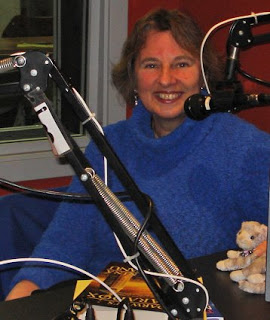
 Like most authors, I’m somewhat of an introvert. I don’t mind talking in front of people, but I don’t crave it and I often need a place to relax and recharge after. One thing I know I can do lots more of is talk about my books and the writing process on a more one-on-one mode. I think most authors do: How and why we write; what made us write that particular one; why it’s important; how it can help others.
Radio offers a much less intrusive and intimate way to reach out to the public. Talk shows, podcasts and online radio shows are popular among the mobile public who are often looking for an easy way to entertain as they travel. I’ve done many radio interviews and have found them very rewarding and successful in getting publicity for my books.
RadioGuestList.com (on BookMarketingTools.com) gives sound advice on how to get booked on talk shows to promote your book: “Radio DJ’s, talk show hosts, and podcast producers need to fill their air time.” They say. “If you can offer them credible, interesting discussion that keeps their audience tuned-in, you can likely get on the air to tell their audience about your book(s).”
RadioGuestList.com provides tips to help get you on the air about your book and I’ve provided several of them here:
- find shows interested in topics covered in your book: use Google, Twitter or BlogTalkRadio.com.
- choose an angle: offer story, topic and “how to” discussion topics. If you can “newsjack” onto a current trend or issue, even better!
- Write a short pitch that focuses on how the show’s audience can benefit from your interview. Offer to promote the show on your social media, which is a win-win for you and the station.
- Include vital contact information so they can find you easily. These can include email, phone number, Skype handle, bio and website.
- Provide potential focal points to discuss; you can even suggest questions, which all make the interview potentially easier to run.
- Offer and provide cover art, headshot, bio and related media that the show can use to promote your appearance. Include your social media accounts and website, etc. so they can add them. Let them know how you will promote the show too.
I’ve done several types of radio/podcast interview and they fall into three general camps: 1) those where I knew what the questions were going to be in advance; 2) those where I may have had an idea of topics to cover, and 3) those where I had no idea what we were going to talk about—except that it would involve my book in some way. In my opinion, the interviews that worked out the best were those in the last category.
Really!
The reason is that these interviews tended to be hosted by experienced and confident radio hosts and the interview was allowed to proceed organically, flowing like a real conversation—which made it more fun for me, the host and for the listening audience. These interviews often generated spontaneous laughter and travelled into surprising and crazy good places. I found that my voice relaxed as I just let the conversation flow and gave my confidence to the host—something the audience can also sense. A good interview is a little like doing a slow dance with a partner who is a good lead. Let your host lead and enjoy where it takes you. This doesn’t mean that you can’t nudge the topic into surprising new directions. That’s also part of the fun. They lead, you follow through, they pick up from that and so on.
Here are some tips for creating a great listening experience:
- Know your material; do the diligence of researching topics you may wish to discuss and have material with you if you feel comfortable consulting it (the material would need to be very accessible and you shouldn’t read long tracts of anything).
- Relax and enjoy the interview. Let the process flow naturally. It may take a turn you didn’t anticipate; just go with it. Let it be a conversation between host and guest; giving, receiving, learning, teaching.
- Don’t monopolize the discussion. The host often has something very interesting to add, which will journey into something interesting for the listeners. Give the host space to do that. Then bring in interesting answers.
- Be gracious and thank the host at the end. Let them—and your audience know—how much you enjoyed the experience.
RadioGuestList also wisely suggests that you (or your publicist) follow through with a quick email to thank the show’s producer and/or host. It’s also good to let them know how you will promote your interview and/or inform them when you do.
If the show went well you may wish to let them know that you’d love to do a repeat  appearance. I have done that with several of my interview appearances with wonderful return visits.
For those of you conducting interviews—either for your book or an article you’re writing—I go over some dos and don’ts in Chapter I: Interviews & Other Weird Interactions of my fiction writing guide “The Fiction Writer: Get Published, Write Now!” They involve the four pillars of good journalism: thoroughness, accuracy, fairness, and transparency. Understanding what makes a good interviewer can help make you a better interviewee.
 Nina Munteanu is an ecologist and internationally published author of award-nominated speculative novels, short stories and non-fiction. She is co-editor of Europa SF and currently teaches writing courses at George Brown College and the University of Toronto. Visit www.ninamunteanu.ca for the latest on her books.

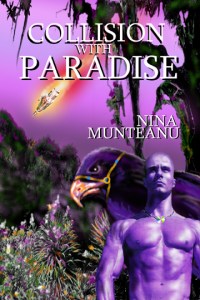 Write to the audience’s expectations (given the promise of your work): success of stories with readers will rely on the alignment of expected story structure, tone and endings. My romance SF therefore reads differently from my hard SF in so many ways.
 Write to the understanding level of your intended audience: how and what I write for my hard science fiction audience (with expectations on accurate and intelligent exploration and extrapolation on science) is different from the style I use for my historical fantasy. This will include “voice”, language and use of specific vocabulary, terms and concepts, sentence structure and pace.
 Nina Munteanu is an ecologist and internationally published author of award-nominated speculative novels, short stories and non-fiction. She is co-editor of Europa SF and currently teaches writing courses at George Brown College and the University of Toronto. Visit
  At Calgary’s When Words Collide this past August, I moderated a panel on Eco-Fiction with publisher/writer Hayden Trenholm, and writers Michael J. Martineck, Sarah Kades, and Susan Forest. The panel was well attended; panelists and audience discussed and argued what eco-fiction was, its role in literature and storytelling generally, and even some of the risks of identifying a work as eco-fiction.
 I submit that if we are noticing it more, we are also writing it more. Artists are cultural leaders and reporters, after all. My own experience in the science fiction classes I teach at UofT and George Brown College, is that I have noted a trend of increasing “eco-fiction” in the works in progress that students are bringing in to workshop in class. Students were not aware that they were writing eco-fiction, but they were indeed writing it.
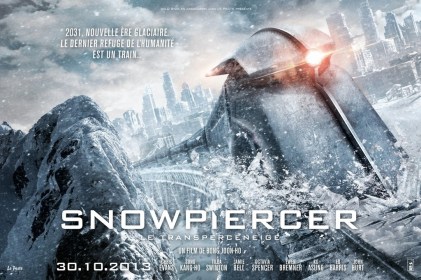 Just as Bong Joon-Ho’s 2014 science fiction movie Snowpiercer wasn’t so much about climate change as it was about exploring class struggle, the capitalist decadence of entitlement, disrespect and prejudice through the premise of climate catastrophe. Though, one could argue that these form a closed loop of cause and effect (and responsibility).
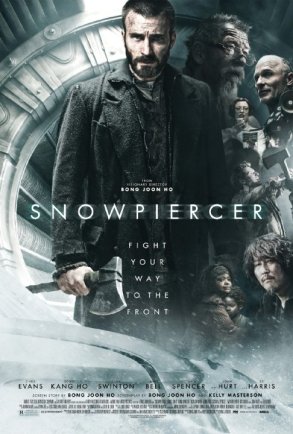 The self-contained closed ecosystem of the Snowpiercer train is maintained by an ordered social system, imposed by a stony militia. Those at the front of the train enjoy privileges and luxurious living conditions, though most drown in a debauched drug stupor; those at the back live on next to nothing and must resort to savage means to survive. Revolution brews from the back, lead by Curtis Everett (Chris Evans), a man whose two intact arms suggest he hasn’t done his part to serve the community yet.
 In my latest book Water Is… I define an ecotone as the transition zone between two overlapping systems. It is essentially where two communities exchange information and integrate. Ecotones typically support varied and rich communities, representing a boiling pot of two colliding worlds. An estuary—where fresh water meets salt water. The edge of a forest with a meadow. The shoreline of a lake or pond.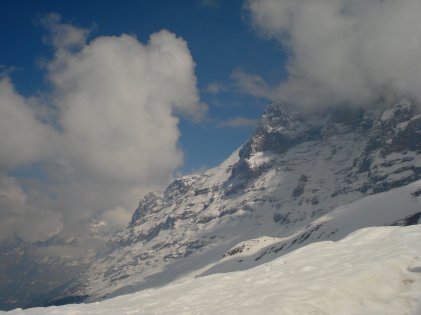


 Neo in The Matrix is an anagram for “One”. Before he changes his name to Neo, he goes by the name of Thomas Anderson. Thomas is Hebrew for “twin” (e.g., Agent Smith tells Neo, “you have been living two lives.”). Of course, Thomas was also one of Jesus’s disciples, the one who doubted. The Wachowski Brothers chose the names of all their main characters with careful purpose. Morpheus (the god of dreams, who takes Neo out of his dream); Trinity (who connects and unifies the “father” the “son” and the “holy spirit” through her faith).
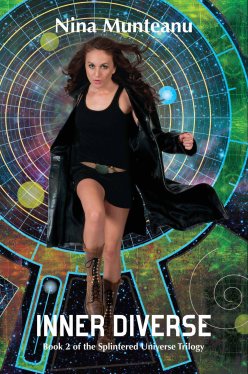
 Lady Vivianne Schoen, the Baroness von Grunwald, in my historical fantasy The Last Summoner, is a being of light who can travel time-space and must alter history starting with the Battle of Grunwald in 1410. Her first name derives from the Latin vivus meaning alive or the French word vivre for life. And live she must—for over six hundred years— if she is to succeed in recasting history to make this a better world. There is an ironic layer to her name, but I can’t reveal it here for those who haven’t yet read the book. In future Paris she meets François Rabelais, named after the 15th Century satirist, philosopher and dissident. While this youth on the surface represents the antithesis of the medieval scholar, he finally reveals himself as a philosopher warrior and humanist like his 15th Century namesake.

 Remember to keep track of what you send where and when and what happens to it. It can become a very confusing bus terminal otherwise, with someone ending up in Seattle when they are headed to Toronto! What happens with this approach is several things: you begin to treat the whole marketing/publishing process as a business (which it is) and because you have so many “buses” out there coming and going, the rejections don’t hurt quite as much and instead become part of the learning process, which they should be. You adopt a more business-like approach, which translates into your relationship with editors and publishers. A win-win situation results. Believe me; this works. Once I fell into this method, my sales increased by over 70%.