Look and you will find it—what is unsought will go undetected —Sophocles

Snowy path, Scarborough (photo by Nina Munteanu)
During a time when I had a demanding job as an scientist, wife and mother and community volunteer, I wrote and successfully marketed five books, over a dozen short stories and many articles and reviews. Some people, including my publishers, thought I never slept (true) or cloned myself (possibly). They couldn’t believe my productivity when I was so busy with life.
But I did what I did, because I’d worked out a system. One that I could live by. One that fit my lifestyle. One created out of respect for my art as part of my “busy” life of commitments.
The truth of it is that we all lead busy lives. If you are going to finish that novel you’ve been working on over the years or book of poems sitting in the bottom dresser drawer, you need to make a commitment. Aside from giving your art the respect it deserves, it comes down to creating a time and place to write.
It starts with being realistic about your daily schedules and routines and inclinations and picking a time and place accordingly. Try to be consistent. It’s actually best to create a routine related to both time and place; the key is to be realistic about it. Don’t fight your inclinations or habits; instead, build your writing into your lifestyle. This will ensure success.
Choose a Sacred Time
Finding the time to write is critical to succeeding. If you don’t dedicate time to write you won’t. Believe me, you won’t. Make it sacred.
Writer Louise DeSalvo shared a common story about her experience: “Many people I know who want to write but don’t (my husband, Ernie, for example) or who want to write more than they have but say they can’t find the time (my friend Marla) have told me that taking the time to write seems so, well, self-indulgent, self-involved, frivolous even. And that finding the time to write—even a diary, much less fiction or memoir or poetry—in their busy schedules is impossible. I’ll write when I have the time, they say.”
It doesn’t work that way. You don’t find time; you must create it.
Writing of any kind is a commitment you make to yourself. So, choose a time that’s right for you. If you’re a morning person, don’t pick the end of the day when you don’t function as well. Instead, pick the early morning to write, a time before everyone else gets up and the day’s distractions pile up.
It’s actually best to create a routine related to time of the day (e.g., fixed time such as every morning or right after supper) or based on some other constant in your life, say the school calendar or your daily activities. The key is to be realistic about the time(s) you’ve chosen. In other words, your goals should be realistic and realizable.
The second part of the commitment is sharing it with your family and friends so that they will respect your sacred writing time. By sharing how important it is to you, you also give them the gift of sharing the experience with you and they are more likely to respect your time alone to write. This is also why choosing a routine makes more sense; it is something your family and friends will better remember and abide by. Making it easy for others is part of making it easy for you.
Find Your Own Rhythm
There’s no rule for when and how often you write. Because frequency and schedule of writing depends on the kind of writing you do (e.g., novel, short stories, articles, research) and on your own rhythms, you must decide what works best.
Most writers recommend that you commit to a regular writing schedule that is realistic to your overall routine and biorhythms. Some recommend you write in the morning, after a refreshing sleep; others suggest you write at night, at the end of the day when your memories are more fresh with the day’s activities and stimulations. Yet others suggest you take time out during the day to jot down relevant experiences as close to the time as the muse hits you, then spend some time at the end of the day compiling it into your work.
In the end, it’s up to you to choose what works for you and your own rhythms. When is the best time for you to write? And for how long or how many pages? Once you decide, stick to that schedule.
Choose a Sacred Place
Writing is a reflective activity that requires the right environment. The best environment is a quiet one with no interruptions and where you are alone. A reflective environment will let you find a connection with your muse. You need a place where you can relax and not worry about someone barging in or other things distracting you from your reflections. You should also feel physically comfortable and the place should meet your time requirements.
Because the suitability of a place can change with the time of day, learn the rhythms that affect the place you wish to write in. For example, the kitchen may be the centre of activity during the day but an oasis of quietude during the evening. Similarly, learn what kind of environment stimulates and nurtures your writing. Does music help or do you need complete quiet? Do you respond to nature’s soft breezes and sounds or do you prefer to surround yourself with the anonymous murmur of a crowded café for company?
Places that work for me include the local coffee shop, a park near my house, a library or other quiet place where I can enjoy uninterrupted anonymity. Where you write may reflect what you’re writing and vice versa. To some extent, you are environment and environment is you. You might try a few places first and see what happens to your muse. What you write while sitting under an apple tree in the breeze hearing the birds singing may differ from what you write while sitting in your living room by the crackling fireplace with music playing or sitting at your desk in your bedroom in total silence or in a crowded café surrounded by cheerful bustle.
Again, as with your choice of time, tell your family and friends about your sacred place. Provide rules, if you have to. Let’s say it’s a desk in the study. You may, for instance, let others know that your “mess” is part of a work in progress, perhaps even explain a little about it so they understand the nature of what you’re doing and why it should not be touched or moved or used, even while you are away from it. This will ensure that they respect your things and what you’re doing.

Path along Credit River (photo by Nina Munteanu)
In the end it comes to finding the right integration and balance of time and place. Letting others know of your choices is equally important; this will ensure that they can help you, not hinder you in your writing. While writing is to a large extent an activity done in solitude, the journey is far from secluded. Ensure that you have a good support network.
This article is an excerpt from my fiction writing guidebooks “The Fiction Writer: Get Published, Write Now!” (Starfire, 2009) and “The Journal Writer: Finding Your Voice“ (Pixl Press, 2013), part of the Alien Guidebook Series.
 Nina Munteanu is an ecologist and internationally published author of award-nominated speculative novels, short stories and non-fiction. She is co-editor of Europa SF and currently teaches writing courses at George Brown College and the University of Toronto. Visit www.ninamunteanu.ca for the latest on her books.
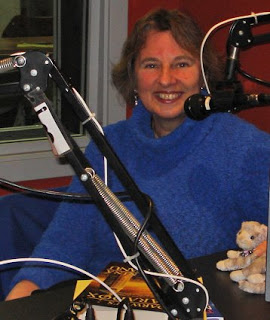 Like most authors, I’m somewhat of an introvert. I don’t mind talking in front of people, but I don’t crave it and I often need a place to relax and recharge after. One thing I know I can do lots more of is talk about my books and the writing process on a more one-on-one mode. I think most authors do: How and why we write; what made us write that particular one; why it’s important; how it can help others.
 appearance. I have done that with several of my interview appearances with wonderful return visits.
 Write to the audience’s expectations (given the promise of your work): success of stories with readers will rely on the alignment of expected story structure, tone and endings. My romance SF therefore reads differently from my hard SF in so many ways.
 Write to the understanding level of your intended audience: how and what I write for my hard science fiction audience (with expectations on accurate and intelligent exploration and extrapolation on science) is different from the style I use for my historical fantasy. This will include “voice”, language and use of specific vocabulary, terms and concepts, sentence structure and pace.
 Nina Munteanu is an ecologist and internationally published author of award-nominated speculative novels, short stories and non-fiction. She is co-editor of Europa SF and currently teaches writing courses at George Brown College and the University of Toronto. Visit
  At Calgary’s When Words Collide this past August, I moderated a panel on Eco-Fiction with publisher/writer Hayden Trenholm, and writers Michael J. Martineck, Sarah Kades, and Susan Forest. The panel was well attended; panelists and audience discussed and argued what eco-fiction was, its role in literature and storytelling generally, and even some of the risks of identifying a work as eco-fiction.
 I submit that if we are noticing it more, we are also writing it more. Artists are cultural leaders and reporters, after all. My own experience in the science fiction classes I teach at UofT and George Brown College, is that I have noted a trend of increasing “eco-fiction” in the works in progress that students are bringing in to workshop in class. Students were not aware that they were writing eco-fiction, but they were indeed writing it.
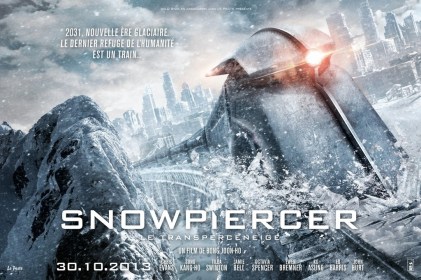 Just as Bong Joon-Ho’s 2014 science fiction movie Snowpiercer wasn’t so much about climate change as it was about exploring class struggle, the capitalist decadence of entitlement, disrespect and prejudice through the premise of climate catastrophe. Though, one could argue that these form a closed loop of cause and effect (and responsibility).
 The self-contained closed ecosystem of the Snowpiercer train is maintained by an ordered social system, imposed by a stony militia. Those at the front of the train enjoy privileges and luxurious living conditions, though most drown in a debauched drug stupor; those at the back live on next to nothing and must resort to savage means to survive. Revolution brews from the back, lead by Curtis Everett (Chris Evans), a man whose two intact arms suggest he hasn’t done his part to serve the community yet.
 In my latest book Water Is… I define an ecotone as the transition zone between two overlapping systems. It is essentially where two communities exchange information and integrate. Ecotones typically support varied and rich communities, representing a boiling pot of two colliding worlds. An estuary—where fresh water meets salt water. The edge of a forest with a meadow. The shoreline of a lake or pond.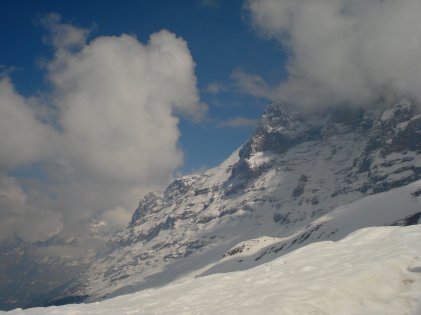


 Neo in The Matrix is an anagram for “One”. Before he changes his name to Neo, he goes by the name of Thomas Anderson. Thomas is Hebrew for “twin” (e.g., Agent Smith tells Neo, “you have been living two lives.”). Of course, Thomas was also one of Jesus’s disciples, the one who doubted. The Wachowski Brothers chose the names of all their main characters with careful purpose. Morpheus (the god of dreams, who takes Neo out of his dream); Trinity (who connects and unifies the “father” the “son” and the “holy spirit” through her faith).
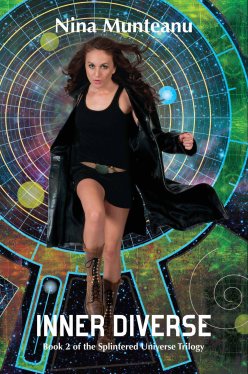
 Lady Vivianne Schoen, the Baroness von Grunwald, in my historical fantasy The Last Summoner, is a being of light who can travel time-space and must alter history starting with the Battle of Grunwald in 1410. Her first name derives from the Latin vivus meaning alive or the French word vivre for life. And live she must—for over six hundred years— if she is to succeed in recasting history to make this a better world. There is an ironic layer to her name, but I can’t reveal it here for those who haven’t yet read the book. In future Paris she meets François Rabelais, named after the 15th Century satirist, philosopher and dissident. While this youth on the surface represents the antithesis of the medieval scholar, he finally reveals himself as a philosopher warrior and humanist like his 15th Century namesake.

 Remember to keep track of what you send where and when and what happens to it. It can become a very confusing bus terminal otherwise, with someone ending up in Seattle when they are headed to Toronto! What happens with this approach is several things: you begin to treat the whole marketing/publishing process as a business (which it is) and because you have so many “buses” out there coming and going, the rejections don’t hurt quite as much and instead become part of the learning process, which they should be. You adopt a more business-like approach, which translates into your relationship with editors and publishers. A win-win situation results. Believe me; this works. Once I fell into this method, my sales increased by over 70%.



 Nina Munteanu Writing Coach