I’ve selected ten TV series that have intrigued me, moved me, and stayed with me for various reasons that touch on: abuse of justice, including eco-justice and environmental abuse; technology use and abuse; and the effects and horrors of climate change.
Some are well known; others not so well known. All approach storytelling with a serious dedication to depth of character, important themes, realistic world building, and excellent portrayal by actors. The world-building is extremely well done—in some cases rivalling Ridley Scott’s best—with convincing portrayals of worlds that are at times uncanny in their realism. Worlds that reflect story from an expansive landscape to the mundane minutiae of daily life: like the cracked phone device of Detective Miller in The Expanse or the dirty fingernails of engineer Juliette Nichols in the Down Deep of Silo. Stories vary in their treatment of important themes from whimsical and often humorous ironies to dark and moody treatises on existential questions. In my opinion, these TV series rival the best movies out there, often reflecting large budgets (but not always) and a huge commitment by producers. The ten TV series I’ve selected here come from around the world: Brazil, Germany, France, Norway, Canada and the United States.
In Part 1, I look at five TV series that touch on ethical issues we are facing today; issues that reach far into existential questions of what it means to be human. These TV series explore synthetic biology, cloning and gene editing, political justice, and justice in space colonization and exploitation.
.
.
BIOHACKERS: When Synthetic Biology Meets Ethical Intrigue
This fast-paced techno-thriller created by Christian Ditter has at the very centre of its intrigue synthetic biology. In the journal Science Dov Greenbaum describes this German TV series as “a fictional tale centred around the sociotechnological movement known as do-it-yourself (DIY) biology, in which amateurs, professionals, anarchists, and civic-minded citizens push the boundaries of mainstream biology.” The show centres on Mia Akerlund (played by Luna Wedler) a secretive med-student prowling for answers to the death of her twin brother and her antagonist, the enterprising Machiavellian and narcissistic Professor Tanja Lorenz (Jessica Schwarz). But the real star of the show is biohacking: human enhancement or augmentation to improve health, performance, or well-being. Biohacking ranges from efforts to improve brain function to faster weight loss. Some are relatively safe to try at home; others may pose health risks. Among others, the show features glow-in-the-dark mice, gene-modded weed, underwater pills that extend your ability to hold your breath, and payment microchips in your hand.
The series lent a critical realism to the story by using accurate world building, real sets and equipment from genetics labs and university settings. Dov Grenbaum’s article in the journal Scienceentitled “Biology’s brave new world” celebrates the show for its accurate representation of complex laboratory equipment and procedures and how it accurately represents the intricacies, motivations and ethical issues of biohacking from sophisticated big-business gene therapies to DIY homespun biology.
Biohackers opens with a disturbing scene of bioterrorism on a train headed to Berlin. All passengers suddenly choke and fall unconscious—except for young med student Mia Akerlund, who tries to help and fails. From that explosive flash-forward scene, the show jumps back to two weeks prior, as college freshman Mia settles into Freiburg University’s prestigious medical school, and betrays a particular interest in synthetic biology, biohacking and genome editing. We soon learn that she is obsessed by celebrated professor and geneticist/entrepreneur Tanja Lorenz (who runs a biopharmaceutical company and has an entire building dedicated to her research with huge neon logo of her name). Both women are connected by a dark secret to do with Mia’s twin brother who mysteriously died when still a boy. Mia quickly gains a position working for Lorenz, which plunges her into the dangerous intrigue of illegal genetic experiences.
.
Lorenz and her grad student Jasper discuss experiments in their sophisticated lab (image from Biochackers)
.
An early, rather enlightening, scene of the first episode is of Mia’s first introductory biology class given by celebrated gene therapy tycoon Professor Lorenz. Not only does the scene introduce the controversial subject of synthetic biology; it reveals a disturbing sense of what’s at stake and the danger of scientific hubris. Tall, svelte and confident in a smart haircut and tailored suit, Lorenz struts like a self-proclaimed goddess in front of a student-crowded lecture hall and preaches the benefits of synthetic biology. When she asks the class “What is synthetic biology?” and a student replies “with the help of synthetic biology, we can alter existing life forms or create new ones,” Lorenz prickles beyond her already frosty demeanor and impatiently berates the students for their lack of vision. She challenges them to think bigger: “Synthetic biology transforms us from creatures into creators. It’s not just the future of medicine, but of humankind. We can cease entire infections before the outbreak … We eliminate genetic disorders. But if we don’t do our work exceedingly well, it could end our species. It is on us to find a way; this is your future. Your responsibility. You are the creators of tomorrow. We make God obsolete…”
Science, academia and intrigue are skillfully woven in an intelligent mystery-thriller that not only represents science accurately but delivers commentary on the ethical and moral questions of this highly dynamic and rapidly evolving field of science.
Biohackers touches on several ethical and moral questions, such as genetic modification of stem cells, access to advanced gene therapies, and privacy and consent surrounding genomic data. Synthetic biologist Elsa Sotiriadis warns that, “this topic will likely become an ethical minefield in the coming years. On the one hand, we need large and diverse datasets to train medical AI and develop therapies. But on the other, there’s nothing as personal as your literal blueprint. Unlike stolen credit cards, you can’t change your genomic data. I like that Biohackers brings this up.”
.
Lorenz does a throat swab for DNA on a candidate in her experiment as Mia looks on (image from Biohackers)
Nina Munteanu is a Canadian ecologist / limnologist and novelist. She is co-editor of Europa SF and currently teaches writing courses at George Brown College and the University of Toronto. Visit www.ninamunteanu.ca for the latest on her books. Nina’s bilingual “La natura dell’acqua / The Way of Water” was published by Mincione Edizioni in Rome. Her non-fiction book “Water Is…” by Pixl Press (Vancouver) was selected by Margaret Atwood in the New York Times ‘Year in Reading’ and was chosen as the 2017 Summer Read by Water Canada. Her novel “A Diary in the Age of Water” was released by Inanna Publications (Toronto) in June 2020.
When I was first tantalized by the high-speed head-smashing trailor for the Paramount motion picture, Aeon Flux, directed by Karyn Kusama (Girlfight) and released in late 2005 (now on DVD), I was blissfully unaware of its history: that it was based on the darkly irreverant and raunchy 1995 MTV Liquid Television animated SF series created by Korean American animator, Peter Chung. The series achieved cult status among a select audience of imsoniacs (it played at midnight on MTV, if that tells you anything). This may have worked in my favour. I had no expectations or preconceptions, except for a hair-flying ride. As a result, when the content (written by Matt Manfredi and Phil Hay) had merit as social commentary, I counted it as a bonus. But, then there was the matter of the reviews that emerged between the trailors airing and my seeing the film.
Aeon Flux, animated and movie character
Unfortunately for the motion picture, Paramount’s lack of press-screenings (and subsequent press reaction because of those lack of screenings) may have predisposed critics to dislike it. And many provided negative, though conflicting, reviews; as if they couldn’t all agree on why they didn’t like the film. Kieth Breese (Filmcritic.com) found the film “gorgeously surreal and vacuously arty.” According to Jami Bernard (New York Daily News), “in the dystopian future [of Aeon Flux], apparently, women will be bendable Barbies in leather scanties, and everyone will speak like brain-dead robots…a silly live-action movie.” Justin Chung (Variety.com) decided that AeonFlux portrayed “the future [as] alternatively grim and hysterical…a spectacularly silly sci-fier.” A.O. Scott of the New York Times said that Aeon Flux was “flooded with colors and chilly effects [but was] drained of emotional interest, to say nothing of narrative coherence.” And, finally, William Arnold of the Seattle Post-Intelligencer called it “too somber and cerebral for the young action crowd.” Silly or too cerebral? In truth, this disappointment is because the Aeon Flux movie was wrongly perceived (and wrongly marketed) as an action thriller; it is more aptly described as a dystopian political thriller—not the brazen cry of V for Vendetta—but a subtle cautionary tale of the consequences of complacency, greed and living in absence of—and trying to cheat—nature.
Trevor Goodchild played by Marton Csokas)
In typical dystopian fashion, we join the Aeon Flux story roughly four hundred years after an industrial-related virus has killed 99% of the world’s population. Scientist, Trevor Goodchild (Marton Csokas) has developed a cure and the Goodchild dynasty secures a home for the five million survivors in the last city on Earth, Bregna, a paradise walled off from the unrestrained wilderness that ever-threatens them. Dystopias, like Bregna, often appear utopian on the surface, exhibiting a world free of poverty, hardship and conflict, but with some fatal flaw at their core. A dystopia (“dys”=bad; “topos”=place) is a fictional society that is the antithesis of utopia. It is usually characterized by an authoritarian or totalitarian form of government or some kind of oppressive, often insiduous, social control. Other examples that depict a range of distopian societies in literature and film include: 1984, Brave New World, Fahrenheit 451, TheHandmaid’s Tale, Metropolis, THX-1138, Blade Runner, and V for Vendetta. Built from scientific premise and intended only as a temporary measure, the technocratic society of Bregna continues long after its intended span as the Goodchilds attempt to deal with an internal and enduring glitch (infertility) of the “cure”. Like most imposed provisional governments, this solution to a problem (cloning) has created yet another problem (fugitive memories from the previous clone’s life).
It is now 2415 and the walled society of Bregna appears utopian—clean and organized, beautiful, rich and spacious; but beneath the laughter and contentment, stirs an uneasy disquiet. Bregnans are losing sleep, having bad dreams, and are plagued by memories that don’t belong to them. Rebels who call themselves the Monicans challenge the Goodchild regime, run by Trevor and his brother Oren, and among the rebels is a highly competent and ruthless assassin, Aeon Flux (Charlize Theron), whose tools include whistle-controlled ball-bearing bombs, drugs that allow her to meet people on higher planes of existence, and interchangeable eyeballs. She is aptly named, as she serves a true agent of discord to Goodchild, the guardian of order and all that he naïvely believes is good.
“Some call Bregna the perfect society,” Aeon tells us in the opening scenes of the motion picture, “Some call it the height of human civilization…but others know better…We are haunted by sorrows we cannot name. People disappear and our government denies these crimes…But there are rebels who…fight for the disappeared. They call themselves the Monicans. I am one of them.” Several critics disliked the narrative introduction. I found that it particularly worked, by adding a reflective literary quality to the motion picture. It is noteworthy that in the original animated series, Trevor Goodchild often frames each episode with his reflections; only fitting that Aeon gets her chance in the film version. The reflective narrative of the motion picture is meant to enlighten its audience that this is not your ordinary action thriller. What follows is a fast-paced yet thoughtful story, with elements of romance, that explores notions of longevity, social structure and connection, faith and greed.
Aeon fights an opponent inside Goodchild’s fortress
Twitchfilm.net aptly called the motion picture “biological science fiction”. Trevor’s treacherous brother Oren says: “We’ve beaten death. We’ve beaten nature.” The film’s clean organic high-tech look faithfully captures the “sense of biotech gone wild” of the TV series by exploring several paradigms inherent in a society that lives deliberately in the absence of nature’s chaos. Indeed, the lack of connectivity resonates throughout the motion picture in its exploration of friendship, family, loyalty, and purpose. When her sister is murdered in the beginning of the film supposedly by Trevor’s men (but in actuality by his scheming brother, Oren), Aeon’s mission becomes personal: “I had a family once. I had a life; now all I have is a mission.” We never learn what the animated Aeon’s motives are.
Various scenes of Aeon Flux motion picture
The film truly launches into stylish action and intrigue when Aeon gladly accepts a mission to assassinate Trevor, thinking that this violent act will make it all better. Instead, it unravels her, beginning with when she confronts him; finding him uncomfortably familiar and alluring, she hesitates and decides not to kill him. “What do you want?” Trevor asks her. “I want my sister back. I want to remember what it’s like to be a person.” It is indeed he—or rather what he knows—that holds the key to who she is. The key is that she, like he and all those in Bregna, is a 400 year-old copy of someone before the virus. Four hundred years ago she was the original Trevor’s wife.
Trevor and Aeon on the run
Filmed in Berlin, the movie is visually stunning, from the opening shot on the steps of Sans Souci to the labrinthine wind canal used by the Nazis. Displaying an eclectic mixture of spareness and mid-century design the film is acted out in a fluid dance to Graeme Revell’s (Sin City) haunting score. The action is rivetting and seamless with both plot and underlying theme of bio-tech gone awry. Early on we are treated to a thrilling sequence of Aeon and her biotech-altered rebel colleague negotiating the security of Goodchild’s sanctuary that consists of a beautiful but deadly garden, guarded by patches of knife-sharp blades of grass and poison dart-spitting fruit trees.
Wind canal in Berlin serves as entrance to Goodchild’s fortress
Aeon champions moral ethics and single-handedly destroys the relicor, the supposetory of the clone DNA, pursuing honour at the expense of loyalty (to Goodchild) and heralding in a new age of “mortality”. The movie ends as it begins, with Aeon’s narrative: “Now we can move forward. To live once for real and then give way to people who might do it better…to live only once but with hope.” This is truly what Aeon Flux represents and what her very name embodies.
The relicor, repository of Bregna’s clone DNA flies overhead
Keeper of the precious DNA storage in the relicor
The term Aeon comes from the Gnostic notion of “Aeons” as emanations of God. Aeon also means an immeasurably long period of time; the Suntelia Aeon in Greek mythos symbolizes the catastrophic end of one age and the beginning of a new one. This is apt for our heroine, who, at least in the movie version, pretty well single-handedly destroys an old corrupt world, and heralds in a new age. Aeon was “emanated” after four hundred years by the gentle oracular Keeper of the relicor, whose original version saved her DNA and kept it hidden and safe until the right moment.
Aeon Flux captures a fly in her eyelashes
Fans of Peter Chung’s baroquely violent animated Aeon Flux will recognize some similarities between Kusama’s 2005 film adaptation and the original MTV cartoon. While admitting that the motion picture version was only based on Peter Chung’s characters (check the credits), Karyn Kusama intended to “honor [the cartoon version’s] wierdness in spirit and…pay homage to its esoteric boldness and…strange energy.” Homages to the animated series include: Aeon’s signature fly-catching with her eyelashes, demonstrating a woman extremely in tune with her body; Monican anarchists (though in the film they are subversives within Bregna rather than from an adjacent society); a virus that kills off most of the population and assassination attempt on Goodchild (Pilot); the harness worn on the torso that transports the wearer to another dimension (Utopia or Deuteranopia?); passing secret messages through a french kiss (Gravity); issues of cloning and two colleagues crossing a weaponized no-man’s land together (A Last Time for Everything). Original and movie adaptation also share at their core the exploration of the consequences and ambiguities of choices in life and the role that nature plays, subversive or otherwise.
Aeon Flux stands at the wall into Bregna, ready to scale it
Although they share recognizable motifs and characters, the 2005 movie adaptation contrasts in some important ways from the six 5-minute shorts of 1991 and 10 half-hour episode TV series that aired in 1995. Chung’s avante garde series is set mostly in a surrealistic dark future Earth (presumably) where two communities, Bregna and Monica, are juxtaposed but separated by a wall (not unlike East and West Berlin). Bregna is a centralized scientific-planned society and Monica is Bregna’s ‘evil twin’, an anarchistic society. Chung’s innovative use of “camera angles” reminiscient of cinematography, together with a spare, graphic choreography, portrays a sprawling Orwellian industrial world. Peopled with mutant creatures, clones, and robots, it features disturbing images of dismemberment, mutilation, violent deaths and human experimentation as Chung explores post-modern notions of cloning, mind and body manipulation, and evolution through a series of subversive aggressively non-narrative pieces. On the subject of his cloning experiments (A Last Time for Everything) Goodchild says to Aeon: “My work offends you. Why? Human beings aren’t so unique, just a random arrangement of amino acids.” To which Aeon retorts, “These people you’re copying are already superfluous. You’re trafficking in excess.”
The title character in the animated version is a tall, scantily-clad anarchist (featuring the sultry voice of Denise Poirier) skilled in assassination and acrobatics, who infiltrates technocratic Bregna from the neighbouring revolutionary society of Monica. As with the movie character (elegantly portrayed by Theron), the animated Aeon is a stylish dance; completely in tune with her body. Says Chung of his creation: “The way she’s dressed, the way she looks, the way she moves was tailored to seduce the viewer to watch more, even though they may not understand at every moment what was happening.”
Despite their similar intelligence, physicality and drive, the two Aeons depart as characters. For instance, one of the major differences between original animation and adapted film is the ongoing relationship between Aeon and her nemesis/lover, Trevor Goodchild (John Rafter Lee). The sexual and intellectual tension between Flux and Goodchild is far more palpable in the TV series and does not explain itself or resolve itself like it does in the movie. The opening of the animated series describes their odd relationship, which suggests that their destinies are bound together: Aeon: “You’re out of control.” Trevor: “I take control. Who’s side are you on?” Aeon: “I take no side.” Trevor: “You’re skating the edge.” Aeon: “I am the edge.” Trevor: “What you truly want only I can give.” Aeon: “You can’t give it, you can’t even buy it and you just don’t get it.”
Goodchild and Aeon interacting
The Gnostic “Aeons”, emanations of God, come in male/female pairs (aptly represented by Flux and Goodchild). As with the Gnostic “Aeon pairs”, Flux and Goodchild make up inseperable parts, the yin/yang (complementary opposites) of a whole, and represent the paraxical oxymoron of chaos in order. Long-limbed and continually in fluid motion, Flux dances through Goodchild’s rigid scientific world of order with an ease that stirs both his fascination and his fury. He, in turn, enthralls her and ensnares her with his intellectual hubris. The Gnostic “Aeon” male/female pair (called syzygies) of Caen (Power) and Akhana (e.g., Love) closely parallel Goodchild and Flux as they flirt with each other in a complex dance of power and love. Their attraction/antagonism mimics the characterizations of Eris (Greek goddess of discord) and Greyface (a man who taught that life is serious and play is a sin) in the Discordian mythos. Like Eris and her golden apple, Aeon Flux stirs up trouble for Goodchild’s complacent technocratic regime, constantly challenging his hubristic notions of human evolution, perfection and even love.
Aeon and fellow Monican discuss tactics
The cartoon Aeon Flux—and Trevor Goodchild, for that matter—are also far more compelling than those depicted in the movie. Headstrong, foolish and selfish but also dedicated and deeply compassionate and honourable, Chung’s Aeon Flux is a paradox. She scintilates with passionate self-defined notions against an industrial tyranny, while nurturing a naïve desire for personal love; the target of both being found in one man, Trevor Goodchild. Often cruel at times, she shows moments of selfless consideration, compassion and humour. Despite her violence, perverted fetishes and lustful obsessions, she is as appealing as she is strange; a discordant rock tune, which often enough hits a resonating note that draws out one’s interest and captures one’s empathy.
Chung’s Aeon Flux on a mission
Kusama’s Aeon Flux being targeted by another Monican
In contrast to the super-hero competence and aloofness of the movie Aeon, the animated Aeon is wonderfully flawed; she is a complex paradoxical character, who makes mistakes, blundering often due to over-confidence and poor decisions (usually connected with her feelings for Trevor). Chung’s Goodchild is equally complex, and is, unlike the naïve and rather feckless scientist of the movie, a true equal to Flux’s energetic and often misplaced heroics. Kusama’s Goodchild is neither menacing nor diabolical; rather, he is a well-intentioned and watered-down version of the Machiavelian scientist that Chung created. And, though quite appealing, he is also less compelling as a result. Chung’s Goodchild is a visionary pedant, who often spouts twisted Orwellian diatribe: “That which does not kill us makes us stranger.” “The unobserved state is a fog of probabilities…” “There can be no justice without truth. But what is truth? Tell me, if you know, and I will not believe you.” Flux cuts through Goodchild’s dogma with her own one-liners—“Trevor, don’t trouble me with your thin smile”—and usually shuts him up with either a smack or a kiss.
Aeon dispatches masked baddies
The animated series is far more gritty and edgy than the movie version, featuring twisted eroticism and dark humor amid scenes of graphic violence. It oozes with a delicious perversity that the movie version abandoned in favour of cohesive narrative (and a PG-13 rating). Showing a healthy and irreverent disregard for that very narrative continuity, Chung’s animated series successfully makes commentary on various societal notions and behaviours through his uniquely disjointed and liberating form. Chung asserts that this plot ambiguity and disregard for continuity were meant to satirize mainstream film narratives. I think it does far more than this as art form, by providing a journalistic style of reporting the nuances and filigrees of life that gives it an immediacy hard to overlook. Chung’s apparent intention was to emphasize the futility of violence and the ambiguity of personal morality. This is best shown in his six 5-minute shorts and pilot, created in 1991. The shorts commonly featured a violent death for the title character, sometimes caused by fate, but more often due to her own incompetence.
Chung’s Aeon Flux
The TV Aeon Flux flows like a subversive movement; punctuated by a series of abstract, often garish, statements on various themes of soulless biotechnology. Each episode is a vignette that explores singular questions of integrity, honour, loyalty, belief and love using the clever platform of the kiss/kill dynamic of Aeon and Trevor.
Their interactions scintillate with clever wordplay, often amid physical-play that usually involves a pointed weapon: Aeon: “You’re psychotic. You no longer have a common conscience with your fellow man.” Trevor: “I understand the will of evil…[it] is like an iron in a forge…conscience is the fire.” Aeon: “you’ve lost the substance by grasping at the shadow.” The underlying question of connectivity and what it is to be human filter through his discordant series primarily through the twining of his two main characters, both loners with little connection to anything except to one another (which they both seek and abhor). The motion picture version pursues through a more structured and lengthy narrative, the same theme of connectivity (with nature, with others of our society, with family, and our beliefs) and the consequence of living a life with out meaning, though on a far more simple level. At the end of Kusama’s movie, Aeon challenges Trevor’s assertion that cloning is their only answer for survival: “We’re meant to die. That’s what makes anything about us matter…[otherwise] we’re ghosts.” In contrast, at the end of Chung’s episode, Reraizure, Trevor closes with these words of reflection: “We are not what we remember of ourselves. We can undo only what others have already forgotten. Learn from your mistakes so that one day you can repeat them precisely.”
Aeon and Trevor come to terms
Kusama’s film version chose narrative coherence to make its statements by sacrificing character for story and challenging its audience cerebrally. Chung’s cartoon version challenges us more deeply, at a visceral level, through the interplay of his characters where cohesive narrative doesn’t matter. In the final analysis, the motion picture version pursues the same questions posed by Chung’s original animated version. Only, Chung isn’t so eager to provide answers, leaving both interpretation and conclusions to the individual. Both versions are mind-provoking and a celebration of excellent art. While the film’s moralistic tale resonated and lingered like a muse’s long forgotten poem, the subversive kick of the comic series (which I thankfully saw later) struck deep chords and left me breathless with questions.
Enforcers attack Monicans
Nina Munteanu is a Canadian ecologist / limnologist and novelist. She is co-editor of Europa SF and currently teaches writing courses at George Brown College and the University of Toronto. Visit www.ninamunteanu.ca for the latest on her books. Nina’s bilingual “La natura dell’acqua / The Way of Water” was published by Mincione Edizioni in Rome. Her non-fiction book “Water Is…” by Pixl Press (Vancouver) was selected by Margaret Atwood in the New York Times ‘Year in Reading’ and was chosen as the 2017 Summer Read by Water Canada. Her novel “A Diary in the Age of Water” was released by Inanna Publications (Toronto) in June 2020.
Since “Expanse”, I’ve been on the lookout for an equally sophisticated treatment of space exploration—something that doesn’t slide into horrific mind-numbing and gut-wrenching insult to the senses, unrealistic character twists and visceral shock devices. Something that delivers…
Season One of French TV series “Missions” has delivered in so many ways. Created by Henri Debeurme, Julien LaCombe and Ami Cohen, Season 1 (2017) of this series on the exploration of Mars has explored human evolution, ancient history, trans-humanism, artificial intelligence, and environmental issues in a thrilling package of intrigue, adventure and discovery. From the vivid realism of the Mars topography to the intricate, realistic and well-played characters and evocative music by Étienne Forget, “Missions” builds a multi-layered mystery with depth that thrills with adventure and complex questions and makes you think long after the show is finished.
Gale Crater on Mars, showing inverted channels (image by NASA)
The first episode of the 10-episode Season One starts with a real tragedy: the first human to die in space flight; the 1967 fatal crash landing of the Russian Soyus 1 piloted by Cosmonaut Vladimir Komorov. In a stirring article on National Public Radio, Robert Krulwich provides incredible insight into this historic tragedy:
Starman by Jamie Doran and Piers Bizony, tells the story of a friendship between two cosmonauts, Vladimir Komarov and Soviet hero Yuri Gagarin, the first human to reach outer space. The two men were close; they socialized, hunted and drank together. In 1967, both men were assigned to the same Earth-orbiting mission, and both knew the space capsule was not safe to fly. Komarov told friends he knew he would probably die. But he wouldn’t back out because he didn’t want Gagarin to die. Gagarin would have been his replacement.
Gagarin and Komarov
The story begins … when Leonid Brezhnev, leader of the Soviet Union, decided to stage a spectacular mid-space rendezvous between two Soviet spaceships. The plan was to launch a capsule, the Soyuz 1, with Komarov inside. The next day, a second vehicle would take off, with two additional cosmonauts; the two vehicles would meet, dock, Komarov would crawl from one vehicle to the other, exchanging places with a colleague, and come home in the second ship. It would be, Brezhnev hoped, a Soviet triumph on the 50th anniversary of the Communist revolution. Brezhnev made it very clear he wanted this to happen.
The problem was Gagarin. Already a Soviet hero, the first man ever in space, he and some senior technicians had inspected the Soyuz 1 and had found 203 structural problems — serious problems that would make this machine dangerous to navigate in space. The mission, Gagarin suggested, should be postponed. The question was: Who would tell Brezhnev? Gagarin wrote a 10-page memo and gave it to his best friend in the KGB, Venyamin Russayev, but nobody dared send it up the chain of command. Everyone who saw that memo, including Russayev, was demoted, fired or sent to diplomatic Siberia.
Commemorative stamp for Komarov
With less than a month to go before the launch, Komarov realized postponement was not an option. He met with Russayev, the now-demoted KGB agent, and said, “I’m not going to make it back from this flight.” Russayev asked, Why not refuse? According to the authors, Komarov answered: “If I don’t make this flight, they’ll send the backup pilot instead.” That was Yuri Gagarin. Vladimir Komarov couldn’t do that to his friend. “That’s Yura,” the book quotes him saying, “and he’ll die instead of me. We’ve got to take care of him.” (italics mine).
In the opening scene of “Missions”, we never see the actual crash landing; instead, as Komarov hurtles to the ground, he suddenly sees a strange white light and then we cut to the present day. Now in an alternate present day, the international crew of the space ship Ulysses is readying for its journey to Mars. Days before the Ulysses mission takes off from Earth, psychologist Jeanne Renoir is asked to replace the previous psychologist who died suddenly in a freak accident.
We are introduced to Jeanne as she conducts a test at l’Université Paris with children on self-restraint using marshmallows. It’s a simple test: she leaves each child with one marshmallow and instructs that if they don’t eat it, she’ll give them a second one when she returns. Of course, the little girl can’t resist when left alone with the marshmallow and gobbles it down, giving up a second for her impatience. And we see that Jeanne correctly anticipates each child’s reaction.
Jeanne gives her psychology report of the crew to William Meyer onboard the Ulysses
Jeanne joins the international team of the Ulysses but maintains a detached relationship with them, refusing to get emotionally close to anyone; she cites her need as psychologist to remain impartial and objective and successfully hides a gentleness beneath an impenetrable layer of cold severity. The team consists of Captain Martin Najac and his estranged and depressed wife Alessandra (ship’s doctor), moody and laconic Simon Gramat (second in command), twitchy and paranoid Yann Bellocq (ship’s engineer), Basile (Baz), the sociopathic computer scientist who is more at ease with the ship’s AI Irène than the rest of the crew, and geologist Eva Müller, the target of Baz’s awkward advances.
Simon Gramat, second in command on Ulysses
The eccentric Swedish corporate billionaire and David Bowie fan, William Meyer is also on board the Ulysses. His goal is to lead the first mission to land on Mars. However, shortly before they are scheduled to land, the crew discover that Z1—a ship sent by charismatic but highly unlikable Ivan Goldstein of rival corporation Zillion (partnered with NASA)—has overtaken them and has already landed on Mars. But the Z1 crew have not been heard from since sending a cryptic warning: “Don’t come here. Don’t try and save us… It’s too dangerous,” an intense Z1 astronaut warns.
Z1 astronaut warns help away
Martian terrain (image by Perseverance NASA)
After a rough landing through a major dust storm on Mars, the Ulysses crew struggle to fix an inoperable computer system (Irène) and life support system aboard their shuttle, which was presumably damaged by the landing. While not expecting to find any survivors of the Z1 crew, part of the Ulysses crew head to the Z1 landing site in a rover, looking for parts they can scavenge to power their shuttle. They find only remnants of the Z1 ship, but close by they discover someone alive in the Martian desert along with the ship’s black box. They presume he is from the American team but he insists that he is Russian and that his name is Vladimir Komarov…
The Ulysses shuttle on Mars
So begins this surrealistic mystery that transcends history, identity and our concepts of reality with tantalizing notions of Atlantis, the mythical metal Orichalcum, programmable DNA-metal and much more. The first season of “Missions” focuses on cynical Jeanne Renoir as she unravels the mystery of Mars; a mystery that ties her inextricably to Komarov. When she first interviews Komarov, he surprises her by using her late father’s call to their favourite pastime of stargazing: “Mars delivers!” We then find that Komarov is her father’s hero for his selfless action to save his friend, and her father considered him “the bravest man of his time.” Jeanne is intrigued. Who—what—is this man they’ve rescued? Surely not the dead cosmonaut resurrected from 1967?
Martian terrain (image by NASA)
Throughout the series, choices and actions by each crew member weave narrative threads that lead to its overarching theme of self-discovery and the greater question of humanity’s existence. Yann Bellocq refuses to let the party who discovered Komarov back into the ship, citing oxygen depletion as his reason (“If you use oxygen to pressurize the airlock, you know what will happen. Better four survivors than eight corpses,” he says matter-of-factly as he dooms the four astronauts waiting to board). Eva later laments to Alex that “I thought I knew him.” Alex (who’s earlier terror had instigated the accidental death of her husband Captain Najac) tells Eva: “You’re young; there are situations which change people, for better or,” with a sideways glance at Bellocq, “worse.”
Martian surface (image by ESA)
Intrigue builds quickly. By the third episode (Survivor), the crew make a startling discovery about Mars and humanity. After Komarov mysteriously leaves the ship and leads the small search party to a mysterious sentiently-created stone object, a stele, the ship’s computer Irène describes the hieroglyphs as ancient Earth-like. The main block, supported by four Doric columns is similar to the Segesta Temple in Sicily; its central designs are similar to Mayan Calakmul bas-reliefs; and its height-width ratio is equal to Phi, known as the golden ratio in ancient Greece.
Komarov leads the crew to the stele
Irène concludes that “either someone was inspired by our civilizations to build it…” “…Or our civilizations were inspired by it,” finishes Jeanne.
Jeanne picks up a pyramid made of Orichalcum
Alex, the ship’s doctor, informs the crew that the DNA of Mars-Komarov is identical to that of original-Komarov, except for an additional single strand; his DNA has three strands instead of two. She concludes, “He isn’t human.” Jeanne adds, “or he’s something more than human.” They also discover that the stone stele is actually an artificial alloy not known in any geology database but described in ancient script as the mythical substance ancient Greek and Roman texts called Orichalcum—the metal of Atlantis. Irène also identifies similar triple helix DNA in the rock, similar to Komarov’s, that is data-processing—which makes Komarov a living computer program, capable of controlling the ship.
Jeanne later confronts Komarov about the stone object; stating the need for expediency, she asks him what he meant to show them by leading them there. After telling her that humans need to discover truths for themselves before accepting them, Komarov slides into metaphor that reflects her previous psychology experiments on restraint and patience: “Imagine that your right hand holds all the answers about me and your left hand holds all the answers about you, Mars, and the universe. If you open your right hand, the left disappears.” Jeanne quips back, “I’d open the left first.” Komarov rejoins, ”That would be too easy. Some rules can’t be broken. Making a choice means giving something up.” She must wait before she can open her left hand. Like the child and the second marshmallow…
From the beginning, we glimpse a surreal connection between Jeanne and Komarov and ultimately between Earth and Mars: from her childhood admiration for the Russian’s heroism on Earth to the “visions” they currently share that link key elements of her past to Mars and Komarov’s strange energy-giving powers, to Jeanne’s own final act of heroism on Mars. “You’re the reason I’m here,” he confesses to her in one of their encounters. “You have an important decision to make; one you’ve made in the past…”
As the storyline develops, linking Earth and Mars in startling ways, and as various agendas—personal missions—are revealed, we finally clue in on the main question that “Missions”—through the actions of each crew member and the exchanges between Komarov and Jeanne—is asking: are we worth saving?
In a flashback scene of her interaction with Komarov, Jeanne recalls Komarov telling her that, “people dream of other places, while they can’t even look after their own planet… You must remember your past in order to think about your future. Do you think Earth has a future?” When she responds that she doesn’t know, he challenges with “Yes, you do. They eat their marshmallow right away, when they could have two…Or a thousand. Do you think humanity can continue like that? You know the answer and it terrifies you.”
Jeanne embarks on the Martian surface, seeking answers
In the sixth episode (Irène), Jeanne pieces together a complex scenario from her encounters with Komarov, compelling her to leave the ship to discover more.
Gramat pursues Jeanne on the surface of Mars
Fearing for her safety and spurred on by a frank discussion with Komarov who recognizes how much Gramat cares for Jeanne (“You’re an impulsive man, especially when you talk about her…She’s counting on you, even if she’s too proud to say so”), Gramat pursues her on the surface of Mars. It is the first of two times that he will save her life, the second by using mouth-to-mouth resuscitation. After they appear to cross a time-space portal, Komarov is waiting for them and the two astronauts learn Mars’s greatest secret: it was green and inhabited once, a very long time ago, by Martians who destroyed it then colonized Earth. Jeanne learns that she is an “evolutionary accident”: “You alone can save them … from themselves…or not,” says Komarov. She must return to Earth, he tells her, despite their ship not having enough fuel to get them off Mars.
Gemma Williams of the Z2 brings both hope and despair to the Ulysses crew
Even after Zillion’s second ship, Z2, lands on Mars, giving the Ulysses crew a possible way off the planet, by season-end (Episode 10, Storm), it doesn’t look like Jeanne will leave Mars as the Ulysses crew meet with resistance from the other crew and a sudden storm surges toward them. Even if she does, will she return to save humanity or deliver them to their end? We’re not sure as we watch the ship take off with her still standing on Mars after dispatching their last impediment–one of the Z2 crew wishing to stop them. But she is not the same Jeanne we first met in episode one as she assures Gramat that she has no regrets—except for one (him, obviously). She follows with, “Let’s say you gave me the kiss of life…”
On to Season Two for more answers, and probably more questions…
Sirenum fossae crater on Mars (photo by NASA)
Gale Crater on Mars (photo by Curiosity, NASA)
The Lore—and the Lure—of Mars
When I was a child, my older brother told me that my parents found me in the huge garden behind our house and they brought me home out of pity. I scoffed back: ‘no, I wasn’t,’ I said with great confidence. I’d come down from Mars to study humans, I pronounced. I was born in April, after all; I’m an Aries and Mars is my planet.
Mars terrain (photo by ESA)
Ancient Observations of Mars
In ancient times of Mars observation (before 1500) little was known about it except that it appeared as a fiery red star and followed a strange loop in the sky, unlike other stars. In Roman myth, Mars was a fierce warrior god, protector of Rome, with the wolf his symbol. To the Greeks, Mars was Ares and that’s what they named the star (planet). The Babylonians, who studied astronomy as early as 400 BC, called Mars Nergal, the great hero, the king of conflicts. The Egyptians noticed that five bright objects in the sky (Mercury, Mars, Venus, Jupiter, and Saturn) moved differently from the other stars. They called Mars Har Decher, the Red One.
Mars in the 1600s and 1700s
In 1609 Johannes Kepler, a student of Tycho Brahe, published Astonomia Nova, which contained his first two laws of planetary motion. His first law assumed that Mars had an ellipitical orbit, which was revolutionary at the time. Then Galileo Galilei made the first telescopic observation of Mars in 1610 and within a century astronomers discovered distinct albedo features on the planet, including the dark patch Syrtis Major Planum and polar ice caps. They also determined the planet’s rotation period and axial tilt.
In 1659 Dutch astronomer Christian Huygens made the first useful sketch of Mars using an advanced telescope of his own design. He recorded a large dark spot or maria (probably Syrtis Major) and noticed that the spot returned to the same position at the same time the next day, which made him conclude that Mars had a 24 hour period. He later observed a white spot, likely the southern polar cap and likely assumed it was made of snow, ice or both. Huygens believed that Mars might be inhabited, perhaps even by intelligent creatures, and shared his belief with many other scientists. Giovanni Cassini later confirmed the polar caps and his nephew Giacomo Filippo Maraldi speculated that their changes showed evidence of seasons. In 1783, William Herschel confirmed that Mars experienced seasons; he is thought to be the first person to use the term “sea” for maria, though he was not the first to assume that maria actually contained liquid water. In 1860, Emmanuel Liais suggested that the variations in surface features were due to changes in vegetation (not flooding or clouds). Indeed, Father Pierre Angelo Secchi noticed in 1863 that maria changed colour, showing green, brown, yellow and blue.
Map of Mars by Giovanni Schiaparelli with ‘canali’
The (In)Famous Canals of Mars
In the 1880s Giovanni Schiaparelli made a map of Mars that showed maria, but also connected by thin lines. He assumed the lines were natural landscape features and called them “canali,” which is Italian for “groove.” Translated into English it became “canal,” meaning something entirely different and opening speculation about an intelligent civilization on Mars. French astronomer Camille Flammarion wrote a book on Mars, suggesting that these canals might be signs of intelligent life.
Martian surface (image by NASA)
Although Edward Emerson Barnard observed craters on Mars in 1892 (which suggested a lack of protective atmosphere and unlikely vibrant civilization there), public attention remained on the Martian canals, primarily through Percival Lowell’s efforts. His 1907 book “Mars and its Canals,” which suggested that the canals were built by Martians to transport water from the poles to the dry Martian plains, was widely read and embraced by a humanity eager for romantic adventure. That same year Alfred Russel Wallace (yes, the same scientist who came up with the theory of evolution based on natural selection before Darwin published On the Origin of Species, receiving full credit for its development) made a sound rebuttal with his own book that argued that Mars was completely uninhabitable; Wallace used measurements of light coming from Mars and argued that its surface temperature of minus 35 degrees Fahrenheit precluded the existence of liquid water. He also concluded correctly that the polar caps were frozen carbon dioxide, not water ice. But it didn’t matter; Wallace seemed doomed to be ignored, again… The idea of intelligent Martian life endured. The canal controversy was finally resolved in the 1960s with incontrovertible proof delivered by photographs taken by spacecraft on flybys or orbits around Mars. Mariner 4. Viking series. Pathfinder, the Mars Global Surveyor and Odyssey.
Illustration depicting Ray Bradbury’s “Martian Chronicles” (image from Tyler Miller Writes)
Mars in Literature and Film
Edgar Rice Burrough’s Barsoom series continued the romantic portrayal of Mars with its canals.And, of course a long tradition of portraying Martians as evil warmongering types is typified in the 1938 radio production by Orson Wells of the H.G. Wells 1897 work of fiction War of the Worlds, a story of Martians invading the Earth. The production was so convincing, that it set off a panic. In the 1940s Ray Bradbury wrote The Martian Chronicles, a poetic satire about humanity’s colonization of Mars and our inevitable destruction of its indigenous inhabitants–but not before the Martians attacked the settlers with their only weapon: telepathy. In the 1950 film Rocketship X-M, Martians are disfigured cave people who inhabit a barren wasteland, descendants of a nuclear holocaust. Martians have been depicted in various ways: enlightened and superior by Kurd Lasswitz in the 1897 novel Auf zwei Planeten, where the Martians visit Earth to share their more advanced knowledge with humans and gradually end up acting as an occupying colonial power. The 1934 short story “A Martian Odyssey” by Stanley G. Weinbaum describes the first ‘alien aliens’ in science fiction. The story broke new ground in portraying an entire Martian ecosystem unlike that of Earth—inhabited by species that are alien in anatomy and inscrutable in behaviour—and in depicting extraterrestrial life that is non-human and intelligent without being hostile. Several stories after the various Mariner and Viking probes had visited Mars, focused on its lifeless habitat and attempts to colonize it. The disappointment of finding Mars to be hostile to life is reflected in the 1970 novel Die Erde ist nah (The Earth is Near) by Ludek Pesek, which depicts members of an astrobiological expedition on Mars driven to despair by the realization that their search for life there is futile.
The theme of terraforming Mars later became prominent in the latter part of the 20th century, exemplified by Kim Stanley Robinson’s 1990s Mars Trilogy. The Expanse books and TV series portrays humans who have colonized Mars and in the process of terraforming it.
Mars (photo by Hubble)
What Scientists Now Know About Mars
Thanks to NASA, ESA, and other science agencies with various countries, we now have a very different picture of Mars. Some parts of Mars have numerous craters like Mercury and the Moon, but other parts of Mars have plains, volcanoes, canyons and river channels. The volcanoes and canyons are bigger than any other known examples. Data prove Mars was warmer and had abundant liquid water in its early history. Today there is still water, but almost all is in the form of ice in the polar caps and below the surface (some locations on Mars may experience temperatures above the melting point of water, hence transient pools of liquid water are possible). There is also the possibility that Mars may have had tectonic plates like the Earth does now. The atmosphere of Mars is mostly carbon dioxide (95%) with nitrogen, argon and traces of oxygen, carbon monoxide, water, methane and other gases, along with dust. The polar caps are partly water ice and partly frozen carbon dioxide, with differences between the northern and southern polar caps.
Mars surface showing south pole cap (image NASA)
Martian surface (image by NASA)
Victoria Crater on Mars (image by NASA)
Dune field in Endurance Crater on Mars (image by NASA)
Apparently, Viking 1 photographs taken in 1976 in the region known as Cydonia look like a human face, but later higher resolution MGS photographs of the same region look like a pile of rocks and it is likely a pareidolia (the tendency to perceive meaning in a natural pattern without significance, like the Man in the Moon).
Remnants of an old stream bed on Mars (image by NASA)
Possible methane sources and sinks (image by NASA)
When I was a child—and to this day—I would look up at the deep night, dressed in sparkling stars, often find that red planet blazing in the darkness, and let my mind and heart wander. If given the choice to explore the deep sea or the deep of space, I’d instantly reply: space, of course. I used to wonder why I chose to look up and away, beyond my home, to the far reaches of the unknown blackness of space, and find some thrilling element that provided an abiding fulfillment. Why did I abandon my home? Maybe I didn’t…
Dune field in Endurance Crater, Mars (image by Curiosity, NASA)
Nina Munteanu is a Canadian ecologist / limnologist and novelist. She is co-editor of Europa SF and currently teaches writing courses at George Brown College and the University of Toronto. Visit www.ninamunteanu.ca for the latest on her books. Nina’s bilingual “La natura dell’acqua / The Way of Water” was published by Mincione Edizioni in Rome. Her non-fiction book “Water Is…” by Pixl Press (Vancouver) was selected by Margaret Atwood in the New York Times ‘Year in Reading’ and was chosen as the 2017 Summer Read by Water Canada. Her novel “A Diary in the Age of Water” was released by Inanna Publications (Toronto) in June 2020.
“Oh, Brave New World that has such people in it!”—Minerva in Shakespeare’s The Tempest and John the Savage in Aldous Huxley’s Brave New World
Canadian science fiction thriller Orphan Black, written by Graeme Manson and directed by John Fawcett stars the extraordinary multi-talented Tatiana Maslany in multiple roles of herself. If you haven’t yet watched the series (five seasons worth), you must on this point alone: to enjoy Maslany’s superb performance as seven clones, all different, yet all the same.
The various clone identities of Tatiana Maslany: Sarah, Alison, Cosima, Rachel, and Helena
Shot in and around Toronto, Ontario, the series focuses on Sarah Manning, a fringe-dweller with questionable friends, who assumes the identity of her clone, cop Elizabeth (Beth) Childs, after witnessing her suicide and stealing her stuff. In Season 1 alone, seven clones are revealed. Those still alive include suburban housewife Alison Hendrix, university evolutionary biologist Cosima Niehaus, corporate mogul Rachel Duncan, and crazed sociopath Helena.
Toronto is filmed brilliantly in a vague every-city pastiche that combines the look of London’s eastside, NYC and northern Europe all in one. Like its characters, the show is both sparsely existentialist and baroque funk. Besides Sarah’s own diverse clones there is foster brother Felix and his various friends or cronies who add significant colour to this film-noir set. Unsavory antagonists not only add intrigue but provide significant texture from sophisticated and subtle to the banal and truly terrifying. And like biology itself—perhaps the true main character here—all the characters are shape-shifters; looking for balance in a shifting world where “normal” keeps chasing itself.
Sarah at train station where she will encounter her first clone
“While other stories, including Jurassic Park and H.G. Wells’ The Island of Doctor Moreau, could certainly be categorized as biopunk science fiction, very few television shows and movies today delve into the idea of biology,” says Isabella Kapur in her 2013 article “Clones are People Too: The Science and Science Fiction of BBC America’s Orphan Black.” There was, of course, the 2005 film The Island and the 2004-2008 Canadian TV series Regenesis. And, since then, there have been some excellent films and TV series that have delved imaginatively into the wonders and terrors of genetic engineering, human cloning, and synthetic biology, including the German 2020-21 series Biohackers, 2022 film Vesper, and 2023 film The Creator. But Orphan Black was certainly one of the first to explore this topic with such unflinching depth.
Orphan Black is a slick, sophisticated and edgy exploration of human evolution that raises issues about the moral and ethical implications of bio-engineering and genetic tampering—specifically human cloning (currently against the law), personal identity, and intellectual property. Manson and Fawcett enlist symbols and clever metaphor to enrich the story with layers of depth—no item is free of meaning: from the seemingly innocuous naming of a transit station (Huxley Station) in the show’s premiere, or Delphine’s passing reference to “a brave new world” to a terse discussion between a religious extremist and a restaurant proprietor over the merits of factory-farmed eggs: “They’re not normal,” the extremist complains. “They’ve been interfered with.” There is nothing normal about Orphan Black.
Clone identities: Alison, Helena, Sarah, Beth, Cosima, and Katia
Episode titles in Season One quoted parts of Charles Darwin’s evolutionary text On The Origin of Species. Titles like “Natural Selection” (series premiere) and “Parts Developed in an Unusual Manner” elucidate concepts of evolution and survival of the fittest. Season 2 adopts the works of Sir Francis Bacon, reflecting the ethical and moral implications of scientific pursuit in a world of contrasting philosophies and values. “The frequently antagonistic relationship between ‘sound reason’ and ‘true religion’ and the attempt to reconcile the two,” says SlantMagazine, “emerges here as the structuring principle of Orphan Black‘s sophomore season—exemplified by the decision to title each episode after the writings of Sir Francis Bacon, whose body of work at once advocated empiricism and abhorred atheism.”
The Season 2 Premiere title, “Nature Under Constraint and Vexed” excerpts Bacon’s “Plan Of The Work” published in 1620:
“Next, with regard to the mass and composition of it: I mean it to be a history not only of nature free and at large (when she is left to her own course and does her work her own way)—such as that of the heavenly bodies, meteors, earth and sea, minerals, plants, animals—but much more of nature under constraint and vexed; that is to say, when by art and the hand of man she is forced out of her natural state, and squeezed and moulded…seeing that the nature of things betrays itself more readily under the vexations of art than in its natural freedom.”
Sir Francis Bacon
Tatiana Maslany (center) plays several different clones on the BBC America series Orphan Black.
Mingling Its Own Nature With It…
Human cloning made a media comeback when three different research groups created embryonic stem cells out of embryos cloned from adult cells. Scientists insisted that the cloned embryos are meant for research and therapeutic purposes—not to create human clones (shades of The Island?). John Farrell of Forbes Magazine wrote, “The breakthrough also means that it is now just a matter of time before reproductive cloning is achieved. Probably within the next decade.”
Issues, brought on by GMO foods and medical genetic research, have propelled a major debate in gene patenting. The United States Supreme Court ruled against patenting sequences of the human genome in Association for Molecular Pathology Et Al. vs. Myriad Genetics, Inc., Et Al., reports Isabella Kapur in her 2013 article. “Myriad Genetics had patented two genes they had isolated that were identified as genes involved in increased ovarian and breast cancer risks,” said Kapur. “Companies, like Myriad, that spend money to identify nucleotide sequences want to be able to patent those discoveries. However, the patenting allows for monopolies on illness treatments and allows companies to have exclusive access to portions of human DNA. In 2013 companies like Myriad Genetics were not allowed to legally copyright portions of DNA they isolated in the human genome, but they were, according to the Supreme Court, allowed to patent synthetically created sequences of complementary DNA.” This is still the case, as far as I know.
In Orphan Black, The Dyad Institute, a biotech corporation with arcane connections to invisible powers and eugenics, patented the clones as theirs to do with as they please—which might be anything. The ownership of the clones’ genomes by The Dyad Institute would be lawful if all the clones’ DNA was entirely synthetically made. The company would also have exclusive rights to study the clones’ genome, effectively placing the clone Cosima under copyright infringement if she decided to study and apply her research (on herself) outside of the Dyad Institute. If the clones were synthetic, like the DNA created by scientist Dr. Craig Venter, then the Dyad Institute would be in a unique situation with regards to ethics and newly emerging considerations of human rights yet to be determined. For instance, how much of the clones really belong to the company that made them? What even constitutes a person?
Felix encounters several biohackers at a Neolution getogether
Intrigue unfolds as Sarah and Felix discover that her clones are being systematically killed and/or getting sick. The series unravels a frightening panoply of stakeholders in this biological transhumanist game, spanning from the ultra-sophisticated to the deranged fanatic. Among the frightening stakeholders are the Proletheans, a religious extremist group who seek to systematically eliminate clones as “abominations” against the natural order of things. Pastor Henrick, a Waco-style cult “prophet” who quotes Einstein, conducts Mengele-style “breeding” experiments to recast humanity in his version of “perfection.”
Neolutionist Dr. Aldous Leekie talks with Cosima about human self-directed evolution
Sarah and Felix trace the origin of her clones to The Dyad Institute. One of the institute’s scientists, Aldous Leekie, heads Neolution, a transhumanist movement whose notion of “self-directed evolution” to recast humanity in the image of “perfection” evokes social Darwinism and the Übermensch. It brings to mind the early American eugenics programs that inspired the fascist sonderweg and Hitler’s aggressive application of eugenics in the Holocaust.
Nazi poster promoting eugenics and sterilization
The terrible question remains: why were the clones made? Who exactly is the Dyad Institute and who is behind them? In the Season Two episode Variable and Full of Perturbation, we discover that not only are the clones female prototypes (of what?) but that they were purposefully created to be sterile. Frightening motivations reveal themselves over the remaining seasons as we discover just how far some are willing to go to achieve their goals of a ‘perfect society.’
Conditions of Existence…
Where do we draw the line in our tightrope walk across the sea of chaos to find the Holy Grail? When does a Transhumanist’s individual expression of “transcendence” become a movement toward the Singularity? When does a singular powerful thought encompass an entire society?
The political ambitions that wish to use science to “enhance” humanity, based on someone’s idea of “perfect” carry great social implications. Enter the pseudoscience of eugenics and scientific racism, concepts as old as Plato that have haunted humanity since the biblical portrayal of Adam and Eve. Simply put, eugenics is the scientifically erroneous and immoral theory of “racial improvement’ and “planned breeding” which gained popularity during the early 20th century; the practice of eugenics is based on the notion that not only physical traits but mental and behavioral attributes—like mental capacity, musical ability, insanity, sexual licentiousness and criminality—are inheritable and therefore can be directed through breeding, sterilization and now through genetic manipulation.
“Perhaps more than any other science, biology has consistently been employed as an accomplice to moral claims because it has tremendous social utility in translating scientific findings into political imperatives,” says Cosima Herter, science consultant for Orphan Black. “Historian of science, Garland Allen, argued that the “decline in economic and social conditions” gives strong indications ‘of our potential to find eugenical arguments […] attractive once again,’ albeit ‘clothed in the updated language of molecular genetics.’ The social importance of genetics lies not only in how genetic research has contributed towards advances in biology (and undoubtedly it does in many, many beneficial ways – medicine not the least among them), but because we have yet to counter ‘simplistic claims of a genetic basis for our social behavior’ with modern facts. Our understanding of genetics has changed, but many of our social aspirations for its uses have not. Deeply embedded in the public consciousness is the hope that social problems can be solved with ‘scientific panaceas’.”
Herter goes on to say that, “We may indeed have a richer understanding of the science of heredity and genetic mechanisms, but public attitudes as to their social relevance have changed very little in the last 100 years. And we might be well advised to remember that science can as easily act as an ally to existing institutions and justify pernicious prejudices – racism, sexism, homophobia, and class disparity to name but a few – as it can produce wondrous, beautiful, and beneficial fruits in the service of a better world where these prejudices could be overcome. Many of us still hold on to ambitions that we can build ‘perfect’ people and genetically engineer ‘perfect’ societies, yet do so without much pause as to how we measure what ‘perfect’ is, and what horrendous and inhuman costs this aspiration towards perfection might incur. Many traits we value, and are wont to consider ‘perfect,’ are historically plastic. And ‘genes are not rigid pieces of information’ that necessarily lead to a particular behavioral trait. If our definitions of many behavioral traits we study today are known to be highly subjective, then our attempts at studying the genetics behind them is likely to remain on precariously shifting grounds.”
Cosima attends presentation by Neolutionist Aldous Leekie
Eugenics: Designing A Perfect Society from a Perfect Human…
Aldous Huxley’s dystopian novel Brave New World describes a society based on eugenic principles. It is a stratified genetic caste society where the lower orders are deliberately stunted both mentally and physically. The destiny of its five main strata is determined from an early age. The strata consist of Alphas, destined for leadership positions; Betas, who hold less exalted but still intellectually demanding jobs; Gammas and Deltas, who occupy roles needing some intelligence; and finally Epsilons, happy morons capable of only the most menial and unskilled tasks.
“And it seems to me perfectly in the cards that there will be within the next generation or so a pharmacological method of making people love their servitude, and producing a kind of painless concentration camp for entire societies, so that people will in fact have their liberties taken away from them but will rather enjoy it, because they will be distracted from any desire to rebel by propaganda, brainwashing, or brainwashing enhanced by pharmacological methods.”
Aldous Huxley in a speech at the University of California
“Perhaps more than any other science, biology has consistently been employed as an accomplice to moral claims because it has tremendous social utility in translating scientific findings into political imperatives,” says Cosima Herter, science consultant for Orphan Black. “Deeply embedded in the public consciousness is the hope that social problems can be solved with ‘scientific panaceas’,” Herter adds. “…Science can as easily act as an ally to existing institutions and justify pernicious prejudices – racism, sexism, homophobia, and class disparity to name a few – as it can produce wondrous, beautiful, and beneficial fruits in the service of a better world.”
Helena on the chase
Transhumanism: Nature Under Constraint and Vexed…
In 1923 British geneticist J.B.S. Haldane predicted great benefits to humanity from applications of advanced sciences to human biology. He also suggested and that every such advance would be considered blasphemy or perversion, “indecent and unnatural”.
In 1929, Cambridge crystallographer J.D. Bernal, speculated on radical changes to human bodies and intelligence through bionic implants and cognitive enhancement. Two years before that, Fritz Lang’s expressionist SF film Metropolis introduced the first robot depicted in cinema: the Maschinenmensch, the machine-human.
Biologist Julian Huxley, brother of the writer Aldous, first used the word Transhumanism in a 1957 article, where he presented the concept of the technological singularity, or the ultra-rapid advent of superhuman intelligence. Julian Huxley defined Transhumanism as “man remaining man, but transcending himself, by realizing new possibilities of and for his human nature.” As an aside, Aldous Huxley’s Brave New World was published in 1932.
The founders of Transhumanism were educated wealthy individuals of mostly British and European descent. They were an elite ruling class, who considered themselves the forward-thinking intelligentsia. Transhumanism is an intellectual and cultural movement that promotes eugenic principles through science & technology to improve human mental and physical characteristics and capacities. Transhumanists seek to expand technological opportunities for people to live longer and healthier lives and enhance their intellectual, physical, and emotional capacities through the use of synthetic biology: genetic, cybernetic and nanotechnologies. From the transhuman perspective, “in time the line between machines and living beings will blur and eventually vanish, making us part of a bionic ecology.”
While early Transhumanists advocated the elitest pseudoscience of Eugenics or “racial hygiene”, many of today’s Transhumanists argue that market dynamics and individual choice will drive twenty-first century eugenics. However, this argument contradicts the movement’s own dialectic: that of achieving the Singularity. The Transhuman quest for the Singularity of the Übermensch consists of the ability to upload the minds of all individuals to a Hive Mind, a symbiotic collective consciousness, in which all peoples can link to an artificial “brain” or global hard drive, to achieve super-intelligence. The Mind Upload Research Group (MURG) is currently researching this possibility.
Futurist Ray Kurzweil, author of The Age of Spiritual Machines and co-founder of the Singularity University, predicts that humans will be uploading their minds to computers by 2045 and that bodies will be replaced by machines—essentially achieving “immortality”—before the end of the century. “We’re going to become increasingly non-biological to the point where the non-biological part dominates and the biological part is not important any more,” says Kurzweil. “In fact the non-biological part – the machine part – will be so powerful it can completely model and understand the biological part. So even if that biological part went away it wouldn’t make any difference.”
Author Paul Joseph Watson reminds us that—even if desirable—such a utopia would not be available to everyone; rather, it would remain the domain of a wealthy aristocracy, creating yet another class system. Kurzweil seems to agree: “Humans who resist the pressure to alter their bodies by becoming part-cyborg or are unable to afford such procedures will be ostracized from society. “Humans who do not utilize such implants are unable to meaningfully participate in dialogues with those who do.”
In Kurzweil’s brave new world of “biological and non-biological intelligence, immortal software-based humans, and ultra-high levels of intelligence that expand outward in the universe at the speed of light,” will such an elite see the mass of humanity as worthless parasites and either prevent them from reproducing via mass sterilization programs or simply slaughter them outright?
What is perfect and how do we measure it? What is the risk of even suggesting a recipe for such a thing? A perfect society? Isn’t a Utopia an oxymoron of unresolvable paradox? Science fiction literature has given us many visions of where so-called utopias may descend (e.g., Brave New World, 1984, Fahrenheit 451, A Stranger in a Strange Land, The Handmaid’s Tale, The Matrix, The Hunger Games, Elysium, Divergent, Clockwork Orange, Delirium, and so many more). The very act of being an individual provides complexity and diversity that promotes stability in change. Stable chaos.
Perhaps, what Orphan Black demonstrates the best is that even clones—who are exactly the same genetically—can differ significantly, given free reign in a diverse environment.
What Orphan Black does exceptionally well is ask those hard questions. OK. It’s not asking the questions so much as presenting the “then” scenario to some pretty important “what if” premises. It’s doing what all good art—versus polemic—does: it’s providing the seeds for viewers to engage in intelligent conversation on emerging social issues via Twitter, Facebook, blogs and other social media.
Join in.
The clones of Orphan Black
Nina Munteanu is a Canadian ecologist / limnologist and novelist. She is co-editor of Europa SF and currently teaches writing courses at George Brown College and the University of Toronto. Visit www.ninamunteanu.ca for the latest on her books. Nina’s bilingual “La natura dell’acqua / The Way of Water” was published by Mincione Edizioni in Rome. Her non-fiction book “Water Is…” by Pixl Press (Vancouver) was selected by Margaret Atwood in the New York Times ‘Year in Reading’ and was chosen as the 2017 Summer Read by Water Canada. Her novel “A Diary in the Age of Water” was released by Inanna Publications (Toronto) in June 2020.
In 2015, Syfy released Season 1 of The Expanse, a stylish and intelligent science fiction (SF) TV series set 200 years in the future when humanity has colonized the moon, Mars and the Asteroid Belt to mine minerals and water. The six-season series is based on the novel series by James S.A. Corey with first novel “Leviathan Wakes”.
New York City of the Expanse
Humanity has split three ways culturally, ethnically and even biologically: Earth is currently run by the United Nations; Mars is an independent state, devoted to terraforming with high technology; and the Belt contains a diverse mix of mining colonies, settlers, workers and entrepreneurs. Belters’ physiology differ from their Earth or Mars cousins, given their existence in low gravity.
Ship heading to Ceres
One of the creators Mark Fergus explains the setting and premise of The Expanse: “We always felt that the great struggle of a lot of sci-fi we grew up on takes us into a story world where we’ve already jumped over the interesting part, which is the first fumbling steps of us pushing off this planet, getting out into the solar system, sorting ourselves out as a race. All the struggle and the pain and the glory of that, usually sci-fi … hops over it.” Fergus and his colleagues were attracted by what he called “the scaffolding,” how it all got built. “Here is who built it. Here is how humanity started looking at itself differently and getting rid of old forms of racism and creating new forms of racism.” This is the story of The Expanse.
Josephus Miller, cynical detective on Ceres
The series starts by following three main characters: U.N. Deputy Undersecretary Chrisjen Avasaraia (Shohreh Aghdashloo) on Earth; cynical police detective Josephus Miller (Thomas Jane), a native of Ceres (in the Belt); and ship’s officer Jim Holden (Steven Strait) and his crew as each unravels a piece of a conspiracy (related to an unknown extra-solar material discovered on a Saturn moon) that threatens a fragile peace in the solar system and the survival of humanity.
Holden and Naomi in their ship
First, Miller’s boss, Shaddid (Lola Glaudini) tosses him a missing person case: find Julie Mao (Florence Faivre), wayward daughter of a Luna-based shipping magnate (Mao-Kwikowski Mercantile); then Holden and four other crew members of the ice trawler Canterbury barely survive an attack that could spark a war between Earth and Mars. Miller and Holden eventually learn that the missing girl and the ice trawler’s fate are connected to a larger threat.
The only person who may stand a chance of figuring out the big picture is Chrisjen Avasarala, a brilliant 23rd-century Machiavelli, hoping to prevent simmering tensions between the United Nations, Mars and the Belt from erupting into all-out war. She will stop at nothing in her search for the truth, including gravity torturing a Belter or playing her friends and contacts like chess pieces to find answers.
Chrisjen speaking to Belter under gravity torture
What makes Chrisjen incredibly more interesting than, say a Circe or Claire Underwood, is that her scheming—as reprehensible as it may be at times—comes from a higher calling, not from lust for power or self-serving greed. She seeks the truth. And, like Miller, she struggles with a conscience. When her grandson asks if people are fighting again, Chrisjen says, “not yet; that’s why we [her contacts] need to talk and tell the truth; when people don’t tell the truth it always ends badly.” She may have been thinking of herself.
Chrisjen is a complex and paradoxical character. Her passionate search for the truth together with unscrupulous methods, makes her one of the most interesting characters in the growing intrigue of The Expanse. The Expanse further dignifies itself with subtle nuances of multi-layered social commentary—sewn into virtually every interaction.
After Chrisjen’s friend Franklin Degraaf (Kenneth Welsh), Earth ambassador to Mars, suffers as a casualty in one of her intel games, he quietly shares: “You know what I love about Mars?… They still dream; we gave up. They are an entire culture dedicated to a common goal: working together as one to turn a lifeless rock into a garden. We had a garden and we paved it.” Chrisjen offers consolation to the loss of his position (because of her): “we may have prevented a war.”
Chrisjen consoles Degraaf with a bottle of wine after causing his forced resignation as ambassador to Mars
The subtle details and rich set-pieces of The Expanse universe rival the best world building of Ridley Scott. In fact, I was reminded of the grit and immediacy of Bladerunner. The Expanse is SF without feeling like it’s SF; it just feels real. Powerful storytelling—from judicious use of slow motion, odd shot angles, haunting music and background sounds, to superlative acting—draws you into a complete and realizable world.
Ceres Station
Annalee Newitz of ARS Technica wrote, “the little details of this universe are so finely rendered that they become stories unto themselves, like the way interracial tensions developed on Ceres between humans who grew up gravity-deprived and spindly, versus those whose gravity-rich childhoods allow them to pass as Earthers.” Newitz adds that no clumsy Star Trek-style representation of exo-planetary civilizations occurs in The Expanse. It’s all humans. “Instead, there are political factions whose members stretch across worlds. And planets (or planetoids) whose populations are fragmented by class, race, and ideology. The politics here are nuanced, and we are always being asked to rethink who is right and who is wrong, because there are no easy answers.”
Miller and Tavi Muss, his former partner at Star Helix, discuss the recent strange events in the solar system while at his apartment in Ceres
Subtle but powerful differences between the Belter culture, Earthers and Martians (all human) includes language. Belters use a creole that’s a mix of several Earth languages that were spoken by the original human settlers in the Belt colonies. Resembling a Caribbean twang and cadence, words contain a mix of slang English, Chinese, French, Zulu, Arabic, Dutch, Russian, German, Spanish, Polish and others. For instance, “Inyalowda” means inner or non-belter. “Sa-sa” means to know. “Copin” means friend. An Expanse Wikia provides an in-depth list of Belter Creole used in the TV show.
Liz Shannon Miller of Indiewire.com shares: “In the 23rd century, the smart phones look fancier but their screens still crack. There are people in straight relationships and gay relationships and group marriages. There are still Mormons, who are preparing for a whole new level of mission. The rich live well. The poor struggle. It’s not “Star Trek” — there’s no grand glorious yet vague cause to which our heroes have devoted themselves. Survival is what matters.”
The Expanse is a sophisticated SF film noir thriller that elevates the space opera sub-genre with a meaningful metaphoric exploration of issues relevant in today’s world—issues of resource allocation, domination & power struggle, values, prejudice, and racism. These issues are explored particularly well through its diverse female protagonists with subtle nuances of multi-layered social commentary sewn into virtually every interaction.
Julie Mao trapped onboard a stealth ship
In Season 1 alone we are presented with Julie Mao (Florence Faivre), who is according to Detective Miller (tasked to find her) the “richest bachelorette in the system”, and an OPA collaborator; Naomi Nagata (Dominique Tipper), a highly-skilled Belter technologist and former OPA agent; Camina Drummer (Cara Gee), a no-nonsense calculating Belter who used to work with OPA leader Anderson Dawes but now helps run Tycho Station that is building a giant interstellar ship for the Mormons; and Chrisjen Avasarala (Shohreh Aghdashloo) a sharp-minded ruthless political strategist in search of the truth.
(Left: Naomi Nagata)
Drummer in a sticky situation during a coup on Tycho Station
Season 2 and 3 introduce yet more powerful female characters with agency, such as Bobbie Draper, a staunch hard-fighting Martian marine who dreams of a terraformed Mars; and the Reverend Anna Volovodov (Elizabeth Mitchell), a gay Methodist doctor, who brings faith, hope, and inclusion to her acts of heroism.
(Left: Bobbie Draper)
Anna Volovodov dealing with a protest on Earth
I found the music by Clinton Shorter particularly appropriate: subtle, edgy, haunting, and deeply engaging: like its characters, the story, and world. The haunting title song, sung by Lisbeth Scott, lingers in each episode throughout the six seasons.
Amidst the unfolding intrigue of war, corruption and secrecy, a rich tapestry of characters take shape —with the added spice of an extra-solar alien entity (and a nod to panspermia). The alien entity is called the protomolecule based on its evolving nature (it eventually evolves into a ring-gate to other worlds). We eventually learn that the alien blue goo was sent by an alien civilization (directed panspermia) inside an interstellar asteroid (lithopanspermia) millennia ago; although it was captured by Saturn’s gravity to become one of its many moons (Phoebe), its target was Earth’s rich biology to bioengineer. Considered a bio-weapon, it is coveted by the politicians of Earth, Mars, and the Belt.
Miller, who was born on Ceres but received some cheap bone density implants—so he looks like an Earther—is a cynical detective (not above being bribed by merchants cutting corners) and trying hard to hide the fact that he has a big heart and is looking for meaning in his empty existence as a Star Helix cop (Miller: “No laws on Ceres; just cops.”) Belters call him a “well wala”, traitor to his own kind.
Miller and Dawes discuss the disappearance of Julie Mao
Ceres-born Anderson Dawes (Jared Harris), suave and ruthless leader of the separatist OPA (Outer Planet Alliance) challenges Miller: “I think that under that ridiculous hat there’s a Belter yearning to find his way home.” Except what is “home”? When asked by his new Star Helix partner, Dmitri Havelock (Jay Hernandez) about ‘why the hat?’, Miller quips, “to keep out the rain.” There is no rain on Ceres. Never was. Never will be.
The militant OPA is an activist organization that sells itself as a liberator for Belters but is really a terrorist revolutionary group, looking to shift the balance of power. Led by Dawes, the OPA’s ambitious agenda ranges from staging protests in the gritty Medina district of Ceres to stealing stealth technology and bio-weapons from Mars and Earth. Some of the best scenes occur between the intense Dawes and crusty Miller, as they banter over what it means to be a Belter in a solar system where they are clearly not players but sandwiched in a power struggle between Earth and Mars.
Dawes confides to Miller: “All we’ve ever known is low G and an atmosphere we can’t breathe. Earthers,” he continues, “get to walk outside into the light, breathe pure air, look up at a blue sky and see something that gives them hope. And what do they do? They look past that light, past that blue sky. They see the stars and they think ‘mine’… Earthers have a home; it’s time Belters had one too.”
Subtle. Not so subtle. The show takes a few opportunities to point out what we are doing to our planet. Cherish what you have. Cherish your home and take care of it. We’re reminded time and again, that we aren’t doing a good job of that.
Onboard the MCRN Donnager, Martian Lopez asks his prisoner Holden if he misses Earth and Holden grumbles, “If I did, I’d go back.” Lopez then dreamily relates stories his uncle told him about the “endless blue sky and free air everywhere. Open water all the way to the horizon.” Then he turns a cynical eye back on Holden. “I could never understand your people. Why, when the universe has bestowed so much upon you, you seem to care so little for it.” Holden admits, “Wrecking things is what Earthers do best…” Then he churlishly adds, “Martians too, by the look of your ship.” Lopez retorts, “We are nothing like you. The only thing Earthers care about is government handouts. Free food, free water. Free drugs to forget the aimless lives you lead. You’re shortsighted. Selfish. It will destroy you. Earth is over, Mr. Holden. My only hope is that we can bring Mars to life before you destroy that too.”
The underlying message in Expanse becomes clear in the last show of Season One. Near the end, Miller asks Holden what rain tastes like and Holden admits he never thought about it. Miller then asks, “How could you leave a place like Earth?…” Holden responds, “Everything I loved was dying.”
Critic Maureen Ryan of Variety says, “It’s to the show’s credit that it is openly political, and takes on issues of class, representation and exploitation.”
Bobbie and her Martian crew patrolling Ganymede
As the seasons progress (ending in Season 6), the plot doesn’t so much thicken as branch like a fractal tree or the braiding delta of a river into the sea, expanding as the galaxy itself into infinite space. Season 2 witnesses biological and political developments with the protomolecule, from the use of an entire station as a human laboratory to the testing of protomolecule-human hybrid weapons on Ganymede Station. Stationed there, Martian marine Bobbie Draper barely survives an encounter with a hybrid as it easily dispatches her entire crew and UNN soldiers alike. Events related to the secret war among powers to hold and control this alien weapon precipitate war between Earth and Mars.
Chrisjen Avasarala questions Bobbie at an Earth-Mars summit inquiry into the incident on Ganymede
The plot train goes into high gear in Season 3 with high stakes scenes of war, intrigue, and violent change. Through the various set-pieces of place, new characters are introduced and embed themselves in the larger story with amazing potency. One example of the various plot threads surrounding Ganymede Station introduces botanist Prax Meng (Terry Chen) and his 12-year old daughter Mei (Leah Jung), secretly taken from him by a Pierre Mao scientist to become a protomolecule hybrid. Introduced in Episode 8 (Pyre) of Season 2, Prax and kidnapped Mei immediately stir our hearts with their story. I was struck by how powerful a brief appearance by one character could be: Prax, who thinks he has lost Mei when the mirrors fell on Ganymede Station, finds himself on a refugee ship with Doris Bourne (Grace Lynn Kung), a botanist colleague from Mars. We are introduced to Doris and lose her within a single episode; yet we feel incredible pathos on her demise (thanks to their performances, and the circumstances that drive their short-lived story together).
Doris and Prax onboard the refuge ship after the Ganymede incident
The Expanse is filled with these potent vignettes, focused on one or two characters, that tug our heartstrings with personal drama. Several come immediately to mind: ‘Big Guy’s’ (Gugun Deep Singh) heartfelt sacrifice in Episode 12 (The Monster and the Rocket) of Season 2; the slaughter of all miners of Anderson Station, with particular focus on Marama Brown (Billy MacLellan) and his daughter Kiri (Raven Stewart), in Episode 5 (Back to the Butcher) of Season 1.
Throughout its expansive six seasons, The Expanse never loses sight of its strongest feature: its characters who each tell a heart-felt story and whose threads weave a greater story tapestry. This is a TV show that writes large through its many intimate stories; all smaller wholes entangled with the larger whole.
Variety’s Whitney Friedlander writes that The Expanse is Syfy’s most expensive series to date. It shows. And it shows well because it does not trade story for effects. Story comes first. The Expanse is a welcome breath of fresh air for high quality “space opera” science fiction on TV. It fills a gaping hole left by the conclusion of Battlestar Galactica in 2009.
Poster for Season Five of The Expanse
p.s. Since my title includes a comparison of The Expanse with Game of Thrones, I feel compelled to state another important difference between these two highly successful TV shows, and ultimately why I disliked one as I loved the other: while both shows created fully-fleshed compelling characters that viewers quickly embraced and loved (or hated), GOT chose to wily-nily give them brutal (and often grotesque) deaths for no other apparent reason than to shock the viewer—creating a tension of suspicion and fear. Viewers became nervous for their favourite character. It was like a crap shoot and the viewer was the real victim. The death of virtually every character in the Expanse however—though also often a heart-wrenching surprise—could be explained and understood. This was because their demise filled the greater purpose of the overall story. That simple. I give ultimate credit to the writers of The Expanse. And shame on the Game of Thrones screenwriters and producers.
“Story must come first!”
Julie Mao escaping imprisonment in the stealth ship
Nina Munteanu is a Canadian ecologist / limnologist and novelist. She is co-editor of Europa SF and currently teaches writing courses at George Brown College and the University of Toronto. Visit www.ninamunteanu.ca for the latest on her books. Nina’s bilingual “La natura dell’acqua / The Way of Water” was published by Mincione Edizioni in Rome. Her non-fiction book “Water Is…” by Pixl Press (Vancouver) was selected by Margaret Atwood in the New York Times ‘Year in Reading’ and was chosen as the 2017 Summer Read by Water Canada. Her novel “A Diary in the Age of Water” was released by Inanna Publications (Toronto) in June 2020.
Spiga employees submit to security checks when they enter the facility
Incorporated is a science fiction thriller (on Netflix) that offers a chilling glimpse of a post-climate change dystopia. Created by David and Alex Pastor and produced by Ben Affleck, Matt Damon, Ted Humphrey and Jennifer Todd, the show (filmed in Toronto, Canada) opens in 82 °F Milwaukee in November 2074 after environmental degradation, widespread famine and mismanagement have bankrupted governments. We learn later that Milwaukee Airport served as a FEMA climate relocation centre that resembles an impoverished shantytown. In the wake of the governments demise, a tide of multinational corporations has swept in to control 90% of the globe and ratified the 29th amendment, granting them total sovereignty.
Corporate climber at Spiga, Ben Larson receives climate news updates as he gets ready for work
Corporations fight a brutal covert war for market share and dwindling natural resources. Like turkey vultures circling overhead, they position themselves for what’s left after short-sighted government regulations, lack of corporate check and FEMA mismanagement have ‘had their way’ with the planet. The world is now a very different place. There is no Spain or France. Everything south of the Loire is toxic desert; New York City reduced to a punch line in a joke. Reykjavik and Anchorage are sandy beach destinations and Norway is the new France—at least where champagne vineyards are concerned. Asia and Canada are coveted for their less harsh climates.
Red Zone with Green Zone backdrop
Those who work for the corporations live in privilege behind the sentried walls of the Green Zones. The rest fend for themselves with scarcity in the contaminated slums of the Red Zones. The numbers aren’t provided in the show’s intro but we can guess that they are similar to Pedro Aguilera’s TV thriller 3% and Blomkamp’s motion picture Elysium—both about living with scarcity, where the few elite enjoy the many privileges—so long as they follow the elite rules.
Spiga Biotechs screening employees
“Kleptocracy reigns, paranoia rules, and the marketplace determines human worth,” writes Jeff Jensen of Entertainment Weekly about Incorporated. “Only the most obedient, cunning, and technologically adept can flourish. Question authority? You’re fired! And maybe worse.”
Security at Spiga Biotechs catches Chad, Ben’s boss with illegal tech
The ‘Elysium’ of Incorporated is an ‘Alice in Wonderland’ mixture of realizable technological advances, gadgetry and thrilling–if not chilling–consequence: like self-driving cars, intelligent wristbands, surrogate pregnancies and remote deliveries, genetic testing of ‘inferiors’, DNA theft and malware sabotage.
Corporate stealth tech presentation
The first episode (Vertical Mobility) opens to a corporate ‘traitor’ being dragged into “the quiet room”, rumoured to be a torture chamber run by taciturn head of security Julian Morse (Dennis Haysbert). The scene shifts to the Green zone suburban house of corporate climber Ben Larson (Sean Teale). As he prepares to go to work, the news streams of hurricanes breaching levies; Canada building a wall to stem the tide of illegal American climate refugees–12 million already there; offshore oil rigs in the waters of the former Arctic ice cap; and finally to the “terrorist” bombing of the R&D lab of biochemical giant Spiga, where Ben works. Spiga, we later learn, plays the same games as Monsanto and Nestle to ensure profits at the expense of well-being.
Building of biochemical giant Spiga Biotechnics stands tall next to the corporation’s motto
Spiga CEO speaks to employees
“Over the past forty years,” says a giant image of CEO Elizabeth Krauss (Julia Ormond) to the suits passing security in the giant corporate lobby below, “Spiga Biotech has been at the forefront of the genetic engineering revolution. We design seeds capable of thriving in the increasing harsh environments of our planet. Our pest and drought resistant crops are now sold in over a hundred countries. And our advancements in in-vitro testing have transformed the synth food industry.” She ends with the mantra, “Spiga: committed to feeding our ever-growing world.”
Red Zone at night
Ben stands in his office at Spiga
Ben is, of course, not what he pretends he is. The upwardly mobile executive has wed Laura Larson (Allison Miller), a doctor with a courageous heart who also happens to be the daughter of the unscrupulous Kraus. Ben is really Aaron, a former Red Zone techno-hustler who covertly searches for his Red Zone sweetheart, now a sex slave to corporate executives at Arcadia, the ‘men’s club’ of Spiga. If he’s going to spring her, Ben will have to get promoted to the 40th floor.
Climate refugee camp in the Red Zone
“If our [current] political climate has you feeling apocalyptic, Incorporated may or may not be the show for you,” writes Jensen. “It’s a triggering dystopian thriller and wannabe allegory-for-now about… well, apocalyptic climate change.” This show, perhaps more than any other, stirs disquieting thoughts of now—and with it, guilt about what we’re doing or not doing. At the heart of Incorporated is climate change, which is also its main character.
Laura meets her new patient for facial reconstruction
“The most impressive performance and character in Incorporated is its deeply imagined world,” writes Jensen. “Throwaway ideas, like a grieving widow who hires Laura to remake a poor immigrant in the image of her dead husband, could seed whole episodes of Black Mirror. James Bond would kill for the arsenal of gadgets Aaron deploys in his soul-staining subversions.” Nuanced minutiae and brilliant minor characters weave a mad tapestry that enrich and intrigue.
Water price in the Red Zone
And like a Seurat painting, their subtle details change with perspective and build into a subliminal realism you can’t shake: from the food porn in the opening scene to eating rats in climate relocation camps or drinking dirty Red Zone water that costs $5. In Cost Containment we learn that Spiga competitor Inazagi is developing salt-tolerant crops that, like the mangroves, will thrive on irrigated seawater in the deserts left by an exploitive short-sighted America: Iowa, Missouri, Kansas—all the dust storm states. In a later episode, a murdered corporate executive is found by two dowsers on the dried lakebed of Missouri’s Lake Lotawana. We hear about the “oil wars” in Capetown.
Aaron (Ben) in the Red Zone
“This “makes it hard to not think of the current political and cultural state of things across the globe,” writes Aaron Pruner of Screener TV. The fourth episode (Cost Containment) “opened with a familiar feeling infomercial. Yet, instead of Sally Struthers pleading with the common American to donate money to help feed a starving child in a third-world country, [a Chinese narrator presented] the United States as that third world.” Liz Shannon Miller of IndieWire writes: “watching [that scene] at this exact moment in our history is science fiction that might be a little too real. You can forget about The Walking Dead or The Exorcist: Incorporated may be the scariest show on television. Says Pruner, “The thing that brought us here? Climate change.”
Julian Morse interrogates Ben about illegal use of Spiga tech
“It’s what gives us … the refugee camps and ration hacking, the high-class cut-throat world of corporations and the privileged, yet dangerous, culture that comes with it,” adds Pruner. The corporation’s tyrannical demand for allegiance through rumours of loss of privileges, “contract termination”—or worse—resonates through the ranks in what the hacker in the Red Zone calls ‘cattle prod.’
Red Zone hacker sets Caplan to catch a rat as payment for her creating an illegal hacking device for him
“You poor suits, always trying to catch up,” says the Red Zone hacker (Sara Botsford) to Roger Caplan (Douglas Nyback), ambitious executive looking to steal his way to the top. “A climber like you gets caught with something like this [a ‘keyhole’, which “allows you to snoop in any system without leaving any footprints”] he’s gonna get spanked. Or worse.” Word is out that Spiga security can be very inventive with cattle prod.
Spiga’s main competitor Inazagi (a take on Izanagi, the male Japanese Shinto god responsible for creation) starts its propaganda machine on the very young to keep its corporate family in line. The third episode (Human Resources) opens with an Izanagi propaganda video for children. TV Fanatic calls it “both cute and chilling. Teaching your children to rat out Mom and Dad is pretty cold, but hey, this is the future, right?” But is it just the future? I’m confident that TV Fanatic wasn’t born yet when the Nazis formed the Hitlerjugend. But I would suggest they look up what Santayana said about history…
In one of the best played and most gratifying narrative threads of the show, a Red Zone techno-hacker (played by Canadian actress Sara Botsford) provides some twisted humour as she easefully negotiates the Spiga machine to put corporate brat Roger Caplan in his place, enlighten us on some history and entertain us all at the same time. After Caplan disdainfully throws money at her to create a skeleton key to bypass the self-destruct protocol of his stolen keyhole, the hacker ops for entertainment instead as payment: she takes him outside her secured warehouse enclave and points to a small rat feeding on the debris in the adjoining alley.
Caplan chases after the rat as the Redhacker looks on, amused
“You see her?” To Caplan’s quizzing look, she points. “Beady eyes, pair of whiskers, long tail…” He finally gets it; the rat. “I want you to catch it,” the hacker bates him. “All ya gotta do is catch a little animal with the brains the size of a peanut. How hard can that be?”
After Caplan’s first attempt, in which he cuts his head, she croons, “Now that’s entertainment!” And chortles like a witch; but we find ourselves cackling with her. After successfully humiliating Caplan, the hacker forces him to do more. She starts with her own history: “I got here with the first wave of climate refugees, chased up north by the sandstorms. Government rations were never enough. You were probably sucking on your gestator’s tit,” she scoffs at Caplan, “while my brother and I had to scramble for enough protein. Sometimes there was only one source of it. Although it was everywhere, really…” Her gaze drifts down to the dead rat on the floor that Caplan had brought in at great expense to his clothes and pride. She adds, “I’d tell you it tastes like chicken but I don’t really remember what chicken tastes like. Why don’t you tell me whether it tastes like chicken…”
What follows is some deep gratification in witnessing Caplan—self-centered and greedy corporate archetype—get schooled by a “lowly” but sly plebe. A “little old lady” no less! And let’s not forget the wily rat who sent him on that hellish chase in the first place…
Disgruntled Caplan after his first attempt to catch the rat
Pruner asks, “Could climate change push us into a collapsed society, informed consistently by the ongoing threat of class warfare? Will we eventually be separated by electric fences and really big walls? Are fear and greed going to be the currencies of our reality? These burning questions should sound far-fetched and silly, but as we watch Incorporated’s tale unfold, it’s hard not to wonder what our own future will bring.” Far-fetched and silly? Is it any more far-fetched and silly than voting in a president who claims that the Chinese invented climate change to make American manufacturing non-competitive?
Ben studies a file
The best entertainment doesn’t put you to sleep; it wakes you up. The best entertainment doesn’t just offer visceral escape; it engages you on many levels to connect, think and feel. And like all good things—friendship, love, family and home—its core value lies in its subtle yet deep truths. The best entertainment shows you a mirror of yourself. Incorporated is less thriller than satire. It is less science fiction than cautionary tale.
The real and the unreal worlds of the post-climate change world of Incorporated
“You look to Incorporated for dystopian fiction that expresses our current anxieties,” says Jensen. “What you get is fitful resonance that makes you realize it might be too soon for any show to meet that challenge.”
Or is it more that we may be too late…
Nina Munteanu is a Canadian ecologist / limnologist and novelist. She is co-editor of Europa SF and currently teaches writing courses at George Brown College and the University of Toronto. Visit www.ninamunteanu.ca for the latest on her books. Nina’s bilingual “La natura dell’acqua / The Way of Water” was published by Mincione Edizioni in Rome. Her non-fiction book “Water Is…” by Pixl Press (Vancouver) was selected by Margaret Atwood in the New York Times ‘Year in Reading’ and was chosen as the 2017 Summer Read by Water Canada. Her novel “A Diary in the Age of Water” was released by Inanna Publications (Toronto) in June 2020.
Something is changing for women—and for men too. I’m talking about storytelling, both in literature and in film. Only a few years ago, no one would have predicted the success of Wonder Woman, which portrays a well-rounded (gylanic) female hero as both “badass” warrior (strong, determined and violent) and kind (compassionate, nurturing, empathetic and inclusive). Sadly, its release in 2017 stirred a backlash of mysogynist censure from some males who support—like strident insecure Trump-ets—a male-dominated androcratic world where a submissive demure woman is admired as “feminine” and a determined mindful woman considered as betraying her gender. The film was a box office hit. Wonder Woman grossed $822 million (highest-grossing superhero origin film of all time). And a significant number of viewers were women.
The Androcratic Hero
The male hero stereotype in literature and films of western neoliberal-corporate culture—and science fiction particularly—has often been characterized by strength, courage, integrity & honor, intelligence, assertiveness, single-mindedness, faith in his quest, and boundless determination: he is the altruist warrior, often acting alone against an unfair society through his conscience: all traits honored, respected and esteemed in men. In a woman, these Boadicean qualities often taint her as “bitch” “bossy” or “cold”. She may be considered unwomanly, unlady-like, intimidating, and untouchable (as in lesbian).
In the androcratic model, a woman “hero” often presupposes she shed her feminine nurturing qualities of compassion, kindness, tenderness, and inclusion, to express those hero-defining qualities that are typically considered “male”. I have seen too many 2-dimensional female characters limited by their own stereotype in the science fiction genre—particularly in the adventure/thriller sub-genre. If they aren’t untouchable goddesses or “witches” in a gynocratic paradigm, they are often delegated to the role of enabling the “real hero” on his journey through their belief in him: as Trinity enables Neo; Hermione enables Harry; Mary Jane enables Spiderman; Lois enables Superman; etc. etc. etc.
In so many androcratic storylines, the female—no matter how complex, interesting and tough she starts out being—demures to the male lead. This returns us to the clichéd role of the woman supporting the leading man to complete his hero’s journey—without considering her own. And this often means serving as the prize for his chivalry. We see this in so many action thrillers and action adventures today that promote the “hero’s journey” story trope. There’s even a name for it: the Trinity Syndrome.
Just four years ago, in a post on women heroes in literature, movies and pop culture, I quoted Gitesh Pandya, editor of a box office analyst site, who argued that this is because female-driven action movies have a hard time selling. “Most of the action films that have become huge hits are either male-driven or ensemble.” According to Pandy, “The (SF action) film industry has been male-dominated for so long, the people who are creating and financing these films typically put men in there as heroes.”
The Expanse Challenges the Androcratic Trope
Miller and Octavia Muss
In 2015, Syfy released Season 1 of The Expanse, a stylish and intelligent science fiction (SF) TV series set 200 years in the future when humanity has colonized the moon, Mars and the Asteroid Belt to mine minerals and water. The series is based on the novel series by James S.A. Corey with first novel in 2011 being “Leviathan Wakes”. Humanity has split three ways culturally, ethnically and even biologically: Earth is currently run by the United Nations; Mars is an independent state, devoted to terraforming with high technology; and the Belt contains a diverse mix of mining colonies, settlers, workers and entrepreneurs. Belters’ physiology differ from their Earth or Mars cousins, given their existence in low gravity.
The Expanseis a sophisticated SF film noir thriller that elevates the space opera sub-genre with a meaningful metaphoric exploration of issues relevant in today’s world—issues of resource allocation, domination & power struggle, values, prejudice, and racism. Critic Maureen Ryan of Variety says, “It’s to the show’s credit that it is openly political, and takes on issues of class, representation and exploitation.”
Women of “The Expanse” as Heroic Agents of Change
These issues are explored well through its female protagonists with subtle nuances of multi-layered social commentary sewn into virtually every interaction.
Julie Mao (Florence Faivre)
Julie Mao (Florence Faivre) is an Earther and “the richest bachelorette in the system” according to Detective Miller, who is contracted by his boss to “kidnap” the “spoiled” wayward daughter of corporate magnate Jules Pierre Mao and return her home before she embarrasses him further. Julie joined the hard core faction of the OPA (Outer Planet Association, led by Anderson Dawes as an activist organization that sells itself as a liberator for Belters but is really a terrorist revolutionary group, looking to shift the balance of power); she naively joined to help the lowly belters achieve justice and a voice in the oppressive squeeze by Martian and Earth corporate interests. In “Back to the Butcher”, a colleague of Julie’s relates how she selflessly helped injured minors on Calisto in a tunnel collapse with cadmium poisoning: “I never saw her shed a tear over the fact that she’d have to take anti-cancer meds for the rest of her life.” The only time she cried, he shares, was when she was acknowledged as being a true “beltalowda.”
Chrisjen Avasarala (Shohreh Aghdashloo)
Chrisjen Avasarala (Shohreh Aghdashloo) is the U.N. Deputy Undersecretary on Earth and a brilliant 23rd-century Machiavelli. She will stop at nothing in her search for the truth, including gravity torturing a Belter or playing her friends and contacts like chess pieces to find answers. What makes Chrisjen far more interesting than, say a Circe or Claire Underwood, is that her scheming—as reprehensible as it may be at times—comes from a higher calling, not from lust for power or self-serving greed. She’s seeks the truth. And, like Miller, she struggles with a conscience. Chrisjen is a complex and paradoxical character. Her passionate and unrelenting search for the truth together with unscrupulous methods, make her one of the most interesting characters in the growing intrigue of The Expanse. Avasarala is a powerful character on many levels—none the least in her potent presence (thanks to Shohreh Aghdashloo’s powerful performance); when Avasarala walks into a scene, all eyes turn to her.
Naomi Nagata (Dominique Tipper)
Naomi Nagata (Dominique Tipper) is a Belter who grew up on prospecting ships in the Belt and Outer Planets. An extremely talented engineer with a mysterious past of regret and secret pain, Naomi uses arcane abilities to save the ship and her crew. “I have no resentments,” she tells her Martian interrogator. “I don’t believe in causes.” While she makes a point of expressing no allegiances, the Martians accuse her of being an OPA operative and she finds herself ironically defending the Belt and Belters in the struggle between Earth and Mars. “We need to stick together,” she tells fellow Belter Miller and helps Fred Johnson’s team. Driven to help those in need, Naomi selflessly puts herself in harm’s way to save Belters used as lab rats on Eros or those left to die on Ganymede after a Mars and Earth skirmish. In an intimate moment with Holden after the atrocity on Eros with the proto-molecule experiment, Naomi reminds him: “We did not choose this but this is our fight now. We’re the only ones who know what’s going on down there; we’re the only ones with a chance to stop it.”
Camina Drummer (Cara Gee)
Camina Drummer (Cara Gee) is a hard-calculating Belter who used to work for Anderson Dawes and is currently second in command for Fred Johnson (a previous U.N. officer and ‘the butcher of Anderson Station’ currently helping the OPA) on Tycho Station. A complex character with mysterious connections and intuitive skills for people, Drummer gives one the impression that she can nimbly navigate between hard-line OPA and Fred’s Earther-version of OPA justice for Belters. In “Pyre”, she shows her mettle when—after being shot and held hostage by a militant faction on Tycho—she finds the strength to summarily execute them.
Bobbie Draper (Frankie Adams)
Bobbie Draper (Frankie Adams) is a staunch hard-fighting Martian marine who dreams of a terraformed Mars with lakes and vegetation and breathable atmosphere. Because of Earth’s Vesta blockade, Draper realizes that she will not realize her childhood dream of seeing Mars “turned from a lifeless rock into a garden.” The blockade forced Mars to ramp up its military at the expense of terraforming. Draper laments that, “with all those resources moved to the military, none of us will live to see an atmosphere over Mars” and bears a strong resentment against Earth. However, when Bobbie discovers her own government’s culpability with an Earth weapons manufacturer that used her own marines as guinea pigs, she chooses honour over loyalty and defects to seek justice.
Anna Volovodov (Elizabeth Mitchell)
Reverend Doctor Annushka (Anna) Volovodov (Elizabeth Mitchell) is a gay Methodist doctor (married to a woman and with a daughter) who is introduced in Season 3 as she struggles through a mob of anti-war protestors to enter the United Nations building on Earth. When a young man collapses through the barricade and breaks his wrist, Anna asks him, “Is this your first protest?” then calmly and firmly directs a surly guard to help him, handling the situation with firm grace–even after being injured in the confrontation.
The Secretary General (who she had a previous friendship that soured over some dubious event) has called Anna in to write a stirring speech to unite Earth behind the war erupting between Earth and Mars. Anna enters the political intrigue with naive hope and is badly used; but her inner strength, keen intelligence and courage propels her on an amazing trajectory of influence to the outer reaches of the solar system where first contact is imminent. Like a quiet summer rainstorm, Anna brings a fresh perspective on heroism through faith, hope and inclusion.
Women as Gylanic Heroes
The gylanic hero is gaining momentum in science fiction and action-thrillers; the gylanic hero—embraced mostly by women—teaches us what humanity needs now more than ever: the heroic gifts of altruism, compassion, faith, courage, passion, and endurance. She is already there, in movies and TV shows like Lucy, Edge of Tomorrow, Hunger Games, Divergence, Orphan Black, Farscape, Battlestar Galactica and The Expanse: fighting the dragons of prejudice, ignorance, cruelty, greed and intolerance–in partnership with her male counterpart.
When we dispense with gender-bias in defining heroism in story, we display maturity as a species. I think of my favorite stories in literature, peopled by men and women; all heroes: Tess of the d’Urbervilles, Fahrenheit 451, King Lear, Solaris, The Grapes of Wrath, 1984, Doctor Zhivago, Brave New World, Martian Chronicles, and To Kill a Mockingbird — to name just a few. The gender of the hero I empathized with was irrelevant. What remained important was their sensibilities and their actions of respect and integrity on behalf of humanity, all life and the planet.
Gylany: a social system based on equality of men and women Androcracy: a form of governing system in which rulers are male (patriarchal rule) Gynocracy: as with androcracy, an authoritarian rule by women over men (matriarchal rule)
A list of SF books and films with whole and relevant female heroes–gylanic heroes– follows below. There are many more. I’ve listed these because they are ones I enjoyed and know, several being my own. Please add yours:
GYLANIC HEROES (portraying women as agents of change equal with men)
Contact by Carl Sagan (Simon and Schuster) 1985. A woman’s quest into the unknown for benevolent intelligence in the universe.
Beggars in Spain by Nancy Kress (Harper Collins). 1993. A story that examines social consequences to transhumanist generic engineering.
A Handmaid’s Tale by Margaret Atwood (Anchor). 1998. A chilling fable of the near future, about a monotheocratic government where women are strictly controlled and assigned roles.
Cordelia’s Honor by Lois McMaster Bujold (Baen). 1999. A woman’s journey through deception and betrayal to find honour.
His Dark Materials Trilogy by Philip Pullman (Laurel Leaf). 2003. A fantasy alternate world adventure about a young girl who discovers that the fate of the universe lies in her hands.
Battlestar Galactica TV series by Ronald D. Moore. 2004. This second iteration of space “noah’s arc” is largely steered by key female agents of change in a gender-blind universe from complex pugilistic fighter jock and sly but intuitive politician, to love-seeking humanistic robot—all on a significant hero’s journey.
Darwin’s Paradox by Nina Munteanu (Dragon Moon Press). 2007. An eco-thriller about a woman unjustly exiled for murder and her quest for justice in a world ruled by technology and scientists.
The Hunger Games by Suzanne Collins (Scholastic Press). 2008. A series of books about teens forced to fight to the death on television.
The Year of the Flood by Margaret Atwood (McClelland and Stewart). 2009. Toby and Ren must survive the apocalypse described in the previous novel, each reminiscing about their time in the God’s Gardeners religious movement and the events that led to their current situations.
The Steel Seraglio by Mike Carey, Linda Carey, Louise Carey and Nimit Malavia (Chizine Publications). 2012. A novel about the women of a harem in an ancient Middle Eastern kingdom, who forge themselves into an army after they’re exiled from the city of their birth — and then return to claim the city for themselves.
The Splintered Universe Trilogy by Nina Munteanu (Starfire). 2011-2014. This trilogy, starting with Outer Diverse, follows the quest of Galactic Guardian Rhea Hawke, who must solve the massacre of a spiritual sect that takes her on her own metaphoric journey of self-discovery to realize power in compassion and forgiveness.
Divergent by Veronica Roth (Katherine Tegen Books). 2012. a young girl overcomes her assigned caste in a dystopian Chicago to realize her true self-identity, revealed to be dangerous to the very existence of her ordered society
The Last Summoner by Nina Munteanu (Starfire). 2012. A young baroness discovers that her strange powers enable her to change history—but at a cost. Vivianne begins her journey in the year 1410, on the eve of a great battle. She dreams of her Ritter (knight), who will save her from her ill-fated marriage and the strange events that follow. But early on, she realizes that she is the Ritter she dreams about.
Leviathan Wakes & series by James S.A. Corey (Orbit Books). 2011. A high-stakes near-future space-colonizing conflict that brings strong female protagonists of varying cultural, ethnic and political influence into key roles as agents of change.
The 100 TV series by Jason Tothenberg. 2014. In this post-apocalyptic Earth adventure, several women protagonists share key roles in determining the fate of humanity in violent change.
The Expanse TV series by Mark Fergus and Hawk Ostby, Syfy. 2015. The exemplary TV series based on the James S.A. Corey 7-book series.
Missions TV series by Julien Lacombe, Ami Cohen, and Henri Debeurme. 2017. The protagonist of this space race to Mars is a psychologist, who discovers her bizarre and personal connection to Mars, which promises to affect humanity’s destiny.
The Beyond film by Hasraf Dulull. 2018. This near-future thriller about first contact, features several women in key positions as scientists and mission administrators who must solve a key mystery that explores the consequences of humanity’s fearful tendencies.
Other Relevant Articles of Interest from The Alien Next Door:
Riane Eisler (in The Chalice and the Blade) provides examples of sociobiologists who draw on nineteenth-century Darwinism by citing insect societies to support their androcratic (social and political rule by men) theories. If humanity is to truly rise victorious over the scourge of climate change—a function of our current lifestyle and paradigms—we will need to adopt a cultural evolution that embraces a partnership society heralded by new and renewed symbology, language and “myth”: It starts with embracing gylanic heroes in literature and movies. Watching them, reading about them, writing and sharing these stories for the future they speak to.
Nina Munteanu is an ecologist and internationally published author of award-nominated speculative novels, short stories and non-fiction. She is co-editor of Europa SF and currently teaches writing courses at George Brown College and the University of Toronto. Visit www.ninamunteanu.ca for the latest on her books. Nina’s recent book is the bilingual “La natura dell’acqua / The Way of Water” (Mincione Edizioni, Rome). Her latest “Water Is…” is currently an Amazon Bestseller and NY Times ‘year in reading’ choice of Margaret Atwood.
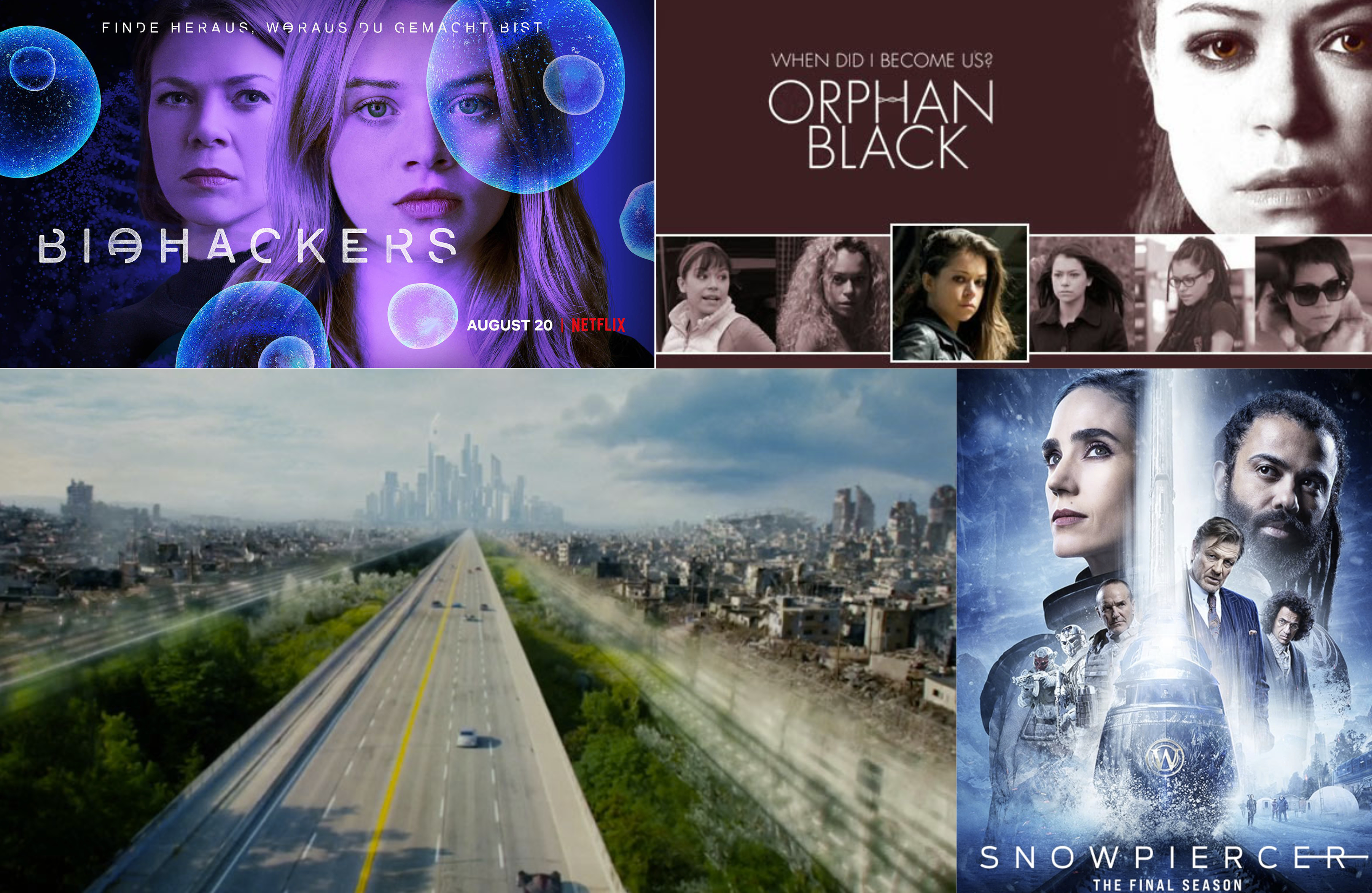
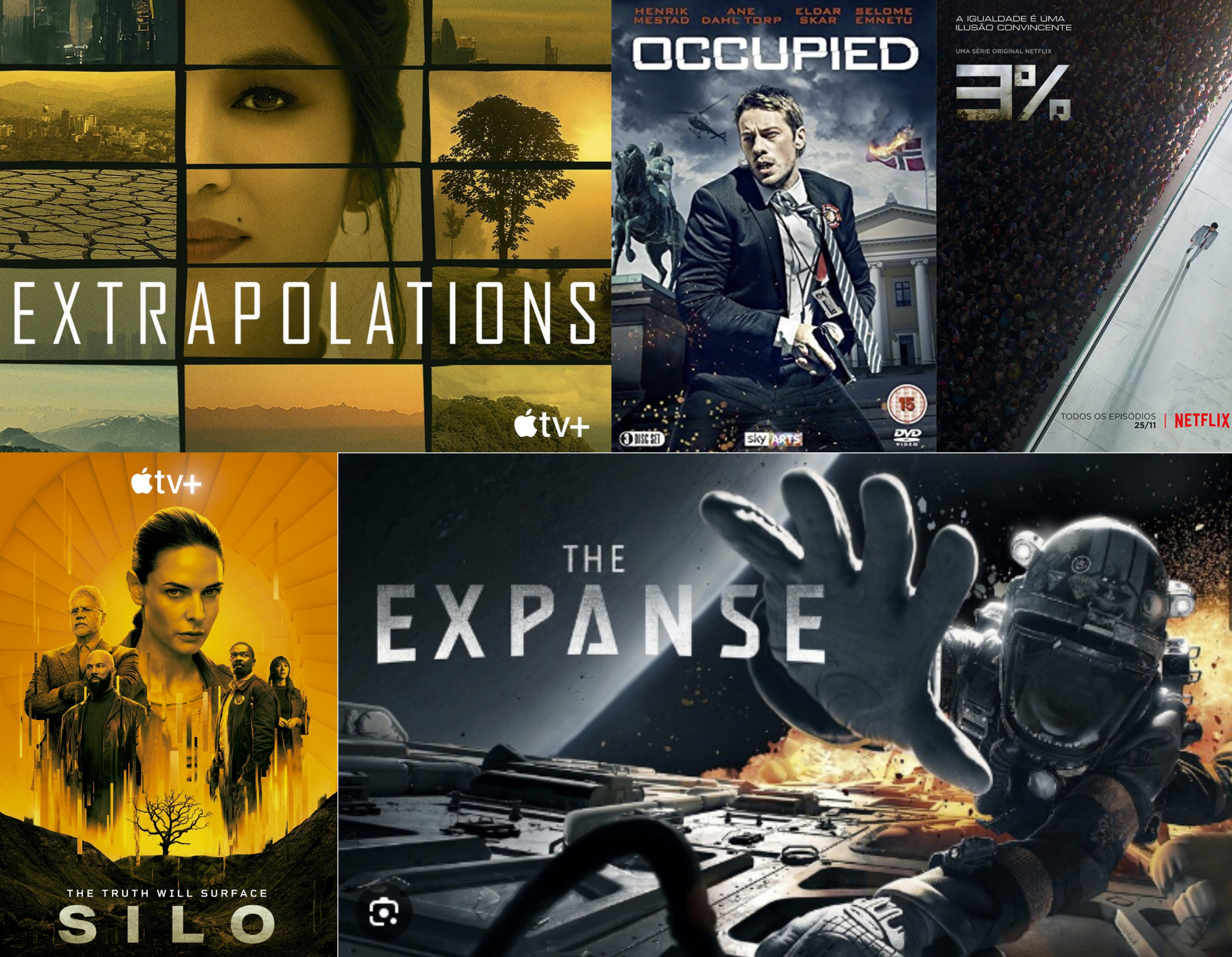


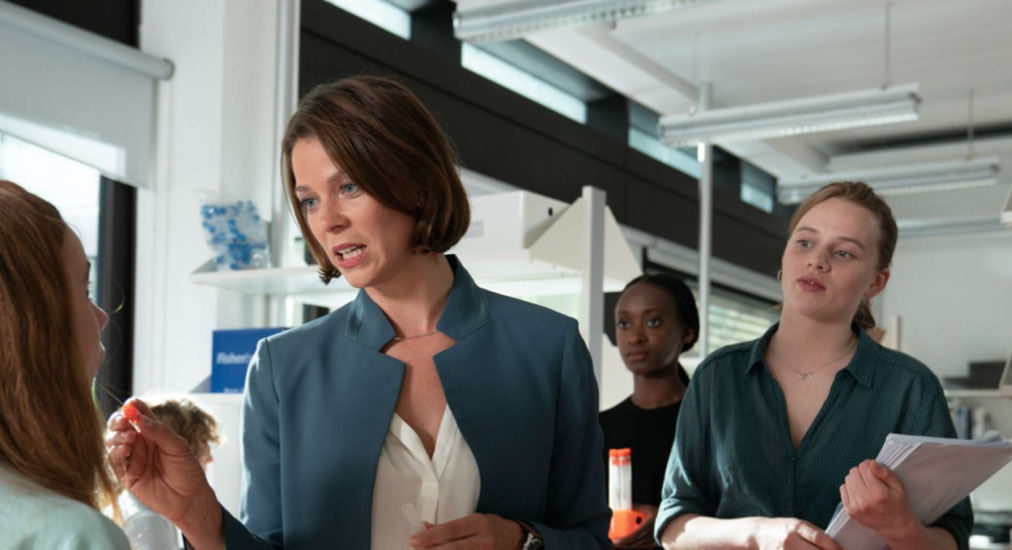

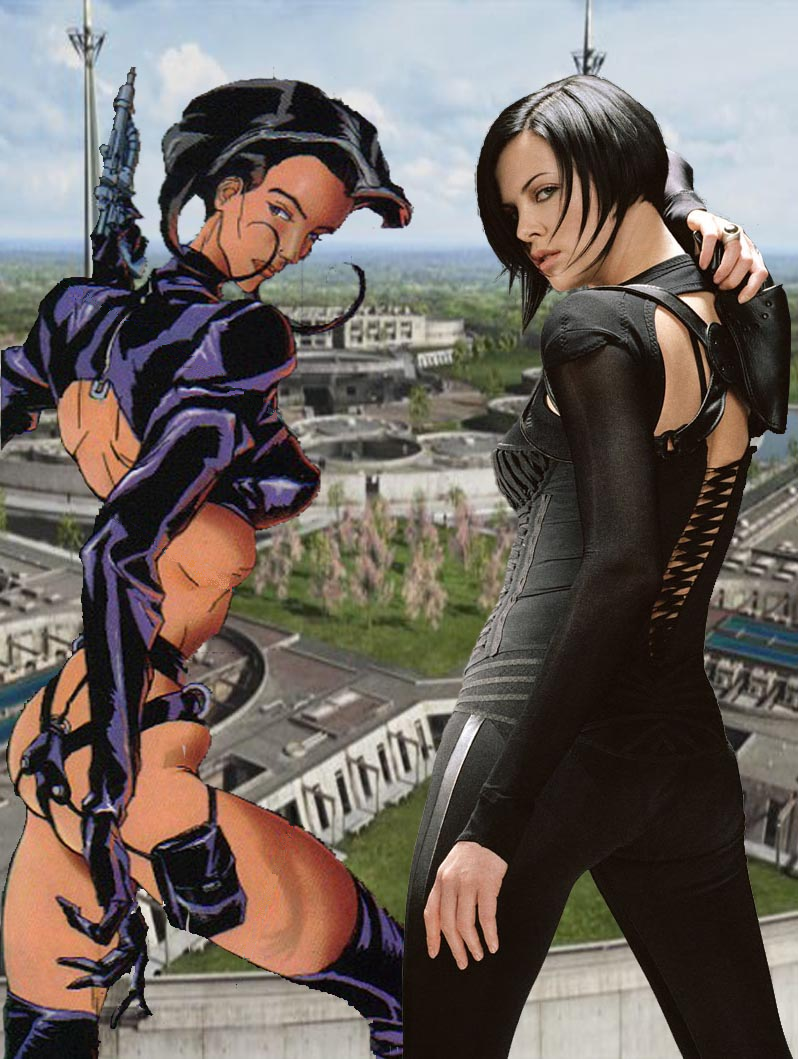


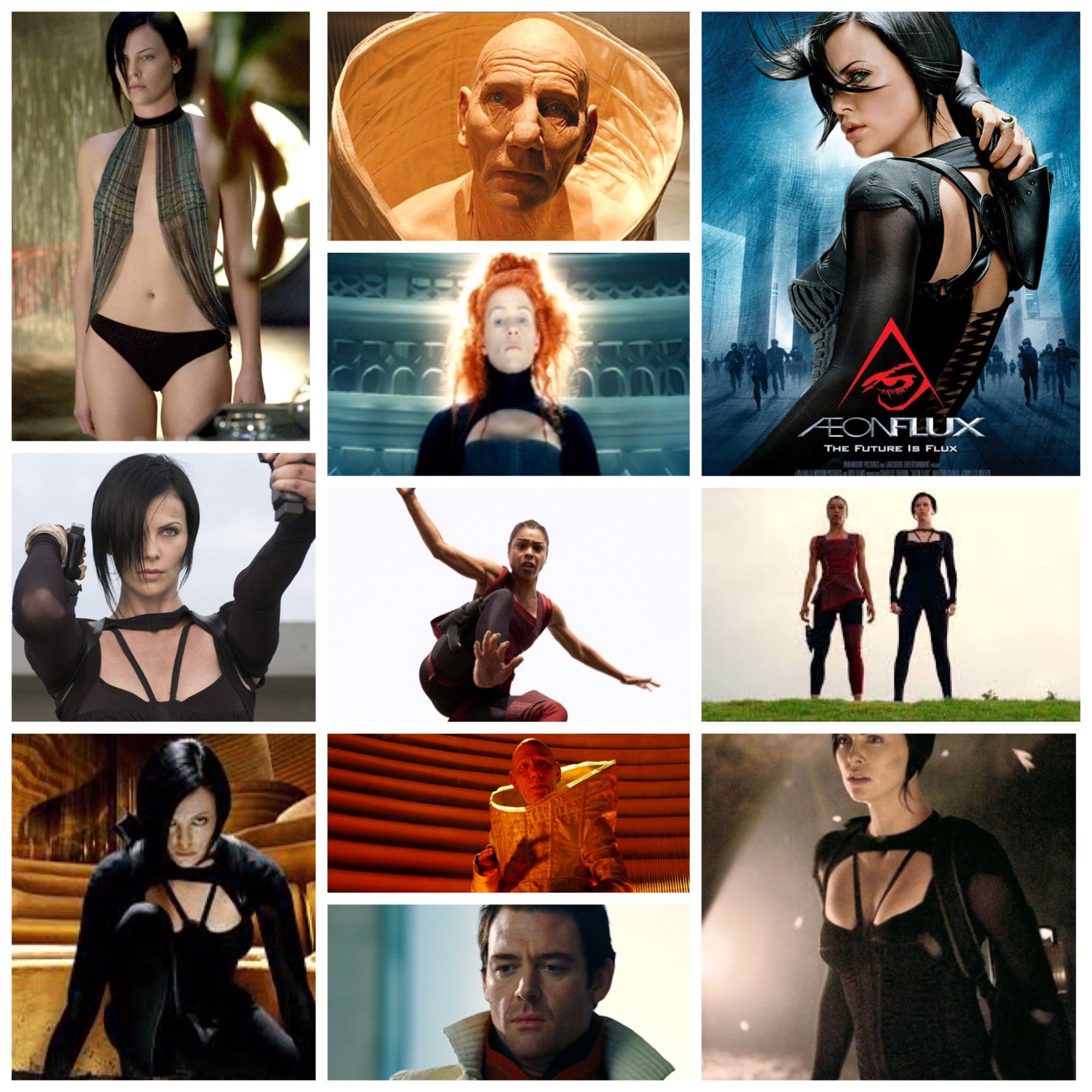
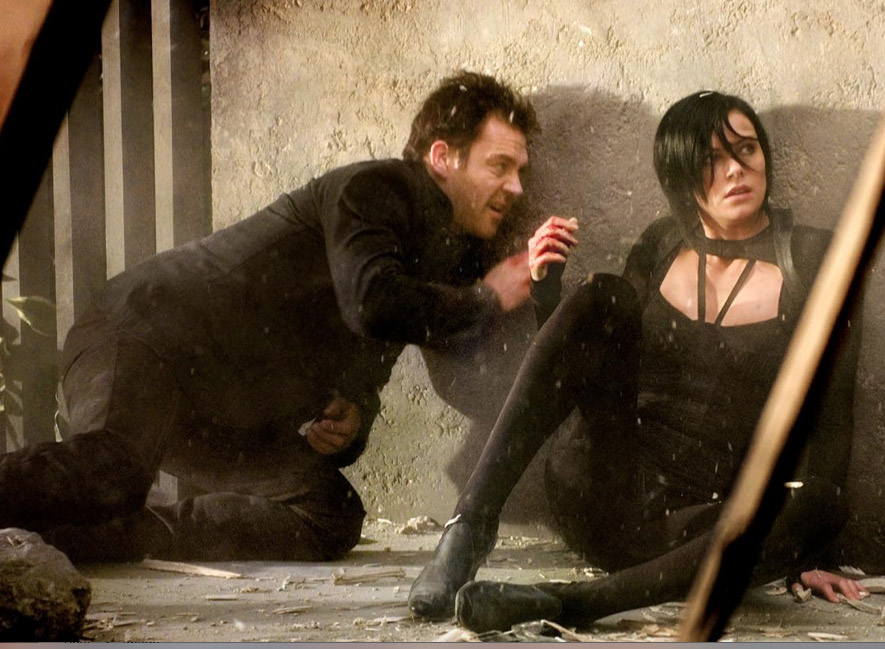
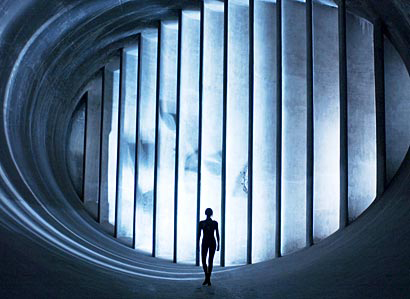
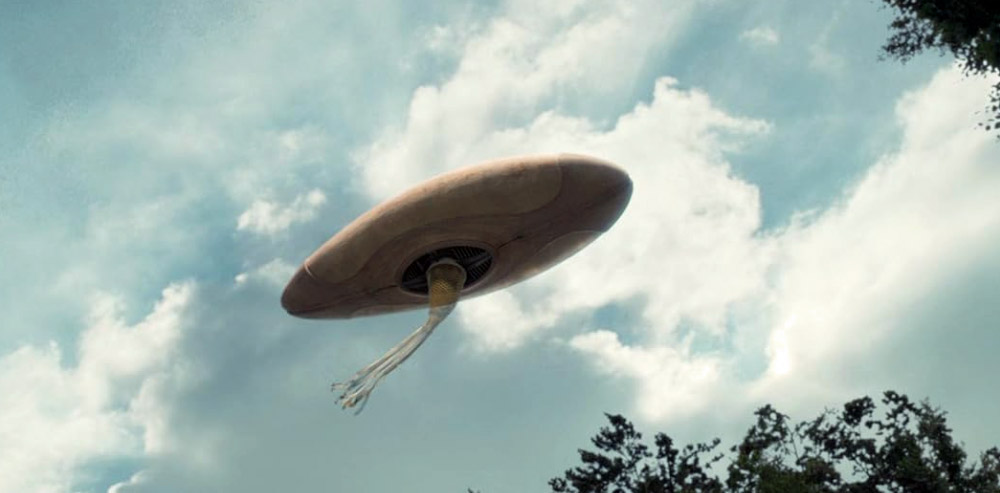


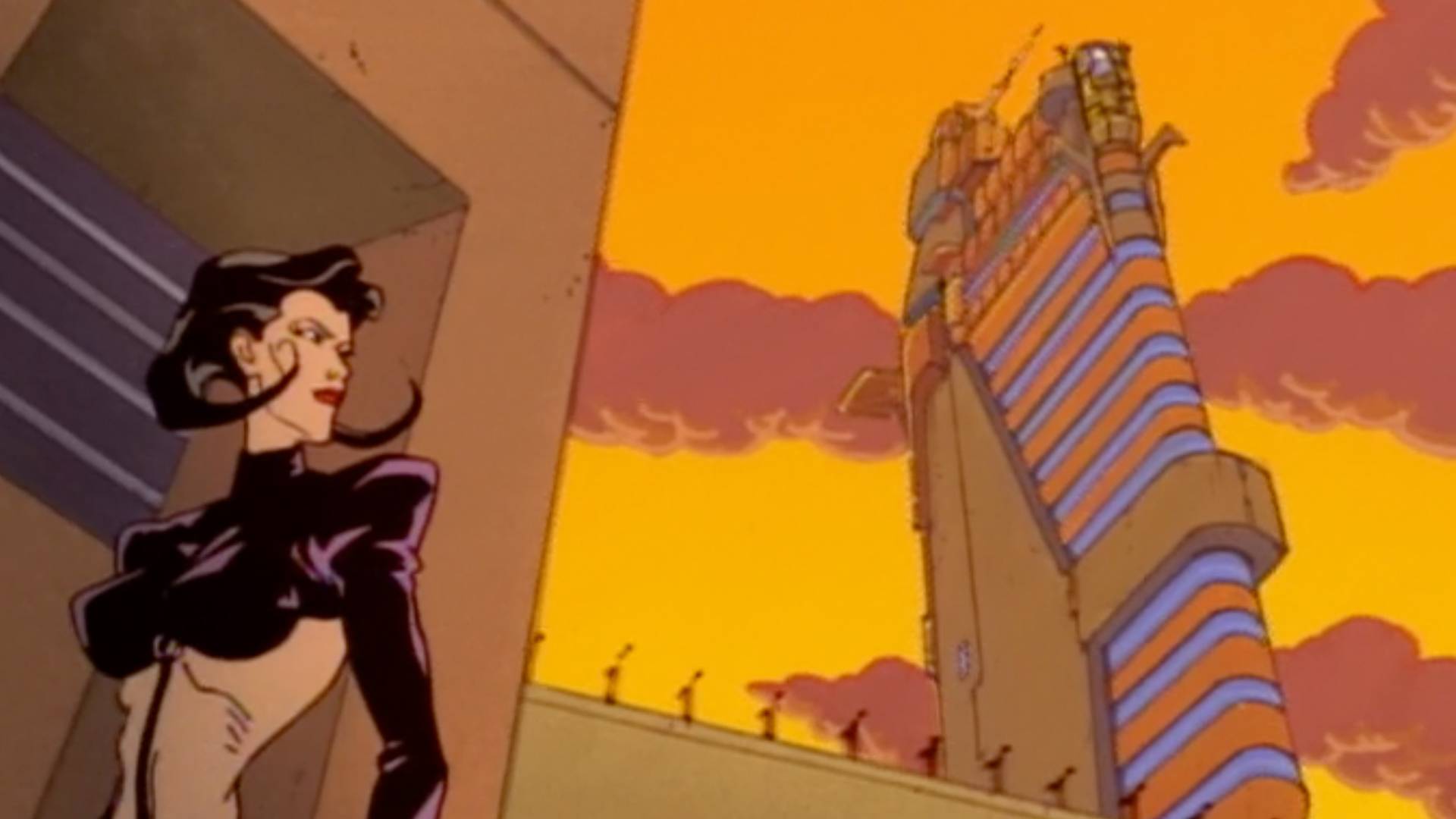

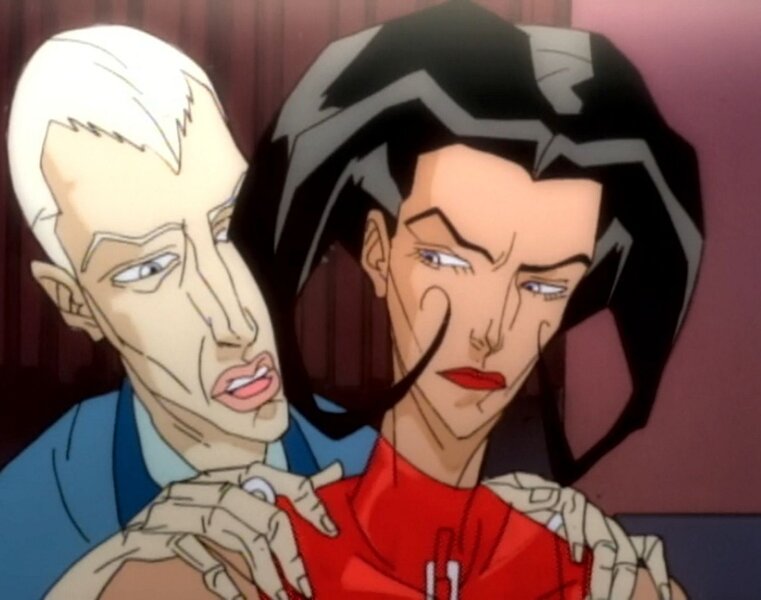
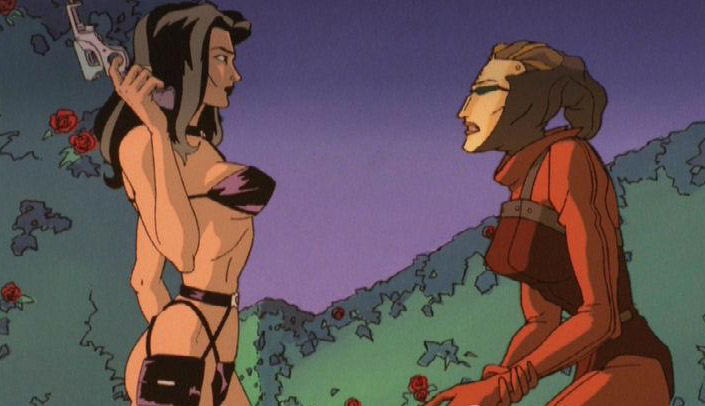




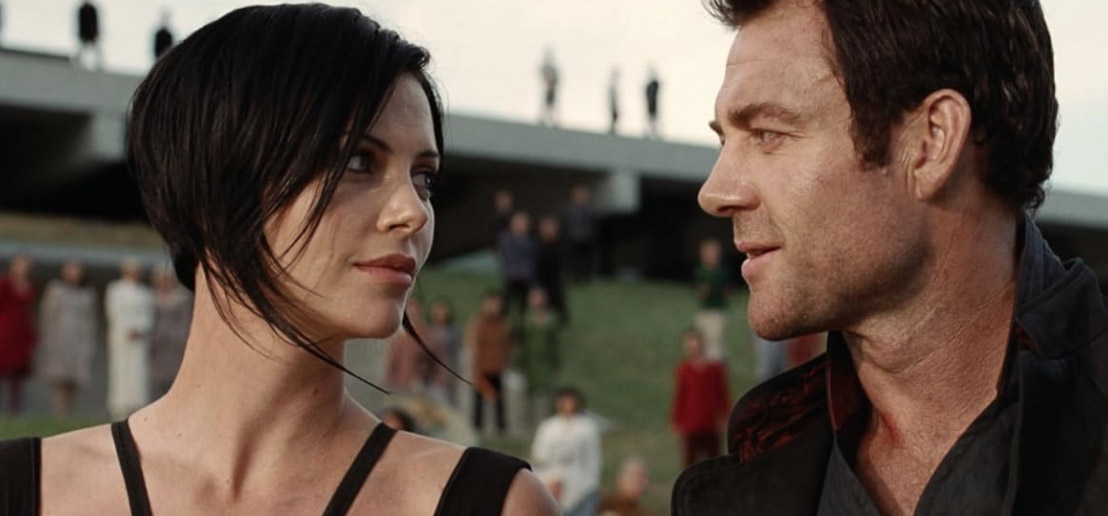
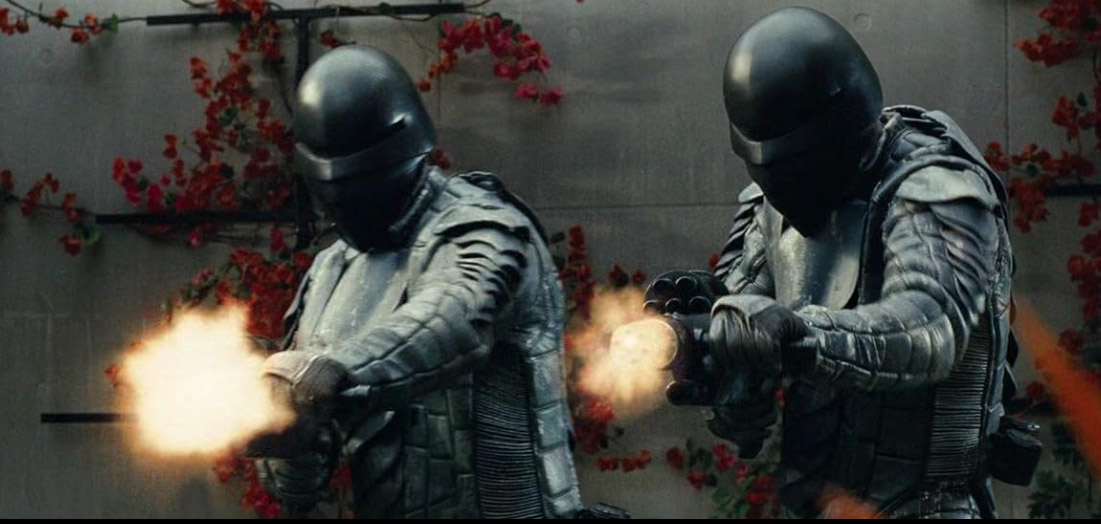

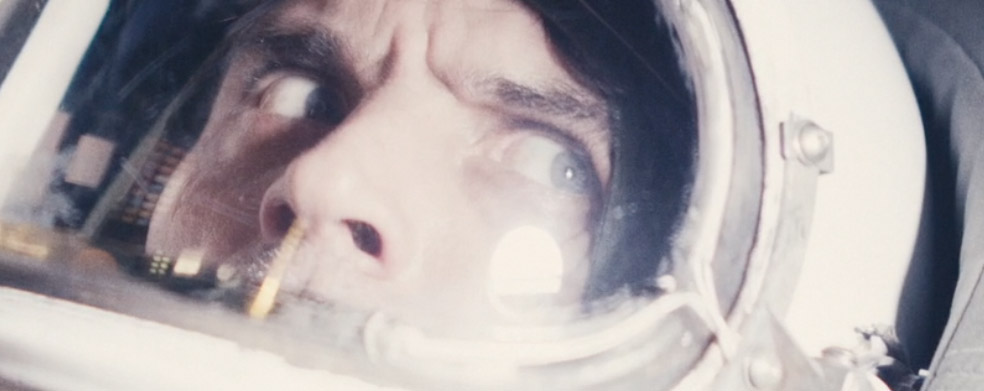


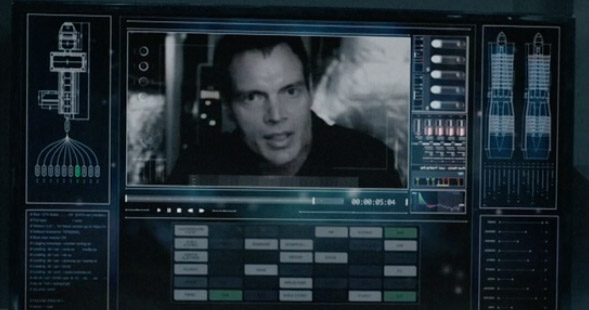

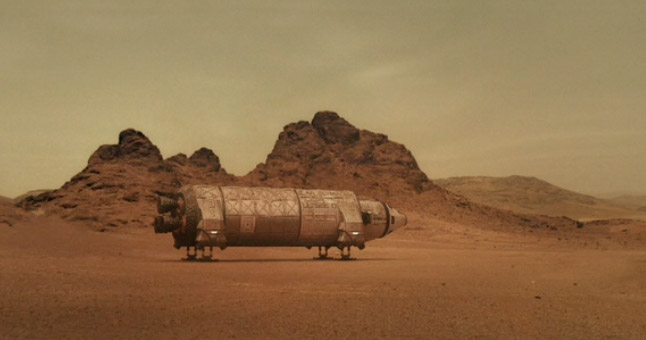
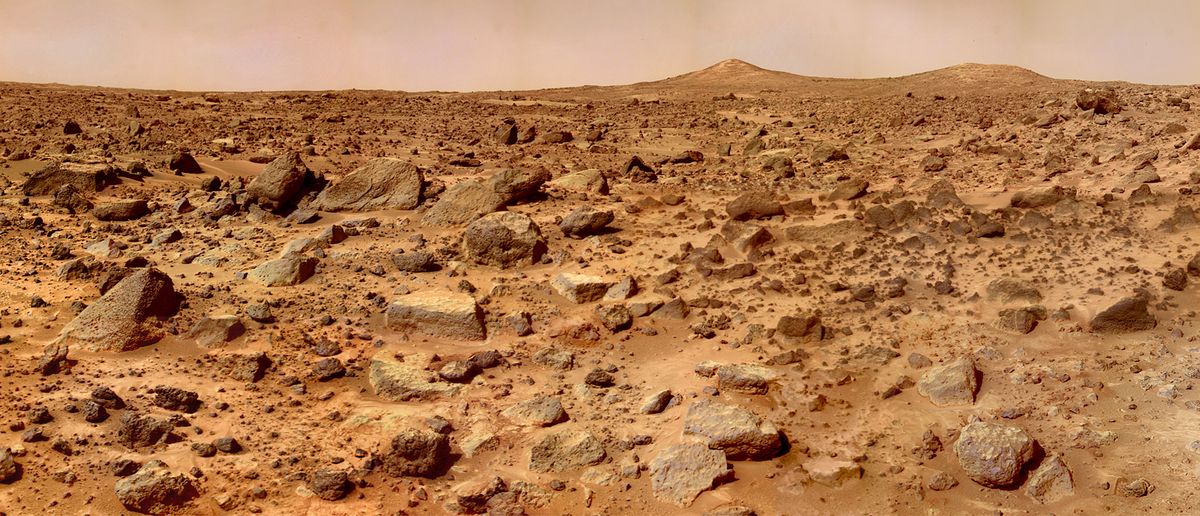


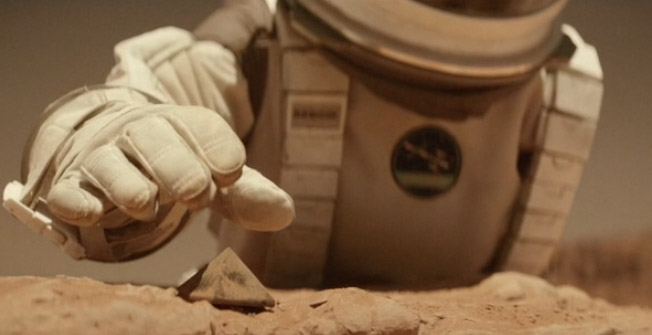
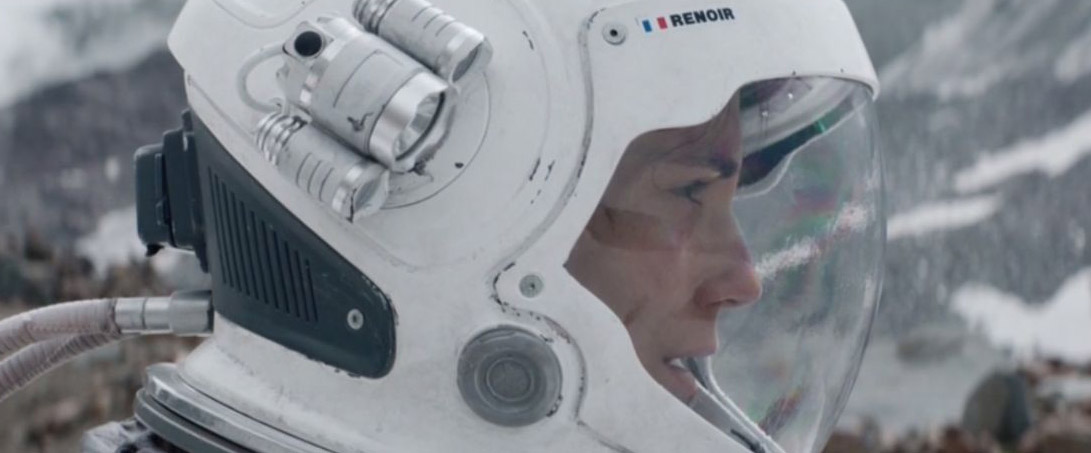
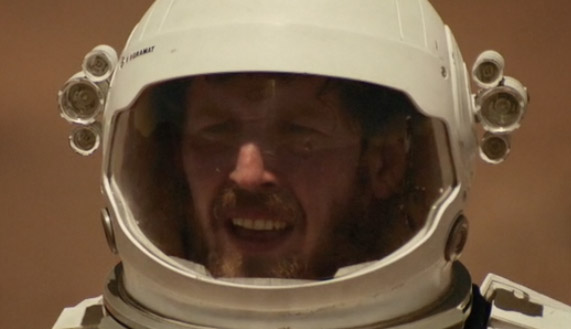





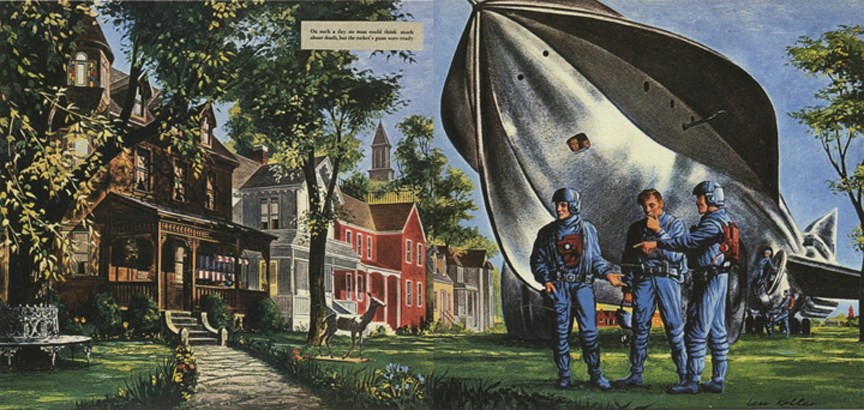






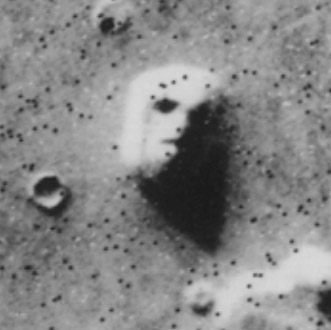









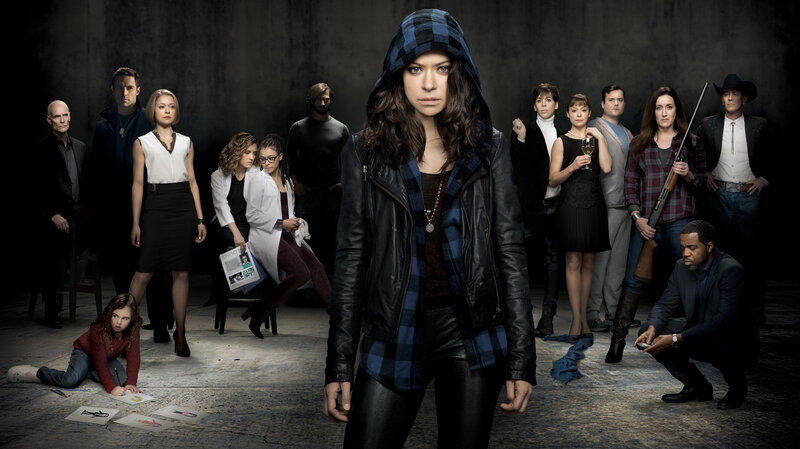

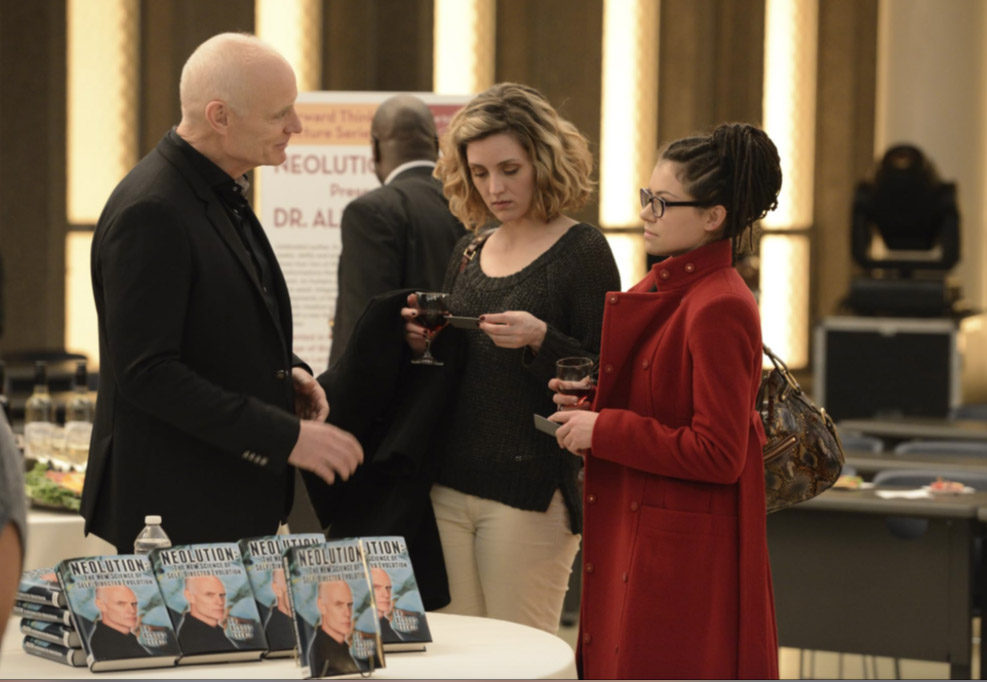




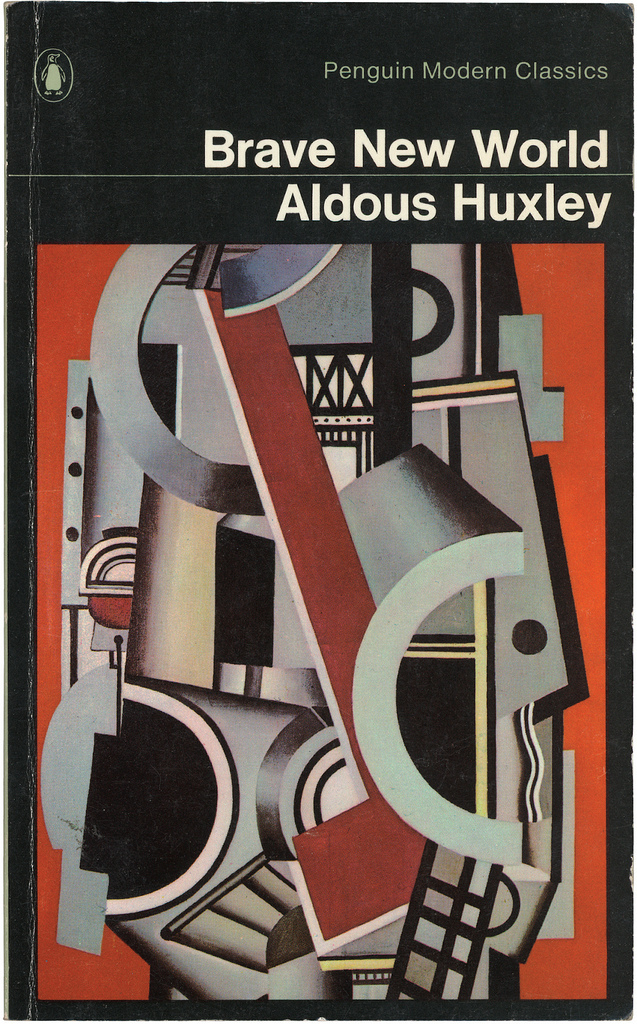

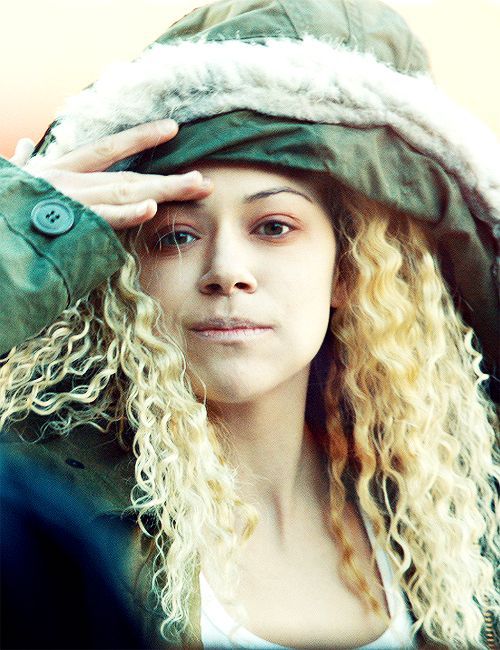



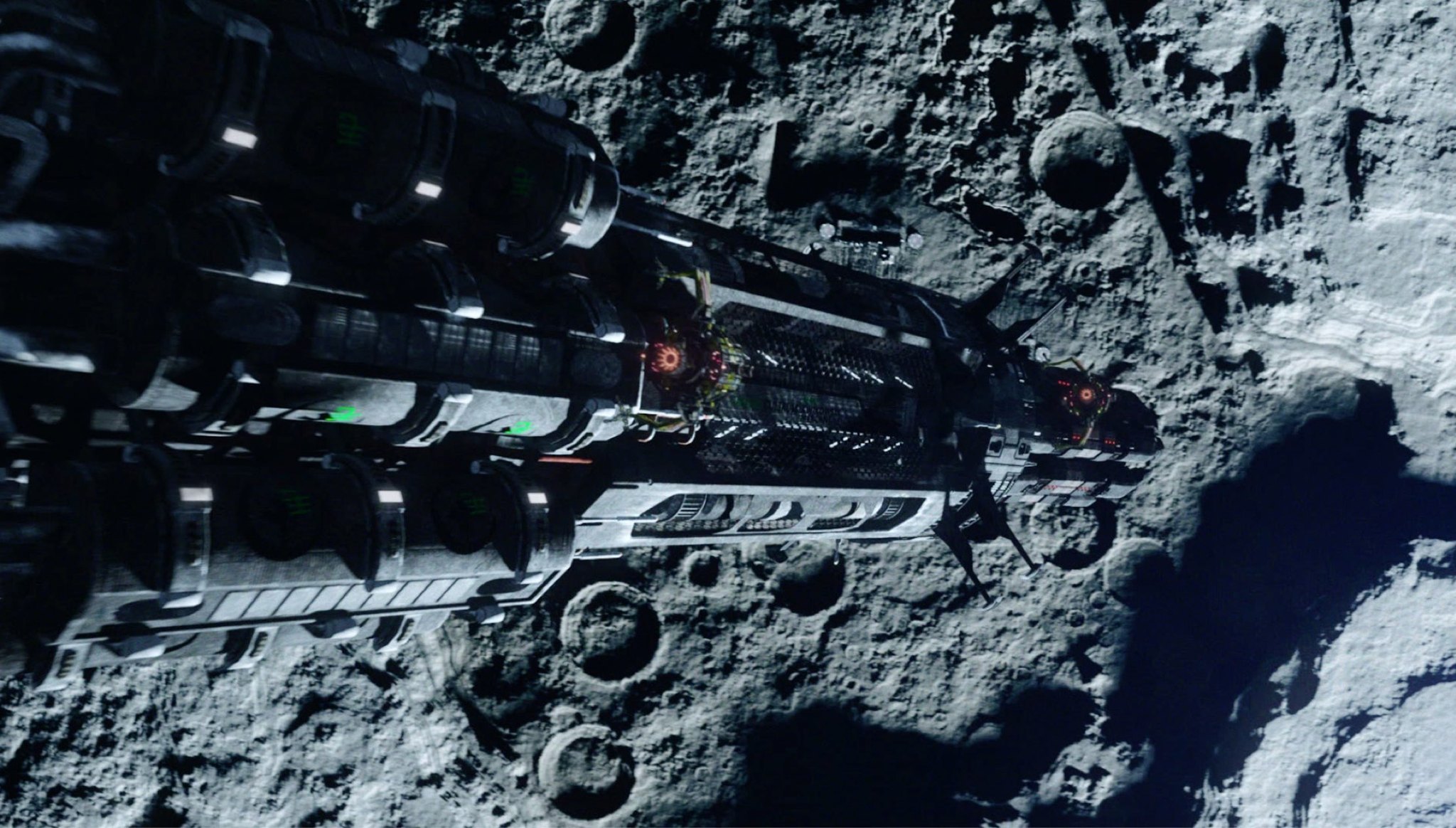
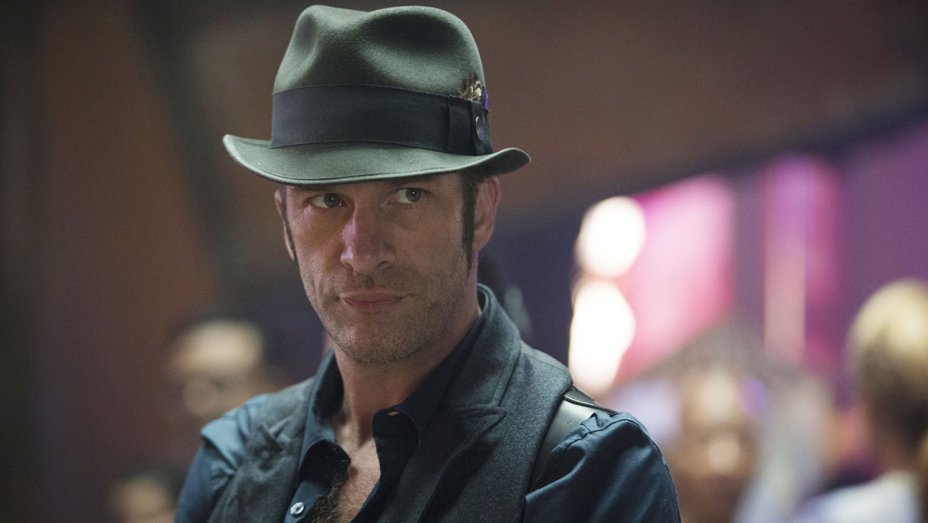
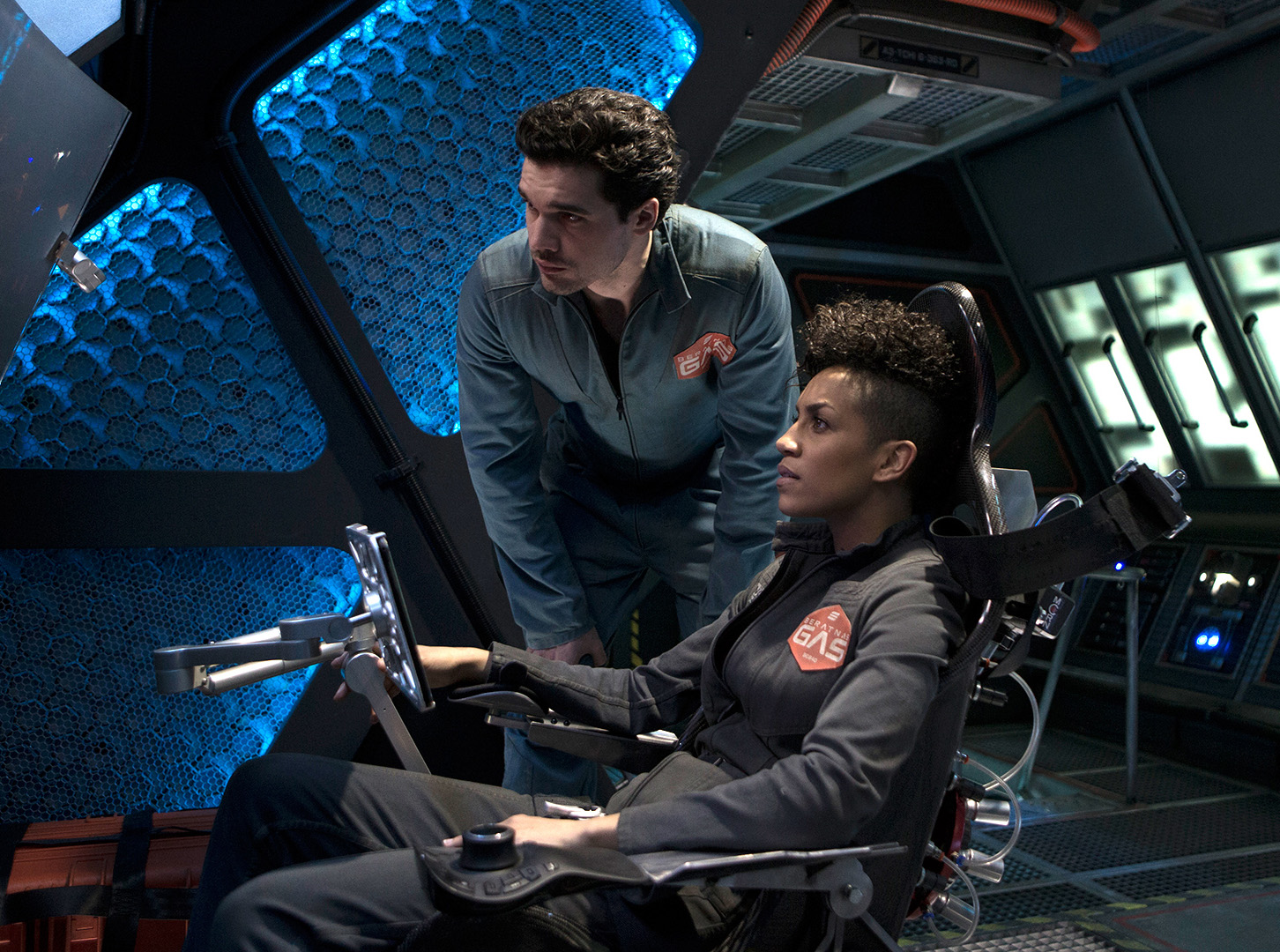


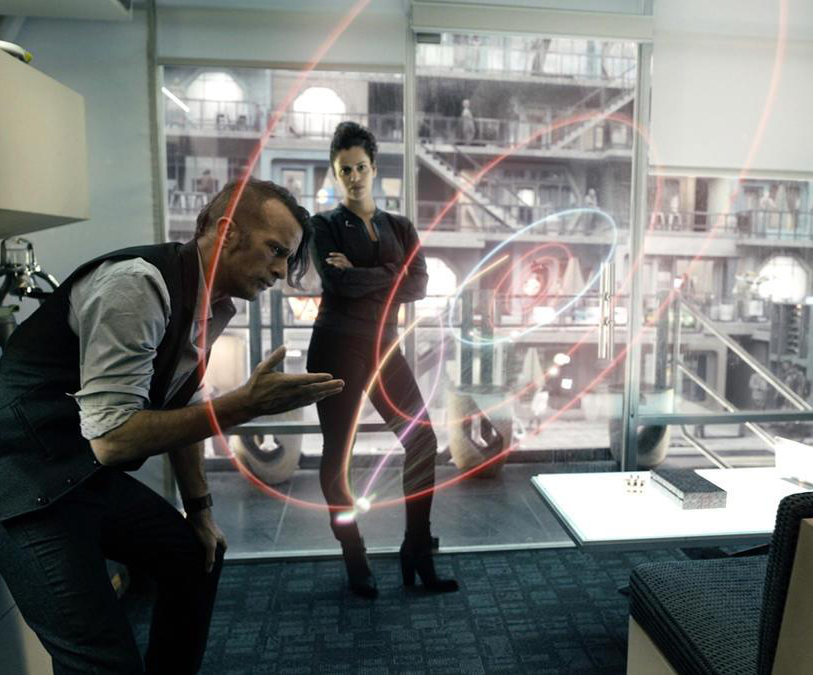


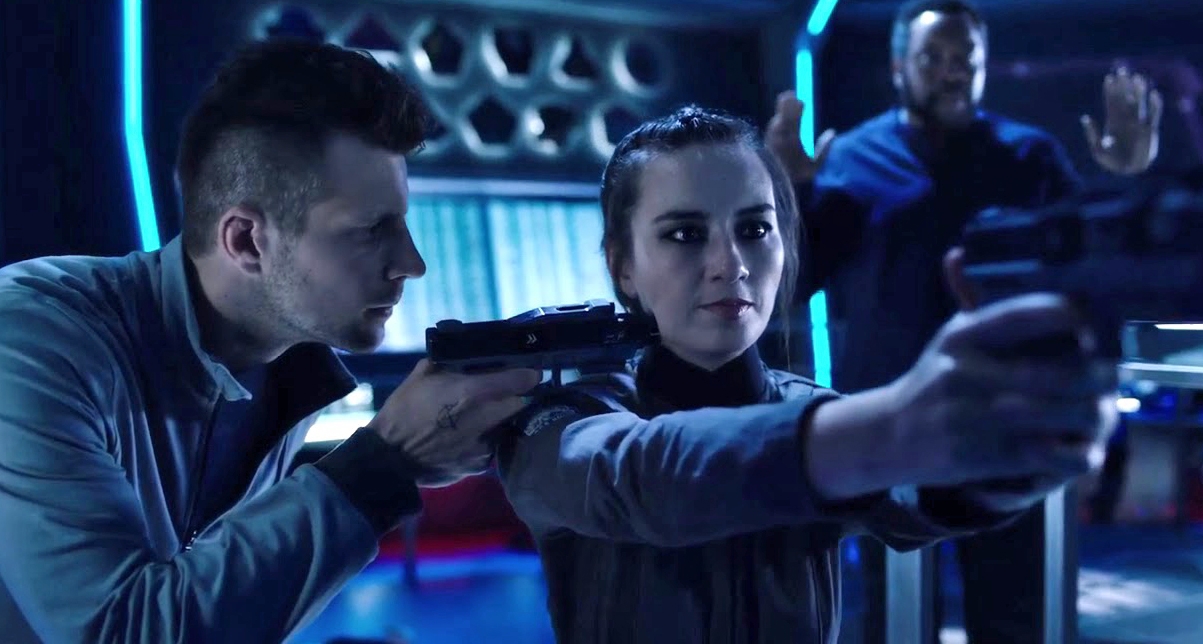
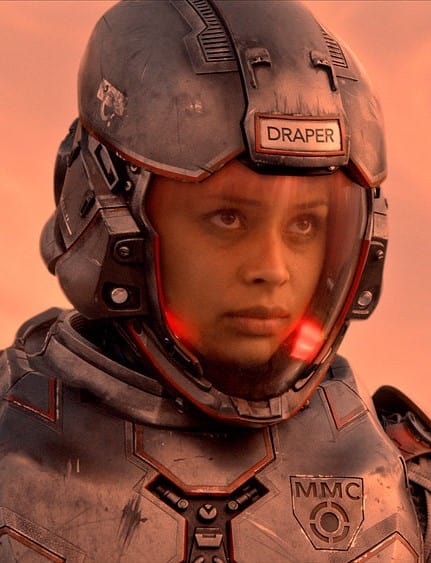
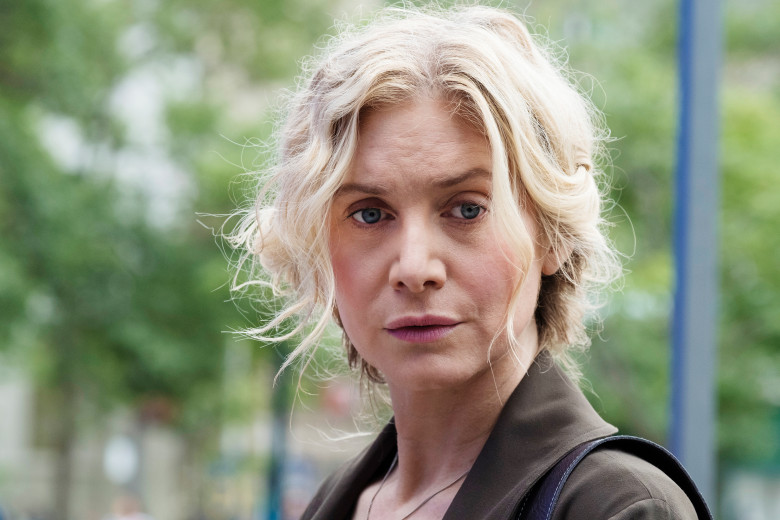

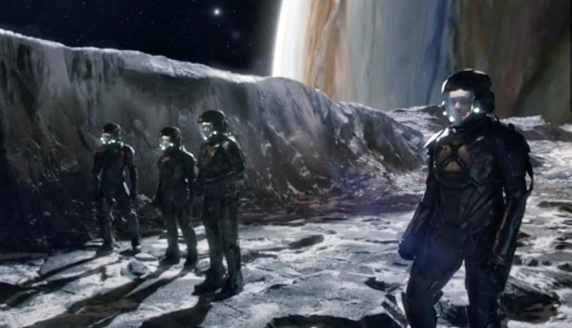
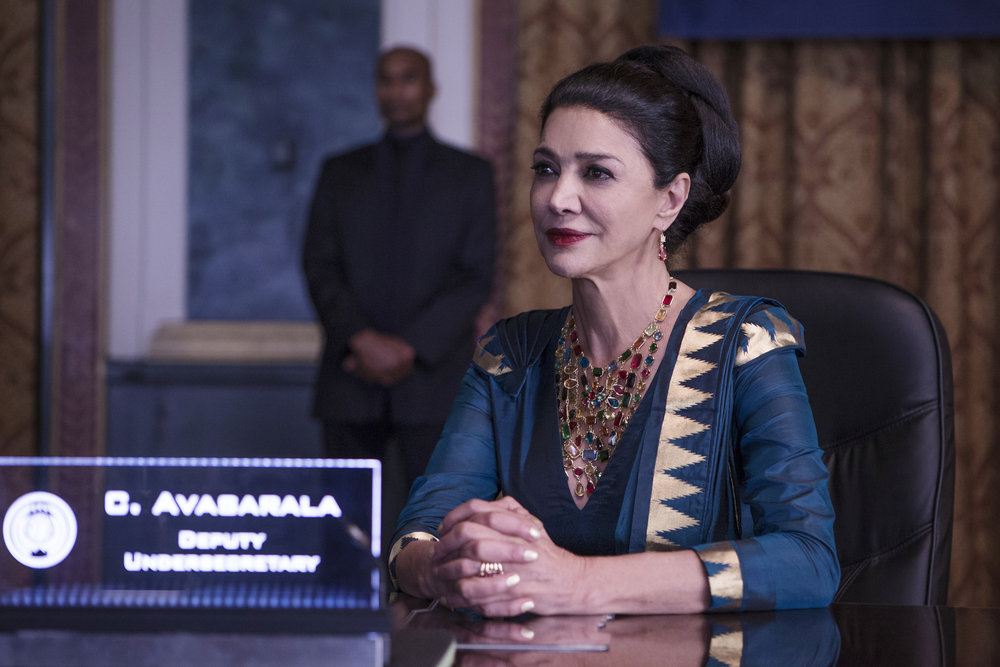

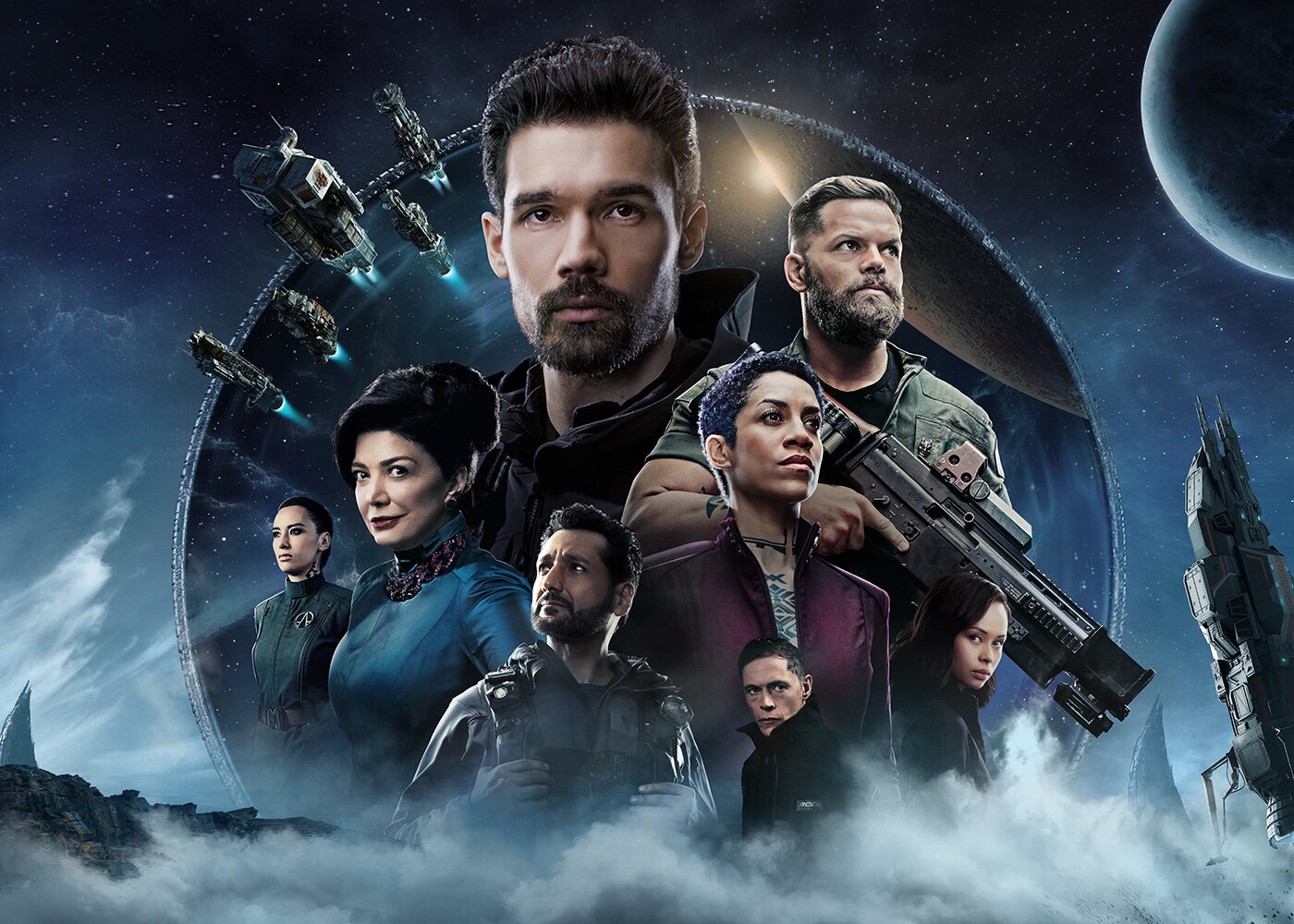

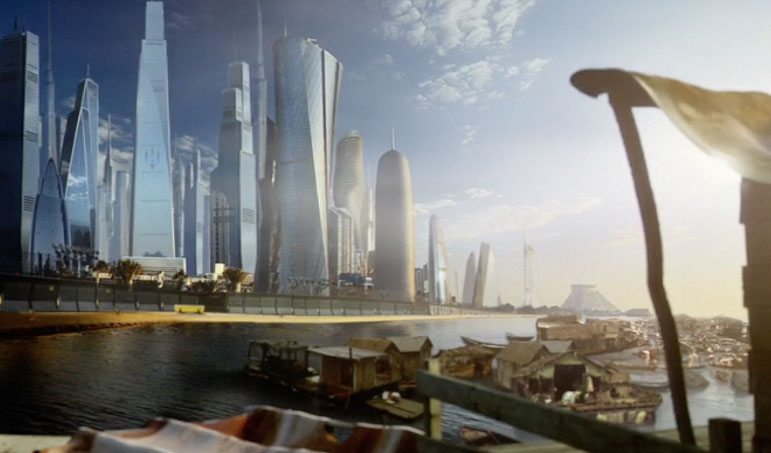
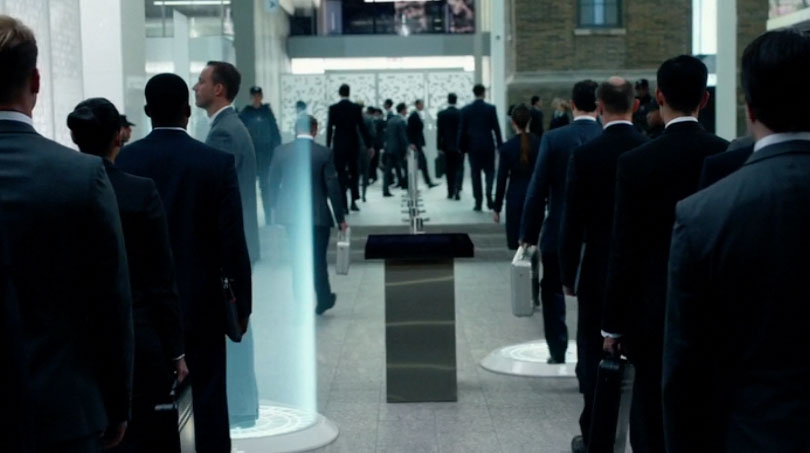
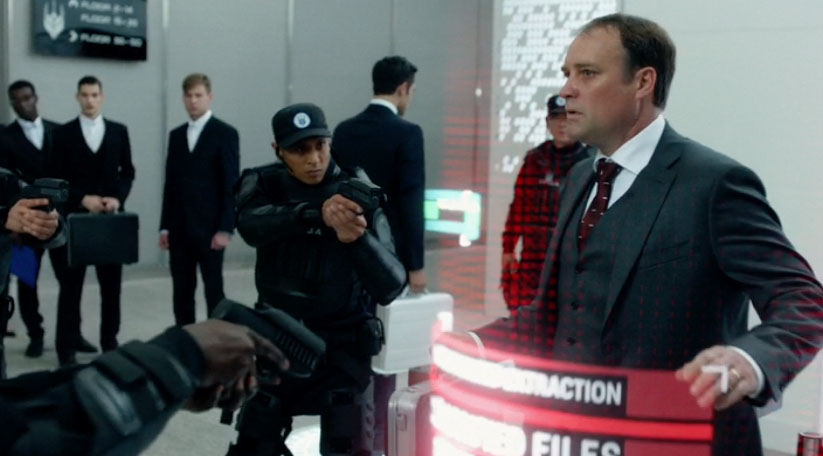
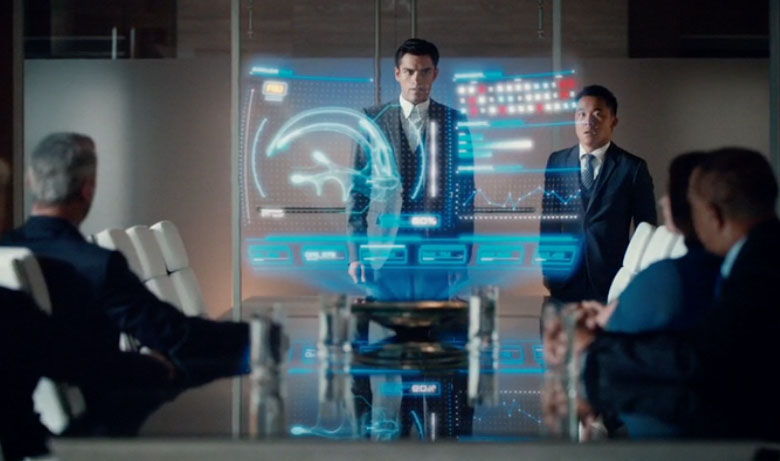

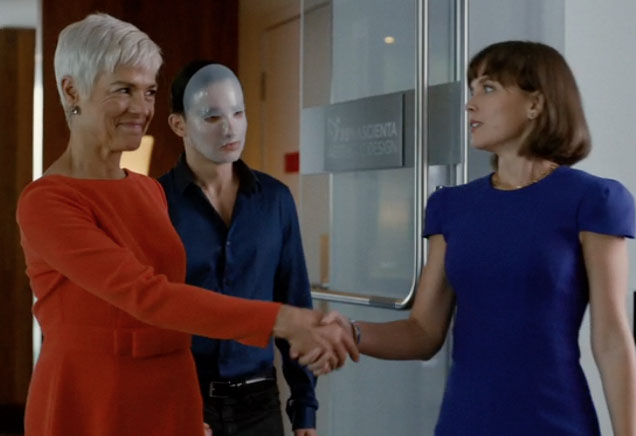

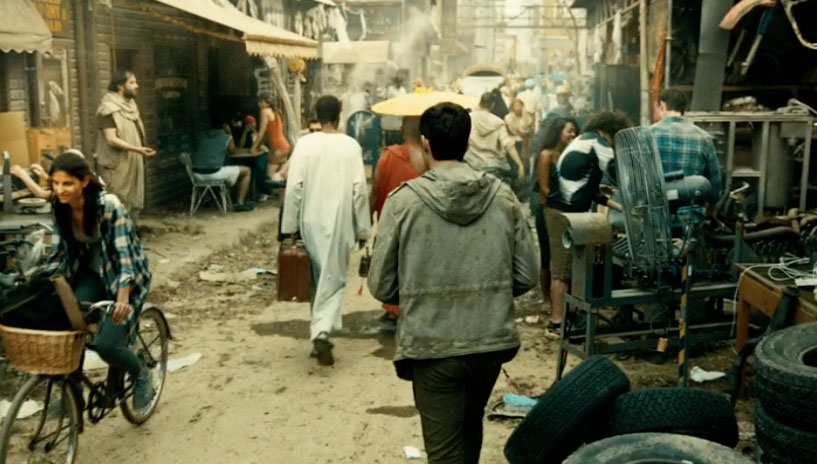
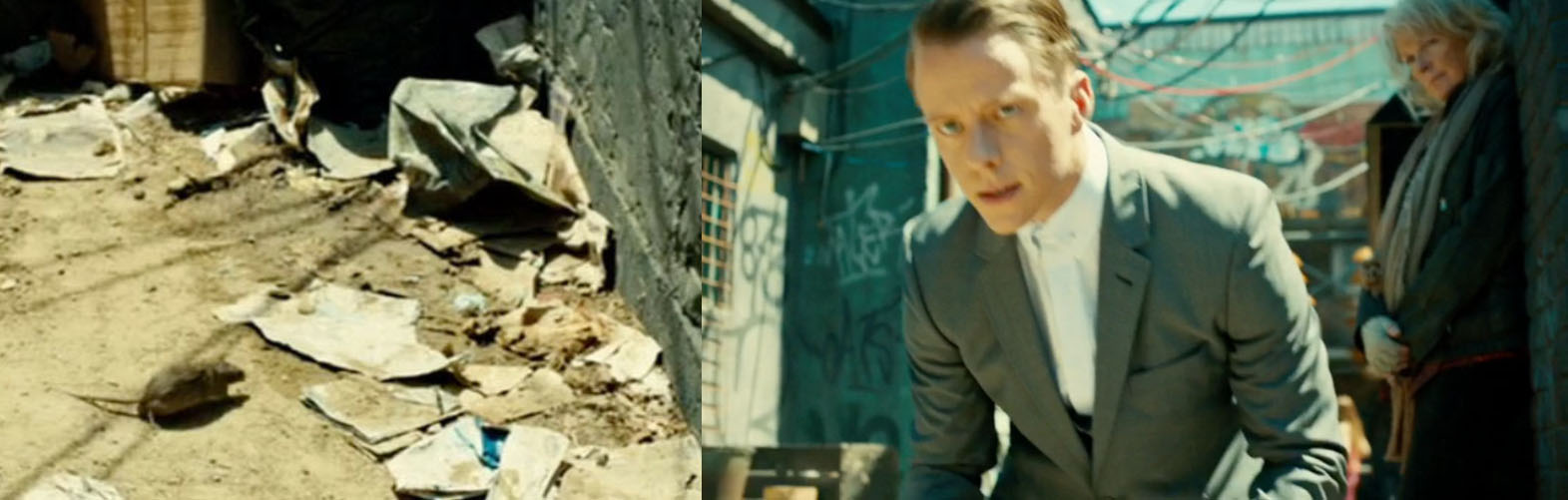
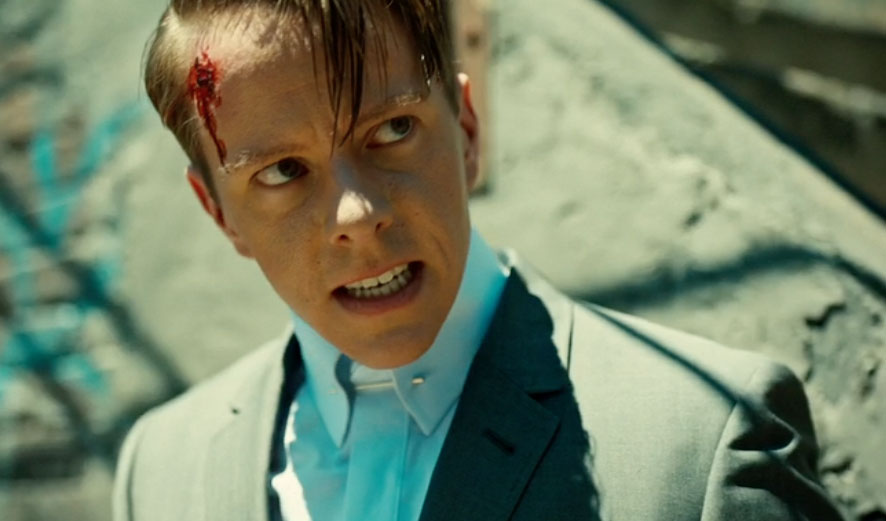
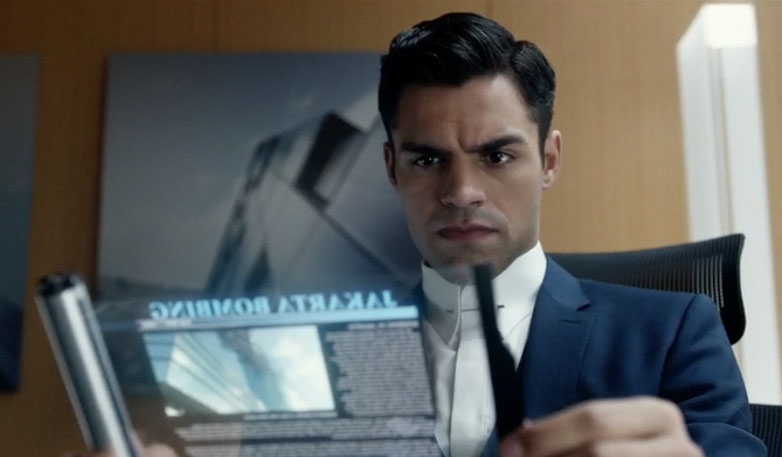
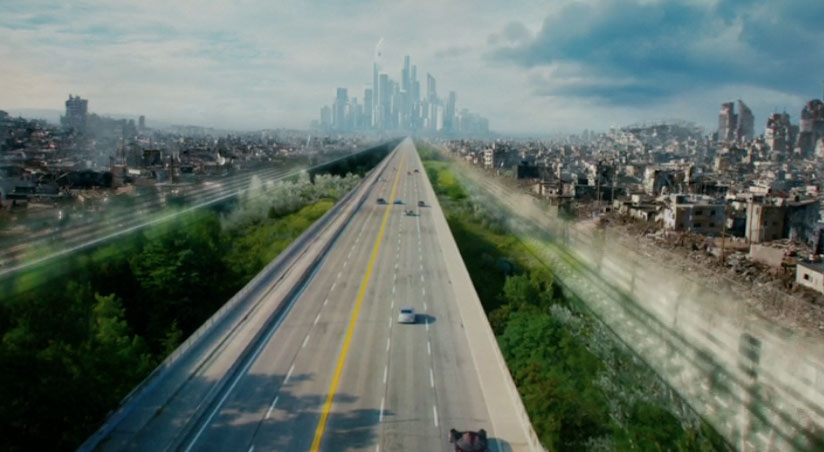

 In the androcratic model, a woman “hero” often presupposes she shed her feminine nurturing qualities of compassion, kindness, tenderness, and inclusion, to express those hero-defining qualities that are typically considered “male”. I have seen too many 2-dimensional female characters limited by their own stereotype in the science fiction genre—particularly in the adventure/thriller sub-genre. If they aren’t untouchable goddesses or “witches” in a gynocratic paradigm, they are often delegated to the role of enabling the “real hero” on his journey through their belief in him: as Trinity enables Neo; Hermione enables Harry; Mary Jane enables Spiderman; Lois enables Superman; etc. etc. etc.

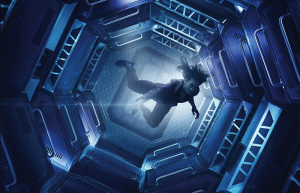 liberator for Belters but is really a terrorist revolutionary group, looking to shift the balance of power); she naively joined to help the lowly belters achieve justice and a voice in the oppressive squeeze by Martian and Earth corporate interests. In “Back to the Butcher”, a colleague of Julie’s relates how she selflessly helped injured minors on Calisto in a tunnel collapse with cadmium poisoning: “I never saw her shed a tear over the fact that she’d have to take anti-cancer meds for the rest of her life.” The only time she cried, he shares, was when she was acknowledged as being a true “beltalowda.”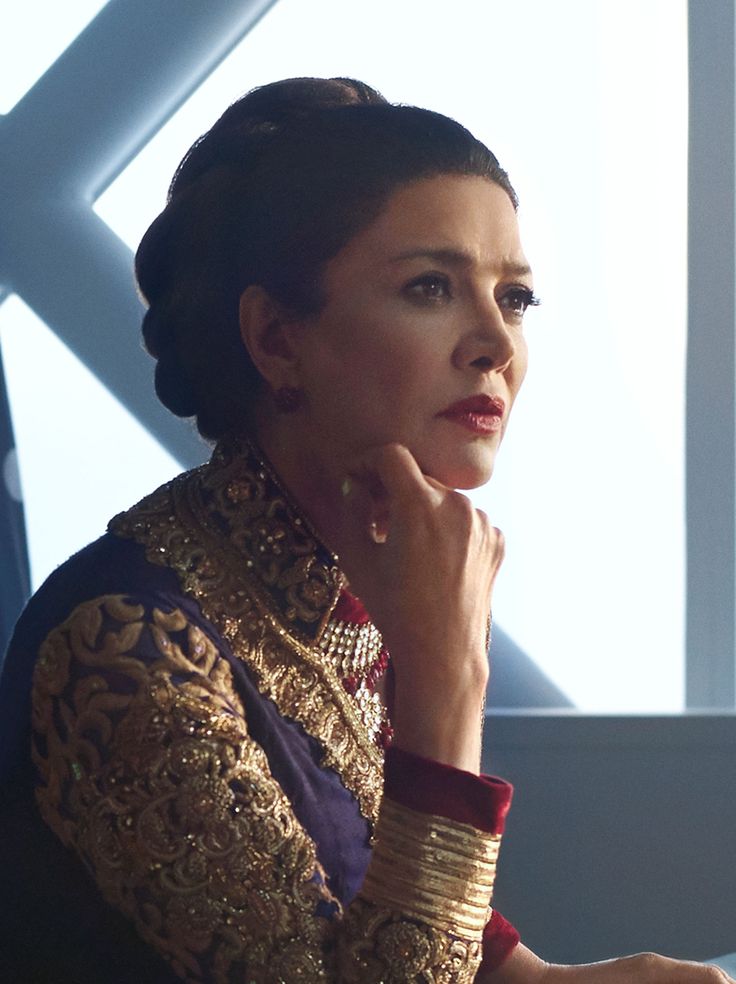
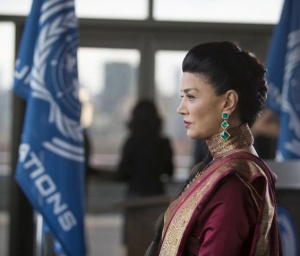 from a higher calling, not from lust for power or self-serving greed. She’s seeks the truth. And, like Miller, she struggles with a conscience. Chrisjen is a complex and paradoxical character. Her passionate and unrelenting search for the truth together with unscrupulous methods, make her one of the most interesting characters in the growing intrigue of The Expanse. Avasarala is a powerful character on many levels—none the least in her potent presence (thanks to Shohreh Aghdashloo’s powerful performance); when Avasarala walks into a scene, all eyes turn to her.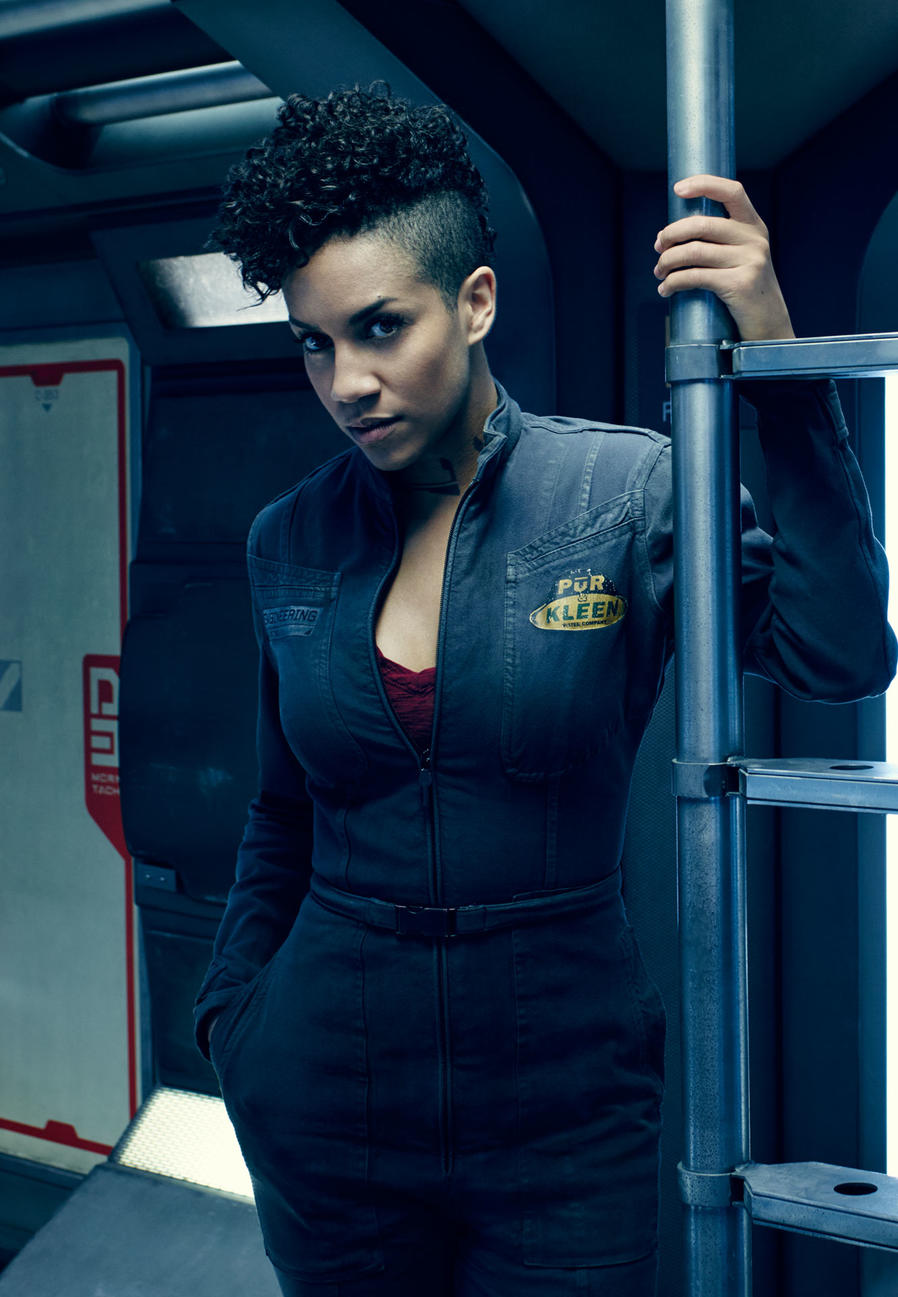
 operative and she finds herself ironically defending the Belt and Belters in the struggle between Earth and Mars. “We need to stick together,” she tells fellow Belter Miller and helps Fred Johnson’s team. Driven to help those in need, Naomi selflessly puts herself in harm’s way to save Belters used as lab rats on Eros or those left to die on Ganymede after a Mars and Earth skirmish. In an intimate moment with Holden after the atrocity on Eros with the proto-molecule experiment, Naomi reminds him: “We did not choose this but this is our fight now. We’re the only ones who know what’s going on down there; we’re the only ones with a chance to stop it.”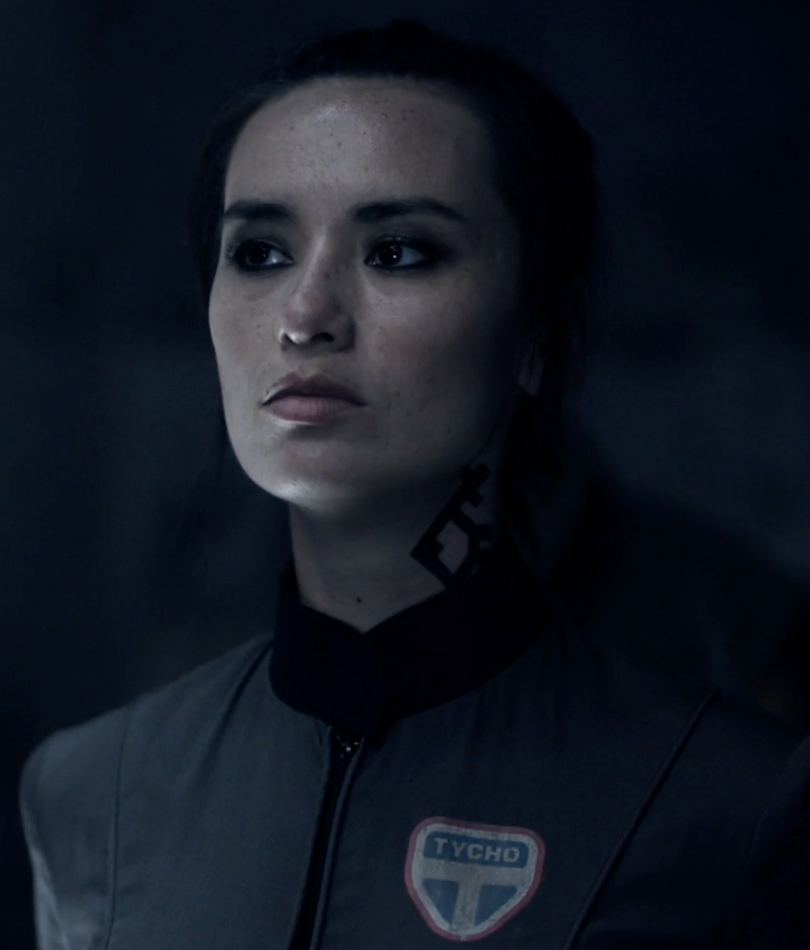
 Station. A complex character with mysterious connections and intuitive skills for people, Drummer gives one the impression that she can nimbly navigate between hard-line OPA and Fred’s Earther-version of OPA justice for Belters. In “Pyre”, she shows her mettle when—after being shot and held hostage by a militant faction on Tycho—she finds the strength to summarily execute them.
 Bobbie Draper (Frankie Adams) is a staunch hard-fighting Martian marine who dreams of a terraformed Mars with lakes and vegetation and breathable atmosphere. Because of Earth’s Vesta blockade, Draper realizes that she will not realize her childhood dream of seeing Mars “turned from a lifeless rock into a garden.” The blockade forced Mars to ramp up its military at the expense of terraforming. Draper laments that, “with all those resources moved to the military, none of us will live to see an atmosphere over Mars” and bears a strong resentment against Earth. However, when Bobbie discovers her own government’s culpability with an Earth weapons manufacturer that used her own marines as guinea pigs, she chooses honour over loyalty and defects to seek justice.
 The Secretary General (who she had a previous friendship that soured over some dubious event) has called Anna in to write a stirring speech to unite Earth behind the war erupting between Earth and Mars. Anna enters the political intrigue with naive hope and is badly used; but her inner strength, keen intelligence and courage propels her on an amazing trajectory of influence to the outer reaches of the solar system where first contact is imminent. Like a quiet summer rainstorm, Anna brings a fresh perspective on heroism through faith, hope and inclusion.
 to name just a few. The gender of the hero I empathized with was irrelevant. What remained important was their sensibilities and their actions of respect and integrity on behalf of humanity, all life and the planet.
 Nina Munteanu is an ecologist and internationally published author of award-nominated speculative novels, short stories and non-fiction. She is co-editor of Europa SF and currently teaches writing courses at George Brown College and the University of Toronto. Visit
  Nina Munteanu Writing Coach