“Lead Children”: The Heaviness of Poland under Communism

I recently discovered the Polish TV series Lead Children on Netflix—and pretty much binge-watched it. This gripping 6-episode series follows young Doctor Jolanta Wadowska-Król (played by Joanna Kulig) as she gradually uncovers and pieces together a mysterious health crisis that affects children living in the district of Szopienice (in the city of Katowice) dominated by a zinc / lead smelter.

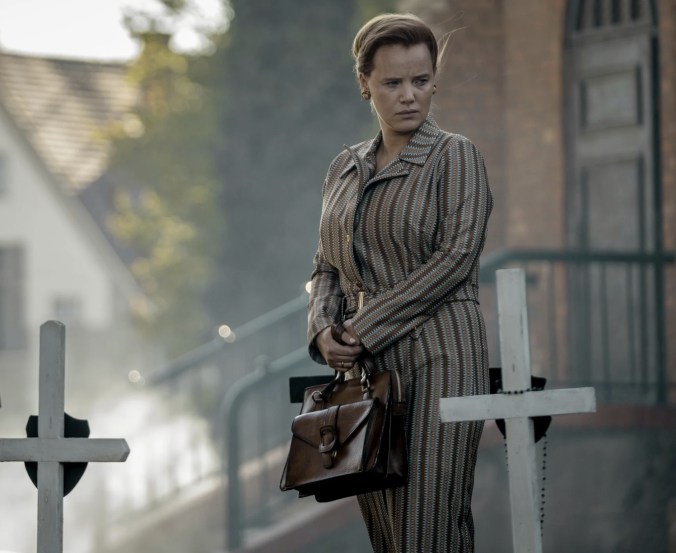
Jolanta stands at a Szopienice graveyard filled with children’s graves (“Lead Children”)

While the title gives away the subject matter of the series, episodes still unravel with insidious deliberation. In the first scene (after the flash forward) a young boy faints for no apparent reason, bringing our good doctor to his aid; in another scene Jolanta is wiping her filthy windows of black dust (from the nearby smelter) before visiting a pregnant mother with two anemic children who promptly gives birth to a stillborn child. We then move to a meeting of city officials who are deciding which factory Comrade General Secretary Brezhnev will visit and one official suggests the Szopienice Non-Ferrous Metal Works; the plant, he claims, has had “improvements and so forth,” that allowed it to exceed the plan for the past two months (the plan being Boleslaw Bierut’s Six-Year Plan started in 1950, for aggressively industrializing Poland through unrealistic production). All this sets the stage for a dark tale of treachery and brave but dangerous persistence to reveal the truth that will reach deep into your soul and squeeze until you are breathless.  

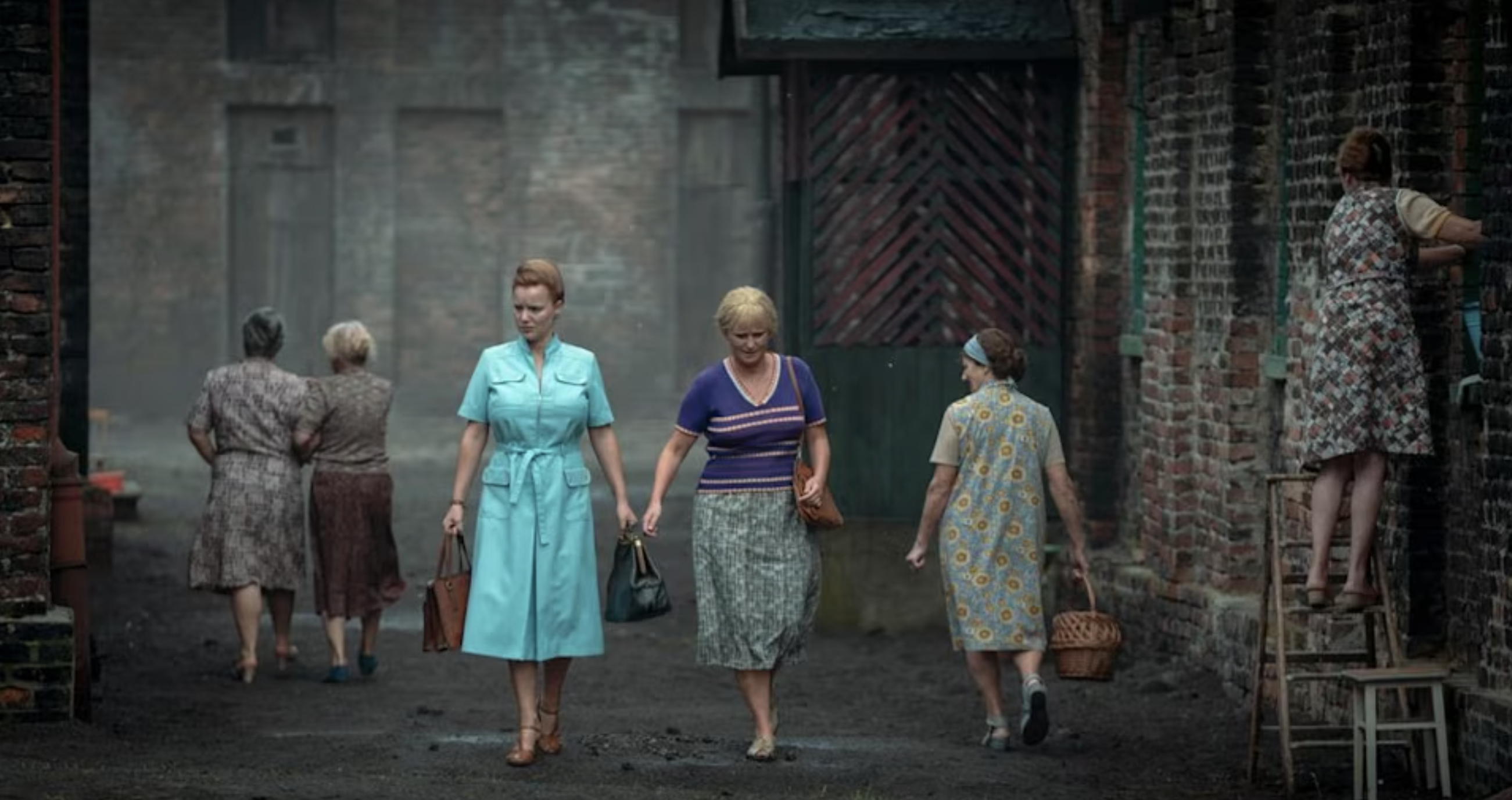
Doctor Jolanta Wadowska-Król and her assistant walk through the smelter district in “Lead Children”

When local children begin showing signs of serious illness and developmental problems—high anemia (e.g. haemoglobin less than half normal), headaches, stomach pain, sluggishness, joint pain and muscle weakness, learning problems, hearing loss, irritability, vomiting, internal bleeding and seizures, enamel hypoplasia, blue gums—Jolanta pushes against what looks like a cover-up to investigate the unusual pattern of sicknesses.

Jolanta recognizes the blue-black gum line in the children as a telltale sign of chronic lead toxicity. Known as “Burton’s line”, it is caused by a chemical reaction by a high level of lead in the child’s blood and sulfur-producing bacteria in the mouth. The interaction creates insoluble lead sulfide deposits in the gum tissue, typically near the gum margin. Jolanta links the poisoning to the lead emitted from the smelter in the Targowisko neighbourhood: in the dust, in the water and the ground where people keep their gardens and children play.

Watercolour drawing of the mouth and gums of a woman who worked in a lead-mill. There is saturnine impregnation with a well-marked Burton’s line and a blue stain on the buccal membrane opposite (source: Wikipedia)

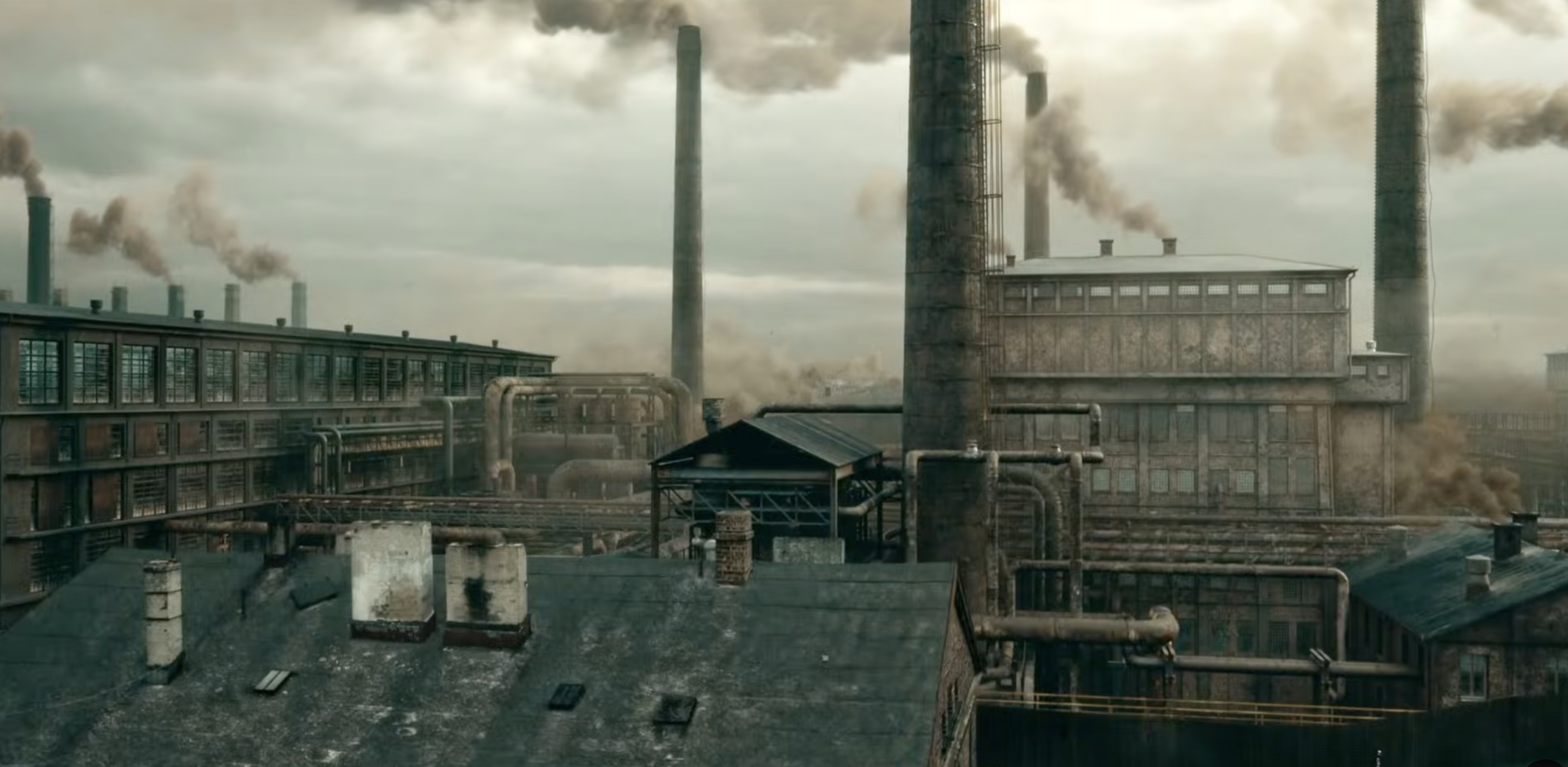
The Szopienice Non-Ferrous Metal Works (“Lead Children”)

Jolanta’s efforts to address the problem are met with a concerted resistance from company managers, local officials and authorities, pressured by politics and the need for production over health and welfare of the community. For instance, workers and their families, live in shabby familoks around the smelter; kids play in the dirt, beneath the billowing smoke stacks, exposed to heavy metal-contaminated ash and dust. It gets even more dangerous for Jolanta when the Polish Security Service starts to interfere. As with the Stasi situation in East Germany, citizens are regularly pressganged into denunciating targeted individuals and Jolanta is denunciated by a member of her own staff.

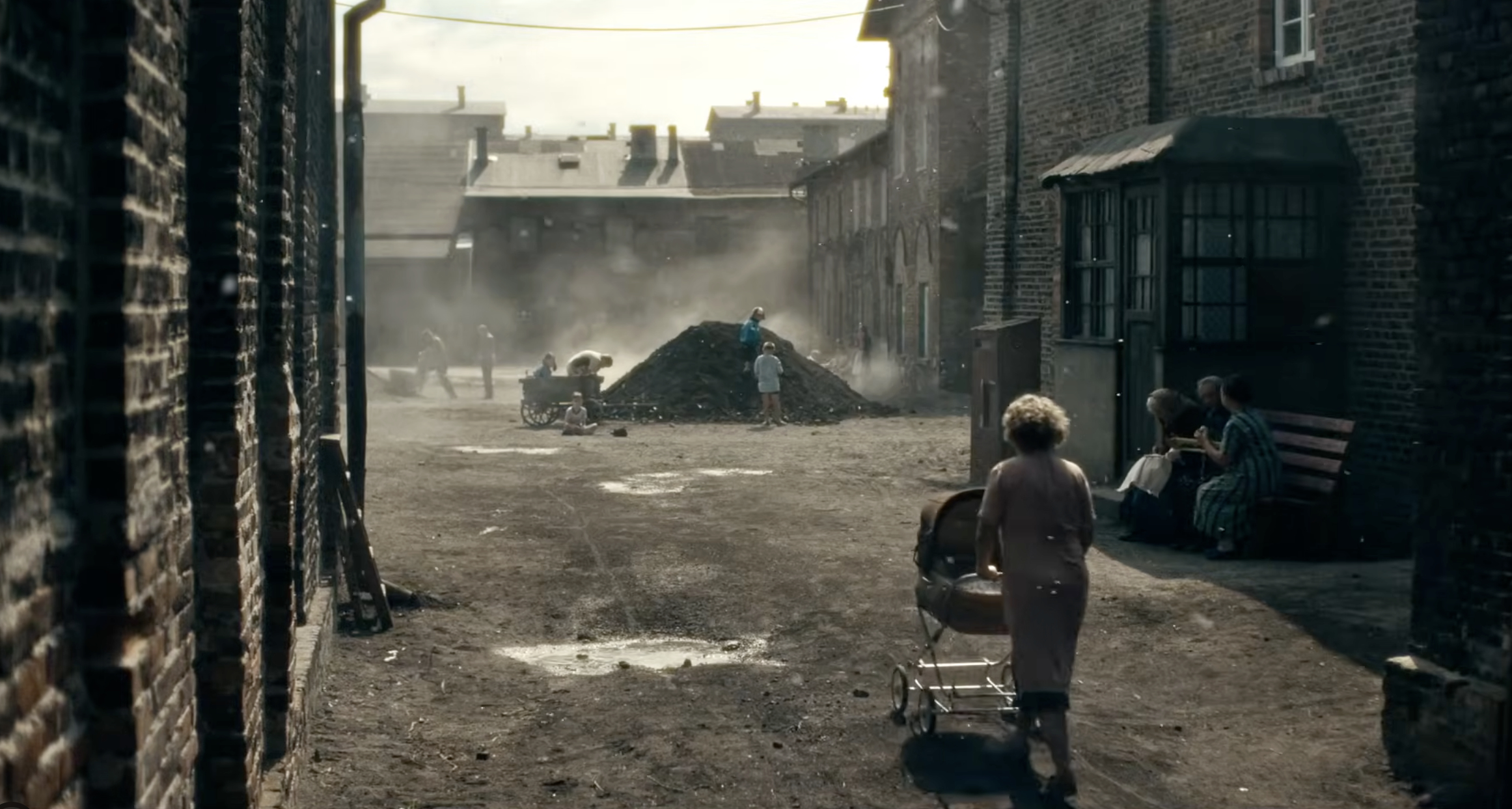
Woman and baby walks in the dust of the smelter as children play in the contaminated dirt (“Lead Children”)

By Episode four, the show becomes heart-breaking as the first of the children dies shortly after returning to Targowisko after a reprieve and recovery from the smelter contamination. Meantime, local Polish Communist Party leader and politburo member Zdzislaw Grudzień pressures the smelter managers to “be the best” by comparing them to a high-producing metal works in Dresden (at the time still in East Germany under the GDR); they respond by removing all the dust-catching filters to increase the draft in the chimneys. Here we also learn that the previous head engineer in charge of stack air quality had been for years using only half the filters of the sieve plates in the pneumatic dust extractor to meet productivity targets.

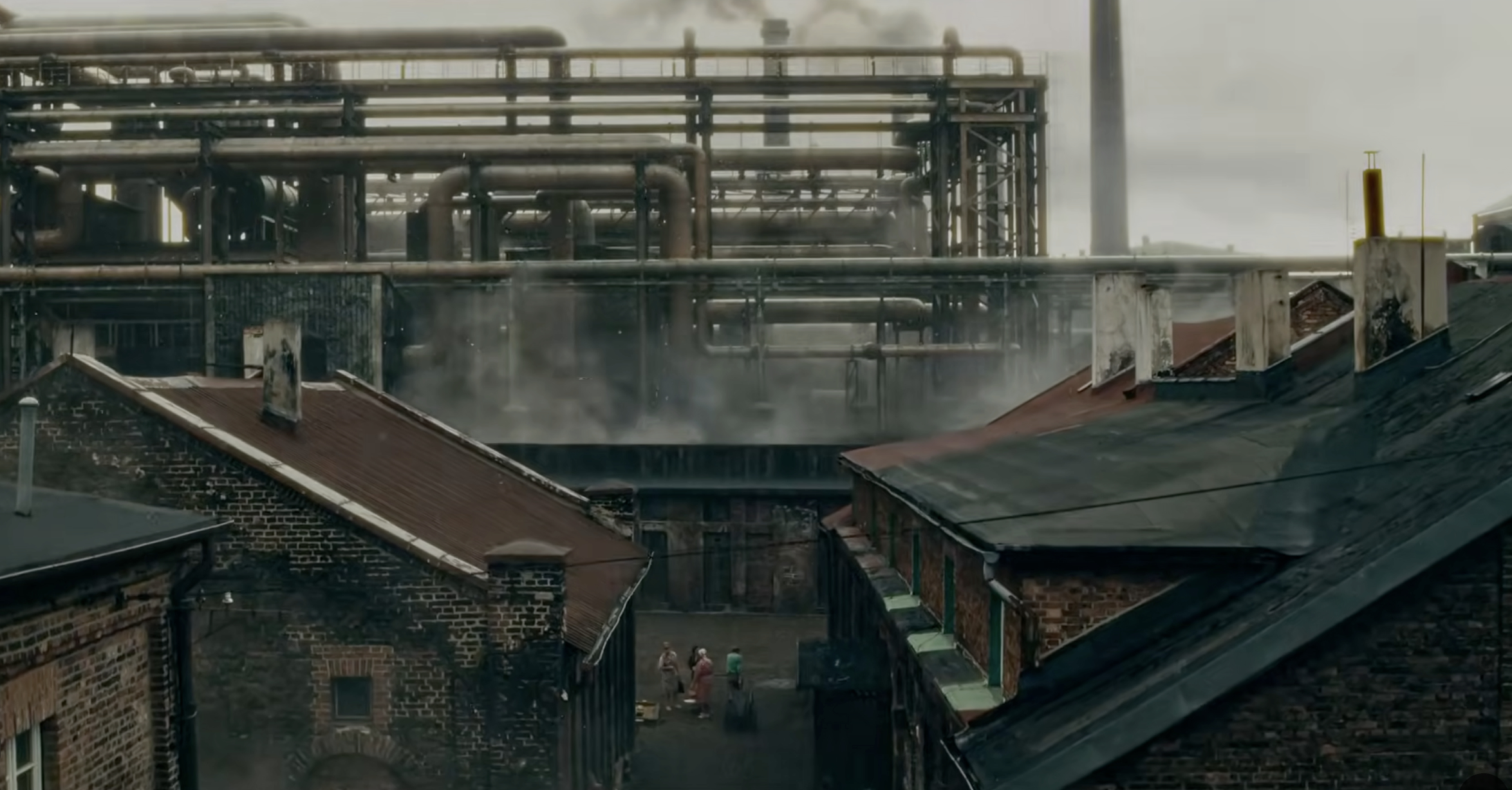
The smelter with village below (from “Lead Children”)

The film notes that in the 1970s lead levels around the plant exceeded safety limits a thousand fold. Recent research indicates that even though the smelter was shut down in 2008, lead levels around it still exceed the limits set by the WHO.

Lead Poisoning in Children and Adults: where it comes from, what it does, and where it goes
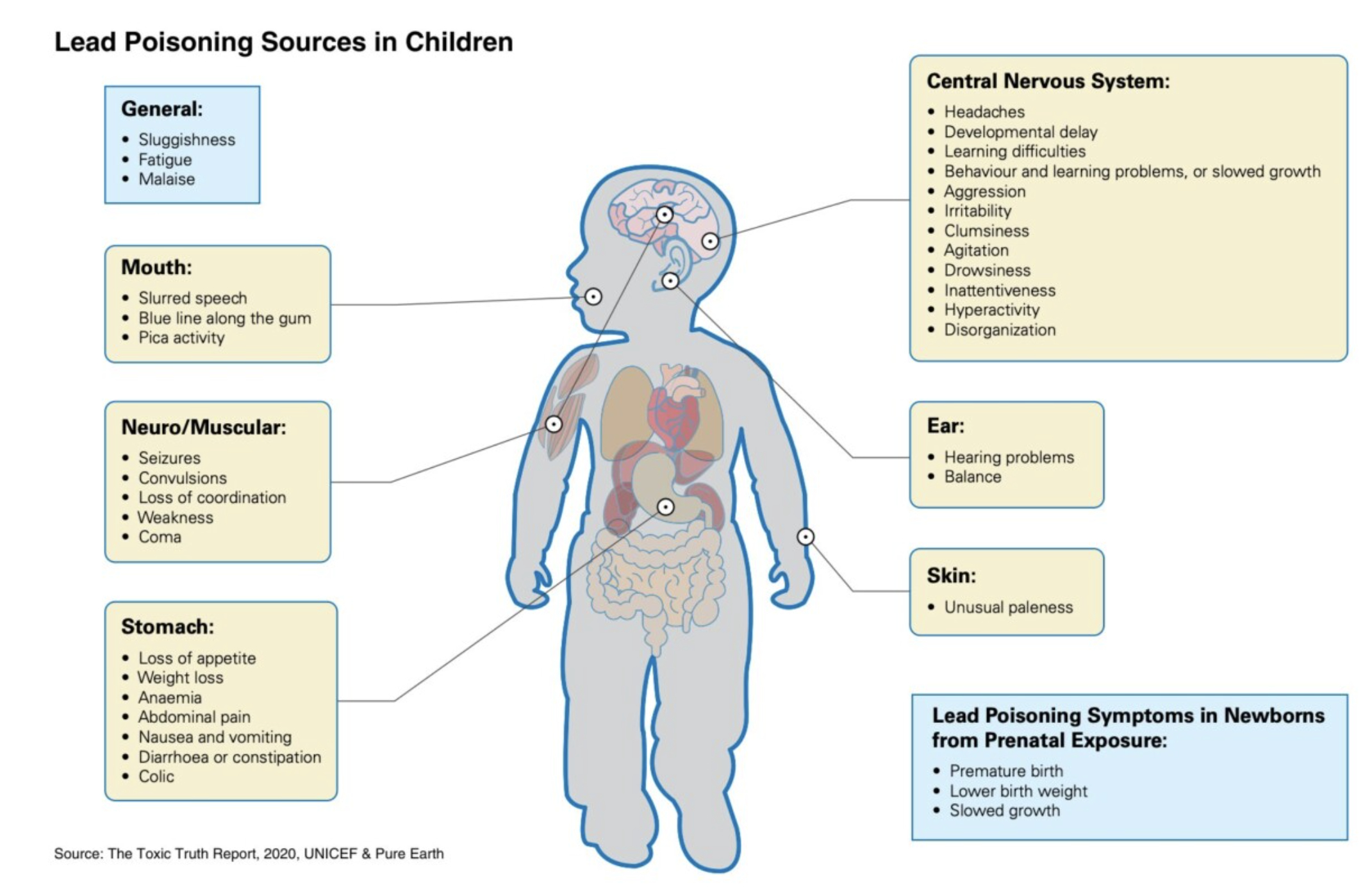
Lead Poisoning in Children (image from Pure Earth)

Lead is a cumulative toxicant that affects multiple body systems; this includes the neurological, hematological, gastrointestinal, cardiovascular and renal systems. According to the WHO, there is no known safe level of lead exposure. Relatively low levels of lead exposure previously considered ‘safe’ are now known to damage children’s health and impair their cognitive development. With even low-level exposure, lead is associated with brain damage, reduced IQ, decreased intelligence, learning difficulties, lower lifetime earnings, increased incidence of heart and kidney disease later in life, and increased tendency for violence.

Young children are particularly vulnerable to lead poisoning, given that they can absorb up to 5 times as much lead as adults from an ingested dose. Children under the age of 5 years are at the greatest risk of suffering lifelong neurological, cognitive and physical damage and even death from lead poisoning. Older children as well as adults suffer severe consequences from prolonged exposure to lead in food, water and the air they breathe; this includes increased risk of cardiovascular death and kidney damage in later life. Children are particularly vulnerable to lead poisoning due to their smaller size and higher rate of lead absorption.

According to the WHO, once lead enters the body, it distributes to organs, including the brain, kidneys, liver and bones. Lead stores in the teeth and bones, where it accumulates over time. Lead stored in bone may release into the blood during pregnancy and expose the fetus.

Lead poisoning is not a thing of the past or restricted to communist nations. According to Pure Earth, lead exposure is responsible for an estimated 3.5 million cardiovascular deaths each year; more than HIV, malaria and tuberculosis combined. A World Bank analysis in 2019 demonstrated that children under five years old worldwide lost 765 million IQ points from lead exposure; about 95% of IQ point loss due to lead exposure were in LMICs. Lead poisoning may also account for 20% of the education gap between high- and low-income countries. 

Major sources of lead contamination include mining & smelting, manufacturing and recycling activities, and lead use in a range of products. These include lead-acid batteries for motor vehicles. Products that may contain lead include pigments, paints, solder, stained glass, lead crystal glassware, ammunition, ceramic glazes, jewelry, toys, some traditional cosmetics, and some traditional medicines. Lead may contaminate drinking water through plumbing systems that contain lead pipes, solders and fittings.

1970s Communist Poland

Inspired by real events from 1970s Upper Silesia during Communist‑era Poland, the TV series Lead Children showcases the atrocities committed in the name of industrial growth and production during that time.

This was a time when the Polish Służba Bezpieczeństwa (SB) or the Security Service of the Ministry of Internal Affairs infiltrated all elements of Polish life—not unlike the Stasi in eastern Germany—to ensure that everyone followed party dogma and the mandate of the Polish United Workers’ Party for industrial productivity. The Security Service of the Communist Polish People’s Republic did their bidding from 1956 to 1990, often enlisting the citizens’ militia. Key aspects of the SB mandate involved political repression and surveillance, infiltration of civil society, persecution of the Catholic Church, suppressing strikes and protests, controlling information, and protecting the state-controlled economy.

Boleslaw Bierut’s Six-Year Plan started in 1950, aggressively industrializing Poland and causing widespread shortages, particularly for meat and dairy. In 1956, when Gomułka came into power, things became somewhat less dangerous, but the shortages continued and in some cases got worse. The period between 1976 and 1989 experienced a maximum in shortages of nearly all products. Under communist rule, Poland was driven by rapid industrial growth, often using low-skilled workers with no consideration for their health and welfare. Criticism or resistance was suicidal. Protests and ensuing riots were violently crushed and suspected leaders hunted down and executed.

(Re)Genesis and the Kurpiowska Forest
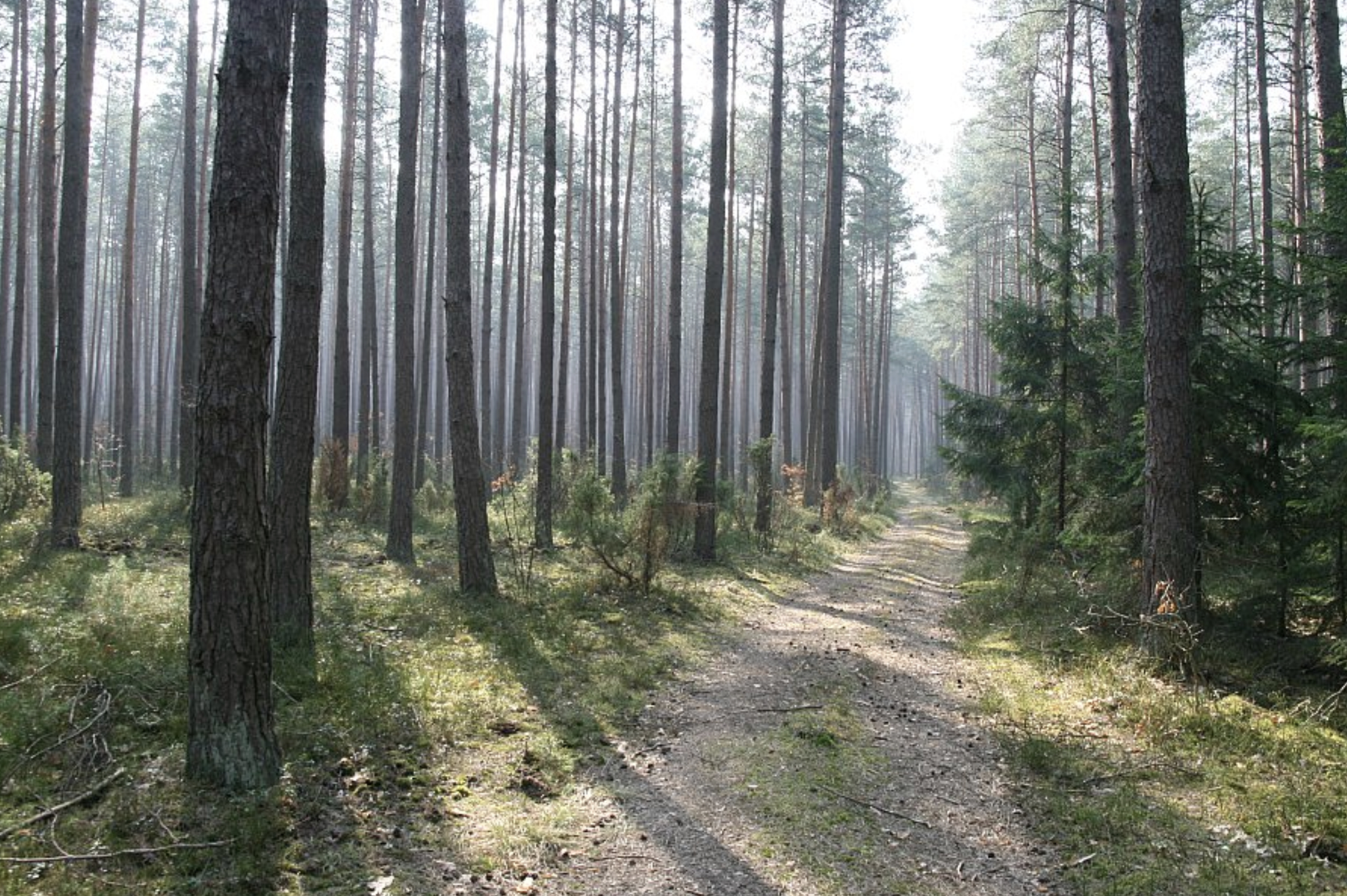
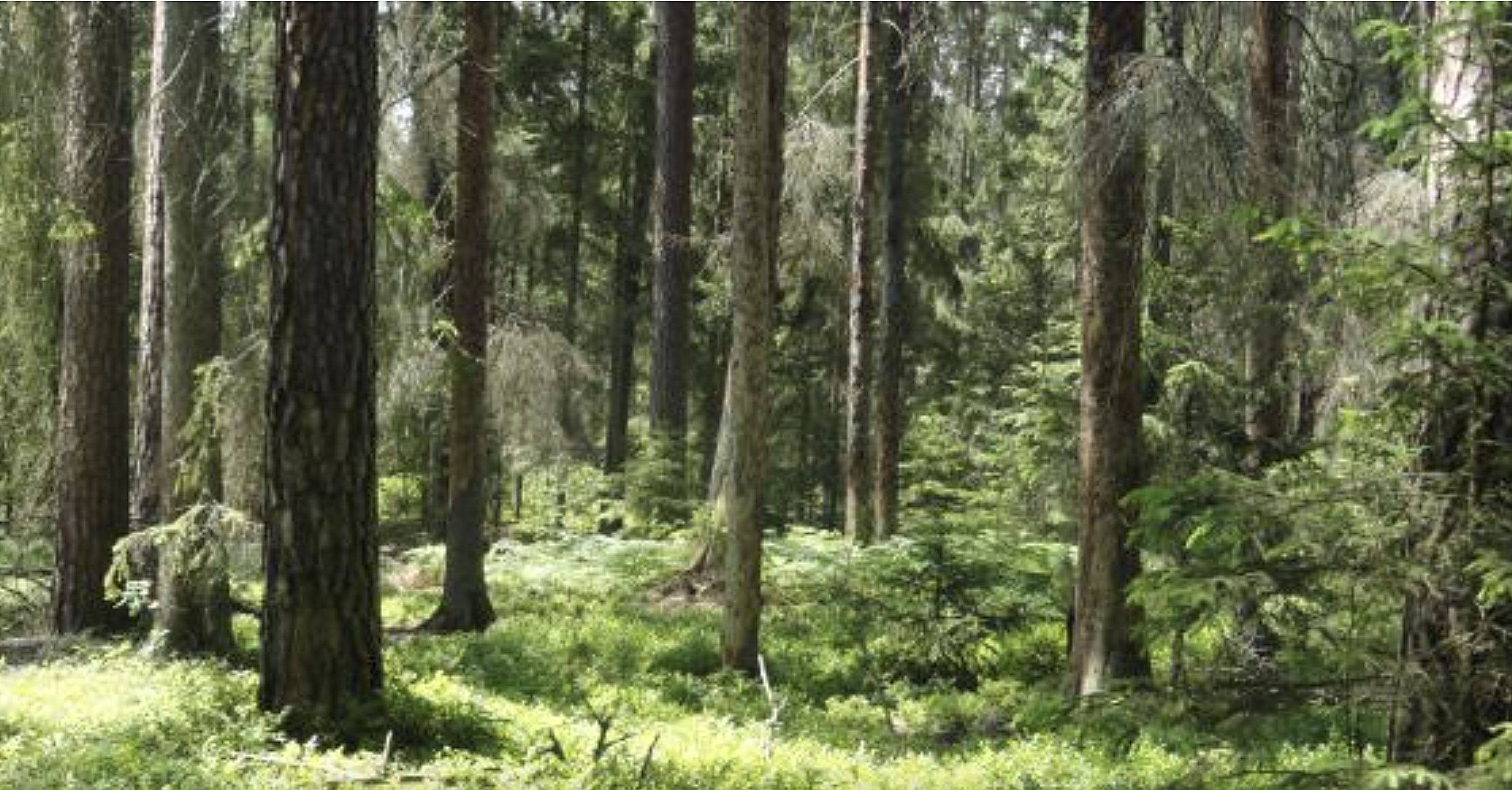
Puszcza Białowieska (The White Forest) of the Kurpiowska Forest (photo by OTOP)

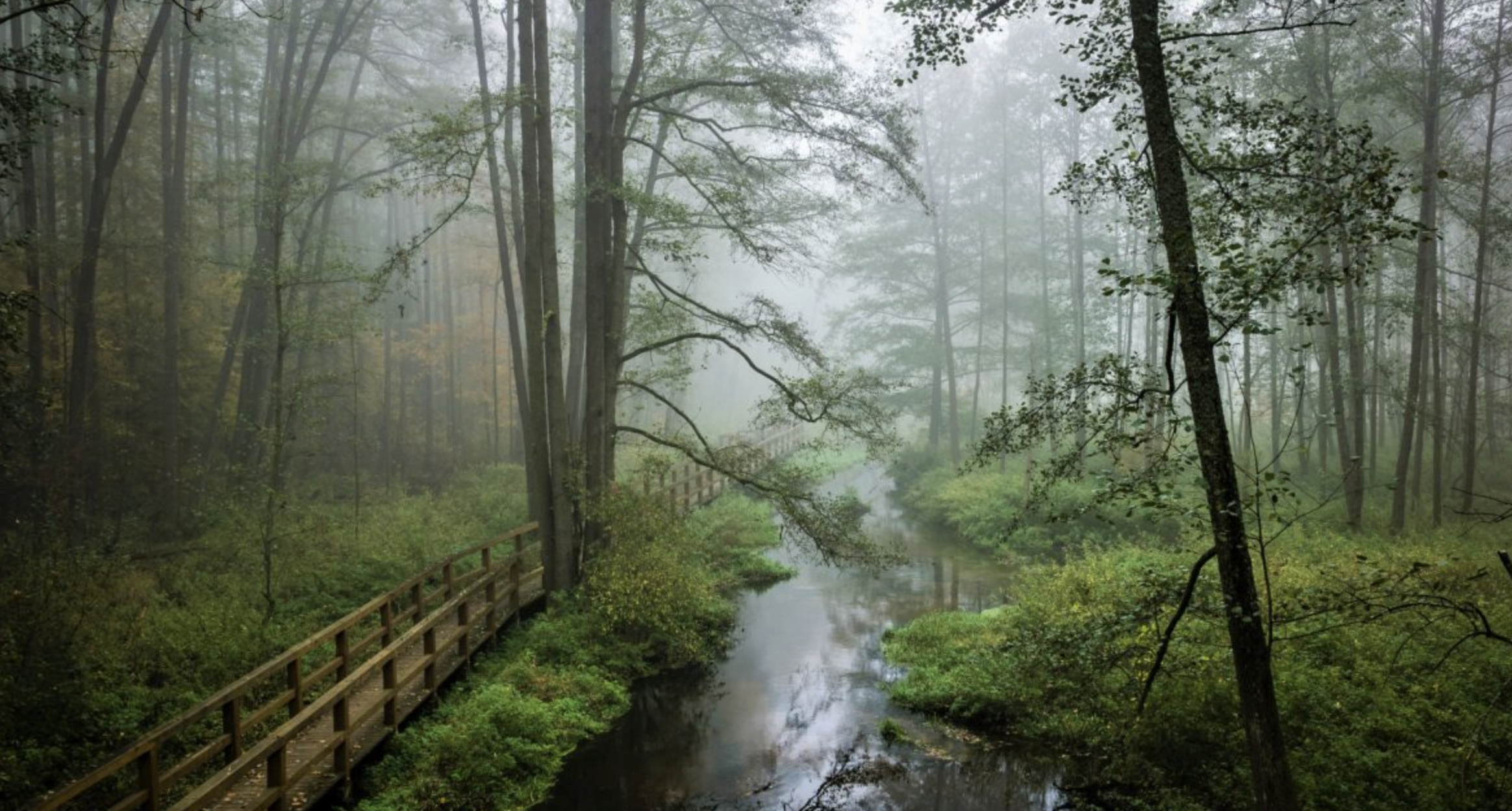
Several key scenes of my upcoming eco-fiction thriller (Re)Genesis take place inside the Kurpiowska Forest in central Poland’s Mazovian Lowlands during the communist rule of Poland (specifically from the 1950s to the 1970s). Young Zofia and Piotr Wójcik and their little twins have come to the Puszcza Kurpiowska to work for Zima Performance Elastomers, a chemical plant that makes a mysterious miracle chemical called syprene that is highly volatile, flammable and toxic. Zima compromises the health and safety of its workers under the yoke of productivity. Workers fall ill and are usually replaced within a decade, either leaving due to ill health or dying of complications. In the following scene in 1959, Zofia has invited her older sister to take care of her twins so she can continue working at Zima Performance Elastomers deep inside the Kurpiowska Forest:

Zofia can’t help a smile. Her older sister is more of an intellectual; she isn’t the mothering type and has made it clear that she doesn’t like children. Yet the twins seem to have softened her heart a little, thinks Zofia, who is so grateful that her older sister is here, so she can return to work.

They eat supper quietly together; Piotr is on the evening shift and won’t be home until later at night when Zofia will reheat some bigos and bread for him.

“How’s Piotr? Still losing his hair?” Ewa asks casually, helping herself to more bigos from the pot.

“Not so much now,” says Zofia. She wipes the side of her bowl with some rye bread to catch the rest of her bigos. “He still gets headaches. I give him piołun for them.”  

Ewa frowns and shakes her head. “Does it work?”

Zofia shrugs.

Ewa makes a scoffing sound; she knows that it doesn’t. She leans forward suddenly. “Seriously, you need to do something, Zofia.”

“But what can I do?”

“Zima’s clearly breaking safety rules. The first is not having sufficient signage. Then hiring idiots straight from high school who don’t know what they’re doing and not educating them. You mentioned Janek smoking in the Polyanna Building? Didn’t you say that stuff is flammable?”

“I think so, based on other similar compounds I know about. No one knows what syprene really is.”

“Well, he’ll blow up the plant if he isn’t careful. Good god, sister, you need to report this to the government before it’s more than just some headaches or a bit of hair loss. Before there’s a serious accident. The constitution of ‘52—”

“The constitution! It’s just paper. The Polish United Worker’s Party has its own rules and ways of doing things.” She waves the bread in her hand at her older sister. “Who would I report this to, eh? Have you forgotten what happened when workers demanded better working conditions at the Poznań’s Cegielski Factories in ’56? Nothing can interfere with progress. The government doesn’t care. And let’s not forget the secret police. That Łukasz Zieliński, who’s so chummy with Wozniak, gives me the creeps. I’m sure he’s secret police. He hardly does anything except wander about poking his long nose in everything and making derogatory remarks.”

 “Now who’s the cynic.” Ewa leans back with a crooked smile. The smile turns into a scowl as she acknowledges Zofia’s point. “But you’re probably right about him.” She shakes her head, spoon playing with the stew. “And, you do have to be careful, sister. Something will happen. I can feel it in my bones.”

Unfortunately, so can Zofia. Her older sister is right, she concedes. The whole place is a tinder box and lately emotions have been high with arguments and even fights erupting in the polymer building. It doesn’t help that Piotr doesn’t seem to take the dangers seriously by not wearing protection, just to fit in—

There’s a noise outside.

The women turn, hearing shuffling at the door and men talking in low urgent voices. The door bursts open and two workmen—Vasili and Krzysztof—drag Piotr inside. He is barely conscious and his head lolls as he groans and murmurs through a frothing mouth.

The women rush forward.

“What happened?” Ewa demands.

“There’s been an accident,” Vasili says, glancing at Krzysztof, who normally works the shift with Piotr. “He got splashed when the drum broke, and may have even swallowed some of the stuff. Then he went into convulsions.”

“And you brought him here?” Ewa says, aghast.

“There’s no emergency shower or eye wash there—”

“Don’t come any further into the house!” Ewa orders gruffly. “Strip him naked and throw the clothes outside. Then take him to the shower. And for god’s sake take off your shoes!”

The men jump into action.

Zofia looks on, tongue-tied.

“Well, get in there!” Ewa shouts at Zofia. “Scrub him clean. With soap! Quickly!”

The Kurpiowska Forest near Czarnia, not far from the fictional Zima plant (photo by Polish Tourism)
Kozienice Landscape Park, Massovia, Poland (image by MasovianStyle.com)

Nina Munteanu is an award-winning novelist and short story writer of eco-fiction, science fiction and fantasy. She also has three writing guides out: The Fiction WriterThe Journal Writer; and The Ecology of Writing and teaches fiction writing and technical writing at university and online. Check the Publications page on this site for a summary of what she has out there. Nina teaches writing at the University of Toronto and has been coaching fiction and non-fiction authors for over 20 years. You can find Nina’s short podcasts on writing on YouTube. Check out this site for more author advice from how to write a synopsis to finding your muse and the art and science of writing. Her most recent novel “Gaia’s Revolution” was released in March 2026 by Dragon Moon Press (Calgary).

Ten Significant Science Fiction TV Series—Part 2, Shows that Touch on Climate Change, Resource Allocation and Environmental Justice: #9 — “SILO”

I’ve selected ten TV series that have intrigued me, moved me, and stayed with me for various reasons that touch on: abuse of justice, including eco-justice and environmental abuse; technology use and abuse; and the effects and horrors of climate change.

Some are well known; others not so well known. All approach storytelling with a serious dedication to depth of character, important themes, realistic world building, and excellent portrayal by actors. The world-building is extremely well done—in some cases rivalling Ridley Scott’s best—with convincing portrayals of worlds that are at times uncanny in their realism. Worlds that reflect story from an expansive landscape to the mundane minutiae of daily life: like the cracked phone device of Detective Miller in The Expanse or the dirty fingernails of engineer Juliette Nichols in the Down Deep of Silo. Stories vary in their treatment of important themes from whimsical and often humorous ironies to dark and moody treatises on existential questions. In my opinion, these TV series rival the best movies out there, often reflecting large budgets (but not always) and a huge commitment by producers. The ten TV series I’ve selected in this series come from around the world: Brazil, Germany, France, Norway, Canada and the United States.

In Part 2, I focus on five TV series that explore issues to do with resource allocation, adaptations to climate change and corporate / government biopolitics.   

SILO: An Underground Murder Mystery & an Engineer’s Search for the Truth

This science fiction thriller is a dark cautionary tale based on Hugh Howie’s bestselling trilogy Wool, Shift, and Dust about a population living in an underground silo, humanity’s last refuge from a toxic outside world. Juliette Nichols (Rebecca Ferguson) is a humble and gutsy engineer in the Down-Deep who is relentlessly motivated in her journey to seek the truth. When Juliette inexplicably lands the job of sheriff of the Silo, she treats her new position as a tool to seek the truth about the suspicious death of her lover, George—a collector of illegal relics (artifacts from before the rebellion which precipitated the destruction of all information prior to it). In fact, no one seems to recall anything about before the rebellion some 140 years ago.

Juliette fixing the huge generator that keeps the Silo working

At her own peril, Juliette pulls on threads that ultimately reveal a greater conspiracy surrounding the Silo. For instance, why technology is restricted, why relics from the past forbidden, and why all behaviour is closely surveyed and judged through “the Pact,” the arcane bible written by the founders. Questions leading to more questions. For instance, who built the Silo and for what reason? Does it have to do with why it is so toxic outside? Questions point to the egregious actions and tragic circumstances that led to its origin. Actions and circumstances of the ‘before times’ that ultimately point to political intrigue, biological warfare and social oppression.

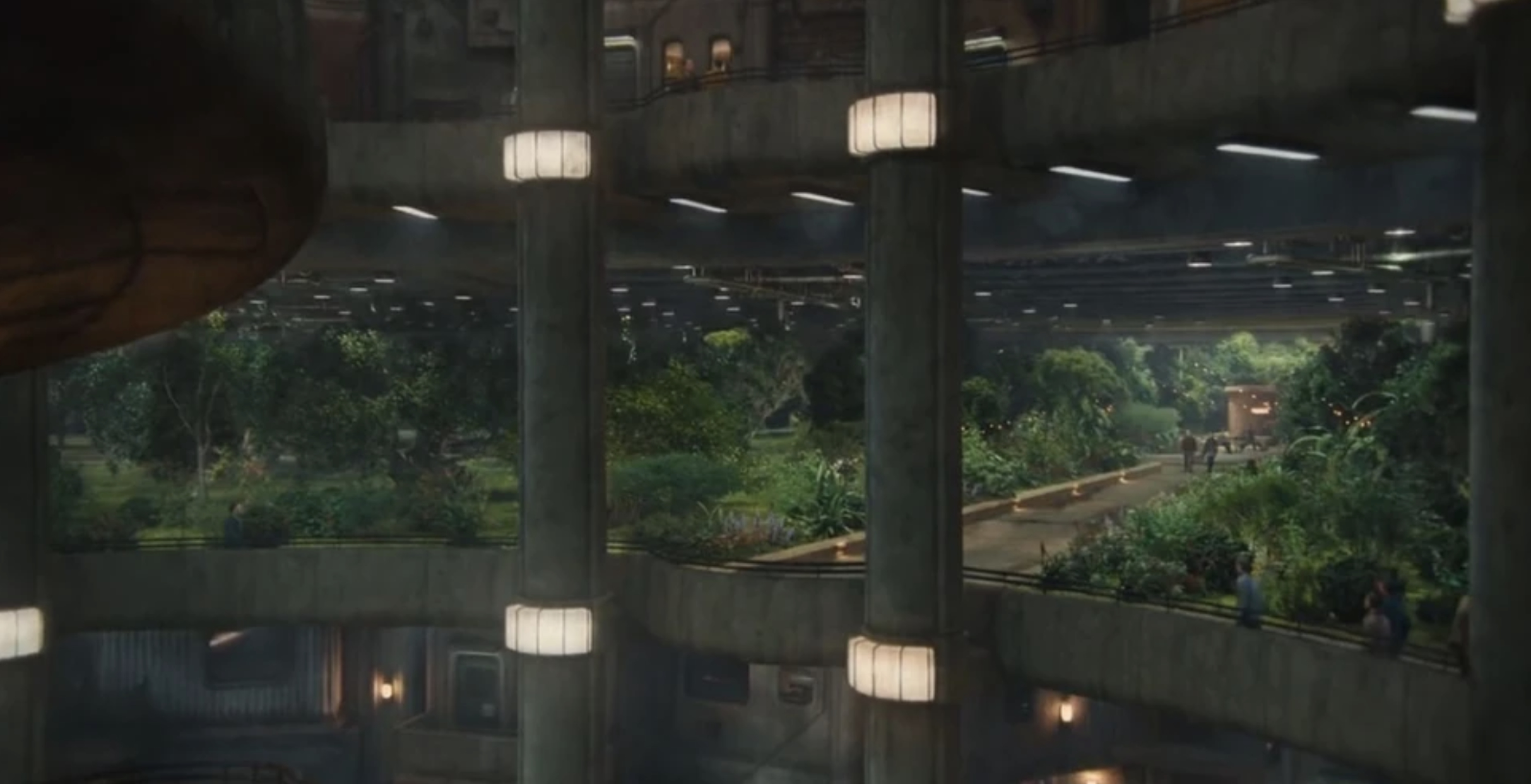
Farm level in the Silo

Juliette’s literal and metaphoric rise from the Down-Deep to the Up-Top is a feminist’s journey that transcends intersectional barriers as she battles small-minded men of power and maintains her integrity by refusing to abide by the inhumane Up-Top rules of order. By the end of Season 1, I sensed a victory for humankind through womankind, as Juliette’s relentless search for the truth disclose lies at all levels of Silo society. Juliette and others who join her unravel a horrific tale of deception, self-serving manipulation, power abuse and genocide that is relevant to the present day we are experiencing now. 

Market in the Silo

Authentic world building, rivalling the best of Ridley Scott, is matched by superlative acting by a very talented cast. Main character Juliette was played by Rebecca Ferguson with incredible nuance and genuineness as both vulnerable and heroic, shy and assertive, kind and bossy. Silo demonstrates through every scene a meticulous attention to detail that commands a sense of reality. We truly experience the grubby machine room of the Down-Deep, the bustling cafeteria in the Mids, or the posh interior of Judicial chambers in the Up-Top. Reflecting the vertical class hierarchy, characters are dirty, wear worn and repaired clothing, and are attentive to recycling and conservation as befits an enclosed society with limited resources.

Juliette Nichols

As with Snowpiercer (another enclosed environment), the people of Silo live highly conscious of their limited space and supplies. Everyone is convinced that they or their group is ultimately most important in maintaining the Silo. Freedom Day, which celebrates freedom from the last rebellion (which existentially threatened the Silo with threats to open the doors to the outside), is followed by Forgiveness Day, in which citizens are encouraged to turn in illegal relics (e.g. any technology, books, or other artifacts from the ‘before times’) without reprisal. But, like a hamster on a wheel—or the generator in the down deep—eventually a wobble is introduced, threatening to crash the silo and put all in perpetual darkness with eventual flooding. It is no coincidence that, before taking on her role as sheriff, engineer Juliette (who refuses to use a band-aid approach) imposes a temporary black out to fix the generator to prevent the Silo’s eventual destruction.

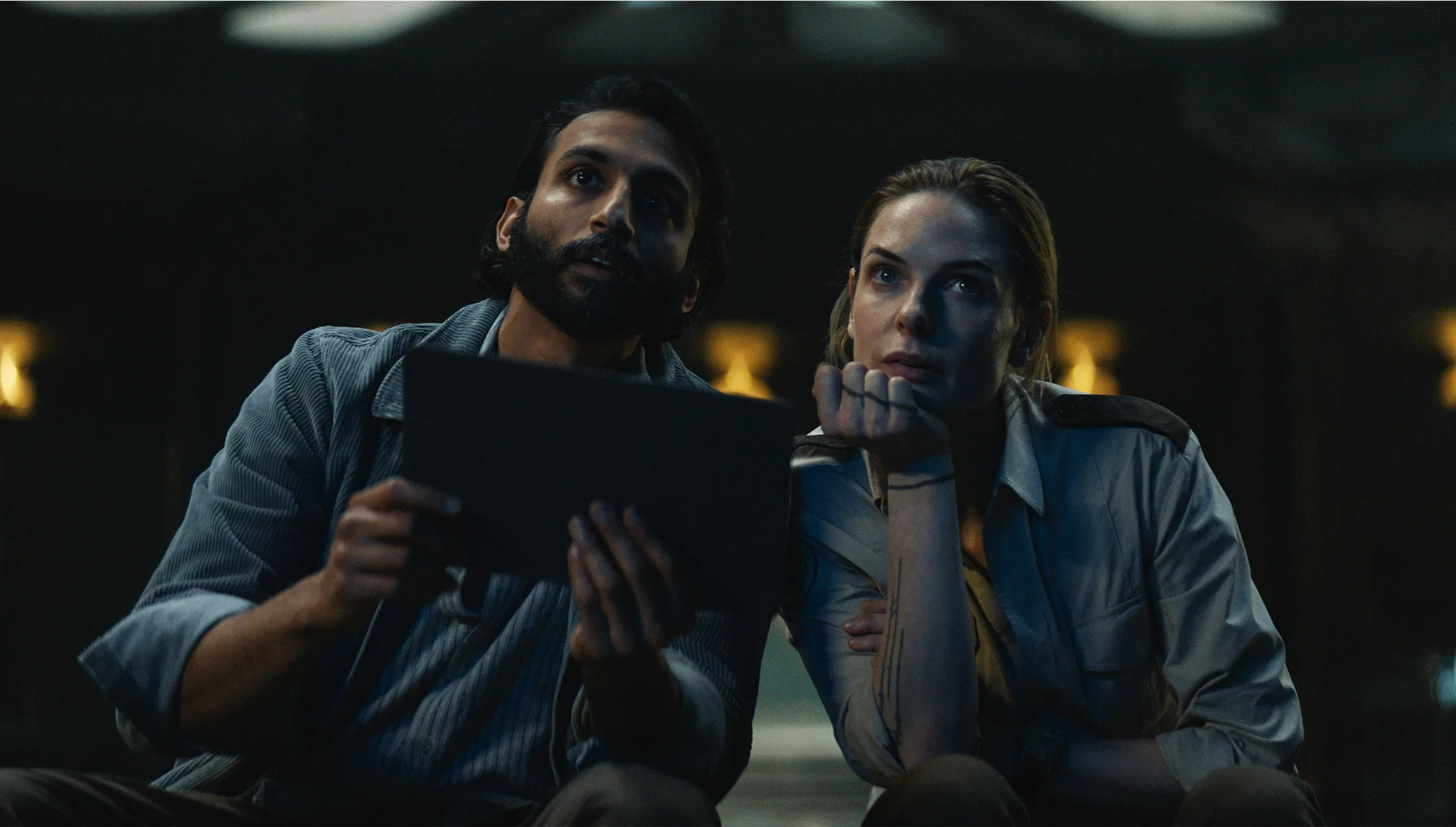
Lukas Kyle and Juliette Nichols wonder at the stars

In that one act, her archetype is cemented: she is the herald of change, a disruptive force that, though at some cost, will reveal the greater truth for the greater good. Like a good catalyst hero, she stirs everyone and everything up to dig up the truth. She delivers the call to adventure to Lukas Kyle, who refuses at first, but finds his way. She inspires an entire population to seek the truth.   

Juliette warily seeks the truth
One of the truths Juliette finds at the end of Season One

Nina Munteanu is a Canadian ecologist / limnologist and novelist. She is co-editor of Europa SF and currently teaches writing courses at George Brown College and the University of Toronto. Visit www.ninamunteanu.ca for the latest on her books. Nina’s bilingual “La natura dell’acqua / The Way of Water” was published by Mincione Edizioni in Rome. Her non-fiction book “Water Is…” by Pixl Press (Vancouver) was selected by Margaret Atwood in the New York Times ‘Year in Reading’ and was chosen as the 2017 Summer Read by Water Canada. Her novel “A Diary in the Age of Water” was released by Inanna Publications (Toronto) in June 2020.

.
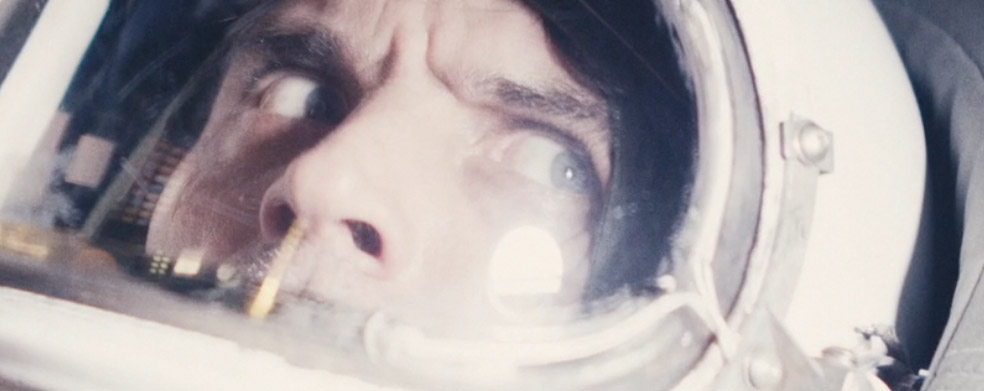
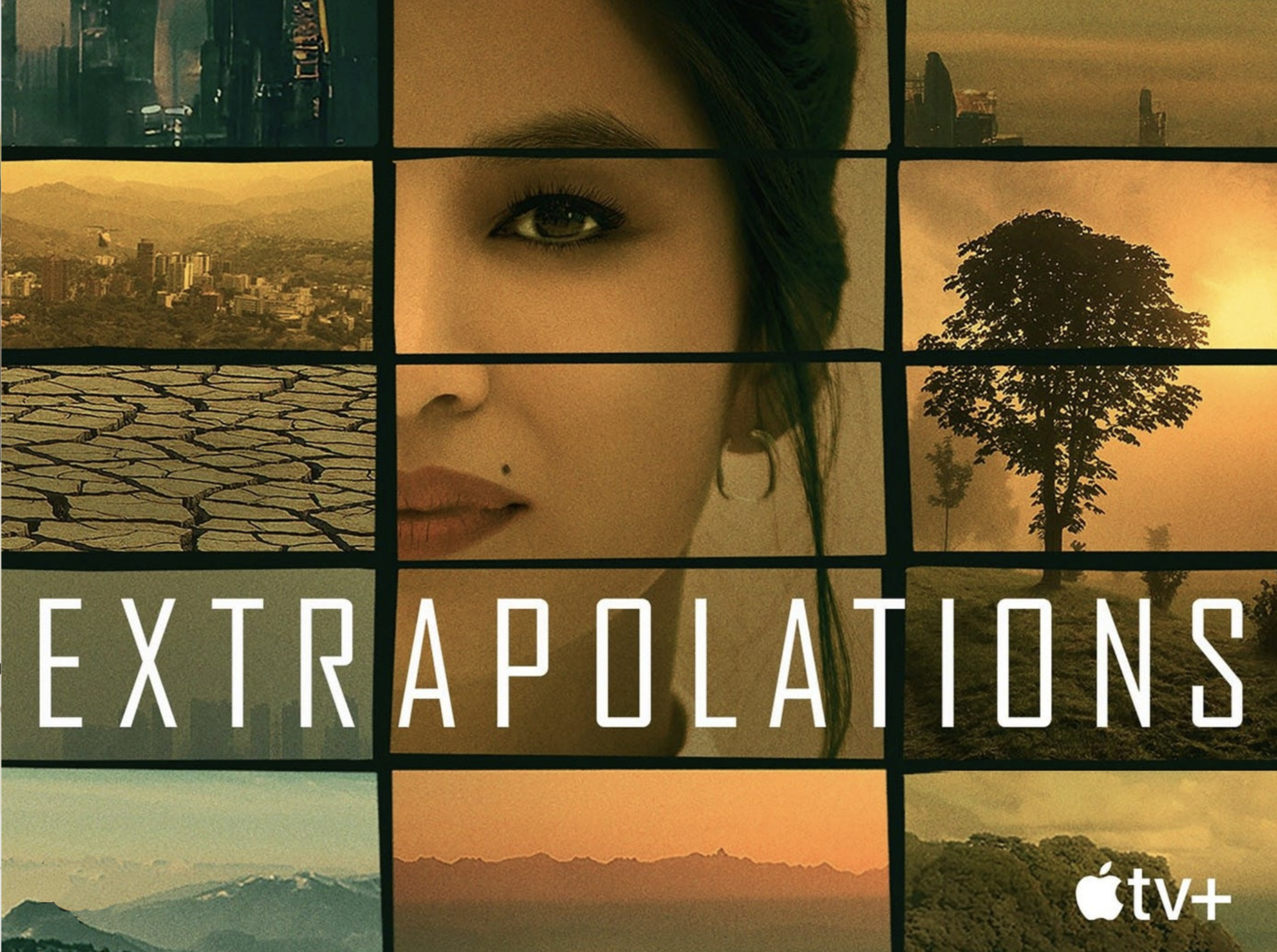
Ten Significant Science Fiction TV Series—Part 2, Shows that Touch on Climate Change, Resource Allocation and Environmental Justice: #10 — “EXTRAPOLATIONS”

I’ve selected ten TV series that have intrigued me, moved me, and stayed with me for various reasons that touch on: abuse of justice, including eco-justice and environmental abuse; technology use and abuse; and the effects and horrors of climate change.

Some are well known; others not so well known. All approach storytelling with a serious dedication to depth of character, important themes, realistic world building, and excellent portrayal by actors. The world-building is extremely well done—in some cases rivalling Ridley Scott’s best—with convincing portrayals of worlds that are at times uncanny in their realism. Worlds that reflect story from an expansive landscape to the mundane minutiae of daily life: like the cracked phone device of Detective Miller in The Expanse or the dirty fingernails of engineer Juliette Nichols in the Down Deep of Silo. Stories vary in their treatment of important themes from whimsical and often humorous ironies to dark and moody treatises on existential questions. In my opinion, these TV series rival the best movies out there, often reflecting large budgets (but not always) and a huge commitment by producers. The ten TV series I’ve selected in this series come from around the world: Brazil, Germany, France, Norway, Canada and the United States.

In Part 2, I focus on five TV series that explore issues to do with resource allocation, adaptations to climate change and corporate / government biopolitics.


EXTRAPOLATIONS: A Journey into A Climate Changed Future

Extrapolations is an intelligent and vividly filmed mini-series of eight interconnected moral tales told over thirty-three years that extrapolate how our planet’s changing climate will affect family, work, faith, and—ultimately—our survival. Each episode focuses on the perspective of a few key characters whose choices often have significance consequence: from the myopic exploitation of greedy corporate moguls and feckless concessions of bureaucrats to the solidarity of common folk breaking the law to survive and scary solutions of eco-terrorists with messianic complexes. Emotions run raw and these characters you will either love or hate.

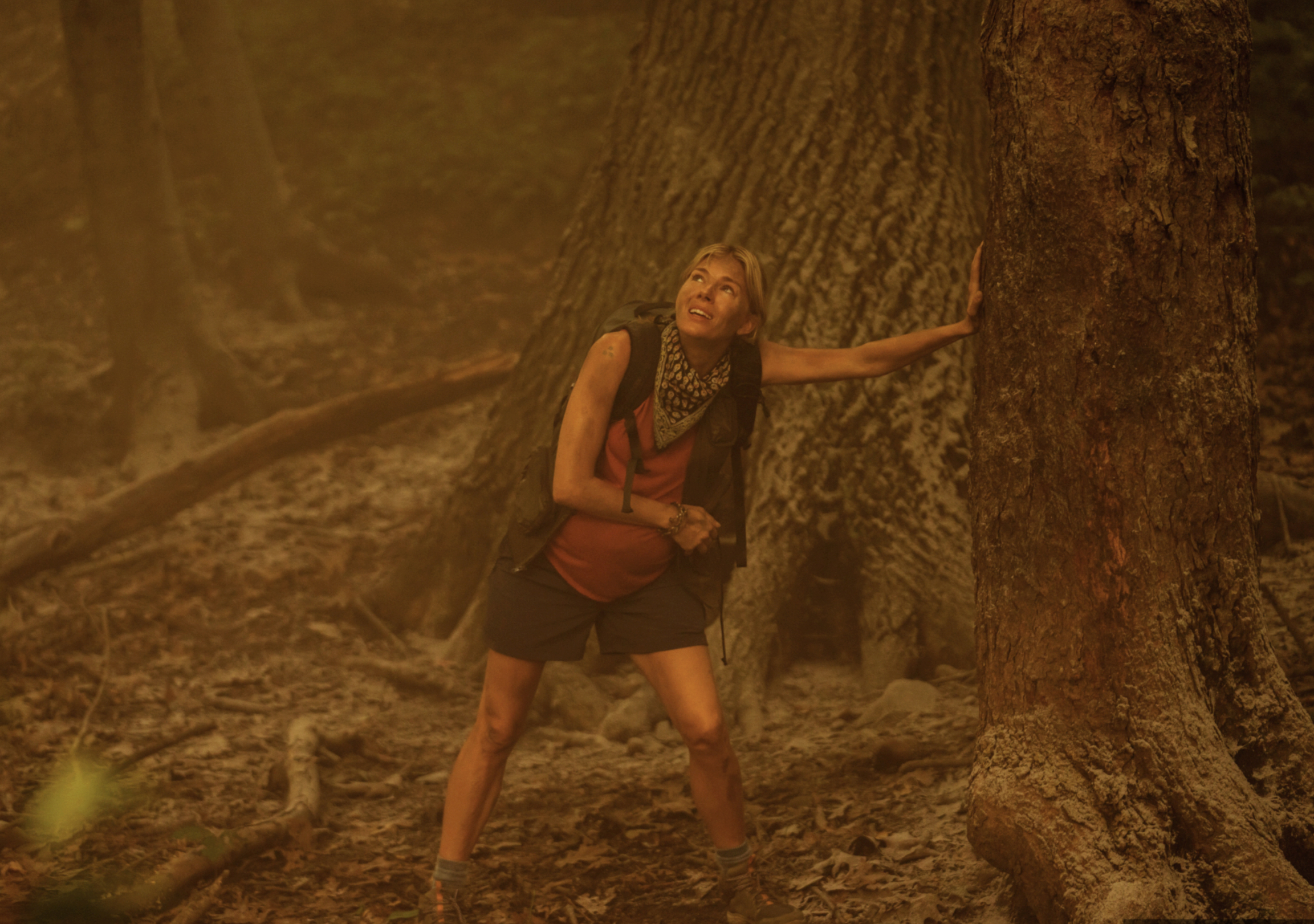
Rebecca Shearer (Sienna Miller) braves a wildfire in “A Raven Story”

Each episode adds its own installment of personal choice and tragedy. The first episode takes place a decade from now and is named “A Raven Story.” This first installment sets the tone of the entire series with an unsettling tirade of self-serving human actions to a sweeping tide of brewing climate disasters. What follows is a bleak procession of climate change calamity from growing wildfires and powerful hurricanes to sea level rise, melting glaciers, species extinction, and acidifying oceans. A few characters, trying to address environmental disaster, struggle with choices to either gamble the present for the future or gamble the future for the present. In the last scene, a climate activist Carmen Jalilo (Yara Shahidi) sums up the trajectory of the entire series.  “What does an increase in global temperatures by two degrees Celsius mean to you and to me? It means that when the temperatures go up, our imagination must increase even more. It means that when the sea level rises we must rise up as well. It means that when forest fires obscure the horizon we must look toward each other and find our way forward. We cannot give up and go home for one simple reason. We already are home; this is our only home.”

Each episode in the procession of climate change is both a literal and metaphoric fable of our relationship to our environment, the creatures that live with us—our nonhuman relatives—and to each other: the real cause—and potential solution—to the calamities of climate change.

Episode 2, “Whale Fall”, features a beautiful heartfelt interaction between marine biologist Rebecca Shearer (Sienna Miller) and the last humpback whale in 2046. It is a solastalgic dirge on the sixth extinction event. When the whale asks the biologist “how might it be different” Shearer answers simply: “It will only change if we do, if we stop lying about the world, if we stop expecting the ones who come after us to fix it because we did not.”

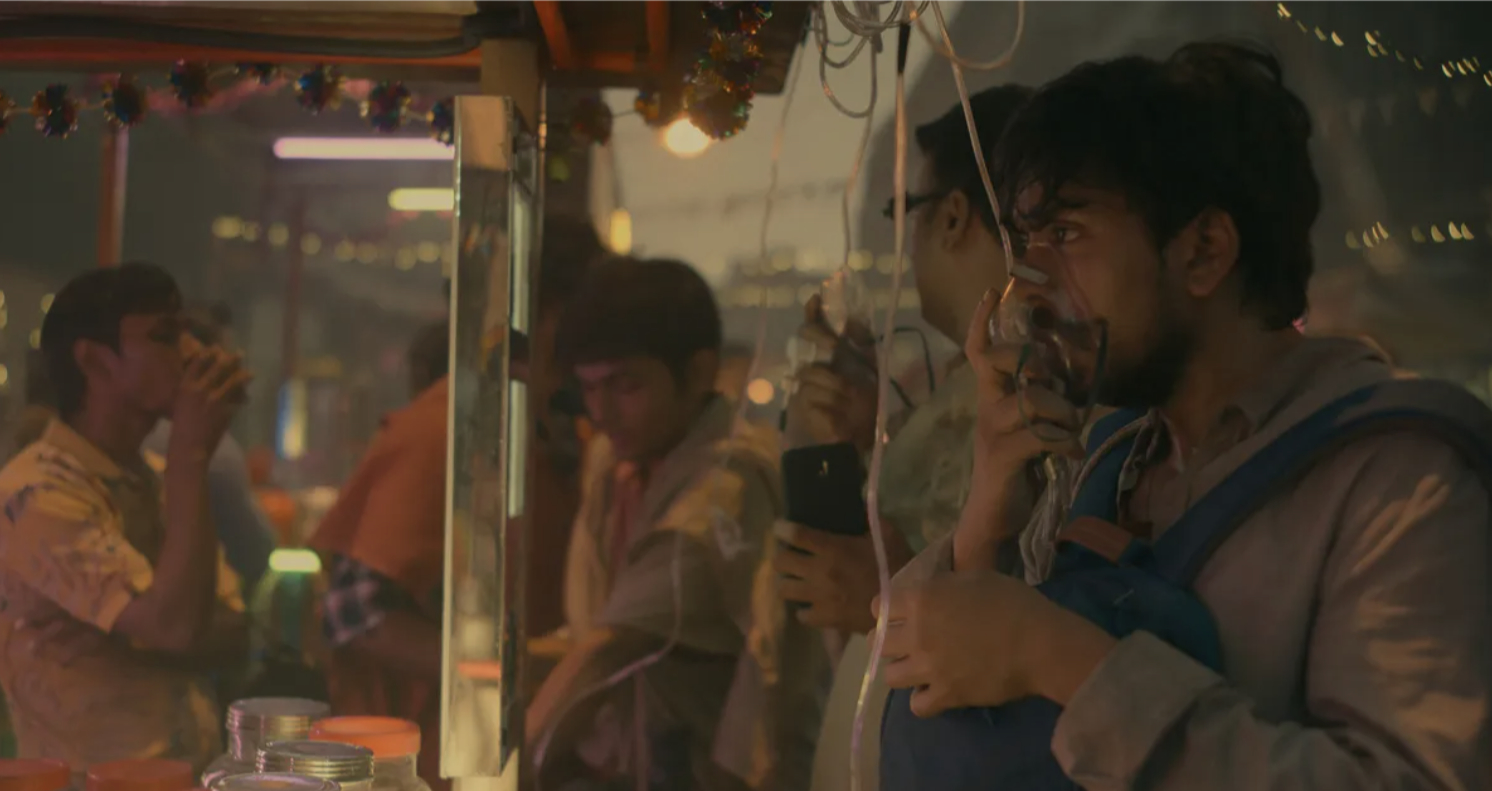
Gurav (Adarsh Gourav) buys a puff of clean air in Mumbai

Episode 4, “Nightbirds”, oozes with such vivid visuals and angles, you can almost smell the stink in the air of Mumbai in 2056. Venders on the streets sell oxygen masks by the puff and real rice doesn’t exists; just the “synthetic, processed crap.” Driver Gurav (Adarsh Gourav) and handler Neel (Gaz Choudhry) flout the daytime curfew to transport illegal cargo (stolen seeds free of corporate branding) and a crazed geneticist to where they can be used in Varanasi. The drive becomes a nightmarish journey that touches on many aspects of ordinary life under the heel of climate change and the lengths that people will go to simply survive.

In Episode 6, “Lola”, the metaphors continue as this episode in 2066 explores the devastating memory loss of a main character through vascular dementia brought on by excessive carbon dioxide and heat. In the end, he has forgotten enough to forget that it even matters.

In 2017, I wrote an article about environmental generational amnesia. A term coined by Peter Kahn, professor of psychology at the University of Washington to explain how each generation can only recognize—and appreciate—the ecological changes they experience in their lifetimes.

In witnessing the collapse of large fish populations on the west coast, University of British Columbia fisheries biologist, Daniel Pauly observed that people just went on fishing ever smaller fish, resulting in what he called a “creeping disappearance” of overall fish stocks. He called this impaired vision “shifting baseline syndrome,” a willing ignorance of consequence based on short-term gain. This is because we are not connected. And because we aren’t connected, we simply don’t care. Environmental generational amnesia is really part of a larger amnesia, one that encompasses many generations; a selective memory driven by lack of connection and short-sighted greed.

Extrapolations ends in 2070 as Crypto mining has radically increased carbon output, higher temperatures are killing and disabling people en masse, and the weight of water in the higher oceans has altered the tectonic plates. While an element of hope glimmers in each episode, even if just through personal triumph and resilience, it is particularly notable in the last episode for reasons you need to watch to understand.

Each episode showcases an intimate personal journey woven into the larger story and strung in an anthology driven by a relentless changing climate and unruly environment. Make no mistake; the planet Earth, in the throws of climate change, is the main character here. This ambitious series dared to be more than human-centric, transcending beyond anthropocentric and androcratic worldviews in an attempt to elicit empathy for our entire world particularly the non human world. The series pointed to a more eco-centric view of this precious and beautiful world we live in. As a result, it suffered criticism.

Extrapolations was generally panned by critics and viewers alike as less than potent or even uninteresting and “flat” because it apparently traded character depth for scientific extrapolation and exposure. I couldn’t disagree more. I was gripped from the start by this large story. Characters throughout the episodes provided a panoply of understated archetypes to represent a cross section of humanity in the throws of climate catastrophe. Characters I either loved or hated or wanted to smack to wake them up. And I couldn’t help cheering when a certain miserable cruel human was offed by, of all things, a walrus mother protecting her pup.

I found the series incredibly potent for its realistic portrayal of a tortured environment at the hands of human apathy and fecklessness. I felt solastalgia creep into my bones as I witnessed this bleak future. There was something utterly tragic about a young corporate executive escaping her stressful job by retreating to a pretend autumn forest in a virtual chamber—when the real thing was no longer available. The loss of our wildlife and trees. Pure fresh air. Blue skies. Healthy oceans and freshwater. These are all things most of us still take for granted or don’t even care about.

Individual scenes lingered long after they were gone: people wearing galoshes to attend a drowning synagogue in Miami; two seed smugglers defying day curfews against overwhelming heat and noxious air quality to deliver contraband seeds to farmers in Mumbai; a news reel listing the extinction of the Polar Bear and the African Elephant as a young boy cuddles his stuffed animal version. I cried for these majestic creatures, fallen at our hands. And I cried for us at our great loss.

Ultimately, this series is all about the choices we make for this planet and our survival on it.  Extrapolations makes it clear that choices, any choices, can be key to saving life on this planet. This series is not just a clear clarion call but a heartfelt exhortation for us to be brave and act now. In any way we can. 

Ten Significant Science Fiction TV Series:

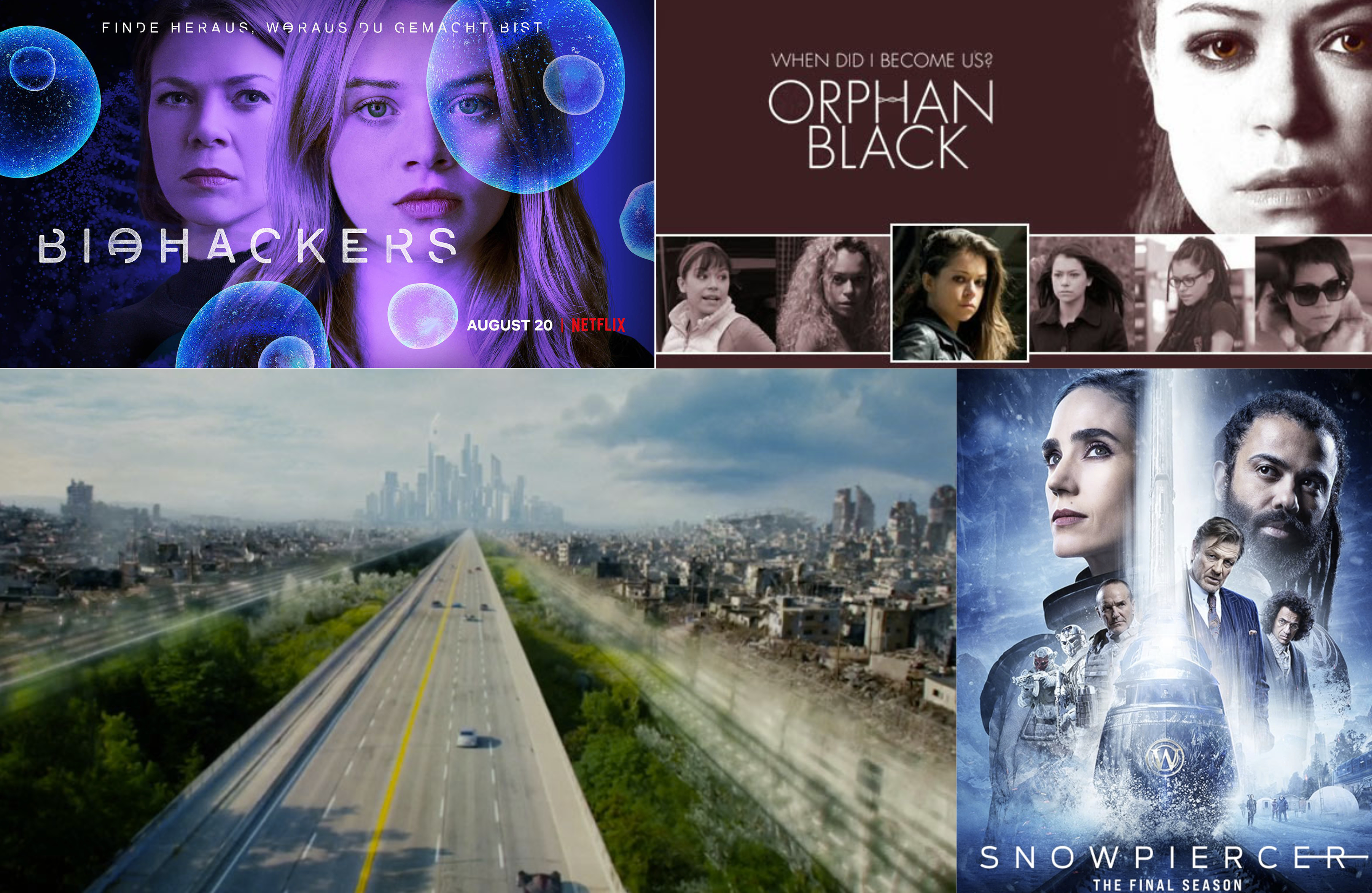
Biohackers (Germany)
Orphan Black (Canada)
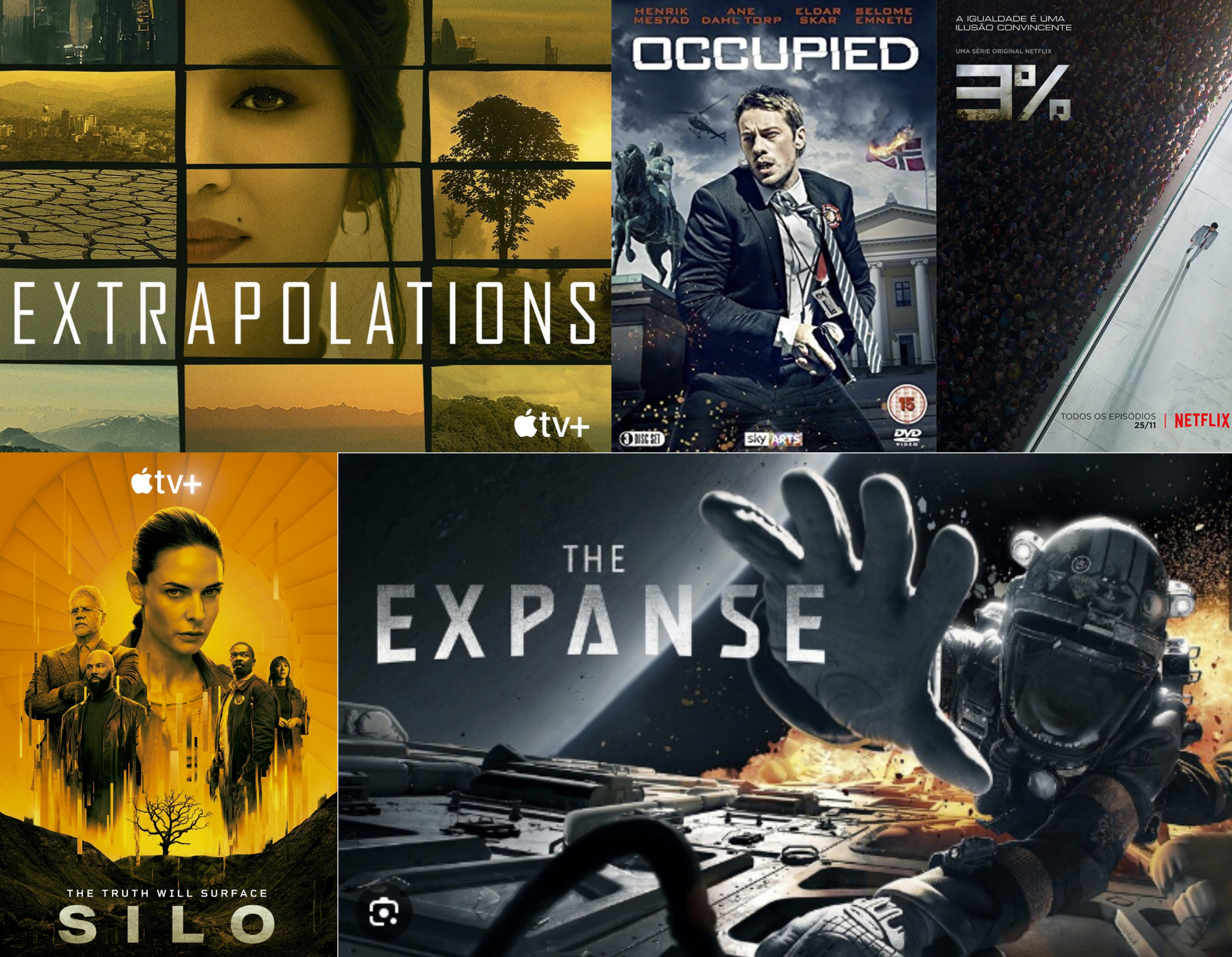
Occupied (Norway)
Missions (France)
Expanse (USA)
Incorporated (USA)
3% (Brazil)
Snowpiercer (USA)
Silo (USA)
Extrapolations (USA)

Nina Munteanu is a Canadian ecologist / limnologist and novelist. She is co-editor of Europa SF and currently teaches writing courses at George Brown College and the University of Toronto. Visit www.ninamunteanu.ca for the latest on her books. Nina’s bilingual “La natura dell’acqua / The Way of Water” was published by Mincione Edizioni in Rome. Her non-fiction book “Water Is…” by Pixl Press (Vancouver) was selected by Margaret Atwood in the New York Times ‘Year in Reading’ and was chosen as the 2017 Summer Read by Water Canada. Her novel “A Diary in the Age of Water” was released by Inanna Publications (Toronto) in June 2020.

Ten Significant Science Fiction TV Series—Part 2: Shows that Touch on Climate Change, Resource Allocation and Environmental Justice: #8—SNOWPIERCER

I’ve selected ten TV series that have intrigued me, moved me, and stayed with me for various reasons that touch on: abuse of justice, including eco-justice and environmental abuse; technology use and abuse; and the effects and horrors of climate change.

Some are well known; others not so well known. All approach storytelling with a serious dedication to depth of character, important themes, realistic world building, and excellent portrayal by actors. The world-building is extremely well done—in some cases rivalling Ridley Scott’s best—with convincing portrayals of worlds that are at times uncanny in their realism. Worlds that reflect story from an expansive landscape to the mundane minutiae of daily life: like the cracked phone device of Detective Miller in The Expanse or the dirty fingernails of engineer Juliette Nichols in the Down Deep of Silo. Stories vary in their treatment of important themes from whimsical and often humorous ironies to dark and moody treatises on existential questions. In my opinion, these TV series rival the best movies out there, often reflecting large budgets (but not always) and a huge commitment by producers. The ten TV series I’ve selected in this series come from around the world: Brazil, Germany, France, Norway, Canada and the United States.

In Part 2, I focus on five TV series that explore issues to do with resource allocation, adaptations to climate change and corporate / government biopolitics.  


SNOWPIERCER: Capitalism is a Perpetual Motion Train in a Frozen World

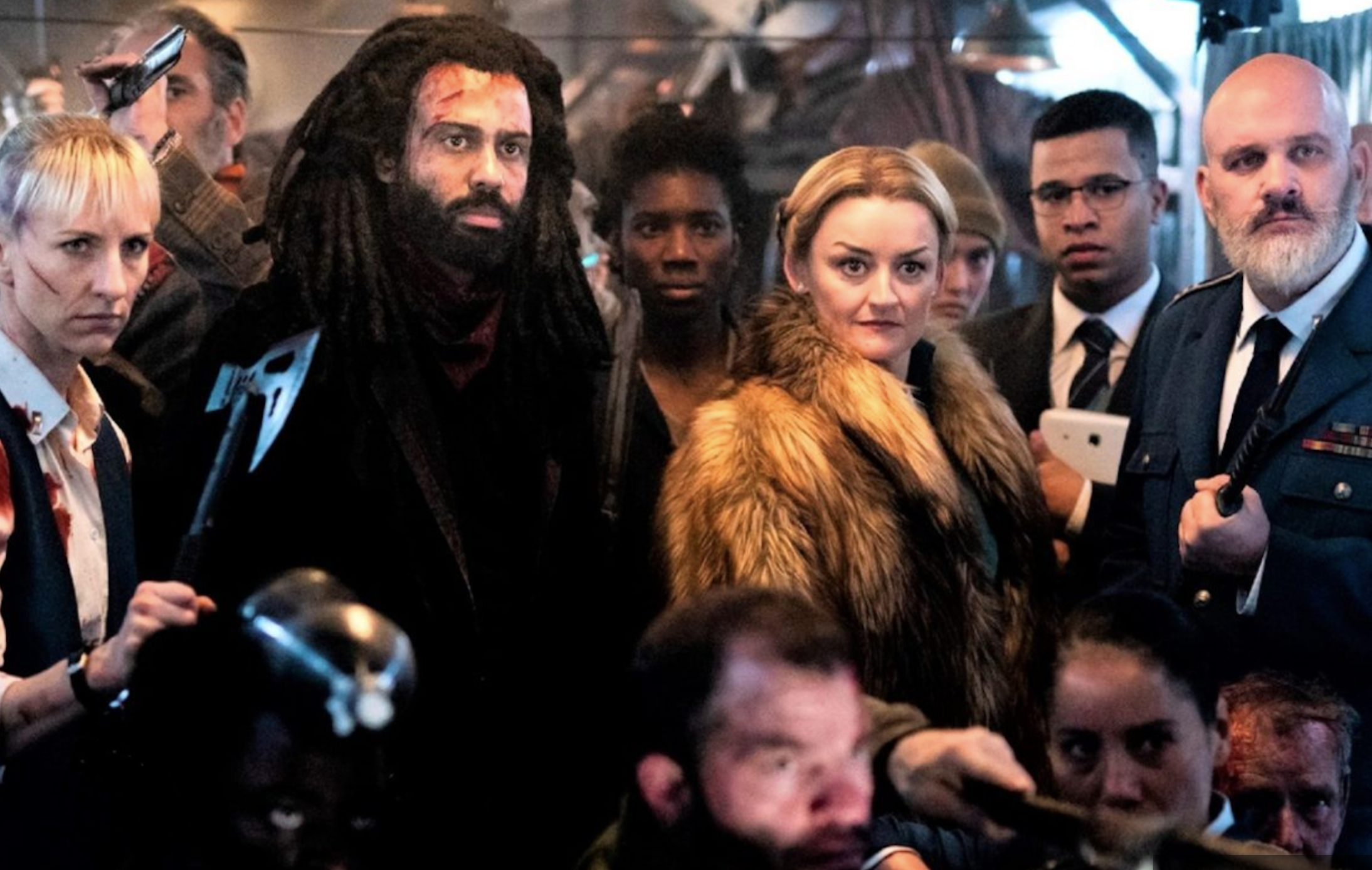
Snowpiercer is an American post-apocalyptic dystopian thriller that reboots the 2013 film Snowpiercer by Bong Jooh-ho. Snowpiercer is a perpetually moving train that circles the globe carrying the remnants of humanity seven years after the world has become a frozen wasteland, thanks to a botched climate fix. The train is divided up by class – first class, where all the wealthy people live; second and third class where the workers reside, and the tail – the end of the train, where the poor starve, live in total darkness, and are exploited for sex and labor. 

Passengers in the tail of the train

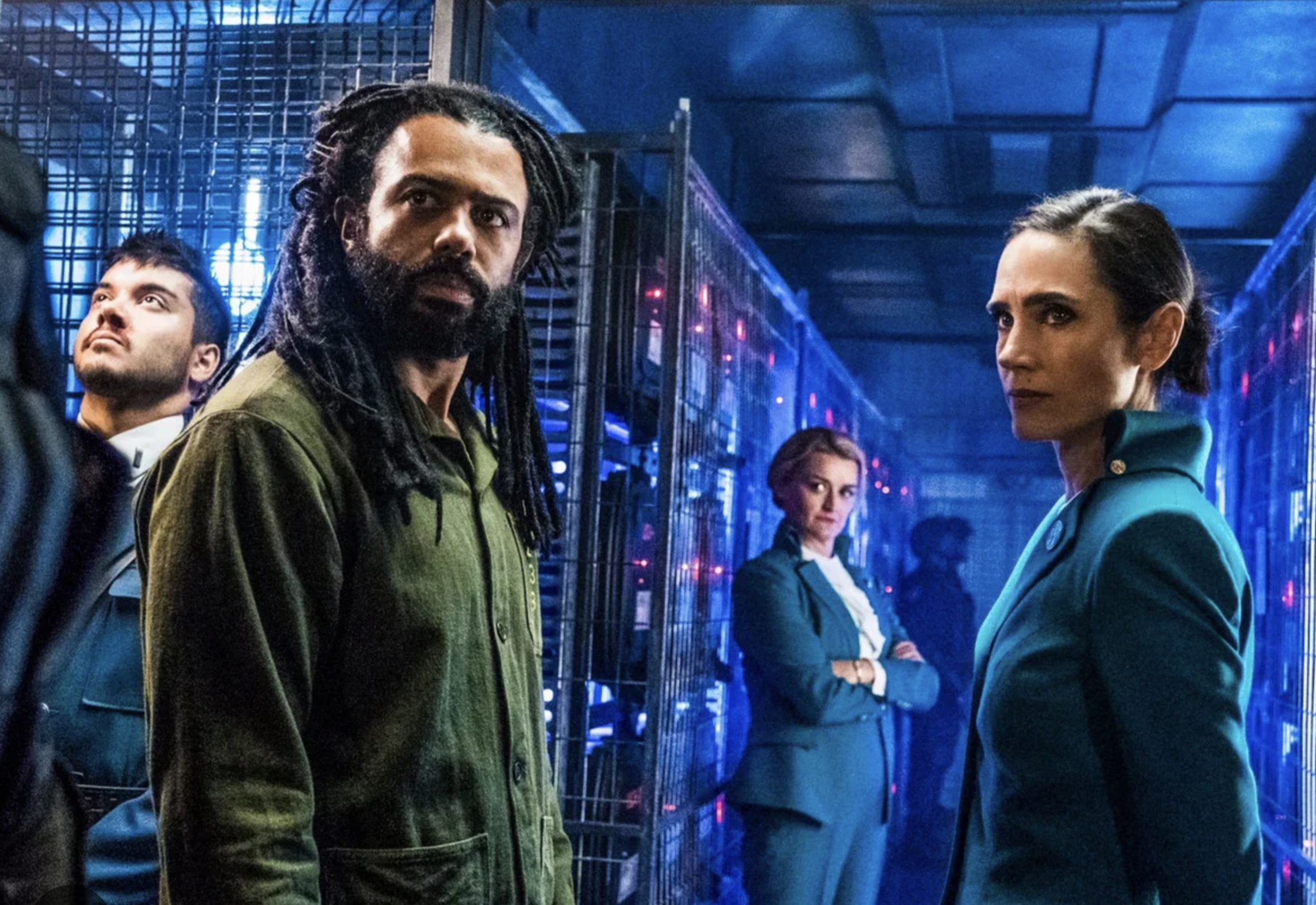
The train, of course, serves as a metaphor for class struggle, elitism and social injustices. The train’s self-contained closed ecosystem is maintained by an ordered social system, imposed by a stony militia. Those at the front enjoy privileges and luxurious living conditions, though most drown in a debauched drug stupor; those at the back live on next to nothing and must resort to savage means to survive. The TV show, as with the film, isn’t so much about climate change—as a study on how society functions—or rather copes—within a decadent capitalist system, based on an edict of productivity: serve the machine of “life” and keep the order at all cost. Chief of Hospitality Melanie Cavill (secretly chief engineer of the train) as much as tells this to homicide detective Andre Layton (from the back of the train) when she enlists him to solve the first murder in the elite section of the train.

Melanie Cavill, head of Hospitality, enlists Andre Layton as detective to investigate a murder on the train

The TV show diverges from the film in several important ways.

My original review of the movie touched on style and political agenda:

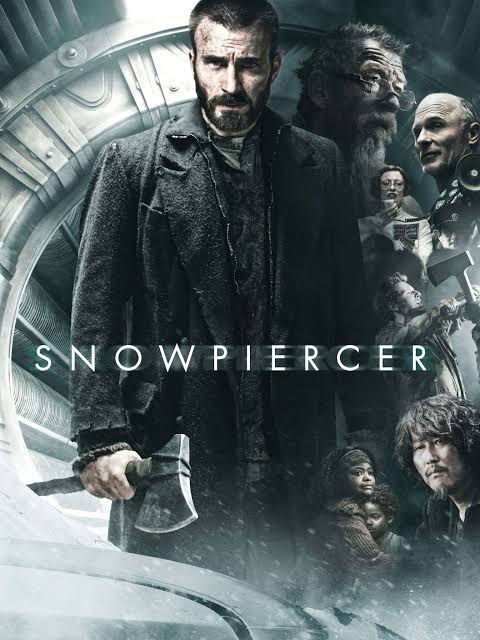
Bong Joon-Ho’s 2013 motion picture Snowpiercer is a stylish post-climate change apocalypse allegory. A dark pastiche of surrealistic insanity, welded together with moments of poetic pondering and steam-punk slick in a frenzied frisson you can almost smell. Joon-Ho casts each scene in metallic grays and blues that make the living already look half-dead. The entire film plays like a twisted steampunkish baroque symphony. Violence personified in a garish ballet.

Poster for the movie version of Snowpiercer

I drew on Aaron Bady’s commentary on the film in The New Inquiry which discussed reform capitalism* to conclude that the movie “Snowpiercer is about hard choices and transcendence. Save humanity but at the consequence of our souls? Or transcend the machine that has robbed us of our souls at the expense of our mortality? The film continually questions our definition of what life is and what makes life worth living … Ultimately, Bong Jung-Ho’s message with the ending of this baroque political allegory is the vindication of a choice against reform capitalism for something new, that there is indeed “Life after Capitalism”, not easy but worth living…”

The Snowpiercer TV series takes a different approach to the end of the world and capitalism metaphor, weaving in more intrigue in its plot (a murder) with elements of detecting by the only homicide detective left on the train and in the world—a self-styled revolutionary from the back of the train. Much of the entertaining tensions arise from the interactions of Detective Andre Layton (Daveed Diggs) and Hospitality head Melanie Cavill (Jennifer Connelly) and second in command Ruth Wardell (Alison Wright); there are also strong performances by the train’s Breakman, Bess Till (Mickey Sumner) and later Mr. Wilford (Sean Bean) who was supposedly running the train but had been secretly thrown off the train by head engineer Cavill.

Snowpiercer crew prepare to encounter another train in the freeze

The focus of the TV show has been more on the potential survival of a handful of what’s left of humanity with competing agendas on how this is best achieved, whether the freeze is indeed unfreezing and some part of the world has become hospitable or at least livable. Trading the film’s baroque metaphors to capitalism for a more literal approach to climate change and living in a post climate change world, the TV series focuses more on real questions facing this ragtag of humanity. How to keep it together when rifts naturally form based on unequal resource allocation and space in the limited ecosystem of the train. Given that the show plays out in several seasons, there is room to expand and further explore socialism, democracy, fascist rule and environmental activism. Class divisions are explored through a large cast of morally ambiguous characters, each with a plot arc, and more opportunities to explore not just first class but second and third class, showcasing more nuanced and varied elements to the class struggle and ambitions of people.  

*Reform Capitalism: “Reform and revolution are shibboleths that distinguish liberals from radicals,” explains Aaron Bady of The New Inquiry. “While liberals want to reform capitalism, without fundamentally transforming it, radicals want to tear it up from the roots (the root word of “radical” is root!) and replace capitalism with something that isn’t capitalism…If you’re the kind of leftist who thinks that the means of production just need to be in better hands—Obama, for example, instead of George W. Bush, or Elizabeth Warren instead of Obama, or Bernie Sanders instead of Elizabeth Warren, and so on—then this movie buries a poison pill inside its protein bar: soylent green is people.”  

Ten Significant Science Fiction TV Series:

Biohackers (Germany)
Orphan Black (Canada)
Occupied (Norway)
Missions (France)
Expanse (USA)
Incorporated (USA)
3% (Brazil)
Snowpiercer (USA)
Silo (USA)
Extrapolations (USA)

Nina Munteanu is a Canadian ecologist / limnologist and novelist. She is co-editor of Europa SF and currently teaches writing courses at George Brown College and the University of Toronto. Visit www.ninamunteanu.ca for the latest on her books. Nina’s bilingual “La natura dell’acqua / The Way of Water” was published by Mincione Edizioni in Rome. Her non-fiction book “Water Is…” by Pixl Press (Vancouver) was selected by Margaret Atwood in the New York Times ‘Year in Reading’ and was chosen as the 2017 Summer Read by Water Canada. Her novel “A Diary in the Age of Water” was released by Inanna Publications (Toronto) in June 2020.

Ten Significant Science Fiction TV Series—Part 2, Shows that Touch on Climate Change, Resource Allocation and Environmental Justice: #7 — 3%

I’ve selected ten TV series that have intrigued me, moved me, and stayed with me for various reasons that touch on: abuse of justice, including eco-justice and environmental abuse; technology use and abuse; and the effects and horrors of climate change.

Some are well known; others not so well known. All approach storytelling with a serious dedication to depth of character, important themes, realistic world building, and excellent portrayal by actors. The world-building is extremely well done—in some cases rivalling Ridley Scott’s best—with convincing portrayals of worlds that are at times uncanny in their realism. Worlds that reflect story from an expansive landscape to the mundane minutiae of daily life: like the cracked phone device of Detective Miller in The Expanse or the dirty fingernails of engineer Juliette Nichols in the Down Deep of Silo. Stories vary in their treatment of important themes from whimsical and often humorous ironies to dark and moody treatises on existential questions. In my opinion, these TV series rival the best movies out there, often reflecting large budgets (but not always) and a huge commitment by producers. The ten TV series I’ve selected in this series come from around the world: Brazil, Germany, France, Norway, Canada and the United States.

In Part 2, I focus on five TV series that explore issues to do with resource allocation, adaptations to climate change and corporate / government biopolitics.   

3%: Living with Scarcity and Uncertainty

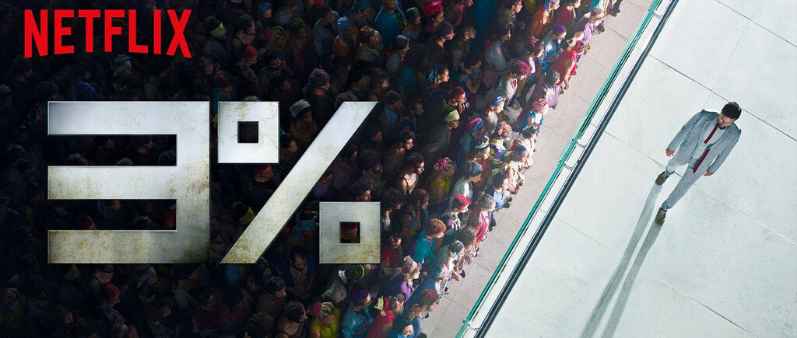
This Brazilian dystopian thriller was created by Pedro Aguilera and directed by Cesar Charlone. It is set in the near future after the planet has fallen into a divided haves and have-nots through some calamity. Three percent of the population live well on an island in the Atlantic Ocean, called Offshore (Mar Alto). The remaining 97% struggle Inland with poverty and scarcity. A selection process lies between them.

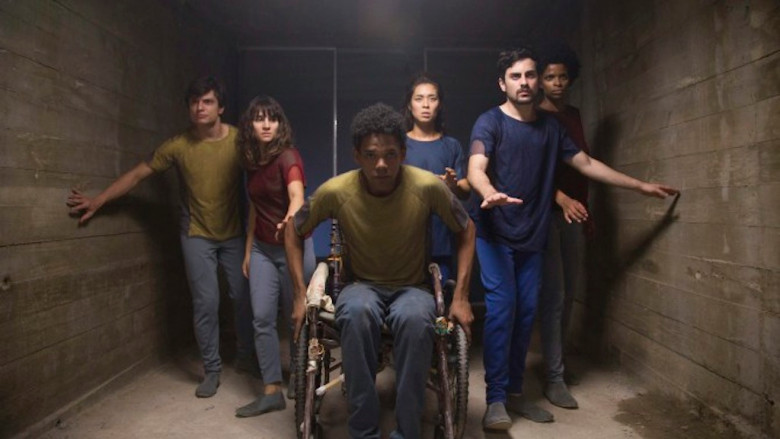
Every year the 97% send their 20-year olds to undergo The Process, a grueling Hunger Games-style contest run by the Offshore elite to replenish their numbers. Only 3% of the candidates will be considered worthy. They must pass psychological, emotional and physical tests to earn a place in Mar Alto. Candidates cheat in self-service; others violently impose Darwinian entitlement and survival of the fittest; yet others rely on reciprocal altruism.

Candidates undergo a test in The Process

By the time Season 1 is over, candidates will have committed a full range of desperate and unsavory acts to make the cut—the stakes are high, after all: secure a position in the 3% elite or die in squalor and poverty. After being eliminated during the interview process, one youth throws himself off the balcony of the testing centre.

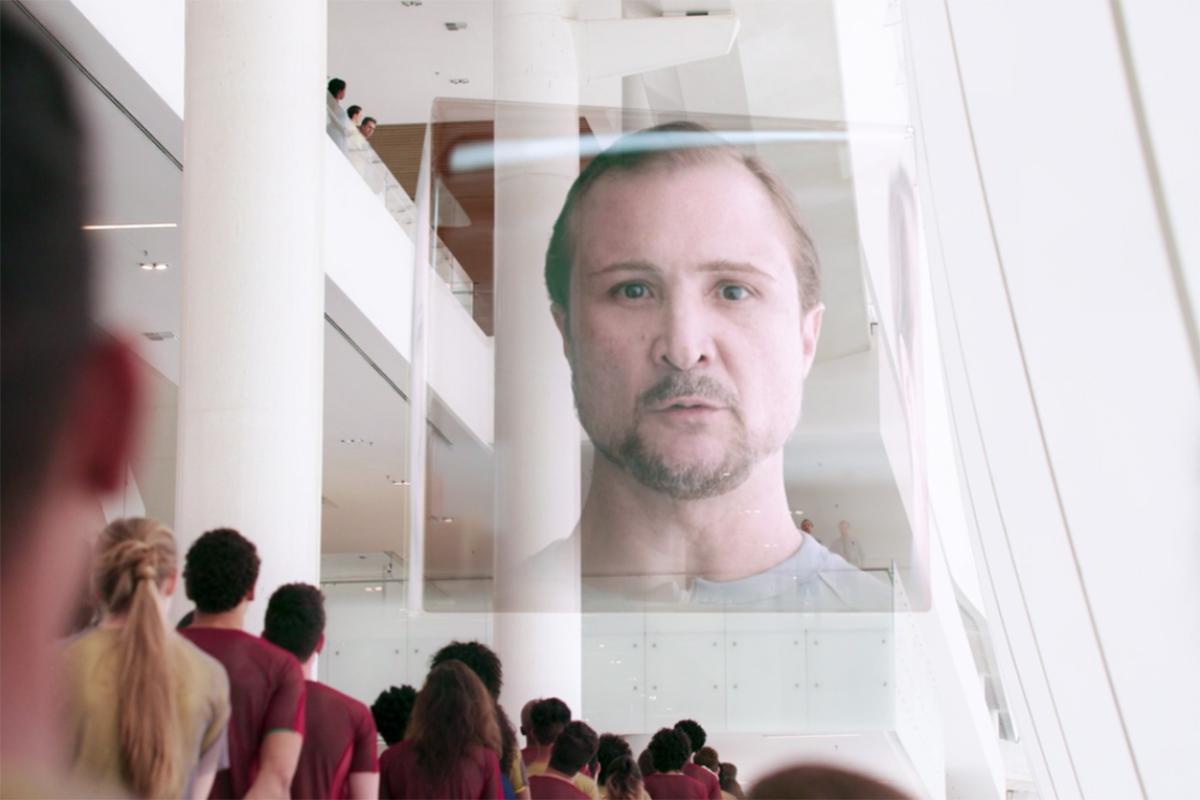
Inland is valued by the elite only for its reserve of youth to recruit Offshore’s strictly controlled population (you only find out how in the last show of Season 1). As for what personality and fitness The Process tests for is also uncertain. “You each create your own merit,” says Ezequiel, who runs The Process, to the candidates. “No matter what happens … you deserve this.” The corollary is that if they don’t have merit—value, as determined by Ezequiel’s Process—they don’t deserve to move Offshore. There is, of course, a resistance to The Process, called The Cause. They cause stirrings of unrest and may even be responsible for the first murder in Offshore in over 100 years—which puts Ezequiel’s Process under question. Ezequiel dismisses The Cause by suggesting that it operates “in the name of a false or hypocritical equality.”

Ezekuiel speaks to the candidates

There is no inherent equality or fair entitlement in a land of scarcity; there is only proof of merit to a limited resource. This meritocratic notion—and the need to prove one’s worth to be accepted—is so ingrained in society that not even the poor question it. It was American writer John Steinbeck who argued that socialism would never take off in America because the poor see themselves as “temporarily embarrassed capitalists.”

3% is a brutal commentary on the world’s rising income inequality and the lengths we’re all willing to go to improve our lot,” writes Matthew Gault of Motherboard. “It’s a world of extreme income inequality where techno-fascists rule with an iron fist.”

With each episode, 3% examines the motivations and paradoxes of heroism and villainy, sometimes turning them on their sides until they touch with such intimacy you can’t tell them apart. At its deepest, 3% explores the nature of humanity—from its most glorious to its most heinous—under the stress of scarcity and uncertainty. How we behave under these polarizing challenges ultimately determines who we are.

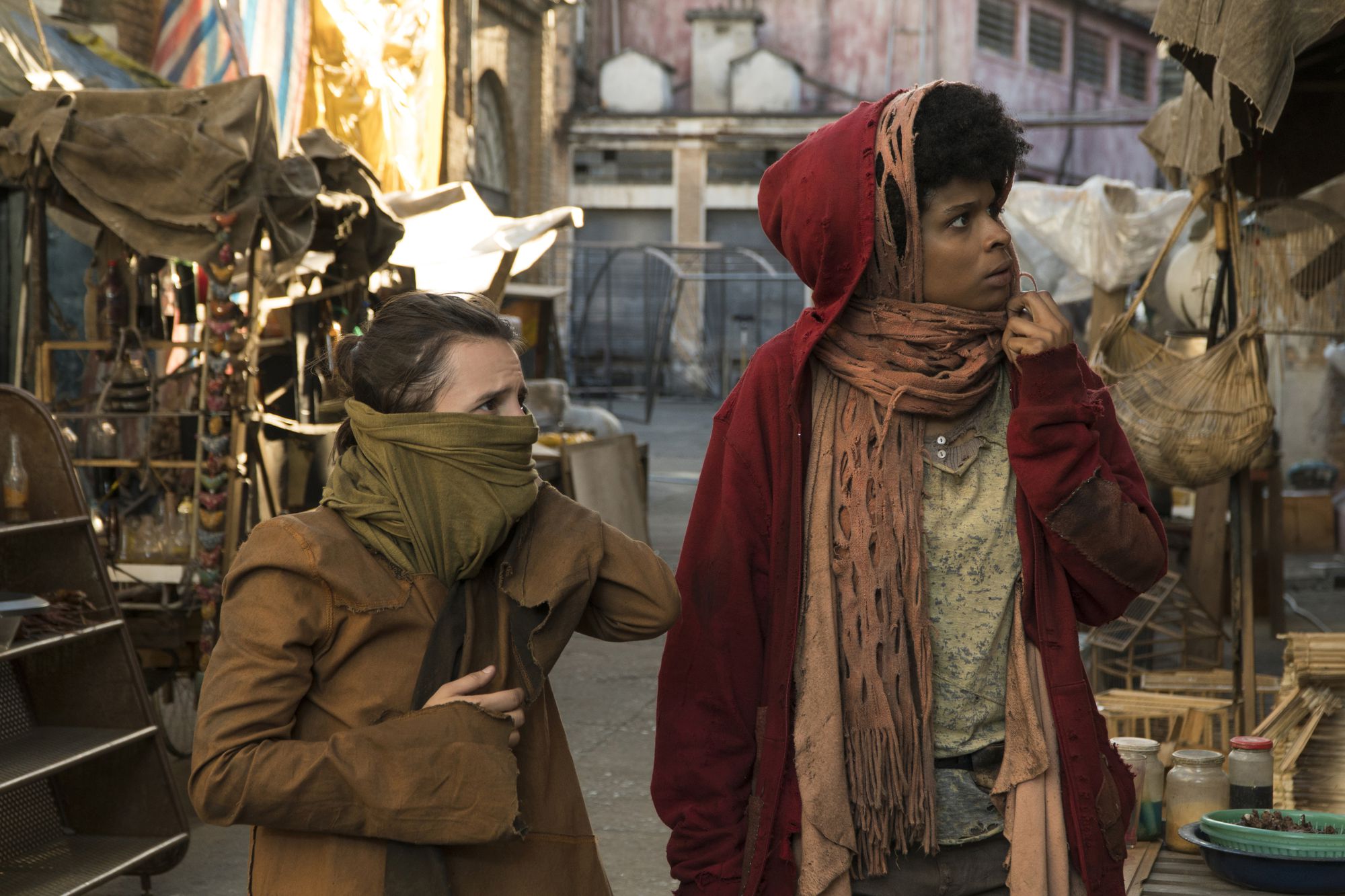
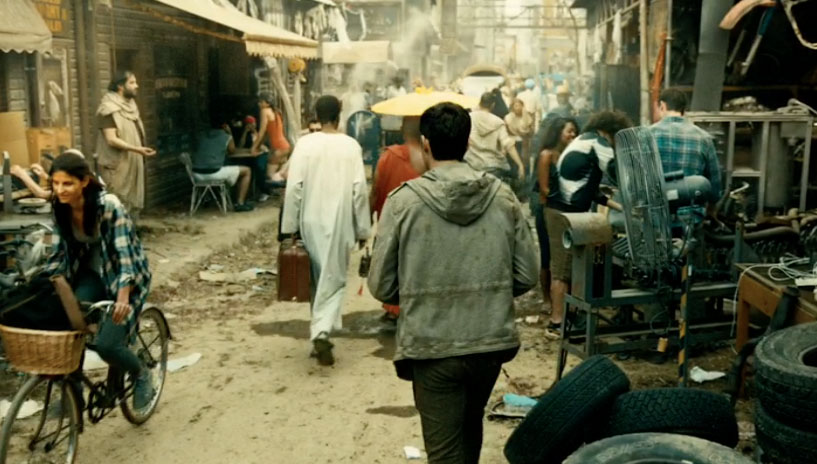
Two 3% candidates navigate the slums they are trying to escape with The Process

Ten Significant Science Fiction TV Series:

Biohackers (Germany)
Orphan Black (Canada)
Occupied (Norway)
Missions (France)
Expanse (USA)
Incorporated (USA)
3% (Brazil)
Snowpiercer (USA)
Silo (USA)
Extrapolations (USA)

Nina Munteanu is a Canadian ecologist / limnologist and novelist. She is co-editor of Europa SF and currently teaches writing courses at George Brown College and the University of Toronto. Visit www.ninamunteanu.ca for the latest on her books. Nina’s bilingual “La natura dell’acqua / The Way of Water” was published by Mincione Edizioni in Rome. Her non-fiction book “Water Is…” by Pixl Press (Vancouver) was selected by Margaret Atwood in the New York Times ‘Year in Reading’ and was chosen as the 2017 Summer Read by Water Canada. Her novel “A Diary in the Age of Water” was released by Inanna Publications (Toronto) in June 2020.

Ten Significant Science Fiction TV Series—Part 2, Five Shows that Touch on Climate Change, Resource Allocation and Environmental Justice: #6 — INCORPORATED

I’ve selected ten TV series that have intrigued me, moved me, and stayed with me for various reasons that touch on: abuse of justice, including eco-justice and environmental abuse; technology use and abuse; and the effects and horrors of climate change.

Some are well known; others not so well known. All approach storytelling with a serious dedication to depth of character, important themes, realistic world building, and excellent portrayal by actors. The world-building is extremely well done—in some cases rivalling Ridley Scott’s best—with convincing portrayals of worlds that are at times uncanny in their realism. Worlds that reflect story from an expansive landscape to the mundane minutiae of daily life: like the cracked phone device of Detective Miller in The Expanse or the dirty fingernails of engineer Juliette Nichols in the Down Deep of Silo. Stories vary in their treatment of important themes from whimsical and often humorous ironies to dark and moody treatises on existential questions. In my opinion, these TV series rival the best movies out there, often reflecting large budgets (but not always) and a huge commitment by producers. The ten TV series I’ve selected in this series come from around the world: Brazil, Germany, France, Norway, Canada and the United States.

In Part 2, I focus on five TV series that explore issues to do with resource allocation, adaptations to climate change and corporate / government biopolitics.

INCORPORATED: A Post-Climate-Change Corporate Scrabble for Resource & Power

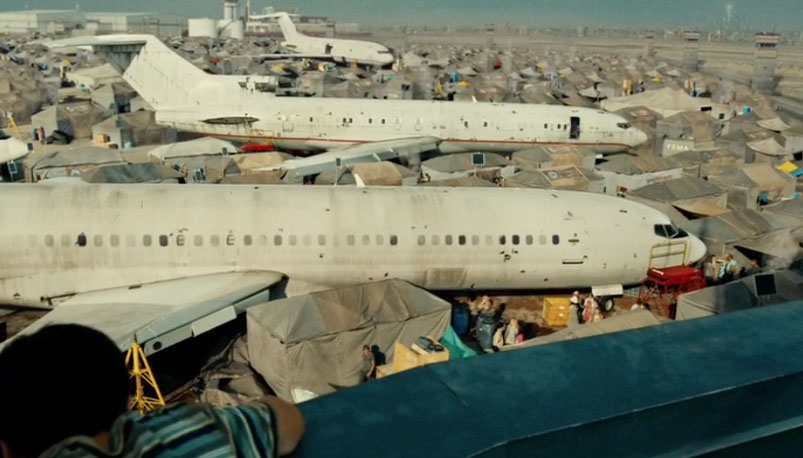
This American science fiction thriller offers a chilling glimpse of a post-climate change dystopia. Created by David and Alex Pastor and produced by Ben Affleck, Matt Damon, Ted Humphrey and Jennifer Todd, the show (filmed in Toronto, Canada) opens in 82 °F Milwaukee in November 2074 after environmental degradation, widespread famine and mismanagement have bankrupted governments. We learn later that Milwaukee Airport served as a FEMA climate relocation centre that resembles an impoverished shantytown. In the wake of the governments demise, a tide of multinational corporations has swept in to control 90% of the globe and ratified the 29th amendment, granting them total sovereignty.

Spiga CEO talks to her employees

Corporations fight a brutal covert war for market share and dwindling natural resources. Like turkey vultures circling overhead, they position themselves for what’s left after short-sighted government regulations, lack of corporate check and FEMA mismanagement have ‘had their way’ with the planet. The world is now a very different place. There is no Spain or France. Everything south of the Loire is toxic desert; New York City reduced to a punch line in a joke. Reykjavik and Anchorage are sandy beach destinations and Norway is the new France—at least where champagne vineyards are concerned. Asia and Canada are coveted for their less harsh climates.

Corporates live in a world isolated from the real world of poverty

Those who work for the corporations live in privilege behind the sentried walls of the Green Zones. The rest fend for themselves with scarcity in the contaminated slums of the Red Zones.

Incorporated is an ‘Alice in Wonderland’ mixture of realizable technological advances, gadgetry and thrilling—if not chilling—consequence: like self-driving cars, intelligent writsbands, surrogate pregnancies and remote deliveries, genetic testing of ‘inferiors’, DNA theft, and malware sabotage.

Like a Seurat painting, the subtle details of the show change with perspective and build into a subliminal realism you can’t shake: from the food porn in the opening scene to eating rats in climate relocation camps or drinking dirty Red Zone water that costs $5. In Cost Containment we learn that Spiga competitor Inazagi is developing salt-tolerant crops that, like the mangroves, will thrive on irrigated seawater in the deserts left by an exploitive short-sighted America: Iowa, Missouri, Kansas—all the dust storm states. In a later episode, a murdered corporate executive is found by two dowsers on the dried lakebed of Missouri’s Lake Lotawana. We hear about the “oil wars” in Capetown.

A Spiga employee caught with malwear

The first episode (Vertical Mobility) opens to a corporate ‘traitor’ being dragged into “the quiet room”, rumoured to be a torture chamber run by taciturn head of security Julian Morse (Dennis Haysbert). The scene shifts to the Green zone suburban house of corporate climber Ben Larson (Sean Teale). As he prepares to go to work, the news streams of hurricanes breaching levies; Canada building a wall to stem the tide of illegal American climate refugees–12 million already there; offshore oil rigs in the waters of the former Arctic ice cap; and finally to the “terrorist” bombing of the R&D lab of biochemical giant Spiga, where Ben works. Spiga, we later learn, plays the same games as Monsanto and Nestle to ensure profits at the expense of well-being.

FEMA camps for climate refugees sprout everywhere

Aaron Pruner of Screener TV asks, “Could climate change push us into a collapsed society, informed consistently by the ongoing threat of class warfare? Will we eventually be separated by electric fences and really big walls [like Incorporated]? Are fear and greed going to be the currencies of our reality? These burning questions should sound far-fetched and silly, but as we watch tale of Incorporated unfold, it’s hard not to wonder what our own future will bring.” Far-fetched and silly? Is it any more far-fetched and silly than voting in a president who claims that the Chinese invented climate change to make American manufacturing non-competitive?

Climate refugee camp

Nina Munteanu is a Canadian ecologist / limnologist and novelist. She is co-editor of Europa SF and currently teaches writing courses at George Brown College and the University of Toronto. Visit www.ninamunteanu.ca for the latest on her books. Nina’s bilingual “La natura dell’acqua / The Way of Water” was published by Mincione Edizioni in Rome. Her non-fiction book “Water Is…” by Pixl Press (Vancouver) was selected by Margaret Atwood in the New York Times ‘Year in Reading’ and was chosen as the 2017 Summer Read by Water Canada. Her novel “A Diary in the Age of Water” was released by Inanna Publications (Toronto) in June 2020.

.

Significant Science Fiction TV Series—Part 1, Shows that Touch on Justice and Science & Technology: #5 — THE EXPANSE

I’ve selected ten TV series that have intrigued me, moved me, and stayed with me for various reasons that touch on: abuse of justice, including eco-justice and environmental abuse; technology use and abuse; and the effects and horrors of climate change.

Some are well known; others not so well known. All approach storytelling with a serious dedication to depth of character, important themes, realistic world building, and excellent portrayal by actors. The world-building is extremely well done—in some cases rivalling Ridley Scott’s best—with convincing portrayals of worlds that are at times uncanny in their realism. Worlds that reflect story from an expansive landscape to the mundane minutiae of daily life: like the cracked phone device of Detective Miller in The Expanse or the dirty fingernails of engineer Juliette Nichols in the Down Deep of Silo. Stories vary in their treatment of important themes from whimsical and often humorous ironies to dark and moody treatises on existential questions. In my opinion, these TV series rival the best movies out there, often reflecting large budgets (but not always) and a huge commitment by producers. The ten TV series I’ve selected here come from around the world: Brazil, Germany, France, Norway, Canada and the United States.

In Part 1, I look at five TV series that touch on ethical issues we are facing today; issues that reach far into existential questions of what it means to be human. These TV series explore synthetic biology, cloning and gene editing, and justice in space colonization and exploitation.

THE EXPANSE: Colonialism in Space

This stylish and intelligent science fiction TV series is set 200 years in the future when humanity has colonized the moon, Mars and the Asteroid Belt to mine minerals and water. Humanity has split three ways culturally, ethnically and even biologically: Earth is currently run by the United Nations; Mars is an independent state, devoted to terraforming with high technology; and the Belt contains a diverse mix of mining colonies, settlers, workers and entrepreneurs. Belters’ physiology differ from their Earth or Mars cousins, given their existence in low gravity.

Ceres mining colony

The series, based on novels by James S.A Corey (aka Daniel Abraham and Ty Franck) follows three main characters: U.N. Deputy Undersecretary Chrisjen Avasaraia (Shohreh Aghdashloo) on Earth; police detective Josephus Miller (Thomas Jane) a native of Ceres (in the Belt); and ship’s officer Jim Holden (Steven Strait) and his crew as each unravels a piece of a conspiracy that threatens peace in the solar system and the survival of humanity. The only person who may stand a chance of figuring out the big picture is Chrisjen Avasarala, a brilliant 23rd-century Machiavelli. She will stop at nothing in her search for the truth, including gravity torturing a Belter or playing her friends and contacts like chess pieces to find answers. Chrisjen is a complex and paradoxical character. Her passionate search for the truth together with unscrupulous methods, make her one of the most interesting characters in the growing intrigue of The ExpanseThe Expanse further dignifies itself with subtle nuances of multi-layered social commentary—sewn into virtually every interaction.

Chrisjen Avasaraia (Shohreh Aghdashloo) attends a conference with Mars delegates on Earth

The subtle details and rich set-pieces of The Expanse universe rival the best world building of Ridley Scott. I was reminded of the grit and immediacy of BladerunnerThe Expanse is SF without feeling like SF; it just feels real. Powerful storytelling—from judicious use of slow motion, odd shot angles, haunting music and background sounds, to superlative acting—draws you into a complete and realizable world. This even translates into the speech used by the various groups; with belters having their own Creol speech.

Detective Miller meets with terrorist leader Anderson Dawes on Ceres

The Expanse is a sophisticated SF film noir thriller that elevates the space opera sub-genre with a meaningful metaphoric exploration of issues relevant in today’s world—issues of resource allocation, domination & power struggle, values, prejudice, and racism. I found the music by Clinton Shorter particularly appropriate: subtle, edgy, haunting, and deeply engaging. Like the story, characters and world. Amidst the unfolding intrigue of war, corruption and secrecy, a rich tapestry of characters take shape: from an agoraphobic detective born on Ceres to an Earther ship’s captain looking only for an escape from his home.

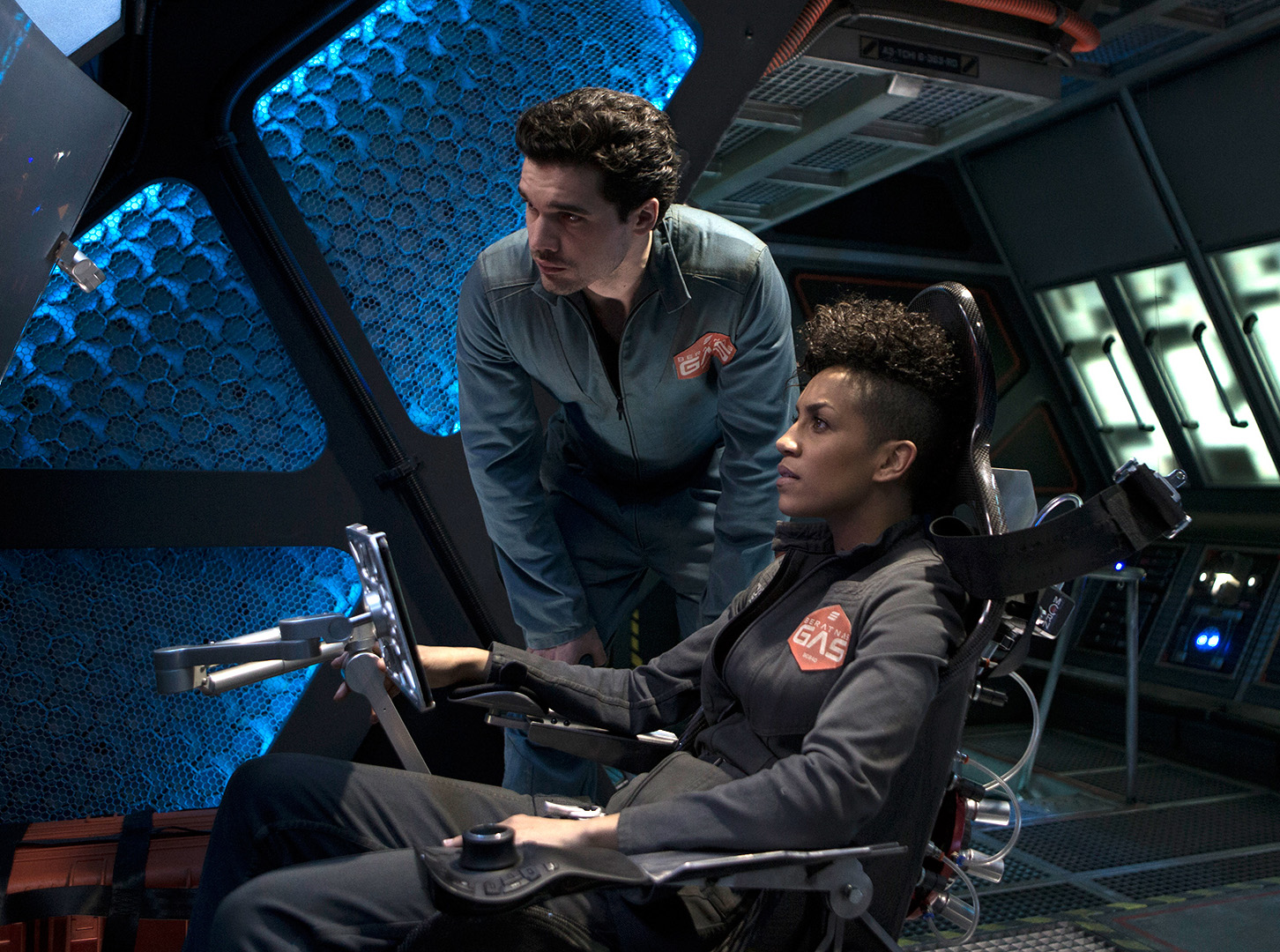
James Holden and Naome Nagata aboard their ship

Onboard the MCRN Donnager, Martian Lopez asks his prisoner Holden if he misses Earth and Holden grumbles, “If I did, I’d go back.” Lopez then dreamily relates stories his uncle told him about the “endless blue sky and free air everywhere. Open water all the way to the horizon.” Then he turns a cynical eye back on Holden. “I could never understand your people. Why, when the universe has bestowed so much upon you, you seem to care so little for it.” Holden admits, “Wrecking things is what Earthers do best…” Then he churlishly adds, “Martians too, by the look of your ship.” Lopez retorts, “We are nothing like you. The only thing Earthers care about is government handouts. Free food, free water. Free drugs to forget the aimless lives you lead. You’re shortsighted. Selfish. It will destroy you. Earth is over, Mr. Holden. My only hope is that we can bring Mars to life before you destroy that too.”

Julie Mao trapped in a holding cell of a pirate ship

The message is clear. Cherish what you have. Cherish your home and take care of it. We’re reminded time and again that we aren’t doing a good job of it. As the seasons progress and the rift grows between those who hold power and those who don’t, issues of sovereignty arise that spark inevitable violence and war.

Ten Significant Science Fiction TV Series:

Biohackers (Germany)
Orphan Black (Canada)
Occupied (Norway)
Missions (France)
Expanse (USA)
Incorporated (USA)
3% (Brazil)
Snowpiercer (USA)
Silo (USA)
Extrapolations (USA)

Nina Munteanu is a Canadian ecologist / limnologist and novelist. She is co-editor of Europa SF and currently teaches writing courses at George Brown College and the University of Toronto. Visit www.ninamunteanu.ca for the latest on her books. Nina’s bilingual “La natura dell’acqua / The Way of Water” was published by Mincione Edizioni in Rome. Her non-fiction book “Water Is…” by Pixl Press (Vancouver) was selected by Margaret Atwood in the New York Times ‘Year in Reading’ and was chosen as the 2017 Summer Read by Water Canada. Her novel “A Diary in the Age of Water” was released by Inanna Publications (Toronto) in June 2020.

Significant Science Fiction TV Series—Part 1, Shows that Touch on Justice and Science & Technology: #4 — MISSIONS

I’ve selected ten TV series that have intrigued me, moved me, and stayed with me for various reasons that touch on: abuse of justice, including eco-justice and environmental abuse; technology use and abuse; and the effects and horrors of climate change.

Some are well known; others not so well known. All approach storytelling with a serious dedication to depth of character, important themes, realistic world building, and excellent portrayal by actors. The world-building is extremely well done—in some cases rivalling Ridley Scott’s best—with convincing portrayals of worlds that are at times uncanny in their realism. Worlds that reflect story from an expansive landscape to the mundane minutiae of daily life: like the cracked phone device of Detective Miller in The Expanse or the dirty fingernails of engineer Juliette Nichols in the Down Deep of Silo. Stories vary in their treatment of important themes from whimsical and often humorous ironies to dark and moody treatises on existential questions. In my opinion, these TV series rival the best movies out there, often reflecting large budgets (but not always) and a huge commitment by producers. The ten TV series I’ve selected here come from around the world: Brazil, Germany, France, Norway, Canada and the United States.

In Part 1, I look at five TV series that touch on ethical issues we are facing today; issues that reach far into existential questions of what it means to be human. These TV series explore synthetic biology, cloning and gene editing, and justice in space colonization and exploitation.

MISSIONS: A Corporate Race to Colonize Mars Unravels Existential Questions

Created by Henri Debeurme, Julien LaCombe and Ami Cohen, this French TV series on the exploration of Mars explores human evolution, ancient history, trans-humanism, artificial intelligence, and environmental issues in a thrilling package of intrigue, adventure and discovery. From the vivid realism of the Mars topography to the intricate, realistic and well-played characters and evocative music by Étienne Forget, Missions builds a multi-layered mystery with depth that thrills with adventure and complex questions and makes you think long after the show is finished.

Cosmonauts Yuri Gagarin and Vladimir Komorov before the tragic crash

The first episode of Season One starts with a real tragedy: the first human to die in space flight; the 1967 fatal crash landing of the Russian Soyus 1 piloted by Cosmonaut Vladimir Komorov. In the opening scene of Missions, we never see the actual crash landing; instead, as Komarov hurtles to the ground, he suddenly sees a strange white light and then we cut to the present day. Now in an alternate present day, the international crew of the space ship Ulysses is readying for its journey to Mars. Days before the Ulysses mission takes off from Earth, psychologist Jeanne Renoir is asked to replace the previous psychologist who died suddenly in a freak accident. Soon after they land on Mars, the crew finds none other than Cosmonaut Komorov lying unconscious on the Martian surface, looking as he did in 1967.

Jeanne reaches for a small pyramid left on the alien stand

So begins this surrealistic mystery that transcends history, identity and our concepts of reality with tantalizing notions of Atlantis, the mythical metal Orichalcum, programmable DNA-metal, and much more. The first season of Missions focuses on cynical Jeanne Renoir as she unravels the mystery of Mars; a mystery that ties her inextricably to Komarov. When she first interviews the Martian Komarov, he surprises her by using her late father’s call to adventure: “Mars delivers!” We then find that Komarov is her father’s hero for his selfless action to save his friend, and her father considered him “the bravest man of this time.” Jeanne is intrigued. Who—what—is this man they’ve rescued? Surely not the dead cosmonaut resurrected from 1967?

Throughout the series, choices and actions by each crew member weave narrative threads that lead to its overarching theme of self-discovery and the greater question of humanity’s existence.

From the beginning, we glimpse a surreal connection between Jeanne and Komarov and ultimately between Earth and Mars: from her childhood admiration for the Russian’s heroism on Earth to the “visions” they currently share that link key elements of her past to Mars and Komarov’s strange energy-giving powers, to Jeanne’s own final act of heroism on Mars. “You’re the reason I’m here,” he confesses to her in one of their encounters. “You have an important decision to make; one you’ve made in the past…”

Jeanne leaves the spaceship in search of answers on Mars

As the storyline develops, linking Earth and Mars in startling ways, and as various agendas—personal missions—are revealed, we finally clue in on the main question that Missions is asking: are we worth saving?

In a flashback scene of her interaction with Komarov, Jeanne recalls Komarov telling her that, “people dream of other places, while they can’t even look after their own planet… You must remember your past in order to think about your future. Do you think Earth has a future?” When she responds that she doesn’t know, he challenges with “Yes, you do…You know the answer and it terrifies you.”

Ten Significant Science Fiction TV Series:

Biohackers (Germany)
Orphan Black (Canada)
Occupied (Norway)
Missions (France)
Expanse (USA)
Incorporated (USA)
3% (Brazil)
Snowpiercer (USA)
Silo (USA)
Extrapolations (USA)

Nina Munteanu is a Canadian ecologist / limnologist and novelist. She is co-editor of Europa SF and currently teaches writing courses at George Brown College and the University of Toronto. Visit  www.ninamunteanu.ca for the latest on her books. Nina’s bilingual “La natura dell’acqua / The Way of Water” was published by Mincione Edizioni in Rome. Her non-fiction book “Water Is…” by Pixl Press (Vancouver) was selected by Margaret Atwood in the New York Times ‘Year in Reading’ and was chosen as the 2017 Summer Read by Water Canada. Her novel “A Diary in the Age of Water” was released by Inanna Publications (Toronto) in June 2020.

Significant Science Fiction TV Series—Part 1, Shows that Touch on Justice and Science & Technology: #3 — OCCUPIED

I’ve selected ten TV series that have intrigued me, moved me, and stayed with me for various reasons that touch on: abuse of justice, including eco-justice and environmental abuse; technology use and abuse; and the effects and horrors of climate change.

Some are well known; others not so well known. All approach storytelling with a serious dedication to depth of character, important themes, realistic world building, and excellent portrayal by actors. The world-building is extremely well done—in some cases rivalling Ridley Scott’s best—with convincing portrayals of worlds that are at times uncanny in their realism. Worlds that reflect story from an expansive landscape to the mundane minutiae of daily life: like the cracked phone device of Detective Miller in The Expanse or the dirty fingernails of engineer Juliette Nichols in the Down Deep of Silo. Stories vary in their treatment of important themes from whimsical and often humorous ironies to dark and moody treatises on existential questions. In my opinion, these TV series rival the best movies out there, often reflecting large budgets (but not always) and a huge commitment by producers. The ten TV series I’ve selected here come from around the world: Brazil, Germany, France, Norway, Canada and the United States.

In Part 1, I look at five TV series that touch on ethical issues we are facing today; issues that reach far into existential questions of what it means to be human. These TV series explore synthetic biology, cloning and gene editing, and justice in space colonization and exploitation.

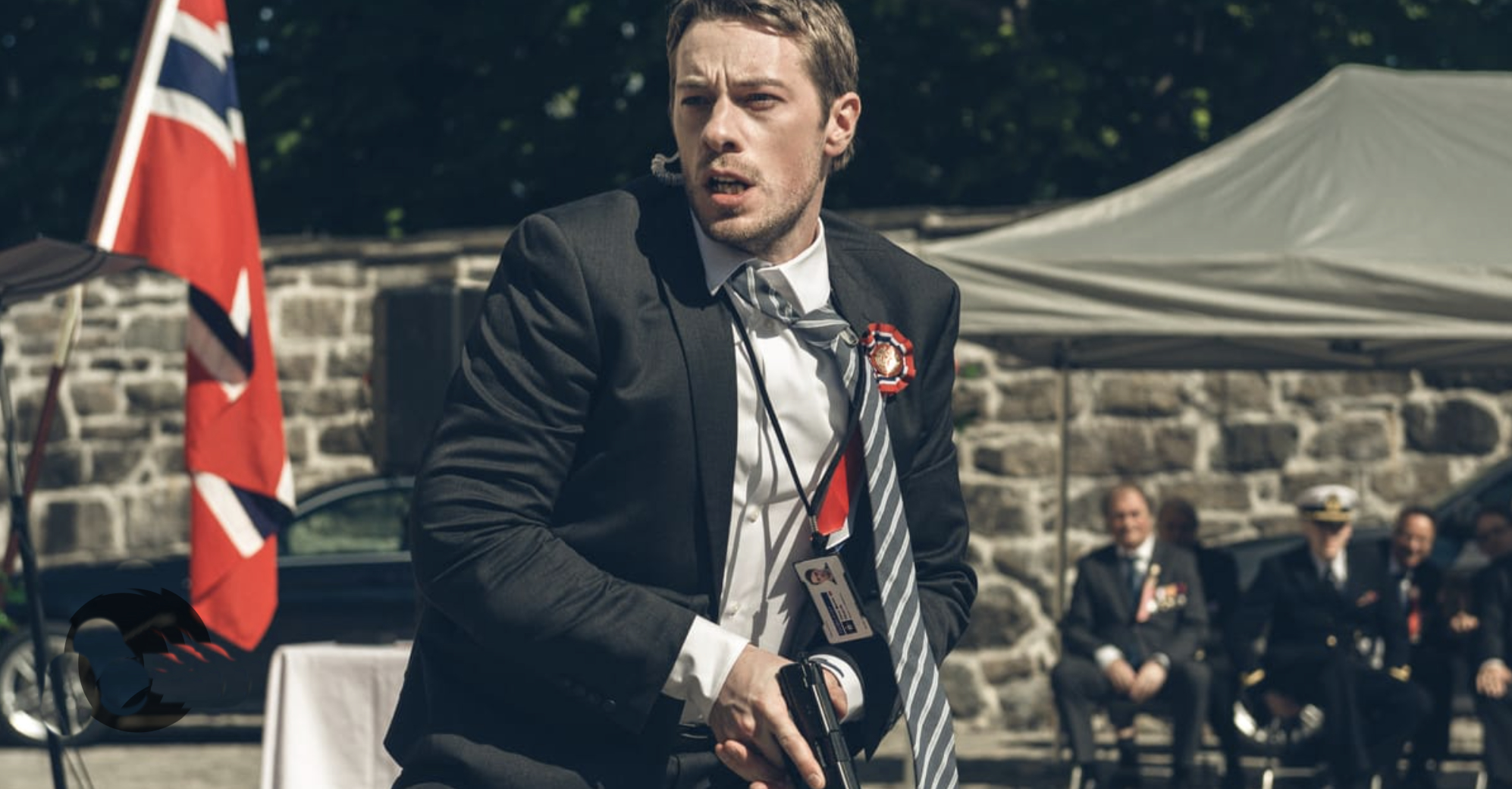
Prime Ministerial bodyguard Hans Martin Djupbik (Eldar Skar) chases a would-be assassin

OCCUPIED: A Real and Present Threat

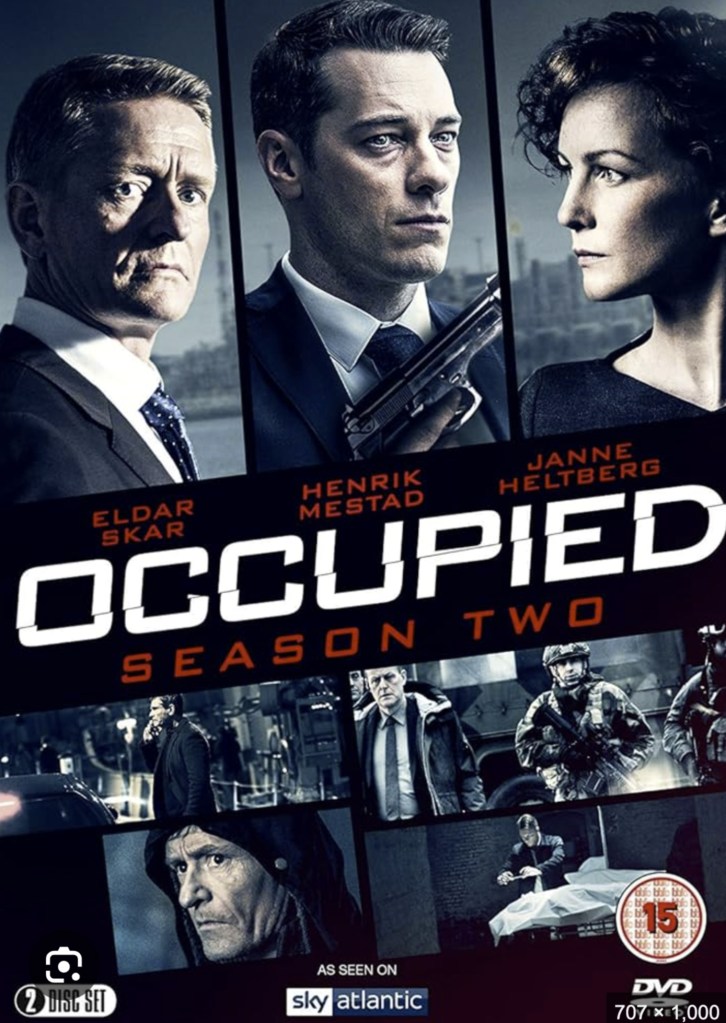
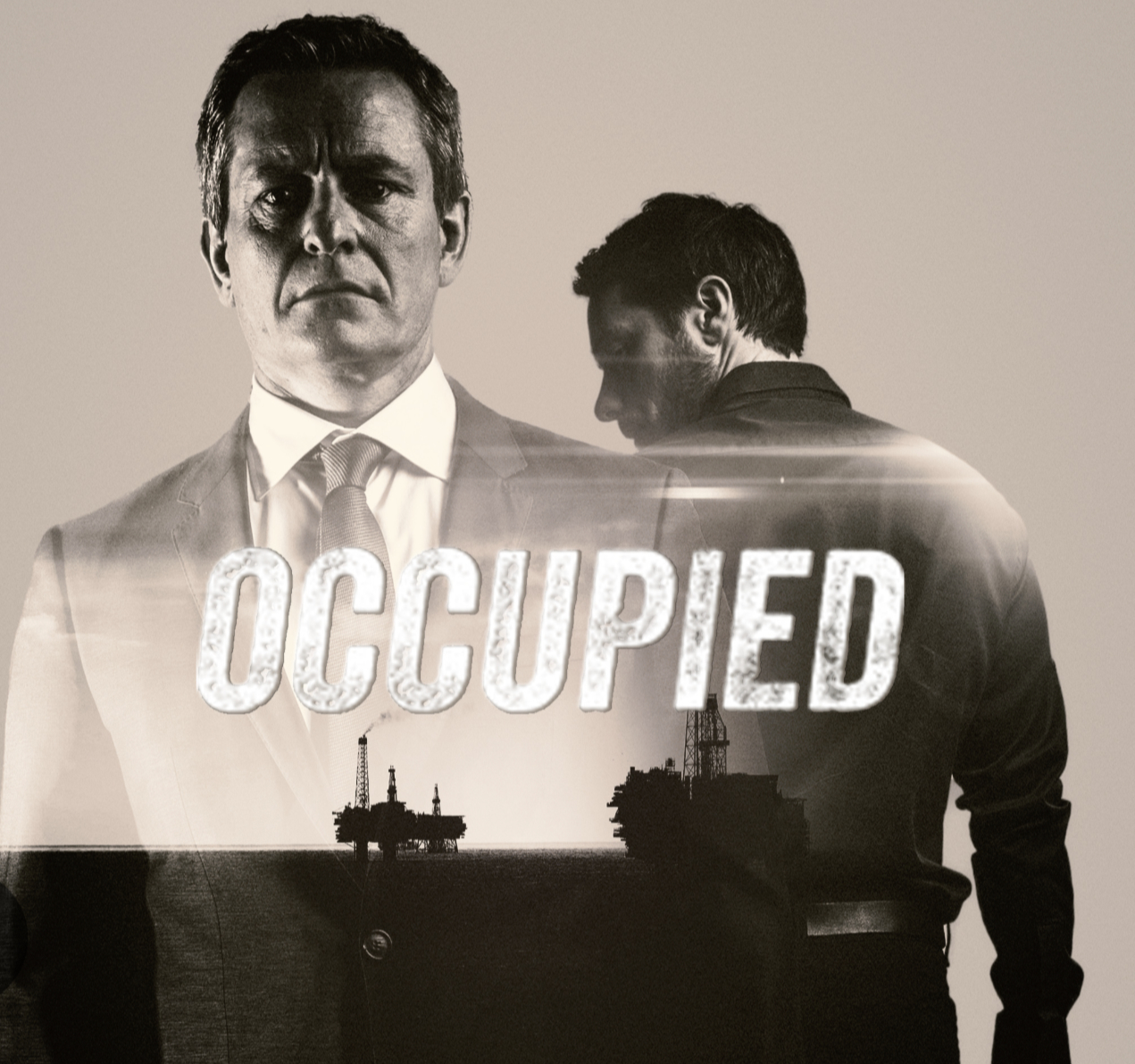
In 2016, Occupied (Okkupert), Norway’s most expensive television production to date captivated viewers across Europe. A political thriller about a Green prime minister, committed to renewable energy, overthrown by close neighbour Russia to control his country’s abundant natural gas and oil reserves gripped many viewers, left on the edge of their seats when episode 10 failed to resolve the deadlock. In a review entitled “Bear Lurking in the Fjords” Mark Melton of Providence noted that the first episode of Occupied broke the channel’s rating records as more than 50% of viewers aged 20 to 49 watched, and the show went on to Netflix with English subtitles.

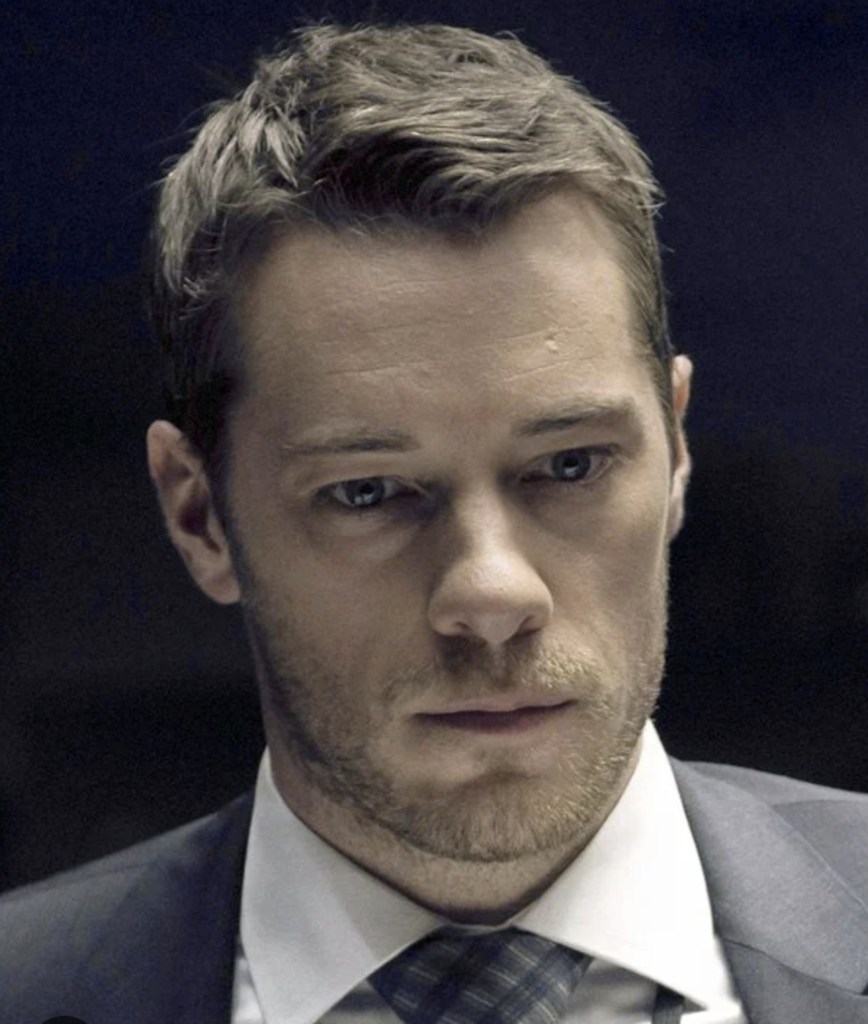
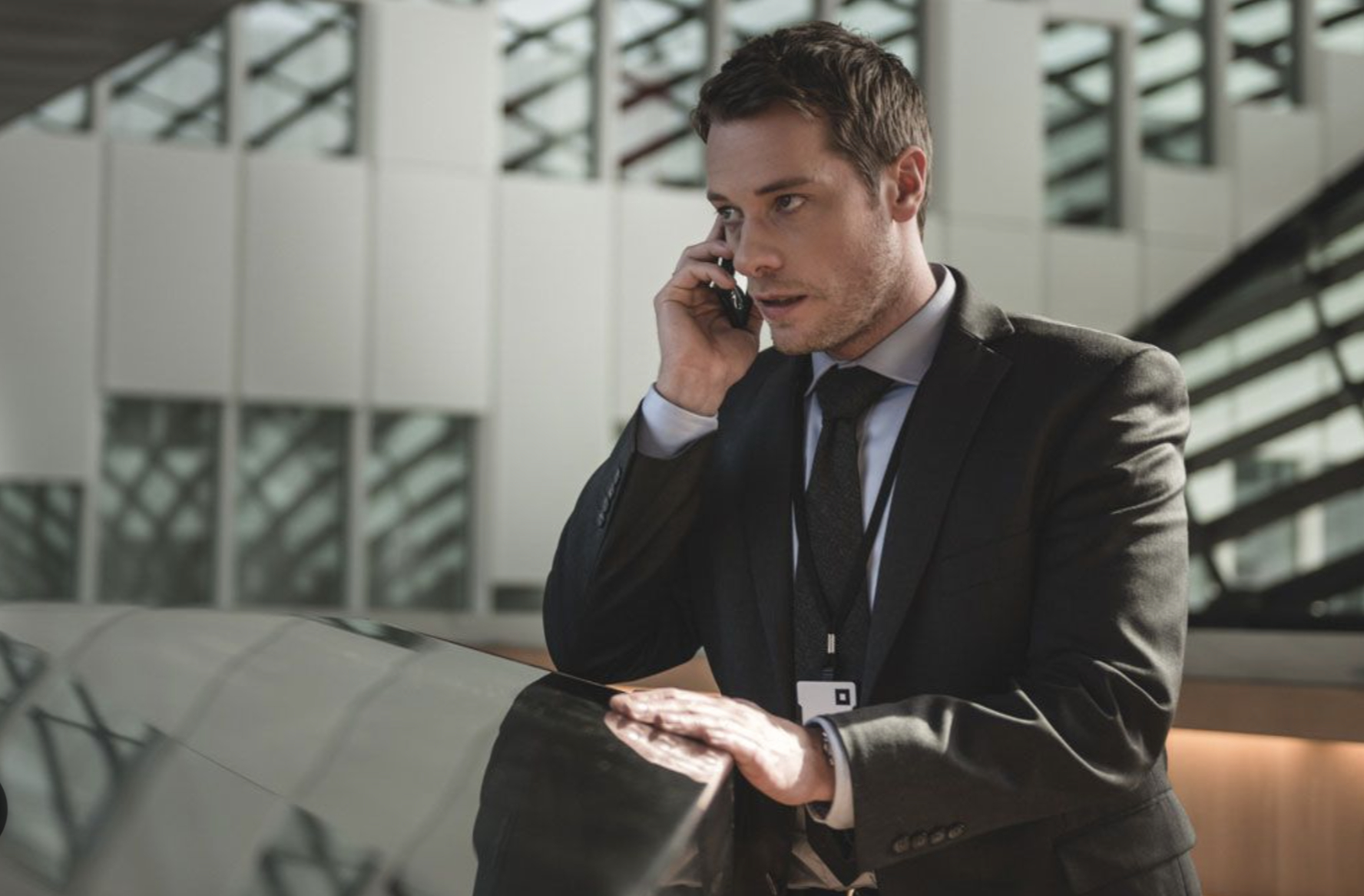
The Norwegian Prime Minister Jesper Berg (Henrik Mestad) faces hard decisions in Occupied

Melton shares the intriguing premise. “Sometime in the near future, civil wars prevent Middle Eastern countries from exporting enough oil to meet global demand. Energy independent due to shale gas, an isolationist United States no longer sees a need to have a global presence and pulls out of NATO [shades of the present!] Meanwhile, global warming has become so rampant that a hurricane hits Norway and kills over 600 people. In response, Norwegians elect environmentalists who halt all oil production to help stop climate change. Without Norway’s oil, the European Union falls into a crippling recession. Because the Norwegian Prime Minister refuses to budge, the EU asks Russia to occupy Norway and restart oil production.”

What follows is a captivating three season political action-thriller that explores potential real-life questions for leaders throughout the world. When the first season of Occupied aired, the Russians were a fictional threat. Now, it seems, reality has caught up to fiction.

Melton writes that when Jo Nesbø, a well known Norwegian crime novelist, first pitched the story, people told him the idea was far-fetched. Then the real-world Russian invasion happened on the day the show started shooting, adding tremendous relevance to the fiction envisaged. Given the post-Crimea tensions (and what is now happening in the Ukraine), it is not surprising that the Russian government is not pleased with Occupied adds Melton. Before the show aired, the Russian ambassador in Oslo complained that the show would frighten “the Norwegian audience with a non-existing threat from the east.”

The three season series moves at a swift pace with Season One quickly instating the Russian occupation as the Norwegian PM Jesper Berg (Henrik Mestad) sells Norway’s future to prevent bloodshed from its Russian aggressors. Resistance flares up and intrigue rises from all quarters including the Russian occupiers with some Norwegians profiting from the occupation and others arming themselves and doing sabotage.

Hans Martin Djupbik (Eldar Skar) stops an assassination

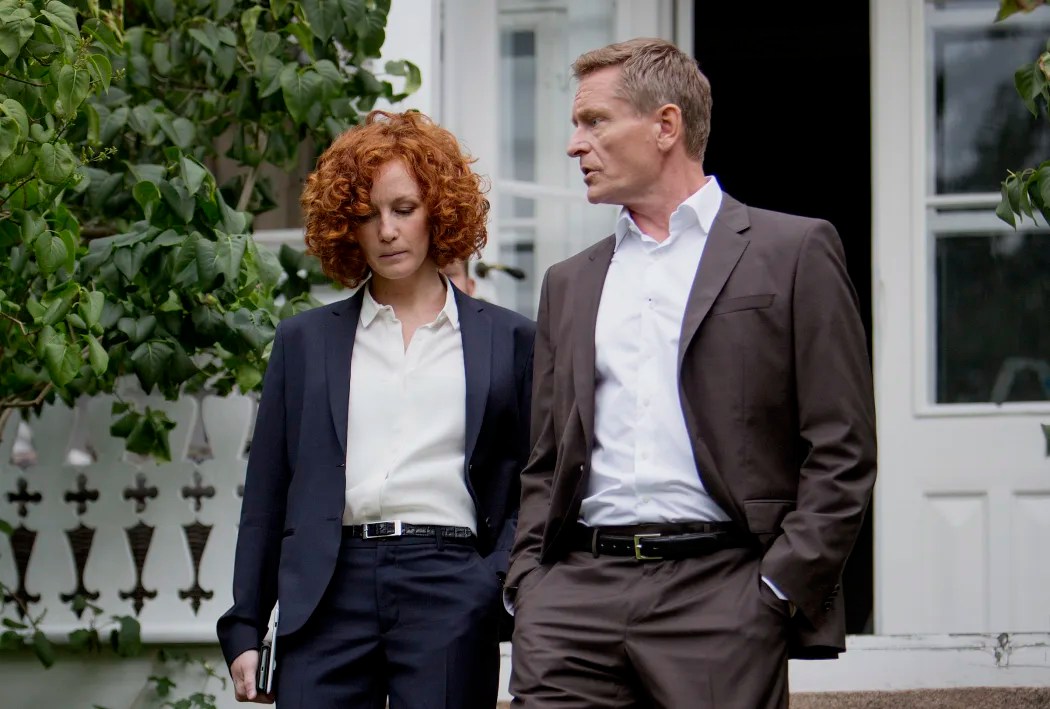
I found Prime Ministerial bodyguard Hans Martin Djupbik (Eldar Skar), who at one point saves the life of Russian Ambassador Irina Sidorova (Ingeborga Dapkunaite), one of the show’s most intriguing characters. Eventually becoming head of state security, Hans Marin plays a difficult balancing act between Norwegian and Russian interests in the conflict between principle and realpolitik. Ultimately, this unsustainable position impacts him on several levels, including his personal life, as forces literally pull him apart.

Melton notes that Hans Martin first appears as an archetypal hero who uses his position in security and intelligence to help save democracy. And viewers, says Melton, have many opportunities to cheer for him. However, given his unique position and relationship with the Russian occupiers, his actions at times become morally ambiguous and this catches up with him in season three, which is a heartbreaker. I wasn’t happy with how it ended for Hans Martin, who, in my opinion was not just a main protagonist, but also the show’s chief casualty and archetype for integrity and even innocence. It was hard to watch as the relentless political machinations seized him in a vicious spider web of nefarious intrigue even as he tried so hard to play fair throughout. Given the show’s trajectory, the shocking end of season three seemed inevitable and necessary; for in his final and tragic act, Hans Martin re-affirmed his integrity and archetype as hero for democracy and freedom.

In a ruthless war for resources and sovereignty, Hans Martin—like heroic integrity—becomes the main casualty.

Hans Martin Djupbik (Eldar Skar) follows a lead

Given the current situation today, Occupied appears frighteningly prescient and possible. “Democracy is a key value that becomes a rallying cry for the resistance,” writes Melton. “Without a strong NATO these characters struggle to preserve their freedoms and democracy. Norway spends more on its military today than it did at the end of the Cold War (adjusted for inflation), but other NATO countries provide equipment and personnel necessary for Norway’s defense. It is easy to understand why Norwegians may fear a world without the alliance. Occupied has reminded European audiences what Russia has already done,” and what it may yet do…

The Norwegian PM and his aide discuss next moves

The intriguing machinations of geopolitics aside, Occupied is foremost an environmental thriller about the specter of climate change. In 2020, Taylor Antrim of Vogue writes: “Occupied is the most relevant thing on TV right now, a hyper-entertaining drama that treats the climate emergency with the seriousness it deserves.” In his review entitled, “Occupied is the Climate-Crisis Thriller You Should Be Watching,” Antrim tells us that “Norway is one of those hyper-progressive, enlightened countries that should be free of the world’s social ills—but what unfolds on Occupied is a cheat sheet of all the disquieting trends of our time. First, the country becomes gripped by nativism, with ‘Free Norway’ activists turning on ordinary Russians living within their borders. Then there are escalating acts of domestic terrorism and violence. And by season three, in which climate warriors turn to guerrilla cyber tactics and Free Norway activists commit grotesque acid attacks on accused Russian collaborators, Berg has been transformed from an idealist into a power-mad operator. The brilliance of the show is you never know whom to root for. The stalwart and handsome head of the security services? The crusading Marxist journalist? The steely Russian diplomat who understands realpolitik better than anyone?”

Russisn diplomat Irina Sidorova and head of Norwegian Security Hans Martin talk deals

In the end, Antrim exhorts: “Occupied may be entertainment, but the extreme measures its young eco-activists are fighting for (an entirely renewables-based energy system) no longer seem extreme. This is a show that understands that we are marching toward a tipping point, and by the climactic end of the season a desperate, riven country is demanding that the world change its path at any cost.”

Ten Significant Science Fiction TV Series:

Biohackers (Germany)
Orphan Black (Canada)
Occupied (Norway)
Missions (France)
Expanse (USA)
Incorporated (USA)
3% (Brazil)
Snowpiercer (USA)
Silo (USA)
Extrapolations (USA)

Nina Munteanu is a Canadian ecologist / limnologist and novelist. She is co-editor of Europa SF and currently teaches writing courses at George Brown College and the University of Toronto. Visit www.ninamunteanu.ca for the latest on her books. Nina’s bilingual “La natura dell’acqua / The Way of Water” was published by Mincione Edizioni in Rome. Her non-fiction book “Water Is…” by Pixl Press (Vancouver) was selected by Margaret Atwood in the New York Times ‘Year in Reading’ and was chosen as the 2017 Summer Read by Water Canada. Her novel “A Diary in the Age of Water” was released by Inanna Publications (Toronto) in June 2020.

Significant Science Fiction TV Series—Part 1, Shows that Touch on Justice and Science & Technology: #2 — ORPHAN BLACK

I’ve selected ten TV series that have intrigued me, moved me, and stayed with me for various reasons that touch on: abuse of justice, including eco-justice and environmental abuse; technology use and abuse; and the effects and horrors of climate change.

Some are well known; others not so well known. All approach storytelling with a serious dedication to depth of character, important themes, realistic world building, and excellent portrayal by actors. The world-building is extremely well done—in some cases rivalling Ridley Scott’s best—with convincing portrayals of worlds that are at times uncanny in their realism. Worlds that reflect story from an expansive landscape to the mundane minutiae of daily life: like the cracked phone device of Detective Miller in The Expanse or the dirty fingernails of engineer Juliette Nichols in the Down Deep of Silo. Stories vary in their treatment of important themes from whimsical and often humorous ironies to dark and moody treatises on existential questions. In my opinion, these TV series rival the best movies out there, often reflecting large budgets (but not always) and a huge commitment by producers. The ten TV series I’ve selected here come from around the world: Brazil, Germany, France, Norway, Canada and the United States.

In Part 1, I look at five TV series that touch on ethical issues we are facing today; issues that reach far into existential questions of what it means to be human. These TV series explore synthetic biology, cloning and gene editing, and justice in space colonization and exploitation.

ORPHAN BLACK: Mingling Its Own Nature With It…

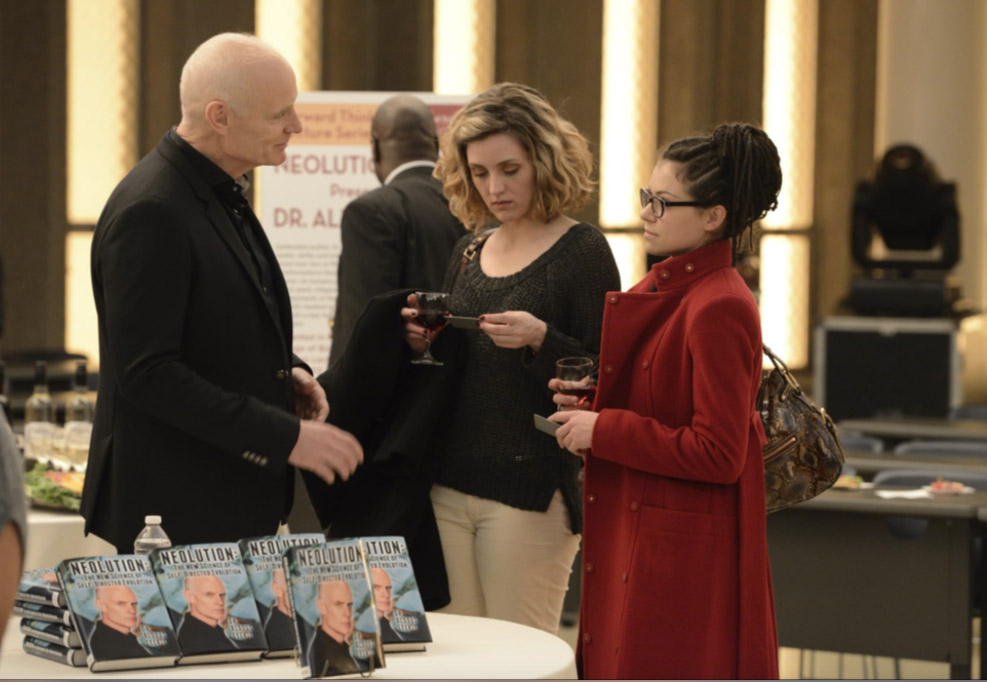
Shot in and around Toronto, Ontario, the series focuses on Sarah Manning, a fringe-dweller with questionable friends, who assumes the identity of her clone, cop Elizabeth (Beth) Childs, after witnessing her suicide and stealing her stuff. In Season 1 alone, seven clones are revealed. Those still alive include suburban housewife Alison Hendrix, university evolutionary biologist Cosima Niehaus, corporate mogul Rachel Duncan, and crazed sociopath Helena.

Toronto is filmed brilliantly in a vague every-city pastiche that combines the look of London’s eastside, NYC and northern Europe all in one. Like its characters, the show is both sparsely existentialist and baroque funk. Besides Sarah’s own diverse clones there is foster brother Felix and his various friends or cronies who add significant colour to this film-noir set. Unsavory antagonists not only add intrigue but provide significant texture from sophisticated and subtle to the banal and truly terrifying. And like biology itself—perhaps the true main character here—all the characters are shape-shifters, looking for balance in a shifting world where “normal” keeps chasing itself.

Sarah Manning at the train station where she meets her first clone (image by Orphan Black)

Orphan Black is a slick, sophisticated and edgy exploration of human evolution that raises issues about the moral and ethical implications of bio-engineering and genetic tampering—specifically human cloning (currently against the law), personal identity, and intellectual property. Manson and Fawcett enlist symbols and clever metaphor to enrich the story with layers of depth—no item is free of meaning: from the seemingly innocuous naming of a transit station (Huxley Station) in the show’s premiere, or Delphine’s passing reference to “a brave new world” to a terse discussion between a religious extremist and a restaurant proprietor over the merits of factory-farmed eggs: “They’re not normal,” the extremist complains. “They’ve been interfered with.” There is nothing normal about Orphan Black.

Cosiima meets Dr. Aldous Leaky of Neolution, a transhumanist organization about self-directed evolution

Episode titles in Season One quoted parts of Charles Darwin’s evolutionary text On The Origin of Species. Titles like “Natural Selection” (series premiere) and “Parts Developed in an Unusual Manner” elucidate concepts of evolution and survival of the fittest. Season 2 adopts the works of Sir Francis Bacon, reflecting the ethical and moral implications of scientific pursuit in a world of contrasting philosophies and values. 

In Orphan Black, The Dyad Institute, a biotech corporation with arcane connections to invisible powers and eugenics, patented the clones as theirs to do with as they please—which might be anything. The ownership of the clones’ genomes by The Dyad Institute would be lawful if all the clones’ DNA was entirely synthetically made. The company would also have exclusive rights to study the clones’ genome, effectively placing the clone Cosima under copyright infringement if she decided to study and apply her research (on herself) outside of the Dyad Institute. If the clones were synthetic, like the DNA created by scientist Dr. Craig Venter, then the Dyad Institute would be in a unique situation with regards to ethics and newly emerging considerations of human rights yet to be determined. For instance, how much of the clones really belong to the company that made them? What even constitutes a person?

Nina Munteanu is a Canadian ecologist / limnologist and novelist. She is co-editor of Europa SF and currently teaches writing courses at George Brown College and the University of Toronto. Visit www.ninamunteanu.ca for the latest on her books. Nina’s bilingual “La natura dell’acqua / The Way of Water” was published by Mincione Edizioni in Rome. Her non-fiction book “Water Is…” by Pixl Press (Vancouver) was selected by Margaret Atwood in the New York Times ‘Year in Reading’ and was chosen as the 2017 Summer Read by Water Canada. Her novel “A Diary in the Age of Water” was released by Inanna Publications (Toronto) in June 2020.