On Writing: The Blank Page

AI concept art by genaiTechvifySoftware.com

I teach scholarly writing at the University of Toronto through several writing centres; I’m helping students with their assignments in engineering, the health sciences and humanities. All are generating scholarly papers on various topics with various purposes; anything from a critical assessment, literature review, position paper, or reflection essay to a lessons learned document, research proposal, or thesis chapter. Everyone is using some kind of AI when generating, writing and editing their works. And there are plenty of AI tools to choose from. Some of the most common AI tools used by my students include: Grammarly for grammar; Perplexity as a research tool, text summarizer and conversational AI search engine; Paperpal for editing, Google Scholar as a search engine, ChatGPT to summarize works, brainstorm ideas, provide quiz questions, or even generate human-like text in a first draft.

All these assignments are purpose-built and students must successfully address their assignment requirements to succeed. In some ways, the idea, topic and handling of the topic are assigned; the student need only carefully and clearly address it.

But, when creating something new, like a piece of fiction or even a non-fiction article, professional writers are essentially walking into a new world, not restricted by “assignment guidelines or requirements”; they truly must face the blank page.

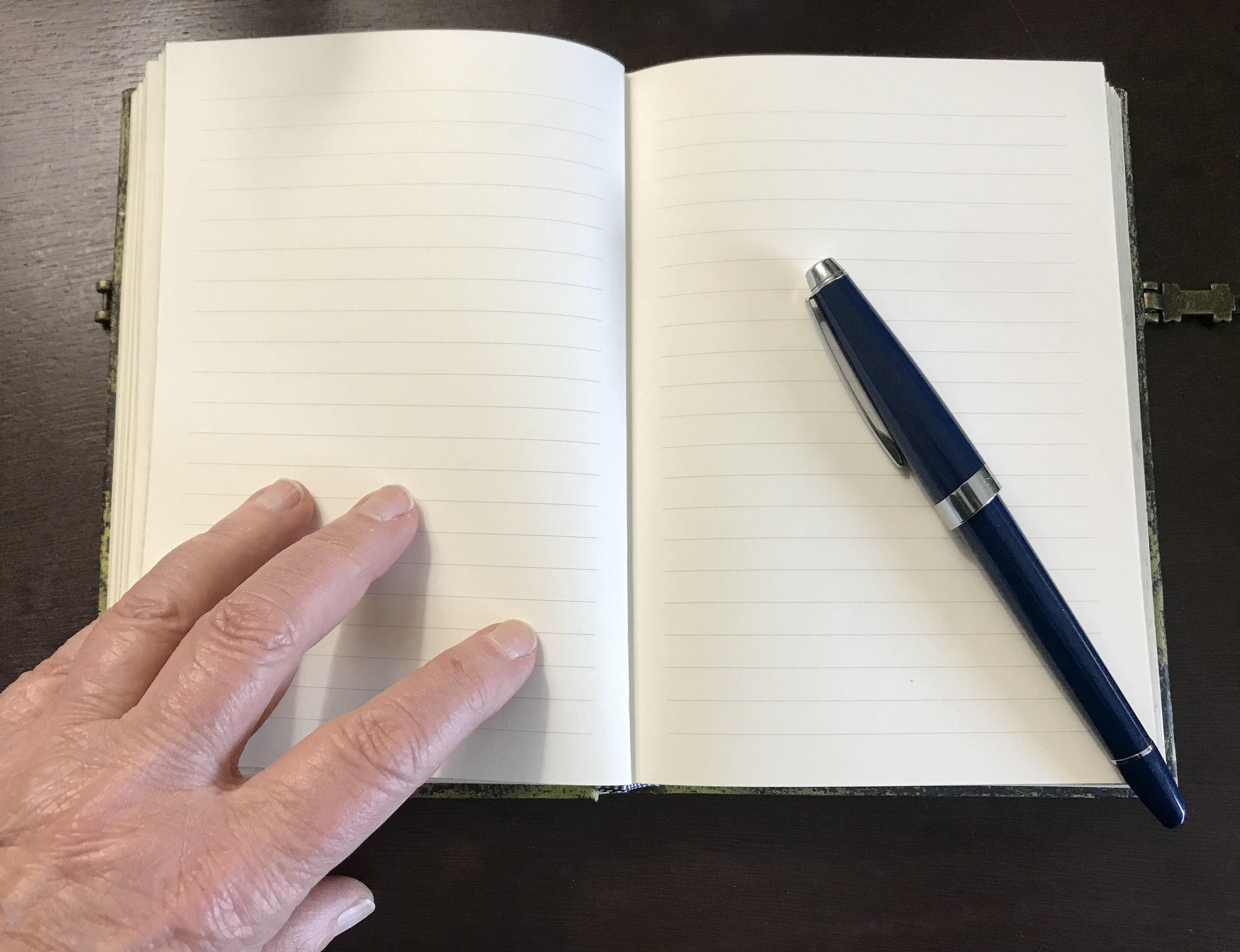
The blank pages of a notebook (photo by Nina Munteanu)

There’s no precedence for creating a piece of fiction. Yes, certainly inspiration is involved, but the work of something unique must start with a blank page. Professional writers often dread facing the blank page. It even has a name: blank page syndrome, or writer’s block, the feeling of being overwhelmed or even paralyzed by the prospect of starting. Alex Elkjær Vasegaard tells us that “it may come from the fear of not being good enough, of not knowing enough, or of the vastness of the potential ahead.”

I recently read a post on LinkedIn by writing colleague Erik Buchanan, which resonated with me. I asked his permission to quote it here and he gladly gave it:

Just got a recommended post from a marketing person claiming that using AI allows you to get past the hardest part of writing: “the blank page.”

I blocked them, and I’m putting what I was going to reply to them here instead, because they are not a person who will be open to this rant:

If you cannot get past the blank page, you are not a writer.

If you use AI to get past the blank page, you’re still not a writer, and now you’re a thief.

You’re using other writers’ words, fed into an information aggregator and splatted out like a drunk’s meal vomited onto the sidewalk. And you’re scooping it up and claiming it’s fresh food.

You want to write? Write something.

Speaking as one who has written 18 novels (more than half ghostwritten for money), 150 articles, short stories, instruction manuals, sales copy, website copy, commercial scripts, short films and now a feature film (currently being re-written) it’s not that hard.

Using AI means you’re too lazy to learn the craft.

Don’t do it.

A blank page is more than a simple page that is empty. It offers something new, without precedence to write, draw or create. Whether it’s a physical sheet of paper in a notebook or a white space in a digital document, the blank page represents a fresh beginning and wonderful potential for unique creation.

Erik’s point is so Germaine to the creative writing process. The blank page is an open door to possibility; it is a writer’s first step in creating something uniquely their own. Plot, character, setting and language—such as technique, style, words and phrases—certainly make a novel wonderful to read; but it is the unique idea, the spark, the premise and theme that carry that novel into greatness and keep it memorable.

Coming up with first words on a blank page (photo by Nina Munteanu)

Poet Alberto Blanco challenges our notion of the blank page being blank: From the tree it was made from, the rain and sun that allowed the tree to grow, and the people that created it, it soon becomes clear that a blank page contains the whole cosmos.

In “The Blank Page: A Meditation on the Creative Process and Life’s Journey” Alex ElkjærVasegaard describes the blank page as “an expanse of white, unsullied by ink or pixels. It’s the void that calls for creation. It’s the challenge that every artist, writer, and thinker faces. But isn’t that just a beautiful metaphor for life itself?”

Erik, I too would have blocked that marketer. I doubt they are a writer…

“Who then … tells a finer tale than any of us? Silence does. And where does one read a deeper tale than upon the most perfectly printed page of the most precious book? Upon the blank page. When a royal and gallant pen, in the moment of its highest inspiration, has written down its tale with the rarest ink of all — where, then, may one read a still deeper, sweeter, merrier and more cruel tale than that? Upon the blank page.”—Karen Blixen, Last Tales

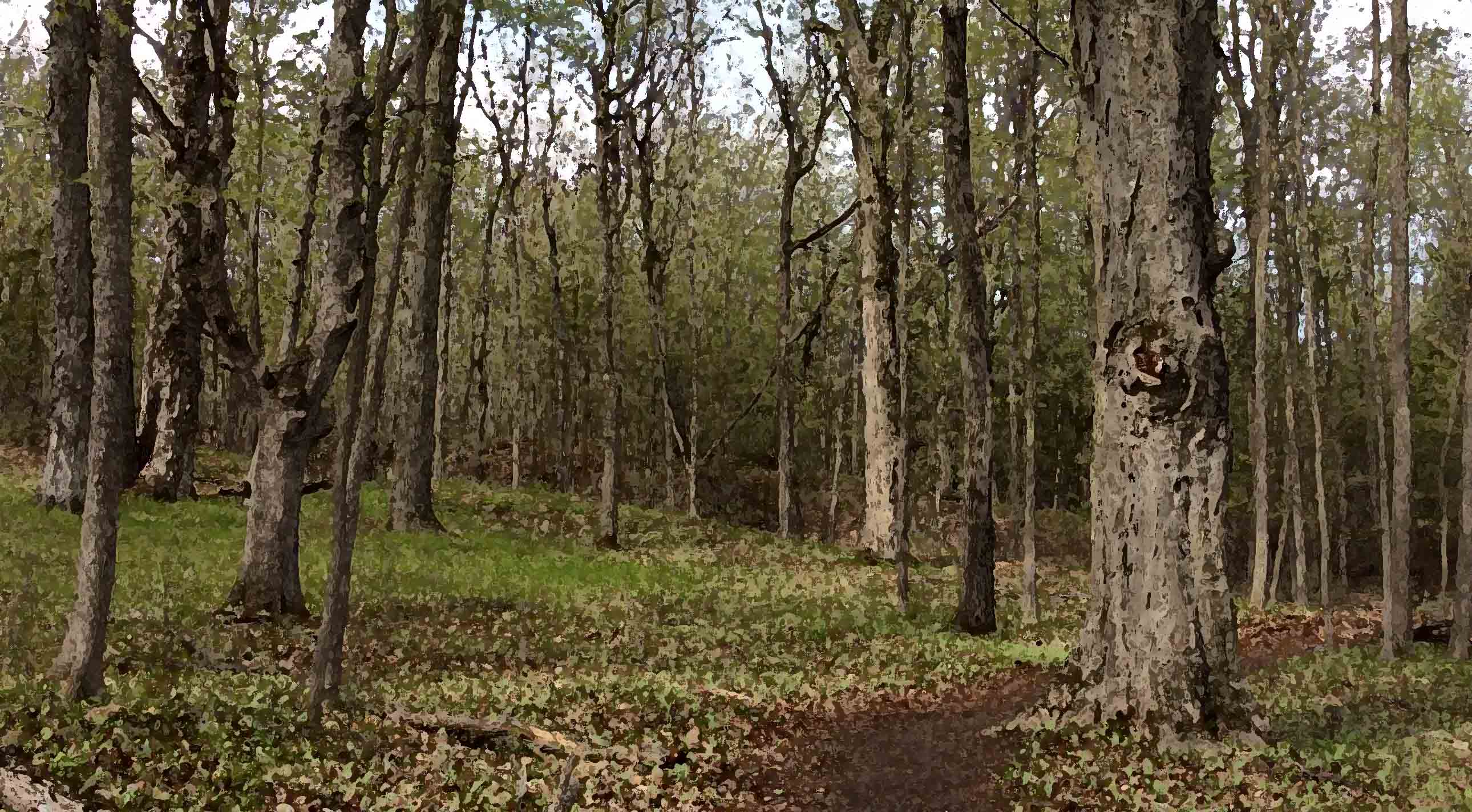
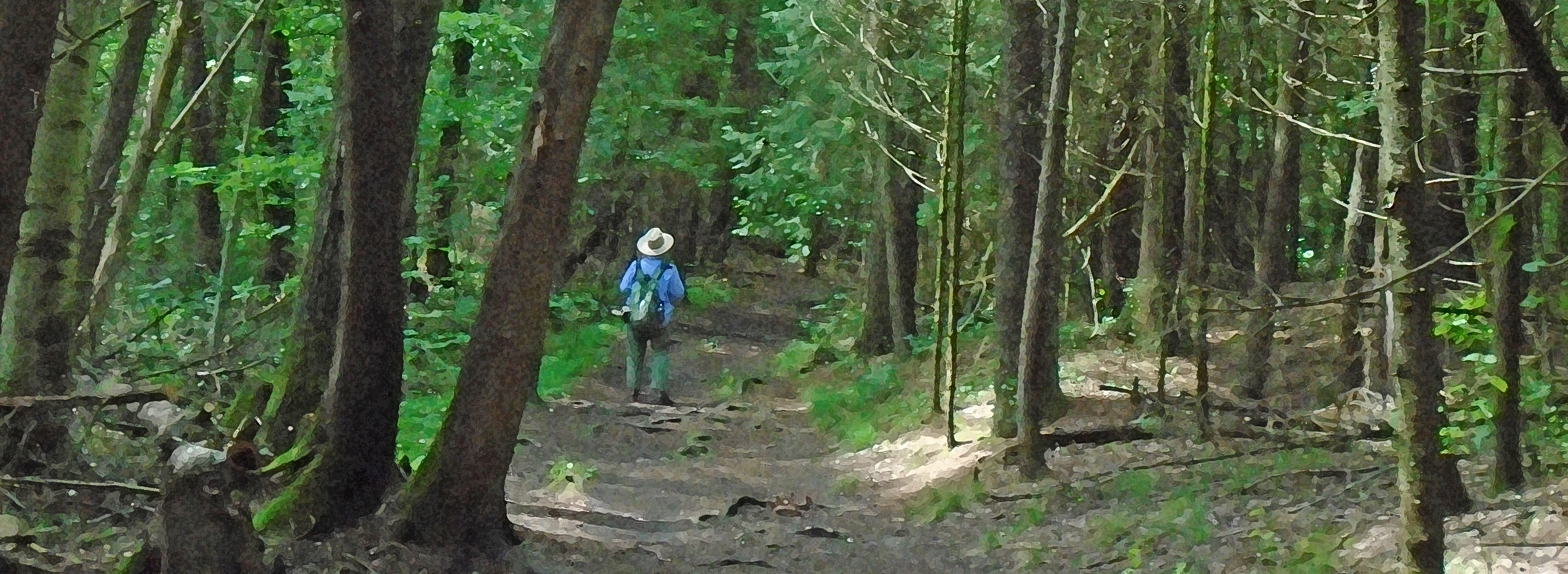
Maple beech forest in early spring, ON (photo and rendition by Nina Munteanu)

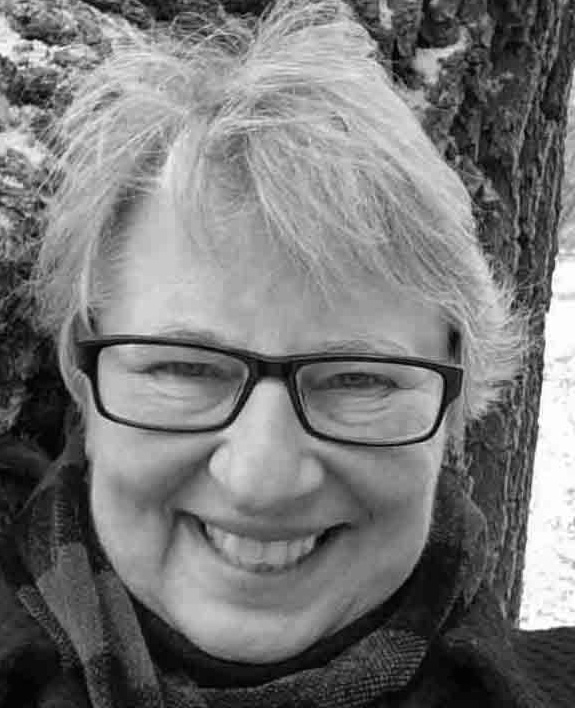
Nina Munteanu is a Canadian ecologist / limnologist and novelist. She is co-editor of Europa SF and currently teaches writing courses at George Brown College and the University of Toronto. 

Visit  www.ninamunteanu.ca for the latest on her books. Nina’s bilingual “La natura dell’acqua / The Way of Water” was published by Mincione Edizioni in Rome. Her non-fiction book “Water Is…” by Pixl Press (Vancouver) was selected by Margaret Atwood in the New York Times ‘Year in Reading’ and was chosen as the 2017 Summer Read by Water Canada. Her novel “A Diary in the Age of Water” was released by Inanna Publications (Toronto) in June 2020.

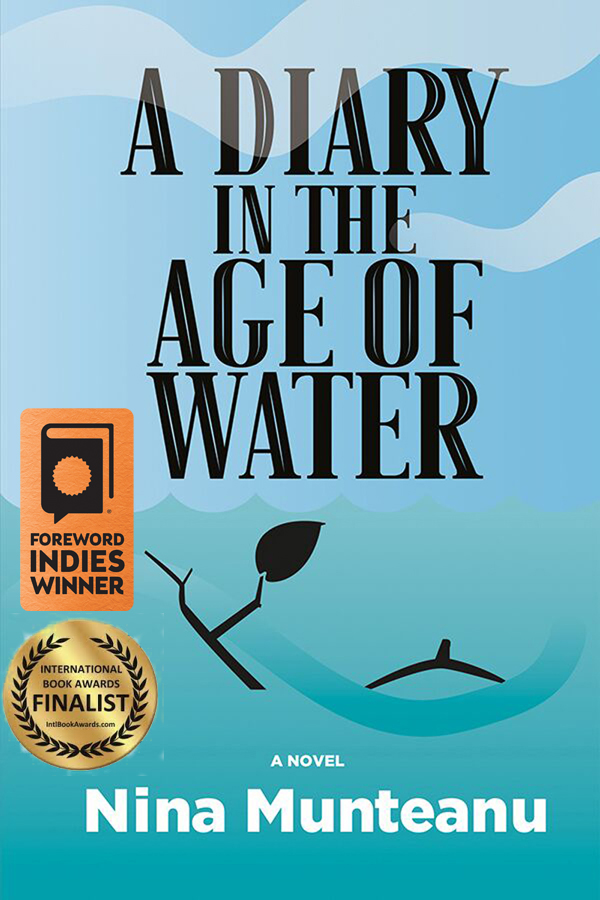
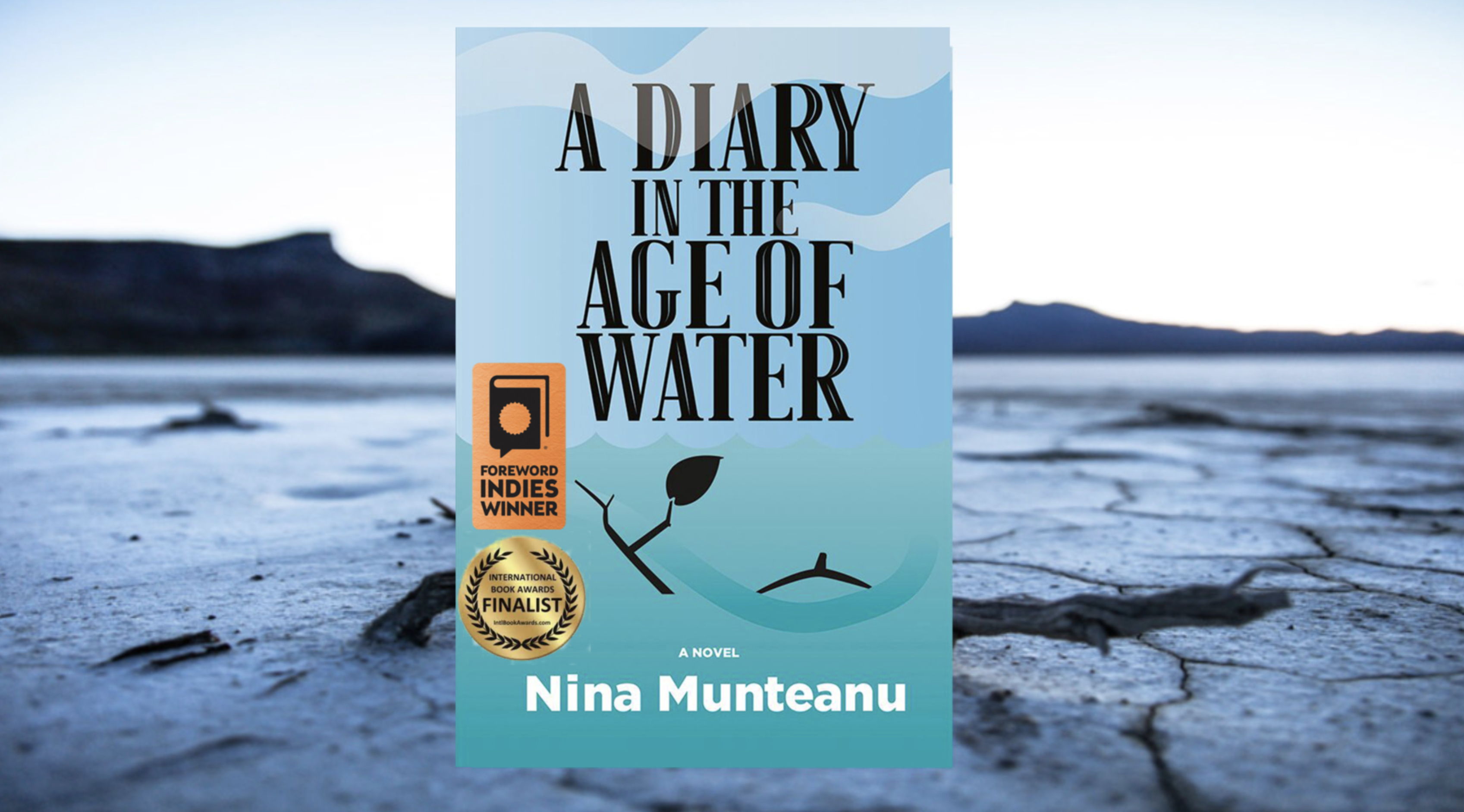
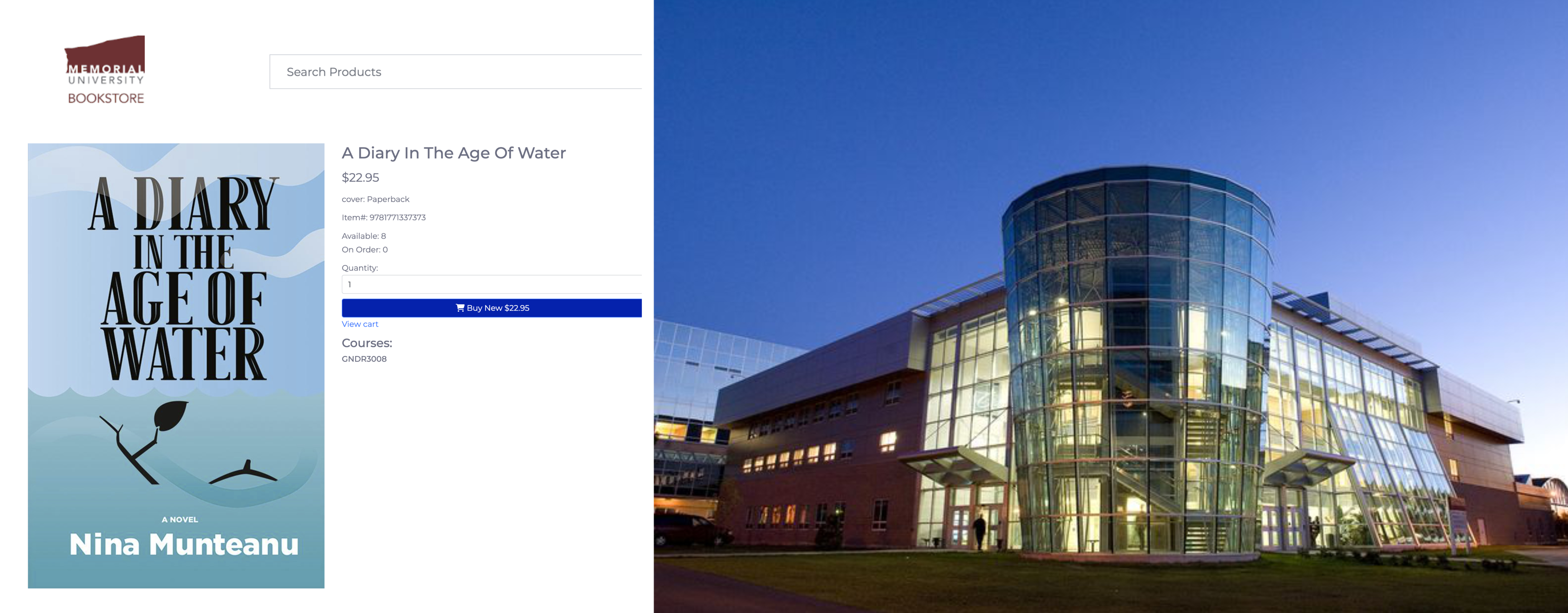
“A Diary in the Age of Water” Required Reading at Memorial University

A Diary in the Age of Water” at the Memorial University Bookstore

Instructor Keif Godbout-Kinney has made my eco-fiction novel A Diary in the Age of Water required reading in their course Feminist Practices and Global Change (GNDR 3008) at Memorial University, Newfoundland. The book is currently selling at the Memorial University Bookstore.

The Gender Studies course examines connections between feminist theories and activism for social and political change on a global scale.

My novel, told mostly through the diary of a limnologist, describes a world in the grips of severe water scarcity during a time when China owns the USA and the USA owns Canada. The diary spans a twenty-year period in the mid-twenty-first century of 33-year-old Lynna, a single mother who works in Toronto for CanadaCorp, an international utility that controls everything about water, and who witnesses disturbing events that she doesn’t realize will soon lead to humanity’s demise. A Diary in the Age of Water follows the climate-induced journey of Earth and humanity through four generations of women, each with a unique relationship to water. The novel explores identity and our concept of what is “normal”—as a nation and an individual—in a world that is rapidly and incomprehensibly changing.

Nina Munteanu is a Canadian ecologist / limnologist and novelist. She is co-editor of Europa SF and currently teaches writing courses at George Brown College and the University of Toronto. Visit www.ninamunteanu.ca for the latest on her books. Nina’s bilingual “La natura dell’acqua / The Way of Water” was published by Mincione Edizioni in Rome. Her non-fiction book “Water Is…” by Pixl Press (Vancouver) was selected by Margaret Atwood in the New York Times ‘Year in Reading’ and was chosen as the 2017 Summer Read by Water Canada. Her novel “A Diary in the Age of Water” was released by Inanna Publications (Toronto) in June 2020.

Through the Portal Anthology Receives Remarkable Review

A recent favourable review of Through the Portal: Tales from a Hopeful Dystopia (edited by Lynn Hutchinson Lee and Nina Munteanu, released by Exile Editions) appeared in On Spec Magazine. The review by Lorina Stephens applauded the anthology for its genuine Canadian perspective, excellent writing, and “remarkable voice of many.”

Excerpts of the review follow below:

“What unfolds in these 35 stories is a quintessentially Canadian perspective on climate change, the probable dystopia of our own making, and how we as not only humans, but Canadians, may deal with the breakdown of environment and society, of how we construct mythology to interpret our experience.”

The stories, writes Stephens, “are filled with that remarkable pragmatism and resilience, little say a reverence for the land, which seems to be hardwired into a people who deal with constant change, and sometimes extremes, dictated by climate and geography.”

“…the quality of the writing from this enclave of writers is quite remarkable…I am steadfast in my praise of the skill of these writers, and the stories they’ve crafted, collected into this remarkable voice of many.”

“The stories manage that most adroit of transformations from genre fiction meant as escapism and consumable, to that other dimension which is provoking, illuminating, and exactly what good literary fiction should engender.”

For the entire review follow the link to On Spec Magazine.

Through the Portal has received other favourable reviews:

Through the Portal offers intriguing and imaginative glimpses into the future.” – The Seaboard Review

“A stunning collection of short stories and poetry that address our most existential concerns through metaphysical, epic, solarpunk, mythological, and contemporary perspectives.” – dragonfly.eco.

Nina Munteanu is a Canadian ecologist / limnologist and novelist. She is co-editor of Europa SF and currently teaches writing courses at George Brown College and the University of Toronto. Visit www.ninamunteanu.ca for the latest on her books. Nina’s bilingual “La natura dell’acqua / The Way of Water” was published by Mincione Edizioni in Rome. Her non-fiction book “Water Is…” by Pixl Press (Vancouver) was selected by Margaret Atwood in the New York Times ‘Year in Reading’ and was chosen as the 2017 Summer Read by Water Canada. Her novel “A Diary in the Age of Water” was released by Inanna Publications (Toronto) in June 2020.

Call for Writers’ Group in Prince George, BC

Lynda Williams, author of science fiction series The Okal Rel Saga and publisher of Reality Skimming Press has just pulled together a writers group in Prince George, B.C., for writers to connect with other writers and share feedback on fiction and nonfiction.

Meetings will start March 20 and continue every other Thursday following from 7-9 pm at the Live Well Prince George Society.

All levels of experience are welcome. There is a $2 donation per drop in or $10 annual membership.

Authors Read from “Through the Portal: Tales from a Hopeful Dystopia”

I recently participated in author readings from the eco-fiction anthology “Through the Portal: Tales from a Hopeful Dystopia.” Co-editor Lynn Hutchinson Lee and I opened the session with some introductory remarks, followed by readings by four of the anthology writers: Annaliese Schultz, Jade Wallace, Isabella Mori, and Matt Freeman.

Co-editors Lynn Hutchinson Lee and Nina Munteanu introduce the anthology at the reading; authors and moderator pictured above

The readings generated a lot of discussion about the nature and role of eco-fiction and stories in general on how we view the world and how that, in turn, influences the choices we make in life. Below, I include a short story excerpt and audience reaction for each author who read.

Annaliese Schultz read from her story Water & Oil. “Bursting from months, maybe years, of inertia born of dismay (engendered by the unending disasters of the world), Zip is instantly galvanized and greater than himself and gone.” One audience member shared that her story “sounded horrifyingly too possible.”

Jade Wallace read from her story Pluck. “It was only after I started working at the florist a few months ago that I began to think of plants as things that move. I learned that algae may swim towards the light; sundew can catch insects in their stalks; the leaves of touch-me-nots will slouch when they feel rain.”  A member of the audience shared that “with what we now know about the way trees/plants communicate with each other, it was a neat story of crossing over to try to tell humans something.”

Jade Wallace reads from her story “Pluck”

Isabella Mori read from her story Shift. “Red Nelly, that’s what they called my grandmother; always looked a little dishevelled. So did her living room. Four book shelves were squeezed into the small room, sagging with dark tomes, oversized coffee-table books, Greenpeace brochures, and video cassettes that even her questionable looking TV couldn’t play anymore.” Someone in the audience mentioned that the author had woven a very human story. “Stories are sometimes better teachers than all other forms available to us. I felt moments of warmness and reflection.” Another audience member added, “The wisdom of animals and plants—there’s hope for the planet. I’m ordering this book from my local independent as soon as I close his meeting!”

Matt Freeman read from his story Birdseed: “Near the end I began to devote the bulk of my time to what I believed to be a gregarious individual of the species Corvus brachyrhynchos—the American Crow. By then a chemical scythe had begun to carve up the clouds hanging over the lands of ‘Vancouver’ in a psychedelic frenzy, and the shocked blue skyline often bled in shades of lime.”  One audience member shared, “I loved he way ‘birdish’ words kept appearing: perch, cage. This may be Matt’s first published story, but I’m sure it won’t be the last.” Another audience member shared, “I loved the connection with the wisdom and personification of your crow.”

Nina Munteanu commenting on one of the readings

The readings generated a lot of discussion about the nature and role of eco-fiction and stories in general on how we view the world and how that, in turn, influences the choices we make in life.

Audience members shared that they found the readings inspiring. One member shared, “I find stories and poems have a more transcendent or at least deeper connection when read aloud. I wasn’t sure what to expect. So glad to be a part of this reading. The book sounds amazing.” Another member shared, “Keep hope alive!”

For more about how this anthology came about go to my previous post on Through the Portal.

Hopeful dystopias are so much more than an apparent oxymoron: they are in some fundamental way the spearhead of the future – and ironically often a celebration of human spirit by shining a light through the darkness of disaster. In Through the Portal: Tales from a Hopeful Dystopia, award-winning authors of speculative fiction Lynn Hutchinson Lee and Nina Munteanu present a collection that explores strange new terrains and startling social constructs, quiet morphing landscapes, dark and terrifying warnings, lush newly-told folk and fairy tales.–Exile Editions

  “A stunning collection of short stories and poetry that address our most existential concerns.”

Dragonfly.eco

“Will ingenuity, love, and respect for the earth help us work through whatever changes might lie ahead? Through the Portal offers hope that these qualities, if not enough in and of themselves, will help us find our way.”

The Seaboard Review
Farmer’s field at sunset, winter in Ontario (photo and rendition by Nina Munteanu)

Nina Munteanu is a Canadian ecologist / limnologist and novelist. She is co-editor of Europa SF and currently teaches writing courses at George Brown College and the University of Toronto. Visit www.ninamunteanu.ca for the latest on her books. Nina’s bilingual “La natura dell’acqua / The Way of Water” was published by Mincione Edizioni in Rome. Her non-fiction book “Water Is…” by Pixl Press (Vancouver) was selected by Margaret Atwood in the New York Times ‘Year in Reading’ and was chosen as the 2017 Summer Read by Water Canada. Her novel “A Diary in the Age of Water” was released by Inanna Publications (Toronto) in June 2020.

Confessions of a Teenage Eco-Warrior

When I was little, I wanted to be a storyteller, a cartoonist specifically. I was reading graphic novels before I could read. That didn’t stop me from understanding what was going on. Being a virtual learner and an artist, I understood context: expressions, body language…

Nina, age three, pretending to read (photo by Martha Munteanu)

I wrote and drew wild adventure thriller detective stories and stories about exploring other planets. While my first love was telling stories, I was called by the needs of the environment. This percolated through me as I grew up and wouldn’t let go. When I could read and write, I still read graphic novels; I wrote and illustrated short stories about the environment, dystopian tales that focussed on how we were destroying our planet.

At school, I loitered in the hallways, pasting subversive posters on the walls. They were a call to action: Restrain … Reuse … Repurpose … Recycle … Remain true to the environment. I wrote in the school paper. I quoted global statistics, mentioned global warming (yes, people knew about it back in the ‘60s and ‘70s), and submitted cheesy emotional drawings of pollution and toxic waste.

I was a teenage eco-warrior.

By the time I was ready to go to university (I’d been accepted early into the fine arts program at Concordia University in Montreal), I switched my major on registration day. Like a horse bolting from a fire, I charged out of the arts and into the sciences. I’d heard environment’s call for help and had notions of becoming an environmental lawyer. I kept a few arts courses as electives but focused on a biology degree in the environmental sciences. I understood that the tools I needed to wield as an eco-warrior in law were rooted in science.

A twenty-some old Nina exploring the forest

I learned something about ecology, botany, animal, plant, and cell physiology, genetics and biochemistry, and limnology (the study of water systems). The sciences fascinated me and I became entranced in the study of how the natural world worked. I was particularly attracted by lichens, plant-like organisms called cryptogams that grow like miniature forests on substrates—trees, fence posts, rock, cement. My attraction was partly because these often overlooked organisms were actually more of a symbiotic community or mini-ecosystem: an intriguing community of fungi, algae, cyanobacteria, bacteria and yeast growing together. I felt that on some level, lichen had much to teach us on lifestyle and approach to living on this planet. They’d been around for millennia, a lot longer than we’ve been.

Having long abandoned law (I convinced myself that I wasn’t cut out for it; maybe I was but that’s another universe), I decided to pursue lichen ecology for my masters degree. But fate had another path in mind for me. The botany professor who I wished to study under was retiring and no one was taking her place. She referred me to the limnology professor and he got me interested in another microscopic community: periphyton (the algae and associated organisms that colonize plants, rock and cement in water).

I published some papers, moved out west and eventually got married and raised a beautiful son. My limnological expertise led me to a position at the local university and as a scientist with several environmental consulting firms, where I consulted with clients, did field research, wrote reports, and published and presented papers at conferences.

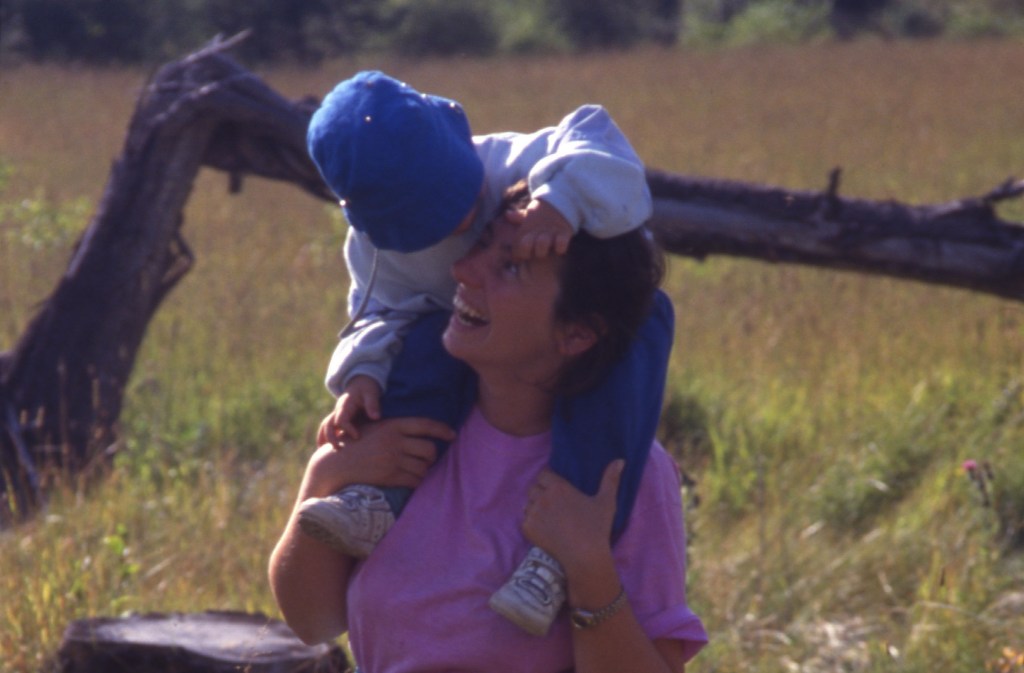
Nina and son Kevin explore nature (photo by Herb Klassen)

I’d come somewhat full circle to be an eco-warrior, pursuing environmental problems (and corporate mischief) through biology rather than law. I designed and conducted environmental impact assessments and recommended mitigation, restoration, and remediation procedures to various clients from lakefront communities and city planners to mining companies dealing with leaky tailings ponds and pulp mills discharging effluent into the ocean.

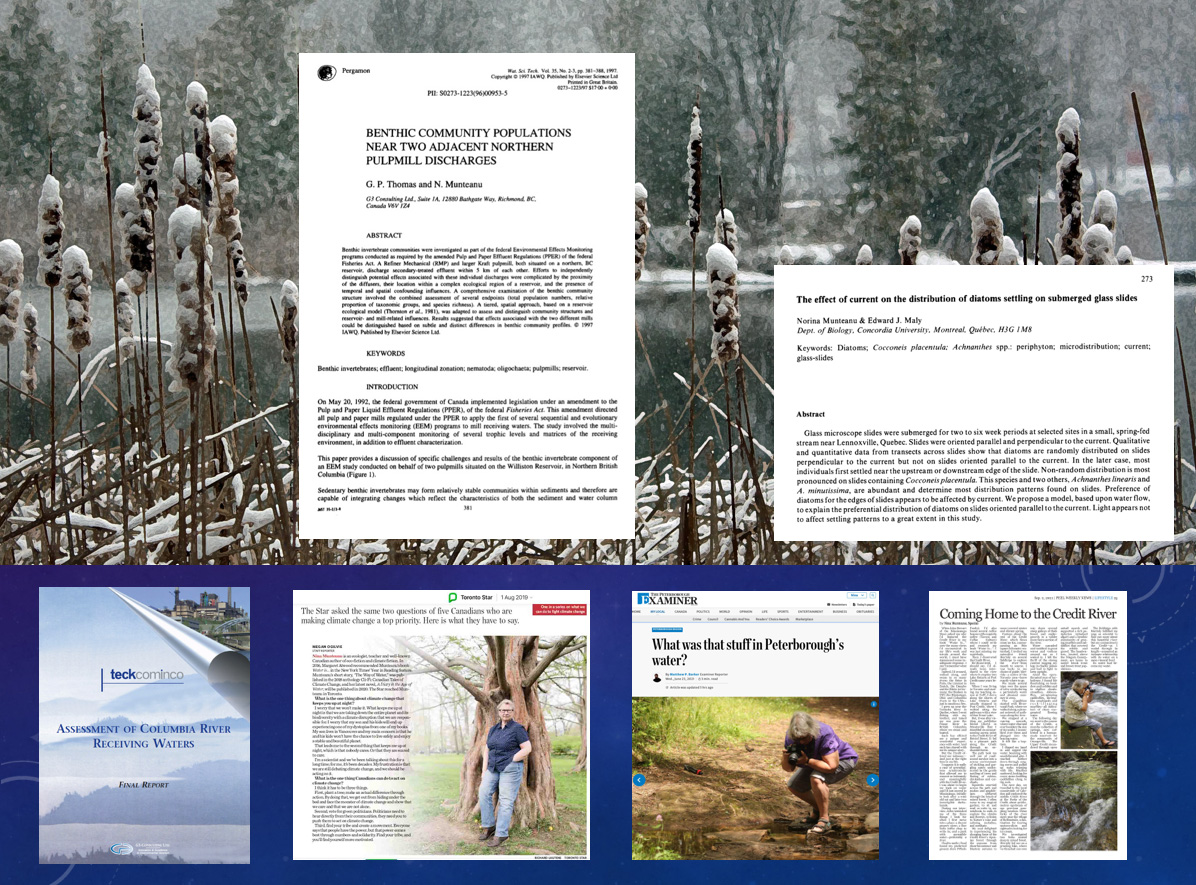
Various reports, scientific papers and articles I’ve written or been interviewed for

It worked for me. I consulted for twenty-some years. It was for the most part both satisfying and encouraging. I felt as though I was making a difference: mostly through educating my clients. But that became less and less the case as the consulting firms I worked for, and the corporations they worked for, seemed to have less and less integrity. They also seemed to care less about the environment and more about profit.

So, just as I’d done on the day of registration at university, I bolted like a horse in a fire and quit my job as a consultant. I never returned to consulting.

Nina photographing pollution of a small creek entering a drinking water source (photo by Matthew Barker, Peterborough Examiner)
My article in the Niverville Citizen on understanding watersheds

My sights went back to storytelling, journalism, and reporting/interviews. Mostly eco-fiction. Creating narratives that would hopefully move people, nudge them to act for the environment. Change their worldview somewhat into eco-friendly territory. Make them care. I’m still an eco-warrior, but my pen and my storytelling is my tool.

The word is a powerful tool. And the stories that carry them are vehicles of change.

Nina Munteanu wandering the Emily Tract forest, ON (photo by Merridy Cox)

Nina Munteanu is a Canadian ecologist / limnologist and novelist. She is co-editor of Europa SF and currently teaches writing courses at George Brown College and the University of Toronto. Visit www.ninamunteanu.ca for the latest on her books. Nina’s bilingual “La natura dell’acqua / The Way of Water” was published by Mincione Edizioni in Rome. Her non-fiction book “Water Is…” by Pixl Press (Vancouver) was selected by Margaret Atwood in the New York Times ‘Year in Reading’ and was chosen as the 2017 Summer Read by Water Canada. Her novel “A Diary in the Age of Water” was released by Inanna Publications (Toronto) in June 2020.

Writing in the Age of Artificial Intelligence: AI and Post-Plagiarism

AI entity performing a myriad of duties (image from Bernard Marr & Co.)

I teach academic writing to students at the University of Toronto Writing Centre. It’s wonderful and fulfilling work and I enjoy helping students in several disciplines (engineering, health sciences, social sciences) learn to write better. As with the rest of the academic world of writing, we are all making sense of the use of AI-generated tools by students, instructors and researchers: large language models (LLMs) such as ChatGPT, Claude, Copilot, and even Grammarly. Students have told me that they found AI helpful in brainstorming and outlining as well as organizing literature reviews and editing for grammar and such. A recent survey of universities and corporations around the world by the Digital Education Council revealed that a majority of students used AI tools. Of those surveyed, close to two thirds used AI as a search engine; a third used it to summarize documents; and a fifth used it to create first drafts. 

In her 2024 article “The Future Is Hybrid”, Beth McMurtrie suggested that genAI “may eventually take its place in the pantheon of game-changing technologies used every day in education—alongside calculators, search engines, and Excel.”

In my other pursuit as a professional fiction author, I see the artistic and communication industries embracing AI, particularly in the visual arts. I’m now told that several publishing houses and magazines have dedicated efforts to publish AI-generated work. Some magazines are entirely AI generated, Copy Magazine, for instance. Author futurist Bernard Marr writes that “Generative AI is already being adopted in journalism to automate the creation of content, brainstorm ideas for features, create personalized news stories, and produce accompanying video content.” Marr then goes on to provide 13 ways that all writers should embrace Generative AI that includes anything from drafting plot lines to world building. Sports Illustrated was recently found to publish AI generated stories. Even newspapers, such as the LA Times, the Miami Herald, and Us Weekly acknowledge AI-written content. And I recently learned that one of the top five online science fiction magazines, Metastellar, accepts AI-assisted stories with the proviso that “they better be good.” And Metastellar provides some convincing reasons. This has become a hot topic among my fellow professional writers at SF Canada.  One colleague informed me that a “new publisher Spines plans to disrupt industry by publishing 8000 AI books in 2025 alone.” On checking the news release, I discovered that Spines is, in fact, a tech firm trying to make its mark on publishing, primarily through the use of AI. The company offers the use of AI to proofread, produce, publish, and distribute books. They are, in fact, a vanity publishing platform (essentially a service for self-publishing), charging up to $5000 a book and often taking just three weeks to go from manuscript to a published title.

The emerging field of AI-assisted writing and communicating is a burgeoning field that promises to touch every person in some way—writers and readers alike. Tech companies are scrambling to use it to save time and effort. Others are involved in improving current and developing new models. Many are training LLMs for improved use. Even I was headhunted as a creative writer by one tech firm to help create more safe, accurate and reliable LLMs.

Generative AI applications (Image from Neebal Technologies)

Universities and Other Educational Institutions Use of AI

How universities and other educational institutions are dealing with the challenge and promise of these emerging tools in communication varies from out right forbidding AI use in the classroom to full on acceptance and obligatory use in some classroom projects. McMurtrie described how two instructors at Rollins College, Dan Myers and Anne Murdaugh, had students collaborating with AI on semester-long research projects. They were instructed to use Claude and Copilot to brainstorm paper topics, conduct literature reviews, develop a thesis, and outline, draft, and revise their papers. Myers and Murdaugh asserted that “the skills that students use to engage thoughtfully with AI are the same ones that colleges are good at teaching. Namely: knowing how to obtain and use information, thinking critically and analytically, and understanding what and how you’re trying to communicate.”

In fall of 2024, Stephanie Wheeler and others at the department of writing and rhetoric in the University of Central Florida, along with their philosophy department, set up an interdisciplinary certificate in AI. Their purpose was to develop conceptual knowledge about AI. Wheeler asserted that writing and rhetoric have long been concerned with how technology shapes these disciplines. Sharon L.R. Kardia, senior associate dean of education at the University of Michigan argued that AI could greatly benefit public health in its ability to aid in data analysis, research review, and the development of public-health campaigns. However, she cautioned that LLMs also absorb and reflect the social biases that lead to public-health inequities.

One of my Writing Centre colleagues at UofT recently shared some thoughts about a conference session he’d participated in, in which a student panel listed tasks that they thought genAI cannot do (yet). These included: generate music, offer interpersonal advice, and verify facts; I think AI can already help with two of these. Chad Hershock, executive director of the Eberly Centre for Teaching Excellence and Educational Innovation at Carnegie Mellon University shared that they are researching key questions about whether AI enables or impedes: does using AI while brainstorming generate more or fewer ideas? Can generative AI give less-experienced students a better chance to be successful in technical courses? To what extent does using AI help or hinder writing skills? Does having generative AI as a thought partner enhance students’ ability to make a claim and support it with evidence?

My own experience with a less-experienced student’s use of genAI was often abysmal. The student had used the tool as a crutch and had failed to learn from their use of the tool. This suggests that the most important limitations of the tool lie with the user’s own limitations and it points to the need for guidance by educators.

In her 2024 Axios article “Why AI is not substitute for human teachers” Megan Morrone described findings of the Wharton School on access to genAI: while genAI tutors improved student performance on practice math problems, students who used these tools performed significantly worse on exams (where they couldn’t use AI). The school concluded that the students used genAI to copy and paste answers, which led them to engage less with the material. Wharton School associate professor Hamsa Bastani argued that, “if you just give unrestricted access to generative AI, students end up using it as a crutch…[and] end up performing a lot worse.” This is partly because students—often stressed-out by heavy work loads—find that LLMs save time and can produce content close to what the user might produce themselves. Researchers have even come up with a term for this: Cognitive Miserliness of the User, which, according to writer Stephen Marche, “basically refers to people who just don’t want to take the time to think.”

Melanie M. Cooper, chemistry professor at Michigan State University cautioned that while “there’s a lot of ebullience in the AI field, it’s important to be wary.” She argued that it is easy  to misuse AI and override the system to get a quick answer or use it as a crutch.  McMurtrie shares that, while “AI evangelists promise that these tools will make learning easier, faster and more fun,” academics are quick to reject that rhetoric. McMurtrie ends her article with a cautionary statement by Jennifer Frederick of Yale: “Universities really need to be a counterpoint to the big tech companies and their development of AI. We need to be the ones who slow down and really think through all the implications for society and humanity and ethics.”

Considering the impact of artificial intelligence on writing, Dr. Sarah Elaine Eaton, professor at the University of Calgary, introduced the idea of life in a postplagiarism world. She expanded on her ideas to come up with six tenets that characterize the post-plagiarism age. These include:

  1. Hybrid human-AI writing will become normal
  2. Human creativity is enhanced
  3. Language Barriers disappear
  4. Humans can relinquish control, but not responsibility
  5. Attribution remains important
  6. Historical definitions of plagiarism no longer apply
6 tenets of Postplagiarism (image from Sarah Elaine Eaton)

Eaton’s fifth point (attribution remains important), I think becomes all that more important in the presence of AI use. Transparency in presentation, particularly in an academic setting, takes on a new level of importance when communicating with tools such as generative AI. Where things come from, which tool was used and how it was used are key to understanding and interpreting the nature of the writing itself. The path taken to the destination becomes all important when interpretation and comprehension (and replication) is required. To fully understand “where you are”; we need to know “how you got there.” It’s like solving math problem; if you don’t show your work and just provide the answer, I have no way of knowing that you actually understood the problem and really solved it.

I am certain that generative AI will continue to take on various forms that will continue to astonish. Its proper use and development will serve humanity and the planet well; but there will always be abusers and misusers and those who simply don’t care. We must be mindful of them all. We must remain vigilant and responsible. Because, just as with freedom, if we grow lazy and careless, we run the risk of losing so much more.    

Generative AI (image from techvify-software.com)

References:

Eaton, Sarah Elaine. 2021. “Plagiarism in Higher Education: Tackling tough Topics in Academic Integrity.” Bloomsbury Publishing, 252pp.

Marr, Bernard. 2024. “13 Ways Writers Should Embrace Generative AI.” Bernard Marr & Co. February 5, 2024.

Marche, Stephen. 2024. “AI Is a Language Microwave.” The Atlantic. September 27, 2024.

McMurtrie, Beth. 2024. “The Future Is Hybrid.” The Chronicle of Higher Education. October 3, 2024.

Morrone, Megan. 2024. “Why AI is no substitute for human teachers.” Axios, August 15, 2024.

Niloy, Ahnaf Chowdhury, et al. 2024. “Why do students use ChatGPT? Answering through a triangulation approach.” Computers and Education: Artificial Intelligence 6.

Nina Munteanu is a Canadian ecologist / limnologist and novelist. She is co-editor of Europa SF and currently teaches writing courses at George Brown College and the University of Toronto. Visit www.ninamunteanu.ca for the latest on her books. Nina’s bilingual “La natura dell’acqua / The Way of Water” was published by Mincione Edizioni in Rome. Her non-fiction book “Water Is…” by Pixl Press (Vancouver) was selected by Margaret Atwood in the New York Times ‘Year in Reading’ and was chosen as the 2017 Summer Read by Water Canada. Her novel “A Diary in the Age of Water” was released by Inanna Publications (Toronto) in June 2020.

Movie Review: Live, Die, Repeat–“The Edge of Tomorrow”

Recruiting poster by the United Defense Force featuring war hero Rita Vrataski, the Angel of Verdun

She’s called The Angel of Verdun. You also see another name scrawled in bright red over a London bus: Full Metal Bitch. When we first see her, angry and fierce in her battle gear (which resembles a modern-day knight’s armour) she’s heading out to battle, stomping out of the bunker, surrounded by an entourage, and summarily knocks an acolyte down who gets in her way. She’s badass. She’s the Full Metal Bitch.

Rita Vrataski is the face of the war; UDF General Brigham drafts our unwilling hero American William Cage (not pictured here) to the front

Her real name is Rita Vrataski. She wields a sharpened helicopter blade as her weapon of choice and serves as the poster girl for the United Defense Force to recruit more into the fight.

Rita (Emily Blunt) is a very different kind of poster girl for the war effort of the recent SF action movie Edge of Tomorrow, directed by Doug Liman and written by Christopher McQuarrie. There is an “edge of tomorrow” in this military SF story that explores how much we’ve changed since the time of World War I and II.  And that change is most apparent in how women are seen and act.

World War I and II propaganda posters to recruit women in the war effort

Edge of Tomorrow makes subtle and not so subtle reference to both world wars:  from its June 6th release (70th anniversary of D-Day and the massive and decisive Normandy landing) to its reference to the trenches of Verdun in WWI, the Nazi or German Empire forces as the original seat of the Omega entity and many more.

The premise is straight-forward science fiction stuff: Earth is under attack by an alien species, who have seeded themselves with a meteor shower. The aliens have conquered Russia and China and now threaten France and England. Evoking echoes of World War II’s Normandy invasion, the United States joins the fray in support of their allies.

William Cage runs for his life after landing on a French beach, found to be a killing field of mimics
Cruise finally figures out how to use his weapon and kills a giant mimic before dying himself

American Major William Cage (Tom Cruise), who is with the PR staff of the war effort, gets unwillingly drafted to the front as a rookie private and dies in the first five minutes of landing on the shores of Normandy—but not before he kills an alpha alien, which covers him in blue blood. This sends him into a vicious time loop, where he must relive and die over and over in that horrendous bloodbath. Each time, he glimpses the Angel of Verdun repeatedly killed. On one occasion, Vrataski runs across him, lying injured in the mud. He can’t move, sure victim to the aliens. She snatches his battery pack and moves on, leaving him there to die. Astonished at the Angel’s apparent lack of compassion, Cage will later mimic her “let him die” attitude when he knowingly lets fellow soldier Kimmel get crushed.

Vrataski stands over wounded Cage, about to steal his battery pack and leave him to die
Cage finds Vrataski in her training room

In a later iteration he finally meets Vrataski on the battlefield, where she realizes (having gone through the time loop and lost it) that he is now in a time loop and therefore the key to their victory; she tells him to find her when he wakes up just seconds before she lets herself get blown up and they begin their looping journey together.

Vrataski and Cage, outfitted in intelligent body armour suits, discuss strategy

To his complaint, “I’m not a soldier,” Vrataski replies, “No, you’re a weapon.” That’s how she sees him. And to that end, she mentors him in the art and science of soldiering. When things go awry she time and again unflinchingly shoots him dead to reset the time. Cage tries to engage her in casual conversation and finds her taciturn. “You don’t talk much,” he observes, to which she quips, “Not a fan.” She’s all about the business of defeating the enemy before the human race is wiped out.

UK movie poster

Edge of Tomorrow provides a refreshing kind of woman hero; someone who is equal to her male protagonist in skill, intelligence and heroic stature. What I mean by heroic stature is that her heroic journey of transformation does not play subservient to her male counterpart’s journey. This almost happens on two occasions when Cage gives her an “out” to stay behind and let him take over. She declines. In fact, Cruise lets her character take the lead, even though this it truthfully Cage’s story of metaphoric transformation from “onlooker” to “participant”.

Rita Vrataski, the Angel of Verdun
William Cage, transformed soldier, trained by Vrataski

In so many androcentric storylines, the female—no matter how complex, interesting and tough she starts out being—must demure to the male lead; as if only by bowing down to his superior abilities can she help ensure his heroic stature. Returning us right back to the cliché role of the woman supporting the leading man to complete his hero’s journey. And this often means serving as the prize for his chivalry. We see this in so many action thrillers and action adventures today: Valka in How to Train Your Dragon, Wyldstyle in The Lego Movie, Neytiri in Avatar, Trinity in The Matrix, and so many more. There’s even a name for it: the Trinity Syndrome.

Various female heroes fallen prey to the Trinity Syndrome

Tasha Robinson writes in her excellent article entitled, We’re losing all our Strong Female Characters to Trinity Syndrome: “The idea of the Strong Female Character—someone with her own identity, agenda, and story purpose—has thoroughly pervaded the conversation about what’s wrong with the way women are often perceived and portrayed today, in comics, video-games, and film especially…it’s still rare to see films in the mainstream action/horror/science-fiction/fantasy realm introduce women with any kind of meaningful strength, or women who go past a few simple stereotypes.”

I give Cruise, Liman  and McQuarrie full credit for not doing this. For example, after Cage makes his case to his Squadron to go find the Omega in Paris, they remain reluctant until Vrataski emerges. “I don’t expect you to follow me,” says Cage. “I do expect you to follow her.” The Angel of Verdun—or better yet, the badass Full Metal Bitch. And why not? Who wouldn’t follow her?  

Is this one of the reasons that this movie didn’t do so well in the North American box office as it did overseas, whose audience may reflect a more mature, open and enlightened audience?

Vrataski and Cage trek across France in search of the mimic headquarters

When a female lead is stronger than the male protagonist, some reviewers (OK—male reviewers) treat and categorize that movie as a “woman’s story”. I’ve been told by some of my male friends that they couldn’t possibly empathize with such a character—mainly because she is a woman and she is stronger than the male lead “they want to be”.  Invariably, in many of these, the male counterpart is so much “milk-toast” compared to that awesome female-warrior. And have you ever noticed that, while the male hero gets the girl, the female hero usually ends up alone? Great examples include: Buffy the Vampire Slayer; Xena: Warrior Princess; Sarah in The Terminator and of course Vasquez in Aliens. These women are amazons; they stand apart, goddess-like, unrelenting, unflinching—untouchable. It’s actually no wonder that my ex-husband dislikes Sigourney Weaver to this day—she could crush him underfoot and eat him for breakfast at a moment’s notice. And probably would!

Cage and Vrataski comb the French landscape in search of a vehicle that will take them to the Mimic headquarters

In a superb article in NewStatesman entitled I hate Strong Female Characters, Sophia McDougall says:

“…I want to point out two things that Richard has, that Bond and Captain America and Batman also have, that Peggy (Carter of Captain America), however strong she is, cannot attain. They are very simple things, even more fundamental than “agency”.

  • 1)      Richard has the spotlight. However weak or distressed or passive he may be, he’s the main goddamn character.
  • 2)      Richard has huge range of other characters of his own gender around him, so that he never has to act as any kind of ambassador or representative for maleness. Even dethroned and imprisoned, he is free to be uniquely himself.
Promotional poster for the Marvel “The Avengers”

On the posters [women are] posed way in the back of the shot behind the men, in the trailers they may pout or smile or kick things, but they remain silent. Their strength lets them, briefly, dominate bystanders but never dominate the plot. It’s an anodyne, a sop, a Trojan Horse – it’s there to distract and confuse you, so you forget to ask for more.”

There is another type of female hero. She is equal to her male counterpart. Her story is not secondary to his story; her heroic status and hero’s journey is equal to his; in fact they may share the same journey. Examples include: The Expanse; Aeon Flux; Farscape; Battlestar Galactica, Hunger Games, The Beyond, Missions, Orphan Black, Advantageous

Promotional poster for “edge of Tomorrow”

And now Edge of Tomorrow. As with the above examples, Vrataski and Cage form a team, in which together they are more than the sum of their parts. A marriage of independent autopoiesis, combining skills, abilities and vision. This is also why, in my opinion, the ending of Edge of Tomorrow is totally appropriate: not because it’s “the happy ending”; but because it carries the message of enduring collaboration of equals.


Nina Munteanu is a Canadian ecologist / limnologist and novelist. She is co-editor of Europa SF and currently teaches writing courses at George Brown College and the University of Toronto. Visit www.ninamunteanu.ca for the latest on her books. Nina’s bilingual “La natura dell’acqua / The Way of Water” was published by Mincione Edizioni in Rome. Her non-fiction book “Water Is…” by Pixl Press (Vancouver) was selected by Margaret Atwood in the New York Times ‘Year in Reading’ and was chosen as the 2017 Summer Read by Water Canada. Her novel “A Diary in the Age of Water” was released by Inanna Publications (Toronto) in June 2020.

Why Writing and Reading Eco-Fiction Will Save the World—From CliFi to Solarpunk

Fence and post at marsh during a rain, ON (photo by Nina Munteanu)

The Universe is made of stories, not atoms—Muriel Rukeyser

Canadian writer Mary Woodbury tells us that: “Fiction exploring humanity’s impacts on nature is becoming more popular [and] has the distinct ability to creatively engage and appeal to readers’ emotions. In fact, it can stir environmental action.” A survey she took in 2020 showed that “88% of its participants were inspired to act after reading ecological fiction.”

Eco-Fiction (short for ecological fiction) is a kind of fiction in which the environment—or one aspect of the environment—plays a major role, either as premise or as character. “Principled by real science and exalting our planet’s beauty, these stories are works of art. They live within classic modes of fiction exploring the human condition, but also integrate the wild,” writes Woodbury. At the heart of eco-fiction are strong relationships forged between the major character on a journey and an aspect of their environment and place. Environment and place can illuminate through the sub-text of metaphor a core aspect of the main character and their journey. 

Green architecture design by Vincent Callebaut

All great literature distills its art form through the exploration of relationship: our relationship with technology, with science, Nature, God, our children, each other, our history. Science fiction illuminates our history and our very humanity by examining our interaction with “the other”—the unfamiliar, the feared, the often downtrodden, the invisible, the ignored. This is the hero’s journey. And it is through this journey relating to the “other” (whether it’s Earth or an alien planet, its water, environment and issues, and its varied peoples and cultures) that our hero discovers herself and her gift to the world. When will we stop portraying Nature as “other”?…

Green neighbourhood design by Vincent Callebaut

We currently live in a world in which climate change and associated water crisis pose a very real existential threat to most life currently on the planet. The new normal is change. And it is within this changing climate that eco-fiction is realizing itself as a literary pursuit worth engaging in. The emergence of the term eco-fiction as a brand of literature suggests that we are all awakening—novelists and readers of novels—to our changing environment. We are finally ready to see and portray environment as an interesting character with agency and to read this important and impactful literature.

Lavender farm and house design by Vincent Callebaut

Many readers are currently seeking fiction that describes environmental issues but also explores a successful paradigm shift: fiction that accurately addresses our current issues with intelligence and hope. This is reflected in the growing popularity of several emerging sub-genres of fiction such as solar punk, optimistic climate fiction, clifi, eco-lit, hope punk, and others. The power of envisioning a certain future is that the vision enables one to see it as possible. Eco-fiction—and all good science fiction—uses metaphor to study the world and the consequences of humanity’s actions through microcosmic dramatization. What makes this literature particularly exciting is: 1) its relevance to our current existential situation; and 2) that it often provides a way forward. 

Solarpunk world imagined (image by Imperial Boy)

The Way Forward with Solarpunk

In his 2014 article “Solarpunk: Notes toward a manifesto” in Hieroglyph Adam Flynn writes of under-30 futurists: “Many of us feel it’s unethical to bring children into a world like ours. We have grown up under a shadow, and if we sometimes resemble fungus it should be taken as a credit to our adaptability.”

“We’re solarpunks because the only other options are denial or despair.”

ADAM FLYNN

Solarpunk, says Flynn, “is about finding ways to make life more wonderful for us now, and more importantly for the generations that follow us—i.e., extending human life at the species level, rather than individually.” Our future, asserts Flynn, “must involve repurposing and creating new things from what we already have (instead of 20thcentury “destroy it all and build something completely different” modernism).” Solarpunk futurism “is not nihilistic like cyberpunk and it avoids steampunk’s potentially quasi-reactionary tendencies: it is about ingenuitygenerativityindependence, and community.”

“Hydrogenase” algae-powered airships by Vincent Callebaut

The ‘punk’ suffix comes from the oppositional quality of solarpunk; opposition that begins with infrastructure as a form of resistance. Flynn tells us that solarpunk draws on the ideal of Jefferson’s yeoman farmer, Ghandi’s ideal of swadeshi, and countless other traditions of innovative dissent

“Hyperion” eco-neighbourhood design by Vincent Callebaut

“Solarpunk is a future with a human face and dirt behind its ears.”

ADAM FLYNN

In response to Flynn’s article, Bob Vanderbob writes, “going solar is a deep mental shift: it will be the central metaphor of our future civilization.” 

Green Paris design by Vincent Callebaut

Musician photographer Jay Springett calls solarpunk, “a movement in speculative fiction, art, fashion, and activism that seeks to answer and embody the question ‘what does a sustainable civilization look like, and how can we get there?’… At once a vision of the future, a thoughtful provocation, and an achievable lifestyle.” Jennifer Hamilton observes in The Conversation that “as a category of fiction, solarpunk remains a fringe dweller…Nevertheless, the aesthetic sensibilities of the subculture are starting to emerge.” Hamilton asserts that “the focus on the cultural change that will necessarily accompany the full transition to renewable energy is the defining feature of solarpunk.” She adds, “we usually ask ‘can renewables replace fossil fuels?’ … solarpunks ask ‘what kind of world will emerge when we finally transition to renewables?’ and their [works] are generating an intriguing answer.”

Beach house design by Vincent Callebaut

How Eco-Fiction Inspires and Galvanizes

Readers responded to Mary Woodbury’s survey question “Do you think that environmental themes in fiction can impact society and if so, how?” with these observations:

  • Environmental fiction encourages empathy and imagination. Stories can affect us more than dry facts. Fiction reaches us more deeply than academic understanding, moving us to action.
  • Environmental fiction triggers a sense of wonder about the natural world, and even a sense of loss and mourning. Stories can immerse readers into imagined worlds with environmental issues similar to ours.
  • Environmental fiction raises awareness, encourages conversations and idea-sharing. Fiction is one way that helps to create a vision of our future. Cautionary tales can nudge people to action and encourage alternative futures. Novels can shift viewpoints without direct confrontation, avoid cognitive dissonance, and invite reframed human-nature relationships through enjoyment and voluntary participation.
  • Environmental themes can reorient our perspective from egocentrism to the greater-than-human world.
Dirt road in Kawarthas during a misting rain, ON (photo and rendition by Nina Munteanu)

Why Our Stories Are Important

We are all storytellers. We share our curiosity with great expression; our capacity and need to tell stories is as old as our ancient beginnings. From the Palaeolithic cave paintings of Lascaux to our blogs on the Internet, humanity has left a grand legacy of “story” sharing. Evolutionary biologist and futurist Elisabet Sahtouris tells us that, “whether we create our stories from the revelations of religions or the researches of science, or the inspirations of great artists and writers or the experiences of our own lives, we live by the stories we believe and tell to ourselves and others.”

Compelling stories resonate with the universal truths of metaphor that reside within the consciousness of humanity. According to Joseph Campbell, this involves an open mind and a certain amount of humility; and giving oneself to the story … not unlike the hero who gives her life to something larger than herself. Fiction becomes memorable by providing a depth of meaning. Stories move with direction, compel with intrigue and fulfil with awareness and, sometimes, with understanding. The stories that stir our hearts come from deep inside, where the personal meets the universal, through symbols or archetypes and metaphor.

Ultimately, we live by the narratives we share. “What you think, you become,” said Buddha.

In my writing guidebook The Ecology of Story: World as Character, I write: “When a writer is mindful of place in story and not only accurately portrays environment but treats it as a character, then her story will resonate with multilayers of meaning.”

Poplar stand in the Kawarthas, ON (photo and rendition by Nina Munteanu)

Changing the Narrative…

I was recently interviewed by Forrest Brown on Stories for Earth Podcast in which we discussed the need to change our narrative (particularly our colonial neoliberal capitalist narrative) and various ways to do this, taking into account the challenges posed by belief and language. Lessons from our indigenous wise elders will play a key role in our change toward genuine partnership with the Earth.

“We need to have a whole cultural shift, where it becomes our culture to take care of the Earth, and in order to make this shift, we need storytelling about how the Earth takes care of us and how we can take care of her.” ― Ayana Elizabeth Johnson, All We Can Save: Truth, Courage, and Solutions for the Climate Crisis

“This world, in which we are born and taken our being, is alive. It is not our supply house and sewer; it is our larger body. The intelligence that evolved us from stardust and interconnects us with all beings is sufficient for the healing of our Earth community, if we but align with that purpose. Our true nature is far more ancient and encompassing than the separate self defined by habit and society. We are as intrinsic to our living world as the rivers and trees, woven of the same intricate flows of matter/energy and mind. Having evolved us into self-reflexive consciousness, the world can now know itself through us, behold its own majesty, tell its own stories–and also respond to its own suffering.” 

JOANNA MACY and CHRIS JOHNSTONE, “Active Hope”
Swamp forest in Kawartha region, ON (photo and rendition by Nina Munteanu)

References:

Campbell, Joseph, Bill Moyers. 1991. “The Power of Myth.” Anchor. 293pp.

Munteanu, Nina. 2016. “Water Is… The Meaning of Water.” Pixl Press, Delta, B.C. 584pp.

Munteanu, Nina. 2019. “The Ecology of Story: World as Character.” Pixl Press, Delta, B.C. 200pp.

Sahtouris, Elisabet. 2014. “Ecosophy: Nature’s Guide to a Better World.” Kosmos, Spring/Summer 2014: 4-9pp. 

Nina Munteanu is a Canadian ecologist / limnologist and novelist. She is co-editor of Europa SF and currently teaches writing courses at George Brown College and the University of Toronto. Visit www.ninamunteanu.ca for the latest on her books. Nina’s bilingual “La natura dell’acqua / The Way of Water” was published by Mincione Edizioni in Rome. Her non-fiction book “Water Is…” by Pixl Press (Vancouver) was selected by Margaret Atwood in the New York Times ‘Year in Reading’ and was chosen as the 2017 Summer Read by Water Canada. Her novel “A Diary in the Age of Water” was released by Inanna Publications (Toronto) in June 2020.

Nina Munteanu’s Short Story “The Spectator” Published in Ecuador

On the same day that I read a new BBC article announcing that a cloud rainforest in Ecuador is now protected from deforestation and mining by possessing legal personhood, I was informed by Teoria Omicron, a magazine in Ecuador, that my eco-fiction short story “The Spectator” was just published by them. Strange synchronicity! The story takes a moment out of a chronicle of revolution and war between eco-terrorists and a corrupt technocratic government. Caught in between is Gunther, just trying to survive…

A man tries to survive In the ruins of a bloody war between Gaians and Technocrats where Techno-clones rule.

Here’s an excerpt:

The ruins of the city rippled in the heat like a bad movie. Gunther raked his fingers through his hair and paced the exposed second floor of the dilapidated building. His gaze panned the city. Haze the color of rust lingered over phantom pools on the horizon.

“It’s hot as hell,” he complained, shrugging his Computerized Automatic Rifle over his shoulder. His camouflage fatigues clung to his body like something he needed to shed.  “I’m dying in this heat.” Several flies buzzed around his head and he flapped his gangly arm madly in the air. “Damn flies.”

Slouched against some rubble, Rick ignored him and ran diagnostics on the CARifle stretched out on his lap, verifying the output data on his eye-com. Rick’s sullen face was barely visible under the V-set strapped to his head. Gunther pulled out a stick of gum, unraveled the wrapper and pushed the wad into his mouth. Smacking his lips, he savored the mint flavor and tossed the wrapper.

“Ass hole!” Rick snapped. “Pick that up.”

Gunther snatched the wrapper. The rifle slipped off his shoulder and clattered to the ground. Forcing on a nervous grin he scrambled to pick up the weapon then stepped on the vee-set he’d yanked off earlier.

“We’re Gaians.” Rick’s finger stabbed the green band on his arm. “Protectors of the Earth, ass hole.” He turned back to his CARifle and muttered, “Just like a filthy Techno. . . no idea why you’re doing anything.”
 Gunther replaced the V-set on his head and slung the CARifle over his shoulder. He sagged under its weight and let his gaze stray to where the roof had been blasted away. The air smelled of smoke and burning metal. He blinked away the sweat that ran into his eyes and squinted at the sun, suspended in a yellow dust cloud. “Those lousy Technos caused this heat wave. We’re turning into a desert!”

Rick ignored him and kept tinkering with his weapon.

“Hell, if it weren’t for this revolution,” Gunther continued, “the planet would be toast already . . .” he trailed, lost for a moment in a terrifying place. More flies buzzed furiously around his head. “Get off!” he shouted and shook his head violently. He frowned and muttered, “We better see some action soon.” Gunther poked the rubble with his rifle. “When I took this post I was glad I’d be toasting any coward Technos trying to escape the city.” He raised his rifle, aimed at an imaginary target and made clicking sounds with his tongue. “When I asked the Gaian committee for this post—”

“Ass hole!” Rick spat. “You didn’t ask for it; they assigned you.”

Gunther half-grinned, exposing dirty teeth, and shrugged.

Rick spit on the ground. “I know your story, turd. You hid in some hole during the whole clone siege. Waiting to find out who won so you could take their side.”

Gunther inhaled the gum and coughed.

Rick sneered. “I figure they put you with me to keep an eye on you. Make sure you don’t run away like them other Technos.” He rubbed the graying stubble on his creased face and his eyes narrowed to slits.  “Hell, you were probably a Techno before we found you. Come to mind, you look like one of them. . . .”

You can read the complete story of “The Spectator” in the Teoria Omicron ezine. An earlier version of this story was published under the title “Frames” in my short story collection Natural Selection published by Pixl Press.  

Nina Munteanu is a Canadian ecologist / limnologist and novelist. She is co-editor of Europa SF and currently teaches writing courses at George Brown College and the University of Toronto. Visit www.ninamunteanu.ca for the latest on her books. Nina’s bilingual “La natura dell’acqua / The Way of Water” was published by Mincione Edizioni in Rome. Her non-fiction book “Water Is…” by Pixl Press (Vancouver) was selected by Margaret Atwood in the New York Times ‘Year in Reading’ and was chosen as the 2017 Summer Read by Water Canada. Her novel “A Diary in the Age of Water” was released by Inanna Publications (Toronto) in June 2020.